• Skip to main content
  • Skip to primary sidebar
  • Home
  • News
  • Featured
  • More News ⌄
    • SatNews
    • SatMagazine
    • MilSatMagazine
  • Events ⌄
    • MilSat Symposium
    • SmallSat Symposium
    • Satellite Innovation
  • Contacts
  • SUBSCRIPTION

SmallSat News

You are here: Home / Archives for News

News

SpooQy-1 Smallsat Now Operated by SpeQtral for the Centre for Quantum Technologies

December 16, 2019 by editorial

SpeQtral has now accepted the operations of the SpooQy-1 smallsat on behalf of the Centre for Quantum Technologies (CQT) at the National University of Singapore.

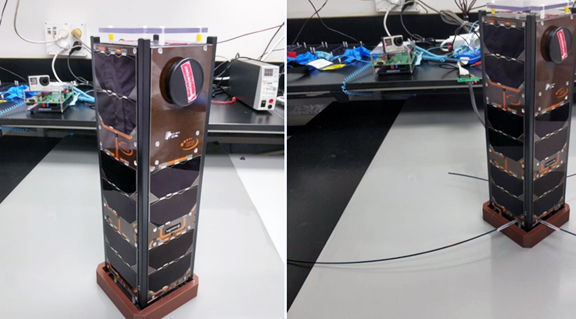
SpooQy-1 is a shoebox-sized, 3U cubesat hosting a quantum payload developed at CQT. The smallsat was launched April of 2019 and then deployed from the International Space Station on June 17, 2019. The quantum payload is the world’s first entangled photon source compact enough to fit on a smallsat and qualified for the harsh space environment.

The primary objective of the SpooQy-1 mission is to produce and characterize entangled photon pairs in space such that they violate the CHSH (Clauser-Horne-Shimony-Holt) Bell’s inequality. This is a core capability for future quantum communication networks. The CQT team is analyzing scientific data from the mission and expects to publish results on the source’s performance in 2020.
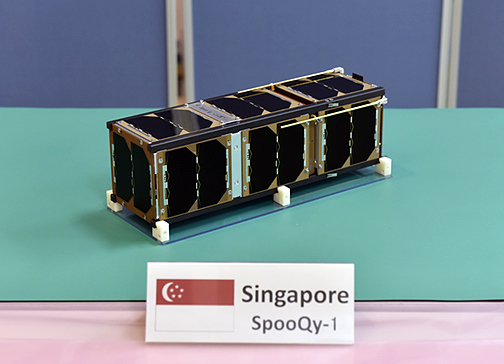

The SpooQy-1 smallsat.

In the meantime, CQT and SpeQtral have signed an agreement allowing SpeQtral to manage ongoing operations. Formed as a spin-out company to commercialize quantum communications technologies developed at CQT, SpeQtral will monitor the long-term performance of the quantum payload for radiation damage and other degradation effects in the space environment. This information will help guide the development of long-lived quantum systems in space, necessary for the commercial deployment of space-based QKD systems.

Artur Ekert, Director of CQT, said establishing a partnership for the SpooQy mission plays to all of the firm’s strengths: at the Centre for Quantum Technologies, the organization will concentrate on scientific objectives, while SpeQtral focuses on commercial applications.

Chune Yang Lum, Co-Founder and CEO of SpeQtral, added that SpooQy-1 is pioneering quantum technologies for space-based quantum key distribution (QKD) systems. Being involved in this mission gives SpeQtral know-how that serves the company;s goal of delivering next-generation secure communication networks.

Additional information is available at this infolink…
Filed Under: News

Israeli Students’ Duchifat-3 Satellite Lifted to Orbit

December 15, 2019 by editorial


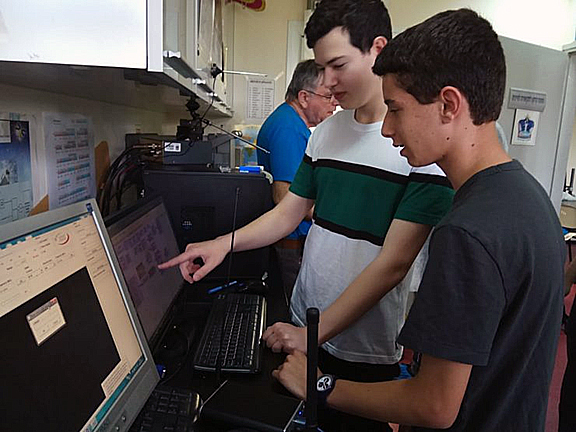
Israeli students at work on the Duchifat-3 satellite.

Duchifat-3, the third satellite in the Duchifat satellite series, is an experimental and educational spacecraft developed by high school students at the Space Laboratory of the Herzliya Science Center (HSC) and students from the Sha’ar HaNegev High school in Israel’s southern region.

The smallsat was launched by the Indian Space Research Organisation’s (ISRO) Polar Satellite Launch Vehicle (PSLV-C48), which lifted off at 3:25 p.m. on Wednesday, December 11, from the Srikarikota launch site.

According to the posting at JewishPress.com by author Arye Green, alongside its educational purpose, the Duchifat-3 smallsat has two missions which will be carried out in parallel, featuring an on-board camera for Earth imaging and a radio transponder for communication missions. The satellite images will be used for ecological research.


The Duchifat-3 smallsat.

The Duchifat-3 satellite measures 10x10x30 centimeters and weighs 2.3 kilograms.

The students worked on the project for nearly two and a half years, during which they designed the satellite, programmed its software and put it through rigorous tests until they were certain it was prepared for launch.

During their work, the students faced various scientific and technological challenges including the preparation of the satellite for its scientific mission, managing its energy resources, communications system, and more.

Additionally, the satellite must be stabilized in space for successful space-borne photography, a complex task that requires control of the satellite’s position in orbit.

Funding for this project was provided by the ICA charitable organization in Israel, whose main focus is agriculture and education-related projects.

Filed Under: News

‘We Are Going to Get It Done’ – SpaceX Says It is Trying to Stop Its Starlink Satellites Ruining the Night Sky

December 12, 2019 by editorial


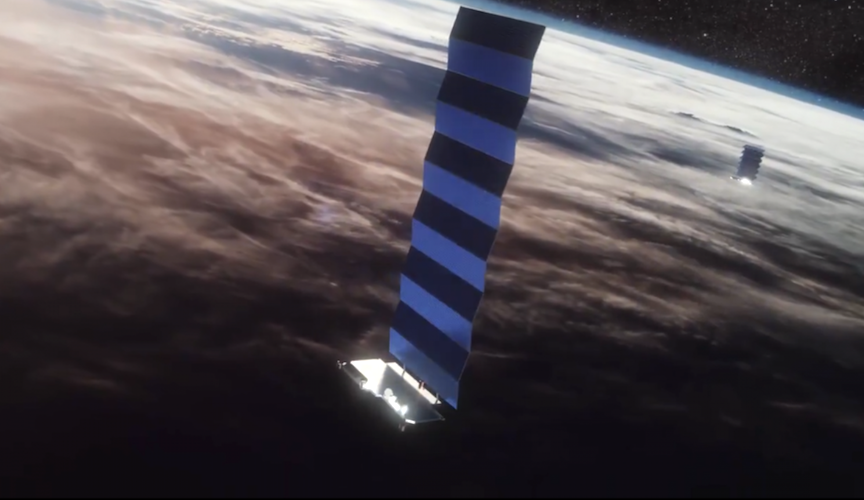
SpaceX’s Starlink satellites were brighter than many expected.SPACEX

SpaceX has said it is taking measures to tackle some of the concerns raised by astronomers about its Starlink constellation, as it gears up to launch more than a thousand satellites in the next 12 months.

The company’s Starlink mega constellation, which will add up to 42,000 satellites to orbit (only 2,000 active satellites in total orbit Earth today) to beam high-speed internet around the globe, has been taking shape in 2019. The company launched its first 60 satellites in May, followed by a second launch in November.

A third launch is planned in late December, and a fourth in January – with 24 in total planned by the end of 2020. The company hopes to launch 60 Starlink satellites roughly once every two weeks, adding more than 1,500 satellites to orbit by the end of next year alone.

While this has raised considerable concerns about space debris, it has also rankled astronomers. Already, some have reported that their observations of the night sky have been ruined by passing Starlink satellites. As more launch, many fear that the views of the universe could be changed forever.

One issue is that each Starlink satellite, weighing about 225 kilograms, is brighter than expected, and clearly visible at dusk and dawn. However, in a meeting with reporters on Friday, December 6, SpaceX President Gwynne Shotwell said the company wanted to do “the right thing”, and prevent such an impact on the night sky.

Shotwell said that one of SpaceX’s next Starlink satellites launched in December would be “treated with a special coating designed to make the spacecraft less reflective and less likely to interfere with space observations”, reported SpaceNews. 

“We are going to get it done.”


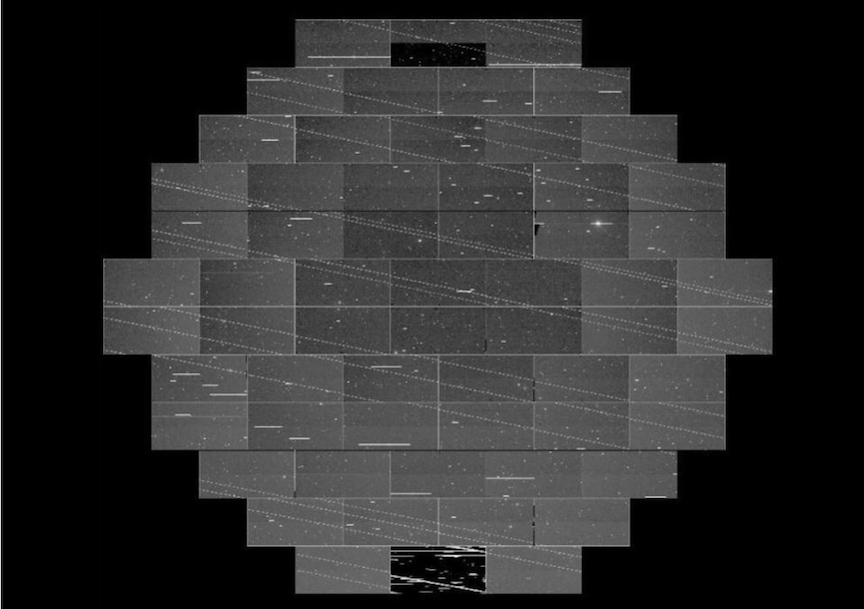
Starlink trails seen in an astronomical observation of nearby galaxies.
CLIFF JOHNSON/CLARAE MARTÍNEZ-VÁZQUEZ/DELVE

In the meeting, Shotwell said there would be “a coating on the bottom” of one of the satellites, and the company would “do trial and error to figure out the best way to get this done.”

“We want to make sure we do the right thing to make sure little kids can look through their telescope,” she added. “Astronomy is one of the few things that gets little kids excited about space.”

Shotwell noted that lowering the reflecitivity of the satellites “definitely changes the performance of the satellite, thermally,” according to Business Insider. However, they would experiment with different ideas to see what works best.

And she noted, too, the impact this could have on professional astronomy. “There are a lot of adults that get excited, too, who either depend on [the night sky] for their living or for entertainment,” she said, reported SpaceFlight Now.

“There are lots of people that have looked at Starlink and looked at the satellites, lots of people knew what we were doing, and no one thought of this,” she added. “We didn’t think of it. The astronomy community didn’t think of it. It happened… Let’s go figure that out.”

Several astronomy groups are currently in contact with SpaceX, including the National Radio Astronomy Observatory (NRAO) and the American Astronomical Society (AAS), to work out better solutions to the problem. The latter, in a recent statement, said that things were “moving in a hopeful direction after our last two telecons [with SpaceX].”

Now, many astronomers will be hoping SpaceX’s efforts can ensure the night sky is not permanently altered. While about 120 Starlink satellites have already launched, with 120 more to follow in the coming weeks, it may well be a case of “better late than never” if a solution can be found.

Jonathan O’Callaghan, Forbes

Filed Under: News

Rocket Lab Opens Their Launch Complex 2 in the U.S.

December 12, 2019 by editorial

Rocket Lab has officially opened Launch Complex 2, the company’s first U.S. launch site, and confirmed the inaugural mission from the site will be a dedicated flight for the U.S. Air Force.


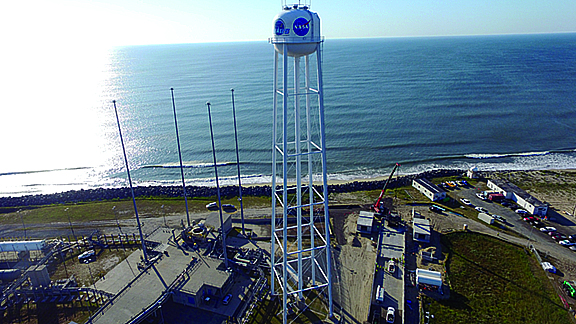
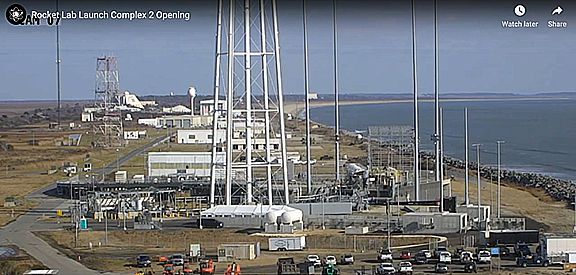
Rocket Lab’s Launch Complex 2 located at
NASA’s Wallops Island, Virginia.

Photo is courtesy of the company.

Located at the Mid-Atlantic Regional Spaceport on Wallops Island, Virginia, Rocket Lab Launch Complex 2 represents a new national launch capability for the United States. Construction on the site began in February of 2019, with the site completed and ready to support missions just 10 months later. Designed to support rapid call-up missions, Launch Complex 2 delivers responsive launch capability from home soil for U.S. government smallsats. The ability to deploy satellites to precise orbits in a matter of hours, not months or years, is increasingly important to ensure resilience in space.

At a press conference held at NASA Wallops Flight Facility, the U.S. Air Force’s Space Test Program has been announced as the first customer scheduled to launch on an Electron vehicle from Rocket Lab Launch Complex 2. The dedicated mission will see a single research and development micro-sat launched from the site in Q2 2020.

Rocket Lab’s Founder and Chief Executive, Peter Beck, says the completion of Launch Complex 2 represents a new era in frequent, reliable and responsive space access from the United States.


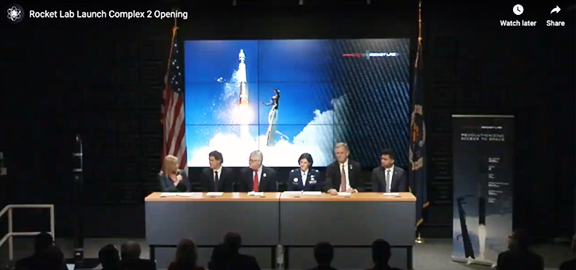
Press conference participants at the Rocket Lab Launch Complex 2 on opening day.

“It’s an honor and privilege to be launching a U.S. Air Force’s Space Test Program payload as the inaugural mission from Launch Complex 2. We’ve already successfully delivered STP payloads on Electron from Launch Complex 1, and we’re proud to be providing that same rapid, responsive, and tailored access to orbit from U.S. soil,” says Mr. Beck. “With the choice of two Rocket Lab launch sites offering more than 130 launch opportunities each year, our customers enjoy unmatched control over their launch schedule and orbital requirements. Rocket Lab has made frequent, reliable and responsive access to space the new normal for small satellites.”

“Rocket Lab’s launch site at the Mid Atlantic Regional Spaceport on Wallops Island, Virginia, strengthens the United States’ ability to provide responsive and reliable access to space.  We look forward to Rocket Lab successfully launching the STP-27RM mission from Launch Complex 2 next spring, which will test new capabilities that we will need in the future,” said Col. Robert Bongiovi, Director of the Air Force Space and Missile Systems Center’s Launch Enterprise.

Virginia Space CEO & Executive Director, Dale Nash, said, “The opening of Launch Complex 2 is a significant milestone and a remarkable achievement made possible by the strong partnership with Rocket Lab and NASA.  Almost immediately after Rocket Lab’s selection of MARS as its U.S. launch site; engineers, managers and technicians worked tirelessly together across multiple time zones and two continents to make LC-2 a reality.  Also, the strong support from the Commonwealth of Virginia and the Air Force, as well as the skilled contractor team have contributed greatly to this success.  We look forward to a busy manifest of Electron launches coming off LC-2.”

Rocket Lab’s VP of Launch, Shaun D’Mello, said the rapid pace of construction was made possible by the tireless support of teams from Virginia Space, which owns and operates MARS, and NASA Wallops Flight Facility. “The fact that we have an operational launch site less than a year after construction began is testament to the hard work and dedication of the Virginia Space and NASA teams, as well as the unwavering support of our local suppliers. Thank you for being a huge part of enabling us to open access to space. We’re excited to embark on the next phase of working together – regular and reliable Electron launches from the United States.”

Filed Under: News

Saturn Satellite Networks to Launch Their NationSats via Northrop Grumman’s OmegA Launch Vehicle

December 12, 2019 by editorial

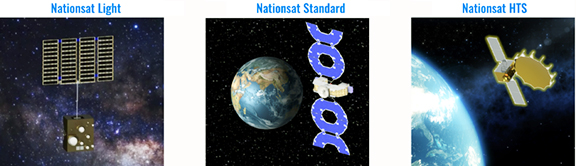
Northrop Grumman Corporation (NYSE: NOC) announced that Saturn Satellite Networks (SSN) has selected the OmegA space launch vehicle to launch up to two satellites on the rocket’s inaugural flight scheduled for spring 2021.

OmegA will launch from Kennedy Space Center’s Pad 39B and insert the SSN satellites into a geosynchronous transfer orbit. Northrop Grumman Signs Customer for First Flight of OmegA™. Last October, the U.S. Air Force awarded Northrop Grumman a $792 million Launch Services Agreement to complete detailed design and verification of the OmegA launch vehicle and launch sites.


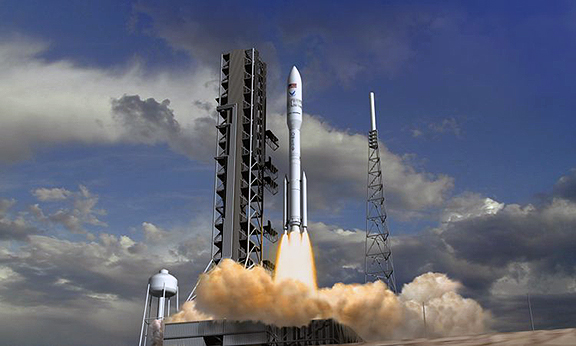
Northrop Grumman’s OmegA rocket will launch up to two satellites manufactured by Saturn Satellite Networks in the spring of 2021.

Image is courtesy of Northrop Grumman.

Northrop Grumman has a distinguished heritage in space launch. In 1990, the company developed Pegasus™, the world’s first privately developed space launch system. The company’s Minotaur launch vehicle has achieved 100 percent success on its 18 space missions and nine suborbital missions. Northrop Grumman’s Antares™ rocket has launched more than 70,000 pounds of food, equipment and supplies to the astronauts aboard the International Space Station.

Scott Lehr, VP and GM, flight systems, Northrop Grumman, said the OmegA rocket expands Northrop Grumman’s launch capabilities beyond our small and medium class rockets, which have successfully launched nearly 80 missions. Expanding the company’s launch capabilities to the intermediate/heavy class with OmegA complements our national security satellite portfolio and enables us to better support customers.”

Jim Simpson, CEO of Saturn, said the company is excited to launch Saturn’s NationSat on Northrop Grumman’s OmegA launch vehicle’s inaugural mission. OmegA’s performance, payload accommodations, and rigorous certification program assures us it is a great fit for NationSats and the firm’s customers.

Charlie Precourt, VP, propulsion systems, Northrop Grumman, added that the first flight of OmegA is a key step in the company’s certification process for the U.S. Air Force National Security Space Launch program. Having Saturn’s NationSat on board for this mission further demonstrates the versatility of OmegA to serve other markets, including commercial and civil government. Northrop Grumman designed OmegA to use the most reliable propulsion available—solid propulsion for the boost stages and flight proven RL10 engines for the upper stage—to ensure exceptional mission assurance for the firm’s customers. Northrop Grumman’s technical expertise is both broad and deep, and the company brings unmatched experience, stability and a strong customer focus to every partnership.


Filed Under: News

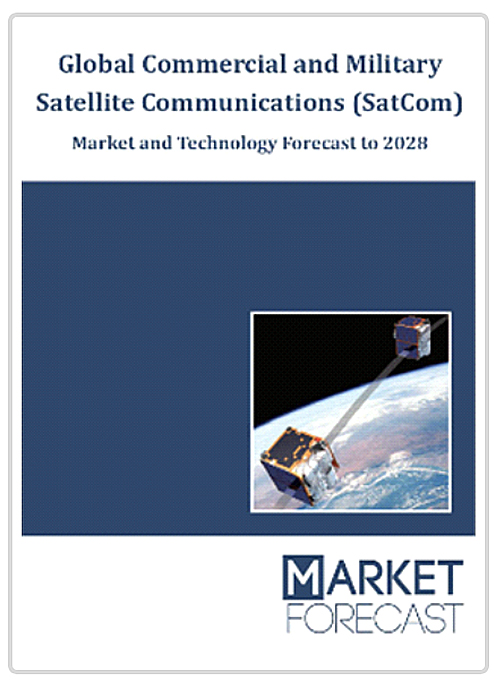
Market and Tech Forecast to 2028 for Global Commercial and Military SATCOM

December 12, 2019 by editorial

Approximately 2,000 artificial satellites orbiting Earth relay analog and digital signals carrying voice, video, and data to and from one or many locations worldwide.

Satellite communication has two main components: the ground segment, which consists of fixed or mobile transmission, reception, and ancillary equipment, and the space segment, which primarily is the satellite itself.

Both the commercial and military satellite communication industry is evolving, as evidenced by numerous trends that one can expect to see on the horizon over the coming 18 months and beyond. The increase in smallsats, the use of LEO, launches on reusable rocket launch vehicles and new use cases for 5G and the Internet of Things (IoT) are some of the most important developments to watch.

Market Forecast’s latest report “Global Commercial and Military Satellite Communications Market and Technology Forecast to 2028” examines, analyzes, and predicts the evolution of satellite systems, technologies, markets, and outlays (expenditures) over the next 8 years – 2020 -2028 in the Global Commercial & Military Satellite Communication industry. It also examines commercial and military satellite markets geographically, focusing on the top 95% of global markets, in the United States, Europe, and Asia. The commercial and military satellite market is expected to grow at a CAGR of 76.6% during this period with a cumulative $195.11 billion over the period 2020-2028.

The report shows how satellite communication is used today to add real value. To provide the most thorough and realistic forecast, this report provides a twin-scenario analysis, including “steady state,” emergence of new satellite communication technology.

In this report, light is shed on major technologies and services in this domain. These include…

  • Laser SATCOM Communications
  • Terrestrial Based Fiber Optics
  • Smallsats
  • C-band
  • Ka-band
  • Ku-band


In particular, this report provides an in-depth analysis of the following…

Overview
Snapshot of the various satellite communication tech in the aerospace market during 2020-2028, including highlights of the demand drivers, trends and challenges. It also provides a snapshot of the spending with respect to regions as well as segments. It also sheds light on the emergence on new technologies

Market Dynamics
Insights into the technological developments in this market and a detailed analysis of the changing preferences of governments around the world. It also analyzes changing industry structure trends and the challenges faced by the industry participants.

Segment Analysis
Insights into the various Systems market from a segmental perspective and a detailed analysis of factors influencing the market for each segment.

Regional Review
Insights into modernization patterns and budgetary allocation for top countries within a region.

Regional Analysis
Insights into the Systems market from a regional perspective and a detailed analysis of factors influencing the market for each region.

Trend Analysis
Key satellite communication markets: Analysis of the key markets in each region, providing an analysis of the various Systems segments expected to be in demand in each region. Key Program Analysis: Details of the top programs in each segment expected to be executed during the forecast period. Competitive landscape Analysis: Analysis of competitive landscape of this industry. It provides an overview of key companies, together with insights such as key alliances, strategic initiatives and a brief financial analysis.

Filed Under: News

Optimization the Key to Smallsat Launch Providers in Latest Frost and Sullivan Report

December 12, 2019 by editorial

Frost & Sullivan forecasts in their Small Satellite Launch Services Market, Half-Yearly Update, HJ1 2019, Forecast to 2033 analysis and report, that the total number of satellites to be launched during the period 2019 to 2033 to be 20,425, with North America leading the way, followed by Europe.

Such demand could take the smallsat launch services market past the $28 billion mark by 2030 and present significant growth opportunities throughout the industry. To keep up with market requirements, Frost & Sullivan anticipates high-volume demand for component manufacturers, dedicated launch service providers and low-cost ground station services. Government agency investment in R&D, capacity purchase, public-private partnerships, and establishing the enabling regulatory framework will be significant enablers for new entrants and established players.

“With the successful launch of Space Exploration Technologies Corp (SpaceX)’s 60 satellites and One-Web’s six test satellites, momentum has been built for further constellation installations. In addition, H1 has witnessed favorable test launches of small constellation players like Astrocast and NSLCom,” said Prachi Kawade, Research Analyst, Space, Frost & Sullivan. He added, “Serial production and rapid manufacturing will play a pivotal role in meeting market demands. To ensure the success of the industry, it’s imperative that launch frequency, inventory and manufacturing capability are optimized.”

Frost & Sullivan’s recent analysis, Small Satellite Launch Services Market, Half-yearly Update, H1 2019, Forecast to 2033, tracks the number of small satellites, payload mass, and launch revenue on the basis of defined scenarios, satellite mass classes, and user segments. The study also includes the launch capacity forecast for both rideshare and dedicated launch services; it analyses the alignment between the small satellite launch demand and capacity supply across Africa, Asia-Pacific, Central Asia, Europe, Latin America, the Middle East and North America.

The company’s experts have identified the following areas that represent growth opportunities for market players:

The small satellite launch services market will keep expanding with a key upturn in 2024 due to the overlap of new installations and replacement satellites.

  • Small satellite payload mass demand is observed to be the highest in the 150-500 kg mass segment, accounting for 82% of the total.
     
  • A 32-fold increase in the payload mass supply, from 249.42 tonnes in 2019 to 7,983.25 tonnes in 2030, will be mainly driven by the dedicated launch services attempting to have multiple launches per year, with improved manufacturing capability.
     
  • The demand will continue to grow for communication applications in both replacement and new installation phases. The cumulative share of satellites for communication applications is 46%; Earth Observation (EO) accounts for 28% and IoT applications for 23%.


Dedicated launch services providers are still transitioning to continue to service their customer base in a timely manner. Transitions include serial manufacturing facilities and better methods for test and evaluation to increase inventory in line with demand.

Small Satellite Launch Services Market, Half-yearly Update, H1 2019, Forecast to 2033 is part of Frost & Sullivan’s global Space Growth Partnership Services program.

For further information on this analysis, please contact Jacqui Holmes on jacqui.holmes@frost.com

Filed Under: News

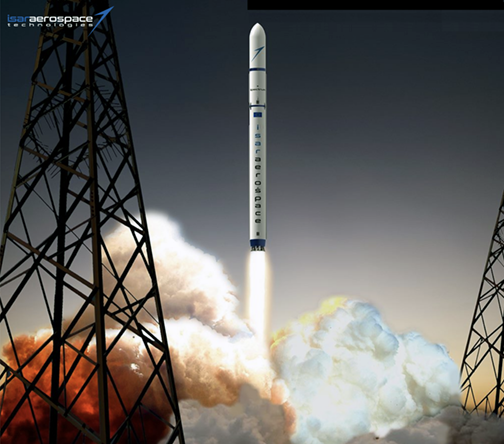
Millions Now Invested in Isar Aerospace

December 11, 2019 by editorial

Isar Aerospace has closed a 15 million euros Series A investment round led by Earlybird and Airbus Ventures to develop low-cost launch vehicles dedicated to deploying and resupplying satellite constellations.

Existing investors Vito Ventures and UVC Partners participated in the round with Bulent Altan, who served 12 years at SpaceX including Vice President positions as well as Christian Angermayer’s Apeiron Investment Group.

Isar Aerospace was founded in 2018 by Daniel Metzler, Josef Fleischmann, and Markus Brandl, all of them having studied at the Technical University of Munich and all have backgrounds in Aerospace Engineering. The company is leveraging advanced manufacturing to enable high performance, yet low-cost, access to space, serving small and medium satellite manufacturers who drive innovation and digitization with data from space.

Over the past year, Isar Aerospace has been developing its Spectrum rocket, with the development fully on track for a first launch in late 2021, while key milestones such as propulsion system hotfire testing and agreements for launch site access have been achieved.

The Isar Aerospace launch manifest is also picking up momentum with governmental and commercial customers including a Memorandum of Understanding with Airbus Defence and Space for multiple satellite constellations launches.

Daniel Metzler, CEO of Isar Aerospace, said that space is becoming the new internet and its commercialization is in full swing. This funding round enables the company to progress substantially in the development of sustainable, environmentally-friendly launch vehicles and further deliver on the firm’s vision to make space access affordable for everyone.

Airbus Ventures Financial Officer and EMEA team member, Claas Carsten Kohl, at Airbus Ventures stated the company is de Isar Aerospace to the firm’s global portfolio of innovative launch systems.

Mathieu Costes, also at Airbus Ventures Partner, added the firm is pleased to entrust Daniel and his outstanding team, bringing impressive new technologies and approaches to the challenges of Low Earth Orbit, to represent this first deal in Germany for the company. Together with this investment round co-leader Earlybird, and under the continuing guidance of Bulent Altan, Airbus Ventures Partner is pleased to help draw together the ecosystems of new space excellence in both Germany and in the wider Airbus universe.

Bulent Altan noted that he has been able to watch Isar Aerospace’s progress closely and they have made impressive progress in their quest of building a cost-effective medium-sized launcher and differentiating themselves in this ever-growing launcher market by targeting the correct segment with solid engineering. As such, this investment decision was an easy one to make.

Hendrik Brandis, partner at Earlybird, commented that there is a new spirit of optimism in aerospace. The firm sees the New Space segment as a business of the future around rockets and satellites. Isar Aerospace convinced Earlybird with its professional, motivated and highly talented team. This is the company’s first investment in this field are proud to support Isar Aerospace as their Series A lead investor and look forward to accompanying them on their journey as investors and supporters.

Filed Under: News

Three Launches, Three Continents, for Spaceflight During a Successful 2019

December 11, 2019 by editorial

Spaceflight successfully executed nine missions during 2019, the most rideshare launches the company has performed in a single year, representing a 300 percent growth from the previous year.


The Spaceflight SSO-A mission aboard a SpaceX Dragon launch vehicle.

The company ended last year with its historic dedicated rideshare mission, SSO-A, and continued to execute many more firsts during 2019. This includes the most recent accomplishment of manifesting and managing three rideshare launches in one week on three continents.

The final missions of 2019 were SEOPS-2 (ISS SpX-19/NG-12) launched in the U.S., RL-2 (Rocket Lab’s “Running Out of Fingers”) launched in New Zealand, and PSLV-C48 launched in India.

The nine missions in 2019 were executed across four different launch vehicles, including the ISRO PSLV, SpaceX Falcon 9, Rocket Lab Electron and Northrop Grumman Cygnus. Spaceflight managed the launch and integration services of nearly 50 spacecraft from customers in Japan, Israel, Switzerland, Egypt, Australia, Mexico and the U.S., representing both commercial and government organizations, growing constellations, the first commercial lunar lander, technology demonstrations, university spacecraft, and more.

Other important milestones for Spaceflight during 2019 included:

  • The first-ever rideshare mission to Geosynchronous Transfer Orbit (GTO), launching the first privately funded lunar lander, developed and operated by SpaceIL. (GTO-1)
     
  • The execution of its first three missions with Rocket Lab, launching more than 10 customer spacecraft. (RL-1, RL-2, RL-4)
     
  • The purchase of the first commercial launch of NSIL’s new small launch vehicle, SSLV, for a dedicated rideshare mission in 2020.
     
  • Spaceflight’s first deployments with Hypergiant from the International Space Station. (SEOPS-1, SEOPS-2)
     
  • Four launches across three continents in the span of 16 days. (PSLV C47, SEOPS-2, RL-2, PSLV C48)


For its achievements, both in 2019 and the record-breaking launch of SSO-A in 2018, Spaceflight and CEO Curt Blake received numerous industry awards and recognition. In 2019, Blake was selected as an Innovator of the Year by the Puget Sound Business Journal and named one of Seattle’s Most Influential People by Seattle Magazine.

Spaceflight was also awarded a Laureate for Launch Services in recognition of its pioneering work in bringing the rideshare business into the mainstream by Aviation Week.

During 2020, Spaceflight plans to manage approximately 10 rideshare missions across five different launch vehicles. The company anticipates reaching a cadence of monthly launches and remains dedicated to maximizing launch capacity on available missions and assisting its customers achieve their missions on time and on budget.

Curt Blake, CEO and President of Spaceflight, stated the firm’s team has supported a record number of missions, resulting in a busy and rewarding year. 2019 made it clear that the ‘new normal’ of rideshare is a high cadence of launches. With the variety and complexity of Spaceflight missions, the company has demonstrated its expertise and experience in mission management and integration services. Looking to the coming year, more launch vehicles will be added to the company’s portfolio to meet growing launch demand, while delivering increased launch flexibility through a breadth of launch options. Ultimately, Spaceflight aims to minimize the pain points of launch delays and ensure customers’ mission goals are achieved.

Robert Sproles, Director of Ground Stations and Launch at Spire Global, noted that Spaceflight continues to provide smallsat operators frequent access to space, proving the importance of rideshare in the space industry. Spaceflight’s diverse launch portfolio, depth of skills and knowledge and commitment to providing a first-class launch experience has helped many smallsat organizations such as Spire successfully achieve their missions.


Filed Under: Featured, News

A First for Rocket Lab with their Recent Running Out Of Fingers Mission

December 10, 2019 by editorial

Rocket Lab has flown a fully Autonomous Flight Termination System (AFTS) for the first time on an Electron launch vehicle.

The AFTS flown on the company’s most recent mission, ‘Running Out Of Fingers,’ makes Rocket Lab one of only three U.S. launch companies to fly with an autonomous system.


The Electron launch of Rocket Lab’s “As the Crow Flies” mission. Photo is courtesy of Sam Toms and Simon Moffatt.

AFTS is a GPS-aided, computer-controlled system designed to terminate an off-nominal flight, replacing traditional human-in-the-loop monitoring systems. AFTS is crucial to increasing launch frequency and providing responsive launch capability, while maintaining the highest industry safety standards. It reduces the turnaround time between missions and provides greater schedule control by eliminating reliance on ground-assets and human flight termination operators.

‘Running Out Of Fingers’ hosted the first fully autonomous system on Electron. The launch followed four ‘shadow’ flights where the AFTS unit was flown on the vehicle for testing while traditional ground-based flight termination infrastructure remained in place. With the first fully autonomous mission now complete, all future Electron missions from Launch Complexes 1 and 2 will fly with the AFTS.

Flight termination systems are a vital part of launch operations. Traditionally, flight termination infrastructure is a ground-based system that involves a human making the decision to terminate a mission in the event of a launch vehicle straying from a pre-determined flight path. By contrast, the AFTS is an independent, self-contained subsystem mounted on-board the Electron launch vehicle. It eliminates the need for a ground-based infrastructure by moving the flight termination function to the launch vehicle.

The system makes flight termination decisions autonomously by using redundant computers that track the launch vehicle using Global Positioning System and on-board sensors, combined with configurable software-based rules, that identify where the rocket can safely fly. If a rocket goes off course the AFTS will issue a command to terminate the flight by shutting down the engines. The AFTS also delivers faster response times and improved monitoring as launch vehicle travels downrange, providing over-the-horizon tracking capabilities that are not limited by line-of-sight tracking such as that required by ground-based instrumentation at the launch site.

Rocket Lab Founder and CEO, Peter Beck, said the AFTS is yet another way Rocket Lab is innovating to increase the pace of launch and support responsive launch capability for small satellites. As the company moves to an autonomous system, Rocket Lab thanks the dedicated teams from White Sands Missile Range and Alaska Aerospace Corporation who have provided ground-based flight termination system support for Electron missions since the firm’s first launch in 2017. Their support has ensured the safety of every Electron mission and they have contributed to Rocket Lab’s record of mission success for customers.

Naomi Altman, Rocket Lab’s Avionics Manager and Project Lead for the AFTS program, added that for AFTS to be part of Electron’s 10th launch was the cherry on top of a monumental year for the entire team. Reaching this milestone is also testament to the ongoing support of government agencies and contractors who worked closely with Rocket Lab to bring the AFTS online.

Filed Under: Featured, News

  • « Go to Previous Page
  • Go to page 1
  • Interim pages omitted …
  • Go to page 321
  • Go to page 322
  • Go to page 323
  • Go to page 324
  • Go to page 325
  • Interim pages omitted …
  • Go to page 332
  • Go to Next Page »

Primary Sidebar

WEEKLY NEWSLETTER

Archives

  • December 2025
  • November 2025
  • October 2025
  • September 2025
  • August 2025
  • July 2025
  • June 2025
  • May 2025
  • April 2025
  • March 2025
  • February 2025
  • January 2025
  • December 2024
  • November 2024
  • October 2024
  • September 2024
  • August 2024
  • July 2024
  • June 2024
  • May 2024
  • April 2024
  • March 2024
  • February 2024
  • January 2024
  • December 2023
  • November 2023
  • October 2023
  • September 2023
  • August 2023
  • July 2023
  • June 2023
  • May 2023
  • April 2023
  • March 2023
  • February 2023
  • January 2023
  • December 2022
  • November 2022
  • October 2022
  • September 2022
  • August 2022
  • July 2022
  • June 2022
  • May 2022
  • April 2022
  • March 2022
  • February 2022
  • January 2022
  • December 2021
  • November 2021
  • October 2021
  • September 2021
  • August 2021
  • July 2021
  • June 2021
  • May 2021
  • April 2021
  • March 2021
  • February 2021
  • January 2021
  • December 2020
  • November 2020
  • October 2020
  • September 2020
  • August 2020
  • July 2020
  • June 2020
  • May 2020
  • April 2020
  • March 2020
  • February 2020
  • January 2020
  • December 2019
  • November 2019
  • October 2019

© 2019–2025 SatNews

Insert/edit link

Enter the destination URL

Or link to existing content

    No search term specified. Showing recent items. Search or use up and down arrow keys to select an item.
      x
      Sign Up Now!

      Enjoy a free weekly newsletter with recent headlines from the global SmallSat industry.

      Invalid email address
      We promise not to spam you. You can unsubscribe at any time.
      Thanks for subscribing! You will now receive weekly SmallSat News updates.
      We love our advertisers.
      And you will too!

      Please disable Ad Blocker to continue... We promise to keep it unobtrusive.
      We promise not to spam you. You can unsubscribe at any time.
      Invalid email address
      Thanks for subscribing! Please check your email for further instructions.