• Skip to main content
  • Skip to primary sidebar
  • Home
  • News
  • Featured
  • More News ⌄
    • SatNews
    • SatMagazine
    • MilSatMagazine
  • Events ⌄
    • MilSat Symposium
    • SmallSat Symposium
    • Satellite Innovation
  • Contacts
  • SUBSCRIPTION

SmallSat News

You are here: Home / 2022 / Archives for November 2022

Archives for November 2022

Amazon’s new Project Kuiper facility will increase satellite manufacturing with goal of four satellites daily

November 9, 2022 by editorial

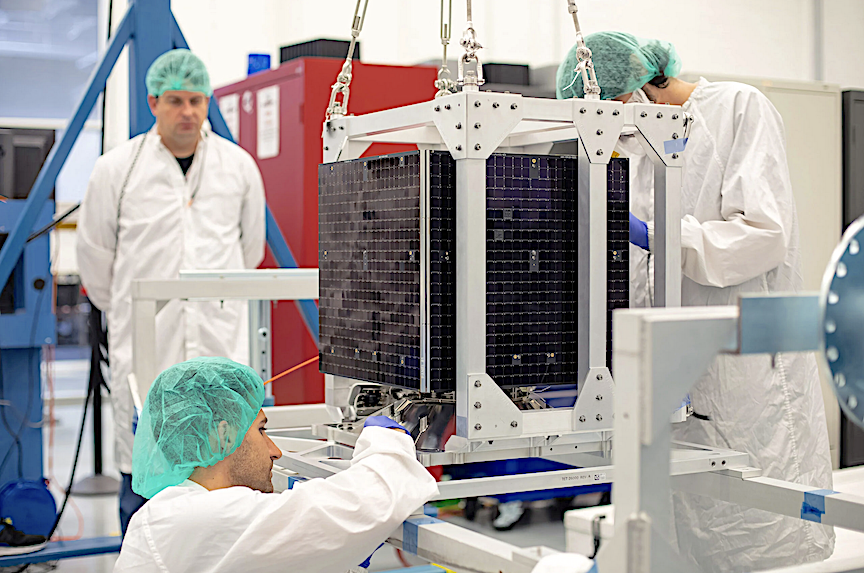
Amazon plans to develop a dedicated, 172,000-square-foot satellite production facility in Kirkland, Washington. The new facility will create more than 200 highly skilled aerospace and manufacturing jobs in the Puget Sound region and provide the scale required to build as many as four satellites per day.

Amazon’s new facility in Kirkland, Washington, will provide jobs and infrastructure to scale satellite production ahead of a full commercial deployment. Amazon is continuing to invest in people and facilities to support Project Kuiper, a low Earth orbit (LEO) satellite network that will provide fast, affordable broadband to unserved and underserved communities around the world. The program, based in Redmond, Washington, continues to expand the footprint in the region following the announcement of an initial 219,000-square-foot research and development facility in 2020.

These facilities have the capacity to support prototype development and begin commercial satellite production, but to deliver on our vision for the project, we need to operate on a much larger scale. That requires dedicated manufacturing space, and we’re excited to announce plans to develop a dedicated, 172,000-square-foot satellite production facility in Kirkland, Washington. The new facility will create more than 200 highly skilled aerospace and manufacturing jobs in the Puget Sound region and provide the scale required to build as many as four satellites per day.

“Getting Project Kuiper’s satellites into space requires significant precision, expertise, and a world-class team committed to our vision,” said Rajeev Badyal, vice president of technology for Project Kuiper. “This new satellite production facility will significantly expand our manufacturing capacity as we approach launch and deployment, and it brings us another step closer to delivering on our mission to connect unserved and underserved communities around the world.”

Project Kuiper satellites have been designed and developed in-house to maximize performance while reducing costs, and the manufacturing facility will provide additional control over the production and testing process. By centralizing operations in the Puget Sound, it can also ensure close coordination between design and development teams in Redmond and manufacturing teams in Kirkland.

“We’re excited with Amazon’s selection of Kirkland for Project Kuiper’s satellite production facility,” said Kirkland Mayor Penny Sweet. “Whether you’re looking to get your foot in the door or are pursuing an advanced, high-level career, this will bring even more economic opportunity for professionals who live here and for those who have yet to call Kirkland home. Partners like Amazon are critical in demonstrating why our city is such a great place to live, work, and play. Our state’s pioneering spirit has revolutionized aerospace. As Project Kuiper’s partner, Kirkland is proud to continue this tradition.”

Amazon’s Project Kuiper satellites will fly on the new Vulcan Centaur rocket in early 2023
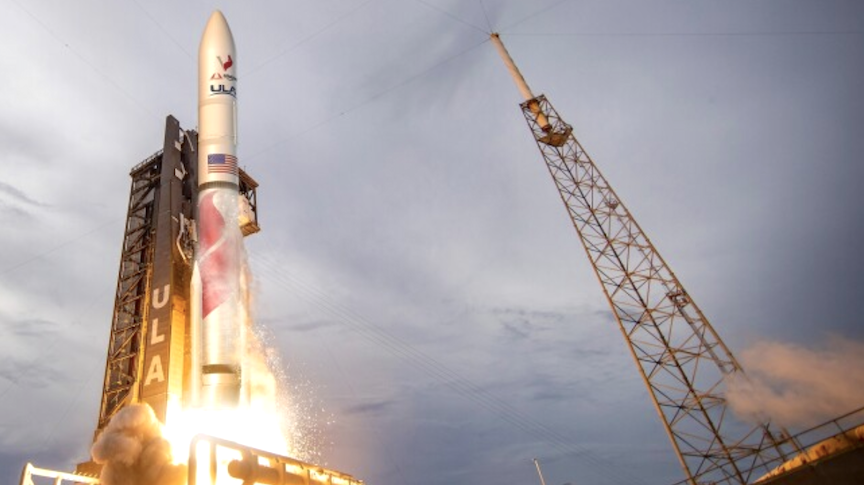
Project Kuiper, Amazon’s satellite broadband program, will launch two prototype satellites on an upcoming United Launch Alliance mission to test system performance in space.

For over a century, Washington state has been home to a thriving aerospace sector. Project Kuiper recently joined a White House-led coalition to bolster the country’s commercial space workforce, and these investments will allow them to extend that commitment to the local communities in the Puget Sound region. The new production facility will open new doors in advanced manufacturing for a diverse range of space-focused job seekers, and it will provide additional opportunities for local partners with expertise in manufacturing materials and services.

“In the 21st century, a reliable high-speed internet connection is essential for living, learning, and working from home. Amazon’s Project Kuiper will be critical to help close the digital divide and provide more affordable internet options. Our region’s tech industry is strong, and its continued growth has significant benefits across the country,” said U.S. Representative Suzan DelBene (D-WA), whose district includes Kirkland. “Project Kuiper’s new production facility will bring good-paying, high-skilled jobs to the Puget Sound region as work continues to expand broadband access everywhere.“

Project Kuiper, Amazon’s satellite broadband program, will launch two prototype satellites on an upcoming United Launch Alliance mission to test system performance in space.

“Amazon could have located their Project Kuiper satellite production facility anywhere in the world, and yet they chose Kirkland and the Greater Seattle region to expand,” said Brian Surratt, president and CEO of Greater Seattle Partners. “The decision to continue to grow here will create new jobs and opportunities for our rich ecosystem of aerospace companies and talent that has evolved over more than a century of research, development, and manufacturing. We are honored to be Amazon’s partner in pushing the boundaries of space and delivering fast, affordable broadband to unserved and underserved communities around the world.”

Project Kuiper’s first two prototype satellites will launch in early 2023 on United Launch Alliance’s (ULA) Vulcan Centaur rocket, and Amazon has secured up to 92 heavy-lift launches from Arianespace, Blue Origin, and ULA, marking the largest commercial procurement of launch vehicles in history. These contracts will provide enough capacity to deploy the majority of our satellite constellation and support thousands of suppliers and highly skilled jobs across the United States and Europe. Also on Thursday, ULA announced the groundbreaking of new facilities in Decatur, Alabama, nearly doubling its capacity to support the partnership and supply the launch vehicles needed to get Kuiper satellites into orbit.

More than 1,000 people are working on Project Kuiper across the U.S., including cities such as San Diego, Austin, New York City, and Washington, D.C., and are continuing to hire across a wide range of roles and disciplines.

Filed Under: Featured, News

Spire Global solution enlightens dark shipping detection 

November 8, 2022 by editorial

Dark ship detection solution is essential to identify and locate vessels suspected of unlawful activities, such as evading sanctions, illegal fishing and human trafficking 

Spire Global, Inc. , a global provider of space-based data, analytics and space services, reveal a dark shipping detection solution to track vessels that manipulate their reported position in order to conceal nefarious activities.

The Automatic Identification System (AIS) on a vessel helps avoid collisions at sea, track global shipping trends and monitor individual vessel activity — however, crew members on board can manipulate the system by turning off the transponder to go dark or ‘spoofing’ the AIS to report false positions. Typically this is done in order to hide activity that is illegal or could have negative consequences to the ship owner, such as illegal trading, loading or unloading sanctioned goods, or illegal, unreported and unregulated (IUU) fishing.

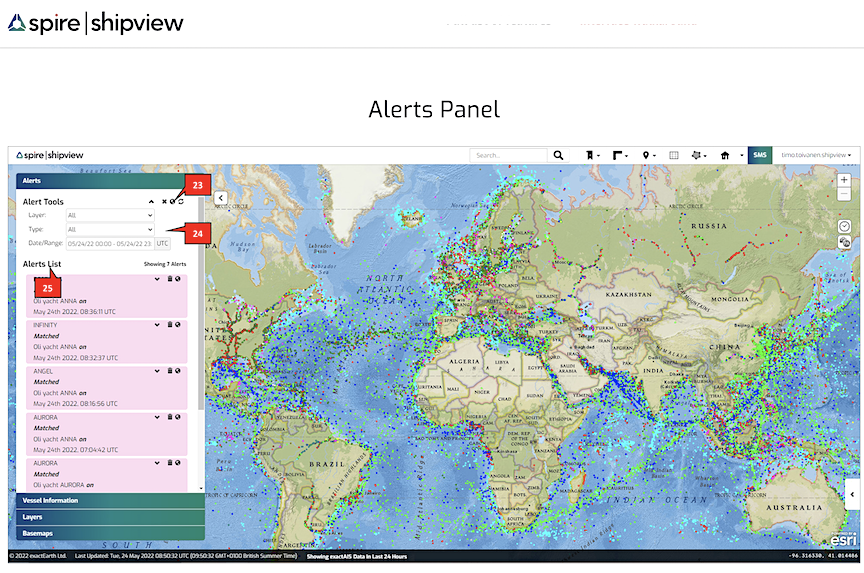
Alert Tools: For subscribers, delete all currently displayed alerts, clear any on map alert icons, and refresh the alerts list
Alert Rules/Filters: Add rules to filter alerts list including by layer, type, and date/range
Alerts List: For subscribers, displays any available alerts based on the alert rules/filters

Spire’s near real-time, global geolocation position validation service can uncover suspicious activity and pinpoint a vessel without the need for an approximate location. The applications are critical to governments, intelligence and security agencies, and nonprofit organizations’ efforts to identify and locate vessels that are breaking international law. 

“For a long time, having the tools to accurately identify and track ships that are attempting to hide their activities or location has been the missing key to preventing sanctions evasion, illegal fishing, human trafficking and many more pressing societal issues,” said Peter Mabson, CEO, Spire Maritime. “Dark shipping detection builds on our breadth of maritime tracking solutions and underscores Spire’s mission to use data that can only be collected from space to improve life on Earth.”

Spire operates thelargest multipurpose constellation with more than 100 satellites. The company plans to launch additional products in 2023 for geolocation and identification of dark targets, at sea, on land, and in the air.

Filed Under: Featured, News

Exotrail + Isar Aerospace sign multiple launch services agreement

November 8, 2022 by editorial

Exotrail and Isar Aerospace have signed a multiple launch services agreement — Isar Aerospace’s launch vehicle Spectrum will launch Exotrail’s spacevan™ vehicle on several launches to LEO and geostationary transfer orbits (GTO) from Isar Aerospace’s launch sites in Andøya, Norway, and CSG, French Guiana, between 2024 and 2029. With this combo of launchpads, Isar Aerospace provides access to all orbits.
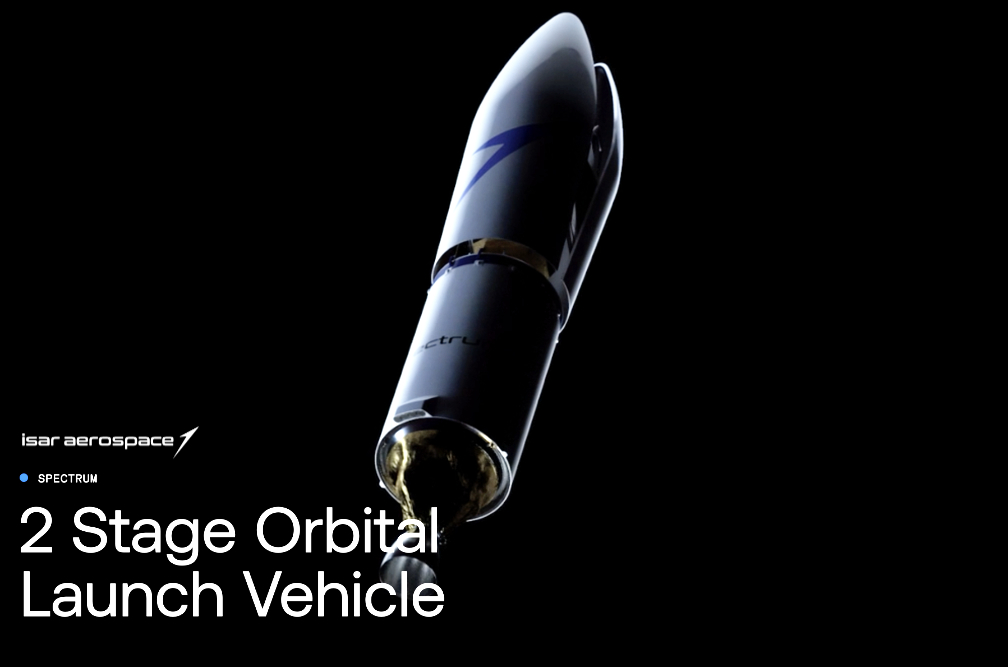
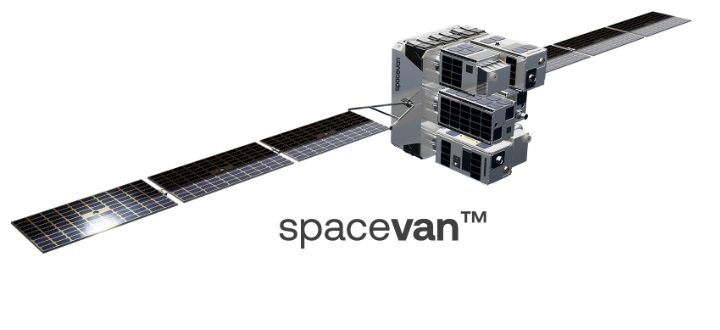
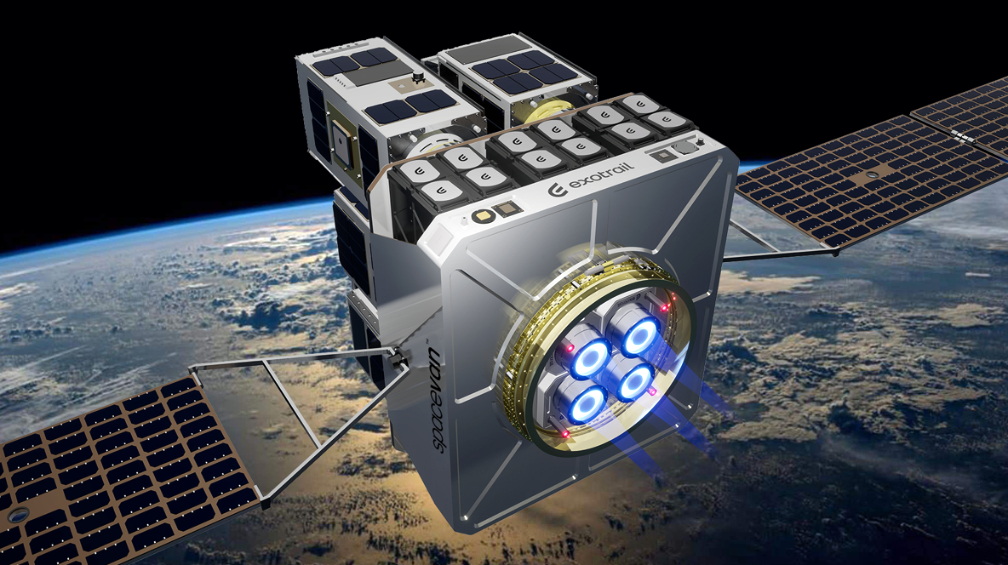
With the demand for flexible and cost-efficient access to space continuing to rise, Exotrail and Isar Aerospace have partnered to break new ground in the delivery of satellites. This combination of both service offers enables customers to launch single satellites and satellite constellations and place them in the orbit of their choice to drive forward telecommunication, EO, space logistics and exploration.

With this agreement, Exotrail extends its manifest to continue to provide competitive solutions and to meet the market’s growing demand for precise satellite delivery in LEO, with specific orbital planes, inclinations and altitudes, as well as further to the geostationary orbit (GEO). Doing so, the company pursues the increase in the firm’s spacedrop™ manifest, with a stable financial framework and without compromising service flexibility. The spacevan™ vehicles will embark on the Spectrum launcher, with the possibility of flying from Isar Aerospace’s two launch facilities.

Exotrail’s tailored spacedrop™ service allows satellite operators to launch their spacecrafts into their bespoke operational orbits. Exotrail offers an integrated service by procuring access to space, integrating customers satellites onto the spacevan™ platform and performing the required operations in orbit.

Contrary to other solutions on the market, Exotrail’s spacevan™ uses space-proven, electric propulsion to increase passenger capacity and range. The versatility of Isar Aerospace’s launch offering toward specific planes and low inclinations, along with the spacevan™ performances, will allow Exotrail to deliver passengers’ satellites in any plane and any inclination, making new business models available and sustainable. Exotrail’s spacedrop™ service also helps launch service providers to extend the range of their accessible missions and optimize the filling ratio of their rocket, to increase both revenues and profitability.

Isar Aerospace underlines yet another expansion of its launch manifest and is cementing its presence as the leading private European launch service provider. Together, the two companies will further deliver on their mission to shape the European NewSpace industry.

Jean-Luc Maria, CEO of Exotrail, said, “The contract with Isar Aerospace enables us to consolidate our spacedrop™ service by offering more launch opportunities to customers looking for bespoke and competitive access to LEO and GEO orbits. We are looking forward to these flights and to building a long term, mutually beneficial partnership with Isar Aerospace and our respective customers.”

“Exotrail is one of the leading European NewSpace companies – we are delighted to welcome them on-board Spectrum’s flights and thank Exotrail’s team for the trust and confidence it has placed in us. We are proud to further expand our launch manifest and can look on a strong customer record,” said Daniel Metzler, CEO and Co-Founder of Isar Aerospace.

About Exotrail
Exotrail is an end-to-end space mobility operator. The company offers customers the capability to define their space mobility need with the spacestudio™ mission analysis software, meet that need with spaceware™ onboard propulsion systems and spacedrop™ in-space mobility services, and operate the solution with the spacetower™ software. This complete mobility offering called mobilityhub™ allows satellites to optimize their deployment, increase their service performance, and reduce space pollution. Exotrail has been incorporated in 2017 and has secured over 20M€ of funding. The company has more than 20 customers in North America, Europe and Asia. Exotrail’s team is expanding quickly and consists, as of today, of +75 passionate people operating out of two locations: Toulouse and Massy (suburb of Paris) in France.

About Isar Aerospace
Isar Aerospace, based in Ottobrunn/Munich, develops and builds launch vehicles for transporting small and medium-sized satellites as well as satellite constellations into Earth’s orbit. The company was founded in 2018 as a spin-off from Technical University Munich. Since then, it has grown to more than 300 employees from more than 40 nations with many years of hands-on rocket know-how as well as experience within other high-tech industries. The company is privately financed by former SpaceX VP Bulent Altan as well as world-leading investors including Airbus Ventures, Apeiron, Earlybird, HV Capital, Lakestar, Lombard Odier, Porsche SE, UVC Partners, and Vsquared Ventures.

Filed Under: News

Fleet Space signs contract with Core Lithium to provide sat-based lithium exploration services

November 8, 2022 by editorial

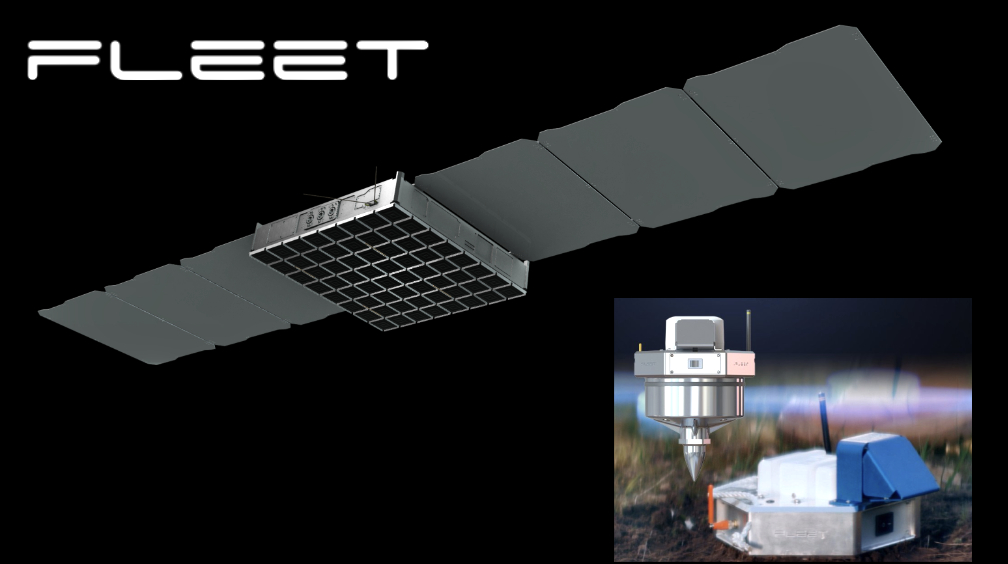
Fleet Space Technologies is delighted to announce a major new contract with Core Lithium.

The contract, which comes into effect in May of 2023, will see Fleet’s pioneering, satellite-based, mineral exploration system, ExoSphere, deployed across Core’s tenements in the Northern Territory of Australia. Core was also successful in applying for the co-funding of a tenement-wide deployment of Exosphere at its Shoobridge Project in 2022, under round 15 of the Geophysics and Drilling Collaborations program. .

This follows successful results of a collaborative trial between Core Lithium and Fleet Space Technologies at the BP33 prospect. In August of 2022 the company jointly announced the successful conclusion of survey trials. In a statement, Core Lithium described the results of the trial as ‘an outstanding success,’ noting an ‘excellent correlation with the pegmatite body interpreted from drilling to depths in excess of 500m’ and stating that ‘a number of previously unknown targets have emerged – a major boost for exploration.’

Core is using ExoSphere to accelerate its lithium exploration activities, in line with its vision to provide high-grade lithium for electric vehicle (EV) and renewable energy storage applications worldwide. 

The successful discovery of lithium, cobalt, copper and nickel is essential to the global transition to clean-air mobility. Global EV demand cannot be met unless the pace of discoveries dramatically increases. The World Economic Forum states that the world’s battery capacity must grow 40 times larger than what is available today to meet capacity demands. 

Developed by Fleet Space at the firm’s headquarters in Adelaide, Australia, ExoSphere is a pioneering exploration system that delivers detailed, 3D subsurface images in days, rather than months required using conventional techniques. An array of satellite-enabled geophones, called Geodes, use edge computing to analyze ambient seismic noise collected by Ambient Noise Tomography (ANT). Geodes are up to 10 times more sensitive than existing nodal geophones, increasing accuracy and depth of results. This data is then rapidly processed and transmitted through Fleet’s low power satellite network.

What ExoSphere can do for Core is enable direct detection of pegmatites to increase the probability of success in drilling. This results in less drilling, less cost, less time to discovery and less environmental disturbance. 

The contract includes the Geodes, planning and deployment support, and real-time processing and delivery of 3D shear velocity models for one year. 

About Fleet Space Technologies
Fleet Space Technologies is Australia’s leading space company. Fleet operates from a state-of-the-art HQ in Adelaide, South Australia, and has recently expanded internationally to the US, which are global centers of excellence in space and advanced aerospace technologies. At Fleet, we are Explorers with a mission to connect the Earth, Moon and Mars and our team has rapidly grown to over 80 employees in the last 6 months. Fleet designs, builds and operates a constellation of micro satellites which delivers universal connectivity across the globe. Following an oversubscribed Series B funding round, Fleet will continue to build a constellation of 288 satellites. 

Filed Under: News

Rocket Lab and Inmarsat Government to develop L-Band radio for NASA’s Communications Services Project

November 7, 2022 by editorial

Inmarsat spacecraft depicted in Earth orbit. Credit: Inmarsat

Rocket Lab USA, Inc., a launch and space systems company, has been selected by Inmarsat Government as partner to develop and manufacture an L-band radio in support of NASA’s Communications Services Project (CSP). CSP seeks to accelerate the development of commercial near-Earth communications services by partnering with satellite communications (SATCOM) providers. Rocket Lab will help enable Inmarsat’s InCommand, a real-time, near-Earth telemetry, command, and control (TT&C) service for satellites in low Earth orbit (LEO) for the CSP with the Company’s new Frontier-L radio connecting to Inmarsat’s ELERA global L-band network in geosynchronous orbit (GEO).

As NASA prepares to decommission the agency’s owned and operated Tracking and Data Relay Satellite System (TDRSS) system, which has provided communication for the Hubble Space Telescope, the International Space Station, and numerous NASA’s Earth-observation satellites, the CSP aims to tap into commercial satellite communications services to ensure future NASA missions have similar reliable, secure, and high-performance space relay capabilities.

Rocket Lab’s Frontier-L radio is a transmitter that will support Inmarsat Government’s demonstrations of a variety of TT&C applications, enabled by Inmarsat’s ELERA worldwide L-band network, including Launch and Early Operations Phase (LEOP), ubiquitous command and control, real-time tasking, and contingency operations for satellites in LEO orbits.

“Rocket Lab and Inmarsat Government both share a culture of innovation, pioneering technology and delivering reliable mission success, so we’re honored to be working together to support NASA in this vital project to enable major missions of the future,” said Rocket Lab founder and CEO, Peter Beck. “We look forward to building on the strong heritage of our Frontier radios by supporting Inmarsat’s world-renowned satellite network and leading capabilities providing satcom as a service.”

Frontier-L join’s Rocket Lab’s existing line of radios including the software-defined telemetry, tracking, and command (TT&C) S-band Frontier-S and X-band Frontier-X radios which can support near Earth and deep space missions. Based on the Johns Hopkins University (JHU) Applied Physics Lab (APL) Frontier Radio, Frontier-L packs Deep Space Network (DSN) and other typical waveforms (SN, KSAT, SSC) into a compact package with up-screened commercial components for high reliability applications. The family of Frontier by Rocket Lab radios includes extended functionality not typically available in a low-cost radio including a coherent transponder to enable radiometric navigation methods, precision timekeeping functions, forward error correction (FEC) encoding and decoding, and a hardware based critical command decoder (CCD).

Steve Gizinski, President, Inmarsat Government, said, “Inmarsat Government has joined with major space-based industry suppliers to demonstrate the capabilities of Inmarsat’s ELERA global, reliable satellite network, including for NASA’s Communications Services Project and Rocket Lab is a key partner for us. Rocket Lab’s Frontier-L radio will leverage InCommand on the ELERA network as an important new capability for ubiquitous command and control to enhance the operation of low Earth orbit spacecraft. This will enable new communications services for industry and government alike.”

Filed Under: Featured, News

An RFP for 600 LEO satellites issued by Rivada Space Networks

November 6, 2022 by editorial

Rivada Space Networks GmbH has issued a request for proposals for 600 LEO satellites, having released the RFP for the associated, heavy-lift launch services two weeks ago.

The company anticipates selecting a prime contractor for the space segment, parts of the ground segment and system integration for the LEO constellation by the end of 2022 in parallel to the selection of the launch service provider.

For the first time, Rivada Space Networks will offer access to a secure satellite network with pole-to-pole reach, offering end-to-end latencies similar or better than terrestrial fiber. The Rivada network will operate like an optical backbone in space, using lasers to interconnect satellites and deliver an ultra-secure and highly reliable global data network for business operations in the telecom, enterprise, maritime, energy and government services markets.

Since formally launching in March 2022, Rivada Space Networks has been on a fast-track mission to complete the detailed definition of the overall system architecture and provide the production and deployment framework needed to place a firm contract for the constellation and associated launch services.

The preceding phase B study concluded that the procurement plan will successfully fulfill the requirements associated with the company’s high priority ITU Ka-band filings. With a contract for manufacturing and launch in place by the end of 2022, deployment will start in 2024, with 300 satellites in orbit by mid-2026 and full constellation deployment expected by mid-2028.

Clemens Kaiser, Rivada Space Networks Chief Program Officer, said, “Following a rigorous process with a number of leading satellite manufacturers, we are delighted that today we have completed another major milestone in the specification and development of our unique constellation to enable secure, global connectivity for governments and enterprises. The key attributes of RSN’s laser-linked LEO constellation architecture include global reach, low latency, ultra-security, resilience and optional quantum key encryption. We have worked tirelessly to ensure that our system comprises the best the satellite industry has to offer. We are really looking forward to moving to the next phase of our program to manufacture and deploy our LEO constellation.”

Severin Meister, Rivada Space Networks CEO, said, “RSN is a German ‘NewSpace’ innovator and disruptor. I am incredibly proud of what our team has achieved in such a short time frame. Over the course of the past eight months we have completed the design of our satellite system and grown our teams in Munich and Berlin to further develop the technical, commercial and regulatory competencies of the company. With over 60 people today, we anticipate expanding further to over 100 people by the end of Q1 2023 and are on track to execute our vision of providing the first truly global point-to-point low latency connectivity network.” Meister added: “Initial customers are showing great interest, which confirms that we will occupy a much-needed niche. This is the German NewSpace company to watch!“

Rivada Space Networks Founder, Declan Ganley, said, “I am thrilled that we have completed this important milestone. This is a unique satellite network in terms of security, speed and global reach.. Our constellation in combination with our patented Open Access Wireless Market Platform allows us to offer a network with unprecedented flexibility. It will be instrumental in driving the next leg of the ongoing communications revolution. Having recently joined the ITU Partner2Connect digital inclusion initiative and the EU’s multi-stakeholder Secure Connectivity Program, we are committed to providing a secure communications infrastructure like no other for Government and Enterprise.“

Rivada Space Networks GmbH is a disruptive new company set to establish and operate the first, truly global, low latency, point-to-point connectivity network of LEO satellites. By connecting its satellites with lasers, Rivada Space Networks will provide resellers and B2B customers with the ability to securely connect any two points on the globe with low latency and high bandwidth. The constellation of 600 low-earth-orbit communications satellites will represent a fundamental change in the availability of secure, global, end-to-end enterprise-grade connectivity for Telecom, Enterprise, Maritime, Energy and Government Services markets. Rivada Space Networks is a wholly owned subsidiary of Rivada Networks, Inc.

Filed Under: News

Rocket Lab launches the Swedish MATS satellite from New Zealand aboard an Electron rocket

November 4, 2022 by editorial

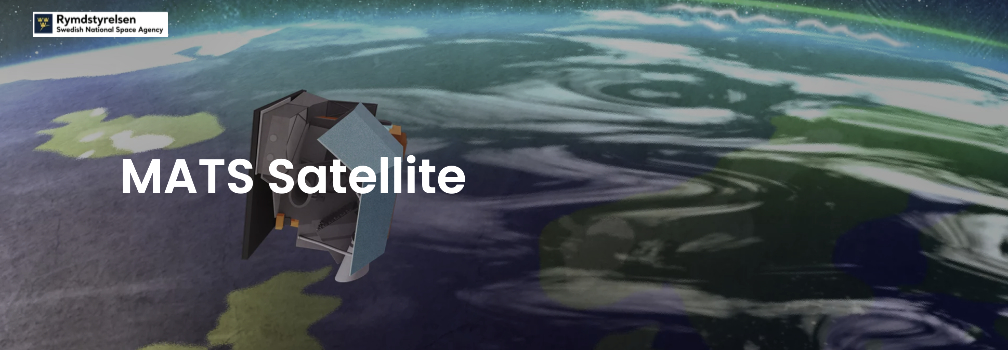
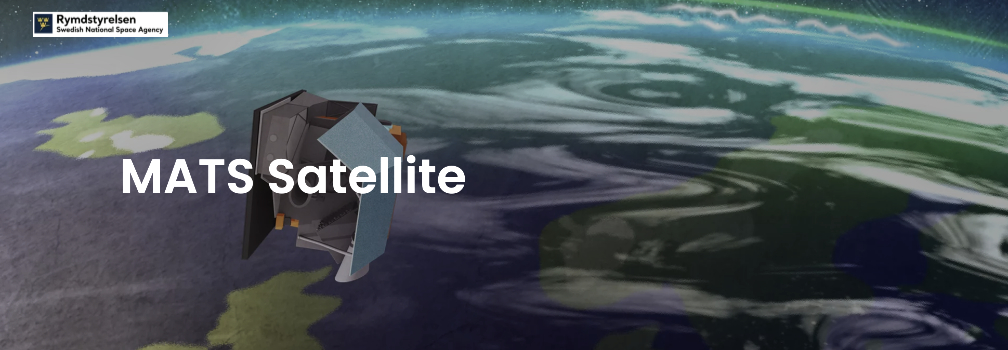
Rocket Lab USA Inc. has successfully launched its 32nd Electron mission to deploy the firm’s 152nd satellite to orbit, a science payload for the Swedish National Space Agency. The MATS satellite was deployed to its 585 km. circular orbit by Electron following lift-off at 17:27 UTC.

The company’s attempt to capture the Electron rocket with a helicopter as it descended to Earth from space was not successful; however, the ocean recovery of the rocket was successful and will be returned to the Rocket Lab’s Auckland Production Complex to be processed and assessed by engineers and technicians for possible re-use.

This science research satellite was built by space systems provider OHB Sweden. The Mesospheric Airglow/Aerosol Tomography and Spectroscopy (MATS) satellite is the basis for the SNSA’s science mission to investigate atmospheric waves and better understand how the upper layer of Earth’s atmosphere interacts with wind and weather patterns closer to the ground.

MATS was originally due to fly on a Russian launch service before the mission was manifested on Rocket Lab’s Electron. The MATS payload continued to its orbit onboard the rocket’s second stage while Electron’s first stage descended back to Earth.

The “Catch Me If You Can” mission also resulted in a successful ocean splashdown of the Electron rocket’s first stage. Rocket Lab had planned to attempt amid-air capture of Electron’s first stage with a helicopter if conditions allowed, however not all requirements were met to ensure a successful capture. Due to a brief telemetry loss with Electron’s first stage during its atmospheric re-entry, the helicopter was moved out of the capture zone per standard safety procedure. The Electron first stage completed a safe splashdown and Rocket Lab’s recovery vessel is now alongside the stage to bring it onboard and back to Rocket Lab’s production facility for inspection and analysis.

“Congratulations to the teams at OHB Sweden and the Swedish National Space Agency on their mission,” said Rocket Lab founder and CEO, Peter Beck. “It’s been a long journey for MATS, so I’m proud of the Rocket Lab team for doing their part to support this mission with a fast contract-to-orbit turnaround of just four months.”

Catch Me If You Can was Rocket Lab’s ninth mission of the year, adding to an already-record year of successful orbital launches for the Company. Rocket Lab remains on track to launch its first Electron mission from Virginia before the end of the year, on a mission for HawkEye360 that is scheduled to launch in December.

“Bringing a rocket back from space is a challenging task and capturing it mid-air with a helicopter is as complex as it sounds,” said Peter Beck. “The chances for success are much smaller than that of failure because many complex factors must perfectly align. We are proud to have successfully recovered our fifth rocket from the ocean now and we look forward to another mid-air capture attempt in future as we work toward making Electron a reusable rocket.”

Filed Under: News

Orbex to lead construction + operational management of Sutherland Spaceport

November 3, 2022 by editorial

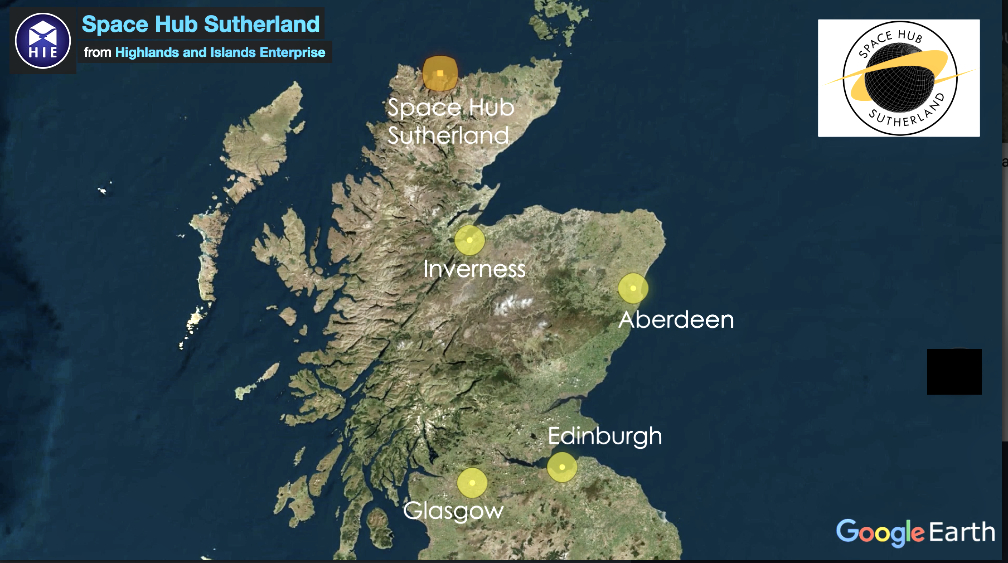
A Scottish rocket manufacturer and orbital launch services provider is to build and operate the first vertical launch site for satellites on the UK mainland.

Orbex, based in Forres, Moray, Scotland, has signed a lease with development agency Highlands and Islands Enterprise (HIE) for the spaceport location on community-owned land on the A’ Mhoine peninsula in north-west Sutherland.

HIE has been developing launch plans for several years and leases the site from Melness Crofters’ Estate. The sub-lease with Orbex will run for 50 years, with an option to extend for a further 25 years.

Orbex will oversee the construction and assume full operational management of the new facility. The 10-acre launch site will become the long-term ‘home’ spaceport of Orbex and will see the launch of as many as 12 orbital rockets per year, carrying satellites into LEO.

Orbex’s role in the spaceport will stimulate significant private investment that will benefit the local community through job creation, supply chain opportunities and other associated economic benefits. Total private investment over the initial three-year period is expected to reach £20 million.

In addition to increased opportunities for local businesses and contractors as part of the spaceport’s construction, Orbex expects to create up to 40 technical and non-technical FTE jobs to support the operation and maintenance of the site. The roles will span a number of areas including facilities and operational management, security, general administration and finance, marketing, stakeholder engagement and launch campaign-related roles. Employment opportunities will be advertised locally when recruitment commences.

HIE identified the potential for the Highlands and Islands to play a significant role in the UK’s growing space sector several years ago, recognizing that rural locations that are close to coasts and have a northern latitude can make ideal satellite launch sites.

With the backing of the UK Space Agency, HIE set to work developing plans for the Sutherland spaceport in 2018, with specialist input from architects NORR and construction consultants Gardiner and Theobald. At the same time, HIE commissioned detailed environmental studies to inform a broad range of protection measures around the site.

Planning permission was granted by the Highland Council in August of 2020. A separate development application to the Scottish Land Court – which was required as the launch site is on crofting land – was also successful.

Following its recent participation in Orbex’s Series C funding round, it has been confirmed that global technology-forward solutions company, Jacobs, will assume the role of prime construction contractor on behalf of Orbex. Jacobs will collaborate with Orbex to provide spaceport operations support, operations consultancy, and engineering services, drawing on its experience of managing and operating complex, highly regulated sites such as Cape Canaveral in the United States. Jacobs is NASA’s largest services provider, delivering mission-tailored solutions and full lifecycle aerospace capabilities including the Mars Perseverance Rover and the Artemis deep space human exploration program.

Overseeing the construction and operational management of the new spaceport will allow Orbex to streamline the development of the state-of-the-art facility, drafting in industry experts such as Jacobs to help meet its objectives. Sutherland Spaceport is intended to become the world’s greenest spaceport, both in terms of its construction and its operation. One illustration of this is how peat lifted during the construction will be re-used to repair large areas of peatland that have degraded over centuries.

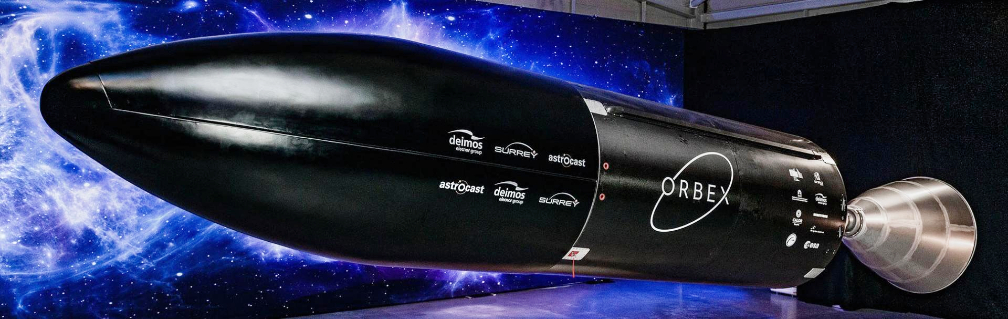
Uniquely, the new Orbex Prime rocket is powered by a renewable biofuel, Futuria Liquid Gas, supplied by Calor. This fuel allows the rocket to reduce carbon emissions significantly compared to other similarly sized rockets being developed elsewhere around the world.

A study by the University of Exeter showed that a single launch of the Orbex Prime rocket will produce 96 percent lower carbon emissions than comparable space launch systems using fossil fuels. Prime is also a re-usable rocket which has been engineered to leave zero debris on Earth and on-orbit. Orbex has already received a great deal of interest from commercial satellite manufacturers and has signed launch contracts with a number of customers.

Chris Larmour, the CEO of Orbex, said, “We are very grateful for the work that HIE and the Melness Crofters Estate have done, in getting us to the point where we can take the baton and start construction. We have collaborated closely with them over the past few years, and we are completely aligned in our vision of delivering a sustainable spaceport that will bring jobs and prosperity to the region. Orbex is the first European launcher company to also manage a dedicated spaceport. It is an important competitive advantage to the company, which will make it really easy for us to work with customers as we scale up our operations.”

David Oxley, Director of Strategic Projects, Highlands and Islands Enterprise, said, “The space industry represents a huge economic opportunity for the Highlands and Islands and for Scotland. The steps we’ve taken to establish launch capability in Sutherland have already delivered a significant economic impact as a key factor in attracting Orbex to establish their manufacturing facility and test site in Moray, creating dozens of skilled jobs, with many more in the pipeline. We believe the spaceport has the capacity to generate around 250 jobs in our region, including 40 on site, plus opportunities in manufacturing, supply chain, research and service provision. With Orbex now set to build and operate the spaceport, we’ve reached a key stage in our partnership that will not only see launches happening from Sutherland but a whole range of wider economic benefits delivered for the Highlands and Islands.”

Filed Under: News

Rocket Lab to attempt their next mid-air Electron rocket catch by helicopter with their next launch mission

November 3, 2022 by editorial

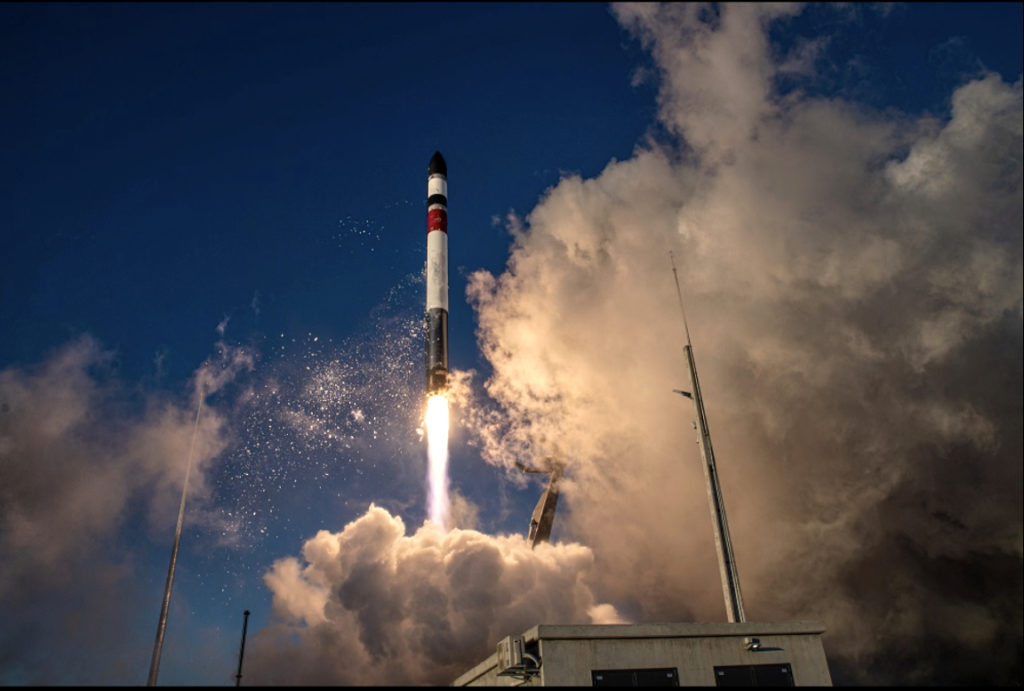
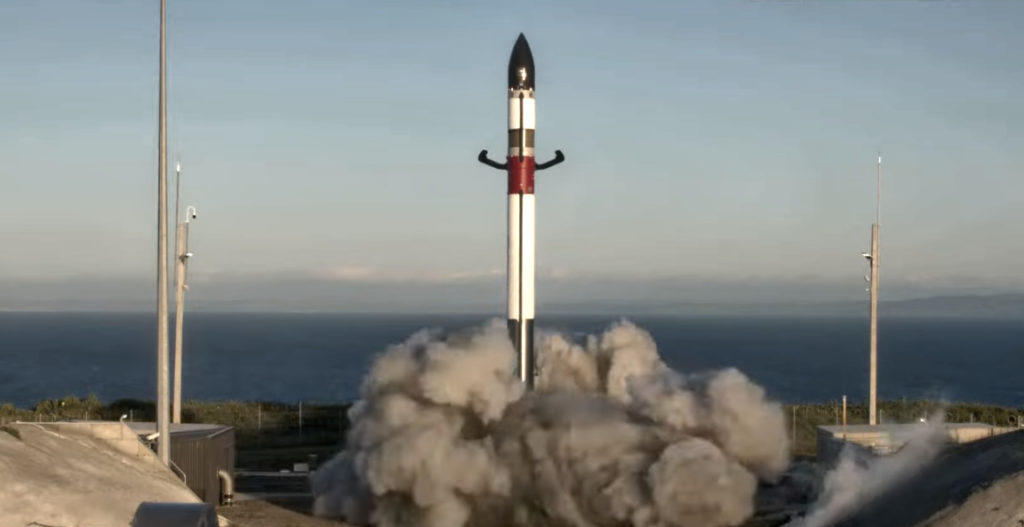
Rocket Lab USA, Inc. will attempt to catch an Electron rocket with a helicopter as it returns to Earth from space during the firm’s next launch.

Lift-off of a Rocket Lab Electron rocket.

Rocket Lab’s 32nd Electron launch, the “Catch Me If You Can” mission, is scheduled to launch from Pad B at Rocket Lab Launch Complex 1 during a launch window opening on November 04, UTC. Electron will carry a science research satellite by space systems provider OHB Sweden for the Swedish National Space Agency (SNSA). The Mesospheric Airglow/Aerosol Tomography and Spectroscopy (MATS) satellite is the basis for the SNSA’s science mission to investigate atmospheric waves and better understand how the upper layer of Earth’s atmosphere interacts with wind and weather patterns closer to the ground. MATS was originally due to fly on a Russian launch service before the mission was manifested on Rocket Lab’s Electron.

“Catch Me If You Can” will see Rocket Lab attempt to capture the rocket’s first stage mid-air with a helicopter as it returns from space. Using a modified Sikorsky S-92 helicopter to catch and secure the rocket by its parachute line, Rocket Lab will bring the captured stage back to its Auckland Production Complex to be processed and assessed by engineers and technicians for possible re-use.

This Electron recovery effort follows the catch of an Electron first stage during Rocket Lab’s first helicopter recovery attempt on the “There And Back Again” launch in May, and the recovery attempt for this mission will follow the same concept of operations as the previous launch.

Rocket Lab CEO and founder, Peter Beck, said, “Our first helicopter catch only a few months ago proved we can do what we set out to do with Electron, and we’re eager to get the helicopter back out there and advance our rocket reusability even further by bringing back a dry stage for the first time.”

Shortly before lift-off, the customized Sikorsky S-92 recovery helicopter will deploy to the capture zone at sea, approximately 160 nautical miles off New Zealand’s Banks Peninsula. Once launched, Electron’s first and second stages will separate at approximately T+2:32 minutes into the mission. The MATS payload will continue to orbit onboard the rocket’s second stage while Electron’s first stage descends back to Earth.

At this point in the mission, Electron’s return is expected to reach speeds of up to 8,300 km. (5,150 mph) and temperatures of up to 2,400 degrees C (4,352 F). At approximately T+7:20 minutes after lift-off, Electron’s first parachute will deploy followed shortly after by the rocket’s main parachute. The double deployment of parachutes helps to slow the returning first stage to 0.4% of its top speed during descent: from 8,300 km. per hour to just 36 km. per hour.

As Electron enters the capture zone, Rocket Lab’s recovery helicopter will match the rocket’s speed and descent from above, attempt to secure the trailing parachute engagement line to the helicopter via a hook at the end of a long line. Once captured and secured, Electron will be transported back to Rocket Lab’s Auckland Production Complex. There, technicians will receive and prepare the stage for inspection to assess its suitability for re-use.

Filed Under: Featured, News

U.S. Space Force Space Systems Command launches experimental satellite Tetra-1

November 2, 2022 by editorial

Tetra-1 is an experimental satellite designed for a variety of prototype missions in and around geostationary orbit, or GEO Photo Courtesy of Millennium Space System.

Delivered in less than 15 months by prime contractor Millennium Space Systems, a Boeing company, Tetra-1 is an experimental satellite designed for a variety of prototype missions in and around geostationary orbit, or GEO. The launch marks a new era for the Space Force, as it focuses on building and fielding new capabilities faster than in the past.

“The threat to our space systems is real. Speed is critical in developing advanced capabilities to stay ahead and, if necessary, defeat the threat.” said Col Joseph J. Roth, Innovation and Prototyping senior materiel leader for the U.S. Space Force Space Systems Command. “Tetra-1 is a great example of how a small company, and an innovative contracting approach, authorized by Congress, came together, and delivered an advanced satellite in record time.”

The small sat, about the size of a large dorm-room refrigerator, will help Space Force operators develop tactics, techniques, and procedures for Department of Defense missions.

Tetra-1 was the pacesetting first prototype awarded under Space Systems Command’s other transaction authority, or OTA, called the Space Enterprise Consortium (SpEC), that seeks to speed up procurements and diversify industry partnerships.

Building Smarter

To move fast on development and production of Tetra-1, Millennium Space Systems pulled its expertise from a variety of programs, including the GEO ALTAIR Pathfinder satellite that launched in 2017.

“It is important for SSC to deliver capabilities on time and within budget,” said Roth. “It is also important for the commercial space sector to continue to innovate and help drive down costs.”

“We’re known for delivering systems fast,” said Jason Kim, chief executive officer of Millennium Space Systems. “Our innovation is enabled by the fact that we build 80 percent of our components in-house. That lets us design, build and deliver a completely new satellite in a very short timeline.”

Such is the kind of innovation that Space Systems Command is looking for in procuring new capabilities, like Tetra-1 – working with partners that can take advantage of commercial best practices and existing satellite production. Photo Courtesy of Millennium Space Systems.

Small Sats, Layered Architecture

The Defense Department’s embrace of Tetra and other small satellites is being driven by the need to introduce resilient satellite systems and architectures to counter the Great Power competition. That’s because large, costly, exquisite satellite systems such as the Space Based Infrared System (SBIRS) — the fifth one was launched in mid-2021 and cost about $1 billion — are increasingly vulnerable to outright attack, which is a capability Russia demonstrated in November when it destroyed one of its own satellites with an anti-satellite missile.

“What we’re seeing is that some of the high-value asset missions that we’ve traditionally done in the past are being envisioned for large constellations of small satellites instead,” said Kim. “There are some benefits to the large constellations of small satellites in that the unit price point of each small satellite has gone down over the years. That lends itself to more affordability. And we’re now building these small satellites much faster and more efficiently, providing schedule savings.”

Use of small sats in a layered architecture spread across low-Earth orbit, medium-Earth orbit, and GEO will let the DoD quickly reconstitute capabilities should certain satellites become inoperative. For instance, loss of one SBIRS satellite in its five-satellite constellation could leave a major gap in missile-warning coverage. Conversely, loss of a few satellites in a larger constellation of dozens of satellites will only incrementally degrade capabilities and can be replaced in a faster fashion.

“Distributing the space architecture will help us build resiliency over time so that there’s not a single point of failure anywhere,” explained Roth. “We’re focused on making our systems and architectures more resilient and robust so if something happens, the Space Force can still perform the mission without fail.”

Filed Under: Featured, News

  • « Go to Previous Page
  • Go to page 1
  • Interim pages omitted …
  • Go to page 3
  • Go to page 4
  • Go to page 5
  • Go to page 6
  • Go to Next Page »

Primary Sidebar

WEEKLY NEWSLETTER

Archives

  • February 2026
  • January 2026
  • December 2025
  • November 2025
  • October 2025
  • September 2025
  • August 2025
  • July 2025
  • June 2025
  • May 2025
  • April 2025
  • March 2025
  • February 2025
  • January 2025
  • December 2024
  • November 2024
  • October 2024
  • September 2024
  • August 2024
  • July 2024
  • June 2024
  • May 2024
  • April 2024
  • March 2024
  • February 2024
  • January 2024
  • December 2023
  • November 2023
  • October 2023
  • September 2023
  • August 2023
  • July 2023
  • June 2023
  • May 2023
  • April 2023
  • March 2023
  • February 2023
  • January 2023
  • December 2022
  • November 2022
  • October 2022
  • September 2022
  • August 2022
  • July 2022
  • June 2022
  • May 2022
  • April 2022
  • March 2022
  • February 2022
  • January 2022
  • December 2021
  • November 2021
  • October 2021
  • September 2021
  • August 2021
  • July 2021
  • June 2021
  • May 2021
  • April 2021
  • March 2021
  • February 2021
  • January 2021
  • December 2020
  • November 2020
  • October 2020
  • September 2020
  • August 2020
  • July 2020
  • June 2020
  • May 2020
  • April 2020
  • March 2020
  • February 2020
  • January 2020
  • December 2019
  • November 2019
  • October 2019

© 2019–2026 SatNews

Insert/edit link

Enter the destination URL

Or link to existing content

    No search term specified. Showing recent items. Search or use up and down arrow keys to select an item.
      x
      Sign Up Now!

      Enjoy a free weekly newsletter with recent headlines from the global SmallSat industry.

      Invalid email address
      We promise not to spam you. You can unsubscribe at any time.
      Thanks for subscribing! You will now receive weekly SmallSat News updates.
      We love our advertisers.
      And you will too!

      Please disable Ad Blocker to continue... We promise to keep it unobtrusive.
      We promise not to spam you. You can unsubscribe at any time.
      Invalid email address
      Thanks for subscribing! Please check your email for further instructions.