• Skip to main content
  • Skip to primary sidebar
  • Home
  • News
  • Featured
  • More News ⌄
    • SatNews
    • SatMagazine
    • MilSatMagazine
  • Events ⌄
    • MilSat Symposium
    • SmallSat Symposium
    • Satellite Innovation
  • Contacts
  • SUBSCRIPTION

SmallSat News

You are here: Home / 2023 / Archives for June 2023

Archives for June 2023

Aerospacelab + Exolaunch successfully launch the Grégoire satellite

June 14, 2023 by editorial

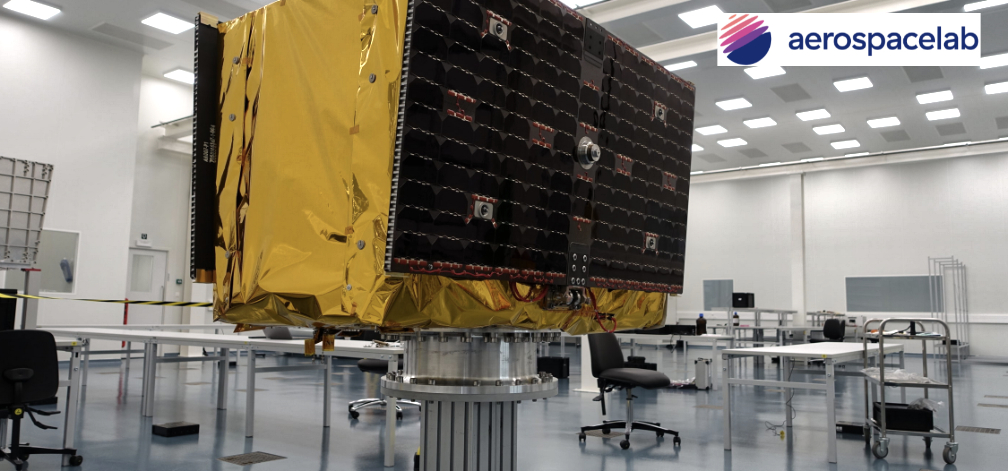
Aerospacelab and Exolaunch have launched the former’s Grégoire satellite, the company’s second private smallsat to travel into space.
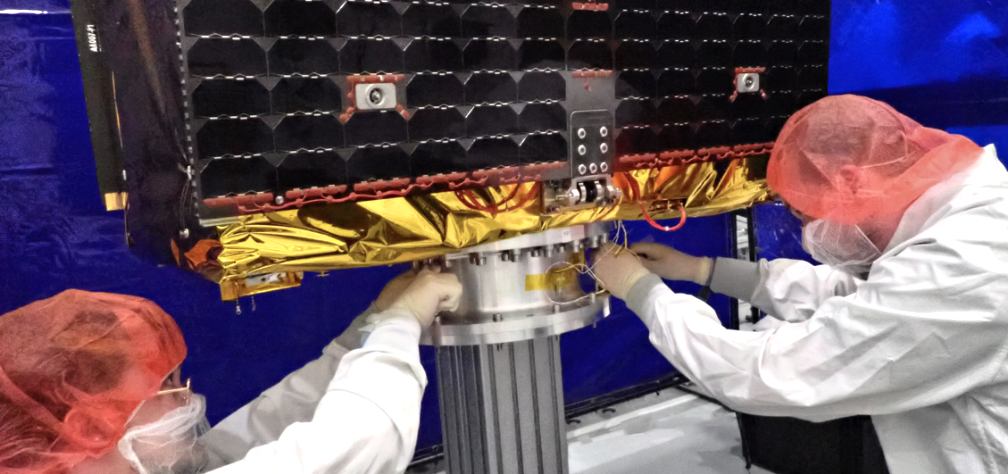
Two years after Aerospacelab’s first satellite mission (Arthur-1) flew into space on SpaceX‘s second dedicated smallsat rideshare mission (Transporter-2), Grégoire lifted off from Vandenberg Space Force Base on June 12, 2023.

With this launch, the two European companies debut their cooperation under a Multi-Launch Agreement (MLA) that will, through 2023 and 2024, enable the launch of seven of Aerospacelab’s Versatile Satellite Platform (VSP) via SpaceX’s Falcon 9 and further strengthen their relationship. Aerospacelab and Exolaunch are members of the Young European Enterprises Syndicate for Space (YEESS), an international organization dedicated to boosting competitivity and promoting innovations emerging from the space sector in Europe.

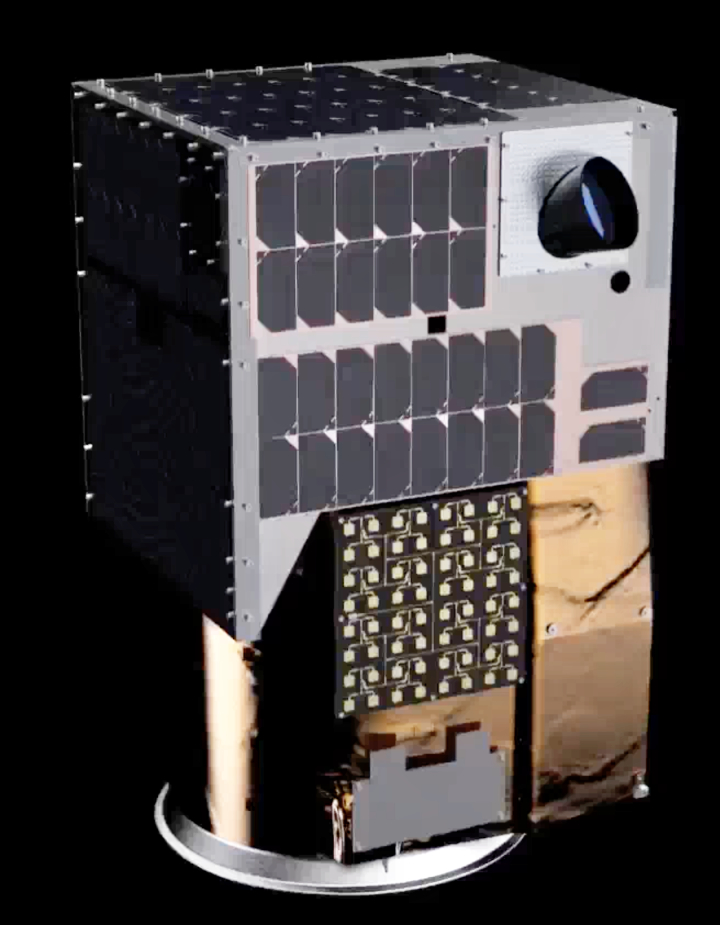
While primarily focused on demonstrating Aerospacelab’s VSP capabilities in terms of attitude control, data handling and payload interfaces (to name but a few), Grégoire further makes the case for Aerospacelab’s laser communication operating between the satellite and its ground station, thanks to a Free Space Optical Communication (FSOC) embarked terminal.

In addition to illustrating Aerospacelab’s expertise on design, structure building and vertical manufacturing integration, Grégoire represents the maiden flight of Aerospacelab’s Versatile Satellite Platform which, on one hand, aims to provide private and public stakeholders with standardized building blocks capable of accommodating various missions and, on the other hand, ensures progress towards the company’s project to build a constellation of satellites in the upcoming years.

The VSP is a key component of Aerospacelab’s plan to provide a European answer to the expected upsurge in global small satellite demand. Indeed, after securing 40 million euros in Series B financing in 2022, the company is about to start the construction of its satellite megafactory which will become Europe’s largest manufacturing factory with an expected production capacity of 500 satellites/year.

Aerospacelab selected Exolaunch as mission management and integration services provider due to that company’s outstanding record on Falcon 9 and its flight heritage that spans 20 missions. In addition to overseeing Grégoire and the follow-on satellites’ launches with end-to-end mission management, Exolaunch will provide Aerospacelab with their industry leading CarboNIX separation system to ensure reliable separation of the satellites. With a flight record of more than 50 smallsats deployed across 12 missions, CarboNIX will guarantee low-shock and smooth separations to safely deliver the satellites into their target orbits.

“The launch of Grégoire, our second small satellite to reach orbit, is not only a key milestone that highlights Aerospacelab as a global player in the aerospace industry, it is also the opportunity for us to assert our expertise and showcase that we’re able to internally design and manufacture most of the satellite’s components while remaining competitively priced.”
— Benoit Deper, CEO and founder of Aerospacelab

“Exolaunch is proud to be awarded a series of launch contracts from Aerospacelab to safely deliver their seven VSP satellites into orbit. It’s been a pleasure to work with Aerospacelab’s highly professional team over successive launch campaigns to perform a rapid VSP satellite constellation deployment in a matter of months. Having just launched Grégoire on Falcon 9 from Vandenberg, we look forward to many more successful launches together with Aerospacelab and SpaceX.”
— Jeanne Allarie, VP Launch at Exolaunch

“In projects of this scope, agility and adaptability are crucial turning points that define the “make it” or “break it” moment. Thanks to the talent and commitment of our collaborators, we were able to have a satellite ready for launch only a few years after design started from scratch. Not only was it possible to design and build this brand-new platform in house, but this asset allows now to speed up the follow-up missions with already 5 more satellites in their AIT phase right now.“
— Dorian Lasnet, Project Manager, Aerospacelab
Filed Under: News

Satellogic continues the expansion of their EO constellation

June 14, 2023 by editorial

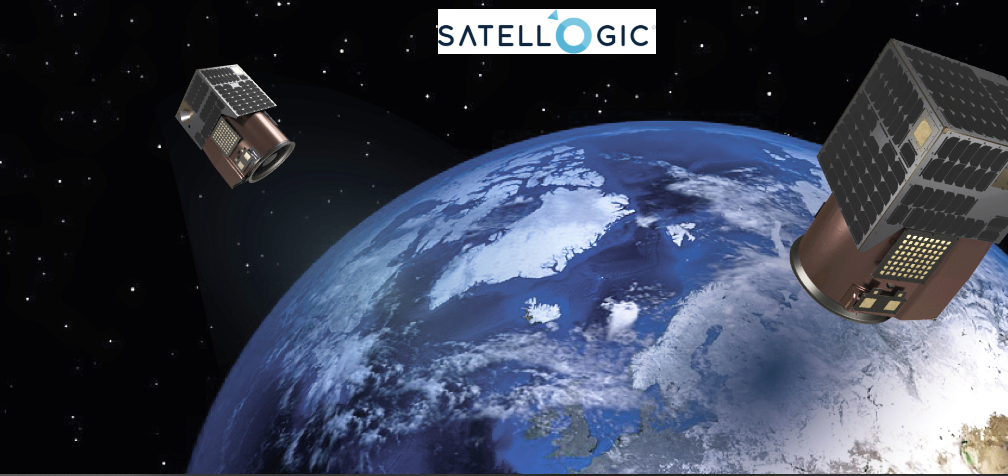
Satellogic Inc. (NASDAQ: SATL) launched four, NewSats Mark-V spacecraft successfully to LEO aboard the SpaceX Transporter-8 mission on June 12th from Vandenberg Space Force Base in California.

This marks Satellogic’s 15th mission and the firm’s first payload comprised exclusively of their latest generation spacecraft with advanced EO capabilities.

Following the launch, each spacecraft reached LEO and successfully connected with Satellogic’s ground station network. Satellogic now has 38 smallsats on-orbit, the largest, commercial fleet of sub-meter resolution satellites in the world.

Satellogic designed and manufactured the NewSats Mark-V spacecraft, which include more than 10,000 components in a system that enables 10 times the image collection capability of our competitors and end-to-end vertical integration with solutions that make access to high-frequency and high-resolution imagery affordable.

Improved cameras, radios, computers, and other subsystems compatible with components from previous models, enable Satellogic to provide its customers with higher quality products. Each spacecraft carries a multispectral camera to provide geospatial data with 0.7 meter resolution imagery and unmatched frequency for customized applications.

Satellogic’s previous launch on the SpaceX Transporter-7 Mission in April of 2023 was the final integration of the Company’s earlier NewSats Mark-IV spacecraft model. Satellogic expects to build and launch as many as 10 additional NewSats Mark-V satellites this year to increase the company’s ability to remap the Earth every two weeks by the end of 2023.

The Company aims to expand its constellation to more than 200 satellites for daily remaps of the Earth’s surface, with up to 40 revisits of points of interest per day, for better decision-making at every level around the world.

“Today we celebrate 15 consecutive successful missions and the continued expansion of our constellation, which means we are consistently delivering more capacity, more reliability – and in this case next-gen capabilities – for our customers. With each launch, we increase opportunities for Earth Observation autonomy, whether through asset monitoring, Constellation-as-a-Service, or validating enhancements for future Space Systems customers. With greater capacity, we can serve customers’ individual needs more effectively.”
— Matt Tirman, Chief Commercial Officer, Satellogic

Filed Under: News

UNIO names a new CTO to drive Europe’s 1st commercial satellite constellation for the mobility industry

June 14, 2023 by editorial

Frederick C. Baker has been named as the new Chief Technology Officer for UNIO, a new space company that is a joint venture with Isar Aerospace, Reflex Aerospace, Mynaric and SES.

Frederick C. Baker

Throughout his career, Mr. Baker has ‘been there and done it’ with regard to deep space tech — both government and commercial, startup and prime, in Europe, the United States and beyond. That depth of expertise will make an enormous contribution to the firm’s mission of using space to deliver high-speed connectivity to enable next generation mobility.

Frederic’s appointment completes UNIO’s core leadership team and allows the company to now gear up all of the combined efforts into delivering on the firm’s ambitious goals, including getting the first Proof-of-Concept satellite into orbit by 2024. This will be followed by a second, client-sponsored, multi-satellite mission in 2025.

Fluent across multiple geographic, cultural, and technical landscapes, Baker’s career has straddled the North American and European continents, equally. He will now work to deliver on his first stated task as CTO, that being to build UNIO’s core development team and craft the company’s end-to-end service architecture by the autumn of 2023.

“Since watching the moon-landing as a boy, I dreamed of being an astronaut. But what I have spent my career focusing on may be even more enriching: untapping the huge potential of bringing the benefit of space technologies to everyone’s lives. And I believe no company is currently more committed to that approach than UNIO and its quest for ubiquitous, seamless, and secure dual-use connectivity globally for both commercial and government applications. As such, I am excited to be joining as CTO and contributing to what will become the invincible connectivity backbone of Europe in space.” — Frederick C. Baker, CTO, UNIO

UNIO combines the expertise of leading players from all core areas that are crucial to successful satellite communications. UNIO is architecting Europe’s first sovereign, commercial satellite constellation for ubiquitous high-speed, high-performance, and highly secure dual-use connectivity focusing upon enabling new products and services within the mobility industry and beyond. Other areas of applications could include direct communication between companies (B2B) or between companies and public administrations (B2G).

Filed Under: News

OQ Technology confirms successful launch of their Tiger – 4 LEO satellite

June 14, 2023 by editorial

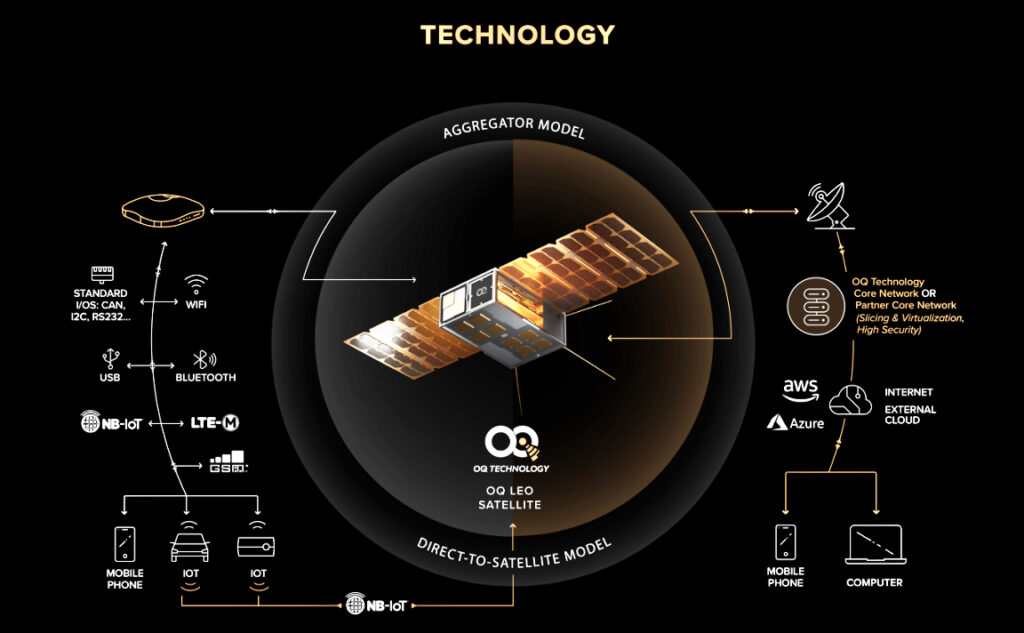
OQ Technology successfully launched their new, LEO satellite — Tiger-4 — on board the SpaceX Transporter-8 rideshare mission — this state-of-the-art satellite further strengthens OQ Technology’s satellite network, bringing the company one step closer to achieving global coverage for the firm’s 5G NB-IoT services.

The launch took place on June 12th, 2023, and the satellite signal was detected and acquired by the Vilnius ground station the next day. The satellite is currently operating nominally.

OQ Technology made a major announcement earlier this year, detailing its goal of expanding its constellation of LEO satellites from three to ten. The company is now well on track to achieving this objective, with the successful launch of the Tiger-4 satellite representing a significant milestone in OQ’s mission to provide ubiquitous coverage of 5G NB-IoT connectivity to government and enterprise clients on a global scale.

The new satellite has been designed with standard 5G NTN protocol considerations to support seamless integration and interoperability within terrestrial IoT ecosystems as set by 3GPP. It provides valuable solutions for Mobile Network Operators (MNOs) with reliable solutions for critical IoT applications.

The importance of 5G technology in satellite IoT (Internet of Things) lies in its ability to provide high-speed, reliable, and low-latency connectivity to a wide range of devices, including those in remote and difficult-to-reach locations.

In satellite IoT, 5G technology enables the integration of satellite networks with terrestrial networks, creating a seamless and unified network that can support a wide range of applications, including smart agriculture, pipeline monitoring, transportation tracking, and much more.

Moreover, 5G technology enables satellite IoT devices to operate in challenging environments, such as harsh weather conditions, remote locations, or disaster areas, where traditional communication networks may not be available.

Overall, 5G technology in satellite IoT can provide significant commercial benefits for businesses, organizations, governments, and individuals by enabling the creation of a connected and intelligent world that is more efficient, secure, and sustainable.

Tiger-4 will unlock a vast array of IoT solutions that have been specifically designed for land, maritime, and aerospace applications.

“We are proud and delighted to announce the successful launch of our new Tiger-4 satellite. The advanced features and technologies of the satellite are a testament to the skill, commitment, and expertise built up within our team. Tiger-4 showcases the cutting-edge engineering and technical capabilities we now possess, enabling us to design and build world-class space technologies. This satellite brings OQ a step closer to having a comprehensive network supporting our commercial growth plans.”
— Omar Qaise, Founder and Chief Executive Officer, OQ Technology

OQ Technology is the world’s first satellite 5G IoT operator that provides global cellular Internet-of-Things and Machine-to-Machine communication solutions through satellites. The company has successfully implemented and demonstrated Narrowband IoT connectivity over Low Earth Orbit satellites and is deploying a global constellation to provide 5G IoT telecommunication services for mobile operators and customers in industries such as energy, mining, logistics, maritime, agriculture, and defense. The company’s patented technology that can be easily embedded in existing 5G chips allows billions of users around the world to have ubiquitous IoT connectivity anywhere and using both terrestrial and satellite networks.

Filed Under: News

Septentrio collaborates with Xona on PULSAR™ GNSS receiver

June 14, 2023 by editorial

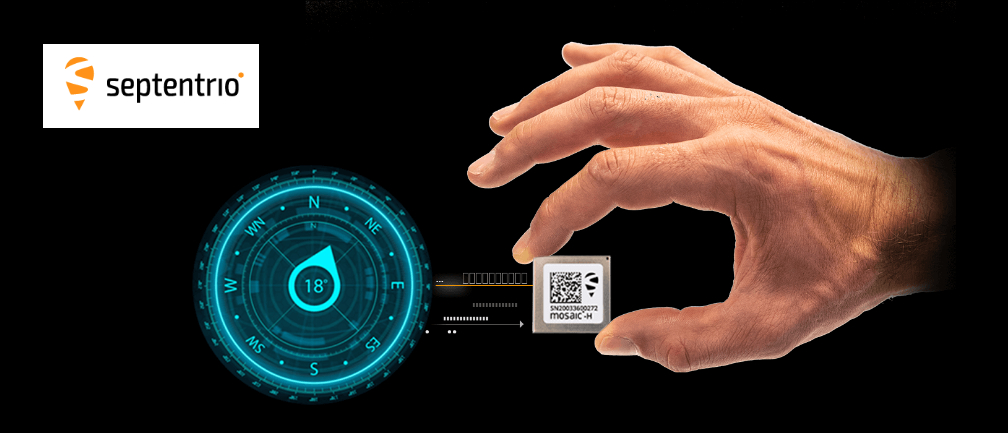
Septentrio has been collaborating with Xona Space Systems to develop an experimental receiver that is compatible with the latter’s multi-frequency PULSAR™ signals.

This multi-frequency receiver that supports Xona’s LEO PNT signals will be one of the first to decode all PULSAR™ signals in parallel with other standard GNSS* signals. This makes it ideal for testing Xona’s upcoming LEO-PNT constellation in a simulated environment, since live signals are not yet available. LEO-PNT is a satellite navigation system that consists of low orbit satellites, which provide geographic positioning, a concept similar to a GNSS system such as GPS.

Xona Space Systems is pioneering the nexgen of space-based PNT (Positioning, Navigation, and Timing) to answer the need for more secure, accurate, and robust services.

The PULSAR™ system will consist of 260 LEO satellites orbiting the Earth 25 times closer than GPS satellites. The higher signal power resulting from closer proximity to Earth and the modernized signal design provide opportunities for better multipath mitigation and higher accuracy, as well as increased interference and spoofing protection.

High accuracy and resilient operation are also the main pillars on which Septentrio has built their PNT receivers over the last two decades, providing reliable positioning and timing solutions to critical infrastructure and industrial applications such as precision agriculture, construction, robotics and much more.

“We are thrilled to welcome Septentrio to the PULSAR ecosystem,” said . “Septentrio is well-known as an industry leader in developing high-quality and resilient GNSS products. As Xona PULSAR signals become available, a Septentrio receiver will offer users an opportunity to be the first to experiment with PULSAR and GNSS in many different scenarios.”
— Bryan Chan, VP of Business Development and Strategy, Septentrio

“We are excited to collaborate with Xona Space Systems during this new era for PNT technology. After our deep involvement in various expansions of the GNSS ecosystem, most notably Galileo for receivers of both reference networks and user applications, it is exciting to leverage our experience in the next phase of space-based PNT, which has opened up with LEO-PNT.”
— Jan Van Hees, Business Development Director at Septentrio.

  • Global Navigation Satellite System including the American GPS, European Galileo, Russian GLONASS, Chinese BeiDou, Japan’s QZSS and India’s NavIC. These satellite constellations broadcast positioning information to receivers which use it to calculate their absolute position.

Filed Under: News

Fugro and GomSpace deliver world class position and timing accuracy onboard LEO satellites

June 14, 2023 by editorial

Fugro and GomSpace have been working together on the SpaceStar™ product since 2020. Since that time, the first SpaceStar systems has gained flight heritage and credible performance: Real time, sub-decimeter, absolute positioning on board an LEO satellite without additional, required ground-infrastructure for the satellite operator — a truly unique capability that can be instrumental in advanced missions that involve rendezvous and docking or precise formation flying.
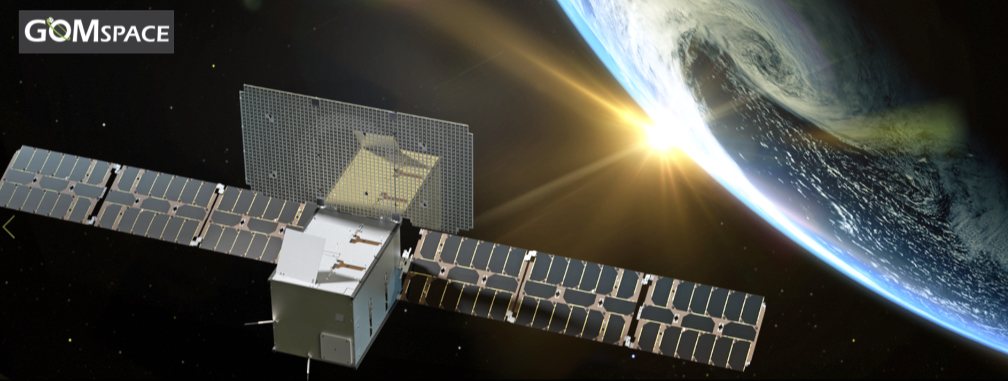


SpaceStar relies on GomSpace’s Software Defined Radio (SDR) with Fugro’s software using real-time orbit and clock corrections from GEO satellites. The SDRs are delivered by GomSpace with the Fugro SpaceStar software pre-installed, and the customer signs a service agreement with Fugro to use the system in space.

GomSpace has recently received an additional product order from a well-known and returning customer that will use the SpaceStar system on multiple satellites.

“We are excited about the cooperation with Fugro and having SpaceStar on the market as a standard product. The performance demonstrated in space is amazing.” — Carsten Drachmann, CEO, GomSpace

Filed Under: News

Exolaunch’s 32 customer satellites successfully gain their orbits with the Transporter-8 mission

June 13, 2023 by editorial

Exolaunch integrated 32 customer satellites with SpaceX’s Falcon 9 as all reached their orbits following the Transporter-8 mission liftoff from Vandenberg SFB — Exolaunch has now managed 300 satellite launches.

Exolaunch provided mission management and integration services for New Space leaders and longstanding customers such as Spire Global, Kongsberg NanoAvionics and ICEYE, as well as returning customers Satlantis, Swarm Technologies and TU Stuttgart.

Additionally, Exolaunch welcomed new customers who selected the Company’s CarboNIX, shock-free smallsat separation systems to ensure a reliable separation for their satellites, including Muon Space, Turion Space, Aerospacelab and Azista BST Aerospace (ABA).

Exolaunch successfully mated all 32 smallsats with SpaceX’s new Rideshare Plates. Exolaunch welcomed customer teams from around the world to its Berlin facilities to perform a joint integration of CubeSats with their EXOpod / EXOpod Nova deployers.

In addition to its integration services, Exolaunch is provided proprietary and flight-proven hardware to all customers on this mission. The Company’s CarboNIX separation system boasts a heritage of more than 50 smallsats deployed across 12 missions and has become the system of choice for smallsat innovators, due to its reliability and scalable solution. Exolaunch is also provided CubeSat customers with EXOpod / EXOpod Nova deployers that have set multiple industry records by deploying the first 16U smallsat in orbit and are the only product to achieve this in GEO.

This was Exolaunch’s 11th mission with SpaceX, manifested under long-term Multi-Launch Agreements (MLAs) first signed in 2020 and repeatedly expanded to include new missions. Transporter-8 was the latest launch in SpaceX’s dedicated rideshare program and Exolaunch has manifested customers on each Transporter mission since the program debuted.

“Our mission management team is committed to customer success every step of the way, from the clean room to orbit. They orchestrate missions that are years in the making to ensure a smooth experience – even on entirely new rideshare architectures like we’ve seen here. However, launch services are only one side of the story, and we’re very grateful to SpaceX for continuing to transform the access-to-space landscape with regular, reliable launches and ever-better technology.”
— Connor Pollock, Mission Director at Exolaunch

Filed Under: News

Rocket Lab spacecraft built for Varda are successfully operating on-orbit

June 13, 2023 by editorial

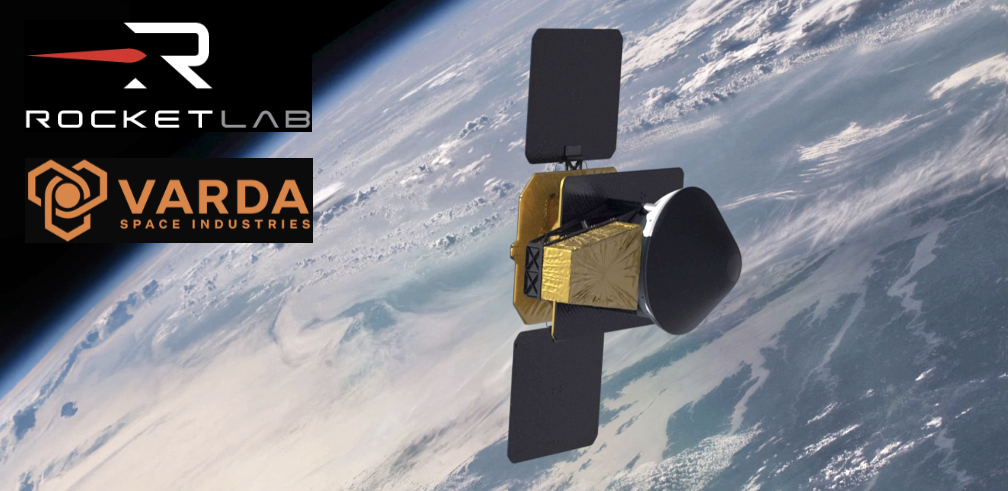
Rocket Lab USA, Inc. (Nasdaq: RKLB) has announced the the firm’s spacecraft built for Varda Space Industries (“Varda”) is successfully operating on-orbit after launching from Vandenberg Space Force Base on June 12th on SpaceX’s Transporter-8 mission at 14:35 PDT (21:35 UTC).

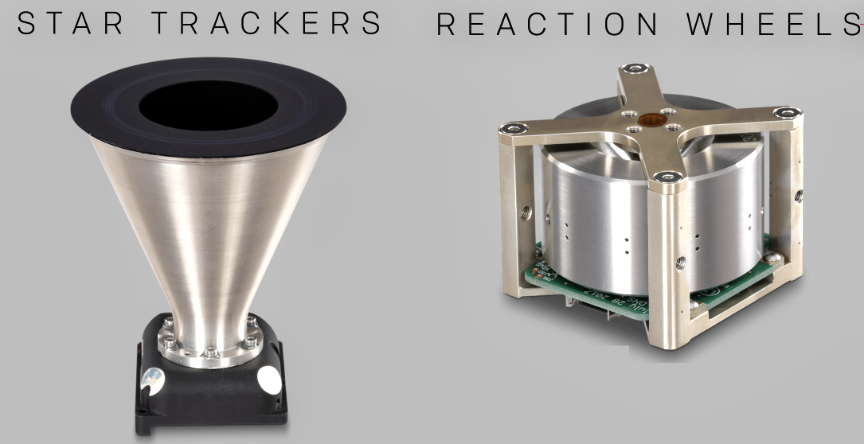
The spacecraft was developed, manufactured and tested at Rocket Lab’s Spacecraft Production Facility in Long Beach, California, and incorporates Rocket Lab-designed and manufactured components and software, including star trackers, propulsion system, reaction wheels, solar panels, flight software, radios, composite structures and tanks, and separation systems.

The spacecraft will provide power, communications, propulsion, and attitude control to Varda’s 120 kg capsule that will produce pharmaceutical products in microgravity and return them to Earth. Upon completion of the in-space manufacturing phase of Varda’s mission, Rocket Lab’s spacecraft will place Varda’s hypersonic re-entry capsule (carrying finished pharmaceuticals on board) on a return trajectory to Earth.

The spacecraft is the first of four ordered by Varda to support in-space pharmaceutical manufacturing, with the second spacecraft currently undergoing assembly, integration, and testing.

The Varda spacecraft are part of a growing list of complete satellites in development by Rocket Lab, including a $143 million subcontract by MDA to lead the design and manufacture of 17 spacecraft buses for Globalstar’s new LEO satellites.

Leveraging the Company’s vertically integrated space systems capabilities, Rocket Lab spacecraft incorporate components and subsystems produced in-house to deliver cost efficiencies and accelerated production timelines. Rocket Lab components and subsystems have been successfully flown on more than 1,000 spacecraft globally.

“Congratulations to our Space Systems team and to Varda on the start of an incredibly exciting and important mission. From technology demonstration missions in low Earth orbit to complex missions to the Moon, and now in-space manufacturing, Rocket Lab spacecraft are enabling innovation on orbit. By leveraging our deep vertical integration across Space Systems we’ve been able to deliver a high-quality spacecraft to Varda on a rapid timeline to accelerate their mission and we look forward to delivering many more.”
— Brad Clevenger, Vice President, Rocket Lab Space Systems

“We’re thrilled to have partnered with Rocket Lab on our first demonstration mission. Varda has managed to go from opening our office doors to a first flight in just two and a half years. In addition to the incredible team we have at Varda, one of the key enablers to this speed was because we could focus on our core expertise, re-entry, and manufacturing, while leveraging Rocket Lab’s Photon spacecraft platform.”
— Nicholas Cialdella, Head of Vehicles at Varda

Filed Under: Featured, News

Six satellites mfg’d by Kongsberg NanoAvionics reach orbit via the SpaceX Transporter-8 mission

June 13, 2023 by editorial

Kongsberg NanoAvionics (NanoAvionics) had six of their manufactured satellites reaching orbit today’s as payloads aboard the SpaceX Transporter-8 mission.

One of them, Tiger-4, belongs to telecoms operator OQ Technology and will expand the world’s first and largest 5G Narrowband-IoT constellation in LEO. The 6U smallsat is the fourth satellite manufactured for OQ Technology by NanoAvionics.

The second payload from NanoAvionics is a 16U, optical, Earth Observation (EO) satellite named “GEI-SAT” and is owned by Satlantis, a Spanish-based developer as well as the manufacturer of “Earth & Universe Observation” payloads for smallsats. The satellite is a precursor of a Satlantis’ remote sensing constellation intended to perform atmospheric CH4 measurements with high spatio-temporal resolution and simultaneous geolocation of source emitters.

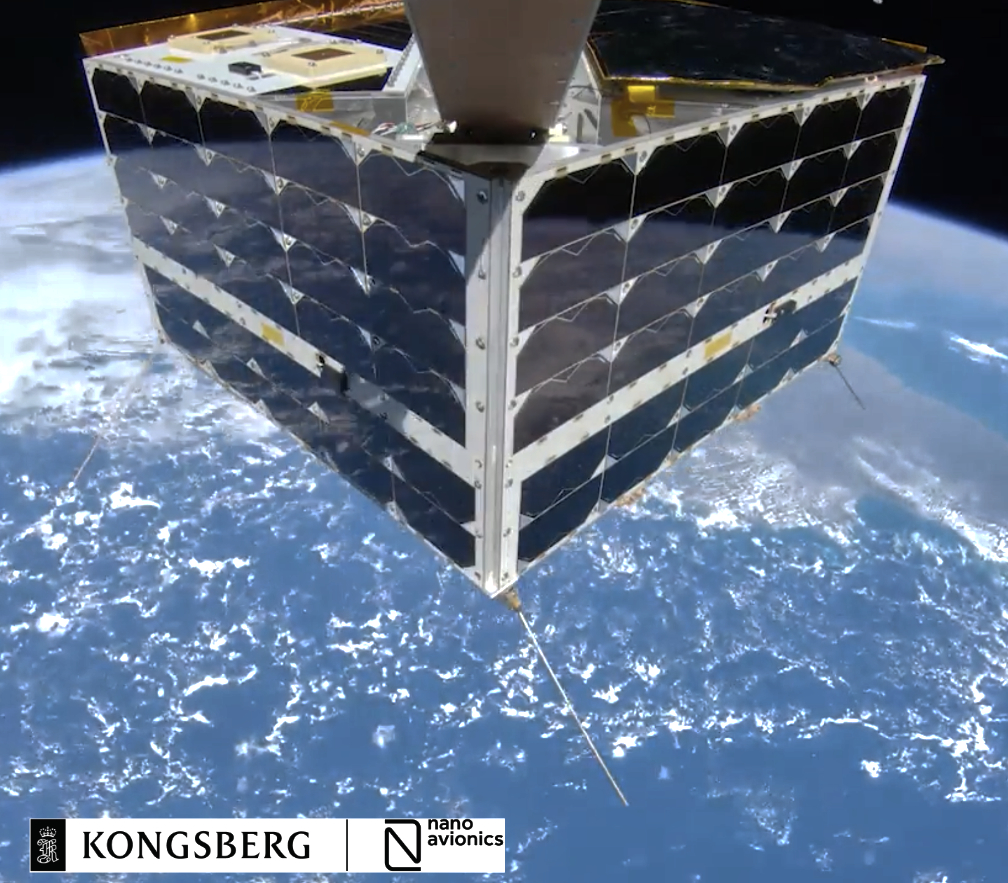
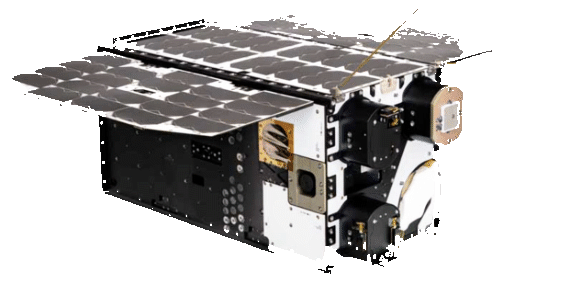
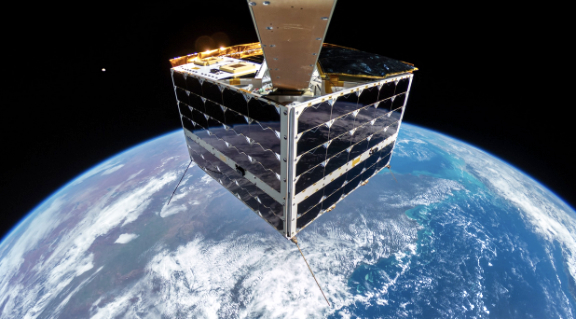
This smallsat will be used to monetize and obtain quantification of methane emissions in the oil & gas (O&G) industry. NanoAvionics supplied the mission with the M16P satellite bus (pictured to the right) and mission integration services.

The other four satellites ordered by three unnamed companies include one smallsat for remote sensing mission using RF, two technology demo satellites plus an MP42H (pictured to the left) orbital reconnaissance demo smallsat that acquire highly accurate measurements of spacecraft and objects in orbit to reduce the threat of in-space collisions.

All satellites were manufactured at NanoAvionics’s MAIT (manufacturing, assembly, integration, and testing) facility in Vilnius, Lithuania, established to meet the demands for serial smallsat production for constellations by commercial, civil, and governmental organisations.

“The SpaceX Transporter-8 mission marks our 12th manufactured satellite to launch this year alone. Most of these satellites are from existing customers, highlighting their satisfaction and continued trust in our services and capabilities to quickly build high-quality and cost-efficient nano- and microsatellites. We are also working on delivering and readying for launch over a dozen more satellites for our customers, including this year’s first assembled 100+ kg microsatellite, by the end of the year.”
— Vytenis J. Buzas, Founder and CEO, NanoAvionics

Filed Under: Featured, News

A SpaceX Falcon 9 successfully dispatched 72 spacecraft to orbit — USSF’s SSC has 3 experimental smallsats aboard — dozens of further payloads are deployed…

June 12, 2023 by editorial

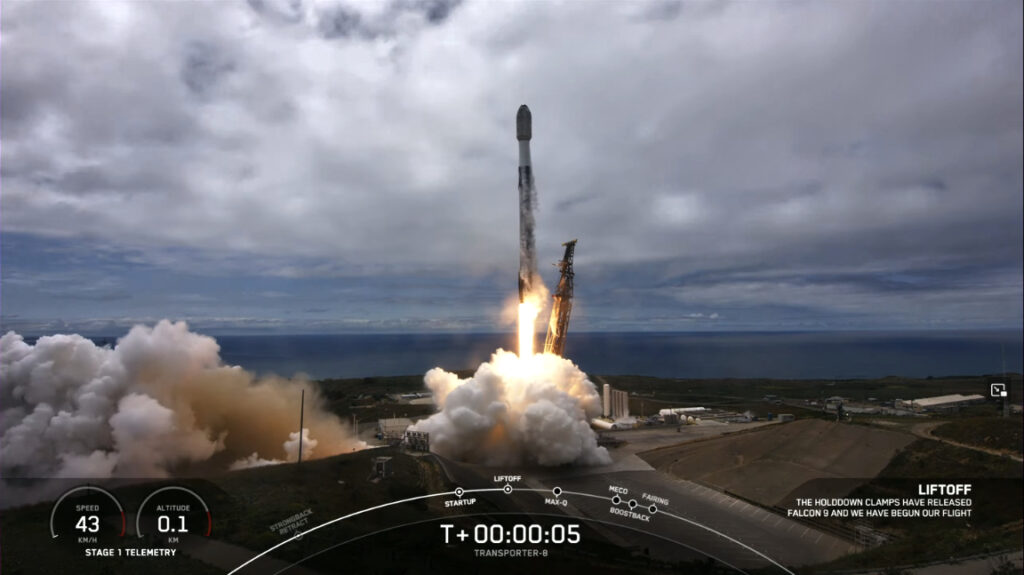
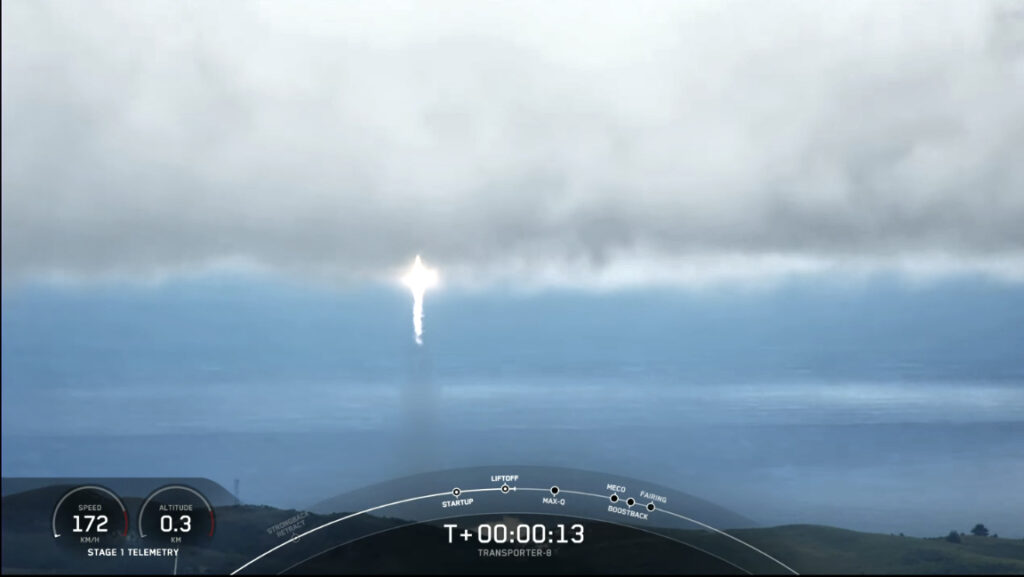
A SpaceX Falcon 9 launch of the Transporter-8 mission to LEO occurred at Space Launch Complex 4E (SLC-4E), at Vandenberg Space Force Base in California.

The first stage booster supporting this mission previously launched NROL-87, NROL-85, SARah-1, SWOT, and four Starlink missions.

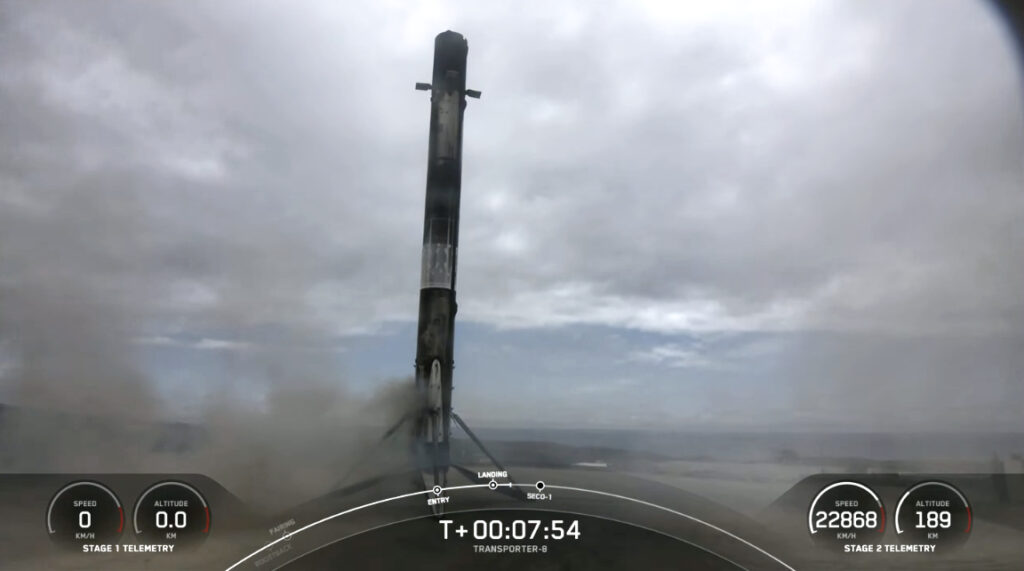
Following 1st stage separation, Falcon 9 landed on Landing Zone 4 (LZ-4) at Vandenberg Space Force Base.

Transporter-8 is SpaceX’s eighth dedicated smallsat rideshare mission. There are 72 payloads on this flight, including smallsats, a re-entry capsule and orbital transfer vehicles (OTV) carrying spacecraft for orbit deployment at a later time.

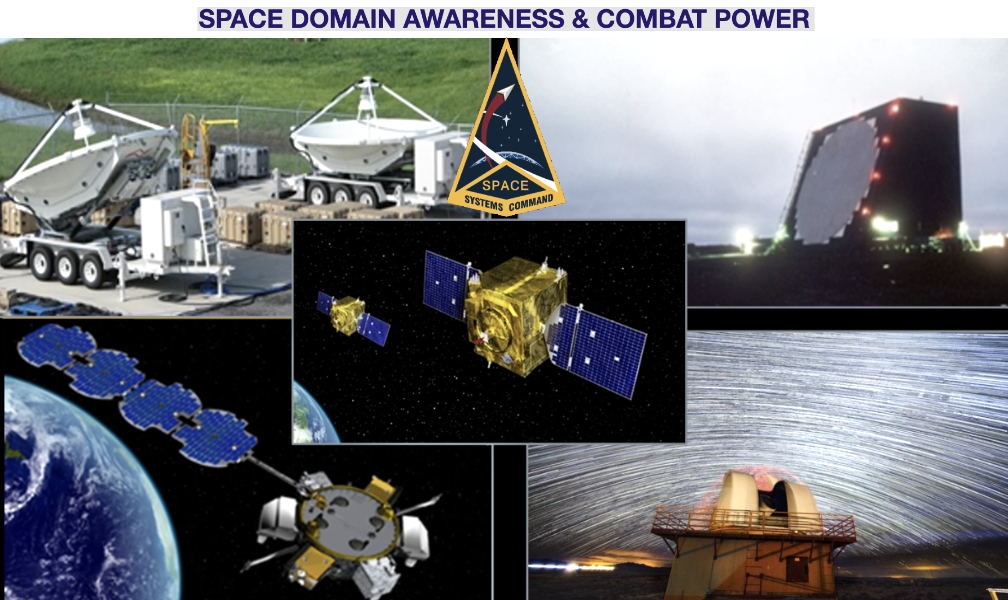
As a member of this mission, Space Systems Command (SSC)’s Space Domain Awareness & Combat Power (SDA&CP) and partner Air Force Research Laboratory (AFRL) have now launched the Department of Defense‘s Space Test Program (STP)-CR2301 mission, with three, experimental satellites delivered to LEO.

The three experimental satellites delivered by STP-CR2301 to LEO include two Modular Intelligence, Surveillance, and Reconnaissance (MISR) CubeSats and an XVI military communications spacecraft. The MISR CubeSats demonstrate two-way communications with ground devices as well as experiment with novel methods for the DoD to tactically leverage smallsat capabilities. The XVI CubeSat will test the capacity of the Link-16 network to communicate to space.

STP-CR2301 is another example of demonstrating commercially available rideshare solutions for placing USSF satellite capabilities on-orbit, providing flexibility and resiliency for the USSF, and supporting warfighter requirements in an increasingly contested environment.

STP-CR2301 is managed by the DoD STP office located at Kirtland Air Force Base in Albuquerque, New Mexico. SSC’s SDA&CP headquartered at Los Angeles Air Force Base, administers the DoD STP which delivers experimental demonstrations of new capabilities and expedient space access solutions for research and development experiments.

SDA&CP is the program executive office within SSC that is responsible for delivering ground- and space-based infrastructure and systems that identify threats to national, allied, and commercial space systems. Its innovations integrate seamlessly across the space enterprise and promote deterrence by providing advances in space-enabled warfighting capabilities to our joint military forces.

“Cultivating multiple paths to space for experimental satellites is imperative to maintain continued access as space becomes further congested and contested. STP manifests experiments based on the prioritized list of critical space technologies generated by the Space Experiment Review Board (SERB) as well as the ability of the payloads to meet the launch dates, and orbital requirements. STP is proud to be the front door for experimental satellites looking for a ride to space.”
— Lt. Col. Jonathan Shea, SSC’s director of the DoD’s Space Test Program

SSC is the U.S. Space Force’s field command responsible for acquiring and delivering resilient war fighting capabilities to protect our nation’s strategic advantage in and from space. SSC manages an $11 billion space acquisition budget for the DoD and works in partnership with joint forces, industry, government agencies, academic and allied organizations to accelerate innovation and outpace emerging threats. Our actions today are making the world a better space for tomorrow.

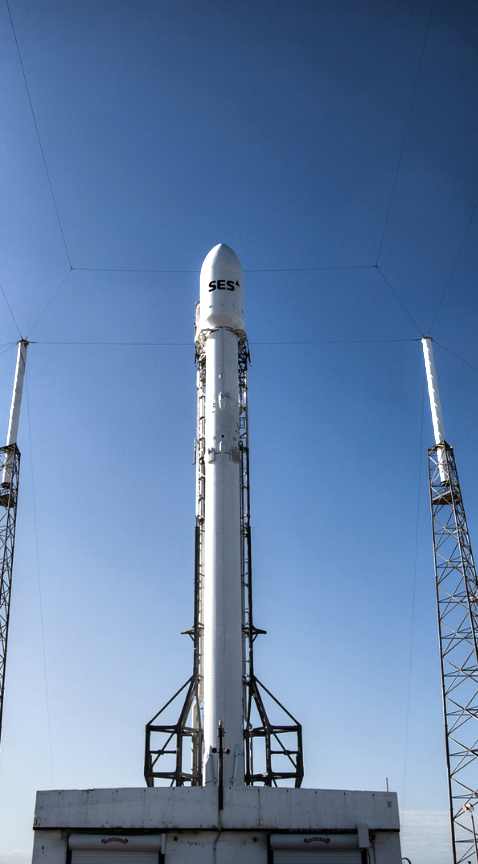
Photo of a Falcon 9 rocket on launch pad courtesy of SpaceX

Additional deployed payloads include…

D-Orbit manifested, ION SCV-011 to be deployed by Savvy Simon

Exolaunch manifested, AFR-1 | All-DELTA | Ayris-1, -2 | Droid.001 | EIVE | GEISAT | Grégoire | ICEYE-1, -2, -3, -4, deployed for ICEYE | LEMUR 2 AADAM-ALIYAH, LEMUR 2 EMBRIONOVIS, LEMUR 2 NAZIYAH | MuSat-1 | Spacebees [Swarm] |

iQPS: QPA-SAR-6 AMATERU III

Launcher: Orbiter SN3

Lockheed Martin Corporation: Blackjack Aces-1, -2, -3 and -4

Maverick Space Systems: FOSSASAT-FEROX | GHOSt-3 | MISR-A, MISR-B | Tomorrow-R2 | Tiger-4 | XVI |

Satellogic: NewSat 40, 41, 42, 43

SatVu: HotSat-1

Skykraft: Skykraft-3

Terran Orbital: Runner-1

Varda: W-Series 1

Filed Under: News

  • « Go to Previous Page
  • Page 1
  • Page 2
  • Page 3
  • Page 4
  • Page 5
  • Page 6
  • Go to Next Page »

Primary Sidebar

WEEKLY NEWSLETTER

Archives

  • March 2026
  • February 2026
  • January 2026
  • December 2025
  • November 2025
  • October 2025
  • September 2025
  • August 2025
  • July 2025
  • June 2025
  • May 2025
  • April 2025
  • March 2025
  • February 2025
  • January 2025
  • December 2024
  • November 2024
  • October 2024
  • September 2024
  • August 2024
  • July 2024
  • June 2024
  • May 2024
  • April 2024
  • March 2024
  • February 2024
  • January 2024
  • December 2023
  • November 2023
  • October 2023
  • September 2023
  • August 2023
  • July 2023
  • June 2023
  • May 2023
  • April 2023
  • March 2023
  • February 2023
  • January 2023
  • December 2022
  • November 2022
  • October 2022
  • September 2022
  • August 2022
  • July 2022
  • June 2022
  • May 2022
  • April 2022
  • March 2022
  • February 2022
  • January 2022
  • December 2021
  • November 2021
  • October 2021
  • September 2021
  • August 2021
  • July 2021
  • June 2021
  • May 2021
  • April 2021
  • March 2021
  • February 2021
  • January 2021
  • December 2020
  • November 2020
  • October 2020
  • September 2020
  • August 2020
  • July 2020
  • June 2020
  • May 2020
  • April 2020
  • March 2020
  • February 2020
  • January 2020
  • December 2019
  • November 2019
  • October 2019

© 2019–2026 SatNews

Insert/edit link

Enter the destination URL

Or link to existing content

    No search term specified. Showing recent items. Search or use up and down arrow keys to select an item.
      x
      Sign Up Now!

      Enjoy a free weekly newsletter with recent headlines from the global SmallSat industry.

      Invalid email address
      We promise not to spam you. You can unsubscribe at any time.
      Thanks for subscribing! You will now receive weekly SmallSat News updates.
      We love our advertisers.
      And you will too!

      Please disable Ad Blocker to continue... We promise to keep it unobtrusive.
      We promise not to spam you. You can unsubscribe at any time.
      Invalid email address
      Thanks for subscribing!