• Skip to main content
  • Skip to primary sidebar
  • Home
  • News
  • Featured
  • More News ⌄
    • SatNews
    • SatMagazine
    • MilSatMagazine
  • Events ⌄
    • MilSat Symposium
    • SmallSat Symposium
    • Satellite Innovation
  • Contacts
  • SUBSCRIPTION

SmallSat News

You are here: Home / 2023 / Archives for June 2023

Archives for June 2023

SpaceX maneuvers 52 Starlinks to LEO

June 12, 2023 by editorial

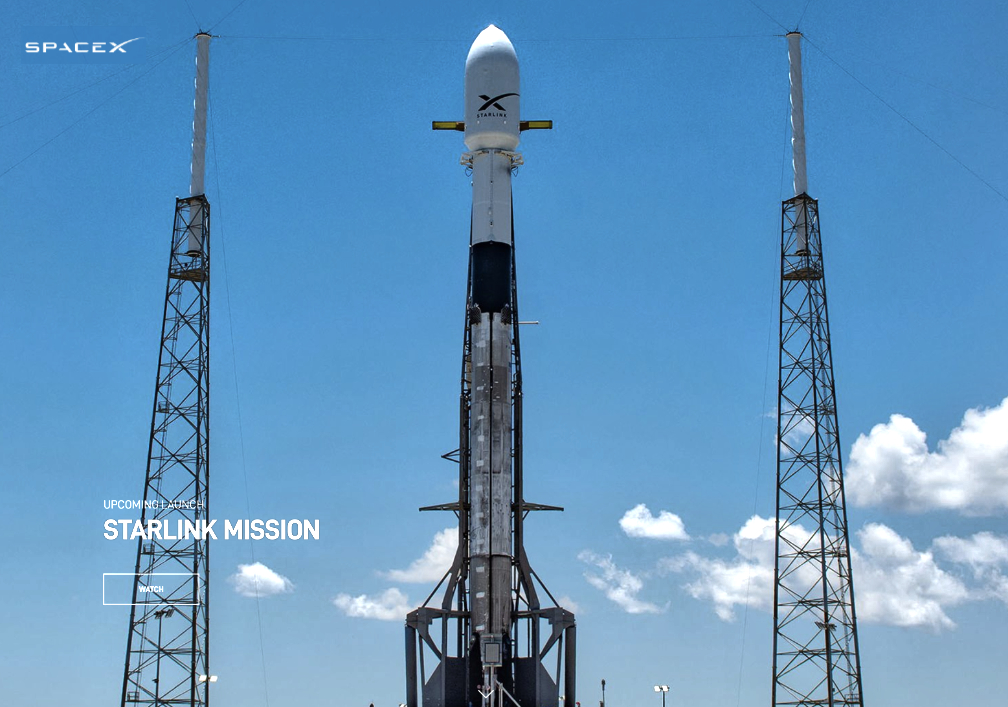
The first SpaceX launch of the day and this one occurred on Tuesday, June 12th., at 3:10 a.m. ET (07:10 UTC) and a Falcon 9 carried 53 Starlink satellites to LEO from Space Launch Complex 40 (SLC-40) at Cape Canaveral Space Force Station in Florida.
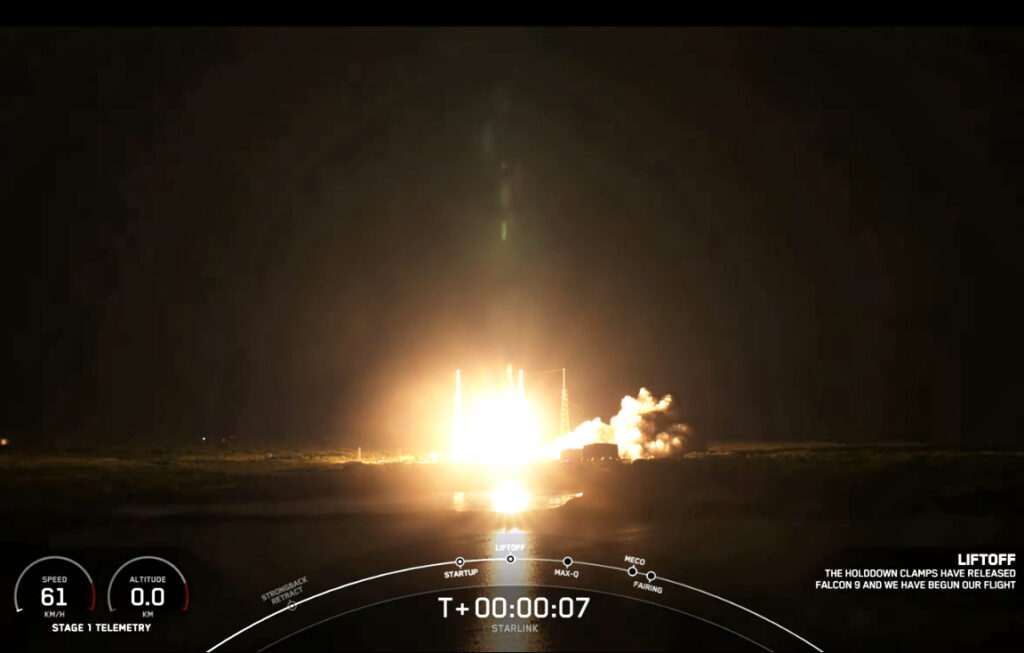
The first stage booster supporting this mission previously launched SES-22, ispace’s HAKUTO-R Mission 1, Hispasat Amazonas Nexus, CRS-27, and four Starlink missions.

Following stage separation, the first stage landed on the Just Read the Instructions droneship stationed in the Atlantic Ocean.

Filed Under: News

A SpaceX Falcon 9 to dispatch 72 spacecraft to orbit on Monday, June 12th — USSF’s SSC has 3 experimental smallsats aboard — dozens of further payloads for deployment…

June 11, 2023 by editorial

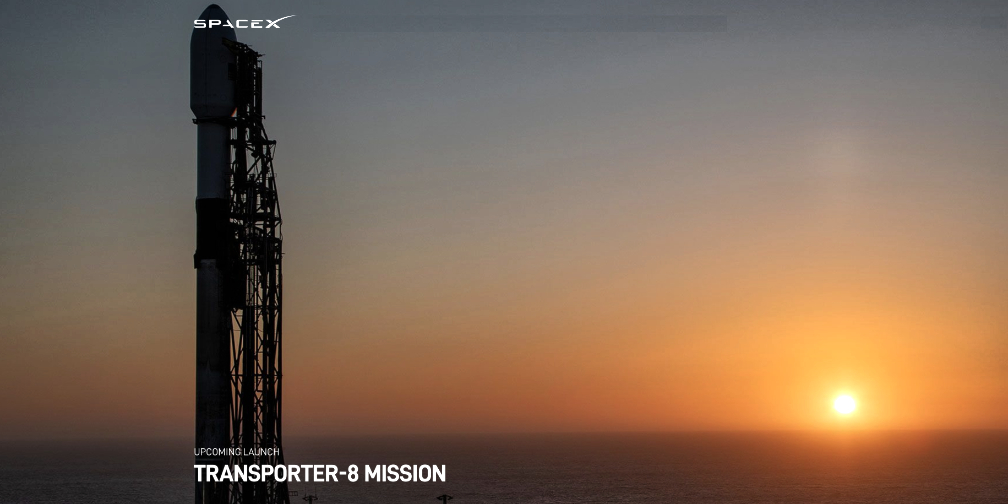
A SpaceX Falcon 9 launch of the Transporter-8 mission to LEO is expected to occur at Space Launch Complex 4E (SLC-4E), at Vandenberg Space Force Base in California. The 57 minute launch window opens at 2:19 p.m. PT (21:19 UTC). If needed, there is a backup opportunity on Tuesday, June 13th, with the same window.

The first stage booster supporting this mission previously launched NROL-87, NROL-85, SARah-1, SWOT, and four Starlink missions.

Following 1st stage separation, Falcon 9 will land on Landing Zone 4 (LZ-4) at Vandenberg Space Force Base.

Transporter-8 is SpaceX’s eighth dedicated smallsat rideshare mission. There will be 72 payloads on this flight, including smallsats, a re-entry capsule and orbital transfer vehicles (OTV) carrying spacecraft for orbit deployment at a later time.

A live webcast of this mission will start about 15 minutes prior to liftoff at this direct link…

As a member of this mission, Space Systems Command (SSC)’s Space Domain Awareness & Combat Power (SDA&CP) and partner Air Force Research Laboratory (AFRL) is preparing to launch the Department of Defense‘s Space Test Program (STP)-CR2301 mission to deliver three experimental satellites to LEO.v

The three experimental satellites to be delivered by STP-CR2301 to LEO include two Modular Intelligence, Surveillance, and Reconnaissance (MISR) CubeSats and an XVI military communications spacecraft. The MISR CubeSats demonstrate two-way communications with ground devices as well as experiment with novel methods for the DoD to tactically leverage smallsat capabilities. The XVI CubeSat will test the capacity of the Link-16 network to communicate to space.

STP-CR2301 is another example of demonstrating commercially available rideshare solutions for placing USSF satellite capabilities on-orbit, providing flexibility and resiliency for the USSF, and supporting warfighter requirements in an increasingly contested environment.

STP-CR2301 is managed by the DoD STP office located at Kirtland Air Force Base in Albuquerque, New Mexico. SSC’s SDA&CP headquartered at Los Angeles Air Force Base, administers the DoD STP which delivers experimental demonstrations of new capabilities and expedient space access solutions for research and development experiments.

SDA&CP is the program executive office within SSC that is responsible for delivering ground- and space-based infrastructure and systems that identify threats to national, allied, and commercial space systems. Its innovations integrate seamlessly across the space enterprise and promote deterrence by providing advances in space-enabled warfighting capabilities to our joint military forces.

“Cultivating multiple paths to space for experimental satellites is imperative to maintain continued access as space becomes further congested and contested. STP manifests experiments based on the prioritized list of critical space technologies generated by the Space Experiment Review Board (SERB) as well as the ability of the payloads to meet the launch dates, and orbital requirements. STP is proud to be the front door for experimental satellites looking for a ride to space.”
— Lt. Col. Jonathan Shea, SSC’s director of the DoD’s Space Test Program

SSC is the U.S. Space Force’s field command responsible for acquiring and delivering resilient war fighting capabilities to protect our nation’s strategic advantage in and from space. SSC manages an $11 billion space acquisition budget for the DoD and works in partnership with joint forces, industry, government agencies, academic and allied organizations to accelerate innovation and outpace emerging threats. Our actions today are making the world a better space for tomorrow.

Photo of a Falcon 9 rocket on launch pad courtesy of SpaceX

Additional payloads manifested for the Transporter-8 mission include…

D-Orbit manifested, ION SCV-011 to be deployed by Savvy Simon

Exolaunch manifested, AFR-1 | All-DELTA | Ayris-1, -2 | Droid.001 | EIVE | GEISAT | Grégoire | ICEYE-1, -2, -3, -4, deployed for ICEYE | LEMUR 2 AADAM-ALIYAH, LEMUR 2 EMBRIONOVIS, LEMUR 2 NAZIYAH | MuSat-1 | Spacebees [Swarm] |

iQPS: QPA-SAR-6 AMATERU III

Launcher: Orbiter SN3

Lockheed Martin Corporation: Blackjack Aces-1, -2, -3 and -4

Maverick Space Systems: FOSSASAT-FEROX | GHOSt-3 | MISR-A, MISR-B | Tomorrow-R2 | Tiger-4 | XVI |

Satellogic: NewSat 40, 41, 42, 43

SatVu: HotSat-1

Skykraft: Skykraft-3

Terran Orbital: Runner-1

Varda: W-Series 1

Filed Under: News

SAIC to Deliver Space Battle Management Command and Control Solution for Space Development Agency

June 11, 2023 by editorial

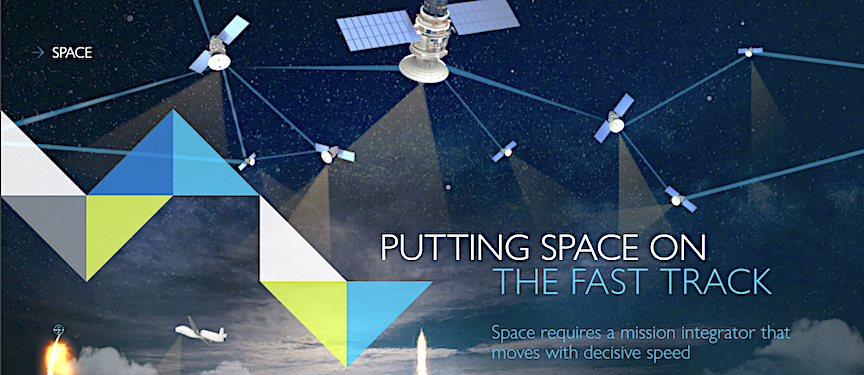
Science Applications International Corp. (NYSE: SAIC) has been selected for a $64 million award from the Space Development Agency (SDA) to develop, implement and maintain the Battle Management Command, Control and Communications (BMC3) Application Factory for the agency’s constellation of low-Earth orbit satellites called the Proliferated Warfighter Space Architecture (PWSA).

“The BMC3 component of the PWSA is transformational for the Department of Defense and the country,” said Michael LaRouche, president, National Security and Space Sector at SAIC. “The Space Development Agency is entrusting SAIC to deliver an innovative approach that weaves together command and control, secure cloud and space systems integration for critical warfighter needs.”

The BMC3 Application Factory is a cloud-based solution that will deliver software through a DevSecOps process to a constellation of hundreds of low-Earth orbit satellites. To support time-sensitive missions, BMC3 software applications will deliver automated space-based battle management through command and control, mission processing and dissemination of data. The BMC3 Application Factory’s ability to rapidly test and integrate upgraded software capabilities of on-orbit assets will help the Space Force adapt to evolving threats and needs.

Through the award, SAIC will integrate command and control, software, cyber, cloud and engineering solutions. As the BMC3 integrator, SAIC will support the PWSA, a critical component to the Department of Defense’s JADC2 strategy. The PWSA provides ubiquitous data communications and accelerates decision-making. This will ensure the SDA’s on-orbit assets that have been built by multiple vendors, can quickly adapt to evolving near-peer threats and warfighter needs. SAIC will also develop a secure interoperable middleware layer that will ensure BMC3 mission applications can operate on the various satellite providers’ hardware, enabling real-time coordination across the PWSA.

To learn more about SAIC’s work in digital capabilities visit.

Filed Under: News

SpaceX going for two on January 12th — a Starlink launch is also scheduled for departure from Cape Canaveral SFB

June 11, 2023 by editorial

Another SpaceX launch — in addition to the firm’s Transporter-8 mission from the West coast — is scheduled to occur on Monday, June 12th., at 3:10 a.m. ET (07:10 UTC) for a Falcon 9 launch of 53 Starlink satellites to LEO from Space Launch Complex 40 (SLC-40) at Cape Canaveral Space Force Station in Florida.

If needed, there is an additional launch opportunity the same day at 4:52 a.m. ET (8:52 UTC). Backup opportunities are also available Tuesday, June 13 at 2:45 a.m. ET (06:45 UTC) and 4:26 a.m. ET (8:26 UTC).

The first stage booster supporting this mission previously launched SES-22, ispace’s HAKUTO-R Mission 1, Hispasat Amazonas Nexus, CRS-27, and four Starlink missions.

Following stage separation, the first stage will land on the Just Read the Instructions droneship stationed in the Atlantic Ocean.

A live webcast of this mission will start about five minutes prior to liftoff at this link…

Filed Under: News

Viasat selected by AFRL to deliver space relay comms for multi-orbit mission

June 11, 2023 by editorial

Viasat Inc. (NASDAQ: VSAT) has been selected by the Air Force Research Laboratory (AFRL) Space Vehicles Directorate (RV) to provide on-orbit, space relay connectivity for the agency’s ARBALEST program, which aims to support a future, space-based demo of operational capabilities for the Department of Defense (DoD).

The future AFRL mission will illustrate the advantages of enabling real-time, global connectivity between DoD LEO spacecraft and commercial GEO satellites.

The ARBALEST program and expected AFRL-led mission will demonstrate the military utility of LEO space relay over commercial high throughput satellites in support of space mission resilience, real-time data dissemination, command and control (C2), as well as the rapid re-tasking of government space vehicles.

Viasat’s space relay solution is key to enabling these capabilities and will leverage the upcoming ViaSat-3 constellation, which includes three,, terabit-class GEO satellites, to provide continuous coverage for LEO spacecraft anywhere and at any time in their orbit.

Under the ARBALEST program, Viasat will provide AFRL with a Ka-band space relay payload for integration into a spacecraft for the future AFRL mission, as well as provide engineering analysis, integration and test support. Viasat will also support the on-orbit demonstration phase of the mission.

Viasat’s on-orbit connectivity solutions are designed to reduce data latency, provide real-time tasking of on-orbit assets, and enhance resilience through multi-path networking schemes. The space relay service will be a new offering to help commercial and government LEO operators share time-sensitive data more effectively and remain in constant contact with their spacecraft, allowing them to send commands and receive data at any time – all through the high-capacity, resilient ViaSat-3 constellation.

This future AFRL mission will be the first pathfinder demonstration of Viasat’s space relay service. The Viasat space relay service is expected to achieve initial operational capability in late 2025.

“Viasat is very excited to expand its partnership with AFRL and to accelerate the delivery of advanced commercial space-based communications for the DoD,” said . “This real-time space relay capability will offer an efficient method of moving LEO satellite data to the ground for operations. Most importantly, this technology will help increase resilience for future U.S. space missions and benefit warfighters with more direct, immediate access to information and data to improve the situational awareness and decisions supporting the safety of those on the front lines.”
— Craig Miller, President, Viasat Government Systems

Filed Under: News

The 1st Triton-X satellite starts the journey for the inaugural flight

June 11, 2023 by editorial

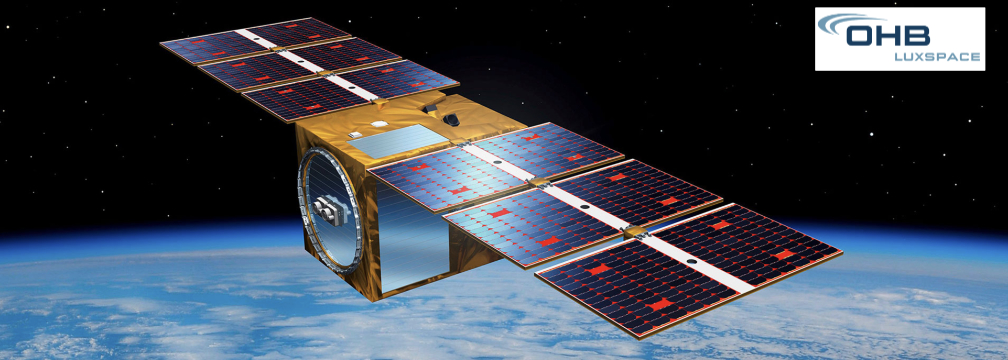
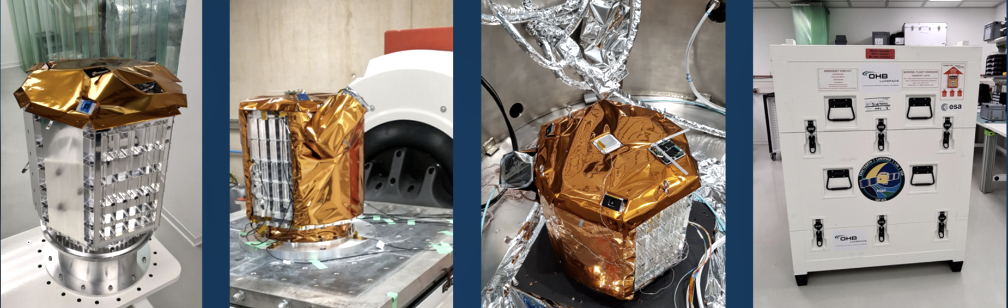
Triton-X is a new competitive and multi-mission European smallsat platform product line currently under development as part of ESA’s program of Advanced Research in Telecommunications Systems (ARTES) and is designed to give low-cost and fast-track access to LEO for commercial and institutional applications.

The first satellite developed under the Triton-X multi-mission platform program for LEO is now on its way to be integrated onto the launcher for the upcoming inaugural flight.

Developed under an ESA Partnership Project with LuxSpace, the Triton-X Genesis smallsat will demo the performances of newly developed and highly innovative elements that include the avionics architecture that embeds a high-performance on-board computer, a telecommunications system that will enable to command, control and monitor the satellite as well as a star tracker that will provide pointing accuracy of the satellite.

The satellite was built in less than 10 months using generic, off-the-shelf building blocks, high-performance field programmable gate arrays (FPGAs) and micro-controllers.

The Triton-X platform can accommodate payloads up to 90 kg for a wide range of applications including telecommunications, Earth Observation (EO), situational awareness and on-orbit demonstration and validation.

Tailored to be compatible with the new generation small launchers, rideshare and hosted payload mission architectures, Triton-X Genesis is due to be launched on board a SpaceX Falcon 9 in October.

Six ESA member states have subscribed to Triton-X Partnership Project. The program is led by LuxSpace in Luxembourg together with six industrial partners and ten suppliers in Belgium, the Czech Republic, Germany, Portugal, Switzerland, and across Europe.

Filed Under: News

A SpaceX Falcon 9 to dispatch 72 spacecraft to orbit on Monday, June 12th — USSF’s SSC has 3 experimental smallsats aboard — dozens of further payloads for deployment…

June 10, 2023 by editorial

A SpaceX Falcon 9 launch of the Transporter-8 mission to LEO is expected to occur at Space Launch Complex 4E (SLC-4E), at Vandenberg Space Force Base in California. The 57 minute launch window opens at 2:19 p.m. PT (21:19 UTC). If needed, there is a backup opportunity on Tuesday, June 13th, with the same window.

The first stage booster supporting this mission previously launched NROL-87, NROL-85, SARah-1, SWOT, and four Starlink missions.

Following 1st stage separation, Falcon 9 will land on Landing Zone 4 (LZ-4) at Vandenberg Space Force Base.

Transporter-8 is SpaceX’s eighth dedicated smallsat rideshare mission. There will be 72 payloads on this flight, including smallsats, a re-entry capsule and orbital transfer vehicles (OTV) carrying spacecraft for orbit deployment at a later time.

A live webcast of this mission will start about 15 minutes prior to liftoff at this direct link…

As a member of this mission, Space Systems Command (SSC)’s Space Domain Awareness & Combat Power (SDA&CP) and partner Air Force Research Laboratory (AFRL) is preparing to launch the Department of Defense‘s Space Test Program (STP)-CR2301 mission to deliver three experimental satellites to LEO.v

The three experimental satellites to be delivered by STP-CR2301 to LEO include two Modular Intelligence, Surveillance, and Reconnaissance (MISR) CubeSats and an XVI military communications spacecraft. The MISR CubeSats demonstrate two-way communications with ground devices as well as experiment with novel methods for the DoD to tactically leverage smallsat capabilities. The XVI CubeSat will test the capacity of the Link-16 network to communicate to space.

STP-CR2301 is another example of demonstrating commercially available rideshare solutions for placing USSF satellite capabilities on-orbit, providing flexibility and resiliency for the USSF, and supporting warfighter requirements in an increasingly contested environment.

STP-CR2301 is managed by the DoD STP office located at Kirtland Air Force Base in Albuquerque, New Mexico. SSC’s SDA&CP headquartered at Los Angeles Air Force Base, administers the DoD STP which delivers experimental demonstrations of new capabilities and expedient space access solutions for research and development experiments.

SDA&CP is the program executive office within SSC that is responsible for delivering ground- and space-based infrastructure and systems that identify threats to national, allied, and commercial space systems. Its innovations integrate seamlessly across the space enterprise and promote deterrence by providing advances in space-enabled warfighting capabilities to our joint military forces.

“Cultivating multiple paths to space for experimental satellites is imperative to maintain continued access as space becomes further congested and contested. STP manifests experiments based on the prioritized list of critical space technologies generated by the Space Experiment Review Board (SERB) as well as the ability of the payloads to meet the launch dates, and orbital requirements. STP is proud to be the front door for experimental satellites looking for a ride to space.”
— Lt. Col. Jonathan Shea, SSC’s director of the DoD’s Space Test Program

SSC is the U.S. Space Force’s field command responsible for acquiring and delivering resilient war fighting capabilities to protect our nation’s strategic advantage in and from space. SSC manages an $11 billion space acquisition budget for the DoD and works in partnership with joint forces, industry, government agencies, academic and allied organizations to accelerate innovation and outpace emerging threats. Our actions today are making the world a better space for tomorrow.

Photo of a Falcon 9 rocket on launch pad courtesy of SpaceX

Additional payloads manifested for the Transporter-8 mission include…

D-Orbit manifested, ION SCV-011 to be deployed by Savvy Simon

Exolaunch manifested, AFR-1 | All-DELTA | Ayris-1, -2 | Droid.001 | EIVE | GEISAT | Grégoire | ICEYE-1, -2, -3, -4, deployed for ICEYE | LEMUR 2 AADAM-ALIYAH, LEMUR 2 EMBRIONOVIS, LEMUR 2 NAZIYAH | MuSat-1 | Spacebees [Swarm] |

iQPS: QPA-SAR-6 AMATERU III

Launcher: Orbiter SN3

Lockheed Martin Corporation: Blackjack Aces-1, -2, -3 and -4

Maverick Space Systems: FOSSASAT-FEROX | GHOSt-3 | MISR-A, MISR-B | Tomorrow-R2 | Tiger-4 | XVI |

Satellogic: NewSat 40, 41, 42, 43

SatVu: HotSat-1

Skykraft: Skykraft-3

Terran Orbital: Runner-1

Varda: W-Series 1

Filed Under: News

Hexagon | NovAtel receivers successfully track Xona PULSAR LEO signal generated by Spirent simulator

June 9, 2023 by editorial

Hexagon │ NovAtel have announced a successful test demo of their OEM7 GNSS receivers tracking Xona Space Systems PULSAR signals generated by a Spirent Communications simulator.

This test reveals that NovAtel GNSS receivers can track a Spirent, simulated L-band signal identical to the PULSAR signal broadcast by Xona’s LEO satellites. The Xona LEO signals will complement GNSS, improving resiliency, security and precision for positioning, navigation and timing (PNT).

“Using Spirent’s simulated PULSAR signal, we have successfully tested our receiver’s capability to track the L-band signal planned to be broadcast from Xona’s LEO satellites. The OEM7 is a powerful platform, designed for both resiliency and flexibility; it is exciting to test our forethought by trialling this new signal type. NovAtel has a proven history of being early adopters to new positioning technologies. LEO satellite positioning is an exciting opportunity for PNT innovation, particularly around autonomous applications.”
— Sandy Kennedy, VP of innovation, Hexagon’s Autonomy & Positioning division

“Congratulations to NovAtel for achieving such an important milestone in resilient and alternative PNT. Spirent’s flexible architecture facilitated the quick implementation of Xona signals into our PNT test environment, enabling a first-to-market solution. Spirent will continue to prioritise collaborating with leaders in PNT, like Hexagon and Xona, so users can accelerate the development and deployment of their next-gen technology.”
— Jan Ackermann, director of product line management, Spirent Communications

Filed Under: News

KSF Space’s reveals Jupiter Rocket plans

June 9, 2023 by editorial

KSF Space has announced the firm’s plans for suborbital rocket testing — their Jupiter Rocket is set to take the lead.

Suborbital rocket testing is a crucial step in the development of space exploration technology. Suborbital rockets are designed to reach the edge of space, typically around 62 miles above the Earth’s surface, before returning to the ground. This type of testing allows space exploration companies to gather data on the rocket’s performance, including its speed, altitude, and trajectory.

Suborbital rockets are an essential component of space exploration as they provide a cost-effective way to test new technology and train astronauts. They also enable researchers to conduct experiments in microgravity, which is difficult to replicate on Earth. Suborbital rocket testing is a vital step in the development of space exploration technology, and it is the first step towards achieving space travel beyond our planet’s orbit.

KSF Space is an NGO that is dedicated to advancing space exploration technology, they founded the NEP certification, the world’s first Nanosatellite Engineering Professional Certification with more than 1,700 students who became NEP certified, plus their in-house, less expensive cubesat kit for education outreach. The Jupiter Rocket is reusable and is designed to take payloads up to 12,000 feet to suborbital altitudes.

KSF Space rocket development work continues. Photo is courtesy of KSF Space.

KSF Space’s Jupiter is scheduled to conduct a fire test for its rocket engine in July of 2023 at the aerospace dept at Kansas University. During the engine fire test, the rocket’s engine will be ignited for a short period of time to evaluate performance. This test is designed to ensure that the engines are functioning correctly and can withstand the extreme conditions of spaceflight.

The engine fire test is an essential step in the development of the Jupiter Rocket and will provide valuable data on the engine itself, allowing KSF Space to make any necessary adjustments before moving forward with the next phase of testing.

“The Jupiter Rocket, which will be able to carry three cubesat payloads, is powered by a solid engine, which are more environmentally friendly than traditional rocket engines.”
— Dr. Mohamed El Kayyali, Chairman, KSF Space

Filed Under: News

HawkEye 360’s 7th satellite cluster starts operations in record time

June 8, 2023 by editorial

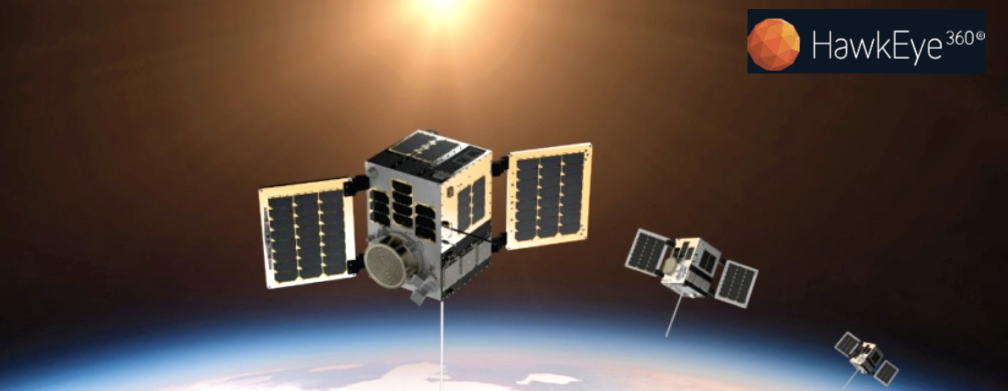
HawkEye 360 Inc. has announced that the company’s Cluster 7 satellites have begun operation.

This latest satellite trio achieved initial operating capability in record time after successfully launching into orbit on April 15, 2023. A new 300 MHz whip antenna provides better coverage in the 270MHz – 330 MHz range, fueling more robust data collection.

The company’s rapidly growing constellation can collect data up to 24 times per day – as often as once every hour – over a region of interest, allowing HawkEye 360 to offer the most timely, actionable, and broadest commercial RF data and coverage on the market.

HawkEye 360 operates a growing constellation of 21 satellites that detect, characterize and geolocate radio frequency signals from a broad range of emitters used for communication, navigation and security. HawkEye 360 has geolocated more than 200 million RF signals, providing situational awareness to an array of activities, including early-warning radar activity, military activities, illegal fishing, illegal mining, and indicators of GPS interference.

HawkEye 360 will continue expanding the constellation to address clients’ increasing demands for RF Intelligence, aiming for a total of 60 satellites (20 clusters of three) in 2025. HawkEye 360 anticipates the launch of two additional clusters in Q4 2023.

“With the introduction of our seventh satellite cluster, HawkEye 360 showcases the profound impact that commercial space can have on national defense and global security while enabling us to uncover unprecedented insights into human activities and behavior,” said . “Our invaluable collaborations with the U.S. government and allied nations across the globe play a pivotal role in cultivating a safer planet, including safeguarding the Middle East and Indo-Pacific regions.”
— Rob Rainhart, COO, HawkEye 360

“As geopolitical tensions continue to increase around the world, Cluster 7 is extending and improving data collection in the 30MHz – 18 GHz frequency range to meet growing demand. With this latest satellite cluster operating in a polar orbit, HawkEye 360 will further enhance the global RF situational awareness we provide to our clients.”
— Alex Fox, Chief Growth Officer, HawkEye 360

Filed Under: News

  • « Go to Previous Page
  • Go to page 1
  • Go to page 2
  • Go to page 3
  • Go to page 4
  • Go to page 5
  • Go to page 6
  • Go to Next Page »

Primary Sidebar

WEEKLY NEWSLETTER

Archives

  • February 2026
  • January 2026
  • December 2025
  • November 2025
  • October 2025
  • September 2025
  • August 2025
  • July 2025
  • June 2025
  • May 2025
  • April 2025
  • March 2025
  • February 2025
  • January 2025
  • December 2024
  • November 2024
  • October 2024
  • September 2024
  • August 2024
  • July 2024
  • June 2024
  • May 2024
  • April 2024
  • March 2024
  • February 2024
  • January 2024
  • December 2023
  • November 2023
  • October 2023
  • September 2023
  • August 2023
  • July 2023
  • June 2023
  • May 2023
  • April 2023
  • March 2023
  • February 2023
  • January 2023
  • December 2022
  • November 2022
  • October 2022
  • September 2022
  • August 2022
  • July 2022
  • June 2022
  • May 2022
  • April 2022
  • March 2022
  • February 2022
  • January 2022
  • December 2021
  • November 2021
  • October 2021
  • September 2021
  • August 2021
  • July 2021
  • June 2021
  • May 2021
  • April 2021
  • March 2021
  • February 2021
  • January 2021
  • December 2020
  • November 2020
  • October 2020
  • September 2020
  • August 2020
  • July 2020
  • June 2020
  • May 2020
  • April 2020
  • March 2020
  • February 2020
  • January 2020
  • December 2019
  • November 2019
  • October 2019

© 2019–2026 SatNews

Insert/edit link

Enter the destination URL

Or link to existing content

    No search term specified. Showing recent items. Search or use up and down arrow keys to select an item.
      x
      Sign Up Now!

      Enjoy a free weekly newsletter with recent headlines from the global SmallSat industry.

      Invalid email address
      We promise not to spam you. You can unsubscribe at any time.
      Thanks for subscribing! You will now receive weekly SmallSat News updates.
      We love our advertisers.
      And you will too!

      Please disable Ad Blocker to continue... We promise to keep it unobtrusive.
      We promise not to spam you. You can unsubscribe at any time.
      Invalid email address
      Thanks for subscribing! Please check your email for further instructions.