• Skip to main content
  • Skip to primary sidebar
  • Home
  • News
  • Featured
  • More News ⌄
    • SatNews
    • SatMagazine
    • MilSatMagazine
  • Events ⌄
    • MilSat Symposium
    • SmallSat Symposium
    • Satellite Innovation
  • Contacts
  • SUBSCRIPTION

SmallSat News

You are here: Home / 2024 / Archives for July 2024

Archives for July 2024

UK Space Agency launches million£ grant to Orbit Fab

July 23, 2024 by editorial

The UK Space Agency has awarded Orbit Fab a £1.3 million Major Project grant under their National Space Innovation Program — this grant will fund the design of a high-pressure variant of the RAFTI™ (Rapidly Attachable Fuel Transfer Interface) refueling port, set to be available in 2025. 

This new variant will enable refueling with pressurized fuels, such as Xenon, promoting more sustainable space operations and thereby reducing the need for single-use satellites.

In addition to the UK Space Agency funding announcement, Orbit Fab has secured additional contracts — including £165,000 — with the European Space Agency (ESA) via City University London, and a £500,000 contract as the prime for the phase 1 design of a mission to refuel a future UK Active Debris Removal spacecraft. 

The “UKRefuel” mission, in collaboration with industry partners ClearSpace and Astroscale aims to launch a satellite refueling service to LEO by 2027. These initiatives, following Orbit Fab’s signing of the ESA Zero Debris Charter, underscore the company’s dedication to sustainable space practice and responsible refueling. 

Additionally, the UK Space Agency is announcing two other projects as part of their National Space Innovation Program, which Orbit Fab is supporting. Orbit Fab is collaborating with Magdrive on a replaceable solid-fuel cartridge for Magdrive’s propulsion system, and with Lunasa on sensors for safe rendezvous and proximity operations in orbit.

Following a year of extraordinary growth, Orbit Fab has tripled the size of its UK workforce to 15 and will be opening a new office in Harwell, Oxfordshire. This expansion will continue to support the development and operation of orbital refueling services, essential for national security, telecommunications, earth observation, and scientific missions in space.

Daniel Faber, CEO and Co-Founder of Orbit Fab, said, “Expanding our UK office and embarking on these new projects is a significant milestone for Orbit Fab. With the support of the UK Space Agency and our partners, we are enhancing the UK’s space capabilities and setting new standards for sustainable space operations. The projects led by our UK team will enable us to refuel more satellites and customers than ever before. Our UK and US offices are working together to pave the way for a future where orbital refueling is standard practice, driving a bustling in-space economy ensuring a more sustainable space environment.”  

Dr. Paul Bate, CEO of the UK Space Agency, said, “The National Space Innovation Program will help kickstart growth, create high-quality jobs, protect our planet and preserve the space environment for future generations. New projects, like this one led by Orbit Fab, go to the heart of what we want to achieve as a national space agency that supports cutting-edge innovation, spreads opportunity across the UK and delivers the benefits of space back to citizens on Earth.”

Filed Under: Featured, News

Advanced Television reports… AST SpaceMobile to launch satellites this August

July 22, 2024 by editorial

Advanced Television is reporting that a formal notice from AST SpaceMobile stated the company is still targeting an August launch of a batch of their massive ‘Block 1’ BlueBird 5G satellites.

News also emerged that the Federal Communications Commission (FCC) has requested the ITU in Geneva, which regulates satellite frequencies globally, to recognize AST’s satellites (under its USASAT-NGSO-20 filing). The news helped propel the company’s share price up by almost 4 per cent.

July 21st saw reports from Japan where AST’s local telco Rakuten confirm that test signals from AST’s sole satellite currently in orbit were “very strong” as the craft passed over Japan.

AST is launching the five BlueBird satellites to connect the non-covered ‘not-spots’ of terrestrial cellular operators, such as AT&T and Verizon. The five craft are reported to have arrived at Cape Canaveral ready for launch, although this has not been officially confirmed.

To read the entire Advanced Television story, please access this direct infolink…

Filed Under: News

HawkEye 360 awarded AFWERX SBIR Phase II contract

July 21, 2024 by editorial

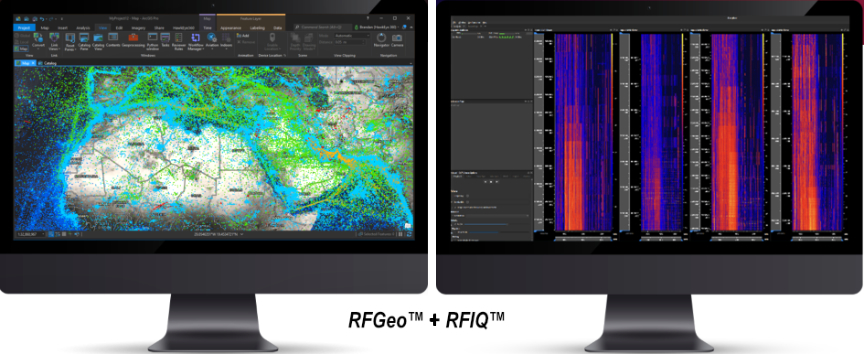
HawkEye 360 has been selected by AFWERX for an SBIR Phase II contract, focused on the delivery of RFGeo® and RFIQ™ data to address the most pressing challenges in the Department of the Air Force (DAF).

The Air Force Research Laboratory and AFWERX have partnered to streamline the Small Business Innovation Research (SBIR) and Small Business Technology Transfer (STTR) process by accelerating the small business experience through faster proposal to award timelines, changing the pool of potential applicants by expanding opportunities to small business and eliminating bureaucratic overhead by continually implementing process improvement changes in contract execution. The DAF began offering the Open Topic SBIR/STTR program in 2018, which expanded the range of innovations the DAF funded.

As of June 25, 2024, HawkEye 360 will continue its efforts to create and provide innovative capabilities that will strengthen the national defense of the United States of America.

“Receiving the SBIR Phase II contract from AFWERX is a significant milestone for HawkEye 360,” said Alex Fox, Chief Growth Officer at HawkEye 360. “This opportunity allows us to leverage our cutting-edge RFGeo and RFIQ data solutions to support the Department of the Air Force in addressing critical mission challenges and ultimately strengthening the United States’ national defense. We are excited to collaborate with AFWERX and contribute to the innovative advancements that will enhance our nation’s security.”

Filed Under: News

Airbus and Thales eye satellite merger

July 19, 2024 by editorial

SKYNET 6A Airbus

Airbus and Thales are reportedly exploring a merger of their satellite operations, according to the Financial Times and Reuters. This potential deal is seen as a pivotal moment for Europe’s space industry, as it grapples with intensified competition from global rivals such as SpaceX.

Leonardo is also involved in the talks thanks to the Space Alliance‘s joint ventures with Thales. Founded in 2005, this strategic partnership includes two joint ventures: satellite producer Thales Alenia Space (Thales 67 percent, Leonardo 33 percent) and satellite services provider Telespazio (Leonardo 67 percent, Thales 33 percent) .

The combined entity would be similar to MBDA, a successful cross-border European missile consortium, and aim to enhance Europe’s strategic independence in space. However, significant hurdles, including regulatory approval and overcoming political tensions, lie ahead.

This potential partnership comes as both companies grapple with financial challenges in their space divisions. Declining demand for large satellites — such as Thales‘ Spacebus series and Airbus‘ Eurostar bus — and the rise of smaller, cheaper alternatives, like Space X‘s Starlink, have impacted their bottom lines. A merger could help them address these issues and better compete in the evolving space market.

Although GEO (Geosynchronous Orbit) satellites will continue to have their place, the smaller LEO (Low Earth Orbit) satellites have grown heavily in popularity thanks to SpaceX and other LEO operators.

by Richard Pettibone and Carter Palmer

Filed Under: Featured, News

Rocket Lab’s launch window for the next Capella Space Mission

July 16, 2024 by editorial

Rocket Lab USA, Inc. (Nasdaq: RKLB) has set the launch window for the company’s 51st Electron launch, a dedicated mission for American space tech company Capella Space (“Capella”).

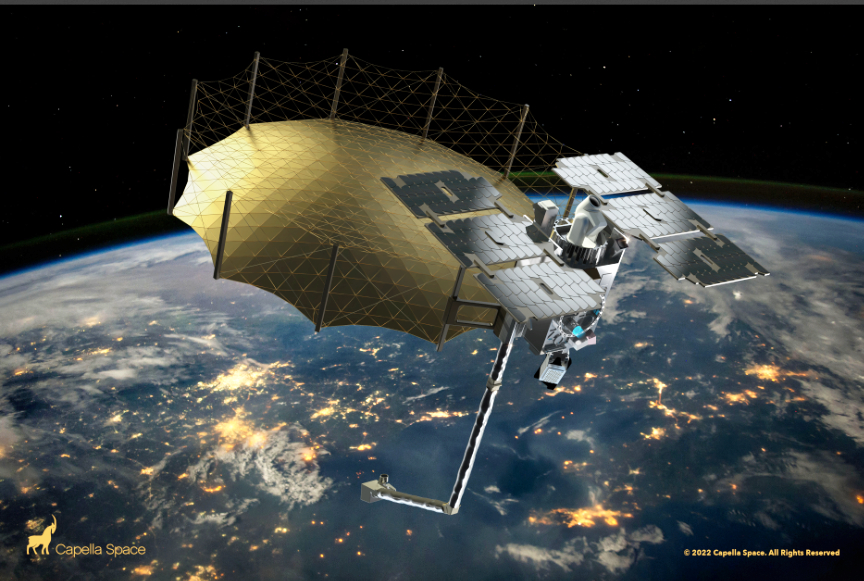
The ‘A Sky Full Of SARs’ mission is scheduled to launch during a 14-day window that opens on July 21 NZST / July 20 UTC from Rocket Lab Launch Complex 1 on New Zealand’s Mahia Peninsula. The mission will deploy Capella’s Acadia-3 SAR satellite, a synthetic aperture radar satellite for Earth imagery and observation, to a mid-inclination 615km circular orbit to add to Capella’s existing SAR satellite constellation in low Earth orbit. 

Artistic rendition of the Acade-3 SAR smallsat on-orbit, courtesy of Capella Space.

The mission will be Rocket Lab’s fifth launch for Capella to build out the company’s Earth-imaging constellation. In addition to the launch service, Rocket Lab is providing Capella Space with a custom extended fairing for the Acadia-3 satellite on Electron and a separation system produced by Rocket Lab.

Providing a tailored launch option along with the component for the safe and reliable deployment of Capella’s satellites on orbit, Rocket Lab’s dedicated launch service helps to streamline operations for Capella Space and enable them to focus more closely on their satellite’s capabilities and building out their constellation.

Capella is an American space tech company with data and satellite solutions for government and commercial applications. Capella’s high-quality, high-resolution SAR imagery penetrates all weather conditions and captures clear imagery 24/7, day and night, anywhere on Earth, delivered through a fully-automated ordering and delivery platform.

Capella’s existing SAR capabilities includes long-dwell imaging and extended duty-cycle – which results in more images collected per orbit than any other SAR systems. Acadia will augment Capella’s existing constellation with increased bandwidth and power, faster downlink speeds, and reduced latency.

This upcoming mission for Capella will be Rocket Lab’s ninth mission for 2024 and 51st Electron launch overall.

“It’s great to be heading back to the pad for Capella once again,” said Rocket Lab Founder and CEO, Peter Beck. “The team is focused on and dedicated to delivering this latest SAR satellite to orbit to build out Capella’s constellation, and we’re honored by their continued trust in Rocket Lab and Electron to help support their overarching mission.”

 “We’re looking forward to working with Rocket Lab again in order to continue expanding Capella’s constellation with our industry-leading, next-generation satellite technology,” said Capella Space CEO Frank Backes. “It’s with partners like Rocket Lab that we’re able to serve the mission requirements of our customers today with high-resolution, high-quality SAR imagery, building a fully-automated and reliable constellation to meet the needs of customers for tomorrow.”

Filed Under: News

Israeli Aerospace Industries signs satellite build agreement with Morocco

July 12, 2024 by editorial

Israeli Aerospace Industries (IAI) recently signed a $1 billion contract with a foreign customer, purportedly Morocco — no in-depth details have been released about this substantial contract for the delivery of advanced, intelligence satellites to that nation.

Two intelligence gathering satellites will, allegedly, be built, using the IAI’s OPTSAT 3000 series and these spacecraft will supposedly replace two, older, lower resolutions satellites in operation by Morocco.

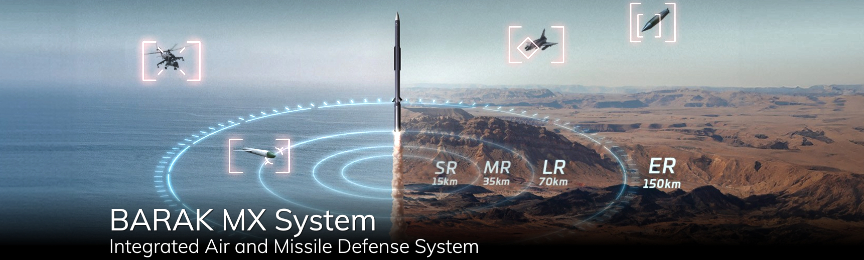
Previously, Morocco has also purchased the IAI’s Barak 8 air defence system for $500 million. The space camera used in the satellites is a product of Elbit Systems while the propulsion system is from Rafael Advanced Defense Systems.

The IAI’s BARAK MX System Integrated Air and Missile Defense System. Image is courtesy of IAI.

The OPTSAT 3000 is an advanced, electro optical satellite that offers a 70 cm aperture telescope and a highly sensitive sensor and is able to acquire several targets in a short period of time, thanks to the satellite’s agile capabilities. Orbiting at SSO LEO, the spacecraft offer location accuracy and high quality imagery. The satellite is adept at capturing optical data for military and civil applications and, in combo with the company’s ground segment capabilities and advanced data processing, can delivery accurate, multi-level data with impressive speed.

The satellite is fully compatible with most commercial launch service providers and, as it can be launched via a ridesharing program, is also a cost-effective solution. The OPTSAT 300 is space proven and provides high quality as well as precise imagery of strategic locations around the world.

Based on more than four decades of space excellence and dozens of successful space missions, OPTSAT 3000 is IAI’s state of the art Electro Optical (EO) satellite system. OPTSAT 3000 is space proven and appreciated as a very reliable stem, greatly exceeding its planned mission life. Designed according to strict requirements and built to the highest standards, OPTSAT 3000 satellites are in constant use by IAI’s customers worldwide, supplying continuous, precise, high-quality imagery of battlefields and strategic locations across the globe.

Filed Under: News

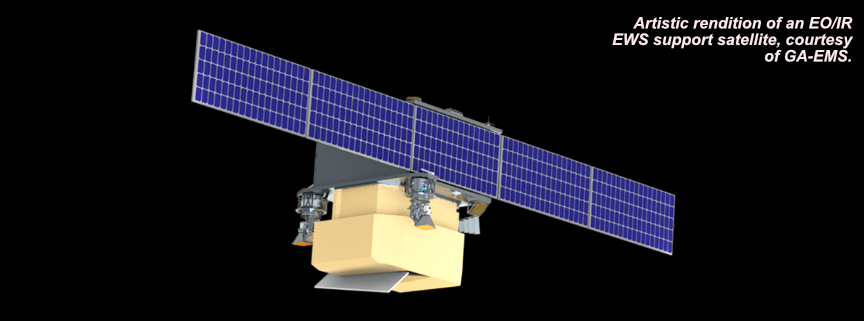
General Atomics awarded SSC follow-on contract for 2nd EO/IR EWS support satellite + services

July 11, 2024 by editorial

General Atomics Electromagnetic Systems (GA-EMS) has been awarded a contract modification by the United States Space Force’s Space Systems Command to help alleviate on-orbit risks for the Government through the delivery of a second weather satellite— the contract also calls for three years of operations service for each of the two satellites to support the Electro-Optical Infrared (EO/IR) Weather System (EWS).

This award modifies the current GA-EMS contract to design and deliver an operational EWS spacecraft with integrated EO/IR payloads to support the transition of the USSF’s aging Defense Meteorological Support Program (DMSP) on-orbit systems to a new generation of affordable, high performance, small weather satellites.

As the prime contractor, GA-EMS is responsible for the spacecraft bus and EO/IR payload design development, build, Assembly, Integration and Test (AIT), and has assembled a highly experienced, best-in-class team to deliver the EWS satellites. The team includes Atmospheric and Environmental Research (AER) Inc. for weather product expertise, and Parsons Corporation (NYSE:PSN) to provide Enterprise Ground Station command and control and operations support.

“This contract is a testament to GA-EMS’ ability to design and deliver advanced EWS satellites that will provide timely, accurate weather data to support Department of Defense operations across all domains,” said Scott Forney, president of GA-EMS. “We are currently working toward the delivery of the first EWS satellite and associated ground systems, with spacecraft build and EO/IR payload testing well underway. We are excited to begin the build and integration of a second EWS satellite to help support USSF efforts to extend EO/IR data collection capabilities as legacy DMSP satellites are retired.”

“From our initial 2020 contract award to develop an EWS satellite design to today’s contract modification to deliver two EWS satellites and on-orbit operations services, our team continues to make excellent progress toward meeting EWS mission requirements,” said Gregg Burgess, vice president of GA-EMS Space Systems. “After decades of providing exemplary weather support to military operations and the nation, DMSP is sunsetting. It is imperative that modern, advanced EO/IR weather satellites enter service to ensure accurate, uninterrupted weather data affecting daily operations, mission planning, and intelligence gathering reaches military decision-makers in a timely manner. We look forward to delivering our exquisite solutions for on-orbit weather data collection, high-resolution weather imagery and environmental monitoring data products that will help keep our warfighters on the cutting edge of mission overmatch.”

Filed Under: News

Redwire Developing advanced thruster tech to support the DoD smallsat supply chain

July 11, 2024 by editorial

Redwire Corporation (NYSE: RDW) has signed a strategic cooperation agreement (SCA) with Phase Four to build and deliver advanced thruster technology designed for reliable, high-volume production to meet the surge in demand across national security space programs — the SCA provides a framework that allows for joint development of this advanced thruster.

Redwire and Phase Four will design and develop a reliable and efficient Hall Effect Thruster (HET), called the Valkyrie Thruster, based on an existing design. The highly flexible and streamlined design will yield a shorter production schedule enabling reliable, high-volume production.

Redwire and Phase Four will leverage their expertise to manufacture the power processing unit hardware, thruster, propellant management software, and software control, which both companies will integrate into flight panels.

Redwire will leverage its business operations at scale, marketing resources, and extensive heritage as a trusted space systems supplier to bring this in-space propulsion system to market. The Valkyrie thrusters are anticipated to go into full rate production in 2025.

“Redwire offers a range of solutions designed to support high-volume small satellite manufacturing, and through this partnership, we are focused on delivering an optimal in-space propulsion technology that can specifically address the challenges in the propulsion supply chain,” said Redwire’s President of Space Systems Adam Biskner. “This reliable, mass producible design will offer a scalable in-space propulsion solution within DoD’s small satellite supply chain and will serve many other national security space applications.”

“The partnership between Phase Four and Redwire provides both civilian and military space operators another stable and reliable domestic source of electric propulsion systems,” said Steve Kiser, Phase Four CEO. “Phase Four’s market differentiating capabilities and history of propulsion innovation, coupled with Redwire’s mission and engineering expertise, will meaningfully expand the types and volume of Hall Effect Thrusters to an industry that is increasingly challenged to deliver enough propulsion supply. We look forward to exploring all the opportunities this partnership presents.”

Filed Under: Featured, News

Sidus Space appoints former L3Harris executive to the firm’s Board of Directors

July 11, 2024 by editorial

Sidus Space (NASDAQ: SIDU) has announced that the firm’s Board of Directors has appointed Jeffrey (Jeff) Shuman as an independent Director, effective July 8, 2024.

Jeff Shuman

Mr. Shuman brings more than 40 years of experience across global diversified companies and the military, spanning the U.S. Army, Avon Products, Honeywell International, Northrop Grumman, L3Harris and Quest Diagnostics.

Shuman was the Chief Human Resources Officer at Harris Corporation (now L3Harris) and at Quest Diagnostics during periods of profound cultural and operational progress. Earlier in his career, Shuman held senior executive positions in Operations, General Management and Human Resources. He currently serves on the advisory board of Garner Health, The Citadel School of Business, The Citadel Psychology Department and is Advisory Board emeritus at CIELO Talent.

Mr. Shuman earned a bachelor’s degree from The Citadel, and following graduation, served as a Medical Services Corp. officer in the US Army. He completed executive development programs in Business and Human Resources at the University of Michigan, Harvard Business School, University of Virginia’s Darden School of Business, University of Pennsylvania’s Wharton Business School and Cornell University.

He also participated in a US business exchange program with the People’s Republic of China, supported the Private Sector Council in key initiatives with the Department of Education and the Department of Homeland Security, and was a regular contributor and guest on “Your Career Partners”, a Washington DC-based radio talk show. Shuman received the “Stevie Award” during the American Business Awards for “Best Human Resources Executive” and was the 2011 recipient for the “HR Executive of the Year” by HR Executive Magazine.

Carol Craig, CEO, Sidus Space, said, “We are excited to welcome Mr. Shuman to the Sidus Board. His extensive experience in both government and commercial sectors will provide invaluable insights to strengthen our strategic direction. Mr. Shuman’s deep connections within the Space Coast community and his broad corporate network are tremendous assets for our growth trajectory.”

Leo Riera, Chairman of the Board of Sidus Space, said, “Mr. Shuman’s appointment underscores our commitment to maintaining a dynamic and diverse board that aligns with our strategic objectives and growth ambitions. His extensive corporate governance and Human Resources background will significantly contribute to our mission.”

Jeff Shuman said, “I am honored to join Sidus Space at such a pivotal moment in its journey. I look forward to leveraging my experience to support the company’s strategic initiates and to help drive its vision of leading the future of Space Infrastructure.”

Filed Under: News

PLD Space’s SPARK offers free access to 1st two MIURA 5 flights to promote space innovation

July 9, 2024 by editorial

PLD Space of late presented their MIURA 5 SPARK Program that allows educational centers, universities, institutions and companies from across the globe to access the first two MIURA 5 launches free of charge.

The company is committed to covering the costs of the mission with the goal of promoting scientific and technological innovation to improve people’s lives from space.

Photo of a MIURA 5 launch, courtesy of PLD Space.

To this end, the initiative is backed by the institutional support of the Spanish Ministry of Science, Innovation and Universities, the Spanish Space Agency (AEE), the Spanish National Research Council (CSIC) and Generalitat Valenciana, as well as the backing of the Organisation of Ibero-American States (OEI) and the European Space Education Resource Office in Spain (ESERO Spain), part of the European Space Agency (ESA).

The MIURA 5 SPARK Program provides small satellite launch services to students, research centers, institutions, and commercial entities that submit innovative and creative proposals to address Earth’s challenges from space. PLD Space will select satellites from around the globe for the two MIURA 5 demonstration flights, scheduled for the last quarter of 2025 and the first quarter of 2026, respectively. The selected satellites will receive standard launch services at no cost.

MIURA 5 SPARK Program Requirements

  • The combined mass of all the small satellites selected through this call for submissions is 450 kg per flight, which will be launched into a sun-synchronous orbit at an altitude of 500 kilometres.
  • The main selection criteria include the country of origin, with priority given to Spanish entities, followed by EU Member States, NATO Member States, and major non-NATO allied states. Additionally, PLD Space will prioritize proposals from universities, research centres, and commercial entities that are willing to integrate experiments by teams of primary, secondary, and vocational training students.
  • Other conditions to be considered include payload mass requirements, orbit flexibility, compliance with technical standards, launch window, schedule flexibility, satellite development status, operational risks, and mission attractiveness.
  • The phases of the call for submissions Following this announcement of the open call for submissions, the preliminary application period begins and will end on July 30th. The PLD Space mission management team will conduct an initial assessment and notify shortlisted applicants on August 30. Candidates whose mission proposals pass this stage will receive the MIURA 5 User Guide, detailing the expected flight and maximum activity times. They will then have one month to submit their final applications. The final selection of candidates will be announced on November 30, with the signing of the launch service contracts to be completed by December 30.

Regarding primary and secondary schools and vocational training centers, interested teams will be able to register their experiment idea to have the chance to fly alongside a commercial entity. In this case, there will be no pre-selection process, and they will have until October 31 to submit their proposals.

Mission management costs included Under the MIURA 5 SPARK Program, PLD Space undertakes to cover the costs related to mission management, accommodation on the MIURA 5 launcher, fuel handling, transport to the launch base, storage and handling costs, as appropriate, as well as any other operational costs related to the provision of the standard launch service. For their part, applicants will be responsible for the costs of meeting the technical requirements and any additional tests for the safety of the satellite.

“At PLD Space we have an unwavering commitment to encouraging society’s engagement with the space industry. The first MIURA 5 test flights offer a unique opportunity for students, researchers, institutions and companies to test their innovations in the challenging environment of space“, said Raúl Verdú, Head of Business Development and co-founder at PLD Space.

“The Spanish Space Agency supports initiatives like PLD Space’s MIURA 5 SPARK programme, which align with our ultimate goal of facilitating access to space and bringing space innovation closer to society,” said Juan Carlos Cortés, Director of the Spanish Space Agency.

Visit MIURA 5 SPARK Program at this direct infolink…

Filed Under: News

  • « Go to Previous Page
  • Go to page 1
  • Go to page 2
  • Go to page 3
  • Go to Next Page »

Primary Sidebar

WEEKLY NEWSLETTER

Archives

  • February 2026
  • January 2026
  • December 2025
  • November 2025
  • October 2025
  • September 2025
  • August 2025
  • July 2025
  • June 2025
  • May 2025
  • April 2025
  • March 2025
  • February 2025
  • January 2025
  • December 2024
  • November 2024
  • October 2024
  • September 2024
  • August 2024
  • July 2024
  • June 2024
  • May 2024
  • April 2024
  • March 2024
  • February 2024
  • January 2024
  • December 2023
  • November 2023
  • October 2023
  • September 2023
  • August 2023
  • July 2023
  • June 2023
  • May 2023
  • April 2023
  • March 2023
  • February 2023
  • January 2023
  • December 2022
  • November 2022
  • October 2022
  • September 2022
  • August 2022
  • July 2022
  • June 2022
  • May 2022
  • April 2022
  • March 2022
  • February 2022
  • January 2022
  • December 2021
  • November 2021
  • October 2021
  • September 2021
  • August 2021
  • July 2021
  • June 2021
  • May 2021
  • April 2021
  • March 2021
  • February 2021
  • January 2021
  • December 2020
  • November 2020
  • October 2020
  • September 2020
  • August 2020
  • July 2020
  • June 2020
  • May 2020
  • April 2020
  • March 2020
  • February 2020
  • January 2020
  • December 2019
  • November 2019
  • October 2019

© 2019–2026 SatNews

Insert/edit link

Enter the destination URL

Or link to existing content

    No search term specified. Showing recent items. Search or use up and down arrow keys to select an item.
      x
      Sign Up Now!

      Enjoy a free weekly newsletter with recent headlines from the global SmallSat industry.

      Invalid email address
      We promise not to spam you. You can unsubscribe at any time.
      Thanks for subscribing! You will now receive weekly SmallSat News updates.
      We love our advertisers.
      And you will too!

      Please disable Ad Blocker to continue... We promise to keep it unobtrusive.
      We promise not to spam you. You can unsubscribe at any time.
      Invalid email address
      Thanks for subscribing! Please check your email for further instructions.