
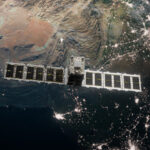

TOKYO — Addressing the growing vulnerability of orbital infrastructure to digital incursions, Synspective has initiated a joint research project with GMO Cybersecurity by Ierae to develop standardized defense protocols for satellite systems. The collaboration aims to merge Synspective’s operational data from its Synthetic Aperture Radar (SAR) constellation with GMO’s white-hat hacking capabilities to identify and mitigate space-based cyber threats.
Protecting a $1.8 Trillion Orbital Economy
The democratization of Low Earth Orbit (LEO) has shifted satellites from niche government assets to critical nodes in the global economic infrastructure. According to the World Economic Forum, the space economy is projected to reach $1.8 trillion by 2035. However, this expansion has introduced new attack vectors. Unlike terrestrial IT systems, spacecraft operate in a constrained environment where hardware upgrades are impossible and remote remediation is difficult.
As small satellites increasingly handle sensitive data regarding national security, disaster response, and supply chain monitoring, the “security through obscurity” model is no longer viable. This partnership seeks to move beyond reactive patching toward a proactive, baked-in security architecture for next-generation constellations.

Defining Space-Based Threat Models
The joint research focuses on adapting terrestrial cybersecurity methodologies to the unique constraints of the space domain. The initiative is structured around two primary pillars:
- Satellite-Specific Threat Analysis: The teams will map potential attack surfaces specific to orbital assets, analyzing how the space environment affects system vulnerabilities and analyzing risk at the system level.
- Countermeasure Development: Rather than theoretical modeling, the project aims to produce reproducible, practical defense mechanisms. This includes creating test scenarios to verify the effectiveness of countermeasures against identified risks.
Industry Perspectives
The collaboration leverages GMO Cybersecurity’s background in securing autonomous systems to address the specific latencies and hardware limitations of satellite operations.
“Satellite services have already become a vital part of the world’s social infrastructure, and ensuring its security is an urgent challenge,” said Kosuke Ito, Executive Officer at GMO Cybersecurity by Ierae. “By applying our advanced hacking technologies and expertise, developed through years of work with automobiles, IoT devices, and drones, to satellite systems, we aim to establish satellite-specific threat models and practical testing methodologies.”
Standardization Goals
The ultimate objective of the research is to establish a standardized framework for security evaluation in satellite design and development. Synspective intends to integrate these findings into its future satellite iterations, potentially influencing broader industry standards for commercial space operations.