
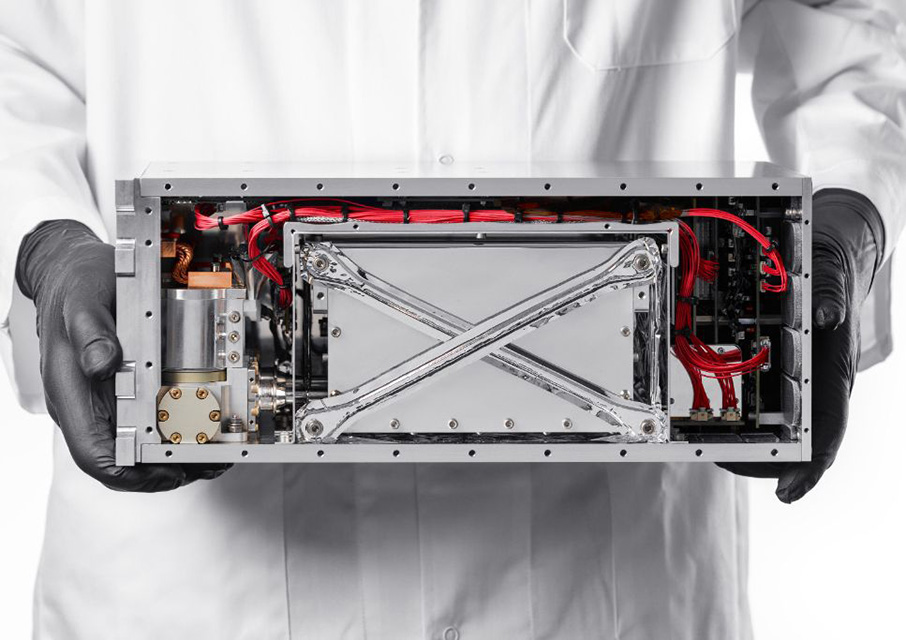
Auckland, New Zealand – 19 December 2025, Auckland-based Zenno Astronautics announced it has secured a contract from Germany’s Federal Agency for Breakthrough Innovation (SPRIND) to develop a new generation of autonomous satellite operation software. The project, titled “Autonomous Fuel-Free Agility in Space,” centers on the integration of artificial intelligence (AI) with Zenno’s proprietary superconducting magnetic technology, known as the Supertorquer.
Advances in Superconducting Magnetic Control
The development program focuses on creating AI-assisted control algorithms and virtual simulation environments designed to facilitate precise close-proximity operations (CPO). Unlike traditional systems that rely on chemical propulsion, Zenno’s hardware utilizes compact superconducting magnets to enable fuel-free maneuvering. This technology is intended to allow spacecraft to perform docking, in-orbit assembly, and satellite servicing without the mass and complexity associated with consumable propellants.
The technical scope of the contract includes the creation of a multi-agent simulation sandbox and a physical demonstration platform. These systems will utilize Zenno’s flight-proven software algorithms to achieve real-time, closed-loop control of spacecraft interactions, leveraging the Earth’s magnetic field and solar energy for momentum management.
Strategic Expansion into the European Market
“This validation contract from SPRIND is a major step for us,” said Max Arshavsky, co-founder and CEO of Zenno Astronautics. “It will help bring Zenno technology to Europe and accelerate its adoption in the next generation of autonomous space systems.”
The contract aligns with Zenno’s broader strategy to establish a permanent presence in Europe through its recently founded entity in the Space Area Munich. Stella Meiré, Research and Business Analyst at SPRIND, noted that the fuel-free magnetic system could significantly extend orbital lifetimes by eliminating mechanical wear and propellant limitations, establishing a foundation for autonomous maintenance maneuvers in space.
Timeline for Development
The SPRIND-funded project is scheduled to run for nine months. During this period, Zenno will focus on validating its universal CPO solution within a virtual environment while scaling its operational footprint in Germany. The initiative aims to streamline historically complex tasks, such as debris removal and megastructure assembly, by transitioning them to routine, autonomous operations.
About SPRIND
The Federal Agency for Breakthrough Innovation (SPRIND) funds technologies that address major societal and technical challenges and enable long-term impact for Germany and Europe.
About Zenno Astronautics
Zenno Astronautics is a New Zealand company pioneering the future of sustainable and safe spacecraft operations through advanced superconducting magnetic systems. The company enables fully autonomous, fuel-free satellite positioning and precision interactions between spacecraft. Zenno is developing multiple applications of superconductivity in space, including radiation shielding, plasma control, and close-proximity operations.