
• Skip to main content
  • Skip to primary sidebar
  • Home
  • News
  • Featured
  • More News ⌄
    • SatNews
    • SatMagazine
    • MilSatMagazine
  • Events ⌄
    • MilSat Symposium
    • SmallSat Symposium
    • Satellite Innovation
  • Contacts
  • SUBSCRIPTION

SmallSat News

You are here: Home / Archives for 2025

Archives for 2025

Turion Space selects Blink software modem to provide ground comms for DROID satellites

March 9, 2025 by editorial

Amphinicy Technologies and Turion Space have selected the Blink software modem for ground communications for DROID satellites.

As Turion prepares for the launch of DROID.002, Blink will play a crucial role in ensuring seamless data reception from space. Real-time insights and reliable downlink performance gives Turion confidence that its mission data will be captured with precision from day one.
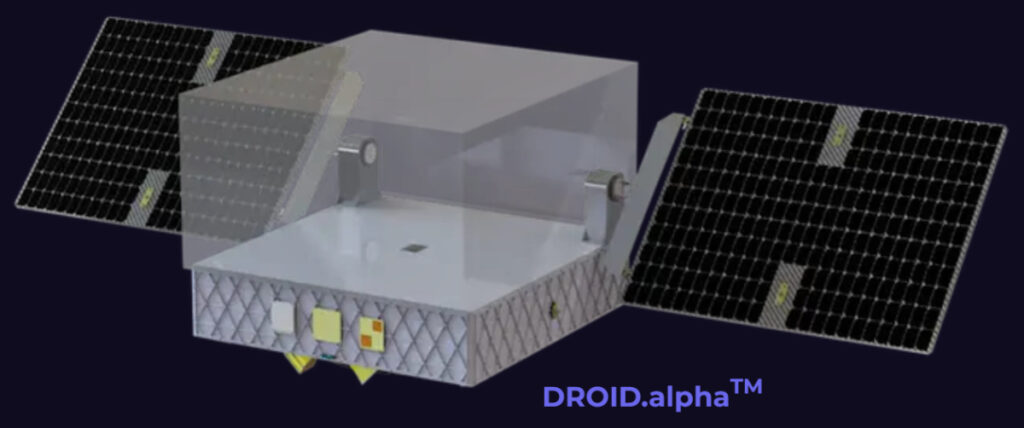
Malfunctioning satellites and other space debris pose major risks to both current and future space missions. Turion Space is committed to enhancing space situational awareness by developing a fleet of autonomous DROID satellites. These spacecrafts are designed for essential in-space servicing functions, including space domain awareness, space debris removal, and on-orbit inspections and repairs.

Artistic rendition of a DROID autonomous satellite preparing to remove debris, courtesy of the company

On the ground side of the DROID constellation, Turion is using the AWS virtualized ground segment—including the Blink software modem—for reliable, efficient and convenient satellite payload data reception. In the DROID satellites mission, Blink is deployed in the AWS cloud to manage on-demand, high-speed, X-band downlink communication. Blink demodulates the signal, decodes the data, and generates advanced signal processing reports.
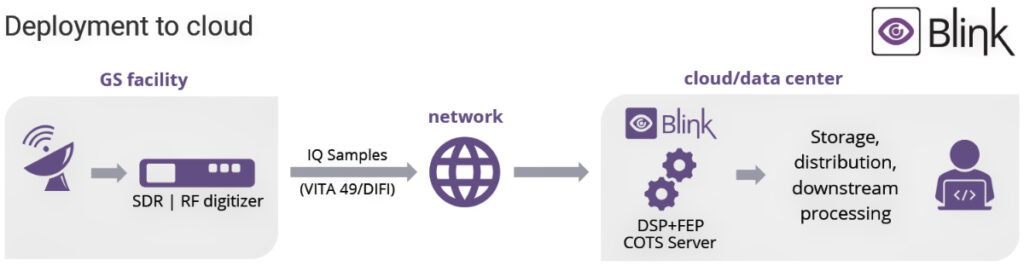
Blink is a product by Amphinicy Technologies, a provider of advanced software solutions and products for the satellite industry. Amphinicy developed Blink to empower satellite operators and ground station service providers to optimize their operations, enhance efficiency, and reduce costs.
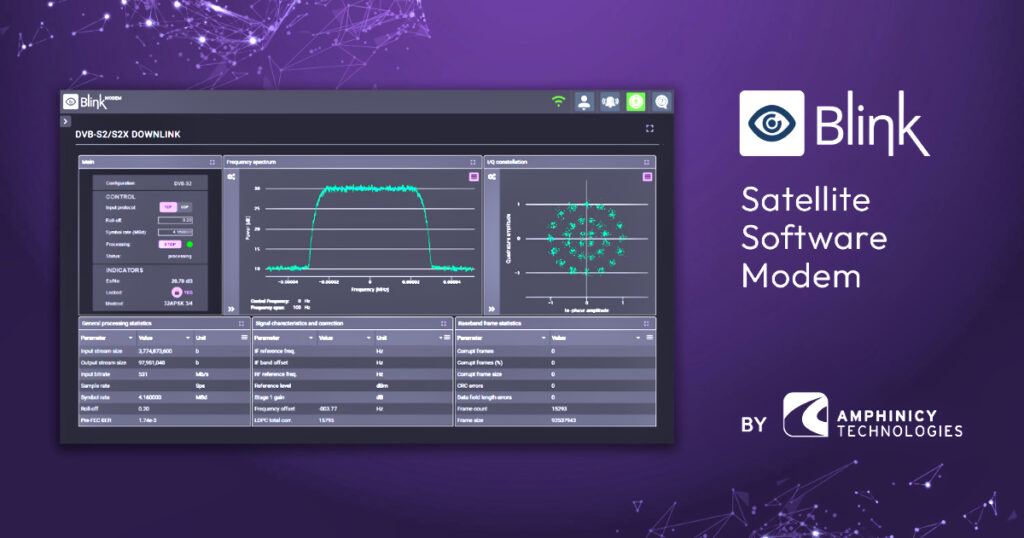
In addition to AWS, Blink can be deployed on other public clouds or private clouds or run efficiently on standard servers, seamlessly integrating with existing ground stations. It is the only software modem capable of fully supporting Ka-band communication, in addition to S- and X-band, and is also suitable for TT&C communications.

Blink will be present at SATELLITE 2025 in Washington DC at booth #2737.

“High-speed data downlink is critical to the success of our DROID satellite missions, and Amphinicy’s Blink modem enables us to process and analyze mission data with precision. Deploying Blink in AWS ensures we can scale our operations, advancing space domain awareness and in-orbit services.” said Patryk Wiatr, Chief Information Officer at Turion Space.

“It’s a true pleasure to support Turion Space in their mission to deliver critical space capabilities for sustainable future in space. Their dedication to technology and innovation aligns perfectly with our commitment to advancing the satellite industry through cutting-edge software solutions. We look forward to pushing industry limits with Turion and empowering more clients in the growing satellite constellations sector,” said Irena Kos, Head of Product Development for Blink at Amphinicy Technologies.

About Turion Space
Turion Space builds and operates critical space infrastructure, unlocking the full potential of space by integrating hardware (DROID satellites) with advanced software architecture (STARFIRE OSTM).

About Amphinicy Technologies
Amphinicy Technologies designs innovative ground segment software solutions that optimize satellite operations and maximize their functionality. With 25 years of experience and offices in Zagreb (Croatia) and Luxembourg, the company has built a solid portfolio of solutions, among which are its flagship products, Monica—a monitoring and control solution—and Blink, an advanced satellite software modem.


Filed Under: News

WISeKey recruits space experts to enhance WISeSat collaboration with Swiss Armed Forces

March 6, 2025 by editorial

WISeKey International Holding (NASDAQ: WKEY; SIX: WIHN) with its subsidiaries WISeSat.Space and SEALSQ Corp. (NASDAQ: LAES) (“SEALSQ”) has added several key space experts to the company’s team—this expansion will further strengthen the company’s capabilities in space operations and regulatory compliance, and enhancing its collaboration with the Swiss Armed Forces.

New team members include…

  • Edward Burger, Space Regulatory Operations Specialist. Mr. Burger brings extensive experience in navigating the complex landscape of telecommunications law and regulation for space operations, ensuring projects comply with national and international requirements.
  • Yiorgos Lemos, Space Operations Specialist. Mr. Lemos’ knowledge in operational processes and satellite technology will enhance WISeKey’s operational efficiency and effectiveness in mission execution.
  • Eric Bottlaender, Space Technology Monitoring Specialist. Mr. Bottlaender will focus on monitoring emerging technologies and trends in the space sector, enabling WISeKey to remain at the forefront of innovation.
  • Philip Haemelink, Space Project Manager & Software Engineer. Mr. Haemelink brings valuable experience from the space sector and will oversee project coordination between WiseSat and clients while leading software integration efforts.
  • Vlad Dancau, Space Software Engineer. Mr. Dancau brings deep expertise in applied cryptography, network security, and telecommunications, empowering WISeKey to advance secure satellite communications.

“We are thrilled to have these talented professionals join our team,” said Carlos Moreira, CEO and Founder at WISeKey. “Their expertise will not only enhance our capabilities but also strengthen our partnership with the Swiss Armed Forces as we work towards innovative solutions in the space industry. With the addition of this expert team, WISeKEY is poised to take on new challenges and opportunities in collaboration with the firm’s esteemed partners.”

Filed Under: News

Firefly Aerospace ready to launch Alpha FLTA006 for Lockheed Martin’s LM 400 Spacecraft

March 6, 2025 by editorial

“Message in a Booster” mission will launch Lockheed Martin’s technology demonstration spacecraft to low Earth orbit

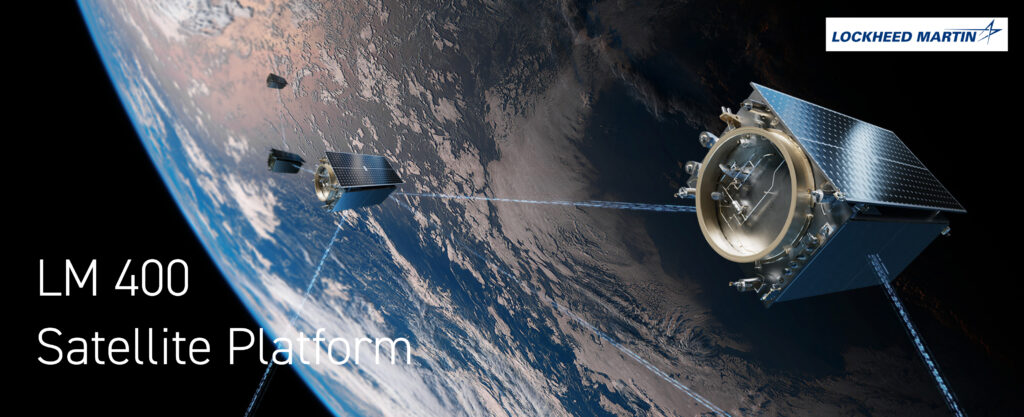
Following a successful rocket static fire test, Firefly Aerospace, Inc. has announced the company’s Alpha Flight 6 (FLTA006) mission, called Message in a Booster, is scheduled to launch Lockheed Martin’s LM 400 spacecraft no earlier than March 15th—the 52-minute launch window will open at 6:25 am PST.

Alpha FLTA006 is the second mission Firefly is launching for Lockheed Martin and the first of Firefly’s multi-launch agreement with the company that includes up to 25 missions over the next five years. Capable of lifting more than 1,000 kg to low Earth orbit, Firefly’s Alpha rocket will launch Lockheed Martin’s LM 400 spacecraft from Firefly’s Space Launch Complex 2 at the Vandenberg Space Force Base.

Once deployed, Lockheed Martin’s self-funded LM 400 technology demonstration will prove out the company’s risk-reduction and pathfinding efforts. As a platform, LM 400 is Lockheed Martin’s most flexible satellite bus, capable of serving military, commercial, or civil customers. It can be customized to host a variety of missions—including remote sensing, communications, imaging and radar—and operate in LEO, MEO and GEO. 

“The Firefly team is proud to launch another Lockheed Martin mission as we continue to push the limits in achieving a more responsive and resilient future in space,” said Jason Kim, CEO of Firefly Aerospace. “Our Alpha rocket provides the optimal performance and rapid operations to deliver small and mid-size satellites, like LM 400, when and where our customers need them to immediately begin their on-orbit mission.”

For more details on the Alpha FLTA006 Message in a Booster mission and livestream, visit this direct infolink…

Filed Under: Featured, News

Telesat Partners with Intellian to develop Ka-band flat panel user terminals for Telesat Lightspeed

March 5, 2025 by editorial

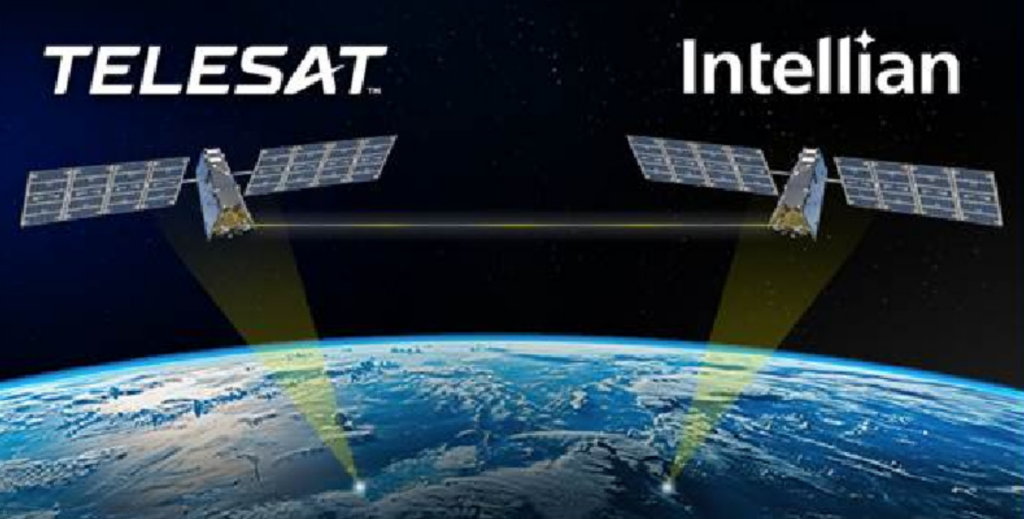
Telesat (NASDAQ and TSX: TSAT) recently unveiled a contract award for Intellian to design and manufacture Ka-band flat panel User Terminals for the Telesat Lightspeed Low Earth Orbit (LEO) constellation.

Under this agreement, fully optimized Ka-band LEO flat panels for the Telesat Lightspeed network are being designed and manufactured to deliver high-speed throughput for markets including fixed enterprise applications, wireless backhaul, government, land mobility and maritime connectivity.

Intellian is trusted by customers worldwide, recognized for its exceptional reliability and quality. Their technical innovation and proprietary advancements in Active Electronically Scanning Arrays (AESA) flat panel User Terminals has driven the expansion of Intellian’s portfolio, now featuring the latest groundbreaking Ka-band AESA technology.

Telesat Lightspeed customers will benefit from Intellian’s fully integrated approach to satellite connectivity User Terminal manufacturing. Produced in their state-of-the-art campus, these small form factor flat panels leverage specialized manufacturing techniques to deliver exceptional performance with minimal weight and power consumption.

Edward Joannides, VP of Strategy & Business Development for Intellian, said, “We’re thrilled to partner with Telesat to develop flat panel antennas for the Telesat Lightspeed network, enabling reliable, high performing satellite connectivity for their customers across land, mobile, maritime, and government markets. This new AESA collaboration follows previously announced contract awards for parabolic reference terminals and the Gateway Antenna System program.”

Aneesh Dalvi, Vice President of Telesat Lightspeed Systems Development, said, “Our expanded collaboration with Intellian demonstrates our confidence in their ability to deliver cutting-edge technology that meets the mission-critical requirements that our customers trust Telesat to deliver.  We’re committed to offering flexible solutions and the Intellian AESA will be an attractive option, enabling customers to connect to our global network with ease and confidence.”

About Telesat
Backed by a legacy of engineering excellence, reliability and industry-leading customer service, Telesat (NASDAQ and TSX: TSAT) is one of the largest and most innovative global satellite operators. Telesat works collaboratively with its customers to deliver critical connectivity solutions that tackle the world’s most complex communications challenges, providing powerful advantages that improve their operations and drive profitable growth.
Telesat Lightspeed, the company’s state-of-the-art, Low Earth Orbit (LEO) satellite network, has been optimized to meet the rigorous requirements of telecom, government, maritime and aeronautical customers. Telesat Lightspeed will redefine global satellite connectivity with ubiquitous, affordable, high-capacity, secure and resilient links with fiber-like speeds.

About Intellian Technologies, Inc
Intellian is driven by a passion for innovation and an agile responsiveness to customer needs. As the crucial link between satellite networks and millions of people on Earth, Intellian’s leading technology and antennas empower global connectivity across oceans and continents, organizations and communities. Strategic thinking, an obsession with quality and a proven ability to deliver enables Intellian to invent for the future, creating mutual success for partners and customers as the world’s connectivity needs evolve.

Intellian Technologies Inc. is listed on the Korean Stock Exchange, KOSDAQ (189300:KS).

Filed Under: News

Spire achieves 2-way laser comms between satellites in space

March 3, 2025 by editorial

First-ever achievement for Spire enhances data transmission security and efficiency, setting a new standard for global satellite communications. The Company will launch additional satellites with optical inter-satellite link technology on the
SpaceX Transporter-13 Rideshare Mission

Spire Global, Inc. (NYSE: SPIR) has successfully established a two-way optical link between two satellites in orbit. This achievement marks a major step toward enhancing the speed, reliability, and security of data transmissions for future missions.

Illustration of Spire satellites establish a two-way optical inter-satellite link (OISL) in orbit

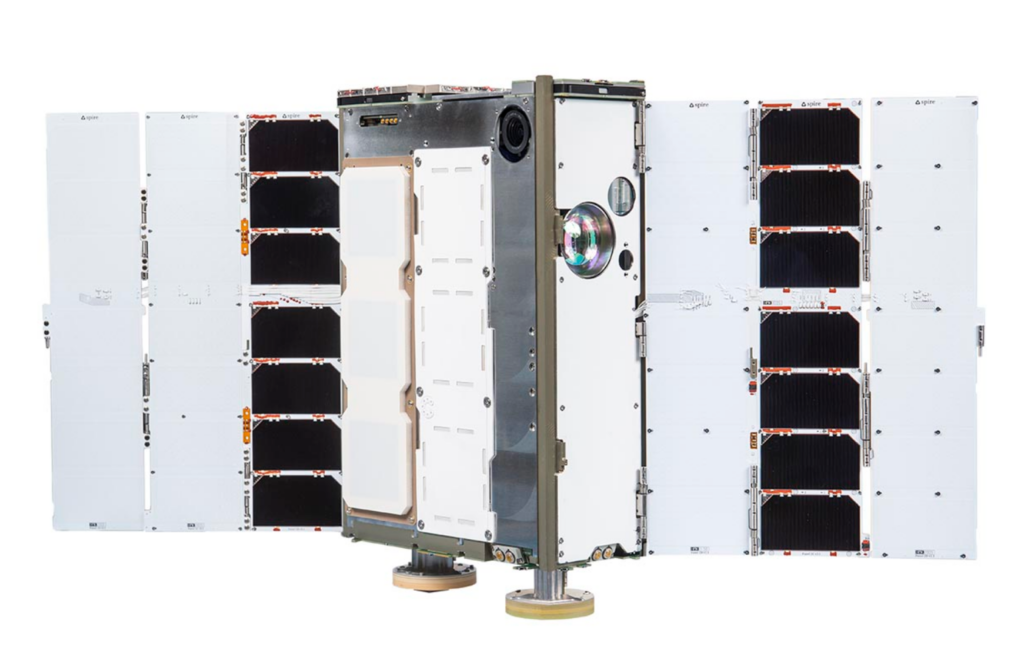
The satellites, which launched in June of 2023, are equipped with optical inter-satellite link (OISL) payloads. The payloads create lasers that send information back and forth between satellites, securely and almost instantaneously, while up to 5,000 kilometers apart.

Front view of Spire Global 6U satellite with optical inter-satellite link (OISL) payload

This technology has the ability to enhance applications such as weather forecasting, global communications and remote sensing for navigation and environmental monitoring by increasing data speeds, enhancing security and reducing data latency.

The development of the OISL technology was supported by a European Space Agency (ESA) Advanced Research in Telecommunications Services (ARTES) Pioneer Partnership Project, within ESA’s Connectivity and Secure Communications directorate, with funding from the UK Space Agency (UKSA).

Following the successful demonstration, Spire will launch three additional LEMUR satellites with OISL technology in 2025, two of which are set to launch via Exolaunch on the Transporter 13 rideshare mission with SpaceX.

During the mission, Spire will also launch four additional LEMUR satellites to replenish its fully deployed constellation and enable missions for its Space Services customers. The launch is scheduled for no earlier than March of 2025.

“Precisely pointing two satellites, across distances equivalent of New York to London, and establishing an inter-satellite optical link is a significant milestone for Spire,” said John E. Ward, Senior Director of Research & Development at Spire Global. “This achievement places us among a select group of organizations capable of developing and deploying this advanced technology and overcoming the complexities of aligning satellites separated by thousands of kilometers in Low Earth Orbit. Integrating this technology into our future fleet will enhance resilience, improve security, and reduce latency for critical applications.”

“We have shrunk what is typically a large optical system—the size of a microwave—down to the size of a tissue box,” said Thomas Carroll, Team Lead – Applied Optics Team, Spire. “Our OISL payload is the smallest on the market, allowing us to deploy this technology on our small satellites while delivering performance previously achievable only with much larger systems. This breakthrough has the potential to enhance our data and Space Services solutions, especially for applications that require continuous coverage with fast and secure data relay.”

“Through our ARTES Pioneer Partnership Project, we have supported Spire in the development of a new OISL capability for their space data service network,” said Clive Edwards, ESA Pioneer Implementation Manager. “This OISL system is set to transform satellite communications, offering enhanced security and efficiency for space-based data transmission.”

About Spire Global, Inc.
Spire (NYSE: SPIR) is a global provider of space-based data, analytics and space services, offering unique datasets and powerful insights about Earth so that organizations can make decisions with confidence in a rapidly changing world. Spire builds, owns, and operates a fully deployed satellite constellation that observes the Earth in real time using radio frequency technology. The data acquired by Spire’s satellites provides global weather intelligence, ship and plane movements, and spoofing and jamming detection to better predict how their patterns impact economies, global security, business operations and the environment. Spire also offers Space as a Service solutions that empower customers to leverage its established infrastructure to put their business in space. Spire has nine offices across the U.S., Canada, UK, Luxembourg, Germany and Singapore.

Filed Under: Featured, News

Myriota adds 4 additional satellites to global IoT constellation + upgrades network features

March 3, 2025 by editorial

Myriota recently onboarded an additional four, new, LEO nanosatellites, working in partnership with Spire, a global provider of space-based data, analytics, and space services.

These smallsats were launched on SpaceX’s Transporter 12 mission on January 14th, bringing additional coverage and capacity to existing global services, while also unlocking new markets that include Mexico, Brazil, Chile, Argentina and the Middle East.

Myriota will use Spire’s existing satellite platform and continue to scale the Myriota Network over the next 12 months as part of its investment strategy to deliver a robust, low cost, low power, IoT network. By leveraging Spire’s proven constellation in combination with that firm’s global operations platform and Myriota’s own satellite assets, the company expects to quickly and cost-effectively scale its IoT services to meet rising global demand.

The Myriota Network enables customers in industries, such as logistics, utilities, and agriculture, to securely monitor and collect data globally using its long-lasting and low-cost IoT sensors. Its customers are already tracking, locating, and monitoring assets including water tanks, vehicles, wind turbines, shipping containers, and equipment and tools.

In late December 2024, Myriota announced a $32 million funding round led by the National Reconstruction Fund Corporation (NRFC) and venture capital partners Main Sequence with support from other investors that included Inter Valley Ventures. 

The new funding will be used to accelerate the digitization of field-based industries globally to enhance IoT capabilities in regions such as the Middle East, where Myriota has recently completed the Kingdom of Saudi Arabia’s Communications, Space and Technology Commission (CST) Sandbox program. In close collaboration with CST, the Saudi Telecom Company (STC) and system integrator Giza Systems, Myriota successfully deployed a communications network for water metering in remote locations on behalf of the Saudi Ministry of Environment, Water and Agriculture.

“The global market for satellite-based communications networks is seeing an explosion in technical breakthroughs and network expansions,” said Ben Cade, CEO of Myriota. “We are excited to be at the forefront of that, with an ultra low power and highly secure IoT connectivity service that is already in widespread commercial use.

Myriota is delivering high-value services to a range of vertical markets and use cases today, and our continued investment in growing our constellation and expanding the capability of our technology will see us serving even more customers and partners globally.”

About Myriota
Myriota is a leader in low-cost, low-power, secure, direct-to-orbit satellite connectivity for the Internet of Things (IoT) and small power-constrained devices. Founded in 2015, Myriota’s space-based network delivers scalable, affordable IoT data services and energy-efficient hardware that is essential for sectors such as agriculture, logistics, water management and environmental conservation. 

Filed Under: News

Rocket Lab signs 2nd multi-launch deal—eight Electron missions with iQPS

March 3, 2025 by editorial

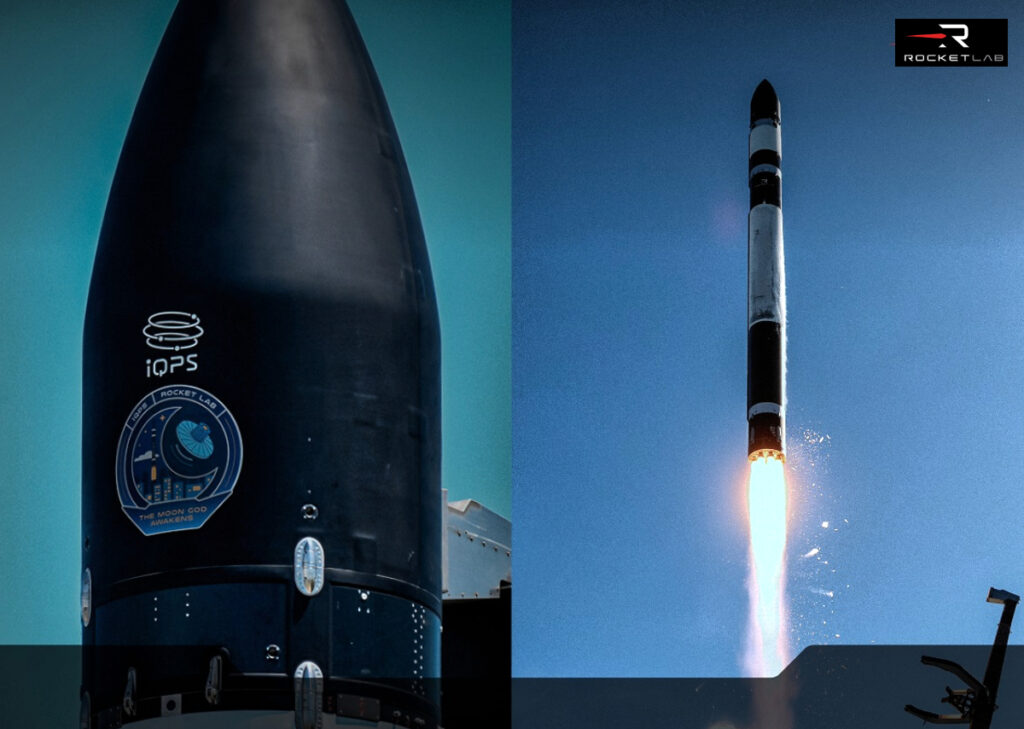
Rocket Lab USA, Inc. (Nasdaq: RKLB) has signed one of its largest Electron launch agreements to date in a second, multi-launch deal with Institute for Q-shu Pioneers of Space, Inc. (iQPS), a Japan-based, Earth imaging company.

This newly-signed deal follows an earlier multi-launch contract signed with iQPS in 2024 and brings the total number of booked dedicated Electron launches for iQPS to eight. Across both bulk orders, six missions are scheduled for launch in 2025 and two in 2026. These follow on from Rocket Lab’s first launch for iQPS in December 2023 which successfully deployed the QPS-SAR-5 satellite “TSUKUYOMI-I” to orbit. The new deal is one of the largest Electron launch agreements to date, second only to Rocket Lab’s ten launch deal with another Japanese constellation operator, Synspective, signed last year.

Artistic rendition of the iQPS SAR-5 satellite on-orbit.

Each Electron launch supports the build out of iQPS’ planned constellation of 36 synthetic aperture radar (SAR) satellites capable of imaging the Earth, day and night and through any weather, to provide near real-time observation data for almost any location in the world.  By launching as the sole customer on each Electron mission, iQPS has greater control over launch schedule, orbit, and other mission parameters compared with rideshare launch options, enabling iQPS to maximize the full capacity of iQPS’ constellation through tailored and precise orbits.

The next Electron mission for iQPS is scheduled to launch as soon as this month. Full details about the launch will be made available closer to launch day.  

Rocket Lab founder and CEO, Sir Peter Beck, said, “Precise constellation build out on a tailored timeline is Electron’s strength. We know precise orbital positioning is critical to every Earth imaging mission, making it highly sought after by constellation operators. This demand is reflected in the many multi-launch contracts that we continue to sign with return constellation operators like iQPS. We are honored to be partnering with iQPS once again to deliver this capability.”

iQPS CEO Dr. Shunsuke Onishi, said, “We are delighted and grateful to announce an additional launch contract for four more satellite on Electron, following our previous announcement. Electron’s high launch frequency and reliability make it an ideal choice for our mission, and securing this opportunity at such an early stage is truly exciting. This contract brings us one step closer to building our satellite constellation over the next two years, and we remain fully committed to making this vision a reality.”

Filed Under: News

Hiltron’s latest-generation satellite communications products and services at GovSatCom 2025

February 26, 2025 by editorial

Field-Upgradable Motorization Kit for the CPI 2385 Satcom Antenna.

Hiltron Communications will promote the latest additions to its range of satellite communication products, systems and  supporting services at GovSatCom 2025. The event will be held at its usual location, the European Convention Center in Luxembourg, from Thursday February 27th through Friday 28th.

“A highlight of our GovSatCom 2025 presence will be the latest addition to our HMAM series of motorized antenna mounts,” says Antonio Monteverde, Sales Director at Hiltron Communications. “The new HMAM-XY is an advanced model designed to perform high precision tracking of LEO and MEO satellites, smallsat constellations and flying objects such as drones. It combines fast high tracking speed and fast acceleration with precise pointing and tracking accuracy, including low backlash and full hemispheric coverage with no zenith keyhole. Tracking velocity is up to 10 degrees per second with 6 degrees per second squared maximum acceleration and within 0.05% accuracy. TLE/NORAD tracking capabilities are included and Steptrack is available as an option.”

“Operation and supervision of the HMAM-XY are via Hiltron’s established HACU antenna control unit,” adds Thomas Wurst, Pre-Sales Engineering Manager. “Browser-based control and monitoring can be performed from any desired location via an Ethernet link connection. The control unit can be mounted on the HMAM-XY support column with local operation additionally possible via a directly connected handheld unit.”

Also new to GovSatCom delegates will be Hiltron’s Field-Upgradable Motorization Kit for the CPI 2385 Satcom Antenna. The kit is designed for broadcast applications, two-way satellite telecommunication links or receive-only downlinks. Based on the established HMAM, it offers an economical alternative to new installations. Tracking capabilities include manual positioning to known satellites, automatic positioning and active step tracking. TLE/NORAD, inclined orbit tracking and Intelsat 11 tracking are also supported. An optional motorized feed changer allows the head to be moved quickly to a new position for switching between frequency bands.

“GovSatCom continues to be a useful venue for the creation of new partnerships and a catalyst for product development in line with the evolving requirements of the satellite communications market,” summarizes Jochen Ermel, Hiltron Communications’ Managing Director. “We look forward to meeting with existing and potential new customers.”

Filed Under: News

Marlink delivers secure digital enablement for Alpha Adriatic with upgrade to Sealink NextGen

February 20, 2025 by editorial

Marlink will upgrade the hybrid network onboard the fleet of Alpha Adriatic, including cutting edge cyber security tools.

Alpha Adriatic will benefit from Sealink NextGen’s combination of VSAT and LEO internet, together with robust back-up and Marlink’s Advanced Threat Detection, Unified Threat Management and Endpoint Detection cyber tools.

Marlink will once again leverage its experience as a managed services provider to upgrade the hybrid network solution onboard, integrating Starlink to enhance options available for business applications and improving connectivity available to crews.

The solution provides Alpha Adriatic with several benefits, including:

  • High bandwidth, low latency communications via Sealink NextGen to support smarter, digitalised fleet operations
  • Enhanced cyber security to provide compliance with industry certification standards and reflect tighter regulation for vessel operators
  • Hybrid solution offers improved uptime and reliability with secure communications and data transfer

Headquartered in Pula, Croatia, and listed on the Zagreb Stock Exchange, Alpha Adriatic operates in the dry bulk and tanker sectors, offering full ship management services to third parties. The Group holds ownership interests in one oil/chemical tanker and three bulk carriers, while also providing third-party ship management services for an additional bulk carrier and three oil/chemical tankers.

Alpha Adriatic is committed to being a modern and innovative company, focused on the high-quality growth of its fleet and the enhancement of services provided to our partners and clients. We rely on the extensive knowledge, experience, and adaptability of our teams both onboard and ashore to ensure safe, efficient, and sustainable operations.Vojko Braut, Technical Director at Alpha Adriatic. 

Marlink added to its cyber capabilities in 2024 with the acquisition of Croatia’s Diverto and then Port-IT, to enhance the breadth of cyber solutions available to remote maritime users. By combining this expertise with a hybrid network solution we can deliver smarter vessel operations to Alpha Adriatic.Tore Morten Olsen, President, Maritime, Marlink.

About Marlink
For companies operating in the world’s most challenging environments – from merchant vessels to offshore and onshore energy operations, from humanitarian organisations to cruise ships and superyachts – Marlink creates and delivers possibilities, anywhere. Marlink is a managed service provider and global leader in remote ICT solutions with annual revenues surpassing $800 million and 1,500 employees operating in more than 30 countries. Wherever our customers are in the world, we deliver them possibilities to work smarter and to operate more effectively, more safely, more sustainably – without the limitations of technology. With our possibility platform, we enable a comprehensive suite of end-to-end managed solutions (Connectivity, Network, Cyber Security, Cloud & IT, IoT & Apps), supported by professional services, unmatched global operations and delivery capabilities and local support teams.

Filed Under: Featured, News

The INFLECION project to address maritime safety and sustainability from space

February 20, 2025 by editorial

The European Space Agency (ESA) and AAC Clyde Space have jointly signed a contract for the first phase of satellite constellation project INFLECION—this initiative will transform Maritime Domain Awareness by enhancing safety, efficiency, compliance, and environmental sustainability in maritime operations.

With approximately 90% of international trade traveling by sea, maritime routes are becoming increasingly congested due to supply chain disruptions, changing trade patterns, and geopolitical tensions. INFLECION will be specifically designed to monitor and support maritime operations, while also contributing to the International Maritime Organization’s e-Navigation strategy to make navigation safer and more efficient.

The proposed €30 million project will be co-funded by the UK Space Agency through ESA’s Advanced Research in Telecommunication Systems (ARTES) Partnership Project programme within the agency’s Connectivity and Secure Communications directorate. The project will deliver three crucial services:

  • Improve operational efficiency by helping vessels optimize routes and achieve just-in-time arrivals
  • Enhance maritime security through AI-powered satellite surveillance to combat smuggling and illegal fishing
  • Support environmental sustainability by protecting marine ecosystems and ensuring compliance with regulations

The system combines three key technologies: VHF Data Exchange System (VDES), enabling reliable two-way data exchange between ships, satellites, and shore stations; Signal Intelligence (SIGINT), which detects and analyses electronic signals to identify vessels engaged in illegal activities; and Synthetic Aperture Radar (SAR), providing continuous surveillance of shipping lanes and coastal areas in all weather conditions.

Following this first phase, which will define the project’s requirements by the end of 2025, the project will see two more phases: a 15 month development phase to build prototypes and systems, followed by a demonstration phase to test and prepare the system for commercial use. Full operational capability is expected by 2028.

AAC Clyde Space leads a consortium of UK organizations, including AST Marine, Bright Ascension, Craft Prospect, Heriot Watt University, Horizon Technologies, ICEYE UK, Omanos Analytics, Nash Maritime, Plymouth Marine Laboratory, Saab UK, and University of Strathclyde.

“The maritime industry faces unprecedented challenges from supply chain disruptions and shifting trade patterns. INFLECION will provide the space-based tools needed to navigate these challenges while protecting our marine environment,” said Laurent Jaffart, ESA Director of Connectivity and Secure Communications.

“INFLECION is a key step in AAC Clyde Space’s strategy to grow Space Data as a Service. With this project, we are using space technology to tackle real challenges in the maritime industry. Together with our partners, we are setting a new standard for safety, efficiency, and sustainability at sea,” said Luis Gomes, CEO of AAC Clyde Space.

Filed Under: News

  • « Go to Previous Page
  • Page 1
  • Interim pages omitted …
  • Page 36
  • Page 37
  • Page 38
  • Page 39
  • Page 40
  • Interim pages omitted …
  • Page 43
  • Go to Next Page »

Primary Sidebar

WEEKLY NEWSLETTER

Archives

  • March 2026
  • February 2026
  • January 2026
  • December 2025
  • November 2025
  • October 2025
  • September 2025
  • August 2025
  • July 2025
  • June 2025
  • May 2025
  • April 2025
  • March 2025
  • February 2025
  • January 2025
  • December 2024
  • November 2024
  • October 2024
  • September 2024
  • August 2024
  • July 2024
  • June 2024
  • May 2024
  • April 2024
  • March 2024
  • February 2024
  • January 2024
  • December 2023
  • November 2023
  • October 2023
  • September 2023
  • August 2023
  • July 2023
  • June 2023
  • May 2023
  • April 2023
  • March 2023
  • February 2023
  • January 2023
  • December 2022
  • November 2022
  • October 2022
  • September 2022
  • August 2022
  • July 2022
  • June 2022
  • May 2022
  • April 2022
  • March 2022
  • February 2022
  • January 2022
  • December 2021
  • November 2021
  • October 2021
  • September 2021
  • August 2021
  • July 2021
  • June 2021
  • May 2021
  • April 2021
  • March 2021
  • February 2021
  • January 2021
  • December 2020
  • November 2020
  • October 2020
  • September 2020
  • August 2020
  • July 2020
  • June 2020
  • May 2020
  • April 2020
  • March 2020
  • February 2020
  • January 2020
  • December 2019
  • November 2019
  • October 2019

© 2019–2026 SatNews

Insert/edit link

Enter the destination URL

Or link to existing content

    No search term specified. Showing recent items. Search or use up and down arrow keys to select an item.
      x
      Sign Up Now!

      Enjoy a free weekly newsletter with recent headlines from the global SmallSat industry.

      Invalid email address
      We promise not to spam you. You can unsubscribe at any time.
      Thanks for subscribing! You will now receive weekly SmallSat News updates.
      We love our advertisers.
      And you will too!

      Please disable Ad Blocker to continue... We promise to keep it unobtrusive.
      We promise not to spam you. You can unsubscribe at any time.
      Invalid email address
      Thanks for subscribing!