
The term isotherm—a line on a map or chart connecting points of equal temperature—is a critical concept in the satellite industry, serving two distinct but equally vital roles: atmospheric remote sensing for weather prediction and the thermal engineering of the spacecraft itself.
Isotherms in Remote Sensing and Meteorology
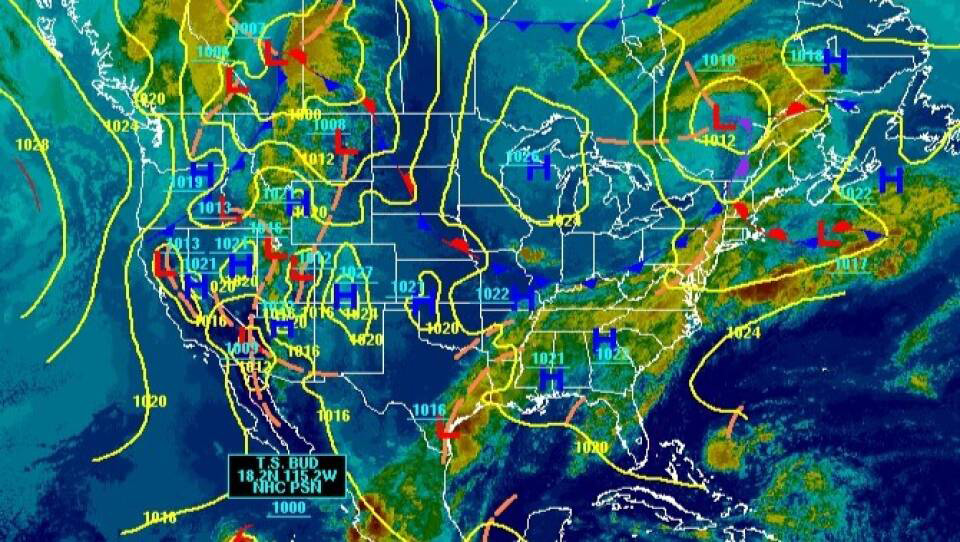
In satellite-based Earth observation, isotherms are primarily used to analyze the thermal structure of the atmosphere. Infrared sounders and imagers, such as those on the GOES (Geostationary Operational Environmental Satellite) or JPSS (Joint Polar Satellite System) constellations, detect emitted thermal radiation to map temperature gradients.
One of the most significant metrics for satellite operators is the 0°C Isotherm Height (also known as the freezing level). Identifying this boundary is crucial for:
- Predicting Rain Attenuation: For satellite communications operating at high frequencies (above 10 GHz, such as Ka-band and the emerging Q/V-bands for 5G/NTN), rainfall is the primary cause of signal degradation. The height of the 0°C isotherm determines the “rain height,” allowing engineers to calculate how much a signal will fade as it passes through the melting layer of the atmosphere.
- Weather Forecasting: Meteorologists use “isotherm extraction” from infrared satellite cloud images to identify the centers of storm systems and predict the development of convective weather.
- Climate Monitoring: Tracking the movement of isotherms over decades provides direct evidence of global temperature shifts, particularly in the cryosphere (polar ice and snow).
Isothermal Design in Spacecraft Engineering
In satellite manufacturing, particularly for the rapidly growing SmallSat and CubeSat sectors, “isothermal” refers to a design philosophy where the entire structure of the satellite is maintained at a nearly uniform temperature.
Unlike large satellites, which can be divided into distinct “hot” and “cold” thermal zones, small satellites are highly power-dense and have limited surface area for radiators. Thermal engineers strive for an isothermal state to prevent sensitive electronic components from overheating while ensuring batteries stay above freezing.
Key technologies used to achieve an isothermal satellite include:
- Isothermal Structural Panels (ISPs): These are structural panels embedded with high-conductivity materials or “flat heat pipes” that rapidly spread heat from internal components across the entire outer skin of the spacecraft.
- Thermal Modeling: Engineers use “single-node” isothermal analysis for initial design phases, assuming the satellite is a single mass. This simplifies the calculation of the satellite’s “gross temperature” along its orbit before moving to complex finite element models.
- Passive Control: Materials like black smooth vapor-honed finishes (used by companies like KSF Space) are applied to improve thermal emissivity, helping the isothermal structure radiate heat efficiently into the -270°C vacuum of space.
Current Industry Relevance (2026)
As of early 2026, the study of isotherms has gained renewed importance due to the deployment of Direct-to-Device (D2D) and High Throughput Satellite (HTS) networks. Because these systems use complex modulation schemes that are highly sensitive to “fade,” real-time data on atmospheric isotherms is becoming a standard requirement for dynamic power allocation and gateway switching in modern ground segments.
Furthermore, as startups like Reflect Orbital begin testing sunlight-reflecting satellites in 2026, the localized thermal impact and resulting isotherm shifts in the upper atmosphere are being closely monitored by atmospheric scientists to assess potential long-term environmental consequences.