
• Skip to main content
  • Skip to primary sidebar
  • Home
  • News
  • Featured
  • More News ⌄
    • SatNews
    • SatMagazine
    • MilSatMagazine
  • Events ⌄
    • MilSat Symposium
    • SmallSat Symposium
    • Satellite Innovation
  • Contacts
  • SUBSCRIPTION

SmallSat News

You are here: Home / News / Russian “Starlink” Launch Pushed to 2026 Amid Production Shortfalls

Russian “Starlink” Launch Pushed to 2026 Amid Production Shortfalls

January 24, 2026 by editorial

In a report released on Friday, January 23, 2026, the Russian aerospace company Bureau 1440 announced the postponement of its initial deployment of 16 high-speed internet satellites. Originally scheduled for late 2025, the launch of the first batch for the “Rassvet” (Dawn) Low Earth Orbit (LEO) constellation has been rescheduled for 2026.
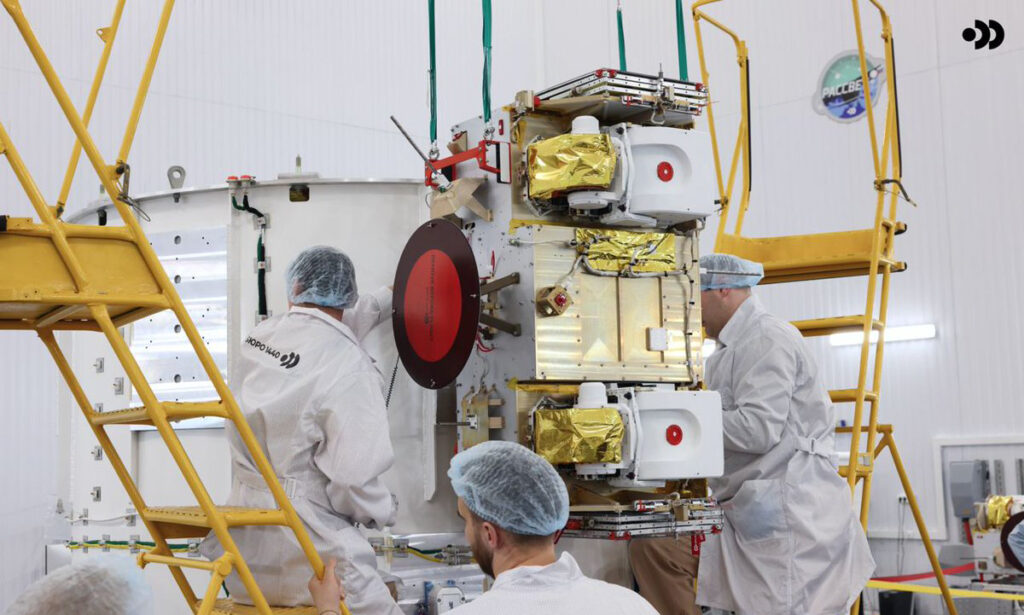
The delay is attributed to production failures and incomplete assembly of the required spacecraft, contradicting previous government statements regarding the readiness of the fleet.

Assembly Obstacles for the Rassvet Constellation

The Rassvet project aims to provide a domestic alternative to SpaceX’s Starlink, targeting global broadband coverage. While Roscosmos Chief Dmitry Bakanov stated in September 2025 that deployment of the first 300 satellites would begin by the end of that year, industry sources now indicate that the production line has failed to meet the necessary volume. Despite the delay, Deputy Minister of Digital Development Dmitry Ugnivenko had claimed as recently as December 2025 that all 16 initial satellites were complete. Bureau 1440 currently has only six experimental satellites in orbit, launched during the Rassvet-1 and Rassvet-2 missions to test laser inter-satellite links and 5G signal compatibility.

Funding and Strategic Infrastructure Goals

The project is a central pillar of Russia’s national “Data Economy” program, with the federal budget allocating 102.8 billion rubles ($1.36 billion) toward its implementation. Bureau 1440 is expected to contribute an additional 329 billion rubles ($4.36 billion) in private investment through 2030. Each satellite is designed to operate in LEO to provide high-speed, low-latency connectivity. The broader strategic goal remains the deployment of a 900-satellite constellation by 2035, with commercial operations involving the first 250 units projected to start in 2027.

Regional Competition and Revised Launch Targets

As Bureau 1440 navigates manufacturing hurdles, regional competition is accelerating. The Ukrainian technology firm STETMAN has entered the implementation phase for its UASAT LEO project. Unlike the delayed Rassvet batch, the first Ukrainian satellite has already secured a launch slot for October 2026, with plans to build a 245-satellite communications network. Bureau 1440’s revised roadmap now targets 156 launches in 2026, followed by 292 in 2027, though reaching these milestones will require a significant stabilization of the company’s satellite assembly process.

Filed Under: News

Primary Sidebar

WEEKLY NEWSLETTER

Archives

  • February 2026
  • January 2026
  • December 2025
  • November 2025
  • October 2025
  • September 2025
  • August 2025
  • July 2025
  • June 2025
  • May 2025
  • April 2025
  • March 2025
  • February 2025
  • January 2025
  • December 2024
  • November 2024
  • October 2024
  • September 2024
  • August 2024
  • July 2024
  • June 2024
  • May 2024
  • April 2024
  • March 2024
  • February 2024
  • January 2024
  • December 2023
  • November 2023
  • October 2023
  • September 2023
  • August 2023
  • July 2023
  • June 2023
  • May 2023
  • April 2023
  • March 2023
  • February 2023
  • January 2023
  • December 2022
  • November 2022
  • October 2022
  • September 2022
  • August 2022
  • July 2022
  • June 2022
  • May 2022
  • April 2022
  • March 2022
  • February 2022
  • January 2022
  • December 2021
  • November 2021
  • October 2021
  • September 2021
  • August 2021
  • July 2021
  • June 2021
  • May 2021
  • April 2021
  • March 2021
  • February 2021
  • January 2021
  • December 2020
  • November 2020
  • October 2020
  • September 2020
  • August 2020
  • July 2020
  • June 2020
  • May 2020
  • April 2020
  • March 2020
  • February 2020
  • January 2020
  • December 2019
  • November 2019
  • October 2019

© 2019–2026 SatNews

Insert/edit link

Enter the destination URL

Or link to existing content

    No search term specified. Showing recent items. Search or use up and down arrow keys to select an item.
      x
      Sign Up Now!

      Enjoy a free weekly newsletter with recent headlines from the global SmallSat industry.

      Invalid email address
      We promise not to spam you. You can unsubscribe at any time.
      Thanks for subscribing! You will now receive weekly SmallSat News updates.
      We love our advertisers.
      And you will too!

      Please disable Ad Blocker to continue... We promise to keep it unobtrusive.
      We promise not to spam you. You can unsubscribe at any time.
      Invalid email address
      Thanks for subscribing! Please check your email for further instructions.