• Skip to main content
  • Skip to primary sidebar
  • Home
  • News
  • Featured
  • More News ⌄
    • SatNews
    • SatMagazine
    • MilSatMagazine
  • Events ⌄
    • MilSat Symposium
    • SmallSat Symposium
    • Satellite Innovation
  • Contacts
  • SUBSCRIPTION

SmallSat News

You are here: Home / Archives for editorial

editorial

Dutch Company, Hyperion Technologies’, SmallSat Components launched on Vega VV16c

September 4, 2020 by editorial

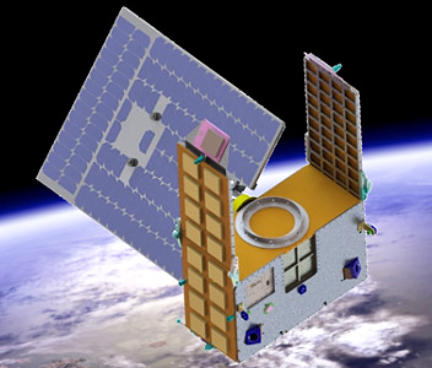
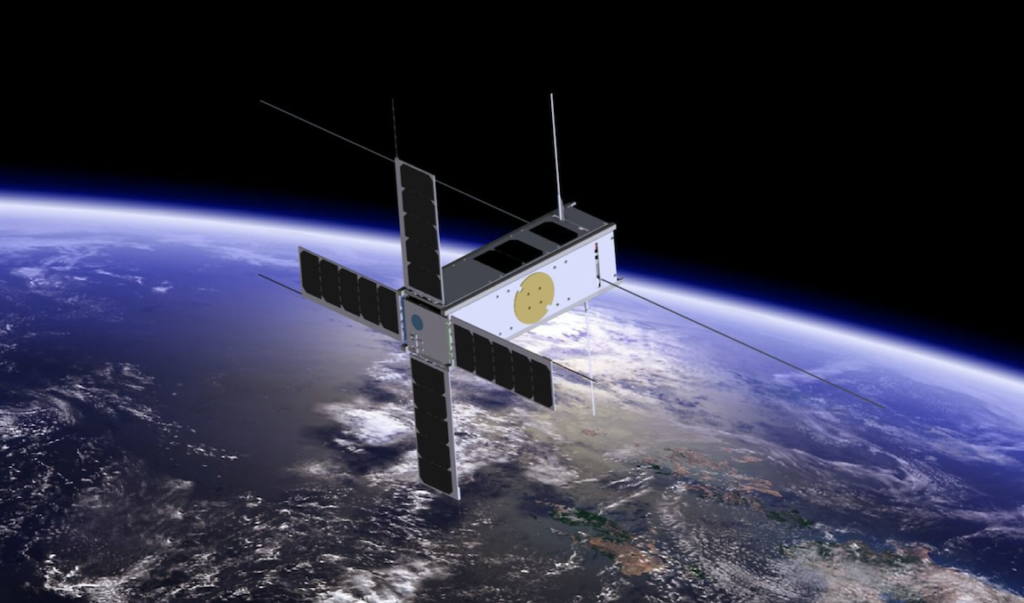
Picasso Cube Sat

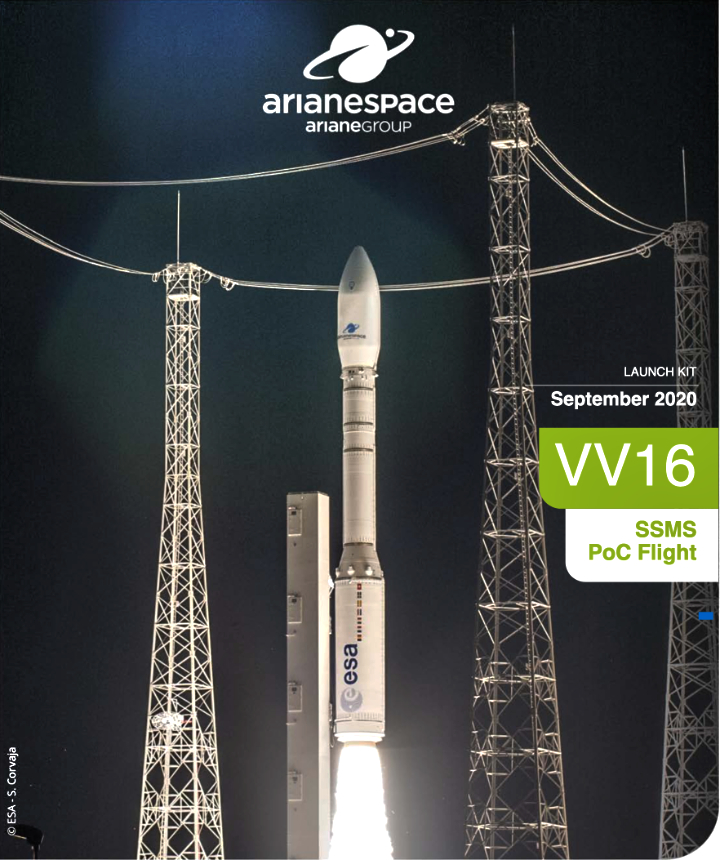
September 3, 2020 at 3:51 am CEST, was an historical date for the Dutch space company Hyperion Technologies, with the launch of Vega VV16, that took 53 small satellites into space.

Arianespace’s Small Spacecraft Mission Service (SSMS) Proof of Concept (PoC) carried, among these, three small satellites of particular interest to the Dutch space company Hyperion Technologies:  ESA’s Picasso mission, the University of Maribor’s TRISAT satellite and D-Orbit’s ION Satellite Carrier.

Increased flight heritage for Star Tracker and integrated ADCS
Two components which have been jointly developed with Berlin Space Technologies have increased their flight heritage count again, thanks to the successful launch: The ST200 star tracker and the integrated ADCS, optimised for 3U satellites. 

The ST200 is part of ESA’s Picasso mission enabling the satellite to determine its attitude accurately, while the integrated ADCS is a key element to the University of Maribor’s TRISAT mission.

In Orbit demonstration for large magnetorquers
Another milestone is the first flight of Hyperion’s large magnetorquers. They are providing D-Orbit’s ION Satellite Carrier with powerful attitude control. Originally developed for D-Orbit, Hyperion will make them available commercially to all its clients seeking for magnetic control for small satellites beyond 12U.

3D printed propulsion module in space
Hyperion’s and Dawn Aerospace’s 1U CubeSat propulsion module PM200 reached space upon the successful Vega launch. The PM200 was the first ECSS compliant 3D printed bi-propellant propulsion system to be allowed to be launched to space. It shared a ride aboard D-Orbit’s first ION Satellite Carrier. 

Bert Monna, CEO of Hyperion Technologies concluded after the Vega launch, “This launch is certainly an important moment for many satellite integrators and their suppliers. Quite a number of launches experienced delays due to the pandemic. Although we at Hyperion were continuously busy, the goal remains to bring our solutions up there, into space, and to contribute to the state of the art, and eventually enable better services for users on Earth.”
Filed Under: News

Rocket Lab’s First Configurable Photon Satellite Is Successfully Launched

September 4, 2020 by editorial

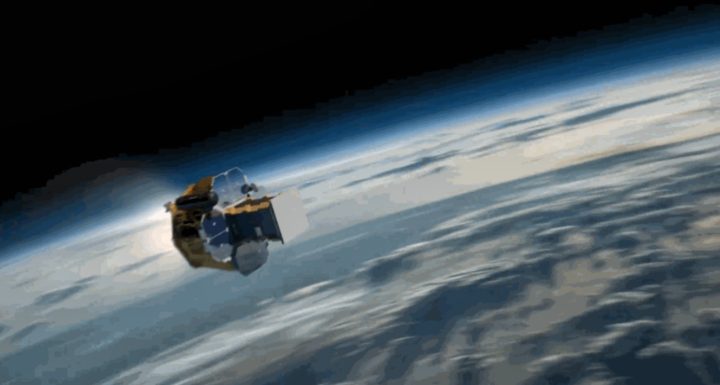
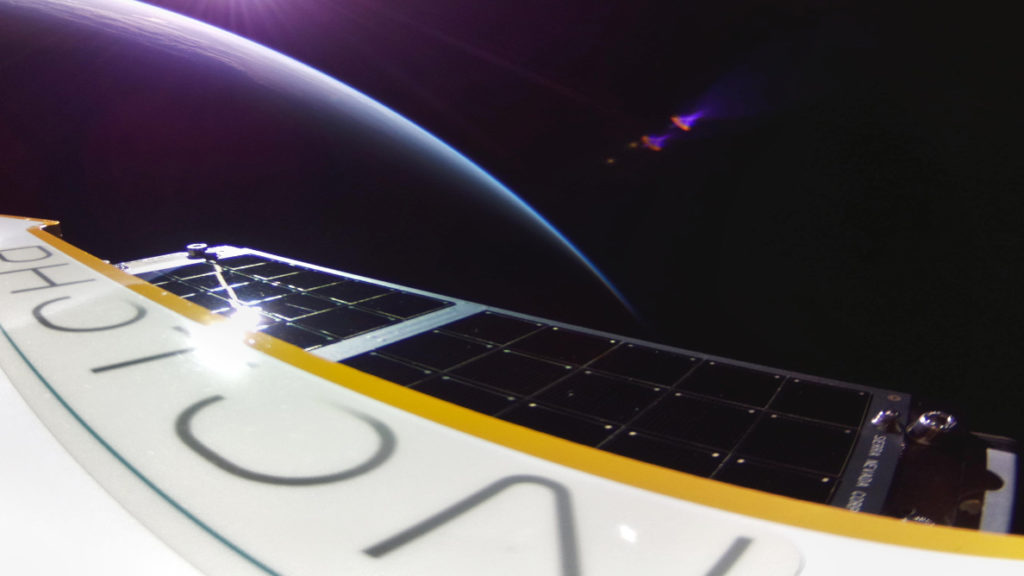
Rocket Lab’s Photon platform’s First Light satellite.

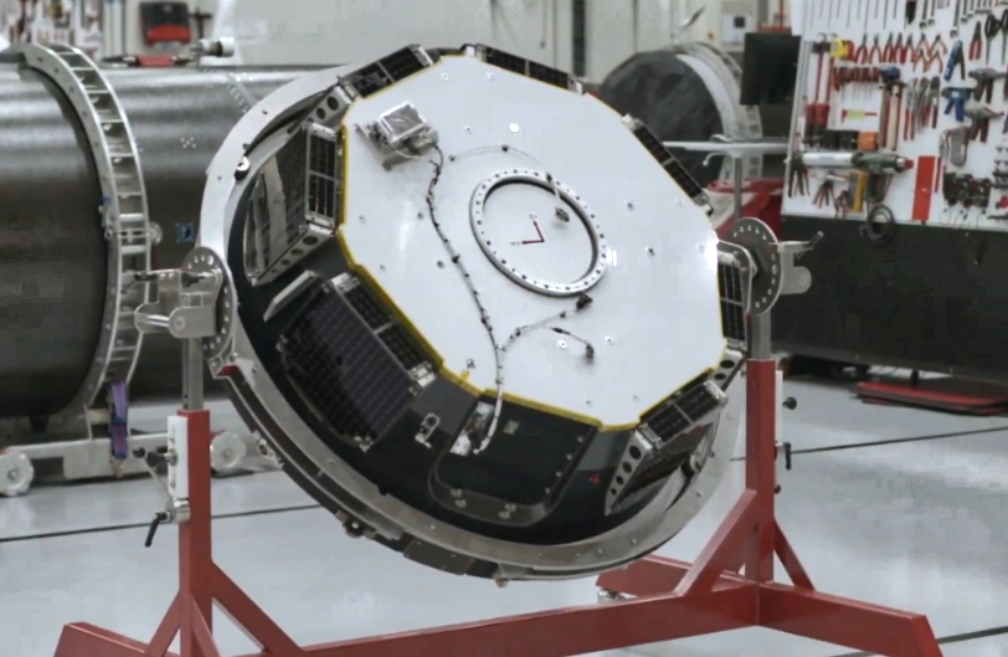
Rocket Lab has launched their first in-house designed and built operational satellite, cementing the company’s evolution from a launch provider to an end-to-end space solutions company that offers turnkey satellites and spacecraft components, launch, and on-orbit operations.

The Photon satellite platform. Photo is courtesy of Rocket Lab.

The satellite, named ‘First Light,’ is the first spacecraft from Rocket Lab’s family of configurable Photon satellites to be deployed to orbit. Launched as a technology demonstration, ‘First Light’ builds upon the existing capabilities of the Electron launch vehicle’s Kick Stage with additional subsystems to enable long duration satellite operations.

This pathfinding mission is an initial demonstration of the new power management, thermal control and attitude control subsystem capabilities. By testing these systems for an extended period on orbit, Rocket Lab is building up flight heritage for future Photon satellite missions planned to low Earth orbit, the Moon, and Venus.

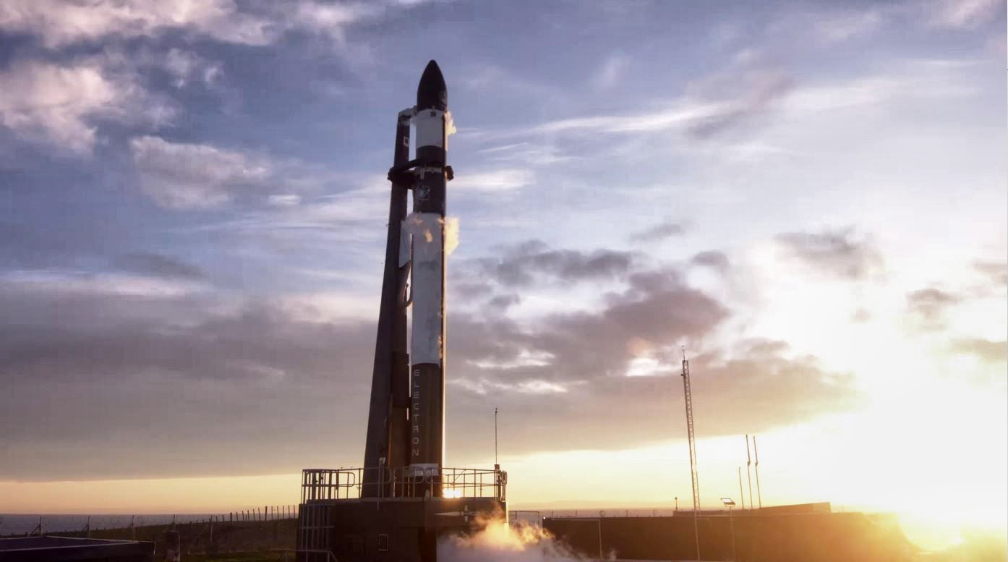
‘First Light’ was deployed to orbit on Rocket Lab’s 14th Electron mission, ‘I Can’t Believe It’s Not Optical’, which lifted-off from Rocket Lab Launch Complex 1 in New Zealand on August 31, 2020. Approximately 60 minutes after lift-off, Electron deployed a 100 kg smallsat for Capella Space, an action that would typically signal the successful completion of a standard Rocket Lab mission.

However, shortly after deploying the customer payload, Rocket Lab conducted an entirely new operation for the first time: Rocket Lab engineers sent a command to transition the Kick Stage into Photon satellite mode. This action marked the first, on-orbit demonstration of Rocket Lab’s Photon satellite as a two-in-one spacecraft, first using it to complete its conventional launch vehicle function to deploy customer satellites, then transitioning into a satellite to continue a standalone mission.

Designed for launch on Electron, as well as other launch vehicles, ‘First Light’ paves the way for future, high-energy variations of Photon designed for lunar and interplanetary missions, including the CAPSTONE mission to the Moon for NASA in early 2021.

Artistic rendition of First Light in space. Image is courtesy of Rocket Lab.

Lifting off from Launch Complex 2 in Virginia, Rocket Lab will use the Electron rocket and Photon Lunar spacecraft to launch NASA’s Cislunar Autonomous Positioning System Technology Operations and Navigation Experiment (CAPSTONE) CubeSat to Near Rectilinear Halo Orbit (NRHO), the same orbit planned for Artemis.

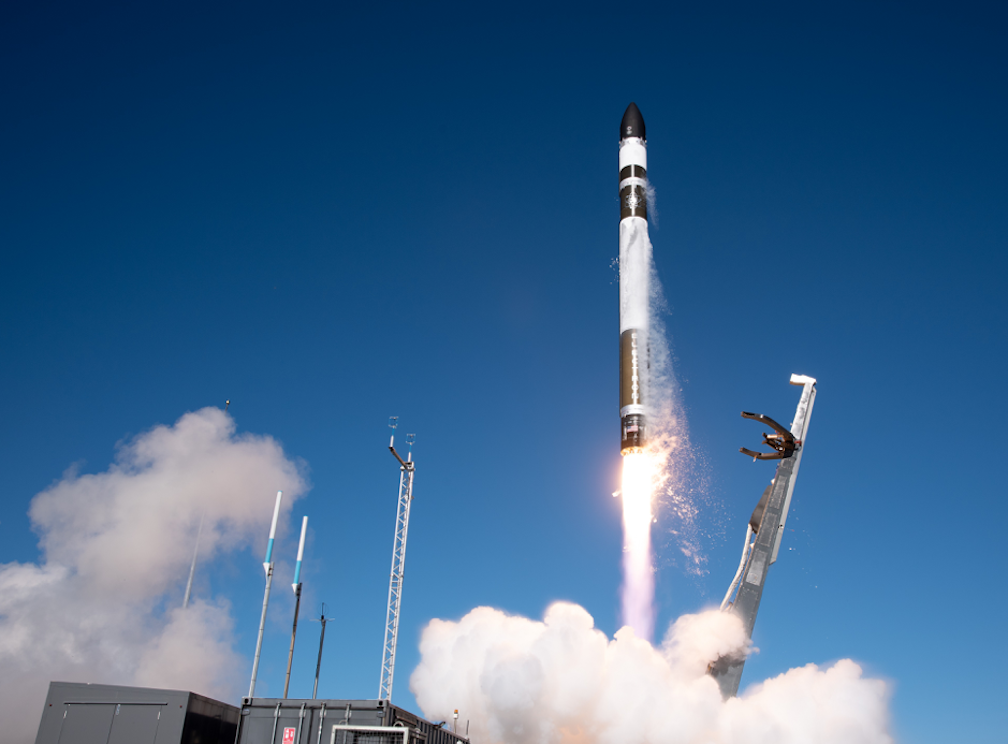
Rocket Lab’s Electron Launch Vehicle.

With the ‘First Light’ mission, Rocket Lab has completed its first full demonstration of its end-to-end mission services, encompassing mission design, component build and spacecraft assembly, integration and test (AIT), launch, ground segment, and on-orbit mission operation. The process of developing the first on-orbit Photon also enabled Rocket Lab to refine and streamline production and testing processes for higher volume Photon production to meet growing customer demand.

Executive Comment

Peter Beck

“We started with launch and solved it, releasing small satellites from the time and orbit constraints experienced when flying on larger launch vehicles. Now we’ve simplified satellites too,” said Rocket Lab’s founder and CEO, Peter Beck. “Launching the first Photon mission marks a major turning point for space users – it’s now easier to launch and operate a space mission than it has ever been. When our customers choose a launch-plus-spacecraft mission with Electron and Photon, they immediately eliminate the complexity, risk, and delays associated with having to build their own satellite hardware and procure a separate launch.”

Rocket Lab recently opened a new headquarters and manufacturing complex in Long Beach, California, to accommodate streamlined, rapid production of Photons. The facility is also home to payload integration facilities for Photon missions, as well as a state-of-the-art mission operations center. The production complex is already home to extensive production lines delivering more than 130 Rutherford engines for the Electron launch vehicle every year, along with guidance and avionics hardware.

In addition to expanding its manufacturing complex, Rocket Lab recently acquired Sinclair Interplanetary, a leading provider of high-quality, flight-proven satellite hardware, to strengthen the Rocket Lab Space Systems division. Sinclair Interplanetary products have become key features of the Photon satellite platforms, and Rocket Lab is also dedicating resources to grow Sinclair’s already strong merchant spacecraft components business.

The acquisition enables Sinclair Interplanetary to tap into Rocket Lab’s resources, scale, manufacturing capability, and innovative technologies to make world-leading satellite hardware accessible to more customers.

Filed Under: News

SpaceX’s Successful Launch, Again

September 3, 2020 by editorial

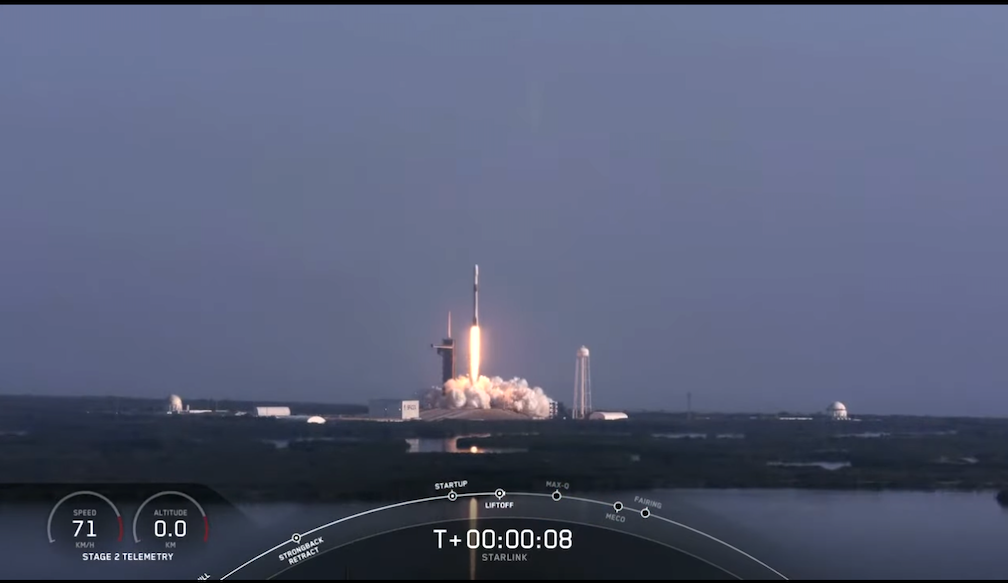
A SpaceX Falcon 9 lifted off from pad 39A at NASA’s Kennedy Space Center in Florida the Kennedy Space Center at 8:46 a.m. this morning, deploying a set of approximately 60 Starlink broadband satellites 15 minutes later.

Earlier this week SpaceX confirmed that employees have been testing Starlink’s latency and download speeds, key measures for an internet service provider.

According to SpaceX engineer Kate Tice, “They show super low latency and download speeds greater than 100 [megabits] per second. That means our latency is low enough to play the fastest online video games and our download speeds are fast enough to stream multiple HD movies at once.”

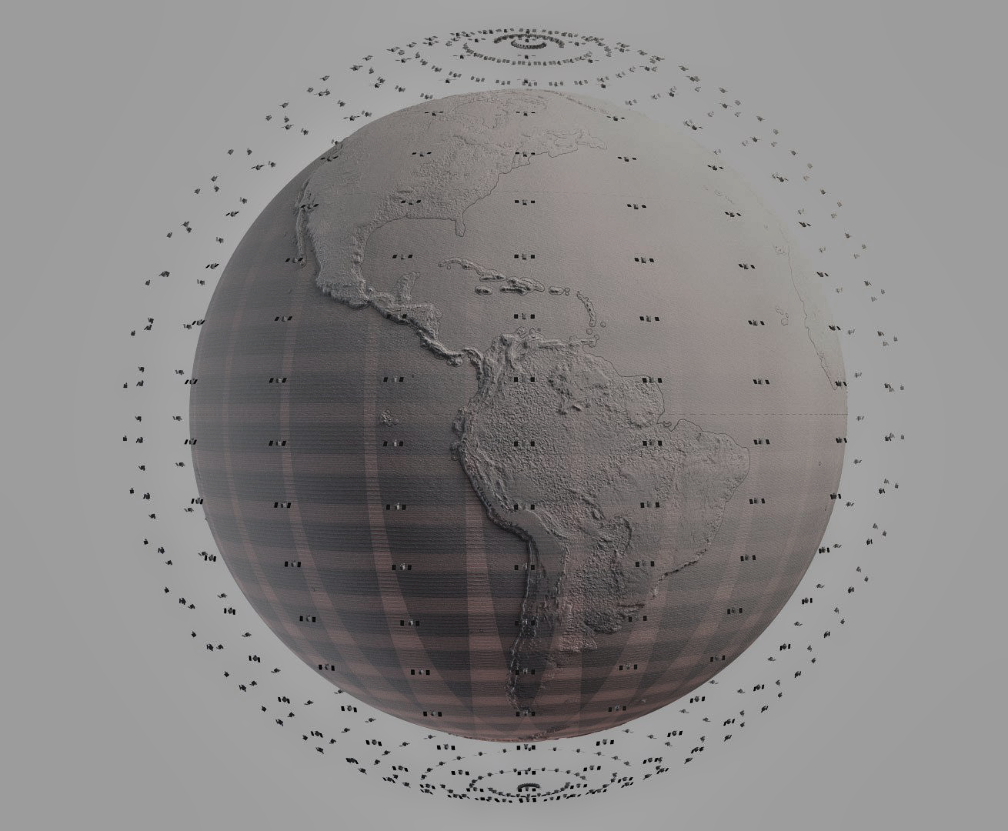
The goal of SpaceX is to build an interconnected network of about 12,000 small satellites in low Earth orbit. To date, SpaceX has launched about 650 of its version 1.0 satellites and is currently building a system of ground stations and user terminals to connect consumers directly to its network.

Filed Under: Featured, News

Astroscale Names A New UK Operations Director

September 2, 2020 by editorial

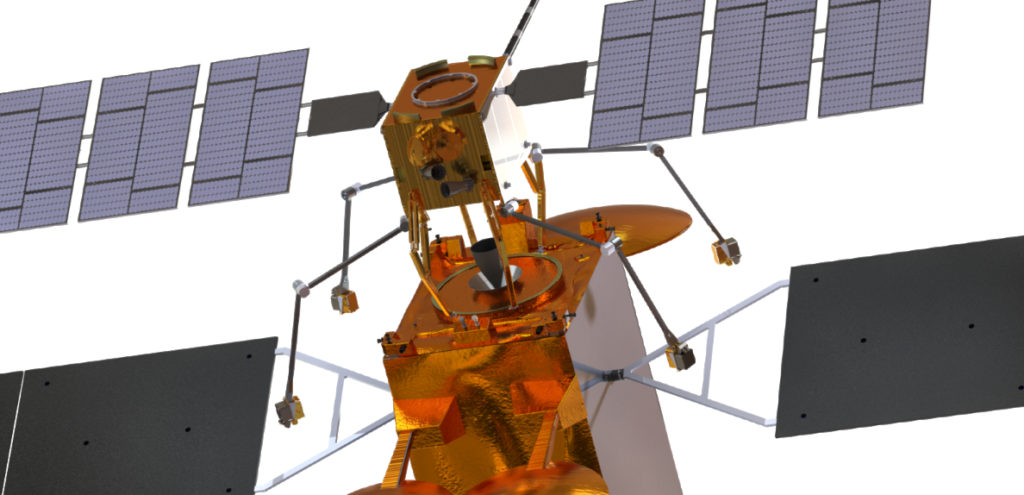
Astroscale ASUS LEX.

Astroscale Ltd. (“Astroscale UK”), the UK subsidiary of Astroscale Holdings Inc. (“Astroscale”), has appointed Sharon Parker-Lines as the firm’s UK Operations Director, effective September 1, 2020.

Sharon joins Astroscale with more than 20 years of experience in operations, specializing in human resources, finance, production, commercial, and strategic planning. Most recently, Sharon was Centre Director for the Oxford Centre for Innovation, where she was responsible for supporting SMEs and start-ups to achieve sustainable growth. Prior to that, she was Group Chief Operating Officer of a global publishing company for nine years.

Sharon will work closely with John Auburn, CCO and Astroscale UK Managing Director, to build a world-class multi-skilled engineering and operations team in the UK and ensure the commercial success of the company. She will manage and oversee the support functions of the Astroscale UK business, including finance, human resources, IT, administration and procurement, whilst managing the resource requirements across the wider engineering team.

On her appointment, Sharon said, “Astroscale is an exciting and agile company that’s working on ground-breaking missions to address orbital sustainability, including the growing concern of space debris. To join this talented team is a dream come true for me.”

Since its establishment in 2017, Astroscale UK has grown to over 30 personnel with plans to grow to 80 by 2022. The UK unit includes the ground segment and operations engineering teams, that are leading the development of the In-Orbit Servicing Control Centre – National Facility. This state-of-the-art facility will form the basis for operating missions to clean up space debris and conduct other in-orbit servicing operations, providing Astroscale with a world-leading operational capability. The team is currently in the process of testing the operational procedures for the upcoming End-of-Life Services by Astroscale-demonstration (ELSA-d) mission.

Filed Under: News

Space Development Agency Awards Two Transport Layer Contracts For Smallsat Constellation

September 1, 2020 by editorial

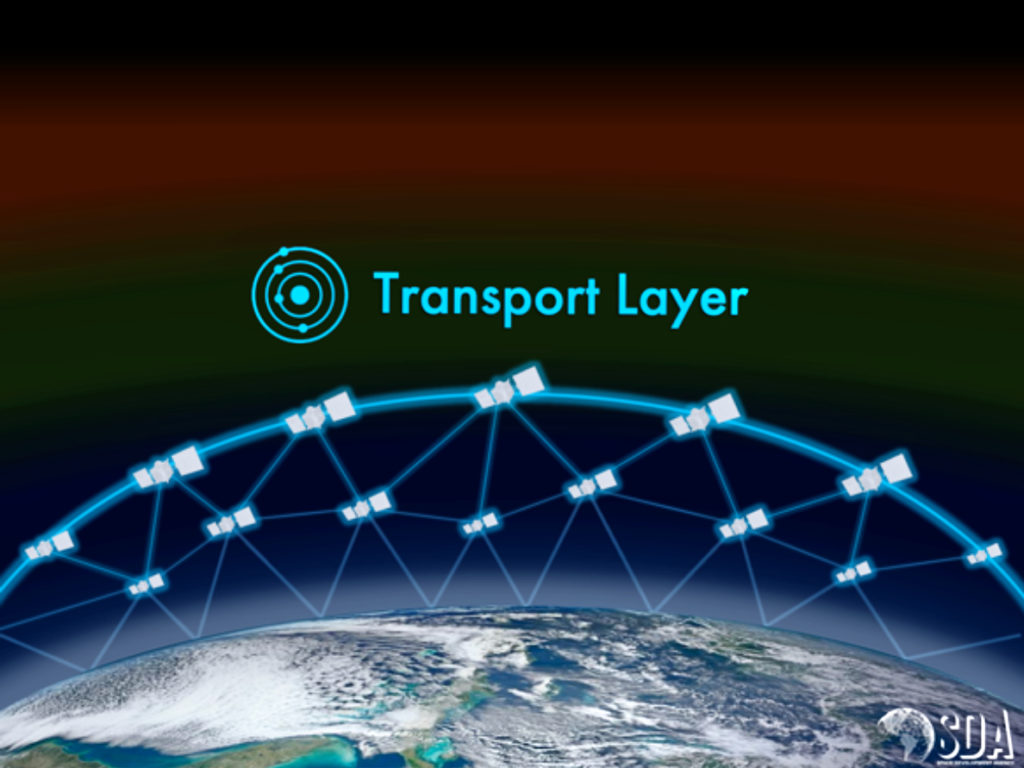
The Space Development Agency (SDA) has awarded two contracts for the first generation of the Transport Layer — these awards represent one of the first major and highly visible steps toward developing the National Defense Space Architecture’s inaugural tranche (called Tranche 0).

This set of contract awards will initiate the design, development, and launch of constellations that will be comprised of tens of satellites with optical intersatellite links capable of sending and receiving wideband data to and from other space vehicles and ground stations. The capability demonstrated in the Transport Layer Tranche 0 will provide our warfighters with periodic regional access to low-latency data connectivity via space-based extensions of existing tactical data links.

York Space Systems awarded a $94,036,666 firm-fixed-price contract for the Space Development Agency Transport Layer Tranche 0. The work to be performed under this contract will include on-time delivery of space vehicles (SVs) and paths to optical intersatellite link (OISL) interoperability success.

Lockheed Martin Corporation is awarded a $187,542,461 firm-fixed-price contract for the Space Development Agency Transport Layer Tranche 0. The work to be performed under this contract will include on-time delivery of space vehicles (SVs) and paths to optical intersatellite link (OISL) interoperability success.

Filed Under: News

Arianespace Says “Go” With Vega’s First Rideshare Mission of 53 Small Sats

September 1, 2020 by editorial

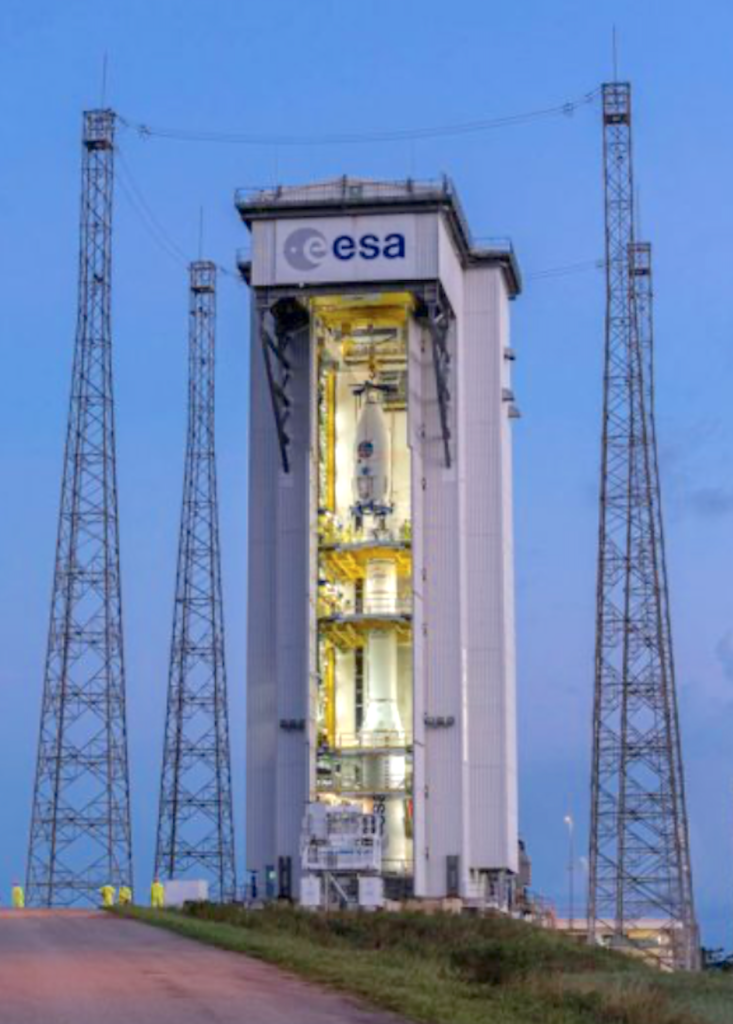
Vega’s payload fairing is moved into position for installation atop the launch vehicle during activity at the Spaceport in French Guiana.

September 1 has been established as the ‘go’ date for the lightweight Vega launcher’s flight from French Guiana to demonstrate Arianespace’s rideshare response to the growing small satellite market.

This upcoming Proof of Concept mission – which carries a total of 53 small satellites on a new dispenser system – was authorized for Tuesday which confirmed the preparedness of Vega, along with the payloads, the Spaceport’s launch site infrastructure, and the network of tracking stations.

Designated Flight VV16 in Arianespace’s launcher family numbering system, it will validate the Small Spacecraft Mission Service (SSMS) – using a modular dispenser whose components can be assembled as needed in a building-block style. For tomorrow’s flight, seven microsatellites are installed on the dispenser’s upper portion, while 46 smaller CubeSats have been positioned on the lower portion’s hexagon-shaped module.

During Vega’s flight sequence, the seven microsatellites are to be deployed in Sun-synchronous orbit from 40 minutes into the mission through 52 minutes; followed by the CubeSats’ phased release from 1 hour, 42 minutes to just under 1 hour, 45 minutes.

SSMS provides Arianespace with flight opportunities for nano- and micro-satellites, offering solutions perfectly suited to this growing sub-segment of the launch marketplace. The service enables multiple small satellites from 1 kg. to 500 kg. to be flown together on Vega with the objective of sharing the launch cost.

Arianespace and SSMS provide the same services to the small satellite operatore as the largest customers – while new operators such as laboratories, universities and start-ups are guaranteed optimum conditions for the launch of their space projects.

The SSMS dispenser system is a European Space Agency (ESA) product developed by Italy’s Avio under ESA leadership, and was produced by the Czech company SAB Aerospace s.r.o. (CZ). The European Union contributed to the financing of tomorrow’s Proof of Concept flight.

Filed Under: Featured, News

Rocket Lab’s Successful Launch for Capella Space on 14th Mission

August 31, 2020 by editorial

New Zealand is celebrating the successful Rocket Lab launch of its 14th Electron mission that deployed a single microsatellite for Capella Space. The mission was Rocket Lab’s fourth this year and brings the company’s total number of satellites deployed to 54. 

The ‘I Can’t Believe It’s Not Optical’ mission launched from Rocket Lab Launch Complex 1 on New Zealand’s Māhia Peninsula at 03:05 UTC, 31 August 2020. Electron successfully deployed a single microsatellite to a circular orbit at approximately 500 km for Capella Space.

Capella’s 100kg class Sequoia payload is the first synthetic aperture radar (SAR) satellite to deliver publicly available data from a mid-inclination orbit over the U.S., Middle East, Korea, Japan, Europe, South East Asia, and Africa, and is powered by technology that can detect sub-0.5 meter changes to the Earth’s surface from space.

As the first publicly available satellite in orbit as part of Capella Space’s constellation, Sequoia will provide insights and data that can be used for security, agricultural and infrastructure monitoring, as well as disaster response and recovery. Today’s dedicated mission for Capella Space also marks the successful return to flight for the Electron launch vehicle fewer than 9 weeks since the company experienced an anomaly on July 4th during its 13th launch.

Rocket Lab founder and CEO, Peter Beck, said, “Congratulations to the Capella Space team in this first step to building out a new constellation to provide important Earth observation data on-demand. Electron is the ideal launch vehicle for missions like this one, where the success of a foundational deployment relies heavily on a high level of control over orbit and schedule. I’m also immensely proud of the team, their hard work, and dedication in returning Electron to the pad safely and quickly as we get back to frequent launches with an even more reliable launch vehicle for our small satellite customers.”

Rocket Lab has monthly launches scheduled for the remainder of 2020, including Rocket Lab’s first attempt to recover an Electron first stage after launch. The first recovery mission is slated for Rocket Lab’s 17th launch, scheduled for lift-off in Q4. Details about the customer and launch window for Rocket Lab’s next Electron launch will be released shortly.

Filed Under: Featured, News

SpaceX Pushes SAOCOM-1B + Two Smallsats To Orbit

August 31, 2020 by editorial

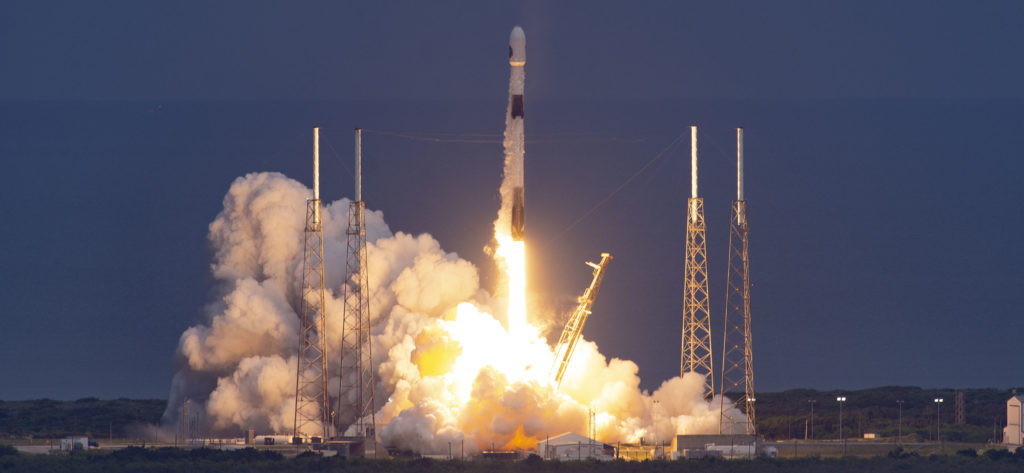
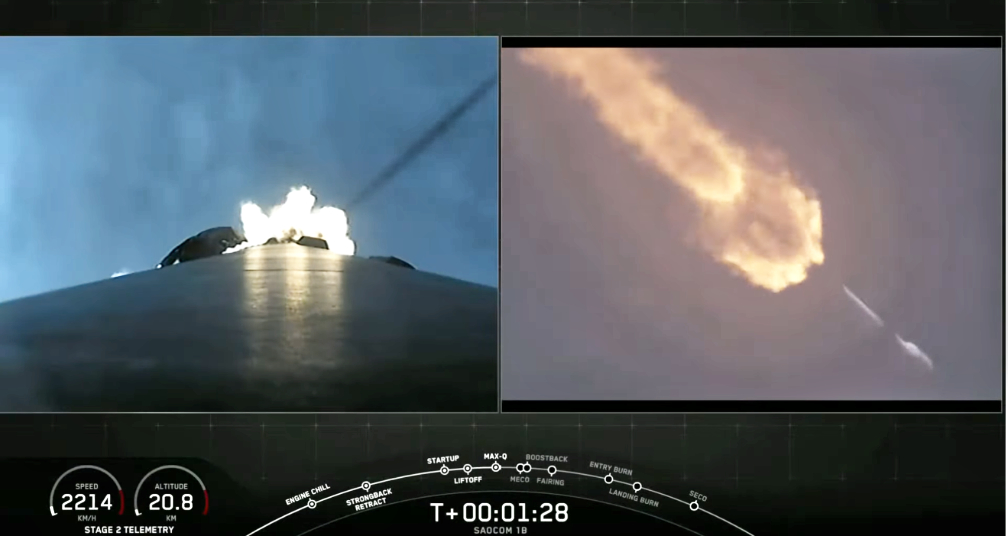
Having been delayed since March of 2020, and using a Falcon 9 Block 5 rocket with a 3X, previous flight completion record, SpaceX has now successfully launched — from Cape Canaveral Air Force Station in Florida — the SAOCOM-1B Earth Observation (EO) satellite for Argentina plus two rideshare smallsats.

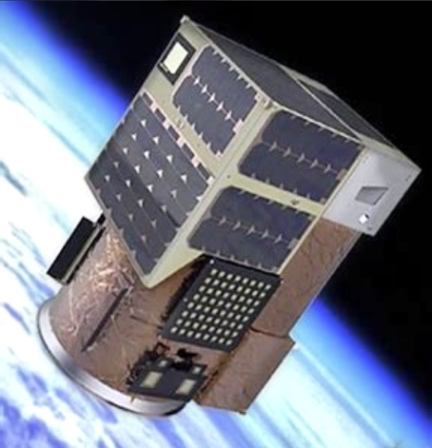
Artistic rendition of a SAOCOM satellite.

This was a rare southern launch trajectory from Florida as SAOCOM-1B headed for a polar orbit (SSO) with the launch vehicle heading over Miami and Cuba. The last time such a southerly launch occurred from Florida was in 1969.

As rockets on this flight path do cross populated areas (one reason most polar orbit launches occur from Vandenberg AFB in California), an automatic flight safety systems is incorporated into the Falcon 9 that enables the rocket to self-destruct without command from the flight operations center, should anything go amiss with the flight, such as straying too far from the designated path.

This particular Falcon 9 previously launched two cargo missions, one in December of 2019 and one in March of 2020 and registers this launch as the 42nd re-flight and 59th landing for the company with this rocket.

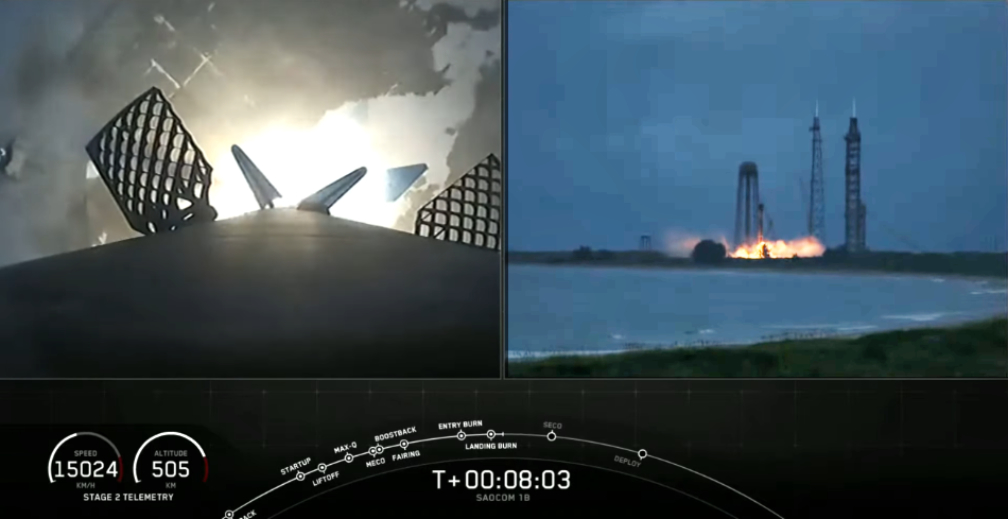
The successful first stage lands at Cape Canaveral.

The first stage, ID’s as B1059 by SpaceX, accomplished a landing at Cape Canaveral, being only the second time this year such a re-berthing has occurred on dry land.

The twin fairings for this mission splashed down into the Atlantic and one of the company’s recovery craft went into its “scoop-out-of-the-water” mode for this important hardware.

The SAOCOM 1B satellite is operated by the Argentinian space agency and is the second to reach orbit for that nation. A major capability of the SAOCOM 1B is the satellite’s ability to image the same area of Earth each day at the same time.

Artistic rendition of PlanetIQ’s GGNOMES-1 smallsat.

The rideshare payloads included Tyvak-0172 and GNOMES-1 for PlanetIQ. The former is a smallsat built by Tyvak Nano-Satellite Systems for a customer that remains undisclosed. PlanetIQ, the developer and builder of the GNOMES 1 smallsat, is planning to orbit a fleet of approximately 20 smallsats that will collect data on a variety of atmospheric conditions to assist in weather forecasting.

Filed Under: News

OneWeb Gets FCC Approval For 1.280k More Satellites

August 28, 2020 by editorial

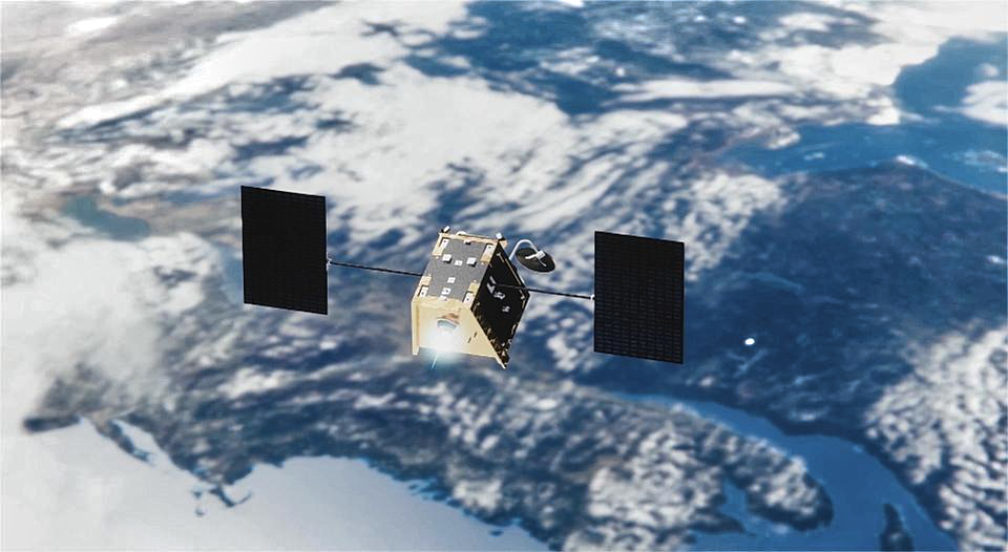
The FCC has approved OneWeb’s request to deploy an additional 1,280 satellites to provide high-speed broadband services in the US.

The approval increases the number of satellites OneWeb can operate in the US market from 720 to 2,000, offering the company “greater opportunities to deliver satellite-based broadband services to the public,” the agency said in an order released August 26th. The FCC says its ruling will offer OneWeb greater opportunities to deliver satellite-based broadband services to the public.

OneWeb proposes to add a V-band payload to the 720 satellite Ku-/Ka-band constellation previously approved by the FCC and proposes 1,280 additional V-band satellites operating at a nominal altitude of 8,500 km. “The OneWeb constellation will be authorized by the United Kingdom,” stated the FCC, adding, “The additional spectrum bands and satellites proposed in the OneWeb Petition would build upon OneWeb’s Ku/Ka-band Market Access Grant. Such additional capacity would enhance OneWeb’s ability to offer its proposed broadband services in the United States.”

“We conclude that granting OneWeb access to the US market for its proposed V-band satellite system would increase competition for the broadband services proposed to be provided by such systems to American consumers, particularly in underserved areas, offer a greater likelihood that such a large system is able to fulfill its ambitions and deploy the proposed services,” the FCC added.

However, the FCC insists that OneWeb pay a “surety bond” by September 26th this year and also launch 50 percent of the proposed satellites no later than August 26th 2026 and complete the constellation by August 26th 2029.

“We are pleased to hear the FCC granted our V-Band application. The V-band is critical for next generation satellite broadband services. OneWeb looks forward to the future growth opportunities this approval will enable as we commercialize our spectrum and execute on our mission to bring low latency connectivity to communities, governments, businesses, and people in the US and around the world,” a OneWeb spokesperson said.

Chris Forrester

News stories authored by journalist Chris Forrester,
who posts for the Advanced Television infosite and is also a
Senior Contributor for Satnews Publishers.

Filed Under: News

Final Prep Underway For Arianespace’s Vega Smallsat Rideshare Mission

August 28, 2020 by editorial

Final preparations are underway for Arianespace’s historic Vega rideshare flight with Europe’s Small Spacecraft Mission Service (SSMS) dispenser system, which has been rescheduled within a launch window from September 1 to September 4, following multiple weather-related postponements.

SSMS provides a new dedicated European rideshare solution with Vega that is modular and capable of accommodating a full range of payload combinations. Vega’s upcoming Proof of Concept mission – designated Flight VV16 in Arianespace’s launcher family numbering system – was conceived in the context of ESA’s LLL (Light satellite, Low-cost, Launch opportunity) initiative.

VV16’s mission – with 21 customers from 13 countries on board – will serve different types of applications: Earth Observation (EO), telecommunications, science, technology/education, and more.

Hardware development was funded by the European Space Agency (ESA); while the European Union contributed to financing of the flight. The combined European efforts will enhance Arianespace’s response to the rideshare demand with solutions that are perfectly suited to the flourishing smallsat market.

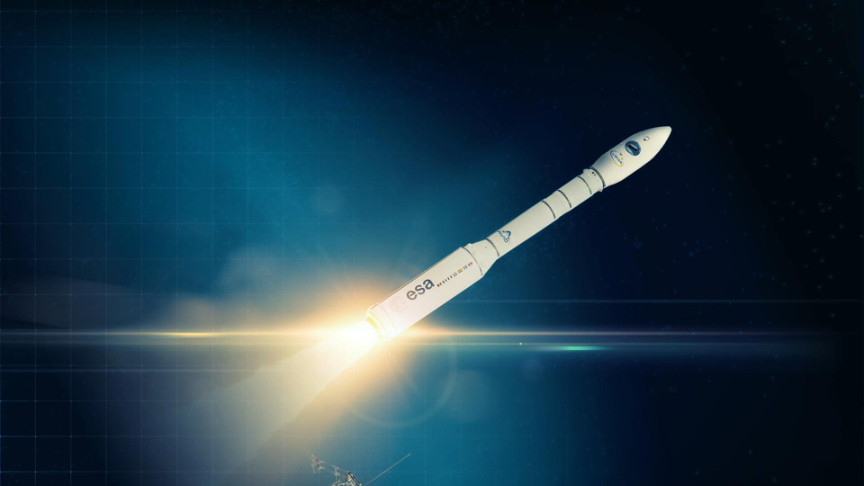
Artistic rendition of the Vega launch vehicle is courtesy of Avio.

Italy’s Avio is the production prime contractor for Vega, delivering the integrated launcher to Arianespace. Avio also developed the small satellite delivery system and the specific mission preparation process for Flight VV16, performing these tasks under ESA leadership. Design authority for the multi-payload dispenser system is SAB Aerospace s.r.o. (CZ) of the Czech Republic.

Filed Under: Featured, News

  • « Go to Previous Page
  • Page 1
  • Interim pages omitted …
  • Page 286
  • Page 287
  • Page 288
  • Page 289
  • Page 290
  • Interim pages omitted …
  • Page 338
  • Go to Next Page »

Primary Sidebar

WEEKLY NEWSLETTER

Archives

  • March 2026
  • February 2026
  • January 2026
  • December 2025
  • November 2025
  • October 2025
  • September 2025
  • August 2025
  • July 2025
  • June 2025
  • May 2025
  • April 2025
  • March 2025
  • February 2025
  • January 2025
  • December 2024
  • November 2024
  • October 2024
  • September 2024
  • August 2024
  • July 2024
  • June 2024
  • May 2024
  • April 2024
  • March 2024
  • February 2024
  • January 2024
  • December 2023
  • November 2023
  • October 2023
  • September 2023
  • August 2023
  • July 2023
  • June 2023
  • May 2023
  • April 2023
  • March 2023
  • February 2023
  • January 2023
  • December 2022
  • November 2022
  • October 2022
  • September 2022
  • August 2022
  • July 2022
  • June 2022
  • May 2022
  • April 2022
  • March 2022
  • February 2022
  • January 2022
  • December 2021
  • November 2021
  • October 2021
  • September 2021
  • August 2021
  • July 2021
  • June 2021
  • May 2021
  • April 2021
  • March 2021
  • February 2021
  • January 2021
  • December 2020
  • November 2020
  • October 2020
  • September 2020
  • August 2020
  • July 2020
  • June 2020
  • May 2020
  • April 2020
  • March 2020
  • February 2020
  • January 2020
  • December 2019
  • November 2019
  • October 2019

© 2019–2026 SatNews

Insert/edit link

Enter the destination URL

Or link to existing content

    No search term specified. Showing recent items. Search or use up and down arrow keys to select an item.
      x
      Sign Up Now!

      Enjoy a free weekly newsletter with recent headlines from the global SmallSat industry.

      Invalid email address
      We promise not to spam you. You can unsubscribe at any time.
      Thanks for subscribing! You will now receive weekly SmallSat News updates.
      We love our advertisers.
      And you will too!

      Please disable Ad Blocker to continue... We promise to keep it unobtrusive.
      We promise not to spam you. You can unsubscribe at any time.
      Invalid email address
      Thanks for subscribing!