• Skip to main content
  • Skip to primary sidebar
  • Home
  • News
  • Featured
  • More News ⌄
    • SatNews
    • SatMagazine
    • MilSatMagazine
  • Events ⌄
    • MilSat Symposium
    • SmallSat Symposium
    • Satellite Innovation
  • Contacts
  • SUBSCRIPTION

SmallSat News

You are here: Home / Archives for Featured

Featured

Telesat + Government of Canada agree to billionC$ loan terms in support of Lightspeed

April 2, 2024 by editorial

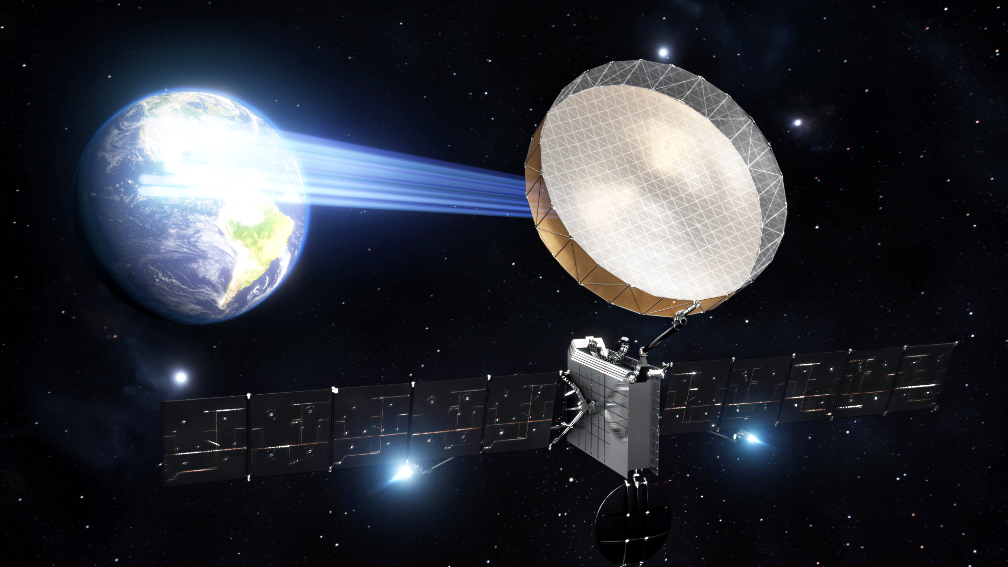
Telesat (NASDAQ and TSX: TSAT) has received a letter from Canada’s Minister of Innovation, Science and Industry regarding an investment in Telesat Lightspeed.

The letter states that, following several months of negotiations between Telesat and federal officials, the Government of Canada (GoC) is prepared to invest C$2.14 billion in Telesat Lightspeed by way of a loan to Telesat LEO Inc., a wholly owned subsidiary of Telesat, that is developing and will own and operate the Telesat Lightspeed LEO global broadband satellite constellation.

The loan will carry a floating interest rate that is 4.75% above the Canadian Overnight Repo Rate Average (CORRA) with a 15-year maturity. Interest is payable in-kind during the Telesat Lightspeed construction period, followed by a 10-year sculpted amortization. Furthermore, Telesat LEO Inc. will provide the GoC with warrants for 10% of the common shares of Telesat LEO based upon an equity valuation for Telesat LEO of US$3 billion.

“Telesat Lightspeed is a highly innovative and disruptive global broadband network and the largest space program in Canada’s long and distinguished history as a space faring nation,” said Dan Goldberg, Telesat’s President and CEO. “I am delighted with the engagement we have had with the Government of Canada on this flagship program, which will help bridge the global digital divide, create and sustain thousands of high-quality jobs in Canada, spur domestic innovation, investment and exports, and ensure that Canada is at the forefront of the rapidly growing New Space Economy. The Government of Canada has been a strong supporter of the Telesat Lightspeed program and we applaud their leadership and foresight. We estimate that, in addition to the roughly $2 billion of capital cost savings, we will realize roughly $750 million of savings in reduced borrowing costs relative to the original Telesat Lightspeed program. Telesat Lightspeed will revolutionize broadband connectivity for enterprise and government users and represents a highly compelling growth and value creation opportunity for Telesat and its stakeholders.”

The GoC investment is subject to certain conditions, including the entry of definitive documentation with the GoC and Telesat’s other financing sources to the GoC’s satisfaction.

Filed Under: Featured, News

Benchmark electric propulsion thrusters on-orbit + poised for 1st firing

March 21, 2024 by editorial

Benchmark demo’d adaptive control at various power levels, enabling delivery of consistent, sustained thrust, as measured at NASA Glenn Research Center.

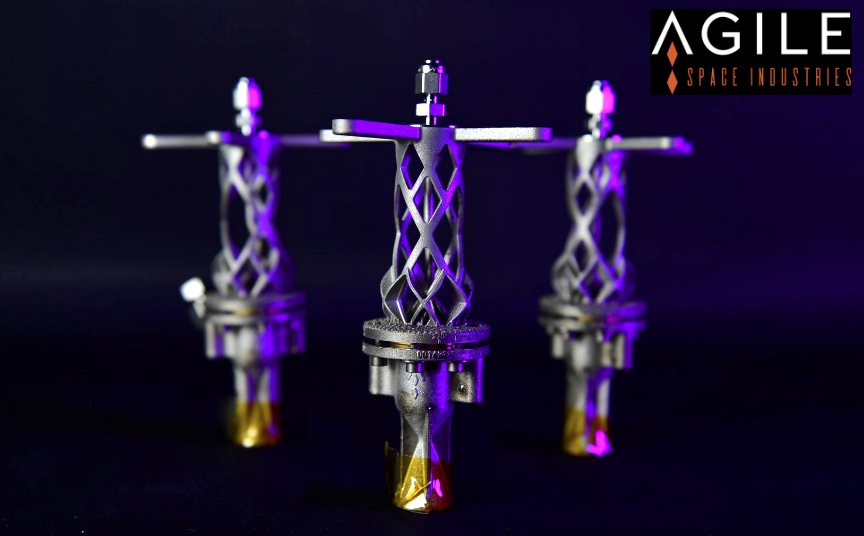
Benchmark Space Systems has revealed the firm’s Xantus™ electric propulsion system has successfully deployed and will undergo subsystem health check and operational verification, including a range of firing modes, aboard mission prime Orion Space Solutions’ 12U cubesat in LEO.

Benchmark’s first electric propulsion system in space, launched aboard the SpaceX Transporter-10 rideshare mission, is tasked with end-to-end mission operations for Orion Space Solutions’ satellite as it supports the demonstration of cloud and weather data mapping for potential, future, military operations. Once the mission objectives are met, the Xantus metal plasma thrusters will be used to deorbit the spacecraft, a critical capability for regulatory compliance and the sustainability of LEO infrastructure.

Based on the early mission milestone, Benchmark is greenlighting shipments of dozens of Xantus MPTs to meet the pent-up demand for proven electric and hybrid propulsion systems among commercial and government operations. Of the 50-plus Xantus EP thrusters being shipped this year, Orion has baselined units in upcoming missions — at least ten will go to UK-based In-Space Missions, a wholly owned subsidiary of BAE Systems plc, among several, smallsat builders and operators that are integrating Xantus MPTs into electric and hybrid propulsion configurations for upcoming missions.

Multiple satellite and mission operators that need to go fast, station keep, and make precision maneuvers in space, are evaluating Benchmark’s hybrid duo of Xantus EP thrusters and Halcyon non-toxic chemical propulsion systems, which unlock expanded dynamic operations for 12U to ~200kg spacecraft that are often limited by a single technology, compromising mission capability and value.

Xantus can use just about any metal as fuel, with direct thrust data using molybdenum, magnesium, copper and stainless steel (potentially harvested from existing space debris).

The production Xantus metal plasma thrusters are baselined to run on the metal molybdenum, which offers the best combination of properties and efficient thrust generation among a variety of metal propellants tested in trials (also copper, stainless steel, aluminum, and magnesium). The MPTs are designed to ultimately run on metals that can be harvested in space, including spent space vehicle materials and orbital debris.

Early operations and telemetry will be used to validate the Xantus EP system’s thrust across several power levels and other key capabilities, which boost mission readiness and assurance levels realized during third-party testing at NASA’s Glenn Research Center in Ohio and at Benchmark’s Research and Development facility in Pleasanton, California.

The milestone debut of Benchmark’s electric propulsion system in space comes less than 18 months after the company acquired the metal plasma thruster technology from Alameda Applied Sciences Corporation and follows a previous mission launch in January 2023 that did not deploy.

The Xantus electric propulsion system, with its innovative MPTs, is one key element of Benchmark’s full in-space mobility strategy and market-leading lineup of propulsion systems and solutions. The company offers electric, green chemical, and hybrid platforms designed to provide speed, endurance, precision maneuvering, and deorbit capabilities to meet the fast-growing demand for dynamic and sustainable space operations across multiple orbits and mission profiles

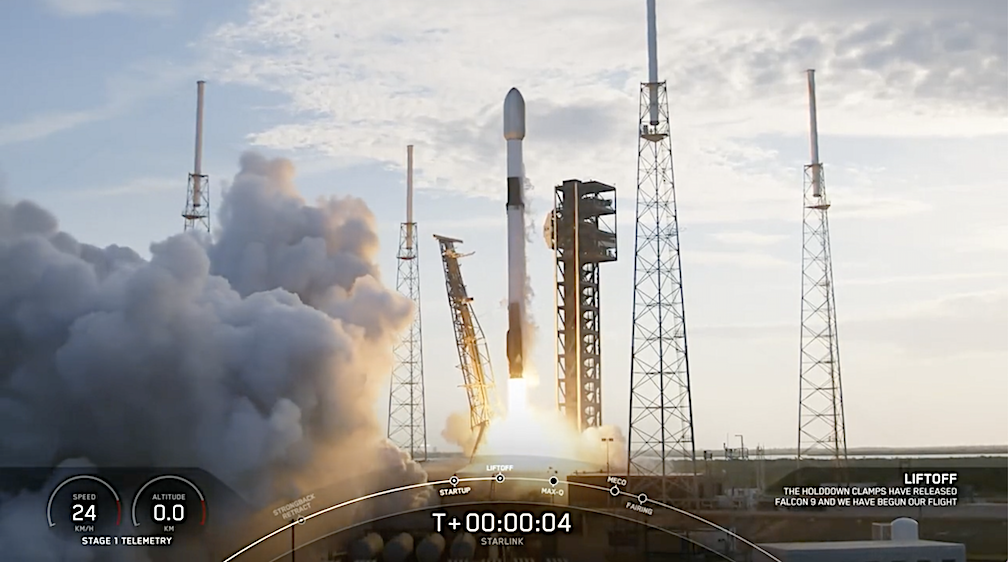
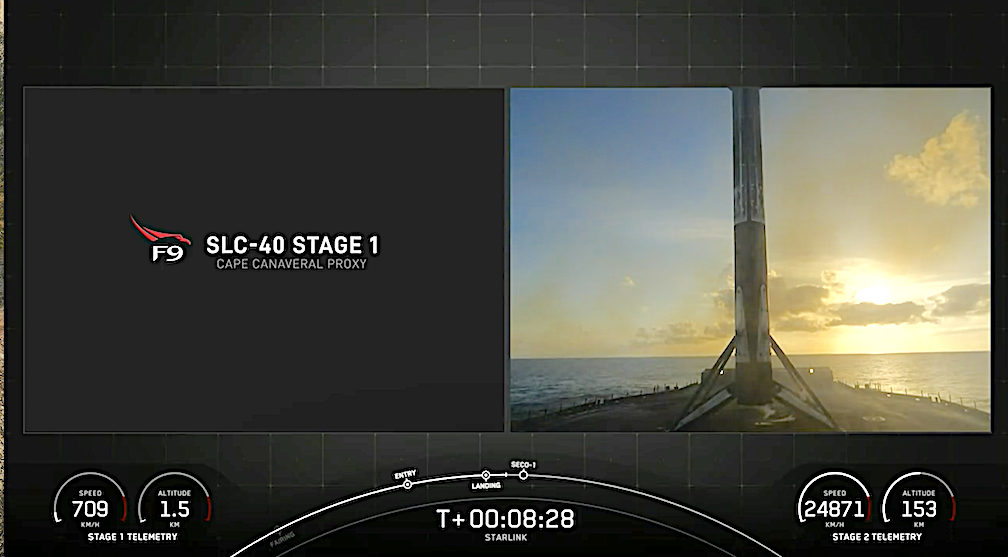
Xantus launched aboard SpaceX’s Transporter-10 rideshare mission on March 4, 2024.

“The Benchmark team is thrilled that our Xantus electric propulsion system and metal plasma thrusters are supporting this important mission for Orion Space and the US Government,” said Chris Carella, Chief Commercial Officer for Benchmark Space Systems. “Our government and commercial mission partners around the world have closely followed this historic first, as our Xantus metal plasma thrusters demonstrate their capabilities in space. Our partners have been preparing for space with our software and engineering development units (SDUs/EDUs), and they’re excited to soon be receiving shipments of flight units to close on their own missions in the months ahead.”

“Our Xantus MPTs are designed to provide optimal station keeping for most cubesats, microsats in the range of 5 to 250 kilograms, and precision operations for ESPA-class satellites from 250 to 1000 kilograms. That’s a wide sweet spot, and we look forward to enabling dozens of upcoming missions to fly using what promises to be an extremely valuable electric propulsion tool in LEO, MEO, and GEO,” said Kent Frankovich, Benchmark’s Vice President of Electric Propulsion, who is leading the company’s metal plasma thruster development.

Filed Under: Featured, News

Aerospacelab enters into a collaboration with Xona Space Systems

March 19, 2024 by editorial

Aerospacelab, a company engaged in smallsat design, manufacturing, and operations, and Xona Space Systems, a service provider in  high-performance navigation satellite systems, have entered into a partnership, marking a significant step forward in the evolution of satellite technology spearheaded by two, innovative companies.

Under the terms of the agreement, Aerospacelab will leverage its Versatile Satellite Platform (VSP) capabilities to design, manufacture, and launch Xona Space Systems’ upcoming navigation satellite, assist Xona Space Systems in obtaining the necessary operator license, and support launch operations for two years. Xona Space Systems will provide the Position, Navigation and Timing (PNT) payload for integration into Aerospacelab’s platform.

This collaboration underscores Aerospacelab’s ability to accommodate diverse payloads and its expertise in satellite systems integration and also further reinforces the company’s objective to provide tailored satellite solutions to customers.   

“Our collaboration with Xona demonstrates how our two companies can work together to bring new technological advancements and faster development, contributing to the overall progress in satellite navigation”, said Tina Ghataore, Chief Strategy & Revenue Officer of Aerospacelab. “We are excited to be a part of Xona’s journey as we will build this navigation satellite for them, but will also be assembling, integrating and testing at our new US facilities. We are excited to support Xona’s ambitious plan to significantly grow their satellite fleet in the upcoming years.” 

Tyler Reid, Co-founder & CTO of Xona Space Systems, said, “We look forward to working with Aerospacelab on our next mission to bring live sky capability for Xona PULSAR” said Reid. “We are bringing our navigation payload expertise and coupling this with proven satellite platforms from Aerospacelab’s successful flights and operations. Their competitive pricing and commitment to an aggressive schedule align with our goals. Together, we aim to accelerate innovation in global navigation satellite systems.” 

Filed Under: Featured, News

NASA awards flight + payload integration servides contracts

March 11, 2024 by editorial

NASA has selected 15 companies to provide flight and payload integration services to advance technologies and procedures for operating in space, including testing in high-altitude, reduced gravity, or other relevant environments — examples of payloads include NASA science instruments or technology demonstrations.

The indefinite-delivery/indefinite-quantity (IDIQ) base contract awards are firm-fixed-price with a total combined value of $45 million and a performance period of five years. The flights and other services covered by these contracts are for use by NASA and other government agencies. The types of platforms that will be used for testing include suborbital rockets, high-altitude balloons, orbital spacecraft and satellites, and, in some instances, suborbital rockets that can accommodate carry people.

The following companies have been awarded contracts to provide services through demonstrated commercial capabilities:

  • Aerostar International, Inc., of Sioux Falls, South Dakota
  • Angstrom Designs Inc., of Santa Barbara, California
  • Astrobotic Technology Inc., of Pittsburgh
  • Astro Digital US Inc., of Santa Clara, California
  • Blue Origin Texas, LLC of Van Horn, Texas
  • Galactic Enterprises, LLC of Las Cruces, New Mexico
  • Loft Orbital Federal, LLC of Golden, Colorado
  • Momentus Space LLC of San Jose, California
  • Near Space Corp., of Tillamook, Oregon
  • Rocket Lab USA Inc., of Long Beach, California
  • Space Exploration Technologies Corp., of Hawthorne, California
  • Spire Global Subsidiary, Inc., of Vienna, Virginia
  • Tyvak Nano-Satellite Systems, Inc., of Irvine, California
  • Varda Space Industries, Inc., of El Segundo, California
  • World View Enterprises Inc., of Tucson, Arizona

The contracts are in support of NASA’s Flight Opportunities and Small Spacecraft Technology programs, both part of the NASA’s Space Technology Mission Directorate at the agency’s headquarters in Washington. These programs support technology development and missions to change the pace of space exploration, discovery, and space commerce.

Filed Under: Featured, News

Terran Orbital awarded IDIQ contract by NASA

March 7, 2024 by editorial

Terran Orbital Corporation (NYSE: LLAP) has been awarded an Indefinite-Delivery/Indefinite-Quantity (IDIQ) contract with a $45 million ceiling value with NASA’s Space Technology Mission Directorate.

The Directorate is comprised of NASA’s Flight Opportunities program and the Small Spacecraft Technology program.

The five-year agreement enables Terran Orbital to provide space vehicles and payload integration services for a variety of missions. These missions will use Terran Orbital’s proven space vehicle platforms and are intended to advance technological maturity of systems that will transform the landscape of space exploration, discovery, and space commerce.

NASA’s selection of Terran Orbital was based on the proven capabilities of the company’s standard space vehicle platforms, including the successful and proven Pathfinder-Triumph Class 6U CubeSat and Capstone-Voyager Class 12U CubeSat. These platforms offer the required size, capability, and performance required for these NASA missions.

“We are honored to be selected by NASA for this exciting opportunity,” said Marc Bell, Co-Founder, Chairman and Chief Executive Officer at Terran Orbital. “Terran Orbital’s expertise and innovative space vehicle platforms have the potential to play a pivotal role in advancing the next generation of space technologies.”

Filed Under: Featured, News

Silicon Sensing celebrates their 25th Anniversary + growing space sector business

March 5, 2024 by editorial

Silicon Sensing Systems Ltd. will celebrate the success of the firm’s tactical-grade, DMU41 inertial measurement unit (IMU) which, over the last 12 months, has been selected for multiple deployments on platforms in LEO.

The DMU41 redefines the capabilities of MEMS technology, delivering tactical-grade, high-performance inertial sensing in a small and cost-effective unit. Just over 50mm3 and weighing less than 180 grams, this robust product operates in temperatures from -40°C to +85°C, offering new levels of reliability and adaptability in the harshest environments.

Silicon Sensing is also celebrating its 25th anniversary this year, with a sales growth of more than 65% in just five years. Interest in the company’s rugged, compact, solid-state technology has expanded significantly as demand has grown for precise, reliable motion sensing for ever-shrinking platforms – including satellites. A number of products, from tiny navigation and pointing gyros to full 6 axis inertial measurement units (IMU’s), are already in use across a range of space programs. All are based around the company’s patented, vibrating ring micro electro-mechanical systems (MEMS) sensors, which are manufactured in the company’s foundry in Japan.

David Sommerville, General Manager, Silicon Sensing Systems, said, “Typically, our DMU41 is used to enable accurate, sustained satellite positioning in LEO for earth observation, high resolution imaging and geospatial data collection – which continues throughout the 3-to-4-year operational life cycle of the satellite. Our latest products on the market are delivering tactical grade performance levels, exceeding the envelope typically expected of MEMS technology. And we expect our next generation of products will reflect our new mission statement by truly redefining MEMS inertial. For the first time, Silicon Sensing will offer navigation-level inertial sensing performance in a compact, robust and cost effective MEMS package.”

Silicon Sensing Systems Ltd. is a gyroscope and inertial systems engineering development company, jointly owned by Collins Aerospace and Sumitomo Precision Products. The company was formed in 1999 and is, today, a market leader in silicon, micro electro-mechanical systems (MEMS)-based navigation and stabilization technology. Many millions of MEMS gyroscopes and accelerometers have been supplied to thousands of customers since the company’s formation 25 years ago.

Filed Under: Featured, News

AAC Space Africa wins 1st satellite order

February 29, 2024 by editorial

AAC Clyde Space‘s subsidiary AAC Space Africa has won its first satellite order.

AAC Space Africa will assemble, integrate and test two satellites. The order, valued at 4.1 million South African Rands (approx. SEK 2.3 M), is scheduled for delivery in June of 2024. 

“We are delighted that AAC Space Africa has received its first satellite order, a critical milestone in the growth of our company in Africa.  We look forward to seeing these satellites in space delivering their mission,” said AAC Clyde Space CEO Luis Gomes.

Filed Under: Featured, News

Terran Orbital’s CAPSTONE smallsat exceeds expectations

February 22, 2024 by editorial

Terran Orbital Corporation (NYSE: LLAP) as announced that the company’s 12U smallsat built for Advanced Space’s CAPSTONE™ (Cislunar Autonomous Positioning System Technology Operations and Navigation Experiment) mission in support of NASA has surpassed 450 days on-orbit around the moon.

Launched on June 28, 2022, the space vehicle based on Terran Orbital’s proven Voyager platform continues to demonstrate exceptional stability and performance, while supporting critical lunar navigation experiments.

The space vehicle is forging a new lunar path in support of NASA’s Artemisof program. Designed and built by Terran Orbital, the CAPSTONE satellite entered lunar orbit on November 17, 2022, marking a historic moment for small spacecraft and lunar exploration. The satellite’s robust design and Terran Orbital’s engineering expertise have enabled it to operate flawlessly for an enhanced NASA mission expected to last until May of 2024. This achievement underscores the company’s commitment to building reliable and versatile space vehicle platforms capable of exceeding expectations, even in the demanding lunar environment.

The CAPSTONE satellite continues to gather valuable data and pave the way for future lunar exploration missions. The space vehicle’s success validates the effectiveness of Terran Orbital’s innovative technologies and positions the company as a leader in building reliable and cost-effective solutions for deep space exploration.

“This enhanced mission is a testament to the exceptional capabilities of our Voyager platform and the dedication of our talented team,” said Marc Bell, Co-Founder, Chairman, and Chief Executive Officer at Terran Orbital. “We are incredibly proud to have partnered with Advanced Space and NASA on this groundbreaking mission and to contribute to the success of Artemis.”

“The CAPSTONE mission is continuing to deliver valuable data and experience that will inform future exploration missions,” said Bradley Cheetham, CEO and President of Advanced Space. “We remain grateful that NASA provided us this opportunity and together with our mission partners look forward to continued operations.”

To learn more about the Terran Orbital spacecraft platforms, select this direct link…

Filed Under: Featured, News

Hughes to support SES Space & Defense’s + AFRL’s DEUCSI program

February 22, 2024 by editorial

Hughes Network Systems, LLC (HUGHES), an EchoStar company (Nasdaq: SATS), has been awarded by SES Space & Defense, a wholly owned subsidiary of SES, a contract to provide a flexible, software-defined, multi-orbit, auto-PACE solution and associated modems in support of SES Space & Defense’s and the Air Force Research Laboratory’s (AFRL) Defense Experimentation Using Commercial Space Internet (DEUCSI) program.

The Hughes solution will enable resilient broadband connectivity using Ku- and Ka-band Geostationary (GEO), Medium Earth Orbit (MEO), and Low Earth Orbit (LEO) satellite constellations for various Comms on the Pause (COTP) and Comms on the Move (COTM) test scenarios.

Under this contract, Hughes will deliver its automated Network Management System (NMS), Enterprise Management and Control (EM&C) capabilities together with the firm’s Smart Network Edge software to be integrated by the SES Space & Defense team with Hughes next-generation, software-defined HM100 and HM400 satellite modems providing GEO and MEO connectivity. SES Space & Defense, which focuses exclusively on delivering satellite network solutions for governments, will integrate a LEO solution into the Hughes auto-PACE offering, adding further to the resilient nature of the ultimate program deliverable.  

“Multi-orbit, flexible networks deliver real-time communications to meet mission requirements across the battlefield,” said Rick Lober, Vice President/General Manager, Hughes Defense and Government Systems Division. “Whether users need connectivity on the ground or in the air, resilient communications must be available using the frequency band and satellite system that is most effective for the application and location. Hughes appreciates the opportunity to continue working with SES Space & Defense and others on this program as the need for multi-orbit communications accelerates.” 

Filed Under: Featured, News

Lockheed Martin’s Pony Express 2 tech demo satellites are ready for launch 

February 16, 2024 by editorial

The Lockheed Martin (NYSE: LMT) Pony Express 2 mission, intended to showcase how space can enhance Combined Joint All-Domain Command and Control (CJADC2), is ready for launch.

Pony Express 2 is a self-funded technology demonstration that uses a pair of small satellites. Its mission integrates four Lockheed Martin payloads on two 12U Terran Orbital Renegade-class space vehicles. The payloads provide a tactical communications system; a Ka-band crosslink and mesh network; precision relative ranging and time synchronization across the satellites; and a high-end CPU/processor.

Once on orbit, Pony Express 2 will demonstrate:

  • Enhanced connectivity: NASA-standard delay-tolerant, mesh networking to show how warfighters could remain connected by data that is resiliently-relayed through a constellation of satellites for direct to users at the tactical edge.
  • Autonomous capability: With HiveStarTM, a “bid-auction” style autonomous mission technology, there will be a significantly reduced need for satellite operator inputs, an increase in resiliency and faster decision-making. HiveStar technology is a scheduling resource that distributes mission tasks based on availability of the space assets.
  • Mission flexibility: The company’s SmartSatTM technology onboard Pony Express 2 allows applications written in almost any software language to be uploaded to an orbiting spacecraft. Similar to an app on a smart phone, this enables edge processing for software-defined missions.
  • Agile operations: The mission features formation flight algorithms to enable the spacecraft to maintain a tight formation (within a couple of kilometers), using more efficient ion propulsion not normally used for such cooperative operations.
  • AI-enabled proactive troubleshooting: The Artificial Intelligence (AI) application will autonomously monitor spacecraft telemetry and, with the ability to predict potential failures faster than humans, and allow controllers to proactively address issues before they occur.

Pony Express 2 will launch on SpaceX’s Transporter-10 rideshare mission no earlier than March of 2024. After a series of on-orbit demonstrations by Lockheed Martin, Pony Express 2 is expected to be available to participate in government exercises later this year.

Pony Express 2 will eventually be joined by other satellites launched later to form Lockheed Martin’s Space-Augmented Joint All-Domain Operations Environment (SAJE), which will show how space can fully enable and lead the Department of Defense’s CJADC2 vision.

Pony Express 2 is the latest mission in a collection of Lockheed Martin self-funded technology demonstrators launched by the company to showcase technology maturity, including its Electronically Steerable Antenna (ESA) Payload, LM LINUSS™ and Pony Express 1.

Lockheed Martin’s latest technology demonstration is designed to showcase a unique, highly producible Electronically Steerable Antenna (ESA) on orbit.

“The Pony Express 2 mission will showcase how we can keep our warfighters connected from space across every domain even in the most austere and contested environments,” said Maria Demaree, vice president and general manager for Lockheed Martin National Security Space. “These technologies will be key to ensuring information superiority and 21st Century Security for our forces and allies.

Filed Under: Featured, News

  • « Go to Previous Page
  • Go to page 1
  • Interim pages omitted …
  • Go to page 12
  • Go to page 13
  • Go to page 14
  • Go to page 15
  • Go to page 16
  • Interim pages omitted …
  • Go to page 57
  • Go to Next Page »

Primary Sidebar

WEEKLY NEWSLETTER

Archives

  • December 2025
  • November 2025
  • October 2025
  • September 2025
  • August 2025
  • July 2025
  • June 2025
  • May 2025
  • April 2025
  • March 2025
  • February 2025
  • January 2025
  • December 2024
  • November 2024
  • October 2024
  • September 2024
  • August 2024
  • July 2024
  • June 2024
  • May 2024
  • April 2024
  • March 2024
  • February 2024
  • January 2024
  • December 2023
  • November 2023
  • October 2023
  • September 2023
  • August 2023
  • July 2023
  • June 2023
  • May 2023
  • April 2023
  • March 2023
  • February 2023
  • January 2023
  • December 2022
  • November 2022
  • October 2022
  • September 2022
  • August 2022
  • July 2022
  • June 2022
  • May 2022
  • April 2022
  • March 2022
  • February 2022
  • January 2022
  • December 2021
  • November 2021
  • October 2021
  • September 2021
  • August 2021
  • July 2021
  • June 2021
  • May 2021
  • April 2021
  • March 2021
  • February 2021
  • January 2021
  • December 2020
  • November 2020
  • October 2020
  • September 2020
  • August 2020
  • July 2020
  • June 2020
  • May 2020
  • April 2020
  • March 2020
  • February 2020
  • January 2020
  • December 2019
  • November 2019
  • October 2019

© 2019–2025 SatNews

Insert/edit link

Enter the destination URL

Or link to existing content

    No search term specified. Showing recent items. Search or use up and down arrow keys to select an item.
      x
      Sign Up Now!

      Enjoy a free weekly newsletter with recent headlines from the global SmallSat industry.

      Invalid email address
      We promise not to spam you. You can unsubscribe at any time.
      Thanks for subscribing! You will now receive weekly SmallSat News updates.
      We love our advertisers.
      And you will too!

      Please disable Ad Blocker to continue... We promise to keep it unobtrusive.
      We promise not to spam you. You can unsubscribe at any time.
      Invalid email address
      Thanks for subscribing! Please check your email for further instructions.