• Skip to main content
  • Skip to primary sidebar
  • Home
  • News
  • Featured
  • More News ⌄
    • SatNews
    • SatMagazine
    • MilSatMagazine
  • Events ⌄
    • MilSat Symposium
    • SmallSat Symposium
    • Satellite Innovation
  • Contacts
  • SUBSCRIPTION

SmallSat News

You are here: Home / Archives for News

News

Former Under Secretary Of Defense Joins Rocket Lab’s Board Of Directors

August 13, 2020 by editorial

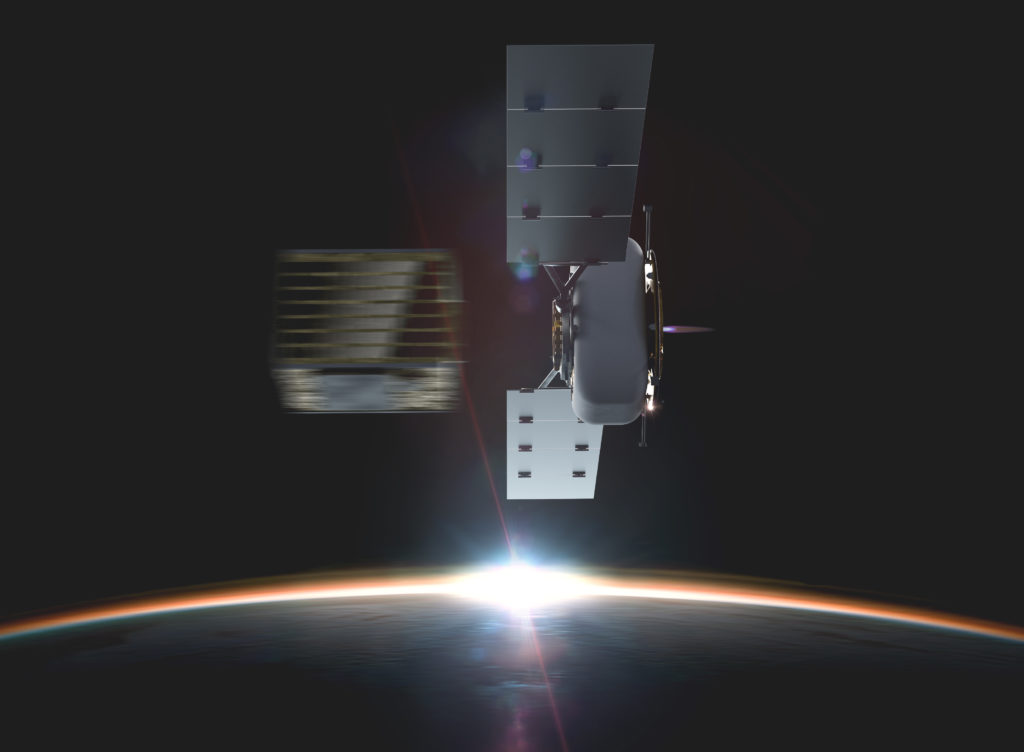
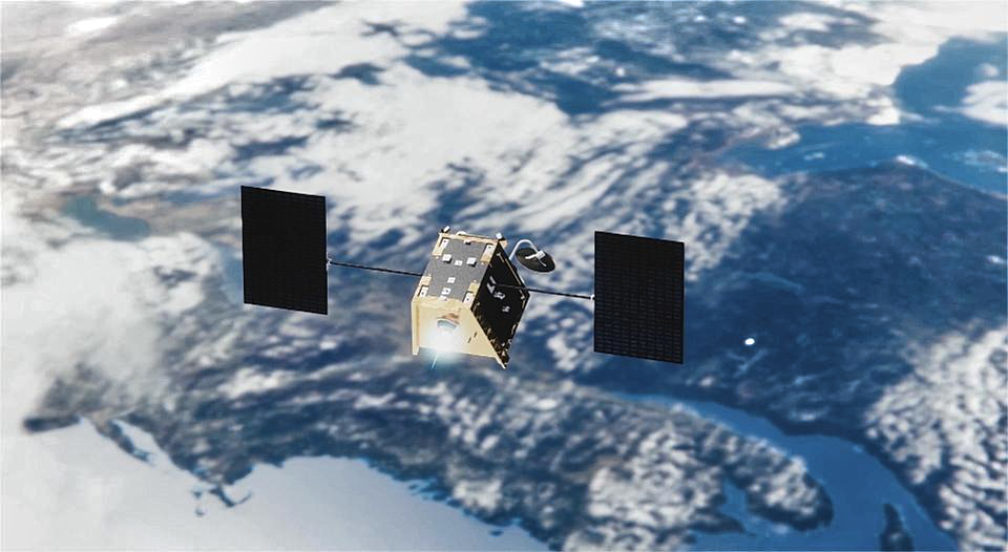
Artistic rendition of Rocket Lab’s Photon spacecraft in space.

Rocket Lab has welcomed a new member to the firm’s Board of Directors, former Under Secretary of Defense for Research and Engineering, Michael Griffin.

Michael Griffin

Griffin joins Rocket Lab’s board with more than 35 years of space industry experience spanning roles in the Department of Defense, the National Aeronautics and Space Administration (NASA), and the commercial sector. Prior to joining Rocket Lab’s board, Griffin served as Under Secretary of Defense for Research and Engineering, overseeing the establishment of the Space Development Agency (SDA). In this role he was responsible for research, development, and prototyping activities across the DoD enterprise, mandated with ensuring technological superiority for the Department of Defense.

He also oversaw the activities of the Defense Advanced Research Projects Agency, the Missile Defense Agency, the Defense Innovation Unit, the Strategic Capabilities Office, the DoD Laboratory enterprise, and the Under Secretariate staff focused on developing advanced technology and capability for the U.S. military. Griffin also served as the 11th NASA Administrator, a role in which he initiated the first development of commercial cargo delivery service to Earth orbit in the agency’s history.

Griffin previously held numerous executive positions in industry, including President and Chief Operating Officer of In-Q-Tel, CEO of Magellan Systems, and EVP/General Manager of Orbital ATK’s Space Systems Group. He also served as Chairman and Chief Executive Officer of Schafer Corporation, a professional services provider in the national security sector.

He has also served as the King-McDonald Eminent Scholar and professor of Mechanical and Aerospace Engineering at the University of Alabama in Huntsville, and as the Space Department Head at the Johns Hopkins University Applied Physics Laboratory. Today, Griffin serves as Co-President and Co-Founder of LogiQ, Inc., a company providing high-end management, scientific, and technical consulting services.

Griffin joins existing Rocket Lab board members Sven Strohband of Khosla Ventures, David Cowan of Bessemer Venture Partners, Matt Ocko of DCVC (Data Collective), and Rocket Lab founder Peter Beck.

Executive Comments

Peter Beck

“We are honored to welcome Mike to Rocket Lab’s board of directors,” said Rocket Lab founder and Chief Executive Peter Beck. “He brings a wealth of knowledge and experience from the civil, defense, and commercial space sectors that will be invaluable to our team as Rocket Lab continues to grow and meet the ever-evolving launch and space systems needs of the national security community and commercial sectors alike.”

“Rocket Lab has established itself as the leader in dedicated small satellite launch, and it’s a privilege to be joining the board at an exciting time for the business as it continues to increase launch cadence and expand into satellite manufacturing and operations,” said Griffin. “Space continues to be a highly contested domain crucial to our national security, and it’s also a domain that presents significant commercial opportunity. The Rocket Lab team has a proven track record of executing on a clear vision to make space accessible to these diverse communities, and I look forward to supporting that vision.”

Note: Watch the Satnews Perspective’s interview video of Peter Beck at this direct link…

Filed Under: News

Two New Partners Join Orbital Transports’ Space Catalog

August 13, 2020 by editorial

Rydberg Vacuum Sciences (RVS) have joined the Orbital Transports partner network and will offer their 6UB and 6UC Thermal Vacuum Systems product line in the Space Catalog.

RVS Thermal Vacuum Systems provides space simulation systems of exceptional value for flight qualification of small satellites and components. The advanced and affordable thermal vacuum bake-out and thermal vacuum cycling products are designed specifically for the small satellite community, providing a standard test platform sufficient for nanosatellites up to 6U in size.

Executive Comment

“RVS knows that Thermal Vacuum Testing is the last thing you want to worry about as your launch date approaches,” said Joshua Gurian, President of RVS. “Our line of small satellite test systems can provide you with drop-in-place solutions for compliance with GSFC-STD-7000 or MIL-STD-1540 test standards.”

Also joining Orbital Transports’ Space Catalog is Alén Space and the company will make its smallsat products available through this channel. Alén Space provides ready-to-launch hardware and software solutions supporting satellite-based communications for Internet of Things, asset tracking, and signals intelligence.

TOTEM from Alén Space is a high-performance SDR.

Executive Comment

“We keep expanding beyond Spain and Europe. The Space Catalog will help us extend our reach globally,” stated Guillermo Lamelas, Alén’s CEO. “We are eager to work with Orbital Transports to connect with new customers and partners.”

The Space Catalog is Orbital Transports’ digital portal for the smallsat industry showcasing some of the industry’s most innovative and reliable companies. Featuring smallsat buses, COTS hardware components, ground station services and mission operations software, orbital transfer services, hosted payloads, and satellite servicing and refueling technologies, the Space Catalog provides a convenient go-to resource to check out the latest and greatest that the smallsat industry has to offer.

Filed Under: News

KSAT To Support HYPSO-1 Smallsat With Ground Station Support

August 12, 2020 by editorial

KSAT’s Svalbard Ground Station.

KSAT has signed a contract for ground station support of HYPSO-1, a smallsat mission from the Norwegian University of Science and Technology (NTNU), aiming to detect toxic algae blooms — this is the first time KSAT will provide ground station services to a Norwegian university mission.

At NTNU Small Satellite Lab, a multi-disciplinary team of master students, PhD-students and professors are currently working on a small satellite with a miniaturized hyperspectral camera for detection of toxic algae blooms along the Norwegian coast. KSAT will as part of this contract, provide commercial ground station services from the Svalbard Ground Station for this mission, called HYPSO-1.

The smallsats in the HYPSO-project will be equipped with miniaturized hyperspectral cameras, that are able to “see” more than traditional optical sensors, covering parts of the infrared spectrum. In combination with drones and autonomous vehicles both on surface and subsea, the goal is to be able to detect and alert the fish-farms about toxic algae blooms in the area. In 2019 a sudden upwelling of toxic algae killed close to 8 million salmon in Norwegian fish farms, wiping out more than half of the annual sales growth in just over a week. The hope is that with the contribution of this mission, one can avoid this in the future.

As a significant provider of maritime monitoring services, KSAT had an active role during the algae bloom last year and together with partners in Tromsø they are currently exploring how to discriminate between different types of algae by combining different sensors and applying advanced algorithms.

Executive Comments

“We are very excited to get access to KSATs ground stations both at Svalbard and at other locations,” said Associate Professor Egil Eide at the Department of Electronic Systems. “HYPSO-1 will be part of a multi-agent surveillance system, operating both drones and surface vessels in near-real-time. It is very important to get data from as many satellite passes. This is an important strategic cooperation between NTNU and space industry, that will benefit students and researchers alike.”

Kristian Jenssen is the Director of KSATLITE, a division at KSAT that is dedicated to the development and delivery of scalable, global ground station services for smallsats. The team are currently handling the major portion of the commercial smallsats on-orbit today, including some of the large constellations. Jenssen emphasized that the students through these projects acquire unique hands-on experience, which is very relevant and thus valuable for KSAT as a possible future employer. “It is important for us that students that want to delve into the discipline of spacecraft engineering and space related sciences, can get the chance to do so at Norway’s largest technical university,” stated Jenssen, adding, “It’s exciting with these new and small hyperspectral sensors. We support the project and believe it can provide a valuable contribution to future systems for algae warning and coastal monitoring to increase the understanding and support commercial aquaculture.”

Sentinel 2 satellite capture of an algae bloom in the north.

Filed Under: Featured, News

A Conversation with Jonata Puglia, Chief Executive Officer at Leaf Space

August 11, 2020 by minisat

Hi Jonata, the annual Small Satellite Conference has just concluded, what are the key take away from Leaf Space?

It has been a week dense of emotions and discoveries. After some months of lock downs across the globe, we have been able to convey again with many of our current and future clients, and industry colleagues too. We also realized that the new space economy never actually stopped. It continued working to have commercially operational smallsat constellations despite the inevitable launch delays. Most of our customers are pushing to get their satellites in orbit as soon as possible and at the same time focusing on their next-generation satellites. In turn, we are scaling up of our ground network and improving the services overall to always provide them a simple, reliable and cost-effective Ground Segment as a Service solution.

How is your Leaf Line ground network growing?

Leaf Line Expands with a New GS in Santa Maria, Azores

During spring, in the middle of the COVID-19 outbreak, we secured a series A funding that triggered the scale up plan of Lead Space. We are now proceeding in activating new sites worldwide and installing new ground stations. We have just cut the ribbon on our new GS in the Azores that will provide enhanced coverage in the Atlantic, and we have few ground stations ready to be shipped to new sites in New Zealand, North America and the equatorial region. We are also installing additional antennas in our historic location in Spain, and soon we will have a new location in East Europe. The pandemic has slowed down the roll out planned for Q2 2020 a bit, but now we are catching up. All these new locations are very attractive not only for satellite missions, our main vertical, but also for the increasing need coming from new and established launch vehicle operators.

Tell me more about launch vehicles, and how Leaf Space is supporting this part of the market.

In 2019 Leaf Space was selected to support the final testing campaign of Virgin Orbit’s LauncherOne vehicle, an experience that has been really fruitful to gain operational know-how.  Right now, we are developing new solutions to better support this kind of test and launch campaign with an “as a Service” model, that is our real key added value. All this added to the fact that our ground stations are flexible and compact so they can be easily deployed in different spaceports or launch facilities. Also, we have started providing LEOP services to satellites also through Launch Brokers, which provides a better and more comprehensive service to their customers.

Why should clients buy Ground Segment Services from Leaf Space and not build their own network or rely on other providers?

For microsatellite operators, the ground segment in general is seen as a key part of their business, but as it is not the core of their business managing this internally is actually seen as a disadvantage. What they really want to focus on is harvesting data from space, processing that data and delivering it to the end users. In addition, efficiently managing a ground station network is not an easy task. If you think about the multiple hardware and software blocks needed to guarantee a secure and reliable communication, all the regulatory challenges and the specific skills you need to deploy and run a network, this is clearly something that many operators handover to a specialized partner. This is especially true if your partner can provide a more reliable and cost-effective solution thanks to the distributed nature of our network and high degree of automation, from load balancing to rescheduling. We’ve made a webinar on this topic during the Smallsat Conference that will be published soon!

What are your main objectives for the upcoming months?

Well, we have customers in the major part of the rockets scheduled to launch from now to the end of the year and we will support them not only during LEOPs but also through our services Leaf Line and Leaf Key.

On the R&D side we’re working on both increasing the performance of the Ground Stations composing our network, to allow faster data downlink and even support higher frequencies, but also on supporting an even wider range of MODCOD schemes and protocols in order to decrease the onboarding time of our customers.

On a revenue perspective, last year we had already significant revenues, and we plan to double this year and have a quite growing trend after that.

To get more traction on the US market we will soon open a new subsidiary there; we already have people working from the US, but we think that a legal entity will provide us even more visibility both to commercial and institutional market.

So, we’re quite busy!

Jonata Puglia, Leaf Space CEO

Filed Under: Featured, News

Satellite Divestiture By exactEarth To Myriota Canada Now Completed

August 10, 2020 by editorial

exactEarth has now completed the firm’s previously announced transaction to divest four satellites from the company’s first-generation constellation and ground station assets to Myriota Canada, a wholly-owned subsidiary of Myriota PTY.

The Company has received the necessary Canadian regulatory approvals and met all closing conditions to consummate the transaction. The agreement was initially announced via press release on March 31, 2020. All financial figures are in Canadian dollars unless otherwise stated.

Executive Comments

Peter Mabson

“This transaction will further strengthen our financial position by generating approximately $1.0 million per year in net cash savings while preserving our access to the Satellite AIS data originated by the four satellites for the duration of their lifespan,” said Peter Mabson, President and CEO of exactEarth. “It also extends our relationship with Myriota, which is an exciting and up-and-coming company that exactEarth has invested in and one that we have built a strong business relationship with over the past several years.”

Alex Grant

“This transaction marks a pivotal moment for Myriota in the acceleration of our North American expansion plans, including the establishment of our new Ontario, Canada office,” said Alex Grant, CEO of Myriota. “The addition of new satellites, industry-experts, and a global network of ground stations will only fast-track our timeline to bring low-cost, low-power IoT connectivity to North American agriculture, defense, mining, and transport and logistics industries.”

Filed Under: News

Skyrora’s Skylark Micro Rocket Set For Icelandic Launch

August 10, 2020 by editorial

Skyrora continues with its de-risking program by preparing to launch the Skylark Micro rocket from Iceland later this month.

Skyrora’s Skylark Micro rocket.

With the first launch window scheduled for August 12, the two-stage, four-meter tall, sub-orbital rocket is set for take-off from Langanes Peninsula, Iceland.

Following the July test for trajectory and hardware on the Skylark Nano, the Icelandic launch of the Skylark Micro will test onboard avionics and communications as well as practice marine recovery operations.

Skyrora’s de-risking program is based on testing its systems with smaller and more cost-effective vehicles before they are used in their larger Skylark L and Skyrora XL rockets. The company’s LEO rocket, the Skyrora XL, is scheduled to launch in 2023.

Executive Comment

Volodymyr Levykin

Volodymyr Levykin, the CEO of Skyrora, said, “Skyrora’s de-risking programme is essential for scaling, learning and education before we launch our two commercial vehicles, Skylark L and Skyrora XL. The entire team is working at a pace and has made great efforts to get another launch underway. I’d also like to express my thanks and gratitude towards Space Iceland and Iceland’s government, both of which have been tremendously supportive with the preparations for this upcoming launch.”

Filed Under: Featured, News

Space Dynamics Laboratory (SDL) Receives The Small Satellite Mission of the Year Award from the AIAA

August 9, 2020 by editorial

The Space Dynamics Laboratory-built Hyper-Angular Rainbow Polarimeter satellite has been awarded the Small Satellite Mission of the Year award by the American Institute of Aeronautics and Astronautics (AIAA) — this announcement was made during the recent annual Small Satellite Conference.

HARP smallsat.

SDL designed and manufactured the HARP spacecraft to carry the University of Maryland, Baltimore County Earth and Space Institute-built HARP payload, which was developed to measure the microphysical properties of cloud and aerosol particles in Earth’s atmosphere.

The Small Satellite Mission of the Year Award is presented annually by the AIAA Small Satellite Technical Committee to the mission that has demonstrated a significant improvement in the capability of small satellites. Missions must have individual satellite wet mass of less than 150 kilograms and must have launched, established communication, and have acquired results from orbit after January 1, 2019, 12:00 a.m., Greenwich Mean Time.

To demonstrate significant improvement, nominated missions must show innovation in spacecraft structural design, scientific instrument development, communications capability, attitude determination and control capability, intersatellite coordination, constellation or cluster management, onboard computing, or other mission aspects.

The HARP mission seeks to mitigate barriers to assessing climate change that are caused by the scarcity of measurable data about aerosol forcing, insufficient understanding of aerosol-cloud processes, and cloud feedbacks in the climate system. New observations and a better understanding of aerosol-cloud processes will help to narrow climate change estimate uncertainties.

Executive Comments

“HARP has been a truly collaborative effort between UMBC and SDL, demonstrating how university organizations can collaborate with NASA to advance space science and technology to achieve major earth science goals,” said principal investigator Dr. J. Vanderlei Martins of UMBC. “The Small Satellite Mission of the Year award is a major honor to the HARP team, and a testament to the success of this collaboration.”

“To be selected from the many accomplished small satellite missions throughout this year is an honor and reflects the vision, unshakeable commitment, and scientific expertise of Dr. Martins and his team at UMBC and NASA,” said Alan Thurgood, SDL’s director of Civil and Commercial Space. “The men and women of SDL share in Dr. Martins’ vision for HARP, and we are fortunate to have been able to provide the spacecraft and operational management to help enable mission success.”

“It has been a privilege for SDL to build and operate a spacecraft that is helping to validate new technology, prove the on-flight capabilities of a highly accurate, wide field-of-view hyper-angle imaging polarimeter, and demonstrate that small satellites can provide top-quality Earth sciences data,” said Tim Neilsen, SDL program manager for HARP. “The engineers, technicians, spacecraft operators, and other professionals at SDL remain resolute in helping to ensure HARP meets its mission objectives.”

SDL’s HARP team members.

Filed Under: News

UK Space Sector Urged To Continue Building The Nation’s Launch Sector

August 7, 2020 by editorial

Scotland as viewed from space.

Industry leaders are urging the UK government to establish world-class rules to enable safe, environmentally conscious and commercially viable space launches from British soil.

A series of UK-wide workshops aimed at developing a common industry position across key issues related to a sovereign launch capability have just been delivered by the Scottish Space Leadership Council (SSLC). They were designed to foster collaboration and a common UK space sector voice for issues of concern during the UK government’s consultation on its Space Industry Regulations, which runs until October 21 and will create secondary legislation under the Space Industry Act 2018.

A report summarizing the output of four workshop modules — range and trajectory management and governance, spaceport operations, and launch safety and indemnity — will be published by SSLC in early September.

More than 60 representatives from across the UK space sector, including both industry and academia, attended each of the virtual sessions. Government agencies — including the UK Space Agency, Civil Aviation Authority, Centre for the Protection of National Infrastructure, the Ministry of Defence, the Scottish Environmental Protection Agency, Marine Coastguard Agency and Marine Scotland — were also present as observers.

The UK space industry wants to work closely with government legislators to create regulations that will enable a technologically innovative spaceflight economy for the UK.

SSLC is a voluntary, cross-sectoral representative organisation with membership is open to all across the UK space industry sector and representation from across government and its agencies welcomed. Set up in 2017, it provides a platform for industry, academia and government to work collaboratively, promote the sector and take a united approach to shared challenges, such as satellite operations and data analysis, launch vehicle development and integration, the testing of engines and other sub-systems and expansion of new, innovative space sector offerings.

Of these challenges, a key enabler for the sector is the development of practical launch legislation to govern all facets of safe spaceflight from UK soil. This area is felt to require immediate attention given global competition, the legislative process and its overall importance to realising the UK’s space sector potential.

Sub-orbital rocket launches have been taking place in Scotland and across the UK since the 1930s. The 21st century now offers the potential for UK industry to expand its range of launch offerings and services to deliver a full spectrum of launch, including vertical and horizontal orbital launches.

The UK Space Agency’s target to capture 10% of the global space market by 2030 has led to significant investment in a number of developing spaceports. The majority of these launch locations are located in Scotland due to geographical benefits related to flight trajectories, particularly for vertical rocket launches.

SSLC is now exploring ways in which the cross-sector collaboration can be continued and some of the common sectoral messages produced by the Workshops, ongoing Work Streams and from messaging being received by the Council can be input to the Space Industry Regulation consultation now underway.

Executive Comments

“The industry’s perception is that regulations must promote safety and environmental considerations while still allowing the commercial viability required for the sector to truly thrive,” said John Innes, Chair of the Scottish Space Leadership Council. “The space industry is therefore keen to seek ways to inform the legislative process and position the UK as a leader in European spaceflight. It demonstrates a strong desire to work collaboratively across the whole UK Space sector as well as with regulators to ensure the appropriate balance of safety and practicality.” Also, according to Innes, the high level of interest and support for the workshops from across the UK space sector underscores the fundamental importance of launch to the industry.”

Miles Carden, Program Director at Spaceport Cornwall, said, “This workshop series was a fantastic initiative enabling cross-sector input that will ultimately strengthen the UK Space Industry. Collaboration will be the backbone of our next chapter and will help create the regulations for safe and responsible launch.”

Mick O’Connor of Prestwick Spaceport stated, “The sector’s success will be determined by how well we collaborate, these workshops are a great start.”

Mark Roberts of Spaceport One, referred to the collegiate approach as “fantastic”, adding, “Government, the agencies, industry and academia enthusiastically rallying around the common purpose of making launch a success; great news for the UK”.

Scott Hammond from the Shetland Space Center noted, “We were delighted to play a part in the recent Range workshop run by SSLC, it was important to bring all parts of the UK Space industry together to start to craft a range solution that will suit all.”

Roy Kirk, from Space Hub Sutherland, commented, “The workshops were a great success. SSLC provided a valuable opportunity for key players in Scotland’s space sector to share knowledge and experience while learning from specialists in a range of subjects.”

Spaceport artistic rendition is courtesy of Norr / Highlands & Islands Enterprise.

Filed Under: Featured, News

GomSpace + ESA Working Together To Implement Juventas Smallsat For Hera Mission

August 7, 2020 by editorial

Recently, GomSpace Luxembourg SARL and the European Space Agency (ESA), signed a contract to continue development and implementation of the Juventas CubeSat in support of the Hera mission.

The contract value is approximately 11,000,000 euros and is focused on the delivery of the Juventas spacecraft and its associated payloads for launch with Hera in 2024. The amount will be divided between several partners, whereof GomSpace share is about 6,100,000 euros.

Together, NASA’s DART and Hera missions, and the international research collaboration known as the Asteroid Impact and Deflection Assessment (AIDA), will demonstrate deflection technology that could be used to protect Earth from hazardous asteroids by shunting them off a collision course. Juventas is a 6U smallsat containing a low frequency radar, named JuRa, as its primary payload (see Hera’s CubeSat to perform first radar probe of an asteroid).

Hera’s Juventas CubeSat — image is courtesy of ESA.

The smallsat will operate in close proximity to the Didymos asteroid system, focusing radar and radio-science experiments targeting the moon of the binary asteroid, named Dimorphos. Juventas will complete its mission by attempting to land on the surface of Dimorphos, making measurements on the landing dynamics from likely bouncing events to capture details of the asteroids surface properties and end with measurements taken by a gravimeter payload to give insight to the dynamical properties of the asteroid.

GomSpace Luxembourg is the project prime and is also working with GomSpace Denmark and GomSpace Sweden on some spacecraft platform components. The project continues the successful collaboration built from the initial design phase and includes the partners:

  • GMV Innovating Solutions from Romania leading the guidance, navigation and control subsystem
  • EmTroniX from Luxembourg leading the low-frequency radar payload electronics implementation
  • Institut de Planétologie et d’Astrophysique de Grenoble leading the radar concept design and specifications, scientific measurements, and contributing to the receive chain electronics
  • Technische Universität Dresden University providing the expertise in RF antenna simulation and test, and contributing to the transmit chain electronic
  • Filip Záplata from the Czech Republic contributing to the radar digital design
  • Astronika from Poland delivering the deployable radar antennas.
  • Embedded Instruments and Systems delivering the gravimeter payload with support in its design and scientific contributions from the Royal Observatory of Belgium

With both GomSpace Luxembourg and EmTroniX centrally positioned in the project it fully supports Luxembourg’s long-term vision for space exploration and exploitation.

Executive Comments

Ian Carnelli

“The Juventas mission will be complementing the larger Hera mothercraft significantly increasing our science return. JuRa will provide the first ever direct measurement of the interior structure of an asteroid. Juventas will also attempt the first ever small body landing by a cubesat to reveal important surface properties. We are very excited to start the implementation phase together with the strong consortium led by GomSpace,” said Ian Carnelli of ESA, Project Manager of the Hera project.

Niels Buus

“We are happy to continue our collaboration with ESA and the Hera project on this exciting mission. Juventas will be the first GomSpace designed nanosatellite in deep space demonstrating its capabilities in the harshest environment thus far. As part of the project we will continue to build our deep space capabilities and organisation based in GomSpace Luxembourg,” added Niels Buus, CEO of GomSpace.

Marc Serres

“The Luxembourg led Juventas satellite is a very important pathfinder mission cementing our national position as a pioneer in developing the required capabilities for peaceful exploration and sustainable use of space resources,” noted Marc Serres, the CEO of the Luxembourg Space Agency.

Filed Under: News

SAR Smallsat From PredaSAR To Launch Via SpaceX Falcon 9

August 7, 2020 by editorial

PredaSAR Corporation has reported that the company’s first of 48 advanced commercial Synthetic Aperture Radar (SAR) satellites will launch on SpaceX’s Falcon 9 launch vehicle.

Tyvak Nano-Satellite Systems, Inc. is the launch integration provider in addition to manufacturer of the spacecraft. As part of the agreement, PredaSAR, Tyvak and SpaceX will be working together to optimize the deployment plan for the remainder of PredaSAR’s constellation which, according to the company, is the world’s largest and most advanced commercial SAR satellite constellation.

Tyvak’s Synthetic Aperture Radar (SAR) smallsat — the payload is a large swath C-band or a high-power spot and strip X-band system.

Executive Comments

Roger Teague

PredaSAR CEO Maj. Gen. Roger Teague, USAF (Ret), said, “PredaSAR spacecraft possess the latest in space-proven, high quality satellite systems to support scalable and fully capable operations. PredaSAR aims to deliver critical insights and data products to both military and commercial decision makers at the speed of need. We are pleased to fly with SpaceX, a proven launch service provider to further enable the PredaSAR constellation vision of rapid, persistent ISR, anytime and anywhere.”

Marc Bell

“We are eagerly looking forward to launching PredaSAR’s constellation with SpaceX, a trusted partner and provider of launches,” said PredaSAR Executive Chairman and Co-Founder, Marc Bell. “Our satellite design has benefited from years of advanced research and development from Tyvak and allows us to bring our clients the critical, persistent data that they need.”

Tom Ochinero

“For launch of the first satellite of its constellation, PredaSAR sought a reliable and schedule-certain ride on a rocket with a demonstrated record of executing launches at a high cadence,” said SpaceX Vice President of Commercial Sales, Tom Ochinero. “We’re proud PredaSAR selected SpaceX as its launch provider for this very important mission.”

Filed Under: News

  • « Go to Previous Page
  • Go to page 1
  • Interim pages omitted …
  • Go to page 287
  • Go to page 288
  • Go to page 289
  • Go to page 290
  • Go to page 291
  • Interim pages omitted …
  • Go to page 336
  • Go to Next Page »

Primary Sidebar

WEEKLY NEWSLETTER

Archives

  • January 2026
  • December 2025
  • November 2025
  • October 2025
  • September 2025
  • August 2025
  • July 2025
  • June 2025
  • May 2025
  • April 2025
  • March 2025
  • February 2025
  • January 2025
  • December 2024
  • November 2024
  • October 2024
  • September 2024
  • August 2024
  • July 2024
  • June 2024
  • May 2024
  • April 2024
  • March 2024
  • February 2024
  • January 2024
  • December 2023
  • November 2023
  • October 2023
  • September 2023
  • August 2023
  • July 2023
  • June 2023
  • May 2023
  • April 2023
  • March 2023
  • February 2023
  • January 2023
  • December 2022
  • November 2022
  • October 2022
  • September 2022
  • August 2022
  • July 2022
  • June 2022
  • May 2022
  • April 2022
  • March 2022
  • February 2022
  • January 2022
  • December 2021
  • November 2021
  • October 2021
  • September 2021
  • August 2021
  • July 2021
  • June 2021
  • May 2021
  • April 2021
  • March 2021
  • February 2021
  • January 2021
  • December 2020
  • November 2020
  • October 2020
  • September 2020
  • August 2020
  • July 2020
  • June 2020
  • May 2020
  • April 2020
  • March 2020
  • February 2020
  • January 2020
  • December 2019
  • November 2019
  • October 2019

© 2019–2026 SatNews

Insert/edit link

Enter the destination URL

Or link to existing content

    No search term specified. Showing recent items. Search or use up and down arrow keys to select an item.
      x
      Sign Up Now!

      Enjoy a free weekly newsletter with recent headlines from the global SmallSat industry.

      Invalid email address
      We promise not to spam you. You can unsubscribe at any time.
      Thanks for subscribing! You will now receive weekly SmallSat News updates.
      We love our advertisers.
      And you will too!

      Please disable Ad Blocker to continue... We promise to keep it unobtrusive.
      We promise not to spam you. You can unsubscribe at any time.
      Invalid email address
      Thanks for subscribing! Please check your email for further instructions.