• Skip to main content
  • Skip to primary sidebar
  • Home
  • News
  • Featured
  • More News ⌄
    • SatNews
    • SatMagazine
    • MilSatMagazine
  • Events ⌄
    • MilSat Symposium
    • SmallSat Symposium
    • Satellite Innovation
  • Contacts
  • SUBSCRIPTION

SmallSat News

You are here: Home / Archives for News

News

AMERGINT Holdings Tethers Tethers Unlimited with Acquisition Transaction

May 6, 2020 by editorial

AMERGINT Technology Holdings (AMERGINT) has acquired Tethers Unlimited, Inc. (TUI) — this transaction will bring together AMERGINT Technologies, Inc. and TUI to provide integrated end-to-end solutions for satellite communications and in-space services to the space market. Terms of the transaction were not disclosed.

Founded in 1994 by technologist Dr. Hoyt and the renowned science fiction author Dr. Robert L. Forward, for more than 25 years TUI has pioneered an array of innovative space technologies, including software defined radios for satellite communications and mesh networks, robotic systems for in-space servicing, manufacturing, and assembly, and advanced propulsion solutions for orbital maneuvering and orbital debris mitigation.

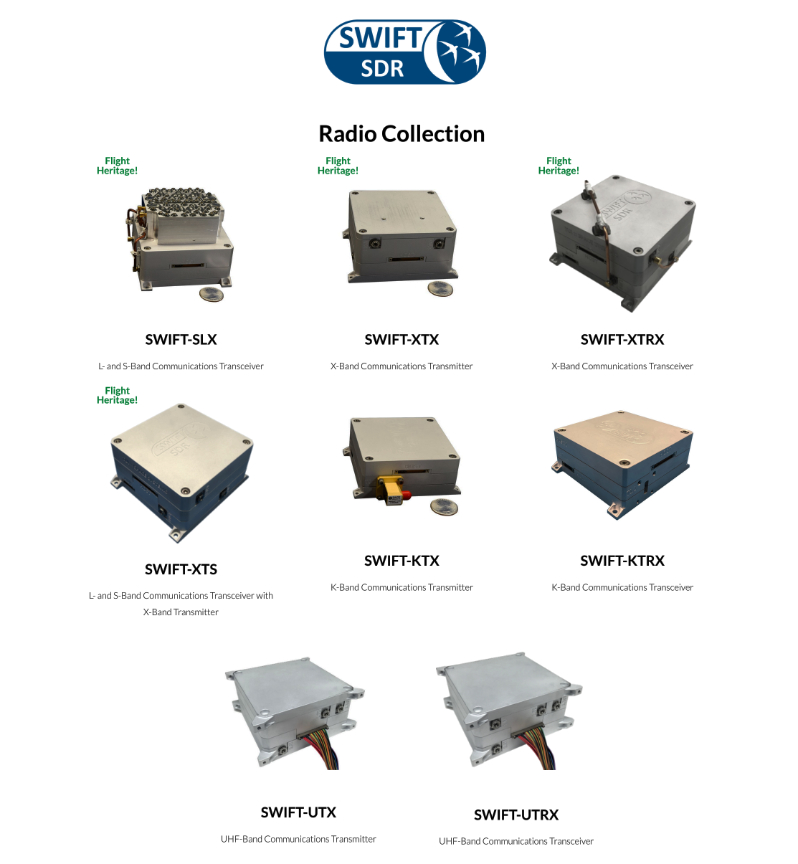
TUI supplies the space industry with high-performance satellite components that include the SWIFT® software defined radio (SDR), the Terminator Tape™ Deorbit Module, the HYDROS™ water-electrolysis thruster and the COBRA™ gimbal as well as research and development into robotics and in-space manufacturing systems.

Moving forward, AMERGINT and TUI will increasingly offer integrated satellite communications offerings combining software-defined satellite radios with software-defined ground stations. The two companies will also build upon the full suite of technologies and products at both companies around space servicing and test systems to offer a wide range of solutions for government and commercial customers.

Dr. Rob Hoyt, TUI’s CEO, stated that joining forces with AMERGINT makes tremendous sense for Tethers Unlimited. Combining AMERGINT’s ground-based processors and modems with TUI’s software-defined satellite radios and mesh network solution enables us to provide flexible, affordable, secure and resilient end-to-end communications services that scale to meet the needs of the hybrid space architectures under development by the Space Force, the Space Development Agency, DARPA, USAF and the Intelligence Community.

Larry Hill, CEO of AMERGINT Technology Holdings, said the company is thrilled to welcome Rob and the team at TUI into the family and to bring together two engineering-driven, technology organizations that are focused on solving our customers’ toughest challenges across the space ecosystem. At a time when AMERGINT customers are increasingly focused on integrated communications and data networks, the firm is excited to close the link between software-defined solutions from the ground architecture to the spacecraft.

Rob Andzik, president of AMERGINT, noted, that bringing the expertise of TUI and AMERGINT together enables the firm to provide the space and defense sectors with the next generation of solutions to manage the capture, processing, transport and exploitation of vital mission data for communication and data links.
 

Filed Under: News

U.S.Air Force Academy’s FalconSAT-8 Smallsat to be Launched via the U.S.A.F’s X-37B Spaceplane

May 6, 2020 by editorial


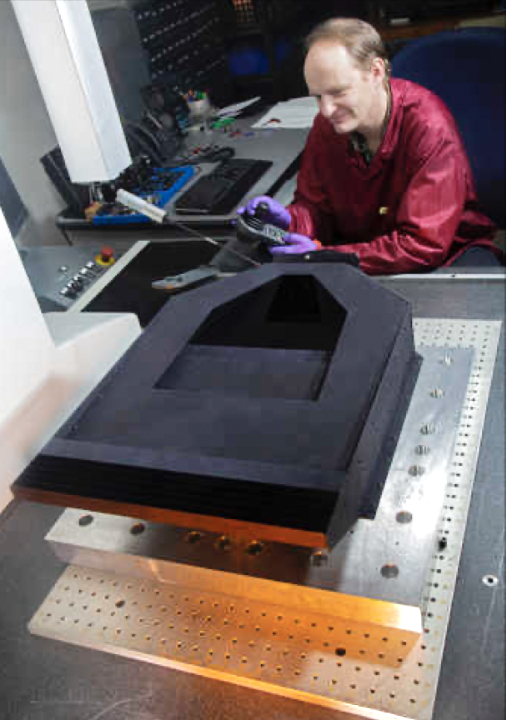
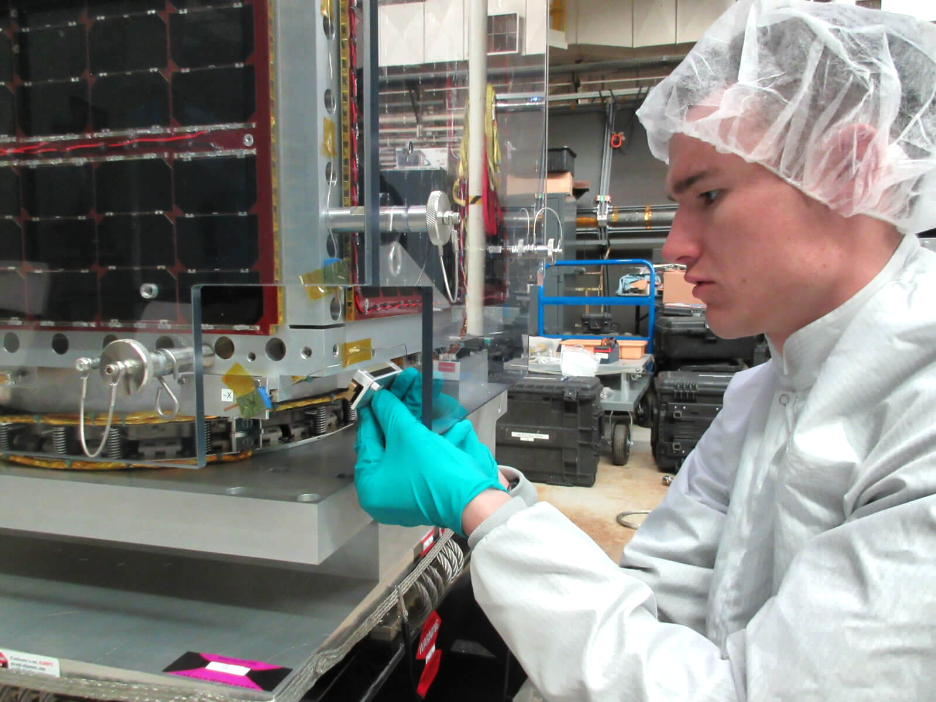
Work on the FalconSAT-8.
Photo is courtesy of the U.S. Air Force Academy.

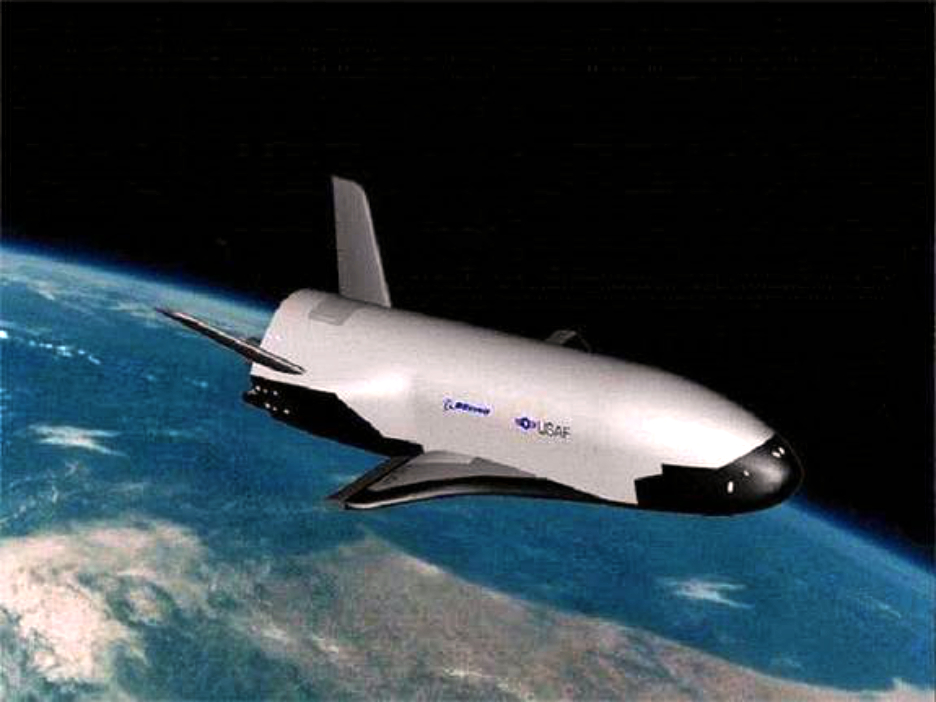
A satellite built by U.S. Air Force Academy cadets will launch into space on May 16 aboard the X-37B, Orbital Test Vehicle sponsored by the Department of the Air Force Rapid Capabilities Office and built by Boeing — this is the first time a satellite built and designed by cadets will catch a ride into space aboard the X-37B.


The U.S.A.F.’s X-37B Spaceplane.

FalconSAT-8 will carry five experimental payloads, and members of the Cadet Space Operations Squadron will operate FalconSAT-8.

There’s little doubt that the work by cadets will have an effect on the new Space Force, which opened for business in December and is designed to maintain and enhance the competitive edge of the Defense Department in space. Eighty-six cadets in this year’s graduating class commission into the Space Force.

Good noted that few undergraduate programs allow their students to work on flight hardware and design and build their own flight components. Cadets are given hands-on work that allows them to get a feel for real engineering on real projects.

Lt. Col. Dan Showalter, assistant astronautics professor at the Academy, said  that as novel as this mode of transportation might be, the purpose for cadets in the school’s space program is the same as it was when the school’s space program began in the 80s. FalconSAT-8 is an educational platform for cadets. He added that several cadets, including Cadets 1st Class Reagan Good and Claudio Yambao, traveled to Cape Canaveral, Florida to deliver, test, and integrate FalconSAT-8 with the X-37B. This is  like an engineering internship – experimental technologies for the Air Force are flown to evaluate their performance on-orbit,

The Academy’s space program consists of aerospace experts, mechanics and engineers. The FalconSAT program serves as an academic platform for an array of aerospace industry and DOD experiments. Cadets design spacecraft and integrate payloads in the Space Systems Research Center with faculty support.

FalconSAT-8 is the Academy’s capstone undergraduate systems engineering course managed by the school’s Astronautics department.

Cadet Yambao said the space program’s motto, “Learning Space by Doing Space,” means cadets get to experience the postgraduate engineering world on campus and entails building and testing components of a spacecraft and understanding how it plays a role in the entire space engineering community.


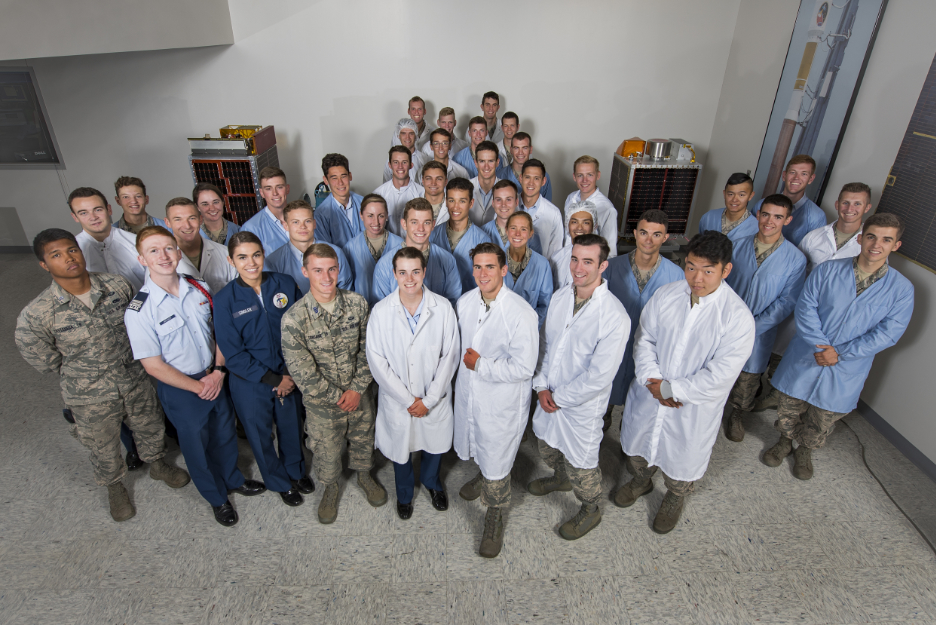
Cadets and instructors in the U.S. Air Force Academy’s FalconSAT program pose for a group photograph at the Academy. They were directly involved in building a salivate scheduled to launch into space May 16 aboard the X-37B Orbital Test Vehicle, sponsored by the Department of the Air Force Rapid Capabilities Office and built by Boeing. This is the first time a satellite built and designed by cadets will catch a ride into space aboard the X-37B. Photo is courtesy of the U.S. Air Force Academy.


Filed Under: News

NASA’s Critical Mission Review Packs a PUNCH for Southwest Research Institute

May 5, 2020 by editorial


PUNCH smallsats on-orbit. Image is courtesy of SwRI.

On April 8, 2020, the Polarimeter to UNify the Corona and Heliosphere (PUNCH) mission achieved an important milestone, passing NASA’s critical System Requirements Review/Mission Definition Review (SRR/MDR).

Southwest Research Institute is leading PUNCH, a NASA Small Explorer (SMEX) mission that will integrate understanding of the Sun’s corona, the outer atmosphere visible during eclipses, with the tenuous “solar wind” filling the solar system.

The solar wind, a supersonic stream of charged particles emitted by the Sun, fills the heliosphere, the bubble-like region of space encompassing our solar system. Its boundary, where the interstellar medium and solar wind pressures balance, ends the sphere of the Sun’s influence.

PUNCH is a constellation of four separate smallsats scheduled to launch in 2023 into a polar orbit formation. One satellite carries a coronagraph, the Narrow Field Imager, that images the Sun’s corona continuously. The other three each carry SwRI-developed wide-angle cameras, Wide Field Imagers (WFI), optimized to image the solar wind. These four instruments work together to form a single field of view spanning 90 degrees of the sky, centered on the Sun.

SRR/MDR is a major milestone of mission development. It checks the flow of engineering and mission definition as activities segue into the design phase.

The SMEX program provides frequent flight opportunities for world-class scientific investigations from space using innovative, efficient approaches within the heliophysics and astrophysics science areas. In addition to leading the PUNCH science mission, SwRI will operate the mission and build the four spacecraft and three WFIs. The PUNCH team includes the U.S. Naval Research Laboratory, which is building the Narrow Field Imager, and the Rutherford Appleton Laboratory in Oxfordshire, England.

PUNCH Principal Investigator Dr. Craig DeForest of SwRI’s Space Science and Engineering Division said that for more than 50 years, SwRI has studied the solar corona by remote imaging and the solar wind by direct sampling. PUNCH will bridge that gap by imaging the solar wind itself as it leaves the outermost reaches of the Sun’s corona. Preparing for the SRR/MDR review was an unexpected challenge. Team members have been working at home for over three weeks, yet they met the challenge and presented their design in written and oral presentations culminating in the positive decision from the company’s review board.


The wide field imager. Photo is courtesy of SwRI.

Filed Under: News

New Satellite Link Products Introduced by TS2 Space

May 4, 2020 by editorial

TS2 SPACE company is introducing new satellite link products to the international markets.

These types of telecommunication products are mainly used by the companies that execute contracts in the Near East and Asia, as well as by the soldiers that are stationed in Iraq and Afghanistan. Purchased bands give the company unlimited possibilities of configuration and setting any telecommunication connections from the Near East region and South-Western Asia.

TS2 SPACE offers satellite broadband internet access and corporate networks support. The operator’s broadband services enable bidirectional data transfer within the network and simultaneous internet access. The company provides all dedicated VSAT services for customers.

TS2 SPACE is mainly investing in the new technology of ST Engineering iDirect — Evolution X3 is the next-generation satellite systems featuring iDirect’s highly efficient implementation of the DVB-S2 standard. The Evolution X3 Satellite Router is ideally suited for broadband requirements such as Internet and VPN access to enterprise networks, as well as real-time VoIP and video conferencing.

The TS2 staff is monitoring the performance of satellite network 24 hours a day, in order to enable the immediate help in case of breakdown or receipt of alert. Due to technical conditions and favorable weather, the Teleport is located in Jeddah, Saudi Arabia. Therefore the signal from the headend aerial is not disturbed by the weather conditions and all connection users of TS2 receive services of the highest availability. The Teleport configuration is fully redundant and the services are also available on the national market.

TS2 satellite services are used by: U.S. Department of State, United States Marine Corps (USMC), U.S. Army Corps of Engineers, Australian Defence Force (ADF), Command of Polish Navy, Air Force Institute of Technology, Lockheed Martin Information Technology, Halliburton Energy Services, KBR, General Dynamics Information Technology, General Atomics Aeronautical Systems Inc., L-3 Communications Vertex Aerospace and US Naval Research Laboratory, among others.

Filed Under: News

Astroscale to Advance Standardization of End-of-Life Practices in the Satellite Industry

May 4, 2020 by editorial

Astroscale Holdings Inc. (“Astroscale”) has signed a Memorandum of Understanding with Professor Chris Newman, Professor of Space Law and Policy at Northumbria University, Newcastle, to collaborate on investigating end-of-life standards and practices from various industries, such as oil and nuclear energy.

The project will highlight the need for shared knowledge from such decommissioning initiatives which can be applied to the satellite industry, encouraging responsible behavior in space and improving space environmental protection. The oil and nuclear industries demonstrate a commitment to environmental responsibility through various decommissioning policies and strategies. With the health and safety of people and the environment the primary concern, decommissioning strategies focus on returning the environment to its natural state.

Legal and regulatory frameworks have been enacted in many countries, creating decommissioning funds and ensuring that the provision of end-of-life capabilities are integral in licensing processes. While no regulations or standardization for end-of-life practices currently exist in the satellite industry, there are lessons which can be learned and applied from these industries.

Harriet Brettle, Head of Business Analysis at Astroscale, noted that this project is a call to action for collaboration across sectors and is a natural fit for Astroscale to represent the satellite industry. As the firm is leading the market in the development of the innovative technology necessary for end-of-life solutions, the company also wants to lead the development of the other aspects required for a sustainable space ecosystem

Professor Chris Newman added that through this collaboration, those involved seek to identify innovative legal frameworks, policies and business models that can move the satellite industry toward a more sustainable future. The pioneering research and teaching in Space Law and Policy which is occurring at Northumbria University makes this an ideal institution to work with the world-leading team at Astroscale. This is an opportunity to change the way in which space is managed and to further embed sustainable practices in outer space activity.

The first working paper with Northumbria University is scheduled to be published later this year.

Filed Under: News

NASA’s Got the Solar Sail and NanoAvionics Has the Satellite Bus that will be Tested Together 

May 4, 2020 by editorial


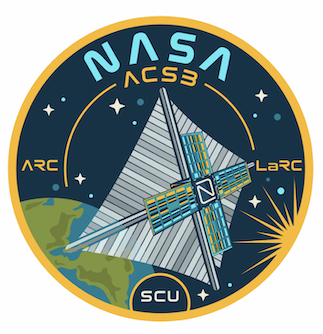
NASA has NanoAvionics lined up to build a 12U nanosatellite bus for an in-orbit demonstration of NASA’s Advanced Composite Solar Sail System (ACS3). It will be an approximately 800 square foot (74 square meter) composite boom and solar sail system.  

This is a result of a contract between NASA Ames Research Center and AST for a 12U bus to carry NASA’s payload into low Earth orbit (LEO) including an approximately 800 square foot (74 square meter) composite boom and solar sail system.  

The aim of the ACS3 mission is to replace conventional rocket propellants by developing and testing solar sails using sunlight beams to thrust the nanosatellite. These solar sail propulsion systems are designed for future small interplanetary spacecrafts destined for low-cost deep-space and science missions requiring long-duration, low-thrust propulsion.  

NanoAvionics has conducted more than 75 successful satellite missions and satellite-related commercial projects. The company will assemble the 12U bus at its new Columbia facility in Illinois, while the final integration of the payload will be carried out at NASA Ames facilities. Matching NASA Ames’ mission requirements, the 12U bus shares the same flight-proven subsystems as NanoAvionics’ flagship M6P bus but with up to 10U payload volume. The larger volume will be necessary to provide enough room for the 4.6 kg payload that includes the composite boom and solar sail system as well as cameras to monitor the solar sail during and after deployment. 

F. Brent Abbott, CEO of NanoAvionics North America said that he’s tremendously proud and excited that NanoAvionics will be part of NASA’s effort to validate a new beam-powered propulsion system, eventually leading to more marvelous deep-space missions following the first inter-planetary CubeSats MarCO-A and B (Mars Cube One). The technology demonstration using NanoAvionics’ 12U bus will be the first ever in-orbit trial of NASA’s composite booms as well as sail packing and deployment systems for a solar sail. It will guide the development of a next generation nanosatellites with solar sail propulsion system for small inter-planetary spacecraft.

As part of this agreement the company will also supply a mechanical testbed model and a FlatSat model. In addition, a team of NanoAvionics engineers will provide the support required for testing, integration and operations of the nanosatellite.  

The FlaSat model has identical software functionality as the final 12U bus hardware, hosting the actual payload. It allows NASA Ames to run tests via remote network connectivity without having to ship equipment back and forth. The mechanical testbed model can be used for testing payload integration and other mechanical tests, such as the deployment of solar sails.  

In 2018 AST acquired a controlling interest in NanoAvionics as part of its strategy to establish manufacturing capabilities in Europe and North America. Abel Avellan, CEO and chairman of AST serves as chairman of NanoAvionics’ Board of Directors. 

Filed Under: News

Forrester Reports: Amazon Activity Around OneWeb

May 4, 2020 by editorial


Chris Forrester

Jeff Bezos’s Amazon is studying UK-headquartered satellite business OneWeb which is in Chapter 11 bankruptcy protection in the US, as is being reported by journalists Chris Forrester at the Advanced Television infosite.

The Sunday Telegraph reported that Bezos, who has his own Project Kuiper mega-constellation of satellites in the planning and development stage, had his lawyers inspecting OneWeb’s assets. Other due-diligence examinations of OneWeb’s financials include Elon Musk’s SpaceX and Paris-based satellite operator Eutelsat.

The UK government has also examined OneWeb’s books and assets and this is understood to be connected to a request from OneWeb for a cash injection to help keep it afloat.

The deadline for interested parties to express an interest in making a formal bid will expire at 5:00 p.m., New York-time, on May 4th. The actual auction process will take place on July 2nd if more than one interested party expresses interest.

The formal press advertising confirming the bankruptcy of OneWeb appeared in various newspapers on May 1st.

The logic for Bezos in entering a bid for all or part of the OneWeb business is that it would give Amazon a ‘fast track’ to launching Project Kuiper, although some aspects of the Kuiper plan would need adjustment.

However, Bezos has his own rockets in development which would easily launch the remaining satellites in the OneWeb plan. Moreover, unlike SpaceX and Eutelsat, Amazon has millions of registered users around the globe who might become subscribers of an Amazon-backed, broadband-by-satellite system.

The logic for Eutelsat is that they are the only ‘Big Four’ satellite operator without an LEO satellite plan.

Intelsat had an agreement with OneWeb, which might be re-instated with a successful bidder for OneWeb’s assets. SES has its existing O3b MEO system and expansion with mPower satellites. Telesat has a scheme for almost 300 LEO satellites.

Up for grabs are OneWeb’s spectrum and frequency allocations, as well as 74 satellites already on-orbit.

Filed Under: News

Scottish Space Firm Skyrora Producing 3D Printed Face Visors for the UK’s National Health Service

May 1, 2020 by editorial

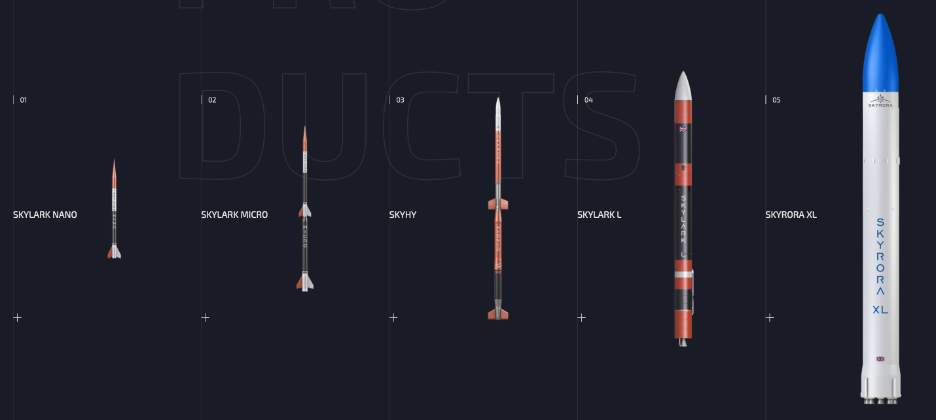
Skyrora has teamed with the National Physical Laboratory and Makerspace Paisley to 3D print face visors for various health services including the NHS at the company’s production facility in Edinburgh, Scotland.

The Edinburgh space firm concluded that the firm was well positioned to do its bit to help ease the burden on the National Health Service (NHS) and became quickly aware of the potential shortage of available safety equipment.

Skyrora dedicated resources to manufacture personal protection equipment, (PPE) and decided not to go it alone, as a collaborative effort would yield much faster and higher volume of supplies. Skyrora decided to reach out to the wider community and bring in expertise, more equipment and personnel to make the project happening rapidly. As a result, both the National Physical Laboratory and youth charity project Makerspace Paisley joined Skyrora to support its latest mission.

Joining the wider business community’s effort in dealing with the Covid-19 crisis and producing urgently required additional PPE, Skyrora staff are working evenings and weekends to increase the maximum production of 3D printed face visors while still adhering to the government’s social distancing measures.

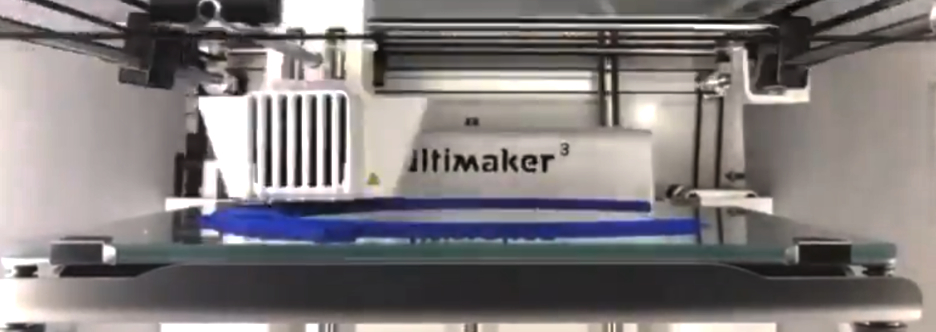
Together they initially produced 50 face visors per week, all 3D printed on Skyrora’s two Ultimaker S3s and one Ultimaker S5 printers. With the support of the National Physical Laboratory, lending Skyrora two further Ultimaker S3s, the team can now 3D print 70 to 100 face visors per week.

The Ultimaker units work by depositing layers of 3D printed PLA (polylactic acid) plastic based on the 3D model design. The whole process of 3D printing requires approximately two hours for each band frame and only five minutes to assemble the band frame, clear plastic visor and foam strips into a face visor.

Without the help of Makerspace Paisley, visor production would not have been possible. Makerspace Paisley kindly lent their laser cutting facilities to Skyrora. The laser cutter uses a high-powered carbon dioxide laser to etch the safety markings and logos onto the 100% recyclable PETG (polyethylene terephthalate glycol) plastic visors, before cutting them out for production-quality precision.

Skyrora has received certification for their face visors to the CE EN 166:200 standard, as required by the NHS, and everything is ready for distribution.

Skyrora have also received recognition from the Scottish Government. The Deputy Presiding Officer, Christine Graham said that Parliament welcomes the efforts of the Midlothian-based space tech firm, Skyrora, to tackle the COVID-19 outbreak by reallocating a proportion of its staff to manufacture various forms of personal protective equipment, while still adhering to social distancing measures. It is the Parliament’s understanding that this includes hand sanitizers and 3D printed face visors, which will be distributed to the NHS during the coming weeks. Parliament believes that this demonstrates a commendable attitude of corporate responsibility and thanks Skyrora and companies undertaking similar efforts for their contributions.


Filed Under: News

SpaceX to Test Sunshade for Starlink Satellites

April 30, 2020 by editorial

SpaceX is preparing to test a new sunshade for its Starlink satellites. Assuming all goes it planned, the new sunshade will make the satellites less visible. While that may sound problematic, it’s actually a good thing because it allows astronomers to peer into space with greater clarity.

Starlink, of course, is a project that involves launching thousands of small satellites into a Very-Low Earth Orbit (VLEO) constellation. SpaceX is hoping to use the network of satellites to provide internet access to businesses and consumers. There are other satellite-based internet services available, but if you’ve ever used one, you may recall their slow speeds and unreliable connections. SpaceX’s Starlink satellites are designed to overcome these problems thanks to their VLEO placement. Since they are closer to Earth, they can receive and transmit data more quickly than satellites used by other internet service providers.

Ever since SpaceX began launching the Starlink satellites into Earth’s orbit, however, professional and recreational astronomers alike have complained about their adverse impact on visibility. While the Starlink satellites are small — when compared to other satellites, at least — there are already over 100 of them in Earth’s orbit. And because of their VLEO placement, they often obstruct astronomers from viewing distant planets. This has prompted SpaceX to develop a new sunshade, which it plans to test in the near future.

SpaceX ultimately wants to make its Starlink satellites invisible. “Our objectives, generally, are to make the satellites invisible to the naked eye within a week, and to minimize the impact on astronomy, especially so that we do not saturate observatory detectors and inhibit discoveries,” explained SpaceX founder and CEO Elon Musk when describing the new sunshade. While the private aerospace manufacturing company has already created a website where astronomers can track its Starlink satellites, it’s now going one step further by developing a sunshade.

Known as the VisorSat, the new sunshade is designed to prevent sunlight from reflecting off the Starlink satellites’ antennas. The VisorSat essentially works like the sun visors found inside cars, trucks and other automobiles. When raised, it will create a barrier between the Starlink satellite on which it’s used and the sun.

SpaceX has previously tested different coatings in an effort to reduce the glare created by its Starlink satellites. One such project was DarkSat, which unfortunately didn’t perform as intended. Hopefully, SpaceX will experience better results with its VisorSat, however.

MonroeAerospace


Filed Under: News

Rocket Lab Completes Sinclair Interplanetary Acquisition

April 30, 2020 by editorial


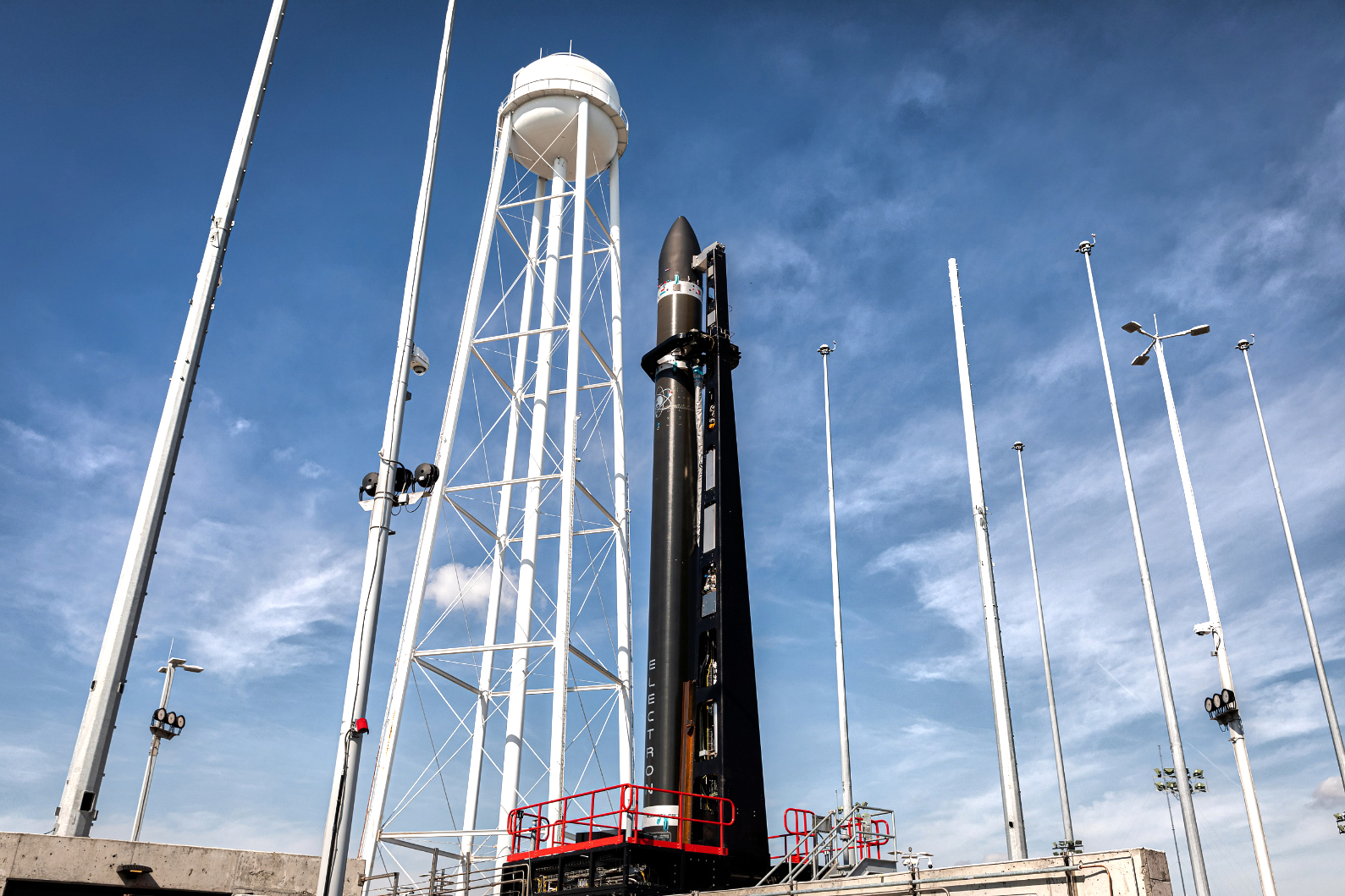
Rocket Lab’s Electron launch vehicle roll-Out at Launch Complex 2.

Rocket Lab has closed the transaction to acquire Sinclair Interplanetary, a leading provider of high-quality, flight-proven satellite hardware.

Rocket Lab announced the execution of the agreement to acquire Sinclair Interplanetary on March 16, 2020, pending customary closing conditions and satisfying The Investment Canada Act review process. Terms of the approved deal were not disclosed.

The acquisition strengthens the satellite division of Rocket Lab, which produces the Photon spacecraft line. Sinclair Interplanetary products will become key features of Rocket Lab’s Photon satellite platforms designed for LEO, lunar, and interplanetary smallsat missions. Rocket Lab will also dedicate resources to grow Sinclair’s already strong merchant spacecraft components business. The acquisition enables Sinclair Interplanetary to tap into Rocket Lab’s resources, scale, manufacturing capability, and innovative technologies to make world-leading satellite hardware accessible to more customers.

Both companies have built leading space businesses with consistent strong revenue growth and together, Rocket Lab and Sinclair Interplanetary will provide the small satellite industry with optimized spacecraft solutions and cohesive launch services to make space easy.


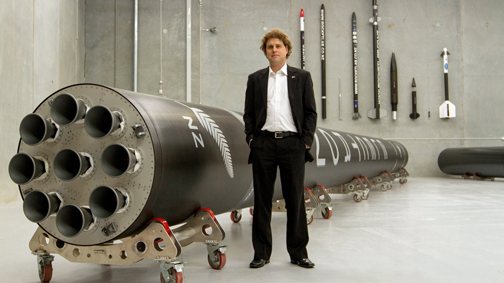
Peter Beck

Peter Beck, Rocket Lab founder and CEO, said when we talk to small satellite operators across the board their challenges are clear: They need to get on orbit faster; they need proven and reliable hardware; and they need the ability to focus on their core business, rather than spending years tied up in hardware development. Rocket Lab and Sinclair Interplanetary are uniquely suited to solve these challenges and make space easy for our customers.

Doug Sinclair, Founder of Sinclair Interplanetary, noted that at Sinclair Interplanetary, the company has had the privilege of serving the small satellite community for almost 20 years across diverse and innovative missions. The firm is excited to build on Sinclair’s strong heritage by combining the capabilities of Rocket Lab and Sinclair Interplanetary to scale manufacturing, make the hardware available to more customers globally and be able to supply larger constellations than ever before.

Founded in 2001 by Doug Sinclair, Toronto-based Sinclair Interplanetary develops reliable, best-in-class spacecraft hardware, including reaction wheels and star trackers that support rapid-schedule small satellite programs. More than 90 satellites incorporating Sinclair hardware have been launched to orbit, including Rocket Lab-launched satellites from AstroDigital, ALE, and BlackSky. The Sinclair team has been entrusted with developing hardware for world-first missions including BRITE, the world’s smallest space telescope, and The Planetary Society’s LightSail 2, the first satellite in Earth orbit to be propelled solely by sunlight. Satellite communications company, Kepler Communications, has also selected Sinclair reaction wheels for its constellation of 140 Internet of Things satellites currently in development.

Sinclair Interplanetary will continue to be led by Doug Sinclair and the company will maintain its team and facilities in Toronto, Canada. In addition to being incorporated into Rocket Lab’s Photon satellite line, Sinclair Interplanetary hardware will remain available to satellite operators building their own spacecraft.


Founded in 2001 by Doug Sinclair, Sinclair Interplanetary is a supplier of hardware, software, training and expertise to the spacecraft community. The primary focus is on low-cost, rapid-schedule programs to produce smallsats.


Filed Under: News

  • « Go to Previous Page
  • Go to page 1
  • Interim pages omitted …
  • Go to page 302
  • Go to page 303
  • Go to page 304
  • Go to page 305
  • Go to page 306
  • Interim pages omitted …
  • Go to page 333
  • Go to Next Page »

Primary Sidebar

WEEKLY NEWSLETTER

Archives

  • December 2025
  • November 2025
  • October 2025
  • September 2025
  • August 2025
  • July 2025
  • June 2025
  • May 2025
  • April 2025
  • March 2025
  • February 2025
  • January 2025
  • December 2024
  • November 2024
  • October 2024
  • September 2024
  • August 2024
  • July 2024
  • June 2024
  • May 2024
  • April 2024
  • March 2024
  • February 2024
  • January 2024
  • December 2023
  • November 2023
  • October 2023
  • September 2023
  • August 2023
  • July 2023
  • June 2023
  • May 2023
  • April 2023
  • March 2023
  • February 2023
  • January 2023
  • December 2022
  • November 2022
  • October 2022
  • September 2022
  • August 2022
  • July 2022
  • June 2022
  • May 2022
  • April 2022
  • March 2022
  • February 2022
  • January 2022
  • December 2021
  • November 2021
  • October 2021
  • September 2021
  • August 2021
  • July 2021
  • June 2021
  • May 2021
  • April 2021
  • March 2021
  • February 2021
  • January 2021
  • December 2020
  • November 2020
  • October 2020
  • September 2020
  • August 2020
  • July 2020
  • June 2020
  • May 2020
  • April 2020
  • March 2020
  • February 2020
  • January 2020
  • December 2019
  • November 2019
  • October 2019

© 2019–2025 SatNews

Insert/edit link

Enter the destination URL

Or link to existing content

    No search term specified. Showing recent items. Search or use up and down arrow keys to select an item.
      x
      Sign Up Now!

      Enjoy a free weekly newsletter with recent headlines from the global SmallSat industry.

      Invalid email address
      We promise not to spam you. You can unsubscribe at any time.
      Thanks for subscribing! You will now receive weekly SmallSat News updates.
      We love our advertisers.
      And you will too!

      Please disable Ad Blocker to continue... We promise to keep it unobtrusive.
      We promise not to spam you. You can unsubscribe at any time.
      Invalid email address
      Thanks for subscribing! Please check your email for further instructions.