• Skip to main content
  • Skip to primary sidebar
  • Home
  • News
  • Featured
  • More News ⌄
    • SatNews
    • SatMagazine
    • MilSatMagazine
  • Events ⌄
    • MilSat Symposium
    • SmallSat Symposium
    • Satellite Innovation
  • Contacts
  • SUBSCRIPTION

SmallSat News

You are here: Home / Archives for News

News

Helical L-Band Antenna Created by Roccor for Space Demo of Link 16 Networks

May 19, 2020 by editorial


Roccor created a deployable L-band antenna that makes possible the reception and transmission of Link 16 signals via spacecraft.
Image is courtesy of Blue Canyon Technologies.


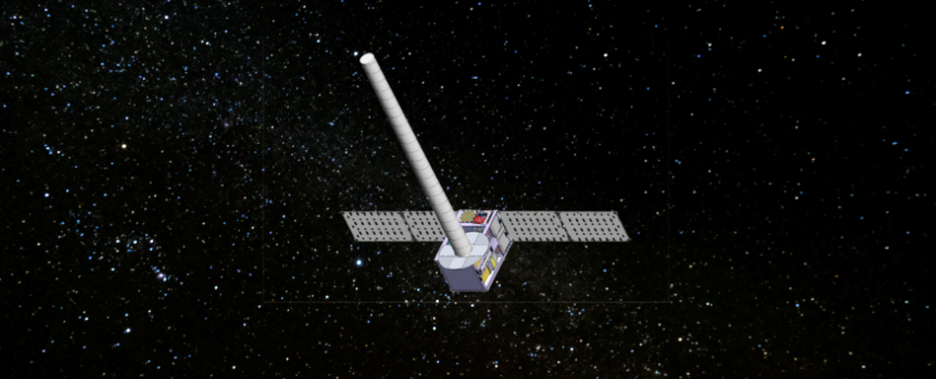
Roccor has created a deployable L-band antenna that makes possible the reception and transmission of Link 16 signals via spacecraft.

The project is in partnership with Viasat, Inc. (NASDAQ: VSAT) and the Air Force Research Laboratory Space Vehicles Directorate and is part of the world’s first-ever, Link 16-capable, LEO spacecraft demonstration mission called XVI, which will launch later this year.

Roccor’s helical, two-meter-long deployable RF aperture, will be extended and supported on-orbit by Roccor’s slit-tube composite ROC™ boom, a product the company has successfully demonstrated in space on three other antenna systems for top-tier military customers.
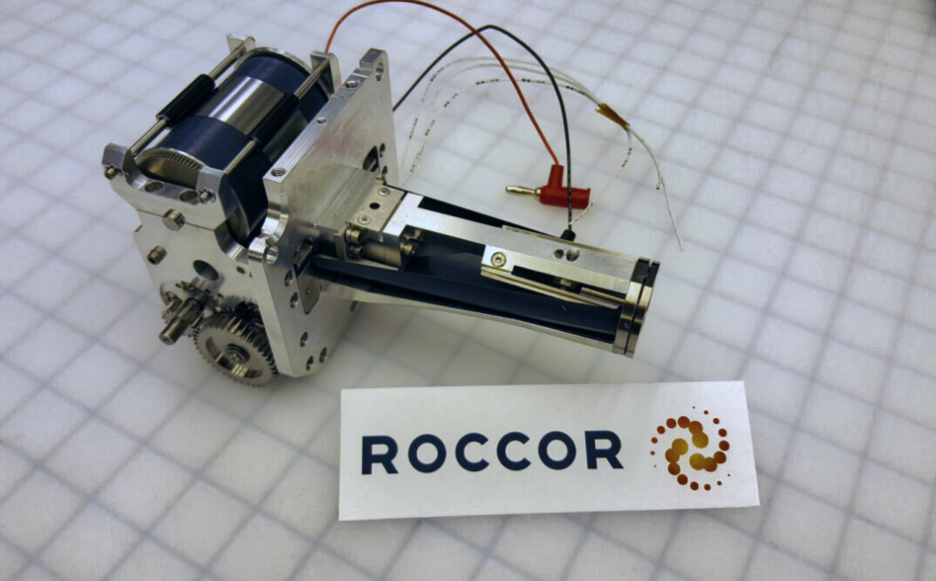

A Roccor deployable boom.

According to Davis, the widely proliferated Link 16 tactical communication network is the preferred choice of U.S. Department of Defense customers and a number of NATO allies for communication between ships, aircraft, maritime vessels, and troops operating at the tactical edge.

Bruce Davis, Roccor’s Director of Space Antenna and De-orbit Products, stated this will significantly broaden the Link 16 tactical communications network capabilities. Viasat came to the company with a hard problem and a tight timeframe. They needed robust broadband capabilities – ‘big ears’ – to enable communications across a range of frequencies and they wanted to demonstrate it on a small satellite platform that is easily scalable to constellation-class missions. The Roccor solution extends the range of Link 16 networks, substantially enhancing situational awareness and mission capabilities for U.S. military personnel operating across the global battlespace.

Mark Lake, Roccor’s CTO, noted that the Link 16 antenna development program is a success story the company shares with the XVI mission customer, Viasat, and the firm’s technology development sponsor, AFRL. Roccor’s satellite antenna portfolio has grown from years of investment in simple, low-cost deployment mechanism technologies – like the ROC™ boom system used to deploy the Link 16 antenna – that are revolutionizing deployment systems for constellation missions. The upcoming XVI antenna deployment comes on the heels of decades of research and development and millions of dollars of investment into high-strain composite deployment systems starting in the early 2000s at AFRL and reduced to flight-certified products at Roccor over the past five years.

According to Lake, Roccor won an additional $3 million contract through Space and Missile Systems Center and AFRL space pitch day last fall to evolve the current Link 16 demonstration mission antenna into a production-ready design capable of serving the needs of upcoming constellation providers starting in 2021.

Late last year, Ken Peterman, President, Government Systems, Viasat, said that Roccor’s antenna will be vital to the success of the XVI program. This Link-16 capable Low Earth Orbit spacecraft will address the Department of Defense’s urgent need for a fast-to-market, cost-effective, space-based Link 16 solution that will help our forces maintain the technological edge needed across today’s battlespace.
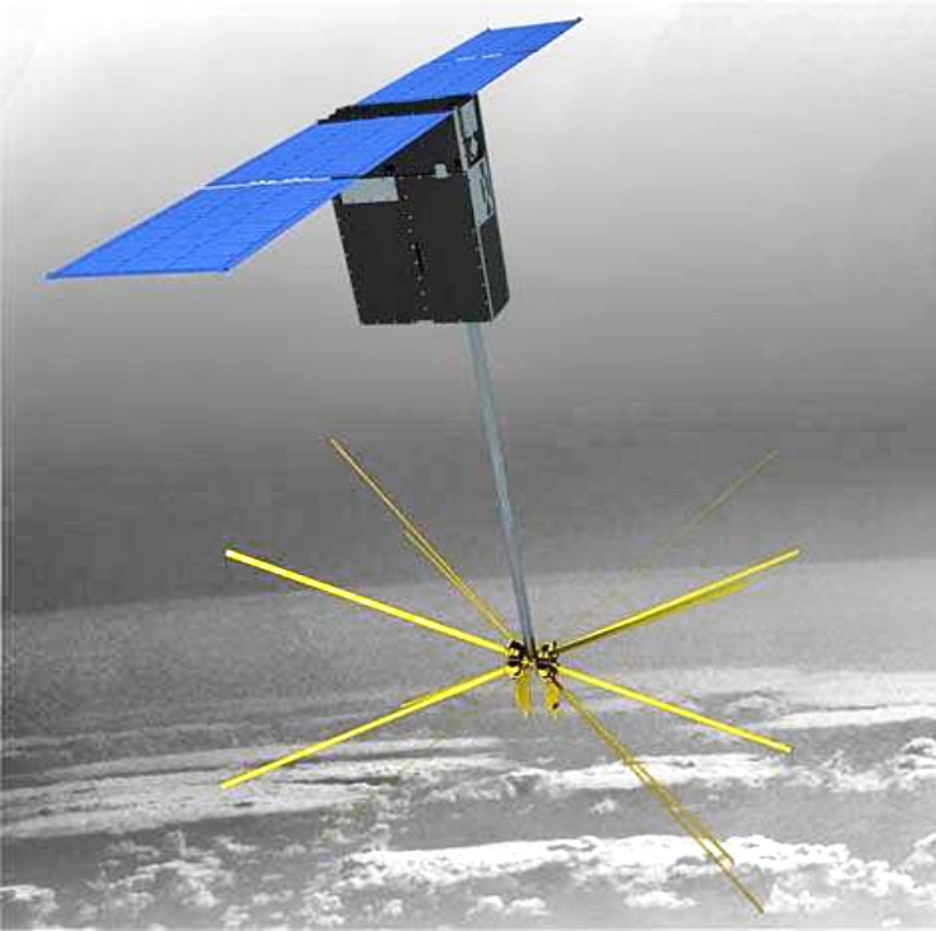

Harris Corporation launched their first smallsat – HSAT1 – with Roccor booms onboard.
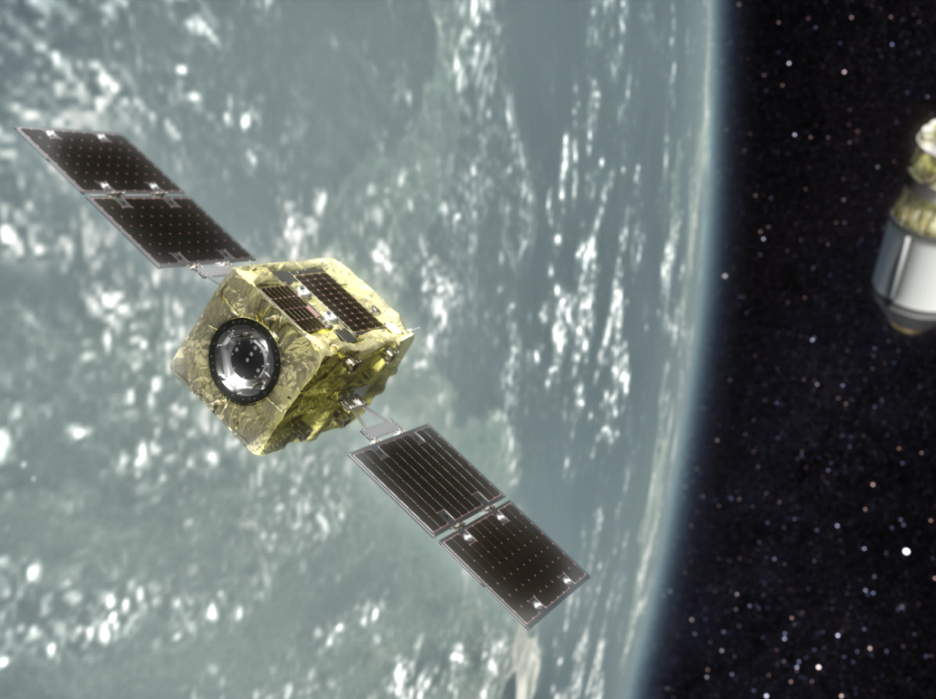
 

Filed Under: Featured, News

Series E Funding Round Opened by Astroscale

May 18, 2020 by editorial

Astroscale Holdings Inc. (“Astroscale”) has opened a Series E funding round and has secured I-NET CORP. (I-NET), a leading Japanese data center provider, as its first investor for an undisclosed amount.

The additional financing will be used to broaden Astroscale’s current business services and achieve the company’s mission of securing a sustainable orbital environment.

Despite the many complications brought on by the onset of COVID-19, Astroscale has shown steady growth and success in the first half of 2020. In January, the company was awarded a grant of up to US $4.5 million from the Tokyo Metropolitan Government’s “Innovation Tokyo Project,” and in February, Astroscale was selected as commercial partner for Phase I of the Japan Aerospace Exploration Agency’s (JAXA) first debris removal project.

Astroscale’s offices in the United Kingdom and United States continue to make key additions to their management and technical teams and are well positioned to service future commercial and institutional customers. In addition to building technical capabilities and securing contracts, Astroscale continues to work with industry and government representatives to develop standards and best practices for safe and sustainable satellite servicing and debris removal.

Astroscale’s success in the first half of the year is expected to continue. Notably, in the later half of 2020 Astroscale is on track to launch its End-of-Life Services by Astroscale-demonstration (ELSA-d) mission, the world’s first demonstration of commercial orbital debris removal.

The Series E funding round will close by the end of 2020.

Nobu Okada, Founder and CEO of Astroscale, stated that daily lives have changed drastically and all have come to depend on satellite services at a whole new level during this unprecedented global crisis. Now, more than ever, it is evident that we need to take action to protect assets in space and, with the broadening of Astroscale’s business services, the company will be even better positioned to meet the challenges of orbital sustainability. The firm is grateful to I-NET as the first investor of this Series E funding round.

Filed Under: News

Seed Round Closed by Earth Observant

May 15, 2020 by editorial

Earth Observant Inc. (EOI) closed their seed round in the first quarter of this year.

Over the past 18 months, the company has been designing a constellation of low-flying satellites that leverage the team’s decades of experience developing propulsion systems and Earth imaging platforms.  The company’s propulsion system is currently in fabrication, with ground-based testing slated for the third quarter of 2020. In addition, EOI has down-selected its optical payload provider and has started development on the first optical payload.

EOI has designed a highly responsive platform for remote sensing and space domain awareness. This platform allows for a much higher quality product at a fraction of the cost of any existing or planned offerings. EOI’s mission is to make very-high resolution (VHR) imagery affordable and easily accessible to defense and intelligence agencies and commercial customers to support a range of applications such as resource management, environmental & disaster assessment, asset monitoring, logistics planning, infrastructure mapping, public safety, homeland security, insurance and real estate.

Many experts believe mass adoption of VHR imagery has been inhibited by limited coverage and high costs. EOI’s approach offers a paradigm shift in cost and quality by incorporating Very Low Earth Orbit into the constellation design. Starting in the next 24 months with one spacecraft, the initial constellation is designed to increase to 30 spacecraft that achieve an average revisit of every two hours, supporting constant monitoring services. To meet future demand, the constellation is easily expandable to accommodate additional satellites.

Christopher Thein, CEO of Earth Observant Inc., said this proprietary propulsion system will enable our satellites to maintain a significantly lower orbit than other Earth observation satellites. This approach will allow the satellite to capture data at a higher resolution and provide multiple revisits per day in key target areas for continually updated information.

Herb Satterlee, former CEO of MDA Information Systems and an Earth Observant Inc. board member, added this is a game changer for the growing EO industry. By combining superior resolution with excellent revisit rates, many traditional applications, as well as emerging machine learning technologies, will greatly benefit from persistent observations from space.


Filed Under: News

Six Additional Planet SkySat Smallsats to Launch During the Summer

May 14, 2020 by editorial

Planet is set to launch six more SkySat satellites (SkySats 16-21) into LEO this summer, rounding out the fleet of 15 SkySats already in operation.

SkySats 1-15 operate in Sun Synchronous Orbits (SSO), a specific type of Low Earth Orbit that results in the Earth’s surface always being illuminated by the Sun at the same angle when the satellite is capturing imagery. About half of the SkySats currently pass overhead in a morning crossing plane, while the other half moves in an afternoon crossing plane, so together they provide twice-daily coverage of select areas on a global scale.

SkySats 16-21 will operate at a “mid-inclination” orbit of 53 degrees, complimenting the SSO fleet, and will offer more targeted coverage and raw image capacity in key geographic regions.

The six SkySats will be evenly split across two launches on SpaceX’s Falcon 9, a two-stage reusable rocket that has successfully flown satellites and cargo over 80 times to orbit. They will do so as rideshare payloads on launches of SpaceX’s Starlink satellites.

SkySats 16-18 will launch on SpaceX’s ninth Starlink mission, targeted for launch in the next month, and SkySats 19-21 will launch later this summer. Both missions will launch from Cape Canaveral Air Force Base in Florida.

The launch of SkySats 16-21, as well as the development of the company’s enhanced 50 cm imagery (to be made available to customers this year)—are just some examples of Planet’s evolving geospatial offerings.


Space Launch Complex 40 at Kennedy Space Center, with a Falcon 9 on the pad. Image is courtesy of Plant.


Filed Under: News

Momentus and Alba Orbital Sign Contract for as Many as 10 PocketQube Smallsats

May 14, 2020 by editorial

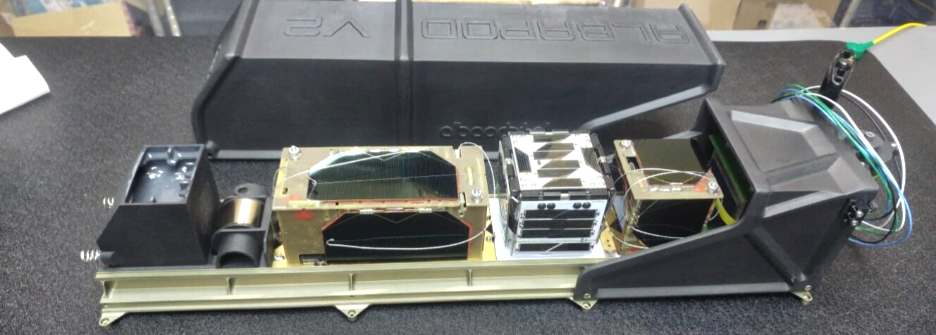
Momentus and Alba Orbital have announced a contract for three Alba Albapods to ride on plaza deck of the Falcon 9 vehicle, which will launch in December 2020 from Kennedy Space Center in Cape Canaveral.

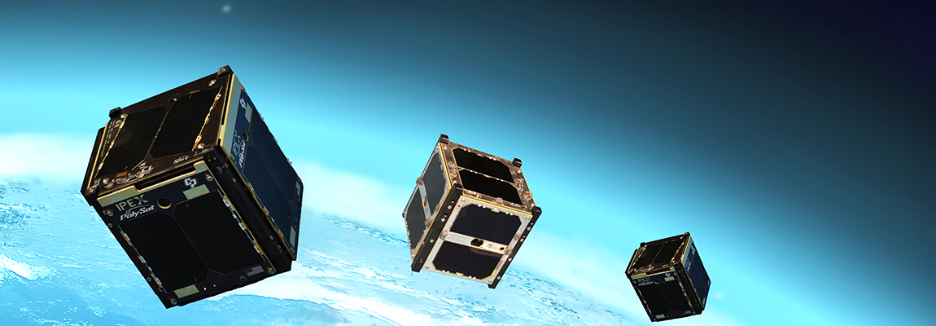
Alba Orbital is actively working with customers to launch clusters to their mission requirements via PocketQube deployers suitable for 1p, 1.5p, 2p or 3p PocketQube format smallsats. A PocketQube is a type of smallsat for space research that usually has a size of 5 cm cubed (one eighth the volume of a cubesat), has a mass of no more than 250 grams per unit, or ‘p.’

Alba Orbital’s PocketQube satellites are integrated into the Albapod deployers and mounted alongside Vigoride onto the ESPA Grande ring interface provided by SpaceX on their dedicated rideshare missions. Momentus is enabling Alba Orbital to have a regular launch cadence and mission flexibility in the future to ensure drop off orbital altitudes where their customers need it.

Based in Glasgow, Scotland, and Berlin, Germany, Alba Orbital wants to get more people building and launching their own satellites by democratizing access to space via the PocketQube standard. They provide a hub of support for PocketQube satellites by building their own platforms as well as ground stations and launch services to companies, universities and space agencies around the world. Momentus’ flexible shuttle service is a perfect complement to Alba’s offering.

A graduate of the prestigious Y Combinator program and based in Santa Clara, California, Momentus announced a $25.5 million Series A raise last year, bringing total funding to nearly $50 million. Momentus employs new and proprietary technologies, including water plasma propulsion to enable revolutionary low cost orbital shuttle and charter services. The prototype of the Vigoride vehicle, “El Camino Real,” was launched and tested last year. The first full-scale Vigoride test mission is planned for Q4 of 2020 on the SpaceX dedicated rideshare mission.

Tom Walkinshaw, CEO and Founder of Alba Orbital, said the company is very excited to be partnering with Momentus on their first rideshare mission in December, where we plan to deploy a record number of PocketQubes in orbit. The flexibility which Momentus offers enables access to proven rocket platforms, increasing mission reliability and performance.

Mikhail Kokorich, CEO of Momentus, added Alba Orbital is a key partner for Momentus, enabling the company to service PocketQube customers with demonstration missions in form factors even smaller than cubesats. The firm looks forward to launching 10 PocketQubes in December as well as many more in the near future.


Filed Under: News

New Space Electronics Now Being Offered for Constellations by RUAG Space

May 13, 2020 by editorial

RUAG Space is now offering new electronics that are suited to the needs of satellite constellations.

For constellations of hundreds or thousands of smallsats, products in high volumes, lower cost, on-time and on-quality delivery are needed. RUAG Space has developed novel products and processes specifically meeting the needs of satellite constellations. The international space supplier with sites in six different countries and headquartered in Switzerland is offering new electronic and mechanical products for constellations.

Peter Guggenbach, EVP, RUAG Space, stated that the company can offer a unique mix of the firm’s vast experience in hundreds of space missions, combined with the company’s high volume production that fosters lean operations and automated processes, to customers. For constellations, RUAG offers the world leading navigation product, fully embedded on the onboard-computer. RUAG’s constellation Global Navigation Satellite System (GNSS) receiver is offering a high quality and cost-effective solution for applications deployed in larger quantities. The receiver can precisely determine a satellite’s position in orbit and works with both GPS and Galileo signals. In total, more than 20 navigation receivers from RUAG Space are currently in orbit and functioning flawlessly since 2006.

RUAG’s new onboard-computer for constellations (cOBC) is the “brain” of a satellite. The onboard computer controls and monitors the payload of the satellite and many other subsystems. For constellation onboard computing RUAG offers a combination of its cOBC and its constellation Interface Unit products (cIU).

Direct technical interface for U.S. customers For its entire electronics portfolio – from onboard-computers, navigation receivers to antennas and more – RUAG Space offers a direct technical interface in its office in Denver, Colorado – offering a customer service close to U.S. clients.

Mechanisms for constellations RUAG Space also offers new mechanisms to its satellite constellations customers, for example mechanisms that point the small satellite’s engines. The electric propulsion is necessary to bring the satellite exactly into its position and to maintain this position over the lifetime of several years. In January RUAG’s electric propulsion pointing mechanisms have been successfully used for the Eutelsat KONNECT satellite.

Guggenbach added that the company’s pointing mechanisms are carefully designed to minimize mass, manage orbital temperature extremes and deliver exact pointing accuracy over many years of service lifetime.

Established products for constellations are RUAG’s dispensers, structures, thermal insulation and satellite handling equipment. A low cost solar array drive mechanism from RUAG Space is also currently in qualification, with completion expected by the end of 2020.

Additional information is available at this direct infolink…

Filed Under: News

Satellite IoT Network Development by New Company SatIoTLab

May 13, 2020 by editorial

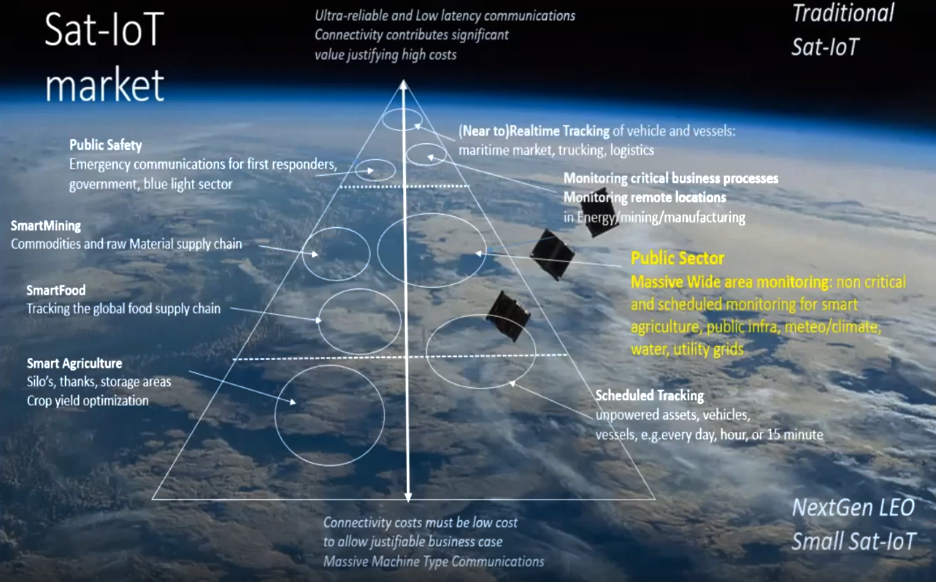
Huge investments are underway in the satellite upstream market, to built and launch a new generation of smallsat IoT networks that will bring the world low costs / low power IoT connectivity.

On the downstream side, satellite IoT application development receives much less attention, although the true value lies there.

SatIoTLab founded the satellite application lab to support the development of global satIoT applications and to form IoT solution value chains. The company believes the largest benefits of satellite IoT will be in the public and government sector, where wide area monitoring applications will serve various UN goals to the benefit of society.

What we do in the SatIoTLab:

1. Educate next gen IoT professionals in the public and government sector on the use of satellite based connectivity for global IoT applications

2. Provide Lab facility for satIoT application development (think: satIoT Makerspace, Workshops and Hackatons)

3. Create a satIoT community to form value chains for the different vertical markets to engage in projects.


To learn more, select the screenshot below to view an introductory video...

Filed Under: News

Smallsat Catalog Published by Orbital Transports Offers Total Mission Support

May 13, 2020 by editorial

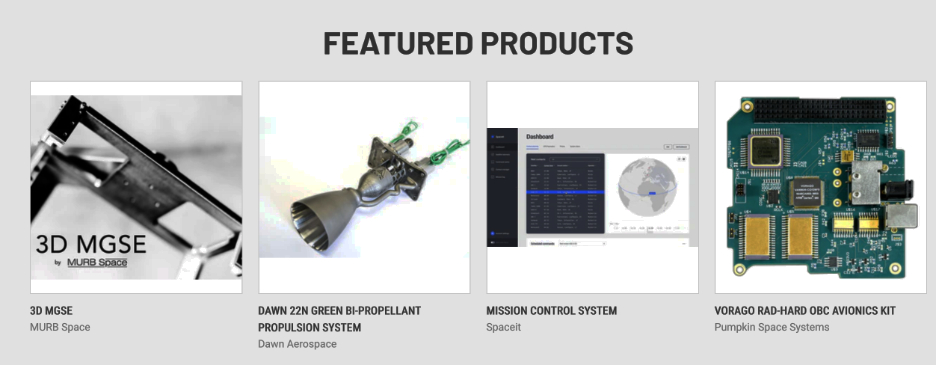
Orbital Transports, Inc. has debuted their Small Satellite Catalog on its website. By bringing the entire small satellite supply chain online, Orbital Transports is able to offer hardware, software, services, and engineering expertise in a single, searchable, structured catalog.

The first resource of its kind, this catalog offers everything a satellite operator or user needs to plan a successful mission.

The catalog offers a wide variety of small satellite hardware components, small satellite buses specialized for common space missions, ground station services, and mission operations software from more than a dozen partner companies. Orbital Transports has brought together the industry’s most innovative and reliable companies to offer the widest possible set of solutions while meeting clients’ quality requirements. The catalog will also grow in the near future to include launch, legal, and regulatory services.

Following the launch of the catalog, Orbital Transports will also release an online mission builder “wizard” that will allow users to define their goals and then guide them in building a complete spacecraft including selecting their payload, bus, timeframe, orbit, and launch. In combination with the online catalog, this mission builder tool will allow anyone who is interested in obtaining valuable data from space to quickly and easily design and execute their mission.

The catalog is just the beginning, noted the company’s CEO, David Hurst, who added that Orbital Transports offers a complete mission outsourcing, including assembly, testing, and integration. The firm can even book a launch, operate a mission and deliver data. If there is a need to get something to space, Orbital Transports can handle the entire process as the company focuses on making the mission successful. Customers don’t have to do the research to find vendors and build relationships with dozens of individual companies because Orbital Transports has already accomplished that task, creating the trusted source that customers can turn to for all their smallsat mission needs.


Filed Under: News

Rocket Crafters Prepares for Launch Following Successful Testing of the Comet Rocket Engine

May 13, 2020 by editorial


Rocket Crafters is currently developing, testing, and prototyping the STAR-3D™ hybrid engine.

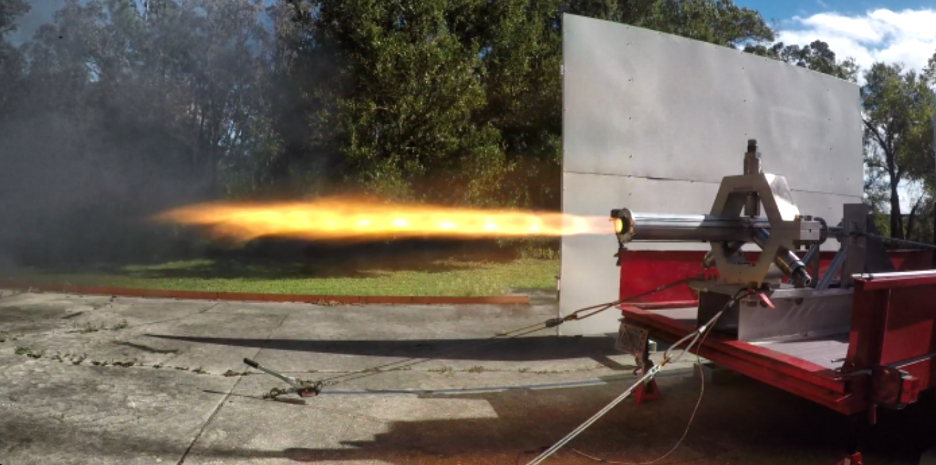
Rocket Crafters, the first space launch company to use additive manufacturing to 3D print rocket fuel, has concluded testing for their Comet engine, a large-scale, proof of concept test model of the company’s STAR-3D™ hybrid rocket engine.

The tests were designed to show that the patent-pending hybrid rocket engines could scale from the laboratory to a size more commercially relevant. With 49 successful laboratory tests under their belt ranging from 250 to 500 pounds of thrust, Rocket Crafters initiated testing of the Comet 5000-pound thrust engine in February of this year.

Comet was tested three times. The first two tests were successful, closely matching the performance models that Rocket Crafters created. While still considered successful in terms of research and development, the third test experienced an overpressure anomaly, resulting in damage to the test stand and test engine.

After the anomaly, the Rocket Crafters engineering team dug deep into the hardware and recorded data to determine what had occurred and how to prevent it in future tests. After extensive analysis, it was concluded that there was an initial failure in an ancillary part of the engine. This led to a larger over-pressurization inside the combustion chamber. The team found no problems within the core STAR-3DTM engine design.

Rocket Crafters President, Robert Fabian, who is a 25 year veteran of military space and missile operations and maintenance,said this is the why of tests. Problems are found and fixed in testing, so they don’t occur on the launch pad.

With the completion of the large-scale proof of concept testing, Rocket Crafters is taking their lessons learned and applying them to their next big project — a test flight powered by a smaller version of the STAR-3DTM hybrid rocket engine. This will be Rocket Crafters’ inaugural launch of a flight engine and the first opportunity to see the performance in motion rather than bolted to a test stand.

Rocket Crafters has planned two more consecutively larger test flights into space and back to Earth and then into orbit. Not long after that, commercial service to LEO with the Intrepid smallsat launch vehicle will begin.

Rocket Crafters, based in Florida’s Space Coast, is a propulsion and launch services company, focused on producing the safest, more reliable, and affordable rocket engine ever produced. Transitioning from research into commercial relations, Rocket Crafters has developed engine technology that the space industry has long been searching for; a payload-to-orbit transport system that is not only safe and reliable, but also with pricing based upon the market and a rapid launch cadence that is driven by that safety and low cost.


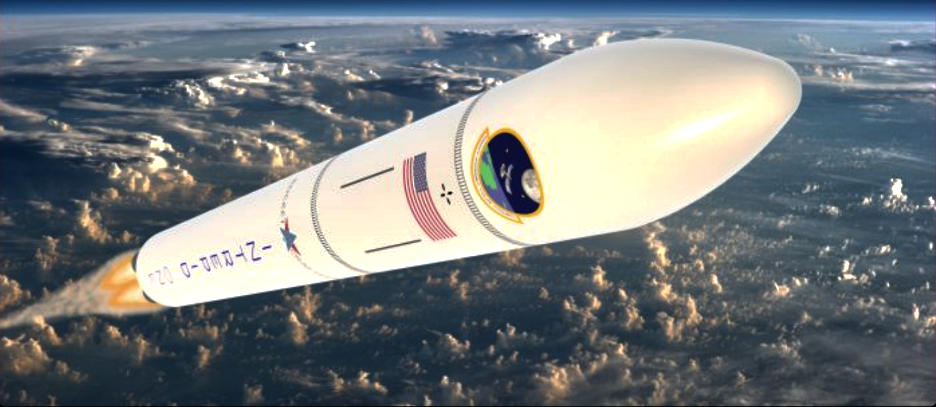
With the inaugural launch of the Intrepid™, the company will be starting their full launch services. Intrepid™ will serve the small to medium satellite market, specializing in companies that require satellites delivered safely, reliably, and in a cost effective manner to LEO.


Filed Under: News

Arianespace Getting Set for Upcoming Vega and Ariane 5 Missions

May 13, 2020 by editorial

A pair of important arrivals this week – one by air, the other by sea – marked an acceleration of preparations at Europe’s Spaceport for Arianespace’s next two missions, to be performed from French Guiana with its lightweight Vega and heavy-lift Ariane 5 launch vehicles.

These parallel arrivals involved personnel who will conduct the first Vega “rideshare” mission, scheduled for mid-June to orbit 53 small satellite payloads; and Ariane 5 launch vehicle components for a three-passenger flight planned for liftoff this summer.

Team members for the Vega launch campaign were flown in aboard a chartered airliner that touched down at Félix Eboué Airport near the French Guiana capital city of Cayenne. They will be responsible for preparing this mission’s liftoff from the Vega Launch Complex (ZLV), located on the Kourou side of the Spaceport.

As the personnel were settling in, main launcher components for the Ariane 5 flight were being unloaded from the MN Toucan, one of two roll-on/roll-off sea-going ships operated for Arianespace, which docked at Paricabo Port near Kourou. After unloading, the components were to be taken by road to the Ariane 5’s ELA-3 launch complex – also situated on the Spaceport’s Kourou side.

Launch activities in French Guiana had been suspended mid-March because of the COVID-19 pandemic, and were gradually resumed – carried out in strict compliance with health rules published by the Prefect of French Guiana, as well as the French CNES space agency and the Guiana Space Center.

Vega proof-of-concept flight for SSMS
Designated Flight VV16 in Arianespace’s numbering system, Vega’s mission will be the first of the Small Spacecraft Mission Service (SSMS) – a program initiated by the European Space Agency (ESA) in 2016, with the contribution of the European Commission. For all the European partners involved, its purpose is to perfectly address the burgeoning microsatellite market for institutional and commercial customers alike.

The modular SSMS dispenser was designed to be as market-responsive as possible, able to accommodate a wide combination of payloads – from a main large satellite with smaller companions to multiple smaller satellites, or dozens of individual CubeSats.

Flight VV16 will be Arianespace’s fifth launch overall in 2020, and its first this year using the lightweight Vega member of its launch vehicle family – which also includes the heavy-lift Ariane 5 and medium-lift Soyuz.

The satellite passengers on Flight VV16 will be deployed by Vega to Sun-synchronous orbits. They will serve different types of applications, such as Earth observation, telecommunications, science and technology/education.

Readying Ariane 5’s three-satellite payload
For Arianespace’s initial Ariane 5 mission following the resumption of operational activity at the Spaceport, its heavy-lift launcher will carry three payloads to geostationary transfer orbit: the Galaxy 30 and BSAT-4b telecommunications satellites, along with a Mission Extension Vehicle (MEV).

Riding in Ariane 5’s upper payload position will be Galaxy 30, produced by Northrop Grumman Innovation Systems (NGIS). This is the first spacecraft built under Intelsat’s North American satellite fleet replacement program and highlights the operator’s continued focus on C-band communication technologies.

To be deployed as a Galaxy 30 “piggyback” payload is Northrop Grumman’s second Mission Extension Vehicle (MEV-2) – a servicing spacecraft that docks with an existing satellite in orbit to provide life-prolonging propulsion and attitude control. After deployment by Ariane 5, MEV-2 will service the Intelsat 10-02 satellite, which was launched in 2004.

Flight VA253’s other passenger on Ariane 5 – BSAT-4b – was built by Maxar Technologies for Japan’s Broadcasting Satellite System Corporation (B-SAT) as a back-up to BSAT-4a, launched by Arianespace in 2017. BSAT-4b uses Maxar Technologies’ 1300 Class platform and carries Ku-band transponders.


Filed Under: News

  • « Go to Previous Page
  • Page 1
  • Interim pages omitted …
  • Page 306
  • Page 307
  • Page 308
  • Page 309
  • Page 310
  • Interim pages omitted …
  • Page 339
  • Go to Next Page »

Primary Sidebar

WEEKLY NEWSLETTER

Archives

  • March 2026
  • February 2026
  • January 2026
  • December 2025
  • November 2025
  • October 2025
  • September 2025
  • August 2025
  • July 2025
  • June 2025
  • May 2025
  • April 2025
  • March 2025
  • February 2025
  • January 2025
  • December 2024
  • November 2024
  • October 2024
  • September 2024
  • August 2024
  • July 2024
  • June 2024
  • May 2024
  • April 2024
  • March 2024
  • February 2024
  • January 2024
  • December 2023
  • November 2023
  • October 2023
  • September 2023
  • August 2023
  • July 2023
  • June 2023
  • May 2023
  • April 2023
  • March 2023
  • February 2023
  • January 2023
  • December 2022
  • November 2022
  • October 2022
  • September 2022
  • August 2022
  • July 2022
  • June 2022
  • May 2022
  • April 2022
  • March 2022
  • February 2022
  • January 2022
  • December 2021
  • November 2021
  • October 2021
  • September 2021
  • August 2021
  • July 2021
  • June 2021
  • May 2021
  • April 2021
  • March 2021
  • February 2021
  • January 2021
  • December 2020
  • November 2020
  • October 2020
  • September 2020
  • August 2020
  • July 2020
  • June 2020
  • May 2020
  • April 2020
  • March 2020
  • February 2020
  • January 2020
  • December 2019
  • November 2019
  • October 2019

© 2019–2026 SatNews

Insert/edit link

Enter the destination URL

Or link to existing content

    No search term specified. Showing recent items. Search or use up and down arrow keys to select an item.
      x
      Sign Up Now!

      Enjoy a free weekly newsletter with recent headlines from the global SmallSat industry.

      Invalid email address
      We promise not to spam you. You can unsubscribe at any time.
      Thanks for subscribing! You will now receive weekly SmallSat News updates.
      We love our advertisers.
      And you will too!

      Please disable Ad Blocker to continue... We promise to keep it unobtrusive.
      We promise not to spam you. You can unsubscribe at any time.
      Invalid email address
      Thanks for subscribing!