• Skip to main content
  • Skip to primary sidebar
  • Home
  • News
  • Featured
  • More News ⌄
    • SatNews
    • SatMagazine
    • MilSatMagazine
  • Events ⌄
    • MilSat Symposium
    • SmallSat Symposium
    • Satellite Innovation
  • Contacts
  • SUBSCRIPTION

SmallSat News

You are here: Home / Archives for News

News

Forrester’s Digest: Eutelsat, SoftBank collaboration

September 3, 2024 by editorial

The build–up to IBC has influenced Eutelsat [and SES] to announce new business — the satellite provider has signed an partnership agreement with Japan’s SoftBank Corp.

Eutelsat’s deal with SoftBank will offer low latency, secure connectivity for businesses and government agencies throughout Japan, and sees Eutelsat enter the Japanese market for the first time.

The agreement will tap into Eutelsat’s OneWeb fleet of LEO satellites. The multi–year partnership will enable SoftBank to deliver a robust bandwidth – and communication speed – guaranteed service to customers including corporations and government entities, notably providing momentum for SoftBank’s satellite communication services. It will directly interconnect with SoftBank’s closed network service, SmartVPN, for additional security communications. The scope will initially target the Japanese market, with potential to expand to Japanese customers in other territories.

The agreement follows the granting to SoftBank by Japan’s Ministry of Internal Affairs and Communications of a blanket licence for specific radio stations, including VSAT Earth stations and mobile Earth stations, while the same ministry granted Eutelsat OneWeb a gateway station license.

Cyril Dujardin, Co-President of Eutelsat’s Connectivity Business Unit, said, “Our partnership with SoftBank is a significant milestone in our mission to deliver innovative connectivity solutions globally. We are delighted to rely on SoftBank as our partner to enter the Japanese market, and we look forward to cementing and expanding our collaboration in the years to come.”

Masakatsu Kawahara, SoftBank Corp. Vice President, Head of Communication Service Division, said, ”We are excited to partner with Eutelsat. By using the OneWeb low Earth orbit constellation it becomes possible to use high-quality, highly secure satellite communications services in places such as maritime and mountainous areas where connectivity is difficult to provide with terrestrial mobile networks. This will enable us to promote digital transformation in various industries and for local governments, heralding a new era in secure, ubiquitous connectivity services.”

Filed Under: News

Rocket Lab sets launch date for 2nd dedicated Kinéis mission to deploy IoT constellation

September 3, 2024 by editorial

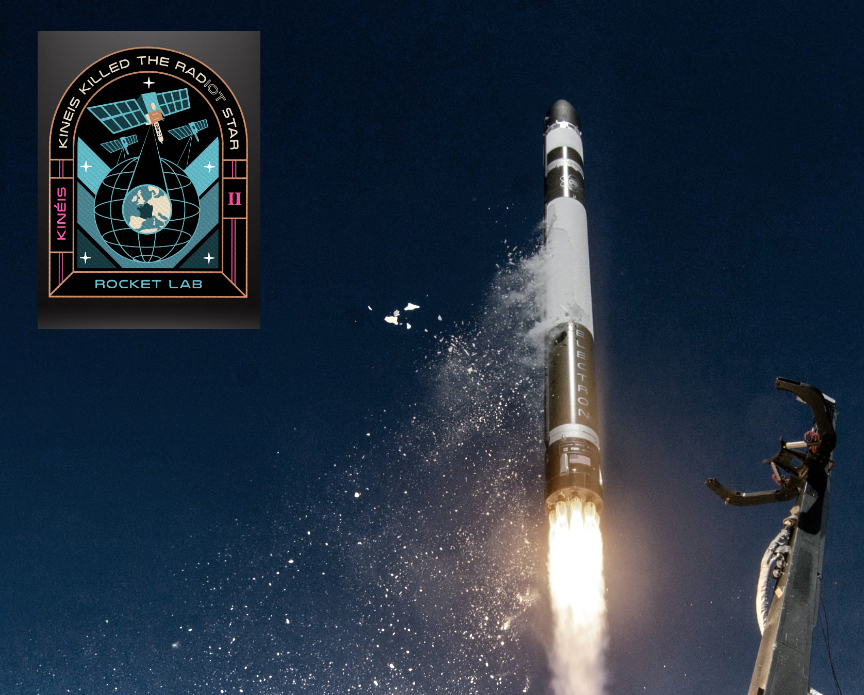
Rocket Lab USA, Inc. (Nasdaq: RKLB) has set the launch window for the company’s 53rd Electron Launch — this mission will be the second of five dedicated launches for the French company, Kinéis.

The ‘Kinéis Killed the RadIOT Star’ mission is scheduled to launch from Rocket Lab Launch Complex 1 in Mahia, New Zealand, during a 14 day launch window that opens on September 17, 2024, NZST.

This mission will launch just three months after the  ‘No Time Toulouse’ mission, Kinéis’ first launch with Rocket Lab. ‘Kinéis Killed the RadIOT Star’ will be the second of five dedicated Electron launches for Kinéis, a company backed by private and public investors including the French government’s space agency CNES (Centre National d’Études Spatiales) and CLS (Collecte Localisation Satellites) an international space-based solutions provider, to improve global Internet of Things (IoT) connectivity.

Kinéis’ constellation will connect any object anywhere in the world and guarantee the transmission of targeted and useful data to users, in near-real time, with low energy consumption with more powerful 30 kg class smallsats that integrate IoT technology. The constellation also includes a second mission: a ship-tracking Automatic Identification System (AIS). Once deployed, these technologies will allow Kinéis to expand across multiple industries and scale from 20,000 devices connected to millions. The second constellation launch will add an additional five new satellites to its planned 25 in number and will enhance Kinéis’ ability to connect the planet and address essential challenges for humanity, its activities, and its environment.

The ‘Kinéis Killed the RadIOT Star’ launch has been tailored specifically to meet Kinéis’ mission requirements, giving them greater control over launch schedule, orbit, and deployment parameters than would be possible on a larger rideshare mission. Tailored mission parameters for this launch include:

  • Instantaneous launch window
  • After the first Curie engine burn to circularize the Kick Stage’s orbit, Curie will ignite again for an eight second burn to set a specific argument of perigee, enabling Kinéis to deploy five satellites to a precise location for each one of the five launches,
  • All five satellites will be deployed in a precise sequence in singles and as pairs to build out the constellation exactly as Kinéis needs it,
  • Finally, Curie will conduct a perigee lowering burn to reduce the Kick Stage’s orbital lifetime to keep space sustainable.

“We’re excited to welcome the Kinéis team on board Electron again as we help them build out their constellation,” said Rocket Lab founder and CEO, Sir Peter Beck. “Dedicated launch is key for the kind of precise orbital deployment requirements many constellation operators need, so we’re proud to make that possible once again.”

“The Kinéis teams are ready to build on the success of the first launch. They have capitalized on this first and delicate technical experience of putting our first five satellites into position and are delivering a real technical performance in managing the five new satellites simultaneously, in addition to the five already in the air,” said Alexandre Tisserant, Chairman of Kinéis. “Rocket Lab’s Electron launcher made a major contribution to this success, thanks to the precision with which it injected our nanosatellites into their positions. The IoT revolution is underway. Thanks to our space-based connectivity, we’ll be able to connect any object anywhere in the world in near real time. Go Kinéis!”

About Rocket Lab
Founded in 2006, Rocket Lab is an end-to-end space company with an established track record of mission success. We deliver reliable launch services, satellite manufacture, spacecraft components, and on-orbit management solutions that make it faster, easier, and more affordable to access space. Headquartered in Long Beach, California, Rocket Lab designs and manufactures the Electron small orbital launch vehicle, a family of flight-proven spacecraft, and the Company is developing the large Neutron launch vehicle for constellation deployment. Since its first orbital launch in January 2018, Rocket Lab’s Electron launch vehicle has become the second most frequently launched U.S. rocket annually and has delivered 190 satellites to orbit for private and public sector organizations, enabling operations in national security, scientific research, space debris mitigation, Earth observation, climate monitoring, and communications. Rocket Lab’s Photon spacecraft platform has been selected to support NASA missions to the Moon and Mars, as well as the first private commercial mission to Venus. Rocket Lab has three launch pads at two launch sites, including two launch pads at a private orbital launch site located in New Zealand and a third launch pad in Virginia.

About Kinéis
Created in 2018, Kinéis is a satellite operator and global connectivity provider. It inherited 40 years of expertise in the Argos system, founded by CNES (French space agency) and historically operated by CLS (Collecte Localisation Satellites). Its mission is to develop reliable technology that provides easy access to useful satellite data. To make life easier for professionals and individuals and encourage them to use its products and services, Kinéis locates and connects objects wherever they are on the planet, in near real time. This way, the company deploys all its technological innovation capabilities to bring together New Space and IoT. In 2020, Kinéis raised 100 million euros from French private and public investors. In 2021, Kinéis generated a turnover of 8.4 million euros (+20% compared to 2020). Kinéis has been awarded the French Tech Next40 promotion 2021, 2022 and French Tech 120 promotion 2023.

Filed Under: Featured, News

Ovzon receives additional order from U.S. DoD for Ovzon T7 from the U.S. Department of Defense

September 3, 2024 by editorial

Ovzon has received a second order from the United States Department of Defense for the company’s most recent, mobile, satellite terminal, the Ovzon T7. The order value amounts to $0.4 million.

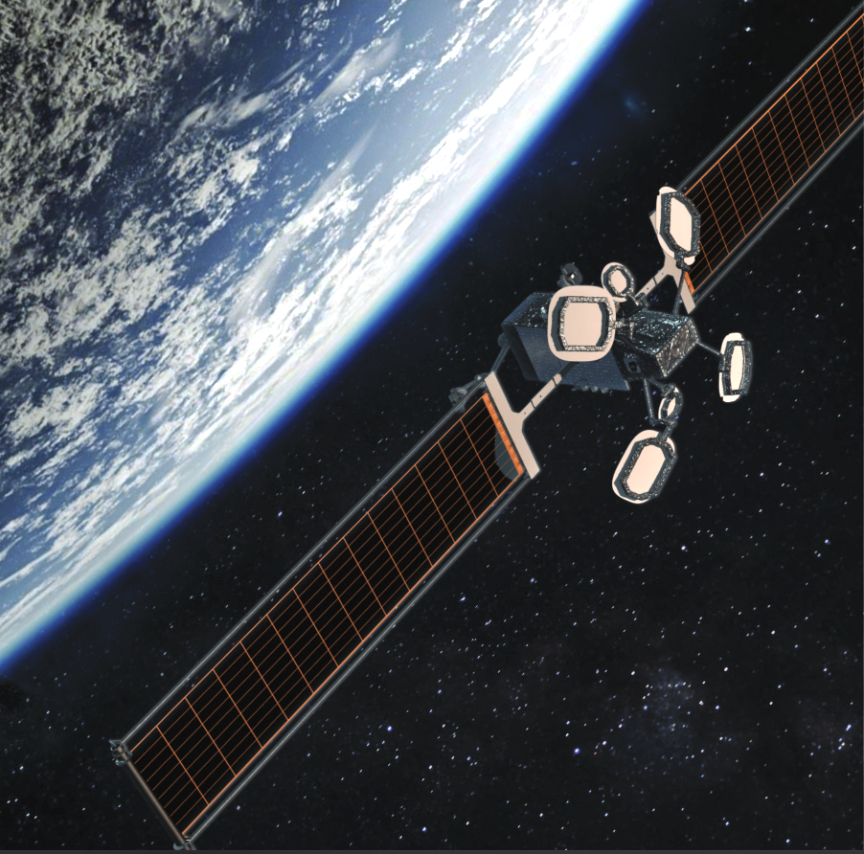
Artistic rendition of the Ovzon 3 on-orbit, courtesy of Ovzon.

In February of this year, the United States Department of Defense (U.S. DoD) became the first customer to place an order for Ovzon T7, the industry’s smallest, lightest, and fastest mobile satellite terminal. The Ovzon T7 is the first mobile satellite terminal optimized for the new Ovzon 3 satellite and its unique On-Board-Processor, fully leveraging its advanced resiliency features tailored for critical missions in contested environments. The Ovzon 3 satellite entered commercial service on July 5, 2024.

“We are delighted to see this additional order for Ovzon T7 from such an important and valued customer. We consider this a significant vote of confidence that the powerful combination of the Ovzon T7 terminal and the Ovzon 3 satellite is exceeding expectations for performance, mobility and resiliency,” said Ovzon’s CEO, Per Norén.

Filed Under: News

Equatorial Launch Australia announces a new Head of Business Development

September 3, 2024 by editorial

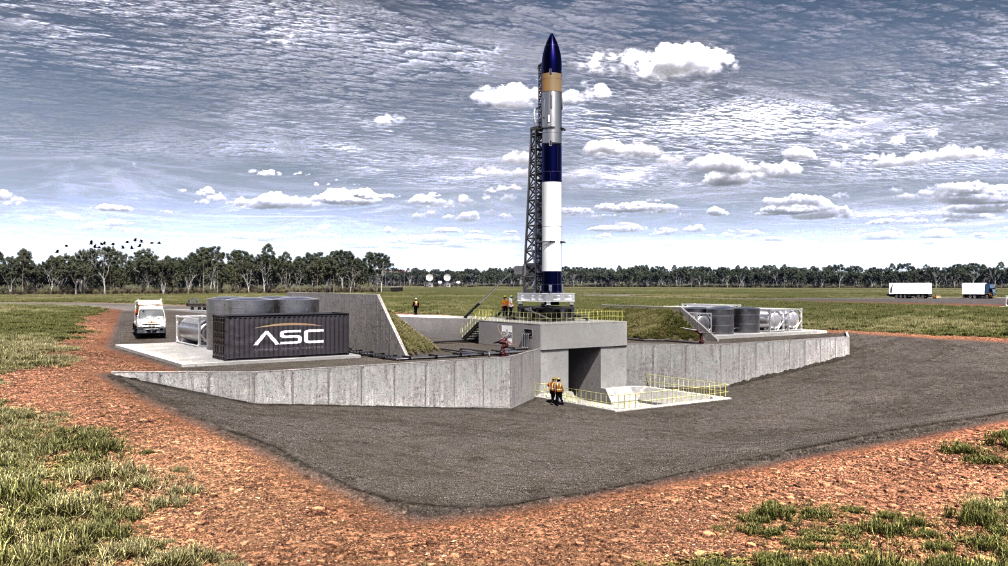
Equatorial Launch Australia (ELA), owner and operator of the Arnhem Space Centre (ASC) in Australia, has announced Nina Patz as the company’s new Head of Business Development.

Nina’s appointment adds to the company’s senior commercial team as it approaches its next scheduled launches commencing in mid-2025 with South Korean rocket company, Innospace.

Nina Patz

The role will be pivotal in developing customized launch contracts including launch, engine testing, payload and mission management, mission planning, and launch support services for international NewSpace commercial rocket companies looking to launch from the ASC. Patz will proactively identify and lead the conversion of commercial opportunities globally.

With a strong background in Business Development, Nina most recently worked with Australian aerospace company, Hypersonix Launch Systems. She was integral to the team that secured a U.S. Department of Defense government contract through the Defense Innovation Unit (DIU) in March 2023 against 62 global applicants.

The ASC’s geographical and remote location provides an extremely attractive option for global launch vehicle companies requiring access to space. The site provides launch companies with a full-service spaceport solution and the ability to reach all orbits. The site features cutting-edge testing and launch facilities, access to fuel and gasses, TSA and ITAR compliant facilities including launch and mission control, onsite accommodation, and proximity to the nearby mining town of Nhulunbuy which offers the facilities and amenities of a large regional town.

The growing groundswell of international interest in the Australian Space sector as well as the recent advances, including the ratification of the Technology Safeguards Agreement with the United States, are collectively channelling rocket companies towards Australia who are looking at launching from the ASC

ELA Group CEO, Michael Jones, said, “As ELA continues its schedule of discussions with international rocket companies, we are delighted to announce the appointment of Nina to help drive that process and to ensure we fill out our launch schedule through to the end of the decade. Nina’s role will be to work closely with our growing customer base to close out contracts we’ve been negotiating for some time and then help us deliver launch and spaceport services tailored to our customers’ mission requirements and provide them with the benefits of launching from a state-of-the-art, full-service spaceport. We have worked with Nina in her previous role and always admired her style, industry knowledge and professionalism, we are very lucky to have her join us.”

“With ELA’s proven track record and exciting future ahead, I am thrilled to join the team as it enters its next phase,” Nina said. “I am grateful to be given this opportunity to work with a fantastic organisation such as ELA. I look forward to building ELA’s customer base as we build the spaceport of the future in northern Australia.“

Winner of ‘Launch Business of the Year’ in the 2024 Australian Space Awards and finalist in five Australian Space Awards categories, as well as finalist in the Innovation Aus 2024 Excellence Awards (Defence, Dual-Use and Space), ELA is on track to be the pre-eminent multi-user commercial space launch company providing testing, launch, and recovery of space vehicles and payloads flown to and from all space orbits. The ASC is located in East Arnhem Land, Northern Territory, Australia, and is situated at 12 degrees south of the equator, providing rocket companies and their payload customers operational freedom and simplicity for their launch and mission design. The spaceport is being redeveloped into a multi-user commercial spaceport as well as having the potential to be used as a key infrastructure project for Australia’s sovereign space defence capability.

Filed Under: News

Neuron launches network capacity controller for satellite capacity across fleets

August 28, 2024 by editorial

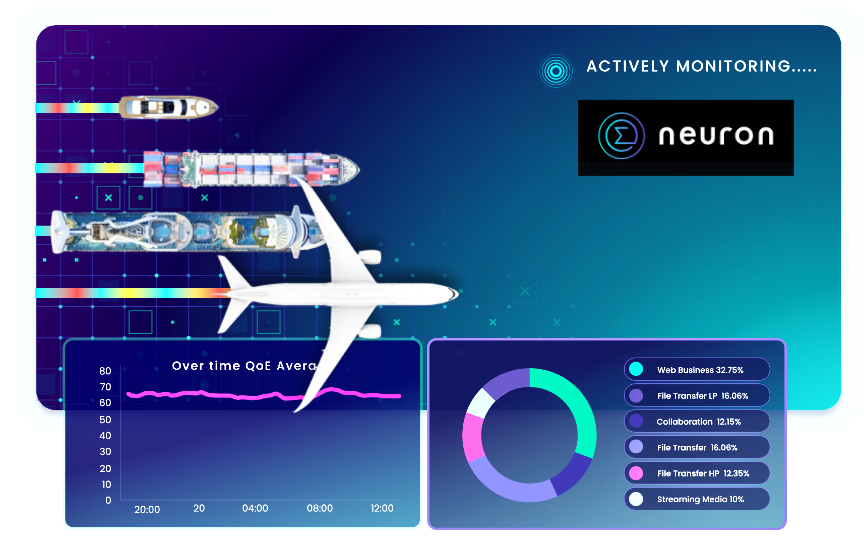
‍Neuron, the first AI-powered QoE management platform for things that move, has launched Network Capacity Controller, the first solution for dynamically orchestrating satellite capacity between the ships, aircraft or remote sites in a fleet.

Network Capacity Controller uses AI and machine learning to make the best use of fleet-wide capacity when and where it’s needed most, optimizing resources, performance, and quality of experience (QoE).

Satellite capacity, when allocated to a ship, aircraft or remote site, is generally fixed. In a fleet, if one endpoint requires more bandwidth due to high data demands, while another has excess capacity, resources cannot be easily reallocated to balance the load. Complex modeling and forecasting aim to avoid underutilization and congestion, but optimal usage is difficult to predict with changes in geography, weather, number of passengers, application requirements, demand variables over time and more. As a result, performance and cost inefficiencies are inevitable.

Network Capacity Controller intelligently reallocates capacity in near real time – no need for manual policies or interventions. For example, if Ship A’s internet is impacted by weather, Network Capacity Controller will automatically shift capacity from Ship B to Ship A – and it will prioritize bandwidth that performs better in rain, like C-Band, while Ship B makes use of the other bandwidth options that are available. In another example, Ship B is planning to host a highly produced, live-streamed event at sea. Ship A will be docked at the time of the event, so instead of letting that capacity sit idle, Network Capacity Controller will redistribute it to Ship B for the event.

Network Capacity Controller is underpinned by Neuron Grid, an AI-powered network management solution that delivers seamlessly blended connectivity across multiple providers, orbits and networks. Grid’s intelligent decision engine makes decisions every 50 milliseconds to orchestrate traffic on a ship, plane or remote site over the right connectivity service at the right time, making the best use of all available onboard bandwidth at the highest QoE. 

Grid constantly analyzes traffic patterns and trends to gauge current and future demands on the network. When the system detects an imbalance between endpoints, Network Capacity Controller will proactively direct certain vessels to stop using an allocated pool of capacity, allowing the vessel(s) with the highest need to benefit from the additional throughput. 

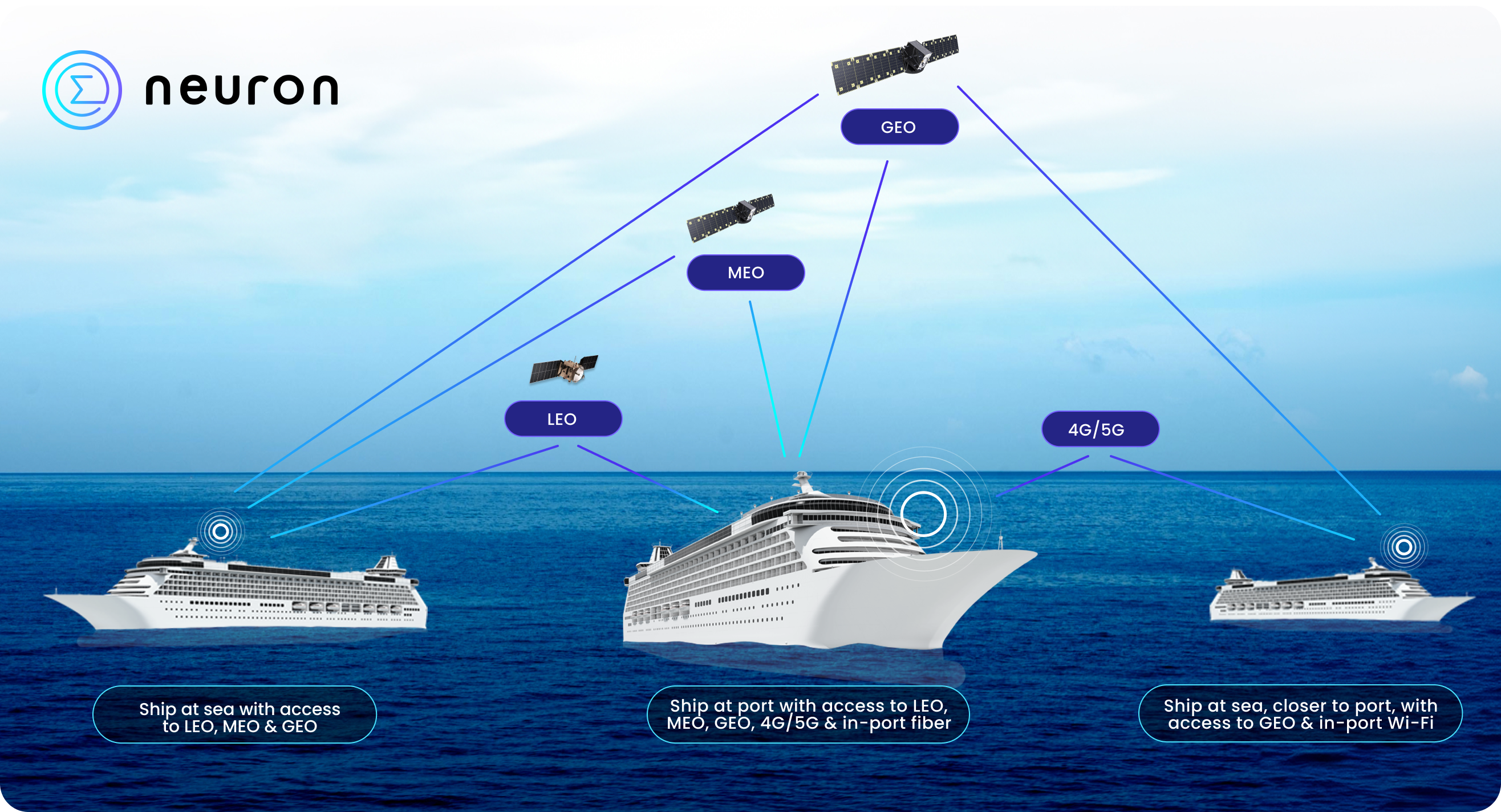
Network Capacity Controller can also manage specific consumption pools, whether LEO, MEO or GEO. Starlink, for example, has changed the traditional provider business model by allowing its customers to purchase a set amount of service to use anywhere they want. However, customers aren’t equipped to manage consumption in that way. Network Capacity Controller can do it for them, dynamically managing each pool to maximize QoE and manage costs.

“Efficiently managing connectivity resources across hundreds of moving ships and planes or remote assets is challenging,” said Benny Retnamony, founder and CEO, Neuron. “Network Capacity Controller eliminates the need to make capacity decisions based on individual endpoints. Neuron can measure and determine how much capacity a fleet needs, and Network Capacity Controller will dynamically manage it to meet demand precisely when and where it matters.”

“At Neuron, we take care of the complex engineering so that our customers don’t have to,” said Prateek Dahale, director of engineering, Neuron. “Network Capacity Controller works behind the scenes, analyzing thousands of data points every second to make decisions about how to best orchestrate a fleet’s pool of capacity and optimize the network accordingly. Its algorithm continually learns and adapts, ensuring smarter decisions and better results over time.

About Neuron
Neuron is the first AI-powered QoE management platform for things that move. It seamlessly blends any combination of connectivity, regardless of provider, orbit or network, into one, vendor-neutral environment; continuously measures and analyzes real-time connectivity performance and its impact on quality of experience (QoE); and dynamically orchestrates the network to deliver the best possible QoE – even in the most remote places. 

Filed Under: News

Beyond Gravity selected by MDA Space as part of the MDA AURORA™ supply chain

August 25, 2024 by editorial

Beyond Gravity, a leading supplier to the space industry, has been selected by MDA Space Ltd. (TSX:MDA), a leading provider of advanced technology and services to the rapidly expanding global space industry, as part of the company’s supply chain for MDA AURORA™, a game-changing product line driving the transition from analog to digital satellite technology. 
Screenshot

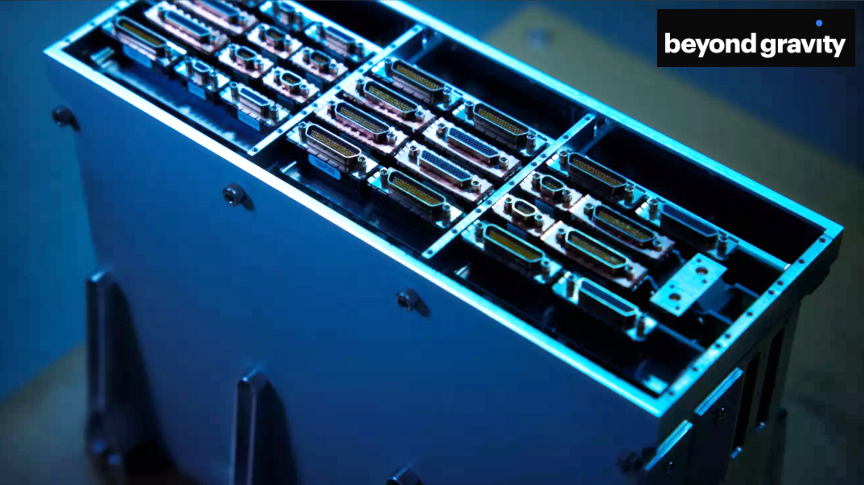
Beyond Gravity will provide 252 constellation On-Board Computers (cOBCs) with integrated navigation receivers and antennas for LEO satellite constellations. The cOBC provides satellite command & control, reconfiguration and precise GNSS satellite positioning in combination with the provided GNSS antennas.

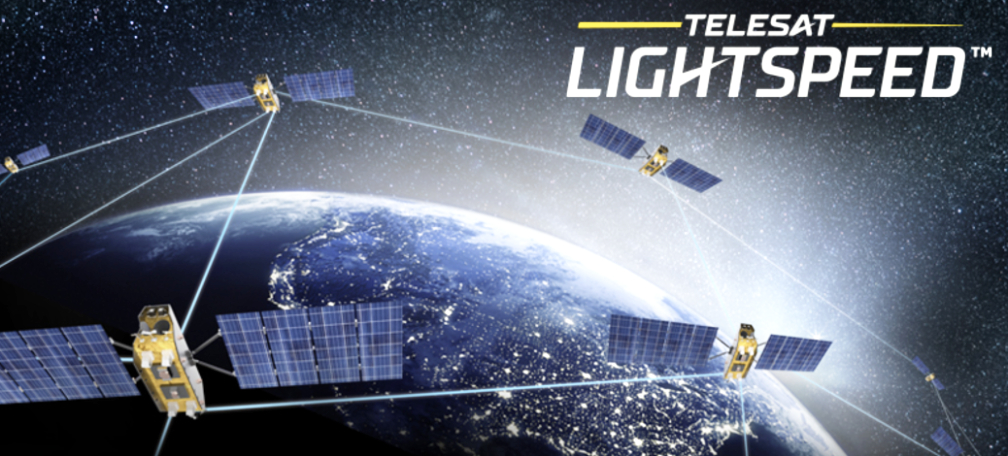
The unit is highly reliable and optimized for high volume production. The delivery of the On-Board Computers is set to begin this year. The MDA AURORA™ supply chain will help support product deliveries for anchor customer Telesat’s LEO satellite constellation Telesat Lightspeed, an innovative, advanced global network that will bring enterprise-class connectivity to customers worldwide.

Designed to meet the changing technical and business requirements of the satellite industry, the software-defined MDA AURORA™ product line provides operators with unparalleled flexibility and functionality, dramatically enhancing constellation performance at reduced cost and time to market. 

“We are very excited to collaborate with MDA Space on the development of MDA Aurora and to play an important role in the visionary Telesat Lightspeed mission,” said Oliver Grassmann, Executive Vice President of Satellites Division at Beyond Gravity. 

“This contract with MDA Space is a testament to our strategic product development and reaffirms our strong position in delivering innovative and reliable solutions to the commercial space sector as our advanced and proven constellation On Board Computers are essential for satellite constellation missions, ensuring robust performance and reliability,” said Kurt Kober, Vice President of Electronic Solutions at Beyond Gravity. “This agreement marks a significant milestone for Beyond Gravity’s Electronic Solutions business unit, reflecting the company’s strong position in the commercial space market.”

Beyond Gravity, headquartered in Zurich, Switzerland, is the first startup to combine agility, speed, and innovation with decades of experience and proven quality. Approximately 1’800 employees at 14 locations in seven countries (Switzerland, Sweden, Austria, Germany, USA, Finland, and Portugal) develop and manufacture products for satellites, launch vehicles and the semiconductor industry with the goal of advancing humanity and enabling exploration of the world and beyond. In 2023, the company generated revenues of approximately CHF 383 million.

Building the space between proven and possible, MDA Space (TSX:MDA) is a trusted mission partner to the global space industry. A robotics, satellite systems and geointelligence pioneer with a 55-year+ story of world firsts and more than 450 missions, MDA Space is a global leader in communications satellites, Earth and space observation, and space exploration and infrastructure. The MDA Space team of more than 3,000 space experts in Canada, the US and the UK has the knowledge and know-how to turn an audacious customer vision into an achievable mission – bringing to bear a one-of-a-kind mix of experience, engineering excellence and wide-eyed wonder that’s been in the company’s DNA since day one. For those who dream big and push boundaries on the ground and in the stars to change the world for the better, we’ll take you there.

Filed Under: Featured, News

Project Kuiper million$$ to expand satellite operations at Kennedy Space Center

August 25, 2024 by editorial

Project Kuiper, Amazon’s LEO satellite broadband network, is expanding its footprint at Kennedy Space Center in Florida as the company prepares for a full-scale deployment of its satellite constellation.

Last year, Project Kuiper broke ground on a $120 million satellite processing facility, and now the team is investing another $19.5 million to expand its presence by adding a secondary support facility at the site—bringing its total investment in the site to nearly $140 million.

This 42,000-square-foot building will provide additional space to process and store flight hardware ahead of launch, allowing for a regular cadence of missions to deploy Project Kuiper’s 3,232-satellite constellation. The expansion will be adjacent to the existing 100,000-square-foot structure at the satellite processing facility. It is another example of Amazon’s partnership with Space Florida and growing commitment to the state’s space economy.

“Expanding investments in Project Kuiper’s infrastructure at Space Florida’s Launch and Landing Facility not only reinforces our commitment to delivering reliable broadband connectivity to unserved and underserved communities worldwide, but also strengthens Florida’s position as a hub for space innovation and job creation,” said Brian Huseman, Amazon’s vice president for public policy and community engagement. “We extend our sincere appreciation to Governor Ron DeSantis, Lieutenant Governor Jeanette Nuñez, and Space Florida CEO Rob Long for their leadership, and look forward to helping pave the way for a more connected future.”

The new support facility will feature temperature-controlled storage areas, maintenance bays, multipurpose workspaces, and air load rigging capabilities for easily moving heavy equipment, ensuring the efficient and secure handling of Project Kuiper’s satellite hardware. Construction is forecast to be complete in 2025, and the facility will create additional full-time job opportunities in the region.

“We are excited to expand our operations at the Kennedy Space Center with this new facility,” said Steve Metayer, vice president of Project Kuiper production operations. “This investment underscores our commitment to Project Kuiper as we work towards providing high-speed, low-latency broadband internet to communities around the world. We’re proud of our continued partnership with Space Florida, and look forward to adding more talent to our team at Cape Canaveral.”

Florida State Representative Thad Altman, Project Kuiper Head of Launch Systems Melissa Wuerl, Kennedy Space Center Director Janet Petro, Amazon VP for Public Policy and Community Engagement Brian Huseman, Florida Lt. Gov. Jeanette Nuñez, and Space Florida CEO Rob Long on a site visit of Project Kuiper’s satellite processing facility at Space Florida's Launch and Landing Facility at Kennedy Space Center.

Florida State Representative Thad Altman, Project Kuiper Head of Launch Systems Melissa Wuerl, Kennedy Space Center Director Janet Petro, Amazon VP for Public Policy and Community Engagement Brian Huseman, Florida Lt. Gov. Jeanette Nuñez, and Space Florida CEO Rob Long on a site visit of Project Kuiper’s satellite processing facility at Space Florida’s Launch and Landing Facility at
Kennedy Space Center.

Project Kuiper’s expanding satellite processing facility will help facilitate seamless operations by streamlining the process of receiving satellite shipments, connecting satellites to custom dispensers, and integrating the loaded dispensers with rockets from Blue Origin, SpaceX, and United Launch Alliance (ULA) ahead of launch.

Amazon is also investing in infrastructure and service upgrades at Cape Canaveral as part of its launch agreement with ULA, with improvements underway on a second ULA vertical integration facility (VIF) dedicated to Project Kuiper launches. The facility, which ULA named “VIF-A” for “Amazon,” will allow ULA to support a higher cadence of commercial and government missions using its new Vulcan Centaur rocket when the VIF is complete in early 2025. ULA will be able to prepare for two missions in parallel using its two launch lanes.

“I am thrilled that Amazon has chosen to deepen its investment in Project Kuiper at Space Florida’s Launch and Landing Facility,” said Lt. Gov. Nuñez. “This decision is a clear indicator of Florida’s unbeatable location and world-class infrastructure. Through this partnership, we will continue to assert our leadership in the global space economy.”

Filed Under: News

SDA awards Tranche 2 Transport Layer contracts for 20 Gamma variant satellite builds

August 23, 2024 by editorial

The Space Development Agency (SDA) has awarded two prototype agreements with a total value of approximately $424 million to build and operate 20 Tranche 2 Transport Layer (T2TL) — Gamma variant prototype space vehicles that will continue to expand the demonstration of advanced tactical satellite communication (TACSATCOM) capabilities through the Tranche 2 timeframe and beyond.

SDA awarded these firm-fixed price other transaction authority (OTA) agreements to York Space Systems, Denver, and Tyvak Nano-Satellite Systems, Inc., Irvine, California (a Terran Orbital Corporation), to each build and operate 10 T2TL – Gamma prototype satellites with delivery for launch scheduled to begin by Q4 of fiscal year 2027.

SDA received and evaluated eight proposals under an Other Transaction Authorities solicitation, SDA-PS-24-02. The York prototype agreement (FA24012490067) has a total value of approximately $170 million. The Tyvak prototype agreement (FA24012490066) has a total value of approximately $254 million. SDA is the agreement holder for both awards. This marks the first time Tyvak (a Terran Orbital Corporation) will perform as a prime vendor for SDA.

The T2TL features multiple space vehicle and mission configuration variants, along with related operational demonstrations, procured through a multi-solicitation and multi-vendor acquisition approach. The PWSA Transport Layer will provide multi-band global communications access and persistent encrypted connectivity for warfighter missions. The Transport Layer will be the space backbone for the Joint All Domain Command and Control (JADC2) infrastructure with low-latency data transport, sensor-to-shooter connectivity, and TACSATCOM direct to platform.

“With these T2TL – Gamma awards, we are closing out the hardware procurement phase for Tranche 2 of the Proliferated Warfighter Space Architecture to support delivery beginning in 2026 to achieve our full warfighting capability,” said Derek Tournear, SDA director. “The T2TL – Gamma space vehicles will demonstrate global communications access and operationalize persistent global encrypted connectivity to support missions like beyond line of sight targeting.”

About the Space Development Agency.
As part of the U.S. Space Force, SDA is recognized as DoD’s constructive disruptor for space acquisition. SDA will accelerate delivery of needed space-based capabilities to the joint warfighter to support terrestrial missions through development, fielding, and operation of the Proliferated Warfighter Space Architecture.

Filed Under: News

Spire Global has launched 7 LEMUR satellites via the SpaceX Transporter-11 mission

August 23, 2024 by editorial

Spire Global, Inc. (NYSE: SPIR), a global provider of space-based data, analytics and space services, successfully launched seven satellites on the SpaceX Transporter-11 mission, which launched from Vandenberg Space Force Base in California on August 16, 2024 — this marks Spire’s third launch of 2024 and the 41st in the company’s history, bringing the total of Spire satellites launched to 196 in number.

Launch of Transporter-11 mission, photo courtesy of SpaceX.

These newly launched LEMUR satellites, ranging from 3U- to 16U-sized satellite buses, are designed for a wide range of applications that include data to improve weather forecasting, global soil moisture analysis and maritime ship tracking. The satellites will also serve missions for Space Services customers.

Spire is enhancing its soil moisture monitoring capabilities by combining radio occultation and reflectometry technologies on a single platform. This dual capability allows Spire to measure the Earth’s state from the atmosphere to the ground, improving weather forecasts for leading meteorological agencies that acquire the Company’s data. Recently, Spire expanded its Weather and Climate product suite with advanced Soil Moisture Insights, which uses proprietary reflectometry measurements, open-source data, and AI to provide a comprehensive view of global soil moisture. These insights are crucial for agricultural planning, water resource management, and climate change adaptation and mitigation efforts.

About Spire Global, Inc.
Spire (NYSE: SPIR) is a global provider of space-based data, analytics and space services, offering unique datasets and powerful insights about Earth so that organizations can make decisions with confidence in a rapidly changing world. Spire builds, owns, and operates a fully deployed satellite constellation that observes the Earth in real time using radio frequency technology. The data acquired by Spire’s satellites provides global weather intelligence, ship and plane movements, and spoofing and jamming detection to better predict how their patterns impact economies, global security, business operations and the environment. Spire also offers Space as a Service solutions that empower customers to leverage its established infrastructure to put their business in space. Spire has nine offices across the U.S., Canada, UK, Luxembourg, Germany and Singapore.

Filed Under: News

SpaceX’s Friday Starlink Group 9-5 smallsat launch at Vandenberg weather permitting

August 22, 2024 by editorial

On Friday SpaceX plans to launch to Low Earth Orbit Starlink Group 9-5, a batch of satellites for the Starlink mega-constellation from Vandenberg SFB’s Space Launch Complex 4E, California at 1:00 AM – 5:23 AM PDT, weather permitting.

Weather reports indicate 68°, Precipitation: 20%, Humidity: 79%, Wind: 13 mph

SpaceX still a Go! for Friday’s launch of Starlink Group 9-5 smallsats

On Friday SpaceX plans to launch to Low Earth Orbit Starlink Group 9-5, a batch of satellites for the Starlink mega-constellation from Vandenberg SFB’s Space Launch Complex 4E, California at 1:00 AM – 5:23 AM PDT.

The forecast calls for a temperature of 57°F, few clouds, 19% cloud cover and a wind speed of 5mph.

The expense of the mission is $52 million.

Space Launch Complex 4E has witnessed the launch of 155 rockets, including 155 orbital launch attempts, while Vandenberg SFB, CA, USA, has been the site for 767 rocket launches.

The second ASDS barge, Of Course I Still Love You (OCISLY), services launches in the Pacific Ocean and will be the site of the booster recovery of the Falcon 9 booster.

Filed Under: News

  • « Go to Previous Page
  • Go to page 1
  • Interim pages omitted …
  • Go to page 56
  • Go to page 57
  • Go to page 58
  • Go to page 59
  • Go to page 60
  • Interim pages omitted …
  • Go to page 338
  • Go to Next Page »

Primary Sidebar

WEEKLY NEWSLETTER

Archives

  • February 2026
  • January 2026
  • December 2025
  • November 2025
  • October 2025
  • September 2025
  • August 2025
  • July 2025
  • June 2025
  • May 2025
  • April 2025
  • March 2025
  • February 2025
  • January 2025
  • December 2024
  • November 2024
  • October 2024
  • September 2024
  • August 2024
  • July 2024
  • June 2024
  • May 2024
  • April 2024
  • March 2024
  • February 2024
  • January 2024
  • December 2023
  • November 2023
  • October 2023
  • September 2023
  • August 2023
  • July 2023
  • June 2023
  • May 2023
  • April 2023
  • March 2023
  • February 2023
  • January 2023
  • December 2022
  • November 2022
  • October 2022
  • September 2022
  • August 2022
  • July 2022
  • June 2022
  • May 2022
  • April 2022
  • March 2022
  • February 2022
  • January 2022
  • December 2021
  • November 2021
  • October 2021
  • September 2021
  • August 2021
  • July 2021
  • June 2021
  • May 2021
  • April 2021
  • March 2021
  • February 2021
  • January 2021
  • December 2020
  • November 2020
  • October 2020
  • September 2020
  • August 2020
  • July 2020
  • June 2020
  • May 2020
  • April 2020
  • March 2020
  • February 2020
  • January 2020
  • December 2019
  • November 2019
  • October 2019

© 2019–2026 SatNews

Insert/edit link

Enter the destination URL

Or link to existing content

    No search term specified. Showing recent items. Search or use up and down arrow keys to select an item.
      x
      Sign Up Now!

      Enjoy a free weekly newsletter with recent headlines from the global SmallSat industry.

      Invalid email address
      We promise not to spam you. You can unsubscribe at any time.
      Thanks for subscribing! You will now receive weekly SmallSat News updates.
      We love our advertisers.
      And you will too!

      Please disable Ad Blocker to continue... We promise to keep it unobtrusive.
      We promise not to spam you. You can unsubscribe at any time.
      Invalid email address
      Thanks for subscribing! Please check your email for further instructions.