• Skip to main content
  • Skip to primary sidebar
  • Home
  • News
  • Featured
  • More News ⌄
    • SatNews
    • SatMagazine
    • MilSatMagazine
  • Events ⌄
    • MilSat Symposium
    • SmallSat Symposium
    • Satellite Innovation
  • Contacts
  • SUBSCRIPTION

SmallSat News

You are here: Home / Archives for 2021

Archives for 2021

Eight Kepler Space Smallsats Rendezvous With Space, Launched By SpaceX

January 25, 2021 by editorial

Kepler Communications have welcomed eight new satellites into their constellation, further expanding the firm’s active constellation to 13 satellites in total.

These eight satellites, KEPLER-8 through KEPLER-15, were successfully launched via SpaceX’s first dedicated SmallSat Rideshare Program mission at approximately 10:00 AM EDT on January 24. Once fully operational within the constellation, these smallsats will significantly increase the capacity of Kepler’s Global Data Services offering.
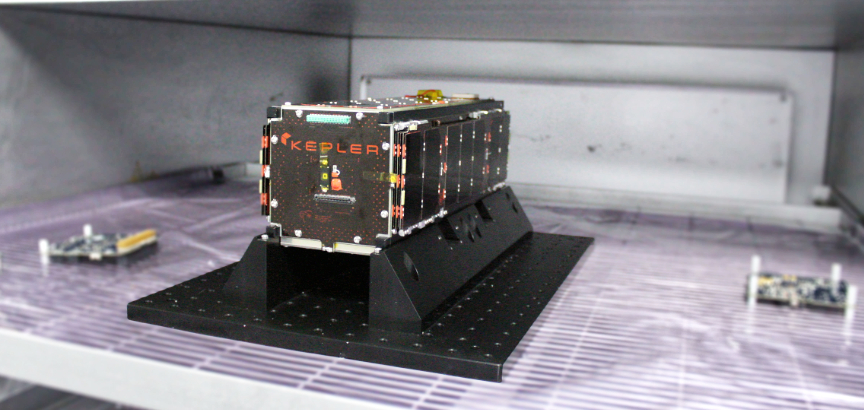
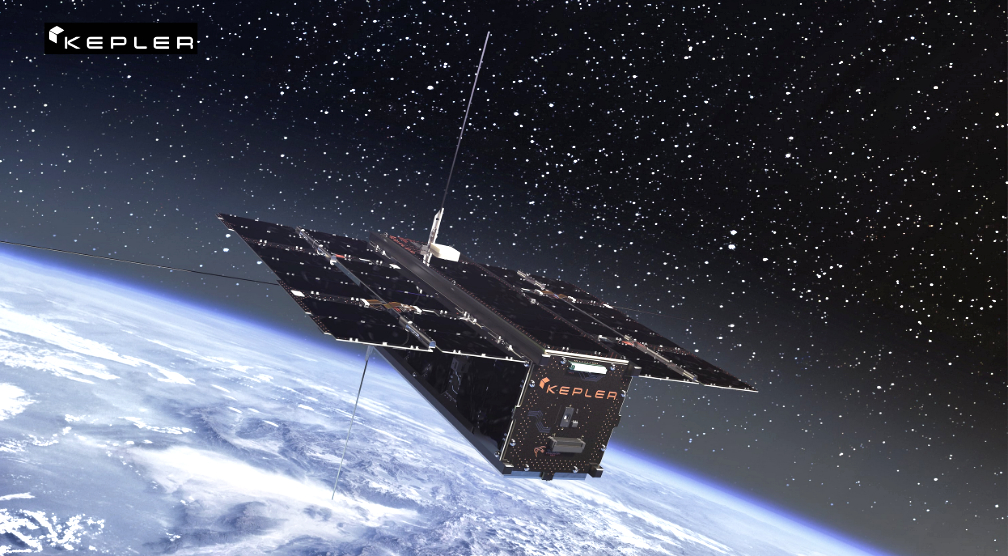
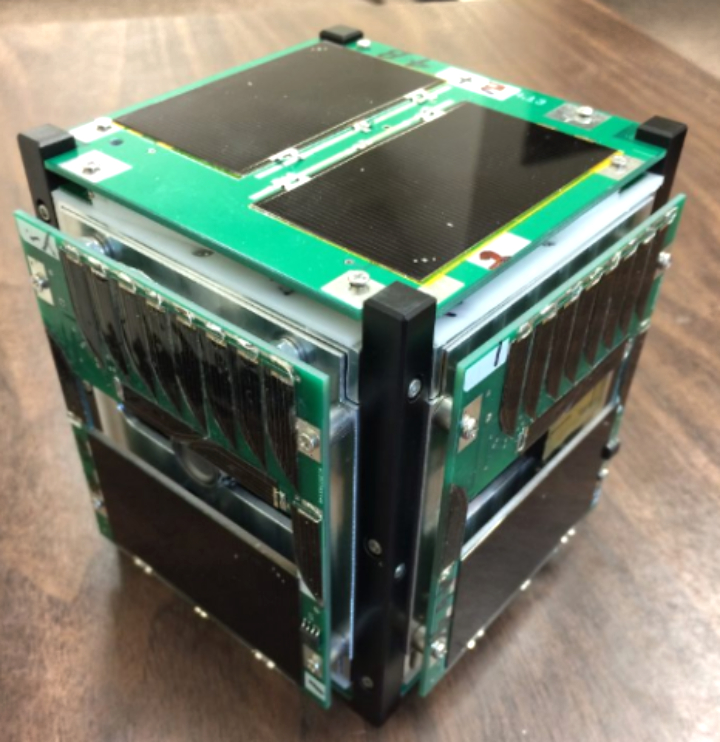
Kepler’s GEN 1 satellites were assembled at the company’s facility in Toronto, Canada. The GEN1 platform represents an evolution beyond Kepler’s pathfinder satellites, with an increase to a 6U-XL satellite system. The increased size accommodates significant technology enhancements, including additional power and antenna capabilities that allows the support of both Ku and narrowband spectrum from a single satellite.

This multi-spectrum support is achieved with Kepler’s proprietary Software Defined Radio (SDR) which has been proven onboard the five satellites already on orbit.
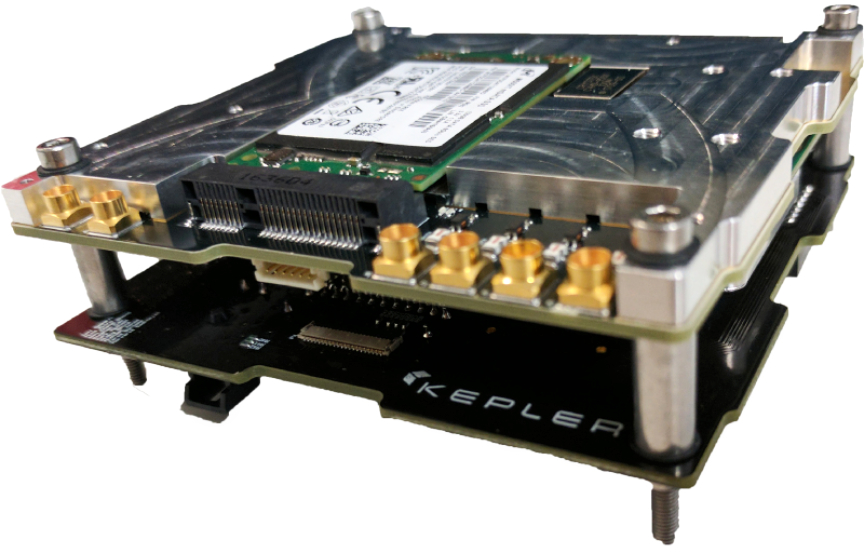
Kepler SDR.

Kepler’s launch plans include several additional launches in 2021, with launches planned for the first half of 2021 in March and June, which will add additional GEN1 satellites to the Kepler constellation. As with this launch, these satellites will service the growing customer demand for Global Data Services and increase our ability to provide an industry leading service.

Mina Mitry, CEO of Kepler Communications, said, “We’re excited to continue our network deployment in response to the overwhelming global demand for our network capacity. As our network continues to grow, we move closer to recognizing Kepler’s vision of providing connectivity on and off the surface of the Earth.”

Wen Cheng Chong, CTO of Kepler Communications, added, “The launch of 8 GEN1 satellites on the Falcon 9 merely a few months after the launch of 2 GEN1 pathfinder satellites clearly demonstrates Kepler’s ability to 10x our capability in a short period of time; practically unheard of for a company of our size. This showcases the ingenuity and resourcefulness of our Engineering team and the company at large. We’re well on our way to recognizing Kepler’s vision of providing the internet in space.”

Kepler is a satellite telecommunications provider based in Canada, backed by Costanoa Ventures, IA Ventures and other leading investors. Kepler’s mission is to connect people and things Everywhere, on earth and beyond. To this end, Kepler will build an in-space telecommunications network through an incremental deployment of products and technologies. The first to launch and operate a Ku-band satellite service in Low Earth Orbit, Kepler has expanded its capabilities with the successful commissioning of a cubesat production facility at their Toronto headquarters, from which the GEN 1 satellites are being delivered.

Filed Under: News

University Of Louisiana-Lafayette Students Receive Signals From Their Launched CAPE-3 Smallsat

January 25, 2021 by editorial

A cubesat called CAPE-3 is carrying a chip designed and built by students at the University of Louisiana at Lafayette to detect radiation, all with keeping an eye on astronaut safety. The satellite also carries a tiny Geiger counter so students can tell whether the chip is accurate.

Each side of the satellite is 10 centimeters across and this smallsat was among 10 that were launched on January 17 from a Virgin Orbit rocket that was launched high above the Pacific Ocean from a customized Boeing 747.

Eight of the other nine smallsats were built by students at other schools. The tenth was built by NASA, which runs the CubeSat Launch Initiative to give nonprofit organizations and schools at all levels a chance to do scientific investigations in space and help NASA with exploration and technology development. At least one of these smallsats was built by an elementary school.

Students in Lafayette began receiving radio signals early on Monday, January 18, from the satellite, which circles the world every 90 minutes at 17,000 miles an hour.

This is Louisiana-Lafayette’s third satellite launched as part of the program. The school’s program is called CAPE, for the Cajun Advanced Picosatellite Experiment program aimed at preparing students for careers in science, technology, engineering and mathematics.

The CAPE-1 satellite was built to show that the student team could design and build a satellite that could send radio signals back and could respond to signals sent from Earth. It was monitored for four months after its launch in 2007.

CAPE-2, launched in 2013, had fold-out solar panels, a text-to-speech transmitter and a “parrot repeater” that could record audio from Earth and broadcast it back to the sender. Another feature lets visitors to a children’s museum hear their own voices coming back on a radio, as well as send text messages to the satellite. This smallsat was monitored for 11 months.

“The detectors would provide liquid crystal display readings so astronauts could constantly monitor how much radiation they’re being exposed to,” Dr. Paul Darby, the university’s project leader, said in a news release.

Rizwan Merchant, a NASA systems safety engineer who was assistant project manager for the CAPE-2 launch while a student at ULL and is now the CAPE team’s industry mentor, said students will spend a few weeks “grabbing data from the satellite simply to assesses every feature and ensure it’s all working properly.”

Then CAPE team members and students majoring in areas including computer science, electrical engineering, mechanical engineering and physics will begin collecting and analyzing the information.

Article source: Texarkana Gazette

Filed Under: News

Exolaunch Zeitgeist Mission Takes Off With 30 Smallsats Aboard SpaceX’s Transporter-1 Mission

January 25, 2021 by editorial

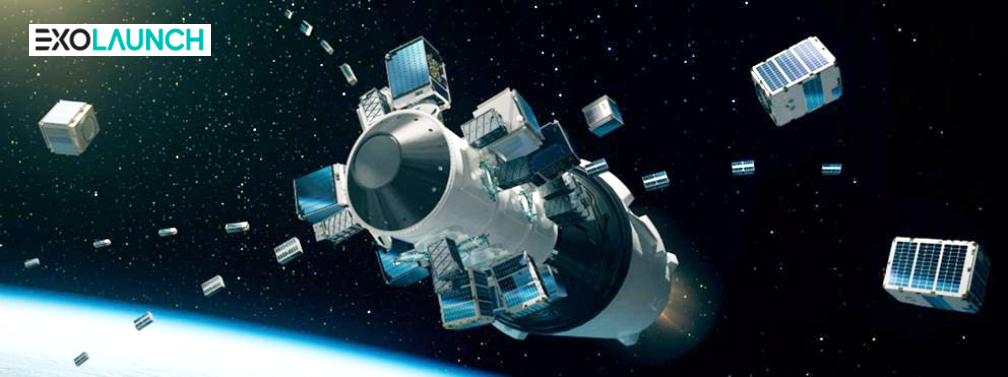
Exolaunch has announced a successful launch of 30 commercial, space agency and university satellites for the firm’s customers from Europe and the U.S. on the first dedicated rideshare mission of SpaceX’s SmallSat Rideshare Program. The mission, named “Zeitgeist,” lifted off on January 24 at 15:00 UTC on Falcon 9 “Transporter-1,” completing one of the largest and most diverse rideshare missions for Exolaunch.

Zeitgeist kicked-off the first of several rideshares Exolaunch will manifest on Falcon 9 as part of a multi-launch agreement with SpaceX. On this mission, Exolaunch provided deployment, mission management and integration services to the German Aerospace Center (DLR), Dresden Technical University, ICEYE, NanoAvionics and other commercial companies for IoT, Earth observation and scientific applications.

Zeitgeist was Exolaunch’s 12th rideshare mission. As with previous launches, Exolaunch utilized its proprietary flight-proven separation systems – CarboNIX, the next generation shock-free separation system for microsatellites, upgraded modifications of EXOpod cubesat deployers, as well as its EXObox sequencers to flawlessly deploy its customers’ satellites into the target orbit. With this launch, Exolaunch has flown 140 smallsats on multiple launch vehicles. 

“This Zeitgeist mission set a new standard for rideshare launches and not only was a successful demonstration of Exolaunch’s capabilities, but also paved the way for smallsat developers from around the world to participate in SpaceX’s SmallSat Rideshare Program,” said Jeanne Medvedeva, Vice President of Launch Services at Exolaunch. “We are proud to be working with so many of the world’s leading satellite and technology companies to advance the NewSpace industry, and we are already looking ahead to additional Falcon 9 launches later this year.”   

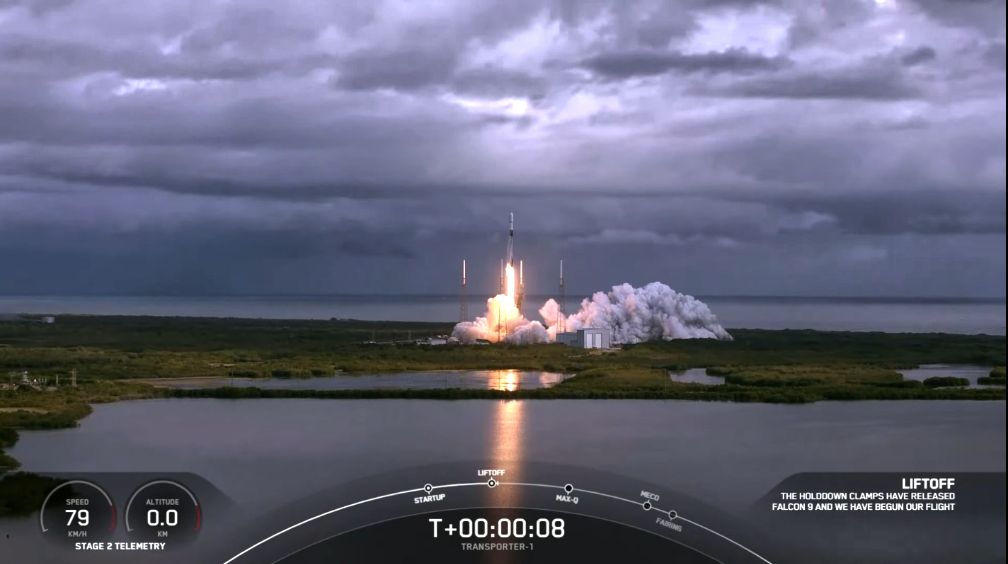
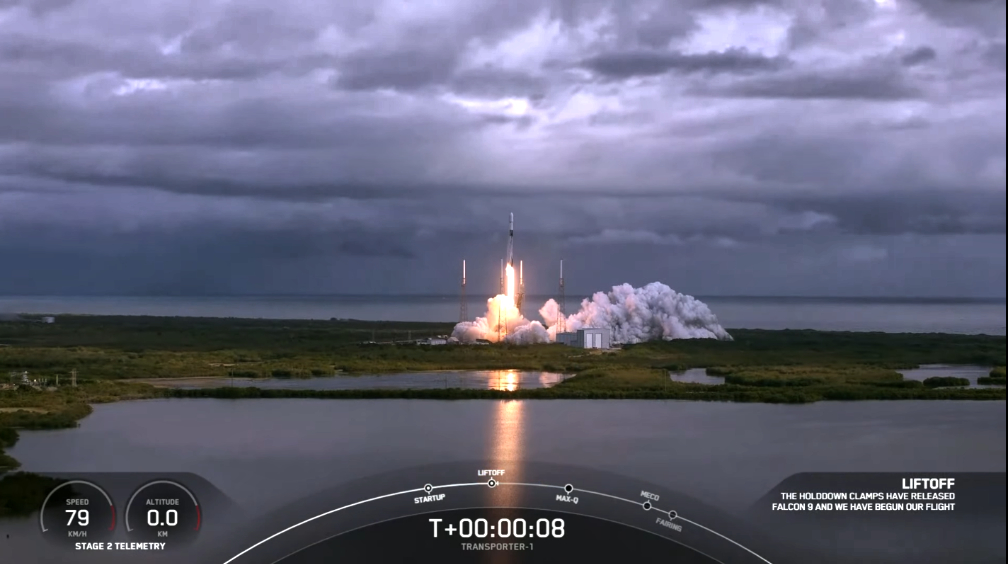
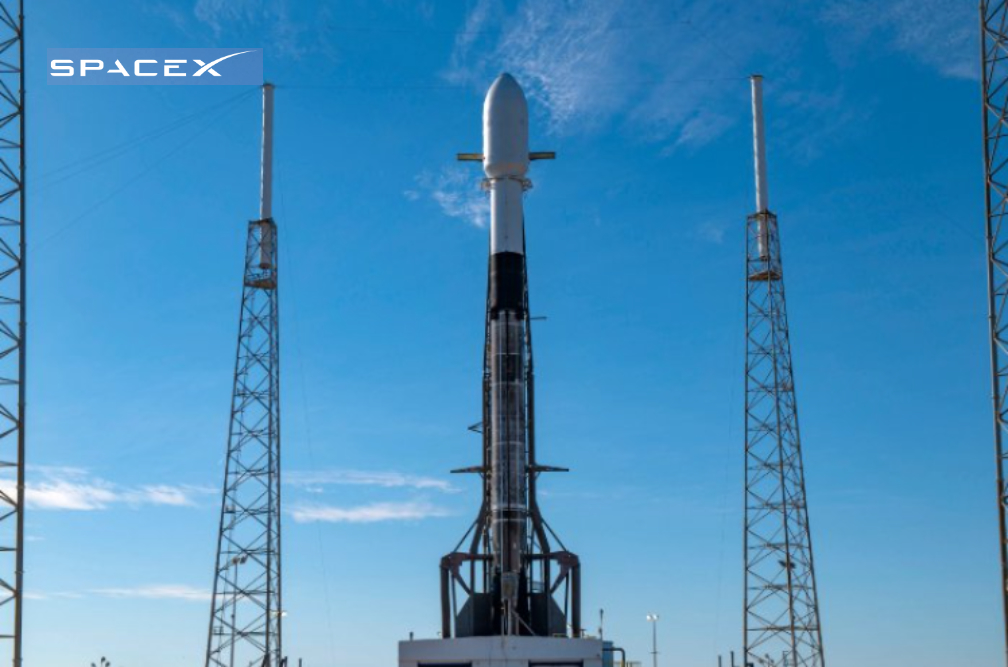
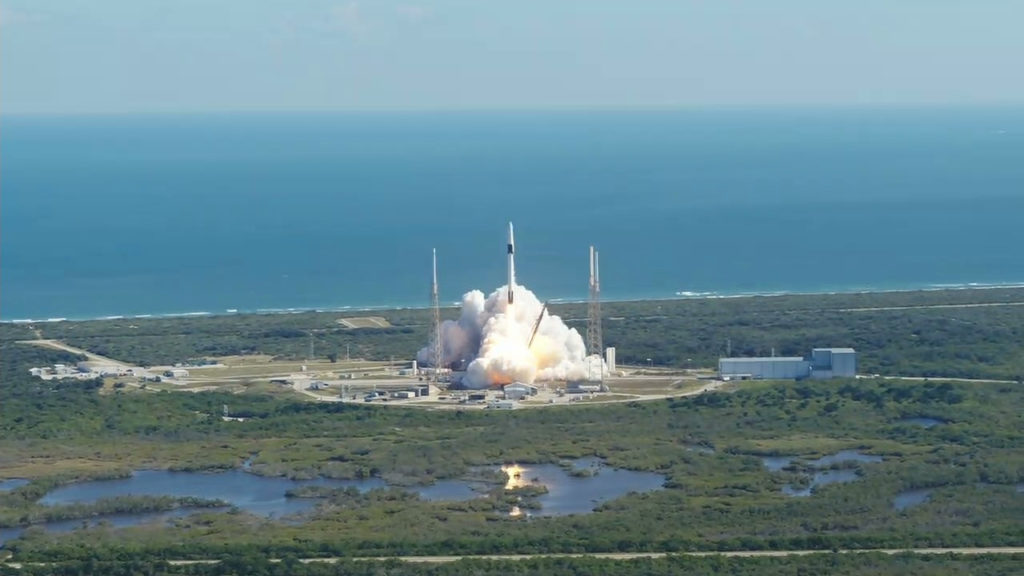
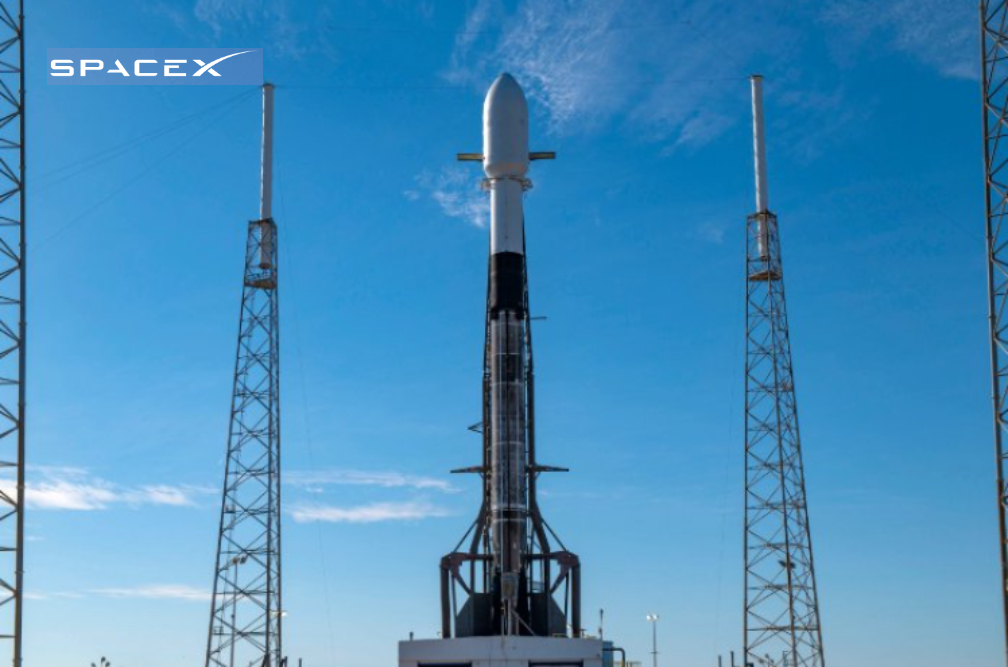
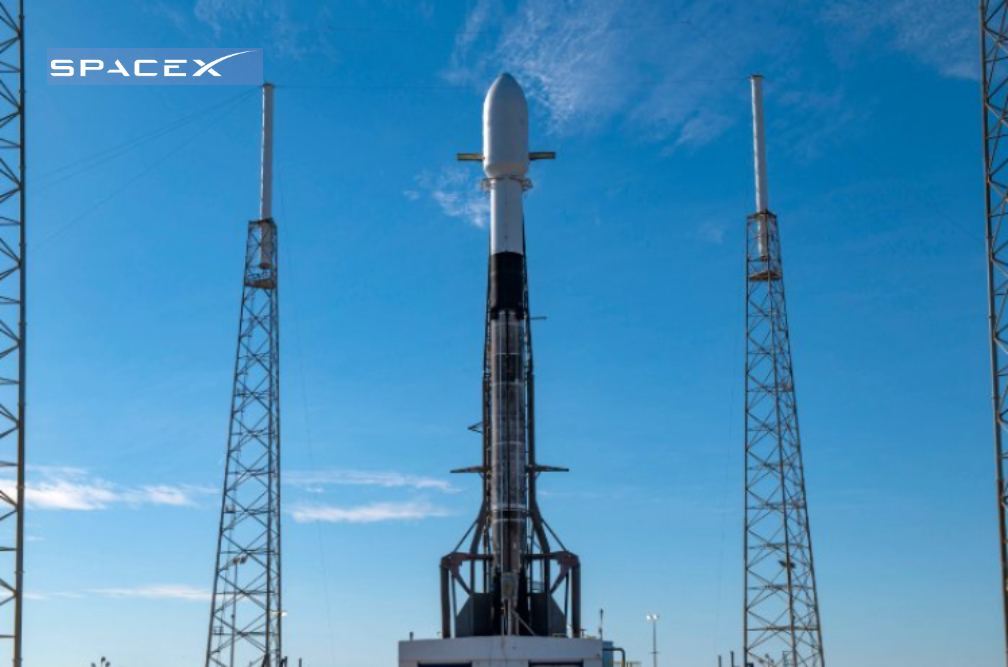
Exolaunch’s manifest on the Transporter-1 mission (launch photo above, courtesy of SpaceX) includes the following satellites:

  • Charlie nanosatellite built by NanoAvionics for Aurora Insight: The first of two nanosatellites, built and integrated by NanoAvionics for US radio frequency spectrum and wireless data provider Aurora Insight.
  • CubeLCT nanosatellite from the German Aerospace Center (DLR): The CubeLCT is developed by DLR Institute of Communications and Navigation in close cooperation with its commercialization partner Tesat-Spacecom (TESAT) in Backnang. The satellite has been developed and integrated by the Danish company GomSpace. The development of the CubeLCT serves the demand for increasing bandwidth, resulting in new sensor capabilities on small satellites.
  • SOMP-IIb (Student’s Oxygen Measurement Project) nanosatellite from Dresden Technical University: Part of a student small satellite project of the Dresden Technical University, the goal is to measure atomic oxygen of the upper atmosphere, test flexible solar cells and more.
  • 3 x ICEYE satellites: Three more satellites of the commercial constellation of radar imaging satellites built and operated by ICEYE.
  • 24 satellites from unnamed commercial customers. 

Exolaunch continues to make space more accessible through regular and cost-efficient rideshare missions for small satellites. In addition to successful satellite deployments from SpaceX’s Falcon 9, Exolaunch’s flight heritage includes Arianespace’s Soyuz-ST, RocketLab’s Electron, Roscosmos’ Soyuz-2 and a scheduled mission with ISRO’s PSLV later this year. 

Filed Under: Featured, News

D-Orbit’s ION SCV Laurentius Smallsat Launched By Spacex

January 25, 2021 by editorial

On January 24th, 2021, at 4:00 pm CET, D-Orbit launched another ION Satellite Carrier atop a SpaceX Falcon 9 rocket from the Space Launch Complex 40 (SLC-40) at Cape Canaveral Space Force Station (CCSFS), Florida. On the same day, 1 hour 16 minutes and 28 seconds later, the vehicle was successfully deployed into a polar orbit.

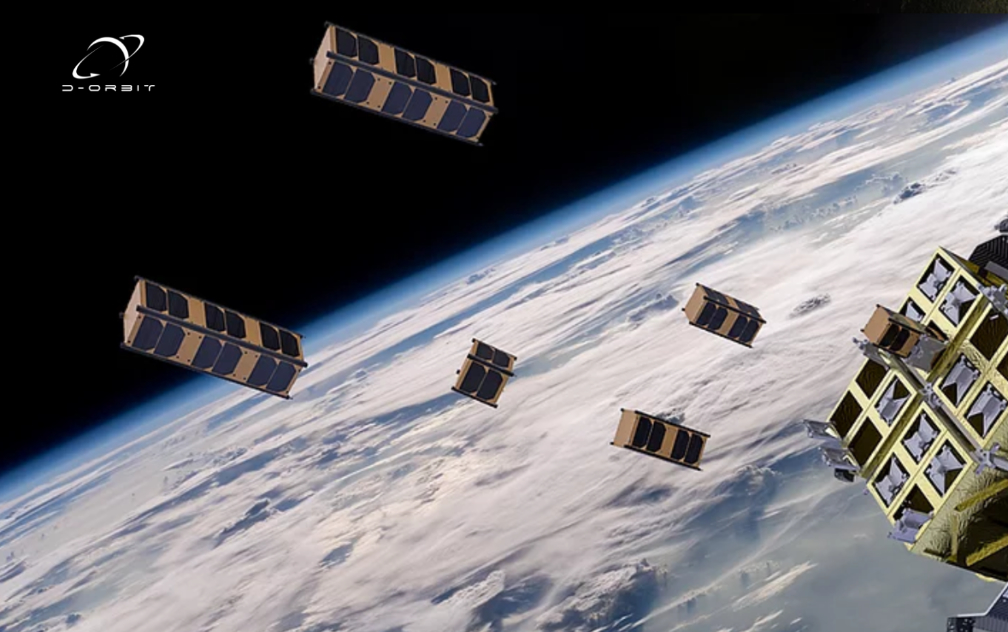
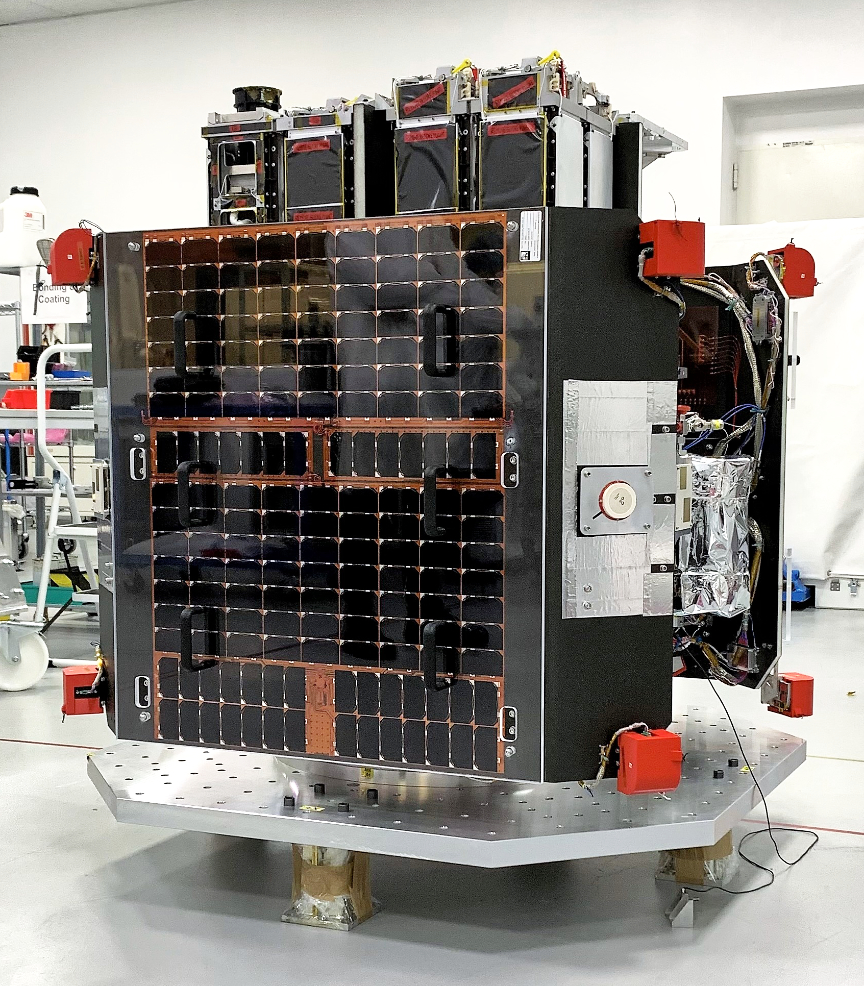
The spacecraft, named ION SCV Laurentius, is an upgraded and enhanced version of the vehicle launched in the fall of 2020 which precisely deployed 12 satellites in orbit. ION Satellite Carrier is a space cargo designed to accommodate several satellites, transport them into space and release them precisely into independent orbits and orbital slots. ION’s integrated capabilities also enable the spacecraft to perform on-orbit demonstration (IOD) services for third-party hosted payloads.

ION SCV Laurentius.

During the mission, named PULSE, the vehicle will deploy 20 satellites, including 8 SuperDove satellites from Earth imaging company Planet Labs, and it will then perform the on-orbit demonstration of several payloads, including an optical instrument from EICAS Automazione and one from Instituto de Astrofísica de Canarias (IAC).

“In D-Orbit we focus on our customers’ success, no matter what it takes. We are the company with most heritage, reliability and results accomplished in the market in this business. It has been just two months since the historical success of our previous ION Satellite Carrier mission, and we are back in space already,” said Luca Rossettini, D-Orbit’s CEO. “We are already building the space logistics infrastructure enabling the next trillion-dollar space economy.”

One of the top five top companies in Europe operating in the new space market, D-Orbit is the first space logistics and transportation services provider in the industry. Headquartered in Italy, with subsidiaries in Portugal, UK and the US, the company’s vertical approach ranges from the production of subsystems and components to the manufacturing of a full cargo spacecraft, called ION, capable of transporting multiple payloads with a total mass up to hundreds of kilos, to the entire operations service via their proprietary mission control software platform. ION can transport a batch of satellites to space, release each one of them in independent orbital slots performing orbit-change maneuvers between each deployment, enabling satellite operators to deploy satellite constellations up to 80% faster than with other solutions on the market, at up to 40% lower costs with to respect the market average. ION also enables launch operators to maximize their payload capacity, reducing the number of maneuvers for rideshare missions and reducing the on-boarding complexities before launch. Committed to pursuing business models that are profitable, friendly for the environment, and socially beneficial, D-Orbit is the first certified B-Corp space company in the world.

Filed Under: News

Hiber’s Green Propulsion Smallsat, Hiber Four, Launched Via The SpaceX Transporter-1 Mission

January 25, 2021 by editorial

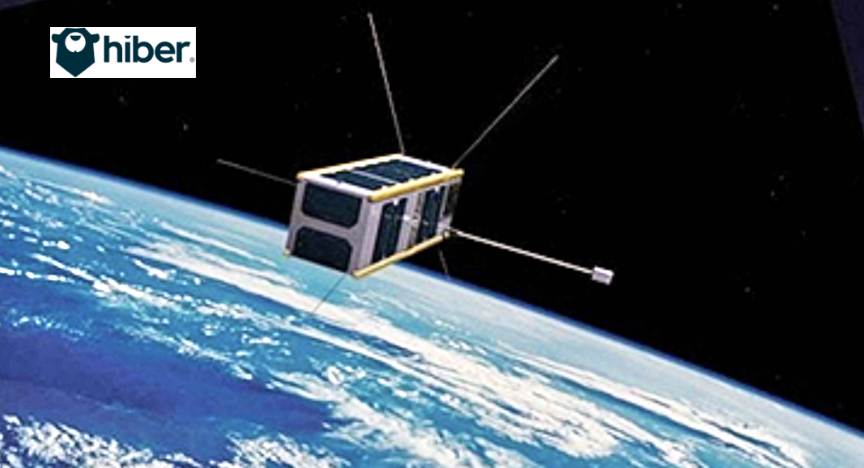
IoT solutions provider Hiber has successfully launched their 3U cubesat, Hiber Four, onboard SpaceX’s dedicated rideshare mission: Transporter-1. The satellite was equipped with a new-to-market green propulsion system from Dawn Aerospace and Hyperion Technologies.

“By using our high-performance green propulsion technology, Hiber Four is able to take advantage of the world’s most cost-effective launch whilst maintaining independence and operational flexibility”, said Stefan Powell, CTO of Dawn Aerospace. “Our system is the connector for using these low-cost launch options and still getting to your desired orbit, fast.”

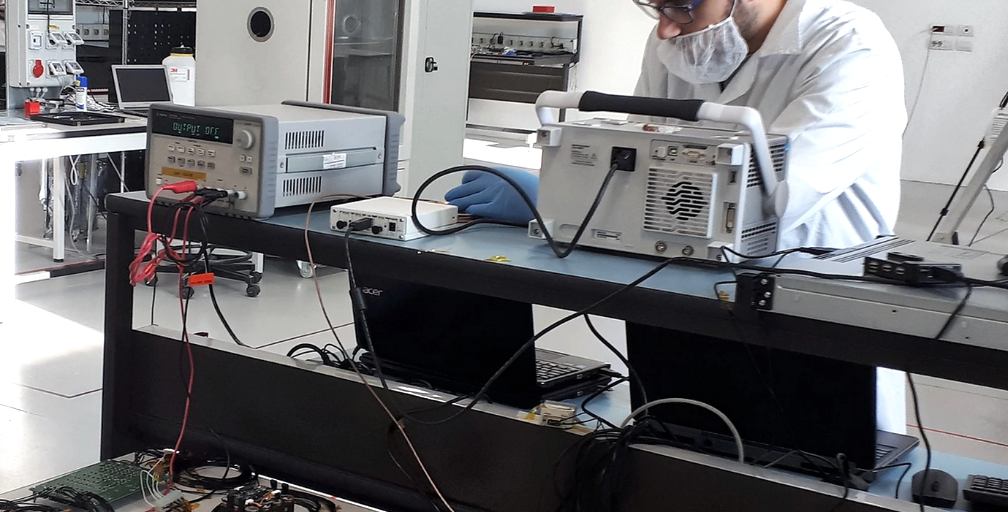
Dawn Aerospace green propulsion module for smallsats.

To date, the majority of 3U cubesats have been deployed without propulsion, making them difficult to control once in orbit. New Space operators have been choosing to forgo this vital piece of technology due to the lack of performance, high toxicity and the unreasonable costs of currently available systems.

Supported by the European Space Agency and Netherlands Space Office via the ARTES program, Hiber teamed up with Dawn and Hyperion to find a better solution. Using this new system, the Hiber Four will swiftly move from its deployed 500 km SSO out to its final 600 km orbit. The maneuver is expected to be complete three months faster than electric alternatives.

Hiber is setting the standard for responsible satellite operations. Governments, space agencies and insurance companies are starting to revamp global policies as the public concern for space debris rises, and with thousands of new satellites heading to orbit, propulsion may soon be mandated. Once on orbit, the Hiber Four can easily avoid space debris, increase its lifetime by raising orbit, and when ready to decommission, Hiber can deorbit within days instead of months.

Powered by the green fuels of nitrous oxide and propene, this bi-propellant system delivers significantly higher efficiency than ADN, HAN, cold-gas and mono-propellant hydrazine-based alternatives. At just 0.7U in size, it’s the first propulsion system of its type to be launched from US-soil to space.

Hiber Four is the first of two identical satellites Hiber plans to launch this quarter, with the next one launching on Soyuz. These satellites will join the Hiberband constellation to expand offerings to existing customers, particularly those from the oil & gas, transportation and agricultural industries.

“It is revolutionary to the cubesat market,” said Maarten Engelen, CTO of Hiber. “There are alternatives out there, but nothing that suits a 3U CubeSat like this.”

“I’m proud to say we’ve debunked the myth,” said Stefan Powell. “CubeSat operators are not forced to use, low-performance systems to get on board these low-cost flights. We’ve shown that our high-performance chemical propulsion systems can fly on rideshare missions from the EU, Russia, and now the United States.”

SpaceX’s Transporter-1 flight delivered 143 payloads from a range of companies, including Spire, Capella, NanoAvionics, Spaceflight, HawkEye, PlanetiQ, Astro Digital, D-Orbit and 10 Starlink satellites.

Dawn Aerospace, seated in both the Netherlands and New Zealand, was recently named NZ Hi-Tech Startup of the Year. Hyperion Technologies was recently acquired by AAC Clyde Space, a major global player in the New Space industry. A partnership with Hiber, named AWS’ Commercial Start-Up Launch of the Year in 2018 and Dutch National Icon in 2019, shows a promising path forward for sustainability in the Aerospace industry.

Filed Under: News

UPDATE 2: SpaceX Transporter-1 Mission Is A “Go” + Is Successfully Launched

January 24, 2021 by editorial

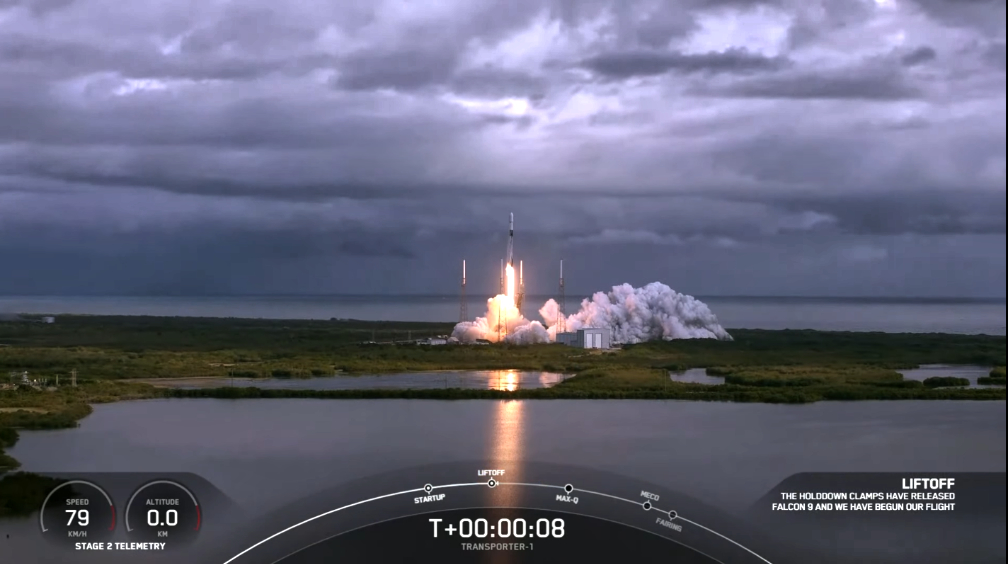
No hesitation on Sunday, January 24, as the SpaceX Falcon 9 rocket lifted 133 commercial and government payloads to space. A feat worthy of note, as this is the largest number of satellites to be launched, all seated firmly within the rocket’s fairing.

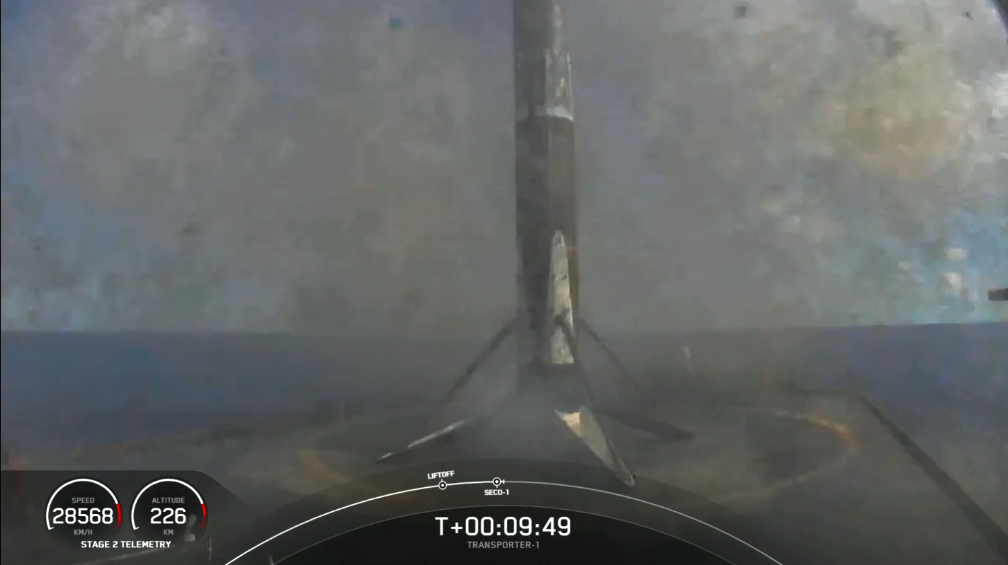
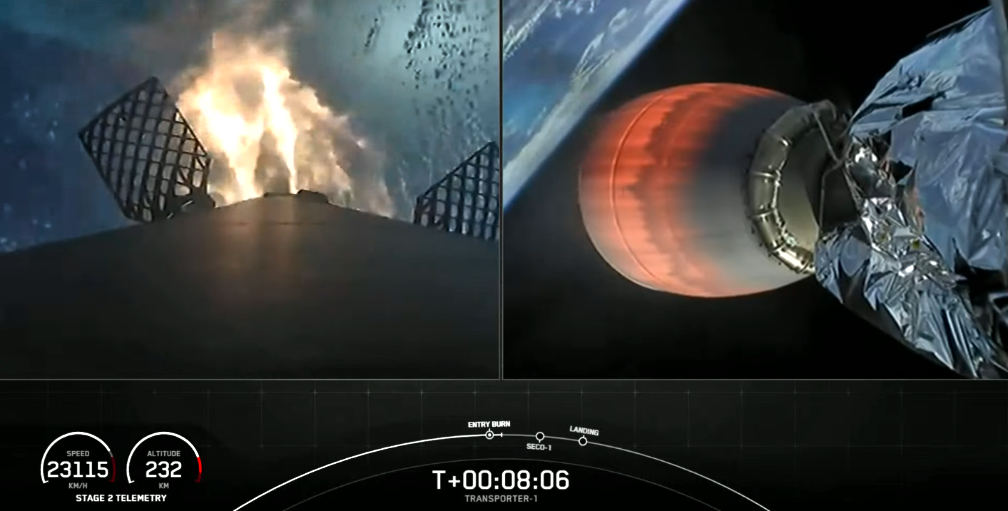
The SpaceX Falcon 9 launch vehicle attained supersonic speeds at 59 seconds after launch and, at approximately 07:58 into the launch, three of nine Merlin first stage engines ignited to return the the unit to the recovery vessel, Ms. Chief, awaiting the landing, positioned in the Atlantic Ocean.

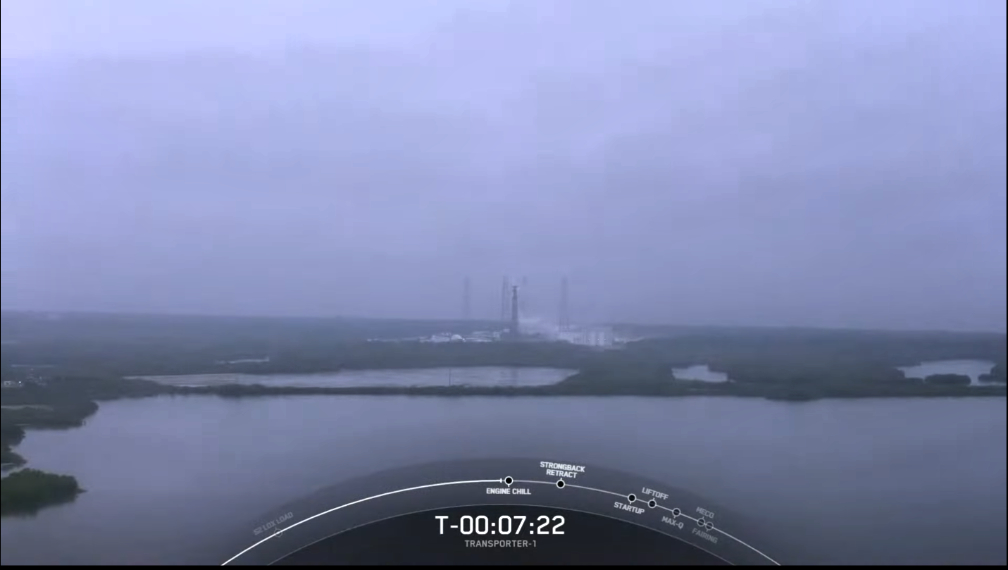
This return was accomplished without any apparent anomalies at 07:22 minutes post-launch. Note the honeycomb appearing devices at the base of the first stage… those assist with the first stage’s navigation to the recovery vessel.

This launch was the fifth launch of 2021 by SpaceX and the 73rd recovery by the company of an orbital class rocket.

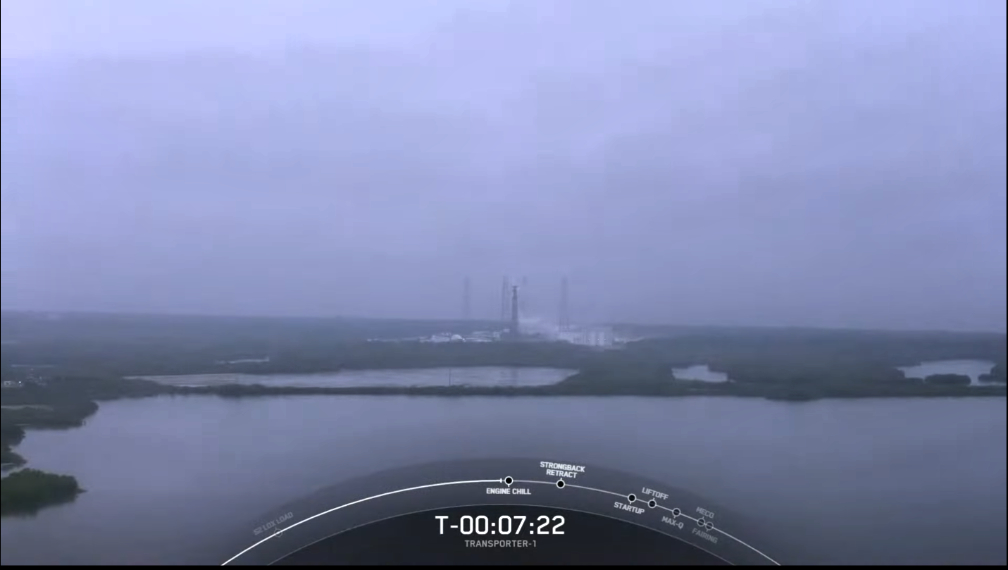
All imagery is courtesy of SpaceX’s live webcast of the launch via screen capture…

Update #1 info…

Due to surface electrical fields, today’s launch of the SpaceX Transporter-1 mission has been scrubbed. The 70 m tall Falcon 9 rocket is sound and no anomalies have been reported for any of the launch elements.

This first Smallsat Rideshare Mission for SpaceX has another launch opportunity on Sunday, January 24, with the launch window at 10:00 EST. The honeycomb looking devices that are shown in the below graphic help the first stage steer back to “Mischief,” the company’s recovery vessel positioned in the Atlantic Ocean.

Original launch information…

SpaceX is targeting Saturday, January 23, for launch of Transporter-1, SpaceX’s first dedicated SmallSat Rideshare Program mission from Space Launch Complex 40 (SLC-40) at Cape Canaveral Space Force Station in Florida — the 42-minute launch window opens at 9:40 a.m. EST, or 14:40 UTC.

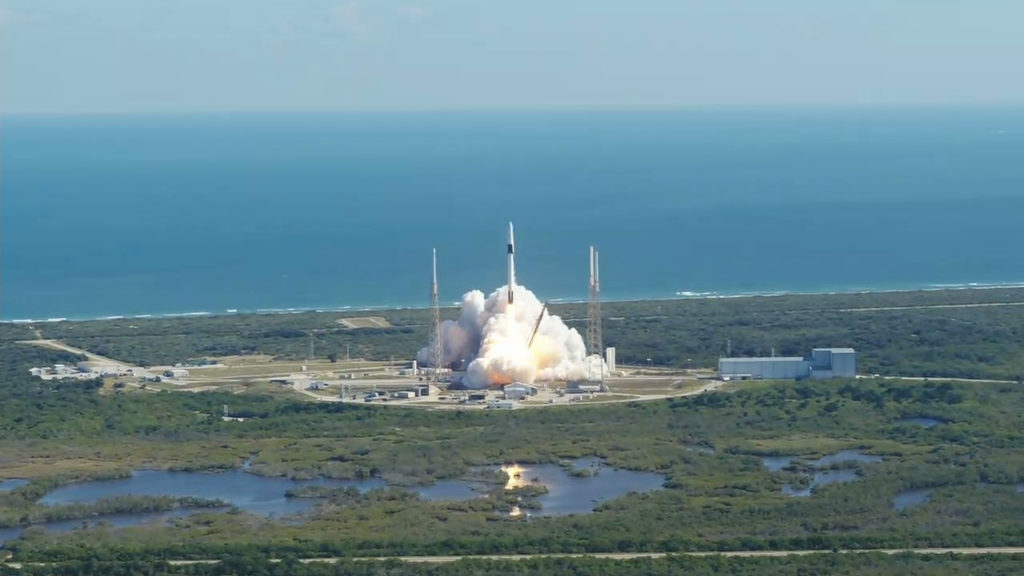
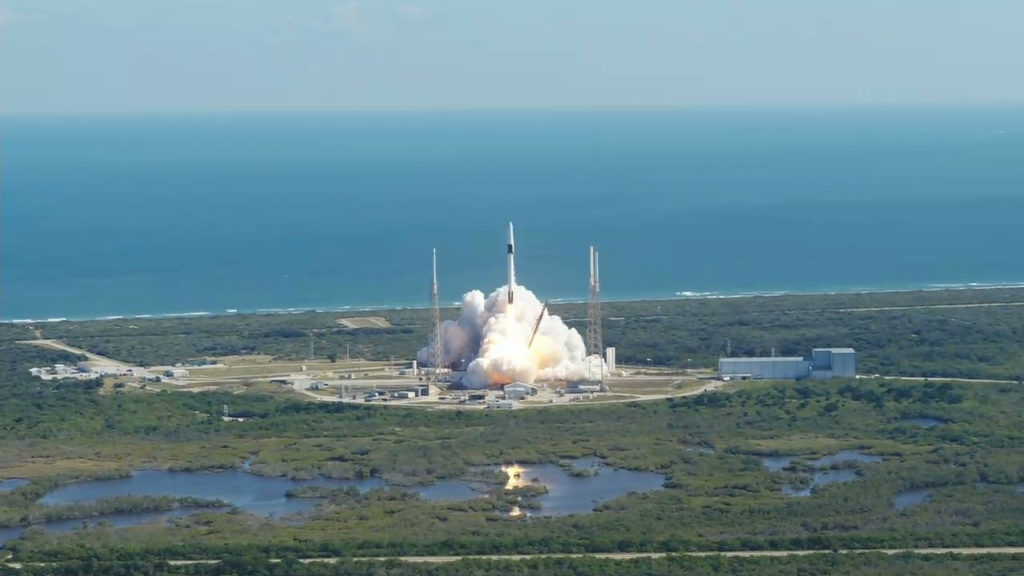
A former SpaceX Falcon 9 launch from Cape Canaveral’s Launch Complex 40.

Falcon 9’s first stage booster previously supported launch of Crew Dragon’s second demonstration mission, the ANASIS-II mission, a Starlink mission, and launch of Dragon’s 21st cargo resupply mission to the International Space Station.

Following stage separation, SpaceX will land Falcon 9’s first stage on the Ms. Chief droneship, which will be stationed in the Atlantic Ocean.

On board this launch are 133 commercial and government spacecraft (including cubesats, microsats, and orbital transfer vehicles) plus 10 Starlink satellites – the most spacecraft ever deployed on a single mission. The Starlink satellites aboard this mission will be the first in the constellation to deploy to a polar orbit.

Watch this SpaceX launch starting about 15 minutes before liftoff at this direct link…

Filed Under: News

Update 1: HawkEye 360’s Cluster 2 Smallsats Successfully Launched By SpaceX

January 24, 2021 by editorial

On January 24, 2012, the HawkEye 360 Cluster 2 smallsats made their way to orbit via the successful SpaceX, Falcon 9 launch of the Transporter-1 mission. Read more about the launch at this direct link…

Original news info…

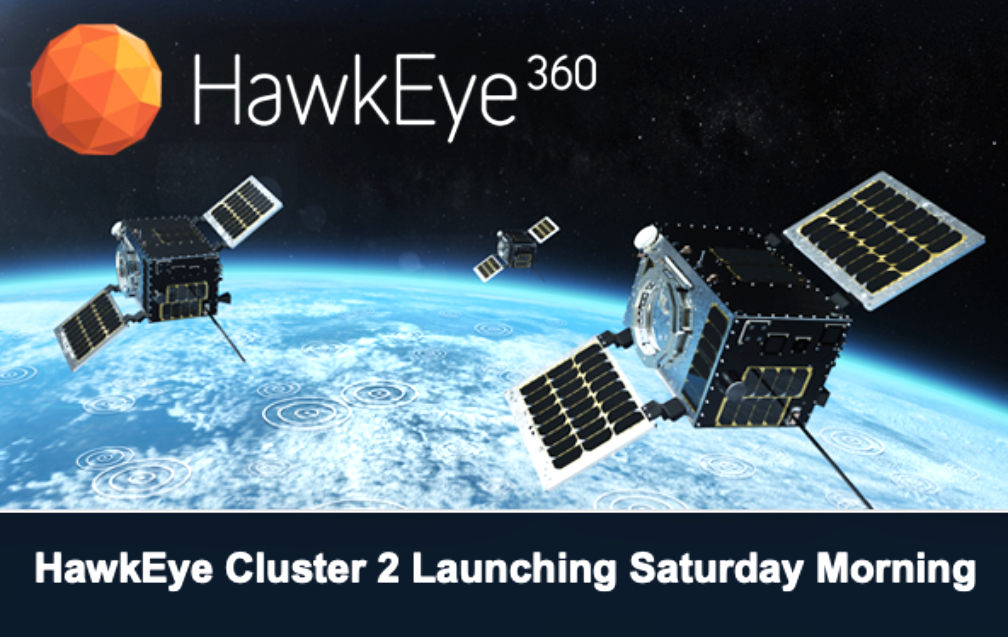
HawkEye 360‘s next generation of advanced commercial RF sensing satellites are scheduled to launch Saturday morning, January 23, on a SpaceX Falcon 9 from Cape Canaveral as part of Spaceflight Inc.’s SXRS-3 rideshare mission.

HawkEye Cluster 2 Launch
Date: January 23, 2021

Time: 9:40-10:22 AM EST

Watch the launch live as the buildout of the HawkEye 360’s commercial RF sensing constellation continue at this direct link… 

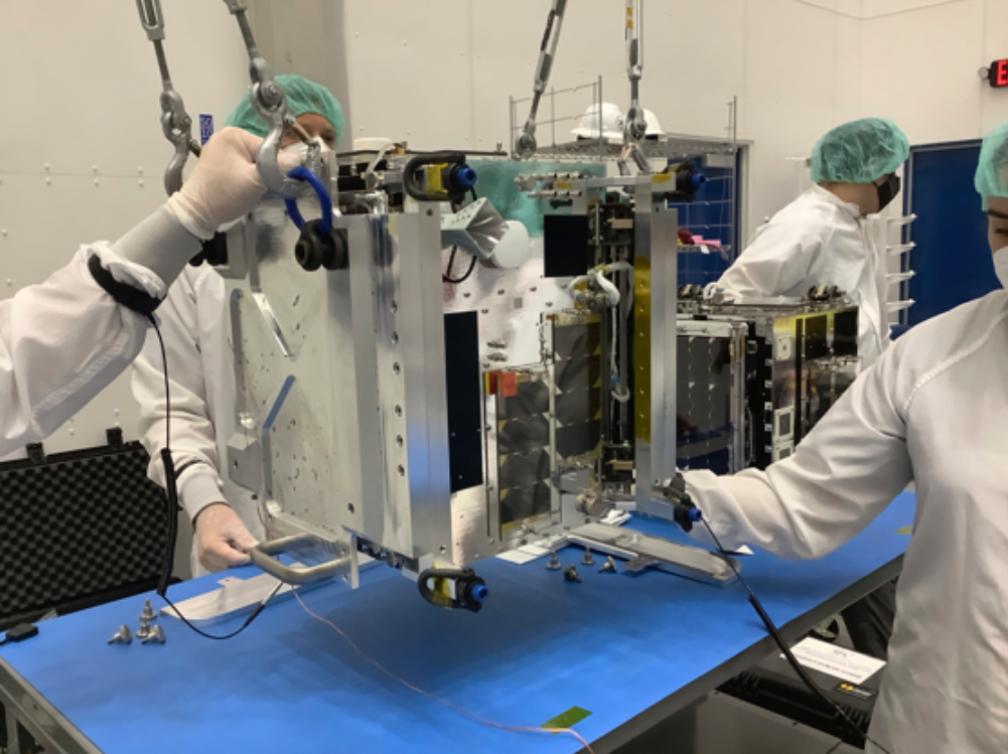
HawkEye 360 employees hoist the HawkEye Cluster 2 spacecraft to integrate to Spaceflight’s Sherpa-FX orbital transfer vehicle.

Filed Under: News

UPDATE 1: SpaceX Transporter-1 Mission Is Scrubbed

January 23, 2021 by editorial

Due to surface electrical fields, today’s launch of the SpaceX Transporter-1 mission has been scrubbed. The 70 m tall Falcon 9 rocket is sound and no anomalies have been reported for any of the launch elements.

This first Smallsat Rideshare Mission for SpaceX has another launch opportunity on Sunday, January 24, with the launch window at 10:00 EST.

Original launch information…

SpaceX is targeting Saturday, January 23, for launch of Transporter-1, SpaceX’s first dedicated SmallSat Rideshare Program mission from Space Launch Complex 40 (SLC-40) at Cape Canaveral Space Force Station in Florida — the 42-minute launch window opens at 9:40 a.m. EST, or 14:40 UTC.

A SpaceX Falcon 9 launch from Cape Canaveral’s Launch Complex 40.

Falcon 9’s first stage booster previously supported launch of Crew Dragon’s second demonstration mission, the ANASIS-II mission, a Starlink mission, and launch of Dragon’s 21st cargo resupply mission to the International Space Station.

Following stage separation, SpaceX will land Falcon 9’s first stage on the Of Course I Still Love You droneship, which will be stationed in the Atlantic Ocean.

On board this launch are 133 commercial and government spacecraft (including cubesats, microsats, and orbital transfer vehicles) plus 10 Starlink satellites – the most spacecraft ever deployed on a single mission. The Starlink satellites aboard this mission will be the first in the constellation to deploy to a polar orbit.

Watch this SpaceX launch starting about 15 minutes before liftoff at this direct link…

Filed Under: News

Observe Networking Made Simple @ SmallSat Symposium Virtual

January 22, 2021 by editorial

With in-person gatherings still months away, SmallSat Symposium Virtual provides access to exciting new ideas as well as fosters a multitude of networking opportunities.

Whether your interest is in understanding the changing marketplace, connecting with others, or discovering new technologies, this year’s event is a unique opportunity to expand your business in the current environment.

SmallSat Symposium Virtual will be in sessions from February 8 to February 11… “Observe Networking Made Simple.“

Filed Under: Featured, News

With 133 Spacecraft Aboard, The SpaceX Transporter-1 Mission To Be Initiated On January 23

January 22, 2021 by editorial

SpaceX is targeting Saturday, January 23, for launch of Transporter-1, SpaceX’s first dedicated SmallSat Rideshare Program mission from Space Launch Complex 40 (SLC-40) at Cape Canaveral Space Force Station in Florida — the 42-minute launch window opens at 9:40 a.m. EST, or 14:40 UTC.

A SpaceX Falcon 9 launch from Cape Canaveral’s Launch Complex 40.

Falcon 9’s first stage booster previously supported launch of Crew Dragon’s second demonstration mission, the ANASIS-II mission, a Starlink mission, and launch of Dragon’s 21st cargo resupply mission to the International Space Station.

Following stage separation, SpaceX will land Falcon 9’s first stage on the Of Course I Still Love You droneship, which will be stationed in the Atlantic Ocean.

On board this launch are 133 commercial and government spacecraft (including cubesats, microsats, and orbital transfer vehicles) plus 10 Starlink satellites – the most spacecraft ever deployed on a single mission. The Starlink satellites aboard this mission will be the first in the constellation to deploy to a polar orbit.

Watch this SpaceX launch starting about 15 minutes before liftoff at this direct link…

Filed Under: News

  • « Go to Previous Page
  • Page 1
  • Interim pages omitted …
  • Page 60
  • Page 61
  • Page 62
  • Page 63
  • Page 64
  • Page 65
  • Go to Next Page »

Primary Sidebar

WEEKLY NEWSLETTER

Archives

  • April 2026
  • March 2026
  • February 2026
  • January 2026
  • December 2025
  • November 2025
  • October 2025
  • September 2025
  • August 2025
  • July 2025
  • June 2025
  • May 2025
  • April 2025
  • March 2025
  • February 2025
  • January 2025
  • December 2024
  • November 2024
  • October 2024
  • September 2024
  • August 2024
  • July 2024
  • June 2024
  • May 2024
  • April 2024
  • March 2024
  • February 2024
  • January 2024
  • December 2023
  • November 2023
  • October 2023
  • September 2023
  • August 2023
  • July 2023
  • June 2023
  • May 2023
  • April 2023
  • March 2023
  • February 2023
  • January 2023
  • December 2022
  • November 2022
  • October 2022
  • September 2022
  • August 2022
  • July 2022
  • June 2022
  • May 2022
  • April 2022
  • March 2022
  • February 2022
  • January 2022
  • December 2021
  • November 2021
  • October 2021
  • September 2021
  • August 2021
  • July 2021
  • June 2021
  • May 2021
  • April 2021
  • March 2021
  • February 2021
  • January 2021
  • December 2020
  • November 2020
  • October 2020
  • September 2020
  • August 2020
  • July 2020
  • June 2020
  • May 2020
  • April 2020
  • March 2020
  • February 2020
  • January 2020
  • December 2019
  • November 2019
  • October 2019

© 2019–2026 SatNews

Insert/edit link

Enter the destination URL

Or link to existing content

    No search term specified. Showing recent items. Search or use up and down arrow keys to select an item.
      x
      Sign Up Now!

      Enjoy a free weekly newsletter with recent headlines from the global SmallSat industry.

      Invalid email address
      We promise not to spam you. You can unsubscribe at any time.
      Thanks for subscribing! You will now receive weekly SmallSat News updates.
      We love our advertisers.
      And you will too!

      Please disable Ad Blocker to continue... We promise to keep it unobtrusive.
      We promise not to spam you. You can unsubscribe at any time.
      Invalid email address
      Thanks for subscribing!