• Skip to main content
  • Skip to primary sidebar
  • Home
  • News
  • Featured
  • More News ⌄
    • SatNews
    • SatMagazine
    • MilSatMagazine
  • Events ⌄
    • MilSat Symposium
    • SmallSat Symposium
    • Satellite Innovation
  • Contacts
  • SUBSCRIPTION

SmallSat News

You are here: Home / 2022 / Archives for September 2022

Archives for September 2022

Partnership developed by Syrlinks + Nara Space for X-band transmitter integration into the BUSANSAT smallsat

September 9, 2022 by editorial

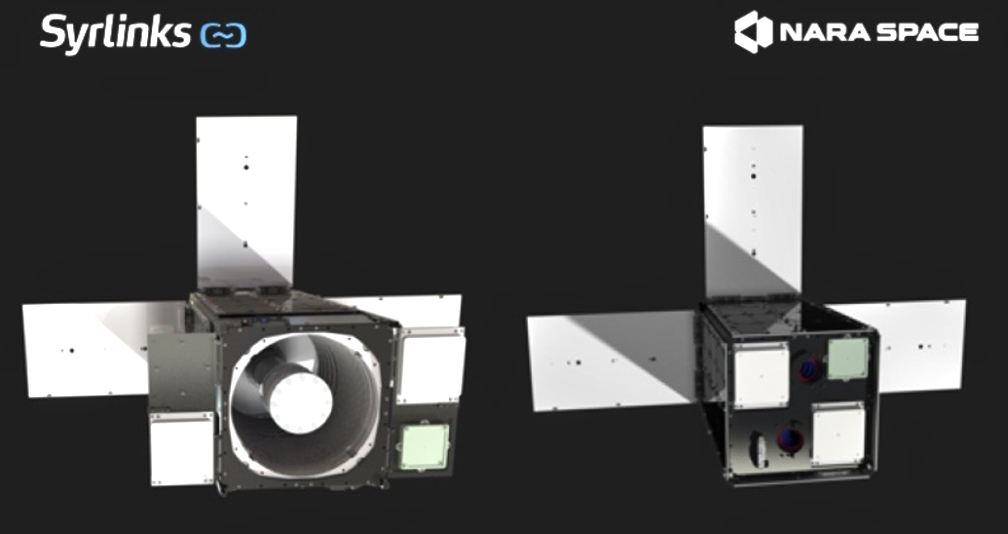
Syrlinks and Nara Space have crafted a partnership for the integration of Syrlinks’s compact X-Band Transmitter — EWC27 — into Nara Space’s developed a 12U satellite called BUSANSAT that will collect marine, spatial information and monitor marine, fine dust. The expected 1 year lifetime satellite will be launched in 2024.

In order to implement high-data-rate transmission link, Nara Space has elected the EWC27 product from Syrlinks. This solution enables very high data rate throughput in X-band, featuring low power consumption and high efficient power amplifier. With more than 120 flight models already delivered, the EWC27 is a top class radio for smallsats.

“This is a great opportunity for us to support future major players with products that have a strong heritage and will ensure the success of the mission,” said Ronan Foubert, nanosat/ cubesat product owner at Syrlinks.

“It is a great recognition of a work of several years to design New-Space RF communication compact designs, suitable for nanosatellites and bringing cutting-edge transmitting performances,” said Eric Pinson, Director of Space activity at Syrlinks.

“I am delighted to be able to increase the probability of mission success by using EWC27 famous for being the most reliable X-band transmitter in the small satellite market. We are using EWC27 not only for BusanSat, but also for Observer-1, Nara Space’s first standard satellite that will be launched next year. We will build a future-oriented cooperative relationship with Syrlinks,” said Jungkye Lee, director of satellite development at Nara Space.

Syrlinks is a French company that was founded in 2011. The company designs and delivers worldwide RF communication products to address four market segments: Space, Defense, Safety and Time-frequency. The company today consists of more than 185 people and has successfully delivered more than 2,000 Flight models for space, representing more than 800 years of on-orbit time, with 100% reliability. The company’s space business unit has developed four product ranges: TT&C, Data Transmitters, GNSS and SDR Payload. This meets different market segments in terms of smallsat integration (nano/cubesat, micro and mini satellites) and, in terms of applications, includes Earth Observation (EO), SATCOM, GNSS Services, LEO PNT, Spectrum monitoring, and so on. Syrlinks masters the design of reliable product based on COTS (Components-Off-the Shelf) components, enabling cost-reduction for New Space. The company’s products have been used in many, high-profile, space missions, such as Rosetta, Myriades/Myriades- evolutions, Proba-V, OneWeb Satellites, Pléïades- Neo, Argos Neo, Microscope, etc. Syrlinks works with clients and partners such as Airbus, OneWeb, the CNES (the French national agency for space studies), the European Space Agency (ESA), Thales Alenia Space, and Hemeria.

Nara Space is a company in both the smallsat and New Space industries in South Korea. Founded in 2015, the company is building smallsat constellations and providing satellite data use services. Observer-1, a 16U satellite, is the firm’s first standard model whose primary mission is EO, with 7 bands from 450 to 900 nm. Starting with the first launch next year, the company plans to launch a fleet of 96 satellites in 5 years. In October, Nara Space will soon open a beta service for Earthpaper, a comprehensive, web-hosted, satellite image platform that allows customers to search and purchase satellite images over any preferred region or location on the earth. Once Nara Space’s satellites — the Observers — are in successful operation within a few years, the platform will provide near-real-time access to customized satellite imagery. Nara Space also developed its own Super Resolution (SR) algorithm that can increase the spatial resolution of satellite images by factor of 3x. With this technology, the company is aiming to upgrade Observer-1’s GSD by 0.5 meters, whose native GSD is 1.5 meters. Customers can test and use Nara Spaces SR algorithm on Earthpaper.

Filed Under: News

UK-built Prometheus 2 smallsats on track for their Newquay, Cornwall, launch

September 9, 2022 by editorial

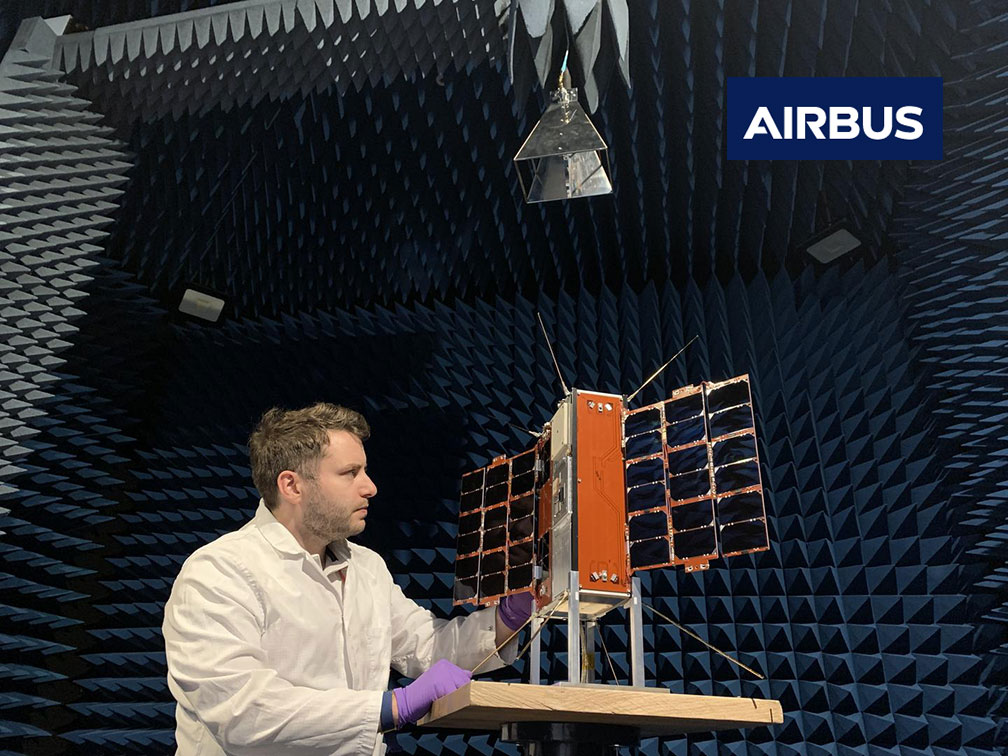
Photo of a Prometheus 2 satellite is courtesy of Airbus.

The Prometheus 2 satellites, which have been jointly designed by Airbus and In-Space Missions, are on track for their UK launch from Newquay, Cornwall, later this year, with environmental testing complete and vibration testing ongoing.

The Prometheus 2 cubesats are owned by the Defence Science and Technology Laboratory (Dstl) on behalf of the Ministry of Defence (MOD). They have been co-funded by Airbus Defence and Space with In-Space Missions Ltd. leading the construction.

The two cereal box sized Prometheus-2 cubesats will operate in LEO, at around 550 km. and will provide a test platform for sophisticated imaging, and monitoring radio signals, including GPS. The satellites will support MOD science and technology (S&T) activities both on-orbit and on the ground through the development of ground systems focused at Dstl’s site near Portsmouth.

The cubesats will each have separate equipment installed to test future concepts in support of the MOD’s ISTARI program for future space-based intelligence and surveillance. The Airbus payloads will support company internal R&D projects targeted at future LEO operations, ISR mission concepts as well as external third party customer R&D needs.

Incorporating modern Software Defined Radio (SDR) technology, these payloads will also enable third-party organizations to use the Prometheus 2 constellation to research signal gathering, inter-satellite communication, in-orbit data processing, space domain awareness and position, navigation and timing or geolocation capabilities. Access to this research capability will be available through Airbus Defence and Space Ltd. The satellites are research demonstrators and will not be used in defense intelligence, surveillance, and reconnaissance (ISR) operations.

The lessons learned from this mission will be used to de-risk key technologies, generate the next wave of collaborative experiments, enhance international partnerships and support Dstl’s own satellite operations.

Prometheus 2 is set to launch on Virgin Orbit’s Cosmic Girl, an adapted Boeing 747, later this year and is scheduled to operate for three years.

Richard Franklin, Managing Director of Airbus Defence and Space UK, said, “Achieving this crucial milestone further demonstrates the value of government and Airbus collaborative investments working alongside SMEs to achieve fast results in orbit and also to help support and develop the UK space industry ecosystem. Engineering the first UK launched small satellites, designed and built in the UK, is a great achievement for all those involved in this successful collaboration and builds on the success of the Prometheus 1 payload launched last year.”

Filed Under: News

Marlink and OneWeb prepare for first live maritime trial of LEO connectivity service 

September 8, 2022 by editorial

The first OneWeb installation at sea performance evaluation will provide valuable feedback to support service development and prepare for integration into Marlink’s smart hybrid network

Marlink, the smart network solutions company and OneWeb, the global space-based communications company, will conduct the first at sea trial of OneWeb’s Low Earth Orbit (LEO) maritime service.

Marlink’s 30 years of technical experience in developing and managing high quality broadband services for the maritime sector make them the ideal partner for OneWeb, contributing expertise and know-how in co-operation with OneWeb and its technology partners to trial the service to integrate it into Marlink’s hybrid smart network solutions portfolio.

The maritime trial is a significant milestone for OneWeb, as it leverages its LEO constellation to revolutionize connectivity at sea, delivering a high-speed, low-latency and globally consistent experience to all maritime users – even in the most remote sea lanes and maritime communities. 

delivering a high-speed, low-latency and globally consistent experience to all maritime users – even in the most remote sea lanes and maritime communities.

The initial integration and evaluation will take place at Marlink’s Eik teleport (Norway), with installation and on-vessel trial scheduled for Q4 2022. In co-operation with hardware providers Intellian and Hughes Network Systems, Marlink will carry out tests of the OneWeb maritime service validating throughput, latency and quality. Testing of hardware will include review of stability, signal tracking and handover capability. 

This represents the first ‘at sea’ maritime trial on OneWeb’s maritime satellite service and includes evaluation of the new user terminal created by Intellian with a core module from Hughes Network Systems. Capable of performing very fast handovers between satellites passing overhead, the user terminal has been specially designed for the extremes of the maritime environment.

Marlink and OneWeb announced in January 2022 their intention to collaborate to bring the new LEO service to its customer base onshore and offshore. As an early OneWeb partner, Marlink will integrate OneWeb’s LEO service into its global, industry-leading smart hybrid network solutions alongside GEO, MEO and 4G/5G services to serve its large commercial maritime and offshore markets.

OneWeb is making significant progress in building its constellation and currently has 428 satellites in Low Earth Orbit, representing almost 70% of its planned fleet. It plans to offer a commercial maritime service from January 2023, already delivering high-speed connectivity to hundreds of customers in remote communities in Alaska, Canada, the Nordics and the North Sea.

Launches will continue during 2022-2023 to enable the company to offer flexible, reliable and secure connectivity services globally from end 2023.

“As a Managed Service Provider of hybrid network solutions across all frequencies and orbits, with customers in all verticals, Marlink has the right expertise and capabilities to help OneWeb prepare its service for the maritime market,” said Tore Morten Olsen, President, Maritime, Marlink. “We believe that OneWeb will be a valuable addition to the Marlink smart network solutions portfolio, providing further choice for our customers with new LEO services.”

“OneWeb’s LEO service will bring a completely new kind of connectivity to maritime users, providing a high level of quality and performance that will deliver a richer, more immersive and terrestrial-like user experience onboard ships,” said Carole Plessy, Vice President of Europe and Maritime, OneWeb. “This is a watershed moment for the maritime connectivity market, together with our trusted partner Marlink the testing and evaluation will ensure that we have a fully robust and reliable service in place when commercial operations begin.”

Filed Under: News

Fleet Space has unveiled their new manufacturing facility complete with 3D printing capabilities

September 8, 2022 by editorial

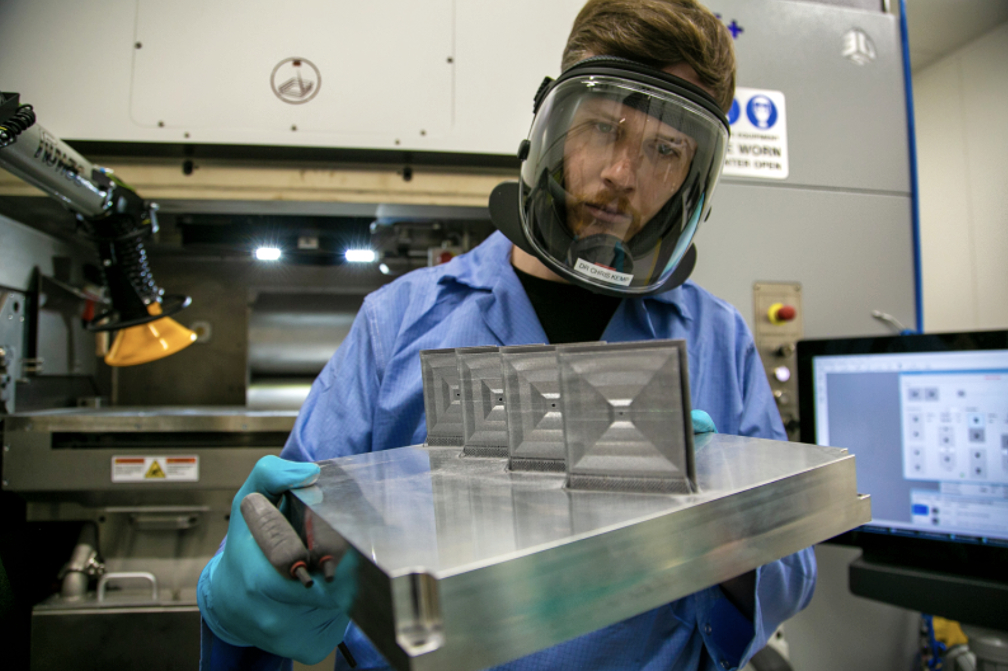
Fleet Space has unveiled their new 3D printer at the firm’s expanded manufacturing facility in Adelaide, Australia. This location was initially used to print radio frequency (RF) patch antennas and other equipment and is now capable of working in metals that include aluminum and titanium.

The new technology represents a significant boost to Fleet Space’s capabilities, enabling the development and manufacture of new products in-house and paves the way for the company’s fully 3D-printed, Alpha satellite.

The 3D printer will initially be used to produce the S-Band Antenna RF Patches already in use in the company’s existing satellite constellations. These antennas receive and transmit signals between the constellations in LEO as well as portals and modems on the ground. In future, engineers will use it to produce structural parts for its new-generation Alpha satellite to optimize weight and increase vertical integration.

By reducing turnaround times and enabling low-risk prototyping, the 3D printer enables more efficient R&D in areas such as filters and other passive RF components. Supplied by Konica Minolta, the new machine uses direct metal printing (DMP) technology, in which a laser welds thin layers of metal powder to produce highly complex metal parts. DMP provides unlimited design flexibility and overcomes many of the geometry and surface retention limitations imposed by traditional manufacturing techniques.

The 3D printer is the centerpiece of Fleet Space’s newly extended manufacturing facility in Adelaide, South Australia, which now employs more than 80 staff in order to support the company’s increased precision manufacturing capacity and future bespoke projects

Fleet’s latest technology, ExoSphere, has just reported successful results from trials at Australia’s newest Lithium miner Core Lithium’s Finniss Project in the Northern Territory. ExoSphere provides a solution for the exploration industry delivering lightning fast, highly scalable 3D mapping solutions to pinpoint minerals and increase accuracy in drilling targets.

Fleet’s Geodes (that are planted in the ground acting as a geophone sensor), from ExoSphere, are connected to Fleet’s satellites where the RF patch antennas are used. This technology is being rolled out globally through collaboration with the world’s largest and most progressive explorers and is supporting the global effort to find more than $13 trillion (as defined by the International Monetary Fund) value in these rare Earth materials to support global, sustainability goals.

Flavia Tata Nardini, CEO and Founder, Fleet Space Technologies, said, “Bringing our 3D printing capability entirely in-house rather than outsourcing it offers huge benefits to us and our customers. As well as enabling us to make complex components for our current models and future Alpha satellites, it increases efficiency from design to production, making the whole process more cost-effective; and by being fully autonomous, we can eliminate delays in shipping and sourcing. We’re capitalizing on our existing knowledge and experience of 3D printing antennas and structural components.”

Flavia continued, “And this is just the starting point. As our engineers explore and understand the full potential of 3D printing, we’ll be able to use it to develop new designs and produce circuit boards and other electrical components. It’s also another significant step towards our goal of producing a fully 3D printed Alpha satellite. The 3D printer is bringing us a step closer to mass production of our 288 satellite constellation where we estimate to produce 4-8 satellites every month. The new metal 3D printer, and the expansion of our Adelaide facility, underlines our commitment to domestic manufacturing. This is also reflected in our huge increase in staff numbers, from 34 in May 2021 to more than 80 today, almost tripling in size. We’re a confident, growing business with our eyes firmly on the future.”

Fleet Space is built from a culture of innovation, executed in collaboration with South Australia’s ecosystem of leading space technology and advanced engineering companies. From its base in Adelaide, Fleet has pioneered the use of additive manufacturing (3D printing) to drive cost and production efficiencies in the manufacture of satellites. This includes Fleet’s forthcoming planned constellation of 288 smallsats, including Alpha, which will integrate the company’s advanced beamforming technology and patented antennas to unlock greater connectivity more quickly and in more locations. In December of 2021, Fleet also announced its commitment to establishing a hyper factory in Adelaide’s landmark ‘Australian Space Park’ development. This is with the support of the South Australian Government which committed AUS$20 million to Australia’s first dedicated space manufacturing hub. The AUS$66 million Australian Space Park, in which Fleet Space Technology will build their Hyper Factory, will be the first of its kind in the southern hemisphere.

Filed Under: News

Set to explore neutron + electron rockets — Rocket Lab signs an agreement with USTRANSCOM for global cargo delivery

September 8, 2022 by editorial

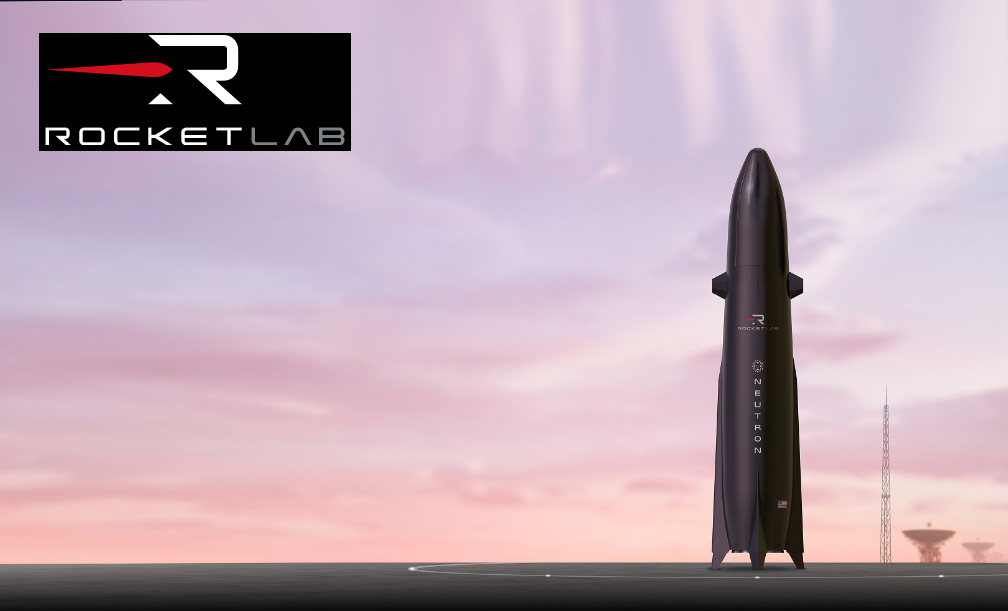
Image of Rocket Lab’s Neutron rocket, courtesy of the company.

Rocket Lab USA, Inc. has signed a Cooperative Research and Development Agreement (CRADA) with the United States Transportation Command (USTRANSCOM) to explore the possibility of using the company’s Neutron and Electron launch vehicles to transport cargo around the world. — this agreement will also see Rocket Lab explore using Photon spacecraft to establish on-orbit cargo depots and re-entry delivery capabilities.

The CRADA enables the collaborative investigation between USTRANSCOM and Rocket Lab to explore Neutron, Electron and Photon capabilities, informing the Rocket Cargo program led by the Air Force Research Laboratory (AFRL) and the U.S. Space Force. Rocket Cargo is one of the United States Air Force’s (USAF’s) Vanguard programs designed to advance emerging systems and concepts through prototyping and experimentation to deliver remarkable new capabilities.

The program seeks to explore the viability of space launch to deliver improvements in delivery cost and speed compared to existing air cargo operations.

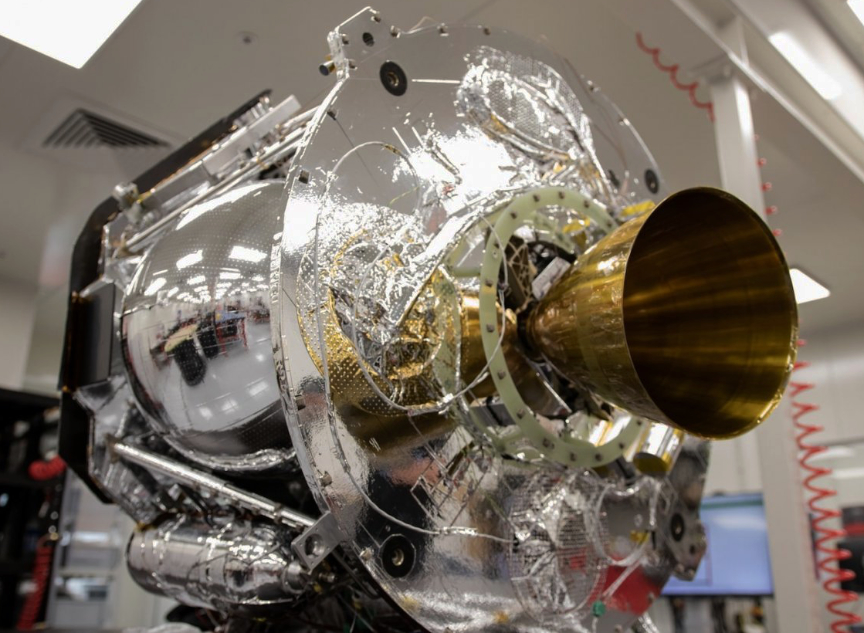
Rocket Lab’s Photon rocket engine. Photo is courtesy of the company.

“Point-to-point space transportation offers a new ability to move equipment quickly around the world in hours, enabling a faster response to global emergencies and natural disasters.,” said Rocket Lab founder and CEO, Peter Beck. “Electron is already a proven and reliable launch vehicle and we’ve demonstrated its adaptability with programs like reusability and our recent CAPSTONE mission to the Moon for NASA, so we’re no stranger to exploring expanded use cases for Electron. Neutron builds on Electron’s capability with a much larger payload capacity, and it’s designed for frequent reflight, making it a perfect fit to enable fast deployment of vital resources while eliminating the en-route stops and air refueling required by air cargo solutions. Topping it off with Photon cargo depots on orbit provides a well-rounded approach to the future of rapid global deployment. We’re excited to be collaborating with USTRANSCOM on this forward-thinking, innovative research program that could ultimately shift the way the Department of Defense considers logistics response options.”

“Rocket Lab USA will help the Federal government understand commercial rocket capabilities for future logistics missions,” said Mr. Jamie Malak, the CRADA’s government project lead at AFRL. “USTRANSCOM and its global Combatant Command customers have been constrained to logistics at the speed of conventional aircraft—or often far less—for their entire history. Now we can look to transport critical military cargo an order of magnitude faster than ever before. We will explore how to integrate rocket cargo systems in Defense logistics processes and how to make space transportation a reliable and practical option for operations of the future.”

USTRANSCOM oversees global military logistics operations and uses CRADAs to evaluate commercial technologies for possible fielding. The agreements team industry, academia, and their specific technologies with DOD future thinkers to anticipate uses, feasibility, value, and costs.

Neutron is Rocket Lab’s medium-lift, reusable launch vehicle in development. Designed to deliver reliable and cost-effective launch for payloads to low Earth orbit and beyond. With a large five-meter fairing and a payload lift capacity of 13 tonnes in a downrange landing configuration, Neutron is ideal for both constellation deployment and large single spacecraft missions. Development and manufacturing of the Neutron rocket is based at Rocket Lab’s Production Complex in Wallops, Virginia within the Mid-Atlantic Regional Spaceport. Neutron’s first launch pad will also be located at the spaceport near the Company’s existing pad for the Electron rocket.

Electron is Rocket Lab’s small launch vehicle, capable of launching payloads of up to 320kg / 705 lbs to low Earth orbit and interplanetary destinations. Since the first Electron lift-off in 2017, Rocket Lab has launched 29 Electron missions deploying 149 spacecraft to orbit for civil, defense, intelligence and commercial customers. Rocket Lab operates three launch pads for Electron. The first two are located at Launch Complex 1 in New Zealand, the world’s first private orbital launch site. A third Electron launch pad is located at the Mid-Atlantic Regional Spaceport in Virginia.

Photon is Rocket Lab’s in-house designed and built small spacecraft. Photon is based on the heritage Electron launch vehicle Kick Stage, leveraging numerous components that have significant flight heritage, including the Curie engine, an in-house designed and developed in-space propulsion system. A highly configurable platform, Photon Configurable can be adapted for a range missions in LEO, MEO, GEO, and beyond, including lunar and planetary. A lunar-capable version of Photon was used by Rocket Lab to successfully complete the CAPSTONE Moon mission for NASA in 2022, sending a CubeSat to a ballistic lunar transfer in the first mission of the Artemis program.

Filed Under: News

LEO satellite cluster from BAE Systems to provide secure digital military intelligence from 2024

September 8, 2022 by editorial

BAE Systems is set to launch its first multi-sensor satellite cluster into LEO in 2024 to deliver high-quality information and intelligence — in real time — from space to military customers. Known as Azalea™, the group of satellites will use a range of sensors to collect visual, radar and radio frequency (RF) data, which will be analyzed on board the satellites via machine learning (ML), on edge processors to deliver the resulting intelligence securely, anywhere in the world, while still on-orbit.
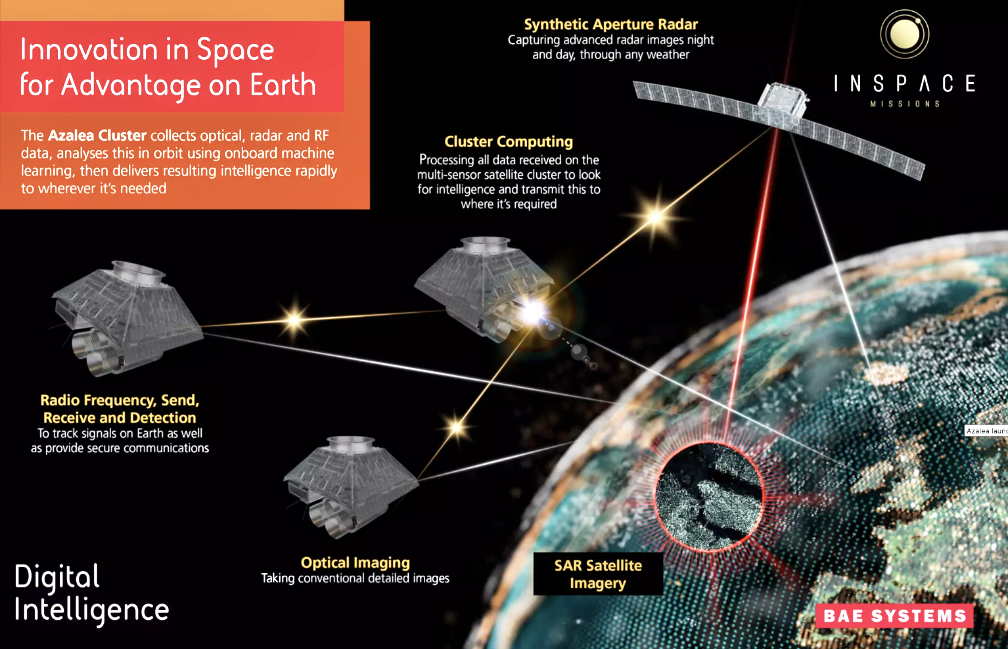

Following the acquisition of In-Space Missions last year, BAE Systems is one of a small number of British companies with the capability to design, build, launch and operate satellites. The expertise brought by In-Space Missions complements the company’s existing advanced technologies and will become an integral part of its multi-domain capability. Azalea™ will also boost the UK’s ability to understand the threats and hazards in, from and through space.

The Azalea™ cluster will deliver timely, actionable intelligence, essential for military operations and disaster response. Comprising four highly resilient satellites which, together, are capable of gathering, analyzing and communicating Synthetic Aperture Radar (SAR), optical and RF signals. Unlike conventional, single-purpose satellites, the cluster can be fully reconfigured while on-orbit in the same way a smartphone installs a new app; this ensures it can deliver future customer missions and expands the lifecycle of the satellites.

The program supports the UK Government’s Defence Space Strategy, published earlier this year, which named Earth Observation (EO) as a priority area to help protect and defend UK interests, a sovereign capability that Azalea™ could provide.

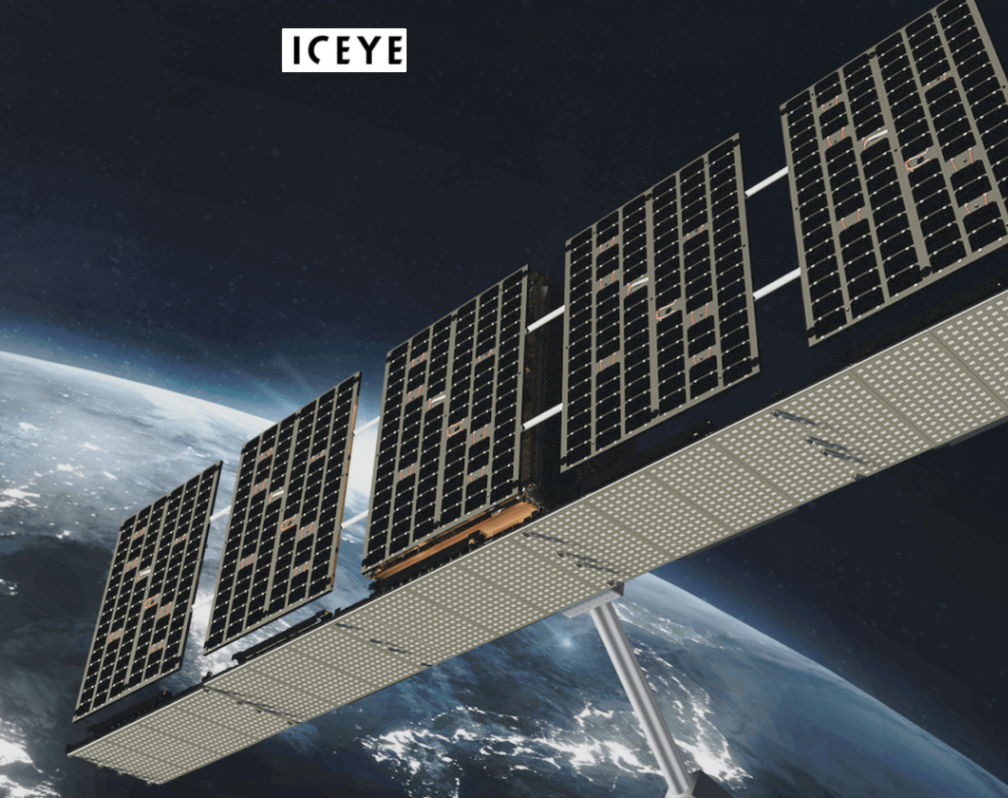
BAE Systems is working with Finnish firm, ICEYE, to combine its own expertise in sensor technology with ICEYE’s advanced SAR technology to be included in the cluster. SAR provides high-resolution imagery of the Earth’s surface, day or night and in any weather conditions. This persistent monitoring makes it easier to detect instant physical changes, such as the movement of hostile ships or aircraft or the location of people at risk during natural disasters, such as floods and forest fires.

Existing space-based sensors require multiple terabytes of data to be transferred to Earth before being processed and distributed. The traditional transfer process can take many hours and is reliant on intermittent RF links and the availability of suitable ground stations. The Azalea™ system saves valuable time by combining and analysing data in space. It will be able to identify activities of interest and directly communicate with users on the ground within moments of detection – securely delivering assured data, in a useful timeframe, directly to the hands of decision makers.

Dave Armstrong, Group Managing Director of BAE Systems’ Digital Intelligence business, said, “The Azalea™ satellite cluster will process data in space to provide swathes of digital intelligence wherever it’s needed. We understand how important space-based intelligence is to every domain, whether that’s informing strategic command, alerting an in area warship, or providing real-time intelligence to forces on the ground. The launch of Azalea™ in 2024 will be a major step forward for the UK’s sovereign space capability.”

Rafal Modrzewski, CEO and Co-founder of ICEYE, said, “ICEYE helps to solve problems using data. There is a clear advantage for governments and organisations to receive accurate information when they need it, regardless of weather conditions – this is what ICEYE brings. By combining our SAR technology with the security expertise of BAE Systems and the other data sources in the cluster, we can help decision makers make the right choice at the right time.”

Doug Liddle, Chief Executive and co-founder of In-Space Missions, said, “We’re working together to create a step-change in military intelligence and capabilities. Our technology will monitor adversaries, but will also provide substantial civil benefits by helping humanitarian response missions.”

Filed Under: News

Blue Canyon Technologies + SEAKR Engineering deliver 1st flight unit + payloads for the DARPA Blackjack Program

September 7, 2022 by editorial

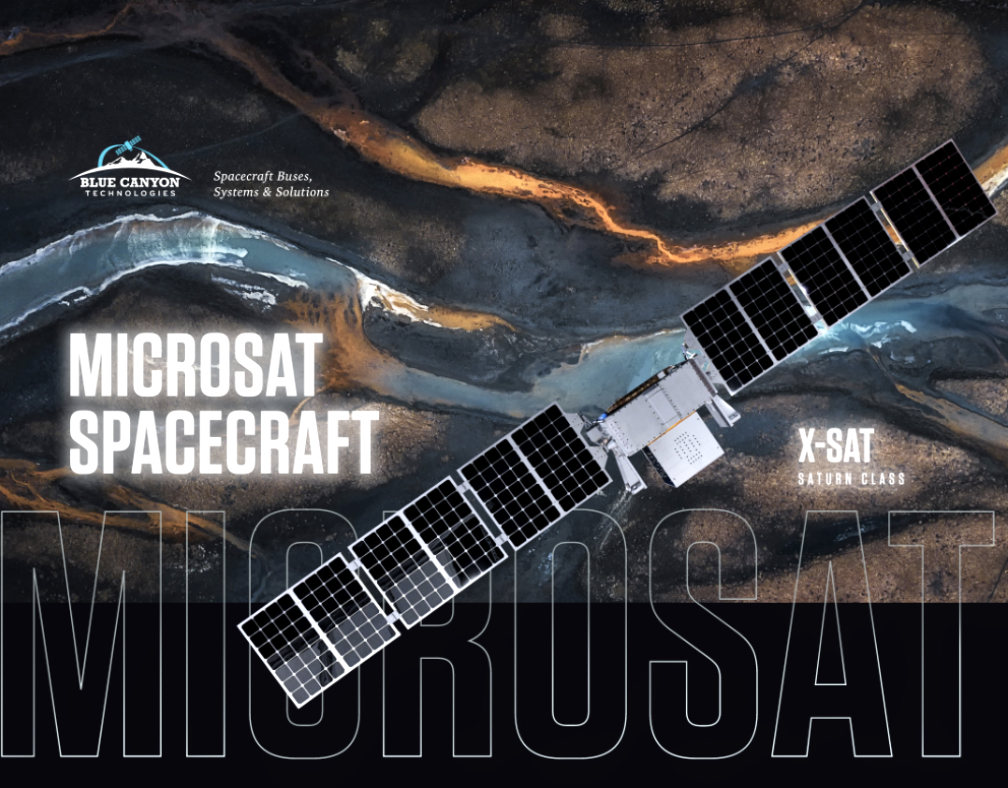
Blue Canyon Technologies, LLC, and SEAKR Engineering, LLC, wholly owned subsidiaries of Raytheon Technologies, have announced that they have delivered one, Saturn-class, microsat bus and have also completed acceptance testing of the first two of 12, Pit Boss Battle Management Command, Control and Communication payloads for the Defense Advanced Research Projects Agency’s Blackjack Program.

Blue Canyon is providing ten, Saturn-class buses total, with the remaining nine expected to ship later in the year. The buses are BCT’s first flight units using the company’s new Kyber Electrical Power System and Hyperion Solar Arrays. Each bus includes advanced electric propulsion, a robust power system, command and data handling, radio frequency communications and dedicated payload interfaces capable of hosting several different Department of Defense payloads.

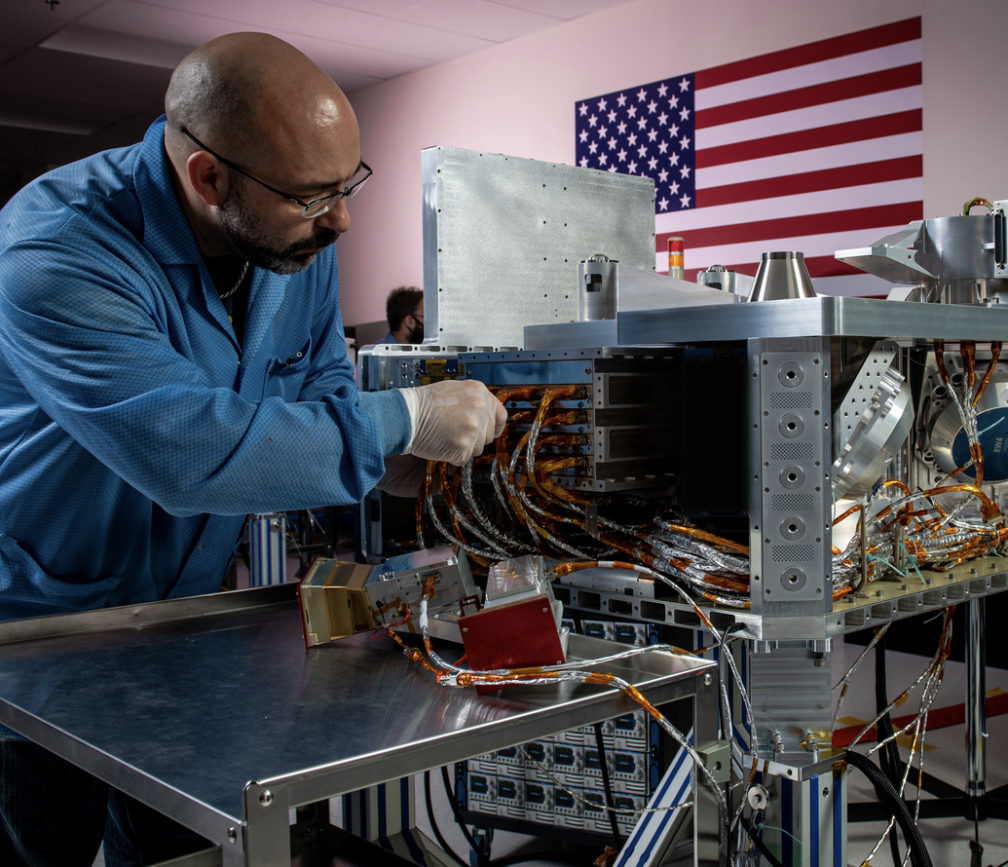
SEAKR Engineering has completed acceptance testing of the first two, flight units of the 12 Pit Boss Battle Management Command, Control and Communication payloads for the DARPA Blackjack constellation. These units have shipped for space vehicle Assembly, Integration and Test.

The Blackjack mission will develop and demonstrate critical elements of a global high-speed network in LEO. The goal of the Blackjack program is to show that a constellation of LEO satellites meets U.S. Department of Defense performance and payload requirements, at a significantly lower cost, with shorter design cycles and with easier and more frequent technology upgrades. The Blackjack program aims to establish an economy of scale not previously available with current National Security space assets, which are large, costly and would take years to replace if degraded or destroyed.

Blue Canyon built and delivered Blackjack’s ground test unit to Lockheed Martin in early May of this year. The remaining customized, Saturn-class buses are currently in production at BCT’s smallsat factory in Lafayette, Colorado.

SEAKR Engineering is manufacturing the payloads at their facilities in Centennial, Colorado.

“This is a momentous milestone for BCT’s Saturn microsatellite product line with the first-ever Saturn bus flight unit to achieve environmental testing,” said Jeff Schrader, president of Blue Canyon Technologies and SEAKR Engineering. “The accomplishment of qualifying and shipping this unit was no easy feat with teams working around the clock to run test after test to reduce risk and ensure success in the overall mission. It was a collaborative effort with Raytheon Intelligence & Space, BCT and SEAKR Engineering that further signifies confidence in our capabilities as an end-to-end spacecraft provider.”

“Pit Boss plays many critical roles for the Blackjack constellation by providing on-orbit mission autonomy, a space platform for DevSecOps Docker applications, network routing of optical satellite links, and high speed link encryption,” said Dave Anderson, SEAKR’s Vice President, Advanced Product Development and CTO. “The Pit Boss BMC3 has enough processing resources with margin to perform all these functionalities simultaneously.”

Blue Canyon Technologies (BCT), a wholly-owned subsidiary of Raytheon Technologies, is comprised of four business units: CubeSats, Microsats, Components, and Mission Operations. BCT offers a diverse portfolio of innovative, reliable, and affordable spacecraft and components that enable a broad range of missions and technological advancements for the new space economy. The company currently supports numerous unique missions with over 100 cumulative spacecraft orders. Microsatellites are manufactured at the 80,000 sq-ft Lafayette facility and CubeSats and components are manufactured in 40,000 sq-ft of dedicated facilities in Boulder, Colorado. BCT has supported missions for the U.S. Air Force, NASA and the Defense Advanced Research Projects Agency, and provided the Attitude Control Systems for the first interplanetary CubeSats, which successfully traveled to Mars. The company has been recognized with awards from Inc. Magazine’s 5000 Fastest Growing Private Companies, the Best in Biz Award and the 2020 Tibbetts Award.

SEAKR Engineering is the leading-edge provider of advanced electronics for space applications. We design and manufacture processors, command and data handling systems, advanced payloads, and manned space hardware. Founded in 1982 to revolutionize spacecraft memory systems, today SEAKR continues forward innovation with state-of-the-art space communications processors capable of channelization and beamforming. SEAKR was acquired by Raytheon Technologies in 2021.

Raytheon Intelligence & Space, a Raytheon Technologies business, delivers the disruptive technologies our customers need to succeed in any domain, against any challenge. A developer of advanced sensors, cyber services and software solutions, Raytheon Intelligence & Space provides a decisive advantage to civil, military and commercial customers around the world.

Filed Under: Featured, News

Oder River disaster reveals other problems in satellite data

September 6, 2022 by editorial

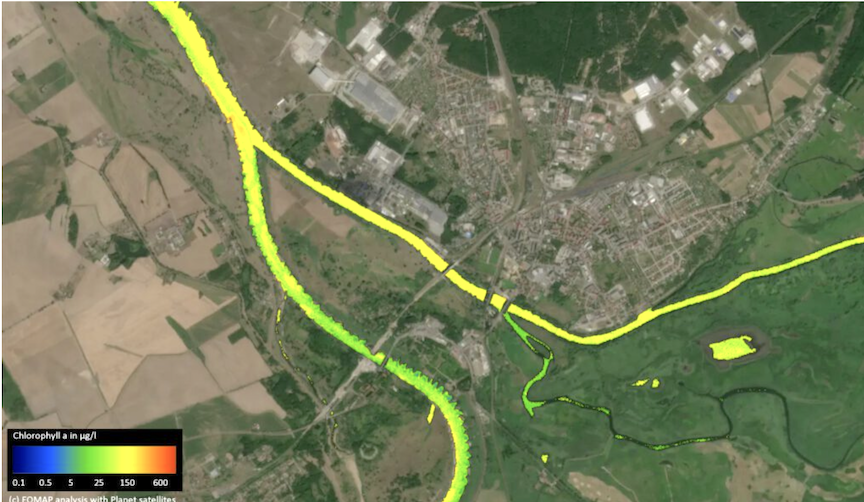
In order to clean up the fish kill in the Oder river, high-resolution satellite data reveal new details, such as the algae of its tributaries. The image shows the inflow of the Warthe (right) at August 3 2022, carrying twice the algae concentrations of the Oder River, thus increasing the algae level of the main river.
Photo: EOMAP / Planet
Currently, algae are being considered as one of the possible causes of the massive fish kill in the Oder River. With frequent and precise satellite measurement data available, researchers at EOMAP were able to narrow down the course of the algae bloom in terms of time and location. According to the Helmholtz Center for Environmental Research-UFZ, this is another important piece of the puzzle in clarifying the causal effect chains of the environmental catastrophe.

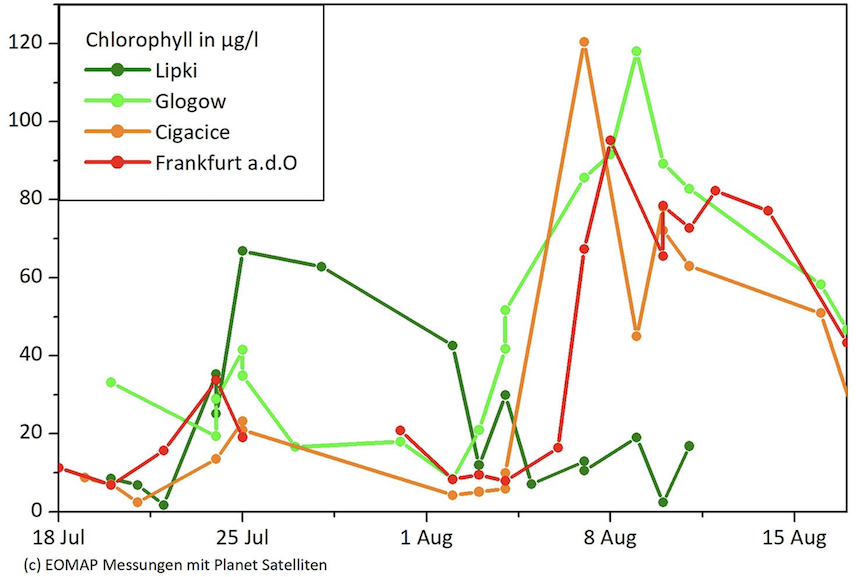
Three-to-five-meter Dove satellites image the entire Earth’s landmass each day, providing a more frequent capture than Sentinel-2 used so far. The 3m resolution allows for a much higher level of detail that was particularly relevant to assess the narrower river areas of the Oder. Paired with the European Sentinel data, the detailed course of the algae bloom from Lipki to the mouth of the Oder River has now been determined. Thus, the team of EOMAP, German specialist for satellite-based environmental data of water bodies, was able to show the following on eight river sections between Lipki (Poland) and the Szczecin Lagoon (Germany): “The algal bloom’s greatest extent was – depending on the river section – already between August 4 and 7, much earlier than previously thought. A previous algal spill at a lower intensity was already visible around July 24  15 km south of Wroclaw but then increased to double its extent around August 3 near Glogow,” reports Dr. Thomas Heege, CEO of EOMAP.

Temporal algae bloom development along the Oder River between Lipki and Frankfurt on Oder. It clearly visualizes the bloom near Lipki, its subsequent increase at Glogow as per August 3rd and further flow until Frankfurt.
Photo: EOMAP / Planet

“Planet’s daily satellite images were able to show for the first time, in great accuracy, where and how quickly chlorophyll concentrations and other water quality parameters developed downstream of the Oder River over this summer,” said Dr. Marcus Apel, Director of Business Development at Planet.  “We look forward to providing data to partners in support of cleaning up this environmental disaster as quickly as possible.”

“Just like forensics we are investigating causal chains leading the kills of aquatic life. These highly resolved satellite data enable us to have a completely new – synoptic – view on the whole course of the river. Thus, they will be the backbone of further analysis of relevant water quality and hydro-ecological parameter sets“, explained Professor Dietrich Borchardt, Head of the Research Unit “Water Resources and Environment” of Helmholtz Centre for Environmental Research – UFZ  (Germany).

“The new, high-resolution observation data not only enable us to fill the gaps of in-situ measurements, they also allow us to reconstruct the whole catastrophe although all water has already been gone into the sea and cannot be sampled anymore. A general advance from the high-resolution is the observation of small water bodies like tributaries or tailing ponds, which is key for tracing the causes“, added Dr. Karsten Rinke, Head of the Department of Lake Research at UFZ.

EOMAP has already worked with some environmental agencies to develop and put into operation an online visualization and early warning system for water bodies.

Filed Under: News

By 2026 The global satellite IoT subscriber base will reach 21.2 million

September 6, 2022 by editorial

According to a new research report from specialist IoT analyst firm Berg Insight, the global satellite IoT communications market is growing at a strong steady pace. Despite the impact of the COVID-19 pandemic, the global satellite IoT subscriber base grew to surpass 3.9 million in 2021. The number of satellite IoT subscribers will increase at a compound annual growth rate (CAGR) of 40.3 percent to reach 21.2 million units in 2026.

The number of satellite IoT subscribers to
reach 21.2 million in 2026

Only about 10 percent of the Earth’s surface has access to terrestrial connectivity services which leaves a massive opportunity for satellite IoT communications. Satellite connectivity provides a complement to terrestrial cellular and non-cellular networks in remote locations, especially useful for applications in agriculture, asset tracking, maritime and intermodal transportation, oil and gas industry exploration, utilities, construction and governments. Both incumbent satellite operators and more than two dozen new initiatives are now betting on the IoT connectivity market. This new study covers a total of 44 satellite IoT operators.

“Iridium, Orbcomm, Inmarsat and Globalstar are the largest satellite IoT network operators today”, says Johan Fagerberg, Principal Analyst at Berg Insight. Iridium grew its subscriber base by 21 percent in the last year and reached the number one spot serving 1.3 million subscribers. Originally a dedicated satellite operator, Orbcomm has transitioned into an end-to-end solution provider, delivering services on its own satellite network as well as being a reseller partner of Inmarsat and others. At the end of 2021, the company had 1.1 million satellite IoT subscribers on its own and Inmarsat’s networks.

At the same time Globalstar reached 0.42 million subscribers. Other players with connections in the tens of thousands include for instance Kineis in France and Thuraya in the UAE. In addition to the incumbent satellite operators a number of new initiatives have appeared on the market recently. Examples of some high-profile projects are Astrocast, AST SpaceMobile, CASC/CASIC, E-Space, Fleet Space Technologies, Hubble Network, Kepler Communications, Kineis, Ligado Networks, Lynk, Myriota, Omnispace, Skylo, Swarm Technologies (SpaceX) and Totum.

Many of these are based on low-Earth orbit nano satellite concepts. While some rely on proprietary satellite connectivity technologies to support IoT devices, several are starting to leverage terrestrial wireless IoT connectivity technologies including OQ Technology, AST SpaceMobile, Omnispace, Sateliot, Galaxy Space, Ligado Networks, Lynk, Skylo and Starlink (3GPP 4G/5G); EchoStar Mobile, Fossa Systems, Lacuna Space and Eutelsat (LoRaWAN); Hubble Network (Bluetooth); and Eutelsat (Sigfox). “The terrestrial technologies will grow in importance in the next five years and collaborations between satellite operators and mobile operators exploring new hybrid satellite-terrestrial connectivity opportunities such as the recent T-Mobile/SpaceX agreement will become common”, concludes Mr Fagerberg.

Filed Under: Featured, News

SSTL opens a new office in Adelaide in support of the UK – Australian space partnership

September 6, 2022 by editorial

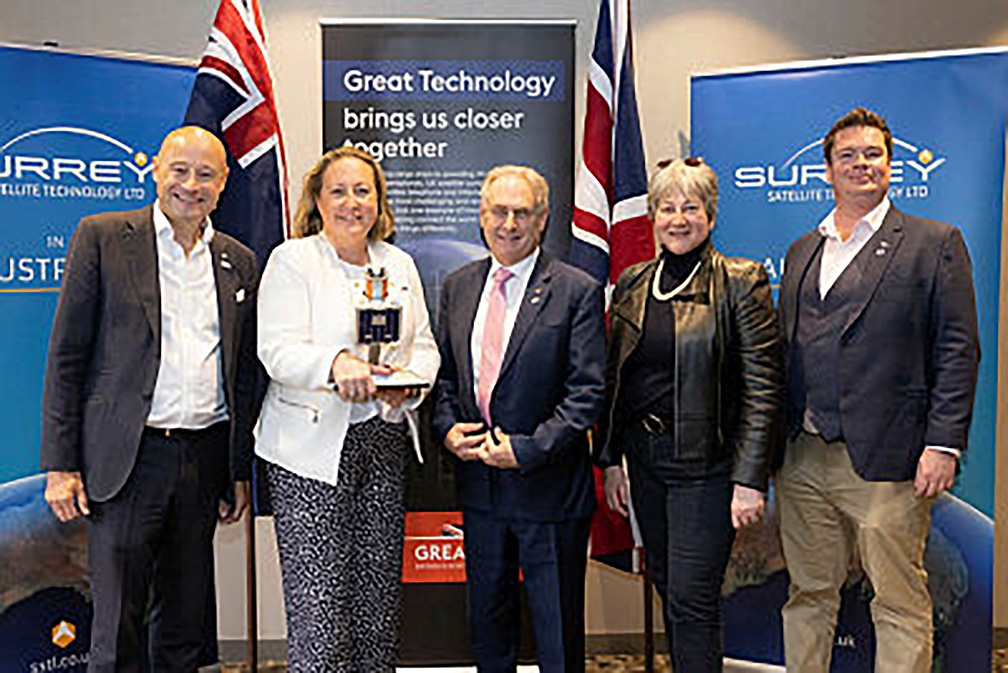
On September 13th, SSTL will open an office in Australia at Lot Fourteen in Adelaide — this announcement follows a meeting between the Rt. Hon Anne-Marie Trevelyan MP (UK Secretary of State for Trade) and Senator The Hon Don Farrell (Australian Minister For Trade & Tourism), during which they discussed ways of strengthening the United Kingdom – Australia economic trade partnership.

Pictured left to right: Clive Oates (Head of Australia – SSTL), The Rt. Hon. Anne-Marie Trevelyan MP (UK Secretary of State for Trade), Senator The Hon Don Farrell (Australian Minister for Trade & Tourism), H.E. Victoria Treadell (British High Commissioner to Australia), Martin Rowse (Director – Space Australia, Airbus Group)

SSTL committing to open an office in South Australia was cited as a timely example of the already growing economic partnership between the two countries. As a pioneer of the smallsat industry, SSTL designs and manufactures payloads, subsystems and equipment in-house and have supported more than 20 countries around the world in developing their Space capabilities.  SSTL aims to collaborate with the Australian Space industry by sharing knowledge, intellectual property and experience to stimulate local growth and competitiveness.

SSTL’s expansion into Australia demonstrates the company’s commitment to further enhancing the sovereign Space capability and expertise of the Australian Space sector. This has also been facilitated by the UK and Australia ‘Space Bridge’ Partnership – which supports enhanced cooperation between the UK and Australian Space sectors.

Phil Brownnett, SSTL’s Managing Director, said, “We will bring our world renowned expertise, technology and know-how to Australia, to support local companies to develop sovereign capability.”

Anne Marie Trevelyan, UK Secretary of State for International Trade, said, “Our ambitions for the development of the UK space industry are as limitless as space itself. The opening of Surrey Satellite Technology’s first office in Australia shows the real world impact of the ‘Space Bridge’ partnership with Australia we launched last year. The UK-Australia Space Bridge opens new trade, investment, research and collaboration opportunities for our space sectors.” 

Clive Oates, SSTL Head of Five Eyes Nations, will lead SSTL’s presence at Lot Fourteen. He has extensive global experience in innovative technology start-up and next generation satellite systems. Lot Fourteen, Adelaide, South Australia is a global innovation precinct – focused on entrepreneurship, research and education. The home of the Australian Space Agency and an expanding cluster of Space companies, which aims to grow Space technology jobs and the Australian economy.

Surrey Satellite Technology Limited (SSTL) is the original New Space renegade and is at the forefront of space innovation delivering customizable complete mission solutions for Earth observation, science, communications, navigation, on-orbit debris removal and servicing and exploration beyond Earth infrastructure. Since 1981, SSTL has built and launched 71 satellites for international customers, as well as providing training and development programs, consultancy services, and mission studies for ESA, NASA, international governments and commercial customers. SSTL uniquely combines innovative capability, heritage-earned engineering expertise and partner-focused Know-How and Technology Transfer programmes, and is well known for innovative missions such as the CARBONITE satellites, the NovaSAR S-band radar imaging satellite and the RemoveDEBRIS s pace debris removal technology demonstrator. Headquartered in Guildford, United Kingdom, SSTL is part of the Airbus Group.

Filed Under: News

  • « Go to Previous Page
  • Go to page 1
  • Interim pages omitted …
  • Go to page 4
  • Go to page 5
  • Go to page 6
  • Go to page 7
  • Go to Next Page »

Primary Sidebar

WEEKLY NEWSLETTER

Archives

  • December 2025
  • November 2025
  • October 2025
  • September 2025
  • August 2025
  • July 2025
  • June 2025
  • May 2025
  • April 2025
  • March 2025
  • February 2025
  • January 2025
  • December 2024
  • November 2024
  • October 2024
  • September 2024
  • August 2024
  • July 2024
  • June 2024
  • May 2024
  • April 2024
  • March 2024
  • February 2024
  • January 2024
  • December 2023
  • November 2023
  • October 2023
  • September 2023
  • August 2023
  • July 2023
  • June 2023
  • May 2023
  • April 2023
  • March 2023
  • February 2023
  • January 2023
  • December 2022
  • November 2022
  • October 2022
  • September 2022
  • August 2022
  • July 2022
  • June 2022
  • May 2022
  • April 2022
  • March 2022
  • February 2022
  • January 2022
  • December 2021
  • November 2021
  • October 2021
  • September 2021
  • August 2021
  • July 2021
  • June 2021
  • May 2021
  • April 2021
  • March 2021
  • February 2021
  • January 2021
  • December 2020
  • November 2020
  • October 2020
  • September 2020
  • August 2020
  • July 2020
  • June 2020
  • May 2020
  • April 2020
  • March 2020
  • February 2020
  • January 2020
  • December 2019
  • November 2019
  • October 2019

© 2019–2025 SatNews

Insert/edit link

Enter the destination URL

Or link to existing content

    No search term specified. Showing recent items. Search or use up and down arrow keys to select an item.
      x
      Sign Up Now!

      Enjoy a free weekly newsletter with recent headlines from the global SmallSat industry.

      Invalid email address
      We promise not to spam you. You can unsubscribe at any time.
      Thanks for subscribing! You will now receive weekly SmallSat News updates.
      We love our advertisers.
      And you will too!

      Please disable Ad Blocker to continue... We promise to keep it unobtrusive.
      We promise not to spam you. You can unsubscribe at any time.
      Invalid email address
      Thanks for subscribing! Please check your email for further instructions.