• Skip to main content
  • Skip to primary sidebar
  • Home
  • News
  • Featured
  • More News ⌄
    • SatNews
    • SatMagazine
    • MilSatMagazine
  • Events ⌄
    • MilSat Symposium
    • SmallSat Symposium
    • Satellite Innovation
  • Contacts
  • SUBSCRIPTION

SmallSat News

You are here: Home / Archives for 2022

Archives for 2022

January 13th Scheduled For SpaceX’s Transporter-3 Mission Launch

January 13, 2022 by editorial

SpaceX is targeting Thursday, January 13 for a Falcon 9 launch of Transporter-3 to orbit from Space Launch Complex 40 (SLC-40) at Cape Canaveral Space Force Station in Florida.

The 29-minute launch window opens at 10:25 a.m. EST, or 15:25 UTC, and a backup opportunity is available on Friday, January 14, with the same window.

Falcon 9’s first stage booster previously launched Crew Demo-2, ANASIS-II, CRS-21, Transporter-1, and five Starlink missions.

Following stage separation, SpaceX will land Falcon 9’s first stage on Landing Zone 1 (LZ-1) at Cape Canaveral Space Force Station.

Transporter-3 is SpaceX’s third, dedicated, rideshare mission, and on board this launch are 105 spacecraft (including smallsats and Orbital Transfer Vehicles( OTV)).

Watch the live launch webcast starting about 15 minutes before liftoff. 
Filed Under: Featured, News

Arianespace To Launch ESA’s FLEX & ALTIUS Satellites Via Vega-C Rocket

January 13, 2022 by editorial

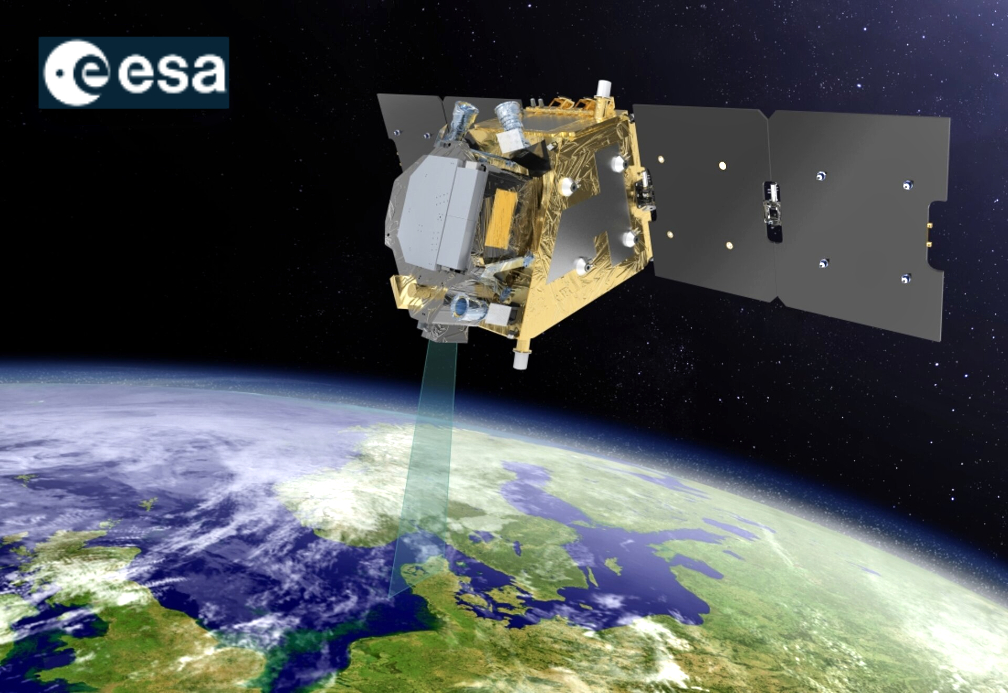
Artistic rendition of FLEX on-orbit, courtesy of ESA.

A contract signed with Arianespace secures the joint launch for two satellites that will further the knowledge of our home planet. Scheduled to lift off on a new class of rocket, ESA’s Vega-C, from Europe’s Spaceport in mid-2025, FLEX will yield new information about the health of the world’s plants and Altius will deliver profiles of ozone and other trace gases in the upper atmosphere to support services such as weather forecasting.

The contract was signed by ESA’s Acting Director of Earth Observation Programs, Toni Tolker-Nielsen, ESA’s Director of Space Transportation, Daniel Neuenschwander, and CEO at Arianespace, Stéphane Israël.

FLEX is an Earth Explorer research mission. Earth Explorers, which are pivotal to ESA’s FutureEO program, are built to show how pioneering space technology can return novel information about how our planet works as a system and to better understand our rapidly changing world.

Although essentially built for science, many of these missions also deliver information that has direct practical uses. Moreover, once the technology and applications have been proven, Earth Explorers, importantly, provide the sound heritage for future satellite missions designed to provide systematic data for services that benefit daily life.

FLEX will help address one of our biggest challenges: understanding the health of Earth’s vegetation, which is critical to improve food security.

The planet’s growing global population is placing mounting pressure on the production of food, animal feed, biological fuels and pharmaceutical products. It is estimated that there will have to be more than a 50% increase in agricultural production by 2050 to meet demand. Understanding plant health and productivity is therefore essential to managing resources. FLEX will shine a light on plant health FLEX will shine a light on plant health

Although photosynthesis is one of the most fundamental processes on the planet, it has not been possible to measure it directly on large spatial scales. However, when plants photosynthesize, they emit a faint fluorescent glow. This glow is invisible to the naked eye, but, remarkably, it can be measured from space. Carrying a novel instrument called the Fluorescence Imaging Spectrometer, FLEX will measure this fluorescent signal to shed new light on the functioning of our vegetation. The information will be used to assess the functioning, health and stress of plants.

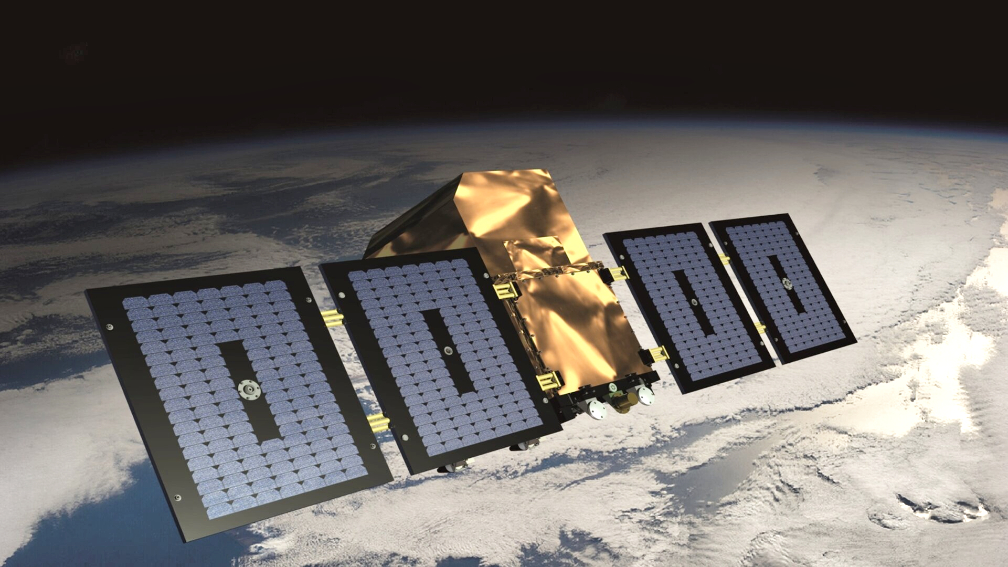
Altius is a smaller class satellite, but it will fill a very important gap in the continuation of ‘limb’ measurements for atmospheric science. It is being developed within ESA’s Earth Watch program and financed mainly by Belgium, with contributions from Canada, Luxembourg and Romania. This new mission is being built to deliver vertical profiles of ozone and other atmospheric gases.

Artistic rendition of the Altius smallsat, courtesy of ESA.

While the ozone hole over Antarctica has been recovering in recent years, it is still a serious concern. And, needless to say, the understanding and monitoring of Earth’s atmosphere, with the rise in greenhouse gases that fuel climate change, is one of the most serious environmental issues humankind is currently facing.

Carrying an instrument that images in the ultraviolet, visible and near-infrared channels, the Atmospheric Limb Tracker for Investigation of the Upcoming Stratosphere, or Altius for short, will measure both stratospheric ozone and other atmospheric trace gases such as nitrogen dioxide and aerosols that affect air quality.

As its name suggests, Altius will not look straight down on Earth, but will observe the atmosphere along Earth’s horizon. The ‘limb-sounding’ technique allows trace gases such as ozone to be profiled so that concentrations can be seen at different altitudes with high vertical resolution.

The contract, now signed with Arianespace, ensures passage into space for these precious satellite missions from Europe’s Spaceport in French Guiana.

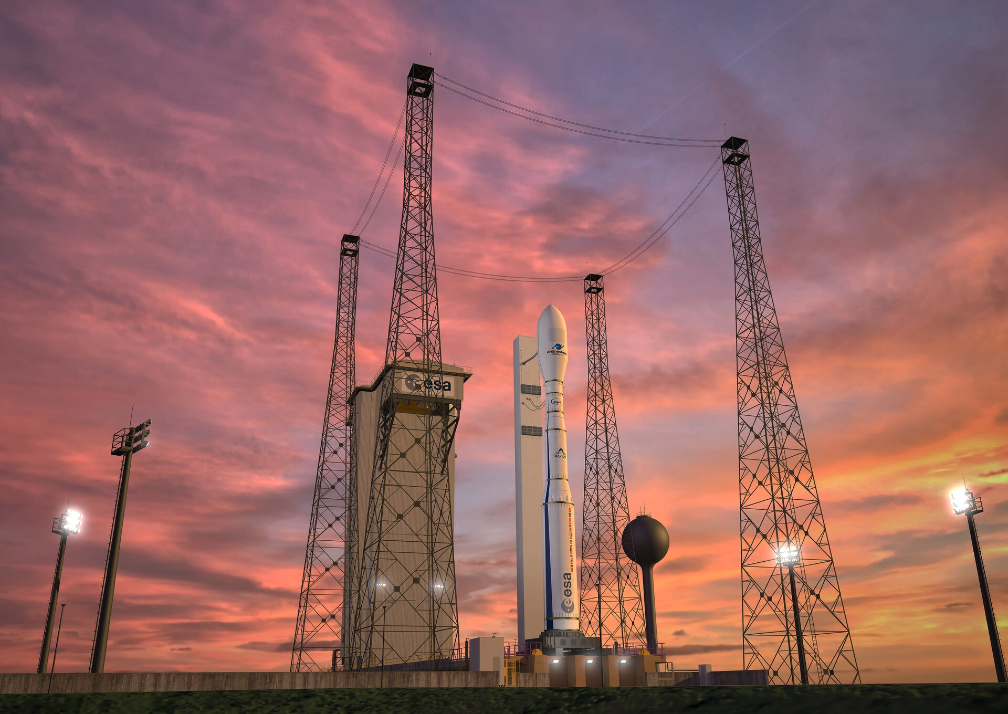
Artistic rendition of Vega-C on the launch pad, courtesy of ESA.

Both satellites will be taken into orbit on ESA’s new Vega-C rocket. Building on the current Vega class, the first Vega-C will first take to the skies in 2022.

Vega-C is more powerful than its predecessor and is capable of a wide range of mission types. It is a single body rocket about 35 meters high with a mass at liftoff of 210 tons. It is able to place about 2200 kg. in a reference 700 km.-polar orbit, meeting the needs of European institutions and industry.

While the contract to launch FLEX and Altius assumes they will be launched on the same rocket in mid-2025, there is provision for alternative shared launches, should there be a drift in the timing of their relative development processes.

Filed Under: Featured, News

NanoAvionics To Build A Biodiversity Observation Smallsat For Lemu

January 12, 2022 by editorial

NanoAvionics recently received a contract for a biodiversity observation satellite mission from Lemu, a startup building an atlas of Earth’s biosphere to make conservation the best investment possible.

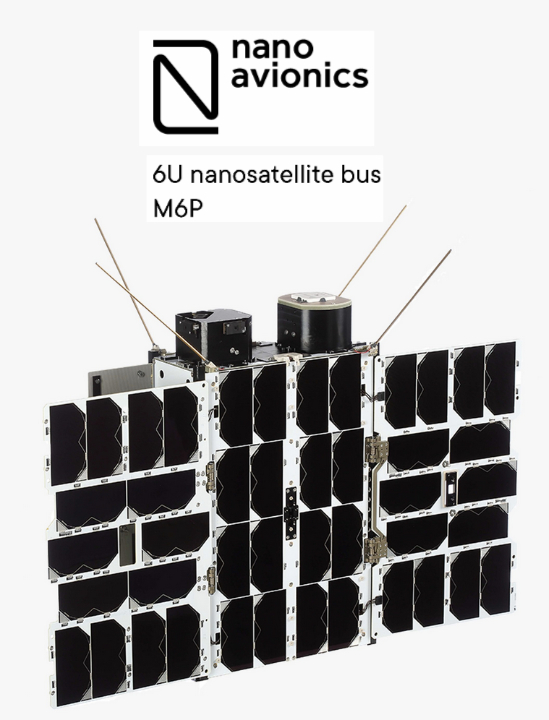
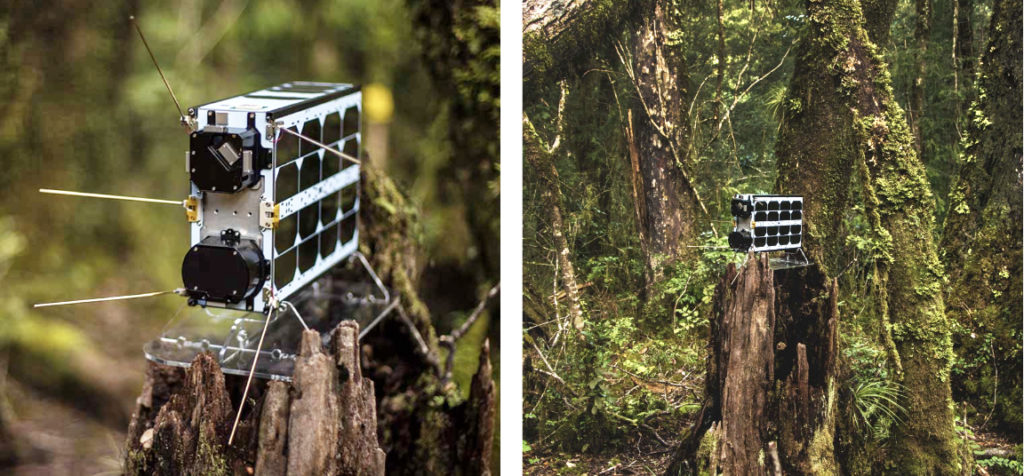
Essential to the biosphere atlas is “Lemu Nge” (Forest Eye in the Mapudungun language), Chile’s first private satellite, which is designed to observe all 51 billion hectares of Earth’s surface biodiversity. Built by NanoAvionics in Lithuania, the 6U smallsat will collect hyperspectral imaging data that will help Lemu to identify, measure and track the value that each ecosystem generates each and every day.

Lemu Nge will start with measuring and tracking the value of the world’s forests, which cover about four billion hectares, or 31 percent of the Earth’s land surface. Flying in SSO, with revisit rates from one to seven days for the same region, the smallsat will provide geospatial images for Lemu’s biosphere atlas. Once the mission is completed, an onboard propulsion system, using a liquid metal ion thruster, is designed to allow the smallsat to safely deorbit, leaving no space debris behind. The launch of Lemu Nge is planned to be aboard a SpaceX Falcon 9 in 2023.

The Lemu Nge smallsat.

From the obtained geospatial data, supported by satellites from NASA and ESA as well as ethical-AI, Lemu is able to analyze, measure and evaluate information about ecosystems, starting with the world’s forests. Lemu then assigns a value for each ecosystem, a Lemu Index.

The analyzed results will be critical in helping Lemu as it seeks to reduce deforestation and degradation of ecosystems. It will also aim to increase the success of reforestation and restoration efforts, improving Lemu’s ability to precisely measure carbon sequestration and other nature-based solutions. The biodiversity atlas will be open to anyone who wants to participate and contribute, including other organizations and people in the nature conservation community worldwide.

The key instrument of Lemu Nge satellite is a high-resolution, hyperspectral camera supplied by Simera from South Africa. Supported by the Lemu’s artificial vision, it allows to segment land cover and vegetation biodiversity in unusual detail, more than 20x the current resolution. The camera is capable of measuring 32 spectral bands with wavelengths between 450 to 900 nanometers (the human eye sees wavelengths from 400 nm to 700 nm). Its ground sampling distance (GSD), the distance between pixel centers measured on the ground, has a resolution of 4.75 meters. The satellite is expected to complete one orbit around the Earth every 90 minutes, resulting in 14 orbits each day.

Leo Prieto, founder and CEO of Lemu, said, “To revert the global environmental crises we need to increase and succeed with conservation efforts across the world. Through Lemu, we are using the most advanced technologies available to demonstrate that conservation and ecosystem restoration are the best investment possible — and not a philanthropic effort. Each cent invested in conservation generates a considerable return on investment from the nature-based solutions that are produced, and today we have the tools to measure and visibilize that. Deep ecology requires deep technology, that is why this mission is a critical piece of our ‘Space to Soil’ strategy allowing us to accelerate the generation of information that will take us from degradation to restoration.”
Sangeetha Narayan, co-founder and chief product officer of Lemu, said, “Using a small satellite like NanoAvionics for our biodiversity atlas is the only efficient way to measure the entire surface of Earth. Of course, we value immensely the data provided by NASA and ESA’s satellites, and we don’t expect Lemu Nge to replace the variety and volume of geospatial data sources we are using today. It was clear from the beginning though that in order to accelerate the development of our artificial vision models for Earth observation, we needed to have our own sensor in orbit. To minimize the energy and emissions needed to get it into orbit, it had to be quite small. At the same time, it had to be more powerful than what was currently at our disposal, with enough flexibility for experimentation in the future. The nanosatellites by NanoAvionics fit those specs perfectly and with a price tag that suits our budget. They provide everything, mission infrastructure, hardware, logistics and operations, to deliver the data we need on a plate."
Vytenis J. Buzas, CEO NanoAvionics, said, “The effects of climate change affect us all and we need to make every effort to turn things for the better. I’m very proud that NanoAvionics supports, and with our small satellite technology, enables Lemu’s efforts to improve humanity’s understanding of our biodiversity, allowing research organisations, companies and individuals to develop new solutions to counter the effects of deforestation and restore ecosystems. As a leading nanosatellite provider partner with extensive experience in integrating remote sensing payloads, NanoAvionics is the ideal go-to mission partner for organizations like Lemu, wanting to obtain relevant data sets from Earth observation.”

Filed Under: News

Arianespace To Launch PLATiNO 1 + 2 Smallsats For Italian Space Agency

January 11, 2022 by editorial

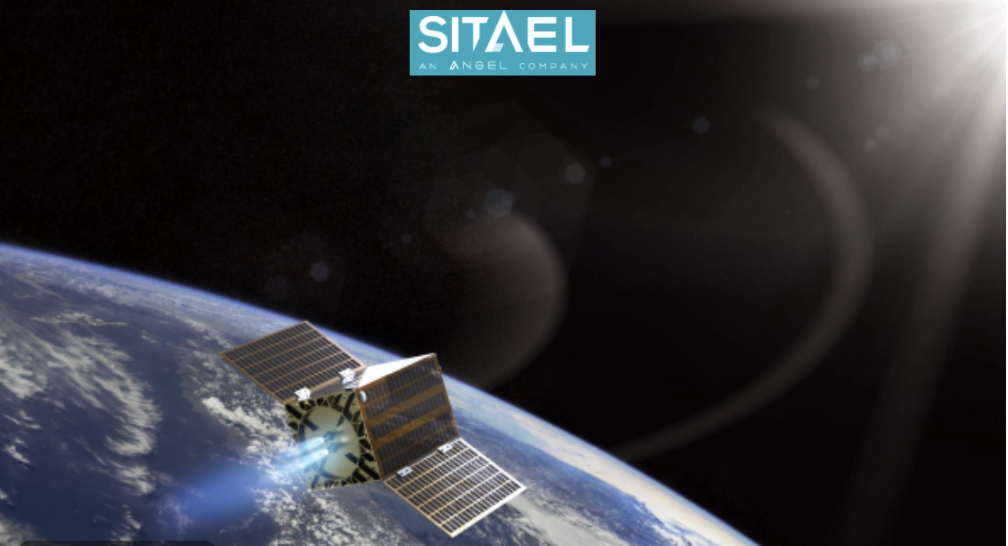
Arianespace has been awarded a launch contract by SITAEL, with the Italian Space Agency (ASI) as the final customer, to orbit PLATiNO 1 and 2 satellites.

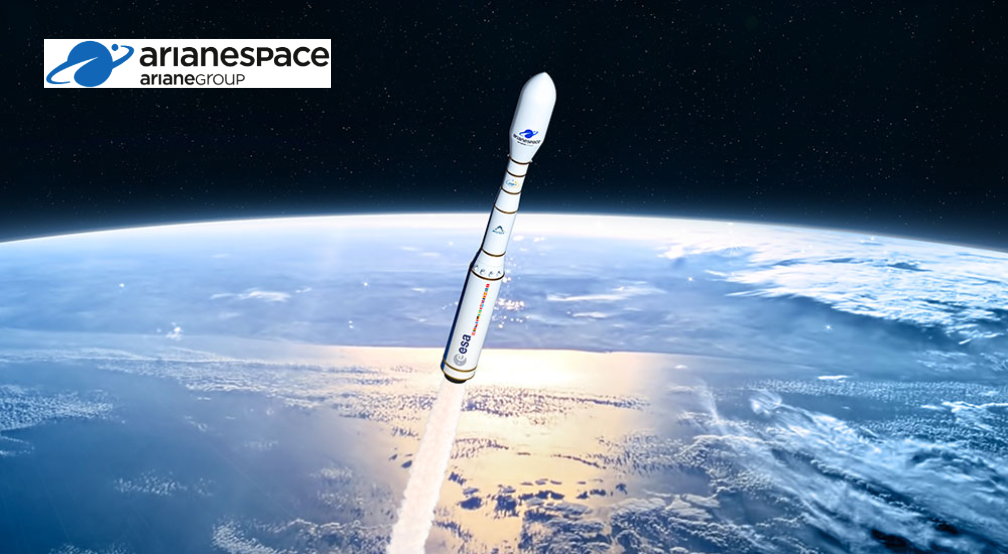
The action should occur between 2022 and 2024 via a Vega and Vega C launch vehicles. PLATiNO 1 and 2 are Earth Observation (EO) SSO smallsats. PLATiNO 1 will feature a Synthetic Aperture Radar (SAR) that operates in the X-band while PLATiNO 2 will carry an optical thermal instrument.

PLATiNO is a versatile, multi-mission, high-tech, and all-Italian platform suitable for a wide set of applications that will be equipped with various instruments – both radar and optical – which guarantee optimal resolutions and an on-board computer capable of acquiring and downloading a large number of images.

The PLATiNO platform has been developed through a temporary consortium established between SITAEL, Leonardo, Thales Alenia Space (a joint venture between Thales -67% and Leonardo -33%) and Airbus Defense and Space and has been designed to support a wide range of missions in different operational scenarios supporting from EO to telecommunications and scientific missions.

This platform ensures a reduction of development and operational costs within a frame of an extremely competitive market and supports a strategic placement of the Italian industries in a sector where new space systems, such as megaconstellations, are increasing in number.

“We are very proud of this new launch contract, which underlines the capacity of Arianespace’s launch solutions, here with Vega and Vega C, to address institutional needs at the most competitive conditions, even for very demanding missions within the 100-500 kg. class”, Stéphane Israël, CEO of Arianespace, said. “This agreement also demonstrates Arianespace’s capability to support the development of new space initiatives embedded by governments and European institutions.”

Filed Under: News

Scotland’s Preswick Spaceport Continues To Advance Plans For Smallsat Launches

January 10, 2022 by editorial

The South Ayrshire Council in Preswick, Scotland, has started the process of submitting a formal planning application for the Prestwick Spaceport development.

Aerial view of Prestwick Aerospace.

The Proposal of Application Notice (POAN) is the first step in the planning process for Prestwick Spaceport and signals the intent to apply for planning permission in early 2022. The submission of the POAN follows the Council’s submission of an Environmental Impact Assessment Screening Report last year that confirms that Prestwick’s space ambitions will not result in any significant adverse effects to the environment.

Launches from Prestwick will occur using horizontal or air launch, wherein an aircraft will carry a rocket containing smallsats a long distance to high altitude above the ocean. Once safely beyond inhabited areas and above the densest layer of the atmosphere, the rocket leaves the aircraft, ignites its engines and carries its payload to orbit.

Launch operations at Prestwick will consist mainly of processing rockets and their payloads, loading them onto a launch aircraft and then conventional aircraft take-offs will occur from the existing airport runways.

To provide horizontal launch capability, which until now has never been accessible anywhere in Europe, Prestwick Spaceport has signed a Memorandum of Understanding with Astraius, a leading UK-based commercial horizontal launch company that will launch rockets from standard transport aircraft that require no modification and will be able to place smallsats into a variety of orbits.

These smallsats can be used for a host of applications, such as monitoring climate change or tracking food supply chains to ensure that products in supermarkets are sustainably sourced. The city of Glasgow, Scotland, already designs and manufactures more cubesats than any city outside of the USA.

Prestwick aims to conduct the first rocket launch by the end of 2023, a goal supported by the Ayrshire Growth Deal, a multi-million-pound funding package that was signed last year. £80 million of the Growth Deal is dedicated to securing Ayrshire’s future as a leading region in the UK’s aerospace and space engineering industries.

Satellite launches from Prestwick, along with the other measures in the Ayrshire Growth Deal, will create many opportunities beyond launch, such as establishing a high-tech space supply chain in the region to complement the existing aerospace cluster, creating as many as 4,000 jobs for the local economy. Horizontal launch from Prestwick will give Ayrshire the opportunity to be at the forefront of satellite launches in the UK as well as in Europe.

Councilor Peter Henderson, Leader of South Ayrshire Council, said, “Prestwick Spaceport has achieved another milestone by filing a POAN for its development. The POAN starts the process for Prestwick Spaceport submitting its formal planning application later this year. This follows on from Prestwick Spaceport securing a launch provider, Astraius, in September last year. By securing a launch partner and beginning the planning process, South Ayrshire is on its way to establishing Prestwick Spaceport and ensuring an exciting future for our local communities and making South Ayrshire part of the global space economy.”

Zoe Kilpatrick, Commercial Director at Glasgow Prestwick Airport said, “We are delighted to see the next stage of the Prestwick Spaceport being developed. We are building an industry in Ayrshire which will create jobs and investment for years to come. 2022 will see further developments as we partner with more organisations to grow and expand our space capabilities here at Glasgow Prestwick Airport. It is a very exciting time to be involved with the project and I look forward to seeing progress made over the coming months as we approach our first launch in 2023.”

The public will be invited to find out more about the Spaceport planning application, ask any questions about the proposed development and give their views at public consultation events to be held in February and March.

Further details will be made available in advance of these public consultations. The Aerospace and Space project is being funded with £32 million from the UK Government, £30 million from the Scottish Government, and £18 million from South Ayrshire Council as part of the £251 million Ayrshire Growth Deal – a ten year investment program jointly funded by the UK and Scottish governments and local authorities.

Filed Under: News

Benchmark’s Non-Toxic Chemical Propulsion System Integrated Into Spaceflight’s Sherpa-LTC OTV + Ready For Transporter 3 Mission

January 10, 2022 by editorial

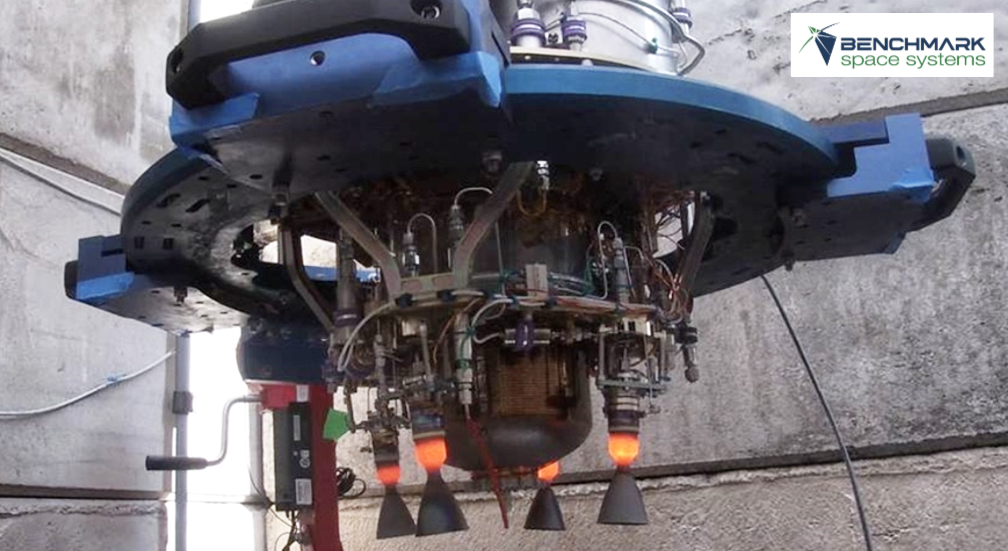
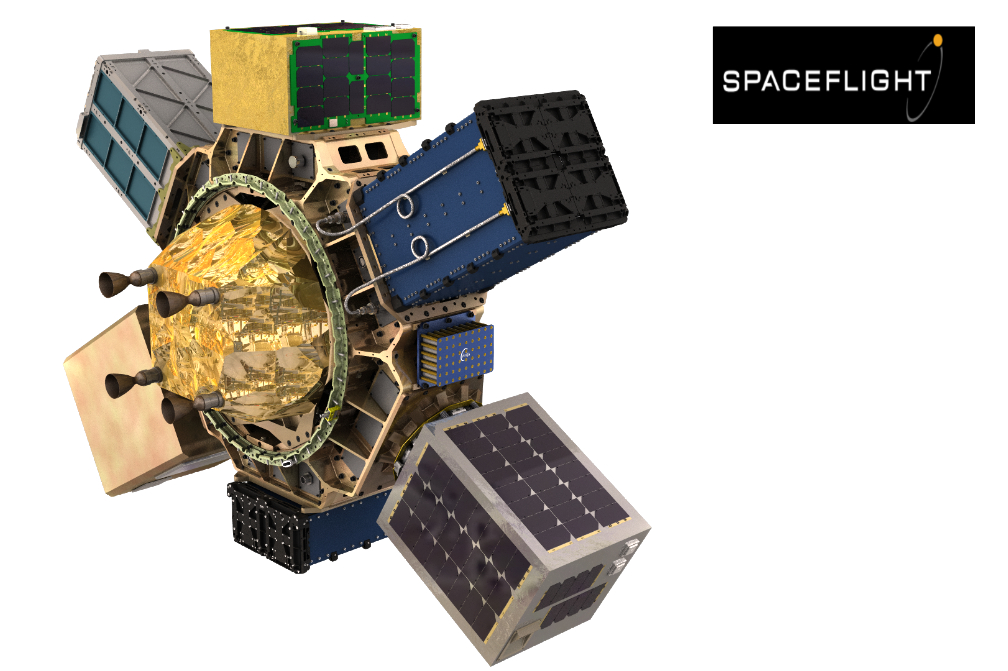
With milestone hot fire engine tests of its Halcyon Avant non-toxic chemical propulsion system completed at its Pleasanton, California, facility, Benchmark Space Systems‘ highly-anticipated system has been integrated into Spaceflight Inc.’s first Sherpa-LTC orbital transfer vehicle (OTV).

The Sherpa-LTC features a high thrust, bi-propellant, green propulsion subsystem integrated seamlessly within the available space of the original free flyer.

The propulsive OTV is set for launch on the SpaceX Transporter 3 mission that is scheduled for liftoff on January 13th from Cape Canaveral. Spaceflight’s historic SXRS-6 mission is set to deliver 13 payloads on the company’s first multi-destination rideshare mission.

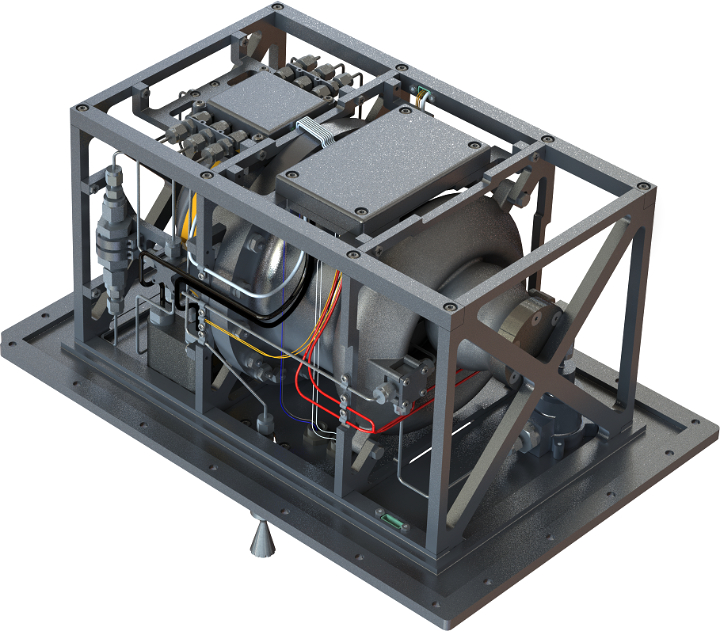
Spaceflight is the first to use Benchmark’s Halcyon Avant green, bipropellant system, which boasts a 25% increase in fuel efficiency over state-of-the-art green monopropellants, using low-cost and readily available propellants. Spaceflight designed Sherpa-LTC to offer rideshare customers a fast on-orbit transportation option. Benchmark’s Halcyon Avant green bipropellant system enables satellites to reach their desired orbits quickly.

Benchmark’s Halycon Avant propulsion system.

Benchmark’s Halcyon High-test peroxide (HTP)-based monopropellant system has successfully performed recent mission-critical maneuvers and will continue to drive government and commercial missions across three satellites as part of the Halcyon heritage campaign that reached orbit on Transporter 2. The Halcyon Avant system uses many common components from its monopropellant predecessor, with the added benefit of a post-catalyst fuel-injection feature that provides nearly 100% performance improvement.

The Benchmark team is already working on the second Sherpa LTC propulsion system scheduled for a Q2 delivery to Spaceflight, as well as smaller scaled Halcyon Avant systems for commercial and government smallsat missions, representing several system configurations that are scheduled to be in space before 2022 ends.

In its fifth year, Benchmark Space Systems is projecting 4x y-o-y revenue growth, expanding its product and service offerings, and scaling production capacity to meet demand and lead exciting new opportunities in space. The company is developing and delivering groundbreaking solutions that will not only support sustainability of LEO, GEO and beyond, but maximize the value of on-orbit assets through extended revenue generation and added capabilities.

“Benchmark’s innovative high-thrust system will play an important role in our first multi-destination rideshare mission,” said Phil Bracken, Spaceflight’s VP of Engineering. “We intentionally designed our Sherpa program to be modular so we could utilize best-of-class propulsion systems to meet our customers’ specific launch needs. Our partners play an important role in helping us get our customers exactly where they need to be so they can achieve their mission objectives.”
“The collaborative partnership between Spaceflight and Benchmark played a big part in the effective co-development of our first OTV-specific system, poised to deliver on the evolving needs of the Sherpa-LTC product family,” said Ryan McDevitt, Benchmark Space Systems CEO. “Benchmark’s innovative bipropellant system and Spaceflight’s spacecraft design and operational depth and experience capable of delivering Sherpa payloads on orbit with unmatched speed and precision. We are thrilled with the successful hot fire tests and engine integration aboard the first Sherpa-LTC, as we ready for a historic rideshare that opens the door to more access to space.”

Benchmark’s scalable, launch vehicle agnostic propulsion product and services suite supports a broad spectrum of spacecraft – from 1U cubesats through ESPA-class (1-500kg) satellites, lunar landers, spent launcher stages, and orbital transfer vehicles (OTVs), offering far safer and faster rideshare options than electric propulsion (EP) systems, which can take months to complete their trips to orbit.

Filed Under: News

Voyager Space Completes Acquisition Of Space Micro

January 10, 2022 by editorial

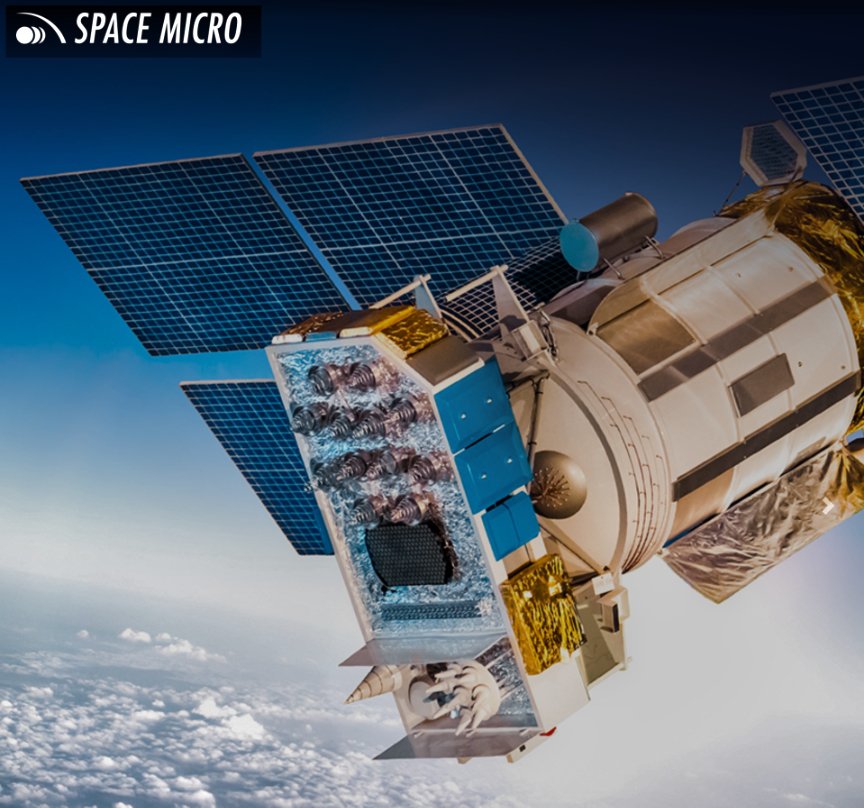
Voyager Space Inc. (Voyager) has completed the acquisition of a majority stake in Space Micro. Voyager will provide strategic operations support to help advance Space Micro’s technology throughput to civil, commercial, and defense customers.

Space Micro is an engineering-driven business that is focused on advancing high-performance satellite communications, digital,and electro-optics systems with 2.8 million hours of space flight heritage. The company has multiple, active contracts, including the development of AI for Earth Observation (EO) missions and for providing X-band transponders for two lunar missions selected under the NASA Artemis program.

Space Micro also has a history of providing critical technology for the U.S. Department of Defense, including Intelligence, Surveillance and Reconnaissance (ISR) space payloads, secure laser communications terminals, and is also developing a digital RF-to-optical and optical-to-RF signal converter. Space Micro developed a 100 Gbps Laser Communications Terminal that has been on orbit for over a year.

"We're pleased to start this year with a new addition to the Voyager family," said Matthew Kuta, President and COO of Voyager Space. "Space Micro brings innovation, precision, and experience to our technology portfolio."
"As we look at a continuously developing and evolving satellite market, Voyager makes a perfect partner to support our technology capabilities and business operations," said Space Micro Co-Founder and Chairman, David Strobel. "Our teams are ready to hit the ground running to meet customer needs and market demand."

Voyager previously announced a strategic agreement on November 22, 2021, for the intent to acquire Space Micro.

Filed Under: News

Deadline Approaching For SmallSats Contest To Win $10,000 And Other Opportunities

January 7, 2022 by editorial

The following is an invitation to participate in the upcoming SmallSats Contest.

Satellite technology has quickly changed the world, but more recently the industry has lacked the creative ideas to propel the use of small satellites into the future. The SmallSats Contest is looking for your unique idea to turn into reality.

Your Idea Brought to Life Start to Finish
Technology Investor and Entrepreneur Peter Wokwicz is teaming up with Orbital Transports to offer you the opportunity to launch your best idea into space. The SmallSats Contest is offering a $10,000 prize, a public announcement, and if desired the opportunity to be involved in the design, build, launch, and operation of a small satellite.

From Saving the Planet to Making a Profit
We want to hear what you think can be launched into space that will improve some aspect of the world as we know it. The winner will be chosen based on a combination of social or economic value. The idea must do good for the world and/or demonstrate a path towards profitability, be economical to build and launch, and fit within 2U or less of payload volume.

If your entry is chosen, you will win $10,000, receive a public announcement and recognition, and have the opportunity to be involved in the smallsat’s design, build, and operation.

Submissions will be received through the SmallSats Contest website.

Contest Details

  • Submission Deadline: January 14th, 2022
  • Decision Date: January 28th, 2022
  • Planned Launch Date: Q4 2022

Filed Under: News

Arianespace Selected By EUSPA To Launch 8 New Galileo Satellites

January 7, 2022 by editorial

The European Union Agency for the Space Program (EUSPA) has selected Arianespace to launch four new Galileo satellites for Europe’s own satellite navigation system. With this order, EUSPA takes over the role of placing launch services contracts for Galileo from ESA, which acted so far in the name and on behalf of the European Commission and will continue to be the technical authority for these launches.

This order follows European Space Agency’s (ESA) order for the launch of four satellites in October 2021, and will complete the deployment of first-generation Galileo satellites.

These launches will take place from the Guiana Space Center (CSG), Europe’s Spaceport in Kourou, French Guiana. After a first launch this year for Galileo, carrying satellites from a previous order, in the first half of 2022, a second Soyuz launch in 2022 will orbit the first two satellites from this latest order. The next three missions will orbit two satellites each on Ariane 62, in 2023, 2024 and 2025.

Each of the eight satellites under this order, built by OHB System AG in Bremen, Germany, will weigh less than 730 kg. They will join the 28 Galileo satellites already deployed to date, as well as the two to be orbited in early 2022 from the Guiana Space Center by Arianespace.

“I would like to thank ESA and EUSPA, along with the European Commission for continuing to entrust us with their satellites,” said Stéphane Israël, CEO of Arianespace. “We’re very proud to once again be helping EU deploy its own global navigation satellite system. This additional order to the service of Galileo once again confirms Arianespace’s assigned mission of ensuring reliable access to space for Europe.”

Filed Under: News

LeoStella LEO-100 Smallsat Buses Ordered By Loft Orbital Solutions

January 7, 2022 by editorial

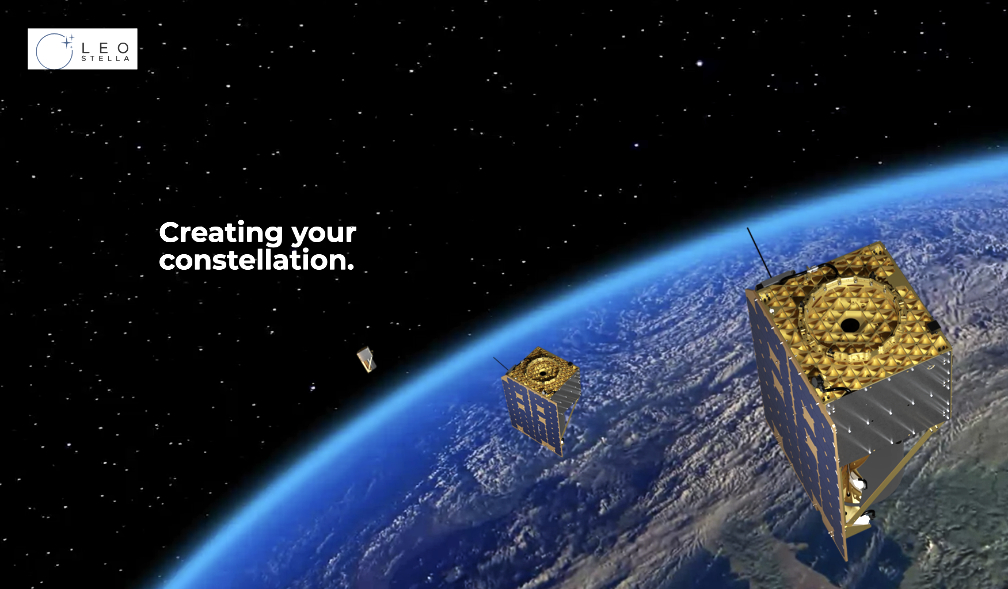
Loft Orbital Solutions, Inc. and LeoStella, Inc. have extended their production agreement to secure multiple additional LEO-100 buses from LeoStella. These satellite buses are the latest in a series Loft Orbital has secured from LeoStella.

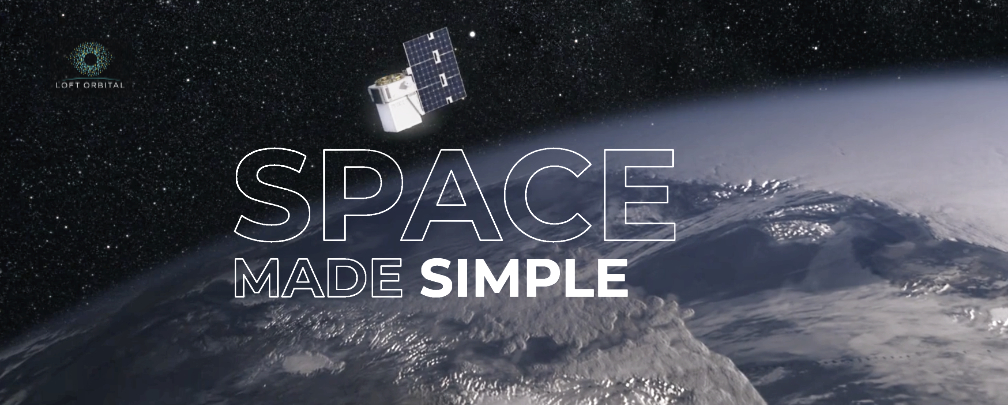
The satellites are based on LeoStella’s existing product line of ESPA-class buses. LeoStella’s active production line of commercial buses creates an opportunity for customers to acquire high-quality satellites while staying within new-space cost and schedule constraints. This procurement exemplifies Loft Orbital’s novel strategy of using commercial-off-the-shelf (COTS) satellite buses to fly any kind of payload in LEO at unparalleled speed to orbit and reliability. This partnership is a crucial enabler for Loft Orbital’s focus on making space simple.

Loft Orbital operates satellite infrastructure and flies customer payloads as a service. By using common bus designs across its missions, Loft Orbital shields its customers from the technical and schedule risks that typically impact space missions.

LeoStella’s continuous manufacturing model enables the company to produce commercial satellites at scale. The company’s intelligent manufacturing facility uses a digital process tethered to a robust supply chain to make satellite production more flexible and efficient. Its Tukwila, Wash., factory is designed to maximize efficiency while remaining scalable to keep pace with the rapidly accelerating market demand.

"We chose to procure these additional buses from LeoStella given the excellent performance of its LEO-100 satellite bus, which we used for our YAM-3 mission that launched earlier this year, and YAM-5, which is launching in 2022," said Pierre-Damien Vaujour, CEO of Loft Orbital. "Our strategy has been to partner with best-in-class bus providers with significant on-orbit heritage and active production lines. We focus our efforts on the hardware and software products that enable us to treat these buses as payload agnostic platforms, allowing us to fly any payload onboard and provide our customers a high degree of operational control."
"Our COTS buses provide industry-leading data quality, throughput, and up-time as demonstrated on-orbit across multiple operational constellations," said Brian Rider, chief technology officer at LeoStella. "LeoStella has a continuous production line of satellites that we can repurpose for a wide range of missions. This approach aligns well with Loft Orbital's focus on offering its customers fast and reliable access to space. We are excited to be part of that ecosystem." 

Filed Under: News

  • « Go to Previous Page
  • Page 1
  • Interim pages omitted …
  • Page 55
  • Page 56
  • Page 57
  • Page 58
  • Go to Next Page »

Primary Sidebar

WEEKLY NEWSLETTER

Archives

  • March 2026
  • February 2026
  • January 2026
  • December 2025
  • November 2025
  • October 2025
  • September 2025
  • August 2025
  • July 2025
  • June 2025
  • May 2025
  • April 2025
  • March 2025
  • February 2025
  • January 2025
  • December 2024
  • November 2024
  • October 2024
  • September 2024
  • August 2024
  • July 2024
  • June 2024
  • May 2024
  • April 2024
  • March 2024
  • February 2024
  • January 2024
  • December 2023
  • November 2023
  • October 2023
  • September 2023
  • August 2023
  • July 2023
  • June 2023
  • May 2023
  • April 2023
  • March 2023
  • February 2023
  • January 2023
  • December 2022
  • November 2022
  • October 2022
  • September 2022
  • August 2022
  • July 2022
  • June 2022
  • May 2022
  • April 2022
  • March 2022
  • February 2022
  • January 2022
  • December 2021
  • November 2021
  • October 2021
  • September 2021
  • August 2021
  • July 2021
  • June 2021
  • May 2021
  • April 2021
  • March 2021
  • February 2021
  • January 2021
  • December 2020
  • November 2020
  • October 2020
  • September 2020
  • August 2020
  • July 2020
  • June 2020
  • May 2020
  • April 2020
  • March 2020
  • February 2020
  • January 2020
  • December 2019
  • November 2019
  • October 2019

© 2019–2026 SatNews

Insert/edit link

Enter the destination URL

Or link to existing content

    No search term specified. Showing recent items. Search or use up and down arrow keys to select an item.
      x
      Sign Up Now!

      Enjoy a free weekly newsletter with recent headlines from the global SmallSat industry.

      Invalid email address
      We promise not to spam you. You can unsubscribe at any time.
      Thanks for subscribing! You will now receive weekly SmallSat News updates.
      We love our advertisers.
      And you will too!

      Please disable Ad Blocker to continue... We promise to keep it unobtrusive.
      We promise not to spam you. You can unsubscribe at any time.
      Invalid email address
      Thanks for subscribing!