• Skip to main content
  • Skip to primary sidebar
  • Home
  • News
  • Featured
  • More News ⌄
    • SatNews
    • SatMagazine
    • MilSatMagazine
  • Events ⌄
    • MilSat Symposium
    • SmallSat Symposium
    • Satellite Innovation
  • Contacts
  • SUBSCRIPTION

SmallSat News

You are here: Home / Archives for 2023

Archives for 2023

Planet’s 1st Pelican tech demo sat plus 36 SuperDoves launch via SpaceX

November 12, 2023 by editorial

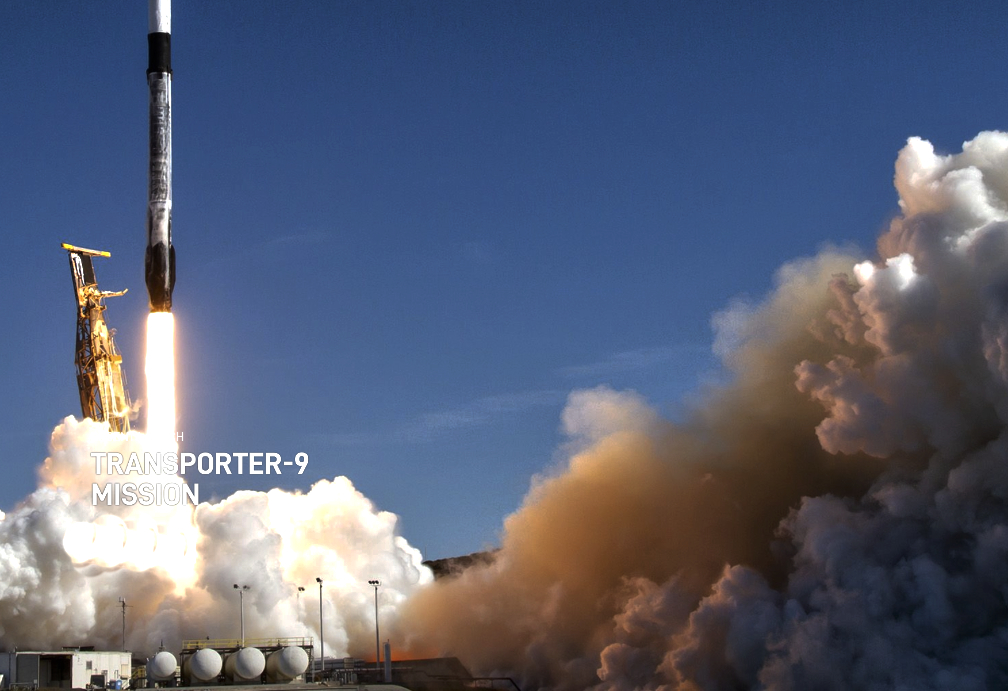
Planet Labs PBC (NYSE: PL) has announced that Pelican-1, the first tech demo satellite for the company’s nexgen, high-resolution Pelican fleet, along with 36 of its SuperDoves, Flock 4Q, were successfully launched to orbit on SpaceX’s Transporter-9 mission from Vandenberg Space Force Base on Saturday, November 11, 2023 — the Planet team has successfully made contact with each satellite and started its commissioning process.

The launch of Pelican-1 is a major milestone for Planet’s next-generation high-resolution mission. Over time, the Pelican constellation is expected to offer a more capable and cost-effective upgrade to the Company’s current high-resolution satellites, the SkySats. Pelican-1 is not expected to produce commercially available data; rather, the R&D satellite is tasked with collecting information and on-orbit learnings for integration into Planet’s future Pelican and Tanager designs, which share a common satellite bus.

Planet launches a number of SuperDoves each year in order to replenish its on-orbit medium resolution fleet with the latest technology and hardware. The 36 SuperDoves launched via the SpaceX Transporter-9 mission — Planet’s Flock 4Q — have started their automated commissioning process and are expected to begin collecting imagery in the coming days. Planet’s SuperDoves capture daily, 8-band data of Earth’s changing systems, allowing commercial users, researchers, and governments to gain unparalleled insight at regional and global scales.

The SpaceX Transporter-9 launch, photo courtesy of the company.

“Pelican-1 was designed and built entirely by the Planet team in our manufacturing lab in San Francisco, an incredible feat to accomplish in just a few short years. I am incredibly proud of the team’s dedication to this project and ready for the next phase of the mission – collecting instrumental learnings and feedback from Pelican-1 on-orbit. These learnings will be critical to both the Pelican and Tanager missions.” — James Mason, Planet’s Senior Vice President of Space Systems

View the Pelican video at this direct link…

Filed Under: News

Spire Global has 11 smallsats launched via the SpaceX Transporter-9 Mission

November 12, 2023 by editorial

Spire Global, Inc. (NYSE: SPIR) successfully launched 11 satellites on the SpaceX Transporter-9 mission from Vandenberg Space Force Base, including ten satellites for Space Services customers and one for Spire’s data and analytics solutions.

The SpaceX Transporter-9 launch from Cape Canaveral SFS.

Spire Space Services allows organizations to deploy and scale their own satellite constellation at maximum speed and reliably, all through a subscription model that eliminates the high upfront cost of building and maintaining infrastructure in space.

Onboard the launch, Spire Space Services had satellites for:

GHGSat: Spire launched three satellites carrying payloads to monitor greenhouse gas emissions for GHGSat, including the first commercial CO2 sensor and two sensors dedicated to methane monitoring. This innovation marks the beginning in frequent, precise and independent high-resolution CO2 data collection, revolutionizing carbon emissions monitoring.

HiSky: Ella 1, a satellite designed to showcase the capabilities of hiSky’sSmartellite™ ground network, also launched on the mission. The satellite will demonstrate hiSky network’s ability to switch between geostationary (GEO) satellites and low Earth orbit (LEO) satellites, allowing them to offer low data rate connectivity for IoT and high data rate connectivity for substantial data transfers.

Jacobs: Spire launched two satellites for Jacobs, a leader in advanced manufacturing, critical infrastructure, health & life sciences and national security. Jacobs has developed and is delivering cost-effective and resilient radio frequency (RF) signal detection and processing systems through Jacobs Mango Series Payload (MSP) as part of an integrated system with Spire. Jacobs embarked on its space payload vision in 2018, and has rapidly achieved space qualification of their space radar systems. Jacobs’ agile design methodology provides maximum payload flexibility ensuring advanced, affordable space radar solutions.

SNC: Spire also launched the Vindlér satellite constellation consisting of four satellites carrying radio frequency (RF) technology for SNC. Vindlér is designed to detect and geolocate specific objects from LEO based on targeted RF emissions ranging from VHF to L-band. Vindlér can be used to locate emitters of interest throughout the world and can be used to track dark vessels, GPS jammers and more in support of national security efforts.

LEMUR 2 NANAZ was launched as part of the mission, showcasing Spire’s capability to track and gather information from terrestrial and space-based signals emitted by NGSO broadband internet constellations. It aims to harvest data for in-depth analyses of Ku- and Ka-band spectrum usage across diverse applications, regions, and markets, identifying specific activities and behavioral patterns. The payload validates Spire’s radio frequency monitoring technology, extending signal collection up to 30 GHz with enhanced capabilities.

The ten customer satellites were manifested on the mission through a multi-launch agreement between Spire and Exolaunch, which includes access to the Transporter missions through Exolaunch’s long-term launch arrangements with SpaceX. Under this agreement, Exolaunch is also providing its EXOpod Nova deployer, which was developed in collaboration with Spire. Spire’s LEMUR 2 NANAZ was manifested on the mission through D-Orbit onboard their OTV ION Satellite Carrier (ION) for last mile orbital

“This launch marks a milestone for us, hosting the largest number of Space Services customers on a single mission to date,” . “Rather than viewing space as an escape from Earth’s challenges, we see it as a source of invaluable insights and data for addressing our planet’s most pressing issues. Through Spire Space Services, we’re streamlining space access so that any organization can tap into the benefits of space-based data.” — Frank Frulio, General Manager, Space Services, Spire

Filed Under: News

Two Unseenlabs satellites launched + deployed via the SpaceX Transporter-9 mission

November 12, 2023 by editorial

Unseenlabs has successfully launched two new satellites, BRO-10 and BRO-11, as part of SpaceX’s Transporter-9 mission via Exolaunch.

The satellites lifted off aboard SpaceX’s Falcon 9 launch vehicle from Vandenberg Space Force Base in California on November 11. This achievement represents a significant step forward in Unseenlabs’ ongoing mission to enhance maritime surveillance through its unique technology, capable of detecting the presence of any ship, whether cooperating or not, regardless ofits geographical location.

With BRO-10 and BRO-11 now on-orbit at an altitude of 520 kilometers, Unseenlabs’ satellite constellation expands, greatly amplifying the company’s capacity to provide RF data and solutions. Unseenlabs’ constellation is now comprised of 11 satellites, resulting in 11 simultaneous RF data collection points, thanks to the company’s smallsat technology.

The success of this launch propels Unseenlabs even further in the firm’s mission to offer comprehensive vessel characterization and precise geolocation, meeting the increasing demands of maritime surveillance across the globe.The new capabilities introduced by these satellites underscore Unseenlabs’ commitment to safeguarding marine assets and environments from threats and unlawful activities.

The expansion of the constellation offers an extended operational reach and increased surveillance and caters to the needs of government entities, NGOs, and private sector stakeholders such as insurers, worldwide. This advancement significantly contributes to improving the global maritime landscape, particularly at a time when maritime activities continue to thrive.

Filed Under: News

OQ Technology’s noteworthy two satellite launch by SpaceX

November 12, 2023 by editorial

OQ Technology has successfully launched two of the company’s new LEO satellites: TIGER-5 and TIGER-6, aboard SpaceX’s Falcon 9 rocket and the Transporter-9 mission.

The two satellites separated successfully from the upper stage of the rocket and were deployed into orbit 1 hour and 15 minutes post launch. Both satellites are 6U sized smallsat carrying “cell tower” NB-IoT payloads.

The two satellites join OQ 5G NTN IoT satellite constellation, which now has a total of eight satellites. The company has been on a fast track to launch many satellites this year to complete its batch 1 that can then provide global narrowband IoT coverage to many apps and clients.

The 5G satellite market has been growing rapidly with many users shifting from proprietary solutions to standard 3GPP protocols. OQ is a front runner globally in offering LEO satellite narrowband communication for machines and IoT.

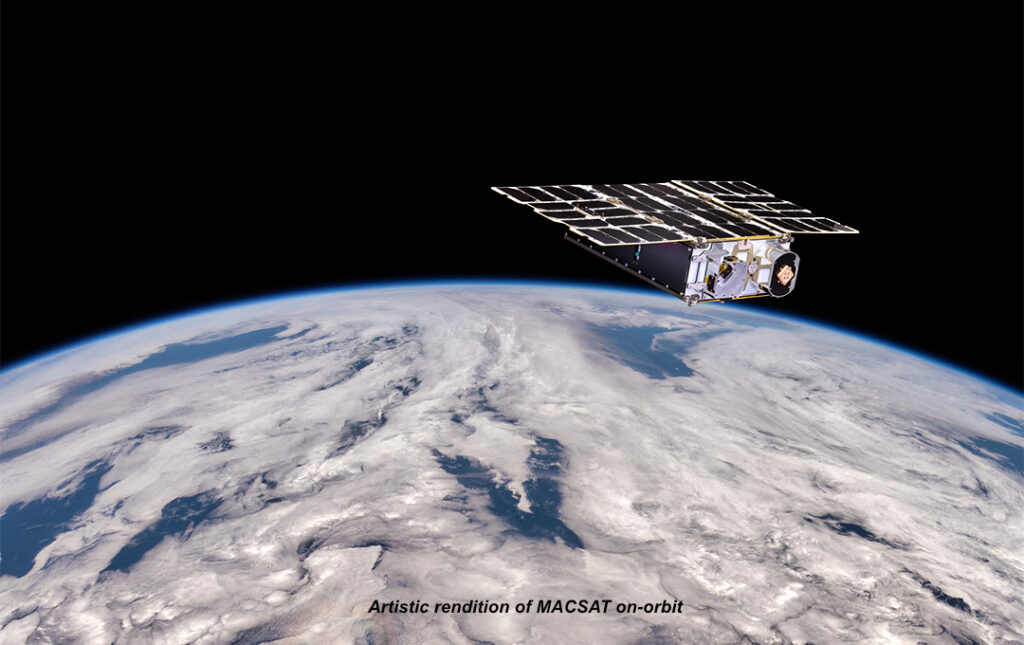
This launch comes after a month from the successful launch of the firm’s MACSAT satellite on a Vega rocket from Kourou.

“As promised,we are on track in completing our batch 1 of 10 satellites to serve our critical clients globally and expand our commercial reach. We are very proud of the results we have achieved thanks to our brilliant team that makes sure everything runs smoothly and on schedule. Many thanks also to our partners for trusting and supporting us.” — Omar Qaise, Founder and Chief Executive Officer, OQ Technology

Filed Under: News

Security Space Launch Phase 2 Procurement assignments made by SSC

November 10, 2023 by editorial

Space Systems Command (SSC) has assigned 21 new launch service mission assignments for the FY24 National Security Space Launch (NSSL) Phase 2 Launch Service Procurement contract following completion of the NSSL Mission Assignment Board (MAB)’s assignment process for FY24 launch service awards — this is the fifth, and last, order year in the Phase 2 contract.

United Launch  Alliance (ULA) received 11 mission assignments and Space Exploration Technologies Corp. (SpaceX) received 10. These Order Year 5 (OY5) missions are scheduled to launch over the next two to three years and focus on a variety of mission areas. 

The 11 missions assigned to ULA include… GPS III-9, NROL-73, NROL-56, STP-5, SILENTBARKER 2/NROL-118, GPS IIIF-1, NROL-100, USSF-95, NROL-109, SDA T2TL-B, and USSF-25. 

Artistic rendition of a GPS III satellite on-orbit, courtesy of Lockheed Martin.

The 10 missions assigned to SpaceX include…  SDA T1TL-F, SDA T1TR-A, USSF-57, NROL-77, SDA T1TR-E, GPS III-10, USSF-75, SDA T2TL-A, SDA T2TL-C, and USSF-70.

NROL-77, NROL-73, NROL-56, NROL-109, and NROL-100 are missions being conducted in partnership with the National Reconnaissance Office (NRO).

T1TL-F is the last mission of six Space Development Agency (SDA) Tranche 1 Transport Layer launches; T2TL-A, T2TL-B and T2TL-C are the first three Tranche 2 Transport Layer launches.  SDA’s Transport Layer will provide assured, resilient, low-latency military data and connectivity worldwide to the full range of warfighter platforms.  T1TR-A and T1TR-E are the last two SDA Tranche 1 Tracking Layer launches.  SDA’s Tracking Layer will provide global indications, warning, tracking, and targeting of advanced missile threats, including hypersonic missile systems.

The GPS III-9 and GPS III-10 missions are the final projected GPS III missions.  The GPS IIIF-1 is the first launch of the follow-on GPS III satellites.  GPS Block IIIF introduces several improvements and novel capabilities compared to previous GPS satellite blocks.  USSF-57 will launch the first of three Next Generation Overhead Persistent Infrared GEO (NGG) satellites.  These satellites will deliver survivable, resilient missile warning, tracking, and defense in a highly contested and congested space domain.  

SILENTBARKER 2/NROL-118 is a joint NRO and SSC Space Domain Awareness mission to meet DoD and intelligence community space protection needs.

Artistic rendition of the SILENTBAKER / NROL-118 satellite on-orbit, courtesy of Boeing.

USSF-25 will launch the Defense Advanced Research Projects Agency’s (DARPA) Demonstration Rocket for Agile Cislunar Operations (DRACO). The goal of the DRACO program is to demonstrate a nuclear thermal rocket in orbit. 

USSF-95 will be the first launch of a Missile Track Custody (MTC) prototype satellite. The MTC prototype effort will evaluate the ability of various Next Generation Overhead Persistent Infrared sensor designs to meet missile tracking requirements.

Missile Track Custody artistic rendition is courtesy of Raytheon Intelligence and Space.

STP-5 is the latest mission in support of SSC’s Space Test Program (STP).  The STP performs mission design, payload-to-bus integration, space vehicle-to-launch vehicle integration, and on-orbit operations for Science and Technology payloads that exhibit potential military utility.  STP-5 will launch two satellites in support of the Department of Defense Strategic Capabilities Office.

Artistic rendition of STP5 on-orbit, courtesy of Sierra Nevada Corporation.

“Over the five-year Phase 2 contract, we will have ordered a total of 48 missions, a significant increase over the 34 missions originally estimated leading up to Phase 2. The increase in launch tempo is a clear reminder of how vital space-based capabilities are in providing our warfighters and our nation’s decision-makers with the information needed to stay ahead of and to deter adversarial forces.” — Brig. Gen. Kristin Panzenhagen, Program Executive Officer, Assured Access to Space

“We maintain a close partnership with our mission customers and our domestic launch industry to protect our nation. Under our Phase 2 contract, ULA and SpaceX have been committed partners, and our combined team remains dedicated to delivery of critical assets to our warfighters as we complete this phase of the NSSL program and embark on NSSL Phase 3 starting in FY25.” — Col. Chad Melone, SSC senior materiel leader, Mission Solutions Space Acquisition Delta

Space Systems Command is the U.S. Space Force’s field command responsible for acquiring and delivering resilient war fighting capabilities to protect our nation’s strategic advantage in and from space.  SSC manages a $15 billion space acquisition budget for the DoD and works in partnership with joint forces, industry, government agencies, and academic and allied organizations to accelerate innovation and outpace emerging threats.  Our actions today are making the world a better space for tomorrow.

Filed Under: News

Terran Orbital awarded an Engineering Change Proposal contract by Lockheed Martin

November 6, 2023 by editorial

Lockheed Martin has awarded Terran Orbital Corporation (NYSE: LLAP) an Engineering Change Proposal (ECP) to host additional payloads. 

The contract modification adds $7.7 million to an existing satellite design and manufacturing program.  This addition was awarded following a successful Critical Design Review (CDR) earlier this year.  The modification incorporates additional previously anticipated scope into the contract.  This modification brings the total value of the contract to just over $52 million.

Last year, Terran Orbital delivered 10 satellite buses to Lockheed Martin in support of their Tranche 0 Transport Layer contract with SDA. Terran Orbital is currently building 42 buses for Lockheed Martin to help the company fulfill its $700 million contract for the SDA’s Tranche 1 Transport Layer (T1TL), currently scheduled for a late 2024 launch, and Terran Orbital was just awarded 36 buses to help the company fulfill its $816 million contract for the SDA’s Tranche 2 Transport Layer (T2TL), currently scheduled for late 2026.

Filed Under: News

ESA: Satellites deliver 5G-quality connectivity

November 6, 2023 by editorial

High-speed internet access that delivers video streaming, gaming, and virtual and augmented-reality content via satellites to people living and traveling in remote areas has come a step closer.

Researchers at the University of Surrey connected people via a constellation of satellites in LEO operated by European satellite company Eutelsat Group, formerly known as OneWeb. They demonstrated seamless switching between ground-based mobile devices using 5G connectivity and the satellite system with 5G quality of service. The tests were performed through the ESA Sunrise Partnership Project supported by the UK Space Agency.

Engineers tested high-speed video conferencing as well as gaming and simple web browsing with almost no delays or glitches, thanks to the LEO network of almost 600 satellites and the University of Surrey’s 6G/5G Innovation Center testbed.

Team members use Eutelsat Group’s satellites to connect

“It was thrilling to see no degradation when using the 5G connection made possible by the low Earth orbit constellation. This is a step closer to increasing internet access for more people around the world – a privilege that many of us take for granted. The work performed in the 5G pilot tests has demonstrated the feasibility of 5G backhaul over satellites in low Earth orbit.” — Barry Evans, Professor of Satellite Communications at the 6G/5G Innovation Centre, University of Surrey

“It is a fantastic achievement from different perspectives. Our Surrey-developed standard compliant 5G core works perfectly with large constellation satellite and terrestrial networks. We are delighted to see the UK taking the lead in space/terrestrial network convergence and solving digital divide challenges as we work toward ubiquitous high-quality coverage of broadband services.” — Rahim Tafazolli, Director of the Institute for Communication Systems, University of Surrey,

“We are delighted to have collaborated with the University of Surrey and ESA on these 5G pilot tests, which underscore the huge potential our low Earth orbit services for serving mobile users in rural and remote areas. As we continue to deliver for our existing customers and look forward to activating global coverage later this year, our driving focus will continue to revolve around expanding access to connectivity around the world.” — Massimiliano Ladovaz, Group Chief Operations Officer, Eutelsat

“We are proudly celebrating today our cooperation, under the Sunrise Partnership Project, with a large telecommunications operator such as Eutelsat Group and its partners including small and medium-sized enterprises, and academia. By working in a lean style using commercial off-the-shelf components and flexible project management to bring innovative technologies to market in response to commercial needs, ESA is helping to foster innovation in 5G connectivity in the highly competitive global market for telecommunications satellites.” — Javier Benedicto, Acting Director of Connectivity and Secure Communications at ESA

“It is fantastic to see the low Earth orbit network successfully connect to a 5G mobile network. This achievement demonstrates the huge potential of its innovative technology to enhance connectivity and improve people’s lives, whether that means better broadband services in remote places, or the ability to respond more effectively to emergency situations.” — Harshbir Sangha, Missions and Capabilities Delivery Director, UK Space Agency

Filed Under: News

CesiumAstro comms payloads tests successful on NASA’s Starling Mission + achieves TRL 9 Status

November 5, 2023 by editorial

CesiumAstro is celebrating the successful initial tests of the company’s CommPack cross-link communications payload on the NASA Starling mission’s CubeSats. With these tests complete, the CommPack system achieves TRL 9 status, the highest technology readiness level, and the NASA Starling team is set to begin communications experiments with the cross-link radios in the coming weeks.

Launched aboard a Rocket Lab Electron rocket in July of 2023, the Starling mission is flying a collaborative “swarm” of spacecraft that will perform coordinated activities in various areas, including in-space network communications, relative navigation between spacecraft, autonomous maneuver planning and execution, and distributed spacecraft autonomy. The mission will demonstrate how distributed spacecraft autonomy increases resilience, allowing them to continue functioning even when communication from the ground is temporarily unavailable due to distance or location.

CesiumAstro’s CommPack payload includes two S-band antennas, the SDR-1001 SDR (software-defined radio), and the company’s carrier-sense multiple access/time-division duplexed (CSMA/TDD) waveform enabling mobile ad hoc networking (MANET) in space. The satellites will use CommPack to establish and maintain the dynamic communications network between the spacecraft in the swarm.

Starling is funded by NASA’s Small Spacecraft Technology program based at NASA’s Ames Research Center in California’s Silicon Valley and within the agency’s Space Technology Mission Directorate in Washington. Starling joins a growing list of civil, commercial, and defense missions flying CesiumAstro’s communications systems.

“We would like to congratulate NASA on the successful launch and continued operation of the Starling mission. Achieving TRL 9 status is an important milestone for our CommPack payload, and we are extremely proud to help NASA validate mobile ad hoc networking in space as a foundational technology for future formation flying and on-orbit servicing missions.” — Shey Sabripour, founder and CEO of CesiumAstro

Filed Under: News

Hydrosat awards contract to Muon Space

November 3, 2023 by editorial

Hydrosat has partnered with Muon Space and has been awarded a contract for its first Constellation-as-a-Service (CaaS) spacecraft that will integrate Hydrosat’s multispectral and thermal infrared (IR) imaging instruments.

This partnership marks an advancement of Hydrosat’s plans to deploy a constellation of LEO smallsats that provide critical data for improving agricultural water use efficiency in response to increasing scarcity of freshwater due to climate change.

Under the terms of the deal, Muon Space will equip one of its CaaS satellites launching in 2024 with Hydrosat’s second demonstration commercial imaging payloads, designed to measure multispectral surface reflectance and land surface temperature. These capabilities will contribute to the efforts of both companies to collect important remote sensing data targeting key climate applications.

The collaboration between Muon Space and Hydrosat represents a significant step forward in the fight against climate change, as both companies work to develop advanced satellite technology and data solutions to better understand and address the challenges faced by our planet.

“We are thrilled to partner with Muon Space on this initiative. Their tailored approach to mission design, ability to accommodate complex customer payloads, and rapid development are aligned with our commitment to deliver game-changing water productivity analytics to the agriculture market as well as addressing the impact of climate change.” — Pieter Fossel, CEO,Hydrosat

“We are excited to join forces with Hydrosat to start deploying their production agriculture-focused IR constellation. Our partnership represents the future of efficient and scalable space system development needed to bring important earth-systems and environmental products to market.” — Jonny Dyer, CEO, Muon Space.

Filed Under: News

Horizon Technologies recently awarded million£ grant from the UK Space Agency

November 2, 2023 by editorial

Earlier last month, Horizon Technologies was awarded a £1.2 million grant by the UK Space Agency — this grant is part of a £2.8 million total program called the Amber™ Phoenix Mission.

The Phoenix Mission will see another Amber™ RF (Radio Frequency) EO payload launched into orbit in mid-2024.

The UK government sponsor and initiator of the Amber™ program is the Royal Navy via the Joint Maritime Security Centre (JMSC) in Portsmouth. Amber™ is a space-based data service and will play a key role in detecting “dark vessels” such as those evading sanctions against Russia, Iran, etc., illegal fishing, smuggling (people and goods), transshipments, and refugees.

Unlike other EO constellations, Amber™ is unique. Horizon’s Amber™ payload detects, geolocates, and demodulates maritime RF (Radars and SatPhones) signals from “dark vessels.” Amber™ is a maritime intelligence data service and is “always on,” and every Amber™ satellite/payload continuously covers about 3% of the world’s surface at all times.

AMBER smallsat, image courtesy of Horizon Technologies

Amber™ satellites/payloads are not “tasked” and act essentially as “space-based RF signal vacuum cleaners,” constantly picking up emitters over about 3% of the earth’s surface at all times. In addition, because Amber™ demodulates the RF data, the data is not merely “radio frequency mapping” as offered by others.

The Amber™ Phoenix Mission satellite is to be the first of a proposed constellation of more than 20 Amber™ payloads on-orbit to provide worldwide RF data to the JMSC and other customers with 30-minute latency. Some Amber™ payloads will also be integrated and deployed on EO and SAR satellite constellations to provide tip and cue capabilities to end users.

Previously, Horizon Technologies’ original Amber™ payload was on one of eight (8) smallsats lost on the Virgin Orbit failed launch of January 9, 2023, where Virgin Orbit’s Launcher One failed to reach the proper orbit. This was part of the Satellite Applications Catapult IOD-3 Program, for which Horizon Technologies was competitively selected in 2019.

“Tracking vessels attempting to avoid detection is a complex challenge, but one that Horizon Technologies can help solve with their ground-breaking technology. Our support for the newAmber™ Phoenix Mission will develop a new capability to improve space-based maritime intelligence data services and catalyst further investment into the growing UK space sector. I’m looking forward to seeing Horizon Technologies launch many more satellites in the future.” — Dr. Paul Bate, Chief Executive of the UK Space Agency

“The ability to proliferate Amber™ payloads into other constellations will (1) give us lots of extra “Looks Per Day” (LPD) around the planet resulting in more revenue for Horizon and our partners, and even better, (2) will make tipping and cueing (whereby one satellite geolocates a target of interest, and a follow-on satellite images that target [EO or SAR]) a reality, and is sure to be market disruptive.” — John Beckner, CEO, Horizon Technologies

“It’s been a pleasure for the Catapult to support Horizon Technologies’ transition into the space sector. After the January launch setback, the Horizon team has worked tirelessly for its follow-on mission – we wish them and Phoenix a successful venture.” — Ms. Lucy Edge, COO, Satellite Applications Catapult

Horizon Technologies’ CEO John Beckner added, “Certainly, the bleak events of the evening of 9 January will not be forgotten anytime soon, but as soon as the mission failed, the whole Horizon team immediately came together to develop a plan to save Amber™ since it is a key sovereign UK technology. As one of the few UK SME’s on the Virgin Orbit launch, we received immediate guidance from the UK Space Agency team for which we are extremely grateful. Without the generous support of the UK Space Agency, we would have had to shut down this business segment.”

Filed Under: News

  • « Go to Previous Page
  • Go to page 1
  • Interim pages omitted …
  • Go to page 6
  • Go to page 7
  • Go to page 8
  • Go to page 9
  • Go to page 10
  • Interim pages omitted …
  • Go to page 60
  • Go to Next Page »

Primary Sidebar

WEEKLY NEWSLETTER

Archives

  • December 2025
  • November 2025
  • October 2025
  • September 2025
  • August 2025
  • July 2025
  • June 2025
  • May 2025
  • April 2025
  • March 2025
  • February 2025
  • January 2025
  • December 2024
  • November 2024
  • October 2024
  • September 2024
  • August 2024
  • July 2024
  • June 2024
  • May 2024
  • April 2024
  • March 2024
  • February 2024
  • January 2024
  • December 2023
  • November 2023
  • October 2023
  • September 2023
  • August 2023
  • July 2023
  • June 2023
  • May 2023
  • April 2023
  • March 2023
  • February 2023
  • January 2023
  • December 2022
  • November 2022
  • October 2022
  • September 2022
  • August 2022
  • July 2022
  • June 2022
  • May 2022
  • April 2022
  • March 2022
  • February 2022
  • January 2022
  • December 2021
  • November 2021
  • October 2021
  • September 2021
  • August 2021
  • July 2021
  • June 2021
  • May 2021
  • April 2021
  • March 2021
  • February 2021
  • January 2021
  • December 2020
  • November 2020
  • October 2020
  • September 2020
  • August 2020
  • July 2020
  • June 2020
  • May 2020
  • April 2020
  • March 2020
  • February 2020
  • January 2020
  • December 2019
  • November 2019
  • October 2019

© 2019–2025 SatNews

Insert/edit link

Enter the destination URL

Or link to existing content

    No search term specified. Showing recent items. Search or use up and down arrow keys to select an item.
      x
      Sign Up Now!

      Enjoy a free weekly newsletter with recent headlines from the global SmallSat industry.

      Invalid email address
      We promise not to spam you. You can unsubscribe at any time.
      Thanks for subscribing! You will now receive weekly SmallSat News updates.
      We love our advertisers.
      And you will too!

      Please disable Ad Blocker to continue... We promise to keep it unobtrusive.
      We promise not to spam you. You can unsubscribe at any time.
      Invalid email address
      Thanks for subscribing! Please check your email for further instructions.