• Skip to main content
  • Skip to primary sidebar
  • Home
  • News
  • Featured
  • More News ⌄
    • SatNews
    • SatMagazine
    • MilSatMagazine
  • Events ⌄
    • MilSat Symposium
    • SmallSat Symposium
    • Satellite Innovation
  • Contacts
  • SUBSCRIPTION

SmallSat News

You are here: Home / Archives for 2023

Archives for 2023

Terran Orbital awarded million$ contract by ESA

October 25, 2023 by editorial

Terran Orbital Corporation (NYSE: LLAP) has announced the the firm’s wholly-owned international subsidiary, Tyvak International s.r.l., has been selected as a prime contractor under a $4.7 million (€4.5 million) contract by the European Space Agency (ESA) for a proximity operations and on-orbit servicing mission that will deploy a nanosatellite spacecraft from Space Rider, the European, uncrewed, robotic laboratory.

The deployed smallsat will perform proximity operations maneuvers around Space Rider, demonstrating unprecedented on-orbit servicing capabilities. Space Rider will allow technology demonstration, and benefit research in pharmaceutics, biomedicine, biology, and physical science.
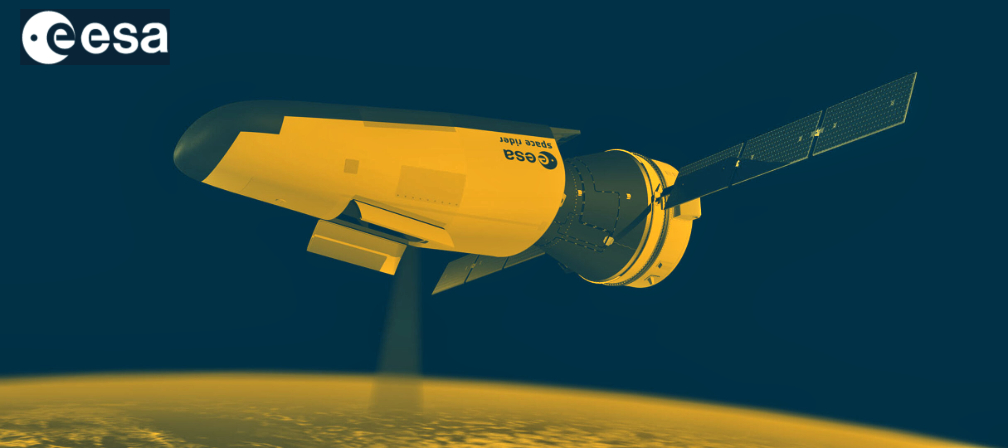
At the end of its mission, Space Rider will return to Earth with its payloads and land on a runway to be unloaded and refurbished for another flight.  Tyvak International develops the nanosatellite to be onboarded and deployed at any time during the experimental Phase in orbit, on one of the ESA’s Space Rider flight missions, paving the way for future, recurring, servicing missions.

This contract is in partnership with a consortium of Italian industries and research institutions, including Polytechnic University of Turin, the University of Padova, and StellarProject SRL.

“Terran Orbital is honored to be selected once again for a prime contract with the European Space Agency. Using space technology for research in areas, such as proximity operations and in-orbit servicing, will be a huge benefit for our partners and the protection of precious and strategic orbital assets.  I am excited to see Tyvak International s.r.l. in the forefront.” — Marc Bell, Terran Orbital Co-Founder, Chairman, and Chief Executive Officer


Filed Under: Featured, News

Qatar Airways selects Starlink for complimentary high-speed connectivity

October 25, 2023 by editorial

Recently, Qatar Airways became the largest airline to collaborate with Starlink and, in the future, will roll out a complimentary, high-speed, low-latency, internet connectivity experience onboard specific aircraft and routes.

Starlink’s service will be a further enhancement of Qatar Airways’ 5-star onboard experience. Once the service is active, passengers will be able to enjoy ultra-fast WiFi speeds of up to 350 Mbps that can be used for a variety of internet-based services such as video streaming their favorite entertainment and sports videos, gaming, enriched web-browsing and much more.

Qatar Airways agreement with Starlink will allow passengers to receive a seamless Wi-Fi connectivity experience onboard with one-click access. The high-speed and low-latency network is powered by the Starlink SATCOM system – the world’s largest satellite internet constellation engineered and operated by SpaceX. Qatar Airways and Starlink are currently in the pre-launch phase of the rollout strategy across Qatar Airways fleet.

“Qatar Airways is proud to announce its agreement with Starlink to provide seamless and complimentary Wi-Fi to its global passengers. This exciting collaboration is not only in line with our industry-leading approach to technological adoption, but also serves as an unmissable opportunity to connect Starlink to our global passengers. We look forward to our passengers benefiting from this state-of-the-art addition to Qatar Airways’ in-flight experience.” — His Excellency Mr. Akbar Al Baker, Chief Executive. Qatar Airways Group

“Qatar Airways continues to lead the way prioritizing the passenger experience. With Starlink set to support the entire Qatar Airways fleet, passengers traveling between more than 160 destinations around the world will be able to stay connected with the most advance high-speed internet service from space. In fact, as soon as passengers step onboard the plane the internet works seamlessly throughout their flight from gate to gate, and all from the comfort of their seats.” — Jonathan Hofeller, Vice President, Starlink Commercial Sales, Starlink

Filed Under: News

ESA’s call for proposals: Fly Your Satellite!

October 24, 2023 by editorial

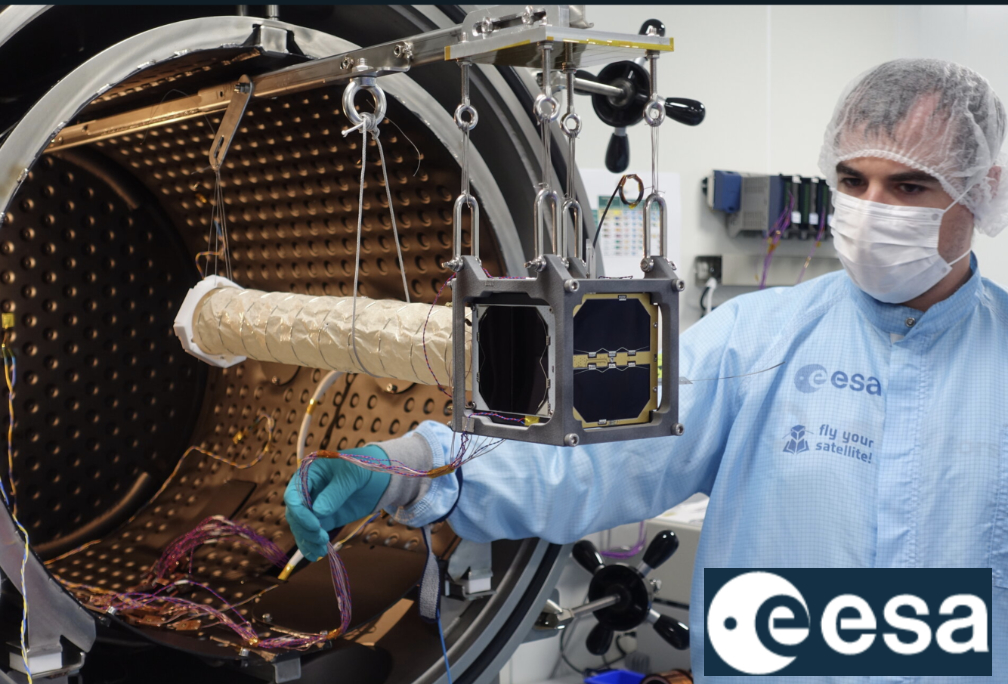
3Cat-4 team finalizing their CubeSat Thermal Vacuum Test.
Photo is courtesy of ESA

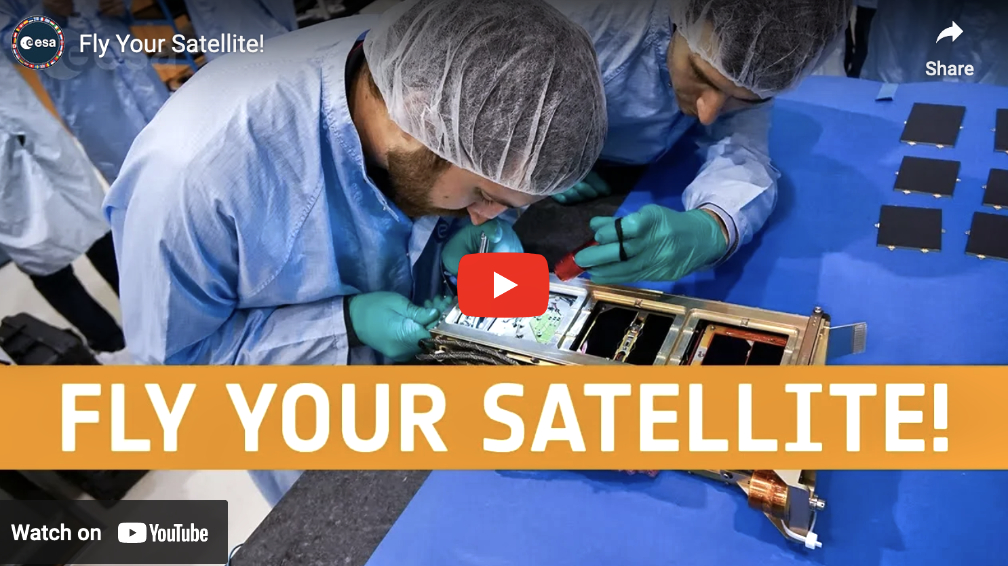
ESA invites university and other tertiary education student teams from an eligible state that are producing pico- or nanosatellites (CubeSats or PocketQubes) with educational objectives to propose their satellite for the fourth edition of the ‘Fly Your Satellite!’ (FYS) program.

The deadline for submitting proposals is on January 21, 2024, 23:59 CET. Instructions for submitting a proposal and conditions to apply can be found here.

The fourth edition of Fly Your Satellite! is based on the heritage of the previous editions with the objective to support university student teams throughout the assembly, integration, testing, and verification process of their educational CubeSats. By participating in the program, students will implement standard practices for spacecraft development; receive support from experienced ESA specialists; attend tailored training courses; and will be offered access to state-of-the-art test facilities.

The program is for teams that have already manufactured and tested the CubeSat subsystems and are ready to proceed to the satellite integration shortly after being accepted to the program. Students will then be supported through the Assembly, Integration, and Verification phase. Teams will be offered a launch opportunity if they demonstrate the readiness of their spacecraft and ground segment and compatibility with the technical and safety requirements.

For the current call, launch opportunities to LEO compatible with ESA zero debris approach on orbital lifetime are envisioned. This means that the natural orbital decay duration shall be below 5 years (final numerical value is being consolidated at the time of opening of this Call).

Flexibility to several orbits is recommended as pico- and nanosatellites often fly on rideshare missions or as piggyback payloads and teams should be prepared to accept deployments from orbits that deviate from their optimal performance orbit. The earliest launch opportunity for teams selected through the present call for proposals is expected as of 2025.

Student teams can apply by submitting a proposal describing their CubeSat project and demonstrating its maturity to start their integrated system tests. Instructions to submit a proposal for the fourth edition of the Fly Your Satellite! program, can be found here.

Two Information Sessions for potential applicants will be offered by the Fly Your Satellite! program on Wednesday, November 15, 2023, 16:00-17:00 CET and Thursday, December 14, 2023, 16:00-17:00 CET. Please register to attend using the following form.

For more information about our opportunities, scroll down to the bottom of the Fly Your Satellite! main page. New opportunities can be expected targeting student teams at different stages of the project lifecycle. Keep an eye out on the ESA Education website to be updated on the latest news. For further information, please contact us at cubesats@esa.int.

Filed Under: News

USSF / SSC MicroGEO sources sought

October 23, 2023 by editorial

The United States Space Force (USSF) Space Systems Command (SSC) Commercial Satellite Communications (COMSATCOM) Office (CSCO) is seeking sources that are capable of supporting a Department of Defense (DoD) effort to launch and maintain communications satellites that allow for greater maneuverability and smaller size than traditional Geostationary Earth Orbit (GEO) satellites.

As the national security of the United States and its mission partners becomes ever more reliant on space-based capabilities, it is necessary to move in the direction of resilient constellations that can offer advanced capabilities.

The SSC CSCO is seeking information for potential sources to provide support for a new class of commercially offered satellite communication services supported by GEO satellites using a constellation of small satellites capable of maneuvering between International Telecommunication Union (ITU) assigned orbital slots in the GEO arc.

Increased maneuverability using decentralized and spatially dispersed smallsats is imperative for the future resilience of both the constellation and the communications support for any user, without impact to existing user equipment and gateways.

In addition to providing a tailored capability statement indication the ability to provide the requested qualifications and services above, interested vendors, under NAICS Code 517410, are asked to submit the following information:

Vendor Information Requested
Name of Business and address
Cage Code
Business Type SB/Large
POC: Name/Phone number/email

Submit your response to the following individuals (include all):

Mr. LaMario Cato, Contracting Officer. Email: LaMario.Cato@spaceforce.mil

Mr. Jesse Guzman, Contract Specialist. Email: jesse.guzman.1@spaceforce.mil

This Sources sought is also posted on GSA under Reference number #RFQ1663982

Filed Under: News

Capella Space appoints Frank Backes as CEO

October 19, 2023 by editorial

Frank Backes

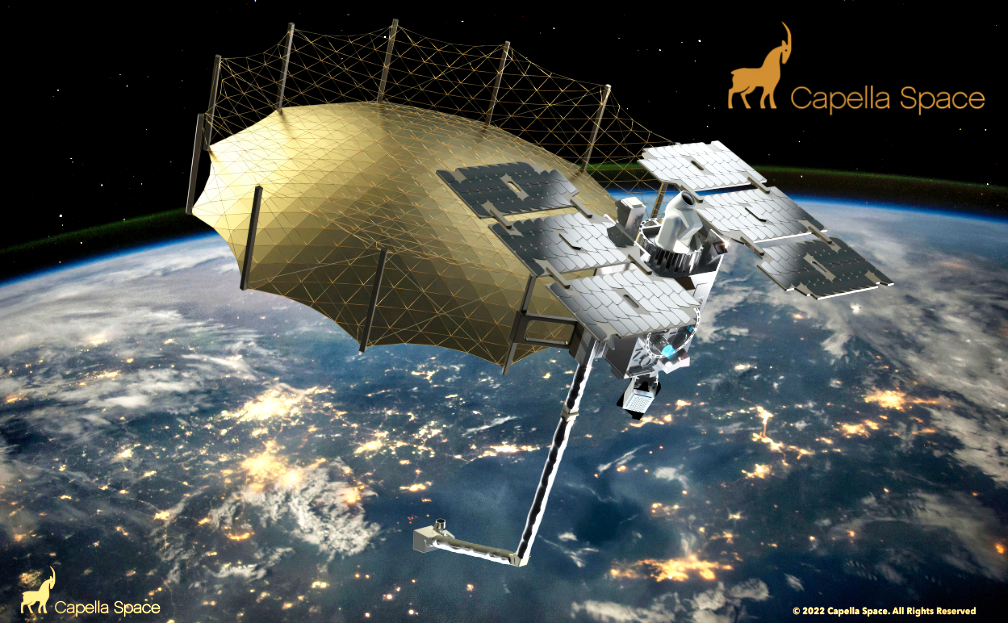
Capella Space Corporation has named Frank Backes as the company’s Chief Executive Officer (CEO) — he will assume his new role on October 23rd — founder and CEO Payam Banazadeh will continue as a Director on the board.

Banazadeh founded the company in 2016 while at Stanford University. During his tenure as CEO, Capella Space raised over $250 million in venture capital, made history by becoming the first American commercial Synthetic-Aperture Radar (SAR) operator, launched 12 high resolution SAR satellites, and grew the firm’s revenue more than 180% (CAGR) since the company began commercial operations in 2021.

Backes joins Capella Space from Kratos Defense and Security Solutions, Inc., where he served as the SVP for federal space and commercial cyber operations for the past six years. Backes brings to Capella Space a deep understanding of the government and defense markets and has proven experience in growing public sector, commercial, and international business.

Backes currently serves as President and Chairman of the Board of Space ISAC, an organization focused on aligning the global space industrial base to enhance its ability to prepare for and respond to emerging threats. He also is a member of the board of Modern Technology Solutions, Inc., an engineering services and technology solutions company focused on the public sector and defense markets.

“In just seven years, Capella grew from an idea to becoming a trusted provider of SAR imagery. The next phase is about harvesting the power of our capability across the many markets that have shown significant demand for our products. Frank is a proven leader with a diverse background in software and hardware across both national security and commercial markets. He understands our customers’ problems and challenges and is the perfect leader to further accelerate our growth by unlocking new opportunities.” — Payam Banazadeh

“I am honored to join Capella Space as CEO and have the opportunity to work each day with a powerhouse team to deliver technology that is truly unparalleled,. Under Payam’s thoughtful, strategic guidance, Capella Space has become the market leader. I am grateful for his leadership and look forward to working with him and the entire Capella Space team to take the company to new heights.” — Frank Backes

Filed Under: News

German New Space companies launch Eva

October 19, 2023 by editorial

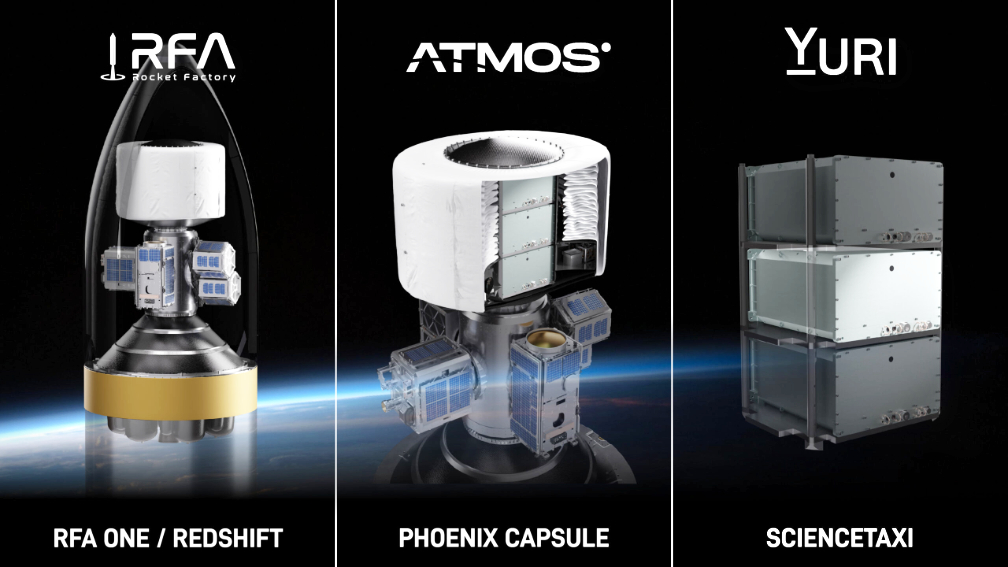
Three German companies — Rocket Factory Augsburg (RFA), Yuri, and ATMOS Space Cargo (ATMOS) — have revealed their new partnership as well as the launch of their joint, end-to-end service for microgravity life science research and product development.

This solution represents a flexible alternative to the ISS laboratory and initiates a new generation for microgravity research and, thus, advancement in biotech, life science, and product development worldwide.

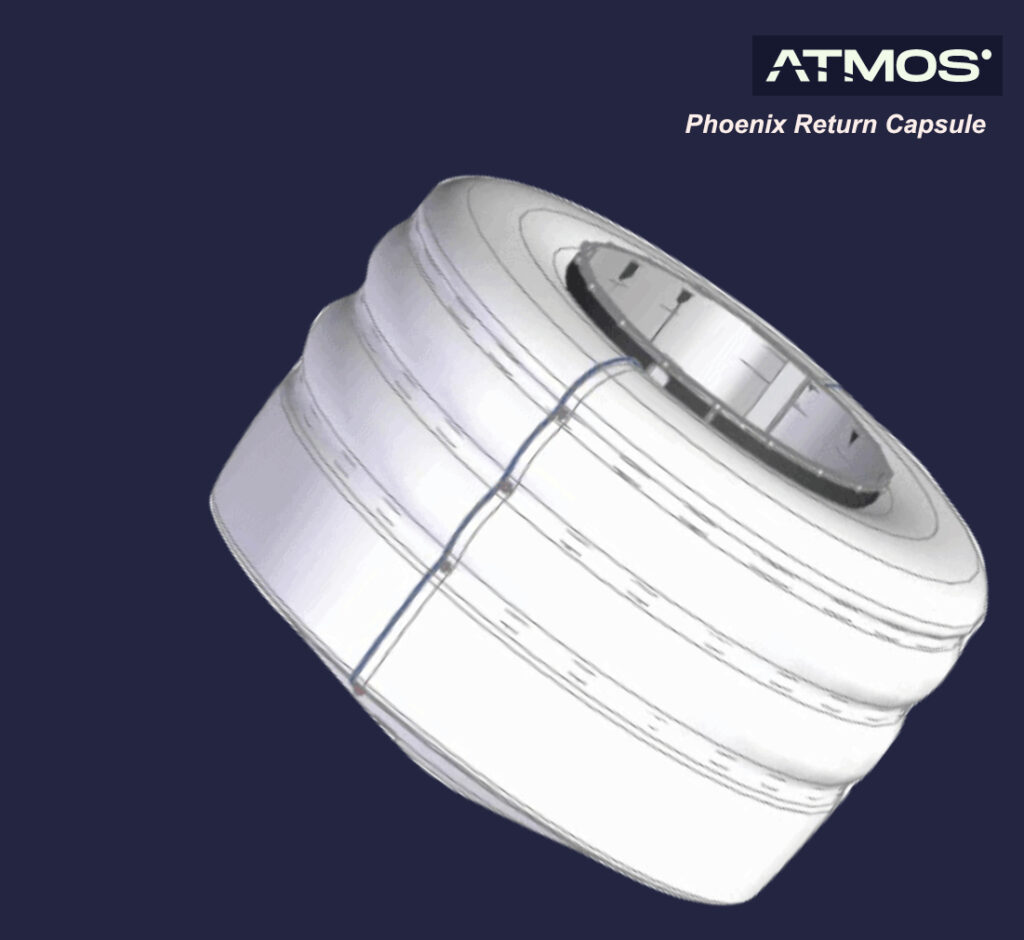
In this consortium, Rocket Factory Augsburg is responsible for the entire launch service, including the launch system, infrastructure, outbound logistics, and the operational launch campaign. RFA will be delivering ATMOS Space Cargo’s Phoenix capsule with Yuri’s ScienceTaxi to the precise target orbit in a flexible and low-cost manner.

The company will be responsible for the integration of the Phoenix space capsule onto its RFA ONE launch system while providing late access to the payload.

The launch campaigns are to be carried out from SaxaVord Spaceport (previously known as Shetland Space Center) on Unst, the most northerly of the Shetland Islands in Scotland.

Yuri operates the ScienceTaxi, which will be integrated into the Phoenix capsule by ATMOS Space Cargo. With its groundbreaking life science incubator and bioreactor solutions, Yuri will be responsible for the execution of biotech research and manufacturing in space.

ATMOS Space Cargo is responsible for the re-entry logistics and operating the return mission of the Phoenix return capsule which will be carrying Yuri’s ScienceTaxi. ATMOS will supervise and execute the safe return from LEO to the Azores and carry out the early retrieval of the capsule after landing as well as the recovery mission to the final location.

“With Eva, we will set up a unique global service that will allow breakthrough insights in BioTech and product development. Customers receive a complete solution from three experts in their respective fields, allowing them to focus on their core business. We are also particularly proud to be able to fully map the value chain with our partners in Germany. This is a great sign of German NewSpace Industry capability.” — Jörn Spurmann, CCO at Rocket Factory Augsburg

“In this new era of space exploration and commercialization, Europe and Germany must not only witness, but actively shape the future. With the combined strengths of Rocket Factory Augsburg, ATMOS Space Cargo, and Yuri, we’re not just aiming to level the playing field with the USA; we’re setting our sights on pioneering new frontiers in LEO commercialization. It’s high time Europe takes its rightful place at the forefront of space innovation.” — Maria Birlem, Co-CEO, Yuri

“We are excited to establish the first full end-to-end service for biotech research in microgravity and thus creating new possibilities to utilize space for in-orbit product development. With our partners at Yuri and at the Rocket Factory Augsburg, we will boost the German NewSpace industry to the forefront of Europe’s expertise in space. This will mark the turning point for affordable in-orbit science and a possible role model for the commercialization of space – launch, return, repeat.” — Christian Grimm, Lead Systems Engineer and Co-Founder, ATMOS Space Cargo

Filed Under: News

Telespazio Germany + Reflex Aerospace are advancing Germany’s space capabilities

October 18, 2023 by editorial

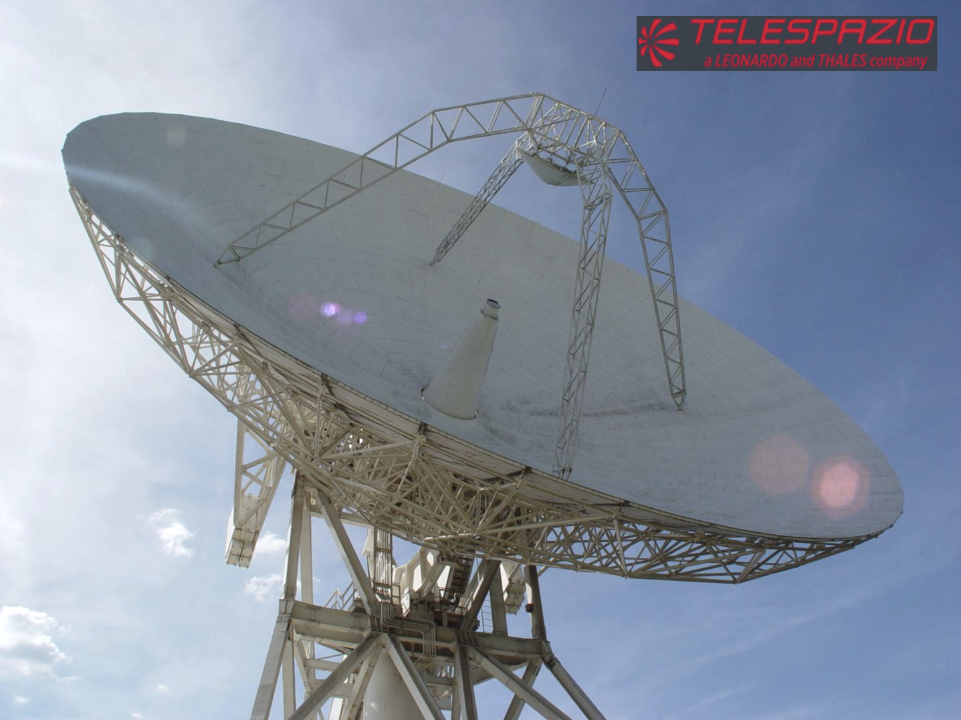
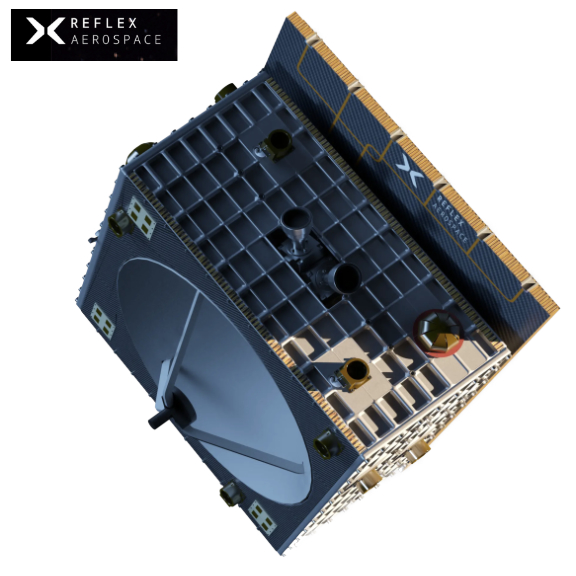
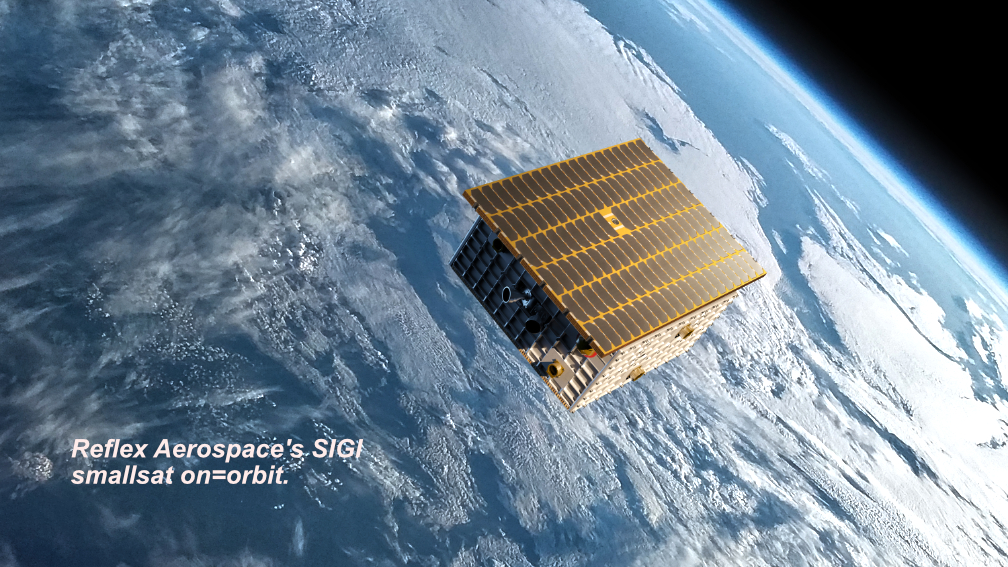
Telespazio Germany and Reflex Aerospace have signed a cooperation agreement for a shared provision of an end-to-end satellite solution — this agreement will find the companies pooling their respective expertise in their segment, offering a seamless experience, with Reflex providing its payload specific satellites and Telespazio its ground segment and mission control capabilities, delivered through its EASE-Rise platform.

Once established, following Reflex’s first planned commercial satellite mission in fall of 2024, the end-to-end solution can be used by customers for any number of applications, such as communications or Earth Observation, with both platforms and mission control managed by Reflex and Telespazio Germany.

This company cooperation showcases the strength of German expertise in satellite technology as well as enhances the companies’ combined capabilities, fostering innovation in the aerospace sector. This cooperative effort ensures compatibility and mutual support, streamlining operations and leading to cost-efficiency. Moreover, it helps expand their global reach, positioning both European companies for success in the satellite industry while simultaneously reinforcing the value of German collaboration.

This partnership agreement highlights Reflex’s commitment to using Telespazio as their primary ground segment contractor and partner. Telespazio, in return, commits to supporting Reflex in future projects as a strategic partner for ground solutions and ensuring compatibility of their mission control software with Reflex’s satellites.

“Our partnership with Reflex underscores the importance of German cooperation in the aerospace sector. This collaboration will empower us to pool our resources, expertise, and technology, enabling us to offer cutting-edge solutions that position us as key players in the international satellite industry. We are excited to begin this partnership with Reflex.” — Sigmar Keller, Chief Executive Officer, Telespazio Germany.

“This partnership with Telespazio Germany underscores our commitment to push boundaries and shape the future of technology in orbit. We share a similar mindset of innovation and collaboration. By combining our unique strengths – their ground segment expertise and our revolutionary satellite platforms – we’re affirming our mission: To enable lightning-fast innovation in space.” — Walter Ballheimer, Chief Executive Officer, Reflex Aerospace

Reflex offers customized satellites designed to tackle the most challenging missions. They apply modern manufacturing and a unique design process to every satellite, resulting in enhanced reliability, the highest-performing core avionics in class, and radically improved delivery times.

Telespazio has developed the EASE-Rise platform, which provides monitoring and control capabilities for space data missions including, but not limited to, asset monitoring and control (M&C), mission planning, and flight dynamics.

Filed Under: News

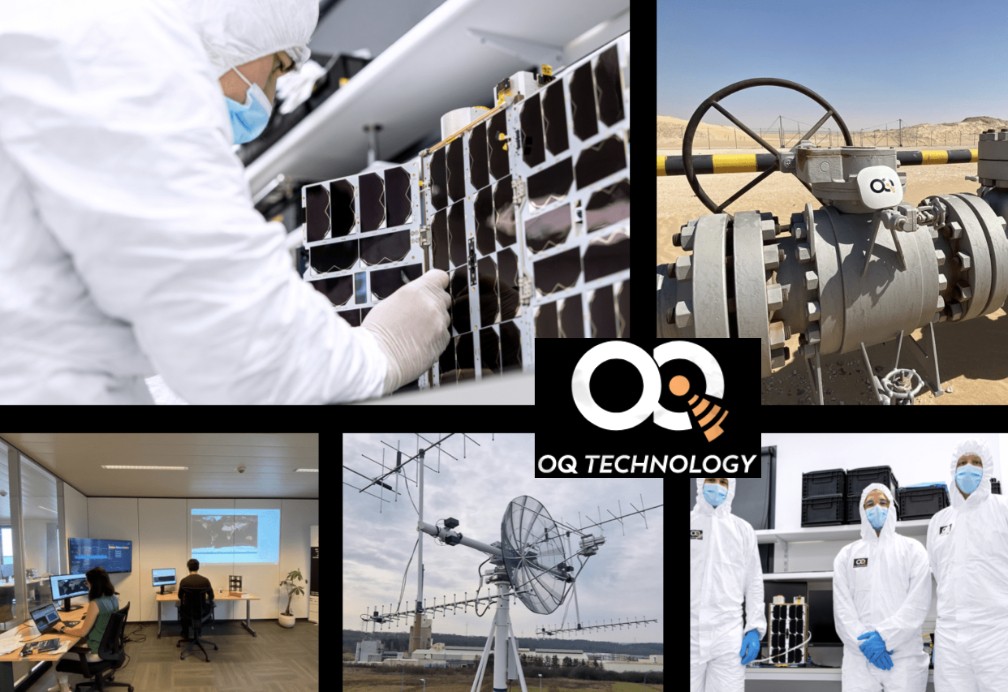
OQ Technology clinches a Best Satellite IoT Award

October 17, 2023 by editorial

OQ Technology recently won the Best Satellite IoT Award at the Middle East Technology Excellence Awards 2023 — this award, presented by the Asian Business Review Magazine, recognizes exceptional companies in the region that have pioneered technological innovation in their sectors.

OQ Technology’s comprehensive range of IoT products and services, including their flagship OQ ONE, cater to a broad spectrum of industries, ranging from oil & gas, logistics, and mining, to maritime, relief efforts, government operations, and advanced agriculture and farming. Constructed to exacting standards, OQ Technology’s offerings thrive in even the harshest environments, optimizing productivity and expediting the digitalization of vital applications.

This suite of solutions covers areas such as wellhead monitoring, livestock management, logistics streamlining for prompt cargo movement, and asset tracking across terrestrial and maritime domains. They also pioneer services such as smart metering and facilitating secure, remote financial transactions.

The award was accepted by OQ Technology’s Co-Founder, Mohammed Al Muhairi.

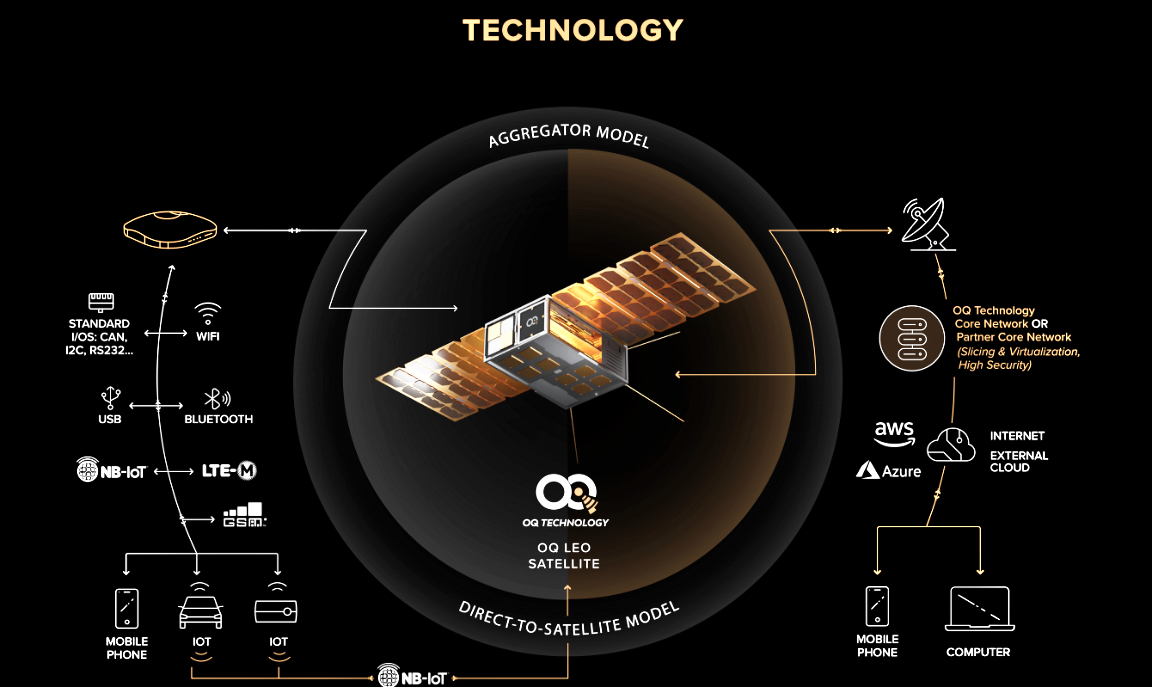
Recently, OQ Technology announced the successful launch of MACSAT aboard Arianespace’s Vega (Mission VV23). This addition propels OQ’s LEO fleet count to 6, with ambitions to expand to 10 by the close of 2023 and 72 satellites by 2025. This crucial advancement promises to bolster both their spaceborne and terrestrial infrastructure while substantially widening satellite coverage. This pivotal milestone reinforces the company’s dominance in cellular Direct-to-Device (D2D) technology as well as promises to drive digital transformation across diverse sectors.

“We are profoundly honored to accept this award, a testament to the tireless efforts and dedication of the OQ team since our inception. Additionally, we wish to extend our heartfelt gratitude to all our esteemed partners, including Saudi Aramco, the Saudi Communication, Space, and Telecommunication Commission, MBRSC, the Luxembourg Government, Luxembourg Space Agency, and ESA.” — Omar Qaise, Founder and CEO, OQ Technology

Filed Under: News

OQ Technology confirms the recent + successful launch of MACSAT smallsat

October 14, 2023 by editorial

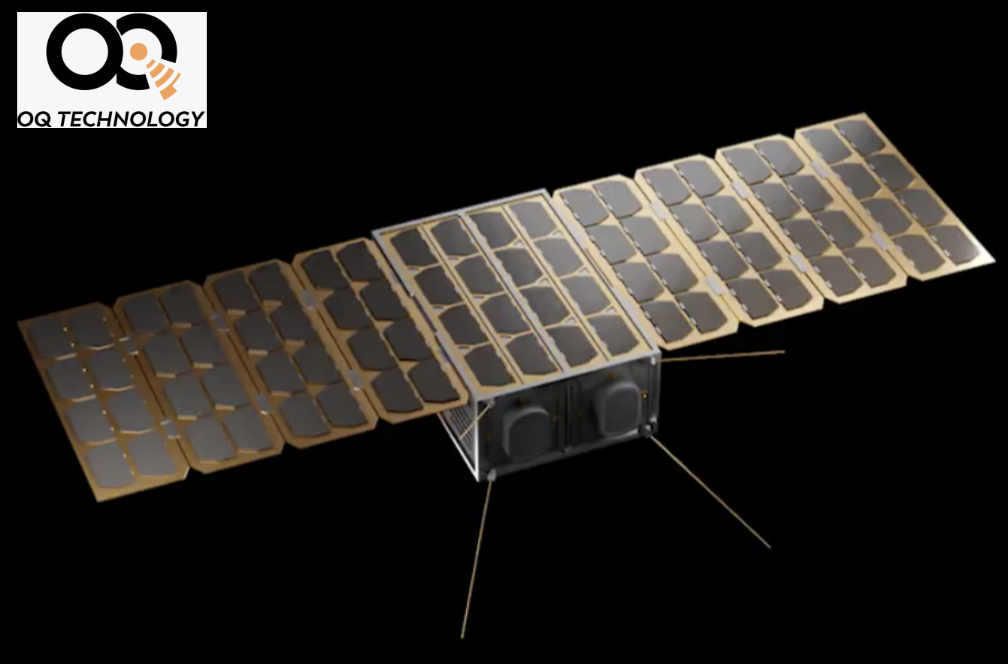
OQ Technology has announced the recent, successful launch of the company’s new LEO satellite, MACSAT, aboard Arianespace’s Vega (mission VV23).

This pivotal development will strengthen OQ Technology’s space and ground infrastructures, while broadening satellite coverage. The satellite was launched from French Guiana on Sunday, October 8, 2023, and signal was acquired by a ground station in Lithuania.

By deploying the MACSAT satellite and augmenting its existing constellation of five satellites on-orbit, and with an additional four satellites set for a 2023 launch, OQ Technology underscores the deep commitment to the rapidly growing satIoT market. This market is predicted to exhibit a CAGR of 20% from 2023 to 2032, with an expected valuation of US$ 18 billion by 2032. OQ Technology is strategically positioned at the vanguard of this shift, poised to seize a significant market portion and elevate its commercial achievements.

At the heart of this revolution lies the integration of 5G technology with satIoT. This combo heralds remarkable commercial advantages for businesses, governments, organizations, and individuals. OQ Technology has successfully connected cellular IoT devices to LEO satellites. As sectors such as energy, logistics, agriculture, maritime, and telecom firms show increasing interest in satellite cellular IoT solutions, OQ Technology is well positioned to cater to a broad range of clientele during the upcoming year.

“We are immensely proud to unveil the successful launch of the MACSAT satellite. I seize this moment to extend gratitude to the Luxembourg Government and the European Space Agency (ESA) for their unwavering trust and support for this mission. This significant stride will bolster both our space and terrestrial infrastructures, and further our commercial triumphs in the future.” — Omar Qaise, Founder and Chief Executive Officer of OQ Technology

Filed Under: News

Unlocking PRETTY smallsat navigation for Earth data

October 14, 2023 by editorial

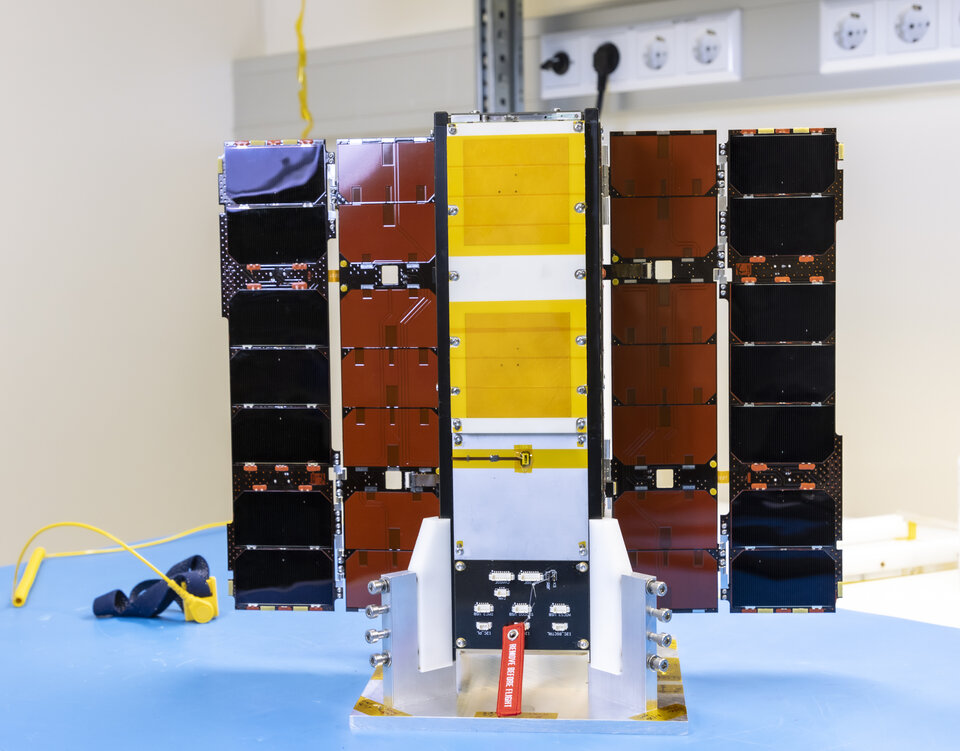
PRETTY CubeSat with two patch antennas
PRETTY CubeSat with two patch antennas. Photo is courtesy of ESA.

Earth is being continuously bathed in radio signals from satellite navigation (satnav) satellites, which are useful for far more than navigation. Dedicated space missions acquire these signal reflections to collect valuable environmental information. The shoebox-sized PRETTY CubeSat, flying on Europe’s Vega launcher, will investigate a new frequency and novel observation angle to better measure the rate of climate change — at the same time, gathering radiation data on the surrounding space environment.

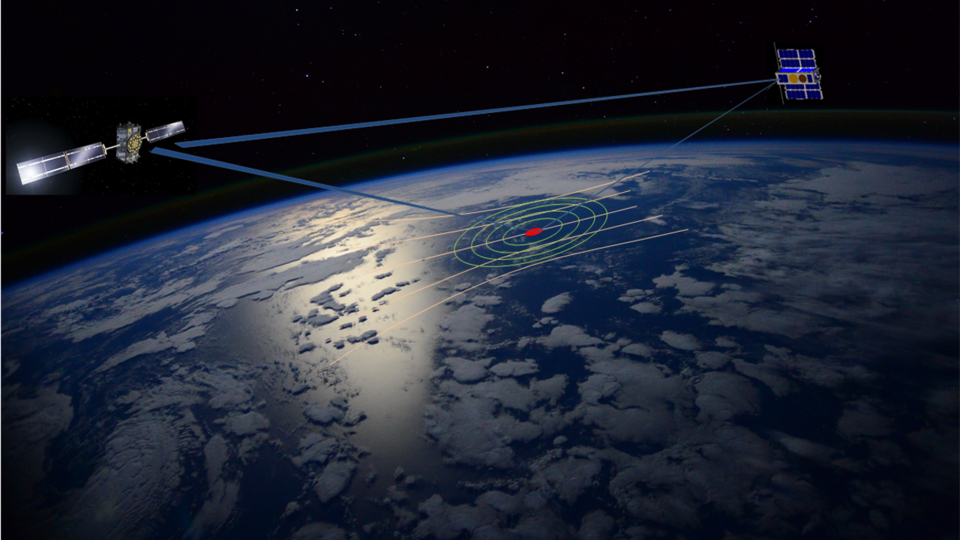
The PRETTY (Passive REflecTometry and dosimeTrY) mission will peer ahead to the horizon to receive signals from Global Navigation Satellite System (GNSS) satellites visible just above it. Two patch antennas on its forward face will pick up the same signal from the same satellite, or rather one signal that has reached it through space, and the equivalent signal that has reflected off Earth’s cryosphere or oceans.

Using a highly advanced version of ‘spot the difference,’ PRETTY will compare the twin signals onboard to derive ice and sea height to an accuracy of at least 50 cm from a 550 km orbital altitude.

PRETTY is testing 'slant' reflectometry
PRETTY is testing ‘slant’ reflectometry. Image is courtesy of ESA.

Meanwhile, a miniaturized dosimeter will be tracking the CubeSat’s ongoing radiation exposure, amassing data which will help ensure the reliability and sustainability of future smallsats.

Environmental data from reflected satnav

ESA radiometer engineer Manuel Martin Neira (photo below) was the original inventor of the GNSS ‘reflectometry’ concept.

This concept is in active use today by numerous missions worldwide to acquire comparatively-low-cost altimetry and scatterometry-based wind and wave data.

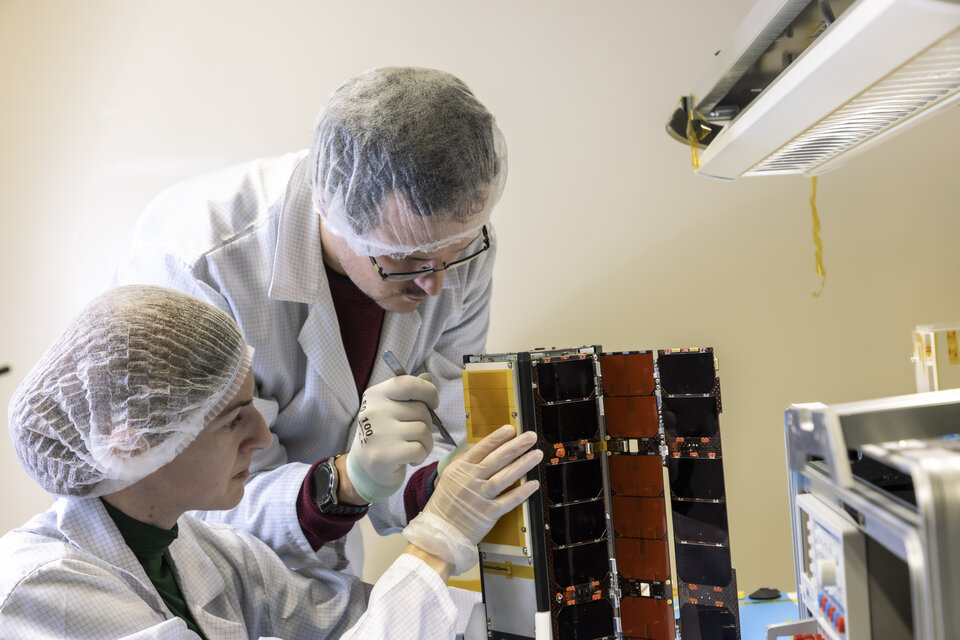
Integrating CubeSat
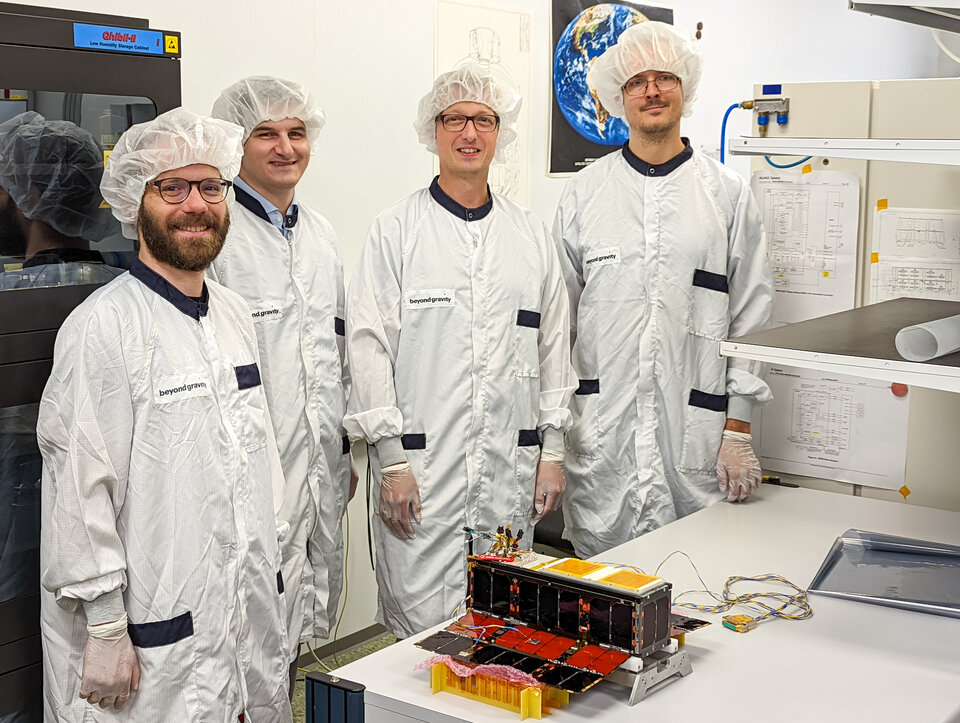
Integrating the PRETTY CubeSat at TU Graz, with team members Manuela Wenger (left) and Andreas Johann Hörmer (right).

Neira explained that PRETTY incorporates some important innovations and said, “Existing reflectometry missions look straight down, but such a vertical geometry gives rise to a very rough sea surface. By peering down at a shallow angle the sea appears smoother – akin to the way that Venetian blinds can variously appear open or closed, depending on the angle that you observe them. The result is that reflected GNSS signals remain more coherent in turn. In addition, PRETTY is making use of a new GNSS frequency for the first time, employing the longer-wavelength E5/L5 as transmitted by European Galileo and US GPS satellites. The PRETTY team made this change late in mission development, guided by ground testing that showed superior accuracy using this frequency band.”

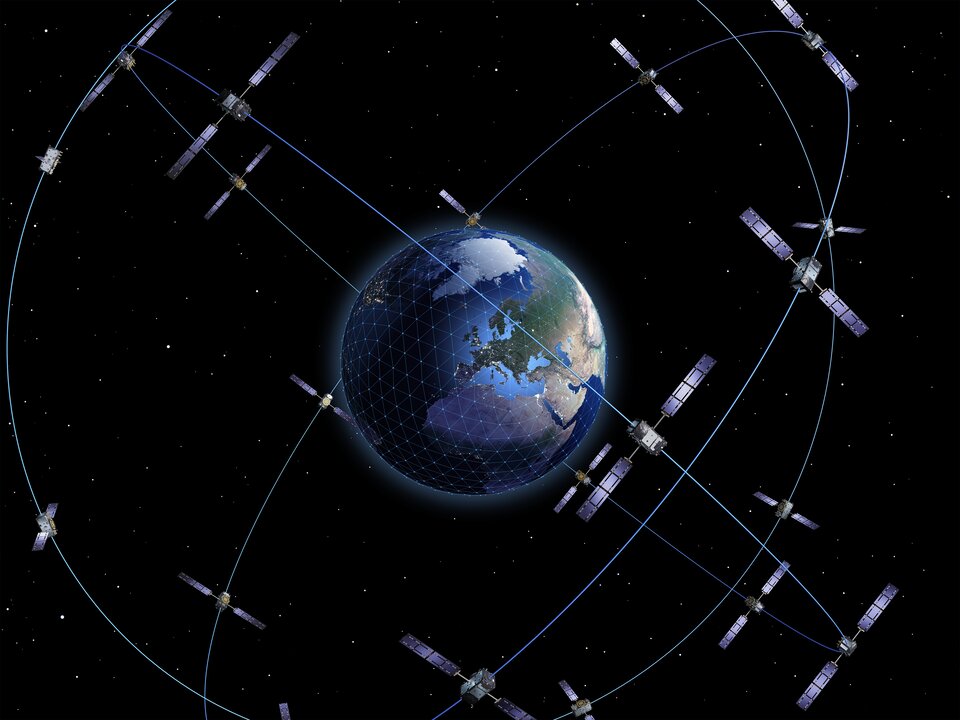
Global Galileo constellation, continuously transmitting signals
Artistic rendition of the global Galileo constellation that is continuously transmitting signals.

“The custom-made antenna needed for the reflectometry in E5/L5 also enables what is called beam forming, a technique allowing the payload to actively and simultaneously track the direct and reflected signal coming from the GNSS satellites, further increasing the scope of the technology demonstration.” — Camille Pirat, system engineer in ESA’s CubeSat Systems Unit and PRETTY Technical Officer

All-Austrian team

Funded through ESA’s General Support Technology Program by Austria, PRETTY has been developed by an all-Austrian consortium, with Beyond Gravity Austria as prime contractor developing the reflectometry payload.

“Beyond Gravity worked with Manuel to develop the reflectometry processing core being flown on PRETTY through a previous ESA project. Next, we looked for a flight opportunity – initially we hoped for the International Space Station or else to fit aboard the OPS-SAT CubeSat overseen by TU Graz. Then the success of OPS-SAT led us to consider a dedicated CubeSat mission. In fact PRETTY ended up as Beyond Gravity’s first CubeSat. For me, the most scientifically exciting places to observe are going to be the poles, because it’s really there that we’re likely to see the most change in surface height over the planned one-year lifetime of the mission – although in practice we hope to continue for longer.” — Andreas Dielacher, system engineer at Beyond Gravity

Additionally, Seibersdorf Laboratories contributing a radiation dosimeter payload and Technical University of Graz serving as overall system integrator and operator.

PRETTY team with CubeSat
The PRETTY team with the CubeSat. Photo is courtesy of ESA.

Intensive computation

CubeSats are small, inexpensive satellites that are built from standardized 10 cm boxes, hosting all of the necessary necessary systems as well as mission payloads. In PRETTY’s case, the CubeSat’s processing core works in combination with the patch antennas and a software derived radio, offering added flexibility during the post-launch commissioning phase.

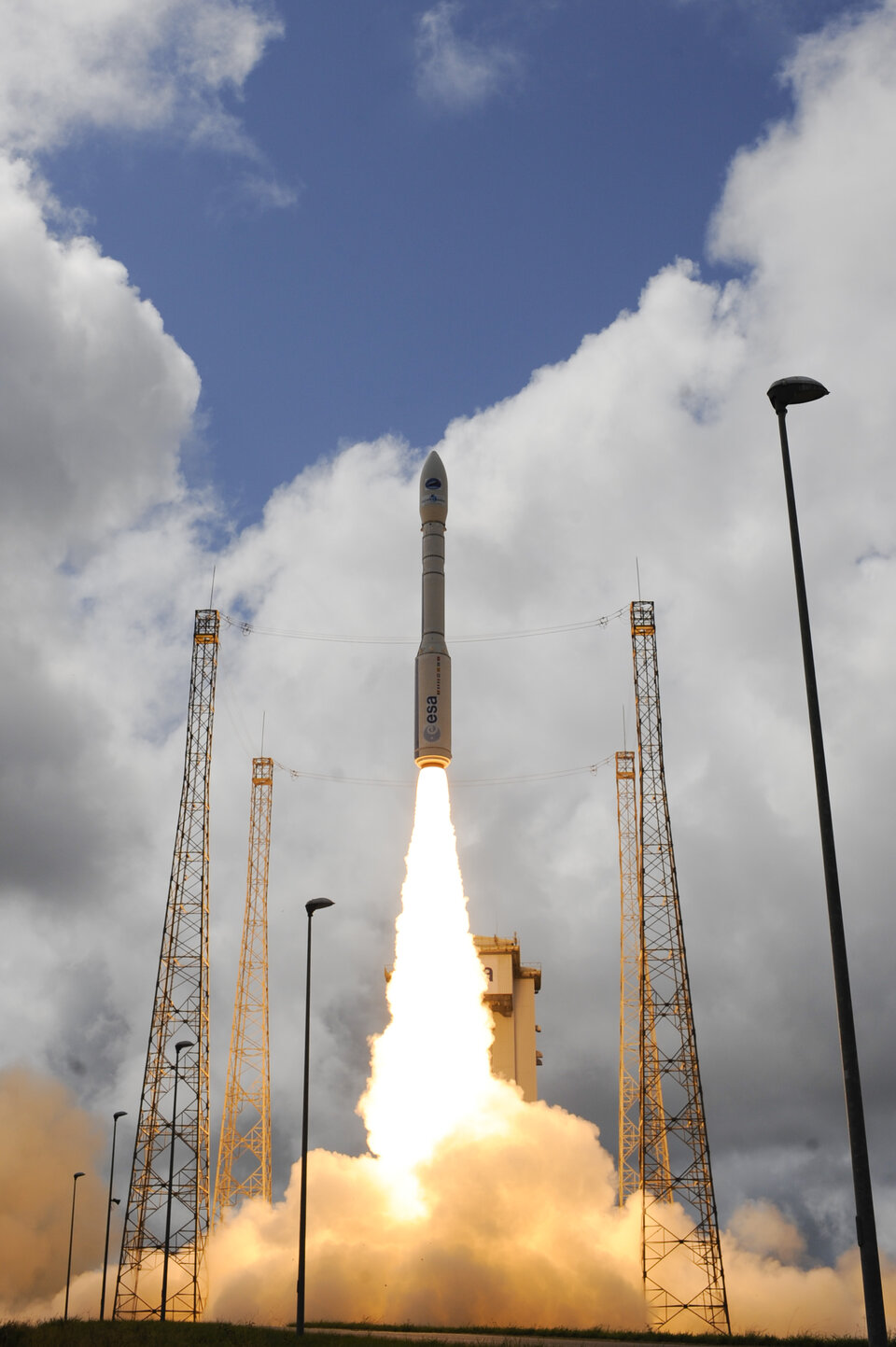
Europe's Vega launcher
Europe’s Vega launcher.

“We will actually employ two methods of correlating the original and reflected signals. The first is the standard technique making use of the code embedded in the signal. The second is by making use of the higher-frequency satnav signals themselves, directly comparing their differing signal phases through a method called ‘interferometry.’ This latter method is more computationally demanding, requiring a lot of power and producing waste heat. This being so, we will typically perform two observation sessions of a maximum half an hour each per day, resting in the meantime to downlink results to our ground stations and allow heat to dissipate. And typically we will observe during local twilight or night. Avoiding heat from sunlight gives our receiver a better signal to noise ratio.” — Andreas Johann Hörmer, managing the mission at TU Graz

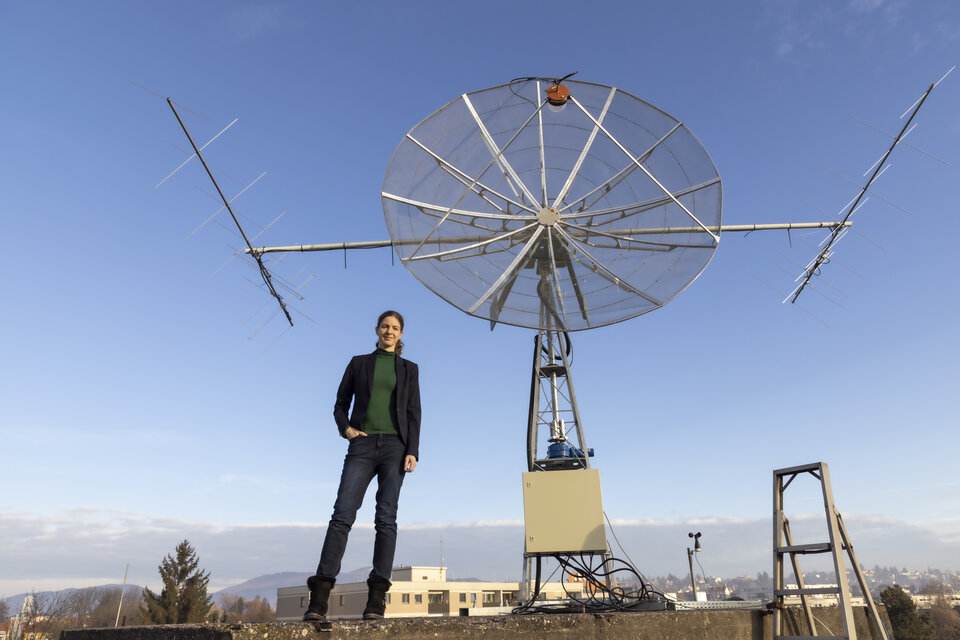
PRETTY's ground station antenna at TU Graz
PRETTY’s ground station antenna at TU Graz.

A scientific consortium is waiting to make use of PRETTY’s altimetry and also scatterometry data, coordinated by Norwegian University of Science and Technology.

Radiation mapper

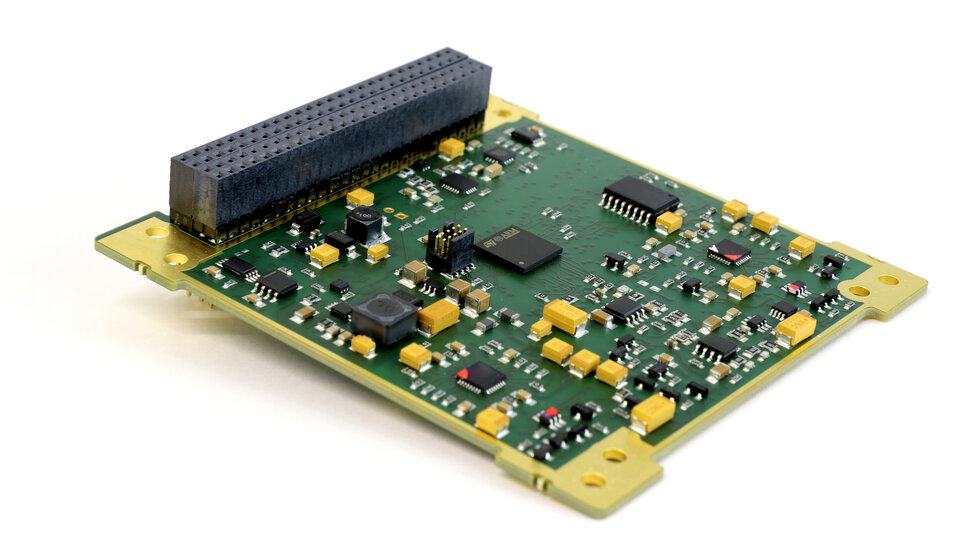
SATDOS miniaturised dosimeter
SATDOS miniaturised dosimeter — the PRETTY CubeSat’s secondary payload is a miniaturised dosimeter for space radiation, SATDOS, will operate throughout its mission to give an authoritative map of LEO. Its developer — Seibersdorf Laboratories — specializes in testing the rad-hardening of satellite components. SATDOS will measure various radiation influences on satellite systems, from transitory ‘single event effects’ to ‘total ionizing dose’ effects that gradually undo overall system reliability.

“Analyzing observed radiation effects using SATDOS enables us to make informed assessments of ongoing space weather and the reliability of satellite electronics – thereby contributing to the sustainability of future space missions, especially smaller ones.” — Christoph Tscherne, PRETTY project manager at Seibersdorf Laboratories

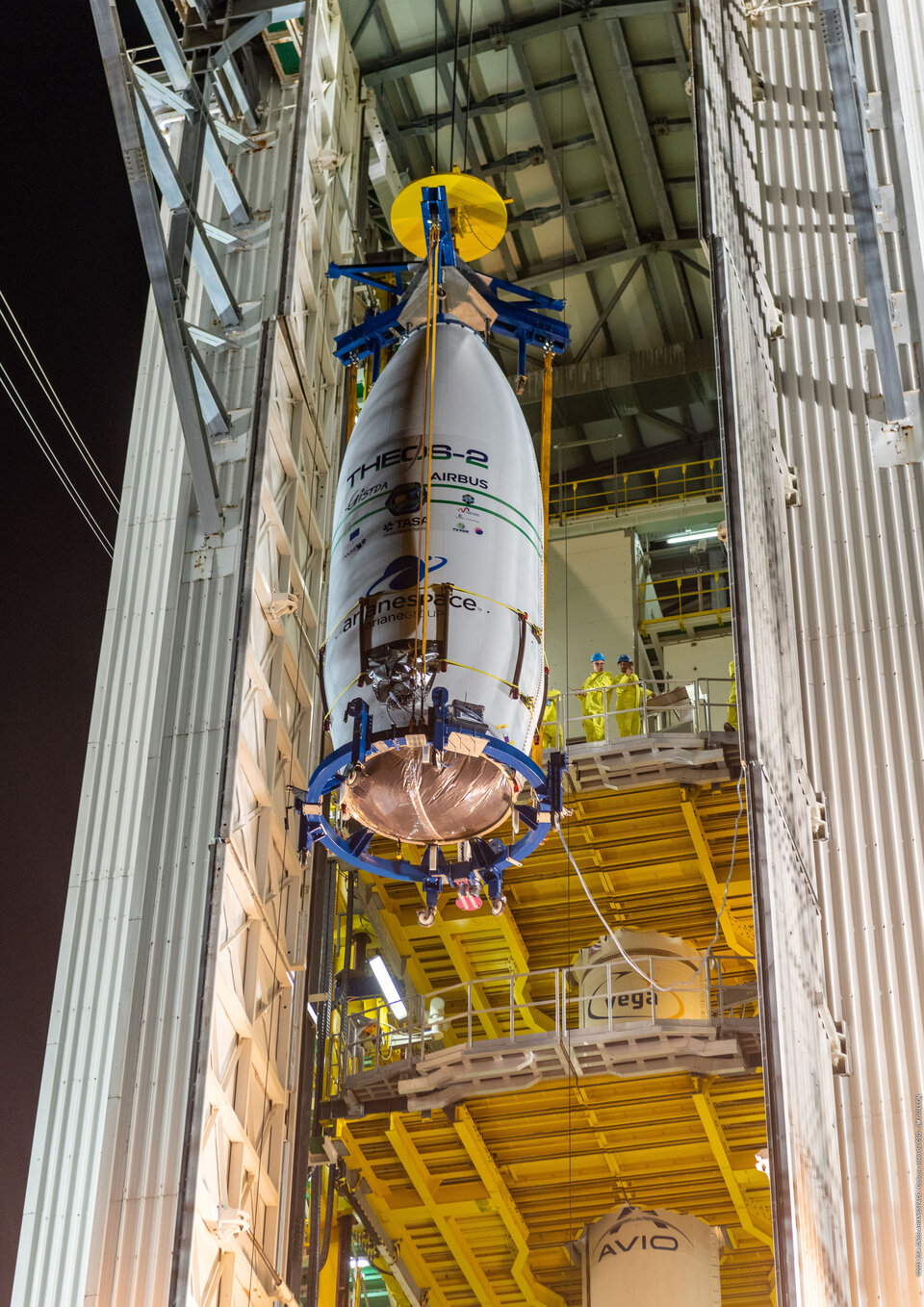
Vega upper composite being lifted onto launcher
Vega upper composite being lifted onto the launcher.

PRETTY has been supported through the Fly element of ESA’s GSTP, aiming to provide early space testing of innovative technologies.

Filed Under: News

  • « Go to Previous Page
  • Page 1
  • Interim pages omitted …
  • Page 8
  • Page 9
  • Page 10
  • Page 11
  • Page 12
  • Interim pages omitted …
  • Page 60
  • Go to Next Page »

Primary Sidebar

WEEKLY NEWSLETTER

Archives

  • June 2026
  • May 2026
  • April 2026
  • March 2026
  • February 2026
  • January 2026
  • December 2025
  • November 2025
  • October 2025
  • September 2025
  • August 2025
  • July 2025
  • June 2025
  • May 2025
  • April 2025
  • March 2025
  • February 2025
  • January 2025
  • December 2024
  • November 2024
  • October 2024
  • September 2024
  • August 2024
  • July 2024
  • June 2024
  • May 2024
  • April 2024
  • March 2024
  • February 2024
  • January 2024
  • December 2023
  • November 2023
  • October 2023
  • September 2023
  • August 2023
  • July 2023
  • June 2023
  • May 2023
  • April 2023
  • March 2023
  • February 2023
  • January 2023
  • December 2022
  • November 2022
  • October 2022
  • September 2022
  • August 2022
  • July 2022
  • June 2022
  • May 2022
  • April 2022
  • March 2022
  • February 2022
  • January 2022
  • December 2021
  • November 2021
  • October 2021
  • September 2021
  • August 2021
  • July 2021
  • June 2021
  • May 2021
  • April 2021
  • March 2021
  • February 2021
  • January 2021
  • December 2020
  • November 2020
  • October 2020
  • September 2020
  • August 2020
  • July 2020
  • June 2020
  • May 2020
  • April 2020
  • March 2020
  • February 2020
  • January 2020
  • December 2019
  • November 2019
  • October 2019

© 2019–2026 SatNews

Insert/edit link

Enter the destination URL

Or link to existing content

    No search term specified. Showing recent items. Search or use up and down arrow keys to select an item.
      x
      Sign Up Now!

      Enjoy a free weekly newsletter with recent headlines from the global SmallSat industry.

      Invalid email address
      We promise not to spam you. You can unsubscribe at any time.
      Thanks for subscribing! You will now receive weekly SmallSat News updates.
      We love our advertisers.
      And you will too!

      Please disable Ad Blocker to continue... We promise to keep it unobtrusive.
      We promise not to spam you. You can unsubscribe at any time.
      Invalid email address
      Thanks for subscribing!