• Skip to main content
  • Skip to primary sidebar
  • Home
  • News
  • Featured
  • More News ⌄
    • SatNews
    • SatMagazine
    • MilSatMagazine
  • Events ⌄
    • MilSat Symposium
    • SmallSat Symposium
    • Satellite Innovation
  • Contacts
  • SUBSCRIPTION

SmallSat News

You are here: Home / Archives for 2023

Archives for 2023

Open Cosmos’ MANTIS satellite prepped for upcoming launch

October 12, 2023 by editorial

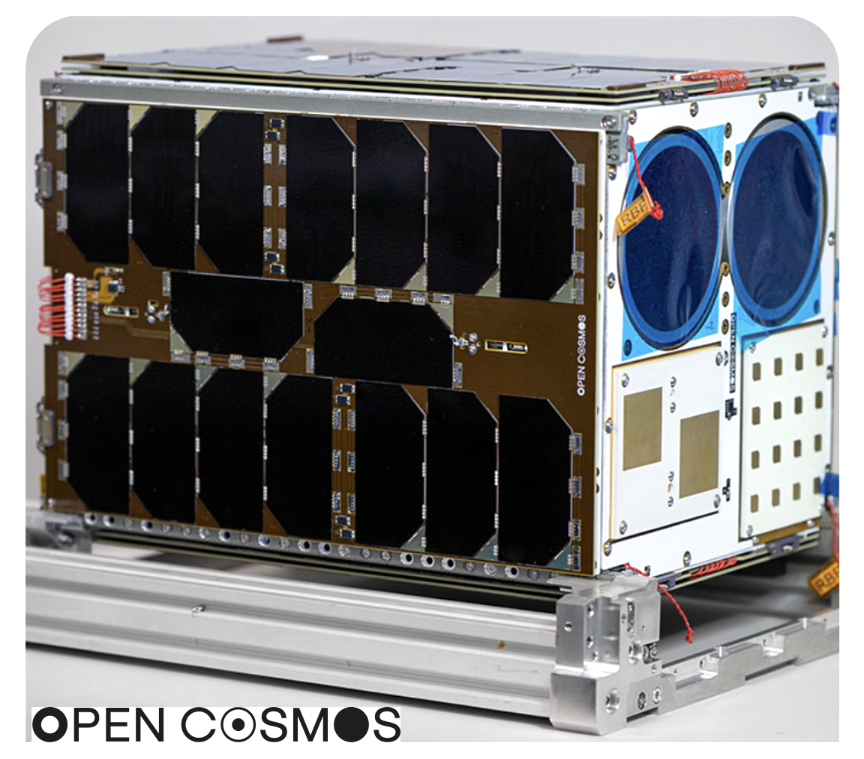
Open Cosmos provides a new generation 12U spacecraft platform, MANTIS. This platform hosts the Integrated Standard Imager for Microsatellites (iSIM-12U), an innovative, high-resolution, optical payload for EO missions developed by Satlantis Microsats SL.

Open Cosmos and the European Space Agency (ESA) have announced plans for the launch of the MANTIS satellite aboard the upcoming SpaceX Transporter-9 mission — this mission was arranged jointly by SAB Launch Services and Exolaunch.
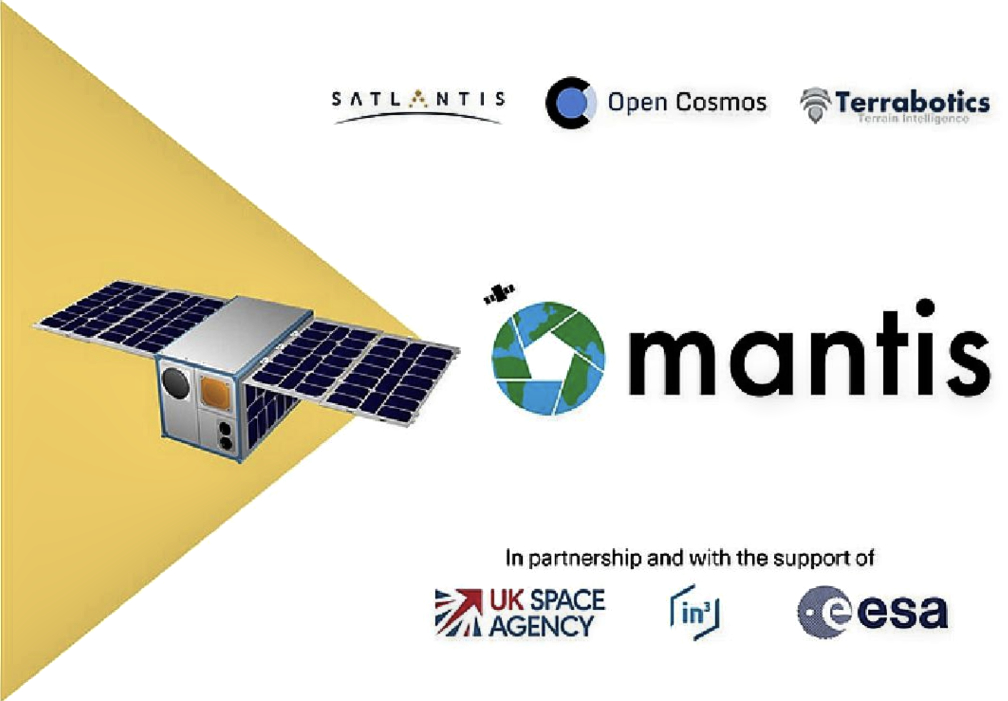
MANTIS was successfully integrated with its EXOpod Nova deployment system in Berlin, provided by Exolaunch as part of their mission management and integration service, prior to completing its integrations with SpaceX’s Falcon 9 before lift-off from Vandenberg Space Force Base.

MANTIS, which stands for Mission Agile Nanosatellite for Terrestrial Imagery Services, will be the first satellite launched as part of ESA InCubed, the co-funding program run by ESA Φ-lab which focuses on commercial development activities across the entire Earth Observation (EO) value chain, including satellites, ground applications, downstream applications and new EO business models.

As a participating member state, the UK Space Agency has contributed £2.2 million of funding to this initiative in order to support the advancement of space-related innovation within the UK.

The satellite will host an innovative multispectral, high-resolution optical payload for EO and a secondary payload, a high-performance and reconfigurable processing unit aimed at exploiting the power of Artificial Intelligence (AI) to derive insights onboard. 

It will also further sustainability by addressing the challenges of accessibility and periodicity in the energy and mining sector. Approximately 60% of the resources required within these supply chains can be found in remote and inaccessible locations necessitating ground stations with high costs to climate and biodiversity. EO data from MANTIS will reduce this requirement and create an efficient solution over a widespread area. 

Outside of this sector, the data from MANTIS can be applied to further applications that will contribute to addressing environmental challenges and promoting sustainable development, such as climate change monitoring, deforestation and land use monitoring, water resource management, biodiversity conservation and sustainable agriculture.

As the prime contractor for MANTIS, Open Cosmos will oversee the end-to-end space mission service. This includes satellite design, integration of the payloads, build,  launch, operations and dissemination of the data through their DataCosmos platform. Once operational, MANTIS will join the OpenConstellation, a global, shared Earth Observation (EO) satellite infrastructure built and managed by Open Cosmos which will enable anyone to access satellite data to address challenges around the climate crisis, energy, natural resources and more.

Deploying satellite infrastructure has, in the past, been prohibitively expensive. The OpenConstellation will allow national and regional governments, as well as businesses and organisations with more conservative budgets, to participate and access insightful, actionable data from space for the first time while keeping high levels of governance and security.

“MANTIS is an ambitious program and we’re excited to work with ESA to get this satellite into orbit in 2023. Once operational, MANTIS will allow us to better monitor our use of natural resources, allowing governments and organisations to make more informed decisions to support sustainable resource management practices. And by joining the OpenConstellation, the Earth Observation data derived from MANTIS will allow many other organisations to improve their impact, too.” — Aleix Megias, VP of Operations, Open Cosmos

“As the first InCubed co-funding of an end-to-end mission, MANTIS is a milestone for us and a salient example of the burgeoning commercial Earth observation sector in Europe, one of the priorities of ESA’s Agenda 2025. Open Cosmos has demonstrated a combination of technical excellence and customer focus that is sure to make the mission a success.”— Michele Casrtorina, Head of ESA Φ-lab Invest Office

“Observations of the Earth from space are helping us to monitor climate change, map our environment, forecast the weather and now, with this mission, finding new resources in a more sustainable way. MANTIS is an excellent example of how Earth observation satellites can provide novel solutions for a range of sectors. We’re delighted to have been able to support Open Cosmos and partners across the UK and Europe to deliver an innovative mission and drive growth in the sector.” — Harshbir Sangha, Missions and Capabilities Delivery Director, UK Space Agency

Filed Under: News

October 12, 2023 by editorial

Planet’s Pelican tech demo satellite ready for launch

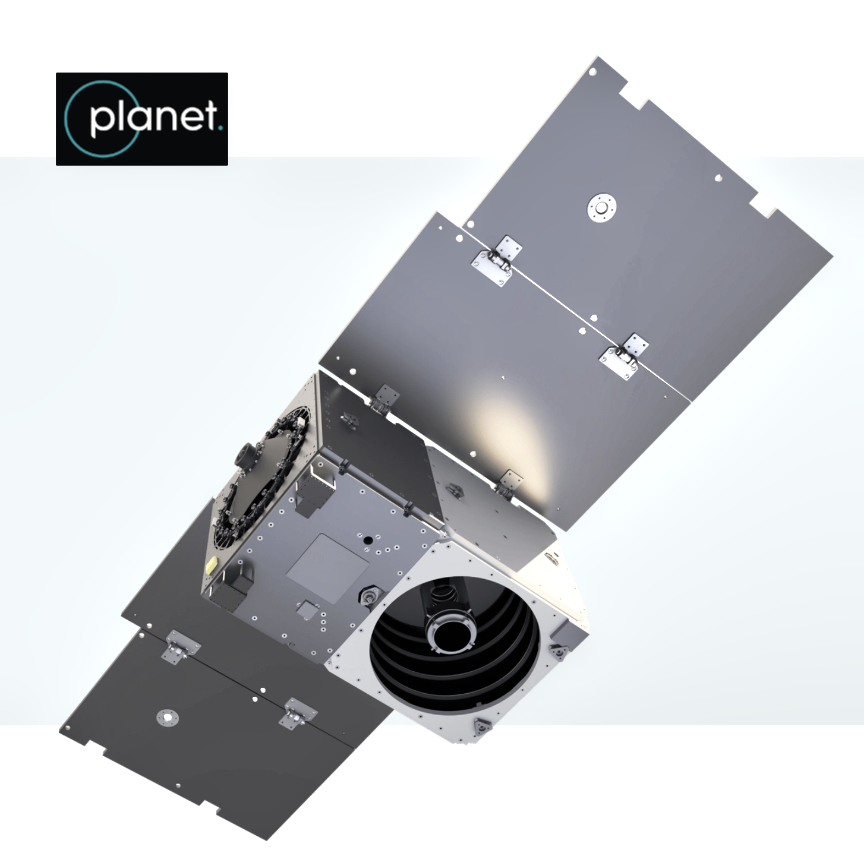
Planet Labs PBC (NYSE: PL) has announced that the company’s Pelican tech demonstration satellite, Pelican-1, along with 36 SuperDoves, have arrived at Vandenberg Space Force Base in preparation for launch next month.

Pelican-1, designed and manufactured by Planet, is the first tech demonstration of Planet’s next-generation, high-resolution fleet, which is expected to replenish and improve upon Planet’s existing high-resolution systems on-orbit today. The 36 SuperDoves, Planet’s Flock 4q, will contribute to Planet’s daily monitoring PlanetScope mission.

Pelican-1 is a technology demonstration, built to test Pelican’s integrated design and Planet’s common bus platform. This common bus platform, designed and built by Planet, will also host the Company’s future hyperspectral Tanager mission. Planet launches tech demonstrations across all of its new satellite fleets in order to prove out nexgen systems, test its latest technology, and learn from its performance, improving the scalability of its systems along the way.

Pelican-1 is not expected to produce commercial data, but rather obtain critical information and learnings needed to iterate the Pelican design and rapidly scale to a fleet using Planet’s agile aerospace approach. When fully operational, the Pelican constellation is planned to improve upon every dimension of Planet’s existing high-resolution SkySat constellation – faster acquisition and delivery of data, better spatial resolution to see finer details, higher revisit to catch fleeting events, and more ways to combine insights with other analytics and sensors.

The 36 SuperDoves launching will contribute to Planet’s flagship daily, global monitoring mission. This data is used by hundreds of customers in defense, civil government, and commercial markets to take informed action, and better contextualize events they’re seeing on the ground today. Planet’s daily scan and deep archive of data for every point on Earth is unique within the industry and provides customers with a continuous and complete view of their areas of interest. Further, the archive acts as a rich training ground for predictive machine learning and advanced artificial intelligence models, accelerating users’ ability to draw insights from the terabytes of data collected by Planet each day.

“The launch of our first Pelican tech demonstration marks an exciting milestone for us,” said . “This new spacecraft bus is an exquisite system that will underpin both our Pelican and Tanager fleets and we can’t wait to learn and iterate in our agile aerospace model. The 36 SuperDoves also launching are not to be overlooked. They will join the flock we have in-orbit today, which remains the largest earth imaging fleet, providing our unique daily scan that is helping to unlock new markets.” — Will Marshall, Co-Founder and CEO, Planet

https://smallsatnews.com/2023/10/12/13173/

Filed Under: News

Momentus will deliver for RIDE! Space

October 12, 2023 by editorial

Momentus Inc. (NASDAQ: MNTS) has signed a contract with RIDE! Space for transportation and orbital delivery services in the first quarter of 2024.

RIDE! Space will be flying its Gaindesat and Djibouti payloads on a single mission.

“We are thrilled to mark this historic moment for the space sector of Africa with Momentus. Being an actor for sending the 1st Senegalese satellite and the 2nd one for Djibouti proves the objective RIDE! has given itself: make space more convenient, affordable and reliable. In this mission, Momentus plays a key role. They have also always been a trusted partner to RIDE!, responsive and ready to accommodate small sat players from our ecosystem.” — Valentin Benoit, CEO, RIDE! Space

“The African Space Industry Annual Report released in August reports that the African space economy is projected to grow to more than $22 billion by 2026.We anticipate rideshare services to be an important enabler for this growth. We’re looking forward to working with RIDE! Space as they support access to Low-Earth Orbit for new and established African customers.” — Chris Kinman, CEO, Momentus

In addition to rideshare missions, Momentus offers Delta-V delivery for missions requiring precise custom orbits. The Company also provides hosted payload services and its M-1000 satellite bus for customized and dedicated missions.

Filed Under: Featured, News

Argotec invests million$$ in U.S. business development + collaborates with NASA JPL

October 12, 2023 by editorial

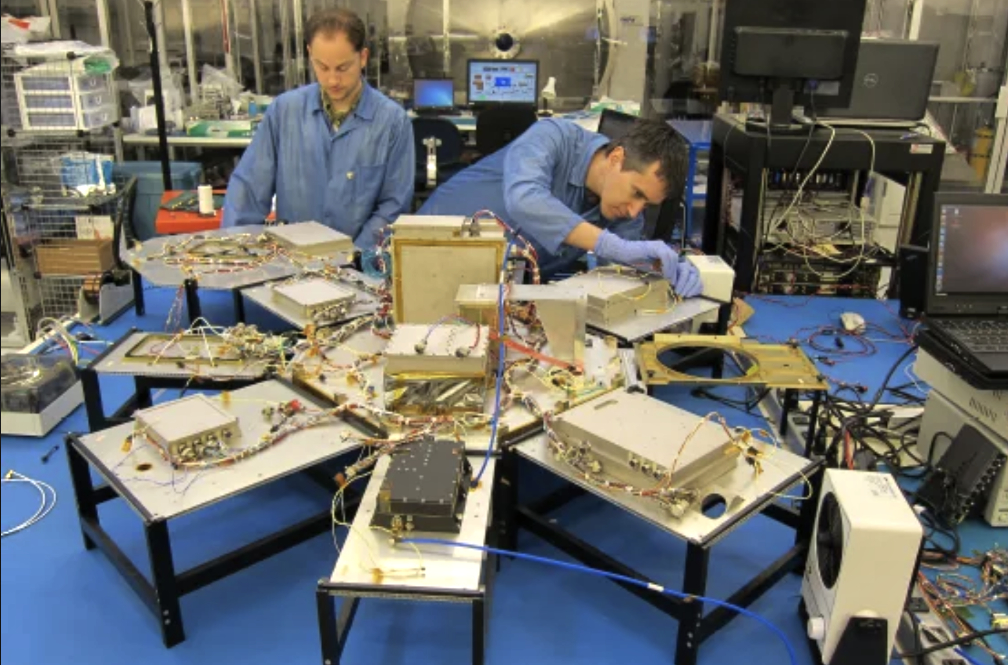
Argotec has plans for a multimillion-dollar investment to start the firm’s U.S. operations and will build a manufacturing facility in Largo, Maryland — this 20,000 sq. ft. facility will deliver approximately 100 jobs to the area and will provide a location for Argotec to design, develop, build, test and operate their satellites in the United States.

Argotec has appointed Corbett Hoenninger as U.S. managing director and he has more than 20 years of aerospace engineering experience, including projects for both civil and commercial space markets. Most recently, he served as Senior Vice President of Engineering at Sierra Space. Prior to that, he worked at NASA Johnson Space Center on the Space Shuttle and International Space Station programs.

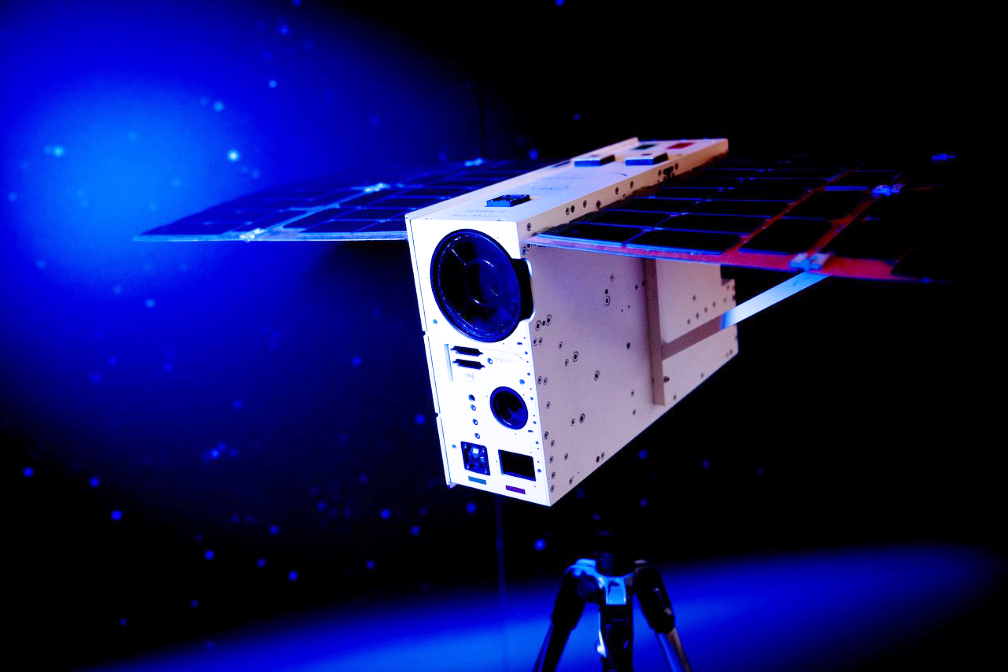
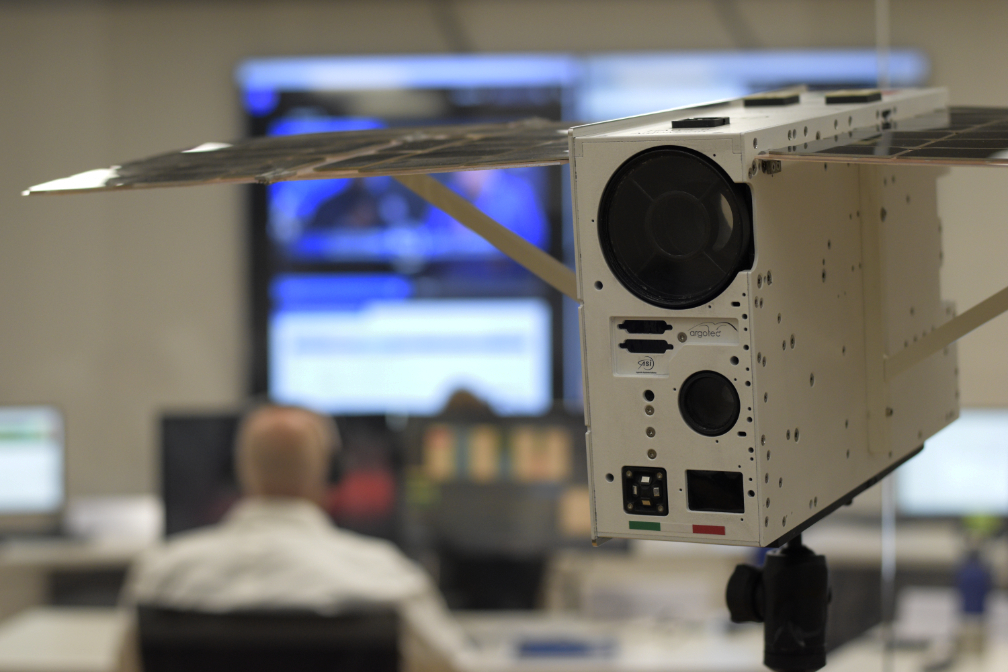
Photo of the company’s HAWK smallsat platform, courtesy of Argotec.

The first product to be manufactured in Argotec’s new U.S. facility will be a custom Universal Space Transponder-Lite to improve radio frequency for satellites in deep space and facilitate a planetary service relay system. This advanced space communications project is a collaboration with NASA Jet Propulsion Laboratory.

Argotec will work with the JPL team to consolidate existing UST-Lite designs and create a streamlined product that can deliver high-speed communications services in deep space. Following the prototype phase, Argotec plans to expand production of the custom UST-Lite for commercial space use and has customers already lined up for the product.

The UST-Lite, originally developed by JPL, is a Software-Defined Radio (SDR) that combines a miniaturized radio package with state-of-the-art processing capabilities. This advanced communications solution is crucial in facilitating reliable transmission and reception in planetary missions, between different sides of the Moon, and also among Earth, Moon and Mars. The UST-lite capabilities enable a multitude of additional cutting-edge technologies and make it a valuable asset for deep space exploration, where reliable communication is essential for mission success.

“It’s an exciting time for Argotec. Our recent missions with NASA, including one recognized as an AIAA Mission of the Year, have proved the reliability and performance of our satellites, and we’re ready to take that expertise to the next level with our new U.S. manufacturing facility and in our collaboration with . These activities reflect our strength and stable growth as a company and demonstrate our commitment to the U.S. market.” — David Avino, CEO and Founder, Argotec

Filed Under: News

SFL celebrates 25 years of smallsat development

October 11, 2023 by editorial

Space Flight Laboratory (SFL) is celebrating 25 years of building smallsats that provide big returns for commercial, government, and research clients — established in 1998, SFL has built 70 operationally successful satellites. recording 270 years on-orbit for dozens of distinct smallsat missions.

This year alone, the Toronto, Canada-based smallsat developer has seen 13 of the firm’s satellites launched and deployed, with another 26 satellites under development or awaiting launch. SFL’s record of accomplishments includes developing microspace missions for applications related to EO, atmospheric monitoring, ship tracking, telecommunications, RF geolocation, and space astronomy.

Pushing the envelope of what smaller satellites can accomplish, SFL has achieved microspace breakthroughs in space technology miniaturization including advanced attitude control for precise sensor pointing, drag sail deorbiting, autonomous formation flight, modular power systems, and custom deployables (e.g., antennas, solar panels, instrument shutters and doors) for small spacecraft. 

Notable SFL missions include the following:

  • HawkEye 360 Commercial Constellation – SFL has developed 18 formation-flying radio frequency geolocation microsatellites and guided integration of three others by HawkEye 360, all launched since 2018. Additional three-satellite clusters are under development at SFL’s Toronto headquarters and at HawkEye 360’s U.S. facility under SFL’s Flex Production Program.
  • GHGSat Commercial Constellation – Since 2016, SFL has developed nine greenhouse gas monitoring microsatellites, achieving remarkably precise attitude control and sensor pointing for the commercial GHGSat of Montreal, in addition to sustained detection and measurement of methane emissions at double the design capacities of the satellites.
  • Telesat LEO 3 Communications Microsatellite – Built on SFL’s scalable and versatile DEFIANT platform, this 30 kg demo spacecraft was launched in 2023 and will provide continuity for customer and ecosystem vendor testing campaigns following decommissioning of Telesat’s Phase 1 LEO satellite.
  • NEMO-HD Earth Observation (EO) Microsatellite – Built at a fraction of the cost of a traditional EO spacecraft, Slovenia’s first satellite captures 2.8-meter multispectral optical imagery and high-definition video used in a variety of applications since its 2020 launch.
  • Commercial Communications Constellation – Eighteen CubeSats have been deployed on orbit and are successfully operating using the SFL 6U-XL SPARTAN design for a Toronto-based company.

“For 25 years, SFL has focused on developing quality smaller satellites that achieve high levels of performance at price points affordable for customers in all sectors. By adhering to rigorous microspace development practices, we have stood the test of time, becoming a leading innovator of small satellites and cutting-edge technologies.”At SFL, we have built our reputation on developing smaller satellites that not only work the first time but exceed expectations both in terms of operational performance and lifespan.” — Dr. Robert E. Zee, Director, SFL

SFL offers a complete suite of nano-, micro- and small satellites – including high-performance, low-cost CubeSats – that satisfy the needs of a broad range of mission types from 3 to 500 kilograms. For a comprehensive list of SFL high-performance satellite platforms, please visit www.utias-sfl.net/satellite-platforms/overview/. 

Filed Under: News

Sateliot partners with Comfone to provide MNOs with worldwide 5G SATCOM with roaming

October 11, 2023 by editorial

Sateliot recently extended the company’s network range with a key partnership with Comfone, a leading provider of mobile connectivity and roaming services — this operation enables more than 480 MNOs (Mobile Network Operator) and MVNOs (Mobile virtual network operator) worldwide to connect with a standard roaming agreement to Sateliot’s 5G NB-IoT smallsat constellation, paving the way for IoT adoption everywhere on the planet.

With this agreement between Sateliot and Comfone, MNOs and MVNOs will be able to cover the entire planet, whereas today cellular coverage reaches only 15% of Earth’s surface. Comfone’s Key2roam Platform Services — comprising IPX, Data Clearing and the Key2roam Roaming Hub — facilitates the integration between Sateliot and MNOs as well as MVNOs. This also enables IoT device owners to send and receive 5G data anywhere in the world, regardless of the SIM card they are using, seamlessly from space cell towers within Sateliot’s non-terrestrial network (NTN).

As a full GSMA member, Sateliot has the capacity to sign standard roaming agreements with any telecom operator. With these two factors into account, MNOs and MVNOs can increase their Average Revenue Per User (ARPU) by enabling NB-IoT satellite access to their existing customers as well as generating additional revenues with new customers and new use cases.

Sateliot has forged agreements with many mobile and virtual mobile operators in several geographies around the globe that benefit from a rapid integration with Sateliot’s Non-Terrestrial Network through the Comfone Key2roam Platform. Starting in 2024, Sateliot will be serving a portfolio of clients valued at $1 billion, formed by more than 500 companies from 30 countries who applied in their pioneer Early Adopter Program. Users will be able to get 5G IoT satellite connectivity at “similar to terrestrial” price points using a standard device from an MNO’s or MVNO’s SIM card of their choice.

Sateliot is the first satellite operator offering standard NB-IoT via the firm’s LEO constellation of satellites, supporting 3GPP Release 17 NTN capabilities. With the new 3GPP release-17, end-user devices can seamlessly switch between terrestrial and non-terrestrial networks using the same standard device and the same SIM card from MNOs and MVNOs.

Sateliot’s 5G IoT satellite constellation improves IoT connectivity even in the most remote areas. Some of the application areas of Sateliot’s network are livestock, agriculture, supply chain, and logistics, as well as water management of drinkable wells and rivers to prevent contamination and floods, beekeeping and pollination monitoring to protect food security as the pollinators populations are in decrease, and among other uses in several industries.

“The partnership with Comfone is a key milestone for Sateliot as it allows us to offer seamless NB-IoT roaming capabilities globally. From now on, every IoT application will be able to connect to our satellite network easily. We are confident that this access to satellite connectivity will also open the gate to new applications that will improve our daily lives.” — Jaume Sanpera, CEO, Sateliot

“Because Sateliot’s satellite network services are 3GPP compliant, the different layers of integration between Sateliot and the mobile networks, which are required, can be provided over the standardized GSMA roaming interfaces. These include IPX connectivity, agreements management, roaming relation maintenance, services testing as well as very importantly clearing and settlement services. That’s why Comfone’s Key2roam Platform Services are ideal to facilitate the integration between Sateliot’s Non-terrestrial Network and Mobile Networks and thereby bridging the gap between the two worlds.” — Derek Moser, VP Business Development, Comfone

Filed Under: News

Skylo announces satellite NTN connectivity on Samsung modems

October 9, 2023 by editorial

Skylo Technologies has entered into a strategic partnership with Samsung Electronics’ System LSI Business — this collaboration launches next-generation connectivity by introducing NTN support on Samsung’s flagship 5G chipsets, specially designed and seamlessly interoperable between cellular and Skylo’s satellite network.

As part of the latest Rel-17 of 3GPP, NTN has become essential in addressing global connectivity challenges. With this partnership, Skylo and Samsung’s System LSI Business are poised to redefine the future of ubiquitous connectivity with reliable, high-performance 5G smartphone modems that never lose coverage.

Key highlights of the partnership include:

● Integration of Satellite Connectivity on 5G Modems: Samsung has delivered 3GPP standards-based NTN on the latest flagship modem.

● Global Impact across OEMs: The partnership between Skylo and Samsung enables smartphone, wearable and automotive OEMs to connect over Skylo’s satellite network when out of range of cellular.

● Demo at SamsungSystem LSI Tech Day 2023: A live demonstration showcasing the capabilities of Samsung 5G modem on Skylo’s satellite network took place at Samsung SystemLSI’s Tech Day event on October 5th, 2023, inSan Jose, CA.

“We are thrilled to join forces with Samsung to unlock the true potential of NTN. Our shared vision of seamless global connectivity aligns perfectly with Samsung’s commitment to innovation. We’re excited for the experiences that this will unlock on smartphones and other platforms.”— Parth Trivedi, CEO and Co-Founder of Skylo

“We are incredibly excited about our partnership with Skylo Technologies. By integrating NTN support into our flagship 5G chipsets, we are breaking new ground in the world of connectivity. This collaboration aligns perfectly with Samsung’s commitment to innovation and our mission to provide cutting-edge technology to users around the world. Together with Skylo, our joint efforts will undoubtedly open up new possibilities and connected experiences for people in previously unreachable geographies.” — Hui Won Je, Vice Ppresident of the Modem Development Team, Samsung Electronics

Filed Under: News

The launch of Arianespace Flight VV23 is a smallsat deployment success

October 9, 2023 by editorial

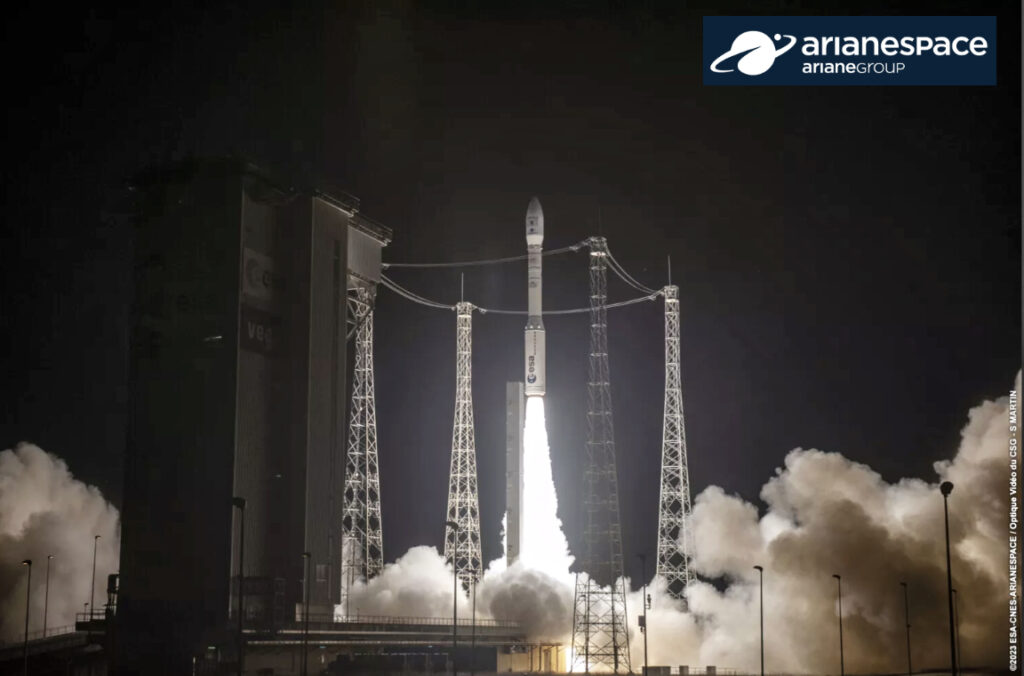
On Friday, October 8, 2023, at 22:36 p.m. local time (01:36 a.m. UTC), Arianespace’s Vega mission successfully lifted off from Europe’s Spaceport in Kourou, French Guiana, carrying the optical observation satellite THEOS-2, the weather satellite FORMOSAT-7R TRITON as well as ten auxiliary passengers.

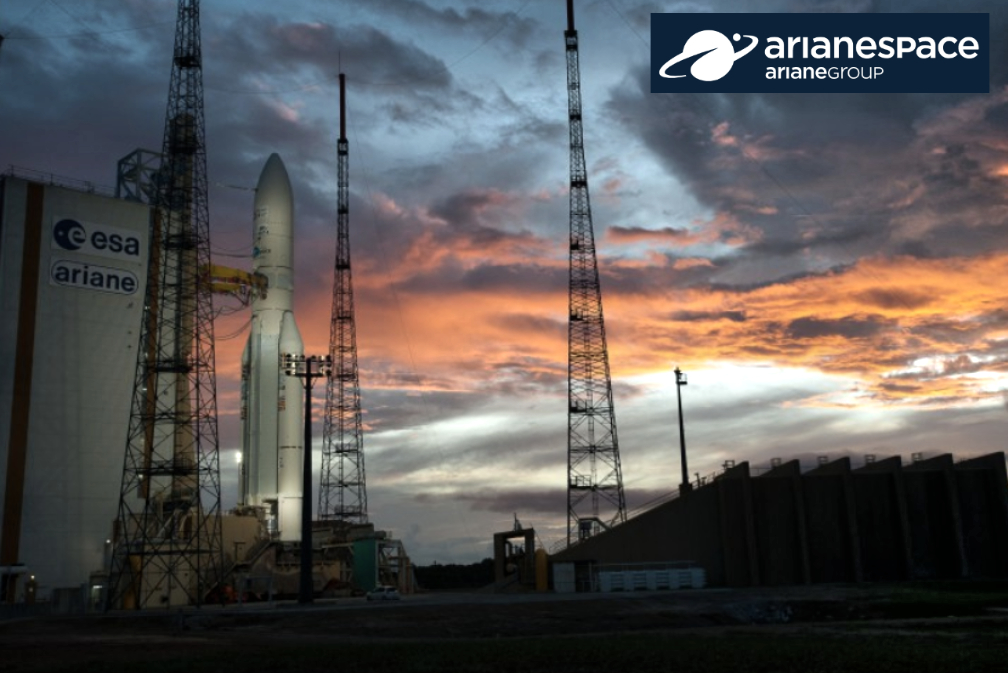
The Kourou Spaceport in French Guiana. Photo is courtesy of Arianespace.

After liftoff from Europe’s Spaceport, the Vega launcher was powered by the first three stages for a little over six minutes before the separation of the upper stage from the third stage, ZEFIRO-9.

The AVUM upper stage ignited twice before releasing simultaneously the two main satellites at an altitude of 601 km. Following two other ignitions of the AVUM, the ten cubesats composing the auxiliary payload all successfully separated, thus marking the end of mission VV23, one hour, 43 minutes and 58 seconds after liftoff. A fifth and last AVUM ignition de-orbited the launcher.

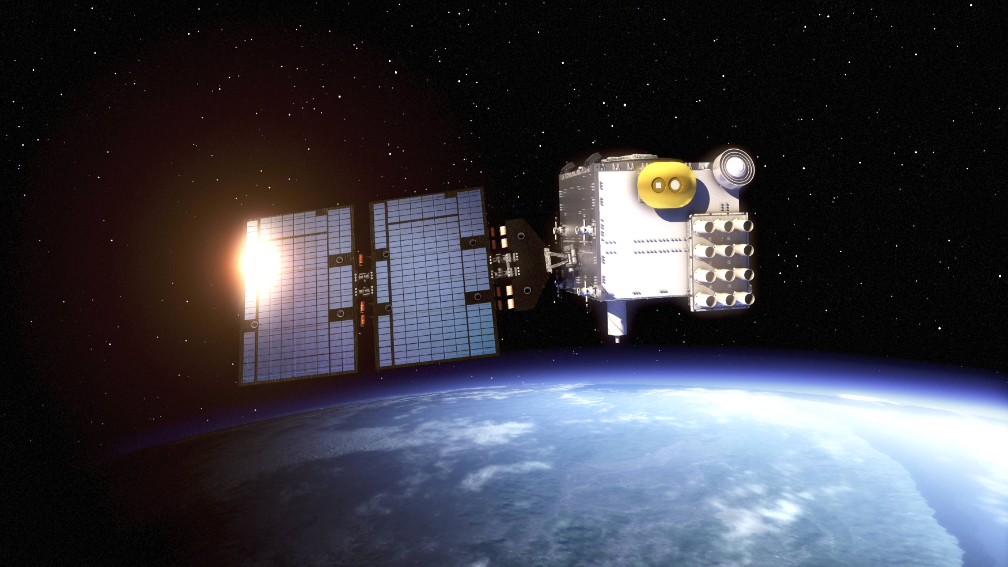
With this launch, Vega successfully orbited: THEOS-2 (THailand Earth Observation System-2), a very-high-resolution Earth observation optical satellite, provided by Airbus Defence and Space to support the Kingdom of Thailand’s key development priorities.

Artistic rendition of the Kingdom of Thailand’s THEOS-2 smallsat on-orbit. Image is courtesy of satellite manufacturer, Airbus.

FORMOSAT-7R/TRITON, an experimental satellite designed and manufactured by TASA (Taiwan Space Agency). FORMOSAT-7R/TRITON plays two roles: it is both a weather satellite and a scientific satellite.

Taiwan Space Agency’s artistic rendition of the FORMOSAT-7R / TRITON satellites on-orbit.

Arianespace is responsible for operating the new-generation Ariane 6 and Vega C launchers, developed by ESA, with respectively ArianeGroup and Avio as industrial primes. Arianespace is headquartered in Evry, near Paris, and has a technical facility at the Guiana Space Center in French Guiana, plus local offices in Washington, D.C., Tokyo and Singapore.

Arianespace is a subsidiary of ArianeGroup, which holds 74% of its share capital, with the balance held by 15 other shareholders from the Ariane and Vega European launcher industry, and ESA and CNES as censors.

Regarding the cubesats for institutional missions and the European Commission, all separation commands were properly executed; the confirmation of the separation was acquired for 8 satellites; the separation of the last 2 cubesats is still to be confirmed. As prime contractor for the Vega, in charge of development and production, AVIO Spa (Colleferro, Italy) delivers a flight worthy launcher on the launch pad to Arianespace, which sells and operates the launcher from the Guiana Space Center (CSG). During the launch campaigns, Arianespace works closely with CNES, the French space agency and the launch range authority at the European Spaceport in Kourou, who is notably looking after the satellite preparation facilities.

”Congratulations to Arianespace teams and their partners, amongst them Avio, ESA and CNES, for this successful Vega launch, commented , after the separation of the last satellite. By delivering multiple satellites to orbit, Vega again has demonstrated its unique versatility. I wish to thank our customers, Airbus Defence and Space for Thailand, Taiwan Space Agency, and the operators and sponsors of the cubesats, amongst them the European Commission, for their trust.” — Stéphane Israël, CEO, Arianespace

”We are very happy about the success of the mission, said . The joint work of Avio, Arianespace and ESA teams has allowed to leverage the Vega launcher, in order to minimize schedule changes for customers, demonstrating resilience and commitment.” Giulio Ranzo, CEO, Avio SpA

Filed Under: News

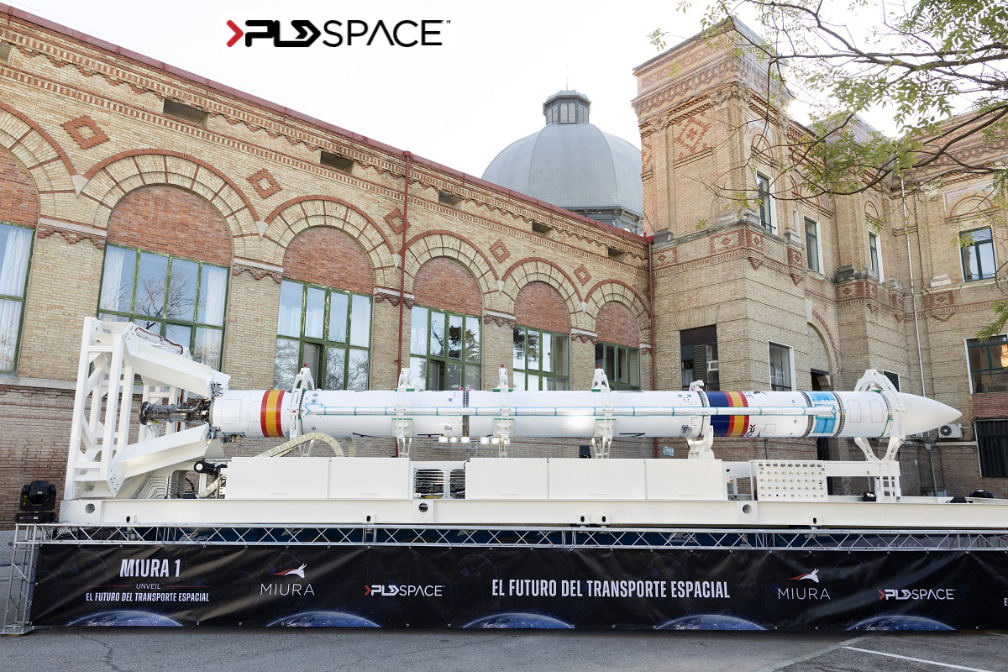
PLD Space successfully completes 1st private space rocket launch in Europe

October 9, 2023 by editorial

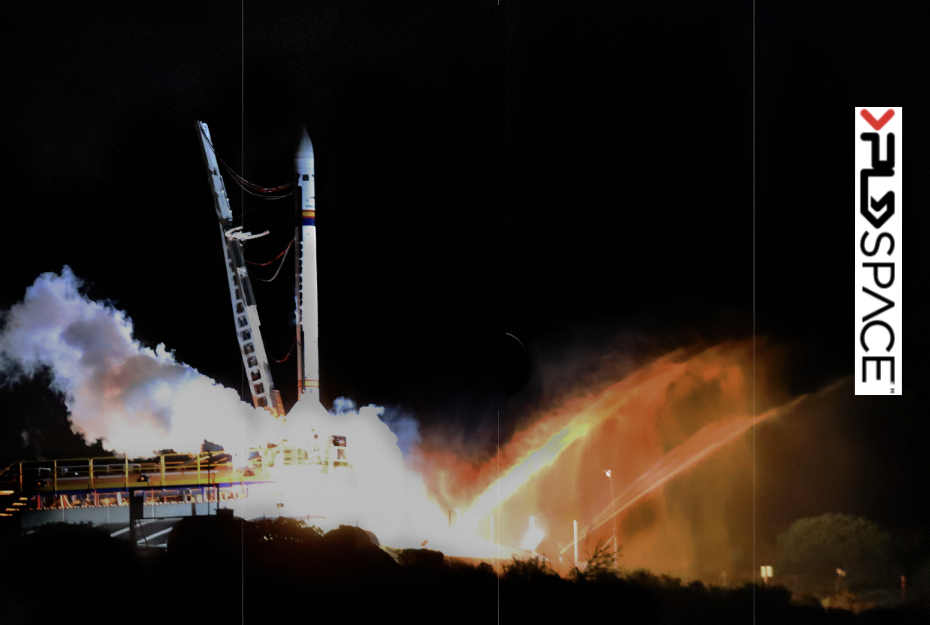
PLD Space has made history after successfully completing the launch of the first private European rocket, MIURA 1 — this milestone achievement reinforces PLD Space’s position in building national and European strategic capabilities.

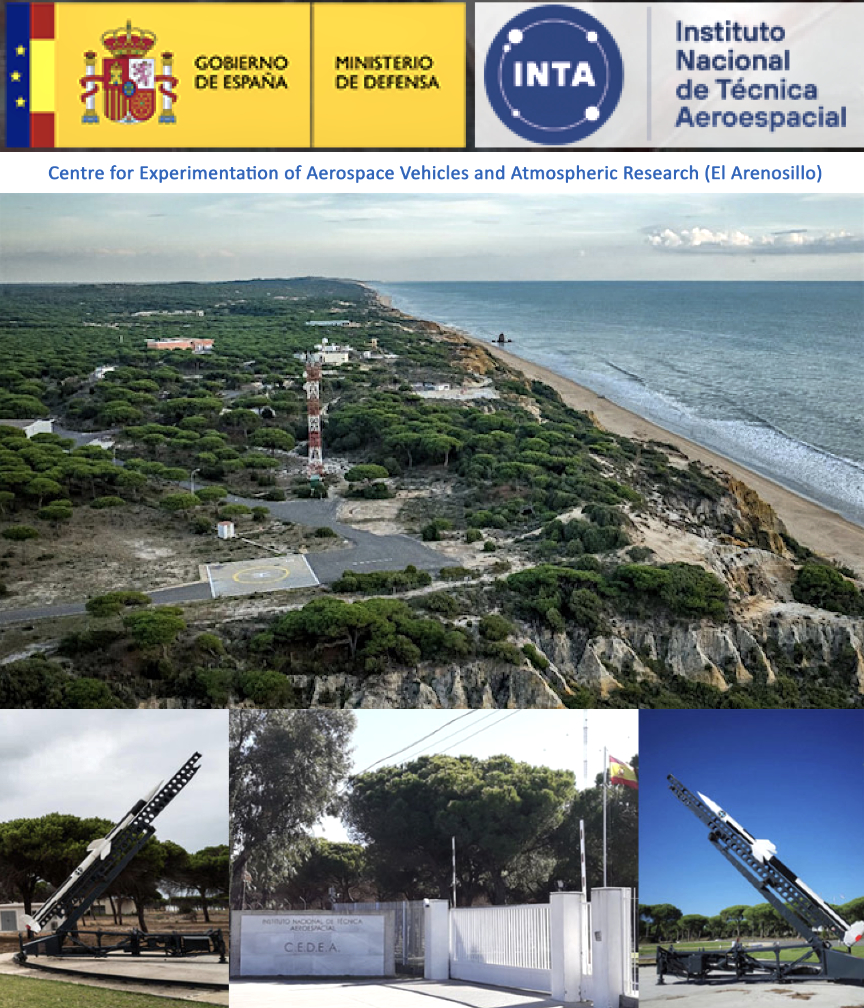
The first launch of MIURA 1 occurred at 02:19 CET (00:19 UTC) on Saturday, October 7th, at the facilities of the El Arenosillo Experimentation Centre (CEDEA), belonging to the Spanish National Institute for Aerospace Technology (INTA). PLD Space has fulfilled the primary mission objectives related to engine thrust, trajectory tracking and launcher behavior.

The flight lasted 306 seconds in which MIURA 1 reached apogee at an altitude of 46 kilometers. The mission concluded with the rocket landing in the Atlantic Ocean and the company will proceed with the work of recovering the rocket during the next few hours.

The launch also tested a technological device from the German Centre for Applied Space Technology and Microgravity (ZARM) under microgravity conditions. The data gathered during the flight will inform future experiments.

Following an in-depth analysis of the mission, PLD Space will publicly release the data collected during the inaugural MIURA 1 flight test. Miura 1 is the first rocket created by a private company in Europe. PLD Space has achieved something which only three companies in Europe has achieved, that being the development of rocket technology that is recoverable and reusable.

The launch of the MIURA 1 suborbital rocket comes 12 years after the creation of PLD Space. With this maiden flight, the Spanish company marks a turning point in the European space race, where small satellites are revolutionizing access to information to accelerate innovation in multiple sectors on Earth. With this launch, Spain becomes the tenth country in the world to have direct space capability. With this launch, Spain has become the tenth country in the world with the capacity to reach space.

The inaugural suborbital flight of MIURA 1 marks a pivotal moment for the MIURA 5 orbital launcher’s development. The data gathered will enable validation of nearly 70% of the design and technology set to be incorporated into MIURA 5.

At present, over 90% of the PLD Space team is dedicated to developing MIURA 5 with the maiden launch scheduled for 2025 at the European spaceport CSG in Kourou, French Guiana, with commercial operations set to begin in 2026.

“This launch culminates over 12 years of relentless effort, yet it marks just the start of our journey. This test flight has yielded valuable data, enabling us to validate crucial design elements and technologies that will underpin the development of our MIURA 5 orbital launcher.” — Raúl Torres, Launch Director and Co-Founder, PLD Space.

“This launch establishes PLD Space as the frontrunner in the European space race. We ventured into space fueled more by determination than resources, yet we triumphed. The team’s elation is visible. Indeed, the mission’s success is a collective accomplishment, encompassing our investors, partners, and suppliers.” — Ezequiel Sánchez, CEO, PLD Space

“Looking to the immediate future, the success of a test flight like this is gauged by the insights we gain, insights that enhance our future reliability and success rate. We developed MIURA 1 as a stepping stone to accelerate the technological advancement of MIURA 5. With this mission’s success, our team is poised to rapidly progress towards the inaugural flight of MIURA 5 – our ultimate goal.” — Raúl Verdú, Business Development Manager and Co-Founder, PLD Space

Filed Under: News

Big Earth imager to be tested on small Vega CubeSat

October 9, 2023 by editorial

A briefcase-sized CubeSat being flown on Europe’s next Vega launcher this week will gather 340 km wide views of Earth’s vegetation growth, employing a spectral imager originally designed for ESA’s decade-in-flight Proba-V.

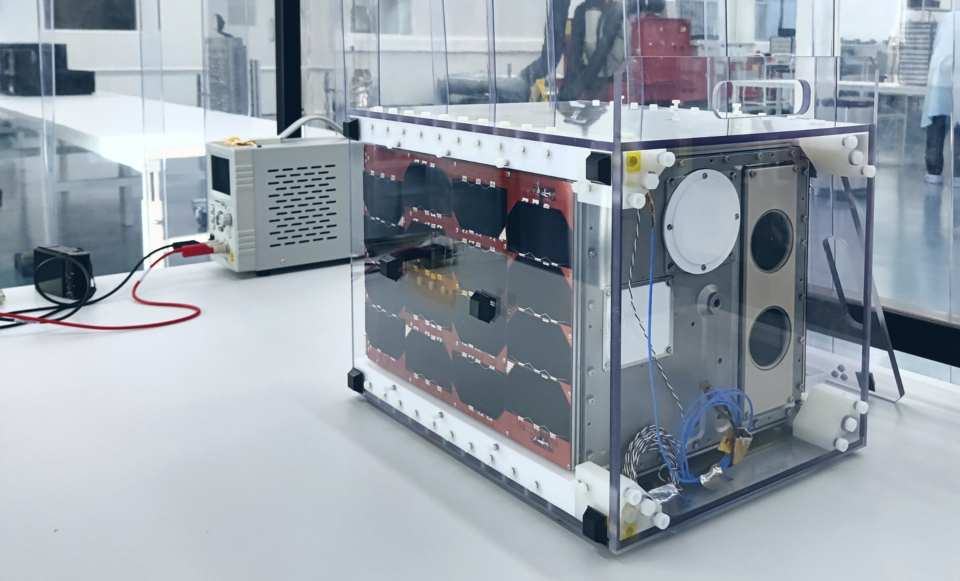
Companion CubeSat in cleanroom

The Proba-V Companion CubeSat has been built by Aerospacelab in Belgium, hosting a Proba-V spectral imager provided by OIP Space Instruments and Belgium’s VITO Research Institute processing and making use of its data. The goal of the mission is to see whether this already well-characterized imaging payload can operate well aboard a miniature CubeSat platform.

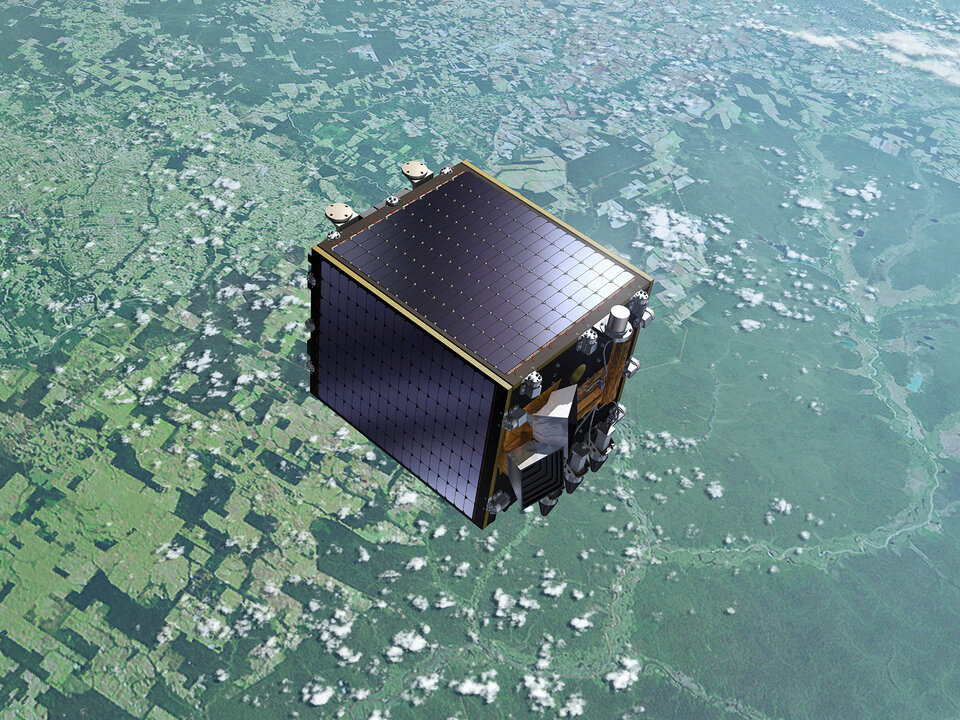
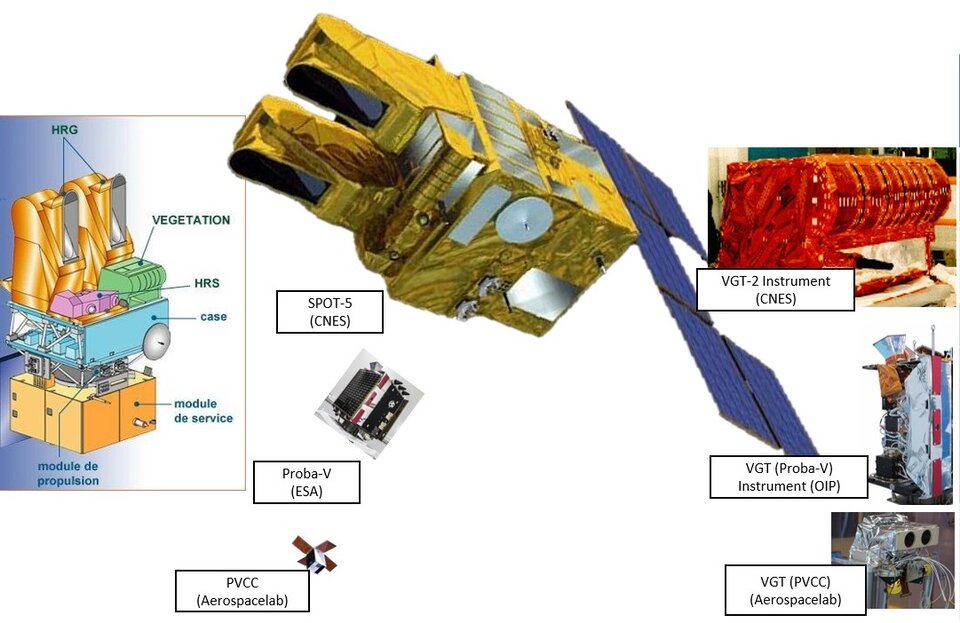
ESA’s Proba-V mini-satellite was launched by Vega in 2013, flying a miniaturized version of the Vegetation instrument previously flown aboard the full-sized Spot-4 and Spot-5 satellites.

Proba-V global vegetation timelapse

A cubic metre in scale, Proba-V achieved a daily continent-spanning 2250 km field of view, collecting light in the blue, red, near-infrared and mid-infrared wavebands, ideal for monitoring plant and forest growth as well as inland water bodies.

Proba-V’s wide swath was achieved by combining a trio of spectral imagers, with 350 meter spatial resolution from its side imagers and 100 meters resolution in its central field of view.

Metre-sized Proba-V satellite
Meter-sized Proba-V satellite

“Actually a total of four spectral imagers were manufactured– one stayed behind, intended to help with troubleshooting the mission by reproducing any in-orbit problems on the ground. So then the idea emerged from VITO: why not try and fly this spare spectral imager as well? We can extend the continuity of Vegetation data, since in 2019 Proba-V’s orbit drifted so much that part of its swath is now in the eclipse side, meaning its working mission has ended. In addition, in the same way that Proba-V demonstrated useful imagery could be returned from a small platform, we will also be able to test whether this much smaller CubeSat platform can also serve to gather acceptable imagery.” — Iskander Benhadj, VITO

Evolution of Vegetation instrument and platforms

CubeSats are low-cost satellites assembled from standardized 10 cm boxes. Proba-V CC is a 12 unit CubeSat, although around half the satellite volume is taken up by its spectral imager and dedicated read-out electronics.

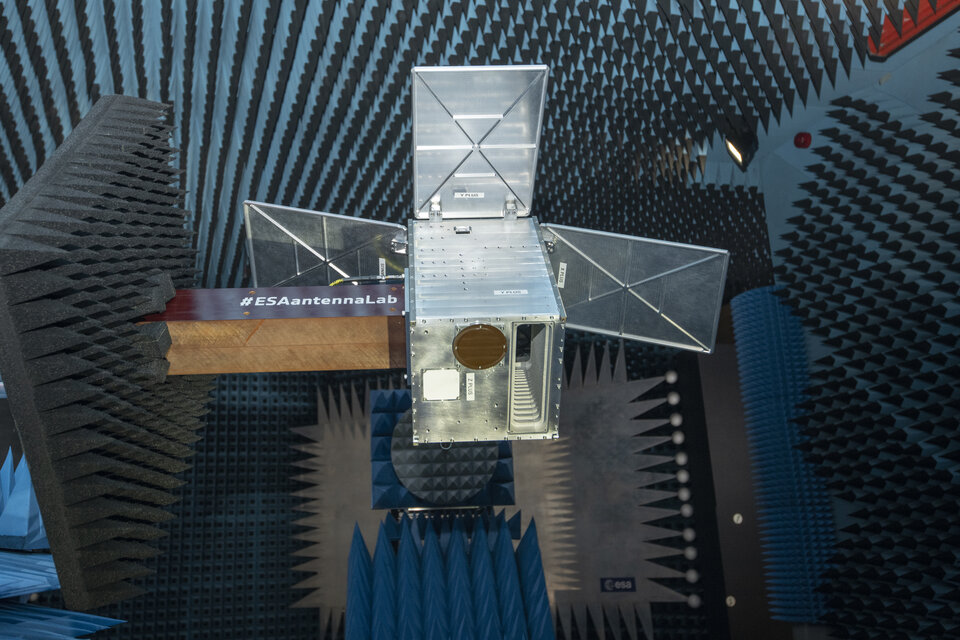
Radio-frequency testing of Proba-V CC

“In practice, the mission has been built around the imager. The hardware was taken directly out of storage, where it was kept in stable conditions, double bagged and in an inert nitrogen gas environment. The imager has been secured to an optical bench along with the startrackers used to precisely measure the CubeSat’s attitudes. The rest of the satellite is taken up with reaction wheels that serve to rotate the mission in the correct orientation, plus the usual battery, power systems and on-board computer.” — Xavier Collaud, Aerospacelab

Proba-V Companion CubeSat

Once in its 564 km altitude orbit Proba-V CC will perform co-observations of global vegetation with Europe’s two Copernicus Sentinel-2 satellites, which are similarly optimized for land cover and vegetation.

As is standard for Earth Observation (EO) satellites, the CubeSat will be placed in a Sun-synchronous near-polar orbit, meaning that it retains the same conjunction with the Sun as it orbits, so that the same solar local time prevails under the locations it overflies – Proba-V CC’s initial local time of the descending node is targeting 10:14 in the morning.

Proba-V Companion CubeSat mission patch

Its predecessor, Proba-V, was placed in a comparable orbit, although because it far outlived its planned 2.5 year original working lifetime this orbit ended up drifting earlier in the morning, to below 09:00 at the moment, meaning its images contains zones that are in eclipse, have longer shadows and are no longer scientifically useful.

The satellite itself remains in good working order, so some co-observations with Proba-V CC might be possible for experimental studies. It is also acquiring monthly images of the Moon, whose unchanging surface makes a useful radiometric calibration target.

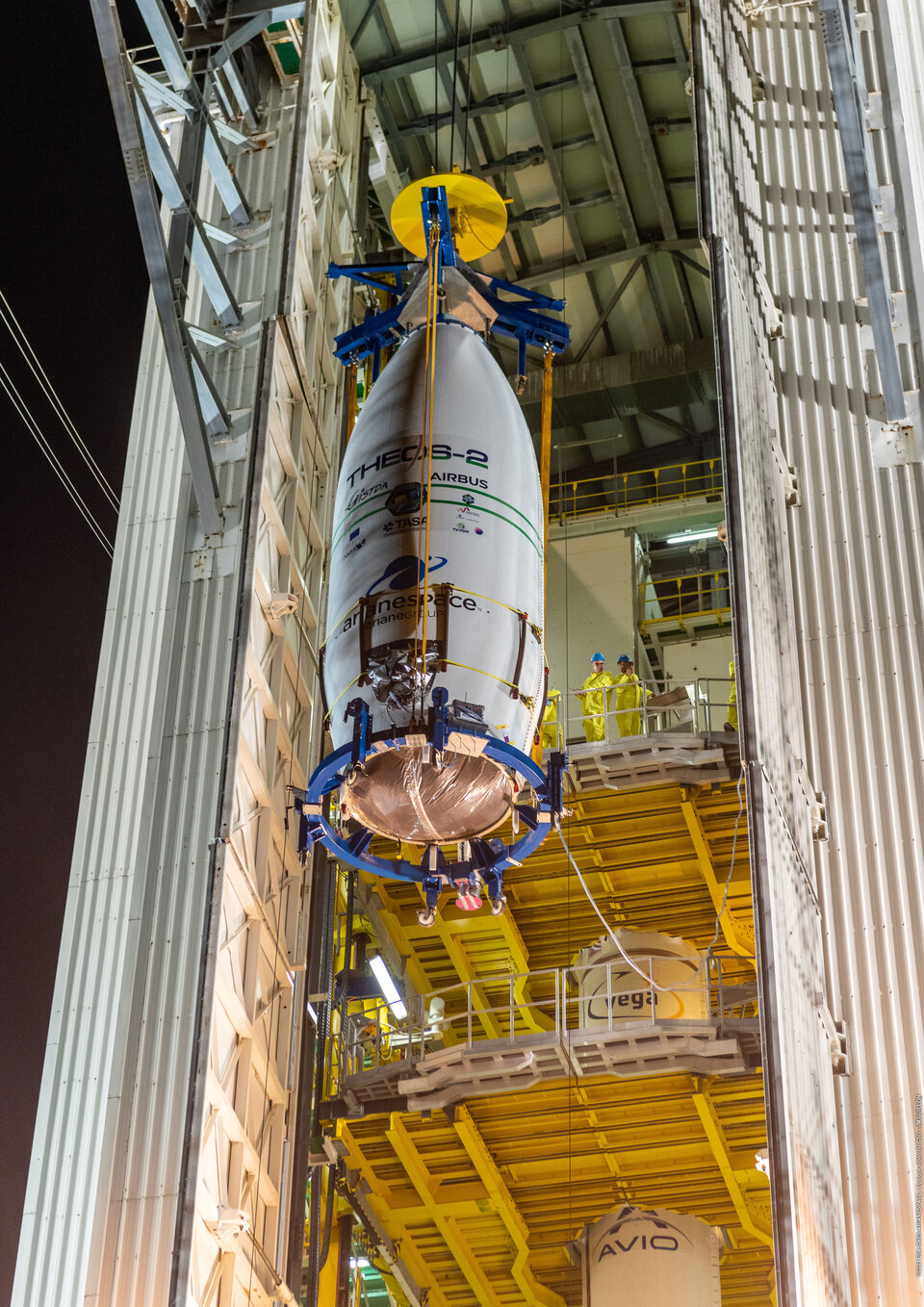
Vega upper composite being lifted onto launcher

“Being in a lower orbit than Proba-V means the spectral imager will achieve a higher spatial resolution, down to 70 m. But that means the satellite is moving faster, so the line rate will be affected, meaning small pixels will end up rectangular rather than square if the nominal Proba-V line rate is used. We can try to accelerate the image to compensate for this, but this will require extra power.Quality and operational trade-offs such as the selection of optimal line rate or the area of interests to be monitored, have to be carried all over the Proba-V CC lifetime, which includes the commissioning phase, with the objective to provide optimal products for the end user.“ — Iskander Benhadj

Proba-V CC’s lower orbit will also give daily views of the same locations for multiple successive days at a time, with its ground track moving just 20 km westward daily, opening up particular scientific uses.

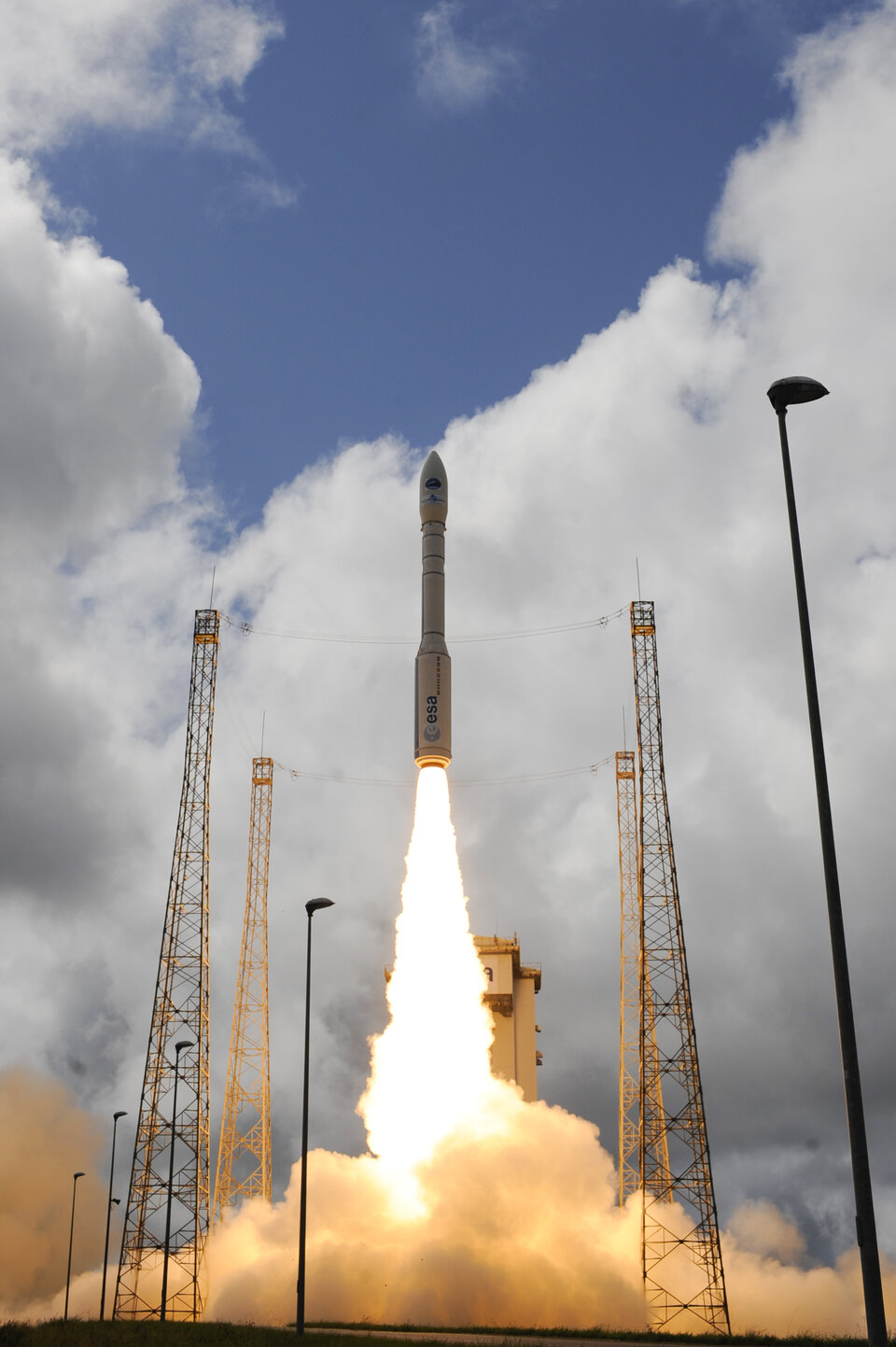
Europe's Vega launcher
Europe’s Vega launcher

Vega flight VV23 is due for lift-off on the night of Octobe 6 from Europe’s Spaceport in French Guiana. Along with its main satellite payloads it carries multiple CubeSats including ESA’s PRETTY mission investigating reflected satnav for environmental monitoring and multiple missions flown through the European Commission’s In-Orbit Demonstration/In-Orbit Validation Programme.

ESA is supporting Proba-V CC through the Fly element of its General Support Technology Program, offering early space access to promising technologies. Use of Proba-V CC data is being overseen by ESA’s Earth Observation Program, as was the case with the original Proba-V.

Filed Under: News

  • « Go to Previous Page
  • Page 1
  • Interim pages omitted …
  • Page 9
  • Page 10
  • Page 11
  • Page 12
  • Page 13
  • Interim pages omitted …
  • Page 60
  • Go to Next Page »

Primary Sidebar

WEEKLY NEWSLETTER

Archives

  • June 2026
  • May 2026
  • April 2026
  • March 2026
  • February 2026
  • January 2026
  • December 2025
  • November 2025
  • October 2025
  • September 2025
  • August 2025
  • July 2025
  • June 2025
  • May 2025
  • April 2025
  • March 2025
  • February 2025
  • January 2025
  • December 2024
  • November 2024
  • October 2024
  • September 2024
  • August 2024
  • July 2024
  • June 2024
  • May 2024
  • April 2024
  • March 2024
  • February 2024
  • January 2024
  • December 2023
  • November 2023
  • October 2023
  • September 2023
  • August 2023
  • July 2023
  • June 2023
  • May 2023
  • April 2023
  • March 2023
  • February 2023
  • January 2023
  • December 2022
  • November 2022
  • October 2022
  • September 2022
  • August 2022
  • July 2022
  • June 2022
  • May 2022
  • April 2022
  • March 2022
  • February 2022
  • January 2022
  • December 2021
  • November 2021
  • October 2021
  • September 2021
  • August 2021
  • July 2021
  • June 2021
  • May 2021
  • April 2021
  • March 2021
  • February 2021
  • January 2021
  • December 2020
  • November 2020
  • October 2020
  • September 2020
  • August 2020
  • July 2020
  • June 2020
  • May 2020
  • April 2020
  • March 2020
  • February 2020
  • January 2020
  • December 2019
  • November 2019
  • October 2019

© 2019–2026 SatNews

Insert/edit link

Enter the destination URL

Or link to existing content

    No search term specified. Showing recent items. Search or use up and down arrow keys to select an item.
      x
      Sign Up Now!

      Enjoy a free weekly newsletter with recent headlines from the global SmallSat industry.

      Invalid email address
      We promise not to spam you. You can unsubscribe at any time.
      Thanks for subscribing! You will now receive weekly SmallSat News updates.
      We love our advertisers.
      And you will too!

      Please disable Ad Blocker to continue... We promise to keep it unobtrusive.
      We promise not to spam you. You can unsubscribe at any time.
      Invalid email address
      Thanks for subscribing!