• Skip to main content
  • Skip to primary sidebar
  • Home
  • News
  • Featured
  • More News ⌄
    • SatNews
    • SatMagazine
    • MilSatMagazine
  • Events ⌄
    • MilSat Symposium
    • SmallSat Symposium
    • Satellite Innovation
  • Contacts
  • SUBSCRIPTION

SmallSat News

You are here: Home / Archives for 2023

Archives for 2023

New GM for Blue Canyon Technologies

September 27, 2023 by editorial

RTX’s (NYSE: RTX) smallsat manufacturer and mission services provider, Blue Canyon Technologies (BCT), has appointed Chris Winslett as General Manager.

Chris Winslett

In his role as GM, Winslett will drive all functions of the business toward a single vision with an emphasis on teamwork and collaboration, specifically focusing on financial performance, on-orbit performance and on-time delivery.

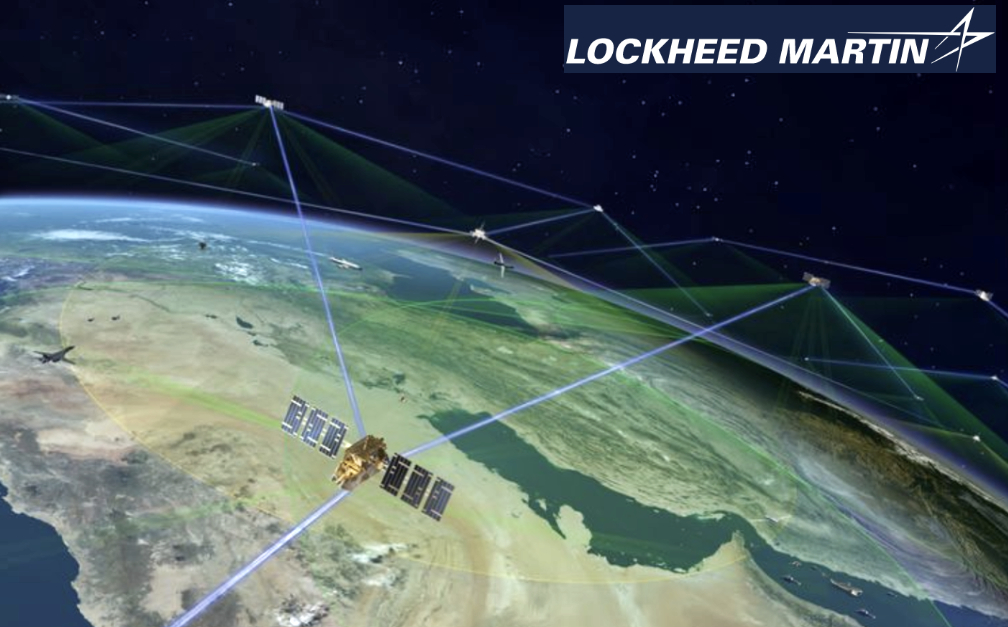
Formerly the program director for the Space Development Agency (SDA) Transport Layer program at Lockheed Martin, Winslett brings nearly 25 years of experience in the aerospace industry to BCT.

Prior to his position with Lockheed, Winslett was the director of programs for OneWeb Satellites, a joint venture between OneWeb and Airbus. In this role, he was responsible for completing the design and development of the OneWeb constellation as well as standing up a factory that was able to produce 10 satellites a week and for developing a strategy to leverage that production to build a wider customer base.


Filed Under: News

AccelerComm, Radisys, RFDSP + TTP partnership to deliver high-performance space-based cell service

September 25, 2023 by editorial

AccelerComm, Radisys® Corporation, RFDSP Lower-Phy IP specialists and TTP are jointly formulating a high-performance, Regenerative 5G RAN reference solution and architecture based on 3GPP for deployment on LEO satellites.

This partnership combines expertise and IP from these companies, together with additional technology from partners, to propose a 5G regenerative gNodeB solution that is tailored to support high-performance 5G services in the challenging environment of a Non-Terrestrial Network (NTN).

In a typical LEO deployment, a constellation of fast-moving satellites covers a wide geographical area using a large number of beams per satellite to cover a multitude of subscribers. The 5G Regenerative NTN solution includes Option-2 split gNB with a distributed unit (DU) on the satellite payload with a ground-based, centralized unit (CU) and 5GC.

The solution handles unique regenerative NTN-specific requirements of extremely high mobility with frequency re-association between the DU, GW and CU serving a region and large-sized cells spanning multiple countries requiring country-specific CN routing. Moreover, any gNodeB platform for space applications will be highly constrained in size, weight, and power, and must be able to work in a hostile space environment.

The joint, LEO Regenerative reference solution will be designed to meet the growing demand for satellite-based eMBB (enhanced Mobile Broadband) and IoT (Internet of Things) services. This makes it an ideal solution for businesses and organizations that need to connect people and devices in remote locations, or for governments looking to provide internet access to all citizens.

The solution will support a large number of beams and high subscriber density and will be delivered on a space-hardened platform optimized for low power and size. It includes a range of advanced developments in the areas of beam-to-cell mapping, beam forming, NTN beam management and well-defined interfaces to SATCOM infrastructure.

The O-RAN compliant gNodeB leverages Radisys’ split, NTN-capable CU, DU software with AccelerComm’s LEOphy and RFDSP’s Low-Phy, a Layer 1 modem that delivers enhanced performance for LEO satellite communications combined with TTP’s DFE and Beam Scheduler. Radisys’ CU/DU supports optimized mechanisms for handling signaling load due to high mobility, along with a power-optimized scalable software that manages the varying system requirements of beams and users.

LEOphy boasts the lowest error rates, with dedicated features to overcome the specific challenges of NTN channels, such as high path losses, differential delays, Doppler shift, long propagation delays, and rapid fluctuations in signal amplitude and phase caused by atmospheric effects. As a result, it ensures a high-reliability link without having to resort to lower coding rates and low-order modulation schemes, thereby maximizing spectral efficiency.

TTP’s DFE supports Crest Factor Reduction (CFR) to improve the efficiency of the RF power amplifier and its Beam Scheduler enables optimized beam hopping and switching functionality to maximize network capacity based on real-time traffic demands.

The 5G Regenerative gNodeB is combined for an end-to-end, NTN solution, with Radisys’ 5GC, available on Kubernetes container platform and small form-factor x86, ARM, and which can handle both NR-NTN and IoT devices.

“Deploying 5G gNodeB on a LEO satellite payload, brings a unique set of challenges for satellites passing over at extremely high speeds, including large cell coverage optimization, high doppler handling and users’ mobility. With onboard regenerative deployments, the complexities compound. Onboard power and resource constraints require low compute, storage footprint CU, DU software and performance-efficient beam hopping that goes beyond 3GPP specifications. Radisys is excited to partner with AccelerComm, RFDSP and TTP to define and develop an NTN solution addressing the regenerative gNodeB challenges and enable their customers to deploy LEO constellation satellite services.” — Munish Chhabra, Senior Vice President and General Manager, Software and Services, Radisys

“There has been an explosion in interest around combining satellite and traditional mobile communications systems. However, for satellite 5G to be truly successful there are a number of performance and efficiency challenges which have to be overcome. Solving these requires building on the existing 3GPP technologies to create a tailored solution built to deal with the unique challenges of operating around a thousand kilometres from Earth at speeds of over 7km per second, all while dealing with power and resource constraints. We are delighted to be working with our partners Radisys, RFDSP and TTP to develop this high-performance solution which will open-up a whole new market for delivering 5G services from space.” — Rob Barnes, Chief Marketing Officer, AccelerComm

“A 5G NTN LEO regenerative gNodeB deployment presents unique challenges when compared to Terrestrial gNodeB. In order to serve the number of beams and support the density of subscribers required, the gNodeB will have to be heavily optimised and tightly integrated with the overall payload functionality.TTP is pleased to partner with AccelerComm, RFDSP and Radisys to define a highly scalable and low power gNodeB solution, that will enable LEO operators to efficiently deliver 5G NTN services.” — Peter Kibutu, TTP’s Advanced Technology Lead NTN

“Recognizing the growing demand for 5G physical layers for non-terrestrial applications and their unique requirements, based on our conformance-tested 5G NR low PHY for terrestrial networks, we built a fully-featured 5G low PHY solution for NTN including a unified interface with high PHY for both options 6 and 7.2x, Doppler shift compensation, digital front-end design, beamforming, and control of multiple simultaneous beams for maximal spectral efficiency. We are happy to be a part of the 5G NTN ecosystem.” — Prof. Ping Liang, founder and CEO, RF DSP Inc.

Filed Under: News

Satellogic + SkyWatch announce a new EO partnership

September 25, 2023 by editorial

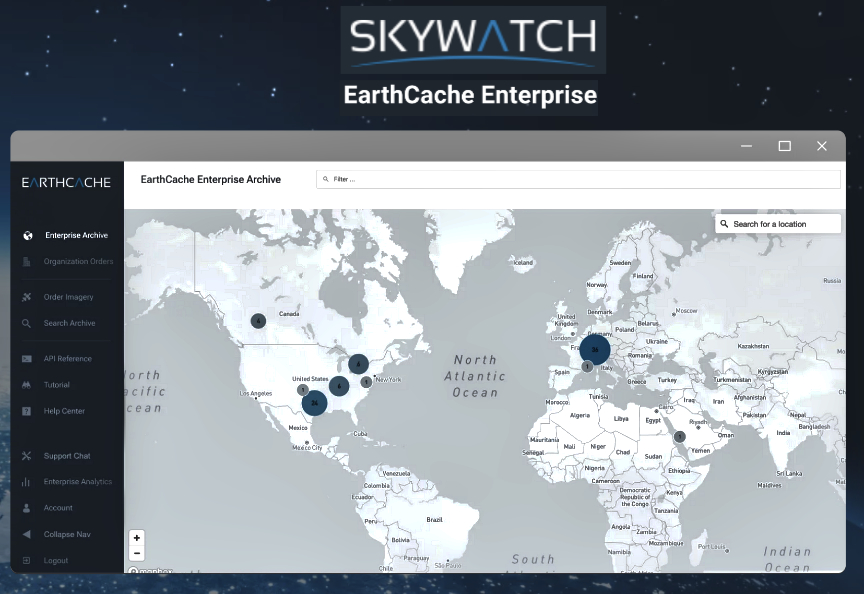
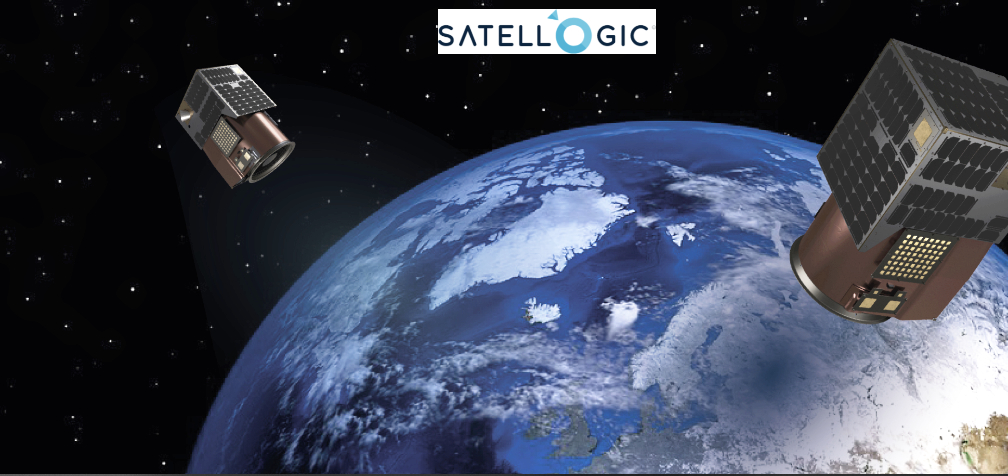
Satellogic Inc. (NASDAQ: SATL) and SkyWatch are partnering to bring Satellogic’s highest resolution, commercially available EO data to EarthCache customers.

Satellogic’s EO data is now available via SkyWatch’s EarthCache platform. EarthCache provides an intuitive interface and robust API that enables customers to browse archive data, as well as task new satellite imagery by using a variety of criteria.

SkyWatch’s core mission is to make remote sensing data accessible, affordable, and standardized. The company’s TerraStream infrastructure powers integrated services for EO satellite operators, including the EarthCache portfolio, to accelerate the distribution and monetization of satellite data by making it accessible and discoverable.

Satellogic is working toward the goal of delivering daily global remaps. The company designs, manufactures, and operates its own constellation of high-resolution EO satellites. The firm believes in the power of EO data to enhance decision-making at every level, fostering a greater understanding of our changing planet as well as opportunities for a more sustainable future.

“We are thrilled to announce that EO data from Satellogic is now available to the thousands of organizations that depend on SkyWatch for their remote sensing needs. Satellogic’s constellation is unparalleled, offering our customers industry-leading capacity for high-quality, high-resolution imagery. We are also delighted to collaborate with an organization that echoes our values for the Earth Observation industry: data that is easily discoverable, widely available, and affordably priced.” — James Slifierz, Co-Founder and CEO, SkyWatch

“In alignment with our mission to increase access and use of EO data, SkyWatch is committed to simplifying access and offering transparent pricing. This partnership was a natural fit for both companies; Satellogic increases access to its EO data while SkyWatch increases options and opportunities for its EarthCache platform customers.” — Caitlin Kontgis, Senior Vice President of Commercial and Growth, Satellogic

Filed Under: News

HawkEye 360 announces RFIQ product for a deeper look at RF activity

September 22, 2023 by editorial

HawkEye 360 Inc. has debuted an RFIQ™ product that introduces flexible spectrum collection options — customers can use RFIQ unprocessed in-phase and quadrature (I/Q) data to analyze signal characteristics or survey RF activity over large regions of the Earth.

HawkEye 360 collects the broadest range of RF frequencies among commercial RF sensing satellite operators, with coverage as low as 70 MHz and as high as 18 GHz.

With RFIQ, customers gain access to a detailed spectral data set that supplements other collection approaches and improves their understanding of spectrum activity in regions of interest. Customers can optimize collections for specific needs, such as detecting and geolocating known emitters or discovering new signals within a wider spectral bandwidth. HawkEye 360 can collect signals across the VHF, UHF, L-, S-, C-, X-, and Ku-band frequencies.

RFIQ data is derived from HawkEye 360’s RF sensing constellation of satellites, which fly synchronously in clusters of three, enabling broad regional coverage and high geolocation accuracy. HawkEye 360 currently operates 21 satellites and is continuing to expand the constellation to address clients’ increasing demands for RF intelligence, with two more clusters expected to launch this Fall 2023 into a mid-latitude orbit.

“Our RFIQ product, combined with new collection modes and commercially available analytics tools, unlocks valuable insights into the RF spectrum across a country-wide footprint, giving our customers the ability to analyze a wide range of signals important to their mission. RFIQ provides the ultimate flexibility and insight into RF activities that our customers around the world require.” — Alex Fox, Chief Growth Officer,HawkEye 360

Filed Under: News

Ubotica advances space AI “App Store”

September 21, 2023 by editorial

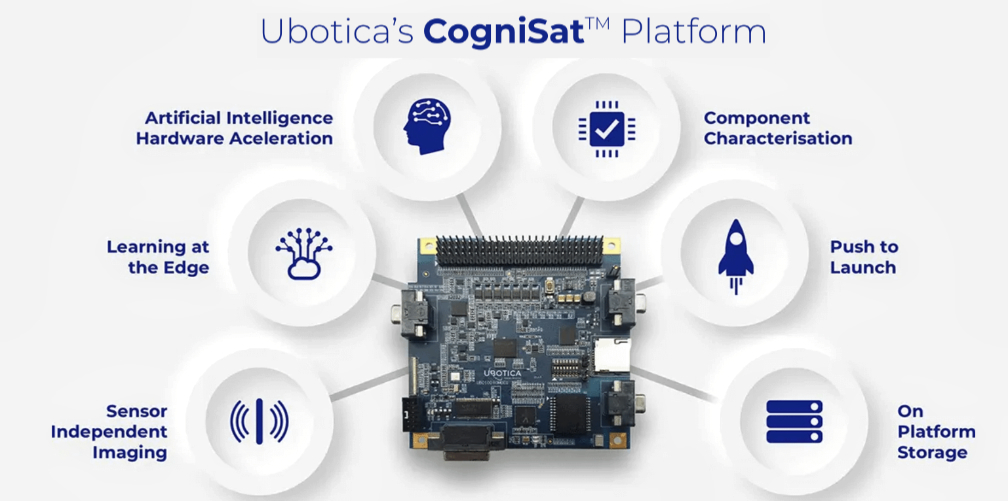
Ubotica Technologies is developing the infrastructure to extend the Mobile App Store ecosystem into space and unlock Live Earth Intelligence.

This new infrastructure will enable developers to easily deploy AI applications to satellites equipped with Ubotica’s CogniSAT technology. Opening space AI to developers will drive a surge in innovation, such as the transformative impact of the millions of applications built via the App Stores for mobile phones.

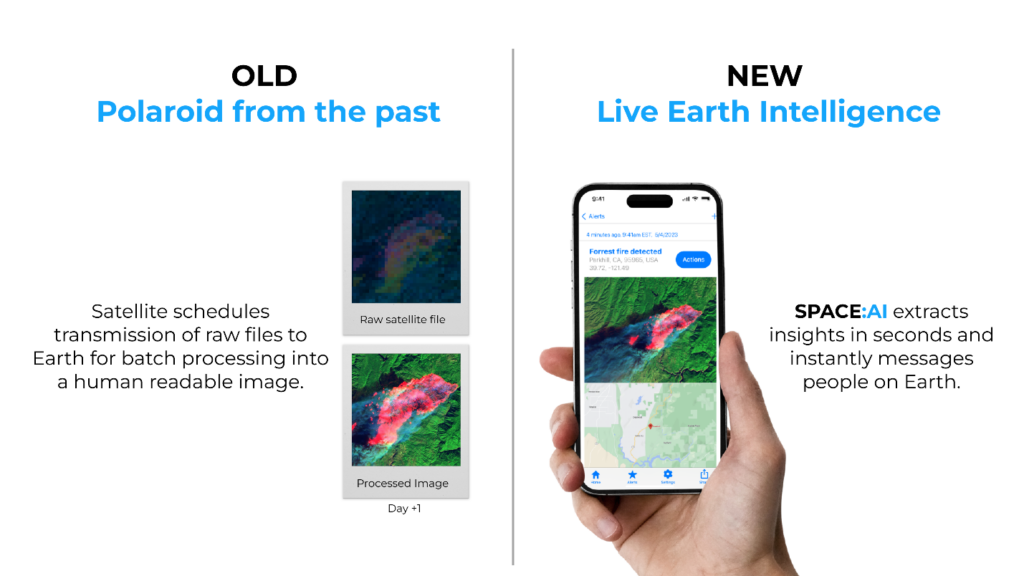
The ever-changing world contrasts sharply with today’s static EO methods. Traditional EO is akin to a Polaroid from the past—a singular, fixed moment requiring Earth-based post-processing to reveal an image. While valuable, EO today is inadequate for real-time decision-making in urgent situations like changes in the environment, natural disasters or security threats.

Enter SPACE:AI, a game-changing approach that transforms EO into actionable, Live Earth Intelligence. Replacing static snapshots, SPACE:AI delivers a continuous live stream of actionable insights processed onboard through advanced edge AI (eAI) technology. SPACE:AI can take in a broad range of inputs including optical, hyperspectral, and radar observations to create real-time insights. Inter-satellite communications ensure real-time delivery of these insights directly to individuals and systems on Earth.

Our goal is to unlock innovation.

With SPACE:AI, developers can deploy a wide range of innovative applications and models on satellites featuring Ubotica’s CogniSAT technology. The outcome is a wealth of proactive Live Earth Intelligence beneficial to humanity. This includes, for example, early detection of forest fires, monitoring methane emissions, identifying suspicious oil tanker activities in international waters, or alerting to potential dam breaches. With an open infrastructure and easy deployment, the innovation of the developer community can be unleashed to bring new applications that have not been conceived of as of this writing.

Ubotica Technologies has also unveiled a strategic partnership with IBM as part of building out the infrastructure to realize this vision. This collaboration uses IBM’s cloud infrastructure and watsonx.ai components to streamline the deployment process for developers aiming to run applications on satellites. With a single-click interface, developers can securely upload their AI models to satellites operating on Ubotica’s CogniSAT platform. These orbital AI applications will generate real-time autonomous decisions and insights in space, removing the need to downlink and process copious amounts of data on Earth. The initiative delivers significant capital and operational expenditure savings for satellite constellation operators and will foster innovation within the Space AI ecosystem.

This partnership provides mutual customers with a framework to deploy their Space AI Applications directly to CogniSAT on-board processing systems and forms part of Ubotica’s strategy to enable Space AI for all.

More details are available on this partnership blog post on IBM’s website.

Filed Under: News

Terran Orbital buses deploy to LEO for SDA’s Tranche 0 mission

September 18, 2023 by editorial

Terran Orbital Corporation (NYSE: LLAP) has reported the successful deployment of 10 smallsats that incorporate the firm’s buses to LEO, following a September 2, 2023, launch from Vandenberg Space Force Base in California.

These 10 satellites are part of the Tranche 0 Transport Layer of the Space Development Agency’s (SDA) Proliferated Warfighter Space Architecture (PWSA). Terran Orbital manufactured the buses for Lockheed Martin for payload integration and delivery to SDA.

Currently, Terran Orbital is producing 42 satellite buses for Lockheed Martin, which will deliver 42 Tranche 1 Transport Layer satellites for SDA. These 42 satellites are scheduled to launch in 2024.

These satellites will have various capabilities, including optical communications links, Link-16 mission communications, a Ka-band RF communications payload, and a BMC3 module that enables on-orbit data processing. These features will support missions for global warfighters.

“It is a great honor to contribute to this important mission by delivering our 10 satellite buses to Lockheed Martin. We are thankful to Lockheed Martin for their collaboration and the opportunity to leverage our small satellite solution expertise and to support their missions.” — Marc Bell, Co-Founder, Chairman, and CEO, Terran Orbital.

Filed Under: News

Rubicon’s ASCENT propulsion system to power NASA dual-mode project

September 18, 2023 by editorial

The Sprite propulsion module. Photo is courtesy of the company.

Late last month, Rubicon Space Systems received a NASA contract to deliver ASCENT propulsion systems for use in a technology development effort to advance dual-mode propulsion.

Dual-mode propulsion (sometimes called multi-mode propulsion) is when both chemical and electric thrusters operate using the same propellant. The Sprite propulsion module uses the Advanced Spacecraft Energetic Non-Toxic Propellant (ASCENT) propellant. ASCENT monopropellant based propulsion provides missions with a high performance and low toxicity alternative to hydrazine. As ASCENT is an ionic liquid, it can be used in electric thrusters, as well. NASA will use the Sprite module for the chemical propulsion side of the demonstration but will also siphon propellant from it to feed several electric thrusters.

In development since early 2022, Sprite is a fully enclosed, plug-and-play propulsion system for SmallSats, and is also useful for collision avoidance and deorbit maneuvers. Sprite can deliver more than 1200 Ns of total impulse, the equivalent of 100 m/s of delta V to a 12U CubeSat, and features Rubicon’s flight qualified 0.1N thruster, fully integrated flight controller, and valves. Nearly all components have spaceflight heritage. The Sprite propulsion system passed its Critical Design Review (CDR) in December 2022 and its first four engineering development units (EDUs) are expected to complete qualification efforts in Q3 2023.

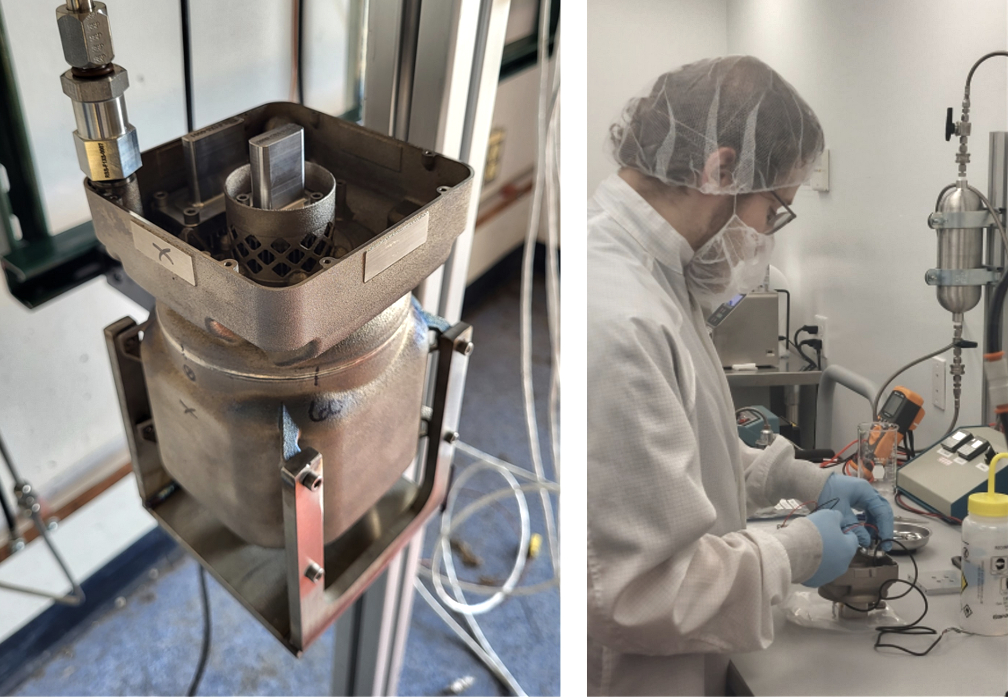
Hydrostatic testing development article (left), Rubicon engineer installing valves on hot fire test article (right). Photo is courtesy of the company.

Over the next several months, Rubicon will complete structural qualification of the additively manufactured propellant tank and begin assembly of the protoflight unit.

The award, worth up to $645,000, is made through a Small Business Innovative Research (SBIR) Phase III contract. The NASA technology project is led by NASA Marshall Space Flight Center (MSFC) Science and Technology Office (STO), and is funded by NASA’s Small Spacecraft Technologies (SST) program in the agency’s Space Technology Mission Directorate.

“By March 2024, we will deliver the first flight ready Sprite module to our NASA customer. Dual-mode propulsion is considered the zenith of in-space propulsion. It’s the combination of high impulse and high efficiency in one package. It would allow spacecraft to move with agility and precision. We think this will be commonplace in the near future and the chance for us to be part of this work is terribly exciting for us. We’re glad to be working with NASA to continue innovation and infusion of ASCENT propulsion technologies”  — Daniel Cavender, Director of Propulsion, Rubicon Space Systems

Filed Under: News

Open Broadcast Systems demos OneWeb Video contribution

September 17, 2023 by editorial

Working with Network Innovations, OneWeb and Zixi, Open Broadcast Systems will deliver a live, broadcast quality video feed from the Network Innovations facility in Essel, Netherlands, to the IBC Show floor. This demo follows the company’s world-first use of OneWeb to deliver a UEFA Champions League match from the Faroe Islands in July.

In addition to the company’s RIST (Reliable Internet Stream Transport) implementation, the company is announcing an in-house, high performance, SRT (Secure Reliable Transport) protocol implementation. Built around modern, event-driven software development practices, the SRT implementation is interoperable with existing third-party solutions at very low CPU loads.

“It’s great to be able to demonstrate the power of OneWeb at IBC. OneWeb provides the global coverage of satellite with the flexibility of IP at the high and consistent data rates required for international sports transmissions. Our customers expect the most technically advanced and stable SRT implementation out there from our encoders and decoders so that they can deliver to SRT-capable endpoints. Our in-house implementation gives them unmatched confidence that they can interoperate with the wide range of SRT endpoints with the highest reliability.” — Kieran Kunhya, Founder and CEO, Open Broadcast Systems

Filed Under: News

Firefly Aerospace launches USSF VICTUS NOX mission with 24 hour notice

September 15, 2023 by editorial

Firefly Aerospace has successfully launched the company’s Alpha rocket and has deployed the VICTUS NOX spacecraft following a 24 hour notice to complete final payload operations and mission preparations.

The deployment of the VICTUS NOX smallsat for the USSF – SSC. Image is courtesy of Firefly.

Led by U.S. Space Force Space Systems Command’s (USSF – SSC) Space Safari Program Office, and in close partnership with the Rocket Systems Launch Program, the mission advances the nation’s capability to rapidly respond to on-orbit needs during a conflict or in response to a national security threat.

Upon receiving the notice to launch and orbit requirements from the USSF, Firefly completed all final launch preparations, including trajectory software updates, payload encapsulation, transport to the launch pad, mating to Alpha, and fueling, within 24 hours. Alpha then launched at the first available window, 27 hours after receipt of launch orders.

Photo of Firefly’s Alpha launch vehicle, courtesy of the company.

The flight began with a nominal countdown and liftoff at 7:28 p.m. PDT on September 14th. and progressed seamlessly through each stage of flight, including stage one main engine cutoff (MECO), stage separation and stage two ignition. Alpha then deployed the Millennium Space Systems satellite at the target destination in LEO. Firefly also successfully tested an Alpha stage two relight and targeted re-entry.

Building on this success, Firefly is ramping up Alpha production and testing for multiple upcoming launches, including missions in support of Lockheed Martin, NASA, the NRO, and more.

“Today was an incredible success for the Space Force, the Firefly team, and our nation after nailing this complex responsive space mission. Our combined commercial and government team executed the mission with record speed, agility, and flexibility, adding a critical capability to address national security needs.” Bill Weber, CEO, Firefly Aerospace

“I’m incredibly proud of this team for completing these critical mission milestones and successfully launching in a matter of hours rather than weeks or months in a typical operation. As our third flight, this mission further validates Firefly’s technology rigor, passion, and dedication that’s required to prevail as the leading responsive launch provider for both government and commercial customers.” — Adam Oakes, VP of Launch Vehicles, Firefly Aerospace

“The success of the VICTUS NOX mission not only proves a key aspect of the United States’ TacRS capability but provides true utility to the warfighter. Working closely with our Assured Access to Space team and industry partners, the Space Safari team continues to demonstrate how TacRS enables us to quickly respond to urgent on-orbit needs.” — Col. Bryon McClain, Program Executive Officer for the Space Domain Awareness and Combat Power directorate, which oversees SSC’s Space Safari program office

Filed Under: Featured, News

LMO partners with In-Space Missions on AUREA SDA program 

September 15, 2023 by editorial

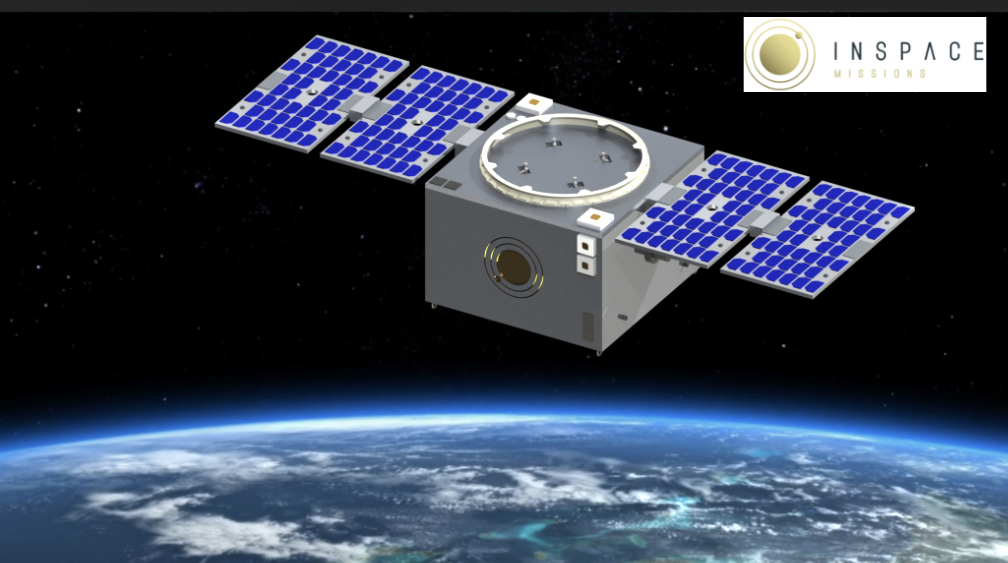
LMO (Luxembourg & UK) and In-Space Missions Ltd. (UK) have partnered to explore the use of smallsat platforms for space-based, Space Domain Awareness (SDA) as part of LMO’s AUREA (Autonomous Recognition of Foreign Assets) program — In-Space Missions, a subsidiary of BAE Systems, will study the mission scope of a space-based SDA demonstrator smallsat with a software stack on the ground to demo end-user compatibility.

In-Space Missions will work with LMO and SDA end-users to define the mission requirements, characterize the constraints of the satellite platform and avionics, and identify any development gaps. The study will also identify and define Space Resident Objects (SROs) and orbits of interest, assess real time, on-edge processing needs as well as determine the number of satellites required to deliver LMO’s full, AUREA SDA service.  

The AUREA program will focus on multi-sensor and multi-modal technologies that include optical, LiDAR and radar instruments.  As part of the project, a simulator of the on-board computer will be delivered to LMO for full end-to-end testing of the software, paving the way for the launch of an AUREA SDA demo mission.     

AUREA is a dual-use development program for SDA with funding from Luxembourg’s Directorate of Defence to support the development of capabilities for Luxembourg and the nation’s European and NATO Allies, such as the UK. 

“Partnering with In-Space Missions will allow us to accelerate the validation process of our Protect and Defend architecture, and demonstrate our core SDA capability to end users within NATO and the Five Eyes.” — Michel Poucet, CEO, LMO

“At In-Space Missions, we recognize the importance of monitoring the Earth’s orbital environment and synthesizing an accurate picture of an increasingly contested space domain.  To ensure a secure future in space, the safety of our satellite assets, and the security of those people who depend on them for critical services, we will continue to develop capabilities around space domain awareness.  As an important step forward in growing these capabilities, In-Space is delighted to be working on this project with LMO – a company recognized as a domain leader in space domain awareness.” — Doug Liddle, CEO, In-Space Missions

“Space Domain Awareness is essential for informed decision-making and thus a priority for Luxembourg Directorate of Defence’s space strategy. We need innovative dual-use solutions with military and societal benefits. That was the very ambition of our first R&D call for proposals. As the AUREA program met all our expectations, it is one of the projects we will fund in the framework of the call.” — Colonel Guy Hoffman, National Armaments Director, Luxembourg

Filed Under: News

  • « Go to Previous Page
  • Page 1
  • Interim pages omitted …
  • Page 11
  • Page 12
  • Page 13
  • Page 14
  • Page 15
  • Interim pages omitted …
  • Page 60
  • Go to Next Page »

Primary Sidebar

WEEKLY NEWSLETTER

Archives

  • June 2026
  • May 2026
  • April 2026
  • March 2026
  • February 2026
  • January 2026
  • December 2025
  • November 2025
  • October 2025
  • September 2025
  • August 2025
  • July 2025
  • June 2025
  • May 2025
  • April 2025
  • March 2025
  • February 2025
  • January 2025
  • December 2024
  • November 2024
  • October 2024
  • September 2024
  • August 2024
  • July 2024
  • June 2024
  • May 2024
  • April 2024
  • March 2024
  • February 2024
  • January 2024
  • December 2023
  • November 2023
  • October 2023
  • September 2023
  • August 2023
  • July 2023
  • June 2023
  • May 2023
  • April 2023
  • March 2023
  • February 2023
  • January 2023
  • December 2022
  • November 2022
  • October 2022
  • September 2022
  • August 2022
  • July 2022
  • June 2022
  • May 2022
  • April 2022
  • March 2022
  • February 2022
  • January 2022
  • December 2021
  • November 2021
  • October 2021
  • September 2021
  • August 2021
  • July 2021
  • June 2021
  • May 2021
  • April 2021
  • March 2021
  • February 2021
  • January 2021
  • December 2020
  • November 2020
  • October 2020
  • September 2020
  • August 2020
  • July 2020
  • June 2020
  • May 2020
  • April 2020
  • March 2020
  • February 2020
  • January 2020
  • December 2019
  • November 2019
  • October 2019

© 2019–2026 SatNews

Insert/edit link

Enter the destination URL

Or link to existing content

    No search term specified. Showing recent items. Search or use up and down arrow keys to select an item.
      x
      Sign Up Now!

      Enjoy a free weekly newsletter with recent headlines from the global SmallSat industry.

      Invalid email address
      We promise not to spam you. You can unsubscribe at any time.
      Thanks for subscribing! You will now receive weekly SmallSat News updates.
      We love our advertisers.
      And you will too!

      Please disable Ad Blocker to continue... We promise to keep it unobtrusive.
      We promise not to spam you. You can unsubscribe at any time.
      Invalid email address
      Thanks for subscribing!