
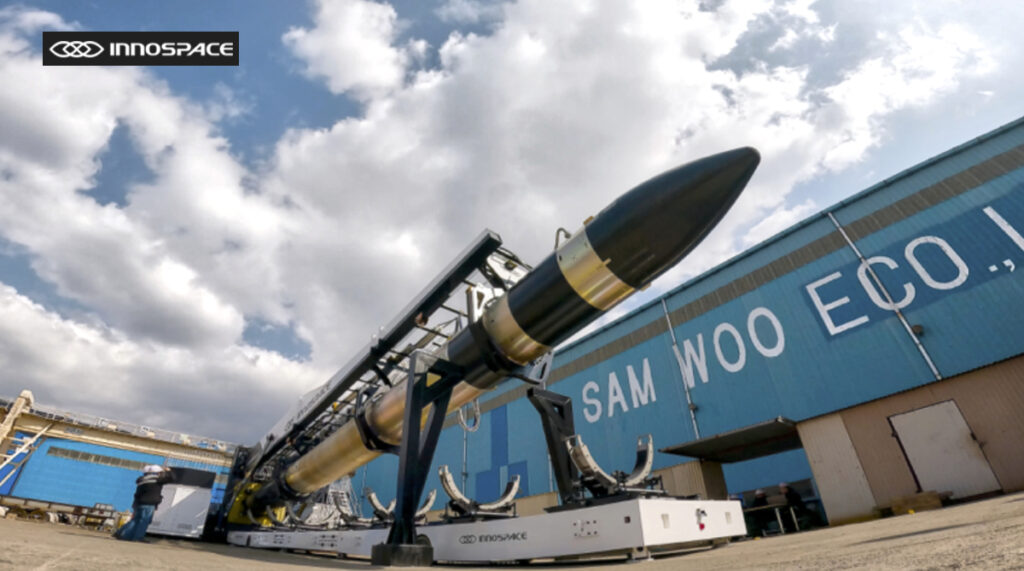
INNOSPACE (KS:462350) has signed a strategic Memorandum of Understanding (MoU) with STEP Lab, to enhance the HANBIT launch vehicle’s capabilities for high-precision and multi-satellite deployments and to jointly pursue high-quality, customer-centric launch services.
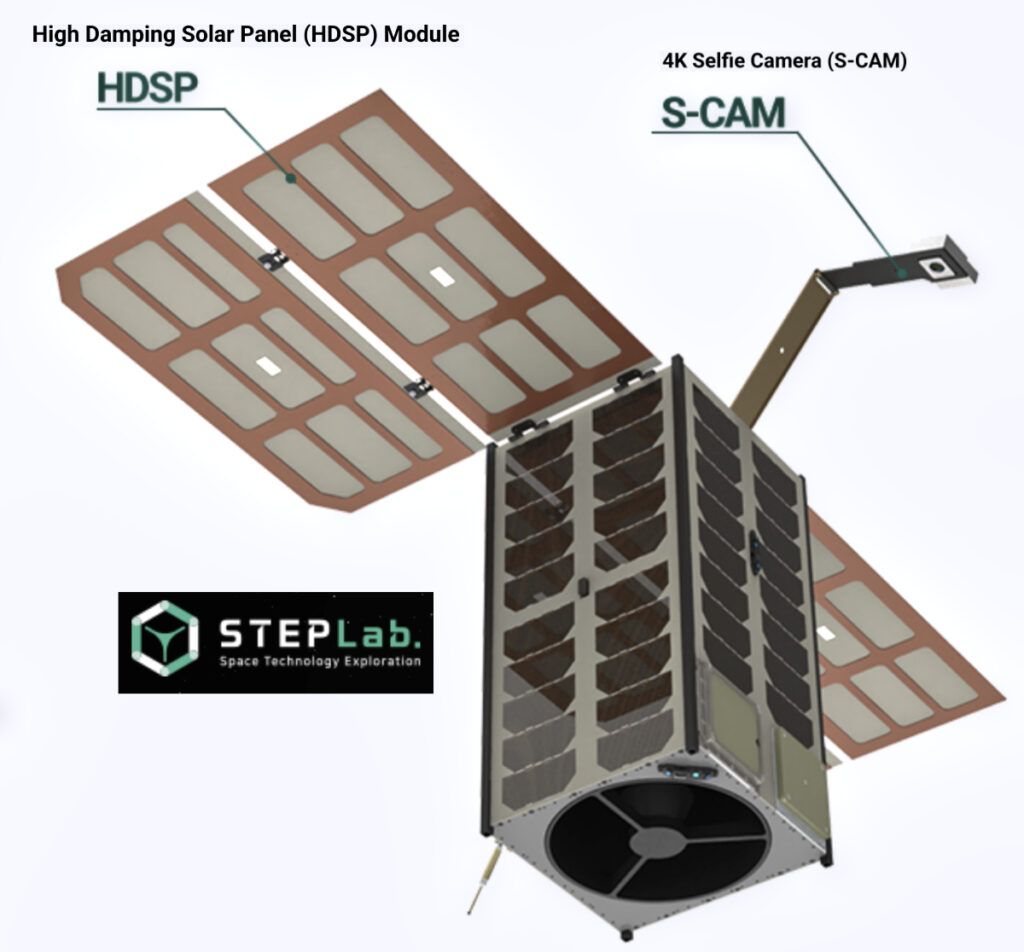
Under this agreement, the two companies will collaborate on the following key areas:
Technical integration of STEP Lab’s vibration isolation technology into the HANBIT launch vehicle Expansion of customer-tailored launch services by leveraging mutual expertise Commercialization of STEP Lab’s satellite separation systems and cooperation on global market entry
STEP Lab’s vibration isolation technology is designed to significantly reduce the extreme shock and vibrations that occur during rocket launches. This ensures structural integrity for sensitive payloads such as optical instruments, precision sensors, and space-based bio/pharmaceutical equipment. By alleviating design load requirements for satellites, the technology enables more flexible and lightweight satellite designs, contributing to improved payload performance and reductions in development time and cost—aligning with the growing demand for cost-effective and efficient solutions in the global space industry.
STEP Lab’s proprietary vibration and on-orbit, micro-vibration isolation systems have been deployed in various space missions, including South Korea’s national defense satellite launched in 2023, KOMPSAT-7, and the bio-cabinet payload onboard the next-generation mid-sized Satellite-3. The company has also demonstrated its technological reliability and stability through international technology development and export contributions, notably with Germany’s leading satellite system company, OHB Systems AG.
INNOSPACE aims to further enhance satellite operational stability and its capabilities in high-precision and multi-payload launches by applying this technology to the HANBIT launch vehicles. The two companies will also cooperate in proposing and delivering STEP Lab’s satellite deployment solutions based on customer needs, while responding to new customer demands in the global markets.
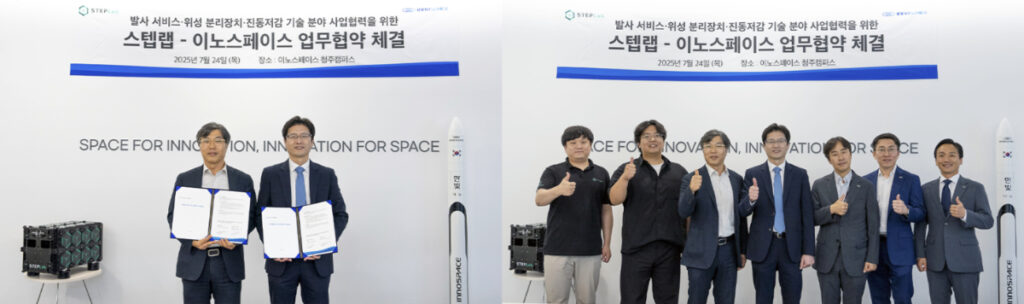
Officials from INNOSPACE and STEP Lab for a group photo at the launch vehicle assembly facility in Cheongju, South Korea
“By combining our technologies and expertise in the space sector, we believe this enables us to offer differentiated launch services even for complex missions that demand high precision and orbital stability,” said Soojong Kim, founder and CEO of INNOSPACE. “We will continue expanding technical partnerships that support high-quality, customer-centric services and pursue joint growth within the space industry.”
“This partnership with INNOSPACE marks a key milestone as STEP Lab’s core technologies are formally adopted for use in private space launch vehicles,” said Hyunung Oh, CEO of STEP Lab. “We expect the integration of our vibration isolation solutions with the HANBIT series to significantly strengthen competitiveness in the global small launch vehicle market and accelerate our joint expansion into the space sector worldwide.”