


ExxonMobil Corporation and GHGSat are now in a new partnership to monitor and mitigate methane at scale across ExxonMobil’s onshore operations in North America and Asia, including the United States, Canada, Papua New Guinea, and Indonesia.
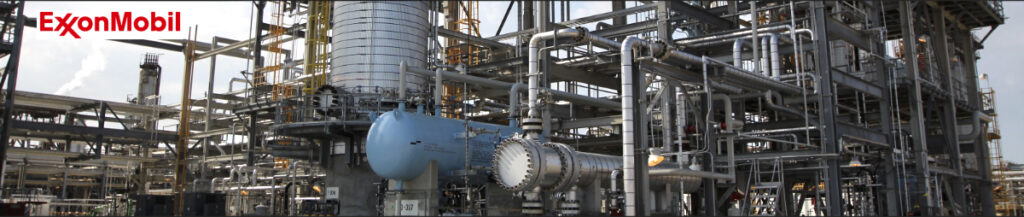
This collaboration marks a significant investment by ExxonMobil in satellite-based emissions monitoring, reflecting the company’s commitment to reducing methane emissions, deploying innovative technologies, and leading the energy industry in environmental stewardship.
ExxonMobil has a demonstrated track record of industry-leading initiatives to drive methane reduction, cutting emissions intensity by more than 60 percent since 2016 and eliminating routine flaring in Permian Basin-operated assets. By 2030, ExxonMobil is on track to achieve methane reductions of 70 to 80 percent.
Data from the GHGSat platform will feed ExxonMobil’s pioneering Center for Operations and Methane Emissions Tracking (COMET). Launched in 2022, COMET continuously monitors and analyzes methane emissions data from a network of measurement technologies. Today, it’s part of ExxonMobil’s Vantage team – integrated with remote Upstream operations and serves as a model for oil & gas operators seeking to systematically identify and reduce emissions across their operations.
GHGSat’s state-of-the-art satellites, purpose-built to support industrial operators to reduce emissions, pinpoint the source of methane leaks as small as 100 kg/hr, typically down to individual pieces of equipment. With 14 satellites launched since 2016, GHGSat monitors millions of industrial facilities annually, monitoring at a near-continuous cadence to provide the most comprehensive global coverage in the market.
Leveraging an unmatched revisit rate, GHGSat delivers data to operators within hours, empowering them to address emissions swiftly and with confidence. Working hand-in-hand with industry as a trusted partner, GHGSat has supported the mitigation of over 20MT CO2E of methane since beginning operations.
Methane has a warming effect roughly 80 times stronger than carbon dioxide over a 20-year period. Reducing methane emissions is recognized as one of the most immediate and impactful ways to slow planetary warming.
Reducing methane is environmentally responsible and is also economically sound. Keeping methane in the pipeline, rather than the atmosphere, increases yields for oil and gas producers, reducing the financial losses stemming from lost product. Accurate data on methane emissions also safeguards an operator’s ability to export to nations with more stringent regulatory policies on emissions intensity. This increased efficiency creates a competitive edge in today’s rapidly evolving energy sector.
With this partnership, ExxonMobil and GHGSat make a steadfast commitment to reducing methane emissions and ensuring resilient energy systems around the globe.
This partnership demonstrates the power of the intersection of innovative technology and industry leadership to truly move the needle on methane,” said Stephane Germain, GHGSat CEO. “GHGSat is laser focused on designing its satellites to solve operational challenges for operators, providing insights—the exact source of an emission, delivered at a speed that is operationally useful—that enable action. As global demand grows for high-quality emissions data, this collaboration underscores the trust leading companies place in our technology to drive meaningful impact.”
When it comes to reducing methane, ExxonMobil has led from the front, pursuing aggressive reductions across our own operations and sharing best practices across the industry,” said Matt Kolesar, ExxonMobil Chief Environmental Scientist. “To execute our ambitious goals, Exxon is in constant pursuit of innovative technology and partnerships that can drive impact. By leveraging GHGSat’s cutting-edge satellite constellation—and the comprehensive data and insights it delivers—we are able to monitor assets at scale via satellite for the first time, informing mitigation strategy and action.”