
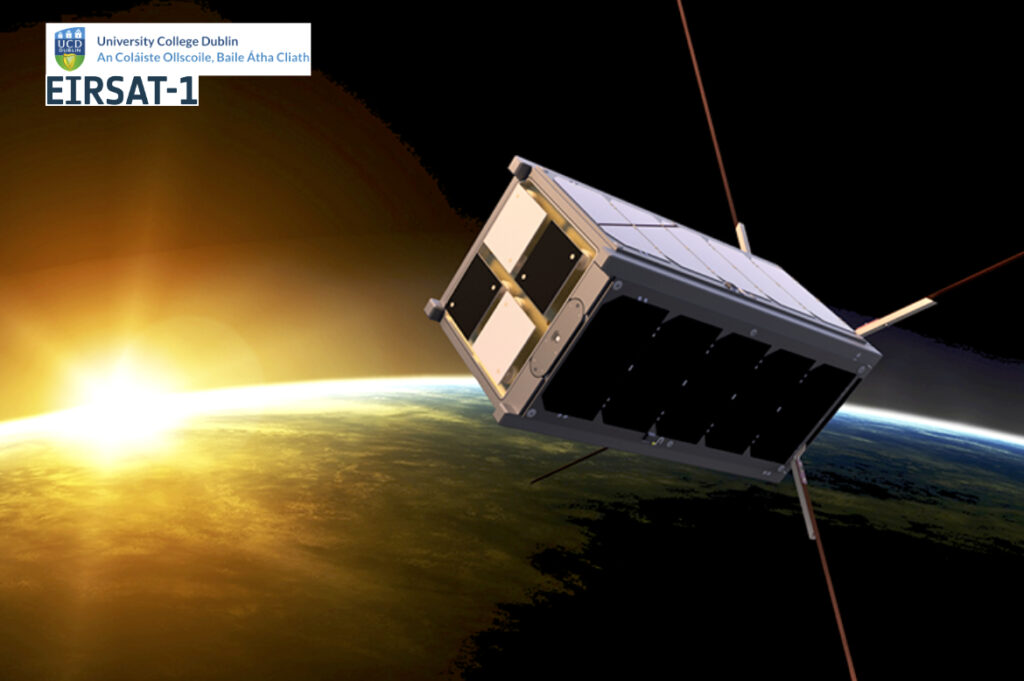
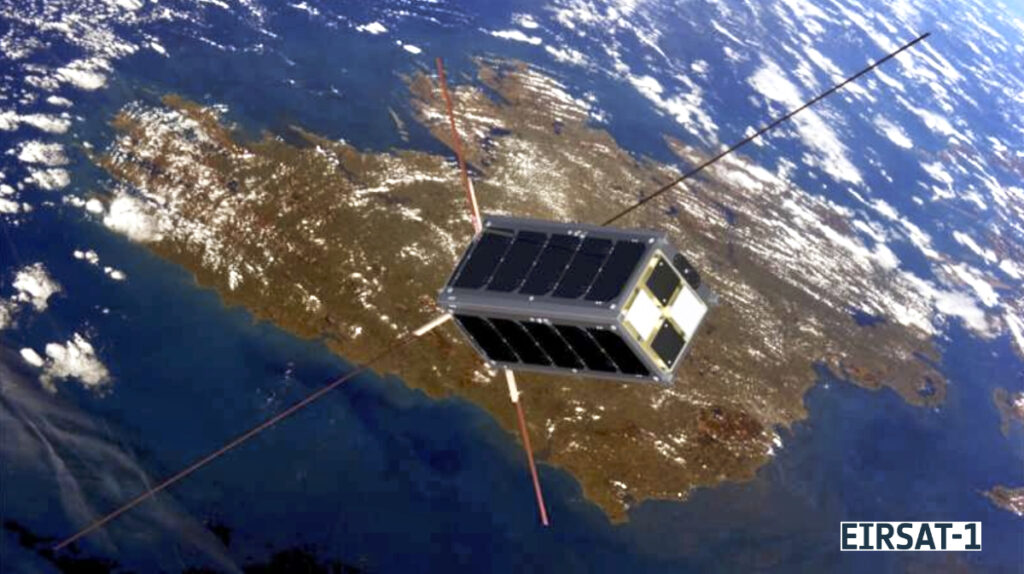
EIRSAT-1, developed by a team of students and staff at University College Dublin through ESA’s Fly Your Satellite! program, has made history as Ireland’s first satellite.
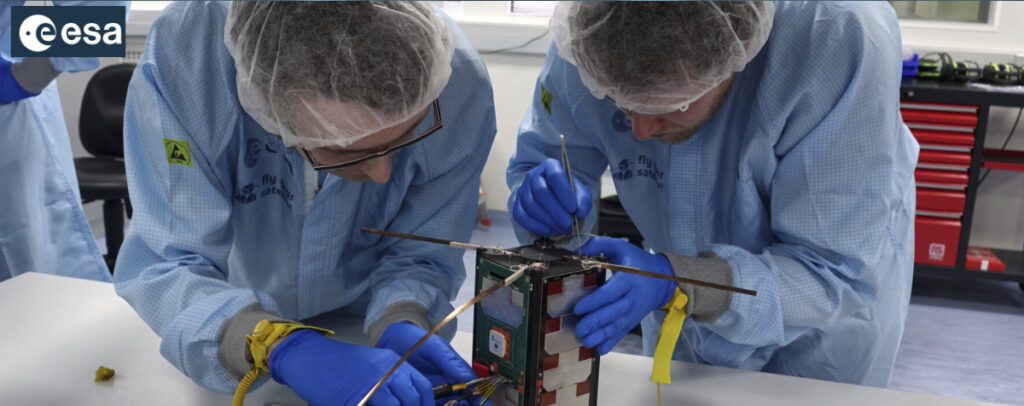
Over more than six years of work, the mission grew from an ambitious proposal into a fully-fledged spaceflight success story – and an educational inspiration. With a long list of successes behind it and its mission accomplished, the CubeSat has now deorbited.
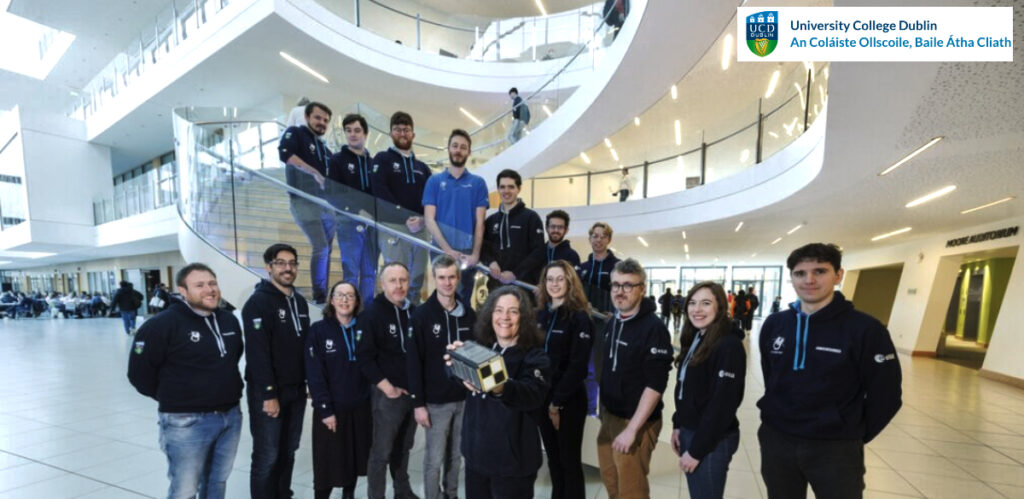
EIRSAT-1 sent its final beacons on September 4th and burned up on re-entry of Earth’s atmosphere. The deorbiting occurred in line with ESA’s commitment to the sustainable use of space – which includes minimizing space debris and ensuring that missions leave no long-term footprint in orbit. Science in orbit
Launched in December of 2023, EIRSAT-1 carried three payloads that proved to be successful. Worthy of particular note is GMOD, a compact gamma-ray detector that has detected 10 cosmological gamma-ray bursts – some of the universe’s most energetic and distant events – as well as two solar flares. The scientific success marked a leap from Technology Readiness Level 1 all the way to 9, completing the full arc from concept to space-proven system.
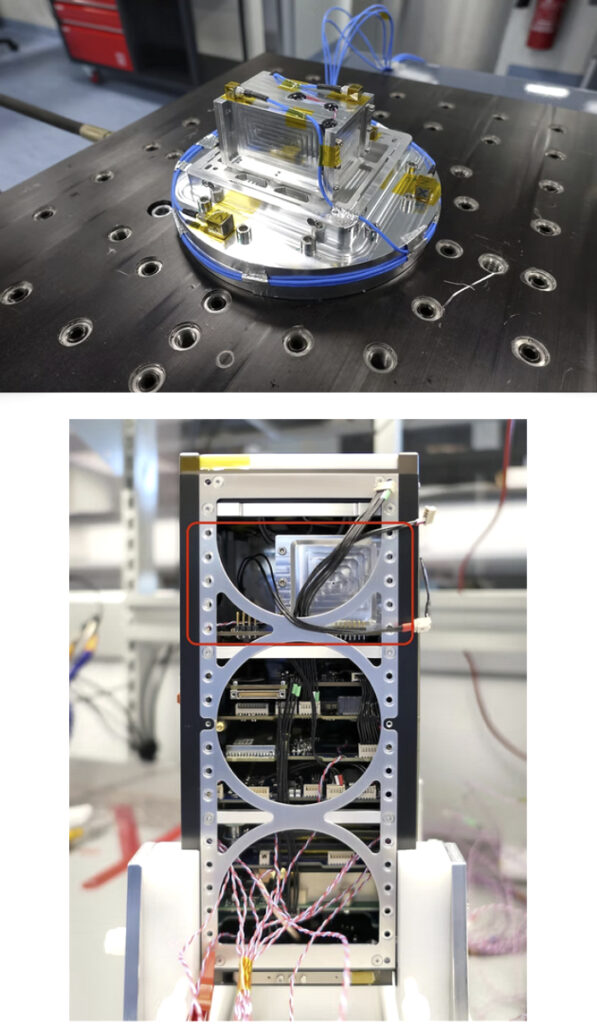
As a final flourish, a software update to another payload, WBC, was uplinked to the spacecraft, enabling experiments with new magnetic control algorithms. These aim to detumble the satellite and stabilise it about a desired axis, which are key capabilities for future missions.
EIRSAT-1 was not just Ireland’s first satellite; it was Ireland’s first space mission. This posed some unusual challenges. With limited space infrastructure, the University College Dublin team worked with over 100 ESA experts, the Irish Department of Enterprise, Trade and Employment, and other government departments and agencies, to ensure all of the technical, legal, and programmatic aspects of the mission met strict international standards.
A Dáil (Irish Parliament) debate was required to pass the necessary legislation to allow EIRSAT-1 become an Irish satellite and listed on the UN register of objects launched into outer space. Navigating this complex environment required innovation, persistence, and a deep commitment from all involved.
Through ESA Education’s Fly Your Satellite! initiative, students were supported every step of the way, from vibration testing to thermal vacuum trials, and from licensing procedures to launch. More than 50 students, including 13 PhD researchers supported by the Irish Research Council, took part in the project. Disciplines ranged from Physics and Mechanical Engineering to Mathematics and Computer Science.
The mission’s legacy continues. In 2024, University College Dublin introduced a new Spacecraft Operations module for their Space Science & Technology MSc, training an additional 20 students to become satellite operators, with some even working directly with EIRSAT-1 in orbit.
EIRSAT-1 also sparked interest across the country as more than 64,000 people watched the live launch broadcast, while 3000 schoolchildren participated in mission-themed educational activities.
EIRSAT-1 alumni have gone on to careers in Irish space companies, which partnered on follow-on projects such as NSSPI, a national satellite systems initiative funded by Ireland’s Disruptive Technologies Innovation Fund. Others have found new paths in data analytics, medical physics, and international space organizations.
The mission also laid the foundations for COMCUBE-S, a next-generation CubeSat, building directly on GMOD’s heritage. Now in Phase A study with ESA, COMCUBE-S aims to implement a more advanced Compton telescope system on multiple spacecraft, capable of not just detecting but localizing high-energy transient events and even performing polarization measurements to better understand their source mechanisms.
Another project, GIFTS (funded by the Research Ireland), further develops the GMOD concept, demonstrating how Ireland’s first satellite is influencing new missions even before it re-entered the atmosphere. A poetic farewell
On it’s slow decent back to Earth EIRSAT-1 was transmitting a final message – drawing on Ireland’s long association with literature. The satellite broadcasted a sequence of seven short messages, each containing a line from a poem called All Ways Home, which was written collaboratively by school pupils from across the country specifically for the EIRSAT-1 mission. Amateur radio operators across the world received and decoded the messages in a fittingly creative and symbolic closure to the mission.
Thanks to EIRSAT-1, Ireland has proven its ability to develop, launch, and operate a spacecraft entirely from within its borders, and is officially a spacefaring nation This milestone was made possible through Ireland’s membership of ESA and their support via ESA Education’s Fly Your Satellite! program, which provided expert guidance, training, and technical resources to the student team at University College Dublin throughout the mission.
With the support of the Irish ESA delegation, along with civil servants across many government departments, but especially the Irish Department of Enterprise, Trade and Employment, EIRSAT-1 stands as a national achievement and a clear example of how ESA’s educational initiatives can inspire the public and empower the next generation of space professionals.