
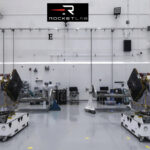


Rocket Lab Corporation (Nasdaq: RKLB) has delivered two Explorer-class spacecraft to Kennedy Space Flight Center for NASA’s Escape and Plasma Acceleration and Dynamics Explorers (ESCAPADE) mission, in partnership with the University of California, Berkeley’s Space Sciences Laboratory.

Last year Rocket Lab completed the design, build, integration, and testing of the twin spacecraft, named Blue and Gold, in just three and a half years, an accelerated timeline for a Mars mission. This achievement was made possible by Rocket Lab’s mature spacecraft manufacturing experience and its vertically integrated supply chain, which brings production of critical components like solar arrays, star trackers, propellant tanks, reaction wheels, radios, flight software, and more, in-house.
ESCAPADE is based on Rocket Lab’s Explorer spacecraft platform, a configurable, high delta-V interplanetary variant of the Company’s advanced family of spacecraft.

ESCAPADE is part of NASA’s Small Innovative Missions for Planetary Exploration (SIMPLEx) program, designed to deliver high-value planetary science at lower cost and on faster timelines. ESCAPADE will deliver critical Mars science at a fraction of the cost and time of traditional billion-dollar missions.
During a 22-month cruise to Mars, Blue and Gold will travel together before entering complementary elliptical orbits around the planet to conduct their science campaigns. The spacecraft will simultaneously capture data from two regions of Mars’ magnetosphere. This unique two-point measurement will allow scientists to understand how the solar wind strips atoms from Mars’ atmosphere, offering insight into the planet’s atmospheric escape history and space weather environment, and informing future human exploration strategies.
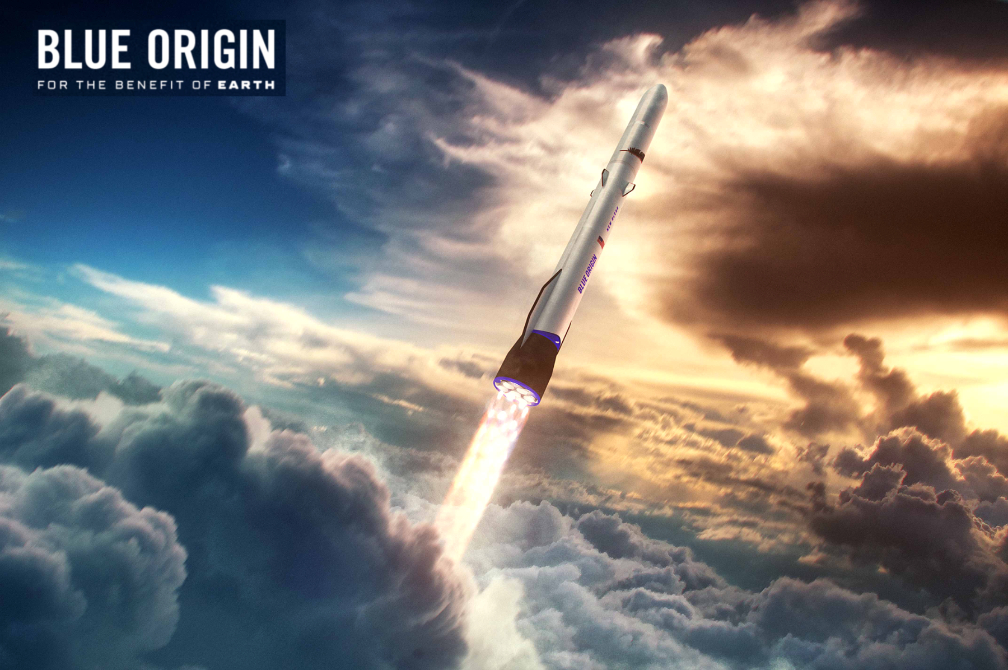
Upon arrival at Kennedy Space Center, Rocket Lab engineers will conduct post-transport inspections and functional tests in the cleanroom before propellant loading and vehicle integration. Launch is scheduled to occur no earlier than this fall on Blue Origin’s New Glenn rocket.
Rocket Lab founder and CEO, Sir Peter Beck, said, “ESCAPADE is a perfect example of why Rocket Lab exists – to make ambitious space science faster and more affordable. Delivering two interplanetary spacecraft on schedule and within budget for a Mars mission is no small feat, and it speaks to the determination and agility of our team. They’ve proven that we can take a concept from design to Mars readiness in just a few short years. This won’t be Rocket Lab’s last time at Mars, with concepts like the Mars Telecommunications Orbiter on the horizon, we’re laying the groundwork for more complex, capable, and essential missions that will support future human exploration.”
Rob Lillis, ESCAPADE Principal Investigator and Associate Director for Planetary Science at the UC Berkeley Space Sciences Laboratory, said, “It’s been a long road, but we are so excited to be launching Blue & Gold on their mission to understand the Martian space weather environment. Through the usual ups and downs, Rocket Lab has been right alongside NASA and UC Berkeley, supporting us every step of the way on this interplanetary journey.”