

• Skip to main content
  • Skip to primary sidebar
  • Home
  • News
  • Featured
  • More News ⌄
    • SatNews
    • SatMagazine
    • MilSatMagazine
  • Events ⌄
    • MilSat Symposium
    • SmallSat Symposium
    • Satellite Innovation
  • Contacts
  • SUBSCRIPTION

SmallSat News

You are here: Home / Featured / INNOSPACE begins payload integration for ‘HANBIT-Nano’ prior to the firm’s 1st commercial launch

INNOSPACE begins payload integration for ‘HANBIT-Nano’ prior to the firm’s 1st commercial launch

November 11, 2025 by editorial

INNOSPACE (KS:462350) has begun functional checks and satellite–launch vehicle interface tests for customer satellites and experimental payloads as part of the operational procedures for its first commercial launch mission SPACEWARD of the ‘HANBIT-Nano’.
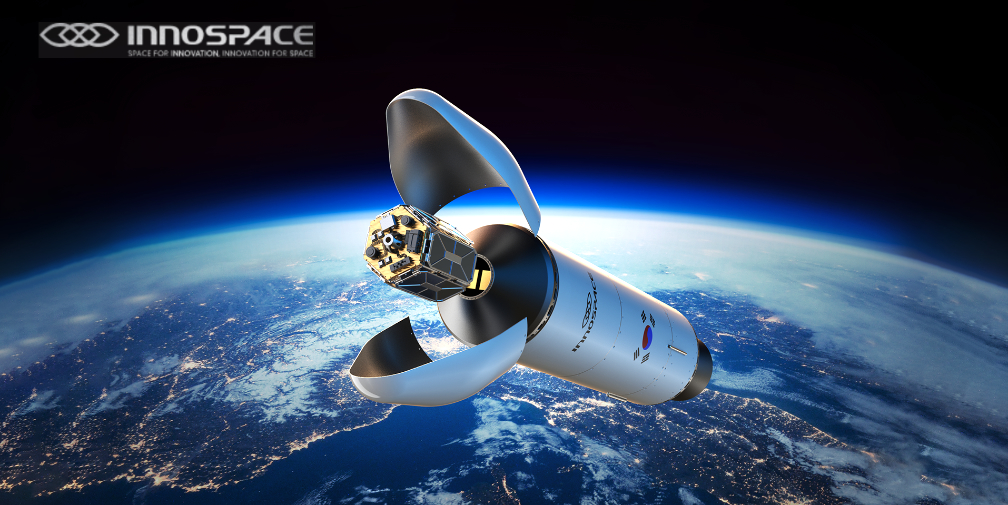
This procedure verifies the electrical and mechanical connections between the payload adapter (PLA) and other integration hardware with the satellites and payloads. It is an essential pre-launch step to ensure stable mounting and integrated operation.

With its first commercial launcher HANBIT-Nano, INNOSPACE plans to deploy five customer satellites into LEO at 300 km altitude and 40° inclination, while simultaneously performing missions for three non-separating experimental payloads and one branding payload.

The target launch time is November 22 at 3:00 PM (BRT), from the Alcantara Launch Center in Brazil. The launch window runs from October 28 to November 28.
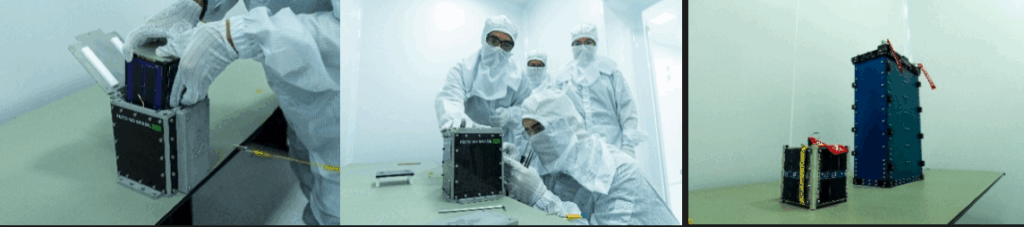
Two satellites jointly developed by Brazil’s UFMA (Federal University of Maranhão) in collaboration
with startups and national institutions

On the same day, three Brazilian customers—Federal University of Maranhão (UFMA), the Brazilian Space Agency (AEB), and Castro Leite Consultoria LTDA (CLC)—visited the launch site to conduct functional checks and interface testing. UFMA completed pre-launch procedures for two small satellites for technology development and education; AEB completed checks for two small satellites for climate and environmental data collection and one inertial navigation system (INS); and CLC completed procedures for one GNSS unit and one INS payload.
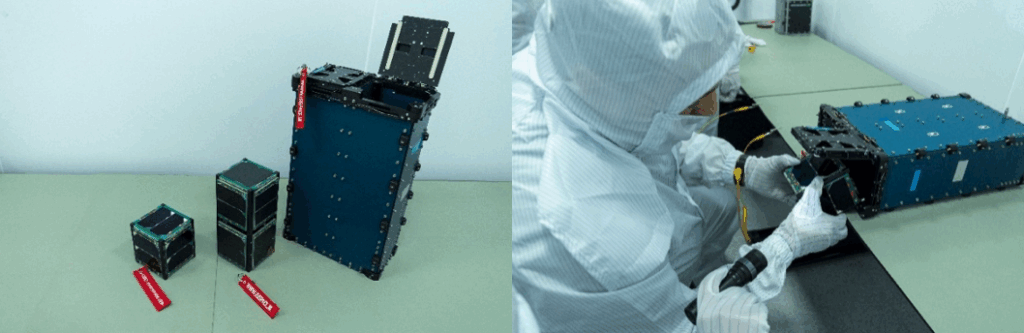
Two satellites (FloripaSat-2A & FloripaSat-2B) developed by the SpaceLab of the Federal University of Santa Catarina (UFSC) with support from the Brazilian Space Agency (AEB)

One small satellite from the Indian customer Grahaa SPACE is scheduled to follow the sequential integration process. In addition, one highball-can branding model from Korean company BREWGURU will be placed separately onboard as a symbolic participatory payload.

Following the completion of these functional checks and interface tests, INNOSPACE will proceed with final integration to mount the satellites onto the launch vehicle. Once completed, the process will move on to payload fairing installation, pre-launch rehearsal (dry run), comprehensive weather and environmental assessments, and finally the joint flight-safety and integrated-operations procedures with the Brazilian Air Force leading up to the final launch countdown.

INNOSPACE’s satellite–launch vehicle interface test marks a significant step, as it is the first time a Korean private company has independently carried out the integration procedures required for commercial launch services in line with customer requirements. This is symbolic of Korea’s private launch service industry entering true commercialization, supported by practical preparations to serve satellite customers,” said Soojong Kim, Founder and CEO of INNOSPACE.

Filed Under: Featured, News

Primary Sidebar

WEEKLY NEWSLETTER

Archives

  • December 2025
  • November 2025
  • October 2025
  • September 2025
  • August 2025
  • July 2025
  • June 2025
  • May 2025
  • April 2025
  • March 2025
  • February 2025
  • January 2025
  • December 2024
  • November 2024
  • October 2024
  • September 2024
  • August 2024
  • July 2024
  • June 2024
  • May 2024
  • April 2024
  • March 2024
  • February 2024
  • January 2024
  • December 2023
  • November 2023
  • October 2023
  • September 2023
  • August 2023
  • July 2023
  • June 2023
  • May 2023
  • April 2023
  • March 2023
  • February 2023
  • January 2023
  • December 2022
  • November 2022
  • October 2022
  • September 2022
  • August 2022
  • July 2022
  • June 2022
  • May 2022
  • April 2022
  • March 2022
  • February 2022
  • January 2022
  • December 2021
  • November 2021
  • October 2021
  • September 2021
  • August 2021
  • July 2021
  • June 2021
  • May 2021
  • April 2021
  • March 2021
  • February 2021
  • January 2021
  • December 2020
  • November 2020
  • October 2020
  • September 2020
  • August 2020
  • July 2020
  • June 2020
  • May 2020
  • April 2020
  • March 2020
  • February 2020
  • January 2020
  • December 2019
  • November 2019
  • October 2019

© 2019–2025 SatNews

Insert/edit link

Enter the destination URL

Or link to existing content

    No search term specified. Showing recent items. Search or use up and down arrow keys to select an item.
      x
      Sign Up Now!

      Enjoy a free weekly newsletter with recent headlines from the global SmallSat industry.

      Invalid email address
      We promise not to spam you. You can unsubscribe at any time.
      Thanks for subscribing! You will now receive weekly SmallSat News updates.
      We love our advertisers.
      And you will too!

      Please disable Ad Blocker to continue... We promise to keep it unobtrusive.
      We promise not to spam you. You can unsubscribe at any time.
      Invalid email address
      Thanks for subscribing! Please check your email for further instructions.