
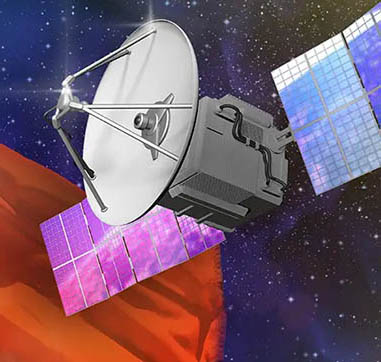
BEIJING – In a significant escalation of the orbital broadband race, China has submitted a major regulatory filing with the International Telecommunication Union (ITU) for a massive satellite constellation totaling approximately 200,000 spacecraft.
The move highlights a strategic ambition to deploy a network that would quadruple the current long-term deployment goals of SpaceX’s Starlink, which is working toward a 50,000-satellite architecture.
The filing indicates that China is moving to operationalize a parallel commercial launch sector, often referred to as a “Shadow Starlink,” to compete directly with Western Low Earth Orbit (LEO) dominance.
Geopolitical Competition in the LEO Sector
This development validates the ongoing “Surge” strategy from Chinese space authorities, specifically focusing on the G60 Starlink and Guowang projects. By filing for such a high volume of orbital slots, China is positioning itself to challenge the primary-occupant status currently held by the United States and its commercial partners.
The scale of this competition directly impacts several industry layers:
- Regulatory Oversight: Increased pressure on the ITU to manage orbital debris and spectrum allocation for hundreds of thousands of active nodes.
- National Security: The Federal Communications Commission (FCC) has expressed concerns regarding the geopolitical implications of a Chinese-controlled global broadband network.
- Commercial Viability: The massive influx of capacity could fundamentally alter the economics of global satellite internet pricing.
The Rise of the G60 Breakout
The filing is part of a broader trend where China seeks a “breakout” from traditional state-run space operations to more agile, commercially modeled constellations. This “G60 Breakout” represents a move toward high-cadence manufacturing and launch capabilities intended to match the vertical integration of the “Musk Stack”.
The strategy focuses on building domestic launch hubs and satellite production facilities that can output thousands of units annually, a necessity if China intends to populate even a fraction of the 200,000 slots requested in the ITU filing.
Outlook: Regulatory and Orbital Hurdles
As China and the U.S. move closer to a 2027 milestone for constellation maturity, the international community faces unprecedented challenges in space traffic management. While the filing for 200,000 satellites represents a declaration of intent, significant technical and regulatory hurdles remain before such a fleet can be successfully deployed.
Future scrutiny from the ITU and the FCC will likely focus on the “bring-into-use” (BIU) requirements, which mandate that a percentage of the filed satellites must be operational within a specific timeframe to retain the spectrum rights. Failure to meet these milestones could lead to a significant reduction in China’s authorized orbital capacity.