• Skip to main content
  • Skip to primary sidebar
  • Home
  • News
  • Featured
  • More News ⌄
    • SatNews
    • SatMagazine
    • MilSatMagazine
  • Events ⌄
    • MilSat Symposium
    • SmallSat Symposium
    • Satellite Innovation
  • Contacts
  • SUBSCRIPTION

SmallSat News

You are here: Home / Archives for editorial

editorial

Rocket Lab Acquires Advanced Solutions, Inc

October 12, 2021 by editorial

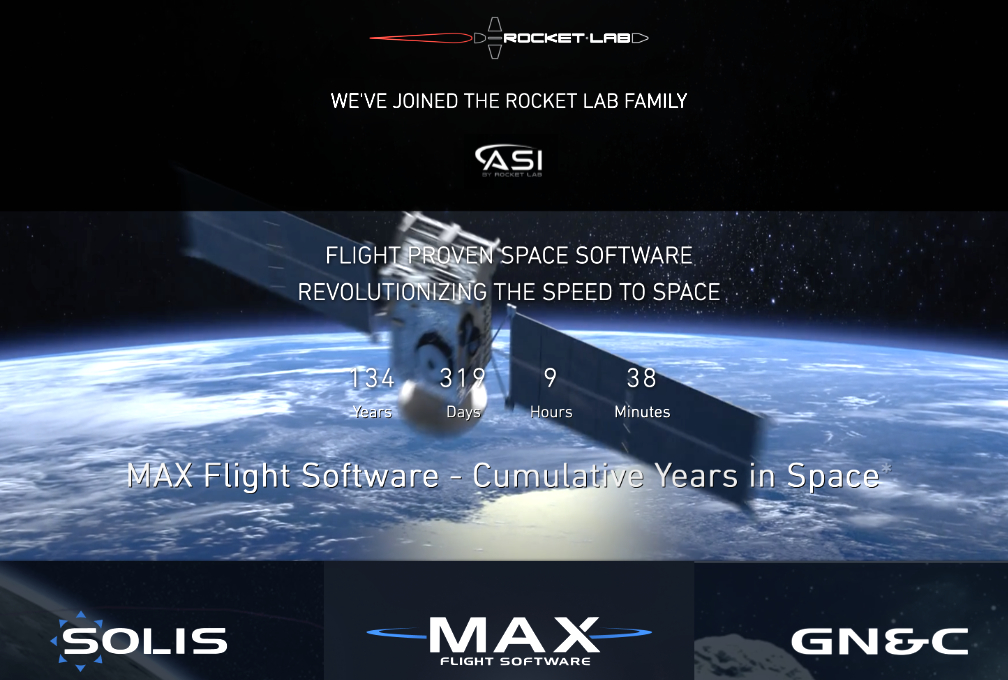
Rocket Lab USA, Inc. (Nasdaq: RKLB) (“Rocket Lab” or “the Company”) has completed their acquisition of Advanced Solutions, Inc. (ASI), a Colorado-based aerospace engineering firm delivering mission proven space software, mission simulation and test systems, and Guidance, Navigation, and Control (GNC) solutions, for $40 million, plus the potential for an additional $5.5 million performance earnout based on CY 2021 results.
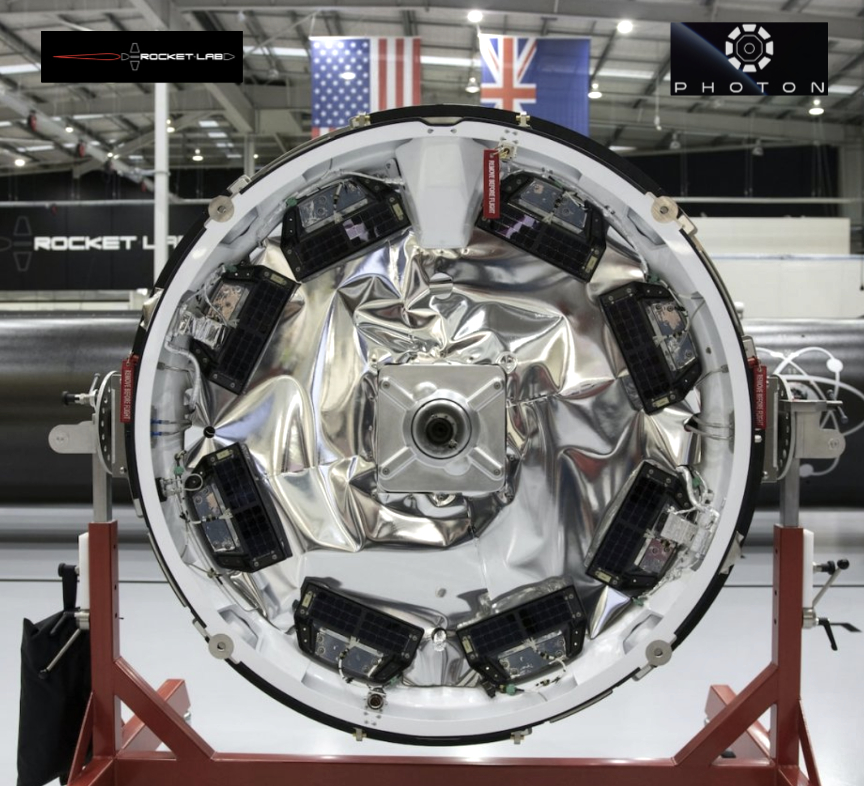
ASI’s advances in flight software, mission simulation and GNC significantly strengthen Rocket Lab’s Space Systems portfolio, which encompasses the Photon spacecraft line and a growing suite of spacecraft hardware solutions, including those brought to the portfolio through the acquisition of Sinclair Interplanetary in April 2020.

ASI’s team of almost 60 people will continue to be led by John Cuseo in Colorado, enabling Rocket Lab to grow its presence within the nation’s second-largest aerospace economy and home to cutting-edge space programs, military commands and renowned research laboratories and universities. The ASI team will continue to serve its existing customer base, while leveraging the ability to scale by tapping into Rocket Lab’s resources, team, and technology.

Founded in 1995, ASI has developed an industry-leading suite of software and technology solutions for reliable space mission design and operation. It’s off-the-shelf spacecraft flight software, MAX, has been operating across more than 45 spacecraft for a cumulative 135 years in space. ASI’s customers include leading aerospace prime contractors, the U.S. Air Force, U.S. DOD organizations, NASA, and commercial spacecraft developers including several of the exciting new space start-ups.

The ASI team have supported some of the most ambitious Earth, interplanetary, and human spaceflight missions flown. These missions have explored distant planets, connected people on Earth, and pushed the boundaries of what is possible in space. Now, ASI’s engineers and space software products are enabling a wide variety of missions with speed, capability, and reliability.

“Both Rocket Lab and ASI have built leading space businesses with mission proven technology and have a shared vision of making it easier to get to space and do incredible things there, so we’re excited to welcome ASI aboard to further enhance our space systems portfolio and deliver enhanced end-to-end space solutions,” said Peter Beck, Rocket Lab Founder and Chief Executive Officer. “The ASI team revolutionized flight software and have enabled some of the most significant space exploration missions. For more than 20 years they have been delivering industry-first, off-the-shelf spacecraft flight software products that enable cost-effective and highly capable constellation and interplanetary missions. By joining forces, we believe it will have a transformative effect on the way spacecraft are designed, built, tested, launched, and operated, further unlocking space’s potential.”

“We’ve found a great fit with Rocket Lab and we’re thrilled to be teaming up with them to continue making space faster, easier and more affordable,” said John Cuseo, ASI Founder and Chief Executive Officer. “The two companies complement each other very well. By coming together, we will continue to serve our customers and innovate in our areas of expertise, including space software and GNC, but now with more rocket fuel in the tank to play with. We look forward to also becoming an integral part of Rocket Lab’s Space Systems business, supporting Photon missions, satellite components, and space and ground software.”


Filed Under: Featured, News

Letter Of Intent Signed By OneWeb + New Space India

October 12, 2021 by editorial

OneWeb now has an arrangement via Letter of Intent with NewSpace India Limited (NSIL), the commercial arm of Indian Space Research Organisation (ISRO), to use the Indian-built, PSLV (Polar Satellite Launch Vehicle) and the heavier GSLV-MkIII (Geosynchronous Satellite Launch Vehicle) as potential platforms to launch OneWeb’s satellites in India from 2022.

The non-binding Letter of Intent was unveiled at the launch of Indian Space Association (ISpA). OneWeb is among the founding members of ISpA, which strives to be the collective voice of space and satellite companies in India and will work with stakeholders across for the development of India’s space ecosystem.

OneWeb is building its initial constellation of 648 LEO satellites and has already placed 322 satellites into orbit. Services will start this year to the Arctic region, to include Alaska, Canada, and the U.K.

By late 2022, OneWeb will offer its high-speed, low latency connectivity services in India and the world. Service testing on the satellites already on-orbit is underway. The results are positive, including seamless satellite and beam handovers, high speeds and low latency. OneWeb and NSIL will expeditiously convert the Letter of Intent into a binding agreement after obtaining all necessary approvals from their respective Boards.

OneWeb will undertake their 11th launch on the October 14, with a further 36 satellites on board. In under a year, the company has passed the halfway stage of its first generation constellation with 322 satellites now in space

OneWeb Chairman, Sunil Bharti Mittal, said, “ISRO has built formidable launch capabilities and India is part of the select group of countries to have history of successful launches. OneWeb will be delighted to use ISRO’s proven platforms to fulfill its vision of taking broadband connectivity across the earth, oceans and sky. We believe this initiative will further the Hon’ble Prime Minister’s vision of making India a key hub in the global space ecosystem and also boost the India-U.K. strategic partnership. We look forward to a deeper engagement with NSIL/ISRO over the coming years.”

Dr. K. Sivan, Chairman of ISRO, said, “We are delighted to have OneWeb looking into how our launch capabilities can help meet their global ambition to connect people everywhere. We are making tremendous progress and India is advancing its space capabilities and we look forward to working together.”

Filed Under: News

Smallsat Dedicated To Space Mfg. Built By Varda Space To Launch Via SpaceX Rideshare Mission in 2023

October 12, 2021 by editorial

Varda Space Industries has signed a Launch Services Agreement with SpaceX to launch their initial space factory aboard a SpaceX rideshare mission, deploying to LEO in Q1 2023.

After Varda’s factory operation completes the on-orbit production run, the company’s space factory will execute a de-orbit maneuver to re-enter the atmosphere and return the finished product to customers on Earth.

Until now, nearly all in-space manufacturing research has been carried out on the International Space Station (ISS). While this research has demonstrated that innovative materials and products that will revolutionize industries on Earth can be created in the consistent microgravity environment of LEO – an environment that can’t be replicated on Earth – there has been no pathway to commercialization.

Until recently, manufacturing in orbit has been impossible to scale due to the cost, complexity and regulatory hurdles associated largely with launch vehicles. SpaceX’s new, competitively priced, rideshare program plus the FAA’s new streamlined regulatory framework now enable cost-effective access to orbit that finally makes large-scale space manufacturing and commercialization of the advancements made on the ISS a reality.

Varda Space Industries was founded by Will Bruey, who spent almost six years working on SpaceX’s Dragon spacecraft, and Delian Asparouhov, Varda’s President and a Principal at Peter Thiel’s Founders Fund.

Varda’s first space factory is planned to launch in Q1 2023, with the second and third factories scheduled to follow through 2024. Each mission has a nominal three-month duration from launch to landing.

“We are excited for Varda’s signing with SpaceX as its launch provider. The massive reduction in barriers to entry will allow us to finally bring the enormous benefits of space, through microgravity manufacturing, to so many people on Earth whose lives will change tangibly for the better as a result,” said Asparouhov.

“Five years ago, a company like Varda would not have been possible. But today, we can economically deliver unique products that can only be manufactured in space because launches are cheaper, space hardware solutions are commoditizing, and smart regulatory progress has been made. Since prolonged exposure to zero gravity is not possible on the planet, it’s exciting to use our expertise in spacecraft to bring that brand new capability to industries serving large markets on Earth,” said Bruey. “I’m excited to use SpaceX as our launch provider because their reusable launch vehicles have proven to be highly reliable and cost-efficient, providing the certainty and unit economics that we rely on to deliver unprecedented access and value to all kinds of new products that can only be manufactured in space.”

Filed Under: News

Rocket Lab Has Back-To-Back Electron Launches In November For BlackSky Constellation Smallsats

October 11, 2021 by editorial

Rocket Lab USA, Inc. has scheduled two dedicated launches in November for Spaceflight Inc.’s customer, real-time geospatial and global monitoring company, BlackSky (NYSE: BKSY).

A two-week launch window for Rocket Lab’s 22nd Electron launch will open November 11-24, 2021, while the 23rd Electron mission is targeted for lift-off during a two-week launch window that opens November 27. Both missions are scheduled to launch from Rocket Lab Launch Complex 1 in New Zealand.

Each mission will deploy two Gen-2 satellites for BlackSky in a rapid expansion of the geospatial and global monitoring company’s LEO constellation. These two dedicated missions are part of a multi-launch agreement signed between Rocket Lab and Spaceflight Inc., for BlackSky earlier this year, and precede a third dedicated mission that will follow to deploy two additional BlackSky Gen-2 satellites. Together, these launches — along with a successfully deployed Gen-2 satellite on Rocket Lab’s “They Go Up So Fast” rideshare mission in March of this year — represent the largest number of satellites BlackSky has committed to a single launch provider to date.

The back-to-back launch of these two dedicated missions supports BlackSky’s aggressive scaling of its high-resolution, Earth-imaging constellation to bolster its delivery of analytics and insights to industries including transportation, infrastructure, land use, defense, supply chain management, and humanitarian aid.

“The speed to space Electron provides our customers is unmatched in the dedicated small launch industry, and we’re thrilled to be delivering a launch service that provides assurance for BlackSky to scale their constellation and services with confidence,” said Rocket Lab CEO, Peter Beck.

Filed Under: News

Arianespace To Launch Next Series Of OneWeb Satellites From Vostochny

October 11, 2021 by editorial

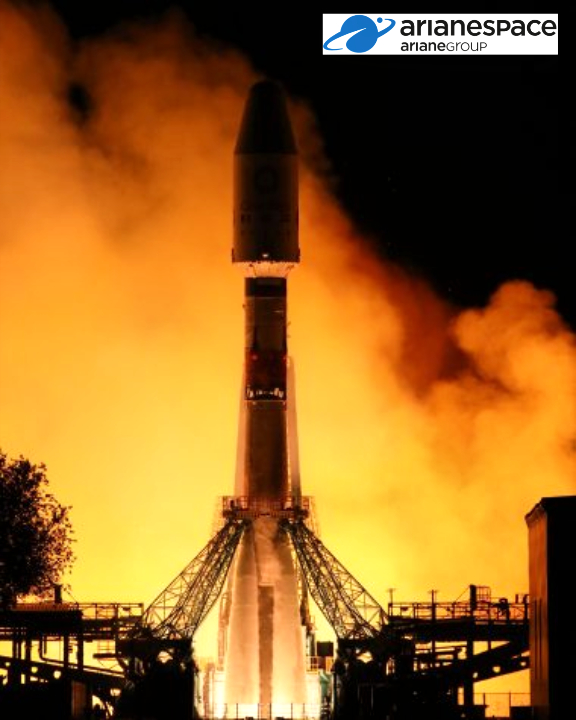
Arianespace’s Flight ST35 Soyuz launch. Photo is courtesy of the company.

Flight ST36, performed by Arianespace and its Starsem affiliate from the Vostochny Cosmodrome on October 14, 2021, at 6:40 p.m. local time (09:40 a.m. UTC), will put 36 of OneWeb’s satellites into a near-polar orbit at an altitude of 450 kilometers.

The mission will have a total duration of 3 hours and 51 minutes and will include nine separations of four satellites each, which will raise themselves to their operational orbit.

This 61st launch of Soyuz operated by Arianespace, the 11th for OneWeb, will raise to 358 the number of satellites deployed for the global telecommunications operator. The constellation, once complete, will include 648 satellites. Thus, ST36 will be the launch taking OneWeb more than halfway to the finish line, with 358 of its satellites being on-orbit.

OneWeb’s constellation is designed to deliver high-speed, low-latency connectivity services to a wide range of customer sectors, including aviation, maritime, backhaul services, as well as governments, emergency response services and more. Central to its purpose, OneWeb’s goal is to bring connectivity to every area on Earth where fiber cannot reach, and thereby bridge the digital divide.

Once deployed, the OneWeb constellation will enable user terminals that are capable of offering 3G, LTE, 5G and Wi-Fi coverage, providing high-speed access globally – by air, sea and land.

OneWeb Satellites, a joint venture between OneWeb and Airbus Defence and Space, is the constellation’s prime contractor. The satellites were built thanks to the company’s satellite manufacturing process that can build as many as two satellites a day on a series production line dedicated to the assembly, integration and testing of the satellites.

Filed Under: Featured, News

mu Space Unveils New Smallsat + Debuts Space Factory 2

October 11, 2021 by editorial

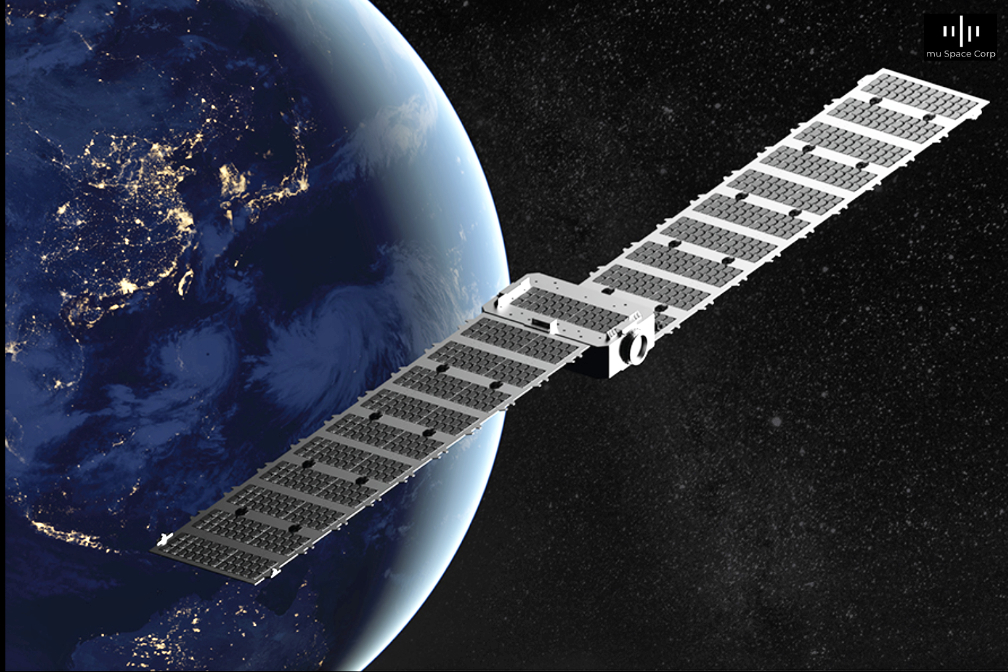
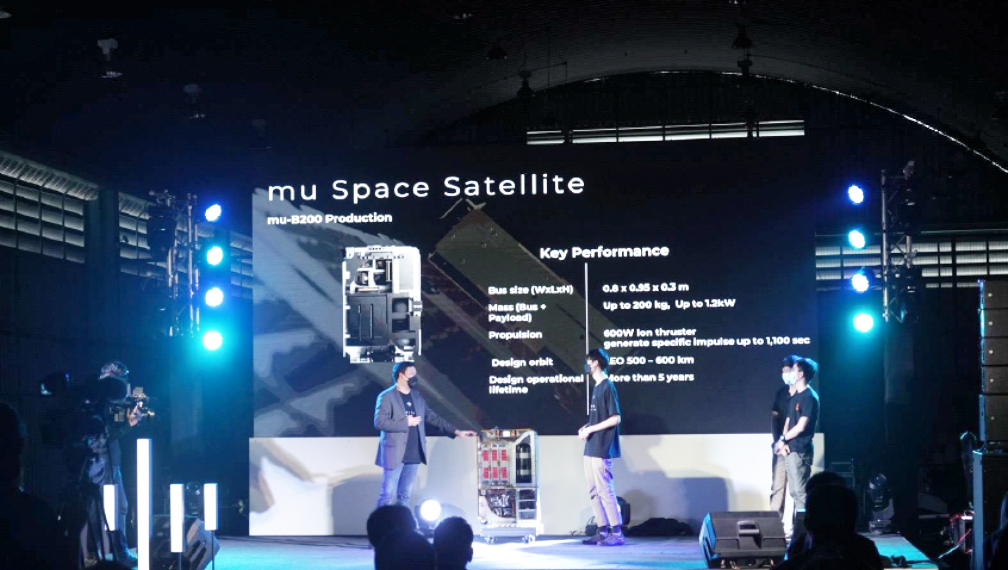
mu Space Corp. has announced and displayed to the public their brand-new satellite, the mu-B200, and the opening of Factory 2 in Bangkok, Thailand, at the company’s Satellite Tech Unveil 2021 event.

The mu Space Satellite Tech Unveil 2021 event.

Factory 2 is the company’s third factory to date and aims to cement the Southeast Asian company as an aerospace leader. mu Space Corp is an aerospace manufacturer and satellite internet service provider and the organization emphasizes the importance of a vertical-integrated approach. The company designs, builds and test in-house all their products in order to improve performance and quality, while reducing the additional costs of an extensive supply chain.

The opening of the new factory and announcement of the mu-B200 is significant in that this will enable mu Space to triple their efforts in leading Thailand into the global space race. In December of 2020, mu Space opened Factory 0 for research and technology prototypes. Less than a year later, Factory 1 was opened. The factory is designated for most of the manufacturing stages, development, tests, productions of entire satellites and components.

Factory 2, unveiled via live stream at the Satellite Tech Unveil 2021 event, is considered an extension area that will enable the production of more satellites. This factory also focuses on producing electronic parts and power systems relating to mu Space’s satellites. The organization researches, designs, builds and tests all its technology in-house.

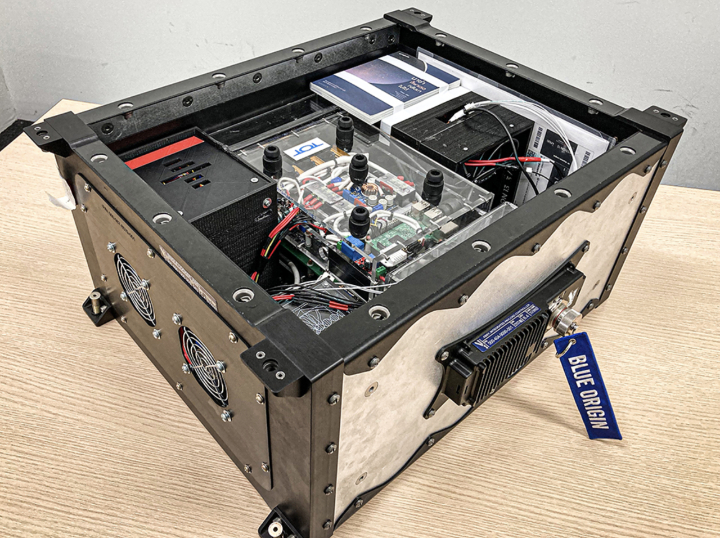
Founded in 2017 by James Yenbamroong, mu Space has conducted orbital microgravity experiments as part of Blue Origin’s New Shephard rocket launches and plans to work alongside other commercial agencies, as well as conduct their own launches in the near future.

mu Space payload for Blue Origin’s Mission 13. Photo is courtesy of the company.

With the production of a new satellite, the mu-B200 and the launch of a new factory, mu Space is making a statement regarding their work within the aerospace industry in 2021. The Satellite Tech Unveil 2021 event was all about announcing to the public, their followers and their investors what it takes to manufacture aerospace products. This was also an opportunity for the company to display the actual satellite on stage. The mu Space satellite is the latest satellite produced by mu Space and its team of leading engineers, proving the main talking point of this event.

The satellite weighs 200 kilograms and comes with a 1.2 kW high-power system. The lightweight and high power is accomplished through the use of nanotechnologies in the manufacturing process. The mu-B200 satellite features krypton thrusters for orbit correction, a phased array antenna and a unique TRL-9 flight-proven high-power bus system.

With global launch activity having increased by 39 percent over the last decade and the value of the global satellite industry rising rapidly and expected to be valued at $508 billion by 2024 according to the Global Satellite Industry Insights & Forecast Report 2020, mu Space Corp’s expansion into the market is a signal that Southeast Asia is accelerating its participation in the satellite industry. mu Space is backed by leading investors, including B.Grimm Joint Venture – Thailand’s private power generation industry, Majuven Fund and private business groups such as executives from the UCLA Foundation, among others.

Speaking about mu Space’s Factory 2 announcement, CEO and founder James Yenbamroong said, “I remember the days when we only had one desk, now we have over 100 employees… Factory 0 was made to produce 1 satellite, Factory 1 can produce 10 and the new Factory 2 will be able to produce 100 satellites … we do all the production processes in-house as we are a vertically integrated company.” He also talked in detail about the new satellite, saying, “The focus of this satellite is high performance and high power, the higher the power the faster the internet connection.”

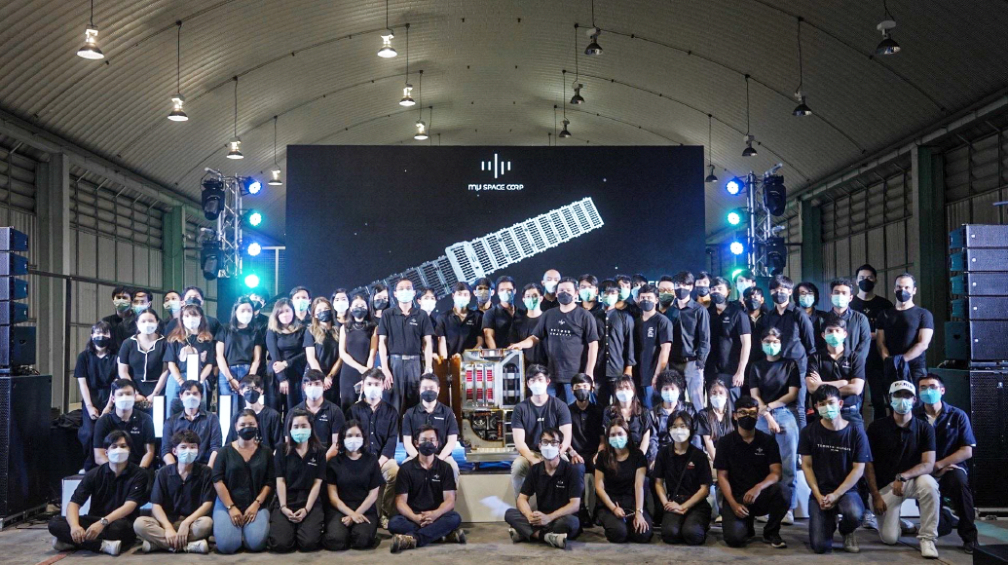
mu Space team photo.

Filed Under: News

Synspective To Integrate Syrlinks’ X-Band Telemetry Transmitter Into StriX β Mission

October 11, 2021 by editorial

Syrlinks and Synspective are partnering to integrate Syrlinks’s compact X-Band Telemetry Transmitter within the framework of the StriX β mission.

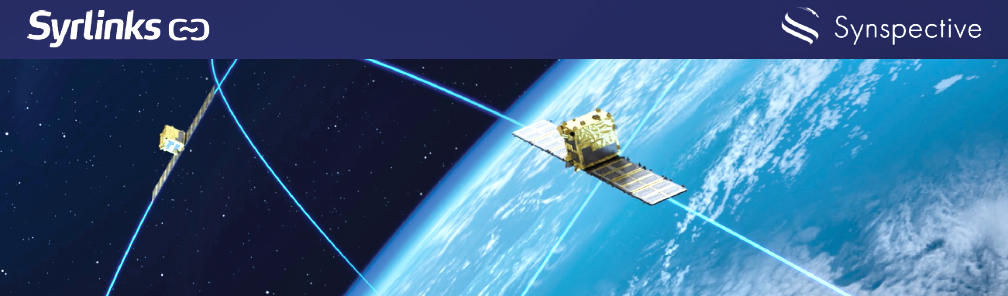
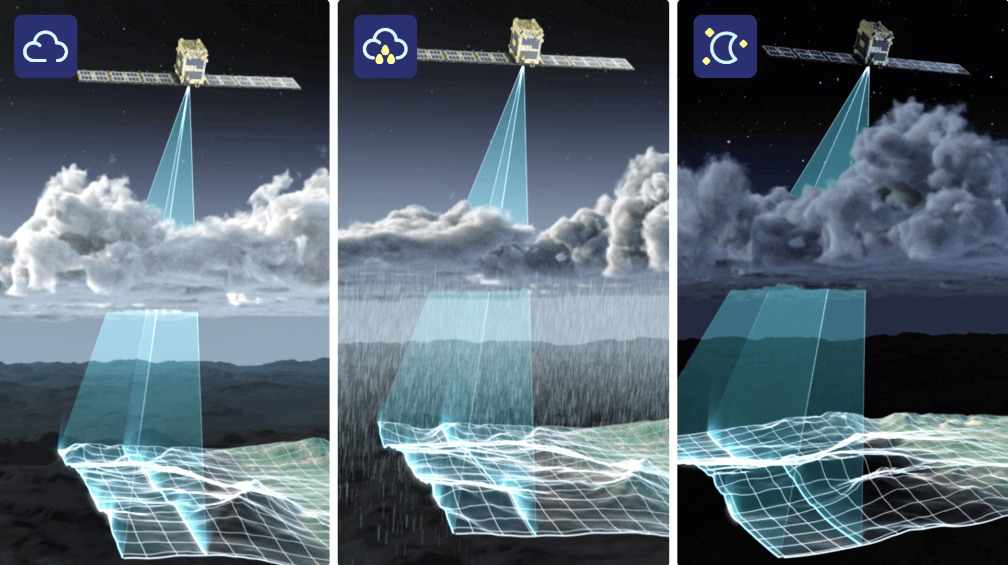
StriX β is Japanese synthetic aperture radar satellite built by Synspective as a demonstrator for their planned 30 satellite constellation. These smallsats will feature X-band synthetic aperture radar and they in the range of 100 kilograms in size and are capable of imaging at a resolution of one to three meters. By 2023 the company plans to launch the six first satellites of the constellation.

Artistic renditions of Synspective’s SriX β SAR smallsat operating in various weather conditions. Image is courtesy of the company.

“We are very proud for having been elected by Synspective for this project. It’s a great opportunity for us to highlight the unmatched capabilities of the DVB-S2 based signal performances for High-Data-Rate downlink transmission.” said Eric Pinson, Director of Space activity at Syrlinks. “It is a great recognition of a work of several years to design COTS based compact X-Band transmitters, highly reliable and bringing cutting-edge transmitting performances.”

“For our StriX β satellite, which objective is to demonstrate the future capability of our coming-next 30 satellites constellation, we were looking for a high-performance compact X-Band Transmitter. The fact that the solution proposed by Syrlinks can achieve high data rate based on DVB-S2 has been decisive in our selection,” said Akeshi Inoshita, Project Manager at Synspective.

Filed Under: News

Antenna Supply Agreement For SES O3b mPOWER Signed By Intellian

October 8, 2021 by editorial

Intellian has entered into an agreement with SES to supply user terminals for SES’s O3b mPOWER communications system.

O3b mPOWER will extend and develop SES’s existing Ka-band Medium Earth Orbit (MEO) services, delivering low latency, high bandwidth connectivity at speeds ranging from tens of megabits to multiple gigabits per second to customers across land, maritime and government markets around the world. This scale of services will be partly enabled by Intellian terminals.

The multi-year deal will see Intellian develop a portfolio of terminals ranging from 85 cm to 2.4 m, capable of harnessing the full capabilities of SES’s second-generation MEO system. This wide array of Intellian products provides rapidly scalable solutions to a broad range of customers, including Government, Cruise, Energy, Maritime, Mining and Telecommunications sectors.

As part of the new product portfolio, Intellian will provide single, dual and tri-band systems. These will enable SES’s customers the flexibility to access its next-generation O3b mPOWER MEO service as well as its entire existing fleet of over 70 geostationary and MEO satellites. The agreement also covers current Intellian products, with easy, cost effective conversion kits available to provide existing owners of Intellian’s NX, v240M 2 and v240MT 2 antennas a pathway to upgrade to the O3b mPOWER service.

“This agreement builds upon our long-standing partnership with SES, allowing us to deliver even more value and innovation to our combined customer base,” says Eric Sung, Intellian CEO. “We continue our collaboration in Cruise, Energy and Government, whilst also opening up new markets together on Land. Intellian is proud to develop and deliver the technology and production expertise required to help customers take full advantage of this revolutionary service. Partnering with SES across so many sectors gives us intimate knowledge of the mPOWER network, and ensures all our products in the portfolio deliver the best user experience to each O3b mPOWER customer.”

“This agreement will provide innovative and critical infrastructure for the O3b mPOWER systems and leverages many years of trusted partnership between our companies. Intellian has a track record of delivering for us and our customers and we are proud to further extend our partnership with them,” said Stewart Sanders, Executive Vice President of Technology and O3b mPOWER program manager at SES.

The new range of Intellian terminals will become available in Q1 2022.

Filed Under: News

An Australian + Two Philippine Smallsats Launched From ISS

October 8, 2021 by editorial

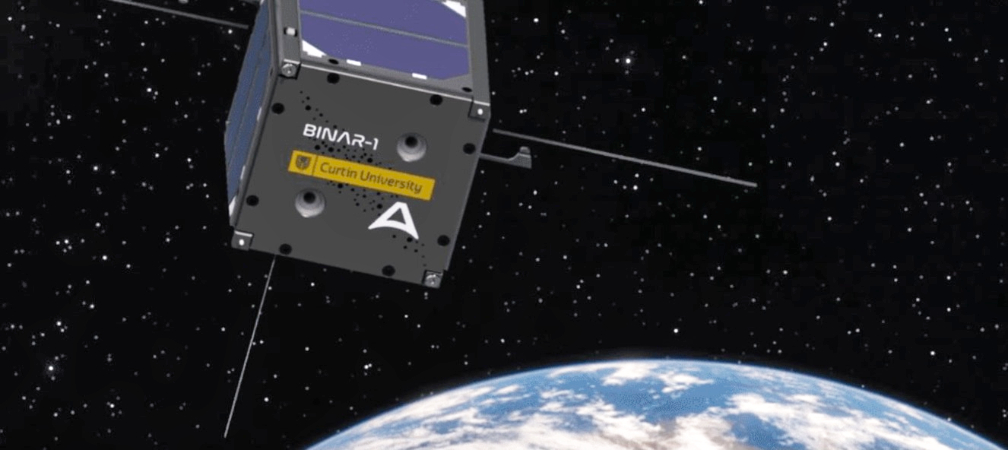
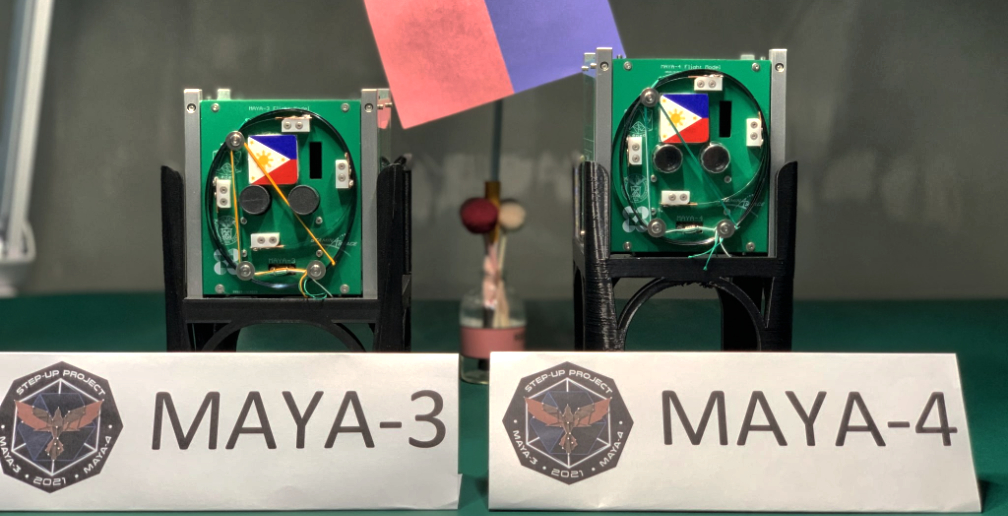
Three smallsats developed by students from Australia and the Philippines were launched from the International Space Station (ISS) on Wednesday, October 6, according to the Japan Aerospace Exploration Agency (JAXA) that revealed this release during a live broadcast.

The Australian Binar-1 (artistic rendition above) and two Philippine satellites, Maya-3 and Maya-4 (photo below), were deployed from the Japanese Experiment Module Kibo on board the ISS. They were brought to the station by a SpaceX Dragon cargo spacecraft in August.

Filed Under: News

GomSpace + SpaceAble To Enhance LEO Sustainability

October 7, 2021 by editorial

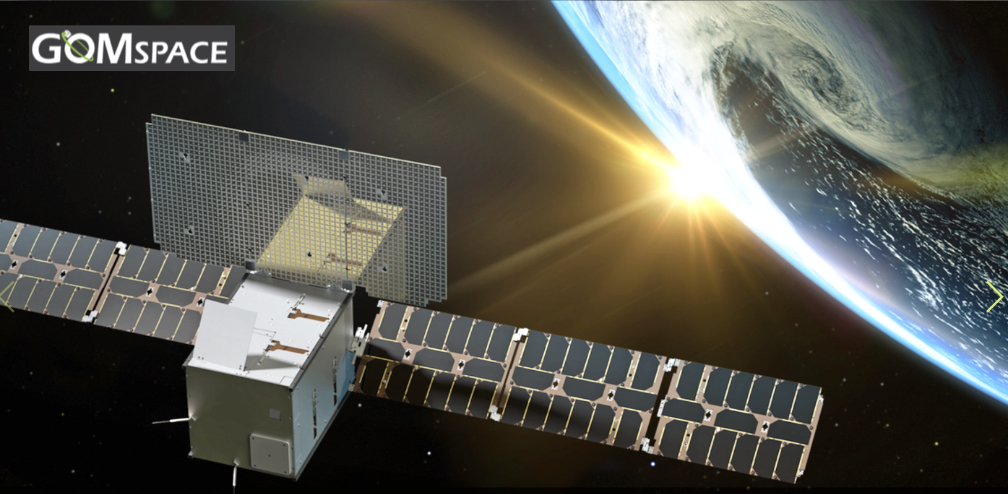
GomSpace has entered into an agreement with SpaceAble to enhance LEO sustainability — the contract is worth 21 million Swedish Kroner (MSEK) and the project will start in 2021 with an expected delivery to occur in late 2023.

The mission is designed to enhance the sustainability of LEO. By tracking the inherent risk of space weather, thanks to SpaceAble’s technology and GomSpace´s platform, the companies are working at a larger level on providing the market with a comprehensive solution—one that includes both inspector satellites and critical space data—to strengthen the resilience of new constellations.

“We are proud to work with SpaceAble and support a business that focuses on reducing debris, that significantly enhances our understanding of space weather effects so as to provide a full spectrum and interoperable space situational awareness solution that the whole LEO market is still in need of,” said Niels Buus, CEO of GomSpace.

Julien Cantegreil, the CEO of SpaceAble, said, “The expertise, agility, and reliability of GomSpace’s satellites are essential to sustainable operations in LEO and offer a breakthrough solution to enhance satellite constellations’ overall sustainability in LEO.”

Filed Under: News

  • « Go to Previous Page
  • Page 1
  • Interim pages omitted …
  • Page 216
  • Page 217
  • Page 218
  • Page 219
  • Page 220
  • Interim pages omitted …
  • Page 338
  • Go to Next Page »

Primary Sidebar

WEEKLY NEWSLETTER

Archives

  • March 2026
  • February 2026
  • January 2026
  • December 2025
  • November 2025
  • October 2025
  • September 2025
  • August 2025
  • July 2025
  • June 2025
  • May 2025
  • April 2025
  • March 2025
  • February 2025
  • January 2025
  • December 2024
  • November 2024
  • October 2024
  • September 2024
  • August 2024
  • July 2024
  • June 2024
  • May 2024
  • April 2024
  • March 2024
  • February 2024
  • January 2024
  • December 2023
  • November 2023
  • October 2023
  • September 2023
  • August 2023
  • July 2023
  • June 2023
  • May 2023
  • April 2023
  • March 2023
  • February 2023
  • January 2023
  • December 2022
  • November 2022
  • October 2022
  • September 2022
  • August 2022
  • July 2022
  • June 2022
  • May 2022
  • April 2022
  • March 2022
  • February 2022
  • January 2022
  • December 2021
  • November 2021
  • October 2021
  • September 2021
  • August 2021
  • July 2021
  • June 2021
  • May 2021
  • April 2021
  • March 2021
  • February 2021
  • January 2021
  • December 2020
  • November 2020
  • October 2020
  • September 2020
  • August 2020
  • July 2020
  • June 2020
  • May 2020
  • April 2020
  • March 2020
  • February 2020
  • January 2020
  • December 2019
  • November 2019
  • October 2019

© 2019–2026 SatNews

Insert/edit link

Enter the destination URL

Or link to existing content

    No search term specified. Showing recent items. Search or use up and down arrow keys to select an item.
      x
      Sign Up Now!

      Enjoy a free weekly newsletter with recent headlines from the global SmallSat industry.

      Invalid email address
      We promise not to spam you. You can unsubscribe at any time.
      Thanks for subscribing! You will now receive weekly SmallSat News updates.
      We love our advertisers.
      And you will too!

      Please disable Ad Blocker to continue... We promise to keep it unobtrusive.
      We promise not to spam you. You can unsubscribe at any time.
      Invalid email address
      Thanks for subscribing!