
• Skip to main content
  • Skip to primary sidebar
  • Home
  • News
  • Featured
  • More News ⌄
    • SatNews
    • SatMagazine
    • MilSatMagazine
  • Events ⌄
    • MilSat Symposium
    • SmallSat Symposium
    • Satellite Innovation
  • Contacts
  • SUBSCRIPTION

SmallSat News

You are here: Home / Archives for Featured

Featured

AAC Clyde Space completes acquisition of Spacemetric AB

October 6, 2024 by editorial

In connection with closing, the board of directors in AAC Clyde Space, with support from the authorization granted at the annual general meeting held on May 23, 2024, resolved to issue 188,000 shares and 106,800 warrants to the current shareholders in Spacemetric, entailing a total increase of AAC Clyde Space’s share capital with 589,600 Swedish Krona, provided that all earn-out milestones are fulfilled and that the warrants are exercised for subscription of shares.

The consideration shares received as payment on closing are subject lock-up undertakings, whereby one third of the shares are subject to a lock-up for 360 days, one third of the shares are subject to a lock-up for 630 days and one third of the shares are subject to a lock-up for 810 days. Shares issued by exercise of the warrants will be subject to a lock-up for 360 days.

Luís Gomes, AAC Clyde Space CEO said, “I would like to welcome our new colleagues from Spacemetric to the AAC Clyde Space group. Their expertise will be invaluable in the expansion of our Earth Observation operations, both for our own Data & Services offerings and for our EO satellite customers, to whom we can now offer the complete solution to process and manage imaging data together with their satellite. Together we will make it easier for user to access the Earth Observation data that they need.”

Filed Under: Featured, News

Rocket Lab completes 2nd spacecraft for Varda Space Industries, Advancing In-Space Mfg.

October 2, 2024 by editorial

Rocket Lab has completed testing and integration of its second Pioneer spacecraft for Varda Space Industries, Inc. at its Spacecraft Production Complex and headquarters in Long Beach, California. (Photo: Rocket Lab)
LONG BEACH, Calif.–(BUSINESS WIRE)–Rocket Lab USA, Inc. (Nasdaq: RKLB) (“Rocket Lab” or “the Company”), a global leader in launch services and space systems, has completed testing and integration of its second Pioneer spacecraft for Varda Space Industries, Inc. (“Varda”), the world’s first in-space pharmaceutical processing and hypersonic Earth re-entry logistics company.

Rocket Lab’s first Pioneer spacecraft for Varda was launched in June 2023. Varda successfully crystallized the HIV drug Ritonavir while on orbit and Rocket Lab and Varda successfully landed the re-entry capsule in the Utah desert in February 2024. The Company is now preparing Varda’s second mission during which Rocket Lab and Varda will once again conduct in-space operations, reentry positioning maneuvers, and deorbiting to recover Varda’s capsule. Varda received permission from the FAA under a Part 450 license earlier this month, making them the only company to ever secure a second reentry license.

Rocket Lab’s Photon spacecraft integrated with Varda Space Industry’s in-space manufacturing capsule. (Photo: Business Wire)

Designed and built at Rocket Lab’s Spacecraft Production Complex and Headquarters in Long Beach, California, the Pioneer spacecraft will provide power, communications, propulsion, and attitude control for Varda’s 120 kg reentry capsule. Each Pioneer spacecraft leverages the company’s vertically integrated spacecraft components and subsystems, including star trackers, reaction wheels, solar panels, flight software, and radios. Rocket Lab’s Pioneer spacecraft is a flight proven highly configurable medium delta-V platform designed to support large payloads, re-entry capabilities, and dynamic space operations.

Rocket Lab’s Pioneer spacecraft.
Photo courtesy of the company.

“By leveraging Rocket Lab’s vertically integrated approach to spacecraft production, we can rapidly develop and deliver the highly capable and reliable spacecraft that Varda needs for their missions,” said Rocket Lab Founder and CEO, Sir Peter Beck. “This close collaboration allows us to push the boundaries of innovation, enabling Varda to create high-value products in microgravity and bring them back to Earth. We’re excited to work alongside Varda as they revolutionize manufacturing processes and open new markets through space.”

“Our partnership with Rocket Lab demonstrates the power of collaboration to evolve the orbital economy,” said Varda CEO and co-founder Will Bruey. “Each reentry is a remarkable milestone that paves the way for future innovations, and the day when reentry is as common as launch.”

Varda’s W-1 capsule landing at the Utah Test and Training Range after a successful re-entry. Credit: John Kraus

Filed Under: Featured, News

D-Orbit closes a million€€€ Series C round

September 29, 2024 by editorial

D-Orbit has announced the second and final closing of the company’s 150 million euros Series C Round, making one the biggest space deals in the last 12 months.

This raise was underpinned by D-Orbit’s track record of 16 successful missions; 14 ION Satellite Carriers and the Company’s proprietary orbital transfer vehicle, which has been on-orbit since 2020, and a further seven launches that are planned for 2025.

These missions have allowed the company to test both D-Orbit’s proprietary technologies and pioneering third party innovations on-orbit and they range from sensors designed to track and map the size, speed, and paths of sub-centimeters debris to help protect satellites from collisions, to AI/ML applications designed, for example, to promptly detect flooding and relay flood maps to emergency responders, thereby accelerating response time to environmental crises, potentially saving lives, and minimizing damage to communities.

The round allows D-Orbit to continue developing its capabilities in space cloud computing and on-orbit servicing. It will also facilitate and accelerate its collaborations with governments and space agencies as well as broaden its customer reach across geographies and industries. It is also expected that part of the procedures will be used to make strategic acquisitions to broaden the Company’s product set.

The round is led by Marubeni Corporation, a powerhouse in the Japanese industrial sector, cementing a long-term commercial collaboration poised to revolutionize the space logistics industry. This partnership builds on Marubeni’s exclusive rights to distribute D-Orbit’s services in Japan, now expanding to Southeast Asia, and leverages Marubeni’s extensive network and expertise to accelerate D-Orbit’s growth as a leading provider of satellite logistics solutions in key global markets.

D-Orbit’s existing investors CDP Venture Capital, Seraphim Space Investment Trust, Indaco Venture Partners, Neva SGR (the Intesa Sanpaolo Group’s venture capital company), and Primo Ventures also participated.

The large size of the round has also allowed for new market leading investors to join the shareholder register. These include Avantgarde, a well-established family office with roots in the pharmaceutical and space industries, Iberis Capital, leading Portuguese private equity and venture capital portfolio manager, European Innovation Council (EIC) Fund that supports game changing innovative companies, Phaistos Investment Fund, a venture capital fund managed by 5G Ventures and backed by the Greek state, Terna Forward, the Corporate Venture Capital vehicle of the Italian Transmission System Operator Terna, and private investors with focus on tech investments. Furthermore, a consortium led by the existing shareholder United Ventures (primary Italian fund focused on technology), including the European Investment Bank, and the European Investment Fund, participated re-iterating strong support to the Company’s strategic plan.

These funds will support the development of a ‘circular space economy’, turning space debris into a valuable resource. This will include advances in in-orbit servicing to enable the collection and recycling of debris in orbit, as well as the manufacture of spacecraft for interplanetary travel. With the increasing number of satellites launches, D-Orbit remains dedicated to promoting space sustainability and environmental responsibility.

The Company is set to expand its services to include satellite lifespan extension and space debris removal alongside its existing satellite deployment and hosted payload on- orbit services.

Filed Under: Featured, News

Satellogic selected for NASA’s Commercial SmallSat Data Acquisition program 

September 29, 2024 by editorial

Satellogic Inc. (NASDAQ: SATL) was recently selected as one of eight recipients of NASA’s Commercial SmallSat Data Acquisition Program (CSDA) On-Ramp1 Multiple Award contract, with a maximum cumulative value of $476 million for all award winners — this award highlights Satellogic’s commitment to deliver high-quality Earth Observation (EO) data to advance scientific research and enhance life on Earth.

Under the CSDA On-Ramp1, Satellogic will provide NASA with high-resolution multispectral imagery under a multiple-award contract in effect until November 15, 2028. The program aims to offer NASA a cost-effective solution for augmenting or complementing the Earth observation data gathered by the agency, other U.S. government entities, and international agencies. This data will be pivotal in efforts to understand and mitigate the effects of climate change, monitor environmental trends, and improve various applications that benefit humanity.

The CSDA program is a strategic initiative designed to leverage the rapidly evolving commercial space sector. By working with commercial partners such as Satellogic, NASA can enhance its ability to gather crucial EO data efficiently and affordably. This collaboration underscores the importance of public-private partnerships in driving innovation and contributing to a better understanding of our planet.

“We are excited to contribute to NASA’s pioneering efforts in advancing Earth science research through commercial satellite data,” said Matt Tirman, President, at Satellogic. “This award recognizes our commitment to delivering accessible and actionable geospatial data, and we look forward to supporting NASA’s ongoing research and applications through this collaboration.”

Filed Under: Featured, News

SpaceX’s Tuesday Starlink Group 8-9 smallsat launch

September 24, 2024 by editorial

Image credit SpaceX

On Tuesday, September 24th, at 9:01 PM – 9:59 PM PDT, Space X plans to launch into low Earth orbit a batch of Starlink smallsat satellites that will likely include a mix of 13 Direct-to-Cell and 7 standard v2-Mini Starlink satellites. These satellites will help SpaceX move closer to achieve their goal of a Starlink smallsat space-based internet communication constellation.

The launch will take place from Space Launch Complex 4E, Vandenberg SFB, California, which has launched 159 rockets, including 159 orbital launch attempts, and has been the site for 771 rocket launches.

SpaceX’s Starlink launches will be cut back for a few weeks as both of SpaceX’s Florida launch pads are currently occupied by high-priority missions. Launch Complex 39A (LC-39A) is being prepped for Falcon Heavy’s upcoming launch of Europa Clipper in October, and SpaceX’s Crew-9 is being attended to at SLC-40 for a September 26 launch.

The forecast calls for:

Map image from AccuWeather
  • temperature of 67°F
  • clear skies,
  • 9% cloud cover
  • wind speed of 8 mph
  • 66°Hi
  • RealFeel® 73°
  • RealFeel Shade™ 66°
  • Low clouds and fog, then some sun
  • Max UV Index 5
  • Wind W 6 mph
  • Wind Gusts 13 mph
  • Probability of Precipitation 0%
  • Probability of Thunderstorms 0%
  • Precipitation 0.00 in
  • Cloud Cover 80%

The launch will cost $52,000,000.

The booster is expected to land on the ASDS barge, Of Course I Still Love You (OCISLY) in the Pacific Ocean.

Filed Under: Featured, News

Rocket Lab sets launch date for 2nd dedicated Kinéis mission to deploy IoT constellation

September 3, 2024 by editorial

Rocket Lab USA, Inc. (Nasdaq: RKLB) has set the launch window for the company’s 53rd Electron Launch — this mission will be the second of five dedicated launches for the French company, Kinéis.

The ‘Kinéis Killed the RadIOT Star’ mission is scheduled to launch from Rocket Lab Launch Complex 1 in Mahia, New Zealand, during a 14 day launch window that opens on September 17, 2024, NZST.

This mission will launch just three months after the  ‘No Time Toulouse’ mission, Kinéis’ first launch with Rocket Lab. ‘Kinéis Killed the RadIOT Star’ will be the second of five dedicated Electron launches for Kinéis, a company backed by private and public investors including the French government’s space agency CNES (Centre National d’Études Spatiales) and CLS (Collecte Localisation Satellites) an international space-based solutions provider, to improve global Internet of Things (IoT) connectivity.

Kinéis’ constellation will connect any object anywhere in the world and guarantee the transmission of targeted and useful data to users, in near-real time, with low energy consumption with more powerful 30 kg class smallsats that integrate IoT technology. The constellation also includes a second mission: a ship-tracking Automatic Identification System (AIS). Once deployed, these technologies will allow Kinéis to expand across multiple industries and scale from 20,000 devices connected to millions. The second constellation launch will add an additional five new satellites to its planned 25 in number and will enhance Kinéis’ ability to connect the planet and address essential challenges for humanity, its activities, and its environment.

The ‘Kinéis Killed the RadIOT Star’ launch has been tailored specifically to meet Kinéis’ mission requirements, giving them greater control over launch schedule, orbit, and deployment parameters than would be possible on a larger rideshare mission. Tailored mission parameters for this launch include:

  • Instantaneous launch window
  • After the first Curie engine burn to circularize the Kick Stage’s orbit, Curie will ignite again for an eight second burn to set a specific argument of perigee, enabling Kinéis to deploy five satellites to a precise location for each one of the five launches,
  • All five satellites will be deployed in a precise sequence in singles and as pairs to build out the constellation exactly as Kinéis needs it,
  • Finally, Curie will conduct a perigee lowering burn to reduce the Kick Stage’s orbital lifetime to keep space sustainable.

“We’re excited to welcome the Kinéis team on board Electron again as we help them build out their constellation,” said Rocket Lab founder and CEO, Sir Peter Beck. “Dedicated launch is key for the kind of precise orbital deployment requirements many constellation operators need, so we’re proud to make that possible once again.”

“The Kinéis teams are ready to build on the success of the first launch. They have capitalized on this first and delicate technical experience of putting our first five satellites into position and are delivering a real technical performance in managing the five new satellites simultaneously, in addition to the five already in the air,” said Alexandre Tisserant, Chairman of Kinéis. “Rocket Lab’s Electron launcher made a major contribution to this success, thanks to the precision with which it injected our nanosatellites into their positions. The IoT revolution is underway. Thanks to our space-based connectivity, we’ll be able to connect any object anywhere in the world in near real time. Go Kinéis!”

About Rocket Lab
Founded in 2006, Rocket Lab is an end-to-end space company with an established track record of mission success. We deliver reliable launch services, satellite manufacture, spacecraft components, and on-orbit management solutions that make it faster, easier, and more affordable to access space. Headquartered in Long Beach, California, Rocket Lab designs and manufactures the Electron small orbital launch vehicle, a family of flight-proven spacecraft, and the Company is developing the large Neutron launch vehicle for constellation deployment. Since its first orbital launch in January 2018, Rocket Lab’s Electron launch vehicle has become the second most frequently launched U.S. rocket annually and has delivered 190 satellites to orbit for private and public sector organizations, enabling operations in national security, scientific research, space debris mitigation, Earth observation, climate monitoring, and communications. Rocket Lab’s Photon spacecraft platform has been selected to support NASA missions to the Moon and Mars, as well as the first private commercial mission to Venus. Rocket Lab has three launch pads at two launch sites, including two launch pads at a private orbital launch site located in New Zealand and a third launch pad in Virginia.

About Kinéis
Created in 2018, Kinéis is a satellite operator and global connectivity provider. It inherited 40 years of expertise in the Argos system, founded by CNES (French space agency) and historically operated by CLS (Collecte Localisation Satellites). Its mission is to develop reliable technology that provides easy access to useful satellite data. To make life easier for professionals and individuals and encourage them to use its products and services, Kinéis locates and connects objects wherever they are on the planet, in near real time. This way, the company deploys all its technological innovation capabilities to bring together New Space and IoT. In 2020, Kinéis raised 100 million euros from French private and public investors. In 2021, Kinéis generated a turnover of 8.4 million euros (+20% compared to 2020). Kinéis has been awarded the French Tech Next40 promotion 2021, 2022 and French Tech 120 promotion 2023.

Filed Under: Featured, News

Beyond Gravity selected by MDA Space as part of the MDA AURORA™ supply chain

August 25, 2024 by editorial

Beyond Gravity, a leading supplier to the space industry, has been selected by MDA Space Ltd. (TSX:MDA), a leading provider of advanced technology and services to the rapidly expanding global space industry, as part of the company’s supply chain for MDA AURORA™, a game-changing product line driving the transition from analog to digital satellite technology. 

Screenshot

Beyond Gravity will provide 252 constellation On-Board Computers (cOBCs) with integrated navigation receivers and antennas for LEO satellite constellations. The cOBC provides satellite command & control, reconfiguration and precise GNSS satellite positioning in combination with the provided GNSS antennas.

The unit is highly reliable and optimized for high volume production. The delivery of the On-Board Computers is set to begin this year. The MDA AURORA™ supply chain will help support product deliveries for anchor customer Telesat’s LEO satellite constellation Telesat Lightspeed, an innovative, advanced global network that will bring enterprise-class connectivity to customers worldwide.

Designed to meet the changing technical and business requirements of the satellite industry, the software-defined MDA AURORA™ product line provides operators with unparalleled flexibility and functionality, dramatically enhancing constellation performance at reduced cost and time to market. 

“We are very excited to collaborate with MDA Space on the development of MDA Aurora and to play an important role in the visionary Telesat Lightspeed mission,” said Oliver Grassmann, Executive Vice President of Satellites Division at Beyond Gravity. 

“This contract with MDA Space is a testament to our strategic product development and reaffirms our strong position in delivering innovative and reliable solutions to the commercial space sector as our advanced and proven constellation On Board Computers are essential for satellite constellation missions, ensuring robust performance and reliability,” said Kurt Kober, Vice President of Electronic Solutions at Beyond Gravity. “This agreement marks a significant milestone for Beyond Gravity’s Electronic Solutions business unit, reflecting the company’s strong position in the commercial space market.”

Beyond Gravity, headquartered in Zurich, Switzerland, is the first startup to combine agility, speed, and innovation with decades of experience and proven quality. Approximately 1’800 employees at 14 locations in seven countries (Switzerland, Sweden, Austria, Germany, USA, Finland, and Portugal) develop and manufacture products for satellites, launch vehicles and the semiconductor industry with the goal of advancing humanity and enabling exploration of the world and beyond. In 2023, the company generated revenues of approximately CHF 383 million.

Building the space between proven and possible, MDA Space (TSX:MDA) is a trusted mission partner to the global space industry. A robotics, satellite systems and geointelligence pioneer with a 55-year+ story of world firsts and more than 450 missions, MDA Space is a global leader in communications satellites, Earth and space observation, and space exploration and infrastructure. The MDA Space team of more than 3,000 space experts in Canada, the US and the UK has the knowledge and know-how to turn an audacious customer vision into an achievable mission – bringing to bear a one-of-a-kind mix of experience, engineering excellence and wide-eyed wonder that’s been in the company’s DNA since day one. For those who dream big and push boundaries on the ground and in the stars to change the world for the better, we’ll take you there.

Filed Under: Featured, News

NASA selects 3 new Venture-class launch service providers

August 22, 2024 by editorial

NASA has selected three additional companies to provide launch services for future agency missions through its VADR (Venture-Class Acquisition of Dedicated and Rideshare) contract.

The companies awarded are:

  • Arrow Science and Technology LLC of Webster, Texas
  • Impulse Space Inc. of Redondo Beach, California
  • Momentus Space LLC of San Jose, California

The VADR contract is a firm-fixed-price, indefinite-delivery/indefinite-quantity instrument with an ordering period through Feb. 3, 2027 and a maximum total value of $300 million across all VADR contracts. NASA selected the new launch providers in accordance with VADR’s on-ramp provision, allowing the agency to add new capabilities not available or identified at the time of the initial award. NASA will issue firm-fixed-price task orders for launch services as needed for future agency and agency-sponsored missions.

The VADR contract builds on NASA’s previous procurement efforts, such as the VCLS (Venture Class Launch Services) and VCLS Demo 2, providing a broad range of Federal Aviation Administration-licensed commercial launch services capable of delivering Class D, CubeSats, and higher risk-tolerant payloads to a variety of orbits. By using a lower level of mission assurance and commercial best practices for launching rockets, these highly flexible contracts help broaden access to space through lower launch costs and serve as an ideal platform for contributing to NASA’s science research and technology development.

NASA’s Launch Services Program, based at the agency’s Kennedy Space Center in Florida, manages the VADR contracts. The program also works with private industry, spacecraft projects, and international partners to launch science payloads ranging from small satellites with colleges and universities to NASA’s highest priority missions.

Filed Under: Featured, News

Terran Orbital’s Tyvak awarded million$$$ with a prototype agreement from SDA

August 20, 2024 by editorial

Tyvak Nano-Satellite Systems, Inc. (a Terran Orbital Corporation) (NYSE: LLAP) has been selected by the Space Development Agency (SDA) to produce 10 satellites for the Tranche 2 Transport Layer (T2TL) Gamma contract.

Terran Orbital will undertake the comprehensive design, construction, integration, testing, and delivery of 10 T2TL Gamma satellites based on its Ambassador platform. This will also include the integration of the associated ground control system and the execution of Launch and Early Operations (LEOPs).

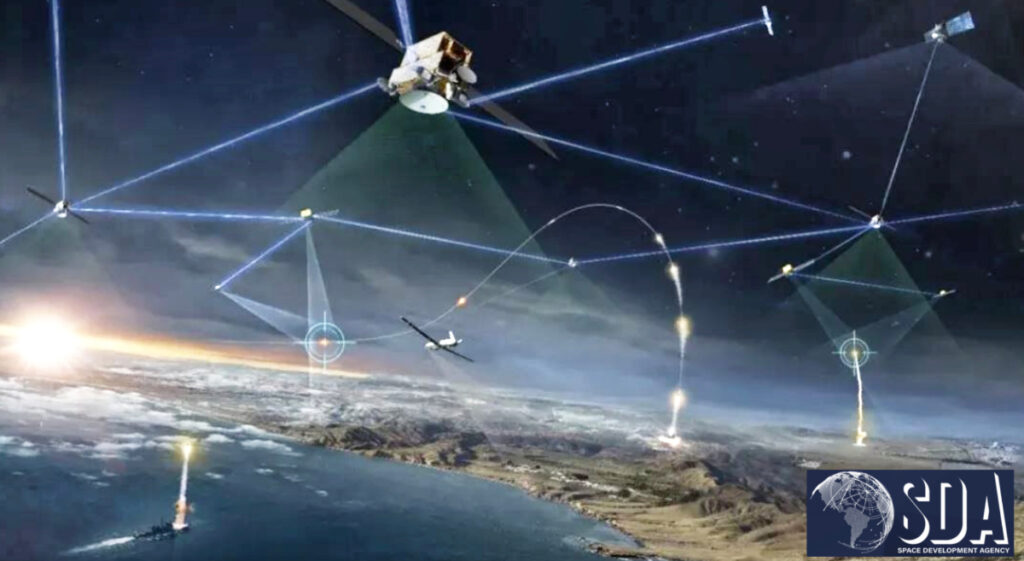
These satellites will be equipped with payloads specifically designed to enhance future kill chain capabilities through the Proliferated Warfighter Space Architecture (PWSA). The PWSA envisions a constellation of hundreds of satellites in low-Earth orbit, featuring advanced satellite communications, data transport, missile warning, and missile-tracking functionalities.

Gamma will maintain several core characteristics shared with other T2TL variants, including Beta. In addition to Gamma, and as previously announced, Terran Orbital is collaborating with Lockheed Martin to produce 36 space vehicles for T2TL Beta and 18 for the T2 Tracking Layer. The Company has already successfully delivered 10 buses for the Tranche 0 Transport Layer and is now manufacturing 42 buses for the Tranche 1 Transport Layer (T1TL), with launches planned for late 2024 and 2025.

“We are honored to have been chosen for this program. Our ongoing collaboration with the SDA across multiple Tranche iterations has been immensely rewarding, and we deeply value their continued trust in our capabilities,” said Marc Bell, Chairman, Co-Founder, and Chief Executive Officer at Terran Orbital.

Filed Under: Featured, News

Lockheed Martin to acquire Terran Orbital

August 18, 2024 by editorial

Lockheed Martin [NYSE: LMT] has signed a definitive agreement to acquire Terran Orbital [NYSE: LLAP], a provider of satellite-based solutions that primarily supporting the aerospace and defense industries.

Terran Orbital brings a high throughput, robotic manufacturing capacity and high-performing modular space vehicle designs. Combined with Lockheed Martin’s record of performance and innovation, this transaction will usher in an even broader range of capabilities and value for customers. Lockheed Martin uses Terran Orbital’s satellites for its work, most notably with the Space Development Agency‘s Transport and Tracking Layer programs, and in several of its self-funded technology demonstrations.

The transaction stands to pave a path for further advancement, as Lockheed Martin continues to invest in technology, people, and capacity to support future customer needs.

The enterprise value of the transaction is approximately $450 million. Lockheed Martin will acquire Terran Orbital for $0.25 in cash for each outstanding share of common stock and retire its existing debt. This transaction also provides for Lockheed Martin and other current Terran Orbital creditors establishing a new, $30 million working capital facility that has been put in place as of signing.  

The transaction is expected to close in fourth quarter of 2024 and is subject to the satisfaction of customary closing conditions, including regulatory and Terran Orbital stockholder approvals. Upon closing, Terran Orbital will remain a commercial merchant supplier to industry.

Terran Orbital has a track record of supporting more than 80 missions over the past decade for government and commercial customers with complex mission requirements, from low earth orbit to the Moon and beyond. As of today, Lockheed Martin is Terran Orbital’s largest customer. This longstanding working relationship between the companies underpins a strong cultural alignment and ability to recognize synergies between the two businesses.

Terran Orbital joined the Lockheed Martin Ventures (LM Ventures) portfolio – a fund that makes investments in technology innovations to drive growth in existing, adjacent and new segments for the company – with an initial investment in 2017. LM Ventures has since made two additional investments in Terran Orbital in 2020 and 2022. This marks the first LM Ventures company that Lockheed Martin has sought to acquire since founding the fund in 2007.

“We’ve worked with Terran Orbital for more than seven years on a variety of successful missions,” said Robert Lightfoot, president, Lockheed Martin Space. “Their capabilities, talent and business momentum align with Lockheed Martin Space’s strategic plans – and we’re looking forward to welcoming them to our team. Our customers require advanced technology and even faster product development, and that’s what we can achieve together.”

“This transaction combines our strengths and expertise,” said Marc Bell, chairman, CEO, and co-founder of Terran Orbital. “This move will open new opportunities for growth and innovation, and we couldn’t be more excited about the future. Access to Lockheed Martin’s incredible engineers and world class facilities will only accelerate our business plan to provide low-cost, high-value solutions to our ever-growing customer base.“

Filed Under: Featured, News

  • « Go to Previous Page
  • Go to page 1
  • Interim pages omitted …
  • Go to page 8
  • Go to page 9
  • Go to page 10
  • Go to page 11
  • Go to page 12
  • Interim pages omitted …
  • Go to page 57
  • Go to Next Page »

Primary Sidebar

WEEKLY NEWSLETTER

Archives

  • December 2025
  • November 2025
  • October 2025
  • September 2025
  • August 2025
  • July 2025
  • June 2025
  • May 2025
  • April 2025
  • March 2025
  • February 2025
  • January 2025
  • December 2024
  • November 2024
  • October 2024
  • September 2024
  • August 2024
  • July 2024
  • June 2024
  • May 2024
  • April 2024
  • March 2024
  • February 2024
  • January 2024
  • December 2023
  • November 2023
  • October 2023
  • September 2023
  • August 2023
  • July 2023
  • June 2023
  • May 2023
  • April 2023
  • March 2023
  • February 2023
  • January 2023
  • December 2022
  • November 2022
  • October 2022
  • September 2022
  • August 2022
  • July 2022
  • June 2022
  • May 2022
  • April 2022
  • March 2022
  • February 2022
  • January 2022
  • December 2021
  • November 2021
  • October 2021
  • September 2021
  • August 2021
  • July 2021
  • June 2021
  • May 2021
  • April 2021
  • March 2021
  • February 2021
  • January 2021
  • December 2020
  • November 2020
  • October 2020
  • September 2020
  • August 2020
  • July 2020
  • June 2020
  • May 2020
  • April 2020
  • March 2020
  • February 2020
  • January 2020
  • December 2019
  • November 2019
  • October 2019

© 2019–2025 SatNews

Insert/edit link

Enter the destination URL

Or link to existing content

    No search term specified. Showing recent items. Search or use up and down arrow keys to select an item.
      x
      Sign Up Now!

      Enjoy a free weekly newsletter with recent headlines from the global SmallSat industry.

      Invalid email address
      We promise not to spam you. You can unsubscribe at any time.
      Thanks for subscribing! You will now receive weekly SmallSat News updates.
      We love our advertisers.
      And you will too!

      Please disable Ad Blocker to continue... We promise to keep it unobtrusive.
      We promise not to spam you. You can unsubscribe at any time.
      Invalid email address
      Thanks for subscribing! Please check your email for further instructions.