• Skip to main content
  • Skip to primary sidebar
  • Home
  • News
  • Featured
  • More News ⌄
    • SatNews
    • SatMagazine
    • MilSatMagazine
  • Events ⌄
    • MilSat Symposium
    • SmallSat Symposium
    • Satellite Innovation
  • Contacts
  • SUBSCRIPTION

SmallSat News

You are here: Home / Archives for Featured

Featured

Spaceflight Inc. Signs Multiple Launch Agreements to Start 2021

March 3, 2021 by editorial

Spaceflight Inc. has started the year by signing several significant launch agreements with a wide range of organizations including growing constellations needing routine and reliable launch schedules, smaller payloads requiring affordable bus-like options to popular orbits, firms needing regulatory and logistical guidance, as well as those seeking a personalized taxi service from loading dock to final orbital destination.

Organizations that recently signed launch deals with Spaceflight include Lynk, Astro Digital, Kleos, BlackSky, Umbra, Orbit Fab and several, undisclosed, U.S. government payloads.

In November 2020, Spaceflight supported the successful launch of the Kleos Scouting Mission satellites (KSM1) and is now helping Kleos Space prepare for the launch of its second cluster of satellites in mid-2021. The second cluster — KSF1 Polar Vigilance Mission satellites will launch into a 500 kilometer SSO aboard a SpaceX Falcon 9, under a rideshare contract with Spaceflight Inc. Kleos’ satellites will detect and geolocate maritime radio frequency transmissions to provide global activity-based information, enhancing the intelligence, surveillance and reconnaissance (ISR) capabilities of governments and commercial entities.

Most recently, Spaceflight coordinated its first fully dedicated PSLV mission, successfully deploying its largest customer satellite to date, Amazonia-1, a nearly 700-kilogram Earth observation satellite. The company also successfully deployed 14 spacecraft from its first next-gen OTV (Sherpa-FX) on the record-breaking SpaceX Falcon 9 Transporter-1 launch in January.

In the coming months, Spaceflight is managing two dedicated rideshare missions on Rocket Lab Electron vehicles and a deployment from the International Space Station for several U.S government spacecraft. The company is preparing several ESPA-class OTVs complete with electric and chemical propulsion for missions later this year along with many traditional rideshare missions for a total of approximately 10 launches in 2021.

Spaceflight has also signed an exclusive business development agreement with Mitsui Bussan Aerospace Co., Ltd., the leading aerospace trading company in Japan. The new alliance enables Mitsui Bussan Aerospace to expand its services to now offer Spaceflight’s global rideshare and integration services in the APAC region, capitalizing on its regional and cultural expertise.

Celebrating 10 years of providing launch services, Spaceflight has launched nearly 350 satellites across 37 missions on eight different launch vehicles, including the Falcon 9, Electron, PSLV, and Vega. It has orchestrated several industry firsts, including the first fully dedicated rideshare with 64 smallsats about the historic SSO-A mission and the first-ever rideshare mission to GTO with a lunar lander.

Grant Bonin

“While the pandemic initially stalled many launch deals, we’ve really seen a tremendous resurgence in organizations coming to us to handle their very diverse launch needs,” said Grant Bonin, Senior Vice President of Business Development at Spaceflight, Inc. “In addition to traditional, cost-effective rideshare options, we’re also offering proven OTV solutions to satisfy a variety of orbital needs including GTO and beyond, many new dedicated launches, as well as expertise in many of the often overlooked but critical services like licensing, integration and logistics. We’re committed to ensuring the first mile of our customers’ launch is as well-executed as the last because both are equally critical to success.”

Andy Bowyer

“Spaceflight Inc. played an important role in the success of Kleos’ first satellite mission and proved to be a proactive and flexible partner, which is essential to the success of the new space industry,” said Andy Bowyer, Kleos Space CEO. “They went above and beyond the call of duty to get our scouting satellites launched in the middle of a pandemic. We are grateful to have Spaceflight’s expertise and experience at our disposal as we prepare for the launch of our second cluster.”


Filed Under: Featured, News

ICEYE’s Three Newest SAR Smallsats Deliver Their First Radar Imagery

February 26, 2021 by editorial

ICEYE has just published their first set of images from the three ICEYE SAR satellites that were launched at the end of January by the SpaceX Transporter-1 mission.

All three spacecraft have successfully completed initial operations and are now progressing through the calibration process. Once the calibration stage and final preparations are completed, the spacecraft will become commercially available for customers to order images. Radar satellite imaging is used to monitor locations of interest both day and night, and even through cloud cover.

“With the largest fleet of SAR satellites in the world, optimized for mission specific performance, ICEYE is uniquely positioned to deliver best-in- class persistent monitoring performance,” said Rafal Modrzewski, CEO and Co-founder of ICEYE. “Seeing the first images from new spacecraft is always an exciting time. Each of the frames represent a massive amount of effort from our team.”

Shown below are a selected gallery of radar satellite images from the three newest SAR satellites from ICEYE. Some of these images were taken as early as February 15, less than a month after launch.

San_Diego_California_USA_ICEYE_SAR_satellite_image
Alaska_USA_ICEYE_SAR_satellite_image
Mexico_City_MX_ICEYE_SAR_satellite_image

ICEYE radar satellite images from California, Alaska, and Mexico.

“Once we complete the calibration of these spacecraft, ICEYE will have the world’s largest SAR constellation.” said Jerry Welsh, CEO ICEYE U.S. “As our constellation expands, we improve our target revisit capabilities. Thanks to our optimized design, we are able to capture even the most target congested areas and provide unmatched persistent monitoring capabilities.”

Filed Under: Featured, News

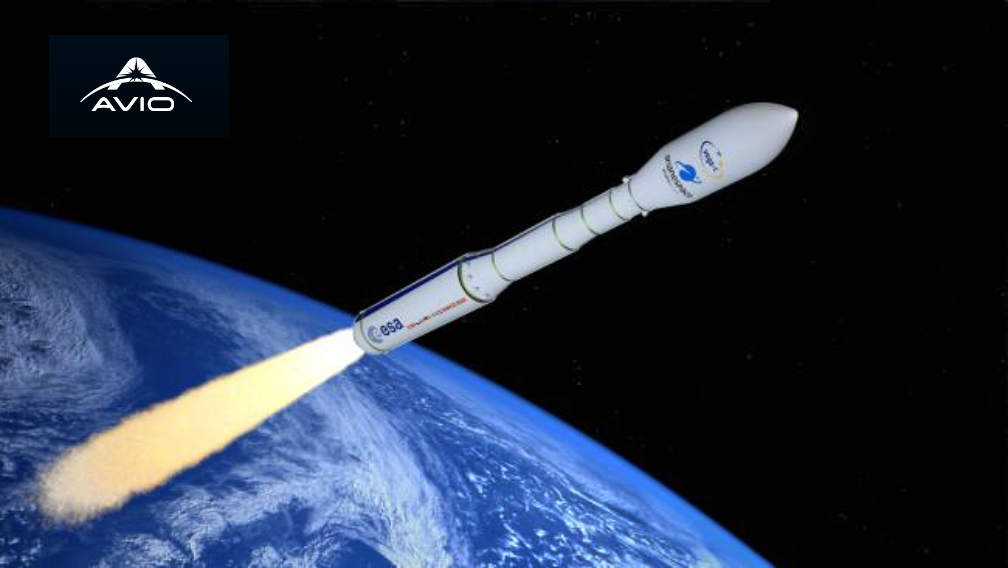
SENER Aeroespacial To Initiate Additional Development On The Nav Unit For AVIO’s Vega-C Launcher

February 24, 2021 by editorial

SENER Aeroespacial has signed a contract with AVIO for the C/D phases of the navigation unit for the VEGA-C launcher, VNE (VEGA-C Navigation Equipment), after successfully completing phases A (feasibility study) and B (preliminary design).

Phase C involves the development of the detailed design, and phase D is the qualification and delivery phase of the first flight model.

SENER Aeroespacial is the design authority for this unit, which is delivered to the customer as an integrated product. One of the main features of the unit is the reduction in the production cost by incorporating processes and materials from the world of defense. In addition, this contract paves the way for the mass production of navigation units for subsequent launches of VEGA-C and other space missions.

The navigation unit uses a six-axis compass (position and attitude of the launcher) to provide the rocket’s position to the Guidance, Navigation and Control (CNG) system, developed by AVIO, which is necessary to steer the rocket. NAVIGA is thus a critical component for the success of the mission.

NAVIGA combines an Inertial Measurement Unit (IMU) and a Global Navigation Satellite System (GNSS) receiver, and hybridizes the two readings to achieve a high-performance product – its software is Class A, the most critical in the space industry – but also low-cost compared to the inertial navigation units available on the market.

The three implementation aspects applied to the project to reduce the recurring cost of the unit, while maintaining the required performance, are: the use of sensor hybridization techniques to provide a robust navigation solution; the inclusion of radiation-tolerant parts from the automotive market (new in space); and the adoption of defense production processes to manufacture the unit.

The second key element, versatility, is achieved thanks to the modular and flexible design, which allows a complete and certified unit to be adapted, with minor modifications and testing, to other environments, such as short-duration space missions. The advantages of this versatility are significant in the current market, which is increasingly demanding new products in less time and with lower development costs.

Supplementing these two key elements is a third: NAVIGA is a fully European unit, which renders any ITAR restrictions irrelevant.

To develop this innovative product, SENER Aeroespacial invested its own funds for the qualification for using components and processes from the defense and automotive markets and will be installing new and specific equipment within its facilities to test the units.

The project is the result of the partnership between the Italian companies AVIO and CIVITANAVI Systems and the Spanish company Elecnor DEIMOS. The VNE/NAVIGA project is funded by European Space Agency (ESA).

In the words of SENER Aeroespacial Project Manager Silvia Díaz, “The development of this navigation unit puts us at the head of an emerging market in Europe, that of medium cost units with good performances and high reliability. We achieved this product by combining our 55-year experience in the traditional space market, with more than 270 devices and systems on board space missions without any faults, and our experience mass producing products for other markets such as defense and the telecommunications satellite commercial market, which involves lowering the costs of processes and components to adapt to the demands of a more competitive market.”

Filed Under: Featured, News

Two Smallsats Launched By Nanoracks Via The NG-15 Cygnus Mission

February 23, 2021 by editorial

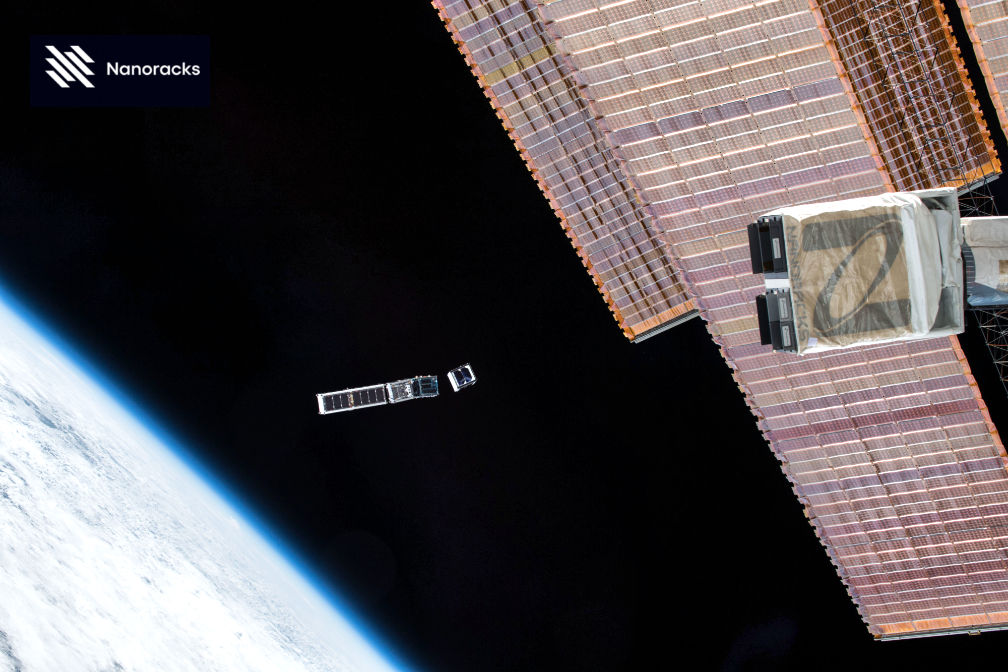
On February 22, the Northrop Grumman NG-15 Cygnus spacecraft berthed with the International Space Station (ISS), carrying two cubesats in the Nanoracks External Cygnus Deployer (E-NRCSD).

The Cygnus arrived at the ISS after launching from Wallops Flight Facility Pad 0A on February 22, 2021 at 17:36 UTC. The NG-15 Cygnus has been named in honor of Katherine Johnson, a NASA mathematician who had a vital role in early human space flight missions.

This launch is Nanoracks’ ninth mission providing opportunities for cubesat deployment from the Cygnus. The CubeSats onboard this launch, IT-SPINS and MySat-2 (DhabiSat), were built by students and researchers at Montana State University and Khalifa University in Abu Dhabi.

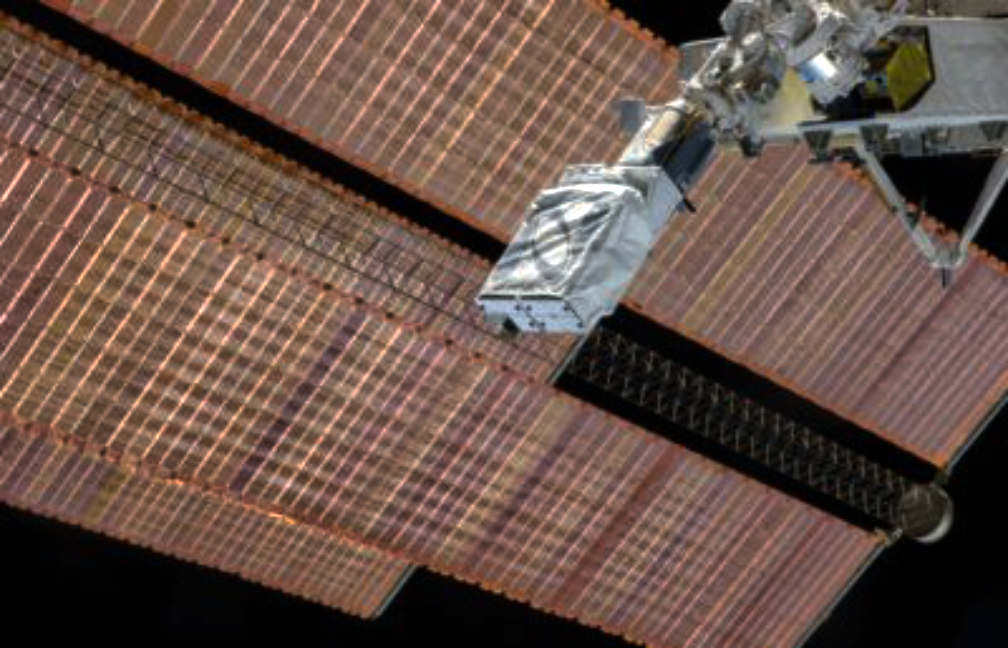
The Nanoracks cubesat deployer on ISS.

The Cygnus will remain at the ISS for several weeks to complete its primary science and technology goals. After the Cygnus departs from the ISS, it boosts to a higher altitude, where the E-NRCSD dispenses the cubesats into orbit.

The IT-SPINS cubesat was selected for launch by NASA’s CubeSat Launch Initiative (CSLI) as part of the Educational Launch of Nanosatellites-33 (ELaNa-33) mission complement, sponsored by the NASA Launch Services Program (LSP).

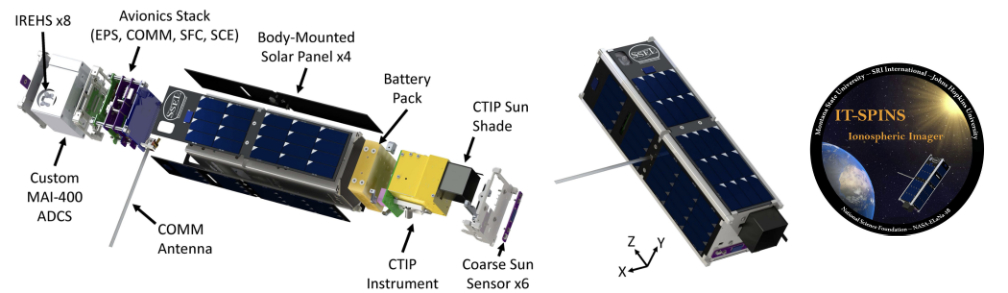
Annotated exploded view of IT-SPINS spacecraft (left) and fully integrated IT-SPINS spacecraft (right).

MySat-2 (DhabiSat) is the second cubesat built by Khalifa University to be launched by Nanoracks. MySat-1 was deployed from the NG-10 Cygnus spacecraft in February of 2019. These smallsats enable students to design, implement and test software modules for attitude determination and control systems.

Khalifa University’s MySat-2 (DhabiSat).

“It’s an amazing accomplishment to build and launch a satellite. It’s even more amazing that these CubeSat teams were able to do so in a time when working together has never been more difficult,” said Nanoracks Mission Manager, Jake Cornish. “COVID-19 has caused us to rethink how to perform even normal tasks, so these individuals have accomplished something very special. We are extremely proud to work with groups who continuously push the boundaries of what’s possible, and we can’t wait to see what they come up with next.”

Filed Under: Featured, News

Telesat Signs An MoU With Québec + Receives Millions Of C$ For Investment In The Lightspeed Constellation

February 18, 2021 by editorial

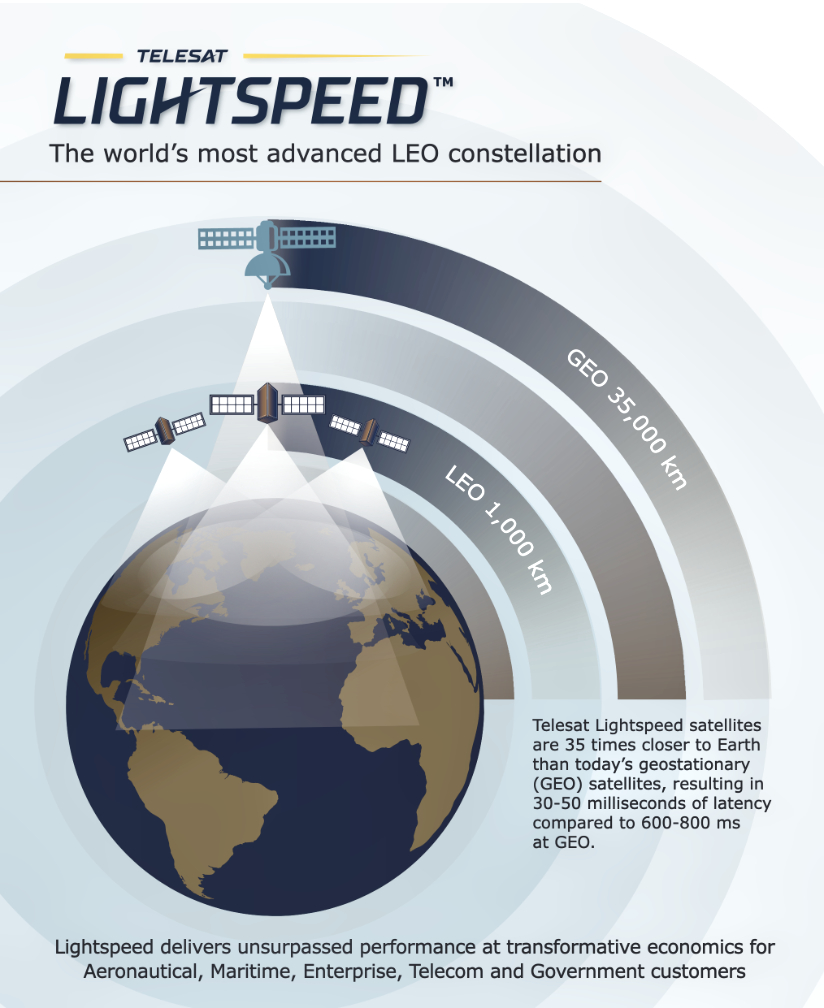
Telesat has entered into a Memorandum of Understanding (MOU) with the Government of Québec for an investment of C$400 million into Telesat Lightspeed, Telesat’s LE) satellite network.

Telesat will invest C$1.6 billion into Québec, both directly and through its supply chain, which will include a significant portion of Lightspeed manufacturing and operations.

The Lightspeed program will create 600, high-paying, STEM jobs, leverage Québec’s substantial aerospace expertise and infrastructure, and allow the province to harness the significant economic growth from the burgeoning New Space economy.

Under the terms of the MOU, the investment by the Government of Québec will consist of C$200 million in preferred equity as well as a C$200 million loan. It is expected that a final agreement will be completed in the coming months. This collaboration comes on the heels of Telesat’s selection of Thales Alenia Space as prime contractor for Lightspeed and its recently completed C$600 million partnership with the Government of Canada to affordably bridge Canada’s digital divide through Telesat Lightspeed.

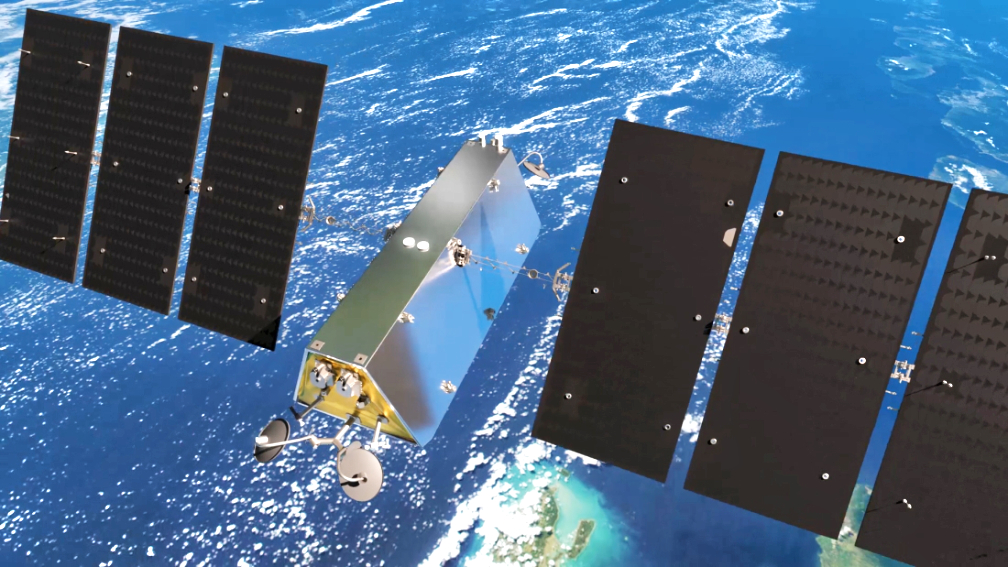
Artistic rendition of the Telesat Lightspeed constellation on-orbit. Image is courtesy of Thales Alenia Space.

As a result of this agreement and given Québec’s world-class expertise and competencies in the aerospace sector, the province will be a key partner for the manufacturing and operations of Lightspeed. Specifically, the province will be home to a large, Telesat campus that will house a broad range of Lightspeed technical operations, including the Network Operating Centre (NOC), a satellite control centre, the cybersecurity operations centre, the engineering lab and an advanced landing station that will provide secure, high-capacity communication links to the Lightspeed constellation. This new campus will host approximately 320 new, highly skilled, Telesat jobs, largely in STEM.

Artistic rendition of a Telesat Lightspeed satellite. Image is courtesy of Thales Alenia Space.

In light of their world-class expertise, Telesat has selected Canadian space technology company MDA to manufacture the cutting-edge phased array antennas to be incorporated into the Lightspeed satellites. In manufacturing these antennas, MDA will leverage 3D additive manufacturing and will incorporate advanced beam hopping technology that will allow the Lightspeed constellation to dynamically and flexibly focus high capacity broadband links into rural and remote communities and other demand hot spots around the world.

Telesat’s prime contractor, Thales Alenia Space, will establish the final manufacturing of the advanced Lightspeed satellites at an assembly, integration and testing facility in Québec and, in this regard, is in discussions with Québec-based partners. This state-of-the-art facility will leverage next-generation manufacturing capabilities to deliver, on average, one Lightspeed satellite per day.

Dan Goldberg

“Telesat welcomes and appreciates the strong support and participation of the Government of Québec as we embark on Lightspeed, the most ambitious and consequential program in our more than 50-year history,” said Dan Goldberg, Telesat’s President and CEO. “The vast aerospace expertise resident in Québec, coupled with the Government’s leadership and vision for the fast-growing New Space Economy, provides an overwhelmingly compelling rationale for Telesat to make substantial investments in the province, including the manufacture of the Lightspeed satellites and the establishment of our extensive technical operations. We deeply value the world-class talent and capabilities in Québec and we are excited to welcome that talent into the Telesat family.”

François Legault

François Legault, the Premier of Québec, said, “Today’s news is extraordinary, both for Québec’s aerospace sector and for Québec as a whole. The preservation of 650 jobs and the creation of a further 600 jobs at about $100,000 a year is an example of how Québec will bridge the wealth gap with neighbouring jurisdictions. I am in politics to achieve this goal. The pandemic will have an ongoing impact on aircraft construction, and this is the ideal time to accelerate the pace of satellite development, a new and promising field for the aerospace industry. Your government will continue to invest to create better-paid jobs in Québec, to build a more prosperous Québec, and ensure a prouder Québec.”

Pierre Fitzgibbon

Pierre Fitzgibbon, Québec’s Minister of Economy and Innovation, remarked,“The Telesat project will raise the international profile of Québec engineering and our space industry. It gives us a key position in the new, private-sector space race. This investment will boost our aerospace industry, which has suffered over the last year. Québec is already a leader in the field, but with today’s announcement, we show that we will do what it takes to remain a leader into the future.”

Mike Greenley

Mike Greenley, Chief Executive Officer, MDA, said, “We are very proud to be selected for this critical role on Telesat Lightspeed, which will enable us to expand our presence in Québec and create highly-skilled, high-paying jobs while engaging with our local supply chain on this ground-breaking program. With this key role in developing next-generation antenna technology, combined with our advanced manufacturing capabilities, we anticipate major growth in our Montreal-based Satellite Systems business. We would like to thank Telesat for its confidence in MDA, and the Government of Québec for its financial support.”

MDA will provide one of the critical technology subsystems on Telesat Lightspeed — with advanced antenna design and manufacturing capabilities at its modern facility in Ste-Anne-de-Bellevue, this job-creating project enjoys the support of the Government of Quebec through a financial contribution.

MDA will develop the Direct Radiating Array (DRA), a revolutionary phased array, electronically-steered multi-beam antenna that will provide unlimited coverage flexibility and agility through advanced beam-forming technology. This configuration will achieve any-beam, anytime, anywhere coverage over the entire visible Earth.

This new technology represents a major and key investment for the success of MDA’s Satellite Systems business, as it is expected that most LEO, Medium MEO and GEO satellite markets will migrate to these technologies in the future. MDA will deliver more than 1,000 units and the company is also in advanced discussions with Thales Alenia Space for the Lightspeed satellites’ final assembly and manufacturing in Québec.

The scope of MDA’s work on this project is expected to involve an investment of over C$200 million by MDA and create approximately 280 jobs over a period of five years, while sustaining MDA’s overall highly-experienced and specialized Quebec-based engineering workforce. With the development of next generation satellite technologies, MDA expects significant growth in its Montreal-based satellite systems business. To support this strong economic activity, Investissement Québec will provide a loan of C$50 million.

Filed Under: Featured, News

Norway Enlists Canada’s Space Flight Laboatory to Develop Demonstrator Microsatellite

February 17, 2021 by editorial

Norway’s Norwegian Space Agency (NOSA) has enlisted the expertise of Canada’s Space Flight Laboratory (SFL) to develop the NorSat Technology Demonstrator (TD) microsatellite. With a primary mission of testing out new technologies in space, NorSat-TD will validate payloads and concepts from Norway, the Netherlands, France, and Italy.

SFL, which developed the operational NorSat-1 and -2 microsatellites launched in 2017, as well as NorSat-3 expected to launch in Q2 2021, has been contracted to design and build the NorSat-TD spacecraft and perform integration and testing of all systems and payloads. NorSat-TD has completed its final design review and been slated for launch in 2022.

“The Norwegian Coastal Administration relies on NorSat-1 and -2 to accurately track large commercial vessels in its territorial waters and beyond,” said SFL Director, Dr. Robert E. Zee. “NorSat-TD will fly technology that is planned to augment the ship tracking capability of Norway with a miniaturized AIS-receiver and aims to expand the technology available for future missions, including micropropulsion, precise point positioning and laser-based communications.”

NorSat-1, -2 and -3 were built on SFL’s 15-kg NEMO microsatellite platform, measuring 20x20x40 cm. Due to the additional payloads planned for NorSat-TD, the demonstration satellite will be developed using SFL’s larger 30x30x40-cm DEFIANT microsatellite bus with a mass of 35 kg. 

“You can think of DEFIANT as a NEMO platform that doesn’t require a dispenser,” said Zee.

NorSat-TD represents impressive technological collaboration among European nations. Multiple advanced or experimental payloads will see their first applications in orbit aboard the microsatellite:

Fifth Generation AIS Receiver – An advanced version of the Automatic Identification System (AIS) receivers developed by Kongsberg Seatex of Trondheim, Norway, as primary instruments for the first three NorSats, this miniaturized device with CubeSat form factor will receive AIS signals broadcast by large commercial maritime vessels. AIS enables the locations and status of ships to be tracked and monitored. The new NorSat-TD receiver will also be used to test the Internet of Things in the Arctic, according to NOSA. 

Small Communication Active Terminal (SmallCAT) – Developed by TNO, the Netherlands Organization for Applied Scientific Research, this instrument is also intended to support the Norwegian Defence Research Establishment’s experiments with laser communications between the satellite their ground station, a potential gamechanger in the data volume that is possible from microsatellites in orbit.

VHF Data Exchange System (VDES) – From Space Norway, an advanced communication system that first flew on NorSat-2 has been improved to enable higher bandwidth, more reliable two-way communications among and between satellites, ships, and land. Working together, NorSat-2 and NorSat-TD will provide greater communication capacity for ships in Norwegian waters, according to NOSA.

Onboard Laser Reflector – A miniaturized laser reflector developed by the Italian INRI SCF research laboratory will be used to track NorSat-TD with ground-based lasers in Norway, France, and Italy.

Satellite Collision Avoidance – Space Star, a space-based GPS instrument developed by Fugro will be tested as a highly accurate means of determining a satellite’s position in orbit for improved situational awareness.

Iodine-Fueled Electric Propulsion – ThrustMe, a French startup, has developed a new thruster designed to change a satellite’s orbit, which will be tested on NorSat-TD. One potential future use of the thruster will be to move a spent satellite to a lower orbit, so it burns up in the Earth’s atmosphere rather than leaving behind space debris.

NorSat-TD will be the seventh satellite developed by SFL for Norway. SFL built and integrated the AISSat-1 nanosatellite launched in 2010 to determine if reception of AIS signals in orbit was feasible. AISSat-1 proved so robust that Norway soon commissioned it as an operational ship-tracking mission. Subsequently, additional AISSats were built and launched and a new line of higher capacity microsatellites, the NorSats, were developed.

“NOSA is glad to be working with SFL on this demanding project. The flexibility of SFL and their micro-satellite platforms have met the varied and demanding challenges of this multi-mission technology demonstrator. We feel that this mission is again pushing the envelope for what we are able accomplish with these fast-paced low footprint projects,” said NorSat-TD Project Manager, Tyler Jones.

SFL is a unique microspace provider that offers a complete suite of nano-, micro- and small satellites – including high-performance, low-cost CubeSats – that satisfy the needs of a broad range of mission types from 3 to 500 kilograms. Dating from 1998, SFL’s heritage of on-orbit successes includes 65 distinct missions related to Earth observation, atmospheric monitoring, ship tracking, communication, radio frequency (RF) geolocation, technology demonstration, space astronomy, solar physics, space plasma, and other scientific research.

In its 23-year history, SFL has developed CubeSats, nanosatellites, and microsatellites that have achieved more than 135 cumulative years of operation in orbit. These microspace missions have included SFL’s attitude control and, in some cases, formation-flying capabilities. Other core SFL-developed components include modular (scalable) power systems, onboard radios, flight computers, and control software.

Filed Under: Featured, News

Dragonfly Aerospace’s Imagers To Pixxel For EO Satellite Constellation

February 16, 2021 by editorial

Dragonfly Aerospace has signed a contract for the development and delivery of high resolution electro-optical imagers for Pixxel’s planned satellite constellation. The constellation will follow the upcoming launch of Pixxel’s first satellite ‘Anand’, which also happens to be India’s first private Earth imaging satellite.

The planned constellation of satellites will provide global coverage every 24 hours enabling organisations around the globe to detect, monitor and predict global phenomena in near real time.

Bryan Dean

“Dragonfly Aerospace aims to be the world leader in compact high-performance earth observation imaging solutions. Pixxel and Dragonfly have a shared vision about using the latest advances in satellite technology and computing to achieve daily imaging around the world and enable a greater understanding of the planet to the benefit of all”, Dragonfly Aerospace CEO Bryan Dean stated.

Awais Ahmed

“Pixxel aims to bring the benefits of space down to earth to make life here sustainably better and this partnership enables us to do that. The Dragonfly team are some of the best at what they do in the world and it’s an absolute delight to be able to work with them on cutting edge remote sensing technology,” Pixxel CEO Awais Ahmed regarding this partnership.

Dragonfly Aerospace creates compact, high-performance, imaging payloads and satellites that are designed for large imaging constellations that will provide persistent views of the Earth in a wide range of spectrums enabling unprecedented business intelligence and improving the lives of people around the world.

Pixxel aims to offer real-time, universally accessible, high-resolution satellite imagery for any location in the world. Its images are used for climate monitoring, crop yield prediction, urban planning, and disaster response, among other applications. Pixxel aims to launch a constellation of high resolution earth observation small satellites, which will provide real-time global coverage once fully deployed.

Filed Under: Featured, News

ANYWAVES Equipping Pixxel Smallsats With S-Band Antennas

February 15, 2021 by editorial

ANYWAVES has signed a contract with Pixxel, a NewSpace startup with operations in India.

One of the main objectives set by ANYWAVES in early 2020 was to make India a key market and establish long term collaboration with Indian NewSpace companies. Just one year after the first mission on the occasion of the Space Technology Conclave Thiruvananthapuram, the challenges have been met.

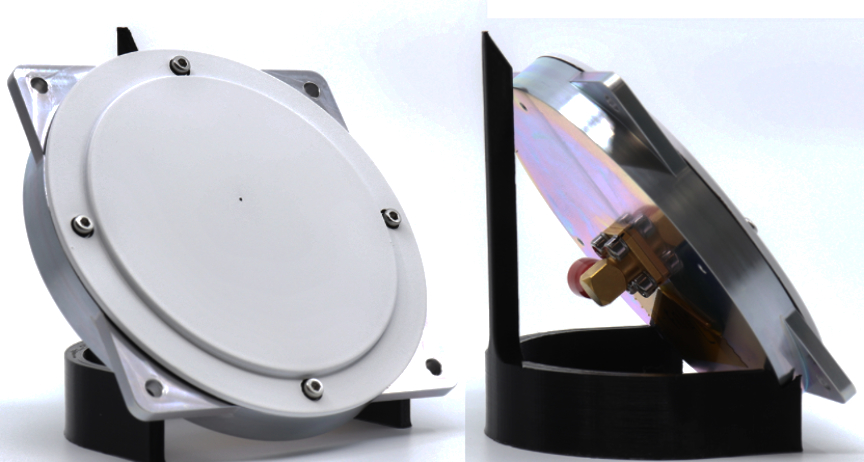
Anywave’s S-Band antenna.

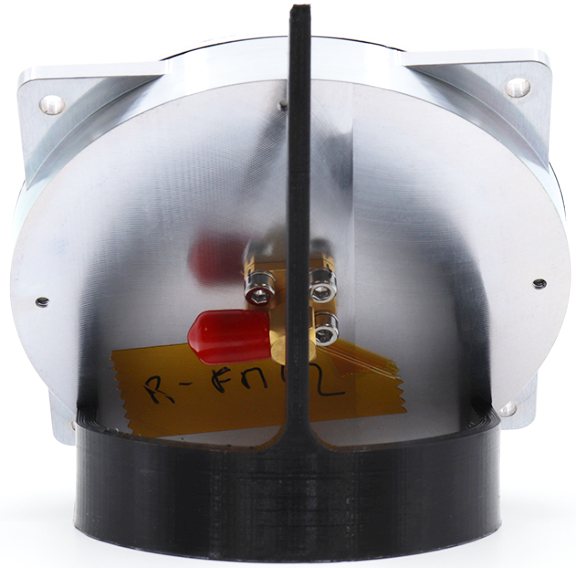
Last December, ANYWAVES received an order for two flight models of the company’s S-band TT&C (Tracking, Telemetry, and Control) antenna. The company will equip a smallsat planned to be put into orbit by Pixxel in late 2021. Optimized for platforms’ telemetry and telecommand, these antennas have space heritage and will be used to pilot the satellite, send instructions as well as ensure the platform’s proper functioning.

Anywave’s S-Band antenna.

Pixxel’s satellites used for Earth-imaging aim to provide global coverage every 24 hours, enabling organizations around the globe to detect, monitor and predict global phenomena in near real time.

A symbol of an historic cooperation initiated by the French and Indian space agencies, CNES and ISRO, the collaboration between ANYWAVES and Pixxel exemplifies how ambitious the New Space industry players are and this contract is a new, commercial success for ANYWAVES, paving the way to future developments in India. Being selected by Pixxel also allows the French manufacturer to get closer to the firm’s goal of becoming the leader of miniature antennas for satellite constellations.

Filed Under: Featured, News

Musk Vs. Bezos: The Battle Continues

February 15, 2021 by editorial

Article by Chris Forrester, Senior Contributor, Satnews Publishers

The planet’s two richest individuals, Elon Musk and Jeff Bezos, are involved in a bitter slanging match over their satellite broadband mega-constellations.

Elon Musk and Jeff Bezos and their two rival businesses, SpaceX and Project Kuiper, have lodged almost daily tit-for-tat filings with the Federal Communications Commission (FCC), with SpaceX saying that Amazon’s Kuiper is guilty of “stifling competition.”

On February 4, Amazon’s satellite internet project clarified its position in response to recent accusations from Elon Musk and SpaceX that Jeff Bezos’ company is attempting to stifle competition in the sector. Amazon argues – perhaps cheekily – that the FCC should consider Starlink as a “newly designed system” and include it in a broader regulatory processing round that was opened when SpaceX submitted a modification request last year.

In other words, SpaceX/Starlink should, perhaps, start from scratch. Amazon argued that while it supported the ability of operators to modify their systems, what Starlink was requesting was too significant.

SpaceX is already asking the FCC to reduce the heights of some of its Starlink satellites. Project Kuiper stated that if the FCC agrees to the request, then the new orbits will interfere with Kuiper’s plans.

The actual heights are crucial. Musk’s SpaceX request is to orbit 3,000 satellites at heights between 540 to 570 kms (and could wind up in orbits 30 km above or below their licensed orbits). However, Project Kuiper’s existing plan is to orbit its fleet at about 590 kms. Kuiper is arguing that at these close distances, there is a risk of collision and that Musk’s Starlink’s will interfere with Kuiper’s transmissions.

SpaceX brushed off these concerns in the company’s January 22 letter to the FCC from David Goldman (Director Of Satellite Policy at SpaceX) arguing that Project Kuiper had “cherry-picked” its data and was ignoring the modifications SpaceX is proposing in its request for permission. The letter detailed three telephone conversations that SpaceX officials had held with FCC staffers.

Elon Musk also Tweeted on January 26 saying, “It does not serve the public to hamstring Starlink today for an Amazon satellite system that is at best several years away from operation.”

Hours later, Amazon bounced back with its response — “The facts are simple. We designed the Kuiper System to avoid interference with Starlink, and now SpaceX wants to change the design of its system.”

Bezos’s team added, “Those changes not only create a more dangerous environment for collisions in space, but they also increase radio interference for customers. Despite what SpaceX posts on Twitter, it is SpaceX’s proposed changes that would hamstring competition among satellite systems. It is clearly in SpaceX’s interest to smother competition in the cradle if they can, but it is certainly not in the public’s interest.”

SpaceX insists that the modifications it is carrying out would not cause significant increased interference. SpaceX says that its competitors (which also include Viasat) “misrepresent the true results of the modification.”

SpaceX also threw in one major claim. “Amazon lacks standing because its system is not authorized to launch.” These is not quite correct in that Kuiper is authorized by the FCC (July 30, 2020), although the Commission requires that SpaceX deploys at least half of its planned fleet (some 1600 craft) by July of 2026.

The FCC, on July 30 last year, stated that the Kuiper system would advance the public interest… and increase the availability of high-speed broadband service to consumers, government and business.

SpaceX in its filing to the FCC stressed the upside benefits of today’s 100 Mb/s downlink and growing to 10 Gb/s (future) download speeds. The company reminded the FCC that it remains committed to launching about 120 satellites per month and that the constellation is the “lowest LEO system with autonomous collision avoidance.”

SpaceX also repeated a previous commitment that once Kuiper reached its Phase IV (>1800 satellites), it would not operate at more than 580 kms.

Just before the Christmas holiday season last yeaer, Amazon’s SVP of Devices and Services, David Limp, speaking at the Tech Crunch Space 2020 event, told delegates that Kuiper was “launch agnostic” and joked that if there was anyone out there with a spare rocket then to give him a call!

“One of the reasons we thought the time was right to do a constellation now is because of some of the dynamics happening in the launch industry. Every day, we see a new demonstration of reusability, every day we see new demonstrations of breakthroughs in better engines, whether that’s Raptor [which is SpaceX’s engine] or BE-4 [Jeff Bezos’ Blue Origin],” he added.

Mr. Limp explained that Kuiper’s own plans did not depend wholly on the Blue Origin-based rockets. He said that Blue Origin would provide some launch capacity, but there would be other suppliers. “When you have to put 3,200-plus things into space, you will need lots of launch capacity,” he said. “Our hope is that it’s not just one provider, that there will be multiple providers.”

The clock is ticking… there are no satellites as of this writing, and while Kuiper has talked about its consumer terminals being able to manage transmission of up to 400 Mb/s – and more down the line – they have yet to be tested in ‘real space’ LEO environments although they have been tested on transmissions from geostationary craft.

Kuiper said, “[Our] single aperture phased array antenna that measures 12 inches in diameter, making it three times smaller and proportionately lighter than legacy antenna designs. This order of magnitude reduction in size will reduce production costs by an equal measure, allowing Amazon to offer customers a terminal that is more affordable and easier to install.”

Kuiper talks about the unit’s ability to handle 4K television streaming material.

Then Jeff Bezos stepped aside from his day-to-day management at Amazon. How much time this will give him to work with his Kuiper – and Blue Origin teams – is yet to be seen.

Meanwhile, SpaceX is well on its way to global coverage. Some 1,100 craft on-orbit, and being added to at a rate of two launches per month, thus 120 extra craft. By mid-year, there could easily be 1,500 satellites on-orbit… and probably more.

At the start of February, it was learned that Starlink’s broadband-by-satellite service is now supplying capacity to more than 10,000 beta-users. The news emerged in a filing to the FCC. Moreover, SpaceX says that it has registered “hundreds of thousands” of interested users without a dollar being spent in advertising. SpaceX says that demand for its service is “strong and widespread.”

The FCC filing stated that Starlink’s performance levels were meeting and exceeding 100 Mb/s down and 20 Mb/s up, with 95 percent of the network managing round-trip latency at or below 31 milliseconds.

Starlink had also tested successfully voice services over the system and that voice connectivity would be available to users with charges “reasonably comparable to urban rates.” Emergency services – to 911 for the US – would also be available.

The SpaceX filing was in support of the company’s classification as an Eligible Telecommunicati0ons Carrier (ETC) and the Rural Digital Opportunities Fund. Starlink is looking for the FCC to grant permission by June 7. SpaceX has qualified for $885 million in Federal funding for a 10-year period and serving 35 US states.

SpaceX reminded the FCC that Starlink already has the authorizations necessary to offer consumer mass-market service. SpaceX told an Australian parliamentary committee that much of Australia will be covered by the Starlink fleet in “early 2021” and the Australian outlying islands by the end of 2022. “Certain more proximate islands within the external territories, notably the Ashmore, Cartier, and Coral Sea Islands, could be served by early 2022, when SpaceX has more fully populated its satellite constellation with ongoing launches and with the establishment of gateway earth stations at proximate mainland locations.”

Other countries have also licensed Starlink services, although it is worth remembering that the FCC has only licensed Starlink in the United States for an initial 1 million user terminals. Other jurisdictions have granted approval, including the UK, Greece, Canada, Germany, Australia and elsewhere, and with an application pending in India.

The fact that both Musk and Bezos can easily finance their rival businesses helps that the systems will launch and provide competition for consumers. However, it is by no means certain that Musk’s ‘first mover advantage’ will prove to be the winning formula. After all, Amazon has a global relationship with millions – and probably billions – of users. Then there’s OneWeb and the promised Telesat schemes just to throw further competition into the mix.

These highly competitive marketing and sales elements might turn out to be crucially important in certain countries (Telesat in Canada, OneWeb in India, for example).

Meanwhile, the two billionaires are ensuring us humble mortals remain extremely amused!

Chris Forrester

Senior Columnist Chris Forrester is a well-known broadcasting journalist and industry consultant. He reports on all aspects of broadcasting with special emphasis on content, the business of television and emerging applications. He founded Rapid TV News and has edited Interspace and its successor Inside Satellite TV since 1996.  He also files for Advanced-Television.com. In November of 1998, Chris was appointed an Associate (professor) of the prestigious Adham Center for Television Journalism, part of the American University in Cairo (AUC), in recognition of his extensive coverage of the Arab media market. Chris is a Senior Contributor for Satnews Publishers.

Filed Under: Featured, News

Launch Services Agreement Signed Between Firefly Aerospace + Exolaunch

February 10, 2021 by editorial

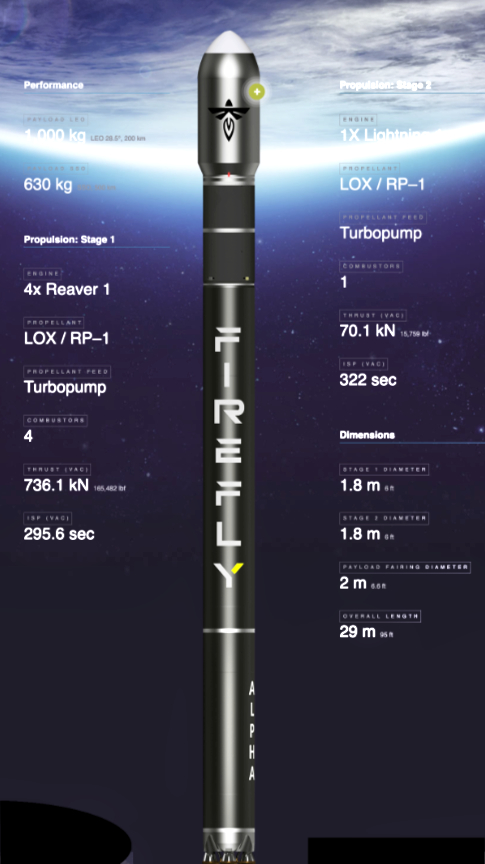
Firefly Aerospace, Inc. now has a Launch Services Agreement with Exolaunch GmbH to integrate and launch multi-satellite clusters aboard Firefly’s Alpha launch vehicle starting in 2022.

Just weeks away from the maiden launch of its Alpha rocket, Firefly plans to swiftly accelerate the frequency of Alpha flights through collaborative partnerships, including this strategic partnership with Exolaunch, a German smallsat integrator known for its substantial flight heritage, flight-proven deployment technologies and high reliability.

Exolaunch has previously launched 140 smallsats for its customers and continues to see increasing demand for its launch and integration services across the global launch and small satellite market.

Firefly will leverage Exolaunch’s payload integration expertise and flight-proven launch hardware: shock-free microsatellite separation systems CarboNIX and cubesat deployer EXOpod along with EXObox sequencers and EXOport multi-satellite adapters, to help ensure successful joint missions as part of the Alpha launch manifest through 2022 and beyond.

Photo of Exolaunch’s CarboNIX.

Firefly has completed acceptance testing of its Flight 1 Alpha vehicle, which has been delivered to Firefly’s Vandenberg Air Force Base Space Launch Complex 2 (SLC-2) launch site for integration. Following an upcoming static fire, Firefly will prepare for Alpha’s maiden launch.

“This agreement between Firefly and Exolaunch brings together two complementary partners focused on providing affordable space access to a growing number of government, commercial, scientific and academic missions,” said Dr. Tom Markusic, Firefly Aerospace CEO. “Exolaunch is one of the leading payload aggregators and integration providers and will work closely with our Firefly team in filling capacity aboard Alpha launch vehicles and meeting the unprecedented demand for space missions over the years ahead.”

“Exolaunch and Firefly Aerospace share a common goal of opening space to exciting new levels of exploration and economic opportunities, and we look forward to contributing to the success of the Alpha launch vehicle in its quest to affordably deliver spacecraft into orbit,” said Jeanne Medvedeva, VP of Launch Services, Exolaunch. “Discussions with a broad range of government and commercial missions are already well underway, as Exolaunch brings both dedicated and rideshare missions to upcoming launches aboard the Alpha rocket.”

Firefly’s Director of International Business Development, Alona Kolisnyk added, “This partnership between Exolaunch and Firefly Aerospace will drive a steady cadence of missions on Alpha, providing unique launch opportunities for Exolaunch and its clients. We look forward to many successful missions together.”

Filed Under: Featured, News

  • « Go to Previous Page
  • Go to page 1
  • Interim pages omitted …
  • Go to page 42
  • Go to page 43
  • Go to page 44
  • Go to page 45
  • Go to page 46
  • Interim pages omitted …
  • Go to page 57
  • Go to Next Page »

Primary Sidebar

WEEKLY NEWSLETTER

Archives

  • January 2026
  • December 2025
  • November 2025
  • October 2025
  • September 2025
  • August 2025
  • July 2025
  • June 2025
  • May 2025
  • April 2025
  • March 2025
  • February 2025
  • January 2025
  • December 2024
  • November 2024
  • October 2024
  • September 2024
  • August 2024
  • July 2024
  • June 2024
  • May 2024
  • April 2024
  • March 2024
  • February 2024
  • January 2024
  • December 2023
  • November 2023
  • October 2023
  • September 2023
  • August 2023
  • July 2023
  • June 2023
  • May 2023
  • April 2023
  • March 2023
  • February 2023
  • January 2023
  • December 2022
  • November 2022
  • October 2022
  • September 2022
  • August 2022
  • July 2022
  • June 2022
  • May 2022
  • April 2022
  • March 2022
  • February 2022
  • January 2022
  • December 2021
  • November 2021
  • October 2021
  • September 2021
  • August 2021
  • July 2021
  • June 2021
  • May 2021
  • April 2021
  • March 2021
  • February 2021
  • January 2021
  • December 2020
  • November 2020
  • October 2020
  • September 2020
  • August 2020
  • July 2020
  • June 2020
  • May 2020
  • April 2020
  • March 2020
  • February 2020
  • January 2020
  • December 2019
  • November 2019
  • October 2019

© 2019–2026 SatNews

Insert/edit link

Enter the destination URL

Or link to existing content

    No search term specified. Showing recent items. Search or use up and down arrow keys to select an item.
      x
      Sign Up Now!

      Enjoy a free weekly newsletter with recent headlines from the global SmallSat industry.

      Invalid email address
      We promise not to spam you. You can unsubscribe at any time.
      Thanks for subscribing! You will now receive weekly SmallSat News updates.
      We love our advertisers.
      And you will too!

      Please disable Ad Blocker to continue... We promise to keep it unobtrusive.
      We promise not to spam you. You can unsubscribe at any time.
      Invalid email address
      Thanks for subscribing! Please check your email for further instructions.