• Skip to main content
  • Skip to primary sidebar
  • Home
  • News
  • Featured
  • More News ⌄
    • SatNews
    • SatMagazine
    • MilSatMagazine
  • Events ⌄
    • MilSat Symposium
    • SmallSat Symposium
    • Satellite Innovation
  • Contacts
  • SUBSCRIPTION

SmallSat News

You are here: Home / Archives for Featured

Featured

Smallsat Utility Project for Militaries Contracted to Kleos Space

May 19, 2020 by editorial

Kleos Space (ASX: KSS, Frankfurt: KS1) has been awarded a contract to prepare Kleos data to be accessed by the Micro-Satellite Military Utility (MSMU Project) Project Arrangement (PA), which is an agreement under the Responsive Space Capabilities Memorandum of Understanding involving the Departments and Ministries of Defense of Australia, Canada, Germany, Italy, Netherlands, New Zealand, Norway, United Kingdom and United States.

The MSMU Project aims to develop a blueprint for a Multinational Heterogeneous Space Enterprise (ISR Enterprise), to provide military users with reliable access to a broad spectrum of information in an opportunistic environment. The MSMU Project is building the architecture and infrastructure to enable machine intelligence, including automation, human-machine teaming, and ultimately, artificial intelligence; these initiatives will define how the ISR Enterprise executes operations.

The program is coordinated by the Utah State University Space Dynamics Laboratory (SDL) in collaboration with the US Air Force Research Laboratory (AFRL). Kleos’ Scouting Mission satellites that are in Chennai, India, awaiting launch on Indian Space Research Organisation (ISRO) PSLV C49, will detect and geolocate maritime radio frequency transmissions to provide global activity-based intelligence, enhancing the intelligence, surveillance and reconnaissance (ISR) capabilities of governments and commercial entities when Automatic Identification System (AIS) is defeated, imagery unclear or targets out of patrol range.

Kleos’ satellites will be in a 37-degree inclination.


Andy Bowyer

Andy Bowyer, the company’s CEO, commented  that his opportunity delivered by the team; Peter Round and Karyn Hayes-Ryan, is a great achievement and validation for the company. The firm is seeing increasing demand for Kleos’ global geolocation intelligence data, which will enhance the ISR capabilities of governments and commercial entities.


Karyn
Hayes-Ryan

Karyn Hayes-Ryan, Director noted that the company’s satellites and data will enhance defense capabilities when fused with other data sets in the Government environment, as well as providing timely monitoring of illegal fishing, oil embargoes and other illicit action that both damages the environment and hurts economies.

Filed Under: Featured, News

Helical L-Band Antenna Created by Roccor for Space Demo of Link 16 Networks

May 19, 2020 by editorial


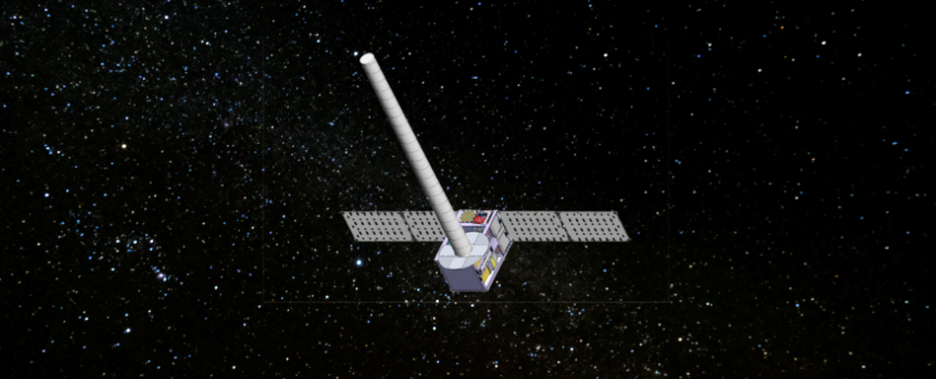
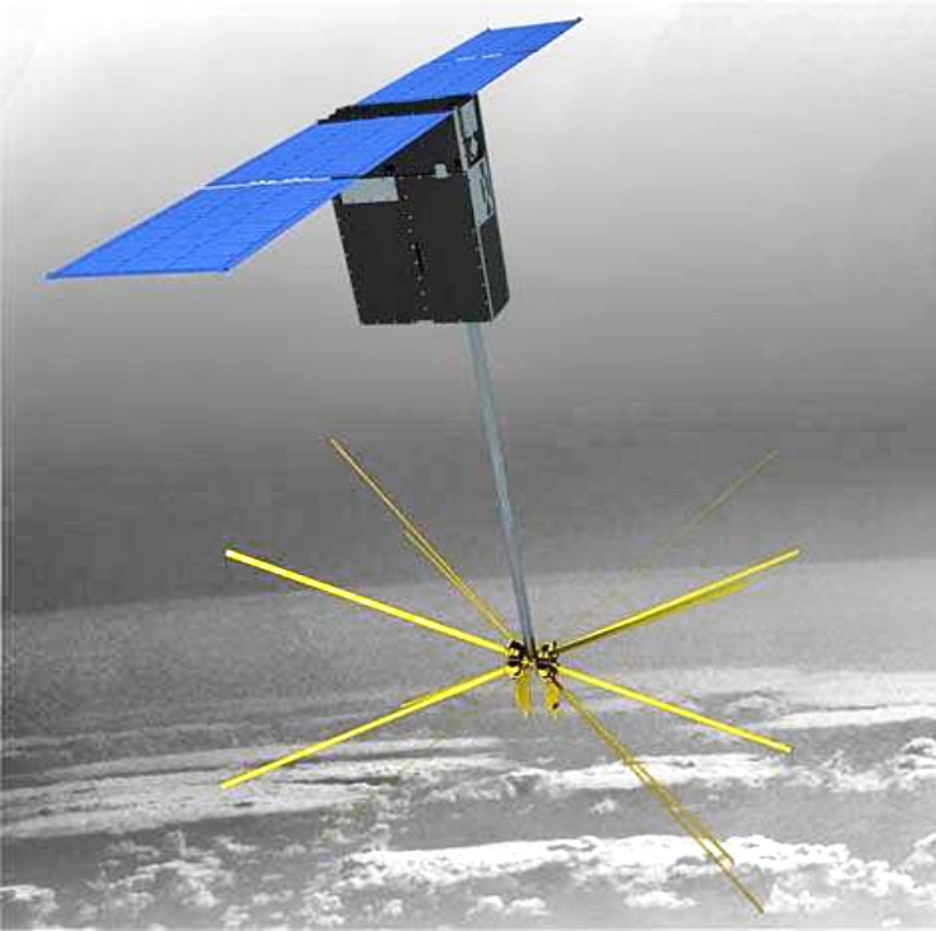
Roccor created a deployable L-band antenna that makes possible the reception and transmission of Link 16 signals via spacecraft.
Image is courtesy of Blue Canyon Technologies.


Roccor has created a deployable L-band antenna that makes possible the reception and transmission of Link 16 signals via spacecraft.

The project is in partnership with Viasat, Inc. (NASDAQ: VSAT) and the Air Force Research Laboratory Space Vehicles Directorate and is part of the world’s first-ever, Link 16-capable, LEO spacecraft demonstration mission called XVI, which will launch later this year.

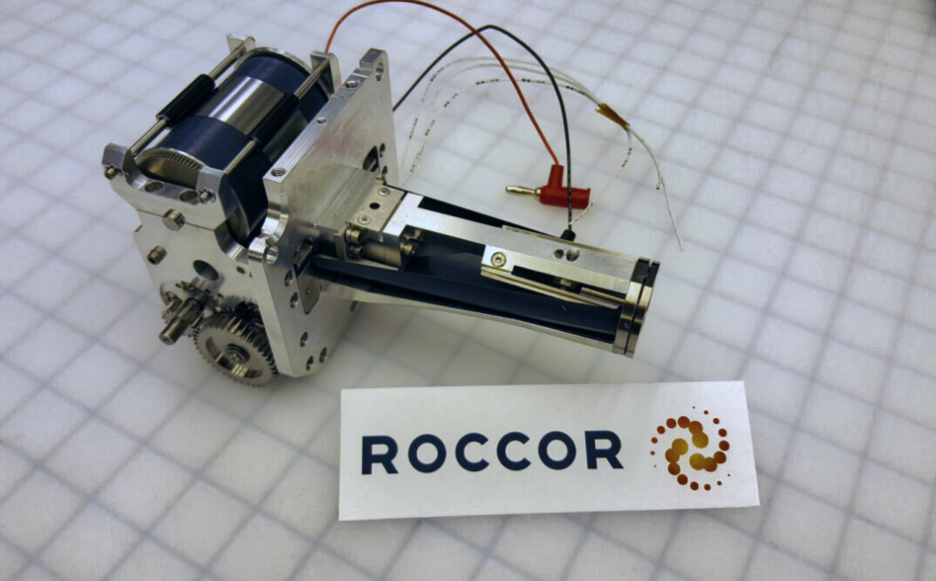
Roccor’s helical, two-meter-long deployable RF aperture, will be extended and supported on-orbit by Roccor’s slit-tube composite ROC™ boom, a product the company has successfully demonstrated in space on three other antenna systems for top-tier military customers.


A Roccor deployable boom.

According to Davis, the widely proliferated Link 16 tactical communication network is the preferred choice of U.S. Department of Defense customers and a number of NATO allies for communication between ships, aircraft, maritime vessels, and troops operating at the tactical edge.

Bruce Davis, Roccor’s Director of Space Antenna and De-orbit Products, stated this will significantly broaden the Link 16 tactical communications network capabilities. Viasat came to the company with a hard problem and a tight timeframe. They needed robust broadband capabilities – ‘big ears’ – to enable communications across a range of frequencies and they wanted to demonstrate it on a small satellite platform that is easily scalable to constellation-class missions. The Roccor solution extends the range of Link 16 networks, substantially enhancing situational awareness and mission capabilities for U.S. military personnel operating across the global battlespace.

Mark Lake, Roccor’s CTO, noted that the Link 16 antenna development program is a success story the company shares with the XVI mission customer, Viasat, and the firm’s technology development sponsor, AFRL. Roccor’s satellite antenna portfolio has grown from years of investment in simple, low-cost deployment mechanism technologies – like the ROC™ boom system used to deploy the Link 16 antenna – that are revolutionizing deployment systems for constellation missions. The upcoming XVI antenna deployment comes on the heels of decades of research and development and millions of dollars of investment into high-strain composite deployment systems starting in the early 2000s at AFRL and reduced to flight-certified products at Roccor over the past five years.

According to Lake, Roccor won an additional $3 million contract through Space and Missile Systems Center and AFRL space pitch day last fall to evolve the current Link 16 demonstration mission antenna into a production-ready design capable of serving the needs of upcoming constellation providers starting in 2021.

Late last year, Ken Peterman, President, Government Systems, Viasat, said that Roccor’s antenna will be vital to the success of the XVI program. This Link-16 capable Low Earth Orbit spacecraft will address the Department of Defense’s urgent need for a fast-to-market, cost-effective, space-based Link 16 solution that will help our forces maintain the technological edge needed across today’s battlespace.


Harris Corporation launched their first smallsat – HSAT1 – with Roccor booms onboard.


Filed Under: Featured, News

NewSpace Systems to Supply Product for the Kinéis Smallsat IoT Constellation

May 11, 2020 by editorial


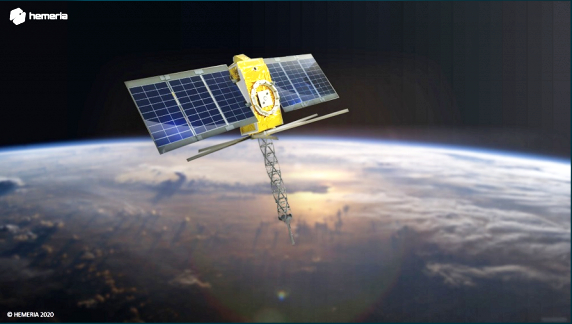
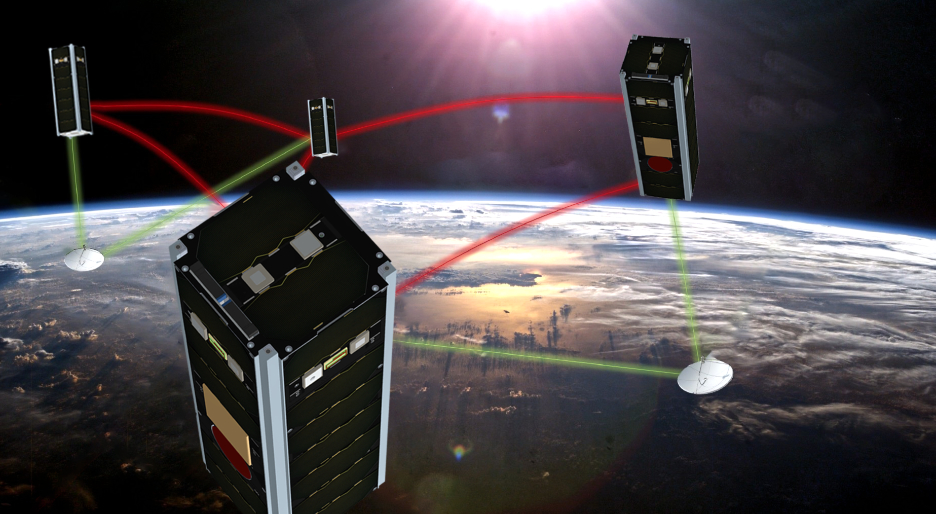
An artistic rendition of a HEMERIA constellation smallsat.
Image is courtesy of Kinéis.

NewSpace Systems (NSS), the manufacturer of “lean”, high-quality space components and sub-systems, has been down-selected by the Hemeria team to provide several of the ADCS products for the Kinéis constellation.

This constellation of smallsats will be dedicated to the Internet of Things (IoT).

The South African company design and manufacture a range of components and sub-systems from both its facilities in South Africa and the United Kingdom. Particularly strong in the area of Attitude Control Systems, NewSpace predominantly focuses on the smallsat market.

NSS CEO James Barrington-Brown said the company is excited to announce that with the successful completion of the EQSR last month, the NSS team is now working closely with the Hemeria team on the qualification phase for this program.


The NewSpace Systems’ Dark Room, which contains an artificial sun for the testing of their Fine Sun Sensors forms part of the NewSpace ISO-7 certified (Class 10,000) Clean Room.
Photo is courtesy of NewSpace Systems.


Filed Under: Featured, News

VOX Space Missions to Now Occur from Andersen AFB in Guam

May 8, 2020 by editorial

VOX Space, the Virgin Orbit subsidiary, has signed a new agreement with the Department of the Air Force, allowing the company’s LauncherOne system to conduct missions to space from Andersen Air Force Base in Guam.

VOX Space President Mandy Vaughn and U.S. Air Force 36thWing Commander Brig. Gen. Gentry Boswell, signed the Commercial Space Operations Support Agreement (COSOSA) Annex in early April, setting the stage for the STP-27VP mission, VOX Space’s first launch from Andersen Air Force Base.

Virgin Orbit and VOX Space first expressed interest in launching from the Pacific island of Guam in mid-2019. Due to Guam’s low latitude and clear launch trajectories in almost all directions, the company’s uniquely mobile LauncherOne system can effectively serve all orbital inclinations, such as delivering up to 450 kg to a 500 km equatorial orbit. 

The U.S. Department of Defense (DoD) Space Test Program (STP) procured the STP-27VP launch with VOX Space under the Rapid Agile Launch Initiative (RALI), leveraging the Defense Innovation Unit’s (DIU) Other Transaction Agreement. One of the first missions to fly on LauncherOne, the STP-27VP manifest consists of several CubeSats from various government agencies performing experiments and technology demonstrations for the DoD. 

As the system is not tied to a traditional ground-based launch site, LauncherOne will leverage key locations around the world including Guam to provide responsive and affordable flights to space for a broad variety of customers. Even now, VOX Space and Virgin Orbit are working closely with multiple allied governments and international organizations interested in establishing launch capabilities closer to home. 

After successfully demonstrating all major vehicle assemblies and completing an extensive flight test program, the Virgin Orbit team is in the midst of final preparations for an orbital launch demonstration expected soon. 

Ms. Vaughn said the company is grateful to Brig. Gen. Deanna Burt and her team at HQ USSF/S3, as well as Wing Commander Brig. Gen. Boswell, Vice Commander Col. Matthew Nicholson, and all of the excellent airmen and women of the 36thWing and Pacific Air Forces for their support,” said VOX Space President Mandy Vaughn.  “Lt. Gen. John Thompson and his team at the Space and Missile Systems Center have also provided visionary leadership throughout this process. We’re very excited to demonstrate the flexibility and mobility that only LauncherOne can offer.” 

Filed Under: Featured, News

Two Smallsats for MIT to be Built by NanoAvionics

May 7, 2020 by editorial


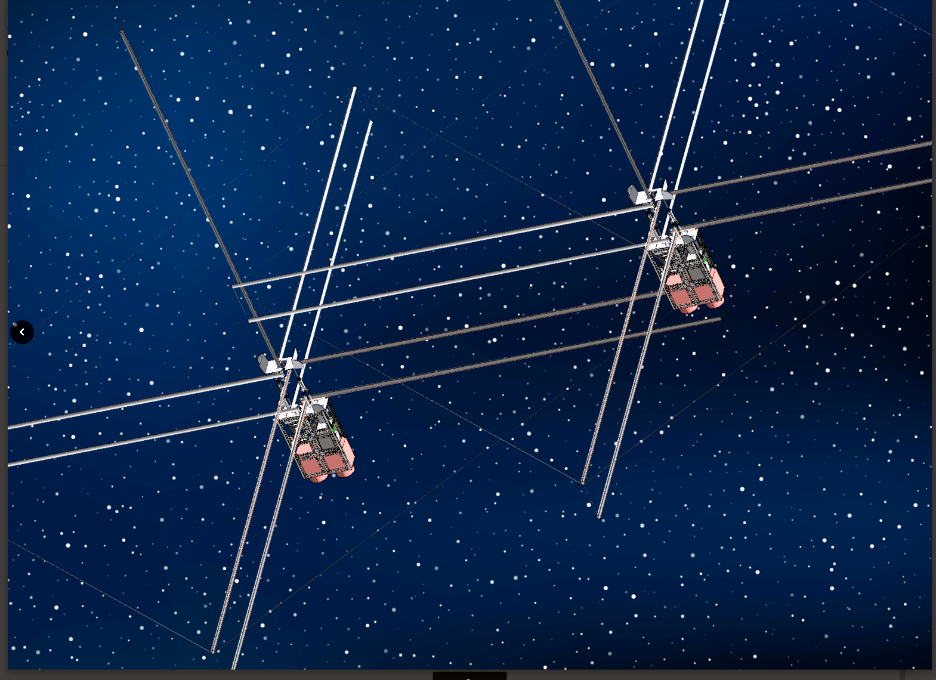
Artistic rendition of the AERO and VISTA smallsats.

NanoAvionics has received a contract to build two nanosatellites for the Massachusetts Institute of Technology (MIT) AERO-VISTA mission team at the recently opened NanoAvionics manufacturing facility in Columbia, Illinois, USA.

Funded by NASA’s H-TIDeS (Heliophysics Technology and Instrument Development for Science program), the mission is led by MIT and includes several partners: MIT Haystack Observatory, MIT Lincoln Laboratory, Merrimack College, Dartmouth College, and Morehead State University. Morehead State is responsible for bus contracting and ground operations services.

The two identical spacecraft: AERO (Auroral Emissions Radio Observer) and VISTA (Vector Interferometry Space Technology with AERO) will be based on NanoAvionics’ standardized pre-integrated and pre-qualified 6U nanosatellite bus M6P. Both will house a novel electromagnetic vector sensor antenna developed by MIT’s Lincoln Laboratory.

The aim of this first in-space demonstration is to study from an LEO unexplained features about the nature and sources of radio emission from the Earth’s aurora. With a targeted launch in 2022, the AERO-VISTA mission is expected to last three months.

To accomplish the AERO-VISTA mission, the vector sensor onboard the two smallsats will measure amplitude and phase of radio emission in the Earth’s aurora zone – the geographic area above the Arctic Circle where the Northern Lights appear. Using a sun-synchronous polar orbit will allow sensing of radiation not visible from Earth.

In addition to their respective mission, coordinated observations by the pair will demonstrate interferometry, merging or superimposing waves to create an interference pattern from which information about the source can be extracted. Interference measures how two or more waves interact, akin to throwing stones into a calm pool. If successful and validated in flight, the expected result will produce higher-resolution data providing deeper insight into phenomena investigated by space-based radio telescopes.

According to Dr. Philip Erickson, principal investigator (PI) of AERO, the aim of the NASA-funded mission is to greatly improve knowledge of Earth’s aurora by studying its fascinating radio emissions from orbit. This is an ambitious task and takes a talented set of dedicated professionals to solve the many technical and science challenges of small satellite platforms. The resulting understanding of the near-Earth space environment benefits all who seek to learn about the natural world.

Dr. Frank Lind, VISTA PI, stated that, ultimately space science missions are about people exploring our world. It takes a great team of people to make that happen. NanoAvionics is now a key part of the team and all are looking forward to designing and building these satellites with them.

Dr. Benjamin K. Malphrus, professor of Space Science at Morehead State University and co-PI on the mission , added that the room for discovery in this area is wide open and there are many aspects of the aurora that are not well understood. The vector sensor antenna is unlike anything that has previously flown. It has the potential to produce significant science returns. He continued that after a long and competitive search process, the team selected NanoAvionics to provide the two satellite buses. NanoAvionics is an innovative company with a highly capable bus and was an excellent fit for this potentially significant science mission.

F. Brent Abbott, CEO of NanoAvionics US, stated that being part of this first-of-its-kind MIT research mission and working with such an august team is very exciting and the selection of NanoAvionics as the mission integrator shows the confidence in the company’s technology and strong performance of the firm’s nanosatellite buses.


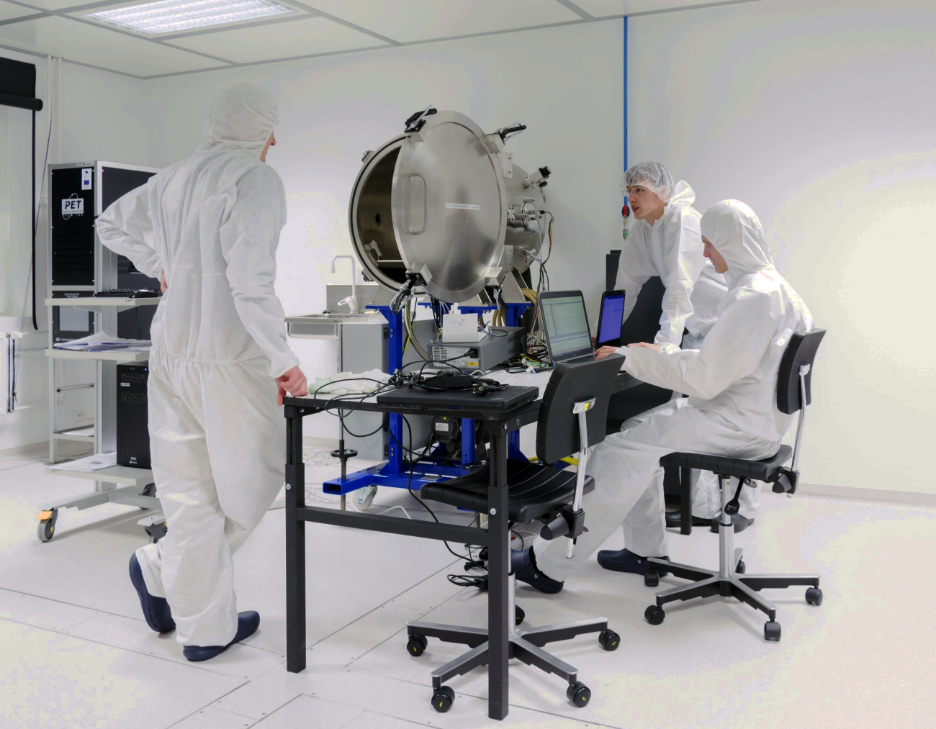
NanoAvionics thermal vacuum testing of the company’s smallsats.


Filed Under: Featured, News

Bryce Infographic Presents “Are Smallsat Launch Delays Inevitable?”

April 24, 2020 by editorial

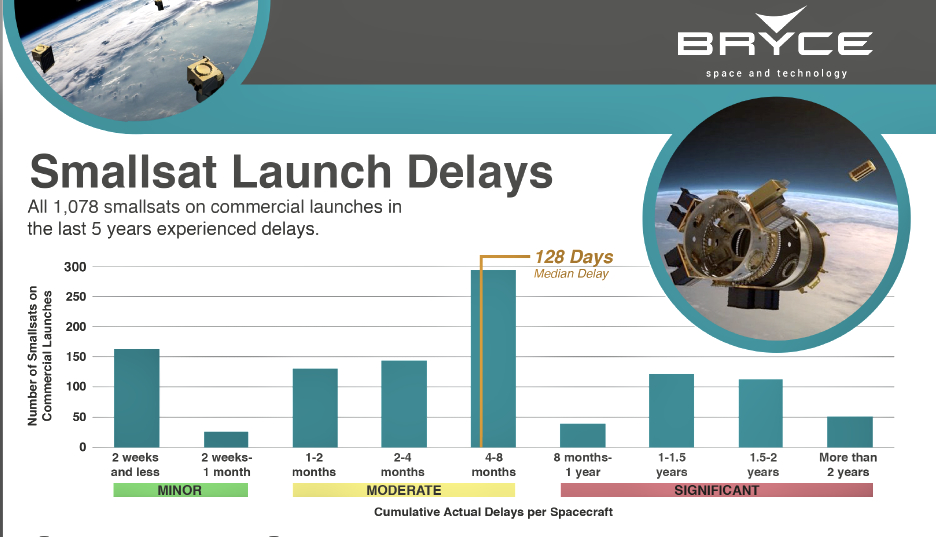
A new, independent study found that all 1,078 smallsats on commercial launches in the last five years experienced delays, with a median delay of 128 days.

What caused these delays? Bryce found that 40% of all smallsat delay days were attributed to delays in the primary payload and 34% were launch vehicle-related. Less than 1% of all smallsat delay days were caused by weather.

Learn more about mitigating smallsat launch delays in Bryce’s latest report, commissioned by Spaceflight, Inc., by downloading the company’s infographic at this direct link…

Bryce has also been selected as one of five companies to support NASA’s efforts to enable a LEO economy. Bryce will develop an integrated action plan to address barriers to the growth of the LEO economy, while other selected companies will seek to raise the technological readiness level of their products and move them to market.


Filed Under: Featured, News

BlackSky Offering Remote Access to Global Monitoring and Satellite Imaging Services

April 23, 2020 by editorial

Geospatial intelligence provider BlackSky is now offering remote access to the company’s global monitoring services and satellite imaging.

The company said its telework tools are cyber secure and allow analysts to develop intelligence reports and share unclassified information. Users of the BlackSky service draw intelligence from a combination of remote sensing satellite images, environmental sensors, asset tracking sensors, IoT systems, local foreign news, social media, industry publications and financial reports. The information is analyzed with machine learning and artificial intelligence techniques.

BlackSky’s telework package, called Spectra On-Demand Secure Bundle, was designed for intelligence analysts who handle unclassified but still sensitive information and can be accessed online from any computer.

BlackSky CEO, Brian O’Toole, noted that, given the coronavirus pandemic, intelligence analysts, financial analysts and researchers are seeking solutions that allow teams to continue critical security and intelligence projects while working remotely.

Scott Herman, BlackSky’s CTO, stated that a significant portion of our workforce works from home. We’ve been longtime adopters of a lot of these collaborative tools. Many of the company’s customers across U.S. national security and intelligence agencies are used to working in secure facilities. After the pandemic hit, suddenly they found themselves having to telework and realized they didn’t have remote access to data or tools needed to do their jobs, and they had security concerns, he said, adding that the company is providing access to the firm’s satellites for tasking as well as providing access to other satellites for tasking and archiving data plus a wide range of sensors used for global monitoring.The services also include training on the methodology involved in capturing data. Analysts still have to go to secure facilities to work with classified information but much of their unclassified work can be done from home.

BlackSky has four satellites in operation and plans to launch eight more satellites later this year.


Filed Under: Featured, News

Millennium Space Systems Completes Work on U.S. Space Force’s TETRA-1 Smallsat

April 22, 2020 by editorial

Less than 15 months after contract award, Millennium Space Systems has designed, manufactured, assembled and integrated the U.S. Space Force TETRA-1 satellite. The work was completed 60 percent faster than previous missions, improving the U.S. Space Force’s ability to advance the TETRA-1 technologies more quickly.

TETRA-1 is a microsatellite created for various prototype missions in and around geosynchronous earth orbit. TETRA-1 was the first prototype award under the U.S. Space Force’s Space and Missile Systems Center’s Space Enterprise Consortium Other Transaction Authority (OTA) charter.


Photo of the U.S. Space Force TETRA-1 satellite during the build process. Image is courtesy of Millennium Space Systems.

Most of the TETRA-1 components were completed by leveraging Millennium’s in-house capabilities, demonstrating that organically developed capabilities are a key enabler for executing programs on a tight schedule. After system integration, the satellite successfully completed its environmental and full functional tests.

TETRA-1 is based on Millennium’s proven ALTAIR-class smallsat product line. It is the first of Millennium’s ALTAIR satellites to qualify for operations in the geosynchronous orbit space environment, 22,236 miles (35,786 kilometers) from the Earth’s surface. TETRA-1 is manifested on a SpaceX Falcon Heavy rocket currently scheduled for launch in late 2020.

Col. Tim Sejba, Director, Innovation and Prototyping, Development Corps, Space and Missile Systems Center, Detachment 1, at Kirtland Air Force Base, New Mexico, said that one of the primary goals is to be more agile in the development and deployment of innovative space assets. By leveraging OTA contracts with programs such as TETRA-1, the organization is expediting the execution of new space development missions. The partnership developed with Millennium Space Systems allows for the creation and fielding of a dynamic pathfinder capability to meet the future space warfighter’s needs.

Mark Cherry, VP and GM, Boeing Phantom Works, stated that the pace set on TETRA-1 from contract award through readiness to launch represents what Boeing does best for national security customers. The lean Millennium team was up to the task, building and delivering a fully tested and verified satellite in record time.

Millennium Space Systems is a Boeing [NYSE: BA] subsidiary, headquartered in El Segundo, California. Founded in November 2001, Millennium provides credible alternatives for relevant and affordable solutions to today’s space industry challenges. The company designs flight systems and develops AS 9100-certified mission and system solutions for the Intelligence Community, Department of Defense, NASA and civil space customers. With Millennium’s ALTAIR™ and AQUILA™ products, Boeing is now positioned to offer customers the full range of tailored space capabilities and missions today.

More Information about Millennium Space Systems: .


Filed Under: Featured, News

Rocket Lab Successfully Completes an Electron Launch Vehicle Mid-Air Recovery Test

April 9, 2020 by editorial

Rocket Lab has successfully completed a mid-air recovery test – a maneuver that involves snagging an Electron test stage from the sky with a helicopter.

This successful test is a major step forward in Rocket Lab’s plans to reuse the first stage of their Electron launch vehicle for multiple missions. The test occurred in early March, before ‘Safer at Home’ orders were issued and before New Zealand entered Alert Level 4 in response to the COVID-19 situation.

To watch this test, please access this direct link to the YouTube video…


An Electron rocket liftoff. Photo is courtesy of RocketLab.

The test was conducted by dropping an Electron first stage test article from a helicopter over open ocean in New Zealand. A parachute was then deployed from the stage, before a second helicopter closed in on the descending stage and captured it mid-air at around 5,000 ft, using a specially designed grappling hook to snag the parachute’s drogue line. After capturing the stage on the first attempt, the helicopter safely carried the suspended stage back to land.

The successful test is the latest in a series of milestones for Rocket Lab as the company works towards a reusable first stage. On the company’s two most recent missions, launched in December 2019 and January 2020, Rocket Lab successfully completed guided the re-entries of Electron’s first stage.

Both stages on those missions carried new hardware and systems to enable recovery testing, including guidance and navigation hardware, S-band telemetry and onboard flight computer systems, to gather data during the stage’s atmospheric re-entry. One stage was also equipped with a reaction control system that oriented the first stage 180-degrees for its descent, keeping it dynamically stable for the re-entry. The stage slowed from more than 7,000 km per hour to less than 900 km by the time it reached sea-level, maintaining the correct angle of attack for the full descent.

The next phase of recovery testing will see Rocket Lab attempt to recover a full Electron first stage after launch from the ocean downrange of Launch Complex 1 and have it shipped back to Rocket Lab’s Production Complex for refurbishment. The stage will not be captured mid-air by helicopter for this test, but will be equipped with a parachute to slow its descent before a soft landing in the ocean, where it will be collected by a ship. This mission is currently planned for late-2020.

Rocket Lab Founder and Chief Executive, Peter Beck, said the successful mid-air recovery test is a major step towards increasing launch frequency by eliminating the need to build a new first stage for every mission. He congratulated the recovery team at Rocket Lab on a flawless, mid-air recovery test. Electron has already unlocked access to space for small satellites, but every step closer to reusability is a step closer to even more frequent launch opportunities for the firm’s customers. Rocket Lab is looking forward to pushing the technology even further this year and to return a flown stage back to the factory.


Filed Under: Featured, News

Made in Space Assisting in the Fight Against COVID-19 with Additive Manufactured Face Shields

April 9, 2020 by editorial

Made In Space (MIS) is helping in the fight against COVID-19 by providing frontline healthcare workers with much-needed supplies and equipment.

MIS facilities in Jacksonville, Florida, and Moffett Field, California, are using their additive manufacturing resources to provide hundreds of 3D printed face shields to local-area hospitals to augment the shortage of critical personal protective equipment (PPE) supplies.


Made in Space face shield.

The design includes a 3D printed frame with an adjustable headband that allows a clear plastic face shield to be easily snapped onto the frame. More than 200 masks have been produced over the last five days and are being distributed to local-area hospitals in Jacksonville, Florida, and Mountain View, California.

The worldwide shortage of PPE such as face shields, medical masks, and gowns increases the risk of exposure for healthcare personnel who are ill-equipped to care for COVID-19 patients. Hospitals and frontline workers are frantically implementing crisis capacity strategies to manage the inadequate supply of PPE and medical equipment.

MIS is engaging its engineering, manufacturing and design expertise to assess additional solutions to help in the fight. MIS engineers worked with local-area doctors in Jacksonville to quickly develop a rapid response ventilator adapter to enable a single ventilator to safely support multiple patients in extreme situations.

MIS Chief Engineer Michael Snyder said that in times of crisis, it is important for everyone to come together and the firm has  obligation to support those on the front lines. The Made in Space team is using every available 3D printing resource the company has to produce face shields to support local healthcare personnel.

Made in Space develops state-of-the-art space manufacturing technology to support exploration, national security, and sustainable space settlement. The firm pioneers sustainable space infrastructure to support customer missions, promote national security and drive exploration objectives through advanced space manufacturing.


Filed Under: Featured, News

  • « Go to Previous Page
  • Page 1
  • Interim pages omitted …
  • Page 55
  • Page 56
  • Page 57
  • Page 58
  • Page 59
  • Page 60
  • Go to Next Page »

Primary Sidebar

WEEKLY NEWSLETTER

Archives

  • June 2026
  • May 2026
  • April 2026
  • March 2026
  • February 2026
  • January 2026
  • December 2025
  • November 2025
  • October 2025
  • September 2025
  • August 2025
  • July 2025
  • June 2025
  • May 2025
  • April 2025
  • March 2025
  • February 2025
  • January 2025
  • December 2024
  • November 2024
  • October 2024
  • September 2024
  • August 2024
  • July 2024
  • June 2024
  • May 2024
  • April 2024
  • March 2024
  • February 2024
  • January 2024
  • December 2023
  • November 2023
  • October 2023
  • September 2023
  • August 2023
  • July 2023
  • June 2023
  • May 2023
  • April 2023
  • March 2023
  • February 2023
  • January 2023
  • December 2022
  • November 2022
  • October 2022
  • September 2022
  • August 2022
  • July 2022
  • June 2022
  • May 2022
  • April 2022
  • March 2022
  • February 2022
  • January 2022
  • December 2021
  • November 2021
  • October 2021
  • September 2021
  • August 2021
  • July 2021
  • June 2021
  • May 2021
  • April 2021
  • March 2021
  • February 2021
  • January 2021
  • December 2020
  • November 2020
  • October 2020
  • September 2020
  • August 2020
  • July 2020
  • June 2020
  • May 2020
  • April 2020
  • March 2020
  • February 2020
  • January 2020
  • December 2019
  • November 2019
  • October 2019

© 2019–2026 SatNews

Insert/edit link

Enter the destination URL

Or link to existing content

    No search term specified. Showing recent items. Search or use up and down arrow keys to select an item.
      x
      Sign Up Now!

      Enjoy a free weekly newsletter with recent headlines from the global SmallSat industry.

      Invalid email address
      We promise not to spam you. You can unsubscribe at any time.
      Thanks for subscribing! You will now receive weekly SmallSat News updates.
      We love our advertisers.
      And you will too!

      Please disable Ad Blocker to continue... We promise to keep it unobtrusive.
      We promise not to spam you. You can unsubscribe at any time.
      Invalid email address
      Thanks for subscribing!