• Skip to main content
  • Skip to primary sidebar
  • Home
  • News
  • Featured
  • More News ⌄
    • SatNews
    • SatMagazine
    • MilSatMagazine
  • Events ⌄
    • MilSat Symposium
    • SmallSat Symposium
    • Satellite Innovation
  • Contacts
  • SUBSCRIPTION

SmallSat News

You are here: Home / Archives for Featured

Featured

FCC Gives OK To SpaceX for More Satellites

December 20, 2019 by editorial

On December 19, 2019, the U.S. Federal Communications Commission (FCC) approved the application1 of Space Exploration Holdings, LLC (SpaceX) to further modify their previously authorized 4,425 non-geostationary orbit (NGSO) fixed-satellite service (FSS) satellite constellation using Ku- and Ka-band spectrum.

Specifically, the agency has now authorized SpaceX to increase the number of orbital planes authorized for operations of SpaceX’s satellites at the 550 kilometer (km.) orbital shell, to reduce the number of satellites in each orbital plane and to reconfigure existing satellites in its constellation accordingly.  In doing so, the FCC denies petitions to deny or defer SpaceX’s application3.

Grant of this application will allow SpaceX to accelerate the deployment of their satellite constellation to deliver broadband service throughout the United States, especially to those who live in areas underserved or unserved by terrestrial systems.

On April 26, 2019, the FCC’s International Bureau (Bureau) granted SpaceX’s request to modify its initial authorization and allowed SpaceX to: (1) reduce the number of satellites in the constellation from 4,425 to 4,409; (2) operate 1,584 satellites previously authorized to operate at an altitude of 1,150 km. at the lower altitude of 550 km.; and (3) make related changes to the operations of the satellites in this new lower shell of the constellation.

To read the entire FCC’s Order and Authorization, please access this infolink for the PDF document…

1Space Exploration Holdings, LLC, Request for Modification of the Authorization for the SpaceX NGSO Satellite System, IBFS File No. SAT−MOD−20190830−00087, filed August 30, 2019 (SpaceX Second Modification Application).

2See Space Exploration Holdings, LLC, Application for Approval for Orbital Deployment and Operating Authority for the SpaceX NGSO Satellite System, Memorandum Opinion, Order and Authorization, 33 FCC Rcd 3391 (2018) (SpaceX Authorization).

3Petition to Defer of SES Americom and O3b Limited (filed Oct. 15, 2019) (SES/O3b Petition); Letter from Nickolas G. Spina, Counsel to Kepler Communications, Inc., to Marlene H. Dortch, Secretary, FCC (filed Oct. 15, 2019) (Kepler Letter).  Kepler’s Letter comprises (1) a petition for reconsideration of the SpaceX First Modification Order (as defined in n.4 below) (Kepler Letter, Recon Petition) (2) a petition to defer or deny this SpaceX Second Modification Application (Kepler Letter, Second Mod Petition), and (3) a petition to defer or deny SpaceX’s request for special temporary authority to launch its second tranche of satellites (Kepler Letter, STA Petition).


Filed Under: Featured, News

Satellogic Acquires $50 Million in New Funding

December 20, 2019 by editorial

Satellogic has received $50 million in funding from new and existing investors — this announcement comes on the heels of Satellogic’s $38 million Dedicated Satellite Constellation (DSC) agreement with ABDAS to deliver access to a dedicated fleet of satellites providing them with high-resolution geospatial insights that will contribute to the monitoring of agriculture over the Henan Province in China and strengthen governmental decisions.

Existing investors, including Tencent and Pitanga,


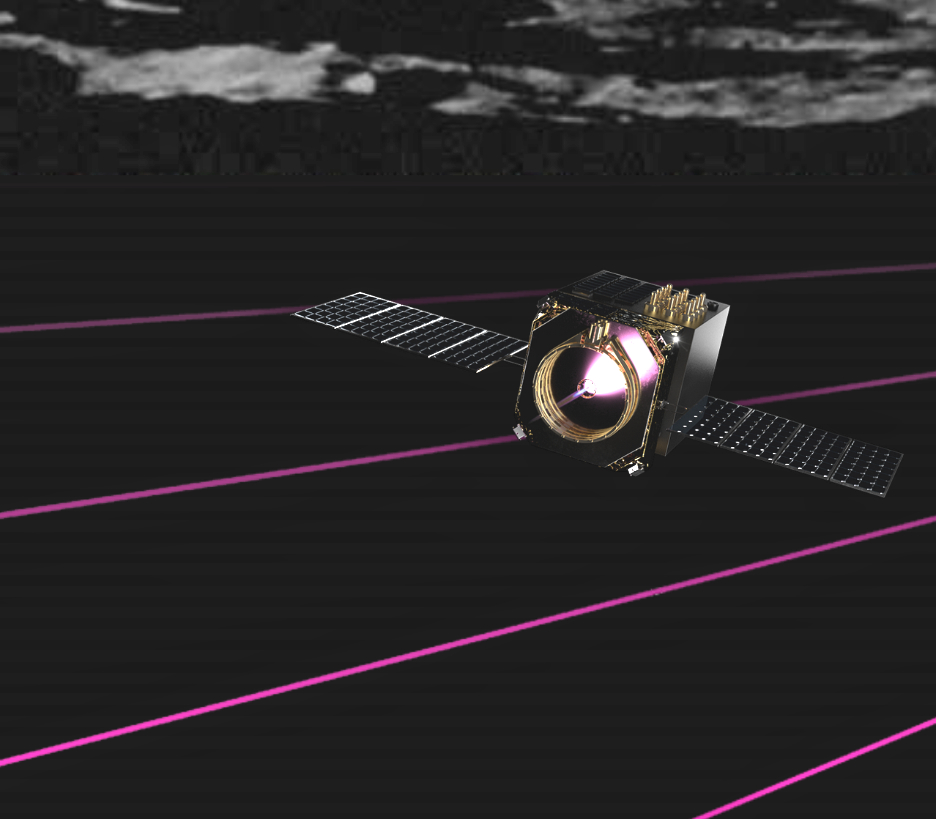
Artistic rendition of a Satellogic satellite.

Image is courtesy of the company.

contributed approximately 40% of the $50 million in newly announced funding, with some existing investors requesting more than their pro rata share. The remaining capital comes from a number of new financial and strategic investors, including the Inter-American Development Bank (IDB), through IDB Lab, the innovation laboratory of the IDB Group.

Pitanga, also based in the Latin American region, invests in innovative companies with high growth potential and is among the existing investors contributing to Satellogic’s newly announced funding.

Satellogic recently closed a $38 million agreement with ABDAS, a data science company established under the technical support of the Institute of Remote Sensing and Digital Earth. The agreement gives ABDAS access to a Dedicated Satellite Constellation and geospatial analytics that will provide them with multi-spectral imagery for monthly remapping of sites they define within their departmental territory and derive insights through their in-house data science capabilities. Through the partnership, ABDAS is able to leverage their constellation to strengthen and support key policy decisions in the province, with no capital outlay and no technical or operational risks.

Today, less than one-third of the countries in the world have their own satellites orbiting the Earth, limiting their ability to capture data about their policy implementation and infrastructure. However, that landscape is changing. One recent report valued the geospatial analytics market at $19.59B in 2018 and predicted that it will reach a value of $29.28 billion by 2024. In this report, government interest was noted as a key driver of growth. New investor, IDB Lab, sees an opportunity for Satellogic to have a meaningful impact in Latin America and the Caribbean in particular. IDB Lab’s financing will be specifically directed toward Satellogic’s development of user-end satellite imagery solutions in these sectors.

Tomás Lopes Teixeira, Senior Investment Officer at IDB Lab, said the company’s mission is to leverage innovation toward inclusion in Latin American and the Caribbean. The firm is excited to support Satellogic’s mission of democratizing access to geospatial analytics solutions, such as monitoring crop growth and preventing the spread of plagues in agriculture to help increase yields and livelihoods of a vast universe of small and medium-sized farmers caught in a low-productivity cycle in the region; improving the reaction time and accuracy in natural disaster response, which typically disproportionately impacts vulnerable populations; and preventing deforestation.

Fernando Reinach, Partner, Pitanga Fund, added that as an investor that has continued to support Satellogic through multiple phases of growth and development, the company is excited to see the market dynamics shift toward what our team has been building since 2010. Governments and industry alike now recognize the power of geospatial analytics and Satellogic is a proven partner. When choosing where to invest and reinvest, Pitanga seeks to fund companies that have the potential to be disruptive and capture a significant portion of large markets in a short time. In this regard, Satellogic is the perfect archetype of the Pitanga portfolio.

Satellogic Founder and CEO, Emiliano Kargieman noted that the company is experiencing significant commercial momentum and the firm is grateful to have investors that want to fuel that growth and help Satellogic service the demand for the company’s Dedicated Satellite Constellation (DSC) and Dedicated Satellite Services (DSS) solutions. Given the commercial success with Satellogic’s DSC bookings and pipeline, in particular, the firm is fortunate to be in a position to use that cash flow to better leverage investor capital in executing the company’s business plan.

Filed Under: Featured, News

Three Launches, Three Continents, for Spaceflight During a Successful 2019

December 11, 2019 by editorial

Spaceflight successfully executed nine missions during 2019, the most rideshare launches the company has performed in a single year, representing a 300 percent growth from the previous year.


The Spaceflight SSO-A mission aboard a SpaceX Dragon launch vehicle.

The company ended last year with its historic dedicated rideshare mission, SSO-A, and continued to execute many more firsts during 2019. This includes the most recent accomplishment of manifesting and managing three rideshare launches in one week on three continents.

The final missions of 2019 were SEOPS-2 (ISS SpX-19/NG-12) launched in the U.S., RL-2 (Rocket Lab’s “Running Out of Fingers”) launched in New Zealand, and PSLV-C48 launched in India.

The nine missions in 2019 were executed across four different launch vehicles, including the ISRO PSLV, SpaceX Falcon 9, Rocket Lab Electron and Northrop Grumman Cygnus. Spaceflight managed the launch and integration services of nearly 50 spacecraft from customers in Japan, Israel, Switzerland, Egypt, Australia, Mexico and the U.S., representing both commercial and government organizations, growing constellations, the first commercial lunar lander, technology demonstrations, university spacecraft, and more.

Other important milestones for Spaceflight during 2019 included:

  • The first-ever rideshare mission to Geosynchronous Transfer Orbit (GTO), launching the first privately funded lunar lander, developed and operated by SpaceIL. (GTO-1)
     
  • The execution of its first three missions with Rocket Lab, launching more than 10 customer spacecraft. (RL-1, RL-2, RL-4)
     
  • The purchase of the first commercial launch of NSIL’s new small launch vehicle, SSLV, for a dedicated rideshare mission in 2020.
     
  • Spaceflight’s first deployments with Hypergiant from the International Space Station. (SEOPS-1, SEOPS-2)
     
  • Four launches across three continents in the span of 16 days. (PSLV C47, SEOPS-2, RL-2, PSLV C48)


For its achievements, both in 2019 and the record-breaking launch of SSO-A in 2018, Spaceflight and CEO Curt Blake received numerous industry awards and recognition. In 2019, Blake was selected as an Innovator of the Year by the Puget Sound Business Journal and named one of Seattle’s Most Influential People by Seattle Magazine.

Spaceflight was also awarded a Laureate for Launch Services in recognition of its pioneering work in bringing the rideshare business into the mainstream by Aviation Week.

During 2020, Spaceflight plans to manage approximately 10 rideshare missions across five different launch vehicles. The company anticipates reaching a cadence of monthly launches and remains dedicated to maximizing launch capacity on available missions and assisting its customers achieve their missions on time and on budget.

Curt Blake, CEO and President of Spaceflight, stated the firm’s team has supported a record number of missions, resulting in a busy and rewarding year. 2019 made it clear that the ‘new normal’ of rideshare is a high cadence of launches. With the variety and complexity of Spaceflight missions, the company has demonstrated its expertise and experience in mission management and integration services. Looking to the coming year, more launch vehicles will be added to the company’s portfolio to meet growing launch demand, while delivering increased launch flexibility through a breadth of launch options. Ultimately, Spaceflight aims to minimize the pain points of launch delays and ensure customers’ mission goals are achieved.

Robert Sproles, Director of Ground Stations and Launch at Spire Global, noted that Spaceflight continues to provide smallsat operators frequent access to space, proving the importance of rideshare in the space industry. Spaceflight’s diverse launch portfolio, depth of skills and knowledge and commitment to providing a first-class launch experience has helped many smallsat organizations such as Spire successfully achieve their missions.


Filed Under: Featured, News

A First for Rocket Lab with their Recent Running Out Of Fingers Mission

December 10, 2019 by editorial

Rocket Lab has flown a fully Autonomous Flight Termination System (AFTS) for the first time on an Electron launch vehicle.

The AFTS flown on the company’s most recent mission, ‘Running Out Of Fingers,’ makes Rocket Lab one of only three U.S. launch companies to fly with an autonomous system.


The Electron launch of Rocket Lab’s “As the Crow Flies” mission. Photo is courtesy of Sam Toms and Simon Moffatt.

AFTS is a GPS-aided, computer-controlled system designed to terminate an off-nominal flight, replacing traditional human-in-the-loop monitoring systems. AFTS is crucial to increasing launch frequency and providing responsive launch capability, while maintaining the highest industry safety standards. It reduces the turnaround time between missions and provides greater schedule control by eliminating reliance on ground-assets and human flight termination operators.

‘Running Out Of Fingers’ hosted the first fully autonomous system on Electron. The launch followed four ‘shadow’ flights where the AFTS unit was flown on the vehicle for testing while traditional ground-based flight termination infrastructure remained in place. With the first fully autonomous mission now complete, all future Electron missions from Launch Complexes 1 and 2 will fly with the AFTS.

Flight termination systems are a vital part of launch operations. Traditionally, flight termination infrastructure is a ground-based system that involves a human making the decision to terminate a mission in the event of a launch vehicle straying from a pre-determined flight path. By contrast, the AFTS is an independent, self-contained subsystem mounted on-board the Electron launch vehicle. It eliminates the need for a ground-based infrastructure by moving the flight termination function to the launch vehicle.

The system makes flight termination decisions autonomously by using redundant computers that track the launch vehicle using Global Positioning System and on-board sensors, combined with configurable software-based rules, that identify where the rocket can safely fly. If a rocket goes off course the AFTS will issue a command to terminate the flight by shutting down the engines. The AFTS also delivers faster response times and improved monitoring as launch vehicle travels downrange, providing over-the-horizon tracking capabilities that are not limited by line-of-sight tracking such as that required by ground-based instrumentation at the launch site.

Rocket Lab Founder and CEO, Peter Beck, said the AFTS is yet another way Rocket Lab is innovating to increase the pace of launch and support responsive launch capability for small satellites. As the company moves to an autonomous system, Rocket Lab thanks the dedicated teams from White Sands Missile Range and Alaska Aerospace Corporation who have provided ground-based flight termination system support for Electron missions since the firm’s first launch in 2017. Their support has ensured the safety of every Electron mission and they have contributed to Rocket Lab’s record of mission success for customers.

Naomi Altman, Rocket Lab’s Avionics Manager and Project Lead for the AFTS program, added that for AFTS to be part of Electron’s 10th launch was the cherry on top of a monumental year for the entire team. Reaching this milestone is also testament to the ongoing support of government agencies and contractors who worked closely with Rocket Lab to bring the AFTS online.

Filed Under: Featured, News

Bonding: TriSept and Satellite Applications Catapult

December 10, 2019 by editorial


SA Catapult CEO Stuart Martin (l) and TriSept CEO Rob Spicer (r) seal the deal with a handshake. Photo is courtesy of Tom Deininger.

TriSept Corporation has signed a comprehensive teaming agreement with Satellite Applications Catapult to explore and accelerate new innovations, missions and space access across the UK space industry and beyond.

Satellite Applications Catapult, part of The Catapult network and one of dozens of firms based at the Harwell Space Cluster, provides facilities and expertise for the benefit of the UK space sector. TriSept also announced its alliance with SA Catapult includes a full-time presence on the Harwell campus, where TriSept will expand its global launch integration services business in 2020.

As part of the collaborative alliance, the two companies will leverage their complementary strengths to package TriSept’s deep launch integration, planning, engineering and brokerage competencies with Catapult’s engineering expertise and growing test, clean room and logistics coordination facilities. Together, the duo expects to build a mission manifest for new vertical and horizontal launch sites in England and Scotland.

TriSept has enabled the launch of more than 200 satellites on 70 different missions and 20 different launch vehicles from 13 launch sites around the world, including the NASA VCLS ELaNa XIX mission that lifted 10 cubesats into orbit aboard the Rocket Lab Electron from Mahia, New Zealand in December of last year.

Satellite Applications Catapult is keenly focused on driving new space infrastructure and applications that support and accelerate the growth of the UK space industry, projected to capture a 10% share of the global space market by 2030.

Rob Spicer, TriSept President and CEO, said the company is going global to help drive space access in promising new space markets like the UK, where the firm can join its proven and trusted launch integration and brokerage skillset with companies like Catapult to contribute to new possibilities in space. By launching this international presence with Catapult within the Harwell Space Cluster, TriSept is extremely well positioned to broker and support exciting new missions in the UK. This partnership with Catapult will ultimately have a significant impact on the traditional and new space industries in the UK, Europe, and the U.S.


An aerial view of the Harwell Space Campus in Oxford, UK. Photo is courtesy of the Harwell Space Campus.

Stuart Martin, CEO of the Satellite Applications Catapult, said this collaborative partnership between Catapult and TriSept is a significant milestone in the firm’s overall mission to stimulate innovation and economic growth across the UK space industry. TriSept’s decades of launch integration and brokerage experience combined with Catapult’s rapid-prototyping, manufacturing and testing facilities will bring unparalleled benefits to the UK space market.

Filed Under: Featured, News

$50 Million from Intelsat to BlackSky

November 13, 2019 by editorial

A $50 million senior secured loan from Intelsat (NYSE: I) has certainly enhanced BlackSky and has created a strategic relationship that pairs Earth Observation (EO) with a global comms infrastructure.

This infusion of new capital will allow BlackSky to augment existing assets and alliances. According to the firm, this influx of capital will ensure the company remains a leader in delivering actionable Earth intelligence faster, with greater accuracy and more affordably than others in this market segment.
Over time, BlackSky could incorporate access to Intelsat’s global communications infrastructure, delivering EO insights to customers no matter where in the world they are located.

With an established manufacturing capability, mission operations center and sales channels in place, BlackSky is in the process of expanding their constellation of smallsats to deliver the highest revisit rate in the industry. The company is also fusing AI/ML-powered computer vision, high revisit rate imagery from orbital assets and open-source intelligence to provide customers with comprehensive insights about the global locations of interest to them.


Artistic rendition of BlackSky smallsats on-orbit.

BlackSky currently has four, 1 meter smallsats on-orbit with another four slated for launch in early 2020 — the firm plans to have 16 satellites in their constellation by early 2021.

Brian E. O’Toole, President and CEO of BlackSky, stated that the company is enabling an entirely new level of global intelligence by leveraging the economics of small satellites in order for customers to always be the first to know… it takes a lot of expertise, engineering and capital to make smallsats viable; BlackSky is the first company to overcome these challenges with proven economies of scale. This latest partnership is a vote of confidence in BlackSky’s ability to deliver industry leading insights to our customers from one of the biggest players in the market.

Intelsat CEO Stephen Spengler added that BlackSky is well positioned to be a significant player in the expanding Earth Observation sector, which Intelsat believes benefits from accelerating trends that include cloud computing, change detection, predictive analytics and machine learning.  The company believes a significant number of commercial and government sector customers will increasingly rely on geospatial intelligence. This investment will be used to fund enhancements to the current BlackSky infrastructure and will serve as a springboard for a commercial alliance with Intelsat and the company’s Intelsat General government subsidiary.

For this transaction, Evercore acted as a financial advisor to BlackSky and PJT Partners acted as financial advisor to Intelsat.

Filed Under: Featured, News

Forrester Reports: Another Billion Being Sought by OneWeb

November 4, 2019 by editorial


Journalist
Chris Forrester.

According to journalist Chris Forrester, filing at the Advanced Television infosite, satellite mega-constellation OneWeb is seeking to raise another $1 billion (€0.9bn) as it starts work on orbiting 30 satellites per month in a few weeks. OneWeb wants to circle the planet with an initial batch of 650 satellites for broadband services.

OneWeb is backed, in part, by Japanese media conglomerate SoftBank, although there are also reports that SoftBank is looking to exit the business.

The report, from the UK’s Sunday Telegraph, stated that OneWeb’s ‘cash call’ will come ahead of SoftBank’s results statement due on November 6th. However, SoftBank has already written down about £380 million of their OneWeb investment. However, the newspaper reports that SoftBank remains committed to OneWeb.

Filed Under: Featured, News

The First Iodine-Propellant Smallsat is Launched

November 4, 2019 by editorial

ThrustMe and Spacety have launched the first iodine-propelled smallsat.

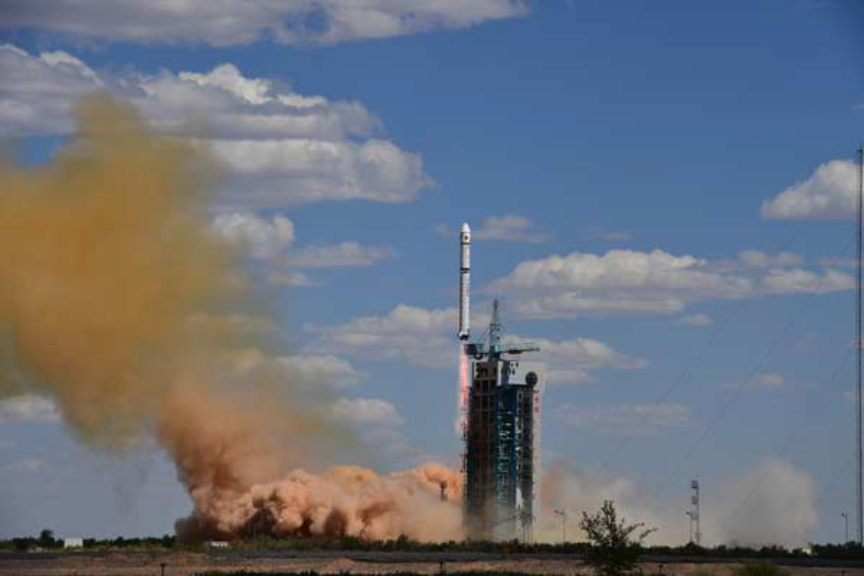
The satellite was sent into space by a Long March 4B (CZ-4B) carrier rocket from Taiyuan Satellite Launch Center in China’s Shanxi Province, on November 3, 2019, at 11:22AM (Beijing time). The 6U smallsat, built by Spacety, includes an iodine propulsion system developed and built by ThrustMe.

Known as the I2T5, this propulsion system uses a first-of-its-kind, non-pressurized, cold gas thruster fueled by solid iodine. Designed with cubesats in mind, the I2T5 will help ensure a sustainable space industry by extending the lifetime of satellite missions, and enabling collision avoidance maneuvers. In the future, ThrustMe’s additional, iodine based, electric propulsion systems, will additionally enable orbital changes, constellation phasing, and orbit maintenance.


A Chinese Long March 4B drives the iodine-propellant SPACETY and ThrustMe smallsat to orbit.

Ane Aanesland, Co-Founder and CEO of ThrustMe, said this is a historic launch in so many ways: for ThrustMe, for Spacety and for the whole space community. Iodine propellant is finally being demonstrated in space. The first time iodine was discussed as a good candidate to replace pressurized gases, such as xenon, was in 2008. Since then, many research institutions, companies and space agencies have worked on developing iodine propulsion systems, including NASA with its IceCube mission. That ThrustMe is the first company to succeed in launching the first propulsion system operating with iodine as a propellant highlights the significant impact startups can have on innovation and technology advancements.

This is ThrustMe’s first launch and the company has developed a wide portfolio of smart propulsion systems for smallsats. This mission puts ThrustMe on the map as one of the few space startups with commercially available and space proven propulsion products.

This launch also demonstrated a notable change in the space industry, where startups from Europe and Asia joined forces to develop a mission with an extremely rapid development time, from idea to launch in less than a year, from contract to launch in eight months. ThrustMe and Spacety, with this first launch together, have demonstrated the importance of open minded international collaborations, according to the firms.

The I2T5 has already generated significant customer traction and will be used to propel an ISIS 6U spacecraft for the Royal Thai Air Force, to be launched in 2020, as well as the ROBUSTA-3A satellite developed by the Université de Montpellier. Several other commercial contracts have also been signed, but these clients and missions remain confidential at this stage.

The development and industrialization of the I2T5 has been supported by the French government via the BPIFrance I-LAB, and the European Unions’ Horizon 2020 research and innovation program under grant agreement No. 823337. The French National Space Agency (CNES) is now supporting future I2T5 enhancements.

Dmytro Rafalskyi, Co- Founder and CTO of ThrustMe, added that the I2T5 is designed for cubesats — it required only six weeks from identifying a real market need, to having a first working prototype. This was achieved by leveraging all of the work already done to develop the iodine propellant storage and feed system for the ion engine.

Weijia REN, Co- Founder and CTO of Spacety Today, noted that when the company spoke with ThrustMe about the impressive achievements they had made in the development of iodine fueled propulsion, the company knew that Spacety would be up to this historic task to make it to space in record time. The firm also saw the potential in a long-term collaboration with ThrustMe to provide the best propulsion solutions to clients in China. The majority of 3U and 6U cubesats do not have any propulsion capability as no viable solutions are offered that are safe, simple, and cost effective. Satellite operators are weary of expensive and paperwork-intensive products that include pressurized systems or flammable propellants.

Filed Under: Featured, News

Smallsat Industry Projected by Allied Market Research to Garner $3.63 Billion in 2018

October 31, 2019 by editorial

Allied Market Research has published a report entitled, “Small Satellite Market by Type (Minisatellite, Microsatellite, Nanosatellite, Pico-Satellites, and Femto Satellites), Application (Imaging and Earth Observations, Satellite Communications, Science & Explorations, Technology Development, and Space Situational Awareness), and End-User (Civil & Commercial and Government & Defense): Global Opportunity Analysis and Industry Forecast, 2019–2026.” As per the report, the global smallsat industry garnered $3.63 billion in 2018 and is estimated to reach $15.69 billion by 2026, growing at a CAGR of 20.1% from 2018 to 2026.

Surge in demand for high-resolution imaging services and technological advancements drive the growth of the global small satellite market. However, lack of dedicated smallsat launch vehicles hinders the market growth. On the other hand, high demand from emerging economies and increase in government investments create new opportunities in the industry.

Based on product type, the microsatellite segment accounted for the major share, contributing to more than one-third of the global small satellite market. This is due to companies operating large satellites are looking for lighter and cost-effective platforms. However, the nanosatellite segment is expected to register the highest CAGR of 20.7% from 2018 to 2026.The imaging and earth observation segment to dominate by 2026

Based on application, the imaging and Earth Observation (EO) segment held the highest share in terms of revenue in 2018, contributing to more than one-third of the total small satellite market. This is due to the significant increase in demand for small satellites in imaging application from the U.S., Russia, and China. However, the satellite communication segment would register the fastest growth rate, with a CAGR of 20.4% from 2018 to 2026.

Based on end-user, the civil and commercial segment held the highest share in terms of revenue in 2018, contributing to more than three-fifths of the total smallsat market. This is due to their low cost and lightweight. There has been an increased demand for these satellites in LAMEA, and Asia. Furthermore, this segment would register the fastest growth rate, with a CAGR of 20.2% from 2018 to 2026.

Based on region, Asia-Pacific is estimated to grow at the highest CAGR of 20.5% from 2018 to 2026, owing to the presence of countries such as China, India, and Japan. On the other hand, North America accounted for more than half of the total smallsat market in 2018. This is attributed to the presence of key players, the presence of all the companies of the value chain so less dependency on imports, and high demand for imaging and earth observation application.

Inquire more about this report @ www.alliedmarketresearch.com/purchase-enquiry/1951

Filed Under: Featured, News

Tying Their Smallsat Expertise Together are Rocket Lab and KSAT

October 22, 2019 by editorial

Rocket Lab has partnered with Kongsberg Satellite Services (KSAT) to be the sole provider of ground station services for the Electron launch vehicle and Photon satellite bus customers.

This agreement sees Rocket Lab deliver a complete solution for smallsat operators, including satellite design and build, launch, and ground segment support leveraging an existing global network of ground stations.


Photo: Peter Beck (l), CEO of Rocket Lab, and
Katherine Monson (r) of KSAT USA.

Rocket Lab’s Electron launch vehicle is currently the only commercial, dedicated smallsat launch vehicle operating a service to orbit, making space more accessible for small satellites. With a proven launch vehicle in operation since January 2018, the next evolution of Rocket Lab’s mission services is the Photon satellite bus. Designed for seamless pairing with Electron, the Photon satellite bus streamlines the entire end-to-end satellite experience for customers from design to build to launch.

Likewise, KSAT’s KSATlite ground network is designed and optimized for small satellite systems, providing streamlined access (through standardized API driven interfaces) and scalable support that grows to meet mission needs.


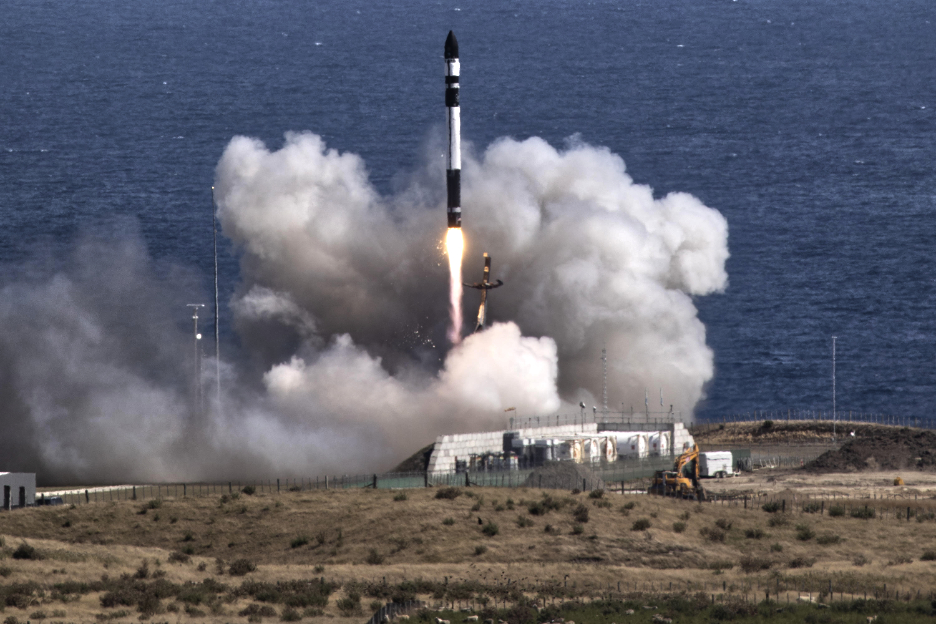
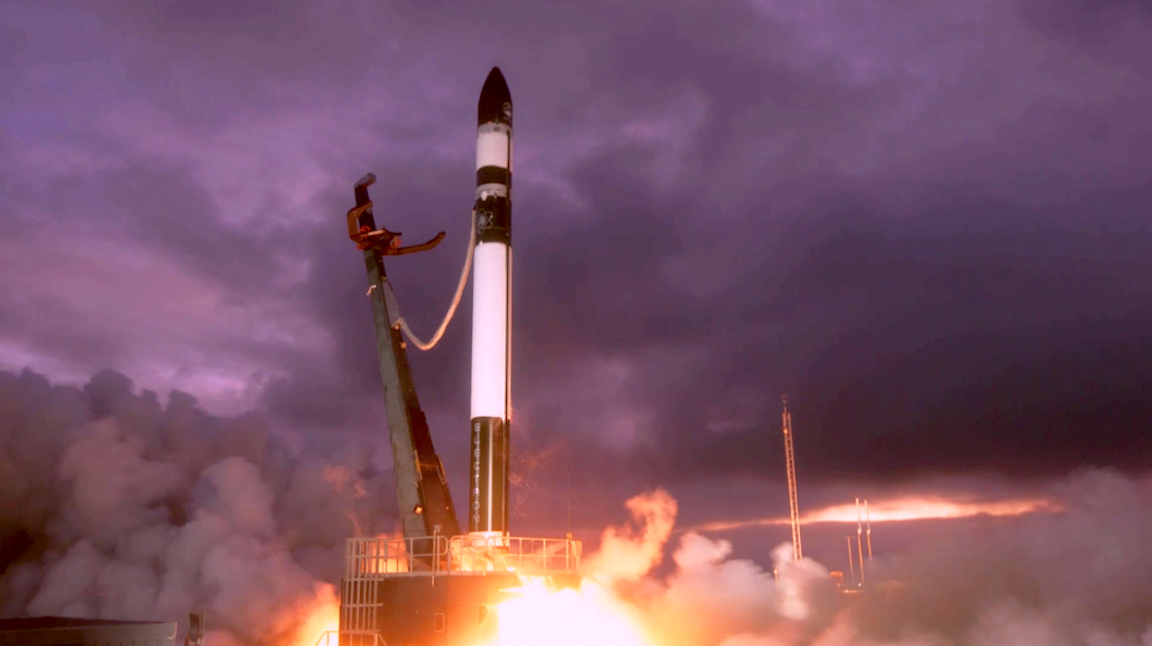
Liftoff of an Electron rocket.

Photo is courtesy of Rocket Lab.

The closely integrated partnership with KSAT now provides launch to operations ground segment support for Photon customers – the final piece for small satellite operators seeking an end-to-end mission partner.  This enables small satellite operators to focus on what really matters—their applications and their customers—freeing engineering time and capital from having to develop a spacecraft platform, secure a launch, and coordinate access to ground stations from different providers.

The partnership between Rocket Lab and KSAT provides Photon customers downlink and uplink capabilities in UHF, S-band, X-band, and Ka-band across a global ground station network of over 200 antennas that supports 50,000 contacts per month.

Rocket Lab Chief Executive and founder, Peter Beck, stated that the company’s partnership with KSAT will play an important role in continuing to streamline the path to orbit for small satellite operators. Rocket Lab has solved the launch challenge when the firm began regular and reliable launch services in January of 2018. Now the company is simplifying the spacecraft side of the equation with the combination of Photon and KSAT’s ground network support.

Head of KSAT USA, Katherine Monson, noted that there is an enormous rise in demand for data from small satellites in space, yet the challenges of procuring launch, building your own spacecraft and then having to coordinate ground communications can be time and cost prohibitive. This partnership with Rocket Lab and its Photon customers means small satellite operators will now have access to reliable, scalable services across our global network – starting with support on a per-pass basis and options to move to full antennas as their communication demand grows. KSAT is the bridge back to Earth for both the Electron launch vehicle and Photon customer payloads, thereby making space more accessible, through cost-efficient access and proven mission assurance.

Recent Rocket Lab news…

Rocket Lab’s Photon Satellite Platform to Handle Deliveries to Moon and Beyond

As the Crow Flies … And It Did as Rocket Lab’s Electron Rocket Launches Astro Digital’s Smallsat

Recent KSAT news

Alliance for SAR Satellites Formed by KSAT and Synspective

Partnership Extended between ICEYE and KSAT for SAR Solutions

Filed Under: Featured, News

  • « Go to Previous Page
  • Go to page 1
  • Interim pages omitted …
  • Go to page 54
  • Go to page 55
  • Go to page 56
  • Go to page 57
  • Go to Next Page »

Primary Sidebar

WEEKLY NEWSLETTER

Archives

  • December 2025
  • November 2025
  • October 2025
  • September 2025
  • August 2025
  • July 2025
  • June 2025
  • May 2025
  • April 2025
  • March 2025
  • February 2025
  • January 2025
  • December 2024
  • November 2024
  • October 2024
  • September 2024
  • August 2024
  • July 2024
  • June 2024
  • May 2024
  • April 2024
  • March 2024
  • February 2024
  • January 2024
  • December 2023
  • November 2023
  • October 2023
  • September 2023
  • August 2023
  • July 2023
  • June 2023
  • May 2023
  • April 2023
  • March 2023
  • February 2023
  • January 2023
  • December 2022
  • November 2022
  • October 2022
  • September 2022
  • August 2022
  • July 2022
  • June 2022
  • May 2022
  • April 2022
  • March 2022
  • February 2022
  • January 2022
  • December 2021
  • November 2021
  • October 2021
  • September 2021
  • August 2021
  • July 2021
  • June 2021
  • May 2021
  • April 2021
  • March 2021
  • February 2021
  • January 2021
  • December 2020
  • November 2020
  • October 2020
  • September 2020
  • August 2020
  • July 2020
  • June 2020
  • May 2020
  • April 2020
  • March 2020
  • February 2020
  • January 2020
  • December 2019
  • November 2019
  • October 2019

© 2019–2025 SatNews

Insert/edit link

Enter the destination URL

Or link to existing content

    No search term specified. Showing recent items. Search or use up and down arrow keys to select an item.
      x
      Sign Up Now!

      Enjoy a free weekly newsletter with recent headlines from the global SmallSat industry.

      Invalid email address
      We promise not to spam you. You can unsubscribe at any time.
      Thanks for subscribing! You will now receive weekly SmallSat News updates.
      We love our advertisers.
      And you will too!

      Please disable Ad Blocker to continue... We promise to keep it unobtrusive.
      We promise not to spam you. You can unsubscribe at any time.
      Invalid email address
      Thanks for subscribing! Please check your email for further instructions.