• Skip to main content
  • Skip to primary sidebar
  • Home
  • News
  • Featured
  • More News ⌄
    • SatNews
    • SatMagazine
    • MilSatMagazine
  • Events ⌄
    • MilSat Symposium
    • SmallSat Symposium
    • Satellite Innovation
  • Contacts
  • SUBSCRIPTION

SmallSat News

You are here: Home / Archives for Featured

Featured

SFL Missions Inc. awarded contract for AISSat-4 nanosatellite development

July 31, 2025 by editorial

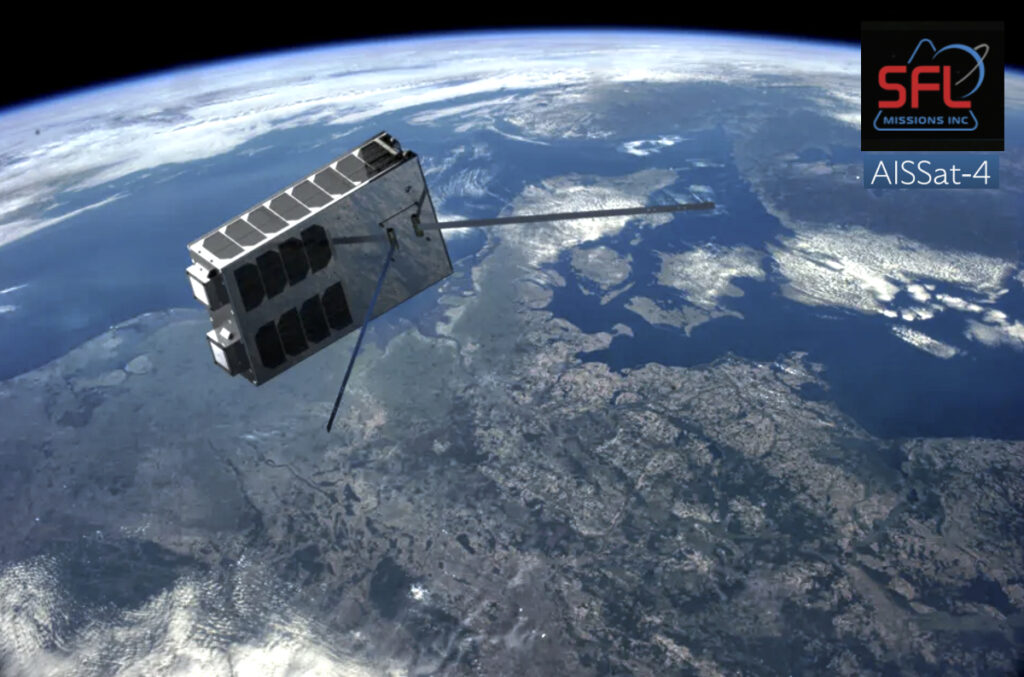
The Norwegian Space Agency (NOSA) has awarded a contract to SFL Missions Inc. to develop the AISSat-4 maritime ship tracking microsatellite for launch in less than one year. AISSat-4 is needed to expand operational capacity in Norway’s maritime situational awareness network.

AISSat-4 is being developed on SFL’s SPARTAN 6U nanosatellite platform and will carry a single payload—a miniaturized Automatic Identification System (AIS) receiver built by Kongsberg Seatex of Trondheim, Norway. The SPARTAN bus is space proven with 18 commercial communications satellites previously deployed using this platform.

SFL Missions is uniquely prepared to develop AISSat-4 on an accelerated schedule. Additionally, the SPARTAN platform relies on heritage hardware and software and is easily tailored to accommodate the AIS receiver and antennas.

Norway launched the first ship-tracking satellite of its operational AISSat series in 2010 and then funded a parallel series of larger NorSat microsatellites. While the smaller AISSat nanosatellites each carry a single payload focused solely on collection of AIS signals, the NorSats each operate a ship-tracking device along with one or more technology demonstration payloads. NorSat-1 and -2 are both eight years old and have operated beyond their five-year design lives.

Norway’s leadership in space-based maritime monitoring includes eight spacecraft spanning more than 15 years, all of which were developed with SFL…

AISSat-1 was launched in 2010 with funding from Norwegian Defence Research Establishment (FFI) to prove that AIS signals from ships at sea could be detected by an AIS receiver in orbit. AISSat-1 was quickly transitioned to operational status where it collected data for 12 years.

AISSat-2, a twin to AISSat-1, launched as an operational asset in 2014 until decommissioning nine years later.

NorSat-1 and -2 launched in 2017, each carrying successively improved AIS receivers developed by Kongsberg Seatex. Additionally, NorSat-1 carries two experimental space science instruments, while NorSat-2 tested a two-way communication VHF data exchange device.

NorSat-3 launched in 2021 with an experimental radar navigation detector to augment the ship-tracking capabilities of its AIS receiver.

NorSat-TD launched in 2023 with a suite of technology demonstration payloads including a Dutch-built laser communications device that successfully enabled faster, more secure optical transmission of data between the spacecraft and ground station.

NorSat-4 launched in January 2025 carrying a fifth-generation AIS receiver complemented by a first-of-its-kind low-light imaging camera to detect and identify “dark” ships not operating their AIS transponders.

AISSat-4, now under development, will have the capacity to capture 1.5 million unique AIS signals every day even in crowded shipping lanes.

Additionally, Norwegian AIS data collected from space will continue to serve as the mainstay of the Blue Justice Ocean Surveillance Program initiated by Norway in September of 2023 to fight international fisheries crimes. Participants in this program share coastal data to uncover illegal fishing activities worldwide.

Under the leadership of NOSA and the Norwegian Coastal Administration, Norway operates the world’s most extensive and sophisticated space-based marine monitoring system to protect the safety of vessels and sustainability of resources in its vast territorial waters.

We have extensive experience in implementing AIS missions, and therefore we have the expertise and design heritage needed to implement the AISSat-4 mission on a short schedule,” said Dr. Robert E. Zee, SFL Missions Director and CEO.

More broadly,” he added, “SFL Missions Inc. has the capacity to work on many satellite missions concurrently, and since the team is vertically integrated, it maintains full control over the subsystem and spacecraft level assembly, integration, and testing schedules.

The societal benefits we gain from collecting AIS information from satellites is significant. It is therefore important that we ensure the maintenance of this capability,” said Coastal Administration Director Einar Vik Arset. “AISSat-4 will be a valuable addition at a time when several of our operational satellites are nearing the end of their expected lifespan.”


Filed Under: Featured, News

Forrester’s Digest: Airbus shapes new organization structure

July 8, 2025 by editorial

Airbus Defence and Space states they are implementing a new organization structure to shape the company’s future competitiveness, with more than 2,000 jobs to go.

The new organization came into effect on July 1st. The Division has completed all information and consultation processes on European as well as national levels for its adaptation plan and has reached productive agreements with its social partners.

This process followed an announcement in October 2024 to adapt the Division’s organisation and workforce in light of a continued complex business environment, especially in the Space Systems segment where significant financial charges were recorded in 2023 and 2024,” noted Airbus.

Among others, the company announced it would reduce up to 2,043 positions, predominantly management overhead functions, and provide stronger end-to-end accountability to its three business lines—Air Power, Space Systems and Connected Intelligence—in order to better cope with business requirements in the future. As confirmed at the beginning of the information and consultation process, there will be no compulsory redundancies, stressed Airbus.

Airbus is backing the probable merger of its space division with those of Thales and Leonardo.

I thank our social partners and our Airbus Defence and Space colleagues for their constructive engagement and contributions throughout this process. Navigating organisational change is never straightforward for any party, particularly when it involves adapting our workforce. The current geopolitical landscape requires a stronger, faster and more resilient European defence and security industry. Our new structure delivers on this requirement through an efficient and effective end-to-end responsibility for our three businesses and a significantly optimized cost structure while preserving the ability and capacity to benefit from growing defence spending,” said Mike Schoellhorn, CEO Airbus Defence and Space.

Filed Under: Featured, News

Novaspace’s Report indicates defense spending fuels $182.6 billion (€155bn) miniaturization of technologies + EO satellite boom

July 3, 2025 by editorial

The 18th edition of Novaspace’s Earth Observation Satellite Systems report finds 5,770 EO satellites set to launch by 2034, fuelling a $182.6 billion (€155bn) market surge, as national defence priorities shape space strategy

“A new generation of defense suppliers is emerging as countries look to promote the development of national EO ecosystems, with momentum expected to increase in the coming years,” said Federico Banfi, project manager at Novaspace. “This shift in priorities is accelerating procurement cycles and offering the market more agile, cost-effective, and modular systems supported by advanced software and AI.”

Going forward, defence satellites are poised to lead new deployments. This trend is increasingly visible with recent projected budget cuts in commercial Earth observation data procurement reinforcing this strategic shift. U.S. agencies are increasingly prioritizing data from internal, defence-operated assets over commercial sources, driving the move toward sovereign, secure space capabilities.

This growth is enabled by the miniaturization of technologies supporting the deployment of smallsat constellations in various types of orbits, carrying an increasing range of sensors that could be hosted on-board. 2025 marks the start of the Very Low Earth Orbit (VLEO) and VVHR era, set to disrupt competition going forward. The Chinese Chutian constellation deployed its first prototype in 2024 and is preparing for larger deployment this year. In the U.S., commercial players have also started deployment, signaling a new generation of high-resolution, low-latency capabilities.

Performance, longevity, and cost efficiency now outweigh mass as key priorities. Heavier smallsat associated enhanced capabilities meet growing defence and mission demands, while launch costs remain manageable. Sub-50 kg satellites, once 82 per cent of commercial launches, are expected to drop below 50 percent, highlighting this market is shifting toward more complex and diversified missions.

Filed Under: Featured, News

Rocket Lab completes CDR for SDA’s T2TL-Beta constellation

July 3, 2025 by editorial

Rocket Lab National Security LLC, a wholly-owned subsidiary of Rocket Lab USA (Nasdaq: RKLB), successfully completed the firm’s Critical Design Review (CDR) for the Space Development Agency’s (SDA) Tranche 2 Transport Layer-Beta (T2TL-Beta) program.

The milestone follows Rocket Lab’s successful Preliminary Design Review (PDR) in late 2024, confirms that spacecraft design, manufacturing approach, and systems architecture meet all mission requirements and enables the program to move into full-scale production.

As a prime contractor, Rocket Lab will deliver a constellation of 18 spacecraft for the T2TL-Beta program, part of the Proliferated Warfighter Space Architecture, a resilient, low-latency communications network in LEO that support real-time connectivity for U.S. and allied forces worldwide.

Rocket Lab’s spacecraft for the T2TL-Beta program is based on its high-performance Lightning platform, tailored for the power and data-handling demands of national security LEO constellations. As a vertically integrated provider, Rocket Lab designs and manufactures its spacecraft buses and key subsystems in-house, including solar panels, composite structures, star trackers, reaction wheels, radios, avionics, flight and ground software, launch dispensers, and more allowing the Company to maintain tight control over quality, cost, and schedule.

The Proliferated Warfighter Space Architecture is reshaping how the U.S. secures space for the joint force, and Rocket Lab is proud to be a contributor,” said Brad Clevenger, President of Rocket Lab National Security. “With proven platforms and in-house production across key systems, we’re building the backbone of resilient on-orbit capability for the warfighter. Our successful completion of CDR further demonstrates our ability to deliver trusted technology at the speed and scale needed to support national security space.”

Filed Under: Featured, News

Xona Space Systems has launched their Pulsar-0 PNT satellite

July 1, 2025 by editorial

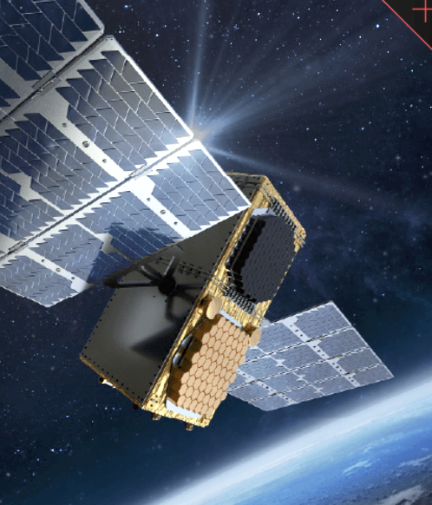
Xona Space Systems has launched Pulsar-0, the first production-class satellite in the company’s LEO constellation that will bring accuracy and affordable resiliency to industries across defense, construction, agriculture, mining, critical infrastructure, logistics, and automotive environs. The company believes introducing this technology will unlock an entirely new category of innovation by providing a new way to localize hardware in this physical world.

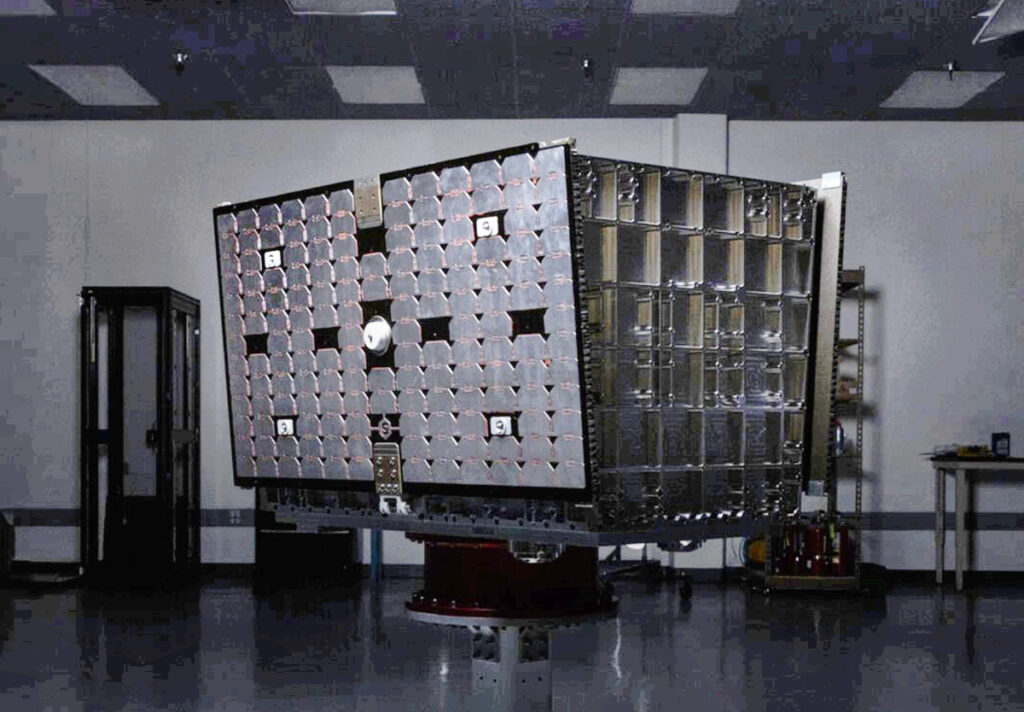
Photo of the Pulsar-0 satellite, courtesy of the company

Critical infrastructure, civil aviation, and financial systems rely on positioning, navigation, and timing (PNT) services from aging government satellites to function. But they are vulnerable and easy to manipulate. The need for resiliency in this infrastructure is urgent, and Pulsar will be a key part in closing this gap. We’ve heard from leaders across private and public sectors alike that there is no time to waste.

Pulsar-0 entered orbit aboard the SpaceX Transporter-14 mission and will begin broadcasting signals to Earth after the smallsat completes spacecraft commissioning. The primary mission is to validate Xona’s technology and unlock live sky testing with the firm’s early customers, charting the path for more frequent launches as the constellation gows and starts commercial operations.

Building hardware is difficult. Building hardware for space is even harder. Along the way, difficult decisions had to be made to preserve momentum in the face of supply chain volatility. One of those decisions was to proceed with launching Pulsar-0 without a propulsion system onboard, a tradeoff that reduces the mission capability and lifetime from our initial plans but has enabled the company to remain on track for launch and to initiate testing quickly. In a world where resilient PNT is needed now more than ever, launching sooner means real-world implementation can start sooner.

Over the coming months, Pulsar-0 will demonstrate:

  • Precise location: Making progress towards delivering on our partnership with Trimble, Pulsar-0 will broadcast real-time precision location with accuracy greater than 10cm. By broadcasting GNSS corrections from low Earth orbit, Pulsar can provide improved positioning before our full constellation is operational while users benefit from stronger signals that reach more places.
  • Range authentication: Legacy GPS signals are open and unencrypted, opening the door for malicious actors to generate counterfeit signals that are perceived as real. Pulsar will show a new way to verify the authenticity of our signal in action, providing protection against spoofing attacks.
  • Jamming resistance: Today, contested environments are frequently jammed, blocking legacy GPS signals which disrupts civilian life and military operations. With a received signal strength 100 times stronger than that of legacy GPS, Pulsar will outperform in denied domains where jammers and other interference might be present.
  • Signal penetration: Environments occluded from open sky have long been a challenge for legacy GPS to reach. We expect to show Pulsar excelling in these environments, bringing reliable connection to traditionally denied spaces inside reinforced buildings, urban canyons, and more.

Pulsar-0 is a milestone for Xona Space Systems and the company will now be focusing on building the capacity to launch more satellites faster and to grow the constellation to achieve persistent and redundant coverage everywhere on Earth.

Filed Under: Featured, News

Maxar awarded contract by NGA to deliver AI-powered object detection services

July 1, 2025 by editorial

Maxar Intelligence has been awarded Delivery Order 01 under the Luno A program by the National Geospatial-Intelligence Agency (NGA).

This award is focused on delivering commercial analytic services, specifically, automated AI/ML-generated object detections over many specified locations at once. Maxar is primarily identifying various classes of aircraft, ships, ground vehicles and railcars, helping NGA determine object counts at specified locations, classification of objects, identify trends and anomalies, and perform spatial and temporal geospatial intelligence analysis. The mission represents a strong example of operationalizing commercial technologies for persistent site monitoring at global scale.

Maxar has partnered on this award with satellite Earth Observation data provider Satellogic, Inc. (NASDAQ: SATL), integrating the capacity and revisit of both constellations to deliver a combination of persistent monitoring and high-resolution imaging for the most demanding multi-sensor applications; Enabled Intelligence to aid with model validation and verification; and Striveworks for the AIOps platform.

Delivery Order 01 requires excellent performance against extremely tight delivery timelines, including the ability to collect multiple images across constellations within specified windows and delivering model outputs within hours of image acquisition. Automation is the key to success for all phases that include collection, computer vision model inference, and delivery of timely results.

This award reflects the power of combining commercial innovation to support national security mission needs,” said Susanne Hake, SVP and General Manager of Maxar’s U.S. Government business. “By working together with other industry leaders, we’re enabling a powerful combination of diverse sensor data and advanced analytics to help make smarter, faster decisions.”

Filed Under: Featured, News

Open Cosmos + Astroscale partner on £5.15 million UK Defence contract for Orpheus mission to enhance SSA

June 16, 2025 by editorial

Open Cosmos and Astroscale Ltd. have been awarded a contract worth £5.15 million by the UK’s Defence Science and Technology Laboratory (Dstl), an executive agency of the Ministry of Defence (MOD) dedicated to science and technology in the defence and security sectors, via BAE Systems, as the Dstl Serapis Framework lead.

As global reliance on space infrastructure grows, so do the threats posed by space weather, adversarial actions, and orbital congestion. As a critical step in strengthening the UK’s capabilities in space, the Orpheus mission objectives are to enhance our understanding of space weather and improve space situational awareness, advancing global initiatives toward a joint space architecture.

A recent Lloyd’s of London report highlights that an extreme space weather event, such as a severe solar storm, could result in global economic losses of up to $2.4 trillion, with disruptions to the ionosphere posing a significant threat to satellite communications, navigation systems, and critical defence infrastructure.

This fully funded project will run for three years, concluding in 2028, and will cover the complete lifecycle of the mission, from design to launch and operations. The contract award from Dstl was made under the Serapis framework.

As geopolitical and environmental threats to space infrastructure rise, Orpheus will deliver crucial insights, safeguarding vital UK and allied operations against emerging challenges.

Open Cosmos is partnering with Astroscale UK to design and build two near-identical satellites that the company will operate for the mission. The satellites will fly in formation to observe and collect critical data using in-situ and remote sensing techniques, to enable faster space-based data acquisition. The payloads designed to characterize the ionosphere are being developed by the U.S. Naval Research Laboratory, the University of Bath and Surrey Satellite Technology Ltd.

Dstl Chief Executive, Dr. Paul Hollinshead, said, “Changes in space weather can have a critical impact on satellites which provide navigation aids, telecommunications and data transmission. Sustained investment in space research in collaboration with our international partners strengthens the security of UK interests in space.”

Nick Shave, Managing Director of Astroscale UK, said, “The Dstl Orpheus mission is an important opportunity for Astroscale to demonstrate our capability to deliver innovative missions in the Defence arena and in support of national security. We have successfully demonstrated our space mission implementation capability during our ELSA-d mission in 2021, and the ADRAS-J close proximity inspection mission in 2024. We are pleased to contribute our space mission design, development, integration and operations experience to ensure a successful mission which will also demonstrate the UK’s value to international partner nations.”

Rafel Jordà Siquier, founder and CEO of Open Cosmos, said, “We are thrilled to partner with Astroscale on the Orpheus mission to enhance space domain awareness. Our advanced satellite solutions will provide the critical data needed to understand the ionosphere and protect vital space infrastructure. This mission exemplifies the power of collaboration in driving innovation and ensuring the security of our space assets.”

Filed Under: Featured, News

Exolaunch to deploy their largest mission to date — 45 customer satellites on Transporter-14

June 16, 2025 by editorial

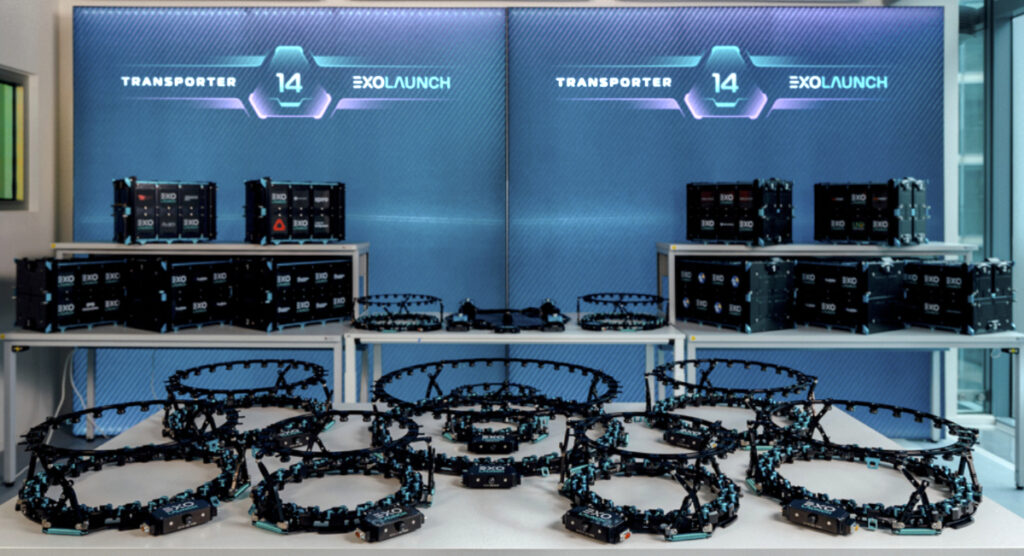
Exolaunch is set to deploy 45 customer satellites on the upcoming Transporter-14 rideshare mission with SpaceX aboard a Falcon 9 rocket as soon as this month. This mission highlights Exolaunch’s role as a trusted partner for rideshare launches and represents unparalleled expertise and flight heritage

Flight-proven hardware: CarboNIX, Nova, and Quadro deployment systems

The Transporter-14 mission represents a major milestone for Exolaunch as its largest mission to date, building on the company’s track record of providing reliable and precise access to orbit for customers worldwide. Exolaunch’s teams of experts will manage the deployment of numerous microsatellites, up to 250 kilograms, and CubeSats, up to 16U in size, supporting 25 new and returning customers from the USA, UK, Lithuania, Finland, Belgium, Germany, Australia, Canada, South Korea, France, Japan, Spain, Norway, Italy, and Greece.

On this mission, Exolaunch will use its flight-proven deployment systems, including:

  • CarboNIX microsatellite separation rings in 8″, 11″, 15″, and 24″ sizes
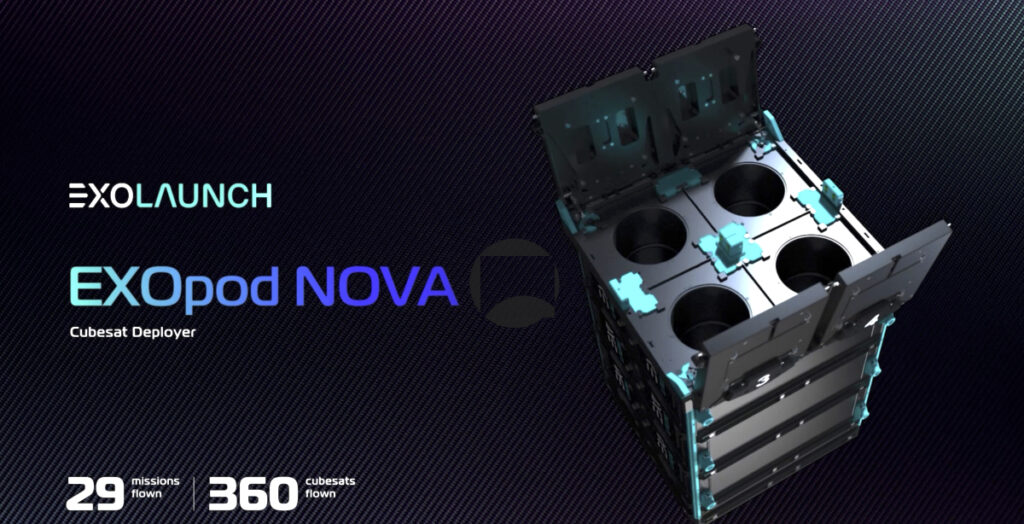
  • EXOpod Nova advanced CubeSat deployers, supporting higher-mass and larger volume satellites with exceptional reliability
  • Quadro four-point separation systems, offering synchronized release and ultra-low tip-off rates for precision microsatellite deployments

Exolaunch’s EXOpod Nova deployers have now supported over 100 delivered units and hundreds of successful CubeSat deployments, reinforcing Nova’s reputation as a trusted next-generation deployer for CubeSat mission.

Exolaunch continues to be the only launch integrator to have manifested satellites on every Transporter mission since the program’s inception in 2020. With Transporter-14, Exolaunch will celebrate its 37th mission overall, having deployed over 530 satellites across 36 previous missions on different global launch vehicles.

As part of the company’s comprehensive service offering, Exolaunch has managed global logistics, satellite integration, deployment, and testing for its customers aboard the Transporter-14 mission—a turnkey solution trusted by the world’s most ambitious space programs.

Transporter-14 marks a historic achievement for Exolaunch and our customers,” said Robert Sproles, Chief Executive Officer at Exolaunch. “Our flight heritage, reliability, and hardware performance continue to set the standard in the rideshare industry. We are grateful to our customers for their trust and to SpaceX for being an outstanding partner as we continue to open space for all.”

This milestone reflects not just the growth of Exolaunch, but also the expanding demand for global access to space,” said Jeanne Allarie, Chief Commercial and Marketing Officer at Exolaunch. “Our unmatched success across these missions and the growing adoption of our Nova, CarboNIX, Quadro and Neo systems highlight the strength of our technology and services. We deeply appreciate our customers’ and SpaceX’s ongoing confidence in our team.”

Filed Under: Featured, News

BAE Systems + Hanwha Systems sign an MoU to develop an advanced multi-sensor satellite system

June 13, 2025 by editorial

BAE Systems and Hanwha Systems recently signed a Memorandum of Understanding (MOU) to develop technology and collaborative working to deliver a multi-sensor satellite system for international markets.

The companies will look to work together to combine BAE Systems’ ultra-wide band Radio Frequency (RF) sensors and Hanwha Systems’ space domain expertise in next generation Synthetic Aperture Radar (SAR) to create an advanced intelligence, surveillance and reconnaissance (ISR) capability.

The ambition is to explore the creation of a system that will use a range of sensors to collect RF and SAR data, which will be analyzed by machine learning using on-board edge processors to deliver derived insights and intelligence securely.BAE Systems expects to launch its first Low Earth Orbit (LEO) cluster of satellites in 2025. Known as Azalea™ the mission will boost domestic and international markets’ ability to understand the threats and hazards in, from and through space. To deliver this, it works collaboratively with a range of partners around the globe.



Azalea, a Multi-sensor Low Earth Orbit satellite cluster that delivers quality data and information in near real-time from space to end users. Image is courtesy of BAE Systems.

Rachael Hoyle, Space Director, BAE Systems Digital Intelligence, said, “Bringing together our pedigree in space with Hanwha Systems’ expertise in SAR satellites represents an exciting opportunity to progress ISR capabilities from space for international markets. We’re looking forwards to building this relationship and advancing space technologies together.”

Sung-Chan Song, Head of the Space Division, Hanwha Systems, said, “Small SAR satellites are becoming increasingly recognised as invaluable resources for surveillance and reconnaissance. Hanwha Systems is proud to collaborate with BAE Systems as we look to further expand our presence in the global satellite market.”

Sarah Jones MP, Industry Minister, UK Government, said, “The UK and South Korea are already world leaders in the space industry, and this new partnership is exactly what we both need to create jobs, advance cutting-edge technologies and expand into new international markets. Our modern Industrial Strategy will set out how we’ll boost the space sector further to reach new heights and unlock more investment and jobs in the industries of tomorrow, as part of this government’s Plan for Change.”

Filed Under: Featured, News

Sierra Space Defense initiated

June 12, 2025 by editorial

Sierra Space has chartered a new operation dedicated to supporting national security space as a prime contractor: Sierra Space Defense.

The company also unveiled expansion plans with a new production facility called “Victory Works,” adding 60,000 square feet of manufacturing space and bringing Sierra Space’s total infrastructure to more than one million square feet across seven states.

The launch of Sierra Space Defense and related infrastructure expansion plans are driven by a palpable sense of urgency: the United States is facing new threats and near-peer adversaries at unprecedented levels in the space domain. In response to the evolving threat environment, Sierra Space is retooling its commercial capacity to focus on revitalizing the U.S. defense industrial base through innovative satellite and spacecraft systems technology. Sierra Space will dedicate a new manufacturing facility, called “Victory Works,” to defense technology.

Located in Centennial, Colorado, the 60,000 square-foot space will play a pivotal role in the production of the company’s new Sierra Space Eclipse™ satellite bus line, a key component in Sierra Space’s efforts to enhance the capabilities of the U.S. defense sector. This expansion is on top of 24,000 square feet of existing sites dedicated to national security and defense work.

Since 2023, Sierra Space has secured $1.5 billion in national security and defense contracts, for production on 30 satellites; included in that figure are 18 missile warning and defense satellites awarded by the Space Development Agency (SDA) in January of 2024, as part of a $740 million prime contract to support the SDA’s Tranche 2 Tracking Layer.

In addition, Space Force awarded Sierra Space a “Quick Start” Resilient GPS (R-GPS) agreement in September of 2024. And the company continues to make strides in its spacecraft systems business, boasting more than 20 active contracts for solar arrays and other components.

In the Sierra Space Defense Portfolio:

  • Sierra Space Eclipse: a next generation product line of small, high performance, affordable satellites for on-orbit servicing missions
  • Sierra Space Ghost: a state-of-the-art space delivery system engineered to safely return objects from space – and through space – directly to precise locations on Earth
  • Sierra Space Spectre: a revolutionary satellite designed for precision rendezvous proximity operations (RPO)
  • Sierra Black OS: an advanced AI-enabled operating system athat is able to operate across space, air and ground systems seamlessly

Sierra Space Vice President Erik Daehler will helm the new organization.

We are mission-focused and dedicated to supporting our national security customers and the revitalization of the U.S. defense industrial base. Commercial space companies now have a profound responsibility to help lead an entirely new era for national defense,” Daehler said. “The creation of Sierra Space Defense enables stronger partnerships – such as our steadfast partnership with SNC – to tackle the hardest mission problems like Golden Dome. Our new Sierra Space Defense organization is a testament to our dedication to innovation at speed and excellence in satellite and spacecraft systems production, which will shape the future of defense technology.”

Lt. Gen. John E. Shaw (U.S. Space Force, Ret.) serves on Sierra Space’s National Security Space Strategic Advisor Group, said, “The growing scope and scale of what our adversaries are doing in space is alarming, and the threat environment is evolving rapidly as near-peer challenges accelerate,” Shaw said. “Commercial space companies possess the speed and agility required to outpace our adversaries and effectively respond to our critical national security space needs.”

Filed Under: Featured, News

  • « Go to Previous Page
  • Page 1
  • Interim pages omitted …
  • Page 4
  • Page 5
  • Page 6
  • Page 7
  • Page 8
  • Interim pages omitted …
  • Page 58
  • Go to Next Page »

Primary Sidebar

WEEKLY NEWSLETTER

Archives

  • March 2026
  • February 2026
  • January 2026
  • December 2025
  • November 2025
  • October 2025
  • September 2025
  • August 2025
  • July 2025
  • June 2025
  • May 2025
  • April 2025
  • March 2025
  • February 2025
  • January 2025
  • December 2024
  • November 2024
  • October 2024
  • September 2024
  • August 2024
  • July 2024
  • June 2024
  • May 2024
  • April 2024
  • March 2024
  • February 2024
  • January 2024
  • December 2023
  • November 2023
  • October 2023
  • September 2023
  • August 2023
  • July 2023
  • June 2023
  • May 2023
  • April 2023
  • March 2023
  • February 2023
  • January 2023
  • December 2022
  • November 2022
  • October 2022
  • September 2022
  • August 2022
  • July 2022
  • June 2022
  • May 2022
  • April 2022
  • March 2022
  • February 2022
  • January 2022
  • December 2021
  • November 2021
  • October 2021
  • September 2021
  • August 2021
  • July 2021
  • June 2021
  • May 2021
  • April 2021
  • March 2021
  • February 2021
  • January 2021
  • December 2020
  • November 2020
  • October 2020
  • September 2020
  • August 2020
  • July 2020
  • June 2020
  • May 2020
  • April 2020
  • March 2020
  • February 2020
  • January 2020
  • December 2019
  • November 2019
  • October 2019

© 2019–2026 SatNews

Insert/edit link

Enter the destination URL

Or link to existing content

    No search term specified. Showing recent items. Search or use up and down arrow keys to select an item.
      x
      Sign Up Now!

      Enjoy a free weekly newsletter with recent headlines from the global SmallSat industry.

      Invalid email address
      We promise not to spam you. You can unsubscribe at any time.
      Thanks for subscribing! You will now receive weekly SmallSat News updates.
      We love our advertisers.
      And you will too!

      Please disable Ad Blocker to continue... We promise to keep it unobtrusive.
      We promise not to spam you. You can unsubscribe at any time.
      Invalid email address
      Thanks for subscribing!