• Skip to main content
  • Skip to primary sidebar
  • Home
  • News
  • Featured
  • More News ⌄
    • SatNews
    • SatMagazine
    • MilSatMagazine
  • Events ⌄
    • MilSat Symposium
    • SmallSat Symposium
    • Satellite Innovation
  • Contacts
  • SUBSCRIPTION

SmallSat News

You are here: Home / Archives for Featured

Featured

SmallSat Europe Opens 2026 Call for Papers as Continent Races for Space Sovereignty

December 4, 2025 by editorial

AMSTERDAM — Following a year marked by intensified calls for European autonomy in orbit, organizers of SmallSat Europe have opened the technical call for papers for their 2026 conference. The solicitation comes as the European Union and its member states aggressively ramp up defense spending and constellation development to close the gap with the United States and China.

Technical stage at SmallSat Europe 2025, spotlighting the future of small-satellite innovation.

Sovereignty and the Smallsat Pivot The call for technical abstracts arrives during a critical pivot point for the European space sector. According to recent industry analyses, including reports from McKinsey and the European Commission, Europe’s share of global launches has faced pressure from rapid innovation abroad. In response, major powers are mobilizing significant capital. Germany recently unveiled a national space strategy earmarking billions for security-focused space capabilities, while France has committed more than €4 billion specifically to space defense through 2030.

An attendee screenshots an important
slide at SmallSat Europe 2025.

This strategic shift has placed a premium on the small satellite supply chain, which offers the rapid responsiveness and distributed architecture required for modern “dual-use” defense and commercial applications. SmallSat Europe, now established as the largest dedicated small satellite event on the continent, serves as a primary exchange for the engineering and business solutions underpinning these initiatives.

Technical Tracks and Submission Deadlines The 2026 conference, scheduled for May 26-28 at the RAI Amsterdam, has expanded its technical scope to address these evolving requirements. Organizers are soliciting abstracts across a broad spectrum of disciplines, including systems design, advanced analytics, payload innovation, and ground architecture.

Engineers and researchers must submit abstracts by January 23, 2026. Selected authors will receive notification by February 20, 2026, with final technical papers due by April 30, 2026. Accepted papers will be presented during 15-minute oral sessions or poster presentations and published in the official conference proceedings.

Scaling the Ecosystem The event’s growth mirrors the sector’s expansion. The 2026 edition is projected to host more than 2,000 attendees and 180 exhibitors, a significant increase from previous years. This scale addresses a frequently cited challenge in the European market: fragmentation. By consolidating systems integrators, launch providers, and subsystem manufacturers in a single venue, the conference aims to streamline the cross-border partnerships essential for programs like the EU’s IRIS² secure connectivity constellation.

Schedule and Registration SmallSat Europe 2026 will take place from May 26 to May 28, 2026, at the RAI Amsterdam Convention Centre. Early bird registration is currently open, with the abstract submission window closing strictly on January 23.


Filed Under: Featured, News

SmallSat Symposium 2026 Agenda Targets D2D Engineering and Edge Compute; Early Registration Opens

December 2, 2025 by editorial

Structuring the Next Decade of Commercial Space

Entering its 11th year, the SmallSat Symposium has released a 2026 agenda that signals a distinct shift from the “new space” experimental era to a phase of industrial maturity and integration. Scheduled for February 10 through February 12 at the Computer History Museum in Mountain View, California, the event has opened registration with time-sensitive early bird pricing. The 2026 program moves beyond general market optimism to address the specific engineering and regulatory bottlenecks facing high-growth sectors like Direct-to-Device (D2D) and on-orbit edge computing.

Scenes from SmallSat Symposium 2025: industry leaders, innovators, and emerging voices gather for a week of high-intensity discussion, packed sessions, and one-on-one networking that’s shaping the next wave of satellite technology

SmallSat Industry Trends

The unveiled session tracks reflect three dominant trends currently reshaping the satellite market:

  • The D2D Reality Check: While the direct-to-cell market has attracted billions in investment, the engineering challenges remain substantial. The session “Cracking the D2D Code: Engineering Solutions to Power, Doppler & Spectrum Locks” indicates a move away from broad partnership announcements to the technical realities of closing the link budget between moving satellites and standard smartphones.
  • From Downlink to Edge Compute: The agenda features multiple sessions, including “Edge of Orbit: Smallsats and the Rise of the Space Data Layer” and “Trust in Orbit: AI, Autonomy & Accountability.” This aligns with the wider industry trend of reducing latency by processing data in space—shifting value from simple data collection (Earth Observation) to actionable intelligence (AI/Analytics).
  • Regulatory Saturation: With Low Earth Orbit becoming increasingly crowded, the symposium has prioritized the “Great Spectrum Crunch” and “Space Domain Awareness.” These sessions highlight the critical transition from open skies to a contested, heavily regulated orbital environment where spectrum rights and collision avoidance are now central business risks.
2026 AGENDA

Venue and Market Context

Returning to Silicon Valley, the symposium utilizes the Computer History Museum to underscore the convergence of terrestrial tech and orbital infrastructure. Since its inception more than a decade ago, the event has served as a primary deal-making hub where technical milestones often translate into funding opportunities. The 2026 iteration continues this focus, offering specific tracks on “Navigating the Financial Frontier” to help companies adapt to a capital environment that now demands profitability over growth.

Registration and Schedule

Registration is currently open for the three-day event. Organizers have implemented early bird pricing tiers to encourage early commitment from the international delegation. The program runs from Tuesday, February 10, through Thursday, February 12, 2026.

LEARN MORE

Filed Under: Featured, News

Congress desires LEO, but threats are real

December 1, 2025 by editorial

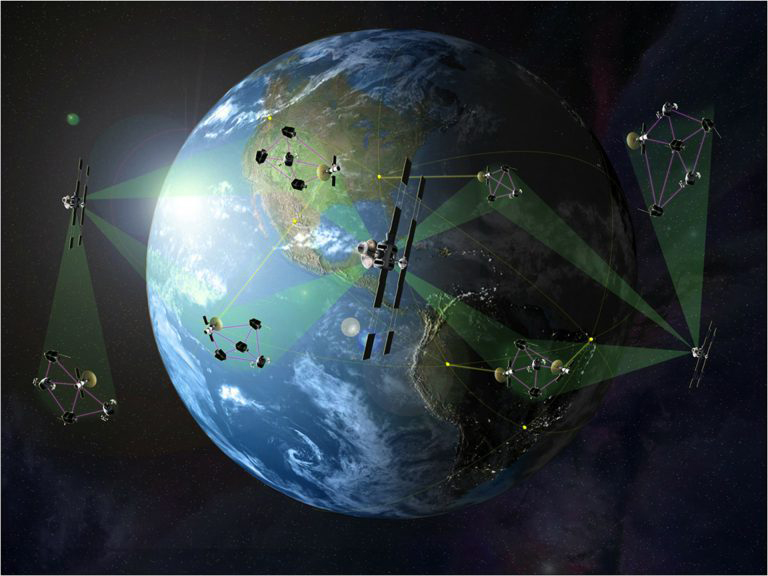
Chris Forrester — Just before the holiday the U.S. Congressional Research Service (a non-partisan research operation) released a study which addressed the potential to bridge the ‘digital divide’. There are filings with the International Telecommunication Union for some 1 million proposed non-Geosynchronous Orbit (GSO) satellites. This means multiple headaches for the regulators and existing operators.

Most recent work in the U.S. and in other developed countries have concentrated their efforts by boosting terrestrial connectivity with fibre — increasingly to the home — and ensuring that if ‘hard-wired’ telcos cannot reach the home then cellular operators can bridge the gap.

But if there’s no cellular then remote communities and business and individual users can only depend on satellite, and in the recent past there have been a handful of perfectly satisfactory suppliers in the shape of ViaSat, Iridium, Intelsat/SES, EchoStar/Hughes, Iridium and Globalstar/Apple to step into the void, albeit at a price!

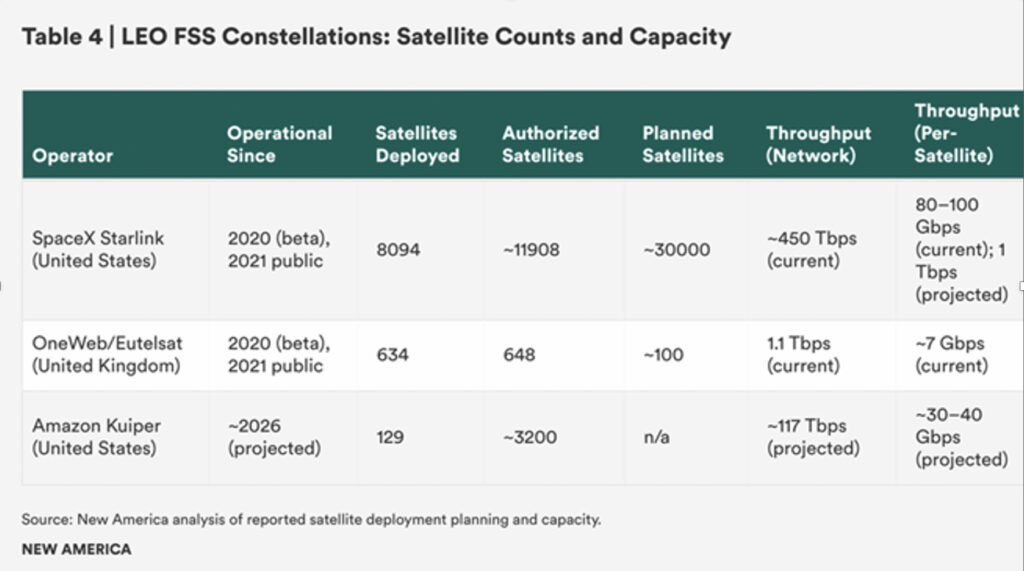
Now there’s Starlink and Eutelsat’s OneWeb, and during 2026 there will be rival satellite systems from AST SpaceMobile and Amazon Leo as well as the likes of Lynk Global and by 2027 Canada’s Lightspeed to provide competition and connectivity. Then there’s potential constellations from Viasat/Space42 and Greg Wyler’s E-Space as well as those from China and Russia.  But adding tens of thousands of new orbiting satellites poses extreme risks, says a new highly detailed and comprehensive 160-page report from investment firm Summit Ridge Group (SRG).

SRG cautions that orbital space in Low Earth Orbit (LEO) is becoming increasingly crowded with communication satellites, and policy developments have simply failed to keep up. This report, prepared by the LEO Policy Working Group, seeks to provide policymakers with a forward-looking assessment of the evolving risks in space.

The study highlights three central themes that U.S. policymakers will need to address:
(1) enabling effective spectrum sharing and coexistence
(2) fostering a sustainable competitive environment in a rapidly evolving industry; and
(3) optimizing LEO connectivity’s role in closing the digital divide.

SRG’s work started some years ago and followed on from a series of Round Tables and the establishing of the LEO Satellite Forum. Over the past year, Wireless Future and ICLE brought together stakeholders with industry, public policy, academic, and regulatory expertise to explore the challenges facing the development and deployment of LEO satellites for universal connectivity.

The Forum has a distinguished panel of highly qualified members and top of their list of findings is that the current satellite-licensing system is overly slow, bespoke, and burdensome. “It could be improved by a shift to clear, uniform ex ante rules and conditions, with targeted ex post enforcement as needed. Second, the report endorses a new U.S.-led framework for satellite spectrum sharing, allowing higher power and more extensive spectrum access for LEOs in shared bands. Finally, a robust spectrum pipeline is needed to create far greater spectrum availability for both fixed satellite service (FSS) and mobile satellite service (MSS), which can be achieved through modern interference protection frameworks, coordinated sharing, and allocating more bands for satellite use.”

The report talks extensively of the threat to the existing satellite players from “foreign entities”. The report says: “In contrast to terrestrial broadband or other communications sectors where private demand has primarily set the pace,

 LEO competition has been significantly shaped from the outset by state sponsorship, subsidies, and strategic mandates. At the same time, even private commercial systems controlled by foreign interests may pose a threat to these same political economy considerations, given long-standing concerns of foreign infrastructure and its tension with national security.”

These threats do not only mean the risks from (say) Chinese or Russian interference. There are many Mid-East countries, for example, where citizens are restricted from accessing non-local websites. The report says that this means LEO cannot be understood as a textbook competitive market; it is instead a hybrid arena where “strategic statecraft and economics continually overlap […] and distorts the market away from free-market competition.”

The FCC has promised to speed up its regulatory examinations of all satellite activity, but the pressures are considerable. The SRG study reminds readers that currently the FCC’s ‘in-tray’ holds an unprecedented number of LEO constellations which have been proposed in recent years. “Across four separate regulatory proceedings, over 20 entities have sought a license to provide FSS operations to the U.S. market alone. More than half of these planned systems have either been authorized or remain pending before the FCC. More broadly, filings before the ITU now reference more than one million proposed non-geostationary satellites. While the eventual realization of these proposed systems could reduce market concentration, such an outcome remains uncertain in the foreseeable future.”

Filed Under: Featured, News

Twin satellites launch to scout for water

November 29, 2025 by editorial

Climate change effects on the Earth’s water cycle and the availability of water on our planet are the missions of the first European Space Agency Scout mission.

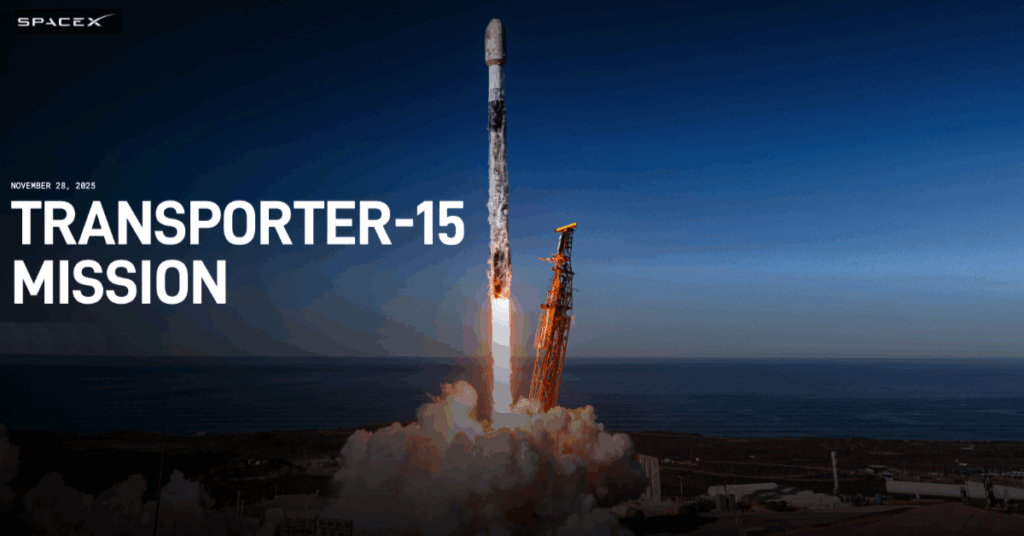
Launched from Vandenberg SFB, the twin HydroGNSS smallsats were launched on November 28, 2025, as a payload within a SpaceX Falcon 9 rocket as a member of the Transporter-15 rideshare flight.

Surrey Satellite Technology Ltd. (SSTL), this missions prime, has received signals from the satellites, indicating that both of them are safely in their assigned orbits.around Earth.

A technique—GNSS reflectometry—finds these satellites, which orbit the Earth with 180 degrees of separation, capturing L-band signals from navigation systems, such as GPS and Galileo, and then transmit L-band microwave signals that change when reflected off the Earth’s surface. These signals are then compared with the signals received from the navigation satellite and uncover the valuable information about water cycle properties and more. These systems gather high-quality data and capture more detailed and definitive data from ground-based GPS-reflection sites, more accurately than has previously been available.

In order to accomplish these tasks, each of the HydroGNSS smallsats carry a zenith and nadir antenna that comprise a delay doppler mapping receiver. The received signals are processed into delay Doppler maps.

Simonetta Cheli, the ESA’s Director of Earth Observation Programs, said, “HydroGNSS marks an important milestone for this new family of rapid, low-cost, Earth observation missions, and we extend our thanks to the missions prime, SSTL. We look forward to seeing how HydroGNSS will employ reflectometry to deliver valuable insights into key, hydrological variables that shape Earth’s water cycle.”

Filed Under: Featured, News

ST Engineering to support UAE’s space ambitions with SAR satellite

November 24, 2025 by editorial

ST Engineering has been selected by FADA, the space-focused entity under EDGE Group, to deliver a synthetic aperture radar (SAR) satellite as part of the UAE National SAR Constellation Program, Sirb.

This project is aimed at enhancing the UAE’s Earth Observation (EO) capabilities and includes the design and delivery of the satellite and the mission control infrastructure necessary to capture high-resolution radar images for critical applications such as disaster response, environmental monitoring and national security.

The satellite will have state-of-the-art imaging with sub-meter resolution and a high-speed downlink. Beyond the SAR satellite, ST Engineering will design and deliver the infrastructure required for its operation. This mission control system will enable flexible and real-time satellite monitoring, ensuring that the satellite provides reliable day-and-night, all-weather imaging.

The satellite will align with FADA’s roadmap, enhancing UAE’s space-based capabilities for government and commercial use. The program will draw on EDGE Group’s depth of expertise in advanced technologies across defence and commercial fields.

The project moves into its next phase after completing the SAR system design review, with assembly and integration of the satellite to follow, along with rigorous operational testing. The collaboration will continue to strengthen the UAE’s position as a global leader in space technology.

Mr. Low Jin Phang, President of ST Engineering’s Digital Systems business, said, “FADA’s selection of ST Engineering for this strategic project underscores our proven leadership in space technology and our ability to design and produce commercial Earth observation satellites. We are committed to delivering end-to-end solutions that meet the UAE’s strategic needs and contribute to its vision of building a resilient, self-sustaining space ecosystem.”

Filed Under: Featured, News

Project Kuiper is now known as Amazon LEO

November 17, 2025 by editorial

Amazon LEO is a simple nod to the Low Earth Orbit (LEO) satellite constellation that powers the network.

Seven years ago, Amazon set out to design the most advanced satellite communications network ever built. The company’s vision was simple: There are still billions of people on the planet who lack high-speed internet access, and millions of businesses, governments, and other organizations operating in places without reliable connectivity. With a constellation of satellites in LEO, the company could help bridge that gap and extend fast, reliable internet to those beyond the reach of existing networks.

Amazon LEO started small, with a handful of engineers and a few designs on paper. Like most early Amazon projects, the program needed a code name, and the team began operating as “Project Kuiper”—inspired by the Kuiper Belt, a ring of asteroids in our outer solar system.

The code name stuck through many of the early milestones: filing and receiving initial licenses, signing the largest set of launch contracts in history, completing a successful prototype mission, and deploying our first full batch of production satellites earlier this year.

The company is now ready to share the permanent brand for the program: Amazon Leo.

The long-term mission remains the same and the company now operates one of the largest satellite production lines on the planet. Some of the most advanced customer terminals ever built, including the first commercial phased array antenna to support gigabit speeds, have been built by the company.

There are now more than 150 satellites in orbit, and customers and partners such as JetBlue, L3Harris, DIRECTV Latin America, Sky Brasil, and NBN Co., Australia’s National Broadband Network operator, have already signed up to deploy the service.

The initial satellite constellation continues to be built out and service will be initiated once more coverage and capacity to the network has been added.

Filed Under: Featured, News

NASA ready with dual mission from Andøya Space

November 12, 2025 by editorial

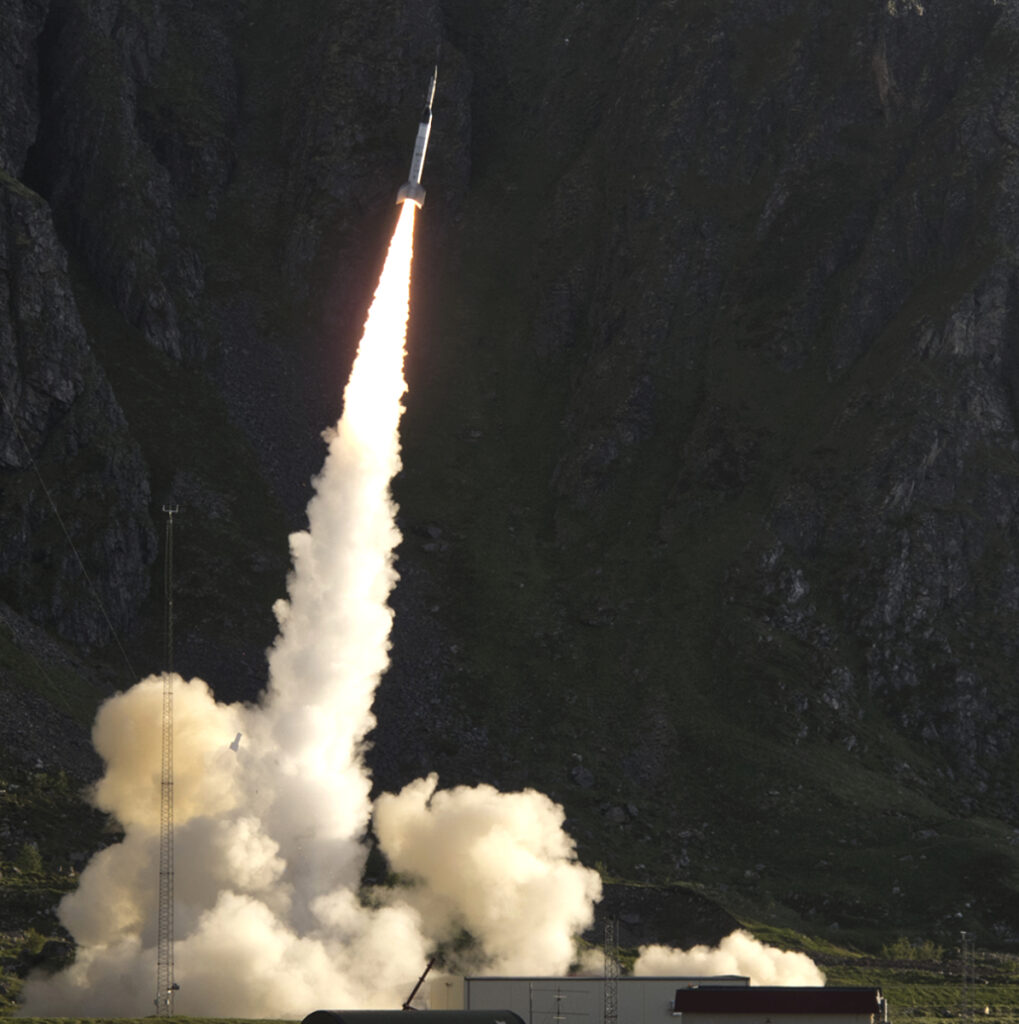
Two sub-orbital rockets from NASA Wallops have been installed on the pads at Andøya Space, ready for their launch campaign.

Suborbital rockets on pads

Kolbjørn Blix, VP Sub-Orbital at Andøya Space, said, “I must admit that I am especially proud of the GHOST mission, of which I have the honor of being one of the principal investigators, together with my American friend and colleague – Christopher Koehler. We would also like to take this opportunity to thank NASA Headquarters, NASA Wallops, Andøya Space and the Norwegian Space Agency for their support of the project. Without this, it would not have been possible to carry out such transatlantic student rocket projects.”

Sounding rocket launch services
Multiple launch pads, two launch sites and a large impact and dispersion area enable Andøya Space to conduct complex launch campaigns.

GHOST is a two-stage vehicle carrying experiments onboard made by students from USA, Puerto Rico and Norway.

GHOST is a successor to a similar student-oriented rocket which launched from Andøya in 2019, G-CHASER,” Blix said. “This is all about giving the next generation space professionals a chance to participate in a real mission, showcasing their own experiments. These young people will be the ones building our future earth observation satellites and interplanetary probes. Many of the students will be here to witness the launch of the rocket carrying their experiments up to space. Earlier this year, we did a song contest for the GHOST mission in collaboration with Ghost Rocket Music and The Hollywood Independent Music Award. The winning song will be played during the launch live stream on our YouTube-channel.”

RENU-3 is the third vehicle in the RENU-project, which is an abbreviation for Rocket Experiment for Neutral Upwelling. It is a four-stage vehicle and its mission is to investigate a region of the Arctic atmosphere where the air is leaking into space. RENU-3 aims to travel up to 500 kilometers altitude in its 16 minute flight, while the GHOST mission will reach an apogee of about 250 kilometers and end its flight after nine minutes.

Earth is essentially a large magnet,” said Blix. “And around the magnetic poles, we see that air is escaping to space, creating a well-known speed bump for satellites. We are of course talking about a very small amount here, but enough for the satellites to feel the effect. RENU-3 will land in the ocean north of Svalbard. And the GHOST rocket will land 150 kilometers north-west of Andøya.”

The launch period is from November 13th to 27th, and the daily launch window is between 07 and 12, local time. The launch campaign will be live streamed on Andøya Space’s YouTube-channel.

Filed Under: Featured, News

INNOSPACE begins payload integration for ‘HANBIT-Nano’ prior to the firm’s 1st commercial launch

November 11, 2025 by editorial

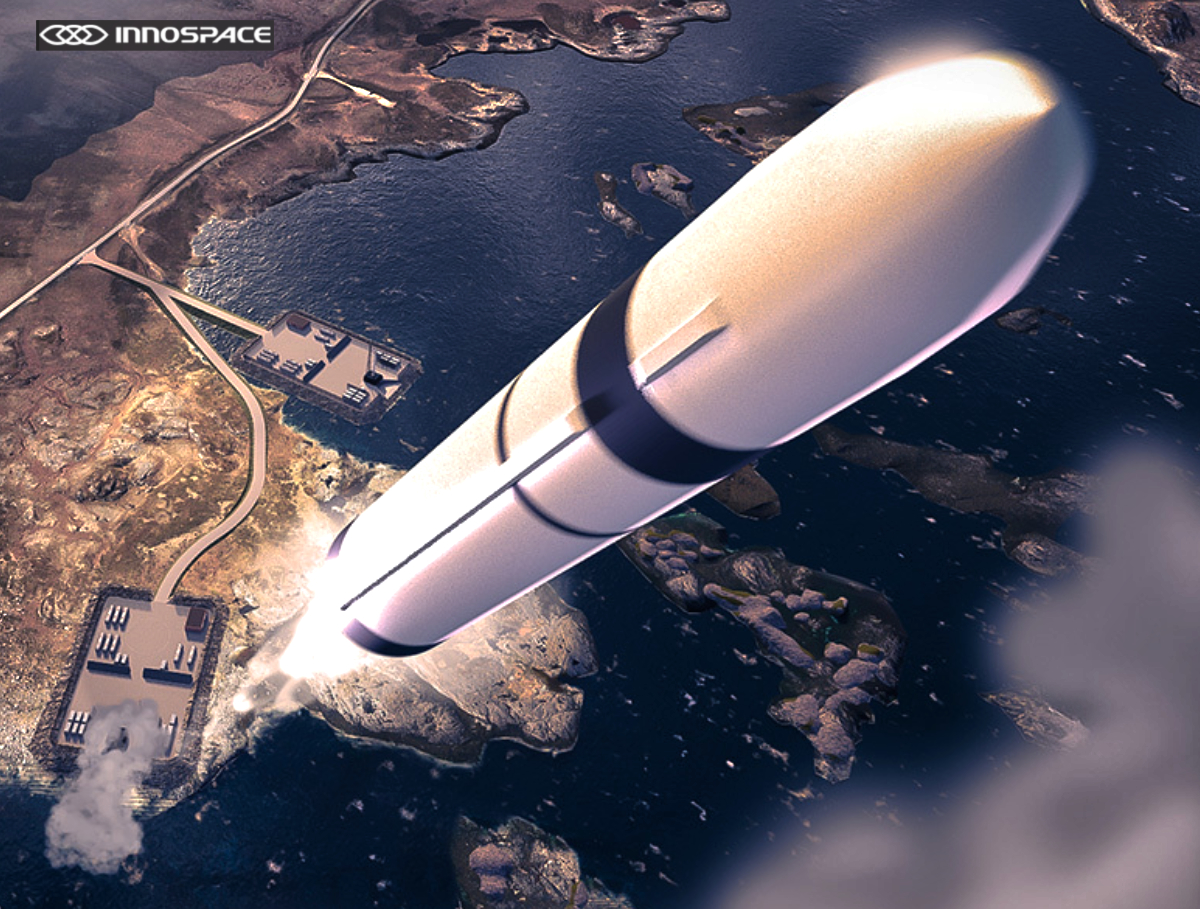
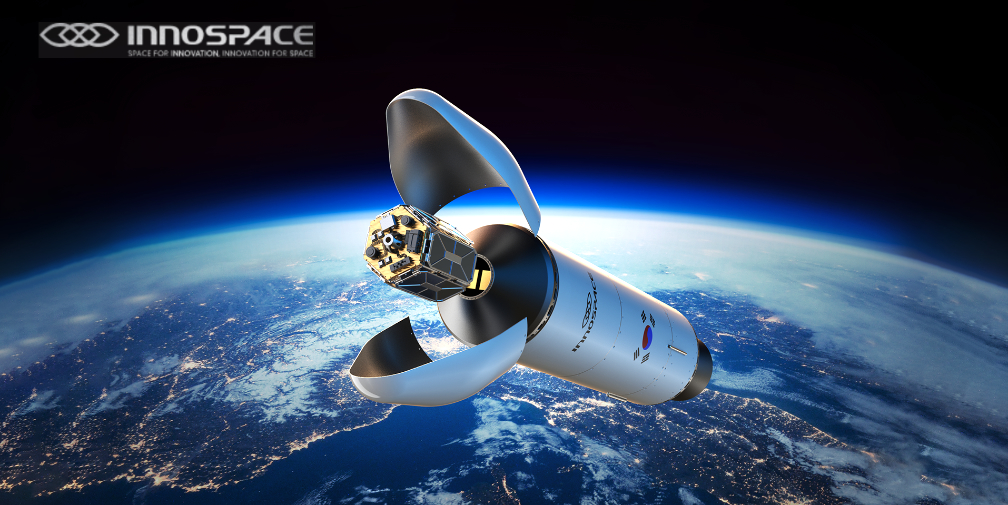
INNOSPACE (KS:462350) has begun functional checks and satellite–launch vehicle interface tests for customer satellites and experimental payloads as part of the operational procedures for its first commercial launch mission SPACEWARD of the ‘HANBIT-Nano’.

This procedure verifies the electrical and mechanical connections between the payload adapter (PLA) and other integration hardware with the satellites and payloads. It is an essential pre-launch step to ensure stable mounting and integrated operation.

With its first commercial launcher HANBIT-Nano, INNOSPACE plans to deploy five customer satellites into LEO at 300 km altitude and 40° inclination, while simultaneously performing missions for three non-separating experimental payloads and one branding payload.

The target launch time is November 22 at 3:00 PM (BRT), from the Alcantara Launch Center in Brazil. The launch window runs from October 28 to November 28.

Two satellites jointly developed by Brazil’s UFMA (Federal University of Maranhão) in collaboration
with startups and national institutions

On the same day, three Brazilian customers—Federal University of Maranhão (UFMA), the Brazilian Space Agency (AEB), and Castro Leite Consultoria LTDA (CLC)—visited the launch site to conduct functional checks and interface testing. UFMA completed pre-launch procedures for two small satellites for technology development and education; AEB completed checks for two small satellites for climate and environmental data collection and one inertial navigation system (INS); and CLC completed procedures for one GNSS unit and one INS payload.

Two satellites (FloripaSat-2A & FloripaSat-2B) developed by the SpaceLab of the Federal University of Santa Catarina (UFSC) with support from the Brazilian Space Agency (AEB)

One small satellite from the Indian customer Grahaa SPACE is scheduled to follow the sequential integration process. In addition, one highball-can branding model from Korean company BREWGURU will be placed separately onboard as a symbolic participatory payload.

Following the completion of these functional checks and interface tests, INNOSPACE will proceed with final integration to mount the satellites onto the launch vehicle. Once completed, the process will move on to payload fairing installation, pre-launch rehearsal (dry run), comprehensive weather and environmental assessments, and finally the joint flight-safety and integrated-operations procedures with the Brazilian Air Force leading up to the final launch countdown.

INNOSPACE’s satellite–launch vehicle interface test marks a significant step, as it is the first time a Korean private company has independently carried out the integration procedures required for commercial launch services in line with customer requirements. This is symbolic of Korea’s private launch service industry entering true commercialization, supported by practical preparations to serve satellite customers,” said Soojong Kim, Founder and CEO of INNOSPACE.

Filed Under: Featured, News

Voyager acquires ExoTerra

November 5, 2025 by editorial

Voyager Technologies [NYSE: VOYG] recently acquired ExoTerra Resource, a developer of electric propulsion systems.

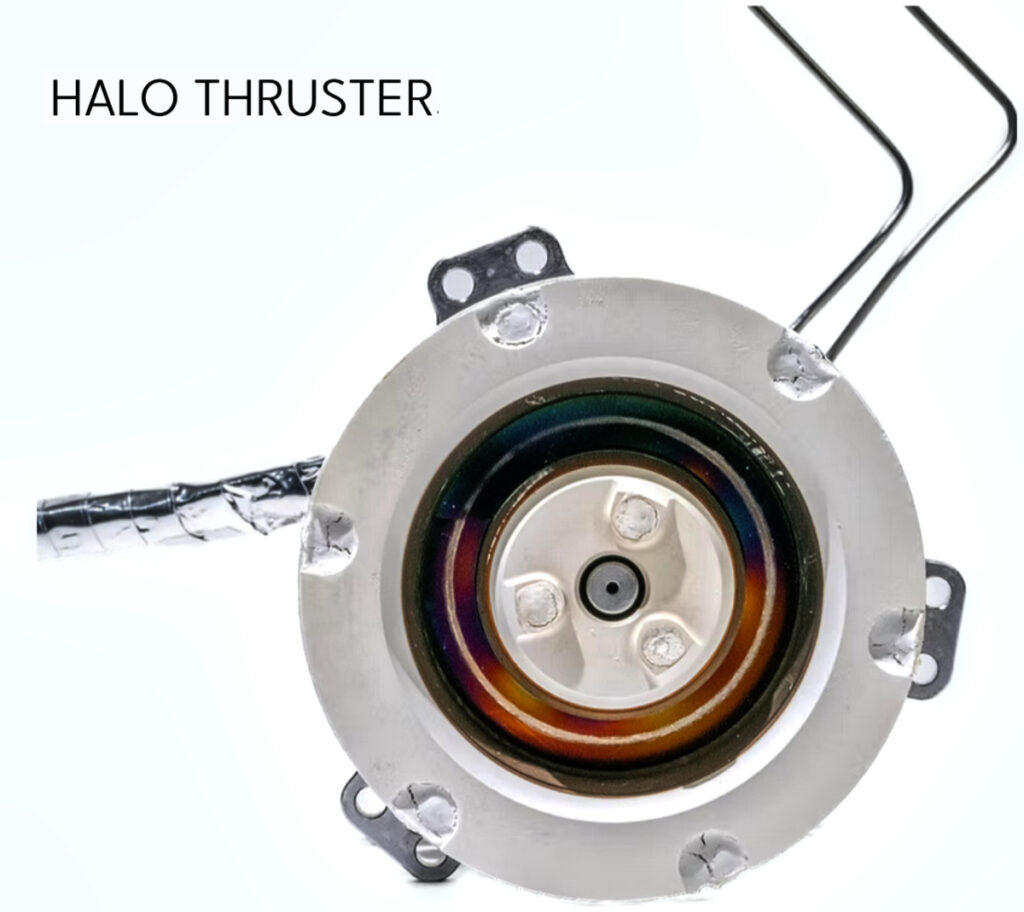
ExoTerra’s proprietary technology delivers precise maneuvering, extended lifetimes and high efficiency delta-V – essential for spacecraft across national defense architecture layers that must be able to reposition, avoid threats and sustain mission advantage.

ExoTerra’s Halo thruster technology is proven aboard DARPA Blackjack ACES spacecraft. The company also has contracts with commercial companies and organizations such as NASA. Combining ExoTerra’s capabilities with its deep portfolio of mission-critical technologies, Voyager is well positioned for strategic initiatives such as Golden Dome.

We bridge innovation with industrial scale, turning technologies into capabilities that fill gaps and actually move missions forward,” said Dylan Taylor, Chairman and CEO of Voyager. “We’re amplifying our collective mission capability with ExoTerra, accelerating delivery across defense and commercial markets. As freedom of maneuver becomes central to space control and deterrence, it’s imperative that reliable propulsion systems are built, tested and qualified right here in the United States.”

We’ve spent years developing efficient, compact and reliable electric propulsion systems, and joining forces with Voyager allows us to enhance and deliver these systems at scale,” said Mike VanWoerkom, CEO of ExoTerra. “Together, we’ll manufacture flight-proven propulsion technologies that fortify the nation’s ability to manufacture and field spacecraft with speed, resilience and cost efficiency.”

Filed Under: Featured, News

GomSpace North America announces $1.5 million order from a leading global service provider

November 5, 2025 by editorial

GomSpace North America, a subsidiary of GomSpace Group AB, has received a component purchase order valued at $1.5 million from a leading global service provider.

The order includes advanced spacecraft subsystem components to support an upcoming satellite mission. Delivery is scheduled for the first half of 2026.

GomSpace will supply components from its established line of high-performance nanosatellite power and command systems, known for their flight heritage and suitability for complex commercial and government applications.

This order contributes to GomSpace’s ongoing footprint expansion in the Americas and strengthens its role enabling resilient multi-satellite mission architectures around the world.

This order reflects the continued confidence global space industry partners place in GomSpace’s flight-proven hardware portfolio,” said Slava Frayter, Chief Executive Officer, GomSpace North America. “We are committed to supporting our customers’ mission success with reliable technology and responsive technical collaboration.”

Filed Under: Featured, News

  • « Go to Previous Page
  • Page 1
  • Interim pages omitted …
  • Page 4
  • Page 5
  • Page 6
  • Page 7
  • Page 8
  • Interim pages omitted …
  • Page 62
  • Go to Next Page »

Primary Sidebar

WEEKLY NEWSLETTER

Archives

  • October 2026
  • September 2026
  • August 2026
  • July 2026
  • June 2026
  • May 2026
  • April 2026
  • March 2026
  • February 2026
  • January 2026
  • December 2025
  • November 2025
  • October 2025
  • September 2025
  • August 2025
  • July 2025
  • June 2025
  • May 2025
  • April 2025
  • March 2025
  • February 2025
  • January 2025
  • December 2024
  • November 2024
  • October 2024
  • September 2024
  • August 2024
  • July 2024
  • June 2024
  • May 2024
  • April 2024
  • March 2024
  • February 2024
  • January 2024
  • December 2023
  • November 2023
  • October 2023
  • September 2023
  • August 2023
  • July 2023
  • June 2023
  • May 2023
  • April 2023
  • March 2023
  • February 2023
  • January 2023
  • December 2022
  • November 2022
  • October 2022
  • September 2022
  • August 2022
  • July 2022
  • June 2022
  • May 2022
  • April 2022
  • March 2022
  • February 2022
  • January 2022
  • December 2021
  • November 2021
  • October 2021
  • September 2021
  • August 2021
  • July 2021
  • June 2021
  • May 2021
  • April 2021
  • March 2021
  • February 2021
  • January 2021
  • December 2020
  • November 2020
  • October 2020
  • September 2020
  • August 2020
  • July 2020
  • June 2020
  • May 2020
  • April 2020
  • March 2020
  • February 2020
  • January 2020
  • December 2019
  • November 2019
  • October 2019

© 2019–2026 SatNews

Insert/edit link

Enter the destination URL

Or link to existing content

    No search term specified. Showing recent items. Search or use up and down arrow keys to select an item.
      x
      Sign Up Now!

      Enjoy a free weekly newsletter with recent headlines from the global SmallSat industry.

      Invalid email address
      We promise not to spam you. You can unsubscribe at any time.
      Thanks for subscribing! You will now receive weekly SmallSat News updates.
      We love our advertisers.
      And you will too!

      Please disable Ad Blocker to continue... We promise to keep it unobtrusive.
      We promise not to spam you. You can unsubscribe at any time.
      Invalid email address
      Thanks for subscribing!