• Skip to main content
  • Skip to primary sidebar
  • Home
  • News
  • Featured
  • More News ⌄
    • SatNews
    • SatMagazine
    • MilSatMagazine
  • Events ⌄
    • MilSat Symposium
    • SmallSat Symposium
    • Satellite Innovation
  • Contacts
  • SUBSCRIPTION

SmallSat News

You are here: Home / Archives for Featured

Featured

Aitech unveils world’s 1st AI-enabled Picosatellite constellation platform

April 7, 2025 by editorial

Aitech has introduced the picosatellite (PicoSat) constellation platform, IQSat™. The IQSat is AI-enabled and includes Artificial Intelligence and Machine Learning (AI) ML) from Intuidex, Inc. incorporated in Intuidex’s Watchman for Space™ (W4S™) product for detecting and providing insight on patterns and anomalies for a range of applications, including public safety, agriculture, military, defense, climate, biology and more.
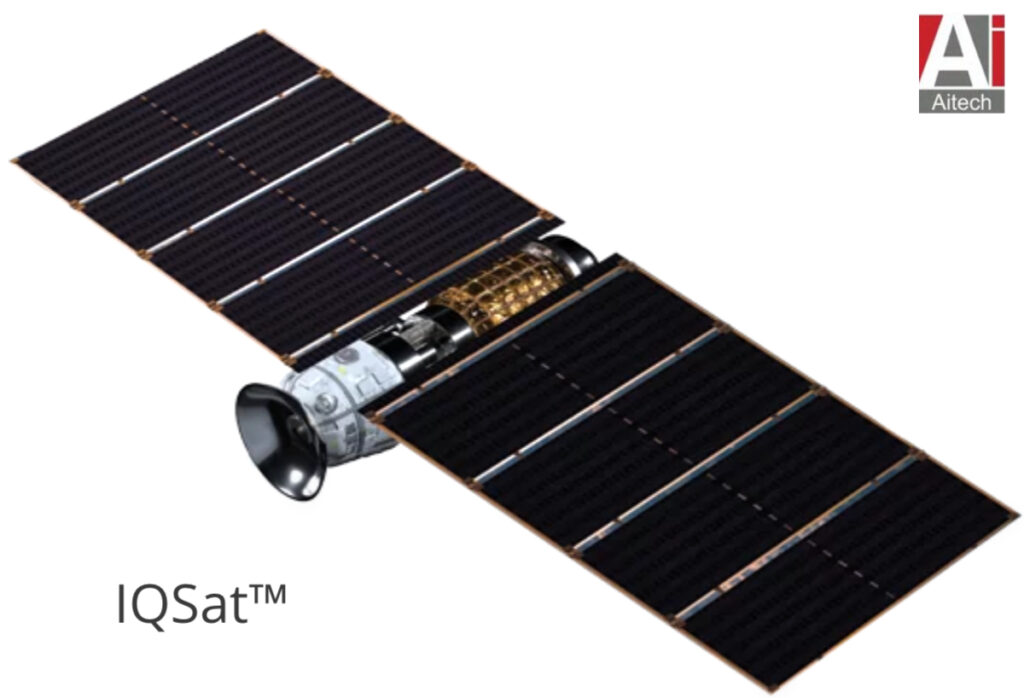
Built on Aitech’s 30 years of electronics legacy and trillions of miles flown in space, the IQSat is small enough to be held in the palm of a hand and can be deployed in a constellation of five to thousands. Offering coverage previously unattainable, IQSat is powerful enough to deliver actionable pattern of life analysis, rapidly and frequently, from any desired point on Earth.

Leveraging Intuidex’s Watchman for Space product, the IQSat offers Higher-Order Low-Resource Learning™ (HO-LRL™) in support of rapid do-it-yourself user-based modeling, detection and tracking, pattern of life and anomaly detection, and constellation operations capabilities that enable new uses across a range of markets:

Military and Defense: With a low probability of intercept and low probability of detection, IQSat can deliver critical information on threat locations, directions and velocities in any area of interest at tactically significant update rates directly to the warfighter

Space Situational Awareness: With flexible sensor options and constellation configurations, IQSat brings low-cost capability to detect space debris to prevent space collisions and monitor orbital traffic, as well as detect changes in satellite trajectories or potential anti-satellite threats

Space Habitat: Placed in the vicinity of Space Habitats, IQSat can deliver temperature, radiation levels and other data variables to evaluate structure integrity by detecting micro-meteorite impacts and material degradation or external surveillance to detect space debris collision threats

Public Safety: A low-cost LEO constellation of IQSats can provide rapid detection of remote areas to identify natural disasters such as floods and fires; assist in remote search and rescue operations through detection of objects, locations and movement directly to the rescuer; or monitor infrastructure surveillance of dams, bridges and other structures

Agriculture: IQSat can assist farmers by delivering fast and frequent insight on soil, crops, disease, weather and other critical variables to help improve crop output

Science and Research: A constellation of IQSats can provide researchers and scientists with a low-cost solution for tracking unique weather patterns, monitoring wildlife migrations around the world, tracking ocean currents and wildlife and many more capabilities

The IQSat provides mission flexibility for quick and cost-effective constellation design, reducing delivery time and cost of custom sensing satellites and constellation configurations.

Leveraging Watchman for Space, the IQSat platform dynamically updates its incident, event, object or threat detection priorities to meet ever-changing mission needs through uplinked software and configuration driven by users. Additionally, IQSat offers the industry’s first common payload interface designed to host multiple payloads on a single flexible electrical and mechanical interface, allowing for quick and standardized designs to reduce cost, NRE and time to launch.

The IQSat platform will be available in Q4 2025 for mission development and ready for LEO flight in Q1 2026. Based on mission needs, the IQSat offers:

  • Small size and ruggedized, standardized design for low-cost access to space
  • Rapid development and deployment to create constellations in months
  • Flexible sensor options to meet a range of mission needs
  • The latest relevant information from areas of interest in minutes, with a constellation of thousands, frequent revisit rates and human-in-the-loop management in Watchman for Space
  • High accuracy pattern of life and anomaly detection of incidents, events and items of interest through on-board AI/ML processing capabilities using HO-LRL
  • Low uplink and downlink bandwidth utilization for rapid delivery of critical information directly to the point of need

Space-based infrastructure solves big problems and fuels big advancements on Earth. The new IQSat platform is integral to space accessibility by delivering low cost, rapid deployment constellations that provide access to actionable information quickly and frequently for infinite applications,” said Pratish Shah, U.S. general manager, Aitech. “Whether used for military and defense, environmental or agricultural applications, communications or scientific research, the flexibility, cost and availability of a solution like IQSat has not existed before – providing more accessibility to the power of space.”

==> Aitech is showcasing the new IQSat PicoSat constellation platform at the Space Symposium in Colorado Springs, Colorado, in booth #612 from April 7-10.

Filed Under: Featured, News

MDA Space acquiring SatixFy

April 4, 2025 by editorial

MDA Space Ltd. (TSX:MDA) and SatixFy Communications Ltd. (NYSE American: SATX) have entered into a definitive agreement under which MDA Space will acquire all outstanding shares of SatixFy in an all-cash transaction for $2.10 per share—this transaction, which represents an equity value for SatixFy of approximately $193 million (approximately C$278 million), is expected to further enhance the end-to-end satellite systems offering of MDA Space as demand for next generation digital satellite communications continues to accelerate.

Founded in 2012, SatixFy is a supplier of cutting-edge semiconductors and solutions for the space and the satellite communications value chain. SatixFy’s technology enables satellite broadband and direct-to-device constellations with its radiation hardened digital beamformers enabling them to generate hundreds of beams, designed to significantly improve satellite performance and decrease cost.

SatixFy has invested approximately $270 million in research and development to date, and once closed, the transaction will bring to MDA Space a differentiated technology portfolio including more than 60 patents issued and pending, as well as a talented and largely specialized technical employee base of approximately 165 people globally. In addition to chips to support satellite payload solutions and satellite communications, the SatixFy portfolio includes gateways, multi-beam digital antennas, user terminals and modems.

The market for software-defined digital satellite constellations is rapidly expanding, driven by increased demand for satellite-based broadband, direct-to-device connectivity and IoT. Market research firm NSR forecasts that more than 89% of all communications satellites built in the ten years between 2023 and 2032 will include some level of software-defined technology.

The acquisition of SatixFy is expected to enhance MDA Space’s capabilities in this growing digital satellite communications market by:

  • Adding complementary technology and a rich IP portfolio to enable end-to-end satellite communications solutions and expand offerings by combining MDA Space technology and capabilities in digital LEO and MEO satellites (MDA AURORA™) with SatixFy’s space grade chips and communications systems

  • Vertically integrating a key and differentiated technology provider for MDA Space Satellite Systems business
  • Adding a highly specialized and complementary technical team to MDA Space
  • Aligning the technology roadmap for MDA Space next generation software-defined digital satellites to continue to meet evolving needs of customers

With this acquisition MDA Space is taking a logical next step to further reinforce our technical differentiation as the global market transitions from analog to digital satellite technology,” said Mike Greenley, Chief Executive Officer of MDA Space. “Similar to MDA Space, SatixFy is an innovation company at its core, and bringing these two highly skilled teams together adds complementary expertise and technology that will allow us to further enhance our value proposition for current and future customers by providing vertically integrated and differentiated digital satellite solutions.”

SatixFy has consistently aimed to revolutionize the market with digital chip-based solutions while establishing a world-leading space technology company. Joining MDA Space marks a significant milestone in that journey,” said Nir Barkan, Chief Executive Officer of SatixFy. “This transaction is a testament to the innovation and dedication of our employees over the past decade. It will provide the scale, resources, and stability needed to continue delivering groundbreaking solutions for our customers.”

Filed Under: Featured, News

CesiumAstro to deliver space payloads + ground systems for Taiwan’s 1st SATCOM constellation

April 2, 2025 by editorial

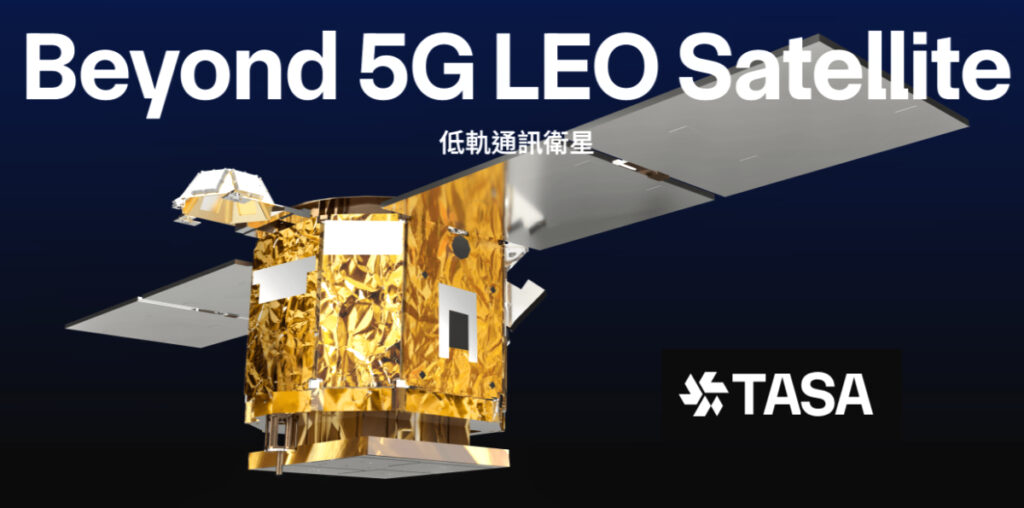
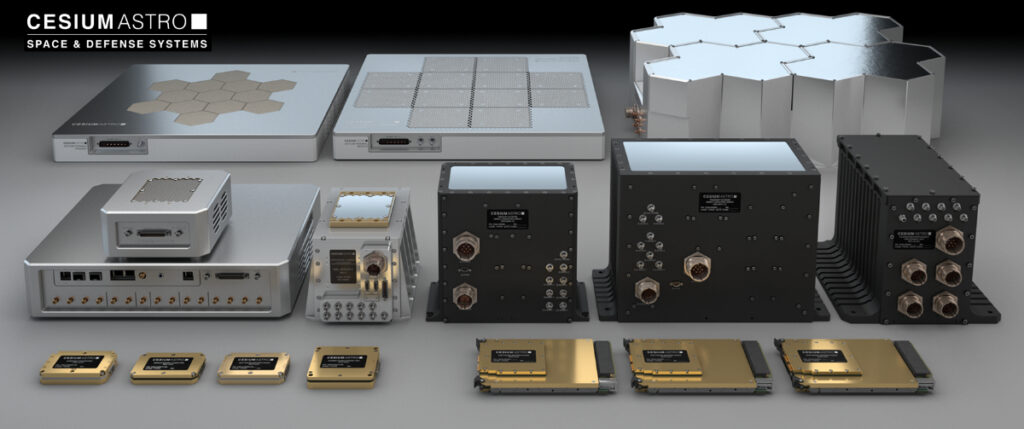
CesiumAstro has entered into a contract with the Taiwan Space Agency (TASA) to deliver software-defined radio (SDR) space communications payloads and ground user terminals for Taiwan’s first LEO communications satellite constellation.

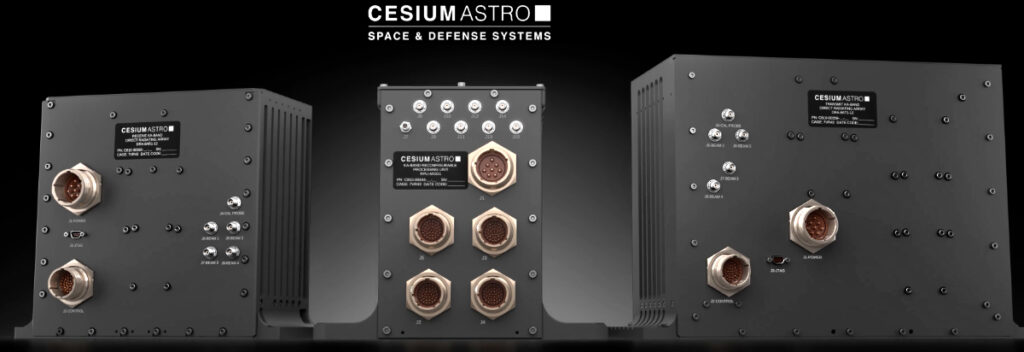
This contract marks a major milestone in Taiwan’s effort to build sovereign LEO communications infrastructure and accelerate the deployment of its indigenous satellite communications network. The Beyond 5G LEO Satellite (B5G) program will receive both space- and ground-based active phased array systems from CesiumAstro, including its Vireo Ka space payload and Skylark user terminal.

Photo of CesiumAstro’s Vireo Ka space payload, courtesy of the company.

The B5G satellites are a critical step in establishing Taiwan’s capacity to design, manufacture, and operate LEO communications satellites. CesiumAstro’s contributions will include a complete space payload leveraging its Vireo Ka active phased array technology, with support for multiple independently steerable beams, real-time reconfigurability, and high-throughput performance.

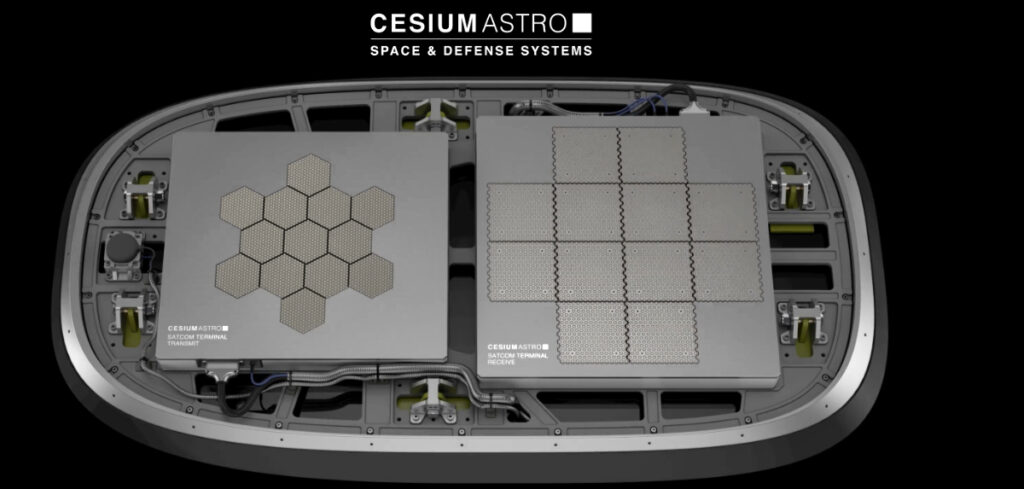
CesiumAstro’s Skylark user terminal, photo courtesy of the company.

Complementing the space segment, CesiumAstro will also deliver Skylark ground terminals, designed to support resilient user-side connectivity across a range of mission profiles.

The B5G program is led by the Taiwan Space Agency and forms part of Taiwan’s National Space Technology Long-Term Development Plan which prioritizes domestic resilience and global competitiveness in emerging technologies, including space-based communications.

We are honored to support TASA’s vision for next-generation communications,” said Shey Sabripour, Founder and CEO of CesiumAstro. “Our modular, flight-proven payload technologies align with TASA’s goals for performance, flexibility, and future scalability, and we look forward to delivering systems that support their ambitions for 5G and beyond.”

As Taiwan invests in secure, sovereign communications infrastructure, CesiumAstro is proud to contribute best-in-class technology and a commitment to mission success,” said Trey Pappas, Chief Revenue Officer at CesiumAstro. “This contract reflects the growing international demand for proven, reconfigurable space communications systems.”

About CesiumAstro
CesiumAstro, headquartered in Austin, Texas, is a leader in advanced connectivity solutions for ground, air, and space. With additional facilities in Colorado, California, the United Kingdom, and Germany, the company delivers end-to-end solutions encompassing satellites, high-performance communications payloads, and advanced computing systems. The company’s full-stack, multi-mission hardware and software serve diverse commercial, government, and defense applications. CesiumAstro maintains complete vertical integration with in-house design, manufacturing, and testing capabilities certified to AS9100D/ISO 9001:2015 standards.

About TASA
The Taiwan Space Agency (TASA) oversees Taiwan’s space affairs. Established in 1991, it became an administrative corporation under the National Science and Technology Council (NSTC) in 2023. TASA has developed independent satellite capabilities, leading programs like FORMOSAT-1, 2, 3, 5, 7, and Triton for scientific research, optical remote sensing, and meteorology. Looking ahead, TASA is advancing Taiwan’s space industry through initiatives such as FORMOSA-8 satellites, FORMOSA-9 satellites, experimental Beyond 5G (B5G) communication satellites, optical laser communication technology, a small launch vehicle program, and a national launch site.

Filed Under: Featured, News

Umbra signs CRADA with NGA

March 27, 2025 by editorial

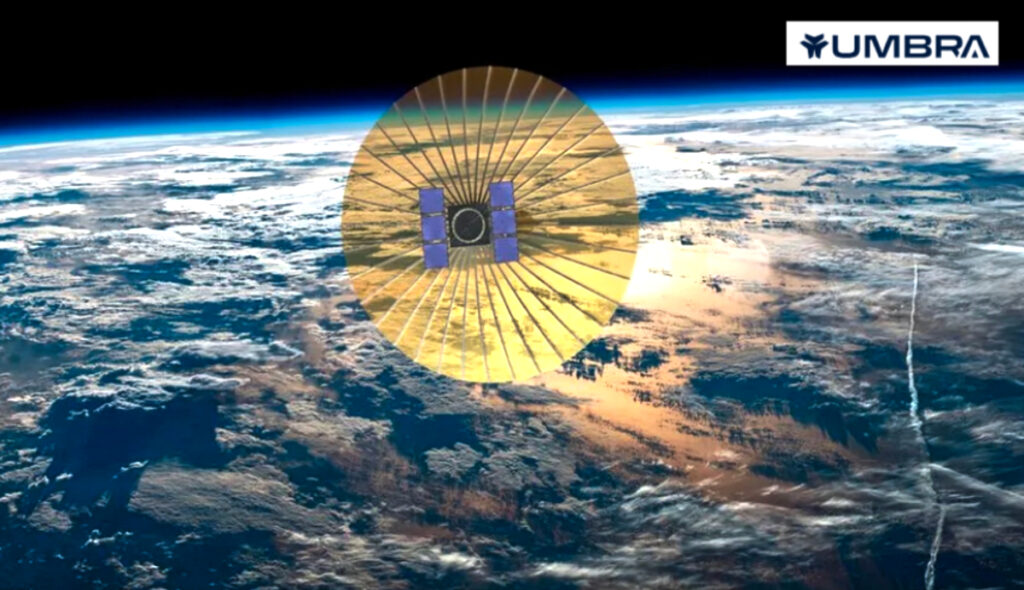
Umbra has signed a Cooperative Research and Development Agreement (CRADA) with the National Geospatial-Intelligence Agency (NGA).

Under this CRADA, Umbra gains access to NGA’s research insights to better align its capabilities with mission requirements, while NGA can leverage Umbra’s advanced Synthetic Aperture Radar (SAR) and RF data products and satellite technology to expand its research and operational capabilities.

This partnership supports NGA’s broader Commercial GEOINT strategy, which aims to deepen collaboration with private sector GEOINT innovators. Through this CRADA, Umbra will aid NGA in enhancing operational resiliency, readiness, and the development of new data collection modes.

Established in 2015, Umbra has become a trusted, U.S. government partner, consistently delivering the highest volume of high-quality data at low latency. This CRADA builds upon Umbra’s enduring collaboration with national security agencies, including contracts with the NRO, SDA, NASA, DARPA, and AFRL.

The collaboration will focus on exploring novel applications of SAR and RF technologies, including rapid prototyping, iterative improvements to baseline products, and testing unique collection modes to adapt to dynamic mission needs. Umbra’s rapid pace of system development and data processing will allow NGA to explore new approaches in near real-time, adapting to changing requirements with speed and precision.

Last year, Umbra released the first commercial bistatic SAR imagery from its tandem satellite formation. Operating satellites in tightly coordinated clusters enables unique capabilities like multistatic collection and resilience, underscoring Umbra’s dedication to advancing U.S. GEOINT capabilities. Under this CRADA, Umbra innovations can now provide NGA with a testing ground for cutting-edge commercial technologies, enhancing the agency’s ability to leverage commercial assets for future mission success.

We’re honored to collaborate with NGA to explore new frontiers in remote sensing,” said David Langan, CEO and co-founder of Umbra. “The CRADA allows us to combine our expertise with NGA’s mission insight, accelerating the development of resilient, operationally ready GEOINT solutions for the U.S. government. We look forward to demonstrating the impact of commercial SAR and RF in advancing national security.”

About Umbra
Umbra is a vertically integrated space technology company providing satellite technology solutions and intelligence data as a service to commercial and government customers. Our cutting-edge products help customers solve complex business, environmental, and security challenges. Umbra is founded, funded, built, and operated in the United States with facilities in Santa Barbara, CA, and Arlington, Virgina.

Filed Under: Featured, News

Exolaunch selected to deploy CubeSats for Canada’s CUBICS initiative

March 24, 2025 by editorial

Exolaunch has signed a Launch Services Agreement (LSA) with the Canadian Space Agency (CSA) to support the deployment of cubesats as part of CUBICS (CubeSats Initiative in Canada for STEM), a program designed to advance space science and technology while training Canada’s future space leaders.

The agreement enables the launch of nine 3U CubeSats, developed by Canadian universities, with options for additional missions through mid-2028. These satellites will be deployed via a rideshare mission no earlier than mid-2026, with integration taking place at CSA’s facilities in Quebec.

Through this agreement, Exolaunch will provide its industry-leading mission integration, testing, and satellite deployment services. The satellites will be deployed using EXOpod Nova, Exolaunch’s next-generation CubeSat separation system, which provides enhanced flexibility, scalability and reliability for high-performance missions.

EXOpod

With this contract, Exolaunch grows its activities in Canada, reinforcing its commitment to enabling cost-effective, reliable access to space for government agencies, research institutions, and commercial satellite operators worldwide.

The cubesats supported under CSA’s CUBICS program are developed by nine Canadian universities, each contributing cutting-edge research and technology demonstrations across a range of scientific disciplines, including Earth observation, space weather monitoring, and communications technology.

In the coming months, CSA will host technical meetings, where Exolaunch will engage with the participating universities, review student presentations, and gather mission requirements to optimize the integration and deployment process.

We are thrilled to expand Exolaunch’s global presence into Canada by working with one of the country’s most distinguished government agencies,” said Robert W. Sproles, chief executive officer at Exolaunch. “CSA’s CUBICS program is an incredible initiative that not only encourages CubeSat innovation, but also empowers ambitious students to gain real-world spaceflight experience. At Exolaunch, we are deeply committed to making space more accessible, and we are honored to provide our flight-proven EXOpod Nova deployers to ensure these CubeSats reach orbit safely and successfully. We look forward to supporting CSA and the brilliant teams behind these projects.”

About Exolaunch
Exolaunch (Germany, USA) is a global leader in launch mission integration and deployment technologies for small satellites. With a decade of flight heritage and over 520 satellites launched across 34 missions to date, Exolaunch leverages industry insight to tailor turnkey solutions that meet customer needs and respond to market trends. Exolaunch fulfills launch contracts for industry leaders, the world’s most innovative startups, research institutions, government organizations, and international space agencies. The company develops and manufactures its own flight-proven and industry-leading small satellite separation systems, with the fastest-growing heritage on the market. Exolaunch promotes safe, sustainable, and responsible use of space and is committed to making space accessible for all.

Filed Under: Featured, News

Teledyne delivers 100th infrared detector for the SDA’s Tracking Layer

March 20, 2025 by editorial

Teledyne Technologies Incorporated (NYSE:TDY​) earlier this month announced the company’s on-time and early deliveries for the Space Development Agency‘s (SDA) proliferated constellation with the delivery of the 100th large format focal plane module, counting deliveries from the Tranche 0, Tranche 1, and now Tranche 2 tracking layers.

Mission Sensors: The global tracking layer relies on infrared payloads to analyze threats from orbit. Teledyne’s configurable manufacturing line delivers radiation-hardened, high-sensitivity sensors to meet threat detection requirements. These multi-megapixel resolution arrays significantly improve threat detection accuracy, and form part of the fire control countermeasures system against hypersonic weapons.

Proven Expertise: Teledyne’s track record includes delivering space-grade focal plane arrays for prestigious instruments such as the James Webb Space Telescope, The European Space Agency’s Euclid dark matter telescope, and the Nancy Grace Roman space telescope. Defense related deliveries, though often classified, encompass over a dozen successful missions. In addition to focal plane arrays, Teledyne will supply electronics and other components for the Proliferated Warfighter Space Architecture (PWSA) campaign.

Meeting space imaging needs across the spectrum: Counting infrared as well as visible CMOS and CCD sensors sourced from Teledyne’s DALSA and e2v businesses, the corporation has supported more than 260 total space missions, while close coordination across the global enterprise enables Teledyne to service emerging space imaging needs worldwide.

A new paradigm for the space focal plane industry: “Five years ago, no one thought the focal plane technology could keep up with SDA’s aggressive schedule, but our team innovated ways to meet the new paradigm,” said Megan Tremer, President of the Space Imaging business. “As more proliferated constellations enter the planning and acquisition phases, Teledyne remains focused on scaling operations to maximize capacity, yield, and performance. Our proven track record and dedication to performance position us as the ideal partner for these critical missions.”

About Teledyne Technologies
Teledyne Technologies is a leading provider of sophisticated digital imaging products and software, instrumentation, aerospace and defense electronics, and engineered systems. Teledyne Technologies’ operations are primarily located in the United States, Canada, the United Kingdom, and Western and Northern Europe.

Filed Under: Featured, News

KONGSBERG launches and is now operating their 1st satellite

March 19, 2025 by editorial

Kongsberg Defence & Aerospace (KONGSBERG’) has entered the space industry as a satellite operator and service provider after the company launched their first microsatellite from California. The satellite, named ARVAKER 1 N3X, was launched from the Vandenberg Space Force Base in California as part of the SpaceX Transporter 13 launch service.

In 2024, KONGSBERG was awarded a contract from the Norwegian Armed Forces on behalf of the Norwegian government to provide maritime surveillance data to cover Norwegian Areas of Interest. As part of the five-year contract, KONGSBERG will launch three satellites.

The data will be used by the Norwegian Armed Forces, as well as other Norwegian government institutions involved in maritime security such as the Coastal Administration, the Directorate of Fisheries, and the Norwegian Customs.

The MP42H satellites are produced by Kongsberg NanoAvionics and equipped with Automatic Identification System (AIS) receivers and detector systems, delivered by Kongsberg Discovery. It includes a navigation radar detector developed by the Norwegian Defence Research Establishment (FFI). Kongsberg NanoAvionics has manufactured and launched 40 satellites to date.

The satellites are operated by Kongsberg Satellite Services (KSAT), which will use their international network of downloading stations to provide high frequency and low latency surveillance data for both the Norwegian Government as well as international customers.

“KONGSBERG has been active in the space segment for decades, delivering high-end technology and solutions, but this successful launch marks a milestone for us as we will own and operate the satellites for the first time,” said Eirik Lie, President of Kongsberg Defence & Aerospace.

KONGSBERG companies and subsidiaries cover the full value chain to offer next-generation satellite services, from delivering our own micro satellites and ground stations to market-leading data processing and analytics. KONGSBERG is uniquely positioned tcmplete system solutions combing space segment with the ground systems to enhance data delivery and reduce latency.  A central part of KONGSBERG’s capability is the ability to assemble, integrate and test satellites with sensitive and national controlled payloads in our facilities.

Filed Under: Featured, News

Alba Orbital launches 5 satellites via SpaceX— now a total of 53 launched satellites for the firm

March 17, 2025 by editorial

Alba Orbital integrated five PocketQube satellites from three different countries for their flight on-board SpaceX’s Transporter-13 Rideshare mission.

The satellites were integrated into Alba Orbital’s PocketQube Deployer, AlbaPod, at their new facilities in Hillington Industrial Estate, Glasgow, the world’s first PocketQube factory. After integration, the cluster of pocket-sized satellites were shipped out to SpaceX and then hitched their ride to LEO.

Alba Orbital’s AlbaPod

PocketQubes are highly miniaturized satellites, typically 5 cm cubed per unit (‘P’), that can be launched to orbit for as little as 25K euros via Alba Orbital’s rideshare services. PocketQubes are cost-effective, quicker to build, and provide versatile options for a variety of missions that range from educational projects to advanced technological demonstrations.

Payloads aboard this mission…

HADES-ICM – HYDRA SPACE / IC MERCURY / SMART IR

A 1.5p PocketQube, this smallsat is carrying an open voice transponder for the radio amateur community. It will be operated by the non-proft organization AMSAT-EA. The PocketQube includes the UK based Smart IR second, graphene based technology experiment that will ber conducted on-orbit. The PocketQube also includes icMercury, Interstellar Communication Holdings Inc. nspiring space sustainability text messages that will be broadcasted periodically by HADES-ICM

HYDRA-W – HYDRA SPACE

Returning customer Hydra Space is developing an IoT network using their 1.5p PocketQube platform. Hydra-W will add to this growing constellation. This PocketQube Includes an on-orbit experiment from UC3M – Universidad Carlos III (Spain) implemented by Terahertz Research group and IoT connectivity experiment by Hydra Space

UNICORN-2O, 2P & 2Q – ALBA ORBITAL

Three 3p PocketQubes imaging satellites for Alba night time earth observation constellation to image earth in daytime and night time. These are the 15th, 16th and 17th Unicorn-2 satellites to launch into orbit.

About Alba Orbital
Alba Orbital (UK, USA, Germany) is the world’s leading PocketQube company that has delivered 53 pico-satellites on-orbit to date. Alba is a vertically integrated NewSpace company ‘democratizing access to space’, providing turnkey solutions from advanced pico-satellite platforms, low-cost launch opportunities, and ground station services. Alba has worked with more than er 40 customers across four continents, including clients such as Stanford University, Carnegie Mellon University and TU Delft.

Filed Under: Featured, News

Firefly Aerospace ready to launch Alpha FLTA006 for Lockheed Martin’s LM 400 Spacecraft

March 6, 2025 by editorial

“Message in a Booster” mission will launch Lockheed Martin’s technology demonstration spacecraft to low Earth orbit

Following a successful rocket static fire test, Firefly Aerospace, Inc. has announced the company’s Alpha Flight 6 (FLTA006) mission, called Message in a Booster, is scheduled to launch Lockheed Martin’s LM 400 spacecraft no earlier than March 15th—the 52-minute launch window will open at 6:25 am PST.

Alpha FLTA006 is the second mission Firefly is launching for Lockheed Martin and the first of Firefly’s multi-launch agreement with the company that includes up to 25 missions over the next five years. Capable of lifting more than 1,000 kg to low Earth orbit, Firefly’s Alpha rocket will launch Lockheed Martin’s LM 400 spacecraft from Firefly’s Space Launch Complex 2 at the Vandenberg Space Force Base.

Once deployed, Lockheed Martin’s self-funded LM 400 technology demonstration will prove out the company’s risk-reduction and pathfinding efforts. As a platform, LM 400 is Lockheed Martin’s most flexible satellite bus, capable of serving military, commercial, or civil customers. It can be customized to host a variety of missions—including remote sensing, communications, imaging and radar—and operate in LEO, MEO and GEO. 

“The Firefly team is proud to launch another Lockheed Martin mission as we continue to push the limits in achieving a more responsive and resilient future in space,” said Jason Kim, CEO of Firefly Aerospace. “Our Alpha rocket provides the optimal performance and rapid operations to deliver small and mid-size satellites, like LM 400, when and where our customers need them to immediately begin their on-orbit mission.”

For more details on the Alpha FLTA006 Message in a Booster mission and livestream, visit this direct infolink…

Filed Under: Featured, News

Spire achieves 2-way laser comms between satellites in space

March 3, 2025 by editorial

First-ever achievement for Spire enhances data transmission security and efficiency, setting a new standard for global satellite communications. The Company will launch additional satellites with optical inter-satellite link technology on the
SpaceX Transporter-13 Rideshare Mission

Spire Global, Inc. (NYSE: SPIR) has successfully established a two-way optical link between two satellites in orbit. This achievement marks a major step toward enhancing the speed, reliability, and security of data transmissions for future missions.

Illustration of Spire satellites establish a two-way optical inter-satellite link (OISL) in orbit

The satellites, which launched in June of 2023, are equipped with optical inter-satellite link (OISL) payloads. The payloads create lasers that send information back and forth between satellites, securely and almost instantaneously, while up to 5,000 kilometers apart.

Front view of Spire Global 6U satellite with optical inter-satellite link (OISL) payload

This technology has the ability to enhance applications such as weather forecasting, global communications and remote sensing for navigation and environmental monitoring by increasing data speeds, enhancing security and reducing data latency.

The development of the OISL technology was supported by a European Space Agency (ESA) Advanced Research in Telecommunications Services (ARTES) Pioneer Partnership Project, within ESA’s Connectivity and Secure Communications directorate, with funding from the UK Space Agency (UKSA).

Following the successful demonstration, Spire will launch three additional LEMUR satellites with OISL technology in 2025, two of which are set to launch via Exolaunch on the Transporter 13 rideshare mission with SpaceX.

During the mission, Spire will also launch four additional LEMUR satellites to replenish its fully deployed constellation and enable missions for its Space Services customers. The launch is scheduled for no earlier than March of 2025.

“Precisely pointing two satellites, across distances equivalent of New York to London, and establishing an inter-satellite optical link is a significant milestone for Spire,” said John E. Ward, Senior Director of Research & Development at Spire Global. “This achievement places us among a select group of organizations capable of developing and deploying this advanced technology and overcoming the complexities of aligning satellites separated by thousands of kilometers in Low Earth Orbit. Integrating this technology into our future fleet will enhance resilience, improve security, and reduce latency for critical applications.”

“We have shrunk what is typically a large optical system—the size of a microwave—down to the size of a tissue box,” said Thomas Carroll, Team Lead – Applied Optics Team, Spire. “Our OISL payload is the smallest on the market, allowing us to deploy this technology on our small satellites while delivering performance previously achievable only with much larger systems. This breakthrough has the potential to enhance our data and Space Services solutions, especially for applications that require continuous coverage with fast and secure data relay.”

“Through our ARTES Pioneer Partnership Project, we have supported Spire in the development of a new OISL capability for their space data service network,” said Clive Edwards, ESA Pioneer Implementation Manager. “This OISL system is set to transform satellite communications, offering enhanced security and efficiency for space-based data transmission.”

About Spire Global, Inc.
Spire (NYSE: SPIR) is a global provider of space-based data, analytics and space services, offering unique datasets and powerful insights about Earth so that organizations can make decisions with confidence in a rapidly changing world. Spire builds, owns, and operates a fully deployed satellite constellation that observes the Earth in real time using radio frequency technology. The data acquired by Spire’s satellites provides global weather intelligence, ship and plane movements, and spoofing and jamming detection to better predict how their patterns impact economies, global security, business operations and the environment. Spire also offers Space as a Service solutions that empower customers to leverage its established infrastructure to put their business in space. Spire has nine offices across the U.S., Canada, UK, Luxembourg, Germany and Singapore.

Filed Under: Featured, News

  • « Go to Previous Page
  • Go to page 1
  • Interim pages omitted …
  • Go to page 6
  • Go to page 7
  • Go to page 8
  • Go to page 9
  • Go to page 10
  • Interim pages omitted …
  • Go to page 58
  • Go to Next Page »

Primary Sidebar

WEEKLY NEWSLETTER

Archives

  • February 2026
  • January 2026
  • December 2025
  • November 2025
  • October 2025
  • September 2025
  • August 2025
  • July 2025
  • June 2025
  • May 2025
  • April 2025
  • March 2025
  • February 2025
  • January 2025
  • December 2024
  • November 2024
  • October 2024
  • September 2024
  • August 2024
  • July 2024
  • June 2024
  • May 2024
  • April 2024
  • March 2024
  • February 2024
  • January 2024
  • December 2023
  • November 2023
  • October 2023
  • September 2023
  • August 2023
  • July 2023
  • June 2023
  • May 2023
  • April 2023
  • March 2023
  • February 2023
  • January 2023
  • December 2022
  • November 2022
  • October 2022
  • September 2022
  • August 2022
  • July 2022
  • June 2022
  • May 2022
  • April 2022
  • March 2022
  • February 2022
  • January 2022
  • December 2021
  • November 2021
  • October 2021
  • September 2021
  • August 2021
  • July 2021
  • June 2021
  • May 2021
  • April 2021
  • March 2021
  • February 2021
  • January 2021
  • December 2020
  • November 2020
  • October 2020
  • September 2020
  • August 2020
  • July 2020
  • June 2020
  • May 2020
  • April 2020
  • March 2020
  • February 2020
  • January 2020
  • December 2019
  • November 2019
  • October 2019

© 2019–2026 SatNews

Insert/edit link

Enter the destination URL

Or link to existing content

    No search term specified. Showing recent items. Search or use up and down arrow keys to select an item.
      x
      Sign Up Now!

      Enjoy a free weekly newsletter with recent headlines from the global SmallSat industry.

      Invalid email address
      We promise not to spam you. You can unsubscribe at any time.
      Thanks for subscribing! You will now receive weekly SmallSat News updates.
      We love our advertisers.
      And you will too!

      Please disable Ad Blocker to continue... We promise to keep it unobtrusive.
      We promise not to spam you. You can unsubscribe at any time.
      Invalid email address
      Thanks for subscribing! Please check your email for further instructions.