• Skip to main content
  • Skip to primary sidebar
  • Home
  • News
  • Featured
  • More News ⌄
    • SatNews
    • SatMagazine
    • MilSatMagazine
  • Events ⌄
    • MilSat Symposium
    • SmallSat Symposium
    • Satellite Innovation
  • Contacts
  • SUBSCRIPTION

SmallSat News

You are here: Home / Archives for News

News

The COSPAR satellite for advanced Earth science research enjoys collaboration from 5 countries

May 18, 2023 by editorial

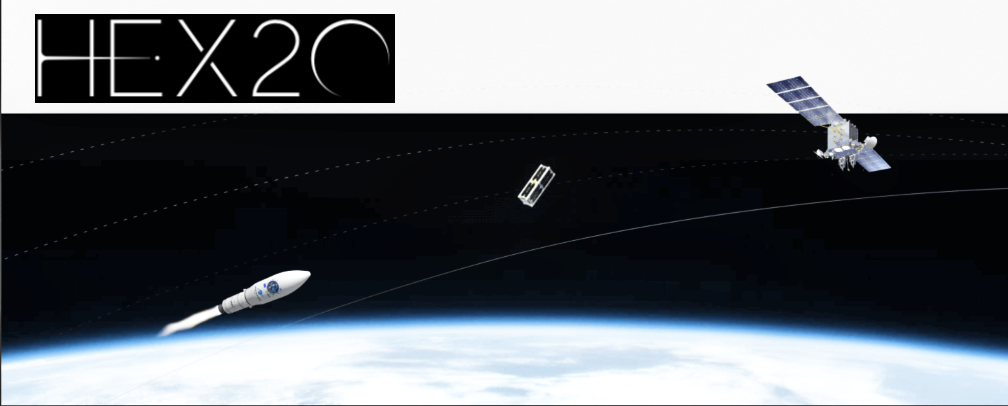
HEX20 is collaborating with Laboratory for Atmospheric and Space Physics (LASP – USA), National Central University Center for Astronautical Physics and Engineering (NCU CAPE – Taiwan), Laboratoire Atmosphères, Milieux, Observations Spatiales (LATMOS – France), and SKYROOT Aerospace – India to launch the COSPAR satellite, a remarkable achievement in space technology that will pave the way for new research opportunities. This collaborative effort has been made possible with the coordination and support of the Committee on Space Research (COSPAR).

The COSPAR satellite aims to study various aspects of Earth’s atmosphere, including atmospheric dynamics and chemistry, as well as the effects of space weather on our planet. The satellite will also provide valuable data to support weather forecasting and climate modelling. With this project, the collaborating teams hope to contribute to the advancement of scientific knowledge and exploration.

"The expertise and resources of HEX20, LASP, NCU CAPE, LATMOS and SKYROOT have combined to make this project a reality. We are proud to be working together to contribute to the advancement of scientific knowledge and exploration. The COSPAR Satellite is a remarkable achievement that will benefit researchers and scientists worldwide. This joint effort is a testament to the power of collaboration and demonstrates what can be achieved when experts from different fields work together."
— Lloyd Lopez, HEX20 CEO
”In 2021, we initiated a Task Group to develop a constellation of small satellites for space science missions dealing with the ionosphere, radiation belts or the Earth atmosphere, possibly extending in the future to solar system planetary missions. The aim for COSPAR is to act as a honest broker, to coordinate the programs and then distribute science data received from various payloads developed by partnering entities world-wide. I am extremely happy to see the first step of this ambitious venture materializing, through this joint project with HEX20, LASP, NCU CAPE, LATMOS and Skyroot.”
— Jean-Claude Worms, COSPAR Executive Director
“Space is emerging as one of the fastest growing commercial sectors in Australia with unique advantages such as Australia’s physical location in the southern hemisphere, a strong platform for research training, and strong technical expertise.”
— Abdul Ekram, Austrade’s Trade and Investment Commissioner to India

About HEX20: HEX20 provides turnkey satellite mission solutions designed and delivered according to customer requirements. The modular and scalable buses can support missions for commercial and defence applications. Hex20 is currently working with its partners to build up sovereign capability within South Australia.

About LASP: LASP (Laboratory for Atmospheric and Space Physics) is a research institution located at the University of Colorado Boulder, focused on advancing space science and technology through innovative research and education.

About NCU CAPE: NCU CAPE (National Central University Center for Astronautical Physics and Engineering) is a leading research center in Taiwan, dedicated to advancing the field of space science and technology. They conduct cutting-edge research, provide education and training, and collaborate with international partners to explore the frontiers of space.

About LATMOS: LATMOS (Laboratoire Atmosphères, Milieux, Observations Spatiales) is a leading research center in France, focused on understanding the Earth's atmosphere and its interactions with space. Their research covers a range of topics, including climate change, air quality, and planetary science, and they work in collaboration with partners across the globe.

About Skyroot Aerospace: Skyroot Aerospace is an Indian space technology company that designs and manufactures rocket engines and launch vehicles. They aim to make access to space affordable and sustainable by developing innovative technologies and solutions.

About COSPAR: The Committee on Space Research (COSPAR) is an international scientific organization dedicated to promoting and coordinating space research among nations. They facilitate international cooperation in space research, exchange information and ideas, and organize scientific meetings and conferences to advance the understanding of the Earth and the universe.

Filed Under: News

Thales Alenia Space and consortium is enlisted by Italian Space Agency for €235 for In-Orbit Servicing demonstration mission

May 17, 2023 by editorial

EROSS IOD (European Robotic Orbital Support Services In Orbit Demonstrator)

Thales Alenia Space, the joint venture between Thales (67%) and Leonardo (33%), has won a €235 million contract from the Italian Space Agency (ASI) to design, develop and qualify a spacecraft for a dedicated In-Orbit Servicing (IOS) demonstration mission. Thales Alenia Space is leading a Temporary Grouping of Companies regrouping Leonardo, Telespazio, Avio and D-Orbit.

The mission will be developed in the framework of the National Recovery and Resilience Plan (PNRR), with support from the Italian Space Agency. The demonstration mission will operate in low Earth orbit (LEO) and is set to be launched by 2026.

A growing number of satellites are now circling the Earth to meet a wide range of requirements, from geolocation and connectivity, to weather forecasts, environmental monitoring and much more. Thales Alenia Space is therefore developing in-orbit servicing solutions to address the evolving needs of satellites in orbit.

“We are delighted that the Italian Space Agency chose the team of Thales Alenia Space, Leonardo, Telespazio, Avio and D-Orbit to carry out this ambitious project that will make space more sustainable,” said Massimo Claudio Comparini, Senior Executive Vice President, Observation, Exploration, and Navigation at Thales Alenia Space. “This mission reflects the skills and experience of established players in complex space projects, coupled with the more agile approach provided by emerging space companies. By working together they will generate synergies that ensure the future viability of the space sector, while also developing all-Italian technologies to support the growth of the country’s space industry.”

The demonstration mission will test enabling technologies for future on-orbit servicing missions by performing a wide range of robotic operations on satellites already in orbit: refueling, component repair or replacement, orbital transfer and atmospheric reentry.

These operations will be executed thanks to a dexterous robotic arm, developed by Leonardo in collaboration with SAB Aerospace, the Italian National Institute for Nuclear Physics (INFN) and the Italian Institute of Technology (IIT).

Telespazio, together with Altec, will be in charge of the demonstration mission Ground Segment design, development and validation.

Space logistics company D-Orbit will manage all activities related to the target satellite platform, which is based on the company’s proprietary ION (In Orbit Now) platform, as well as the refueling system, with the transfer of a fluid from the servicer satellite to  the target satellite.

Avio will carry out the design and development activities of the Orbital Support and Propulsion Module for the orbital stages.

In Orbit Servicing vehicles represent a real paradigm shift, since they will introduce unrivaled system scalability and flexibility by providing in-orbit maintenance and upgrade possibilities — also changing the whole approach to satellite design. To meet this challenge, industry will call on its unrivaled multidisciplinary expertise spanning from launchers, satellite infrastructure, robotics, sensing, artificial intelligence up to atmospheric reentry systems.

Thales Alenia Space is the European leader in in-orbit servicing, a new approach to space based on smarter, more innovative missions that make space more sustainable, as reflected in Thales Alenia Space’s “Space for Life” vision.

This Italian demonstration mission confirms Thales Alenia Space’s leadership in in-orbit servicing, following the contract signed with the European Commission last year for the EROSS IOD program.
 

Filed Under: Featured, News

Reflex Aerospace is prepped for their 1st commercial mission + expands investor base

May 16, 2023 by editorial

Reflex Aerospace is gearing up for the company’s first commercial space mission: The Berlin and Munich-based space start-up has secured a fixed slot for the rocket launch of their demo satellite.

The launch is set to occur in the fall of 2024 aboard a SpaceX Falcon 9 rocket. The goal of this mission is to validate new technologies in space — the demo satellite, which weighs around 120 kilograms, is currently under development and will be assembled in Munich. The local ‘micro factory‘ for the production of customer-specific satellites is scheduled to open later this year.

These steps are supported by an expansion of the so-called seed financing by a further 1.75 million euros (to a total of nearly 9 million euros). In addition to increases from existing investors, Bayern Kapital is joining the group of shareholders through its EFRE Bayern innovation fund. Bayern Kapital ranks among the most experienced and active venture and growth investors in the German
high-tech financing landscape; its investment will, among other things, support the establishment of the first micro-factory near Munich.

Driven by expected commercial order intake, seed funding is expected to increase further during the year. In addition, Starburst Accelerator – one of the most renowned European accelerators for aerospace start-ups – will also be on board in the future to support the development of the international business.

“As a new space start-up, we are of course eager to demonstrate the performance of our technologies directly in space. Therefore, we are very pleased that this milestone now comes within reach with our first fixed launch slot. The increase in our financing confirms our investors’ confidence in this goal. With this tailwind, we are pushing ahead with the construction of our micro factory, which we will open in Munich in the second half of 2023. In addition, we are fully on track to almost double our workforce across all sites to around 50 employees in 2023.”
— Walter Ballheimer, CEO of Reflex Aerospace

“We are very pleased to add Reflex Aerospace to our aerospace portfolio. Ranking among the first investors that engaged in the field of `New Space´, we have already invested in numerous exciting companies such as Isar Aerospace, Quantum Systems and OroraTech. Reflex Aerospace has a promising business model, and we are looking forward to supporting its further development.”
— Monika Steger, Managing Director of Bayern Kapital

Reflex Aerospace was founded in 2021. The Berlin and Munich-based NewSpace start-up aims to modernise the market with high-performance satellites tailored to individual needs. Through software-based operations and service-oriented offers, the company meets the needs of its customers faster, at a significantly lower cost and more flexibly than established NewSpace manufacturers today. Together with its partner companies Mynaric, Isar Aerospace and SES, Reflex Aerospace is a shareholder in the joint venture UNIO, which aims to build a European satellite constellation for broadband internet.

Filed Under: News

Students successfully conclude the Baseline Design Review of their CubeSats

May 16, 2023 by editorial

Last April, students from six CubeSats Teams successfully concluded the Baseline Design Review of their CubeSats as part of ESA Academy‘s new Fly Your Satellite! (FYS!) Design Booster Program — this phase of the pilot edition gave students the chance to benefit from ESA’ support to enrich and consolidate the design of their CubeSats.

12 University teams gathered at ESA ESTEC for the Design Booster Training week

The pilot edition of the new FYS! Design Booster Program aims to provide support to university teams across ESA Member States who have a preliminary design of a CubeSat and want to consolidate their detailed design.

Students learn to consider the full project lifecycle at the design stage, in terms of engineering, resources and expertise, which translates into smoother planning and execution of verification activities as well as more robust in-flight operations. Special emphasis is made on the importance of early testing, and teams are invited to work on prototypes and development models to demonstrate functionalities and performances are adequate.

In November of 2022, 80 students from different ESA Member States went through the Training Week and six teams were selected to participate in FYS! Design Booster programme.

  • 6S – University: Politecnico di Milano, Italy
  • AlbaSat – University: Università degli di Studi di Padova, Italy
  • BIXO – University: University of Vigo, Spain
  • ROSPIN-SAT-1 – University: Politehnica University of Bucharest, Romania
  • SAGE – University: ETH Zurich, Switzerland
  • ST3LLAR-Sat1 – University: Universidad Carlos III de Madrid, Spain

The first phase of the Design Booster Program, called Baseline Design Review, occurred online from April 3-12. It is a tailored version of the standard ESA review, where key issues and discrepancies are identified to come up with reparatory actions together with ESA experts.

Students with ESA experts during extensive collocation meetings 

Student teams submitted their CubeSat Project File, which was reviewed by FYS! coordinators and ESA experts. They generated Review Item Discrepancies, which serve as an input to discussion during collocation meetings. As in a standard ESA review, more than 70 collocation meetings took place with experts of different domains such as Mission Analyses, Payload, Software, System Engineering and much more.

Continuing with this enthusiasm, students will now enter the Design Consolidation and Subsystem Testing Phase (April 2023 – February 2024), where they will adopt the experts‘ advices. They will develop in-house built subsystems which will be subjected to extensive testing. The teams will also work on implementation of Commercial-Off-The-Shelf (COTS) components and make sure the whole systems work together flawlessly.

The Final Design Review will be carried out in approximately a year from now. Students will be already acquainted with ESA standards and practices and will be then ready to autonomously continue developing their CubeSat projects. They will present all the lessons learned and project outlook for the future development, launch, operations and decommission.

This detailed documentation review helps students to identify eventual issues in time and even completely avoid them. The discussion during collocations enhances students‘ knowledge on the topic and allows them to receive, understand, interpret and implement sometimes complicated and not-at-first-glance clear solutions.

An ESA expert lecturing students on on-board data handling during the Design Booster Training Week

“Our participation in ESA’s FYS Design Booster program has been challenging, with an intense pace and many documents and collocation meetings. But above all, the first year of the programme has been a really good opportunity to learn and especially, the ESA team has helped us take our mission from a preliminary concept to many-steps closer a consolidated system. Our thanks to the team and looking forward the 2nd year.”
— ST3LLARsat1 supervising professor

”The Baseline Design Review was a very valuable experience for the SAGE CubeSat Team. We not only got a sneak peek into the review process at ESA but also got the chance to get feedback on our CubeSat design. Over a span of 13 colocation meetings, the team was able to exchange with ESA experts, discuss the RIDs and define action items. Overall SAGE got invaluable input from this review and has already started with the implementation of the defined actions. We are looking forward to the upcoming phases of the CubeSat design process!”
— student comments

”It’s a long and difficult journey to design a satellite, but the experts are there to help and guide you along the way. Just try to enjoy the journey and the possibility to learn a lot of new things,” one student concluded.

Filed Under: News

Terran Orbital-developed PTD-3 enables 200 gigabits per second space-to-ground optical link

May 15, 2023 by editorial

Terran Orbital Corporation (NYSE: LLAP) has revealed that their Pathfinder Technology Demonstrator 3 (PTD-3) satellite enabled a successful 200 gigabits per second space-to-ground optical link.

The NASA satellite hosts the TeraByte InfraRed Delivery (TBIRD) payload, funded by NASA Space Communications and Navigation (SCaN) and developed by MIT Lincoln Laboratory.

With a transmission rate of multiple orders of magnitude faster than current state-of-the-art satellite communications, this technology enables spacecraft to downlink several terabytes of data to the ground in a single, ground station pass. This breakthrough has the potential to revolutionize the space-based Earth Observation (EO) and Synthetic Aperture Radar (SAR) industries, among others, by offering a space-demonstrated solution to the data throughput bottlenecks that have historically limited their capabilities.

Previously, Terran Orbital aided TBIRD’s data transmission of 1.4 terabytes of test data to a single ground station in a pass that lasted less than five minutes – a record breaker at the time in terms of both speed and data transmission quantity. The 200 gigabits per second space-to-ground optical link broke this record.

“The completion of the 200 gigabits per second link is both monumental and record-breaking. Terran Orbital is honored to have worked alongside NASA on this groundbreaking mission and is grateful to MIT Lincoln Laboratory for creating the payload. We look forward to working with NASA and MIT Lincoln Laboratory on future satellites as we continue to make record-breaking in space commonplace.”
— Marc Bell, Terran Orbital Co-Founder, Chairman, and Chief Executive Officer

Filed Under: Featured, News

Uninterrupted Wi-Fi for Brightline rail to be provided by SpaceX Starlink

May 15, 2023 by editorial

Brightline recently announced the company is the first passenger rail service in the world to offer Starlink’s high-speed, low-latency broadband service.

The implementation of Starlink on board its trains is part of Brightline’s digital transformation which focuses on a guest-first experience to elevate each traveler’s unique journey. Brightline selected to partner with Starlink, which is engineered and operated by SpaceX, to demonstrate its commitment to innovation and sustainability paired with cutting edge technology that will set the stage for a better connected passenger rail service around the world.

Starlink’s internet connectivity is available on Brightline’s fleet of trains servicing South Florida between Miami and West Palm Beach. The service will soon include the new, five-train fleet to service Orlando this summer – for a total of 10 trains between South and Central Florida. Starlink internet is complimentary for all Brightline guests.

Starlink delivers high-speed, low-latency internet to users all over the world and is made possible via the world’s largest constellation of highly advanced satellites operating in a low orbit around the Earth. Its constellation of satellites orbit the planet at about 550km, and cover the entire globe with significantly lower latency — around 25 ms vs 600+ ms. Traditional satellite internet services come from single geostationary satellites that orbit the planet at 35,786 km with only 1 roundtrip signal to Earth per every 70 round trip signals by Starlink. As a result, Starlink has the capability to provide a seamless connection, making it possible to support everyday uses of WiFi including streaming, online gaming, video calls or other high data rate activities through even the most rural areas.

Starlink has already provided internet services to residences, businesses, and transportation providers in the aviation and marine industries, with Hawaiian Airlines, Royal Caribbean Group, and Carnival Corporation among its customers. Brightline will be its first venture into the railroad and passenger rail industry.

Brightline recently announced the unveiling of its Orlando Station with ticket sales launching in May. Reaching top speeds of 125 mph, Brightline will open its Orlando Station this summer connecting major city pairs including West Palm Beach, Boca Raton, Fort Lauderdale, Aventura and Miami. For more information on Brightline Orlando, visit www.gobrightline.com/orlando.

"Brightline will be the first train sets in the world to use the Starlink system. This really speaks to what we represent - an innovative passenger rail provider paving the way for high-speed rail in the U.S. Brightline is working with some of the best tech teams around the globe and our partnership with Starlink will elevate our brand to the stars.”
— Kevin T. McAuliffe, Chief Technology and Digital Innovation officer at Brightline
“As the first rail service in the world to adopt Starlink, Brightline continues to lead the way in the industry. We’re excited to work with Brightline and provide Starlink to their entire fleet, which will enable all of Brightline’s passengers to access high-speed, low-latency internet that is critical in our modern age – whether you’re finishing up work during your commute, staying connected with friends and family, or simply streaming a movie.”
— Jonathan Hofeller, SpaceX Vice President of Starlink Commercial Sales

Filed Under: News

Capella Space + LiveEO partner to deliver SAR insights

May 15, 2023 by editorial

LiveEO has engaged in a partnership with Capella Space and will integrate all-weather, 24/7 SAR imagery from Capella Space into the company’s advanced, analytics platform to transform the monitoring of assets, such as railways, buildings, pipelines, and other infrastructure, and will enable timely insights for disaster response.

This collaboration will enhance the LiveEO Rapid Response Insights (RRi) product, enabling informed storm response for infrastructure and utility managers. LiveEO’s Rapid Response Insights can reduce restoration response time to a mere 10 hours, by delivering precise damage locations directly from orbit to maintenance managers, based on Capella SAR data.

As the Earth experiences increasingly frequent and severe storms, innovations such as RRi are crucial for building climate resilience in our societies. Integrating Capella SAR data into its successful Vegetation Management (VMi) product, LiveEO will enable its customers to detect and assess changes in vegetation encroachment rapidly, thanks to advanced artificial intelligence.

By becoming a certified Capella Analytics Partner, LiveEO will have access to a range of exclusive program benefits that can be leveraged to further expand analytical capabilities, increase customer value and accelerate product development. These benefits include open access to Capella’s imagery archive for research and development, and both product and sales collaboration.

"We are excited to have found a partner in Capella Space who shares our vision of automated, scalable end-user applications based on SAR data. An API-first approach, combined with best-in-class SAR imagery, will unlock the potential of SAR to solve problems that seem unsolvable today."
— Daniel Seidel, Co-Founder and Co-CEO of LiveEO.
“We are thrilled to welcome LiveEO as the first certified Capella Analytics Partner to help unlock advanced solutions to respond to the growing severity of disaster events and environmental challenges today. This partnership will enable Capella Space and LiveEO to address these challenges head-on with novel, automated solutions.”
— Payam Banazadeh, Founder and CEO of Capella Space

Filed Under: News

Aviosonic + HPS join forces to fight space debris

May 15, 2023 by editorial

Aviosonic Space Tech‘s patented DeCAS (Debris Collision Alert System) for tracking and re-entry footprint prediction extends Europe´s satellite deorbit system and this sail system — ADEO — is already a leading device for quickly deorbiting almost all satellites, thereby preventing spacecraft from becoming new space junk. As ADEO is a sail, it does not produce any pollution itself, chemical or otherwise. This sail, in its next version, will be transparent and absolutely non-reflective.

Munich based HPS, a medium sized company with a subsidiary in Romania and a total headcount of 80, has invested — together with several institutional and industrial partners — 12 years of development and qualification into ADEO and is now ready to take another leap forward by joining forces with Aviosonic Space Tech.

Aviosonic Space Tech owns the patented DeCAS system for on-orbit/de-orbit tracking and re-entry footprint prediction of space vehicles. DeCAS is a 1U mm system that always maintains a constant link with a ground operation center allowing precise information on satellite position, as well as the calculation of the re-entry footprint in real time, with the aim of collision avoidance between satellites, satellites and aircraft as well as to alert government agencies. The technical characteristics and modularity allow DeCAS to be installed on any space vehicle and offers different services, depending on mission requirements.

The second IOD mission for DeCAS launched from the International Space Station — the CubeSat was delivered to the ISS by a SpaceX Falcon 9.

”The integration between DeCAS and ADEO allows the creation of a unique product on the market capable of strongly implementing the safety of space operations both during orbital and decommissioning re-entry phases, even in the event of failure of the hosting satellite. This safety information is also needed by the Air Traffic Management System. The collaboration between Aviosonic Space Tech and HPS is the demonstration that in order to guarantee safety during space operations, an international cooperation between SMEs is necessary.”
— Prof. Piermarco Martegani, CEO of Aviosonic Space Tech

“ADEO has all the facts on its side: first, all space industry badly needs a deorbit device like ADEO, since the faster the sail opens free orbit positions, the longer we can keep space as a sustainable surrounding. And, from second to infinite: ADEO combines TRL9 and flight heritage, offers a comprehensive range of models, beats economically as well as ecologically any other type of deorbit device, also it is already in serial production at HPS. And now we even join forces with the two outstanding innovators in their fields, and others will join, underlining once again what´s at the core of ADEO: 100 percent European, 100 percent SME, 100 percent sustainability in space – and exactly what Europe wants for Iris2.”
— Ernst K. Pfeiffer, CEO, HPS

Filed Under: News

SpaceX’s launch ties its heaviest payload ever of 56 Starlink smallsats

May 14, 2023 by editorial

SpaceX‘s Falcon 9 successfully launched 56 Starlink satellites to low-Earth orbit on Sunday, May 14 at 1:03 a.m. ET from Space Launch Complex 40 (SLC-40) at Cape Canaveral Space Force Station in Florida. The batch of 56 Starlink satellites tie the record for the heaviest payload ever launched by a SpaceX rocket, matching the figure on four previous Falcon 9 missions with a full load of Starlink spacecraft.

The mission is numbered Starlink 5-9 in SpaceX’s launch sequence making today’s total half of SpaceX’s 32 launches this year dedicated to the Starlink broadband network. SpaceX says each Starlink launch adds more than a terabit per second of capacity to the constellation.

Following stage separation, the first stage landed on the Just Read the Instructions droneship, stationed in the Atlantic Ocean. Tday’s launch totals 4,447 Starlink satellites SpaceX has sent into orbit.

This is the eleventh flight for the first stage booster supporting this mission, which previously launched CRS-22, Crew-3, Turksat 5B, Crew-4, CRS-25, Eutelsat HOTBIRD 13G, mPOWER-a and three Starlink missions.

Filed Under: News

CesiumAstro’s active phased array technology is enlisted by Raytheon Technologies for 7 space vehicles supporting SDA’s Tranche 1 Tracking Layer

May 12, 2023 by editorial

(Source: CesiumAstro)

CesiumAstro , provider of active phased array communications technology for space and airborne systems, was selected by Raytheon Technologies to provide its Vireo active electronically scanned array (AESA) RF communications payload for integration into seven space vehicles supporting Space Development Agency’s (SDA’s) Tranche 1 Tracking Layer.

CesiumAstro’s Vireo payload will be the first Ka-band, multi-beam communications system operating in SDA’s Proliferated Warfighter Space Architecture (PWSA). Using next-generation AESA technology to create multiple steerable, shapable beams, Vireo is a step change from legacy, single-beam systems optimized for connecting to single, static ground stations. The system’s groundbreaking modular slice-based design and software-defined backend will set a new standard for resilient, low-latency, high-volume data transport to simultaneous users.

“With the recent launch of Tranche 0, SDA is setting a new pace of innovation and deployment,” said Shey Sabripour, founder and CEO of CesiumAstro. “We are proud to provide the first AESA for the PWSA, enabling multi-beam RF mission data support for the warfighter.”

Raytheon’s space vehicles are part of Tranche 1 Tracking Layer, SDA’s first operationally capable set of low-Earth orbit (LEO) infrared missile warning and missile tracking satellites. When deployed, the constellation will integrate with the Transport Layer’s low-latency meshed communication network, enabling conventional and advanced missile tracking from LEO.

“These types of missions require speed and resilience,” said David Broadbent, president of Space and C2 at Raytheon Intelligence and Space. “By integrating AESA technology as part of our overall solution, we are setting an unprecedented standard, allowing for the swift transfer of critical information and giving our military forces a decisive advantage.”

CesiumAstro designed the Vireo system to support a wide range of defense and commercial missions. Vireo’s reconfigurable architecture allows for rapid deployment with maximum flexibility.

Filed Under: News

  • « Go to Previous Page
  • Go to page 1
  • Interim pages omitted …
  • Go to page 119
  • Go to page 120
  • Go to page 121
  • Go to page 122
  • Go to page 123
  • Interim pages omitted …
  • Go to page 338
  • Go to Next Page »

Primary Sidebar

WEEKLY NEWSLETTER

Archives

  • February 2026
  • January 2026
  • December 2025
  • November 2025
  • October 2025
  • September 2025
  • August 2025
  • July 2025
  • June 2025
  • May 2025
  • April 2025
  • March 2025
  • February 2025
  • January 2025
  • December 2024
  • November 2024
  • October 2024
  • September 2024
  • August 2024
  • July 2024
  • June 2024
  • May 2024
  • April 2024
  • March 2024
  • February 2024
  • January 2024
  • December 2023
  • November 2023
  • October 2023
  • September 2023
  • August 2023
  • July 2023
  • June 2023
  • May 2023
  • April 2023
  • March 2023
  • February 2023
  • January 2023
  • December 2022
  • November 2022
  • October 2022
  • September 2022
  • August 2022
  • July 2022
  • June 2022
  • May 2022
  • April 2022
  • March 2022
  • February 2022
  • January 2022
  • December 2021
  • November 2021
  • October 2021
  • September 2021
  • August 2021
  • July 2021
  • June 2021
  • May 2021
  • April 2021
  • March 2021
  • February 2021
  • January 2021
  • December 2020
  • November 2020
  • October 2020
  • September 2020
  • August 2020
  • July 2020
  • June 2020
  • May 2020
  • April 2020
  • March 2020
  • February 2020
  • January 2020
  • December 2019
  • November 2019
  • October 2019

© 2019–2026 SatNews

Insert/edit link

Enter the destination URL

Or link to existing content

    No search term specified. Showing recent items. Search or use up and down arrow keys to select an item.
      x
      Sign Up Now!

      Enjoy a free weekly newsletter with recent headlines from the global SmallSat industry.

      Invalid email address
      We promise not to spam you. You can unsubscribe at any time.
      Thanks for subscribing! You will now receive weekly SmallSat News updates.
      We love our advertisers.
      And you will too!

      Please disable Ad Blocker to continue... We promise to keep it unobtrusive.
      We promise not to spam you. You can unsubscribe at any time.
      Invalid email address
      Thanks for subscribing! Please check your email for further instructions.