• Skip to main content
  • Skip to primary sidebar
  • Home
  • News
  • Featured
  • More News ⌄
    • SatNews
    • SatMagazine
    • MilSatMagazine
  • Events ⌄
    • MilSat Symposium
    • SmallSat Symposium
    • Satellite Innovation
  • Contacts
  • SUBSCRIPTION

SmallSat News

You are here: Home / Archives for News

News

ESA’s Partnership Project’s first Triton-X satellite enroute to inaugural flight

June 7, 2023 by editorial

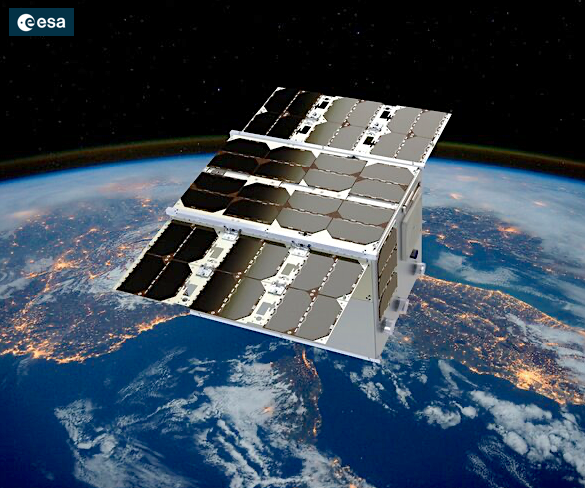
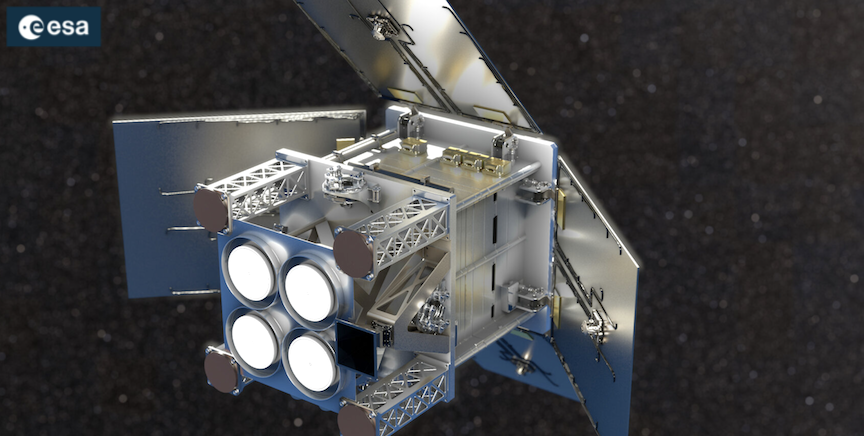
The first satellite developed under the Triton-X multi-mission platform program for low Earth orbit is on its way to be integrated onto the launcher for its inaugural flight. Developed under an ESA Partnership Project with LuxSpace, the small satellite, called Triton-X Genesis, will demonstrate the performances of newly developed and highly innovative elements including: the avionics architecture that embeds a high-performance on-board computer; a telecommunications system that will enable the ability to command, control and monitor the satellite; and a star tracker that provides high pointing accuracy of the satellite.

The satellite was built in less than 10 months using generic off-the-shelf building blocks, high-performance field programmable gate arrays and micro-controllers.
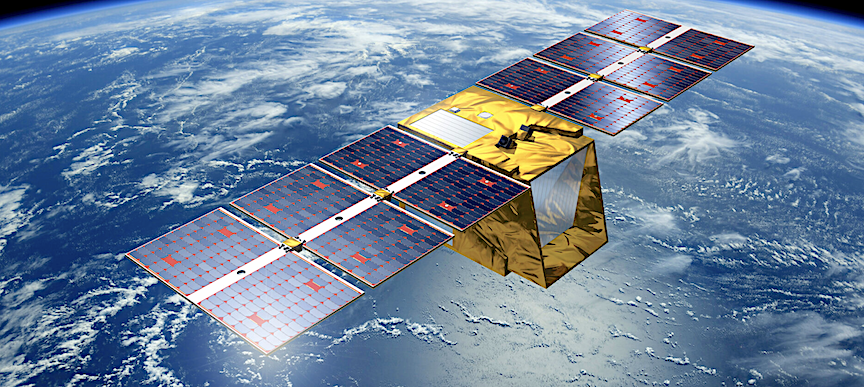
Triton-X is a new competitive and multi-mission European micro-satellite platform product line. It is designed to give low-cost and fast-track access to space for commercial and institutional applications in low Earth orbit.

Tailored to be compatible with the new generation small launchers, rideshare and hosted payload mission architectures, Triton-X Genesis is due to be launched on board a SpaceX Falcon 9 in October.

The Triton-X platform can accommodate payloads up to 90 kg for a wide range of applications including telecommunications, Earth observation, situational awareness and in-orbit demonstration and validation.
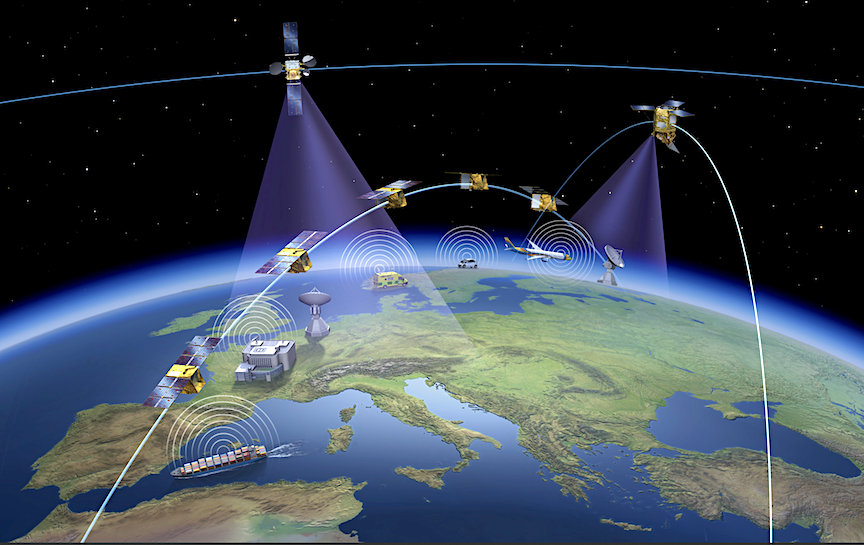
Triton-X is LuxSpace’s ultimate platform for micro- to mini- LEO smallsat systems. Designed as “multi-purpose” cost-effective products, the scalable and powerful Triton-X platforms are easily adaptable to various typologies of LEO missions and payloads, also in small and/or hybrid constellations.

Six ESA member states have subscribed to Triton-X Partnership Project. The program is led by LuxSpace in Luxembourg together with six industrial partners and 10 suppliers in Belgium, the Czech Republic, Germany, Portugal, Switzerland, and across Europe.

Triton-X is a new competitive and multi-mission European small satellite platform product line currently under development as part of ESA’s program of Advanced Research in Telecommunications Systems (ARTES). It is designed to give low-cost and fast-track access to space for both commercial and institutional applications in low Earth orbit.


Filed Under: News

OneWeb’s successful airline milestones for 2023

June 6, 2023 by editorial

With its global LEO satellite constellation now complete, hardware on-track for certification, and anticipated major airline deals — OneWeb moves from laying the foundation for an enhanced inflight connectivity experience, to actually making better onboard connectivity. 

OneWeb, the low Earth orbit satellite connectivity company, has achieved key milestones as part of its objective to connect the unconnected and bridge the digital divide on land, at sea and in the air. OneWeb’s philosophy of ‘for the industry, by the industry’ approach to aviation has been well received by its technology, integration, and distribution partners. 

OneWeb, the low Earth orbit satellite connectivity company, has achieved key milestones as part of its objective to connect the unconnected and bridge the digital divide on land, at sea and in the air.

On March 26, OneWeb completed its 18th launch (its third this year), achieving a significant milestone in the history of OneWeb and the future of connectivity on Earth. The launch, which took place from Sriharokita, India, brought the total number of OneWeb’s satellites in orbit to 618 satellites that exceeds the 588 active satellites needed to achieve global coverage. By the year-end, OneWeb will be ready to roll out global coverage, enhancing its existing connectivity solutions that are already live in regions north of 50-degrees latitude as it brings new areas online. 

Commenting on the launch, Ben Griffin, VP Mobility at OneWeb said, “With this launch, OneWeb has become the first broadband LEO constellation that is truly complete and the only one with effective polar coverage north and south. We’re also the only LEO network operator with high-quality service level agreements and a robust technical network to fully support mobility customers. We remain on course to deliver global coverage by the end of 2023 — with aviation services coming online in early 2024.” 

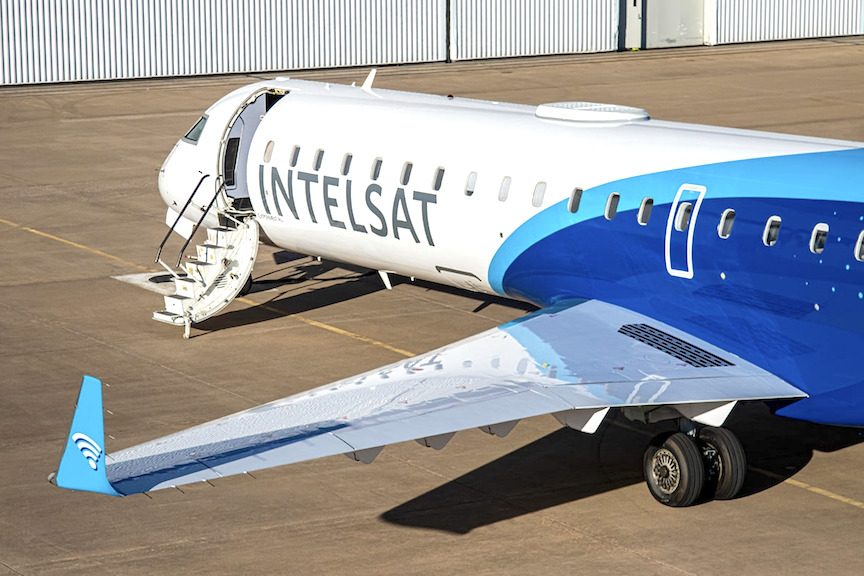
In February, OneWeb, together with partners Intelsat and Stellar Blu, successfully tested a hybrid satcom solution leveraging both LEO and GEO satellite networks during flight tests. Testing took place on Intelsat’s Bombardier CRJ-700 regional jet outfitted with the new electronically-steered antenna (ESA) built in conjunction with Stellar Blu and OneWeb. This is the only commercially available product in the aviation industry that has been proven to operate on both OneWeb’s low Earth orbit satellites and geostationary satellites. 

Peak inflight download speeds exceeded 275Mbps, facilitating applications such as live virtual meetings, media streaming – and with the enhanced low latency of the OneWeb network, cloud computing without interruption. 

Ben Griffin, VP Mobility at OneWeb said, “The ability for OneWeb to integrate with existing GEO constellations will provide airlines with flexibility and peace of mind as the new LEO capabilities of the OneWeb network are deployed and proven. We expect certification of this ground-breaking antenna in Q1, 2024.” 

Due to the large physical footprint and weight penalties associated with existing hardware installations, regional jet fleets have, up to now, gone without inflight broadband, or have been served by air-to-ground solutions that haven’t always met the need. But Alaska Airline’s decision early this year to offer “streaming fast” Wi-Fi on its E175 fleet, beginning in 2024, validates the need for regional connectivity.  

This antenna enables global streaming-fast inflight Wi-Fi service and is available to airlines around the world.

Alaska Airlines has selected Intelsat for an industry-first regional IFC upgrade and will become the first customer for the OneWeb/Stellar Blu developed ESA that Intelsat successfully tested in February.  

In a press release about this news, Alaska Airlines touted the benefits of being able to access both LEO and GEO constellations through the new antenna: 

“Intelsat’s state-of-the-art satellite Wi-Fi equipment will be the first commercial application of an electronically steered antenna that communicates with both low Earth orbit and geostationary satellites located 22,000 miles from Earth. With LEO at just 300 miles from the Earth’s surface, thousands of small satellites circling the planet ensure stronger connectivity with lower latency, or delay in telecommunications.” 

At the 2023 Aviation Achievement Awards in Dubai on February 28, OneWeb was named Best New Satellite Service. Accepting the award on behalf of OneWeb was Ben Griffin Vice President Mobility and AMEA Region. 

Commenting on the achievement, he said, “We thank the team at Creative Middle East, as well as our trusted technology and distribution partners for this award — which is testament to the validity of this strategy.” 

Filed Under: Featured, News

Neumann Space signs contract with Space Inventor to provide greater access to space

June 6, 2023 by editorial

Neumann Space has signed a contract with smallsat manufacturer, Space Inventor, that will enable the firm to gain greater access to space as part of their in-orbit demonstration (IOD) program.

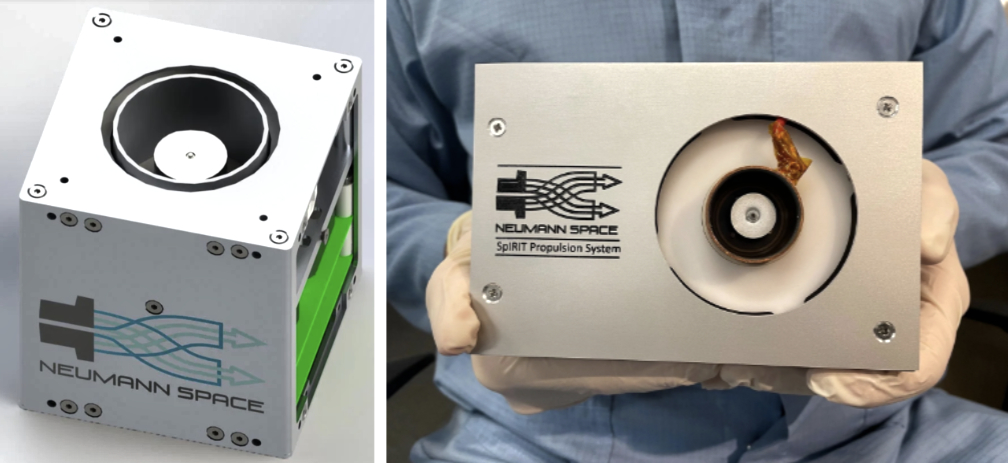
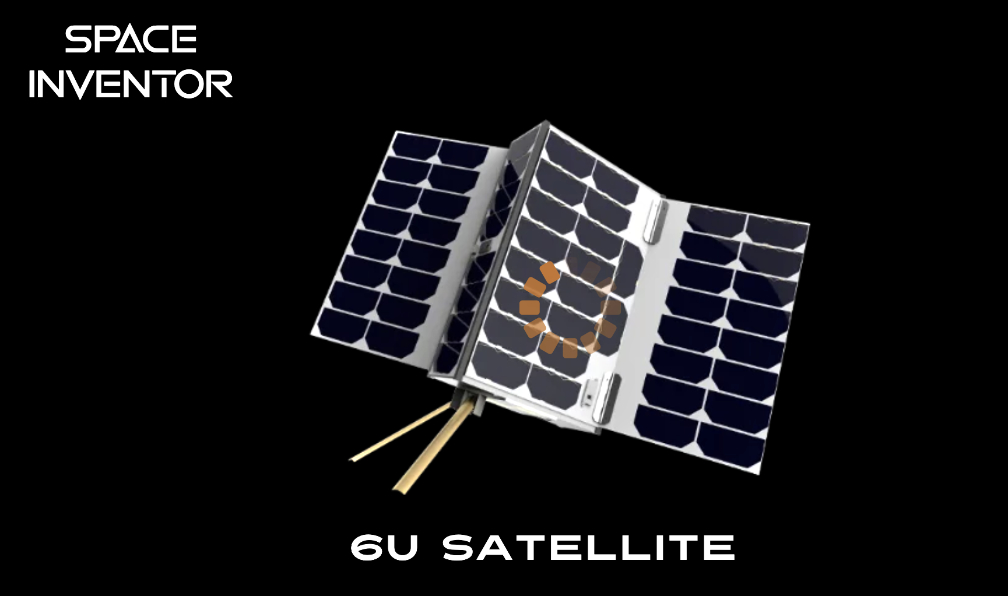
As part of the contract, Space Inventor will provide Neumann Space with the opportunity to integrate the nexgen Neumann Drive® as an IOD payload on board a 6U EDISON smallsat scheduled for launch in the second half of 2024.

The EDISON Mission is a part of the European Space Agency’s Pioneer program, designed to support emerging companies seeking to provide new and innovative satellite communications technologies and services.

The companies will collaborate to test, demonstrate, and verify ease of integration, ease of operation and the performance of the Neumann Drive® whose unique propulsion technology uses solid metallic propellant. Space Inventor’s new mission and payload operations will provide Neumann Space with access to the data of the Neumann Drive® automatically, enabling it to more rapidly analyze and assess the technology to further its commercialization approach.

Neumann Space currently has a series of on-orbit demonstrations planned for 2023 and 2024 with its first flight scheduled for this month, supporting its commercialization endeavor.

“We are pleased to be working with Space Inventor, our first official European partner, and to be on board their high-performance satellite platform as part of the EDISON Mission. It is also our first mission under the European Space Agency umbrella. Our program of in-orbit demonstrations is growing in both size and breadth, with a broad range of Australian and International satellite manufacturers now collaborating with us to test and refine the Neumann Drive’s performance as we together seek to deliver better mobility in space.”
— Herve Astier, CEO, Neumann Space

“I am pretty excited that we will host Neumann Space’s propulsion system on our EDISON satellite. When I first met the Neumann team at the SmallSat conference in 2022, their choice of technology and deep technical knowledge convinced me that this company and its people would succeed – succeed in turning the science into a product and succeed in bringing the product to a market starving for a reliable thruster for small satellites.”
— Karl Kaas, CEO of Space Inventor

Filed Under: News

UPDATE: SpaceX Dragon delivering replenishments to ISS + smallsats for deployment

June 5, 2023 by editorial

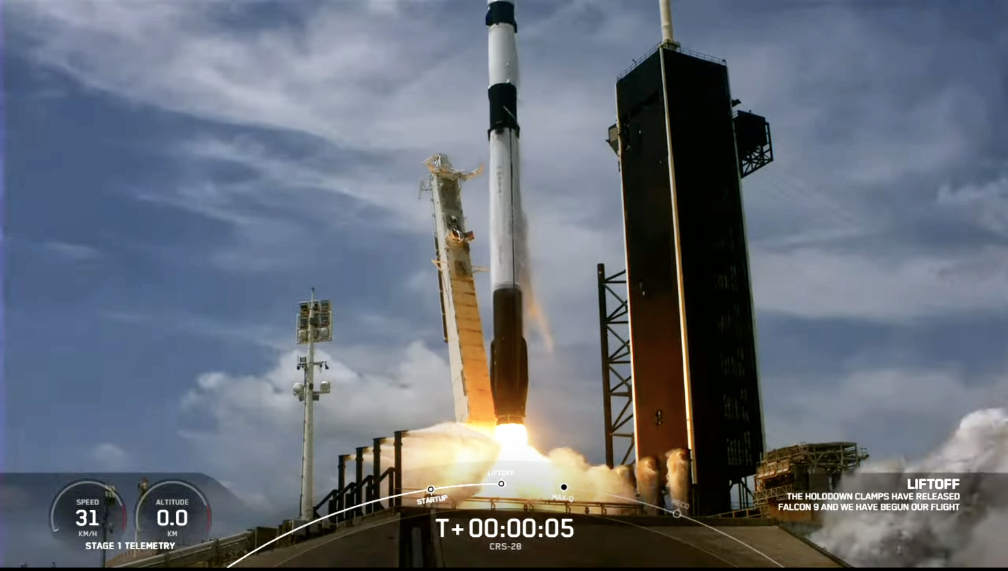
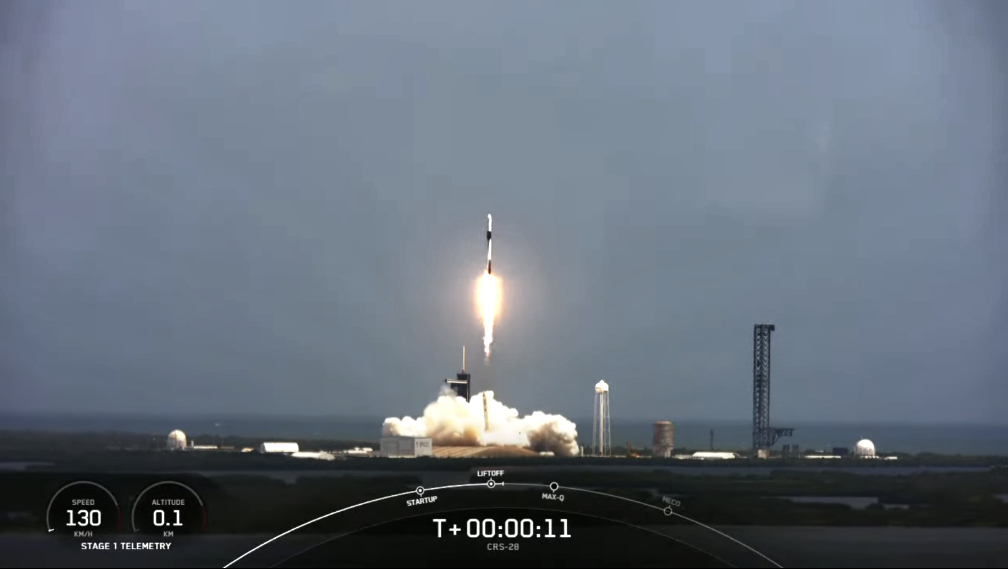
On Monday, June 5th., at 11:47 a.m., ET, a SpaceX Falcon 9 launched Dragon’s 28th Commercial Resupply Services mission (CRS-28) to the International Space Station (ISS) from Launch Complex 39A (LC-39A) at NASA’s Kennedy Space Center in Florida — this is the fourth flight for this Dragon capsule.

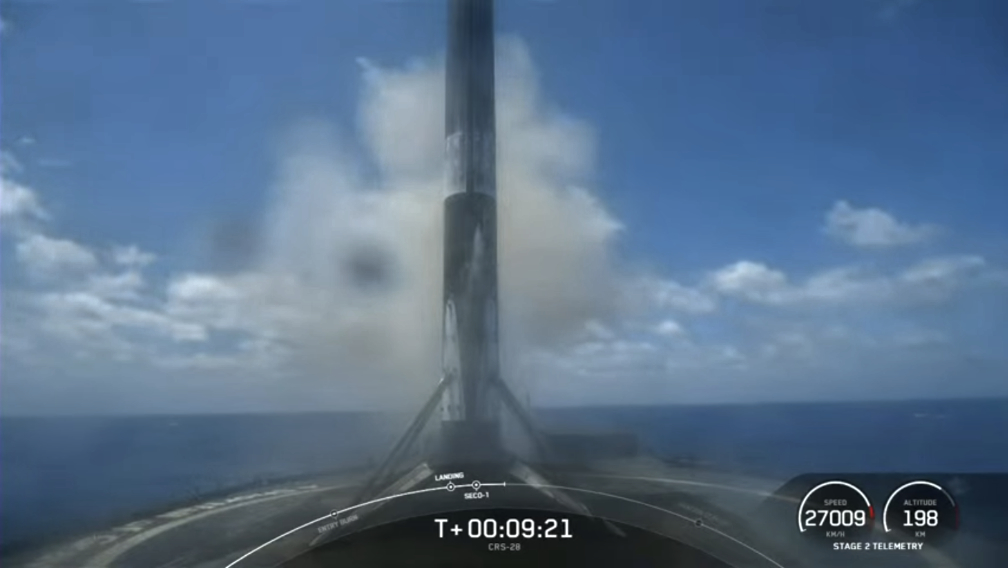
Following stage separation, Falcon 9’s first stage landed on the Just a Shortfall of Gravitas droneship in the Atlantic Ocean, being the 198th successful 1st stage landing for the company.

Dragon will autonomously dock with the space station on Tuesday, June 6th, at approximately 5:50 a.m. ET (9:50 UTC). to deliver 7,000+ pounds of supplies to the ISS.

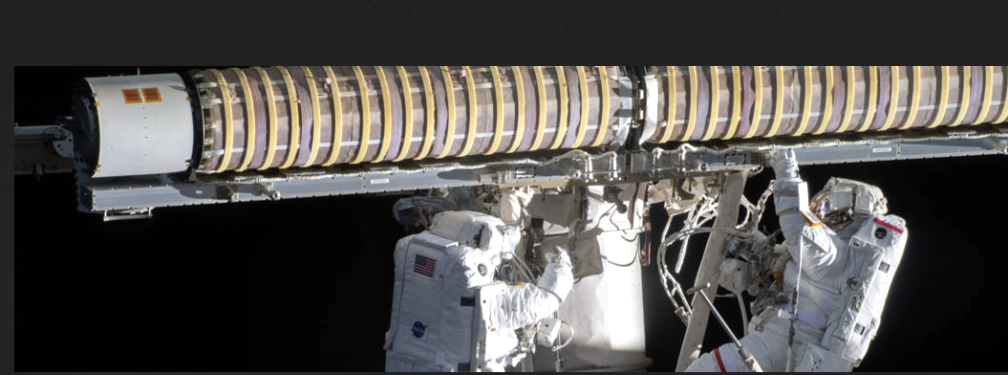
The SpaceX Dragon will deliver a pair of IROSAs (International Space Station Roll Out Solar Arrays) that, once installed, will expand the energy-production capabilities of the microgravity complex.

The spacecraft will also deliver the following:

Thunderstorm Watch
What Happens Above Thunderstorms (Thor-Davis), an investigation from ESA (European Space Agency), will observe thunderstorms from the space station. This vantage point will allow researchers to see the electrical activity from above, particularly the inception, frequency, and altitude of recently discovered blue discharges. Scientists plan to estimate the energy of these phenomena to determine their effect on the atmosphere. A better understanding of lightning and electrical activity in Earth’s atmosphere could improve atmospheric models and provide a better understanding of Earth’s climate and weather.

Helping Plants Chill in Space
Plants exposed to environmental stress, including spaceflight, undergo changes to adapt, but those changes may not be passed on to the next generation. Plant Habitat-03 (PH-03) will assess whether plants grown in space can transfer such adaptations to the next generation and, if so, whether a change continues through subsequent generations or stabilizes.The investigation will create a second generation of plants using seeds previously produced in space and returned to Earth. Results could provide insight into how to grow multiple generations of plants to provide food and other services on future space missions. This investigation also could support development of strategies for adapting crops and other economically important plants to marginal and reclaimed habitats on Earth.

Testing a Telomere Technique
Telomeres, genetic structures that protect our chromosomes, shorten with age and wear. But research has shown that telomeres lengthen in space. Genes in Space-10 will test a technique for measuring telomere length in microgravity, where methods typically employed on Earth are difficult to use due to gravity. The experiment will explore whether telomere lengthening in space is caused by proliferation of stem cells –undifferentiated cells that give rise to specific body components and that typically have long telomeres. Understanding the mechanism behind telomere lengthening could reveal possible effects on astronaut health during long-duration missions. Results also could lay the groundwork for a variety of related research to benefit future space travel and people on the ground. Genes in Space is a national contest for students in grades seven through 12 to design biotechnology experiments for space. The program is sponsored by miniPCR, Math for America, Boeing, New England Biolabs Ltd., and the International Space Station National Laboratory.

Thawing Ice, Solar Storms, and Attitude Recovery
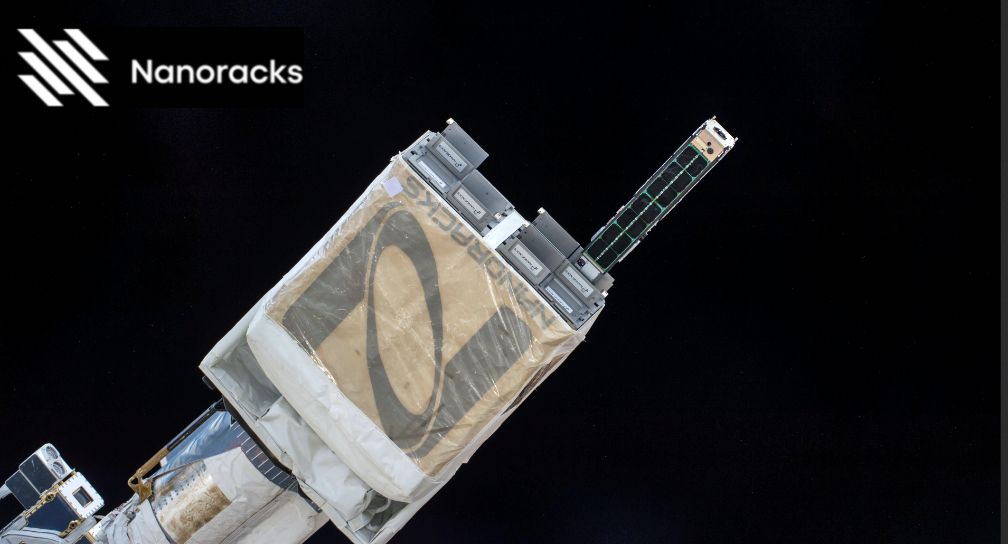
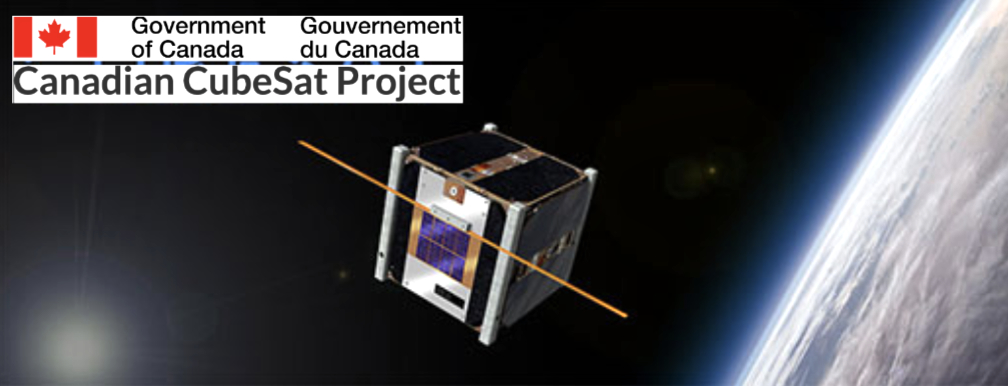
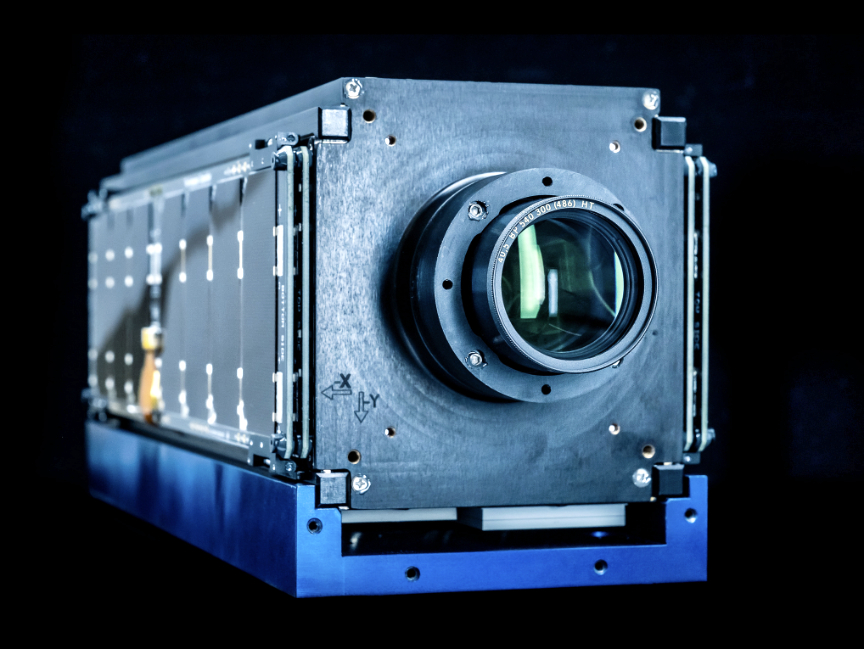
Mission 26 for the station’s Nanoracks CubeSat Deployer (NRCSD) includes Educational Space Science and Engineering CubeSat Experiment Mission (ESSENCE), sponsored by the International Space Station National Laboratory and developed by universities in Canada and Australia. It carries a wide-angle camera to monitor thawing of ice and permafrost in the Canadian Arctic, which could provide a better understanding of the effects on Earth’s climate and support better local infrastructure planning. The satellite also carries a solar energetic proton detector to collect data on periods of solar activity that emit highly energized radioactive protons that can damage the structure and electronic components of spacecraft. Understanding these effects could help make future CubeSats more resistant to radiation. In addition, the investigation demonstrates a novel method to recover control of a satellite’s attitude, or orientation, if a control mechanism fails. ESSENCE is part of the Canadian CubeSat Project, led by CSA (Canadian Space Agency).

Watching Cosmic Weathering
Iris, sponsored by the International Space Station National Laboratory, observes weathering of geological samples exposed to direct solar and background cosmic radiation and determines whether changes are visually detectable. The investigation also demonstrates experimental sun sensors, torque rods (which provide attitude control and detumbling for satellites), and a battery heater. A collaboration between graduate, undergraduate, and middle school students in Canada, the project provides hands-on experience that promotes interest in science, technology, engineering, and mathematics studies and careers. Results also could provide insight into weathering processes on planetary bodies and, when combined with data from asteroid sampling missions, improve understanding of the origins of asteroids. Iris is part of the Canadian CubeSat Project, led by CSA.

Filed Under: Featured, News

Momentus to deliver 9 IoT sats to orbit for Apogeo Space

June 5, 2023 by editorial

Momentus Inc. (NASDAQ: MNTS) has signed an agreement with Apogeo Space to provide orbital transportation services for nine satellites that are part of Apogeo’s planned, 100-satellite, Internet of Things (IoT) constellation.

Apogeo Space aims to build a constellation of smallsats that are capable of providing connectivity to IoT devices across the globe. The delivery with Momentus represents the second batch of nine satellites and another key step toward the creation of the 100-satellite network. The constellation is scheduled to enter service by the second half of 2023.

“We are thrilled to start this collaboration with Momentus, which will allow us to launch an additional nine picosats shortly and permit us to anticipate our road map of the deployment of a global telecommunication service for the Internet of Things. Since our first deployment of satellites, data can be retrieved from IoT devices anywhere in the world. We anticipate full coverage will be achieved by 2027 with almost 100 satellites with successive launches approximately every three months.”
— Guido Parissenti, CEO Co-Founder, Apogeo

“IoT satellites are a model of using space to benefit life on Earth,” said . “Use of the Momentus Orbital Service Vehicle is an efficient and effective way to support the deployment of large satellite constellations like Apogeo’s. We look forward to supporting them as they work toward full deployment of their constellation.”
— Chris Kinman, Chief Commercial Officer, Momentus

Filed Under: News

LeoStella manufactures + delivers their 20th smallsat

June 5, 2023 by editorial

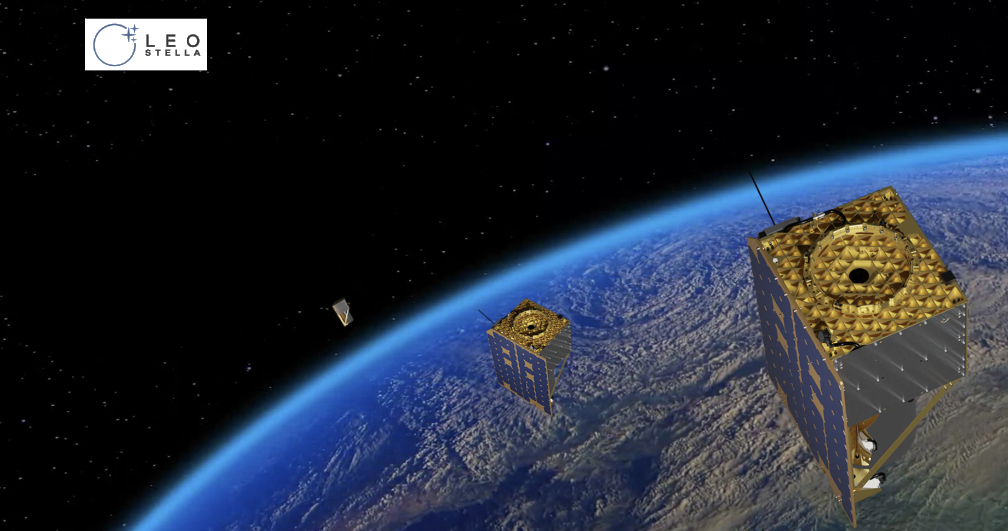
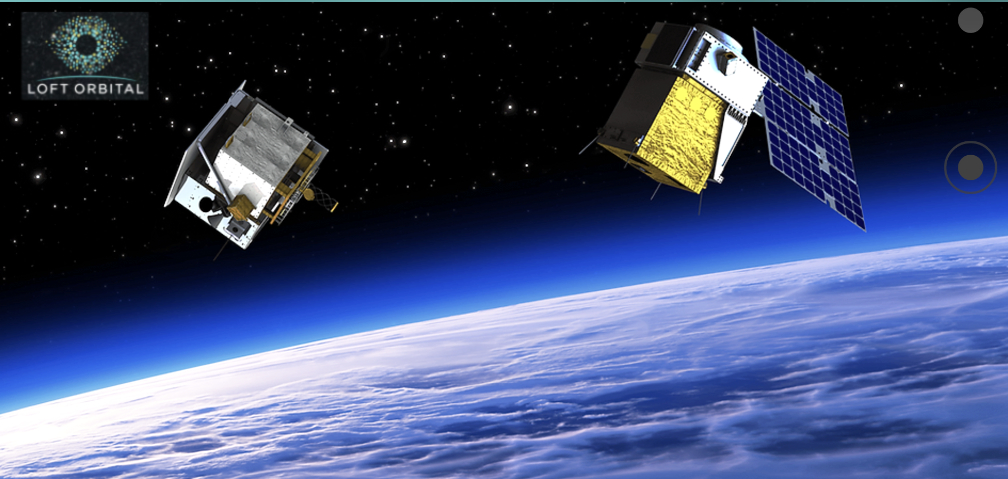
LeoStella has delivered their third satellite to Loft Orbital Solutions which also happens to be the 20th satellite manufactured by the company since formation in 2019.

This latest satellite was modeled on LeoStella’s LS-100 bus platform and delivered to Loft Orbital who extended their production agreement with LeoStella to secure additional satellites in support of their mission to provide a reliable path to orbit for any payload for customers.

LeoStella satellites have a cumulative on-orbit heritage of more than 31 years, reinforcing the firm’s reputation for providing high-mission availability to commercial and government customers.

The standardization of LeoStella’s smallsat bus enables the company to reduce production costs and timelines to deliver spacecraft efficiently and economically. LeoStella’s satellite buses are known for their ability to support multiple types of payloads without any added time required for mission-specific configurations.

“LeoStella is a trusted and proven satellite-bus provider. LeoStella’s commercial-off-the-shelf satellite buses help streamline our production timeline. Coupled with our technologies, we’re able to provide our customers with a fast and simple path to orbit.”
— Pierre-Damien Vaujour, CEO of Loft Orbital

“We’re proud of our ongoing relationship with Loft Orbital and their strategy of partnering with best-in-class bus providers. Our team manufactured and delivered another spacecraft in less than 13 months from the time of contract extension. Our production line’s efficiency and commitment to on-time delivery are significant for Loft Orbital in meeting their customers’ needs.”
— Tim Kienberger, CEO of LeoStella

Filed Under: News

ESA’s CubeMAP mission development terminated

June 5, 2023 by editorial

After very careful consideration, ESA’s Earth Observation Program Board has taken the decision to terminate the development of CubeMAP as a Scout satellite mission. This decision is based on the development path exceeding the programmatic constraints related to the timeline and budgetary boundaries allocated for this category of New Space mission.

Complementing ESA’s series of Earth Explorer research missions, Scout missions are a new element in ESA’s Earth Observation FutureEO Program.

Scouts aim to demonstrate the capability of small satellites to deliver value-added science, either by the miniaturization of existing technologies or by demonstrating new sensing techniques.

From kick-off to launch this must be achieved within three years and all within a strict budget of €30 million.

ESA selected CubeMAP, the first Scout mission, in December 2020. The industrial consortium comprised GomSpace (DK) as prime contractor, with RAL Space (UK), GomSpace (LU), GomSpace (SE) and Enpulsion (AT) as sub-contractors.

The mission was planned as a trio of small satellites to help quantify processes in the upper-atmosphere to understand how they affect our climate.

The constellation was to measure water vapor, carbon dioxide, methane, ozone, nitrous oxide and aerosols — all of which play a key role in the greenhouse effect and climate change.

The three satellites would have each carried three miniaturized ultra-high spectral resolution laser heterodyne spectro-radiometers and one miniaturized hyperspectral solar disk imager.

ESA is committed to adhering to the programmatic constraints set by its Member States. However, CubeMAP has been facing challenges related to meeting target costs and development time.

Simonetta Cheli, ESA’s Director of Earth Observation Programs, said, “By its very nature the New Space approach carries more risks. With the Scouts we are having to adapt to implementing missions twice as fast and 10 times cheaper than our traditional satellite missions, and of course this is not easy.

“It is crucial to ‘fail successfully’ and take tough decisions as soon as we know that boundary conditions cannot be met.

“However, what has been achieved with the development of CubeMAP is not lost. We and our industrial partners will have a lessons learned process, and of course the technology developed so far will undoubtedly be applied to future satellite missions.”

ESA’s Project Manager for the Scout missions, Jean-Pascal Lejault, added, “The development of CubeMAP so far has demonstrated the potential of a new sensing technique to capture atmospheric profiles and study the chemistry of the upper-atmosphere with miniaturized payloads that are compatible with a 12U satellite.

“The decision to halt CubeMAP does not at all invalidate the mission concept or the interest that it has received, particularly in the relevance of the two instruments (HIROS and HSDI). A credible technical baseline has been defined, as well as the associated development plan. Other avenues will be sought to bring these efforts to full fruition, outside of the Scout framework.

ESA’s HydroGNSS mission will now comprise two identical satellites to halve the time it takes to revisit the same place on Earth’s surface and re-measure various climate variables such soil moisture.

“I want to thank everyone that has been involved in CubeMAP for their unwavering support and we are all taking the lessons learnt forward for better success in the future.”

In the meantime, ESA’s other Scout mission, HydroGNSS, is on track for liftoff next year.

Filed Under: News

World’s 1st hacking testbed in space to launch on the SpaceX CRS-28 mission on June 5th

June 5, 2023 by editorial

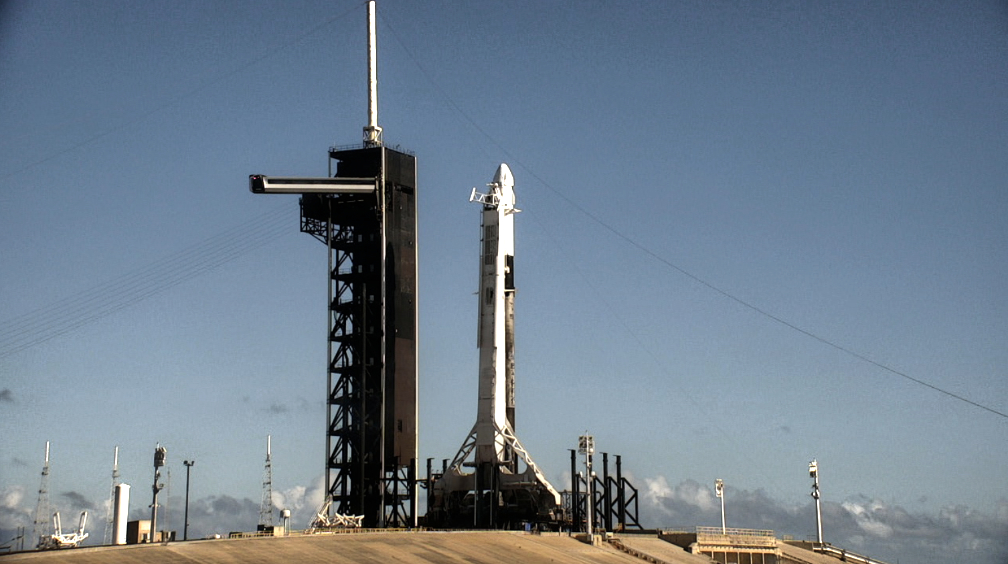
SpaceX’s Falcon 9 rocket, with the company’s Dragon spacecraft atop, stands ready for liftoff at NASA Kennedy Space Center’s Launch Complex 39A in Florida on June 4, 2023, ahead of the company’s 28th resupply services mission to the International Space Station. Liftoff is scheduled for 12:12 p.m. EDT. Photo credit: NASA

Six cubesats are set to launch on SpaceX’s 28th Commercial Resupply Services (CRS) mission to the International Space Station (ISS), where they will be deployed — among these smallsats, the Aerospace Corporation will launch Moonlighter, the world’s first and only hacking sandbox in space.

A hacking sandbox is a form of cyber security technology that allows hackers to perform tests that could identify methods for preventing the hacking of satellite systems in space. Through this project, which is sponsored by the ISS National Laboratory and supported by Nanoracks, Aerospace will introduce the nation’s top cyber professionals to Moonlighter and its ability to fill gaps in cyber security testing in space.

Developed in partnership with U.S. Space Systems Command and the Air Force Research Laboratory, Moonlighter, a mid-size 3U smallsat, will enable real-time cyber security testing on-orbit for the first time. Moonlighter will allow cyber security professionals and some of the world’s best hackers to do space-based cyber experiments that are repeatable, realistic, and secure.

Moonlighter is a 3U cubesat developed to enable real-time cyber security testing on-orbit.
Image is courtesy of The Aerospace Corporation

Moonlighter will be part of Hack-A-Sat 4, an annual challenge supported by the Aerospace Corporation, the U.S. Air Force, and the U.S. Space Force, where finalists will get the chance to hack the CubeSat in orbit during DEF CON, a convention for hackers held in August. With a growing space-based economy and increasing competition in the space environment, Myrick said Moonlighter is a critical tool for strengthening cyber security in space.

In addition to Moonlighter, five student-developed CubeSats are also launching on SpaceX CRS-28. These CubeSats are part of the Canadian CubeSat Project, which was created to increase student engagement in science, technology, engineering, and mathematics (STEM) and prepare the future space industry workforce.

SpaceX CRS-28 is targeted for launch no earlier than June 5 at 12:35 p.m. EDT. This mission will include multiple ISS National Lab-sponsored payloads.

“We wanted to build something new from the ground up to fill gaps in cyber activities in space, where the vehicles to do cyber security testing in orbit have not existed,” said . “When we say it’s a sandbox, Moonlighter is like a playground where we provide the space and the tools for professional hackers to perform cyber exercises and test out new technology. We hope this will lead to more cyber-resilient architectures for future space missions.”
— Aaron Myrick, project leader for Aerospace

Filed Under: Featured, News

Greece’s Polembros Shipping’s hybrid digital network improves with Marlink’s service using Starlink

June 2, 2023 by editorial

Marlink,a digital solutions company, will install the Starlink LEO service for Athens-based ship manager Polembros Shipping which has been a Marlink partner for many years. Polembros will extend its digital toolset to include the new LEO service on a trial basis to support crew welfare and remote technology.

The Standard Starlink is designed for portable use at any destination where Starlink has active coverage.

Polembros is already a user of Marlink’s hybrid network, including guaranteed throughput VSAT services across its fleet. The deployment of the SeaLink NextGen service will bring much faster throughput and lower latency to the company’s business and crew communications, enabling the deployment of digital solutions and crew welfare services.

Sealink NextGen combines GEO VSAT and MSS back-up with customers’ required mix of LEO or MEO connectivity, 5G and digital solutions, all controlled and managed via Marlink’s smart platform XChange. This hybrid solution integrates and protects critical maritime connectivity, powering new applications for business and crew.

Polembros Shipping has been in existence since 1974, though the shareholders’ family traces its shipping connections back to the 19th century. The company currently manages a fleet of Aframax and Suezmax tankers and sister operation Polembros Bulkers manages vessels ranging in size from Handysize to Newcastlemax.

A Marlink partner for many years, Polembros will extend its digital toolset to include the new LEO service on a trial basis to support crew welfare and remote technology.

Both Polembros companies are continuously improving their service and ensuring their ships are operated safely and efficiently with knowledgeable marine personnel using their expertise ashore and at sea as well as their innovative technologies while focusing on the future.

Greek shipping companies are increasingly following a trend towards higher throughput communications, enjoying access to a new family of applications enabled by Starlink’s very low latency global service. This includes video streaming services, instant data transfer tools and remote access technology for maintenance and compliance.

“Polembros Shipping and Polembros Bulkers are companies with a reputation built up over many years for dedication to safety and quality; we value innovations like Starlink as a contributor to our performance,” said Vasilis Kottas, IT Manager, Polembros Shipping. “Our partnership with Marlink is a factor in our success as a company which delivers the high standard of communications required by our fleet managers and our shipboard teams.”

“Marlink is proud to help Polembros Shipping take this next step in its journey with new digital services that enable a new generation of applications and tools to support fleet performance and safety,” said Tore Morten Olsen, President, Maritime, Marlink. “Adding the Starlink LEO service to the Marlink hybrid network is a further strengthening of our valued and longstanding relationship that positions Polembros as a future-focused company.”

Filed Under: News

Telesat selects Space Flight Laboratory (SFL) to manufacture LEO 3 demo satellite

June 1, 2023 by editorial

Telesat (NASDAQ and TSX: TSAT) has contracted Space Flight Laboratory (SFL) to manufacture a LEO demo satellite for the company.

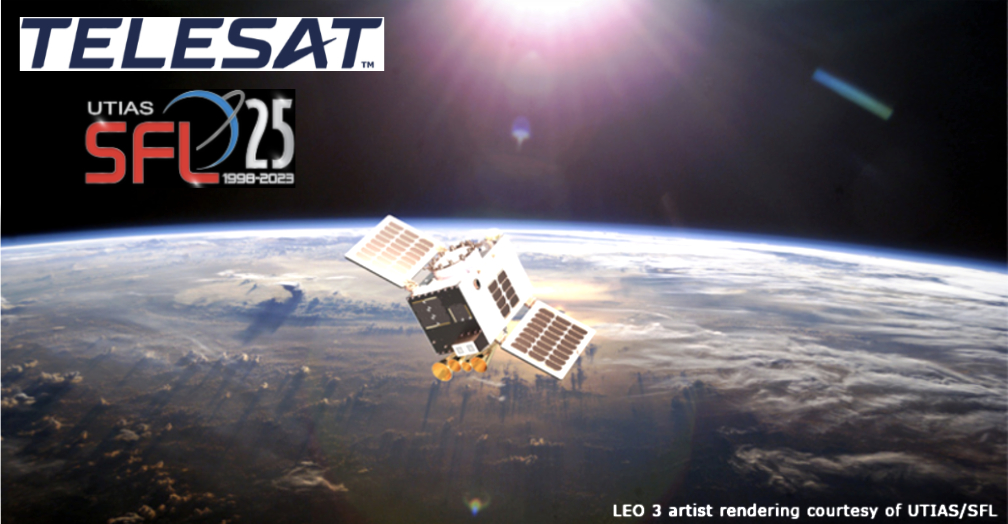
The demonstration satellite, named LEO 3, will provide continuity for customer and ecosystem vendor testing campaigns following the decommissioning of Telesat’s Phase 1 LEO satellite. Once successfully launched and on-station, LEO 3 will operate under an existing ITU network filing for Telesat Lightspeed, the company’s enterprise-class, LEO constellation.

SFL is developing LEO 3 on the company’s DEFIANT smallsat platform, a cost-effective design that supports demanding missions without sacrificing performance. The completed LEO 3 will be a compact microsatellite measuring 30x30x45 cm with a mass of 30 kg. More than a dozen DEFIANT satellites developed for SFL clients are now on-orbit and serving applications that range from maritime ship tracking to radio frequency signal mapping.

LEO 3 is nearing completion at SFL following a relatively aggressive development schedule. SFL has integrated the communications payload with the LEO 3 bus and successfully completed vibration and electromagnetic compatibility testing of the spacecraft. Additional tests are ongoing.

“We’re excited to partner with SFL, who has as a proven track record for building high-performing satellite platforms – on time and within budget. LEO 3 will serve an important role for low-latency customer applications testing, and for supporting LEO antenna and modem development efforts in advance of our Telesat Lightspeed satellite deployment.”
— Dave Wendling, Telesat’s Chief Technical Officer

“DEFIANT is a scalable platform with the power capabilities and versatility to support a variety of mission objectives, yet it is compact enough to keep launch costs at a manageable level for commercial programs. SFL is pleased that our microspace technology can be the enabler for Telesat to achieve its demonstration goals for high bandwidth operations in LEO.”
— Dr. Robert E. Zee, Director, SFL

Filed Under: Featured, News

  • « Go to Previous Page
  • Page 1
  • Interim pages omitted …
  • Page 117
  • Page 118
  • Page 119
  • Page 120
  • Page 121
  • Interim pages omitted …
  • Page 339
  • Go to Next Page »

Primary Sidebar

WEEKLY NEWSLETTER

Archives

  • September 2026
  • August 2026
  • July 2026
  • June 2026
  • May 2026
  • April 2026
  • March 2026
  • February 2026
  • January 2026
  • December 2025
  • November 2025
  • October 2025
  • September 2025
  • August 2025
  • July 2025
  • June 2025
  • May 2025
  • April 2025
  • March 2025
  • February 2025
  • January 2025
  • December 2024
  • November 2024
  • October 2024
  • September 2024
  • August 2024
  • July 2024
  • June 2024
  • May 2024
  • April 2024
  • March 2024
  • February 2024
  • January 2024
  • December 2023
  • November 2023
  • October 2023
  • September 2023
  • August 2023
  • July 2023
  • June 2023
  • May 2023
  • April 2023
  • March 2023
  • February 2023
  • January 2023
  • December 2022
  • November 2022
  • October 2022
  • September 2022
  • August 2022
  • July 2022
  • June 2022
  • May 2022
  • April 2022
  • March 2022
  • February 2022
  • January 2022
  • December 2021
  • November 2021
  • October 2021
  • September 2021
  • August 2021
  • July 2021
  • June 2021
  • May 2021
  • April 2021
  • March 2021
  • February 2021
  • January 2021
  • December 2020
  • November 2020
  • October 2020
  • September 2020
  • August 2020
  • July 2020
  • June 2020
  • May 2020
  • April 2020
  • March 2020
  • February 2020
  • January 2020
  • December 2019
  • November 2019
  • October 2019

© 2019–2026 SatNews

Insert/edit link

Enter the destination URL

Or link to existing content

    No search term specified. Showing recent items. Search or use up and down arrow keys to select an item.
      x
      Sign Up Now!

      Enjoy a free weekly newsletter with recent headlines from the global SmallSat industry.

      Invalid email address
      We promise not to spam you. You can unsubscribe at any time.
      Thanks for subscribing! You will now receive weekly SmallSat News updates.
      We love our advertisers.
      And you will too!

      Please disable Ad Blocker to continue... We promise to keep it unobtrusive.
      We promise not to spam you. You can unsubscribe at any time.
      Invalid email address
      Thanks for subscribing!