• Skip to main content
  • Skip to primary sidebar
  • Home
  • News
  • Featured
  • More News ⌄
    • SatNews
    • SatMagazine
    • MilSatMagazine
  • Events ⌄
    • MilSat Symposium
    • SmallSat Symposium
    • Satellite Innovation
  • Contacts
  • SUBSCRIPTION

SmallSat News

You are here: Home / Archives for News

News

BeetleSat deploys smallsat LEO expandable antenna in space

February 26, 2023 by editorial

BeetleSat, formerly NSLComm, has successfully deployed their lightweight, very high data rate, expandable antenna in space — this on-orbit deployment of BeetleSat’s 60 cm expandable antenna from a 6U cubesSat — an industry first — marks a significant milestone in the development of the BeetleSat constellation and proves the viability of its proprietary technology.

BeetleSat’s large Ka-band parabolic high-performance antenna, made of proprietary shape memory material, was folded at launch, allowing for low volume and mass. Once in LEO, BeetleSat performed a successful. on-demand deployment.

BeetleSat is now well-positioned to offer a paradigm shift in satellite communications that will allow it to define new categories and offer new applications across industries. Customers including satellite operators, service providers and any platform that requires low-latency, high-frequency throughput will be able to enjoy sustainable premium satellite communications at a fraction of the cost of other systems, resulting in very attractive prices for premium services.

BeetleSat’s LEO constellation will provide global and regional satellite operators, mobile network operators, and internet service providers high-quality global Ka-band connectivity for commercial and government applications, including point-to-point secure communications, mobility, and cellular backhaul/trunking services. The company’s focus on innovation and cutting-edge technology sets it apart from its competitors.

BeetleSat’s smallsat launched via the SpaceX Falcon 9 rocket on January 3, 2023. Now in SSO at 550 km altitude, this nanosat will provide BeetleSat’s public sector customer with store and forward, very high throughput satellite communication services.

With a payload designed by BeetleSat, the fully-digital smallsat weighs approximately 9 kg and transmits data at up to 2 Gbps. Using innovative Software-Defined Radio (SDR) and a deployable antenna communication payload, the smallsat delivers a bit-rate performance level equal to a much larger satellite at a substantially lower capital expenditure.

“We are thrilled to have achieved this important milestone,” said BeetleSat Executive President, Patricio Northland. “The successful deployment of the BeetleSat expandable antenna is a testament to the hard work and dedication of our team and partners and we are proud to be at the forefront of satellite technology.”

BeetleSat, formerly NSLComm is building a new LEO constellation that delivers exceptionally low-latency, high-throughput and cost-effective point-to-point secure communications, cellular backhaul/trunking, mobility and other services. Comprised of approximately 250 communication satellites equipped with BeetleSat’s proprietary Ka-band deployable antennas, the groundbreaking constellation promises to revolutionize the way satellite communication networks are designed and operated, providing commercial and public sector customers with truly global Ka-band connectivity and increased flexibility at a fraction of the cost of traditional systems. With service to commence in 2026, BeetleSat’s constellation will provide a premium complementary LEO layer for terrestrial and MEO/GEO networks suitable for global and regional operators and telecom service providers looking to enhance their existing solutions. BeetleSat investors include ARQUIMEA, Jerusalem Venture Partners, Liberty Technology Ventures and OurCrowd.

Filed Under: News

Ubotica delivers increased on-orbit AI for smallsats

February 24, 2023 by editorial

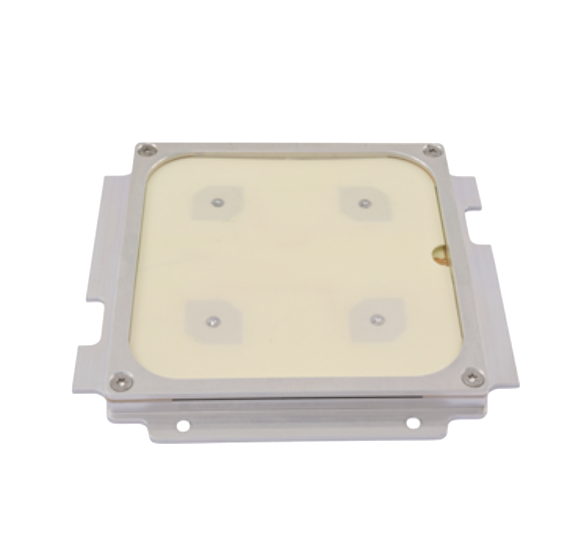
Ubotica Technologies has debuted their CogniSAT-XE2 nexgen hardware platform for delivering state of the art, Artificial Intelligence (AI) in space.

CogniSAT-XE2

Building on the flight proven CogniSAT technology, CogniSAT-XE2 comes in a mechanical and power envelope that is compatible with smallsats and delivers increased compute performance per Watt.

Satellites designed using CogniSAT-XE2 accelerate system return on investment by maximizing on-orbit data analysis capabilities to deliver actionable insights in real-time and optimizing downlink data load. CogniSAT-XE2 provides the AI capabilities to enable a wide variety of AI-enabled applications such as real-time navigation and collision avoidance assistance, image analysis and insight generation, area of interest identification and smart data management.

Operators can easily integrate CogniSAT-XE2 within their satellite systems using the CogniSAT-HCS host control software which can also orchestrate the use of the CogniSAT-XE2 platform for many different tasks during a single orbit. The CogniSAT-TK provides the AI software developer with a range of image pre-processing and post-processing algorithms which will speed up the development of applications optimized for the CogniSAT-XE2 platform.

According to John Doody, VP Product at Ubotica, “CogniSAT-XE2 expands the capabilities and autonomy of Earth Observation satellite constellations. Image analysis at the edge in space can be used to direct space-based observation assets in real time to areas of specific interest. Operation of CogniSAT-XE2 is programmable in orbit and can be dynamically enhanced based on operator need or the real-time analysis of sensor data.”

CogniSAT-XE2 is available now and will fly on the Ubotica CogniSAT-6 mission that was announced in November of 2022.

Ubotica is at the heart of semi-autonomous satellite systems that provide real-time insights from flexible on-board processing and that use affordable, low energy hardware. The Ubotica CogniSAT platform was developed with deep insight of processing hardware, computer vision software and AI system integration. CogniSAT technology has already been proven in multiple space flown projects with partners in Europe and the USA, including NASA JPL and the European Space Agency (ESA).

Filed Under: News

Sidus Space secures additional launches with SpaceX

February 24, 2023 by editorial

Sidus Space, Inc. (NASDAQ:SIDU) has signed an agreement with SpaceX to launch on Transporter missions manifested for 2024 and 2025.

This additional agreement further extends the Company’s relationship with SpaceX, selected in part due to their successful and reliable launch capabilities. Sidus Space expects the maiden flight of LizzieSat™ on SpaceX Transporter-9 later this year. Along with launching in 2023, the new agreement adds two additional flights in 2024 and two flights scheduled for launch in 2025, each of which are on upcoming Transporter missions.

Once launched, each LizzieSat™ mission is expected to be on-orbit for four to five years. This timeline provides sufficient time on orbit to meet customer needs and to advance future technologies.

“We are thrilled to have signed multi-year agreements with SpaceX, establishing a regular launch cadence for Sidus and our customers,” said Founder and CEO, Carol Craig. “With an expected nine LizzieSats in orbit via SpaceX launches through early 2025, we can accommodate multiple missions, offering a variety of flight opportunities to customers. This provides our customers multiple manifest options to meet their mission objectives while expanding our space data and imagery platform as part our mission of “Bringing Space Down to Earth™.”

Filed Under: News

Terran Orbital’s Tyvak Nano-Satellite Systems wins billion$ contract to build hundreds of LEO satellites for Rivada Space Networks

February 23, 2023 by editorial

Terran Orbital Corporation (NYSE: LLAP) has announced that the firm’s wholly-owned subsidiary, Tyvak Nano-Satellite Systems, Inc. (“Tyvak”), has been awarded a $2.4 billion contract to design, build and deploy 288 LEO satellites for Rivada Space Networks — as part of the contract, Terran Orbital will also develop 12 “spare” satellites for a total production of 300 spacecraft.

Terran Orbital, through its subsidiary Tyvak, will act as the prime contractor to design and manufacture the approximately 500 kg satellites, integrate the communication payload, and perform the final satellite assembly, integration, and test. The company will also be responsible for developing portions of the ground segment.

Mission operations for the on-orbit satellites will be conducted from a state-of-the-art, satellite operations, control center. Rivada expects to start deploying their constellation as early as 2025, subject to compliance with applicable regulatory requirements, with the anticipated launch of four of our satellites.

“Terran Orbital is thrilled to form this new partnership with Rivada Space Networks,” said Marc Bell, Co-Founder, Chairman, and Chief Executive Officer of Terran Orbital. “Our partnership will show why Terran Orbital continues to be a satellite manufacturer of choice for aerospace and defense companies worldwide. We are ecstatic to work alongside Rivada and look forward to building out their LEO constellation.”

“We at Rivada see Terran Orbital as a kindred spirit of sorts. We are delighted to have the opportunity to bring this project to fruition with them,” said Declan Ganley, Chairman and CEO of Rivada Networks.

Filed Under: News

UPDATE #3 from Momentus regarding the company’s Vigoride-5 OSV

February 23, 2023 by editorial

The image shows the view from Vigoride-5 as the spacecraft flies over the Troll ground station in Antarctica. Photo is courtesy of Momentus.

Momentus Inc. (NASDAQ: MNTS) is reporting that the commissioning operations of the Vigoride-5 Orbital Service Vehicle (OSV) are continuing to successfully advance.

The Vigoride-5 OSV was launched on the SpaceX Transporter-6 mission on January 3. As commissioning operations advance, the OSV remains in good health, and the vehicle’s power and thermal systems continue to be within nominal ranges.

The solar arrays are fully deployed and generating power within nominal ranges. Both uplink and downlink communications with the vehicle are healthy. Recent activities have included tuning the performance of the attitude determination system and completing pressurization of the vehicle’s propulsion system

As part of the commissioning campaign, a spacecraft camera has now been activated and has begun returning images of the spacecraft, which Momentus uses for engineering evaluation.

In the coming weeks, Momentus will prioritize testing the vehicle’s innovative Microwave Electrothermal Thruster (MET). Momentus is a pioneer in commercializing this technology. The MET is designed to use water as a propellant and produce thrust by expelling extremely hot gases through a rocket nozzle.

Unlike a conventional chemical rocket engine, which creates thrust through a chemical reaction, the MET is designed to create a plasma and thrust using microwave energy. Using the MET, Momentus aims to offer cost-effective, efficient, safe, and environmentally friendly propulsion to meet the demands for in-space transportation and infrastructure services.

Filed Under: News

Axelspace develops a Ka-band radio for EO smallsats

February 22, 2023 by editorial

Axelspace Corporation has successfully developed a Ka-band radio for Earth Observation (EO) smallsats — the radio operates with less than half the power consumption of conventional radio.

The collaborative research was jointly developed with Tokyo Institute of Technology (Tokyo Tech) with key collaborators Atsushi Shirane of the Laboratory for Future Interdisciplinary Research of Science and Professor Kenichi Okada and Assistant Professor Takashi Tomura of Department of Electrical and Electronic Engineering.

EO data from smallsats is attracting attention for a multitude of applications such as smart agriculture, environmental monitoring, disaster prevention, and disaster response. Demand for this data will increase in the future and additional, efficient mechanisms for transmitting data from space to Earth are needed.

The radio equipment typically used on microsatellites for EO have limitations. This is especially true with compatibility between capturing and communicating data. This issue arises due to the direction of image capture and antenna communication as they do not match (attitude control).

Large EO satellites in the several-ton class mount multiple types of antennas and they can use different antennas, depending on the distance from the ground stations, or use mechanical gimbals combined with controllable directivity phased array radios that allow the large satellite to avoid conflicts in attitude control. However, smallsats have far less storage space and power and that presents a unique and difficult challenge for adoption of the above methods for microsatellites.

Advances in sensor technology and data services require today’s EO missions to have faster communications. The downlink must achieve the communication of a large amount of data transmission in shorter time periods. To solve these two issues of space and power constrained smallsats, Axelspace and Tokyo Tech have developed a downlink system that combines a broadband Ka-band transmitter and an active phased array antennas.

The Ka-band phased array radio developed in this research consists of a two-port antenna, amplifier, phase shifter, and active hybrid coupler. This enables electrical directivity control with low power consumption. The newly devised dynamic, hybrid coupler, circuit technology significantly reduces the power consumption of the phased array radio, thereby enabling faster and more real-time data communication than was previously possible.

The manufacturing of the radio IC is a CMOS process, which enables mass production at a low cost. Axelspace plans to install the successfully developed low-power phased array radio on the firm’s EO microsatellite. An on-orbit demo will be conducted within a few years with the company’s aim to shorten the time lag between ground capturing and data downloading as much as possible and to accelerate satellite data use.

The research results were supported by the JST Research Results Deployment Program A-STEP Industry-University Collaboration are available at this direct link…

Filed Under: News

Kleos Space Vigilance Mission enters operational phase with monthly service delivery milestone achieved

February 21, 2023 by editorial

Kleos Space S.A. (ASX: KSS, Frankfurt: KS1) has confirmed that their Vigilance Mission (KSF1) satellites have entered into operations, following achievement of reliably delivering data products against a monthly service level to Government and Commercial customers.

Photo of a Kleos Space Vigilance Mission smallsat, courtesy of the company.

Bringing Vigilance mission into its operational phase is the key catalyst for commencing deferred revenue recognition this quarter, revenue growth and cash receipts.

Commenting on this milestone, Alan Khalili, the company’s CEO, said, “Reaching this critical milestone moves the Company into production mode, confirming the Vigilance mission satellites are now in commercial operation, delivering consistent and reliable data from a specific area of interest which is being processed through our proprietary signal processing platform and being sold to our early adopter customers as intelligence products. We now look forward to expanding our product offering through bringing additional already launched satellites online, including the Patrol Mission (KSF2) expected to commence data delivery in the coming months.”

Filed Under: News

Kleos Space Vigilance Mission enters operational phase with monthly service delivery milestone achieved

February 20, 2023 by editorial

Kleos Space S.A. (ASX: KSS, Frankfurt: KS1) has confirmed that their Vigilance Mission (KSF1) satellites have entered into operations, following achievement of reliably delivering data products against a monthly service level to Government and Commercial customers.

Photo of a Kleos Space Vigilance Mission smallsat, courtesy of the company.

Bringing Vigilance mission into its operational phase is the key catalyst for commencing deferred revenue recognition this quarter, revenue growth and cash receipts.

Commenting on this milestone, Alan Khalili, the company’s CEO, said, “Reaching this critical milestone moves the Company into production mode, confirming the Vigilance mission satellites are now in commercial operation, delivering consistent and reliable data from a specific area of interest which is being processed through our proprietary signal processing platform and being sold to our early adopter customers as intelligence products. We now look forward to expanding our product offering through bringing additional already launched satellites online, including the Patrol Mission (KSF2) expected to commence data delivery in the coming months.”

Filed Under: News

The Amazon Kuiper NGSO constellation application is approved by the FCC

February 19, 2023 by editorial

The Federal Communications Commission (FCC) has granted, subject to conditions, the application of Kuiper Systems LLC (Kuiper) for modification of its license for a non-geostationary orbit (NGSO) satellite constellation providing fixed-satellite service (FSS) and Mobile Satellite Service (MSS) using Ka-band radio frequencies.

Specifically, the FCC grants Kuiper’s request for approval of its updated orbital debris mitigation plan, thereby satisfying a condition of the agency’s action in 2020 conditionally granting Kuiper’s request to deploy and operate their NGSO system.

This action will allow Kuiper to start deployment of its constellation in order to bring high-speed broadband connectivity to customers around the world. In granting the Amazon Kuiper Systems modification, the FCC considered the issues raised by interested parties in the record.

These issues include, but are not limited to, collision risk, post-mission disposal reliability, completion of satellite design, and orbital separation.

To address these and other issues, the agency requires Kuiper to comply with a series of conditions — to learn more, access the downloaded FCC Order and Authorization document at this direct link.

Filed Under: Featured, News

Antaris™ JANUS-1 smallsat is successfully launched by the ISRO’s SSLV-D2 rocket

February 18, 2023 by editorial

The Antaris JANUS-1 smallsat has successfully reached orbit — JANUS-1 rode on the Indian Space Research Organization’s (ISRO) SSLV-D2 rocket, which was launched from the Satish Dhawan Space Centre of India under a commercial arrangement with New Space India Limited (NSIL). The satellite features five payloads from a range of global providers and those will be commissioned and begin nominal operations during the coming days.

Additional tech demonstration satellites from Antaris and manufacturing partners Ananth Technologies and XDLINX Labs are planned for 2023, including 6U, 12U and 27U satellite reference architectures.

JANUS-1 is a 6U satellite featuring payload and subsystem technologies from AICRAFT, Morpheus Space, Netra, SayariLabs Kenya, SpeQtral, Transcelestial and Zero-Error Systems (ZES) that will perform Internet of Things (IoT) communications, advanced experimental laser communications, radio communications and machine learning (ML) during orbit.

Antaris SatOS software manages core bus responsibilities while orchestrating multi-tenant payloads and onboard computing — in addition to showcasing secure TT&C (Telemetry, Tracking and Command) protocols with Amazon Web Services (AWS) and ATLAS Space Operations, who are providing ground communications services.

The project was completed in just 10 months from concept to launch readiness with a cost savings of 75% over comparable satellite missions. Based on data captured during the build, Antaris anticipates that future spacecraft missions can be ready for launch in as few as six months.

While the launch marks the start of JANUS-1’s on-orbit mission, the satellite has been ‘in flight’ for months via the company’s unique TrueTwin™ digital twinning technology that creates a digital version of the satellite at the start of the project and then integrates with hardware-in-the-loop as hardware becomes available.

“This is a very proud moment for our company and the global space ecosystem,” said Antaris Co-Founder and Chief Technology Officer, Karthik Govindhasamy. “We did something that has never been done before—we designed, built and launched a complex satellite in just months, not years, at a fraction of traditional costs. Our cloud-based platform made this all possible, and we have proven that this software is the future of the satellite industry.”

“We’re so proud of the entire Antaris team and our incredible manufacturing partners,” noted Antaris Co-Founder and CEO, Tom Barton. “Together, we have broken down major barriers that have historically hampered satellite design and production. We hope JANUS-1 will serve as an inspiration to the entire space ecosystem and look forward to partnering with other New Space pioneers who are ready to go fast and work with us to make space easy. Antaris software dramatically simplifies the design, simulation and operation of satellites. We bring New Space thinking to an Old Space world, giving our customers maximum control and flexibility while improving time-to-orbit, reducing costs and optimizing engineering reuse.”

Filed Under: News

  • « Go to Previous Page
  • Go to page 1
  • Interim pages omitted …
  • Go to page 131
  • Go to page 132
  • Go to page 133
  • Go to page 134
  • Go to page 135
  • Interim pages omitted …
  • Go to page 334
  • Go to Next Page »

Primary Sidebar

WEEKLY NEWSLETTER

Archives

  • December 2025
  • November 2025
  • October 2025
  • September 2025
  • August 2025
  • July 2025
  • June 2025
  • May 2025
  • April 2025
  • March 2025
  • February 2025
  • January 2025
  • December 2024
  • November 2024
  • October 2024
  • September 2024
  • August 2024
  • July 2024
  • June 2024
  • May 2024
  • April 2024
  • March 2024
  • February 2024
  • January 2024
  • December 2023
  • November 2023
  • October 2023
  • September 2023
  • August 2023
  • July 2023
  • June 2023
  • May 2023
  • April 2023
  • March 2023
  • February 2023
  • January 2023
  • December 2022
  • November 2022
  • October 2022
  • September 2022
  • August 2022
  • July 2022
  • June 2022
  • May 2022
  • April 2022
  • March 2022
  • February 2022
  • January 2022
  • December 2021
  • November 2021
  • October 2021
  • September 2021
  • August 2021
  • July 2021
  • June 2021
  • May 2021
  • April 2021
  • March 2021
  • February 2021
  • January 2021
  • December 2020
  • November 2020
  • October 2020
  • September 2020
  • August 2020
  • July 2020
  • June 2020
  • May 2020
  • April 2020
  • March 2020
  • February 2020
  • January 2020
  • December 2019
  • November 2019
  • October 2019

© 2019–2025 SatNews

Insert/edit link

Enter the destination URL

Or link to existing content

    No search term specified. Showing recent items. Search or use up and down arrow keys to select an item.
      x
      Sign Up Now!

      Enjoy a free weekly newsletter with recent headlines from the global SmallSat industry.

      Invalid email address
      We promise not to spam you. You can unsubscribe at any time.
      Thanks for subscribing! You will now receive weekly SmallSat News updates.
      We love our advertisers.
      And you will too!

      Please disable Ad Blocker to continue... We promise to keep it unobtrusive.
      We promise not to spam you. You can unsubscribe at any time.
      Invalid email address
      Thanks for subscribing! Please check your email for further instructions.