• Skip to main content
  • Skip to primary sidebar
  • Home
  • News
  • Featured
  • More News ⌄
    • SatNews
    • SatMagazine
    • MilSatMagazine
  • Events ⌄
    • MilSat Symposium
    • SmallSat Symposium
    • Satellite Innovation
  • Contacts
  • SUBSCRIPTION

SmallSat News

You are here: Home / Archives for News

News

Two ArianeGroup Contracts Go To Kongsberg Defense & Aerospace For Ariane 6 Launcher Tech

September 23, 2021 by editorial

Kongsberg Defence & Aerospace (KONGSBERG) has signed two contracts with ArianeGroup to deliver technology to Europe’s new Ariane 6 launcher, managed and funded by the European Space Agency (ESA).

KONGSBERG will deliver the forward booster attachment and release mechanism (UPPA), the Optical Safety Barrier (OSB) and the Level Conditioner for the next-generation launcher. The contract is a 30 year frame agreement with a total value of up to 200 million euros.
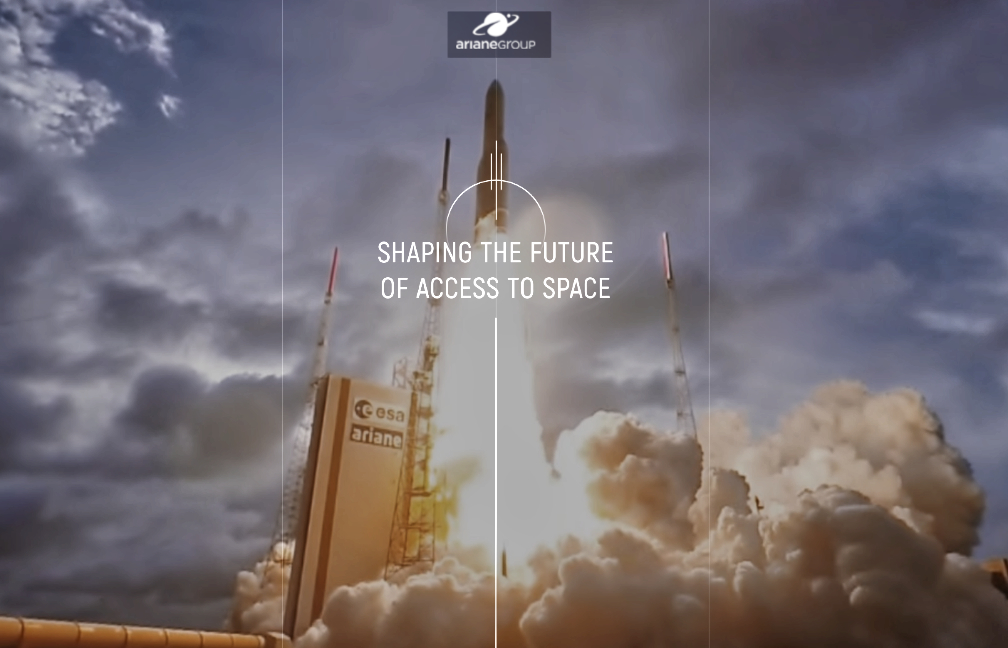
UPPA, the forward booster attachment and release mechanism, transmits power from the engines to the lower part of the launcher during the critical time of liftoff. The boosters use all their fuel within the first two minutes after the rocket launcher lifts off from the launch pad, and are then with extreme precision released and discarded from the launcher. KONGSBERG has delivered the booster attachment for Ariane 5 since 1996. The booster attachment for Ariane 6 is modified to fit the new launcher design.

The Level Conditioner (LC) is an important part of the fuel level measurement system and it is used for monitoring the fuel levels of liquid Oxygen and Hydrogen. The LC units are part of the functional chain and are used during all phases of the flight, check of full tanks before lift-off, level control during flight and stop control of the engines when the tanks are empty. There are typically 25 LC’s in each launcher. The Level Conditioner was originally designed for Ariane 5 and has been used in all flights since 1996 and will continue into Ariane 6. More than 3,400 flight models of the Level Conditioner are built and launched.

The Optical Safety Barrier (OSB) acts as a safety barrier for the fiber-optic based pyrotechnic control and command system onboard the Ariane 6. Pyrotechnic is used in both launchers and satellites in space and is traditionally based on electro pyro and pyro lines with primary explosives. The fiber-optical pyro system onboard Ariane 6 offers significant cost reductions in terms of installation and procurement. The devices are relatively simple, light and compact and provide near-instantaneous response with very little input energy. This will be the first time Opto-Pyrotechnics has been successfully integrated and used on a European space launcher. The control and command system onboard the Ariane 6 system is a technological breakthrough, and will enhance the safety, reliability and performance of the launch system.

According to ESA, the Ariane 6 launcher will have the flexibility to launch both heavy and light payloads. While the Ariane 5 mainly launches satellites into GEO two at a time, the Ariane 6 is designed to launch a wider range of satellites, including LEO, smallsat constellations and small, geostationary satellites.

Ariane 6 is modular, flexible and competitive and will be the optimum launch solution for commercial and institutional customers. This new launcher – developed by ArianeGroup and its European industrial partners – combines proven solutions with innovation in order to address the changing needs of the market, allied with the unparalleled reliability of the Ariane family.

Ariane 6 will be available with two or four solid rocket boosters, depending on the required performance. The launcher will be more than 60 meters, and the weigh will be almost 900 tons when launched with a full payload.

Kongsberg Defence & Aerospace’s division for Space and Surveillance is Scandinavia’s largest supplier of space equipment to ESA, and the division is a leading supplier of equipment to scientific satellites, Earth Observation (EO) satellites and launchers. With strong design & manufacturing capability, and with more than 30 years’ experience with development, qualification and delivery of products for launcher and satellites, KONGSBERG has contributed to over 100 successful launches.

Ariane 6 will be launched from Europe’s Spaceport, in Kourou, French Guiana (South America).

“We are very pleased that this contract allows us to continue our long-lasting and valuable collaboration with ArianeGroup, the Lead industrial contractor and design authority for Ariane 6. This represents an important milestone to KONGSBERG,” said Harald Aarø, Executive Vice President KONGSBERG’s division for Space and Surveillance.

“These contracts are a result of our strong and reliable product deliveries to Ariane 5. We have also contributed to a technology shift in the European launcher industry through the development of the OSB, in addition to developing a product for the future, “ said Sedsel Fretheim Thomassen, Program Manager, KONGSBERG Launcher Mechanisms & Electro-Optics.


Filed Under: News

Prestwick Spaceport Signs Partnership MoU With Astraius

September 23, 2021 by editorial

Prestwick Spaceport has secured a launch partner for its spaceport development in a landmark deal that will boost Scotland’s space industry ambitions and create an important strategic asset for the UK.

The spaceport, represented by Glasgow Prestwick Airport and South Ayrshire Council, have signed a Memorandum of Understanding (MoU) with Astraius, a commercially operated horizontal ‘air launch’ company. The organizations will collaborate closely with other key project partners, including Scottish and UK governments, to prepare for the orbital launch of smallsats starting in 2023.

The agreement brings together proven horizontal launch technology – which allows the release of a rocket carrying smallsat from high altitude – with a world class spaceport, in response to a growing demand from customers. The global satellite market is booming, with operators of technology no larger than a shoebox looking to access LEO to carry out activities that include monitoring climate change, tracking deforestation and identifying illegal fishing or mining activities around the globe.

This announcement will substantially bolster Scotland’s space industry ambitions. Glasgow already manufactures more smallsats than anywhere in the world outside of California, while Edinburgh has positioned itself as the space data capital of Europe, leading on the analysis of space derived data to bring a range of benefits to a variety of business sectors, the environment and wider society.

The design, infrastructure and launch capabilities at Prestwick Spaceport also represent an important strategic asset for the UK. Prestwick has particularly strong transport links, a more than favourable climate for regular launches and a strong heritage of innovation and engineering expertise. The spaceport forms a key part of a growing ecosystem of companies and talent that will act as a catalyst to stimulate economic activity around space, boosted by multi-million pound Ayrshire Growth Deal funding.

South Ayrshire Council is a key partner in the development of Prestwick Spaceport, having secured £80m of investment for the existing Prestwick Aerospace hub – Scotland’s largest – as part of the wider £250 million Ayrshire Growth Deal funding. The £80 million funding will be invested in infrastructure and is expected to create up to 4,000 new high-quality jobs.

The Ayrshire Growth Deal is a partnership being driven forward by the Scottish Government, the UK Government and East, North and South Ayrshire Councils. The Deal was signed in November 2020, securing £251.5 million investment to realize Ayrshire’s potential and become a world-class business region for the aerospace and space, energy, marine, manufacturing and tourism industries. This investment is expected to unlock private investment of around £300 million and deliver around 7,000 new jobs across a wide range of sectors, transforming the local economy.

The £80 million being invested in the Aerospace and Space program at Prestwick will position Ayrshire as one of the UK’s leading centers of aerospace and space activity, involving the four key projects of Spaceport Infrastructure, Commercial Build, Roads Infrastructure and the Aerospace and Space Innovation Centre.

The MoU was warmly welcomed by the UK Space Agency, as well as both wider UK and Scottish Government representatives. Scotland’s Minister for Business, Trade, Tourism and Enterprise, Ivan McKee stated, “The Memorandum of Understanding with Astraius as a launch partner is great news for the Prestwick Spaceport and signifies a major step towards bringing horizontal launch capability to Scotland. Our ambition is for Scotland to be Europe’s leading space nation and to have a £4 billion share of the global space market by 2030, whilst developing launch capability – both vertical and horizontal – to serve small satellite producers. The announcement today brings us a step closer to achieving our ambition and proves once again the versatility and dynamism of the Scottish space sector.”

Zoe Kilpatrick, Commercial Director at Glasgow Prestwick Airport, said, “Glasgow Prestwick Airport is perfectly positioned to become a leading provider of space launch services after being at the forefront of aviation and aerospace for almost 100 years. In Astraius we have identified a partner with the vision, expertise, and proven technology to help fast-track our ambition to become Europe’s premier launch location, offering spaceflight as part of a proposition that stretches beyond launch, bringing a wide range of space related benefits to the region. This is both commercially exciting for the flagship element of Prestwick’s established aerospace hub and an important strategic step in developing launch capability for the UK. Partnering with the right service provider is critical for any launch location and Astraius is best suited to provide the required impetus and momentum to this exciting endeavor.”

Astraius Chairman, Sir George Zambellas, said, “A revolution in space exploration and technology is underway. Satellites are transforming communication, knowledge sharing and helping to monitor the environment, whilst powering the global economy. Astraius exists to provide a dependable, affordable and agile means of launching the world’s next generation of small satellites. In joining with Prestwick Spaceport, we now have the partner that will allow us to make this vision a reality.”

Astraius CEO, Kevin Seymour, said, “This landmark agreement is both strategically and commercially significant. In partnering with Prestwick, we will be able to deliver on our promise to the many satellite customers looking for launch certainty. This is an important milestone for both Astraius and Prestwick Spaceport and will add to the development of a vibrant space sector for Scotland and the UK.”

Cllr Peter Henderson, Leader of South Ayrshire Council, said, “Prestwick Spaceport will have a hugely positive impact on local communities in South Ayrshire. Bringing a wide range of skilled jobs and a vibrant supply chain to the local area, the spaceport not only offers significant economic benefits, but will create opportunities for young people to have exciting careers. The spaceport, like all other Ayrshire Growth Deal projects such as a new Aerospace and Space Innovation Centre at Prestwick, will be delivered on Community Wealth Building principles. Based on inclusive growth, this will ensure that local people are given the chance to develop skills so they can participate in the future economy. The signing of this MoU today is not only a significant step for the development of Prestwick Spaceport, but for the future communities of South Ayrshire.”

UK Government Minister for Scotland, Iain Stewart, said, “This is a giant leap for Prestwick and the UK to delivering a horizontal launch spaceport and boosting our growing space industries. Through the Ayrshire Growth Deal the UK Government is investing £32 million in the aerospace and space program, which is bringing new jobs and businesses to the area. Across Scotland we are investing more than £1.5 billion in region deals, helping communities to build back better from the pandemic.”

Prestwick Spaceport is the latest addition to a long-established and thriving aerospace hub and will become the flagship brand of the Prestwick Aerospace proposition, facilitating the launch of small satellites and providing cost effective access to LEO and microgravity environments for the first time in Europe. Prestwick’s central location with road, rail and sea connections provide advantages and opportunities via established space hubs in Edinburgh, Glasgow and the Highlands, not to mention the international connectivity afforded by the airport. Supported by funding through the Ayrshire Growth Deal, the spaceport will play an important role in the provision up to 4,000 local aerospace jobs for the Scottish space sector, whilst fostering the skills needed to keep the UK at the forefront of New Space for years to come.

Astraius has brought together a formidable international team with experience in commercial space launch and operations. The demand for satellite launches is expected to expand hugely with more than 17,000 launches planned over the next 10 years. Astraius will provide a dependable, affordable and low-cost option for a global market predicted to exceed $400bn in coming years. Astraius is headquartered in the UK, with executive offices in Washington DC and operational locations in Florida. Their new, state of the art, launch facilities will be based at Prestwick Spaceport.

Filed Under: News

Xona Space Systems Completes New Funding Round For Precision LEO PNT Service

September 22, 2021 by editorial

Xona Space Systems has raised a new funding round co-led by Seraphim Space Investment Trust (LSE:SSIT) and MaC Venture Capital, with participation from Toyota Ventures, Daniel Ammann (co-founder of u-blox), and Ryan Johnson (former CEO of BlackBridge, operator of the Rapideye constellation). Follow-on investors also include 1517 Fund and Stellar Solutions.

Global Navigation Satellite Systems (GNSS), such as GPS and Galileo, have become the backbone of nearly every aspect of the modern connected world. However, threats to these legacy systems along with consumer demands for enhanced performance are increasing rapidly.

Xona’s Pulsar™ precision LEO PNT (Positioning, Navigation and Timing) service leverages the recent advances in smallsat technology to provide users with a secure and robust alternative to traditional GNSS. Xona’s patent pending system architecture uses the efficiency of smallsats to provide an affordable global service with more than 10x better accuracy and 100x better interference mitigation than the legacy systems.
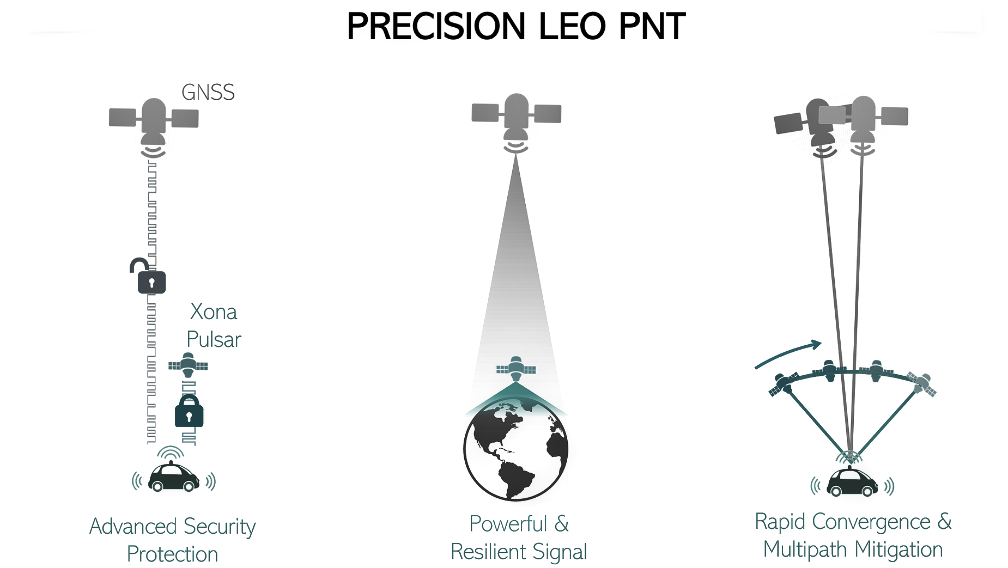


The funds raised this round will support the completion of Xona’s first orbital mission, scheduled for mid-2022, to demonstrate the capabilities of their Pulsar™ precision LEO PNT service, the first, independent, high-performance, satellite navigation and timing system designed to meet the needs of intelligent systems.

Xona successfully tested their navigation system during a ground-based demo earlier this year marking a major milestone for the company, and is now expanding their laboratory facilities to support further development and enable on-site testing and manufacturing. This round will also provide for the continued growth of their highly technical team that is composed of space and GNSS experts from both the private and commercial space industry, including NASA, Lockheed Martin, Maxar, L3 Harris, Blue Origin and SpaceX alumni.

“We view global coverage of a safe, secure, and highly accurate navigation service as critical to the future of autonomy and countless other markets,” said Jeff Crusey, Investment Director of Seraphim Space Investment Trust. “We’re excited to continue supporting Xona because they’re an extremely talented and uniquely positioned team to execute on this plan.”

“The time is ripe for the next generation of satellite navigation systems with lower-cost private launch services,” said Jim Adler, Founding Managing Director of Toyota Ventures. “Xona Space Systems is bringing a better navigation solution with break-through availability, accuracy, and security. Brian and his team are combining innovative technology with a smart business model, and we’re excited to join their journey as part of their investment team.”

“Knowledge of location and time is one of the most fundamental aspects of both human life and machine operation,” said Brian Manning, CEO of Xona. “GNSS creates trillions of dollars of value by accurately answering the questions of ‘where am I?’ and ‘what time is it?’ for users all around the world. Xona was founded around the mission of enabling modern technology to operate safely in any environment, anywhere on Earth. To achieve this for both humans and machines, a foundation of reliable and accurate PNT is an absolute necessity, which is exactly what we are working to provide at Xona.”

Filed Under: News

National Security Innovation Capital Delivers Million$ Contract To Xplore

September 22, 2021 by editorial

Xplore Inc. has received a $2 million contract from National Security Innovation Capital (NSIC) within the Defense Innovation Unit (DIU) of the Department of Defense (DoD). This funding will accelerate the development of the Xcraft® spacecraft platform, culminating with launch in 2023.

Xplore’s standard Xcraft high-performance, high reliability ESPA-class platform provides hosting and other services for a wide variety of customers and payloads. The Xcraft was purposefully designed for use in LEO, cislunar space and beyond, to destinations including Venus, Mars and the asteroids. The company’s first Xcraft LEO (XLEO) mission in 2023 will directly benefit from NSIC funding.

Xplore invites payload customers to discover hosting opportunities on its XLEO missions. The XLEO service is designed to host a wide variety of customer payloads – from as small as 1U to as large as 50U or more. This service allows customers to focus on their primary business goals without the added time and expense of procuring, launching and operating dedicated satellites. Xplore currently has a Memorandum of Understanding with Accion Systems for XLEO to host TILE, Accion’s next generation ion thruster.

Other impacts of this funding will be evidenced by the company’s recent collaboration with W. M. Keck Observatory, enabling Xplore to accelerate its timeline for the Xplore Space Telescope (XST) missions. These operations will begin soon after the XLEO launches. The Xcraft platform will form the basis for the family of XSTs with missions planned in LEO and the cislunar space region. Commercial space-based telescopes will offer the astronomical community many more options to perform their observations than currently available, and these services will reach market sooner due to the support NSIC has provided to Xplore.

Lisa Rich, Founder and COO of Xplore said, “The significant funding NSIC has provided ensures U.S. government and commercial customers will have speedy access to our affordable Xcraft platform. This $2M award will expedite component acquisitions and accelerate our flight program. We appreciate this investment in Xplore and are proud to be a trusted non-traditional defense contractor for NSIC.”

Filed Under: News

Rocket Lab Receives An Astroscale Contract To Launch The ADRAS-J Smallsat

September 22, 2021 by editorial

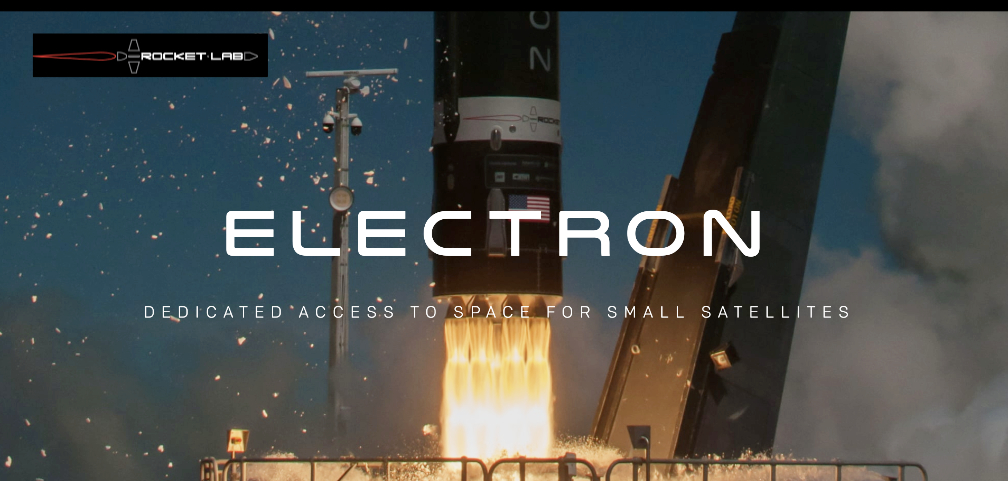
Rocket Lab USA, Inc. (Nasdaq: RKLB) (“Rocket Lab” or “the Company”) has signed a dedicated launch contract with Astroscale Japan Inc. (“Astroscale Japan”), a subsidiary of Astroscale Holdings Inc. (“Astroscale”).

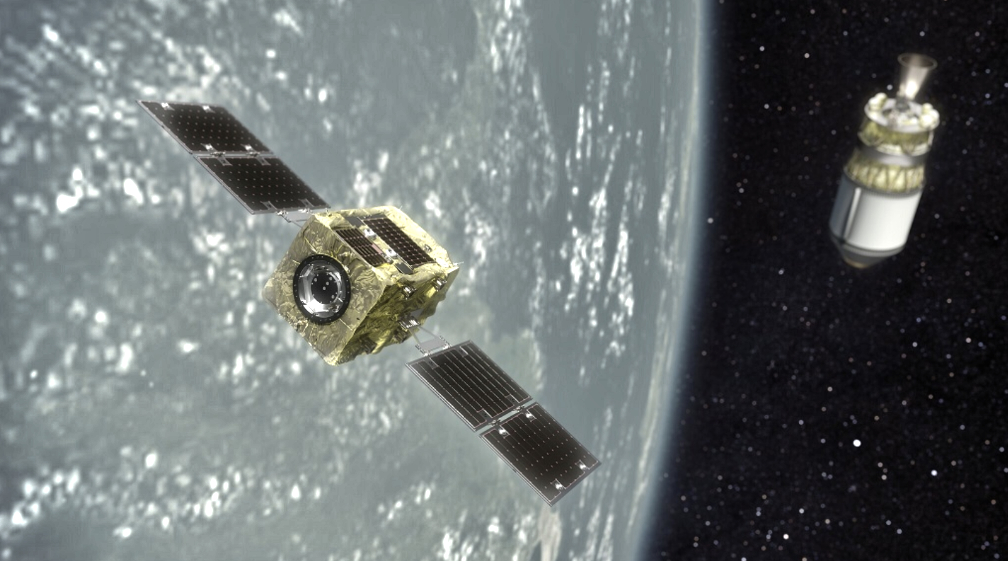
Electron’s Kick Stage will enable an Astroscale satellite to rendezvous with a spent Japanese upper stage rocket body in low Earth orbit, demonstrating new debris removal technology for space sustainability. 

Scheduled for lift-off from Rocket Lab Launch Complex 1 in 2023, the Electron rocket will launch the Active Debris Removal by Astroscale-Japan (ADRAS-J) satellite, which has been selected by the Japan Aerospace Exploration Agency (JAXA) for Phase I of its Commercial Removal of Debris Demonstration Project (CRD2), one of the world’s first technology demonstrations of removing large-scale debris from orbit.

Once deployed to a precise orbit by Electron’s Kick Stage, the ADRAS-J satellite is designed to rendezvous with a piece of orbital debris, a long abandoned upper stage rocket body. ADRAS-J aims to demonstrate proximity operations and obtain images of the rocket body, delivering observational data to better understand the debris environment. A planned second phase of the mission, which has yet to be competed, intends to demonstrate the de-orbit of the debris.

“The ability to actively remove satellites and debris from orbit at the end of their operational life will likely play a key role in ensuring a sustainable space environment for the future, so we’re delighted to enable Astroscale to demonstrate new and innovative solutions in this field,” said Rocket Lab Founder and Chief Executive Officer, Peter Beck. “Rendezvousing with a piece of debris on orbit, travelling at around 27,000 km per hour, is a highly complex task that requires absolute precision when it comes to orbital deployment. Electron’s Kick Stage has demonstrated this precision across 18 missions, providing in-space transportation to place our customers’ satellites exactly where they need to go.”

“Reliable and commercially viable launch vehicles like Rocket Lab’s Electron rocket enable frequent and flexible access to space, allowing us to advance our on-orbit services which are fundamental to the growth of the space infrastructure and economy,” said Nobu Okada, Founder and CEO of Astroscale. “Rocket Lab and Astroscale have become leaders in our respective markets and I am thrilled to collaborate on ADRAS-J, a ground breaking mission that will shape the technologies and policies needed to drive space sustainability forward.”

A visualization of the ADRAS-J mission can be viewed at this direct link…

Filed Under: Featured, News

OQ Technology Reveals And Improves Satellite Communications In The U.S. And Europe With Patent Portfolio

September 22, 2021 by editorial

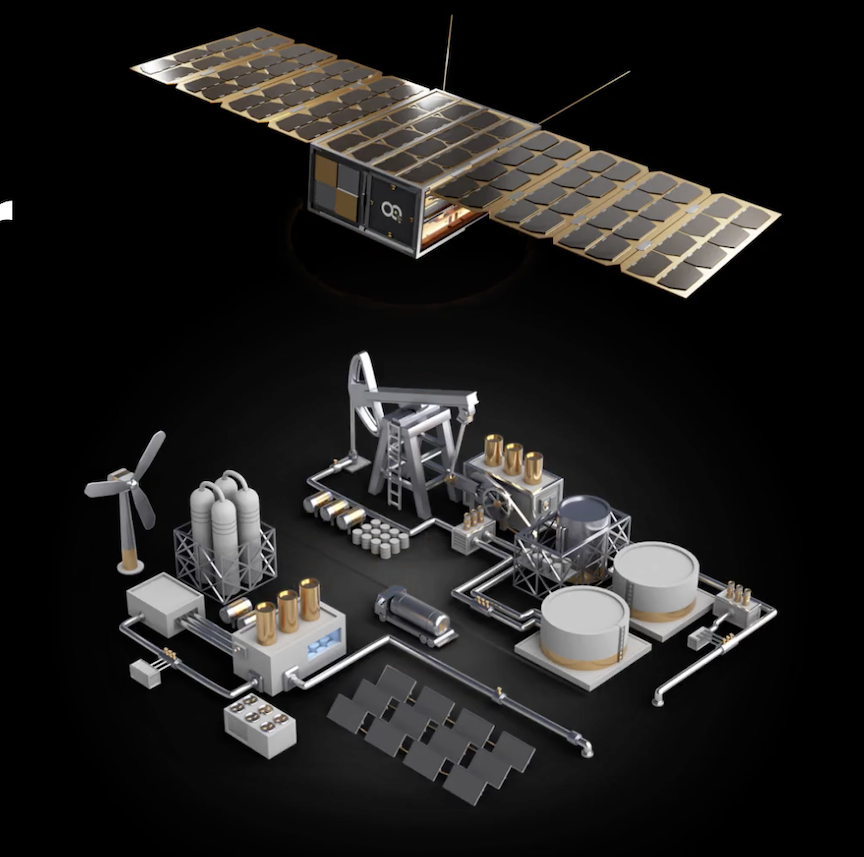
5G satellite operator OQ Technology has revealed six pending patent applications in the USA and in Europe that will improve satellite-based IoT and M2M communications in remote locations. OQ Technology’s patent applications include a “wake-up” technology for satellite IoT (Internet of things) devices, IoT device localization, frequency and timing synchronization, inter-satellite link technology and satellite system design. 

The various technologies within these applications allow customers of the Luxembourg company to receive better quality of service, save power and exchange data easier and more efficiently. They will be implemented onboard its planned satellite constellation in low Earth orbit (LEO). The first commercial IoT satellite of that constellation, OQ’s satellite Tiger-2, which was launched in June, performed well during the launch and early orbit phase (LEOP), and is now reaching the final stages of the payload commissioning phase.

“Obtaining intellectual property rights is a strategic necessity for businesses and NewSpace is no exception,” said Omar Qaise, founder and CEO of OQ Technology. “If the applications in the U.S. and Europe progress as planned, I expect OQ Technology to be granted the patents within the next two years in Europe, and much shorter than that in the US. The technologies we are using immensely improve our service of providing 5G IoT connectivity in remote locations where terrestrial solutions struggle or legacy satellite solutions are too expensive. Most importantly, our patent portfolio will protect our position and investments. It will also set up a huge entry barrier and legal shielding for companies getting into the same field, especially with respect to using cellular IoT and 5G over non-terrestrial networks.” 

The technologies for the patent applications are:

  • “Wake-up” – a smart power saving function within the terminal IoT device that allows the device to efficiently wake up and communicate with the base station (satellite). It can be adjusted with the growth of the number of base stations and connects with 1,000 sensors. Through “wake-up” OQ aims to achieve the 10-year battery-life requirement set by 3GPP standards.
  • “Terminal device localization”, which allows to locate a terminal device, using stored data from the base station(s) instead of an expensive global positioning system.
  • “Inter-satellite links”, keeping the different base stations aware of each other and also record keeping of terminal devices being connectable to the different base stations. This will make hand-over between base stations easier. In the future this will also include GEO satellites.
  • “Frequency synchronization” and “Timing synchronization” – they synchronize communication and thus improve the signalling between terminal devices and base stations to overcome Doppler effect (wavelength change from traveling objects) issues and timing misalignment issues. This improves the quality of data transmissions and data rate capacity, and also saves energy.
  • A satellite system design and network architecture for cellular IoT communication between space and Earth stations.

OQ Technology has developed algorithms and add-on software, following 3GPP-based cellular standards for narrowband IoT (NB-IoT), to make sure IoT devices can seamlessly switch between terrestrial and satellite connectivity to overcome connectivity issues in remote locations without modifying the cellular standards. The company’s software stack resembles a “cell-tower” in the sky and is embedded into its payloads and satellites. 

“In 2017, OQ took the daring step to build its own software stack from scratch, based on the 3GPP standard, and implement its own satellite enabling algorithms,” Qaise said. “Owning our own stack and being able to control the traffic and quality of service for our users gives us a huge competitive edge over other players who rely on third parties and new entrant companies that are yet to deliver.

“Other existing cell tower software stacks are highly proprietary technology built by companies like Nokia, Ericsson and Huawei, which were unlikely to give us access and allowing us to make it suitable for a satellite environment.”

For some applications like drone control, vehicle telematics and artificial intelligence latency is a very critical factor. GEO satellites may take at least 250 milliseconds and cannot match requirements of below 10 ms. OQ Technology’s nanosatellites in low Earth orbit (LEO) close this gap for latency critical applications and provide high data density, quality of service and fast response time.

The company also has developed a technology that allows it to use the cheaper standard mobile chips ($5) for its satellite connectivity, instead of the expensive satellite chip ($100) that would have to be installed and used when leaving terrestrial networks. This unique combination of seamless connectivity in otherwise unconnected locations using standard mobile chips at a fraction of the cost, make it ideal for IoT service providers.  OQ has copyrighted both its base station software within the payload and the chip firmware on the ground.

“Matching the same or as-close-as cellular price, will provide a lot of use cases and open a big market for us”, said Qaise. “That is why we have decided to address this market, in particular in rural and remote areas such as Africa, Australia, the Middle East and the Americas, where infrastructure is lacking. We are incorporating the cell towers into the payload of our LEO telecommunication satellites, which offers opportunities for many latency-tolerant and low-latency applications.”

Filed Under: News

L3Harris Technologies Missile Tracking Satellite Prototype Development For The Space Development Agency Accomplishes Key Milestone

September 22, 2021 by editorial

L3Harris Technologies (NYSE:LHX) has accomplished a key milestone in the development of a missile tracking satellite prototype for the Space Development Agency (SDA).

The completed Preliminary Design Review (PDR) defines the spacecraft’s design baseline for delivery to SDA and allows the program to move to the next stage of delivering ground-breaking new capabilities at speed. When completed, the satellites will provide the capability to detect and track ballistic and hypersonic missiles via overhead persistent infrared sensing from LEO.

L3Harris received the tracking layer prototype award in 2020 to develop and integrate an end-to-end satellite system under a $193 million firm fixed-price contract. Total period of performance runs through 2025 and covers four space vehicle launches.

L3Harris is prioritizing investments in end-to-end satellite solutions in spacecraft, payloads, ground software and advanced algorithms. L3Harris is also developing a prototype for the Missile Defense Agency’s Hypersonic and Ballistic Tracking Space Sensor.

“We’ve worked closely with SDA to ensure our design taps proven technology that can scale to address the changing mission,” said Ed Zoiss, President of L3Harris Space and Airborne Systems. “We understand the threat and are focused on delivery.”

Filed Under: News

Spanish Government Authorizes Sateliot To Initiate 5G-IoT Communications From Space

September 21, 2021 by editorial

Sateliot has obtained the provisional authorization from the Spanish Government, through the Ministry of Economic Affairs and Digital Transformation (Mineco), necessary to start its 5G-IoT services. Sateliot is the satellite operator that will launch a constellation of nanosatellites to universalize the Internet of Things with 5G coverage.

This authorization allows the different terrestrial terminals located in different points of the peninsular geography to connect to the signal offered by the satellite that Sateliot launched into space last March aboard the Soyuz rocket.

So far the company already has everything in its favor to carry out the main objective of the mission: to start the testing phase of its technology in real environments with entities with which it has collaboration agreements, such as its partner Alen Space, with which it has developed the satellite payload, or the Institut d’Estudis Espacials de Catalunya (IEEC), with whom it will work on different use cases, as well as with other strategic organizations that join this unprecedented R&D project.

The results of these technical tests over the next few months will provide Sateliot with very useful information for the evolution and integral design of its nanosatellite constellation, which is scheduled to start offering commercial service in 2023.

The provisional authorization for the use of the orbit-spectrum resource granted by the Ministry refers to the UHF frequency band, which will be used by the company for the first tests.

Orbit-spectrum resources are limited resources allocated by the International Telecommunication Union (ITU) to national administrations. Satellite operators such as Sateliot must first apply for this resource through an administration and then obtain a license in each country where they want to operate so that their satellites have the right to transmit.

After obtaining the provisional authorization from the Ministry, the company has already initiated steps to obtain the relevant licenses in the United States, France and Brazil, as the first steps for the execution of tests and demonstration of use cases at a global level.

According to Jaume Sanpera, CEO of Sateliot, “the authorization we have received from the Ministry allows our project to start the testing phase, which will begin to materialize in the coming weeks in Spain and will be extended to the rest of the world in the coming months to reach its full development and commercial operation in 2023.”

Sateliot is the first satellite telecommunications operator that will provide global and continuous connectivity to all the elements that will make up the Internet of Things (IoT) universe, such as the connected car or home, under the 5G protocol. Thanks to a constellation of state-of-the-art nanosatellites, located at low altitude and acting as mobile towers from space, Sateliot is the perfect complement to large telecommunications companies by providing them with the necessary infrastructure to extend their coverage where terrestrial technologies do not reach. More information on our website, Twitter and LinkedIn.

Filed Under: News

Processor Intelligence For SpaceLink’s Spacecraft To Be Provided By SEAKR

September 20, 2021 by editorial

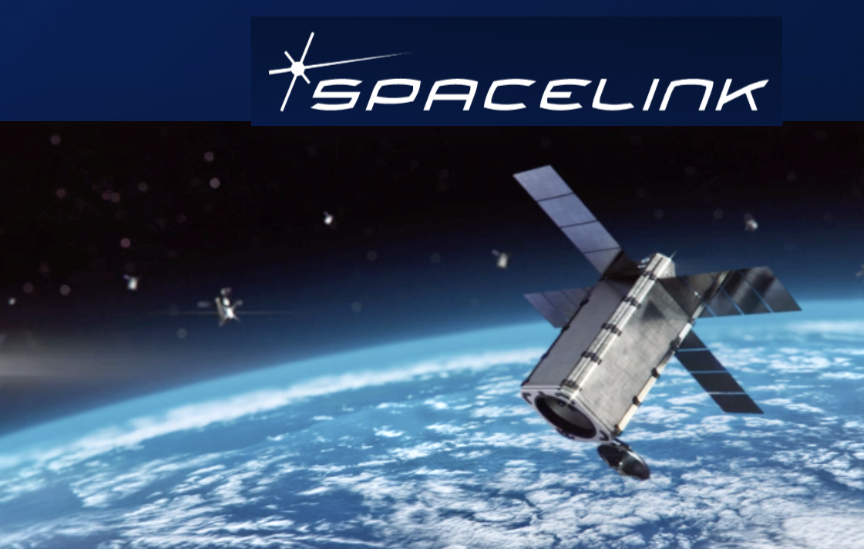
SpaceLink has selected SEAKR Engineering, Inc. (SEAKR) to provide key payload technology for the firm’s relay satellite system.

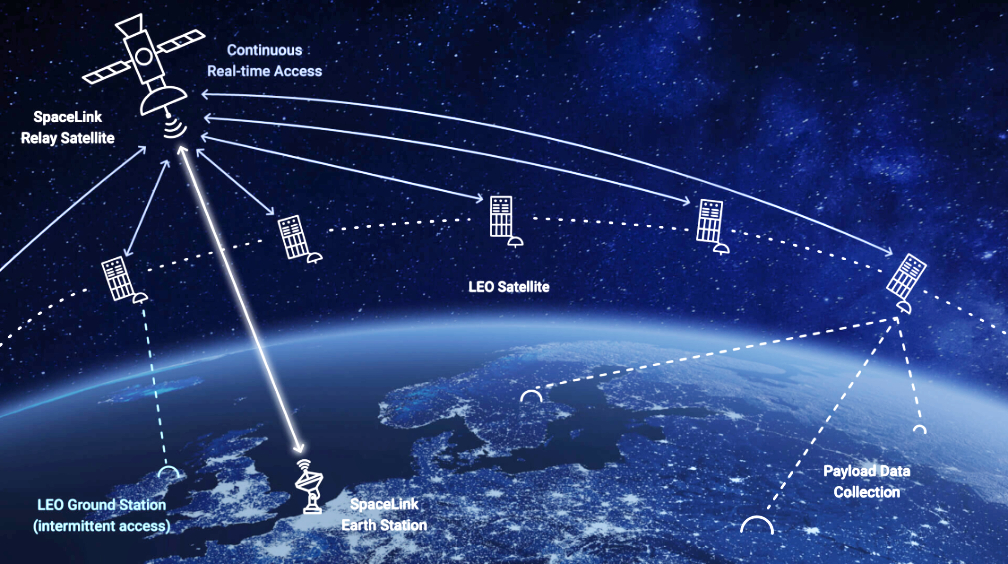
SEAKR is developing technologies for DARPA and the U.S. Space Force and will provide advanced on-board processing for the SpaceLink network (infographic below), which provides secure, continuous, high-capacity communications for time-critical service between spacecraft and the ground.

Working together with SpaceLink, SEAKR is developing an advanced, high-performance processor that integrates with optical and radio frequency (RF) signals. The processor on each of SpaceLink’s MEO satellites will control and direct data traffic to optimize the capacity and availability of the network in response to customer demand.

SEAKR, a firm that just agreed to a definitive acquisition by Raytheon Technologies, is a leading-edge provider of advanced electronics for space applications and is developing one of the central technologies for the Defense Advanced Research Projects Agency’s (DARPA’s) Blackjack satellite network.

The SpaceLink relay system, planned to launch in 2024, will provide operational connectivity to commercial and government space missions using both RF and optical links to the relay satellites and laser crosslinks to route traffic to any SpaceLink ground entry point, and on to the users’ Mission Operations Center. The system will support the growing bandwidth demand and security requirements of commercial, civil, and U.S. and allied national security missions.

With the growing space economy and proliferation of spacecraft in LEO, the demand for fast, continuous, high-capacity connectivity is accelerating. SpaceLink’s unique architecture and location in MEO means the satellite constellation always has direct line of sight to satellites, space stations, tugs and servicers in LEO, as well as to its dedicated Gateway Earth Stations. SpaceLink will relieve the bandwidth bottleneck for organizations that need to transport data quickly and securely to users anywhere in LEO or on Earth.

The SpaceLink relay network is designed to pick up where the U.S. Tracking and Data Relay Satellite System (TDRSS) leaves off and go beyond with unprecedented capacity that leverages today’s technology advances. Enhancing the business case for Earth Observation (EO) companies, commercial space stations, satellite servicers, and space tugs, SpaceLink also meets requirements for the U.S. Government and close allies that want to leverage industry solutions.

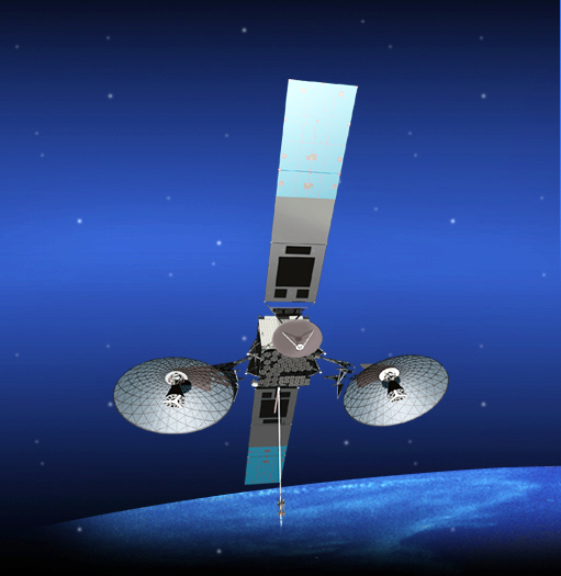
Artistic rendition of NASA’s Tracking and Data Relay Satellite-M (TDRS-M), which is the third and final in a series of next generation communications satellites.

“SEAKR and SpaceLink are aligned in our strategic planning and technology roadmaps,” said Dave Bettinger, SpaceLink CEO. “SEAKR is fully compliant with U.S. government standards and cybersecurity requirements, and our processor development and production will be done on U.S. soil by U.S. persons. For critical payload components, we know this is important to many of our customers.”

”SEAKR has developed multiple on-orbit reconfigurable payloads for both commercial and military missions for multiple orbital domains. The SpaceLink satellite communication processor leverages decades of successful missions and will represent one of the most capable systems deployed,” said Dave Jungkind, SEAKR’s Vice President of Business Development.

“We share SpaceLink’s excitement about the prospects for a relay system that provides continuous connectivity for spacecraft in LEO,” said Scott Anderson, president and co-founder of SEAKR. “Our agreement with SpaceLink enables us to move forward with development of the advanced, high-performance processor that meets SpaceLink’s relay requirements. Our companies have great synergy and we are enthusiastic to move forward with all the technical requirements and interfaces.”

About the companies

SEAKR Engineering, Inc. (SEAKR) is a leading supplier of space qualified state-of-the-art electronics for advanced processors, networked systems, reconfigurable radio frequency (RF) and electro-optical (EO) payloads, and digital channelizers/beamformers.  These systems use SEAKR’s Radiation Hardened system By Design (RHBD) techniques that have successfully been deployed in over 300 missions with a 100% on-orbit success rate. SEAKR designs, builds, and tests these systems at their facilities in Colorado.

SpaceLink will help advance humanity to a new age of space commerce, exploration, environmental awareness, and security. The Always in Sight™ data relay system provides global coverage to empower space system operators to maximize use of their assets.SpaceLink Corporation is headquartered in the Washington DC area and has offices in Silicon Valley, California. It is a wholly owned subsidiary of Electro Optic Systems Holdings Limited, a public company traded on the Australian stock exchange.

Filed Under: News

Northrop Grumman’s LEO Satellite Payload For DARPA’s PNT

September 16, 2021 by editorial

Northrop Grumman’s advanced, software-enabled positioning, navigation and timing payload has been developed to keep forces on target in difficult environments against advanced threats – even if the availability of existing satellite navigation systems are degraded or denied. Image is courtesy of the company.

The Defense Advanced Research Projects Agency (DARPA) Blackjack program has awarded Northrop Grumman Corporation (NYSE: NOC) a contract for Phase 2 development of an advanced, software-defined positioning, navigation and timing (PNT) payload, with options to build units destined for space flight.

Artistic rendition of DARPA’s Blackjack constellation.

Northrop Grumman’s advanced, software-enabled PNT payload has been developed to keep forces on target in difficult environments against advanced threats – even if the availability of existing satellite navigation systems are degraded or denied. The PNT payload work is led by Northrop Grumman’s Future PNT Systems Operating Unit in Woodland Hills. The team supports the DARPA Tactical Technology Office’s goal of achieving capable, resilient and affordable national security space capabilities from LEO.

The PNT payload features Northrop Grumman’s Software Enabled Reconfigurable Global Navigation Satellite System (GNSS) Embedded Architecture for Navigation and Timing (SERGEANT) capability. The Phase 2 development effort is valued at $13.3 million if all options are exercised through emulation, critical design and build.

“Northrop Grumman’s software-defined Positioning, Navigation and Timing technology will offer military users an agile new signal from LEO that is not dependent on existing satellite navigation systems,” said Dr. Nicholas Paraskevopoulos, chief technology officer and sector vice president, emerging capabilities development, Northrop Grumman. “Warfighters depend on assured PNT for traditional missions like force projection and joint operations, but also for emerging autonomous and distributed missions.”

Filed Under: News

  • « Go to Previous Page
  • Go to page 1
  • Interim pages omitted …
  • Go to page 216
  • Go to page 217
  • Go to page 218
  • Go to page 219
  • Go to page 220
  • Interim pages omitted …
  • Go to page 334
  • Go to Next Page »

Primary Sidebar

WEEKLY NEWSLETTER

Archives

  • December 2025
  • November 2025
  • October 2025
  • September 2025
  • August 2025
  • July 2025
  • June 2025
  • May 2025
  • April 2025
  • March 2025
  • February 2025
  • January 2025
  • December 2024
  • November 2024
  • October 2024
  • September 2024
  • August 2024
  • July 2024
  • June 2024
  • May 2024
  • April 2024
  • March 2024
  • February 2024
  • January 2024
  • December 2023
  • November 2023
  • October 2023
  • September 2023
  • August 2023
  • July 2023
  • June 2023
  • May 2023
  • April 2023
  • March 2023
  • February 2023
  • January 2023
  • December 2022
  • November 2022
  • October 2022
  • September 2022
  • August 2022
  • July 2022
  • June 2022
  • May 2022
  • April 2022
  • March 2022
  • February 2022
  • January 2022
  • December 2021
  • November 2021
  • October 2021
  • September 2021
  • August 2021
  • July 2021
  • June 2021
  • May 2021
  • April 2021
  • March 2021
  • February 2021
  • January 2021
  • December 2020
  • November 2020
  • October 2020
  • September 2020
  • August 2020
  • July 2020
  • June 2020
  • May 2020
  • April 2020
  • March 2020
  • February 2020
  • January 2020
  • December 2019
  • November 2019
  • October 2019

© 2019–2025 SatNews

Insert/edit link

Enter the destination URL

Or link to existing content

    No search term specified. Showing recent items. Search or use up and down arrow keys to select an item.
      x
      Sign Up Now!

      Enjoy a free weekly newsletter with recent headlines from the global SmallSat industry.

      Invalid email address
      We promise not to spam you. You can unsubscribe at any time.
      Thanks for subscribing! You will now receive weekly SmallSat News updates.
      We love our advertisers.
      And you will too!

      Please disable Ad Blocker to continue... We promise to keep it unobtrusive.
      We promise not to spam you. You can unsubscribe at any time.
      Invalid email address
      Thanks for subscribing! Please check your email for further instructions.