• Skip to main content
  • Skip to primary sidebar
  • Home
  • News
  • Featured
  • More News ⌄
    • SatNews
    • SatMagazine
    • MilSatMagazine
  • Events ⌄
    • MilSat Symposium
    • SmallSat Symposium
    • Satellite Innovation
  • Contacts
  • SUBSCRIPTION

SmallSat News

You are here: Home / Archives for News

News

EnduroSat + Orbital Space Join Forces To Develop + Grow Smallsat Tech + Services For The Middle East

November 5, 2020 by editorial

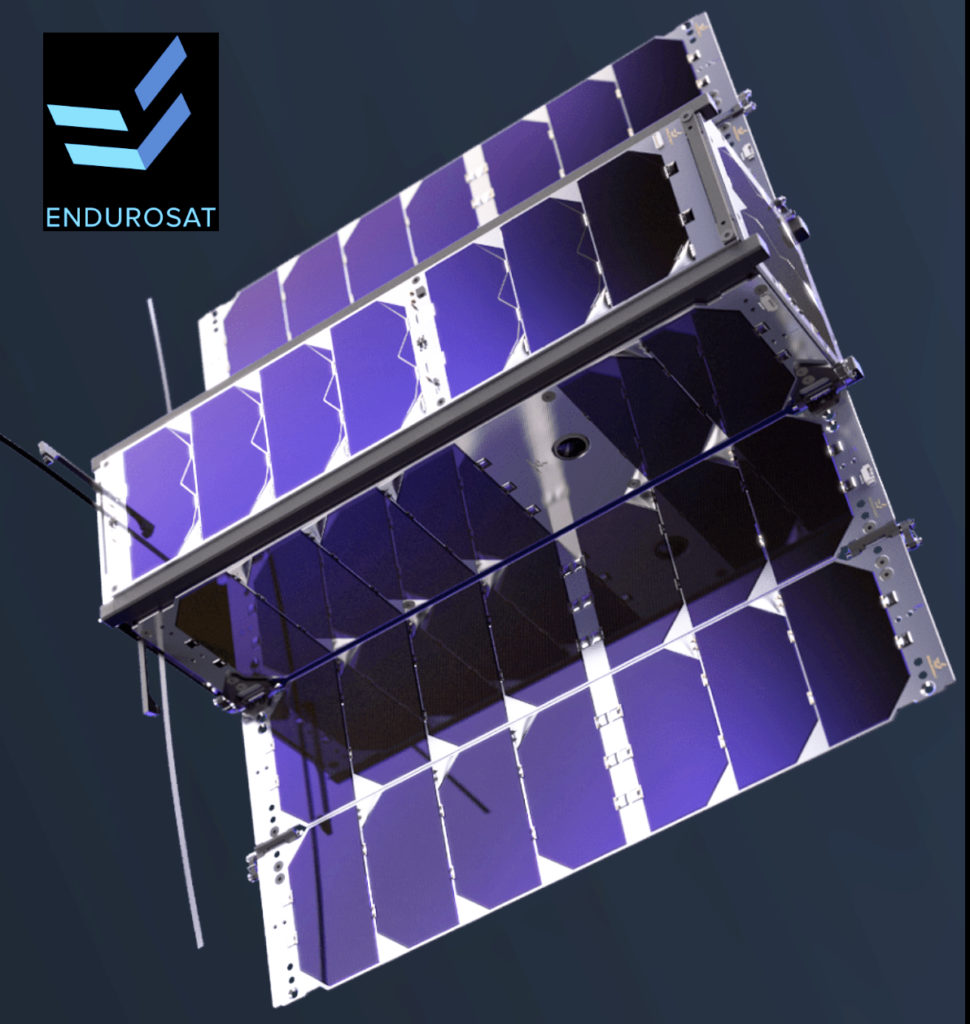
EnduroSat and Orbital Space have announced a collaborative partnership that aims to enhance the growth and development of smallsat services and technologies in the Middle East.

The two space companies have agreed to share technological, legal, market and business insights that will help them drive innovation, productivity and revenue. The main focus of the cooperation is to introduce innovative space technologies and services for business and science programs.

The foundation for this Bulgarian-Kuwaiti partnership was laid during the work on Kuwait’s first satellite mission “QMR-KWT” (from Arabic, meaning: “Moon of Kuwait”). The 1U cubesat mission will allow students worldwide to send their own programming code that will be executed by the satellite’s onboard computer and tested in a true space environment. The “Moon of Kuwait” is set to launch in Q2 on SpaceX’s Falcon 9 rocket.

Executive Comments

“The increased number of space missions worldwide requires a new approach to satellites and space services. Our goal is to streamline space operations and to simplify the access to space data. Through our newly formed partnership, we’ll be able to support commercial, science and exploration teams from the Gulf region in their ambitious space development plans. We hope to bring value to the Gulf space ecosystem in its fantastic effort to grow and expand,” said Raycho Raychev, Founder and CEO of EnduroSat.

“We are thrilled and honored to partner with EnduroSat in opening up new opportunities and encourage solutions that will bring space closer to the Middle East,” added Dr. Bassam Al-feeli, Founder and CEO of Orbital Space.
Filed Under: News

Lacuna Gives Space To Their IoT Gateway

November 4, 2020 by editorial

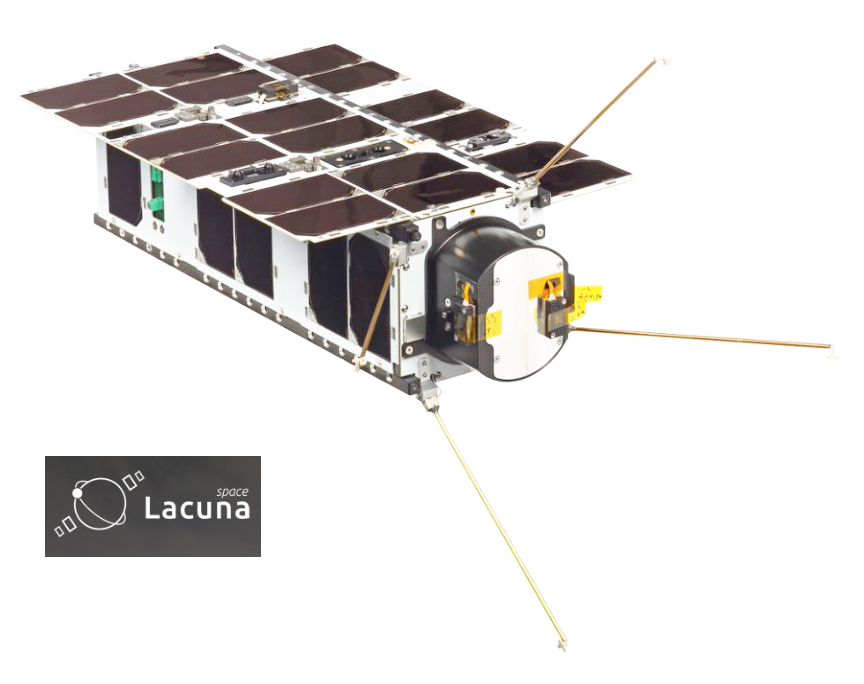
Lacuna Space has added their latest satellite to the firm’s demonstration constellation for the Internet-of-Things (IoT) — the company completed on-orbit tests on November 3 after the satellite was launched on the September 28 into LEO at about 500 km above Earth.

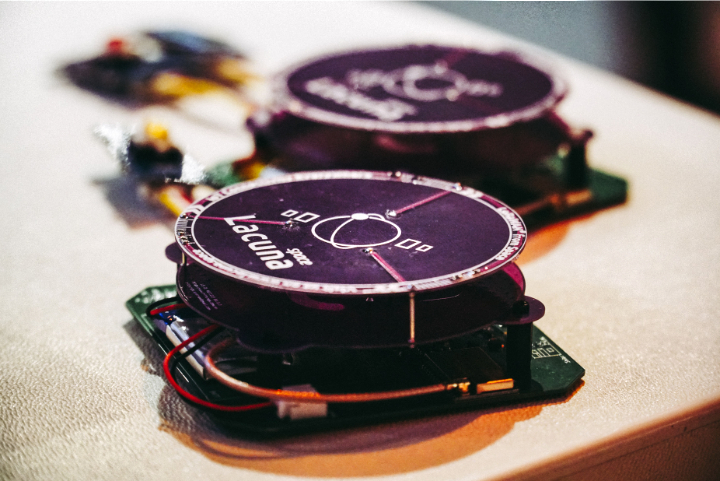
Lacuna Space device prototype. Photo is courtesy of the company.

The satellite payload and mission is essentially a modified IoT Gateway in space, built by Lacuna Space. The IoT Gateway allows to connect ‘things,’ such as sensors, with the internet in remote areas where conventional connectivity is not commercially viable.

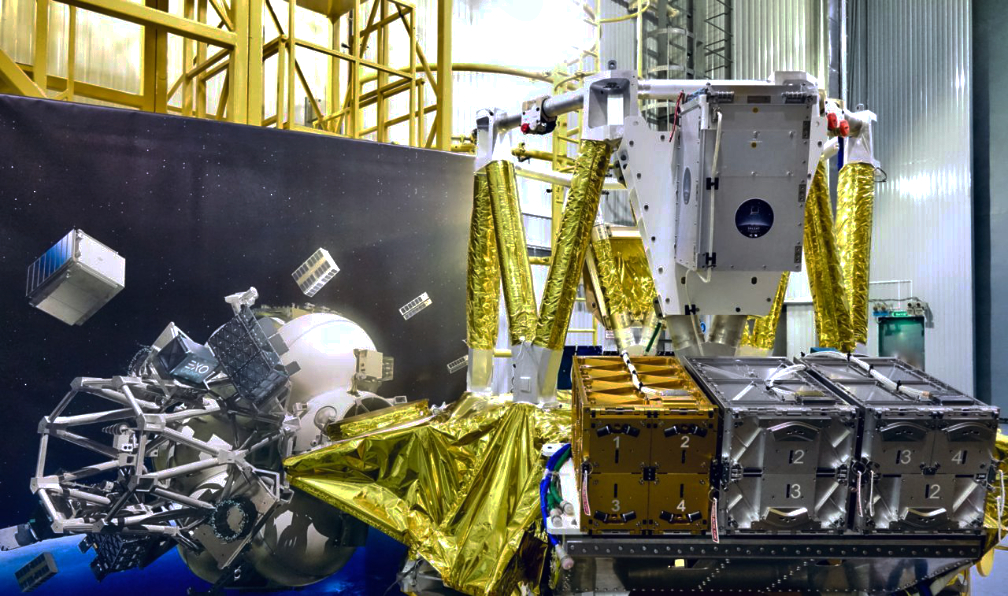
Satellite and launcher integration. Photo is courtesy of EXOLAUNCH.

Lacuna Space recognizes that satellites can play an essential role in extending the connectivity of ‘things’ to remote areas where conventional connectivity is not commercially viable and power is a scarce resource. Using specially adapted Low-Power Wide Area Network protocols (LPWAN), Lacuna sensors are smaller than the palm of a hand, and can connect over satellite for several years off a single battery charge.

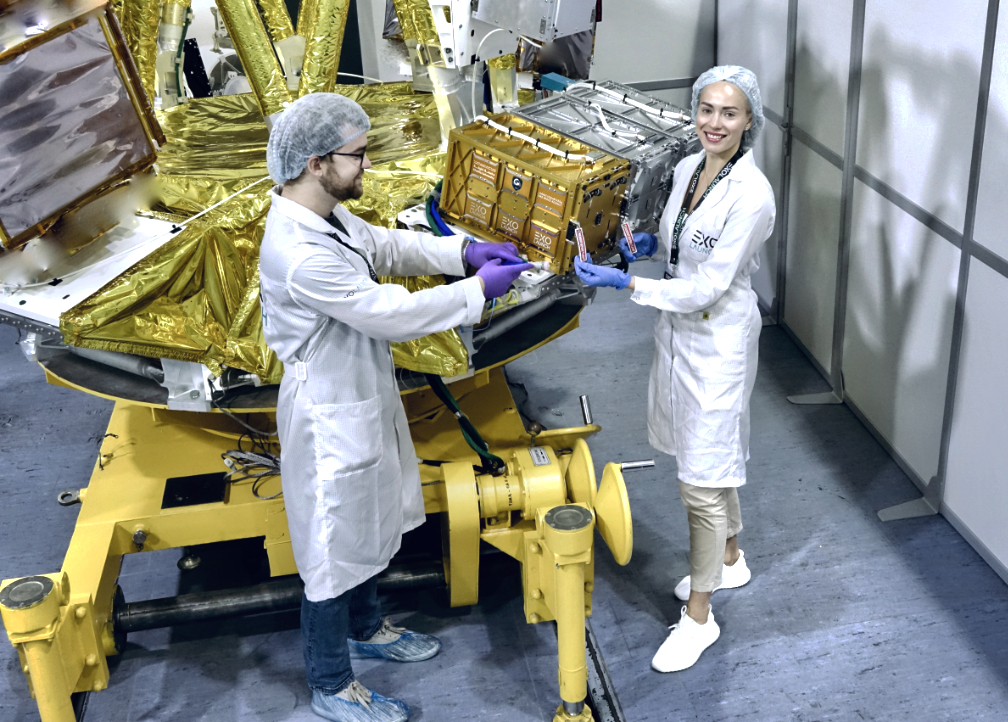
Satellite and deployer integration. Photo is courtesy of EXOLAUNCH.

Lacuna Space started to lead the way when developing its concept during its period in the ESA Business Incubation Centre at Harwell in the UK, followed by developing low-cost satellites to demonstrate its capability and viability, with support from the European Space Agency and the UK Space Agency.

The satellite platform and initial operations have been supplied by smallsat integrator NanoAvionics and the antenna by Oxford Space Systems, also located in Harwell.

Executive Comments

According to Lacuna Space CEO, Rob Spurrett, this satellite will greatly boost the Lacuna network capacity and extend customer trials to additional market segments. Examples for applications include predictive maintenance and tracking of heavy machinery in remote areas. Automating the dispatch of replacement parts, scheduling resources where needed and minimizing down time. He said, “We now have various demonstrations for using our services from wildlife management in remote areas of New Zealand and national parks in Kenya, to managing the environmental impact of construction sites in the UK. It is great to announce another successfully commissioned satellite on our path to the full constellation. Our plans have been somewhat delayed by the COVID-19 pandemic but despite the challenging times, we were able to proceed and this latest mission entered the network in under 10 months from Lacuna Space placing the satellite order. Now, as the launch back-log is flowing again, we are expecting several additions to the demonstration network in the near future.”

Carlo Elia, head of the telecommunications technologies, products and systems department at ESA, said, “ESA is proud to help European companies to develop innovative satellites, technologies and services for the global commercial market, particularly in the NewSpace domain. The ESA telecommunications directorate has supported Lacuna Space since it started in the ESA business incubator centre in Harwell, during which time Lacuna Space has demonstrated the capability of small cubesats to support internet-of-things services. It is great to see the company going from strength to strength with this latest launch and start of operations.”

Catherine Mealing-Jones, Director of growth at the UK Space Agency, said, “Space is a fundamental part of our everyday lives. The UK space sector is leading the way in putting pioneering technologies – from satellite communications to 5G – at the heart of the essential products and services we all rely on. This exciting venture is yet another example of the success stories that have been made possible by the support mechanisms that exist around the cluster of excellence at Harwell – bringing together companies that can work together to unleash the potential of the UK space sector.”

Filed Under: News

Fleet Space Pipes Their Smallsat Smart Sign Tech To SEA Gas Pipeline Operator

November 3, 2020 by editorial

Fleet Space Technologies has announced the deployment of their Smart Sign Technology for Continuous Easement Interference Monitoring project with high pressure transmission pipeline operator, SEA Gas.

Fleet Space, in collaboration with the Future Fuels Cooperative Research Centre (CRC) and the University of Woolongong, will deliver a scalable, end-to-end, remote IoT monitoring solution for SEA Gas, whose 700km+ pipeline asset runs throughout South Australia and Victoria. The collaboration will position SEA Gas as a world leader in pipeline management with the roll-out of Fleet Space’s “Smart Post Technology,” enabling rapid and reliable response to potential threats near to their linear asset.

The expectation is that this smart ‘always on” surveillance system will prove to be an even more efficient means of monitoring activity in the vicinity of the underground pipeline and improve the detection of possible threats from human, machinery and vehicle activity, improving on the current periodic human-based pipeline air and ground patrols currently in use.

The collaborative Network Lifecycle Management research program is partly funded by Future Fuels CRC, who are enabling the decarbonization of Australia’s energy networks, and brings together the University of Wollongong’s Smart surveillance sensor and IP Management research, with the IoT infrastructure and network validation provided by Fleet Space Technologies.

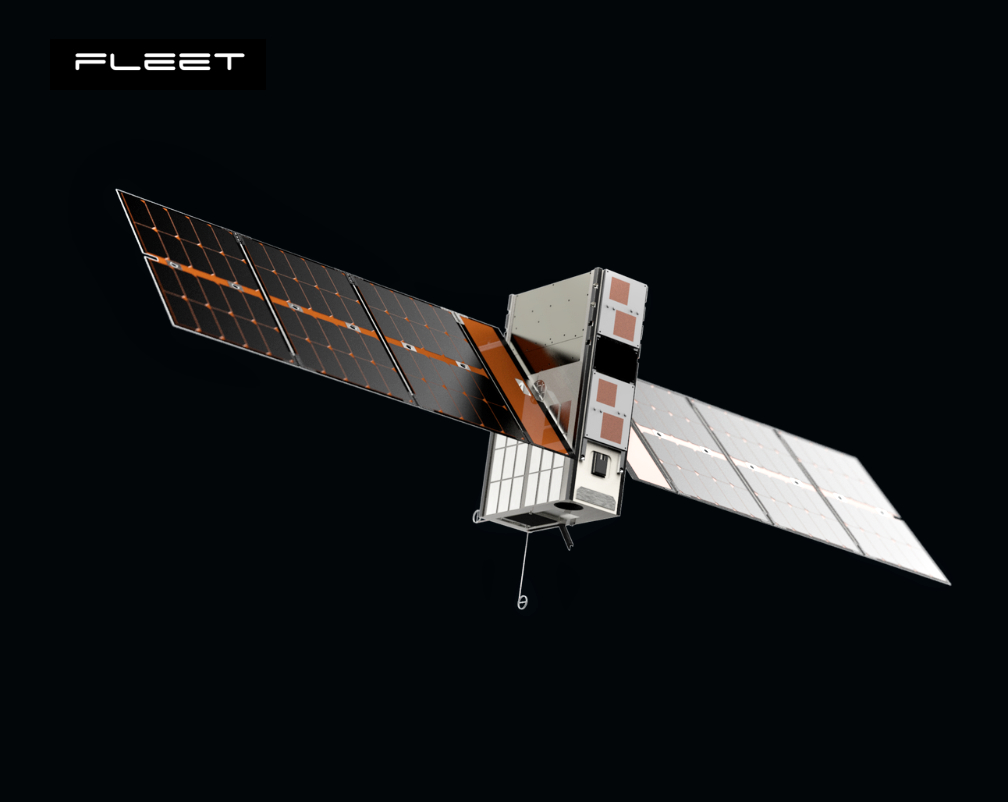
The Fleet Space solution involves the deployment of hundreds of “Smart Posts” along the pipeline network, creating a terrestrial wireless network of low-cost ruggedized IoT devices – cameras the size of an index finger – that will talk to the Fleet Portal Gateways through the LoRa network. The smart image recognition cameras will be taught to identify any unwanted activity along the pipeline including people, animals, and vehicles, through machine learning algorithms. This data is then fused with Earth Observation (EO) mapping visualization, transmitted over the low cost Fleet Space smallsat network, enabling SEA Gas to seamlessly receive reliable, actionable insights throughout their pipeline network 24/7.

As one of the most significant risks to the pipeline industry, successful management of external interference will ensure reliability and continuity of supply for SEA Gas and their stakeholders, while also guaranteeing the safety of the community and the environment.

Projected savings through automated monitoring are potentially upward of $200,000 per annum, through the redeployment of labour currently dedicated to pipeline patrol activities. In addition to immediate alerts to potential emergencies, there is the added benefit of eliminating the safety risks associated with manual worker inspections.

Once Fleet Space’s scalable network is in place, SEA Gas has the opportunity to significantly expand its monitoring capabilities to include leakage detection and remote cathodic protection data logging.

This ground-breaking technology has the ability to be adopted by any industry with a linear asset base, driving decreased costs for the company and increased safety for workers.

Stage 1 of the project will begin rolling out in Murray Bridge, with the installation of Smart Posts along 13km of pipeline, with the end goal to achieve total visibility of SEA Gas’ entire 800km asset base in order to optimise operations, saving time and money and reducing risk.

Executive Comments

Fleet Space Co-founder and CEO Flavia Tata Nardini said, “The most significant learning for utilities from this project will be the value of 24×7 digital monitoring across a vast network of linear assets. Manually monitoring at this scale would usually cost in the order of millions of dollars per year to achieve the same result. Fleet Space combines next-generation terrestrial IoT comms with the latest space technologies to provide low-cost industrial connectivity anywhere on the planet. This hybrid communications system will give SEA Gas the best of both worlds – low power devices, connected anywhere they’re needed, with a solution built for truly massive IoT deployments.”

David Norman, CEO of Future Fuels CRC, said, “Maintaining the excellent safety record of Australia’s gas pipelines needs constant innovation and development. Pipelines are very strong but can be damaged by mechanical earth moving or by vehicles. Future Fuels CRC’s research is finding new ways to enhance the protection of pipelines by developing sensors and associated algorithms that can detect and warn of the presence of earthmoving equipment in real time. These sensors will actively search for these potential threats and raise the alarm before damage can occur.”

SEA Gas’ Head of Operations, Eric Bardy, predicts a smart network of this nature could, in practise, not only act as a reliable control but also offer an enhanced method of risk mitigation as part of Safety Management Study assessments. He noted, “More efficient surveillance of our pipeline system, utilising a combination of technologies will continue to reduce the existing low risk of our operation. The promise of releasing workers for higher value add activities provides added incentive to pursue this initiative both within SEA Gas and through the greater pipeline industry.”

Filed Under: News

Telesat’s Not Into Low-Cost Antennas For The Near Term + Saudi Arabia To Spend $2.1 Billion On Space

November 3, 2020 by editorial

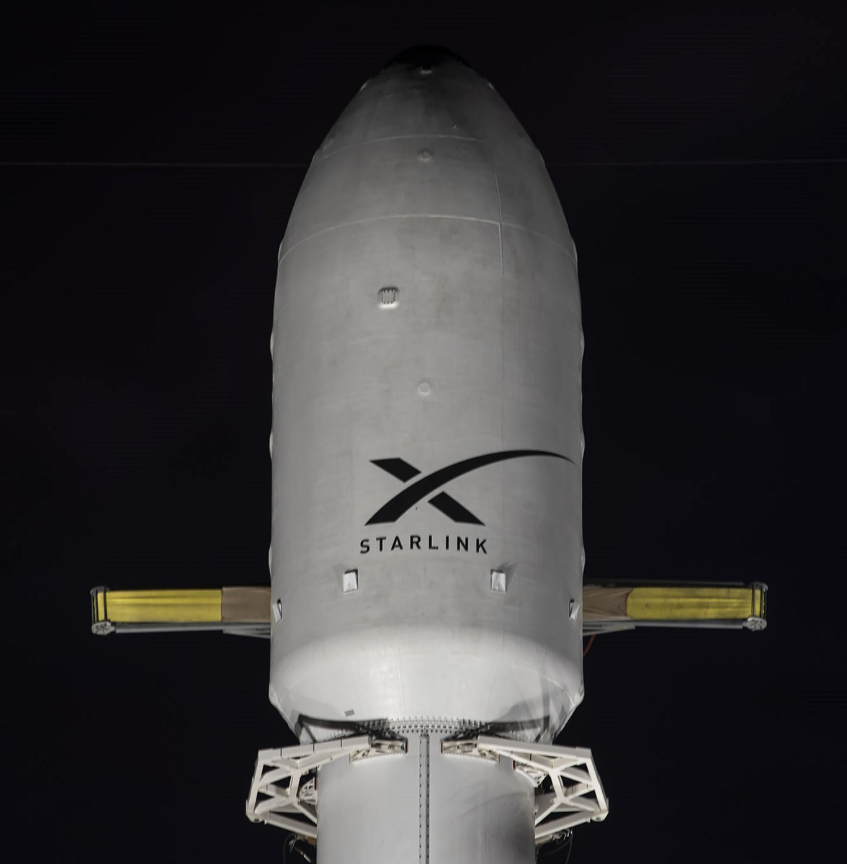
Elon Musk is inviting consumers in rural America to install his Starlink satellite broadband system at a cost of $99 a month. They also have to pay $499 for the antenna and its associated kit. However, it is widely accepted that Musk’s SpaceX is swallowing some of the antenna’s costs.

As recently reported, the search for a low-cost antenna is crucial if satellite-based broadband is to reach the mass-market. Now, Dan Goldberg, President/CEO at Ottawa-based Telesat, has said he agrees with the outlook.

Telesat has plans to order at least 117 new satellites to go into a LEO constellation (and will likely announce the prime contractor later this year). But he admits he has serious doubts about a low-cost antenna emerging.



“We are still skeptical that the antenna that would go on a consumer’s home is going to be low-cost enough and high-performing enough for that to make sense,” he said on a conference call with analysts.

Worse, perhaps, Goldberg admitted that such a low-cost antenna was not on Telesat’s near-term or even medium-term roadmap, although he was optimistic that something would emerge eventually.

As to plans for Telesat’s LEO constellation, Goldberg told analysts that the company would be concentrating on business-to-business and government customers, and that these markets would be sufficient to justify the investment.

Saudi Arabia says the nation will invest an initial $2.1 billion over the next few years in space-related activity to help create economic diversification plan to attract inward investment and create “thousands of jobs” for its young citizens.

A report from Reuters says the investment would be made during the next nine years (until 2030) and will be handled by the Saudi Space Commission (SSC) set up in late 2018. The full plan, with specific projects outlined, will be unveiled later this year.

“In the time where we live now, space is becoming a fundamental sector of the global economy, touching every aspect of our lives on Earth. Space business and space economy are expected to grow into the trillions of riyals as we go forward,” Prince Sultan, the son of Saudi monarch King Salman, told Reuters in an interview.

Prince Sultan was the first Arab to fly on a Space Shuttle (Discovery) in 1985. Reuters says that his aim is to see Saudi Arabia become a global player in the space industry. Saudi Arabia is already a major (37 percent) investor in the Arabsat satellite constellation.

SSC reportedly has pending agreements with major international agencies including the US, Russia, China, India and the UAE.

Filed Under: News

Rocket Lab’s Electron 16th Mission To Propel 30 Smallsats To Orbit

November 2, 2020 by editorial

Rocket Lab has announced their next Electron mission, one that will feature a diverse range of payloads from the United States, France and New Zealand.

The mission, which will be Rocket Lab’s 16th Electron launch, will lift-off from Launch Complex 1 on New Zealand’s Māhia Peninsula during a 14-day launch window that opens on November 16 NZT / November 15 UTC.

Rocket Lab’s Electron launch vehicle will loft 30 satellites to a Sun-Synchronous Orbit (SSO) at 500 km altitude for a range of customers, including TriSept, Unseenlabs, Swarm Technologies, Te Pūnaha Ātea – Auckland Space Institute, and Gabe Newell, the co-founder of global gaming software company Valve.

The satellites span a range of operations, from TriSept’s tech demonstration of new tether systems designed to accelerate spacecraft reentry and reduce orbital debris, through to the next generation of maritime surveillance satellites for Unseenlabs, as well as communications satellites for Swarm Technolgies. The mission will also deploy New Zealand’s first student-built satellite, the APSS-1 satellite for Te Pūnaha Ātea – Auckland Space Institute at The University of Auckland.

A mass simulator will also be fixed to this mission’s Kick Stage in the form of a 3D printed gnome created for Valve’s Gabe Newell by multi-award-winning design studio Weta Workshop, the creative studio behind Lord of the Rings, Avatar and Mulan. The unique space component is additively manufactured into the shape of Half-Life gaming icon Gnome Chompski.

The mission serves as an homage to the innovation and creativity of gamers worldwide and also aims to test and qualify a novel 3D printing technique that could be employed for future spacecraft components. Mr. Newell, will be donating one dollar to the Paediatric Intensive Care Unit at Starship Children’s Hospital for every person who watches the launch online at www.rocketlabusa.com/live-stream.

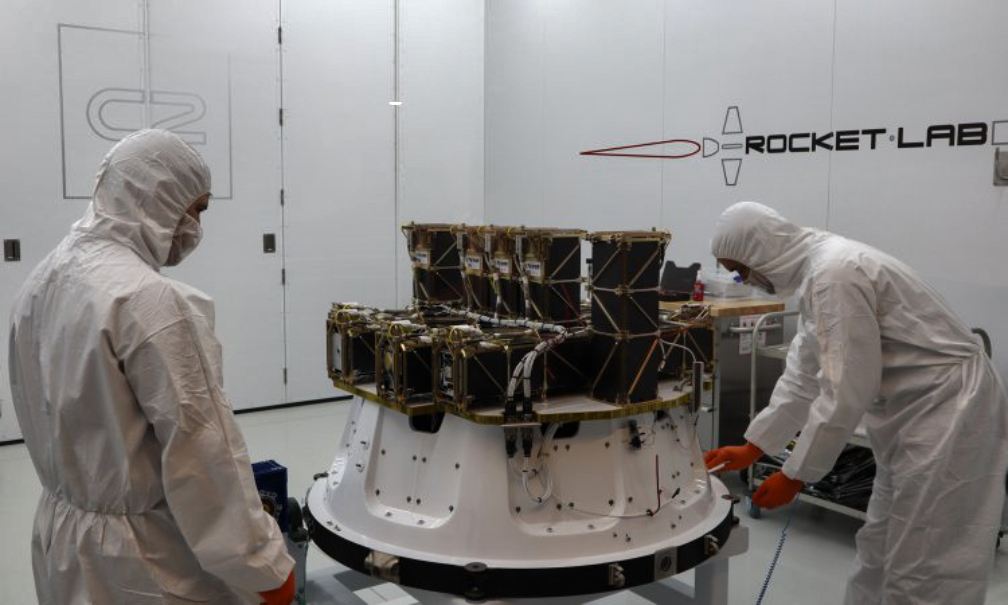
Kick Stage encapsulation at Rocket Lab.

Despite launching together as a rideshare, each satellite will be deployed to a unique orbit thanks to Rocket Lab’s Kick Stage. Once the Electron launch vehicle’s second stage reaches orbit, the Kick Stage separates and takes over as a space tug to conduct the final leg of the journey, providing propulsion and pointing to deliver multiple satellites to precise, individual orbits.

Executive Comment

Peter Beck

Peter Beck, Rocket Lab’s founder and CEO, said, “Small satellite operators shouldn’t have to compromise on orbits when flying on a rideshare mission, and we’re excited to provide tailored access to space for 30 satellites on this mission. It’s why we created the Kick Stage to enable custom orbits on every mission, and eliminate the added complexity, time, and cost of having to develop your own spacecraft propulsion or using a third-party space tug.”

About the payloads

Payload: DRAGRACER — Organization: TriSept

The DRAGRACER mission will test the effectiveness of new tether technologies designed to accelerate spacecraft reentry and reduce orbital debris at the conclusion of space missions. TriSept has completed the integration of a pair of qualified Millennium Space Systems 6U small satellites, one featuring the tether drag device and one without. The controlled spacecraft should deorbit in approximately 45 days, while the second spacecraft is expected to remain in orbit for seven to nine years, according to Tethers Unlimited, developer of the 70-meter-long (230 feet) Terminator Tape aboard the control satellite.

Payload: BRO-2 and BRO-3 — Organization: Unseenlabs

BRO-2 and BRO-3 are the second and third satellites in French company Unseenlabs’ planned constellation of about 20 satellites dedicated to maritime surveillance. The first BRO satellite was launched to orbit by Rocket Lab in August 2019. Unseenlabs’ constellation enables improved monitoring of activities at sea, such as illegal fishing and anti-environmental behavior. Thanks to a unique proprietary technology, the BRO satellites are the first to be able to independently and precisely locate and fingerprint Radio Frequency (RF) emitters all around the globe, day or night, in any weather condition, and without requiring any special embarked tracking device. With three satellites in orbit, Unseenlabs’ clients can now benefit from the shortest revisit time available on the satellite RF geolocation market.

Payload: APSS-1 — Organization: Te Pūnaha Ātea – Auckland Space Institute, The University of Auckland

The student-built Waka Āmiorangi Aotearoa APSS-1 satellite is designed to monitor electrical activity in Earth’s upper atmosphere to test whether ionospheric disturbances can predict earthquakes. The data from this mission will deliver deeper knowledge of these hard-to-access altitudes and drive understanding of how phenomena such as solar wind and geophysical events affect this atmospheric region.

Payload: Spacebees — Organization: Swarm Technologies

Swarm will launch the latest 24 1/4U SpaceBEE satellites to continue building out its planned constellation of 150 satellites to provide affordable satellite communications services to IoT devices in remote regions around the world. Swarm’s uniquely small satellites enable the company to provide network services and user hardware at the industry’s lowest cost and deliver maximum value to customers across a range of industries including maritime shipping, agriculture, energy, and ground transportation. The SpaceBEES will be integrated into two of Rocket Lab’s 12U Maxwell CubeSat dispensers for orbital deployment.

Mass Simulator: Gnome Chompski — Organization: Gabe Newell, Founder of Valve Software

Manufactured with support from multi-award-winning design studio Weta Workshop, the unique space component is additively manufactured from titanium and printed in the shape of Half-Life gaming icon Gnome Chompski. The mission serves as an homage to the innovation and creativity of gamers worldwide, and also aims to test and qualify a novel 3D printing technique that could be employed for future spacecraft components. The 150 mm gnome will remain attached to the Kick Stage during all mission phases and will burn up upon re-entry into Earth’s atmosphere during the de-orbiting process. 

Filed Under: News

The Colombian Air Force’s Second Nanosatellite Mission with GomSpace

November 2, 2020 by editorial

GomSpace has signed a contract with CODALTEC / Colombian Air Force (“FAC”) to begin the FACSAT-2 satellite mission and other intensive virtual technology transfer program. The contract is worth 6.9 MSEK (770KUSD) and will be delivered over the next 6-8 months.

The FACSAT-2 project involves design, manufacture, test and operation of an advanced 6U remote sensing spacecraft. The program will build on the successful collaboration established and local capability built during the FACSAT-1 program under which a Colombian 3U satellites was launched in 2018 and is today in continued operation by FAC. 

This is the second step to develop a small satellite capability in Colombia with the Colombian Air Force directly involved in all phases of implementing the program. The present contract covers preliminary design activities and continued capacity building to be performed with close collaboration between GomSpace experts and FAC personnel.

“This new contract with the Colombian Air Force shows the value GomSpace is providing to customers seeking to gain technological competence while building their own space capacity. We are very pleased to have the Colombian Air Force as a returning customer.” says Niels Buus, CEO of GomSpace.

Filed Under: News

NanoAvionics Expands Their Space Sector in UK

November 2, 2020 by editorial

NanoAvionics, is enjoying the need to expand its space sector business in the United Kingdom. The company is moving to a new, larger facility for satellite assembly, integration and testing (AIT) as well as sales, technical support and R&D activities in Basingstoke (50 miles/80 km outside Central London) this month.

This is in addition to having already developed a hub in Lithuania and two in the USA. The move, financed by NanoAvionics, is a first step for its UK growth plans by creating jobs in the space sector and a local technology cluster with a dedicated supply chain of companies in Britain.

The new facility will allow NanoAvionics to keep thriving and provide nanosatellite AIT services to its growing and existing customer base in the UK. NanoAvionics’ customers in the UK include IoT connectivity provider Lacuna Space and Sen, a space company developing its “EarthTV” constellation to stream real-time and timely Ultra-High Definition (UHD) videos of Earth.

Vytenis J. Buzas, CEO of NanoAvionics

“Following the establishment of our first office at Harwell Campus last year, NanoAvionics is now further expanding its business in the UK by investing in this new AIT facility, creating jobs and by developing a technology cluster and supply chain, similarly to what we have done in Lithuania and the USA,” said Vytenis J. Buzas, CEO of NanoAvionics. “To grow our Satellite production capabilities locally, we are going to connect with companies in Britain such as printed circuit board suppliers, electronics manufacturers, cable assembly providers, producers of mechanical components and surface treatment providers.”

As a result of its ongoing geographical expansion and strong contract volume, NanoAvionics announced a significant revenue increase by about 300 percent during the last 12 months in August this year. NanoAvionics’ strategic steps together with the modular design and low cost of their preconfigured nanosatellite buses has led to a number of scientific, commercial and civil use of space missions with research and space agencies like NASA, ESA and MIT as well as private companies such as Thales Alenia Space for the Omnispace constellation and Accion Systems to test their propulsion technology.

UK is Robin Sampson, business development manager for NanoAvionics UK and Western Europe

Heading the company’s operations in the UK is Robin Sampson, business development manager for NanoAvionics UK and Western Europe. “The ambition which the UK has shown in competing within the global space industry resonates with NanoAvionics and brought us to the UK in the first place. One of the reasons that we’ve doubled-down on our investment in the UK, is that we see the potential to conduct world-class industrial research and development here. 5G telecoms and IoT technologies are set to play a big part in all of our futures and NanoAvionics is well equipped to support and benefit from the UK’s positioning in this key enabling technology and we look forward to connecting with the 5G Innovation Centre at the University of Surrey.

“NanoAvionics has also played a key role in enabling chemical propulsion systems on 6U nanosatellite systems, and we have developed some world-class IP in this area. This is something we now seek to develop further with stakeholders at the UK National Propulsion Test Facility.

“Basingstoke is a great location for us because it offers a good and quick connection to other important locations in the UK. And Belvedere House, in the town centre of Basingstoke, offered NanoAvionics a suitable space to install a cleanroom and all the necessary equipment for our nanosatellite production, with an opportunity to scale. I’d particularly like to thank Enterprise M3 for their help in enabling our move.”

Leader of Basingstoke and Deane Borough Council Cllr Ken Rhatigan said, “I am delighted that NanoAvionics has chosen to invest in Basingstoke. This decision is a real vote of confidence in what our borough has to offer for businesses as our economy recovers from the impact of the COVID-19 pandemic.

“As Basingstoke has been named as one of the top UK locations for investment in growing technology companies, NanoAvionics is a welcome addition to Basing View and joins a number of other companies who are leading the way in developing technology that will transform the way we live in the future.”

Francesca Caramelle, trade and investment coordinator at M3 Enterprise said, “The addition of an ambitious company like NanoAvionics to the growing EM3 space cluster demonstrates the confidence the space sector has in both the cluster – which is now valued at over £9billion – and the wider EM3 region. The local enterprise partnership (LEP) is looking forward to a close, collaborative relationship with NanoAvionics following the opening of their UK office in Belvedere House and seeing first-hand how new, innovative and high-tech jobs can help add to the opportunities available in Basingstoke.”

The official opening of NanoAvionics’ new facility will take place on November 19, 2020 with an online event including a presentation about the company and its plans in the UK, a virtual tour and dedicated breakout sessions for suppliers, governmental organizations as well as a nanosatellite systems engineering workshop.

Filed Under: News

Exotrail’s ExoOPS™ Implemented For CNES

November 1, 2020 by editorial

Exotrail has implemented ExoOPS™, the company’s mission design and satellite operation software suite for the French Space Agency (CNES).

View the ExoOPS video at this direct link…

In the frame of a software licensing contract signed this summer, CNES mission design analysis and system engineering teams are now using ExoOPS – Mission Design advanced functionalities developed by Exotrail in its ExoOPS software suite. Available as a Software-as-a-Service (SaaS), ExoOPS – Mission Design relies on an orbital mechanics environment designed and developed by Exotrail software & space mechanics team based in Toulouse (France).

Through user-friendly interfaces, ExoOPS – Mission Design provides CNES teams, in addition to others existing tools, with a quick processing and easy-to-use software able to run complex mission design analysis such as multiple scenario constellation deployment, simulation and optimization of low-thrust maneuvers, propulsive system benchmarking analysis up to spacecraft sub-system performance analysis.

ExoOPS – Mission Design Connected to IDM-CIC, an orbital platform definition and design software tool used by CNES in phase A/0 project, ExoOPSTM – Mission Design allows users to run low-thrust analysis for spacecraft mission carrying electric propulsion system through smooth and easy data exchanges.

Executive Comment

David Henri, Exotrail’s Chairman and CEO, said, “We thank CNES in becoming one of the key users of ExoOPS – Mission Design. We are delighted with the feedback we are getting from very experienced teams and which will fully benefit our product roadmap. Our main objective is to position ExoOPS software suite as a leading orbital mechanics tool into the market to support deployment of complex mission from the early design phase to on-orbit operations.”

Filed Under: News

The Colombian Air Force’s Second Nanosatellite Mission with GomSpace

November 1, 2020 by editorial

GomSpace has signed a contract with CODALTEC / Colombian Air Force (“FAC”) to begin the FACSAT-2 satellite mission and other intensive virtual technology transfer program. The contract is worth 6.9 MSEK (770KUSD) and will be delivered over the next 6-8 months.

The FACSAT-2 project involves design, manufacture, test and operation of an advanced 6U remote sensing spacecraft. The program will build on the successful collaboration established and local capability built during the FACSAT-1 program under which a Colombian 3U satellites was launched in 2018 and is today in continued operation by FAC. 

This is the second step to develop a small satellite capability in Colombia with the Colombian Air Force directly involved in all phases of implementing the program. The present contract covers preliminary design activities and continued capacity building to be performed with close collaboration between GomSpace experts and FAC personnel.

“This new contract with the Colombian Air Force shows the value GomSpace is providing to customers seeking to gain technological competence while building their own space capacity. We are very pleased to have the Colombian Air Force as a returning customer.” says Niels Buus, CEO of GomSpace.

Filed Under: News

KSF Space Foundation Signs MoU With Maldives To Build The First University Satellite

October 30, 2020 by editorial

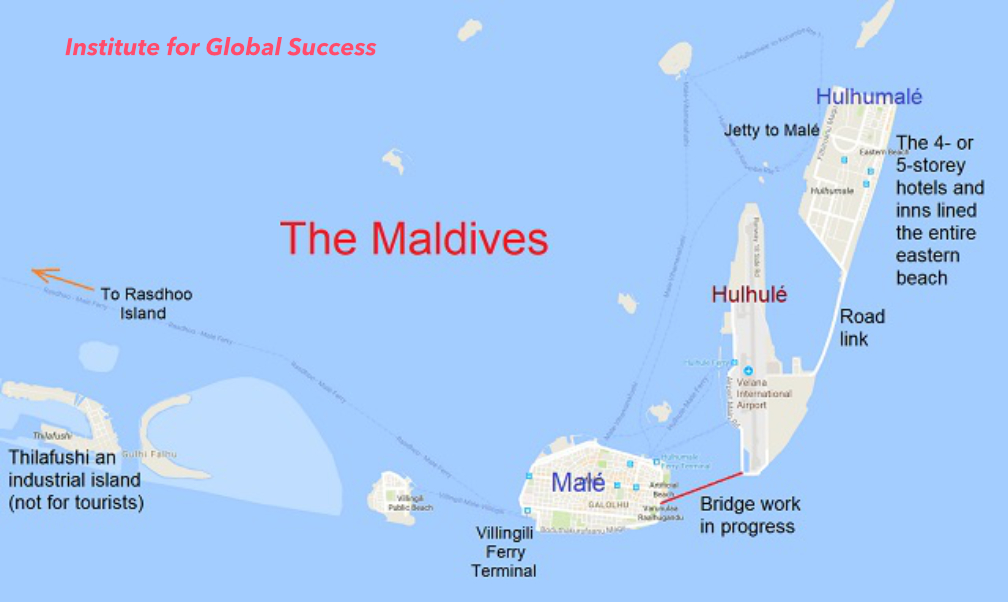
Around the world, technology-enabled solutions are having a major impact on people’s lives and livelihoods by enabling them to tap into previously unreachable markets and career paths. This is especially true for island nations such as the Maldives, where science and technology could serve as bridges that link remote communities and nurture them to truly be part of the global society.

At the Institute for Global Success (IGS) in Maldives, the mission is to develop a new breed of leaders, engineers and scientists in the Maldives. The organization aims to harness the talents and skills of young Maldivians so they can realize their full potential and expand their horizons. IGS wants to train local astronauts, equip them with the tools necessary to conduct world-class scientific research and create a platform to build and launch spacecrafts.

This historic partnership with KSF Space Foundation is a key milestone in realizing our dreams and position the Maldives as a regional hub for scientific research, technological breakthroughs and innovative solutions that advance our own communities as well as the humankind. IGS is confident that this partnership will contribute to the development of our own space program as welll as bring hope and open new horizons for our youth” said Rifath Mohamed, Chairman and CEO of IGS.

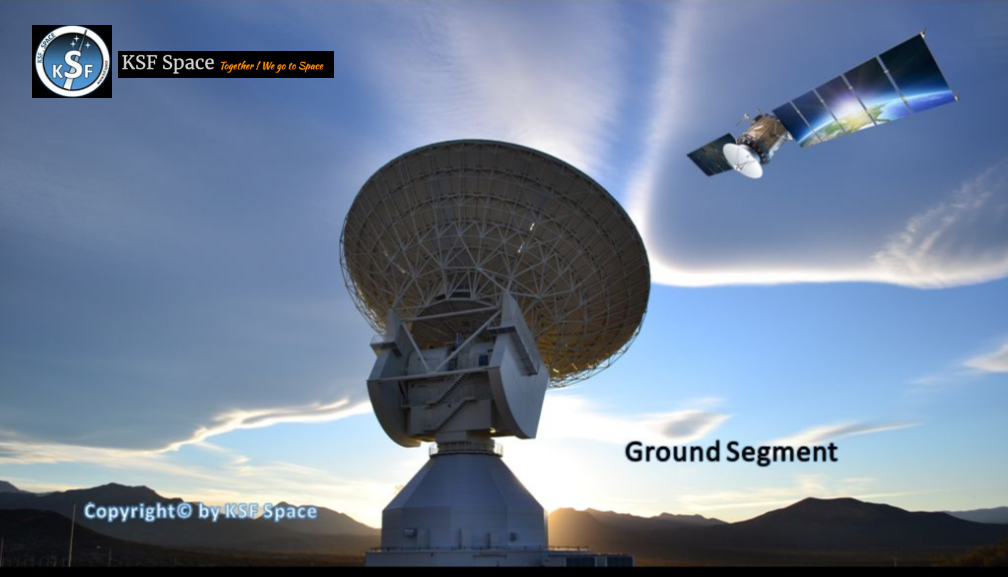
KSF Space Foundation was initially founded to enable cost-efficient access to LEO with zero-environmental impact flying solutions. The foundation offers access to near-space and LEO for research and scientific experiments in many fields, as Earth or Space Observation, biological testing, satellite positioning detection, earth magnetic field measurement, radio transmit, atmosphere science and technology experiment.

KSF Space Foundation also announced the launch of the world’s first NanoSatellite Engineering Professional “NEP Certification” for space education and the space industry.

Executive Comment

Dr. Kayyali, the CEO, said, “We welcome experiments and nanosatellites from universities and schools to join our future missions; we are always open to help and guide academic research all over the world, students of Maldives who will participate in building the 1st prototype CubeSat / NanoSat will be awarded NEP Professional Certification as a Grant from KSF Space Foundation in collaboration with IGS Maldives.”

Filed Under: News

  • « Go to Previous Page
  • Page 1
  • Interim pages omitted …
  • Page 276
  • Page 277
  • Page 278
  • Page 279
  • Page 280
  • Interim pages omitted …
  • Page 339
  • Go to Next Page »

Primary Sidebar

WEEKLY NEWSLETTER

Archives

  • March 2026
  • February 2026
  • January 2026
  • December 2025
  • November 2025
  • October 2025
  • September 2025
  • August 2025
  • July 2025
  • June 2025
  • May 2025
  • April 2025
  • March 2025
  • February 2025
  • January 2025
  • December 2024
  • November 2024
  • October 2024
  • September 2024
  • August 2024
  • July 2024
  • June 2024
  • May 2024
  • April 2024
  • March 2024
  • February 2024
  • January 2024
  • December 2023
  • November 2023
  • October 2023
  • September 2023
  • August 2023
  • July 2023
  • June 2023
  • May 2023
  • April 2023
  • March 2023
  • February 2023
  • January 2023
  • December 2022
  • November 2022
  • October 2022
  • September 2022
  • August 2022
  • July 2022
  • June 2022
  • May 2022
  • April 2022
  • March 2022
  • February 2022
  • January 2022
  • December 2021
  • November 2021
  • October 2021
  • September 2021
  • August 2021
  • July 2021
  • June 2021
  • May 2021
  • April 2021
  • March 2021
  • February 2021
  • January 2021
  • December 2020
  • November 2020
  • October 2020
  • September 2020
  • August 2020
  • July 2020
  • June 2020
  • May 2020
  • April 2020
  • March 2020
  • February 2020
  • January 2020
  • December 2019
  • November 2019
  • October 2019

© 2019–2026 SatNews

Insert/edit link

Enter the destination URL

Or link to existing content

    No search term specified. Showing recent items. Search or use up and down arrow keys to select an item.
      x
      Sign Up Now!

      Enjoy a free weekly newsletter with recent headlines from the global SmallSat industry.

      Invalid email address
      We promise not to spam you. You can unsubscribe at any time.
      Thanks for subscribing! You will now receive weekly SmallSat News updates.
      We love our advertisers.
      And you will too!

      Please disable Ad Blocker to continue... We promise to keep it unobtrusive.
      We promise not to spam you. You can unsubscribe at any time.
      Invalid email address
      Thanks for subscribing!