• Skip to main content
  • Skip to primary sidebar
  • Home
  • News
  • Featured
  • More News ⌄
    • SatNews
    • SatMagazine
    • MilSatMagazine
  • Events ⌄
    • MilSat Symposium
    • SmallSat Symposium
    • Satellite Innovation
  • Contacts
  • SUBSCRIPTION

SmallSat News

You are here: Home / Archives for News

News

Arianespace Postpones Flight VV16 Again

June 22, 2020 by editorial

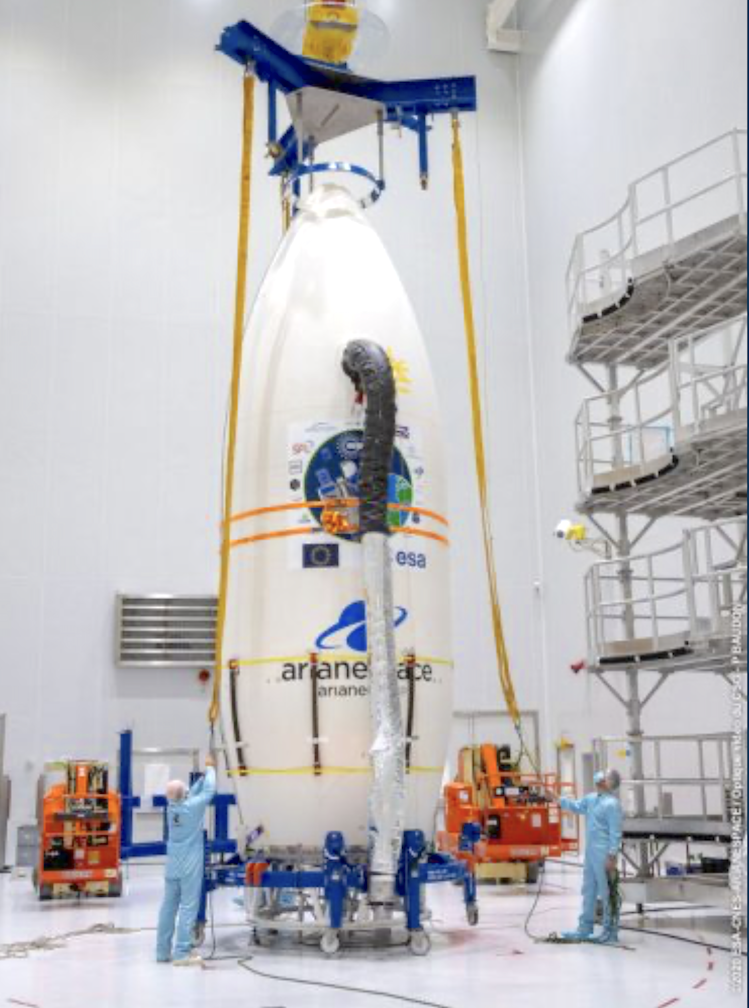
As high-altitude winds above the Guiana Space Center remain unfavorable, Arianespace made the decision not to initiate the final chronology operations for Flight VV16 on Saturday, June 20, 2020. 

A new target date will be announced as soon as possible, based on the evolution of weather conditions.

The Vega launch vehicle and its 53 spacecraft payloads are in stable and safe conditions.

Unfavorable high-altitude wind conditions over the Guiana Space Center has led to a decision that the final preparation phase for Arianespace’s Flight VV16 with Vega could not be initiated as planned today. 

For its fifth mission in 2020 and the first Vega flight of the year, Arianespace will orbit 53 satellites on the Small Spacecraft Mission Service (SSMS) Proof of Concept (PoC) Flight, performed on behalf of 21 customers.

With this mission, designated Flight VV16, Arianespace underscores its comprehensive range of innovative and very competitive services to address the nano- and micro-satellite market sub-segment, serving both institutional and commercial needs. The creation of such a new service using the company’s light-lift Vega led to the SSMS project.

The European Space Agency (ESA) funded the SSMS hardware development, and also contributed with the European Union to the funding of this “Proof of Concept” (PoC) flight.

The combined European efforts will enhance Arianespace’s response to the rideshare demand with solutions that are perfectly suited to the flourishing small satellite market.


Filed Under: News

New Smallsat Analysis & Report from XploreMR

June 22, 2020 by editorial

Small satellites (smallsats) are becoming more attractive, as they enable missions that cannot be accomplished by large satellites, such as high temporal and spatial resolution by gathering data from multiple points, in-orbit inspection of large satellites, and space missions consisting of a large number of satellites forming constellations.
     Small satellites enable missions in navigation, communication, remote sensing, and scientific research for civilian, commercial, and military purposes. XploreMR in its newly published report assesses the global small satellites market over a 10 year forecast period – 2018-2028. (Report title: Small Satellite Market: North America to Continue Market Dominance; Western Europe Slated for Robust Growth in the Years Ahead: Global Industry Analysis 2013 – 2017 and Opportunity Assessment 2018 – 2028)

Report Overview
This report presents an analysis about the current trends and ongoing developments in the small satellite market. Small satellites are artificial satellites with lower weights and smaller sizes, and are becoming more attractive in recent years due to lower development costs and shorter lead times as compared to large satellites.
     During the past few years, space systems and technologies have become a crucial part of the economic, scientific, and security capabilities of countries across the world. Various government and private organizations in the world are now focused on capitalizing on space systems to improve operational effectiveness, and to enhance homeland security and digital communication capabilities.

Scope of the Report
The scope of this market study includes the manufacturing of small satellite. Satellite-related services in consumer and commercial domains such as satellite TV and cellular communication, launch vehicle services, and ground equipment have been excluded from the scope of this market study. The research methodology of the market study includes extensive primary and secondary research. Various surveys were conducted with small satellite manufacturers and industry experts to understand the value chain and critical driving factors of the small satellite market. Desk research was conducted to identify current market trends and ongoing developments in the market.

Market Segmentation
The market has been segmented in two broader categories: satellite type and end user. The satellite type segment is further segmented into mini-satellites, micro-satellites, nano-satellites, and pico-satellites. Among these, the nano-satellites segment is expected to grow at a relatively higher CAGR during the forecast period, owing to an increase in the demand for nano-satellites in various applications such as Earth Observation (EO), research & development, and remote sensing.
     The nano-satellites segment is also expected to capture a market share of 43.0% during the forecast period. Among the end user segments, the commercial segment is expected to grow at a CAGR of 13.9% during the forecast period, as small satellites are now being increasingly used in several commercial applications such as air & maritime monitoring, communications, land use monitoring, agriculture monitoring, and disaster monitoring.
     The decrease in the prices of launch services and the increasing need for surveillance in defense are some of the primary factors which are fuelling the growth of the small satellite market. North America is expected to hold more than 50% of the market share in 2018. One of the major reasons for the dominance of North America is that, most satellite manufacturers are based in the U.S., and are delivering small satellites to various public and private organizations across the globe. However, the SEA & others market in the APAC region is expected to create more potential growth opportunities for the small satellite market in the coming few years, owing to the increasing demand for small satellites in India and ASEAN countries.

The final section of the report focuses on the profiles of leading companies in the global marketplace for small satellites. The market study also presents some recommendations for market stockholders. In brief, these recommendations encourage consultation between small satellite manufacturers, for which technological advancements should be an agenda issue, and professional bodies in non-satellite manufacturing sectors, such as media & entertainment and telecommunication services.

All stockholders in the smallsat industry should work in collaboration and exchange their resources in order to improve the quality of services that are being offered through small satellites.

Request a free sample of this report at this direct link…

Filed Under: News

LeoStella Delivers Their First BlackSky Smallsats

June 22, 2020 by editorial

LeoStella, a specialized satellite constellation design and manufacturer, has delivered their first, two, fully manufactured satellites from the firm’s state-of-the-art production line.

The satellites are the fifth and sixth of an ongoing Earth Observation (EO) constellation program for the global monitoring company, BlackSky.

LeoStella’s intelligent manufacturing facility opened in 2019 and is the first of its kind. The satellites were delivered to the launch facility on June 1, 2020, and have been prepared for an upcoming SpaceX launch from Kennedy Space Center in Florida. LeoStella’s ability to minimize costs and reduce development and manufacturing time helps meet the increasing demand for satellite constellations in a time sensitive ecosystem.

LeoStella’s new production facility was developed to change the way satellites and constellations are produced to better meet the needs of agile space customers. The factory is a fully digital and networked environment that includes intelligent workstations, connected tools, automated test equipment, statistical process control, embedded product assurance, and a custom Manufacturing Resource Planning (MRP) backbone that manages and tracks all activities. Coupled with the manufacturing process is a robust supply chain of industry leaders with a focus on advanced technologies that help LeoStella offer an exceptional value proposition for its customers.

The satellites weigh approximately 50-kilograms and are designed to be operated in a variety of LEO orbit altitudes and inclinations. They are compatible with a wide range of rideshare and dedicated launch vehicles. The satellites are based on a product optimized for imaging missions with high resolution, agility and stability and can be configured for alternate missions and payloads.

Based in Tukwila, Washington, LeoStella is a joint venture between Thales Alenia Space and Spaceflight Industries.

“Successful delivery of these two BlackSky satellites marks another major milestone in LeoStella’s promise of rapid, low-cost, high-performance satellite constellations,” said Mike Hettich, CEO of LeoStella. “In a short time, we have created the designs, infrastructure, tools, and processes that enable constellation production at scale. Delivery of these satellites provides an important validation of our approach. It’s exciting to see the team bring our vision to reality.”

“LeoStella is a key partner in extending our global monitoring constellation,” said Brian O’Toole, CEO of BlackSky. “Their intelligent design and inventive manufacturing have established LeoStella as a leader in new space economics. Consequently, we’re able to deliver valuable first-to-know insights at a cost that makes it accessible for both business and government customers.”


Filed Under: Featured, News

Perspectives Video Interview with Peter Beck, Chief Executive, Rocket Lab

June 18, 2020 by minisat

Successes abound with smallsat launch after smallsat launch with turnaround times bound to please…


Peter Beck is the founder and chief executive of Rocket Lab, a space systems company and the global leader in dedicated small satellite launch. Founded in 2006, Rocket Lab builds and launches rockets and satellites that provide access to space for organizations like NASA, the NRO, DARPA, the United States Air Force and the commercial space sector.


An associate professor in space systems, Peter led the development of ground-breaking Electron launch vehicle, which in 2019 was the 4th most frequently launched rocket in the world. Peter also leads the satellite division at Rocket Lab which is making it faster and easier to get the ideas of tomorrow on orbit today.

Filed Under: Featured, News

Rocket Lab Awarded NRO Launch Missions

June 18, 2020 by editorial


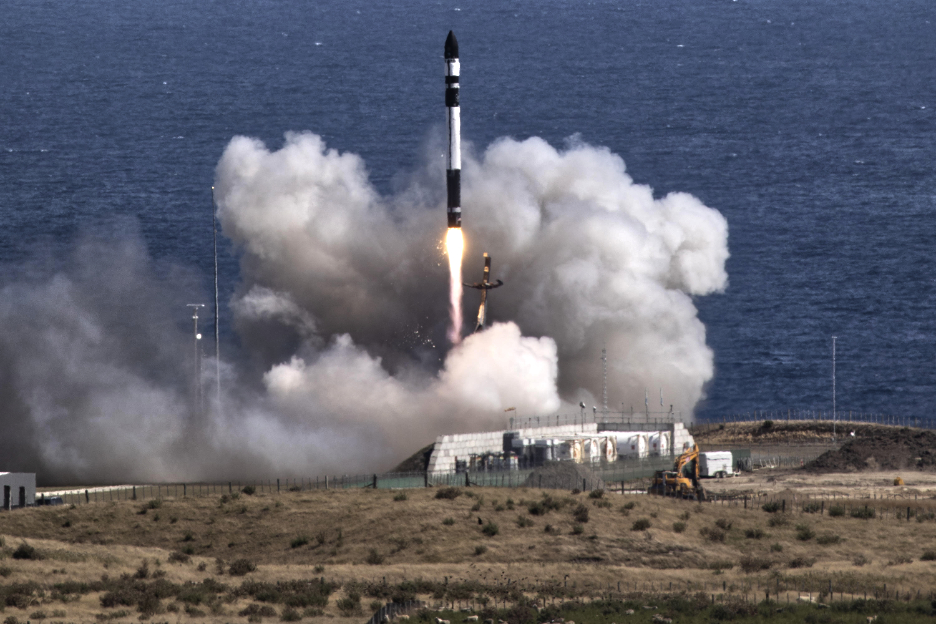
Rocket Labs’ ‘Birds of a Feather’ launch for the NRO.
Photo is courtesy of the company.

Rocket Lab has signed a launch agreement with the National Reconnaissance Office (NRO) for two back-to-back, dedicated smallsat missions aboard an Electron launch vehicle.

The missions were awarded through the NRO’s Rapid Acquisition of a Small Rocket (RASR) contract, an initiative that enables the agency to explore new opportunities for launching small satellites through a streamlined, commercial approach. The RASR-3 and RASR-4 missions are scheduled for launch within weeks of each other in late spring 2021 from two separate pads at Rocket Lab Launch Complex 1 (LC-1).

By launching the missions separately from pads LC-1A and LC-1B, Rocket Lab is able to eliminate the pad recycle time typically required when launching from a single pad. This unique ability enables Rocket Lab to launch missions just days or even hours apart, making truly responsive space a reality for small satellite operators and the U.S. national security community.

Construction of Launch Complex 1 Pad B commenced in December 2019 and will be complete by the end of this year. Pad LC-1B is Rocket Lab’s third launch pad, joining the existing pad at Launch Complex 1 in New Zealand, as well as the new pad at Launch Complex 2 at the Mid-Atlantic Regional Spaceport in Virginia, USA.

The RASR-3 and RASR-4 missions follow on from two recent Rocket Lab launches for the NRO; the ‘Birds of a Feather’ mission in January 2020, and the ‘Don’t Stop Me Now’ mission in June 2020.

“Maintaining resilient space architecture and having the ability to deploy assets exactly when and where they’re needed is paramount for U.S. national security in these dynamic times,” said Peter Beck, Rocket Lab founder and CEO. “We’re proud to continue enabling that flexible, responsive space access and once again deliver a proven launch solution for the NRO and the nation.”

Lars Hoffman, Rocket Lab’s SVP of Global Launch Services, said, “Given the threat to space capabilities posed by potential adversaries, there simply cannot be a waiting room to get on orbit. With Electron launch vehicles on standby for rapid call-up and three launch pads capable of supporting up to 130 missions per year, we stand ready to respond to the national security community’s needs with speed and precision, every time. We look forward to working with the dedicated team at the NRO once again for these important missions.”


Filed Under: Featured, News

SAR Constellation Enroute from PredaSAR

June 18, 2020 by editorial

PredaSAR Corporation will launch a constellation of 48 commercial Synthetic Aperture Radar (SAR) satellites across multiple orbits, with this constellation becoming the world’s largest and most advanced commercial SAR satellite constellation. According to the company, this constellation will provide PredaSAR’s government and commercial clients with unprecedented image quality, unmatched global persistence, and rapid data delivery. 

PredaSAR is led by a highly respected CEO, Major General Roger Teague, USAF (Ret), and a seasoned executive team with extensive national security space expertise and substantial access to capital. A U.S. owned and controlled company, PredaSAR is supported by a Board of Directors who bring over 100 years of national security experience, including General William Shelton, USAF (Ret), Lieutenant General Richard Newton, USAF (Ret), and Major General Douglas Raaberg, USAF (Ret).  

PredaSAR spacecraft employ an advanced, proprietary radar payload to create 2D Synthetic Aperture Radar images, 3D reconstructions of objects and the Earth’s surface, and customer-tailored data products. SAR satellites provide high-resolution images at any time of day and in any weather condition, overcoming natural limitations of traditional optical satellites. PredaSAR spacecraft possess the latest in space-proven, high quality satellite systems to support scalable and fully capable operations in any orbit. Leveraging its advanced technologies, PredaSAR will deliver critical insights and data products to military and commercial decision makers at the speed of need.

“I am thrilled to announce the 48 satellite PredaSAR constellation. It delivers unparalleled capabilities that meet the most demanding national security needs addressable by a commercial constellation, demonstrating our commitment to our U.S. Government clients. Setting such a high bar also allows PredaSAR to deliver outstanding products and services for our commercial customers,” said PredaSAR Executive Chairman and Co-Founder Marc Bell. “PredaSAR features a well-known and respected leadership team of trusted professionals with extraordinary depth and experience across both government and industry. With groundbreaking commercial technology, the PredaSAR constellation will deliver best-in-class, advanced SAR data products and services.”

“This is an exciting time to be in the commercial space industry.  Today, more than ever, commercial space companies are delivering unprecedented value to the United States government, enabling military, intelligence, and commercial customers to maintain ever-critical U.S. leadership across their enterprises and markets,” commented PredaSAR CEO Roger Teague. “PredaSAR looks forward to meeting the challenges of our customers to deliver compelling SAR products and services.”


Filed Under: News

A New EO Satellite is Launched by China

June 17, 2020 by editorial


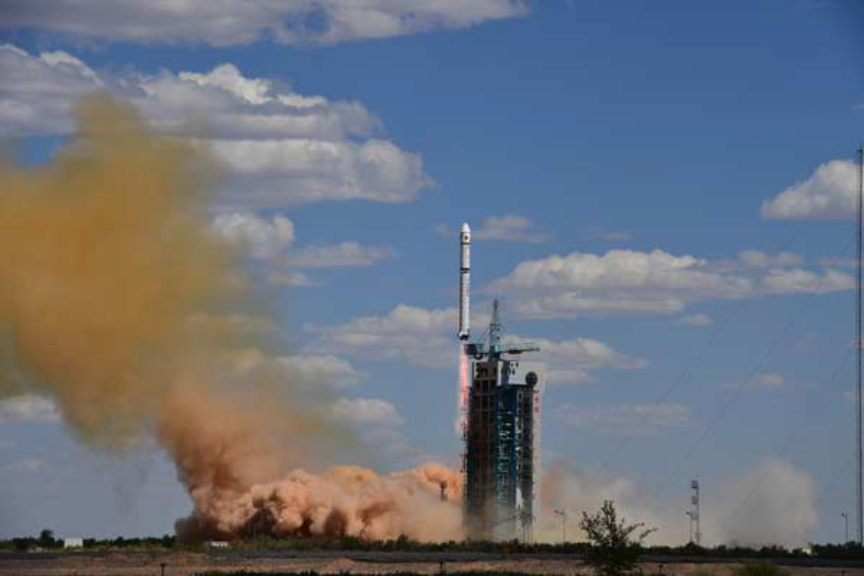
A Long March-2D carrier rocket, carrying the satellite Gaofen-9 03, is launched from Jiuquan Satellite Launch Center, Northwest China’s Gansu province, June 17, 2020.
Photo is courtesy of Xinhua

China has launched a new Earth observation satellite from the Jiuquan Satellite Launch Center that is in northwest China — the launch occurred at 3:19 p.m. Wednesday (Beijing Time).

The satellite — Gaofen-9 (03) — was sent into orbit by a Long March-2D carrier rocket. This is an optical remote-sensing satellite with a resolution up to the sub-meter level.

The satellite will be mainly used for land survey, city planning, land right confirmation, road network design, crop yield estimation and disaster prevention and mitigation, as well as providing information for the construction of the Belt and Road.

Via the same carrier rocket, two other satellites were also sent into space. One of them, developed by Zhejiang University, will be used to test smallsat technologies.

The other satellite, developed by Beijing-based China HEAD Aerospace Technology Co., will be used to collect global information on ship and flight statuses and the Internet of Things.

Wednesday’s launch was the 335th mission of the Long March rocket series.

Filed Under: Featured, News

Multi-Flight Agreement Signed by Spaceflight with SpaceX

June 17, 2020 by editorial


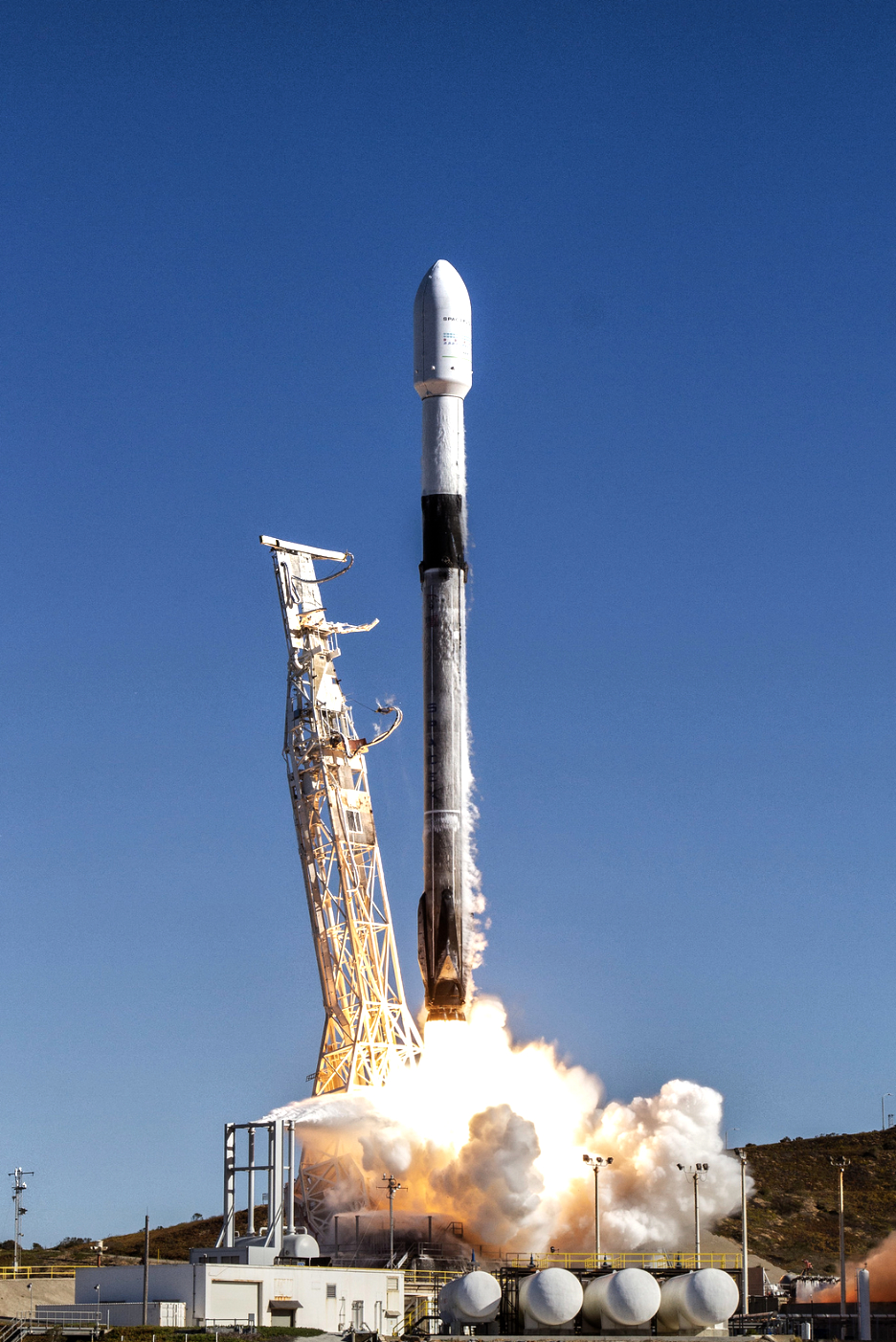
Spaceflight’s historic SSO-A mission carrying 64 smallsats aboard a Falcon 9. Photo is courtesy of SpaceX.

Spaceflight Inc. has inked an agreement with SpaceX to secure rideshare capacity on multiple launches.

This agreement between the two companies secures Spaceflight capacity to launch manifest payloads on several SpaceX launches through the end of 2021, providing launch schedule assurance to smallsat customers needing frequent, reliable, and cost-effective launches to Sun-synchronous orbit.

According to a recent research study by Bryce Space and Technology, delays are commonplace throughout the launch industry. “Launch delays are inevitable and are typically out of the control of rideshare customers. In order to offer launch flexibility and minimize the impact of significant delays, it’s critical to have capacity on a wide range of launches to easily re-manifest customers from one launch to another,” said Devon Papandrew, VP of business operations at Spaceflight. “Having this guaranteed capacity with SpaceX improves our customers’ odds of getting on orbit when they need to and helps us ensure flights are as full as possible, lowering costs for all and minimizing environmental impacts.”

The agreement builds on a long-standing relationship between the two companies. Spaceflight and SpaceX have partnered for several industry firsts, including SSO-A, the first dedicated rideshare mission with 64 smallsats aboard a Falcon 9 in December 2018.

Additionally, Spaceflight and SpaceX teamed up on the first-ever rideshare mission to Geosynchronous Transfer Orbit carrying a commercial lunar lander in February 2019. Spaceflight also announced today it will launch two rideshare payloads aboard SpaceX’s tenth Starlink mission, marking the first SpaceX Starlink mission that will be accompanied by Spaceflight rideshare payloads.

Spaceflight works with a large portfolio of launch vehicles, including Falcon 9, Antares, Electron, Vega, and PSLV, to provide a variety of launch options to its customers. The company has launched more than 270 satellites across nearly 30 rideshare missions. In 2019, the company successfully executed nine missions, the most it’s ever launched in one year, sending more than 50 payloads to space.

“By offering a variety of launch options, we can better meet our customer’s specific launch needs and offer increased launch flexibility,” said Curt Blake, president and CEO of Spaceflight. “This agreement with SpaceX will be particularly attractive to smallsat customers. SpaceX’s consistent launch schedule coupled with our deep expertise in mission management and integration services offers rideshare options with greater reliability. This agreement will allow us to package multiple payloads onto a single port to significantly reduce the cost per spacecraft for the end-customer.”

“Spaceflight is one of the most experienced companies offering mission management and integration services for smallsat operators, and we are proud to offer their customers the best launch solution on the market,” said SpaceX Vice President of Commercial Sales, Tom Ochinero. “Together, Spaceflight and SpaceX are providing small satellite operators access to space in the most reliable and cost-effective way possible.”

Upcoming Spaceflight events…

  • Spaceflight’s SXRS-1 mission with SpaceX will launch in the coming weeks
  • Spaceflight’s Vega-1 mission will launch on Thursday, June 18
  • The launch window for Spaceflight’s RL-3 mission opens Friday, July 3 UTC

Filed Under: Featured, News

Astranis’ MicroGEO Passes Milestone to Benefit Alaskans 

June 17, 2020 by editorial


Alaska will benefit from the efforts of Astranis’ MicroGEO line of small communication satellites, as a result of successful thermal-vacuum testing of a qualification vehicle. This important test furthers the company’s ability to develop technology to operate in the harsh environment of space and marks a major milestone on the path to delivering low-cost broadband internet to underserved populations around the world, starting with Astranis’s first commercial satellite that will provide broadband internet in Alaska.

A qualification vehicle test accomplishes two things.

  • First, it allows the engineering team to characterize the thermal behavior of the vehicle.
  • Second, it pushes the vehicle to significantly higher levels than it will expect to see on orbit to ensure the vehicle can continue to operate.


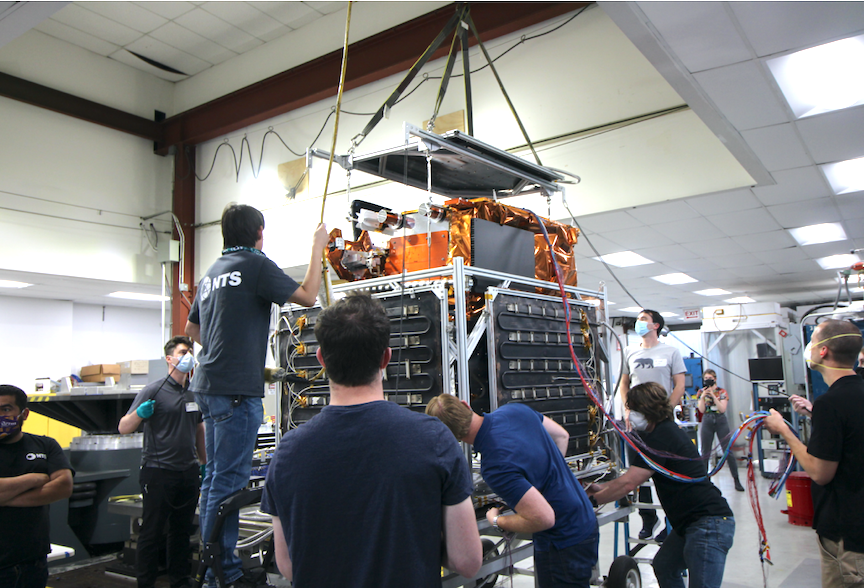
Astranis succeeded on both counts. Astranis made use of a highly-specialized vacuum chamber at an NTS Space center-of-excellence facility in Los Angeles, California. This thermal-vacuum chamber, paired with a custom-designed shroud, was able to simulate both extreme hot and cold temperatures needed for qualification testing. The chamber was pumped down to near vacuum, and Astranis engineers then powered up the vehicle, ran through a series of functionality checks, and began to operate the vehicle as the test environment was adjusted across a wide range of temperatures. The spacecraft was exposed to pressures as low as 7 x 10⁻⁶ Torr (about one one-hundred-millionth the density of Earth’s atmosphere).

“This is the single largest technical de-risking milestone for this product and for our first commercial program,” said Astranis CEO John Gedmark. “To get to this point, all the different aspects of the vehicle had to come together and work as a system—avionics, power electronics, the payload, the structure, the software, and more. Then we really pushed it to the limits. The fact that we passed this test with flying colors speaks volumes to the dedication and talent of our team. And it brings us one step closer to helping hundreds of thousands of Alaskans gain reliable access to broadband internet.”

After the success of this test, the Astranis team will complete a final wave of system-level and unit-level tests before commencing with the build of the first MicroGEO flight vehicle.

Astranis will ship its first commercial satellite early next year for a mission to provide broadband internet to the State of Alaska, with service beginning in summer 2021. The company has signed a contract to launch the satellite on a SpaceX rocket from Cape Canaveral, Florida. Astranis is partnering with Pacific Dataport Inc., a subsidiary of Microcom, Alaska’s largest satellite TV and internet provider, to deliver affordable broadband internet to Alaska, and this new satellite will more than triple the satellite bandwidth serving the state.

“We have to turn away customers every day who want more bandwidth,” says Chuck Schumann, CEO of Pacific Dataport Inc. “This first satellite from Astranis will enable Alaskans living in remote locations to get reliable access to the internet for the first time, and will reduce internet prices across the state. The success of this qualification TVAC test shows that Astranis and Microcom can deliver on their promise to the people of Alaska.”

Filed Under: News

Spaceflight Managing Canon Electronics Smallsat Launch

June 16, 2020 by editorial

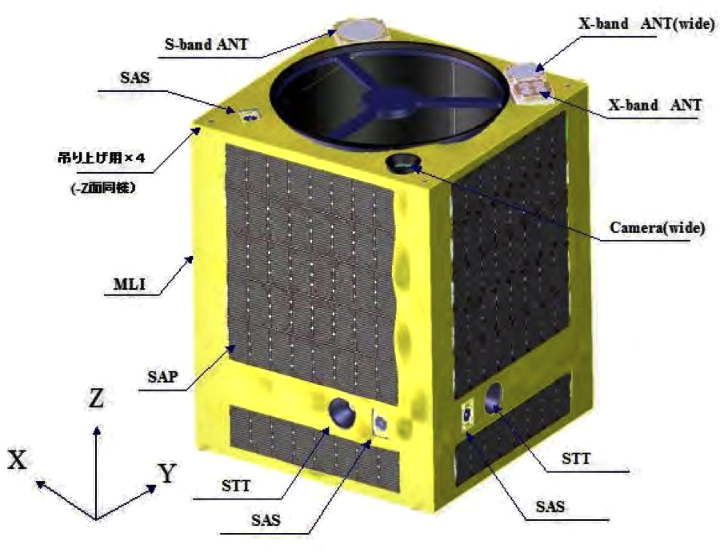
Spaceflight Inc. is managing the launch of Canon Electronics’ CE-SAT-IB imaging satellite on Rocket Lab’s Electron launch vehicle — the mission will lift off from Rocket Lab’s Launch Complex 1 at the southern tip of Mahia Peninsula, on the east coast of New Zealand’s North Island, with the launch window opening on July 4 NZT/July 3, UTC.

CE-SAT-IB is a 67 kilogram microsatellite which can resolve 90 centimeter objects on the ground from space. Additionally, Spaceflight is coordinating the launch of another Canon satellite, CE-SAT-IIB, which is slated to lift off after the CE-SAT-IB mission later in 2020, also aboard an Electron. It will carry three cameras with different resolutions and sensitivities.


Canon Electronics CE-SAT 1.

This mission, called Pics Or It Didn’t Happen by Rocket Lab, represents Spaceflight’s fourth launch with Rocket Lab in the past 12 months and follows the successful launches of 10 spacecraft on earlier missions “Make it Rain” (June 2019), “Look Ma No Hands” (August 2019), and “Running Out of Fingers“ (November 2019). While this mission was scheduled to launch earlier this year, it was delayed due to the COVID-19 global pandemic.

Spaceflight has continued to work closely with Canon Electronics, Rocket Lab, and government officials to launch as expeditiously and safely as the conditions allow. Like the previous missions, Spaceflight managed the launch capacity procurement, integration and mission management services for the rideshare spacecraft.

Since its founding, Spaceflight has launched more than 270 satellites via 29 rocket launches, establishing itself as the leading rideshare service provider. Spaceflight is scheduled to execute more than six missions in 2020 across many different launch vehicles, including the Falcon 9, Electron, Vega, SSLV and PSLV.


Curt Blake

Curt Blake, the CEO and President of Spaceflight, stated the company is looking forward to getting these next generation Canon spacecraft on orbit and helping them kickstart their constellation. Spaceflight’s ability to find the most expedient rides to space for the firm’s customers is critical, especially when their business plans require a frequent cadence of launches. Offering end-to-end launch services across multiple launch vehicles gives Spaceflight customers flexibility, along with confidence that the company will get them where they want to go, aligned with their schedule.

Dr. Nobutada Sako, group executive, Satellite Systems Lab, Canon Electronics Inc., added that this launch is critical for Canon Electronics as the company is launching a satellite where the firm has remarkably increased the ratio of in-house development of components compared to the previous launch. Partnering with Spaceflight on this mission has been very helpful and the company looks forward to a successful launch of Canon Electronics’ satellites.


Filed Under: News

  • « Go to Previous Page
  • Page 1
  • Interim pages omitted …
  • Page 300
  • Page 301
  • Page 302
  • Page 303
  • Page 304
  • Interim pages omitted …
  • Page 338
  • Go to Next Page »

Primary Sidebar

WEEKLY NEWSLETTER

Archives

  • March 2026
  • February 2026
  • January 2026
  • December 2025
  • November 2025
  • October 2025
  • September 2025
  • August 2025
  • July 2025
  • June 2025
  • May 2025
  • April 2025
  • March 2025
  • February 2025
  • January 2025
  • December 2024
  • November 2024
  • October 2024
  • September 2024
  • August 2024
  • July 2024
  • June 2024
  • May 2024
  • April 2024
  • March 2024
  • February 2024
  • January 2024
  • December 2023
  • November 2023
  • October 2023
  • September 2023
  • August 2023
  • July 2023
  • June 2023
  • May 2023
  • April 2023
  • March 2023
  • February 2023
  • January 2023
  • December 2022
  • November 2022
  • October 2022
  • September 2022
  • August 2022
  • July 2022
  • June 2022
  • May 2022
  • April 2022
  • March 2022
  • February 2022
  • January 2022
  • December 2021
  • November 2021
  • October 2021
  • September 2021
  • August 2021
  • July 2021
  • June 2021
  • May 2021
  • April 2021
  • March 2021
  • February 2021
  • January 2021
  • December 2020
  • November 2020
  • October 2020
  • September 2020
  • August 2020
  • July 2020
  • June 2020
  • May 2020
  • April 2020
  • March 2020
  • February 2020
  • January 2020
  • December 2019
  • November 2019
  • October 2019

© 2019–2026 SatNews

Insert/edit link

Enter the destination URL

Or link to existing content

    No search term specified. Showing recent items. Search or use up and down arrow keys to select an item.
      x
      Sign Up Now!

      Enjoy a free weekly newsletter with recent headlines from the global SmallSat industry.

      Invalid email address
      We promise not to spam you. You can unsubscribe at any time.
      Thanks for subscribing! You will now receive weekly SmallSat News updates.
      We love our advertisers.
      And you will too!

      Please disable Ad Blocker to continue... We promise to keep it unobtrusive.
      We promise not to spam you. You can unsubscribe at any time.
      Invalid email address
      Thanks for subscribing!