• Skip to main content
  • Skip to primary sidebar
  • Home
  • News
  • Featured
  • More News ⌄
    • SatNews
    • SatMagazine
    • MilSatMagazine
  • Events ⌄
    • MilSat Symposium
    • SmallSat Symposium
    • Satellite Innovation
  • Contacts
  • SUBSCRIPTION

SmallSat News

You are here: Home / Archives for News

News

Ball Selected by NOAA for Four Weather Study Contracts

June 30, 2020 by editorial

Ball Aerospace was selected by the National Oceanic and Atmospheric Administration (NOAA) for four, six-month study contracts that will inform mission, spacecraft and instrument concepts for future operational weather architectures and Earth observation capabilities. Ball Aerospace is also collaborating on a fifth study contract awarded to L3Harris Technologies.

The five study contracts include:

  • Auroral Imager in Tundra – Ball is working with Computational Physics, Inc. to perform a trade study of cost and performance between two promising technology strategies for a dedicated auroral imager in a highly elliptical Tundra orbit, long recognized as a useful vantage point for global auroral imaging. Auroral imagery provides important space weather situational awareness for users of technologies affected by auroral phenomena, such as power grids and aviation services.
  • Ball Operational Weather Instrument Evolution (BOWIE) Microwave – This concept study will evaluate the baseline design of Ball’s BOWIE-M instrument and explore optimization of performance and cost. BOWIE-M leverages recent advances in microwave component miniaturization and advances in antenna technology to enable a future disaggregated constellation of low-cost, high-performance atmospheric sounding instruments. Approximately half the size of current instruments flying on operational polar-orbiting weather satellites, BOWIE-M is designed to deliver similar capability at reduced cost. Ball is collaborating with Atmospheric and Environmental Research (AER), a Verisk business, that will lead a trade analysis of the instrument design and performance.
  • BOWIE Compact Hyperspectral Infrared Observations (CHIRO) – This instrument concept study will focus on technology and performance trades for a cost-effective, high-performance smallsat solution for hyperspectral infrared sounding from geostationary orbit. BOWIE Low-Earth Orbit (LEO) IR Sounder – Through this study, Ball will explore compact instrument designs to meet NOAA’s atmospheric vertical temperature and moisture profiling requirements, identifying technology roadmap options to address cost versus performance for infrared sounder instrument(s) for rapid insertion into Low-Earth Orbit.
  • Joint LEO Sounding Mission Study – Ball is working with L3Harris and PlanetiQ for this mission concept study, which will evaluate an all-industry smallsat mission, hosting both microwave and infrared sounding instruments (provided by Ball and L3Harris, respectively), and GNSS-RO sounding sensors (provided by PlanetiQ). The team will also explore how the mission can be optimized for cost and performance while meeting the LEO sounding requirements of NOAA’s future operational weather architecture. Ball will also perform an accommodation assessment of the baseline instrument designs, from all study participants, using a Ball small satellite for insertion in various orbits. In addition to an instrument integration assessment, Ball will study commercial launch options to enable a delivery-on-orbit acquisition model for a complete sounding system that NOAA would own and operate.

Dr. Makenzie Lystrup

“Operational weather satellites are a critical part of the nation’s infrastructure, playing a key role in keeping the public safe and the economy strong by enabling forecasters to predict and reduce the impacts of extreme weather events,” said Dr. Makenzie Lystrup, VP and GM, Civil Space, Ball Aerospace. “Through close coordination with the broader weather community, Ball developed a series of innovative technology and mission solutions to meet NOAA’s most critical space-based observational needs in an affordable and sustainable way, and these studies are a continuation of this effort.”

Recent Ball Aerospace news…

Anokiwave and Ball Aerospace Add Ku-Band Option to Phased Array Antennas

Ball Aerospace Initiating the Manufacturing of the USAF SMC’s WSF Satellite Following Successful CDR

Filed Under: Featured, News

UK’s OneWeb Interests, SpaceX Launch Slippage + Intelsat-ITSO Dispute

June 29, 2020 by editorial

The UK government is widely reported to have joined a consortium that is bidding for bankrupt OneWeb’s satellite system — the UK reportedly put £500 million (or possibly $500 million) into the consortium for a bid on June 26th.

The UK’s interest in OneWeb is for a potential alternate space system to the EU’s Galileo GPS service, itself an alternate to the US and its well-known GPS (Global Positioning System) system.

However, there’s significant criticism of the move with various experts saying that OneWeb’s satellites – even with modifications – are not fit for a GPS purpose. OneWeb’s satellites are all in LEO of 1200 kms, while GPS craft operate at significantly higher altitudes. The US system has just 24 satellites to provide global coverage, plus a handful of in-flight back-ups, and they orbit at 20,300 kms. Galileo has just 27 satellites in its system plus three spares and orbiting at 23,222 kms.

OneWeb’s satellites, because of their much lower heights, need a far greater constellation to provide total coverage. The OneWeb scheme calls for a total of 900 satellites although the company has filed with the FCC for another 48,000 to complete its coverage and operation density for mass market adoption.

Airbus is currently involved in a 50/50 joint venture to build the OneWeb fleet from a factory in Florida. In a statement, Airbus said: “The OneWeb constellation could help address the UK’s future space requirements and with innovative thinking should further enhance the UK’s place at the forefront of satellite technology and applications. Airbus and the wider UK space ecosystem have the skills to build future capability and then drive export opportunities. We would look forward to supporting OneWeb in the next phase of their business and growing the UK contribution to this market changing business.”

It is also reported that Chinese interests have examined OneWeb’s assets; however, it is also seen that China would suffer some extreme roadblocks in terms of their bid(s).

“The fundamental starting point is, yes, we’ve bought the wrong satellites,” said Dr. Bleddyn Bowen, a space policy expert at the University of Leicester speaking to The Guardian. “OneWeb is working on basically the same idea as Elon Musk’s Starlink; a mega-constellation of satellites in Low Earth Orbit, which are used to connect people on the ground to the Internet. What’s happened is that the very talented lobbyists at OneWeb have convinced the government that we can completely redesign some of the satellites to piggyback a navigation payload on it. It’s bolting an unproven technology on to a mega-constellation that’s designed to do something else. It’s a tech and business gamble.

Giles Thorne, a research analyst at investment bank Jefferies, and a highly-regarded voice in satellite matters, was blunt, saying, “This situation is nonsensical to me. This situation looks like nationalism trumping solid industrial policy. Let’s give the government the benefit of the doubt: if the output the government wants is a UK-branded positioning system, a projection of UK power around the world and supporting the UK satellite industry base, then it is probably quicker and cheaper to smash the square peg of OneWeb into the round hole of a Galileo replacement than it is to do it from scratch.”

Sami Kassab, also considered an expert on satellite matters, in his Exane/BNPP bank’s note to clients, said that his list of potential bidders/buyers includes Eutelsat, Amazon, Inmarsat, Airbus and possibly Chinese players and stated that it is unlikely that SES and Space X will bid, as they already have a similar but more advanced infrastructure in place. He noted, “Eutelsat has no LEO broadband assets and acquiring OneWeb would make strategic sense but be financially risky as the ROI on this constellation is more than questionable (hence the Chapter 11). In our view, Eutelsat is unlikely to bid on its own but it could be part of a broader consortium including the French State (as suggested in the FT‘s article) and potentially Airbus (OneWeb spacecraft manufacturer). The support of Government funding would reduce the financial risk for any private bidder. We also believe that a failed attempt by Eutelsat/France to acquire OneWeb would increase the odds of a SES-Eutelsat merger as a European political response to the UK’s investment in New Space. Available economies of scale would be significant in our view.”

Chris Forrester continues his reporting at the Advanced Television infosite with a posting that reads…

First it was bad weather at the Cape which slipped the SpaceX June 23rd launch to June 25th, then June 26th, but then the Falcon 9 rocket with a cargo of 57 Starlink satellites – plus a few guest craft – was postponed again just 2 hours before the planned launch – even though the weather was good.

“Standing down from today’s Starlink mission; team needed additional time for pre-launch checkouts, but Falcon 9 and the satellites are healthy,” SpaceX wrote in an update on Twitter. “Will announce new target launch date once confirmed on the Range.”

The delay means that there are now launch pressures on Musk’s team because another Falcon 9 is due for launch on June 30th from a nearby pad to place a GPS III satellite – manufactured by Lockheed Martin – into orbit for the US Space Force. The GPS mission uses a rocket that has already flown 4 times before including two earlier Starlink missions.

This particular GPS satellite replaces an older craft in the 31-satellite set and provides improved accuracy as well as anti-jamming technology. The delayed Falcon 9 rocket for the Starlink mission is no slouch and has flown 4 times. No date has yet been set for the launch attempt.

SpaceX has previously said they would likely manage 24 rocket launches annually and this next batch will be the 10th launch of 57 Starlink craft. This will be the 10th launch of Elon Musk’s Starlink satellites and take the total in orbit to almost 600.

Musk says that his Starlink service will debut “later this summer” first serving Alaska and the northern US and Canadian regions. He has said that he only needs about 400 satellites in orbit to provide a basic ‘beta’ service, and that a fleet of 800 would provide “moderate” coverage for public subscribers/users.

A third Forrester story reveals that the dispute between Intelsat, itself in Chapter 11 bankruptcy protection, and the International Telecommunications Satellite Organisation (ITSO) and payments claimed as owed by Intelsat to ITSO, was due to be heard by the bankruptcy court on June 30th and that legal event has now been delayed.

It will now be heard on July 28th during the next ‘Omnibus Hearing’ by the court.

ITSO, an intergovernmental organisation comprising 149 member states, supervises Intelsat’s public service obligations. ITSO wanted the court to order Intelsat pay up outstanding cash to fund its activities.

Some of the ITSO claims are denied by Intelsat which says that ITSO’s obligations do not extend – for example – to funding expensive trips to Davos and the World Economic Forum as well as other unwarranted expenses.

Intelsat says that ITSO’s extra claims are without merit and should be dismissed.

Reporting by journalist Chris Forrester @ the Advanced Television infosite.

Filed Under: News

Capella Space Signs NGA Agreement

June 29, 2020 by editorial

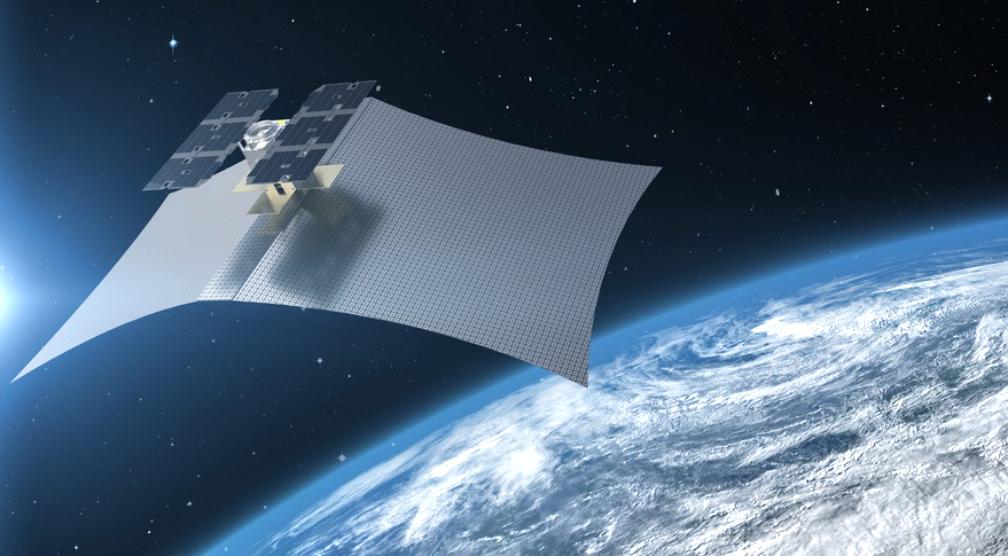
The first, tech demo SAR satellite was launched by Capella Space in December of 2018.
Image is courtesy of the company.

Capella Space has signed a Cooperative Research and Development Agreement (CRADA) with the National Geospatial-Intelligence Agency (NGA).

The CRADA gives Capella access to NGA researchers for deeper insight into problems and, in return, NGA gains access to Capella Space’s SAR data and analytics services and signifies NGA’s first research partnership with an American commercial smallsat SAR data company, in an effort to expand its research capabilities.

The CRADA with Capella Space is part of the NGA’s broader Commercial GEOINT Strategy, first released October 2015 and later updated in September 2018. The NGA Commercial GEOINT Strategy provides a vision and plan for continually increasing collaboration with commercial GEOINT companies in order to meet rising customer demands for more timely and persistent imagery, analytics, and contextual information.

Capella will play a critical role in satisfying NGA’s mission to expand its production and publication of unclassified operations and intelligence.

The CRADA further strengthens Capella Space’s already-trusted relationship with United States government agencies. This past May, Capella Space signed a contract with the Department of Defense to provide on-demand, high-resolution SAR data and analytics for the U.S. Navy.

“This is an exciting partnership that has the potential to yield new intelligence opportunities. Capella’s high temporal resolution SAR imagery will give intelligence professionals key insight and strategic advantage,” said Jarrett Adrian, NGA’s Principal Investigator for this CRADA.

Payam Banazadeh

“We’re appreciative to NGA for its interest in our data and technology,” said Payam Banazadeh, CEO and founder of Capella Space. “We look forward to better understanding users’ problems and demands through this partnership and being able to jointly develop cutting edge solutions for our U.S. government customers. With our satellite launch on the near horizon, this is an optimal time to initiate a collaborative, data-sharing relationship.”

Recent Capella Space news…

Rocket Lab to Launch Capella Space’s First SAR Satellite

Filed Under: News

UK Government Gathers Financial Resources to Join Consortium Interested in Acquiring OnWeb’s Assets

June 29, 2020 by editorial

June 26th is ‘Bidding Day’ for OneWeb’s assets. Would-be buyers have to enter their bids for OneWeb, which is in bankruptcy.  If no – or inadequate – bids are entered, then the process goes forward to an auction of assets on July 2nd.

The UK government is widely reported to have joined a consortium bidding to acquire OneWeb and has reportedly stumped up £500 million for a 20 percent share of the bid.

The UK government sees OneWeb as a potential replacement for the European Union’s ‘Galileo’ GPS satellite navigation system. The UK will be excluded from the military aspect of Galileo once exiting the EU.  It had been originally suggested that the UK would have to pay between £4 billion to £5 billion to build its own satellite navigation system. Buying OneWeb could be seen as giving the UK a ‘fast-track’ route to an independent system.

However, it is understood that the UK is far from alone in looking to buy OneWeb. There is Chinese interest from a number of potential competitors and a French bid potentially including existing satellite operator Eutelsat is also reportedly looking at bidding.

OneWeb has 74 satellites already in orbit and had planned to launch an initial 650 craft in order to circle the globe with a broadband-by-satellite system.

Article authored by journalist Chris Forrester for the Advanced Television infosite.

Filed Under: News

Perspectives Video Interview with Stephen Jurczyk, Associate Administrator, NASA

June 26, 2020 by minisat

Speaking of the DEMO-2 mission to the ISS, I’m very proud of the NASA and Space X team and the courage of Bob Behnken and Doug Hurley. This event was something for the nation and world to rally around during these challenging times.

– Stephen Jurczyk

Mr. Stephen Jurczyk became NASA’s associate administrator, the agency’s highest-ranking civil servant position, effective May, 2018. Prior to this assignment he was the associate administrator of the Space Technology Mission Directorate, effective since June, 2015.  In this position he formulated and executed the agency’s Space Technology programs, focusing on developing and demonstrating transformative technologies for human and robotic exploration of the solar system in partnership with industry and academia.

He previously was Director at NASA’s Langley Research Center in Hampton, VA. Named to this position in May 2014, he headed NASA’s first field Center, which plays a critical role in NASA’s aeronautics research, exploration and science missions.  Jurczyk served as Langley’s Deputy Center Director from August 2006 until his appointment as director.

Jurczyk began his NASA career in 1988 at Langley in the Electronic Systems Branch as a design and integration & test engineer developing several space-based Earth remote sensing systems.  From 2002 to 2004 Jurczyk was director of engineering, and from 2004 to 2006 he was director of research and technology at Langley where he led the organizations’ contributions to a broad range of research, technology and engineering disciplines contributing to all NASA mission areas.

Jurczyk received several awards during his NASA career, including two NASA Outstanding Leadership Medals, the Presidential Rank Award for Meritorious Executive in 2006, and the Presidential Rank Award for Distinguished Executive in 2016 — the highest honors attainable for federal government leadership.

Jurczyk is a graduate of the University of Virginia where he received Bachelor of Science and Master of Science degrees in Electrical Engineering in 1984 and 1986.  He is an associate fellow of the American Institute of Aeronautics and Astronautics.

Filed Under: Featured, News

New HawkEye 360 Radar Signals Can Now Deliver Comprehensive Maritime Awareness

June 25, 2020 by editorial

HawkEye 360 Inc. has announced that the company’s flagship RFGeo product can now map an expanded catalog of marine navigation radar signals to further improve global maritime situational awareness.

With this update, HawkEye 360 introduces the first S-band radar signal and quadruples the number of X-band radar signals in the company’s library. HawkEye 360 can now cover the most used frequencies for X-band magnetron-based radar systems, providing a more comprehensive view of maritime activity.

Vessels continuously operate marine radar to avoid nearby obstacles and safely navigate from point to point, making it an excellent signal to track vessels that have otherwise ceased AIS transmissions and gone dark. Commercial vessels 300 gross tonnage or larger are required to be equipped with X-band radars (9 GHz). The largest vessels also carry S-band radars (3 GHz) to penetrate deeper through rain or fog. Each new signal improves HawkEye 360’s ability to develop vessel profiles and help clients identify dark vessels that might be involved in illicit activities, such as smuggling or illegal fishing.

HawkEye 360’s RFGeo identifies and geolocates RF signals collected by HawkEye 360’s proprietary satellite constellation. RFGeo is the first commercially available product offering global spectrum awareness across a broad range of radio signals. In addition to the newly announced signals, RFGeo can independently geolocate VHF marine radios, UHF push-to-talk radios, L-band mobile satellite devices, EPIRB emergency distress beacons, and vessel Automatic Identification Systems (AIS). HawkEye 360 is continually adding signals to the catalog to broaden the reach of RF identification across land, sea, and air domains.

Executive Comments

John Serafini

“We’re addressing critical gaps in Maritime Domain Awareness by revealing an entirely new data layer for vessel monitoring,” said John Serafini, CEO, HawkEye 360. “We’re excited to introduce our first signal in the S-band frequencies. By expanding our signal catalog, we’re not just collecting new and diverse RF data sets, we’re providing actionable intelligence to support the increasing number and scale of our customers’ missions.”

“Our customers need to maintain accurate and consistent visibility of vessels,” said Alex Fox, EVP for Business Development, Sales and Marketing, HawkEye 360. “Vessels are continuing to evade AIS detection to conduct illicit activities, making it difficult for organizations to identify and monitor their behaviors. We’re able to provide unique data sets that enable our customers to keep their finger on the pulse of vessel activity.”

Recent HawkEye 360 news

HawkEye 360’s Keen Eye Adds More Defense Industry Expertise to their Board of Directors

HawkEye 360 Reveals Iranian Tankers Evading Sanctions

HawkEye 360 Reveals Coronavirus Effect on Italy’s Maritime Sector

Filed Under: Featured, News

Series A Investment Round Successfully Completed by Leaf Space

June 25, 2020 by editorial

Leaf Space, an Italian company that provides ground segment services for smallsats, has recently closed a Series A investment round to finance the scale-up phase of its business model.

The company, founded in 2014 in Milan by Jonata Puglia, Michele Messina and Giovanni Pandolfi, has a well-established presence in Europe, North America, and APAC and with this round has raised another €3 million that will allow it to consolidate and expand its services dedicated to microsatellite operators.

The objective of this investment is to strengthen Leaf Space’s presence in the New Space Economy by supporting both the expansion of its current satellite antenna infrastructure as well as the development of new services and technologies. This activity will favor and further strengthen the existing and solid commercial base, which is embedded in a sector that is focused on the satellite communications of the future and is therefore also of more strategic importance for facing the impacts of COVID-19 on the global economic system.

This new €3 million round was carried out by an investment group in which Whysol Investments is the Lead Investor, followed by RedSeed Ventures. The latter has already been present in Leaf Space since its first steps, having invested a total of €1.4 million of capital between 2016 and 2019.

Today, Leaf Space has globally-distributed satellite communications infrastructure, with 5 antennas installed and operational. The Leaf Line communication service has been used by over 14 customers. Companies such as Astrocast, Pixxel, Virgin Orbit, D-Orbit, and many others around the world use Leaf Space’s services to expand and consolidate their business, together with major institutional clients including the European Space Agency (ESA), Telespazio-Leonardo, the German Space Agency (DLR), and the Indian Space Research Organisation (ISRO).

With this investment, the company has raised a total of more than 7 million Euros and is moving away from the world of start-ups to take a more mature path as an Innovative SME. Considering the positive results of its commercial service in Europe and the US three years after its market entry, Leaf Space will use the funding to further expand its already active ground station network, with new sites in North America, the Azores, the equatorial zone, and the southern hemisphere.

In particular, the expansion of the network will reduce communication latency in Europe, the US, and Australia, being able to provide data uplink and downlink service once per orbit in SSO (Sun-Synchronous Orbit) and equatorial orbit. By the end of 2020, the network will have a total of more than 10 ground stations dedicated to the multi-customer service Leaf Line, in addition to several stations dedicated to the Swiss customer Astrocast, using the exclusive Leaf Key service.

The new capital raised will also finance technological development activities, to expand towards higher communication frequencies, and to increase the supported data-rate, allowing Leaf Space to serve other satellite classes, launch providers, and High Altitude Platforms (HAPs).

“The New Space market has been growing for years, a real boom linked to the birth and development of microsatellites. So far, the sector is proving more resilient than others to the impact of the COVID-19 crisis, and Leaf Space is a clear example. The closing of this round is an extraordinary achievement for which I want to thank our investors, all our partners, and employees for the commitment and professionalism shown in recent months,” said Jonata Puglia, CEO and co-founder of Leaf Space.

“Innovation is the connective thread that has always guided us in our investment selection. During the start-up phase, Leaf Space has proven to be able to rapidly develop and provide a range of innovative services and technologies in the ground service segment, starting with the transmission and collection of data. We have decided to continue to support them also during the scale-up phase because we firmly believe in the multidisciplinary skills of the management team and in the potential of the New Space Economy,” added Alberto Bitetto, Founder and Chairman of Whysol Investments.

“This is a further demonstration of how Made in Italy is competitive at the global level even in very technological sectors like the New Space Economy. Leaf Space is now a global-level company of reference in the microsatellite ground segment sector, able to compete with giants that have operated on the market for decades,” said Elisa Schembari, Founder and Managing Partner of RedSeed Ventures and Leaf Space Chairman.

Filed Under: News

Orbital Transports Unveils Their ‘Get Spaceborne’ Service for On-Orbit Demos and Qualifications

June 25, 2020 by editorial

Orbital Transports, Inc. has revealed their new service, Get SpaceborneTM .

Get SpaceborneTM is a new resource for smallsat component manufacturers. Rather than requiring an expensive, dedicated mission for on-orbit testing and qualification, products being qualified will share a spacecraft bus with other hosted payloads.

The spacecraft bus provides the hosted payload with power, two-way communications and propulsion. Payload slots are available in standard CubeSat form factors ranging from 1U to 6U, accommodating a range of products. A standard payload management API simplifies integration of the product with the spacecraft bus. Several launch opportunities to Sun-synchronous orbit and potentially other orbits are now available starting in Q2 2021.

Get SpaceborneTM is one of many services and products featured in the Space Catalog. Orbital Transports’ Space Catalog showcases a wide variety of small satellite hardware components, small satellite buses specialized for common space missions, mission analysis services, ground station services, mission operations software and more from industry partners. Orbital Transports has brought together many of the industry’s most innovative and reliable companies to offer a wide set of solutions while meeting client’s quality requirements.

Executive Comment

David Hurst

“Our turnkey service for on-orbit demonstration is a fast and cost-effective way for smallsat manufacturers to acquire flight heritage for their products including communications, imaging, data processing, propulsion, power, and other components,” said David Hurst, CEO of Orbital Transports. “We handle all the logistics of planning your mission, integrating your smallsat component with the satellite bus, operating the mission, and getting your flight qualification data back to you.”

Recent Orbital Transports news…

Smallsat Catalog Published by Orbital Transports Offers Total Mission Support

Blending Their Smallsat Expertise — Orbital Transports + Innovative Solutions in Space (ISISPACE)

Filed Under: News

Gilmour Space Successfully Completes First Tech Demo of the Year

June 25, 2020 by editorial

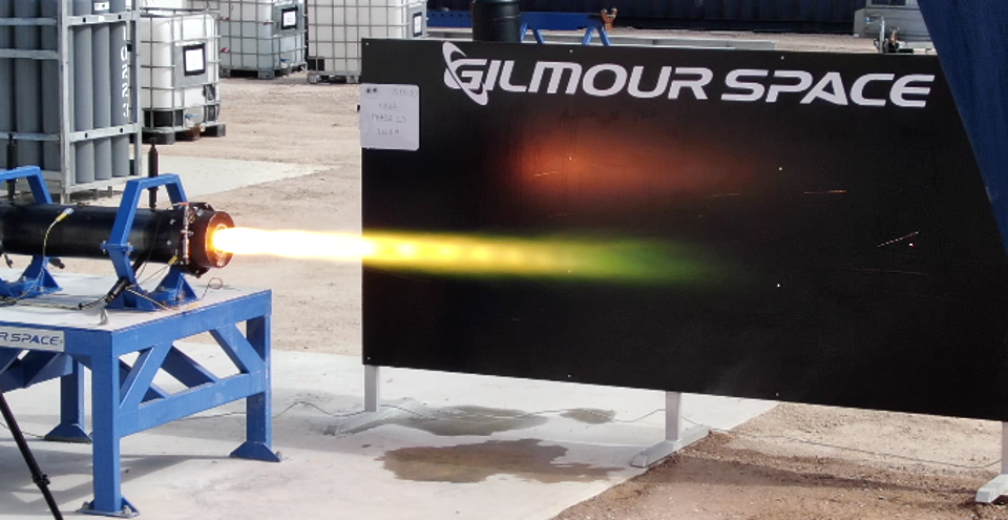
Gilmour Space’s test firing of the company’s upper-stage hybrid rocket engine.
Photo is courtesy of the company.

Rocket engineers at Gilmour Space Technologies in Queensland, Australia, have completed the first in a series of major technology demonstrations this year — a successful 45-second ‘hot fire’ of their upper-stage hybrid rocket engine.

Unlike most commercial launch vehicles fueled by solid- or liquid-propulsion engines, Gilmour Space is developing new cost-effective, safe and green hybrid-propulsion technologies.

2020, the year of testing

As with most companies in Australia, Gilmour Space has been impacted by the severe bushfires and global COVID-19 pandemic. Despite the challenges, the company is tracking to complete a number significant tests this year, including a series of low-altitude flight tests of their guidance, navigation and control systems, a thrust vector control system test, and a more powerful static fire of their first-stage rocket engine.

Now with 50 employees in the company’s Gold Coast rocket facility, Gilmour Space is pushing the frontiers of Australian manufacturing and growth across the commercial, civil and defence space.

In December last year, the company signed a Strategic Statement of Intent with the Australian Space Agency to demonstrate its commitment to delivering ‘Access to Space’ as a civil priority area. In May, it signed a collaboration agreement with Australia’s Defence Science Technology Group to work on technologies that will enable sovereign launch capabilities in Australia.

Executive Comment

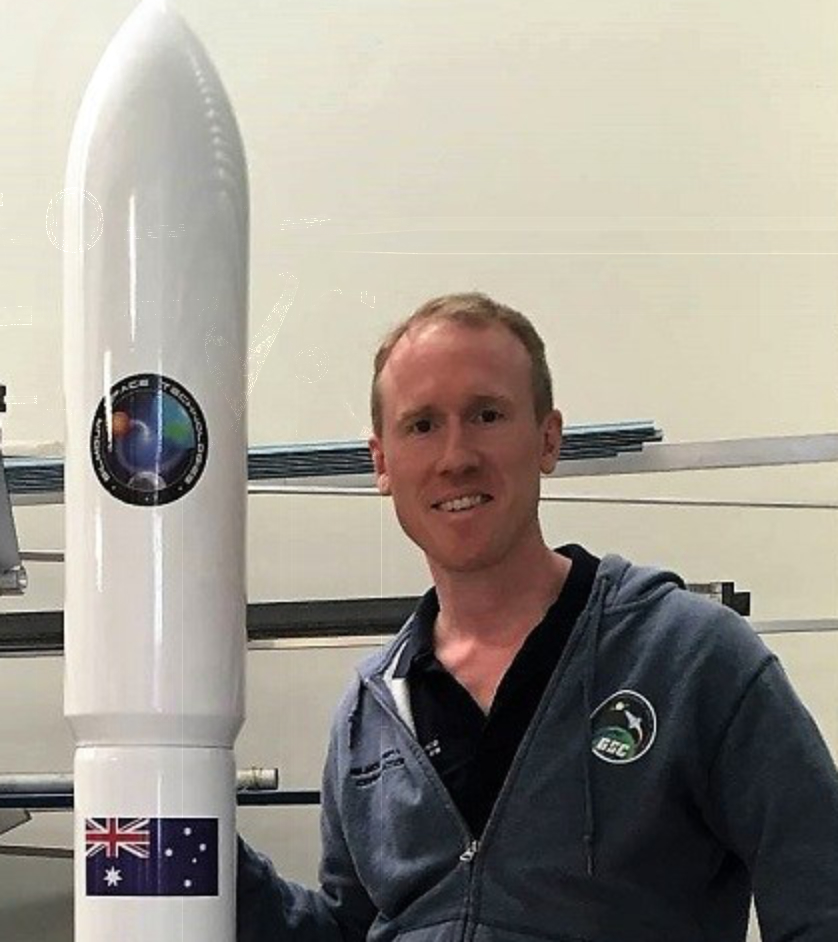
Adam Gilmour

“This was our longest and most efficient test fire to date,” said Gilmour Space CEO and Co-Founder, Adam Gilmour. “It’s a key demonstration of our ability to produce repeatable, stable, and high-performance combustion over a long duration burn; and a significant achievement in hybrid rocket development,” he added. “This engine will have the capability to power the upper stage of our Eris orbital launch vehicle, and deliver our customer payloads to required orbits. Our next test will be a full duration mission duty cycle firing of this engine.” He added, “Clearly, the momentum for launch is building here. With the right focus, investment, and hopefully a ready launch site by 2022, we believe that space could be a significant future industry for Australia – one that builds on our advanced manufacturing capabilities, and offers real opportunities for jobs, recovery and growth.”

Recent Gilmour Space news…

Strategic Space Technologies Agreement Signed by Gilmour Space with the Australian Defense Science Technology Group

Gilmour Space Receives Millions in Funding for Australian Government Flight-Ready Cryotanks

Filed Under: Featured, News

Relativity Space Selected by Iridium as an On Demand, Single Satellite, Launch Partner

June 24, 2020 by editorial

Artistic rendition of a Relativity Space Terran 1 rocket launch.

Relativity Space has announced that Iridium Communications Inc. (NASDAQ: IRDM) has signed a launch contract to deliver satellites to orbit.

The contract includes flexible timing for up to six dedicated launches to deploy Iridium’s ground spare satellites to Low Earth Orbit (LEO).  The launches will occur on an as-needed basis, determined by Iridium and using Relativity’s Terran 1, the world’s first 3D printed launch vehicle. Launches are planned for no earlier than 2023.

The second-generation Iridium constellation was completed in January 2019 and consists of 66 operational satellites and 9 on-orbit spares.  An additional six satellites were manufactured as ground spares and remain in storage.  Should the need arise to launch a ground spare, Relativity’s Terran 1 offers a cost-effective, efficient response time option for Iridium to quickly deploy a satellite to one of its six orbital planes. Relativity’s disruptive large-scale robotic 3D printing technology enables launches within months, instead of years.

Relativity Terran 1 rocket engine.

On June 24, 2020, Relativity also announced a Right of Entry Agreement with the United States Air Force, 30th Space Wing, for development of rocket launch facilities at Vandenberg Air Force Base. These launch site facilities will support flights to the polar orbits needed for the Iridium satellite constellation.

Relativity continues to grow its customer manifest and public-private partnerships. This agreement is the fifth announced launch customer for Relativity, and the first to take advantage of the company’s recently announced Right of Entry at Vandenberg Air Force Base. A potential launch site at Vandenberg is Relativity’s latest addition to its portfolio of major infrastructure partnerships, which also include a launch site Right of Entry at Cape Canaveral Launch Complex-16 and an exclusive-use Commercial Space Launch Act (CSLA) agreement for NASA test sites E4 and E2 at the NASA Stennis Space Center.

Relativity is the first and only venture-backed company with a Right of Entry directly with the U.S. Air Force at historic Launch Complex 16.

Executive Comments

Matt Desch

“The upgraded Iridium satellite constellation is operating incredibly well, but it’s prudent to have a cost-effective launch option available for future spare delivery,” said Matt Desch, the CEO of Iridium. “Relativity’s Terran 1 fits our launch needs to LEO well from both a price, responsiveness and capability perspective. And we know based on our previous experience that there are great benefits to engaging with a provider early on during development of the launch vehicle and it evolving around our particular needs.”

Tim Ellis

“Iridium offers critical communications over the planet’s entire surface, and we are very proud to be their launch partner that supports this capability,” said Tim Ellis, CEO and co-founder, Relativity Space. “As the first 3D printed launch vehicle, Terran 1 offers uniquely disruptive flexibility, cost, and performance advantages, especially for medium-payload missions that need dedicated launches.”

Recent Relativity Space news…

Relativity Space is in a New Space … Terran 1 Rocket Manufacturing to Long Beach, California

Filed Under: News

  • « Go to Previous Page
  • Page 1
  • Interim pages omitted …
  • Page 299
  • Page 300
  • Page 301
  • Page 302
  • Page 303
  • Interim pages omitted …
  • Page 339
  • Go to Next Page »

Primary Sidebar

WEEKLY NEWSLETTER

Archives

  • April 2026
  • March 2026
  • February 2026
  • January 2026
  • December 2025
  • November 2025
  • October 2025
  • September 2025
  • August 2025
  • July 2025
  • June 2025
  • May 2025
  • April 2025
  • March 2025
  • February 2025
  • January 2025
  • December 2024
  • November 2024
  • October 2024
  • September 2024
  • August 2024
  • July 2024
  • June 2024
  • May 2024
  • April 2024
  • March 2024
  • February 2024
  • January 2024
  • December 2023
  • November 2023
  • October 2023
  • September 2023
  • August 2023
  • July 2023
  • June 2023
  • May 2023
  • April 2023
  • March 2023
  • February 2023
  • January 2023
  • December 2022
  • November 2022
  • October 2022
  • September 2022
  • August 2022
  • July 2022
  • June 2022
  • May 2022
  • April 2022
  • March 2022
  • February 2022
  • January 2022
  • December 2021
  • November 2021
  • October 2021
  • September 2021
  • August 2021
  • July 2021
  • June 2021
  • May 2021
  • April 2021
  • March 2021
  • February 2021
  • January 2021
  • December 2020
  • November 2020
  • October 2020
  • September 2020
  • August 2020
  • July 2020
  • June 2020
  • May 2020
  • April 2020
  • March 2020
  • February 2020
  • January 2020
  • December 2019
  • November 2019
  • October 2019

© 2019–2026 SatNews

Insert/edit link

Enter the destination URL

Or link to existing content

    No search term specified. Showing recent items. Search or use up and down arrow keys to select an item.
      x
      Sign Up Now!

      Enjoy a free weekly newsletter with recent headlines from the global SmallSat industry.

      Invalid email address
      We promise not to spam you. You can unsubscribe at any time.
      Thanks for subscribing! You will now receive weekly SmallSat News updates.
      We love our advertisers.
      And you will too!

      Please disable Ad Blocker to continue... We promise to keep it unobtrusive.
      We promise not to spam you. You can unsubscribe at any time.
      Invalid email address
      Thanks for subscribing!