• Skip to main content
  • Skip to primary sidebar
  • Home
  • News
  • Featured
  • More News ⌄
    • SatNews
    • SatMagazine
    • MilSatMagazine
  • Events ⌄
    • MilSat Symposium
    • SmallSat Symposium
    • Satellite Innovation
  • Contacts
  • SUBSCRIPTION

SmallSat News

You are here: Home / Archives for News

News

Hiber Appoints Industry Leaders to Advisory Board as well as Receives EU Funding

March 11, 2020 by editorial

Hiber is celebrating a successful start to 2020 — in addition to receiving EU funding and achieving Dutch National Icon status, Hiber is also excited to announce the appointment of three eminent industry leaders to its advisory board: George Coelho, Co-Founder of Balderton Capital and advisor to European and South East Asian firm Finch Capital; Drew Caplan, a senior telecommunications executive and Lt. General Lawrence Farrell, a US military veteran and previous President and CEO of the National Defense Industrial Association.

These strategic hires come after a successful 2019 that witnessed Hiber launch their IoT network, Hiberband, that already has a portfolio of 50 global customers from a diverse range of sectors, including agriculture, oil, gas and logistics.

Identified as an innovative startup by the EU last year, in 2020 Hiber is also set to receive part of the European Innovation Council Accelerator’s grant of €278 million and direct equity investment.

Additionally, Hiber has been selected as a Dutch National Icon, a prestigious Dutch government backed initiative, whereby dutch companies with major social and economic potential are selected to receive government support. As part of its National Icon status, Hiber will receive support and expert counsel from the Dutch cabinet member, State Secretary Keijzer, for three consecutive years.

Hiber (formerly Magnitude Space) is a ‘NewSpace’ startup, founded and led by a dream team of satellite experts and tech entrepreneurs. These ‘Hibernauts’ are working on a moonshoot goal: to launch and run a smallsat constellation in space — 50 employees work on the patented technology behind Hiber and Hiberband at the firm’s offices in Amsterdam and Delft.


Filed Under: News

NanoAvionics Secures Smallsat Mission Contract and Opens New US Support Office

March 11, 2020 by editorial

NanoAvionics has received a full mission contract for two, 6U smallsats and the opening of a new sales and engineering support office in Columbia (IL), USA.

The mission contract includes payload integration, launch and operation services for the two nanosatellites, both of which are based on NanoAvionics’ pre-configured M6P bus. The launch of both satellites is planned for the end of this year.


The NanoAvionics Columbia,
Illinois, office.

While NanoAvionics’ US Columbia Facility is the company’s second office in the United States, it is set to be the primary NanoAvionics hub in the Unites States. It is also the first satellite factory in Illinois and the Midwest. The Columbia Facility allows NanoAvionics’ to take advantage of a great talent pool from multiple local universities and their graduates and staff equipped with nanosatellite experience. The low cost of operations and living will also allow NanoAvionics to maintain its competitive status in a tough market.

Following the opening of NanoAvionics’ US facility at the Midland Air and Space Port last year, the company will keep it as a scalable resource for high quantity smallsat bus production, for both single missions and constellations.

The advantages and benefits of NanoAvionics’ industrial approach include reducing cost by standardizing the bus design while increasing the range and capabilities of the payload. NanoAvionics estimates that more than 80% of the smallsat bus can remain the same, even when the mission and payload varies. That in return means replicability, increased reliability, lower costs and much shorter production times which lead to greater speed to market and faster revenues.


Artistic rendition of NanoAvionics smallsats on-orbit. Image is courtesy of the company.

Having been the first company to develop a pre-configured nanosatellite bus, NanoAvionics has already scaled their flagship M6P bus to achieve 12U and 16U form factors, giving customers such as video streaming media company Sen more possibilities for their missions and payloads.

F. Brent Abbott, CEO of NanoAvionics North America, said the constantly increasing demand for the company’s standardized satellite buses, and this latest mission contract from a US commercial data services company, represents a significant milestone of NanoAvionics penetration in the US market for New Space as well as in the US Civil space sector. Completing the Columbia office will support NanoAvionnics’ efforts to provide US customers with the most cost-efficient satellite buses and hosted payload flights in LEO. These reductions in cost and the much shorter production times while increasing the options for mission payload and keeping the same high standards, will enable businesses to generate real downstream revenues.
     Abbot continued by noting building hundreds of satellites for the planned constellations in a short time frame of 12-15 months requires a universal bus design and an industrial approach for the mass production of smallsat buses. This is the next step in the company’s mission to become the go-to company for manufacturing and launching smallsat constellations for businesses worldwide. Smallsat buses are becoming a commodity and the firm has been applying the same standardization and principles that have been used in the automotive industry for more than a century to create a universal smallsat vehicle, capable of hosting a broad range of payloads and to be used for diverse applications.

Filed Under: News

SMC Delivers the TDO-2 Smallsat for Integration into the first U.S. Space Force Launch — the AEHF-6 Mission

March 11, 2020 by editorial

On March 6, the Space and Missile Systems Center’s (SMC) Launch Enterprise Mission Manifest Office (MMO) delivered a fully tested and integrated multi-manifest smallsat vehicle (TDO-2) to Cape Canaveral Air Force Station (CCAFS) for integration on the AEHF-6 mission, which is the first U.S. Space Force Launch.


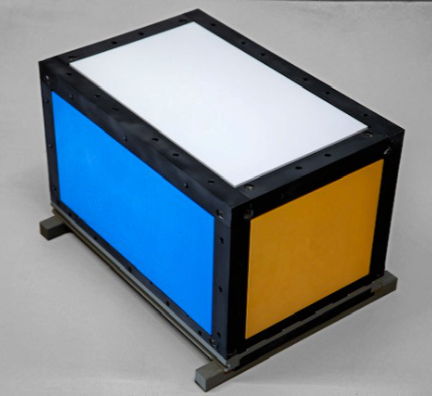
TDO-2 is the multi-manifest small satellite vehicle flying with the AEHF-6 mission. TDO-2 supports space domain awareness through optical calibration and satellite laser ranging.

Photo is courtesy of SMC.

TDO-2, the multi-manifest smallsat vehicle flying with the AEHF-6 mission, is carrying multiple U.S. Government payloads that will provide optical calibration capabilities that will support space domain awareness.

The Mission of TDO-2 is to support space domain awareness through optical calibration and satellite laser ranging. This capability will assist the nation’s warfighters in performing their critical missions. TDO-2 was manufactured by Georgia Institute of Technology and sponsored by Air Force Research Laboratory (AFRL).

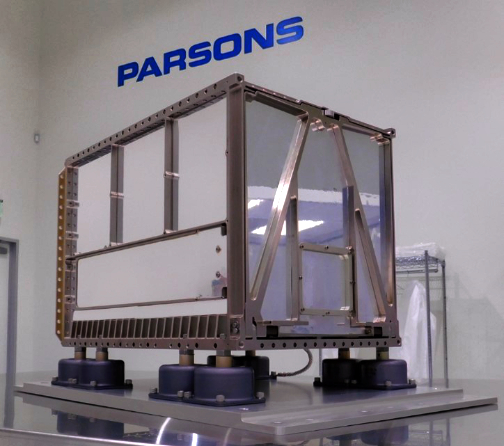
EZ-2 is integrated on the aft-end of the Centaur on the Atlas V 551 launch vehicle where it will deploy the TDO-2 multi-manifest satellite vehicle approximately 31 minutes after launch.

TDO-2 will deploy after Main Engine Cut Off (MECO) 2 and prior to the anchor AEHF satellite, which is only the second time this event has occurred during a National Security Space Launch mission. Previously, a hosted payload was deployed prior to AEHF-5 successfully separating.


EZ-2 is integrated on the aft-end of the Centaur on the Atlas V 551 launch vehicle where it will deploy the TDO-2 Multi-manifest satellite vehicle approximately 31 minutes after AEHF-6 launches.

Photo is courtesy of SMC.

The MMO is increasing space warfighting domain flexibility by enabling the “swap-out” capability of multi-manifest satellites late in the integration process.

The AEHF-6 mission will demonstrate this “swap-out” capability by having two qualified and compatible multi-manifest satellites vehicles ready to be substituted, if needed, as late as one month prior to launch.

Considering the historical integration timeline for traditional satellites is approximately 24 months, this is just another example of how SMC is driving integration flexibility and responsiveness into the National Security Space planning process and rapidly delivering capability to the warfighter.

Part of SMC’s Launch Enterprise, the MMO is blazing the way for innovation in the space warfighting domain and continuing the SMC tradition of innovation in space.

Filed Under: News

University of Glasgow GU Orbit Team Signs Smallsat Mission Agreement with Responsive Access

March 11, 2020 by editorial

Scotland’s first student-led cubesat project made a critical step toward reaching space this week, when the University of Glasgow’s GU Orbit team signed an agreement with launch brokerage firm Responsive Access to finalize their ground-breaking mission plans.

GU Orbit is a multi-disciplinary, student-led society with the objective of developing their own satellite technology to encourage students into the world of space systems and to enable researchers to play an active role in the growing UK space industry. Glasgow already produces more satellites than any other city in Europe, with companies such as Spire and Clyde Space placing the city at the forefront of the European sector.

With Minister Ivan McKee last year announcing that the Scottish space sector could be worth as much as £4 billion by 2030, the work being done around space technology and data by Universities such as Glasgow, Strathclyde and Edinburgh, will play an important part in equipping students with the transferable skills to provide the nation with the next generation of aerospace engineers and rocket scientists.

Responsive Access, based at Edinburgh’s Royal Observatory building, is a participant in the ESA BIC UK, a prestigious business incubation program funded by the European Space Agency and the UK Science and Technology Facilities Council. The company aims to simplify access to space for cubesats and to play a critical role in supporting the vibrant satellite production industry by handling their customers’ mission management planning, essentially acting as a “one stop shop” to alleviate challenges around logistics, testing, insurance, and selecting the most suitable rocket to carry each payload into orbit.

Responsive Access’ Chief Executive, Andrew Paliwoda, stated that the organization is pleased to have signed an agreement with GU Orbit and the team has already started the process of identifying a suitable launch opportunity for their cubesat through one of the many available launch vehicle partners.
     He added, “It’s been an exciting few months for us, with financial backing for our project coming from the European Space Agency, Heathrow Airport, and the Department for International Trade, while our team has also had the opportunity to visit the facilities of potential rocket partners, such as Virgin Orbit and Relativity Space in California, as well as launch vehicle developers here in Scotland. For us, the key to success is to match our satellite customers with launch opportunities that best align with their needs.”

Responsive Access Ltd. aims to simplify access to space through the use of innovative software and key partner relationships that provide a one-stop-shop for the launch of CubeSats and other small payloads into orbit.

While the search for a suitable rocket gets underway, GU Orbit are focusing on the technical development of their satellite, which is set to become the first ever to be fully built by a Scottish university. The University of Glasgow’s satellite could be set for launch by as early as next year, creating the possibility for it to be one of the first payloads to reach space from a developing UK spaceport.

GU Orbit’s President, Philip Voudouris, explained that thanks to the tremendous effort from the team members, significant progress on the cubesat, Astraeus-01, has been made, finally bringing ideas and ambitions to life as prototypes are manufactured and tested. The University of Glasgow has a strong reputation regarding its involvement in space technology and having opened its first space lab just last year, it has shown that it is prepared to push the boundaries of human presence in space. With Responsive Access helping to plan the mission ahead and selecting a suitable launch vehicle for Astraeus-01, the company is now one large step closer to seeing this satellite reach orbit and subsequently opening an exciting new frontier for students and researchers with a passion in space.


Filed Under: News

Ground Segment Collaboration MOU Agreement Between GomSpace and RBC Signals

March 10, 2020 by editorial

RBC Signals and GomSpace have agreed to an MoU — this technology agreement will ensure the integration of these companies’ respective solutions.

The MoU includes:

  • GomSpace will continue to support future versions of RBC Signals through its “Mega-Constellation Operations Platform”, which will be available for customers through GomSpace’s “operations-as-a-service” offering.
  • RBC Signals will support current and future versions of GomSpace communication systems.
  • GomSpace and RBC Signals will ensure future compatibility and service availability by coordinating updates to APIs, firmware and hardware releases. The collaboration is non-exclusive and allows customers to choose from compatible complementary services that best fit their mission needs.


Niels Buus, CEO of GomSpace, said the company continues to extend the integration with commercially available ground station networks that now includes RBC Signals. With this collaboration, GomSpace will extend the operational capabilities of the firm’s Operations Service for the present and future GomSpace communication systems and increase the ground station coverage and availability for GomSpace customers through RBC Signals’ network.

Christopher Richins, Founder and CEO of RBC Signals, stated that the firm is excited to collaborate with GomSpace. his agreement will enhance the firm’s offerings and bring more opportunities to both companies by bringing more comprehensive customer solutions to the market.

Filed Under: News

Kleos to Target Environmental Challenges in Brazil

March 10, 2020 by editorial

Kleos Space S.A. (ASX: KSS, Frankfurt: KS1) has announced that the Brazilian Government agency Agência Nacional do Petróleo, Gás Natural e Biocombustíveis – ANP will be evaluating Kleos data at no cost for three months, starting at the time the relevant data set is made available, after which the cost for continuation is subject to final license negotiation (Pre-Order).

The need for an integrated Earth Observation (EO) system to monitor both the continental and offshore activities of the oil & gas industry is also what brought Mr Pedroso to ANP where he is tasked with the deployment of the MultiSAR project. This is an initiative of the Brazilian Government’s Ministry of Mining & Energy.


Artistic rendition of the Kleos Space Scouting Mission on-orbit. Image is courtesy of the company.

The Ministry is tasked with the set-up of facilities to receive and process large quantities of SAR imagery supplied by the worlds’ main providers of such data in order to handle multiple applications for the benefit of the oil & gas industry. This is also a reason why ANP is particularly interested in evaluating the data from Kleos as part of their post-launch beta testing operations.

Where the cost of not having such an integrated monitoring system became very clear in recent weeks considering the enormous efforts that had to be made by the government at a very high cost to try to find the culprits of the recent pollution and this demonstrates the relevance for a major Oil & Gas producer such as Brazil to make this kind of investment.

Mr. Enrico Pedroso of the ANP, who has 25 years of industry experience and is the Professor of Applied Remote Sensing at the Geology Faculty of Rio State University UERJ, spoke to the need for ANP to access Geolocated RF Data from Kleos Space and noted that what is needed is a variety of Earth Observation (EO) datasets, such as optical and SAR imagery, AIS data, meteorological and oceanographic data, etc., operating in an integrated manner, which is where the kind of data Kleos will soon be delivering will be useful to identify potentially illegal shipping activities and pin-point locations which should be investigated with the other earth observation data sets available. The fact that Brazil does not have an active high-performance EO system to monitor the ocean has played a major factor in preventing the government from finding the culprit(s) who cause pollution.
     He continued, adding that the ANPs’ Superintendence for Operational Security and Environment (SSM), is responsible for the monitoring of the environment in Brazil, especially as far as accidents and pollution are concerned. Recently, there was a very serious incident off the North Atlantic coast of Brazil when major quantities of oil where found in the ocean and along the beautiful beaches of North Eastern Brazil, most likely spilled by a single, polluting ship. During recent weeks, and as part of the Brazilian Contingency Planning activities, ANP participated with the Brazilian Navy and IBAMA (the Fauna & Flora protection agency of the Ministry of the Environment) in the search of the culprit(s).
     The information from radio frequency activity on board ships navigating in Brazilian waters from Kleos Space would have been very useful had it been available at the time of the North-eastern Brazil events because it is very likely that the ship(s) that caused the pollution knew what they were doing and were therefore very careful to avoid scrutiny by switching off their AIS transmitters. Kleos’ data would cause the Government’s monitoring system to be much more efficient.

Speaking about the Pre-Order by a Brazilian Government agency, Kleos CEO, Andy Bowyer, said that this is Kleos first entrance into a South American Government agency. Kleos data will be instrumental in the fight against environmental crimes, explicitly demonstrating the case for Kleos data. The company’s satellites are now on site in India ready for the final stages of launcher integration and Kleos Space looks forward to working with global customers soon on their very real on-going challenges.

Filed Under: News

Japan’s Science Fiction Anime Satellite Promoting Tokyo Olympics Launched

March 10, 2020 by editorial

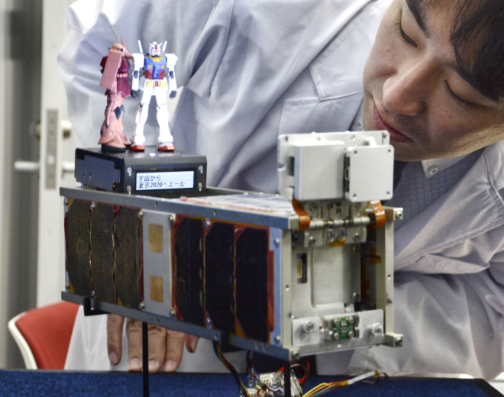
A smallsat carrying model robots from the popular Japanese science fiction anime “Mobile Suit Gundam” was successfully launched into space to promote this summer’s Tokyo Olympics and Paralympics, the games organizers stated on Saturday.

The “G-Satellite,” which contains two figures from the animation series, was launched to the International Space Station on Friday aboard a SpaceX/Dragon cargo flight from Cape Canaveral, Florida, and will reach the space station on March 9 at 8:00 p.m., Japan time.

The satellite will be released into its own slot in the latter part of April and will orbit the Earth during the Tokyo Olympics and Paralympics, the first time a satellite will be used to celebrate the games. According to organizers, the satellite with an electronic bulletin board and seven, small cameras will send back images of the model robots and messages displayed in English, French and Japanese.

The initiative is part of the Tokyo 2020 One Team Project launched in collaboration with the University of Tokyo and the Japan Aerospace Exploration Agency (JAXA).

The space station will also play a part in the Olympic and Paralympic torch relays, when Japanese astronauts Soichi Noguchi and Akihiko Hoshide send messages to torchbearers from orbit.

Article source: Kyodo News

Filed Under: News

Three Retired USAF Generals Join PredaSAR’s Board

March 10, 2020 by editorial

PredaSAR Corporation (“PredaSAR” or “the Company”) is building and will operate, what the company states, will be the world’s largest and most advanced commercially operated Synthetic Aperture Radar (SAR) satellite constellation and the firm has announced the appointment of three, retired, United States Air Force generals: General William Shelton, Lieutenant General Richard Newton and Major General Douglas Raaberg, effective immediately.

Marc Bell, PredaSAR Chairman and Co-Founder, stated the company is thrilled to welcome all three generals to the Board. With their combined legacies of trusted and strong leadership, and their combined century of experience with the United States Air Force, they will no doubt deliver tremendous knowledge, industry insight, and the ability to leverage many new and exciting opportunities within the aerospace sector.


William Shelton

General William Shelton, USAF (Ret.) General William Shelton, USAF (Ret.), was commissioned in 1976 as a graduate of the U.S. Air Force Academy. General Shelton’s USAF career heavily involved space, culminating as the Commander of the USAF Space Command, where he ensured mission-ready space and cyberspace forces and capabilities for NORAD, U.S. STRATCOM and other global commands. He also oversaw Air Force network operations, managed a global network of satellite command and control, communications, missile warning and space launch facilities, as well as overseeing space system development and acquisition.
     He is currently an independent consultant and a Member of the Board of Directors for Airbus United States Space & Defense Inc, Colorado Thirty Group, and Voyager Space Holdings. Additional information on General Shelton’s distinguished military background is available at this direct link…


Richard Newton

Lieutenant General Richard Newton, USAF (Ret.) Joining as Vice Chair of the Board, Lieutenant General Richard Newton, USAF (Ret.), was commissioned in 1978 as a graduate of the U.S. Air Force Academy. General Newton’s career spanned a board range of assignments, ultimately retiring as the Assistant Vice Chief of Staff and Director for the Air Staff at the U.S. Air Force Headquarters.
     He is currently the Managing Partner of Pioneer Partnership Development Group, a Director with USAA Mutual Fund Trust and Victory Capital Management and serves on the Board of Strategic Advisors for Israel Aerospace Industries, North America. Additional information on General Newton’s distinguished military background is available at this direct link…


Douglas Raaberg

Major General Douglas Raaberg, USAF (Ret.) Major General Douglas Raaberg, USAF (Ret.), was commissioned in 1978 as an Honor Graduate from the U.S. Air Force Academy. He is Executive Vice President of the Air Force Association, providing strategic direction to the premier professional military and aerospace education in the nation. General Raaberg is an accomplished business executive and defense leader with a proven record of transforming vision into strategy to deliver innovative results. He led the most advanced air, space and cyber operations in support of United States, NATO and other international forces in Iraq, Afghanistan and the Horn of Africa. His general officer assignments included Chief Operating Officer of Air and Space Operations for Air Combat Command. Additionally, he has extensive experience in international military affairs orchestrating regional operations as the Deputy Director of Operations for U.S. Central Command.
     In, 2010, General Raaberg joined Northrop Grumman to run its $10B U.S. Air Force business development efforts for the Aerospace sector. In his most recent international position as Chief Executive for Northrop Grumman in the United Arab Emirates, he managed a new multi-national office that integrated a $500M portfolio of four corporate sectors into a country-focused effort. General Raaberg is currently the CEO of DLR Solutions, LLC, which provides strategic insights to international and domestic enterprises. He is a Falcon Foundation Trustee and most recently selected to the prestigious Lead Virginia leadership program. Additional information on General Raaberg’s distinguished military background is available at this direct link…

“Speaking on behalf of all three of us, we are proud and excited to be associated with PredaSAR, and to help guide the company going forward,” General Newton said. “PredaSAR will address an ever-increasing need for 24/7 actionable, Earth Observation data, to government and commercial customers. To do so, PredaSAR has been carefully and strategically developing the best of the best commercial SAR satellite system, along with retaining the best and most trusted talent.”

Filed Under: News

Rocket Lab to Launch Satellites for NASA, NRO and the University of New South Wales

March 10, 2020 by editorial

A new adventure for Rocket Lab’s next rideshare mission will enable university research into Earth’s magnetic field, support the testing of new smallsat communications architecture and demonstrate a streamlined, commercial approach for getting government small satellites into space.

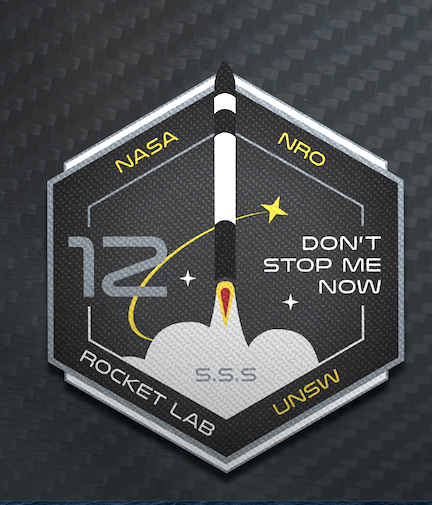
Rocket Lab has been given a nod of confidence from several agencies. Rocket Lab, a space technology company and major player in dedicated small satellite launches,  announced today that its next mission will deploy payloads for the National Aeronautics and Space Administration (NASA), the National Reconnaissance Office (NRO) and the University of New South Wales (UNSW) Canberra Space.

The launch will take place from Rocket Lab Launch Complex 1 on New Zealand’s Mähia Peninsula, with a 14-day launch window scheduled to commence from March 27, 2020 NZT. The mission will be Rocket Lab’s 12th Electron launch since the company began launches in May 2017. 

The rideshare mission will launch several small satellites, including the ANDESITE (Ad-Hoc Network Demonstration for Extended Satellite-Based Inquiry and Other Team Endeavors) satellite created by electrical and mechanical engineering students and professors at Boston University. The satellite will launch as part of NASA’s CubeSat Launch Initiative (CSLI) and will conduct groundbreaking scientific study into Earth’s magnetic field.

Once in space, the ANDESITE satellite will initiate measurements of the magnetosphere with onboard sensors, later releasing eight pico satellites carrying small magnetometer sensors to track electric currents flowing in and out of the atmosphere, a phenomenon also known as space weather. These variations in the electrical activity racing through space can have a big impact on our lives here on Earth, causing interruptions to things like radio communications and electrical systems. The ANDESITE satellite follows on from Rocket Lab’s first ELaNa (Educational Launch of Nanosatellites) launch for NASA, the ELaNa-19 mission, which launched a host of educational satellites to orbit on Electron in December 2018.  

The mission also carries three payloads designed, built and operated by the NRO. The mission was procured under the agency’s Rapid Acquisition of a Small Rocket (RASR) contract vehicle. RASR allows the NRO to explore new launch opportunities that provide a streamlined, commercial approach for getting small satellites into space, as well as provide those working in the small satellite community with timely and cost-effective access to space. This mission follows Rocket Lab’s first dedicated mission for the NRO, Birds of a Feather, which was launched on January 31, 2020 NZT from Rocket Lab Launch Complex 1.

The ANDESITE and NRO payloads will be joined on the mission by the M2 Pathfinder satellite, a collaboration between the University of New South Wales (UNSW) Canberra Space and the Australian Government. The M2 Pathfinder will test communications architecture and other technologies that will assist in informing the future space capabilities of Australia. The satellite will demonstrate the ability of an onboard software-based radio to operate and reconfigure while in orbit. 

Rocket Lab founder and chief executive, Peter Beck, says the mission is a great example of the kind of cutting-edge research and fast-paced innovation that small satellites are enabling. 

“It’s a privilege to have NASA and the NRO launch on Electron again, and we’re excited to welcome the University of New South Wales onto our manifest for the first time, too,” he says. “We created Electron to make getting to space easy for all, so it’s gratifying to be meeting the needs of national security payloads and student research projects on the same mission.”   

“We’re excited to be partnering with Rocket Lab on another mission under our RASR contract,” said Colonel Chad Davis, Director of NRO’s Office of Space Launch. “This latest mission is a great example of the collaborative nature of the space community and our goal as space partners to procure rideshare missions that not only meet our mission needs but provide opportunities for those working with smallsats to gain easy access to space.” 

NASA Launch Services Program (LSP) ELaNa Mission Lead, Scott Higginbotham, said, “Through the CSLI, NASA engages the next generation of space explorers. This initiative provides university teams like ANDESITE with real life, hands-on experience in conducting an actual space research mission in conjunction with NASA. The students grow as professionals and NASA benefits from the research. We are truly excited about this collaborative mission.”

“We’re very excited to be launching M2 Pathfinder with Rocket Lab who have been so very flexible in accommodating our spacecraft specific needs, let alone the ambitious nine month project timeframe,” said Andrin Tomaschett, Spacecraft Project Lead at UNSW Canberra. “The success of this spacecraft will unlock so much more, for our customers and for Australia, by feeding into the complex spacecraft projects and missions our team are currently working on.” 

Rocket Lab will not be carrying out any recovery testing on the Electron launch vehicle during this mission.

The mission has been named ‘Don’t Stop Me Now’ in recognition of Rocket Lab board member and avid Queen fan Scott Smith, who recently passed away. 

In Memoriam: Scott Smith

We are deeply saddened by the loss of Scott Smith, a Rocket Lab board member and dear friend to our team. Our thoughts are with his family and friends at this difficult time.

Scott joined Rocket Lab’s board in 2015, bringing a wealth of knowledge and experience from his time at Skybox, Iridium, and Digital Globe. Scott was a passionate, dedicated and kind leader who would go to great lengths to help others achieve things in space that would help everyone down here on Earth.

In losing Scott, we have lost one of the great ones. The Rocket Lab team is incredibly lucky to have known him. He left an indelible mark on the company in some of our most crucial years. We’re a better business and a better team for having known him. We are honored to have worked with one of the pioneering entrepreneurs of the space industry.


Filed Under: Featured, News

BridgeComm Selected by HySpecIQ as their Comms Partner

March 10, 2020 by editorial

BridgeComm, Inc. has been selected as the OWC solution provider for HySpecIQ‘s new LEO constellation.

These advanced satellites will provide high-resolution hyperspectral imaging that—when combined with HySpecIQ’s advanced analytics platform—will serve vital needs in myriad market verticals, including environmental intelligence, national security, natural resources, agriculture, insurance, and risk management.

BridgeComm is the first organization to commercialize OWC and begin development of a global network of optical ground stations designed to support complementary fixed and mobile terminals that provide high-bandwidth, high-security solutions for unique applications.

A wireless technology offering rapid point-to-point data transmission via beams of light that connect from one telescope to another using low-power, safe, infrared lasers in the terahertz spectrum, OWC holds tremendous potential to augment RF, fiber and mmWave technologies and extend the capabilities of the terrestrial fiber grid—particularly in hard-to-access environments and in areas where cell towers do not currently exist.

Barry Matsumori, CEO of BridgeComm, said this partnership is the latest example of BridgeComm’s global market leadership in providing fast, secure, enterprise-grade broadband services for high-growth applications. BridgeComm’s advanced design and end-to end service capability fulfill HySpecIQ’s needs for trusted technology and a supplier that is both innovative and reliable.

Bill Sullivan, Executive Chairman and Founder of HySpecIQ, noted that the company is developing a system that addresses a wide array of spectral applications with timely and accurate solutions. BridgeComm’s solution will allow the company to download large volumes of data from the constellation with low latency, in a reliable, secure manner which ensures data integrity. It’s these attributes, coupled with time to market and cost considerations, that clearly led HySpecIQ to select BridgeComm as the firm’s OWC partner.


Filed Under: News

  • « Go to Previous Page
  • Page 1
  • Interim pages omitted …
  • Page 315
  • Page 316
  • Page 317
  • Page 318
  • Page 319
  • Interim pages omitted …
  • Page 339
  • Go to Next Page »

Primary Sidebar

WEEKLY NEWSLETTER

Archives

  • March 2026
  • February 2026
  • January 2026
  • December 2025
  • November 2025
  • October 2025
  • September 2025
  • August 2025
  • July 2025
  • June 2025
  • May 2025
  • April 2025
  • March 2025
  • February 2025
  • January 2025
  • December 2024
  • November 2024
  • October 2024
  • September 2024
  • August 2024
  • July 2024
  • June 2024
  • May 2024
  • April 2024
  • March 2024
  • February 2024
  • January 2024
  • December 2023
  • November 2023
  • October 2023
  • September 2023
  • August 2023
  • July 2023
  • June 2023
  • May 2023
  • April 2023
  • March 2023
  • February 2023
  • January 2023
  • December 2022
  • November 2022
  • October 2022
  • September 2022
  • August 2022
  • July 2022
  • June 2022
  • May 2022
  • April 2022
  • March 2022
  • February 2022
  • January 2022
  • December 2021
  • November 2021
  • October 2021
  • September 2021
  • August 2021
  • July 2021
  • June 2021
  • May 2021
  • April 2021
  • March 2021
  • February 2021
  • January 2021
  • December 2020
  • November 2020
  • October 2020
  • September 2020
  • August 2020
  • July 2020
  • June 2020
  • May 2020
  • April 2020
  • March 2020
  • February 2020
  • January 2020
  • December 2019
  • November 2019
  • October 2019

© 2019–2026 SatNews

Insert/edit link

Enter the destination URL

Or link to existing content

    No search term specified. Showing recent items. Search or use up and down arrow keys to select an item.
      x
      Sign Up Now!

      Enjoy a free weekly newsletter with recent headlines from the global SmallSat industry.

      Invalid email address
      We promise not to spam you. You can unsubscribe at any time.
      Thanks for subscribing! You will now receive weekly SmallSat News updates.
      We love our advertisers.
      And you will too!

      Please disable Ad Blocker to continue... We promise to keep it unobtrusive.
      We promise not to spam you. You can unsubscribe at any time.
      Invalid email address
      Thanks for subscribing!