• Skip to main content
  • Skip to primary sidebar
  • Home
  • News
  • Featured
  • More News ⌄
    • SatNews
    • SatMagazine
    • MilSatMagazine
  • Events ⌄
    • MilSat Symposium
    • SmallSat Symposium
    • Satellite Innovation
  • Contacts
  • SUBSCRIPTION

SmallSat News

You are here: Home / Archives for News

News

Rocket Lab Postpones Their Next Mission Launch

March 25, 2020 by editorial

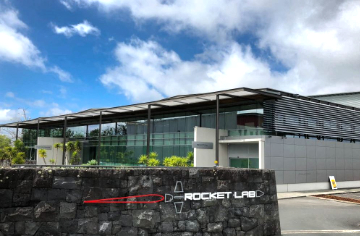
Rocket Lab has postponed the launch of its next mission in response to the COVID-19 situation. The company has posted the following…

In response to the evolving COVID-19 situation, we have paused launch preparations for our next mission to protect the health and safety of Rocket Lab team members, our families, and the wider community.

The mission was scheduled to lift off from Launch Complex 1 in New Zealand on 30 March UTC. Launch preparations have been paused, however, following the New Zealand Government’s announcement on 23 March NZDT to implement the Level 4 COVID-19 response which requires most businesses to close and instructs people to stay at home. We commend the government for taking this drastic but necessary step to limit the spread of COVID-19.

We have the full support of our customers in pausing operations and we are grateful for their understanding in these challenging times. We are working with the government, health officials, and our customers to determine when launch operations can resume. The launch vehicle and ground systems will remain in a state of readiness for launch as the evolving situation allows it. The majority of our team is working from home with the exception of a few essential personnel who are monitoring and maintaining critical systems.

In recent years, we have placed an increased emphasis on delivering responsive launch capability for our customers, which means having launch vehicles and pads ready for rapid call-up launch capability. As a result of this approach, we’re fortunate to have enough launch vehicles ready that we can effectively manage a pause in production and still have vehicles available for launch as soon as conditions allow.

In the days, weeks, and months to come, we’ll be following the advice of the government and health authorities to protect our teams in the United States and New Zealand.

Our deepest thanks go to the medical professionals, scientists and researchers, supermarket workers, and all those providing essential services in these trying times. We are grateful for all that you do.

Be safe and look out for each other.

Filed Under: Featured, News

Smallsat Launcher Suffers an Anomaly in Alaska

March 24, 2020 by editorial

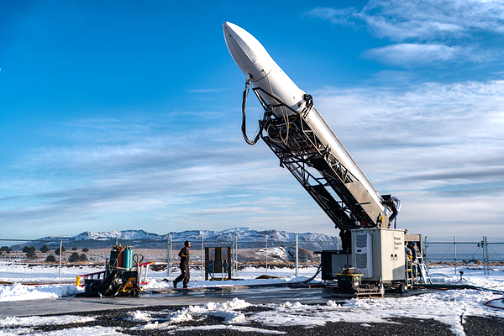
A smallsat launcher built by Astra “experienced an anomaly” Monday, March 23, on a launch pad at Kodiak Island, Alaska, forcing the cancellation of a planned orbital launch attempt this week, according to the company’s co-founder and CEO and reported at the KC4MCQ infosite.


An Astra rocket being prepared for launch. Photo is courtesy of the company.

The incident at the Pacific Spaceport Complex on Kodiak Island occurred during a pre-launch countdown dress rehearsal, and was first reported by KMXT, a local public radio station.

“I can confirm that the vehicle experienced an anomaly after an otherwise very successful day of testing in preparation for the launch,” said Chris Kemp, Astra’s co-founder and CEO, in an emailed statement late Monday. “Fortunately, our hardware was the only thing harmed, and the team is already working hard to understand the root cause so we can improve the design.”

Officials from Astra and the Pacific Spaceport Complex, which is run by the Alaska Aerospace Corp., said no one was injured during the mishap. Astra’s rocket was damaged, although the extent of the damage was unclear.

Astra was planning a launch attempt as soon as Tuesday to place a small payload into LEO. Astra’s first orbital launcher, named Rocket 3 or Rocket 3.0, is designed to carry up to 55 pounds (25 kilograms) of payload into a SSO polar orbit. Those plans were canceled after Monday’s anomaly, Kemp said.

“Unfortunately, we will not be attempting a launch this week,” he said. “We intend to wait until conditions with coronavirus improve before making another attempt.”

“I can confirm we had an anomaly on the launch pad,” said Mark Lester, CEO of Alaska Aerospace Corp., an agency of the state of Alaska. “We are executing our emergency checklist. We request everyone stay clear of the area to allow our crew to address the situation,” he told KMXT.

To read the entire article at the KC4MCQ infosite, please access this direct infolink…

Filed Under: News

RUAG Space Dispenses and Insulates OneWeb’s Latest Covey of Satellites

March 24, 2020 by editorial

When 34 Airbus OneWeb Satellites (OneWeb) launched onboard a Soyuz rocket from the Baikonur Cosmodrome, Kazakhstan, on March 21, RUAG Space had critical mission products onboard that were customized for the mega satellite constellation.

This launch was the second time that OneWeb launched 34 of its satellites.

In February of 2020, the first 34 satellites had been launched and now, on Saturday, March 21, the next 34 satellites. In February 2019, OneWeb successfully launched the first six broadband satellites.

As a key OneWeb supplier, RUAG Space built the satellite dispenser, which functions as an interface between the Soyuz rocket and satellites. The dispenser is tailored to the need of a constellation like OneWeb, being able to deposit up to 36 satellites safely into space.

The RUAG built OneWeb dispenser includes a conical top structure, a “hat”, that has the capability to host up to four additional OneWeb satellites per mission. RUAG has developed a unique and cost effective solution that enables OneWeb to maximize the number of satellites per Soyuz launch. The top structure was developed within the contract with Arianespace for the OneWeb program.

RUAG dispensers, produced in Sweden, are especially suitable for spacecraft constellations such as OneWeb, where a high number of spacecraft need to be placed in orbit within a short time frame. At its lower interface the dispenser structure is bolted to the launch vehicle upper stage. Each satellite is attached to the dispenser in separation nodes. The RUAG dispenser provides a stiff connection in each node during launch, a safe release and an accurate separation provided by the four separation nuts and spring units.

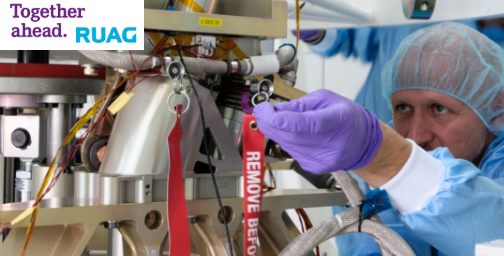
Structures for satellites RUAG Space manufactures the satellite panels used by OneWeb Satellites in Titusville, Florida. The OneWeb structures (satellite back-bone) are manufactured using the Automated Potting Process (APM). The APM process—developed by RUAG Space—is a revolutionary production method that uses a pick and place machine to rapidly position special inserts filled with adhesive into the satellite structure’s sandwich panels.

In Austria, RUAG Space produced the multi-layer thermal insulation which protects the OneWeb satellites against the cold and heat in space from approx. minus 150°C to plus 150°C (-238 degrees F to 302 degrees F). The insulation consists of several layers of metal-evaporated polyimide film.

RUAG Space in Austria also built handle equipment and containers that OneWeb uses to transport the assembled satellites to the different launch sites as well as the corresponding handling at the launch sites. The high-tech, custom satellite containers are used to transport the satellites to the worldwide rocket launch centers. The containers are equipped with a specifically designed damping systems and climate-control.

RUAG Space EVP Peter Guggenbach said the company’s dispenser is super-light and includes state-of the art technology to safely place the satellites on orbit. With RUAG products, the company is contributing to this important project, which will enhance communication around the world.

A video of the RUAG Space Dispenser is available for viewing at this direct link…

Filed Under: News

A Fresh Grounding for Smallsats via Australia’s Nova IGS Network

March 23, 2020 by editorial

Global defence company Nova Group is maintaining its projections of more than $200 million revenue this financial year with longer-term goals to continue expanding the company’s global reach.

A newer focus on space is continuing to diversify the portfolio of the South Australian headquartered company that has invested more than $20 million on eight acquisitions across the globe to cement its footprint.


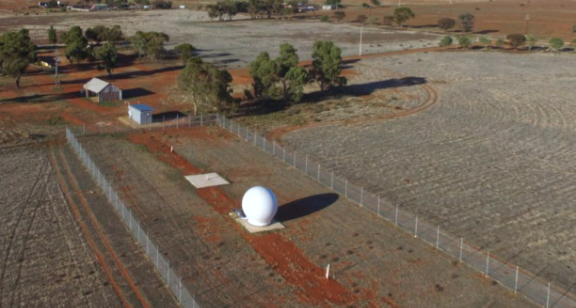
The Nova IGS Network is based on a 21 hectare site in Peterborough, South Australia.

In South Australia, the company’s new Nova IGS Network is providing space ground connectivity for smallsat operators, with the site now being used by international clients including Tyvak USA and RBC USA. Nova is also in talks with an Italian-based space company wanting to expand its presence in Australia.

Based on a 21 hectare site in Peterborough in South Australia’s mid-north, the site is used to track LEO satellites through customer’s own terminals and Nova has plans to attract further European companies over upcoming years.

A spokesperson for Nova said the company is also planning to use the site as a ground station test bed for emerging Space 2.0 technologies and to support future defence projects. Peterborough provides the vital ground segment element in order to allow satellite operators to downlink/download their data.

Nova Group is marking 20 years in business, with Nova Systems founded by Jim Whalley and Peter Nikoloff and originally offering flight-testing services in South Australia’s capital city of Adelaide. The company has since grown to having 600 employees working on projects around the world including with the Australian Defence Force, United Kingdom Ministry of Defence, Royal Norwegian Air Force and the Republic of Singapore Air Force.

Nova was recently awarded one of four industry leads in the Major Service Provider consortium providing integrated support contracts to the Australia Defence Force over the next 10 years.

The company has taken early steps globally to adopt new practices around COVID-19 in relation to infection control and is proactively undertaking business modelling to assess its potential financial impact.

At this stage, the company still expects to grow in the upcoming financial year, with work continuing on the offshore patrol vessels in Australia and Nova Systems recently winning a $25.9 million Norwegian defence contract to support a maritime helicopter program.

The Adelaide headquartered company first opened an office in the United Kingdom during 2012 before winning its first work within Norway the following year. Its latest contract marks a significant expansion for Nova Norway and a doubling in the size of it Norwegian operations with work already underway.

Nova has also cemented co-founder partnerships this year with the SmartSat Co-operative Research Centre in South Australia and Western Australian based Remote operations for Space and Earth. Plans to establish the now operating SmartSat CRC were led by The University of South Australia and Nova Systems.

Based next to the Australian Space Agency at Lot Fourteen in Adelaide, the SmartSat CRC now has 74 participants contributing $167 million adding to the federal government’s $55 million spend with a focus on advanced SATCOM, connectivity and Earth Observation.

Article by author Belinda Willis, The Lead

Filed Under: News

Forrester Reports: Layoffs @ OneWeb + NigComSat Remains Unprofitable

March 23, 2020 by editorial


Chris Forrester

OneWeb has reportedly laid off 10 percent of its workforce due to reported – but unconfirmed – company plans that include Chapter 11 bankruptcy, reports journalist Chris Forrester, filing at the Advanced Television infosite.

The news comes as OneWeb reported the successful orbiting of 34 satellites from the Baikonur cosmodrome in Kazakhstan on March 21st on a Soyuz rocket organised by Arianespace. The success means that OneWeb now has 74 craft in LEO.

Referring to the layoffs, a company statement stated, “The OneWeb launch is going ahead on Saturday with more launches planned later in the year; however, like others, we are impacted by the global health and economic crisis and we need to dynamically adjust our workforce. Unfortunately, we think it is inevitable that there will be delays to our launch schedule and satellite manufacturing due to increasing travel restrictions and the disruption of supply chains globally. Therefore, we made the difficult decision to eliminate some roles and responsibilities as we work to focus on core operations. We are sorry to have had to take this step and we’re doing everything we can to support those affected.”

There are at least four key OneWeb locations. Officially the company is domiciled in West London, although it also has management offices in Mountain View, California, and near Washington DC (in McLean Virginia). The firm has a satellite manufacturing joint-venture with Airbus in Florida, near the Kennedy Space Center. Staff at any of these locations might be affected.

After Saturday’s launch, OneWeb focused on the positive news. In a statement, CEO Adrian Steckel said: “In these unprecedented times following the global outbreak of Covid-19, people around the world find themselves trying to continue their lives and work online. We see the need for OneWeb, greater now more than ever before.
     “High-quality connectivity is the lifeline to enabling people to work, continue their education, stay up to date on important healthcare information and stay meaningfully connected to one another. The crisis has demonstrated the imperative need for connectivity everywhere and has exposed urgent shortcomings in many organizations’ connectivity capabilities. Our satellite network is poised to fill in many of these critical gaps in the global communications infrastructure.


Chris is also reporting at the Advanced Television infosite that a report from the International Center for Investigative Reporting (ICIR), which focuses on Nigeria’s troubled satellite operator NigComSat, states the organization is “still not profitable 14 years after launch.”


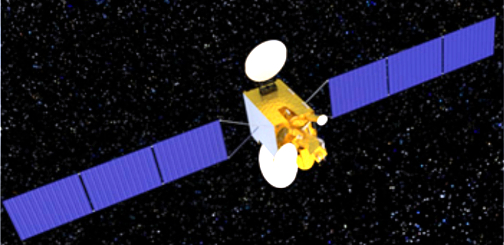
Artistic rendition of Nigeria’s NigComSat-1R.

ICIR stated that NigComSat’s first working satellite (NigComSat-1R), that was launched in 2011, has barely six years of life remaining. Meanwhile, the organization has – since 2009 – received funding totaling more than $117 million (at current rates), although in Nigerian Naira it is N43.5 billion, of which just N13 billion was spent on capital items and N26.2 billion on staff salaries.

ICIR adds that during the period 2011-2014, NigComSat’s revenues from satellite operations were just 3 percent of its expenses during the period.

The recently appointed (August 2019) Minister of Communications and Digital Economy in Nigeria, Isa Ali Pantami, admitted the business was not “very viable.” In December of 2019, a new Board and executive directors were appointed.

An earlier Chinese-built satellite was launched in 2008 which cost $340 million (about Naira 40 billion at the time) but failed in orbit.

ICIR said, “NigComSat’s) wage bill, which started as N747 million in 2009, has jumped to N2.6 billion. With 397 employees as of 2016 and a personnel cost of N2.3 billion that year, the Federal Government must have paid the workers an average of N5.8 million per annum (or N480,000 a month/$1300).”

NigComSat is owned by Nigeria’s government. In 2018 it was announced that two new satellites would be purchased from China at an expected cost of $550 million.

A recent report from Nigeria’s parliament accused NigComSat’s senior management of incompetence. Chairman of Nigeria’s House Committee on Finance, James Falake, told NigComSat’s Managing Director, Abimbola Alale, in February, that, “We have to rescue this agency from you. In fact, if I had my way, I would recommend your [dismissal].”

Filed Under: News

OneWeb’s Third Launch of 34 Satellites to Occur Today from Baikonur via Arianespace

March 21, 2020 by editorial

OneWeb’s next launch is scheduled to occur today, Saturday, March 21, at 17:06 (GMT) / 1:06 PM (EDT) / 22:06 (local time) from the Baikonur Cosmodrome in Kazakhstan.

This will be the second launch for OneWeb in 2020 and these additional 34 satellites will bring the constellation total to 74. The satellites are built by OneWeb Satellites, a joint venture between OneWeb and Airbus who are engaged in a new, high-volume, manufacturing process that can build two satellites per day.

Arianespace will launch OneWeb’s satellites into a near polar orbit of 450 kilometers, after which they will be raised to their final orbit of 1,200 kilometers.

OneWeb’s first customer demos are scheduled for the end of 2020 and availability of commercial services, for sectors such as maritime, aviation, government and enterprise, are scheduled for the end of 2021.

The theme for this launch commemorates the late Russian cosmonaut Alexei Leonov, who made history 55 years ago when he became the first person to exit a spacecraft and walk in Space. The OneWeb mission patch bears his name and celebrates his achievement.

OneWeb will be streaming the launch on Facebook and you can follow the launch on OneWeb social media channels: YouTube, Instagram, Twitter, Facebook.

For live transmission of the launch (with English commentary) go to: OneWeb on Facebook

Filed Under: News

OneWeb Considering Bankruptcy

March 20, 2020 by editorial

In a news story filed at the Bloomberg infosite written by Eliza Ronalds-Hannon, Gillian Tan and Lauren Coleman-Lochner, OneWeb, the satellite operator backed by SoftBank Group Corp., is mulling a possible bankruptcy filing to address a cash crunch as the firm grapples with high costs and stiff competition, according to people with knowledge of the preparations.

The company is considering seeking court protection even as it continues to review possible out-of-court alternatives, said the sources who asked not to be named discussing private company plans.

OneWeb would be among the first SoftBank-backed companies to file for bankruptcy. A spokeswoman for SoftBank, which is OneWeb’s largest investor, declined to comment.

A spokesperson for OneWeb declined to comment. To read the entire article, please access this direct infolink to the Bloomberg news site…

Filed Under: News

GEOINT 2020 Symposium and CubeSat Developers Workshop Postponed

March 20, 2020 by editorial

With deep regret , the USGIF and its Board of Directors have reported that the GEOINT 2020 Symposium will not take occur in Tampa, Florida, on April 26-29.

As reported, USGIF has been closely monitoring developing reports from the Federal Government, the Florida Government, Centers for Disease Control and Prevention, and World Health Organization concerning the COVID-19 outbreak.
     On March 9, the Governor of Florida issued Executive Order 20-52 declaring a state of emergency, and on March 13 the President of the United States declared a national emergency.
     On March 14, the Department of Defense imposed a 60-day travel restriction on military and defense civilian personnel.
     On the same date, the Office of Management and Budget also prohibited travel for other federal employees, unless it is mission critical.
     On March 15, the Centers for Disease Control and Prevention directed the cancellation or postponement of in-person events consisting of 50 or more for the next eight weeks.
     On March 17, Hillsborough County, which includes Tampa, issued an order limiting all public and private events and gatherings to 50 people or less.

USGIF regrets having to cancel GEOINT 2020, as the GEOINT Symposium annually brings networking, thought leadership, student interaction, business and educational opportunities to the entire geospatial intelligence, trade and academic community. The organization looks forward to the next time the event can be conducted. Until then, USGIF is dedicated to continuing to be a resource to the geospatial intelligence community and will explore virtual options to do so.

USGIF is working out processes for appropriate refunds and patience is requested as this is a huge undertaking with the organization’s registration and housing company and updates with details will be published when the procedures are set in place.

USGIF requests all pray for continued health and safety as well as an end to COVID-19. Please continue to stay engaged and involved in the geospatial intelligence community. Follow USGIF on Facebook, LinkedIn, and Twitter; Trajectory Magazine on Facebook, LinkedIn, and Twitter; and GEOINT Symposium on Facebook and Twitter.


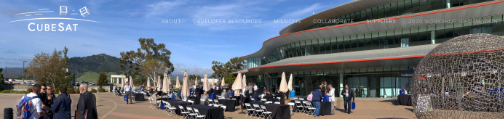
With a heavy heart, the 2020 CubeSat Developers Workshop that was to occur in San Luis Obispo, California, is being postponed.

With the current unfolding of COVID-19, the organization wishes to ensure the safety of the cubesat community and the world at large. Patience is requested as the best way to move forward is determined.

As circumstances change, additional information regarding Workshop will be offered via email and on the website. Please contact the Workshop Team with any questions you may have. Stay safe, wash your hands, practice social distancing, and take care of one another.

Filed Under: News

What’s in the Philippines’ New Planned Satellite Launches in 2020?

March 19, 2020 by editorial

Last month, the Philippines signaled plans to launch additional cube satellites later this year. While the development was expected and part of ongoing efforts, it nonetheless highlighted part of the Southeast Asian state’s outlook towards an aspect of its overall approach to space.


Credit: Presidential Communications Office of the Philippines

As I have observed before in these pages, the Philippines’ development of its space capabilities has been in the headlines in recent years, including collaboration with other countries as well as the setting up of the new space agency last year under President Rodrigo Duterte.

One aspect of this is the launching of smaller Philippine satellites. These include microsatellites such as Diwata-1 and Diwata-2 that can be used for capturing images for remote sensing, research, and data-gathering, as well as smaller cube satellites usually sent to low earth orbit and meant to provide initial hands-on experience in developing satellites, with a case in point being Maya 1 which was developed by Filipino students at the Kyushu Institute of Technology (Kyutech) in Japan and launched in 2018.

Last month, this aspect of the Philippines’ capabilities was in the spotlight again with an announcement of the launching of additional cube satellites. The Department of Science and Technology (DOST) said in February that it was looking to launch a few additional cube satellites in 2020.

The announcement of the expected launching of three cube satellites – Maya 2, Maya 3, Maya 4 – was disclosed in a media presentation on February 20 by DOST Secretary Fortunato dela Peña, per the Philippines News Agency (PNA) in a media report released March 11. Mara Mendoza, a member of the Space Science Proliferation through University Partnerships (Step-UP) project under which Maya cube satellites in question were developed, told PNA that the additional cube satellites, which weigh about one kilogram and measure 10 centimeters on each side, would help the Philippines achieve more “continuous coverage” of the country, with the satellites being able to last between six months to more than a year in orbit and  passing through to capture the Philippines for roughly twice a day for six to ten minutes.

To be sure, as noted above, the cube satellites have limited capabilities, with microsatellites such as the Diwata-1 and Diwata-2 having better cameras and more payloads. And some specifics remain undisclosed, including the exact launch date of the cube satellites which depends on various factors including coordination with partners as well as regulatory bodies. Nonetheless, the plans in the works nonetheless spotlighted one aspect of the Philippines’ capabilities in this regard.

By Prashanth Parameswaran, The Diplomat 

Filed Under: News

SpaceX Launches 60 Starlink Satellites

March 18, 2020 by editorial

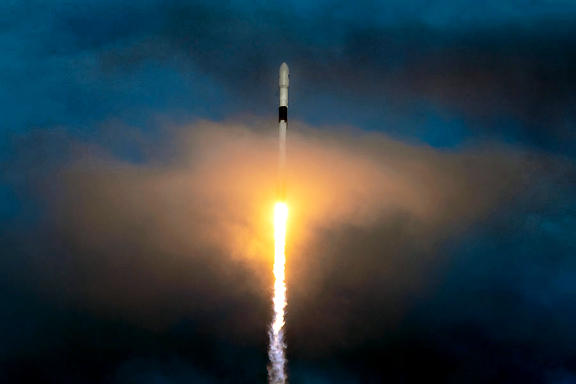
At 8:16 a.m. EDT, or 12:16 UTC, on Wednesday, March 18, SpaceX launched their sixth Starlink mission.

The company’s Falcon 9 launch vehicle lifted off from Launch Complex 39A (LC-39A) at NASA’s Kennedy Space Center in Florida.

Falcon 9’s first stage previously supported the Iridium-7 NEXT mission in July of 2018, the SAOCOM 1A mission in October of 2018, the Nusantara Satu mission in February of 2019, and the second launch of Starlink in November of 2019. Falcon 9’s fairing previously supported the first launch of Starlink in May 2019.


The 6th SpaceX Falcon launch of 60 Starlink satellites from NASA’s Kennedy Space Center in Florida.

The Starlink satellites deployed in an elliptical orbit approximately 15 minutes after liftoff. Prior to orbit raise, SpaceX engineers conducted data reviews to ensure all Starlink satellites are operating as intended. Once the checkouts are complete, the satellites will then use their onboard ion thrusters to move into their intended orbits and an operational altitude of 550 km.

Watch a video replay of this launch’s webcast at this direct link…

The recovery attempt of the launch vehicle’s first stage was not successful.

Filed Under: Featured, News

  • « Go to Previous Page
  • Page 1
  • Interim pages omitted …
  • Page 313
  • Page 314
  • Page 315
  • Page 316
  • Page 317
  • Interim pages omitted …
  • Page 339
  • Go to Next Page »

Primary Sidebar

WEEKLY NEWSLETTER

Archives

  • March 2026
  • February 2026
  • January 2026
  • December 2025
  • November 2025
  • October 2025
  • September 2025
  • August 2025
  • July 2025
  • June 2025
  • May 2025
  • April 2025
  • March 2025
  • February 2025
  • January 2025
  • December 2024
  • November 2024
  • October 2024
  • September 2024
  • August 2024
  • July 2024
  • June 2024
  • May 2024
  • April 2024
  • March 2024
  • February 2024
  • January 2024
  • December 2023
  • November 2023
  • October 2023
  • September 2023
  • August 2023
  • July 2023
  • June 2023
  • May 2023
  • April 2023
  • March 2023
  • February 2023
  • January 2023
  • December 2022
  • November 2022
  • October 2022
  • September 2022
  • August 2022
  • July 2022
  • June 2022
  • May 2022
  • April 2022
  • March 2022
  • February 2022
  • January 2022
  • December 2021
  • November 2021
  • October 2021
  • September 2021
  • August 2021
  • July 2021
  • June 2021
  • May 2021
  • April 2021
  • March 2021
  • February 2021
  • January 2021
  • December 2020
  • November 2020
  • October 2020
  • September 2020
  • August 2020
  • July 2020
  • June 2020
  • May 2020
  • April 2020
  • March 2020
  • February 2020
  • January 2020
  • December 2019
  • November 2019
  • October 2019

© 2019–2026 SatNews

Insert/edit link

Enter the destination URL

Or link to existing content

    No search term specified. Showing recent items. Search or use up and down arrow keys to select an item.
      x
      Sign Up Now!

      Enjoy a free weekly newsletter with recent headlines from the global SmallSat industry.

      Invalid email address
      We promise not to spam you. You can unsubscribe at any time.
      Thanks for subscribing! You will now receive weekly SmallSat News updates.
      We love our advertisers.
      And you will too!

      Please disable Ad Blocker to continue... We promise to keep it unobtrusive.
      We promise not to spam you. You can unsubscribe at any time.
      Invalid email address
      Thanks for subscribing!