
• Skip to main content
  • Skip to primary sidebar
  • Home
  • News
  • Featured
  • More News ⌄
    • SatNews
    • SatMagazine
    • MilSatMagazine
  • Events ⌄
    • MilSat Symposium
    • SmallSat Symposium
    • Satellite Innovation
  • Contacts
  • SUBSCRIPTION

SmallSat News

You are here: Home / Archives for News

News

VOX Space Receives $35 Million Task Order from the U.S. Space Force

April 10, 2020 by editorial

The U.S. Space Force’s Rocket Systems Launch Program (RSLP) Office at Kirtland Air Force Base, Albuquerque, New Mexico, part of the Space and Missile Systems Center’s Launch Enterprise, has awarded a $35 million task order to VOX Space, LLC, of El Segundo, California, for the Space Test Program-S28 (STP-S28) launch service — this is the first task order under the Orbital Services Program-4 (OSP-4) Indefinite Delivery/Indefinite Quantity (IDIQ) contract.
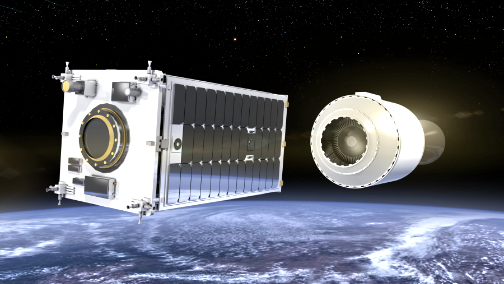
STP-S28 is a complex mission that will deliver a number of technology demonstrations to orbit, such as Space Domain Awareness and communications advancement, and inform future space system development.

VOX Space, a U.S.-incorporated, wholly-owned subsidiary of Virgin Orbit, LLC, will use three launches of the LauncherOne rocket to deliver 44 smallsats to LEO. The first launch is tentatively planned for October 2021.

Col. Rob Bongiovi, director of SMC’s Launch Enterprise at Los Angeles Air Force Base, aid the competitive award of the STP-S28 task order is a prime example of the flexible and responsive contracting processes the Launch Enterprise is using to deliver resilient and affordable space capabilities to our Nation. In today’s contested space domain, contracts must be flexible and responsive to meet the challenges facing the warfighter. The Small Launch and Targets Division accomplished the awarding of the STP-S28 task order in only five months using the OSP-4 contract.

The STP-S28 mission will provide orbital launch services for the Department of Defense’s Space Test Program. The DoD Space Test Program furthers the maturation of space-based warfighter technologies across the DoD enterprise by providing space access solutions for all research and development-related DoD auxiliary payloads on DoD, civil and commercial launches, and for all non-DoD auxiliary payloads seeking launch opportunities on DoD missions.

STP will provide payloads for STP-S28 via the DoD Space Experiments Review Board (SERB), as well as provide a number of International and Rideshare experiments. One such payload is QUEYSSAT, the #10 ranked SERB experiment and a cooperative effort between the U.S. Air Force Research Laboratory and the Canadian Department of National Defence. This experiment will demonstrate and quantify the potential to improve Earth-satellite quantum channel uplinks via adaptive optics, expand quantum network concepts and exploit this capability for defense applications.

QUEYSSAT is illustrative of the technology demonstrations capable via smallsats that will be launched with this mission, as well as demonstrates one of the nearly 20 different organizations STP will partner with. OSP-4 allows for the rapid acquisition of launch services to meet mission requirements enabling launch within 12-24 months from Task Order award on a competitive basis.

OSP-4 also allows for yearly on-ramps throughout the ordering period to ensure emerging, innovative launch providers who are nearing completion of development and are launch capable within one year are part of the vendor pool to preserve, stimulate or enhance the competition pool. The STP-S28 mission is the first of 20 missions projected over the OSP-4 nine-year ordering period.

Lt. Col. Ryan Rose, chief of the Small Launch and Targets Division at Kirtland Air Force Base, New Mexico, added that the organization is excited to partner with VOX Space and believe the STP-S28 mission will showcase industry innovation, international partnering and provide a gateway to work with some of the newest, leading-edge entrants for emerging small launch service providers. With these small launch contracts, the organization is able to take more risks and move quickly to produce high rewards and tactically responsive launch capabilities for combatant commanders. This program provides the perfect opportunity to highlight SMC’s ability to streamline procurement and mission execution, foster innovation, and preserve the best chance for mission success.

STP-S29 is the next mission task order Rose’s team is working. They are currently in the requirements development phase and project an award by the end of 2020.

The Space and Missile Systems Center is the U.S. Space Force’s center of excellence for acquiring and developing military space systems. SMC’s portfolio includes space launch, global positioning, military space vehicle communications, defense meteorological space vehicles, range systems, space vehicle control networks, space-based infrared systems, and space situational awareness capabilities.


Filed Under: News

Thales Alenia Space to Build Omnispace IoT Satellites

April 9, 2020 by editorial

Omnispace has selected Thales Alenia Space to develop the initial component of the company’s satellite-based Internet of Things (IoT) infrastructure — this will advance Omnispace’s vision to deliver a global hybrid communications network based on 3GPP standards.

Thales Alenia Space will design and build an initial set of two satellites for operation in non-geostationary orbit (NGSO).

These initial satellites will support 3GPP-defined (the 3rd Generation Partnership Project telecommunications specifications that unite standard development organizations) Narrow-Band IoT radio interface and will serve to advance the development and implementation of Omnispace’s global hybrid network.

This announcement marks a key milestone as Omnispace initiates the development of its new generation NGSO satellite constellation that will operate in the S-band.


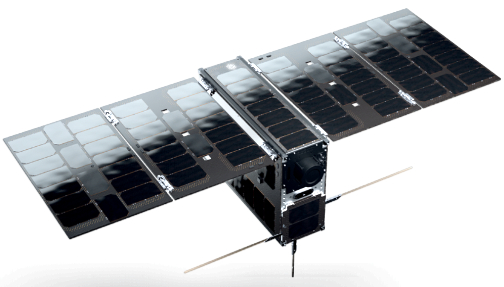
Artistic rendition of Omnispace’s satellites.

The development of this initial set of satellites will begin immediately and they are scheduled for launch in 2021. Omnispace and Thales Alenia Space, along-side other industry stakeholders, will contribute to the development of the 3GPP NTN friendly standard for global implementation.

Ram Viswanathan, President and CEO of Omnispace LLC, stated that Thales Alenia Space has a successful track record of developing NGSO satellite constellations and is well-qualified to support the company’s vision of delivering the world’s first global 5G non terrestrial network (NTN). This investment in the firm’s next-generation satellite infrastructure allows Omnispace to progress the development of the firm’s technology and demonstrate the company’s unique capabilities as the firm continues to work towards launching the company’s broader vision of a global hybrid network.

Hervé Derrey, CEO of Thales Alenia Space, added that the company is pleased to be working with Omnispace, which is taking a holistic approach to the design, development and deployment of their next-generation, IoT-based satellite network infrastructure. Omnispace’s selection of Thales Alenia Space reinforces the firm’s leadership position as a major industrial partner and the company’s expertise in space-based IoT communications and Thales Alenia Space looks forward to collaborating with Omnispace in delivering this innovative project.


Filed Under: News

Rocket Lab Successfully Completes an Electron Launch Vehicle Mid-Air Recovery Test

April 9, 2020 by editorial

Rocket Lab has successfully completed a mid-air recovery test – a maneuver that involves snagging an Electron test stage from the sky with a helicopter.

This successful test is a major step forward in Rocket Lab’s plans to reuse the first stage of their Electron launch vehicle for multiple missions. The test occurred in early March, before ‘Safer at Home’ orders were issued and before New Zealand entered Alert Level 4 in response to the COVID-19 situation.

To watch this test, please access this direct link to the YouTube video…


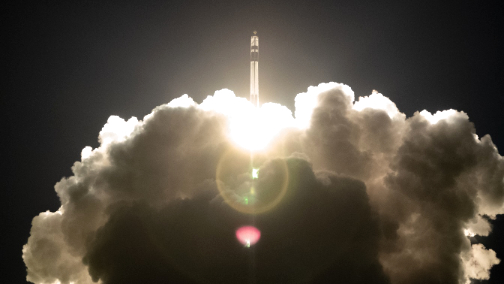
An Electron rocket liftoff. Photo is courtesy of RocketLab.

The test was conducted by dropping an Electron first stage test article from a helicopter over open ocean in New Zealand. A parachute was then deployed from the stage, before a second helicopter closed in on the descending stage and captured it mid-air at around 5,000 ft, using a specially designed grappling hook to snag the parachute’s drogue line. After capturing the stage on the first attempt, the helicopter safely carried the suspended stage back to land.

The successful test is the latest in a series of milestones for Rocket Lab as the company works towards a reusable first stage. On the company’s two most recent missions, launched in December 2019 and January 2020, Rocket Lab successfully completed guided the re-entries of Electron’s first stage.

Both stages on those missions carried new hardware and systems to enable recovery testing, including guidance and navigation hardware, S-band telemetry and onboard flight computer systems, to gather data during the stage’s atmospheric re-entry. One stage was also equipped with a reaction control system that oriented the first stage 180-degrees for its descent, keeping it dynamically stable for the re-entry. The stage slowed from more than 7,000 km per hour to less than 900 km by the time it reached sea-level, maintaining the correct angle of attack for the full descent.

The next phase of recovery testing will see Rocket Lab attempt to recover a full Electron first stage after launch from the ocean downrange of Launch Complex 1 and have it shipped back to Rocket Lab’s Production Complex for refurbishment. The stage will not be captured mid-air by helicopter for this test, but will be equipped with a parachute to slow its descent before a soft landing in the ocean, where it will be collected by a ship. This mission is currently planned for late-2020.

Rocket Lab Founder and Chief Executive, Peter Beck, said the successful mid-air recovery test is a major step towards increasing launch frequency by eliminating the need to build a new first stage for every mission. He congratulated the recovery team at Rocket Lab on a flawless, mid-air recovery test. Electron has already unlocked access to space for small satellites, but every step closer to reusability is a step closer to even more frequent launch opportunities for the firm’s customers. Rocket Lab is looking forward to pushing the technology even further this year and to return a flown stage back to the factory.


Filed Under: Featured, News

A 500th Space System Milestone will be Reached by NearSpace Launch this Summer

April 9, 2020 by editorial

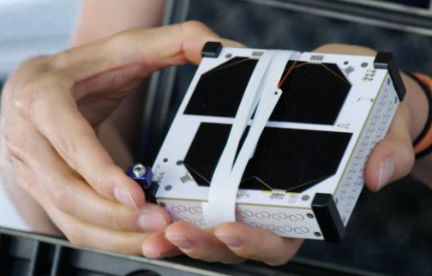
NearSpace Launch Inc. (NSL) will be delivering its 500th space system for launch during the summer of 2020.

NSL is marking this milestone by announcing the creation of a new STEM 501(c3) non-profit to help students achieve their dreams of near space science research in atmospheres and astronomy.

The NSL board and employees consist of several professors, teachers and educators with decades of experience in teaching and space research. NSL has built satellites and subsystems with the U.S. Air Force, DoD, NASA, State Officials, Universities and Industry.

One recent STEM mission included flying a 60 satellite, STEM constellation for school districts in Virginia. Over the past 5 years, NSL has had 100% mission success rate in the space environment.

The company launched Indiana’s first satellite (TSAT) with Taylor University in 2014, with a core mission to improve education and inspire future generations. NSL realizes the best way to grow STEM education is through NearSpace Education (NSE).

NSE will focus on partnering with schools and other education institutions to further project-based learning efforts via classroom labs, high-altitude balloon launches and low-cost smallsats which will enter space orbit.

Dr. Hank Voss, Co-Founder and Chief Scientist of NSL, said it is hard to believe NSL has had the privilege of seeing 500 systems and subsystems go into orbit over such a short time period. It has been accomplished in partnership with so many different customers from different industries and the hard work of a dedicated NSL team.

Jeff Dailey, Co-Founder and Chief Engineer of NSL, added he is excited that NSE will help and mentor current teachers with engineering support.

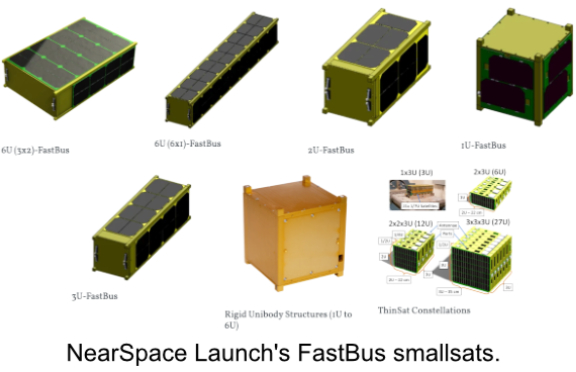
NSL manufactures and produces ThinSats, CubeSats, Black Boxes, and Globalstar enabled communication systems (EyeStar radios) for a variety of commercial, governmental, and educational applications. NSL was founded following the successful mission of TSAT with Globalstar. The mission proved a 24/7 effective connection was possible through an NSL EyeStar radio via the Globalstar constellation. NSL has a heritage of 8 FastBus CubeSats, 150+ EyeStar radios, 60 ThinSat and additional sub-systems all excelling in their respective mission tasks.


Filed Under: News

Made in Space Assisting in the Fight Against COVID-19 with Additive Manufactured Face Shields

April 9, 2020 by editorial

Made In Space (MIS) is helping in the fight against COVID-19 by providing frontline healthcare workers with much-needed supplies and equipment.

MIS facilities in Jacksonville, Florida, and Moffett Field, California, are using their additive manufacturing resources to provide hundreds of 3D printed face shields to local-area hospitals to augment the shortage of critical personal protective equipment (PPE) supplies.


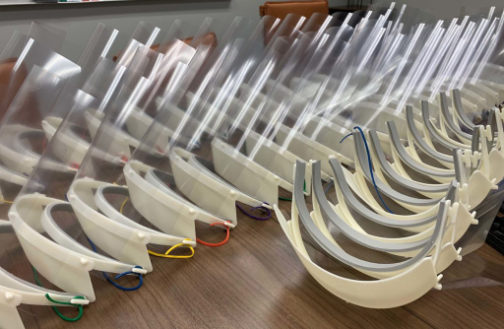
Made in Space face shield.

The design includes a 3D printed frame with an adjustable headband that allows a clear plastic face shield to be easily snapped onto the frame. More than 200 masks have been produced over the last five days and are being distributed to local-area hospitals in Jacksonville, Florida, and Mountain View, California.

The worldwide shortage of PPE such as face shields, medical masks, and gowns increases the risk of exposure for healthcare personnel who are ill-equipped to care for COVID-19 patients. Hospitals and frontline workers are frantically implementing crisis capacity strategies to manage the inadequate supply of PPE and medical equipment.

MIS is engaging its engineering, manufacturing and design expertise to assess additional solutions to help in the fight. MIS engineers worked with local-area doctors in Jacksonville to quickly develop a rapid response ventilator adapter to enable a single ventilator to safely support multiple patients in extreme situations.

MIS Chief Engineer Michael Snyder said that in times of crisis, it is important for everyone to come together and the firm has  obligation to support those on the front lines. The Made in Space team is using every available 3D printing resource the company has to produce face shields to support local healthcare personnel.

Made in Space develops state-of-the-art space manufacturing technology to support exploration, national security, and sustainable space settlement. The firm pioneers sustainable space infrastructure to support customer missions, promote national security and drive exploration objectives through advanced space manufacturing.


Filed Under: Featured, News

Forrester Reports: Intelsat Financing Possibilities and Swarm Obtains Approvals

April 9, 2020 by editorial


Chris Forrester

Journalist Chris Forrester has filed a story at the Advanced Television infosite regarding unconfirmed reports that have been sourced from financial analyst and data company Debtwire suggest that Intelsat might be exploring relocation cost financing and that the company’s unsecured bond-holders have hired a law firm.

The news prompted a 57 percent rise in Intelsat’s share price on April 8 to $1.65 (from $1.05) and, at one point during the day, hit $1.82 per share. Intelsat is heavily indebted with some $14 billion in debt and borrowings.

The news comes with a further batch of Class Actions launched against certain major shareholders in the satellite company. As we have reported, there has been little visibility over the past two months as to Intelsat’s intentions. It could receive some $5 billion as a result of a planned FCC auction of some of its C-band spectrum, but to qualify for that payment, it has to take part in the auction.

Intelsat’s last quarterly earnings report was issued on February 20 with the firm’s next report, for Q1, expected about mid-May.

The Advanced Television infosite is also hosting a story that notes the Swarm Technologies constellation of SpaceBee satellites that achieved notoriety back in September of 2018, when the company behind the system launched four of its craft into orbit aboard an Indian rocket, which then resulted in a problem because the company had not been licensed to launch, or operate, while in orbit. The Federal Communications Commission (FCC) was not pleased and fined the business $900,000.

The criticism was not helped insofar as the FCC had earlier specifically forbidden Swarm to launch satellites. California-based Swarm wants its fleet of satellites to serve Internet of Things (IoT) applications and it has established ground stations in the US, UK, Antarctica, Sweden, New Zealand and the Azores islands.

The company has now received all the necessary FCC permissions to continue its business plan. “Having received all regulatory approvals to operate commercially in the US, in several other countries, and over international waters, we are one step closer to providing affordable satellite connectivity to the world,” Swarm stated in a blog statement.


Swarm Technologies smallsat.

The company added that it would start services later this year with 30 ground stations ready to relay the constellations data. The plan calls for 150 low orbiting satellites, although the FCC permissions extend to 600 SpaceBees, should the company want to expand their orbital portfolio.

Filed Under: News

Virgin Orbit Partners with Oita Prefecture and the Oita Airport as Another Smallsat Launch Services Site

April 6, 2020 by editorial

Virgin Orbit has announced a new partnership with Oita Prefecture to bring horizontal launch to Japan.

With the support of regional partners ANA Holdings Inc. and the Space Port Japan Association, Virgin Orbit has identified Oita Airport as its preferred pilot launch site — yet another addition to the company’s growing global network of horizontal launch sites — in pursuit of a mission to space from Japan as early as 2022.

Virgin Orbit and Oita Prefecture have agreed to commence a joint technical study to facilitate development of the future spaceport.

Oita Prefecture is widely recognized in Japan as not only a top-ranked tourist destination, but also as a hub for numerous high-tech ecosystems, including the steel, petrochemical, semiconductor, and automobile industries. The Oita Prefectural Government now has ambitions to extend that leadership into the space domain.

Photo of Oita Airport, Japan.

LauncherOne, Virgin Orbit’s uniquely mobile launch system, will leverage sites around the world like Oita to provide flexible and responsive flights to space for a broad variety of customers. Most recently, the UK Space Agency announced a multi-million dollar grant to facilitate horizontal launches from Spaceport Cornwall. In April of 2019, Virgin Orbit revealed that it would also conduct launches from Andersen Air Force Base on the Pacific island of Guam — Virgin Orbit is also working closely with multiple governments and international organizations interested in establishing launch capabilities closer to home.

After successfully demonstrating all major vehicle assemblies and completing an extensive flight test program, the Virgin Orbit team is in the midst of final preparations for an orbital launch demonstration expected soon.

Katsusada Hirose, Governor for the Oita Prefectural Government, said, “We are eager to host the first horizontal takeoff and landing spaceport in Japan. We are also honored to be able to collaborate with brave technology companies solving global-level problems through their small satellites. We hope to foster a cluster of space industry in our prefecture, starting with our collaboration with Virgin Orbit.”

Dan Hart, the CEO for Virgin Orbit, said the global use of smaller satellites and related launch activities are expected to ramp up rapidly in the coming years, a flexible domestic launch capability becomes a crucial factor. It’s a key element in ensuring the availability and responsiveness of launch — a core enabler for the growing space economy. As Japan looks to establish a regional launch hub for Asia,
Virgin Orbit is excited to work alongside Oita to enable launch operations for space ventures, stimulate the local economy, and facilitate the growth of Japan’s broader space ecosystem.


Filed Under: News

Myriota Completes Series B Funding and Acquires Millions to Increase Their Smallsat Constellation

April 6, 2020 by editorial

South Australian satellite connectivity company Myriota has raised A$28 million in Series B funding to bolster its satellite network and increase its workforce by 2022.


Myriota co-founders David Haley and Alex Grant at Lot Fourteen in Adelaide. Picture: Rosina Possingham.

Myriota will use the latest round of funding to increase its constellation of satellites to 25 and further its global expansion as a leader in low-cost and low-power Internet of Things (IoT) satellite connectivity.

Myriota’s technology involves tiny satellite transmitters that send low powered messages directly to a constellation of LEO smallsats. These satellites relay the messages to Earth where they are decoded and sent to the end user. The technology is particularly effective in remote areas on land or at sea that do not have access to internet or cellular networks.

The company will also use the Series B funding to grow its workforce by 50 percent in the next two years, allowing it to connect billions of devices to power energy-efficient technology and serve demand in key international markets.

Myriota raised A$15 million in Series A funding in 2018 and said all of those participants returned to take part in Series B.


Artistic rendition of a Myriota smallsat on-orbit.

The latest funding round brings Mryriota’s total funding to A$50 million, including investments from Hostplus, Main Sequence Ventures, In-Q-Tel and former Australian Prime Minister Malcolm Turnbull.

CEO and co-founder Alex Grant said the latest round of funding would break down cost-prohibitive barriers and assist in maximizing efficiency and added that this is a critical time for IoT. Presently 90 per cent of the earth’s surface lacks connectivity. Myriota has been focused on filling that gap and overcoming constraints in existing infrastructure. With this new round of funding, the company will continue to grow the firm’s network of satellites to deliver an affordable, environmentally friendly and powerful solution to make data accessible for our global customer base.

The announcement is the latest in a string of expansions for Myriota, which has become a global leader in smallsat IoT connectivity and is based at Lot Fourteen – an innovation precinct in Adelaide, South Australia, which is also home of the Australian Space Agency.

Myriota was spun out of the University of South Australia in 2015 with funding from Canada-based data services company exactEarth.

Last month, the South Australian start-up announced it had furthered its partnership with exactEarth to acquire satellite communications assets.

The acquisition, which is subject to Canadian regulatory approval, signified the creation of Myriota’s first North American office, in Ontario, Canada. It provides Myriota with four exactEarth experts in satellite operations, satellite engineering and spectrum management. The CA$600,000 deal also increases Myriota’s capacity to deliver low-cost, low-power, secure direct-to-orbit satellite connectivity for IoT through four satellites and a global network of ground states assets.

Dr. Grant said that despite challenging global business conditions, the company was in a fortunate position to continue its international expansion plans and allow multiple industries to access its technology. He noted that this acquisition is a huge opportunity for Myriota business to grow its North American footprint. It will add industry-leading capabilities in key areas, such as satellite operations, engineering and spectrum management from an experienced team, and will fast-track the firn’s development with established ground facilities and ground stations.”

South Australia has been a significant player in the nation’s space industry and is home to major Tier 1 defence companies, the SmartSat CRC and several other emerging space start-ups, including Fleet Space Technologies and Inovor Technologies.

In 2018, Adelaide was announced as the home of the Australian Space Agency, to which a $6 million Mission Control Centre for smallsat missions and an educational Discovery Centre was added in 2019.

Story by Jessica Bassano, The Lead

Filed Under: News

Orbital Micro Systems Selects AAC Clyde Space for New Smallsat Addition for their GEMS Constellation

April 3, 2020 by editorial

Orbital Micro Systems (OMS) has selected Glasgow-based AAC Clyde Space to provide a 6U smallsat bus for the UK Space Launch Program (UK-SLP).

The mission is planned for 2021, which will be the first launch from UK soil through the UK-SLP project that is managed by Lockheed Martin.

Under the terms of the contract, OMS and AAC Clyde Space will collaborate to integrate the instrumentation and bus for launch. The companies previously collaborated on the IOD-1 GEMS mission, which successfully deployed the first commercial microwave radiometer in space.


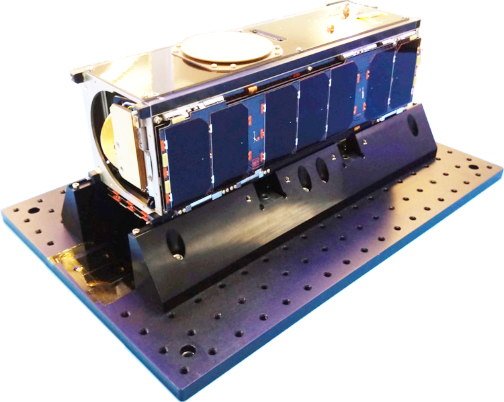
AAC Clyde Space’s EPIC 6U smallsat platform.

The new 6U smallsat will carry OMS’s next generation, miniaturized, microwave radiometer as a part of the company’s Global Environmental Monitoring System (GEMS) constellation of satellites. The radiometer will monitor 118GHz and 183GHz frequency bands to gather temperature and humidity measurements at multiple altitudes as it orbits the earth.

According to the firm, GEMS is a groundbreaking Earth Observation (EO) solution which uses passive microwave soundings to record temperature and humidity at multiple altitudes regardless of cloud cover. The measurements can provide identification of precipitation type and density at altitude as well. The data collected by GEMS satellites magnifies the volume of microwave soundings available from government satellites and improves the precision and clarity of weather forecasts across the globe.


Orbital Micro Systems IOD-1 GEMS 3U demonstration satellite deployed 3 July 2019.

Access to the unique GEMS data is available through OMS’ International Center for Earth Data (ICED) located in Edinburgh, Scotland. Data from the IOD-1 GEMS satellite is currently provided to government and commercial entities, including the aviation and maritime sectors, as well as insurance and government organizations. When it achieves full deployment with some 50 satellites, the GEMS constellation will deliver near real-time data for any point on earth at approximately 15-minute intervals.


William Hosack

William Hosack, CEO for OMS, said the company is delighted to, once again, work with Clyde Space, and leverage their expertise and commitment to engineering outstanding bus products. Clyde Space shares in OMS’s vision in leveraging space technology for improving weather observation capabilities on Earth. The firm looks forward to working even closer with Clyde Space to deliver essential weather data to commercial and government organizations worldwide.

For more information about Orbital Micro Systems, please visit .

Filed Under: News

X2nSat Working with New Mexico State University Students on 2020 Pacific Cup Race SATCOM Project

April 2, 2020 by editorial

New Mexico State University’s College of Engineering and the Department of Biology are collaborating with X2nSat in order to create a device to measure Pacific Ocean temperatures in real time during the 2020 Pacific Cup race.

The Pacific Cup is a race that started in 1980 and now takes place every other year where sailors start from San Francisco and sail the open ocean to Hawaii’s Kaneohe island. The race is usually considered something sailors do for fun; however, this year NMSU and X2nSat want to put the boats to work.

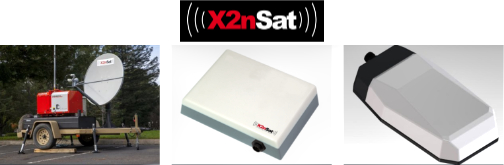
The students at NMSU, as part of the Aggie Engineering Capstone Design Program, are working to design a device capable of measuring ocean temperatures at various depths that can also store and transmit data in real time via X2nSat’s satellite communications technology.

The NMSU team working on the sensor include mechanical engineering seniors Caleb Gustin, Joseph Moseley, Dominic Blea and Makena Sutherland, industrial engineering senior Ahmad Atiah and electrical engineering senior Rodion Shishkov. They are also being advised on the environmental impact of their project by Michelle Nishiguchi, Regents Professor and Biology department head at NSMU.

X2nSat is hoping to work with the students of NMSU to provide real-time accurate data for the entire 2,000 mile race. As well as being able to run live video updates, stream movies and videos, the firm hopes to show what satellites are capable of accomplishing.

This is something that has never been done previously – despite the likely importance of these readings, the funding and infrastructure needed in order to perform something of this magnitude had been out of reach. Now, though, with the help of X2nSat and satellite, the students of NMSU can measure ocean temperatures from San Francisco to Hawaii and build a case for environmental impact.

The Pacific Cup race will kick off the week of June 29, 2020, from San Francisco and will last anywhere from a quick six, to a leisurely 17 days, depending on how long it takes each boat to arrive.

Gabe Garcia, mechanical engineering associate professor and assistant dean of student success for experiential learning, said the project will promote partnership between NMSU students and industry. In addition, the project will demonstrate the capabilities of satellite communications over a specific region of the Pacific Ocean.

Undertaking this task from the X2nSat side is CEO Garrett Hill and the crew of the boat Big Medicine, Pete Whyte, Bryan Hill, Dominic Haugh, and Ian Chadwick in addition to X2nSat’s technical support (GNSC) crew and the engineering team.


Garrett Hill

Garrett Hill, the CEO of X2nSat, said that the company is always looking to test the capabilities of our communications. The firm believes that showing satellite’s ability to maintain live readings while in the middle of the Pacific ocean, thousands of miles from land, will be something incredible.

Filed Under: News

  • « Go to Previous Page
  • Page 1
  • Interim pages omitted …
  • Page 311
  • Page 312
  • Page 313
  • Page 314
  • Page 315
  • Interim pages omitted …
  • Page 339
  • Go to Next Page »

Primary Sidebar

WEEKLY NEWSLETTER

Archives

  • March 2026
  • February 2026
  • January 2026
  • December 2025
  • November 2025
  • October 2025
  • September 2025
  • August 2025
  • July 2025
  • June 2025
  • May 2025
  • April 2025
  • March 2025
  • February 2025
  • January 2025
  • December 2024
  • November 2024
  • October 2024
  • September 2024
  • August 2024
  • July 2024
  • June 2024
  • May 2024
  • April 2024
  • March 2024
  • February 2024
  • January 2024
  • December 2023
  • November 2023
  • October 2023
  • September 2023
  • August 2023
  • July 2023
  • June 2023
  • May 2023
  • April 2023
  • March 2023
  • February 2023
  • January 2023
  • December 2022
  • November 2022
  • October 2022
  • September 2022
  • August 2022
  • July 2022
  • June 2022
  • May 2022
  • April 2022
  • March 2022
  • February 2022
  • January 2022
  • December 2021
  • November 2021
  • October 2021
  • September 2021
  • August 2021
  • July 2021
  • June 2021
  • May 2021
  • April 2021
  • March 2021
  • February 2021
  • January 2021
  • December 2020
  • November 2020
  • October 2020
  • September 2020
  • August 2020
  • July 2020
  • June 2020
  • May 2020
  • April 2020
  • March 2020
  • February 2020
  • January 2020
  • December 2019
  • November 2019
  • October 2019

© 2019–2026 SatNews

Insert/edit link

Enter the destination URL

Or link to existing content

    No search term specified. Showing recent items. Search or use up and down arrow keys to select an item.
      x
      Sign Up Now!

      Enjoy a free weekly newsletter with recent headlines from the global SmallSat industry.

      Invalid email address
      We promise not to spam you. You can unsubscribe at any time.
      Thanks for subscribing! You will now receive weekly SmallSat News updates.
      We love our advertisers.
      And you will too!

      Please disable Ad Blocker to continue... We promise to keep it unobtrusive.
      We promise not to spam you. You can unsubscribe at any time.
      Invalid email address
      Thanks for subscribing!