• Skip to main content
  • Skip to primary sidebar
  • Home
  • News
  • Featured
  • More News ⌄
    • SatNews
    • SatMagazine
    • MilSatMagazine
  • Events ⌄
    • MilSat Symposium
    • SmallSat Symposium
    • Satellite Innovation
  • Contacts
  • SUBSCRIPTION

SmallSat News

You are here: Home / Archives for News

News

HawkEye 360 Reveals Coronavirus Effect on Italy’s Maritime Sector

April 30, 2020 by editorial


This image visualizes the dramatic change in vessel traffic using heatmaps of the data. This is a comparison in X-band navigation radar for eleven days in early March before the countrywide lockdown and eleven days in the middle of March, when the lockdown was in force. Image is courtesy of HawkEye 360.

New data from HawkEye 360 reveals that Italy’s maritime activity in its ports dropped by half (51%) after the country-wide lockdown on March 10th and has remained subdued ever since, as the country prepares for a phased re-opening on Monday.

This data provides insight into the impact of the coronavirus on Italy’s trade and tourism industries – months before national statistics provide a formal assessment.

Since the March 10th lockdown, marine activity has largely come to a standstill in tourist destinations Venice and Florence while Genoa, Gioia Tauro and Trieste, some of the biggest cargo ports in Italy and all of Europe, have experienced significant decline.The data, collected by HawkEye 360’s satellite constellation, measures changes in patterns of vessels from Italian ports.
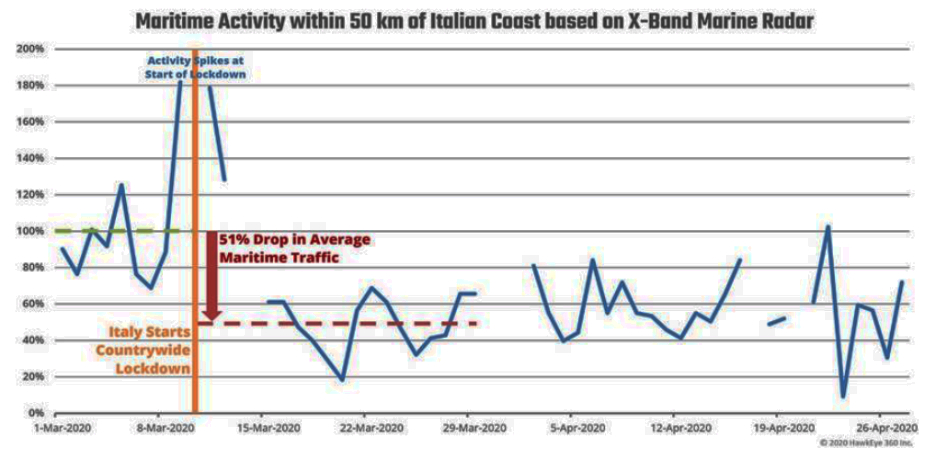

This chart visualizes port activity in Italy, which saw a sharp 51% drop in marine activity during the countrywide lockdown. Interestingly, vessel activity spiked right around the start of the lockdown, perhaps hinting at people fleeing the country for better tourism opportunities. Traffic remains subdued through April.
Image is courtesy of HawkEye 360.

HawkEye 360 is a new source of global knowledge based on radio frequency (RF) geo-analytics.The company operates the first-of-its-kind commercial satellite constellation to identify and geolocate a broad range of RF signals and extracts value from this unique data through proprietary algorithms, fusing the result with other sources to create powerful analytical ​products that offer increasing levels of clarity for our global customers. The company’s products include maritime domain awareness and spectrum mapping and monitoring, serving a wide range of commercial, government and international organizations. HawkEye 360 is headquartered in Herndon, Virginia.


Filed Under: News

Benchmark Space Systems Thruster Now Integrated into the BSS1 Demo Smallsat

April 30, 2020 by editorial


Benchmark’s DFAST warm-gas thruster.

Benchmark Space Systems DFAST warm-gas thruster (scalable for 1U-12U spacecraft) has completed the subsystem qualification test campaign and has been integrated into the company’s on-orbit demonstration smallsat, BSS1.

Range safety was smooth sailing for our ‘unpressurized, inert’ launch mode. In the same week the FCC regulatory policy vote took place, the Benchmark Space Systems team was notified that an experimental license was granted and the company is ready for launch.

Benchmark’s latest update from Firefly following their test anomaly and accelerated re-group is that the inaugural Alpha launch is scheduled to deliver BSS1 to orbit in the summer of 2020. With the launch quickly approaching, and regulatory activity increasing, the firm wants to make certain all prospective customers receive one last prompt to take advantage of the Launch Countdown Promotion. This promotion is running until the launch of the BSS1 satellite and includes special DFAST pricing, as well as a free (flatsat) integration evaluation kit on all pre-orders that are received prior to launch.

In the past few months, the company has crossed crucial checkpoints for the B125 Green Bi-Propellant system (scalable for 6U through ESPA satellites). Benchmark successfully tested the firm’s signature On Demand Pressurization System (ODPS), the key differentiator in offering safe and unpressurized launches as well as the remainder of subsystem tests.

System integration of the firm’s 4-thruster B125 was another major milestone hit, as part of Benchmark’s AFWERX Phase II contract and demonstrates the team’s ability to collaborate and execute development tasks despite a broadly challenging distributed work environment during our current global pandemic. The 4-thruster system is currently being prepared for qualification testing at Edwards AFB (now planned for Q3), being administered by the USAF Small Sat Portfolio organization. Benchmark Space plans to send the company’s first liquid propellant system into space in Q4 2020.

The Benchmark team is excited to be earning heritage after only three years after being founded and delivering propulsion and mobility solutions to customers that improve ease of integration,  mission capability and revenue models.


Benchmark’s B125 Green Bi-Propellant system.


Filed Under: News

Rocket Lab Rolls Out Electron Rocket for First Launch from Wallops

April 29, 2020 by editorial

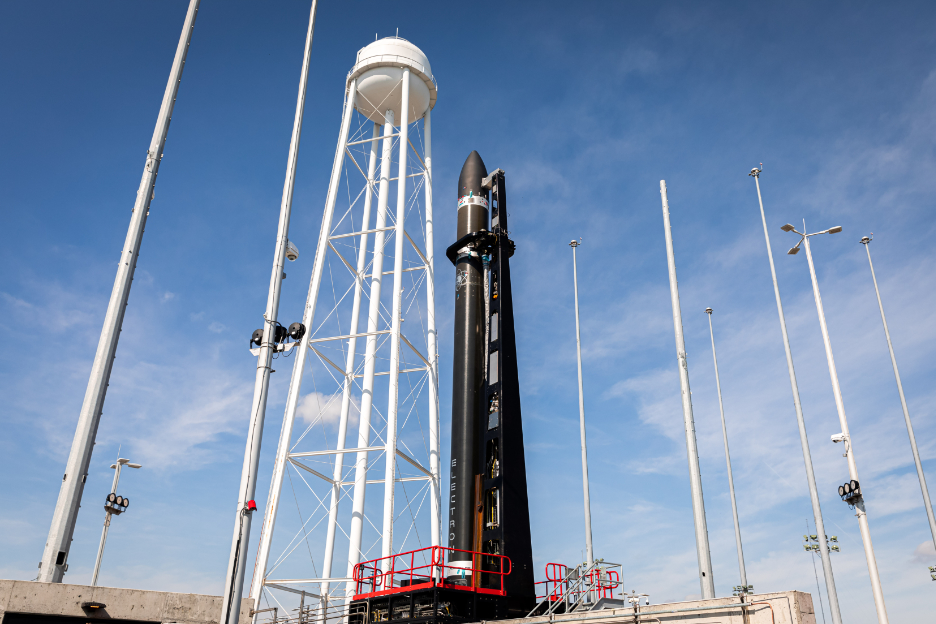
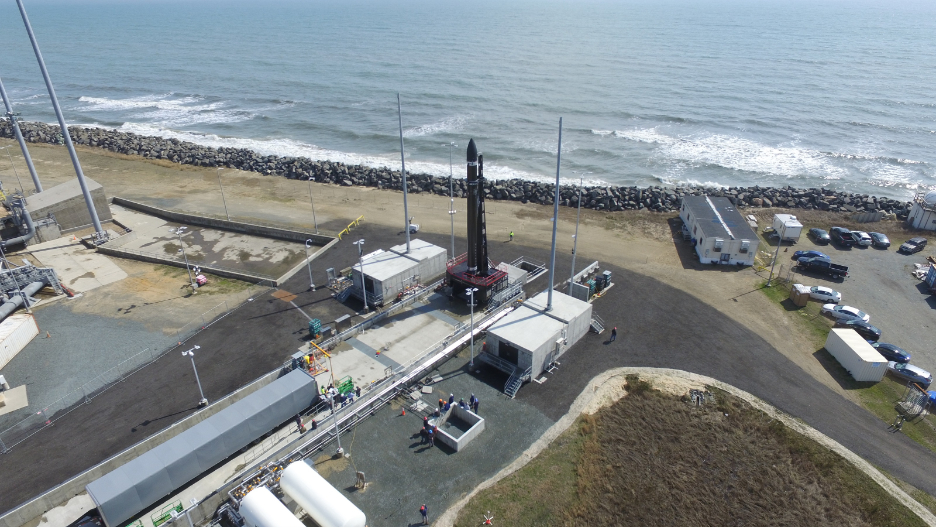
Rocket Lab has rolled an Electron launch vehicle out to the Launch Complex 2 pad at the Mid-Atlantic Regional Spaceport in Wallops, Virginia for the first time.

The milestone is one of the final steps ahead of Rocket Lab’s first launch from Launch Complex 2 – a dedicated mission in partnership with the Department of Defense’s Space Test Program and the Space and Missile Systems Center’s Small Launch and Targets Division.

Rocket Lab engineers and technicians carried out a range of successful integrated systems tests to verify launch systems on Electron and on the ground systems at Launch Complex 2. The critical checks included raising Electron vertical on the Launch Complex 2 pad for the first time, activating and tuning pad fluid systems, power and communication checkouts, as well as RF testing with the range. The test campaign concluded with a hot ignition test of the nine Rutherford engines on Electron’s first stage.

The STP-27RM mission will launch a single smallsat from the Air Force Research Laboratory’s Monolith program, which is designed to determine the ability of small satellites to support large aperture payloads to monitor space weather. The mission is being coordinated by the U.S. Space Force’s Space and Missile Systems Center and is scheduled to launch no earlier than the third quarter of 2020.

One of the final remaining steps before lift-off from Launch Complex 2 is completion of NASA certification for Rocket Lab’s Autonomous Flight Termination System (AFTS), a system that has already been successfully flown on several missions from Rocket Lab Launch Complex 1 in New Zealand. NASA expects to complete the certification in time for the Q3 launch window. The STP-27RM mission will mark the first time an AFTS system has flown from the Mid-Atlantic Regional Spaceport and represents a valuable new capability for the spaceport.

AFTS is a GPS-aided, computer-controlled system designed to terminate an off-nominal flight, replacing traditional human-in-the-loop monitoring systems. AFTS is crucial to increasing launch frequency and providing responsive launch capability, while maintaining the highest industry safety standards. It reduces the turnaround time between missions and provides greater schedule control by eliminating reliance on ground-assets and human flight termination operators.

With Launch Complex 2 complete and entering an operational phase, work continues on the construction of a Rocket Lab Integration and Control Facility nearby, which will house a launch control center, payload integration facilities, offices, and a pre-launch integration area for multiple Electron vehicles.

Future missions scheduled for lift-off from Launch Complex 2 include a pathfinding mission for NASA to the Moon called CAPSTONE (Cislunar Autonomous Positioning System Technology Operations and Navigation Experiment). The mission will see a NASA satellite launched to a unique near rectilinear halo orbit around the Moon to determine navigational capabilities for future missions. Data gathered by this mission will inform NASA’s plans for Gateway – a space station planned for lunar orbit that will act as an outpost for astronauts before they descend to the lunar surface. The CAPSTONE mission is currently scheduled to launch in early 2021.

David Pierce, Wallops Flight Facility Director, said that for almost 20 years, NASA and the DoD have been working to develop an AFTS system that is available for use by all Range Users within ITAR (International Traffic in Arms Regulations) that can greatly reduce the cost of access to space. Through the organization’s partnership with Rocket Lab on previous Electron launches and on this historic U.S. Air Force mission, Wallops is able to further the efforts to commercialize AFTS and increase launch responsiveness at U.S. ranges.

Peter Beck, Rocket Lab founder and Chief Executive, stated the upcoming mission from Launch Complex 2 marks the beginning of rapid, responsive smallsat launch capability for U.S. government missions from U.S. soil. He noted the company s proud to be partnering with the U.S. Space Force for the first mission from Launch Complex 2 and honored to be working with them again following previous STP missions out of Launch Complex 1. For more than two years, Rocket Lab has been providing responsive, dedicated and reliable access to space for government missions, and now we’re proud to be building on that strong heritage with our first mission from the United States. Combined, the two launch sites can support more than 130 launch opportunities every year, enabling unmatched schedule control for smallsat operators to respond to unfolding opportunities in LEO and beyond.


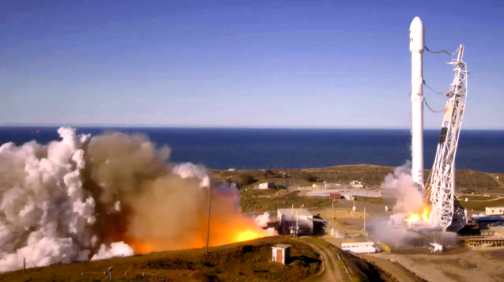
Rocket Lab and the Electron Launch Vehicle at Launch Complex 2.


Filed Under: News

NASA’s CubeSat Will Shine a Laser “FlashLight” on the Moon’s Darkest Craters

April 28, 2020 by editorial


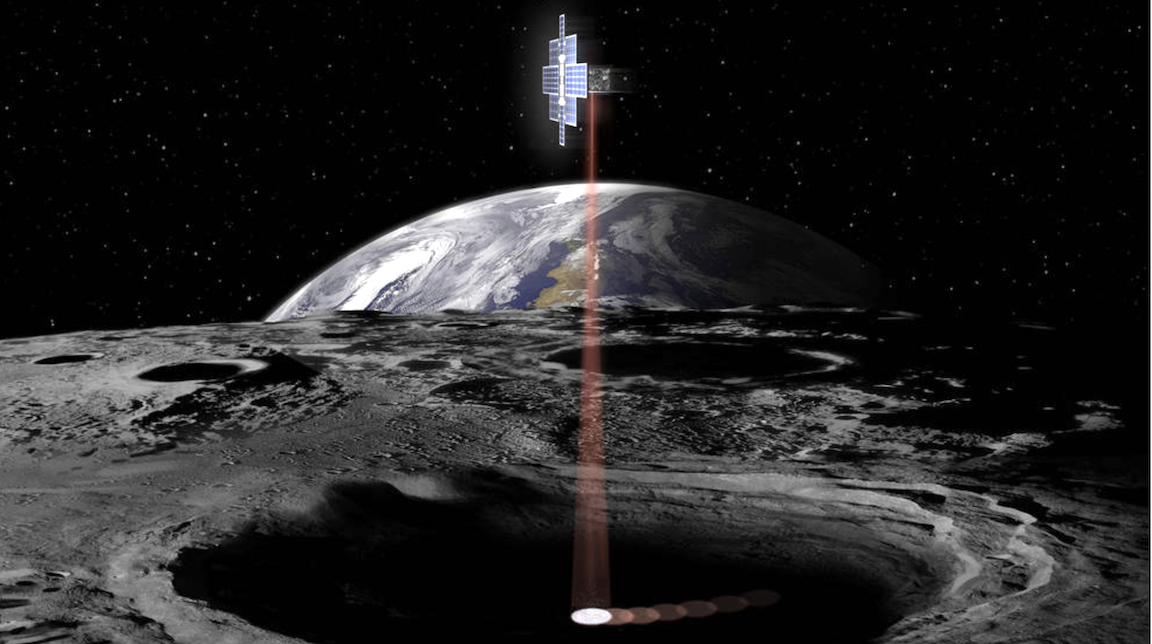
This artist’s concept shows the Lunar Flashlight spacecraft, a six-unit CubeSat designed to search for ice on the Moon’s surface using special lasers. The spacecraft will use its near-infrared lasers to shine light into shaded polar regions on the Moon, while an onboard reflectometer will measure surface reflection and composition. Credits: NASA/JPL-Caltech


As astronauts explore the Moon during the Artemis program, they may need to make use of the resources that already exist on the lunar surface. Take water, for instance: Because it’s a heavy and therefore expensive resource to launch from Earth, our future explorers might have to seek out ice to mine. Once excavated, it can be melted and purified for drinking and used for rocket fuel. But how much water is there on the Moon, and where might we find it?

This is where NASA’s Lunar Flashlight comes in. About the size of a briefcase, the small satellite — also known as a CubeSat — aims to detect naturally occurring surface ice believed to be at the bottom of craters on the Moon that have never seen sunlight.

“Although we have a pretty good idea there’s ice inside the coldest and darkest craters on the Moon, previous measurements have been a little bit ambiguous,” said Barbara Cohen, principal investigator of the mission at NASA’s Goddard Space Flight Center in Greenbelt, Maryland. “Scientifically, that’s fine, but if we’re planning on sending astronauts there to dig up the ice and drink it, we have to be sure it exists.”

Managed by NASA’s Jet Propulsion Laboratory in Southern California, the spacecraft is a technology demonstration: It will seek to achieve several technological firsts, including being the first mission to look for water ice using lasers. It will also be the first planetary spacecraft to use a “green” propellant, a new kind of fuel that is safer to transport and store than the commonly used spacecraft propellant hydrazine.

“A technology demonstration mission like Lunar Flashlight, which is lower cost and fills a specific gap in our knowledge, can help us better prepare for an extended NASA presence on the Moon as well as test key technologies that may be used in future missions,” said John Baker, Lunar Flashlight project manager at JPL.

Peering Into the Shadows

Over the course of two months, Lunar Flashlight will swoop low over the Moon’s South Pole to shine its lasers into permanently shadowed regions and probe for surface ice. Found near the North and South Poles, these dark craters are thought to be “cold traps” that accumulate molecules of different ices, including water ice. The molecules may have come from comet and asteroid material impacting the lunar surface and from solar wind interactions with the lunar soil.

“The Sun moves around the crater horizon but never actually shines into the crater,” said Cohen, whose team includes scientists at the University of California, Los Angeles, John Hopkins Applied Physics Laboratory and the University of Colorado. “Because these craters are so cold, these molecules never receive enough energy to escape, so they become trapped and accumulate over billions of years.”

Lunar Flashlight’s four-laser reflectometer will use near-infrared wavelengths that are readily absorbed by water to identify any accumulations of ice on the surface. Should the lasers hit bare rock as they shine into the South Pole’s permanently shadowed regions, their light will reflect back to the spacecraft, signaling a lack of ice. But if the light is absorbed, it would mean these dark pockets do indeed contain ice. The greater the absorption, the more widespread ice may be at the surface.

While the CubeSat can provide information only about the presence of ice on the surface, and not below it, Lunar Flashlight seeks to fill a critical gap in our understanding of how much water ice these regions possess. “We will also be able to compare the Lunar Flashlight data with the great data that we already have from other Moon-orbiting missions to see if there are correlations in signatures of water ice, thereby giving us a global view of surface ice distribution,” added Cohen.

The mission is detailed in a new paper published in the April 2020 issue of IEEE Aerospace and Electronic Systems Magazine.

Lunar Flashlight is funded by the Small Spacecraft Technology program within NASA’s Space Technology Mission Directorate. The program is based at NASA’s Ames Research Center in California’s Silicon Valley. It will be one of 13 secondary payloads aboard the Artemis I mission, the first integrated flight test of NASA’s Deep Space Exploration Systems, including the Orion spacecraft and Space Launch System (SLS) rocket launching from the newly upgraded Exploration Ground Systems at Kennedy Space Center in Florida.

Under the Artemis program, astronauts and robots will explore more of the Moon than ever before. Robotic missions begin with commercial lunar deliveries in 2021, humans return in 2024, and the agency will establish sustainable lunar exploration by the end of the decade. We will use what we learn on the Moon to prepare to send astronauts to Mars. 

To learn more about Lunar Flashlight


Filed Under: News

Forrester Reports: Interest in OneWeb’s Assets While in Chapter 11 Protection

April 28, 2020 by editorial

Journalist Chris Forrester is reporting at the Advanced Television infosite that Elon Musk’s SpaceX, as well as Paris-based Eutelsat, have looked at OneWeb Global’s assets.


Chris Forrester

OneWeb is in Chapter 11 protection. Trade news publication Space Intel Report suggests that Eutelsat’s interest is undertaken on behalf of the French government. The UK government has also taken a look at the company’s assets and accounts.

More detail is likely to emerge on April 29th when a hearing is scheduled before the bankruptcy court. What is already known is that a Bidding process has been agreed with the court including a “stalking horse” process. The actual auction (if the business is not sold) is scheduled to start on July 2nd at the offices of Milbank LLP, lawyers for the action, and finalized a week later on July 10th.

If the bidding goes to several rounds, then each potential bidder must participate in each round of the bidding.

Eutelsat’s interest is fascinating given that it has only extremely limited plans for its own LEO plans. Eutelsat is planning a fleet of smallsats for IoT access. Acquiring the OneWeb fleet might be seen as a ‘bargain basement’ option, although winning an auction would also force Eutelsat to fund the building of the rest of OneWeb’s fleet.

SpaceX is also an interesting aspect, given that the company already has 400+ satellites already on-orbit — perhaps it is interested in the Airbus joint-venture which OneWeb has to build satellites in Florida.


Filed Under: News

New Unicorn ICD/PUG for Unicorn-2 Smallsat Developed by Alba Orbital

April 28, 2020 by editorial

Alba Orbital has unveiled the firm’s first, publicly available Payload Interface / Payload User Guide for Unicorn-2.

The company’s goal is to have an open interface that payload developers can use as a reference for the development of their payload’s missions, opening up space for business.

Unicorn-2 is a flight proven smallsat platform and the first operational 3P PocketQube to be launched into orbit.

Alba Orbital has also released their first Unicorn Interface Control Document / Payload User Guide as a reference to help those who are looking to develop their own payloads for a mission with Unicorn-2. This document guides users through:

  • Mechanical interface Electrical
  • Software interface Qualification Testing
  • Flight Acceptance
  • and more


Download this guide at this direct link…


Filed Under: News

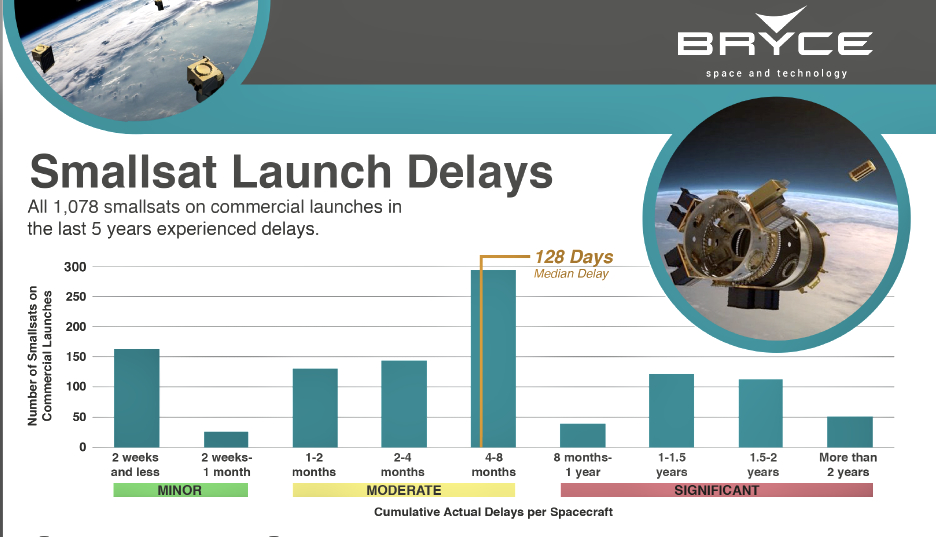
Bryce Infographic Presents “Are Smallsat Launch Delays Inevitable?”

April 24, 2020 by editorial

A new, independent study found that all 1,078 smallsats on commercial launches in the last five years experienced delays, with a median delay of 128 days.

What caused these delays? Bryce found that 40% of all smallsat delay days were attributed to delays in the primary payload and 34% were launch vehicle-related. Less than 1% of all smallsat delay days were caused by weather.

Learn more about mitigating smallsat launch delays in Bryce’s latest report, commissioned by Spaceflight, Inc., by downloading the company’s infographic at this direct link…

Bryce has also been selected as one of five companies to support NASA’s efforts to enable a LEO economy. Bryce will develop an integrated action plan to address barriers to the growth of the LEO economy, while other selected companies will seek to raise the technological readiness level of their products and move them to market.


Filed Under: Featured, News

BlackSky Offering Remote Access to Global Monitoring and Satellite Imaging Services

April 23, 2020 by editorial

Geospatial intelligence provider BlackSky is now offering remote access to the company’s global monitoring services and satellite imaging.

The company said its telework tools are cyber secure and allow analysts to develop intelligence reports and share unclassified information. Users of the BlackSky service draw intelligence from a combination of remote sensing satellite images, environmental sensors, asset tracking sensors, IoT systems, local foreign news, social media, industry publications and financial reports. The information is analyzed with machine learning and artificial intelligence techniques.

BlackSky’s telework package, called Spectra On-Demand Secure Bundle, was designed for intelligence analysts who handle unclassified but still sensitive information and can be accessed online from any computer.

BlackSky CEO, Brian O’Toole, noted that, given the coronavirus pandemic, intelligence analysts, financial analysts and researchers are seeking solutions that allow teams to continue critical security and intelligence projects while working remotely.

Scott Herman, BlackSky’s CTO, stated that a significant portion of our workforce works from home. We’ve been longtime adopters of a lot of these collaborative tools. Many of the company’s customers across U.S. national security and intelligence agencies are used to working in secure facilities. After the pandemic hit, suddenly they found themselves having to telework and realized they didn’t have remote access to data or tools needed to do their jobs, and they had security concerns, he said, adding that the company is providing access to the firm’s satellites for tasking as well as providing access to other satellites for tasking and archiving data plus a wide range of sensors used for global monitoring.The services also include training on the methodology involved in capturing data. Analysts still have to go to secure facilities to work with classified information but much of their unclassified work can be done from home.

BlackSky has four satellites in operation and plans to launch eight more satellites later this year.


Filed Under: Featured, News

Major Launch Services Agreement Signed Between Firefly Aerospace and Spaceflight Inc.

April 22, 2020 by editorial

Firefly Aerospace, Inc. and Spaceflight Inc. have signed a Launch Services Agreement (LSA).

The agreement confirms that Spaceflight will secure the majority of the payload mass aboard a Firefly Alpha launch, scheduled for lift off from Vandenberg Air Force Base in 2021.

In addition to being the anchor customer, Spaceflight will sign, manage, integrate, and deploy multiple payloads on the flight, enabling Firefly to maximize its full 630 kilogram launch capacity on the commercial Alpha mission to Sun Synchronous Orbit (SSO).


Firefly Aerospace’s Alpha smallsat launch vehicle.
Image is courtesy of the company.

Also, according to the LSA, Spaceflight will help maximize payload capacity aboard future Firefly Alpha launches.

The Alpha launch vehicle is designed to address the needs and demands of the burgeoning smallsat market, combining the highest payload performance with the lowest cost per kilogram to orbit in its vehicle class. Alpha will provide launch options for both full vehicle and rideshare missions. Spaceflight has launched a record-setting 271 satellites via 29 rideshare missions, establishing itself as a leading rideshare service provider, offering comprehensive launch and integration services across a global portfolio of vehicles.

Spaceflight successfully executed nine missions in 2019, the most rideshare launches the company has performed in one year. The company also completed the first-ever rideshare mission to Geosynchronous Transfer Orbit (GTO) in 2019, launching the first privately funded lunar lander.


Spaceflight enables commercial, non-profit organizations and government entities to get launched, achieving their mission goals – on time and on budget.

Leading up to the maiden flight of the Alpha launch vehicle later this year, final acceptance of the first and second stage will take place over the next several months at Firefly’s test facilities at Briggs, Texas, with hardware deployments to Vandenberg planned for early summer. Firefly teams are also integrating new composite technologies into its overall manufacturing capabilities, with the goal of significantly boosting production of its launch vehicles to align with demand growth over the next few years.


Curt Blake

Curt Blake, President of Spaceflight, said the company has long been committed to providing reliable, cost-effective access to space and the firm is eager to partner with Firefly, as both companies share this exciting vision. In fact, the company has many customers in mind, including some specifically in APAC, which we believe will benefit from this additional capacity and flexibility. Spaceflight is honored to secure the primary payload aboard an Alpha flight in 2021 and looks forward to working closely with the Firefly team to accelerate more small satellite rideshare launches for the industry. ”


Dr. Tom Markusic

Dr. Tom Markusic, Firefly CEO, added that Alpha launches in 2021 will play a key role in establishing the company’s  manifest and production capability, and having Spaceflight’s deep payload integration expertise in the firm’s corner is an important part of the overall launch strategy. Firefly’s Alpha launch vehicle will quickly fill a major market gap with the capability to deliver 1 metric ton to LEO and 630 kilograms to the highly desirable 500 kilogram SSO, about four times the current payload capability of other small satellite launch vehicles.


Filed Under: News

Millennium Space Systems Completes Work on U.S. Space Force’s TETRA-1 Smallsat

April 22, 2020 by editorial

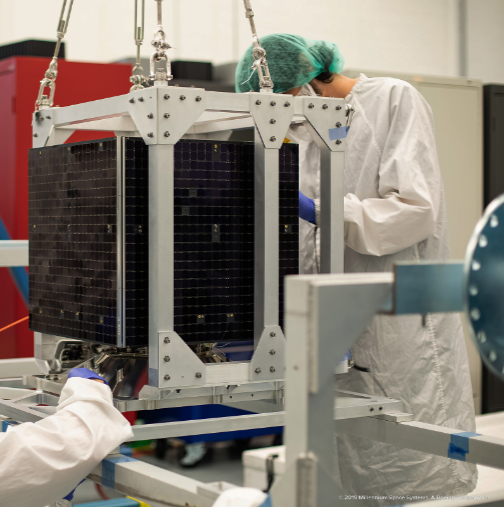
Less than 15 months after contract award, Millennium Space Systems has designed, manufactured, assembled and integrated the U.S. Space Force TETRA-1 satellite. The work was completed 60 percent faster than previous missions, improving the U.S. Space Force’s ability to advance the TETRA-1 technologies more quickly.

TETRA-1 is a microsatellite created for various prototype missions in and around geosynchronous earth orbit. TETRA-1 was the first prototype award under the U.S. Space Force’s Space and Missile Systems Center’s Space Enterprise Consortium Other Transaction Authority (OTA) charter.


Photo of the U.S. Space Force TETRA-1 satellite during the build process. Image is courtesy of Millennium Space Systems.

Most of the TETRA-1 components were completed by leveraging Millennium’s in-house capabilities, demonstrating that organically developed capabilities are a key enabler for executing programs on a tight schedule. After system integration, the satellite successfully completed its environmental and full functional tests.

TETRA-1 is based on Millennium’s proven ALTAIR-class smallsat product line. It is the first of Millennium’s ALTAIR satellites to qualify for operations in the geosynchronous orbit space environment, 22,236 miles (35,786 kilometers) from the Earth’s surface. TETRA-1 is manifested on a SpaceX Falcon Heavy rocket currently scheduled for launch in late 2020.

Col. Tim Sejba, Director, Innovation and Prototyping, Development Corps, Space and Missile Systems Center, Detachment 1, at Kirtland Air Force Base, New Mexico, said that one of the primary goals is to be more agile in the development and deployment of innovative space assets. By leveraging OTA contracts with programs such as TETRA-1, the organization is expediting the execution of new space development missions. The partnership developed with Millennium Space Systems allows for the creation and fielding of a dynamic pathfinder capability to meet the future space warfighter’s needs.

Mark Cherry, VP and GM, Boeing Phantom Works, stated that the pace set on TETRA-1 from contract award through readiness to launch represents what Boeing does best for national security customers. The lean Millennium team was up to the task, building and delivering a fully tested and verified satellite in record time.

Millennium Space Systems is a Boeing [NYSE: BA] subsidiary, headquartered in El Segundo, California. Founded in November 2001, Millennium provides credible alternatives for relevant and affordable solutions to today’s space industry challenges. The company designs flight systems and develops AS 9100-certified mission and system solutions for the Intelligence Community, Department of Defense, NASA and civil space customers. With Millennium’s ALTAIR™ and AQUILA™ products, Boeing is now positioned to offer customers the full range of tailored space capabilities and missions today.

More Information about Millennium Space Systems: .


Filed Under: Featured, News

  • « Go to Previous Page
  • Page 1
  • Interim pages omitted …
  • Page 309
  • Page 310
  • Page 311
  • Page 312
  • Page 313
  • Interim pages omitted …
  • Page 339
  • Go to Next Page »

Primary Sidebar

WEEKLY NEWSLETTER

Archives

  • March 2026
  • February 2026
  • January 2026
  • December 2025
  • November 2025
  • October 2025
  • September 2025
  • August 2025
  • July 2025
  • June 2025
  • May 2025
  • April 2025
  • March 2025
  • February 2025
  • January 2025
  • December 2024
  • November 2024
  • October 2024
  • September 2024
  • August 2024
  • July 2024
  • June 2024
  • May 2024
  • April 2024
  • March 2024
  • February 2024
  • January 2024
  • December 2023
  • November 2023
  • October 2023
  • September 2023
  • August 2023
  • July 2023
  • June 2023
  • May 2023
  • April 2023
  • March 2023
  • February 2023
  • January 2023
  • December 2022
  • November 2022
  • October 2022
  • September 2022
  • August 2022
  • July 2022
  • June 2022
  • May 2022
  • April 2022
  • March 2022
  • February 2022
  • January 2022
  • December 2021
  • November 2021
  • October 2021
  • September 2021
  • August 2021
  • July 2021
  • June 2021
  • May 2021
  • April 2021
  • March 2021
  • February 2021
  • January 2021
  • December 2020
  • November 2020
  • October 2020
  • September 2020
  • August 2020
  • July 2020
  • June 2020
  • May 2020
  • April 2020
  • March 2020
  • February 2020
  • January 2020
  • December 2019
  • November 2019
  • October 2019

© 2019–2026 SatNews

Insert/edit link

Enter the destination URL

Or link to existing content

    No search term specified. Showing recent items. Search or use up and down arrow keys to select an item.
      x
      Sign Up Now!

      Enjoy a free weekly newsletter with recent headlines from the global SmallSat industry.

      Invalid email address
      We promise not to spam you. You can unsubscribe at any time.
      Thanks for subscribing! You will now receive weekly SmallSat News updates.
      We love our advertisers.
      And you will too!

      Please disable Ad Blocker to continue... We promise to keep it unobtrusive.
      We promise not to spam you. You can unsubscribe at any time.
      Invalid email address
      Thanks for subscribing!