• Skip to main content
  • Skip to primary sidebar
  • Home
  • News
  • Featured
  • More News ⌄
    • SatNews
    • SatMagazine
    • MilSatMagazine
  • Events ⌄
    • MilSat Symposium
    • SmallSat Symposium
    • Satellite Innovation
  • Contacts
  • SUBSCRIPTION

SmallSat News

You are here: Home / Archives for News

News

A New VP and a New Director for Astroscale U.S.

April 21, 2020 by editorial

Astroscale U.S. Inc., (“Astroscale U.S.”), the U.S. unit of Astroscale Holdings Inc., has announced that Dave Fischer and David Hebert, two experienced space industry professionals, will join the Astroscale U.S. management team.

Fischer joins the company as VP of Business Development and Advanced Systems, and Hebert joins as Director of Communications, with both of these appointments effective as of March 2020.

Fischer joins Astroscale with more than 30 years of experience in business and technology management. Most recently, he was Director of Business Development for RUAG Space USA. Prior to that, Fischer held several management roles in business development and strategic development with Ball Aerospace.

Hebert comes to Astroscale from The Aerospace Corporation where he most recently served as Senior Communications Strategist for policy, and civil and commercial systems. His nearly 20 years of experience includes strategic communications, public engagement and content development. He also held management roles at The MITRE Corporation and the U.S. Geological Survey.

Fischer and Hebert will play leading roles in expanding Astroscale U.S.’ collaboration and engagement with partners, potential clients and other groups in the commercial and government space and technology communities. Fischer will help lead the company’s exploration of new opportunities to fulfill its mission of making space sustainability a reality. Hebert will drive positioning, perception and brand strategy for the company.

Ron Lopez, President and Managing Director of Astroscale U.S., said that during the next few years, space sustainability will become common practice as the company’s talented team fosters greater awareness about the need for safety in space and drives growth in this market. Dave and David bring strength to Astroscale as the firm expands its presence in the U.S. market — these two key appointments represent the momentum Astroscale U.S. is gaining in the development and sutainability of the orbital highways.


Filed Under: News

Hong Kong Aerospace Technology Group Ready to Launch First of 165 Golden Bauhinia Satellites 

April 21, 2020 by editorial

The first of 165 satellites is being built by Hong Kong Aerospace Technology Group (HKATG) and getting ready to launch the low-orbit high frequency satellite, the “Golden Bauhinia No.1”,  in June from China. The planned launch marks an important milestone in the company’s “Golden Bauhinia” space remote sensing project.

According to the U.S. Satellite Industry Association (SIA), commercial aerospace revenue was US$277.4 billion in 2018 and is expected to increase 10 percent per year. Reinforcing the fact that the rapid development of international commercial aerospace makes it one of the most dynamic industries after the internet, AI and 5G. The strategic value of the aerospace industry has driven investment into commercial aerospace organizations in Europe and America, with the market value of commercial aerospace enterprises listed in the U.S. continually reaching new heights.

Humanity is shifting from needing an aerospace industry to dependency; with the strategic and commercial value of space infrastructure becoming ever more apparent. As the modern aerospace industry takes shape, the value of orbit and spectrum base resources will become highly sought-after “space real estate”.

HKATG is the first International Astronautical Federation’s member in Hong Kong. Mr. SUN FENGQUAN, Chairman of the Board of Directors of HKATG, said that the Greater Bay Area aerospace industry generates tens of billions of dollars in demand each year. The new development direction of HKATG is centred on regional urban agglomeration, and launching the “Golden Bauhinia Constellation”.

Using mobile target monitoring, space AI and dynamic change monitoring, the “Golden Bauhinia Constellation” aims to achieve commercial application and development of communications, navigation, and remote sensing systems with global 24-hour online tracking and the ability to re-visit key areas in under 30 minutes.

The “Golden Bauhinia” project aims to launch 165 low-orbit, high-frequency satellites in 2020 covering the Guangdong-Hong Kong-Macao Greater Bay Area and serve the world’s fastest-growing urban centres. The satellite to relaunched in June was designed, manufactured and patented by HKATG.

Filed Under: News

A New Mission for NanoAvionics Smallsats

April 20, 2020 by editorial

A consortium of Norwegian and Dutch research centers have selected satellite integrator NanoAvionics to build two smallsats, ‘Birkeland’ and ‘Huygens.’


Artistic rendition of the Birkeland and Huygens smallsats on-orbit. Image is courtesy of NanoAvionics.

The purchase order is part of a military use of space (MilSpace) project under a bilateral strategic mutual assistance in research and technology (SMART) memorandum of understanding (MoU). The two nanosatellites are intended to demonstrate the concept of a space based spectrum monitoring system to geolocate radar signals. This is the first time for Norway and the Netherlands to launch a formation of satellites.

The BROS (binational radiofrequency observing satellites) mission is the first known two-satellite system to detect, classify, and accurately geolocate Radio Frequency signals, including navigation radars used on ships, by combining the measurement angle of arrival (AoA) and time difference of arrival (TDOA). Simultaneous detection of pulsed radio signals by both satellites flying in tandem enables accurate geolocation during all weather conditions.

“Birkeland” and “Huygens” will both be based on NanoAvioncs’ pre-configured M6P smallsat bus with a deployable solar panel configuration, high precision attitude determination and control system (ADCS) and a propulsion system. The mass of each 6U nanosatellite will be up to 10 kilograms.


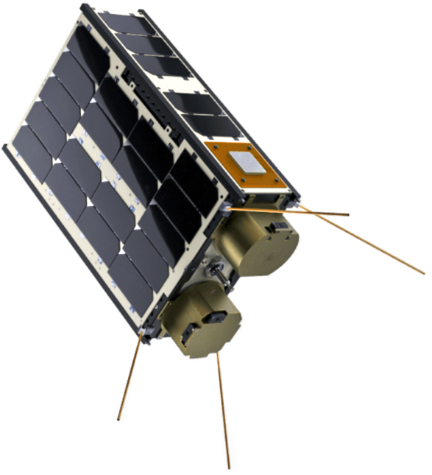
Artistic rendition of a NanoAvionics M6P smallsat on-orbit. Image is courtesy of the company.

The launch of the two smallsats is scheduled for the second quarter of 2022 when they will be placed into a polar LEO with an altitude range of 450 to 600 km. Both smallsats will be positioned in the same orbital plane with a separation of 15 ro 25 km, allowing them to simultaneously detect emissions from radar systems. For a polar LEO orbit of 600 km altitude, the payload antenna will be able to cover any point on the Earth’s surface at least four times per day.

Drawing from experience from the Norwegian NorSat-3 and the Dutch BRIK-II missions, the consortium for this strategic and bilateral mission also expects to gain valuable insights into formation flying. The project team consists of the Norwegian Defence Research Establishment (FFI), the Royal Netherlands Aerospace Centre (NLR) and Netherlands Organisation for Applied Scientific Research (TNO).


Vytenis Buzas

Vytenis J. Buzas, Co-Founder and CEO of NanoAvionics, said that exchanging science, research and technology experience in this MilSpace mission is a great start for flourishing partnerships with the participating organizations. The agreement is also an example of the new cross over between commercial and military space missions. This was made possible by standardizing NanoAvionics’ bus design, which allows the firm’s nanosatellites to host a wide variety of payloads for diverse applications.


Filed Under: News

Smallsat Pilot Project Initiated by NanoAvionics with the Mexican Space Agency

April 17, 2020 by editorial

Smallsat manufacturer and mission integrator NanoAvionics, together with the Mexican Space Agency (AEM) and students from the Polytechnic University of Atlacomulco, will develop the first nanosatellite for the State of Mexico, the AtlaCom-1.

Building the smallsat is part of a pilot project to establish a nanosatellite infrastructure for future space missions designed and built by Mexico’s youth.


The NanoAvionics M6P smallsat bus.

The project, starting in September of 2020, is a testimony to the importance of space applications enabled by nanosatellites, which are rapidly becoming essential to national economies. Together, the Mexican Space Agency, led by Dr. Salvador Landeros, appointed director general of AEM in 2019, and NanoAvionics are fostering the advanced skills that Mexican youth will need to bring the country’s space industry forward.

NanoAvionics’ engineers will share their space mission experience and help the students and faculty at the Polytechnic University of Atlacomulco to develop the ATLA-1. The company’s multi-purpose nanosatellite buses are pre-configured and pre-qualified, allowing mission teams to focus on their payloads. As a result, technology development missions can produce results quicker and satellite constellations can enter commercial service much faster.

The project is further supported by the Mayor of Atlacomulco, Roberto Téllez-Monroy, an engineer with a passion for space technology.


F. Brent Abbott

Brent Abbott, the CEO of NanoAvionics US Inc., said the company’s participation in this educational pilot project with the Mexican Space Agency further confirms the firm’s status as a global mission integrator and the company’s determination to advance STEM education. NanoAvionics is continuing its work with universities and is proud to support AEM’s STEM efforts. Benefiting from NanoAvionics’ great expertise and technology, Mexican students will gain prodigious knowledge and skills to participate in their country’s growing space economy and experience the entire development and operation cycle of a space mission. To make sure all members involved in building the nanosatellite are protected, we’ll put the same strict guidelines, safety equipment and measures in place the company is already using in the firm’s manufacturing facilities.”

Mayor Téllez-Monroy added that nanosatellites and other technologies, such as breakthroughs in robotics, 3D-printing and biotech, mark the fourth industrial revolution and promise enormous economic benefits, not only to Mexico, but the entire world. NanoAvionics’ commitment to developing the technical skills of students in Atlacomulco will help building a solid foundation for Mexico’s emerging nanosatellite industry.

Filed Under: News

Letter of Intent Signed Between Equatorial Space and Responsive Access Regarding Smallsat Launches

April 17, 2020 by editorial

Equatorial Space has signed a letter of intent to work with Scottish launch aggregator, Responsive Access, on finding customers for launches of the firm’s smallsat launch vehicle.

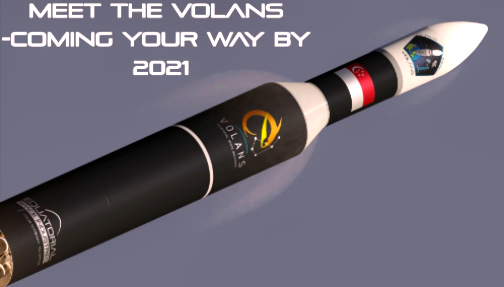
The company’s fully hybrid launch vehicle, Volans, is being designed to carry up to 200 kg. of payload into near-equatorial LEO – a rare capability for the many smallsat launch companies active in this burgeoning sector and heavily regulated by technology export restrictions by their domiciles.

Equatorial Space is a Singapore-based space tech startup developing innovative technologies for space launch and exploration activities. With its proprietary hybrid propulsion, its technology allows for cheaper, safer and greener alternatives to existing solutions in both orbital launch systems, as well planetary landing missions.

Aiming for the first orbital launch by 2021, ESI has previously been crowned the winner of MBRSC Innovation Cup 2018 in Dubai, a Top 500 Deep Tech Startup by Hello Tomorrow 2018, as well as the Most Promising Startup at the NAMIC Innovation Day 2019.

Responsive Access is a participant in the European Space Agency’s Business Incubation Centre and aims to simplify access to space through the use of innovative software and key partner relationships that provide a one-stop-shop for the launch of cubesats into orbit.


Simon Gwozda

Simon Gwozdz, the CEO and Founder of Equatorial Space, said the company has reached a point along the development roadmap when the firm can confidently discuss launch contracts, as this technology matures and the team grows. Despite the delays in the inaugural prototype mission, the Low Altitude Demonstrator, due to the COVID-19 crisis and resulting travel restrictions, Equatorial Space is pushing forward with all work being completed remotely.

CEO of Responsive Access, Andrew Paliwoda, added that the company is delighted to have formalized  initial discussions with this letter of intent and look forward to strengthening this partnership with Equatorial Space in the coming months by bringing them satellite payload opportunities to fit their timelines.

Filed Under: News

More Accurate and Timely Weather Data Now Available from GeoOptical’s CICERO Smallsat Constellation

April 15, 2020 by editorial

GeoOptics, Inc. has launched an original radio occultation data processing system called the GeoOptics Processor for Radio Occultation (GeoPRO) that provide even more accurate and timely weather data from its CICERO constellation of radio occultation (RO) satellites — CICERO smallsats are designed to create the most detailed picture ever assembled of the Earth’s ionosphere and atmosphere.

For many years, detailed scientific analyses of radio occultation data have used a precise processing method called “phase-matching” to produce the most accurate radio occultation profiles possible. However, this method was generally considered too resource intensive for use in real-time data processing for operational weather modeling and forecasting.


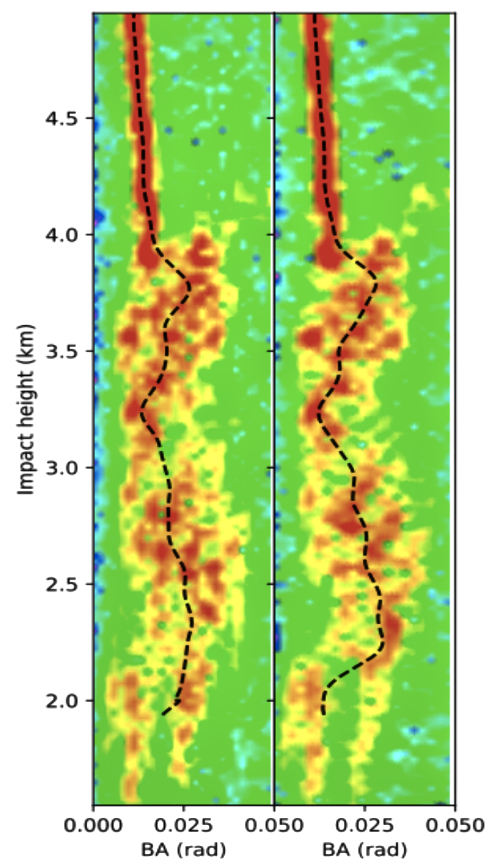
GeoOptics Processor for Radio Occultation (GeoPRO) produces spectrograms that reveal the disintegration of the dual-frequency raw radio occultation signal at lower altitudes. The red areas are signals reaching the receiver after passing through the atmosphere. The dashed line is the processed atmospheric bending angle on each frequency generated by GeoPRO. Image is courtesy of GeoOptics.

GeoOptics has developed GeoPRO as a real-time phase-matching processing system built around the on-demand parallelism enabled by serverless cloud-computing services, sometimes referred to as “Serverless Supercomputing.” By optimizing the processing system and running it on massively parallel serverless infrastructure, GeoPRO enables near-real-time phase-matching processing of large quantities of radio occultation data.

Traditionally, the processing of radio occultation data has been undertaken in a batch processing mode in which relatively large chunks of data are processed together and then released. However, as the number of GeoOptics satellites and ground stations increases, data will arrive much more frequently, requiring a different mode of operations to minimize data latency and maximize utility. GeoPRO is designed to make that transition possible.

Data from the new processing system have been made available to scientists around the world and GeoOptics commercial data partners. Due to the accuracy of the data processing and the quality of the Cion receiver, the data exhibits remarkably low bias even in warm air near the Earth’s surface, where lower quality radio occultation data often suffers from uncontrolled biases. Research has shown that this degree of accuracy in the lower atmosphere is vital for forecasting hurricanes and other high-impact weather events.

GeoOptics’ mission is to provide the most detailed picture possible of our planet’s atmosphere, surface and subsurface to our customers as well as scientific users around the world. We have embarked on our mission with our first constellation of nanosatellites, known as CICERO – Community Initiative for Cellular Earth Remote Observation. The first operational satellites contain advanced Global Navigation Satellite System Radio Occultation (GNSS-RO) sensors developed in partnership with the Jet Propulsion Laboratory (JPL) and Tyvak Nano-Satellite Systems.


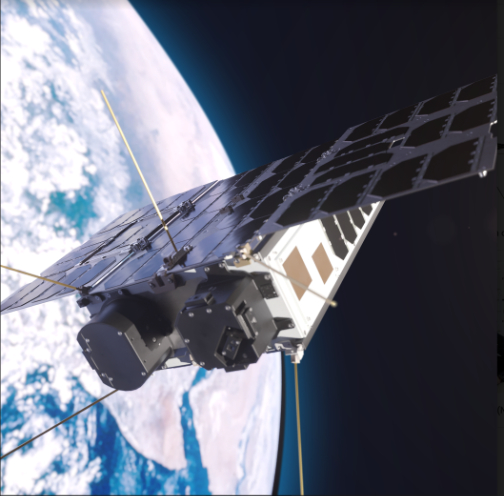
Artistic rendition of GeoOptics CICERO smallsats on-orbit. Image is courtesy of LASP/NASA/GeoOptics.

With the company’s initial CICERO satellites on-orbit, GeoOptics is now providing the first and only high-quality commercial radio occultation data from space. Satellites now in work will expand upon and refine this capability and deploy other technologies to provide a comprehensive picture of the Earth’s environment.


Dr. Alex Satlman

Dr. Alex Saltman, COO and architect of the new processing system related that the company is excited to provide this newly refined data to customers who depend on getting the most timely and precise weather data possible. The firm is leveraging new technologies across the GeoOptics satellites, ground systems and now data processing to deliver best-in-class data as a service to the government and commercial customers.

Filed Under: News

Ovzon and Airbus Defence and Space Enter Into a Reseller Agreement for SATCOM Services

April 15, 2020 by editorial

Ovzon and Airbus Defence and Space have entered into a partnership through a reseller agreement wherein Airbus will include Ovzon’s innovative satellite communication services into their portfolio in the UK.

Together, Ovzon and Airbus will market Ovzon’s end-to-end services that include Ovzon’s mobile terminals and efficient, reliable support.

Airbus will integrate the Ovzon solution in to its extensive satellite communications product and system portfolio.

From late 2021, the offering will be expanded to include Ovzon’s own first satellite. According to the firm, this is an important step to further revolutionize mobile broadband by satellite, offering the highest bandwidth with the smallest terminals. Ovzon 3 is the first of a number of satellites planned for global reach of Ovzon’s high-end service.


Artistic rendition of the Ovzon 3 smallsat on-orbit.
Image is courtesy of the company.

Airbus is a leading integrator and provider of advanced secure satellite communication services and network management infrastructure. Airbus delivers flexibility, resiliency and security for governments, militaries and international agencies with an end-to-end service offer bringing the most comprehensive bandwidth and terminal portfolio coupled with leading capabilities in network services and solutions.

Magnus René, CEO of Ovzon, said the firm is excited to team with Airbus for them to include the company’s industry leading, end-to-end, satellite service in their product portfolio. Their professional team has a long history and legacy supplying satellite-based communication services to demanding customers.

Richard Budd, Head of Secure Communications in the UK and US at Airbus Defence and Space added that the company is always looking to ensure customers are benefiting from the best and latest technologies as part of the company’s ongoing service capability and offering. Being able to offer Ovzon’s advanced services and associated exciting mobile terminals to the firm’s portfolio means Airbus can continue to bring the best available solutions to the front line commands and end users.

Filed Under: News

Rocket Lab to Launch Synspective’s StriX-a SAR Satellite

April 14, 2020 by editorial

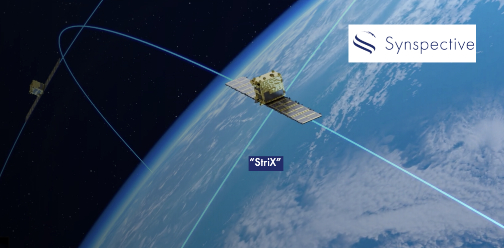
Rocket Lab has signed a deal with Japanese satellite company Synspective to launch a synthetic aperture radar (SAR) satellite in late 2020.

Synspective’s StriX-α satellite will be launched on an Electron launch vehicle as a dedicated mission from Launch Complex 1 in New Zealand.

The satellite will be the first in Synspective’s planned StriX constellation of around 25 SAR satellites designed to provide geospatial solutions. SAR satellites actively observe and acquire Earth surface information by transmitting and receiving reflected microwaves.

Compared with optical satellites, which rely on sunlight reflection, SAR can capture images of the ground surface in all weather conditions and at any time of the day or night.

With the StriX constellation, Synspective aims to equip companies, governments, and research organizations with high-quality and user-friendly information data that can be used for urban development planning, construction and infrastructure monitoring, and disaster response.


The launch of an Electron rocket from Launch Complex 1 in New Zealand. Photo is courtesy of Rocket Lab.

The StriX-α satellite will be the sole payload on the Electron launch vehicle for this mission, giving Synspective the ability to select the exact orbit, launch site, and launch timing that best suits the company’s needs.

Rocket Lab Founder and Chief Executive, Peter Beck, said the company is delighted to welcome Synspective to Electron the firm is honored to be play such a pivotal role in the development of the StriX constellation. Rocket Lab understands just how important it is to have control over the orbit and the launch schedule when building out a constellation, so the firm is proud to be delivering that capability to Synspective on Electron.

Synspective Founder and CEO, Dr. Motoyuki Arai, added the firm is pleased to work with Rocket Lab, a pioneer in rocket ventures. The company is also grateful for their flexibility in accepting Synspective’s requests on the satellite’s orbit and launch period. This year, the company will launch our first satellite as well as our SAR data solutions. With this launch, Synspective is taking a most important step toward establishing the company’s one stop service.


Filed Under: News

Alba Orbital Reporting Unicorn-2C Smallsat Success

April 13, 2020 by editorial

Alba Orbital has announced the end of the mission and re-entry of Unicorn-2C (NOOR 1B), Alba’s first Unicorn spacecraft to make orbit.

The spacecraft successfully deployed its quadruple deployable solar panel and the customer operator confirmed reception of spacecraft signal. This is a great first step in space, moving the system to TRL-9.


The Unicorn-2C smallsat. Photo is courtesy of Alba Orbital.

While this was an experimental mission, the company is proud to reach this milestone and looks forward to upgrading Unicorn-2.0 to our Unicorn-2.1 architecture for new customers.

Achievements of the mission

  • First smallsat to successfully deploy quadruple deployable solar panels
  • First PocketQube to deploy a solar panel
  • First operational 3p PocketQube in history
  • Validation of Unicorn subsystems: Structure, Thermal, Backplane (OBC/EPS), Alba Radio, Unicorn OS (Software),
  • System moves from TRL-8 to TRL-9.
  • First full spacecraft delivered in-orbit to a commercial customer
  • FCC licensed, demonstrating route to license PocketQube in the US.
  • Contract kickoff to in-orbit deployment in under 1 year

Missions stats

Time on Orbit: 123 days (4 months, 1 day)

TLEs: 288

Average TLEs per day: 2.34

TLEs average update rate: 10 hrs 15 minutes

Injection Orbit Albapod: 403 x 348km, 97 degrees incl.

Learn more about using Unicorn-2 at this direct infolink…

Filed Under: News

New Spacecraft Development and Test Facility Opened by General Atomics in Colorado

April 13, 2020 by editorial

General Atomics Electromagnetic Systems (GA-EMS) has opened a new, modern spacecraft development, integration and test factory with state-of-the-art laboratories and secure facilities in Centennial, Colorado.

The 33,514 square foot facility triples GA-EMS’ capacity for satellite production, integration and testing for single to constellation-sized orders, and also houses an expanded mission operations center to support on-orbit satellite and customer payload commissioning and operations.

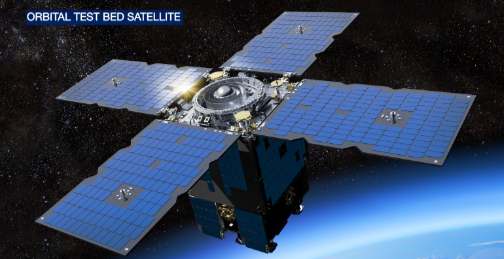
In particular, Evolved Expendable Launch Vehicle (EELV) Secondary Payload Adapter (ESPA) class satellites, such as GA-EMS’ Orbital Test Bed satellite launched in 2019, are large enough to viably perform a variety of missions including weather and environmental monitoring, and lunar and planetary exploration, while small enough to be developed swiftly and affordably in large quantities. 

Scott Forney, president of GA-EMS, said Colorado is home to the nation’s second largest space economy and the company is excited to continue to expand development, production and mission capabilities in the region to meet the growing needs of the military, intelligence community, civil and commercial satellite communities. Over the last several years, the firm’s space portfolio has expanded to provide cost-effective design-to-on-orbit solutions offering a high degree of modularity and payload flexibility to suit a variety of mission needs and customer requirements. With this new, contemporary facility, the company can readily produce the quantities needed to meet the critical demand for small satellites in the rapidly growing space industry.”

Nick Bucci, VP of Missile Defense and Space Systems, add that this facility provides the ability to enhance the company’s portfolio of cost-efficient, flexible small satellite platforms, payloads, and integrated systems. GA-EMS has a history of development, integration, test and flight operations that are key to meeting the upcoming challenges to deliver constellation-sized missions to Low Earth Orbit and beyond. The firm’s highly experienced spacecraft engineers in Centennial are excited take on these unique challenges and deliver the innovative solutions that customers need.


Filed Under: News

  • « Go to Previous Page
  • Page 1
  • Interim pages omitted …
  • Page 310
  • Page 311
  • Page 312
  • Page 313
  • Page 314
  • Interim pages omitted …
  • Page 339
  • Go to Next Page »

Primary Sidebar

WEEKLY NEWSLETTER

Archives

  • March 2026
  • February 2026
  • January 2026
  • December 2025
  • November 2025
  • October 2025
  • September 2025
  • August 2025
  • July 2025
  • June 2025
  • May 2025
  • April 2025
  • March 2025
  • February 2025
  • January 2025
  • December 2024
  • November 2024
  • October 2024
  • September 2024
  • August 2024
  • July 2024
  • June 2024
  • May 2024
  • April 2024
  • March 2024
  • February 2024
  • January 2024
  • December 2023
  • November 2023
  • October 2023
  • September 2023
  • August 2023
  • July 2023
  • June 2023
  • May 2023
  • April 2023
  • March 2023
  • February 2023
  • January 2023
  • December 2022
  • November 2022
  • October 2022
  • September 2022
  • August 2022
  • July 2022
  • June 2022
  • May 2022
  • April 2022
  • March 2022
  • February 2022
  • January 2022
  • December 2021
  • November 2021
  • October 2021
  • September 2021
  • August 2021
  • July 2021
  • June 2021
  • May 2021
  • April 2021
  • March 2021
  • February 2021
  • January 2021
  • December 2020
  • November 2020
  • October 2020
  • September 2020
  • August 2020
  • July 2020
  • June 2020
  • May 2020
  • April 2020
  • March 2020
  • February 2020
  • January 2020
  • December 2019
  • November 2019
  • October 2019

© 2019–2026 SatNews

Insert/edit link

Enter the destination URL

Or link to existing content

    No search term specified. Showing recent items. Search or use up and down arrow keys to select an item.
      x
      Sign Up Now!

      Enjoy a free weekly newsletter with recent headlines from the global SmallSat industry.

      Invalid email address
      We promise not to spam you. You can unsubscribe at any time.
      Thanks for subscribing! You will now receive weekly SmallSat News updates.
      We love our advertisers.
      And you will too!

      Please disable Ad Blocker to continue... We promise to keep it unobtrusive.
      We promise not to spam you. You can unsubscribe at any time.
      Invalid email address
      Thanks for subscribing!