• Skip to main content
  • Skip to primary sidebar
  • Home
  • News
  • Featured
  • More News ⌄
    • SatNews
    • SatMagazine
    • MilSatMagazine
  • Events ⌄
    • MilSat Symposium
    • SmallSat Symposium
    • Satellite Innovation
  • Contacts
  • SUBSCRIPTION

SmallSat News

You are here: Home / Archives for 2021

Archives for 2021

China Launches Remote Sensing Satellite Via A Kuaizhou-1A Carrier Rocket

October 28, 2021 by editorial

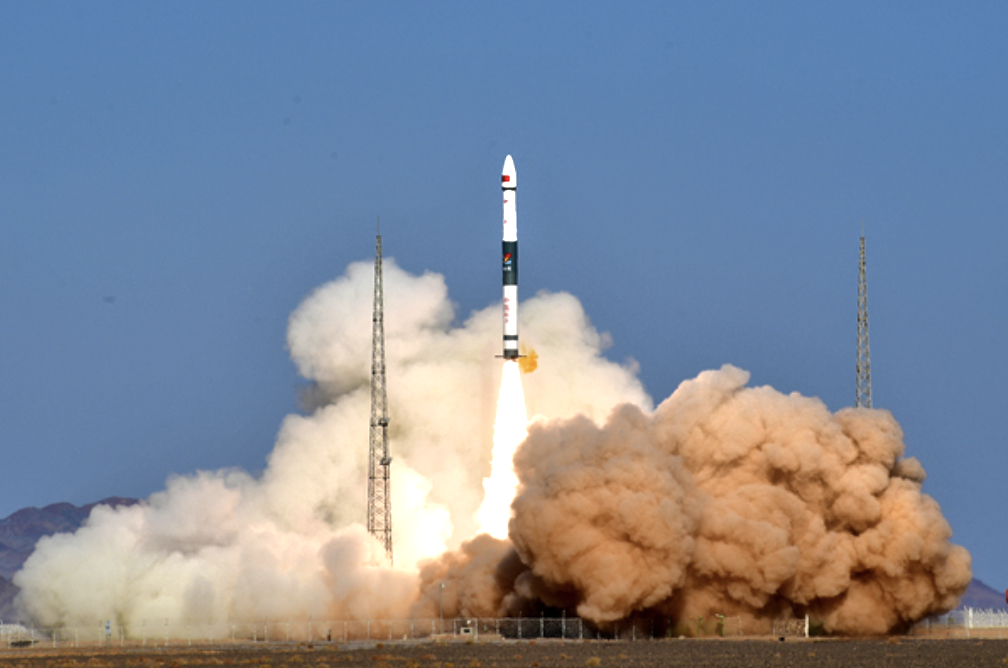
A Kuaizhou-1A carrier rocket carrying the Jilin-1 Gaofen 02F satellite blasts off from the Jiuquan Satellite Launch Center in Northwest China’s Gansu province, Oct 27, 2021. Photo is courtesy of Xinhua.

On Wednesday, October 27, 2021, China successfully launched an optical remote sensing satellite from a low-cost small, solid-fuel carrier rocket named Kuaizhou-1A (KZ-1A).

The satellite was launched from the Jiuquan Satellite Launch Center in the northwestern Gansu Province, according to the state-run Xinhua news agency.

The Jilin-1 Gaofen 02F satellite was launched by a Kuaizhou-1A (KZ-1A) carrier rocket at 2:19 p.m. (Beijing Time) and entered the planned orbit. This is an optical remote sensing satellite that can provide high-resolution images and high-speed data transmission.
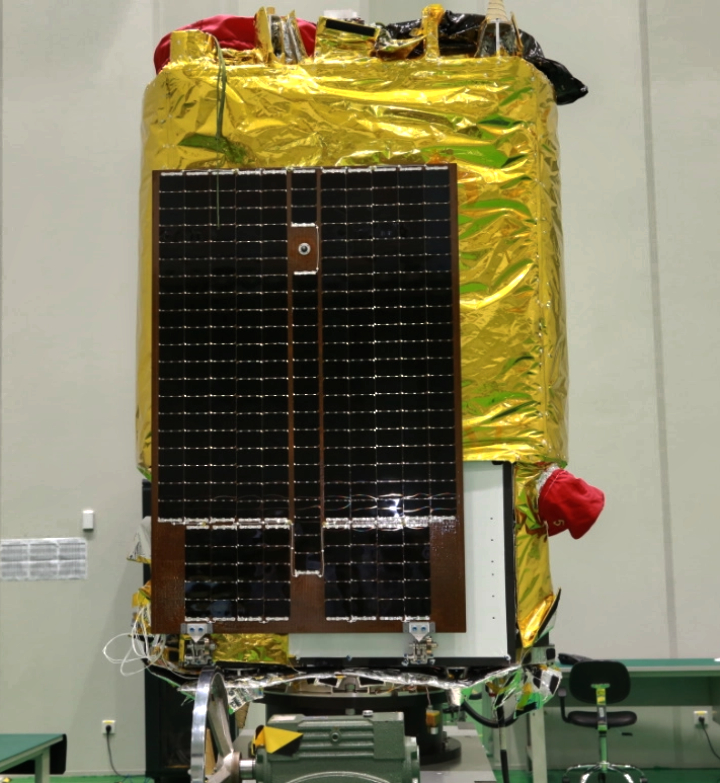
The Jilin-1 Gaofen 02F satellite.

Kuaizhou-1A, Chinese for ‘fast ship‘, is a low-cost, small, solid-fuel carrier rocket requires only a short preparation period. Developed by the China Aerospace Science and Industry Corporation, the rocket is designed to launch smallsats weighing under 300 kg, the report said.
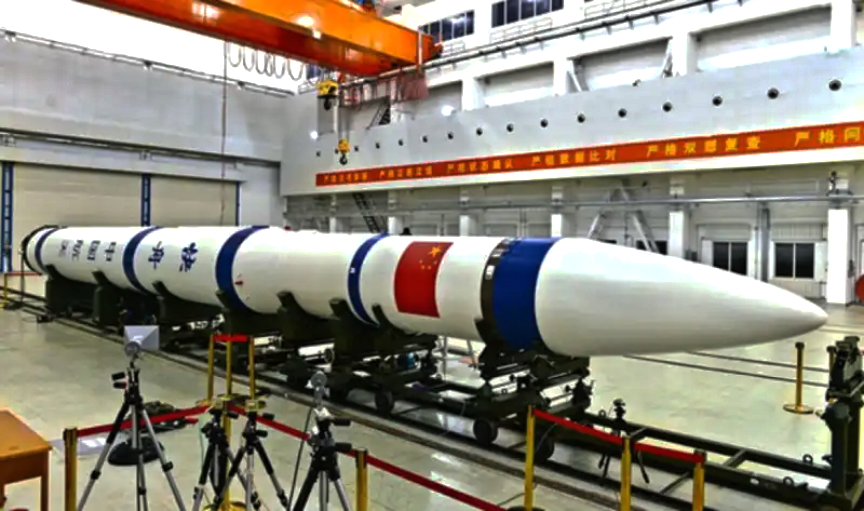
China’s Kuaizhou-1A rocket.

Since the first commercial mission in 2017, KZ-1A rockets have sent 21 satellites into space.
Filed Under: Featured, News

Neutron Star Systems + RFA Sign LEO Demo Mission Agreement

October 27, 2021 by editorial

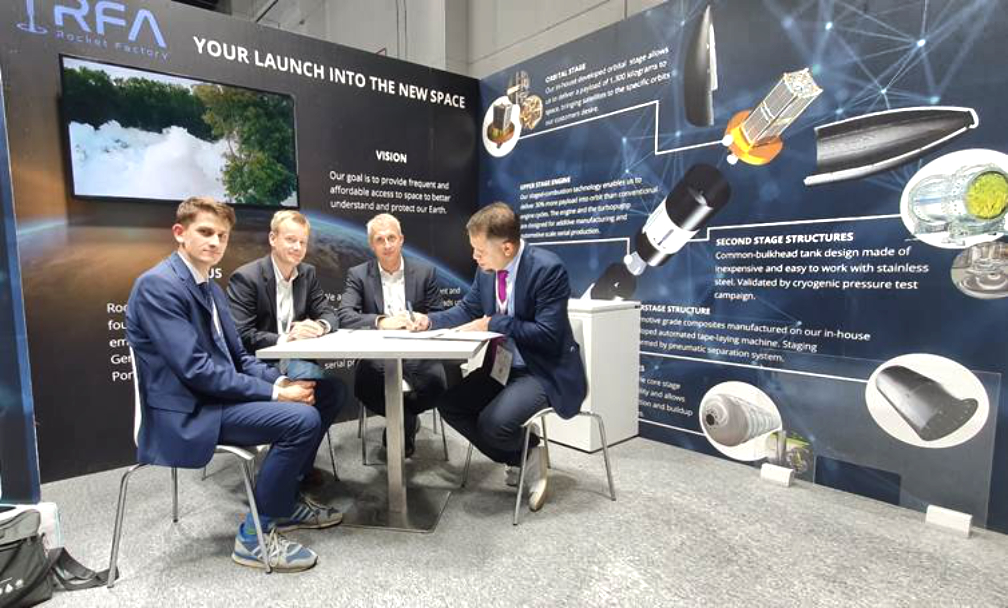
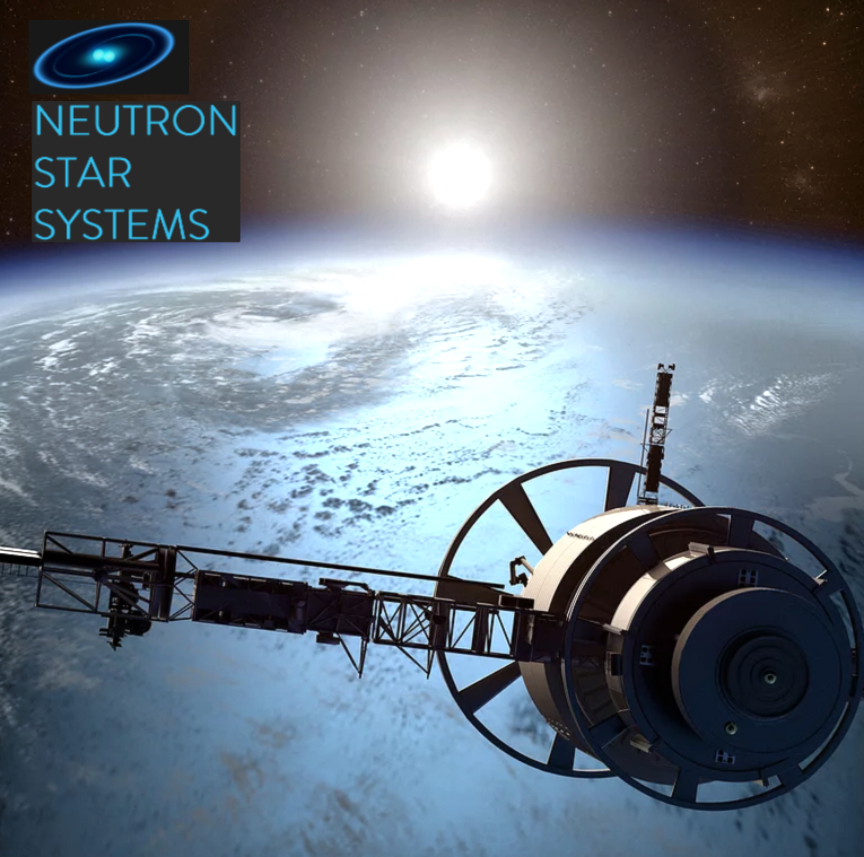
Neutron Star Systems UG and Rocket Factory Augsburg AG (RFA) have jointly signed an agreement for launching a demonstrator mission into LEO.

RFA will launch Neutron Star Systems demonstrator mission in Q3 2023 on the RFA ONE launch system. This mission will demonstrate a key subsystem for Neutron Star Systems disruptive electric propulsion system called SUPREME (SUperconductor-based Readiness Enhanced Magnetoplasmadynamic Electric propulsion). The mission will focus on advancing technology readiness level on one of the most important subsystems of SUPREME thruster technology.

Jörn Spurmann, Chief Commercial Officer at RFA said, "We are happy to support Neutron Star System’s in-orbit demonstration mission with our rideshare program on the RFA ONE launch systems. Their propulsion system has the potential to disrupt satellite propulsion, and we are proud to enable this endeavor."
Manuel La Rosa Betancourt, Chief Executive Officer at Neutron STar said, "Neutron Star Systems is committed to secure the development of this technology in Europe and to the strengthening of the vibrant German space ecosystem. By demonstrating this capability we do not only advance the TRL of SUPREME but also make a contribution towards Europe’s non dependence and leadership in enabling technologies objectives. "

Rocket Factory Augsburg was founded in 2018 with the mission to significantly reduce launch costs in the space industry. The company’s goal is to develop a launch vehicle prototype by the end of 2022 which can launch satellites into low Earth orbits on a weekly basis at unmatched prices. The RFA ONE launch vehicle combines three key competitive advantages: a highly cost-efficient architecture using industrial automation and lowest-possible development costs, precise in-orbit delivery by its orbital stage, and superior propulsion systems using staged-combustion.

Neutron Star Systems is a new-space start-up headquartered in Cologne, Germany, focused on the development of superconductor-based spacecraft systems. NSS core product is an Electric Propulsion system combining High-Temperature Superconductors with Applied-Field Magnetoplasmadynamic Thrusters, providing greater scalability, efficiency, and operational flexibility, and enabling more powerful and more capable spacecraft while cutting costs by up to billions of dollars. Alongside the German headquarters, NSS runs operations in London, UK, and Colorado Springs, USA.

Filed Under: News

Synspective + Orbital EOS Sign Partnership Agreement For SAR Imagery Data

October 27, 2021 by editorial

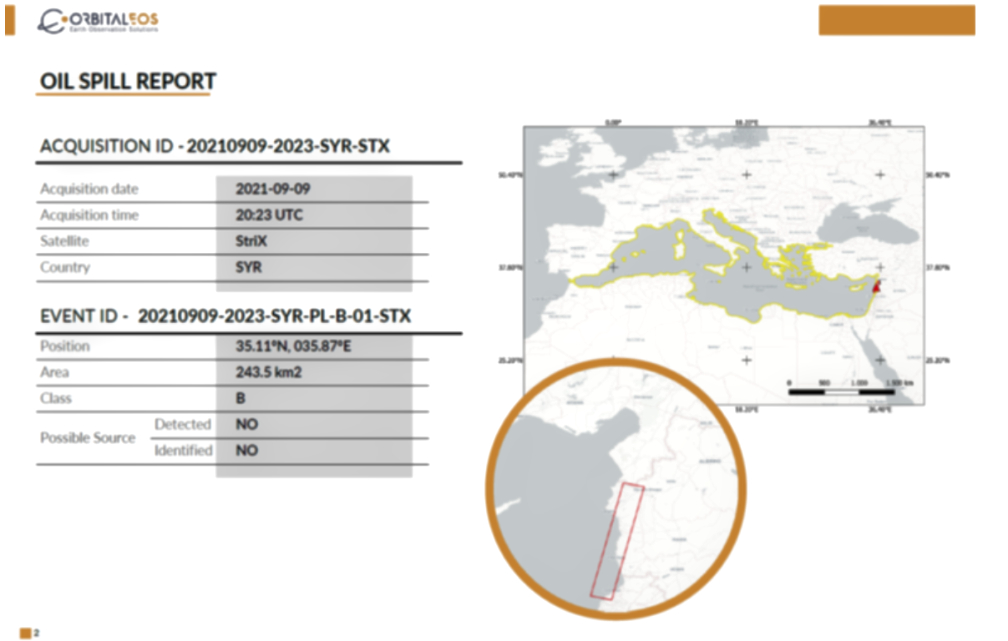
Synspective recently signed a partnership agreement with Orbital EOS, who made use of StriX SAR data for the analysis of oil spill detection off the coast of Syria in September of 2021, leading to the identification of 243.5 ㎢ worth of oil spill.

In October of 2021, Synspective Inc. signed a partnership agreement with Orbital EOS that specializes in oil spill detection data analysis for collaboration in the Asia region.

On the September 9, 2021, Synspective captured SAR imagery data using their own satellite StirX in stripmap mode of the entire area off the coast of Syria and the Lebanese border. The area is where a large amount of oil spill had spread out across the Mediterranean Sea from one the largest oil refineries, Baniyas, of Syria, with the spill occurring on August 23, 2021.

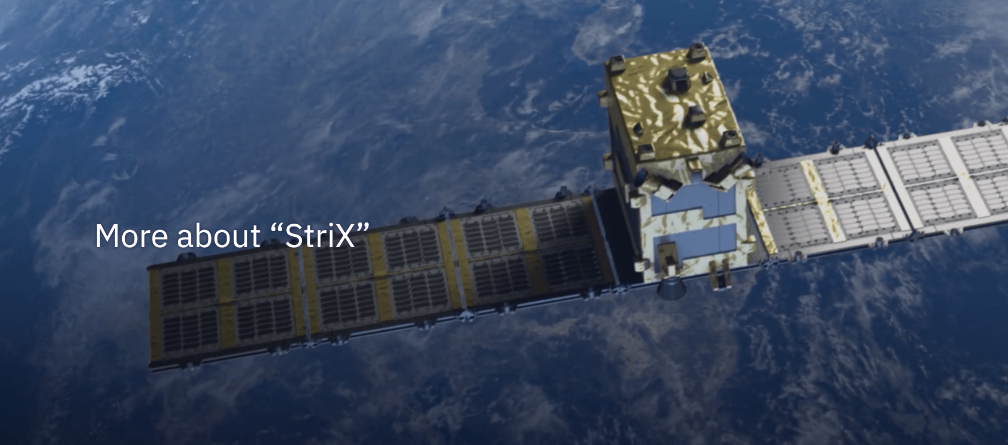
Artistic rendition of Synspective’s StriX SAR satellite on-orbit. Image is courtesy of the company.

Synspective SAR stripmap mode captured SAR image, extract of Baniyas oil refinery alongside the coast of Syria (September 2021)

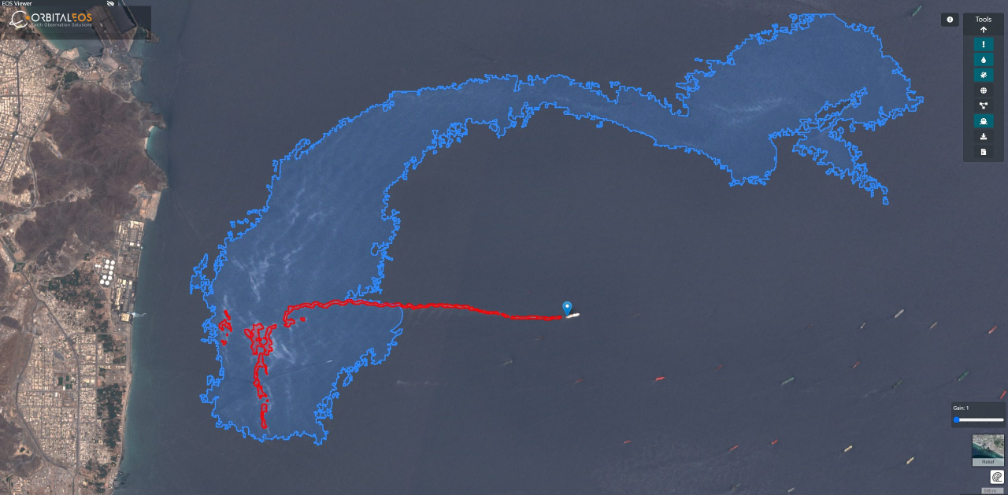
Orbital EOS have conducted their own analysis making use of our StriX data, to assess the extent of oil spillage spread. The analysis had confirmed 243.5km2 worth of oil spill across the surrounding sea.

Below, black and white imagery (center) is SAR imagery data captured by StriX-α. The area colored in blue is where Orbital EOS have identified as the sea surface effected by the oil spill.

According to Juan Peña Ibáñez, the CEO of Orbital EOS, water quality along the coastal line of Syria has dramatically deteriorated as a result of the oil spill. This has impacted the local marine life, while fishing has also been banned until further notice. It is essential that such analysis is made readily available at the earliest phase of the disaster in order to minimize the damage against the local marine environment and ecosystems as well as the economy.

Below is a Synspective SAR stripmap mode captured SAR image, extract of the city of Tartus and the Mediterranean coast of Syria (September 2021).

Synspective will continue to collaborate with Orbital EOS in an effort to help define the oil spillage area, its extent and the outflow prediction by providing its own SAR data imagery.

Filed Under: News

Satellogic To Develop Satellite Constellation For Paraguayan Space Agency

October 26, 2021 by editorial

Satellogic has signed a Letter Of Intent (LOI) with Agencia Espacial del Paraguay (“AEP”) to develop a Space-as-a-Service program for the country. As a result of this LOI, Satellogic and AEP will undertake various technological and scientific projects, in accordance with AEP’s Institutional Strategic Plan and the Space Policy of Paraguay.

The LOI provides a framework for the start-up and development of a dedicated satellite constellation network. Satellogic’s Dedicated Satellite Constellation Program enables municipal, state, and national governments to manage a fleet of satellites over a specific area of interest and develop a geospatial imaging program at unmatched frequency, resolution and cost.

Countries unequipped with their own satellites orbiting the Earth are limited in their ability to capture data about their policy implementation and infrastructure. Satellogic’s Dedicated Satellite Constellation Program expands access to geospatial analytics and insights that contribute to strategic national interests, with no capital outlay and no technical or operational risks.

With access to Satellogic’s Dedicated Satellite Constellation Program, governments of all sizes are now able to develop EO programs to support key decisions and manage policy impact, measure investment and socio-economic progress, and foster collaboration, data and information sharing as well as innovation.

“The Dedicated Satellite Constellation Satellogic will develop for AEP is a low-risk, cost-effective Space-As-A-Service model tailored for AEP and the Republic of Paraguay,” said Luciano Giesso, Sales Director for Satellogic. “Latin America is increasingly focused on space technologies to create new infrastructures to unlock the benefits of satellite data across many industries. This region continues to be an area of focus for us, uncovering huge opportunities for new space activities and projects.”
“This is the first agreement of this kind signed between AEP and a global space company, contributing to aerospace development for the public and private sectors of Paraguay, and establishing a sustainable system for our Space Agency purposes,” said Alejandro Román, General Director of Aerospace Development for AEP. “Satellogic is building the first scalable, high-resolution, earth-observation platform, and they could become the ideal partner to leverage outer space peacefully for the benefit of the Paraguayan population and the development of our country on new satellite technologies.”

Filed Under: News

Analytical Space To Become Hedron + Raises Million$$ In Series A Equity Funding

October 26, 2021 by editorial

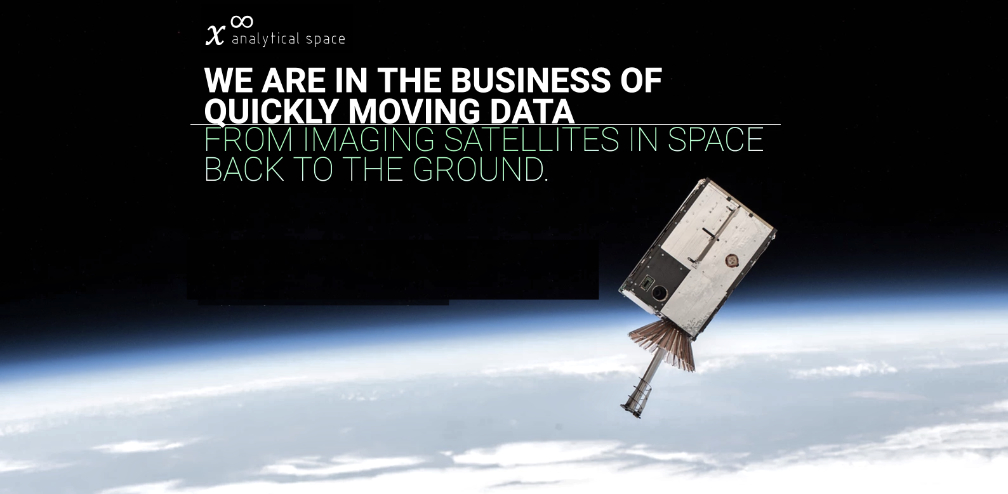
Analytical Space (the “Company”) has closed a $17.8 million Series A equity funding round, enabling the firm to accelerate the development of the initial operating capability of the world’s first hybrid optical/RF data relay network.

In addition, the Company is officially rebranding to Hedron, effective immediately. Hedron represents a shortening of the polyhedron shape, a reference to the Company’s network topology and core optical communications technology design.

The round was led by Fine Structure Venture, joined by Lockheed Martin Ventures, Republic Labs, Lime Street, and Explorer 1 as well as existing investors: The Engine, Flybridge, Yard Ventures, NKM Capital, and Space Angels. These funds enable Hedron to expand its U.S. operations to support the company’s growing pipeline of government and commercial business.

The initial Network Operating Demonstration, scheduled to begin deployment in 2022, will serve as an operational service demonstration for Hedron’s resilient, low-latency connectivity service for satellites. Hedron will launch a series of data-relay backbone nodes, configured in multiple orbital planes, to provide near-constant connectivity to customer satellites, helping to deliver actionable insights about the Earth’s surface. The network will assist disaster response efforts, intelligence gathering, commercial applications, and climate monitoring. In addition, the network provides a capability to increase scientific return on NASA space missions as it is well-suited for supporting the future commercial architecture that is currently being created to replace the Tracking Data Relay Satellite System (TDRSS), which NASA plans to retire by the end of the decade.

Over the past three years, Hedron has successfully integrated and launched two technical demonstration satellites and proven out critical networking technologies that will enable customer connection to the network. In parallel with these efforts, Hedron has successfully demonstrated compatibility in a laboratory setting with leading remote sensing satellite operators in preparation for this initial network deployment.

Following the completion of this funding round and rebrand, Hedron will build upon these technical accomplishments by deploying additional orbital planes of data relay satellites, to provide broader network coverage for critical earth observation assets. These deployments will enable Hedron to rapidly scale the availability of data relay services for key government and commercial partners.

Fine Structure Ventures’ Senior Managing Director, Jennifer Uhrig, said, “We are excited to join Hedron as it strives to build a next-generation data network in space. The demand for satellite-generated data is growing rapidly and Hedron’s vision and technology will address the need to reduce latency and cost. We believe Hedron’s network has the potential to be a key driver of richer business and consumer applications here on Earth.”

“The availability of real-time space data will advance the art of the possible for customers and industry partners,” said Chris Moran, Vice President and General Manager of Lockheed Martin Ventures. “We invest in companies whose innovative technologies have the potential to benefit our core business and customers and Hedron’s planned data relay network which has the ability to provide critical insights to users meets this criteria.”

“It is an honor to be working with financing partners who have a track record of backing world-changing companies and we look forward to exploring potential commercial opportunities with them,” said Dan Nevius, CEO, and co-founder of Hedron. “Since our founding, our goal at Hedron has been to provide low latency access to space-borne data, paving the way for new sensor technologies and time-sensitive applications. Today, we are one step closer to reaching this goal. These additional resources will allow us to move even faster toward the deployment of our global data relay network, starting with our Network Operating Demonstration that will prove our novel network architecture and underlying technology while showcasing new applications with our remote sensing satellite operator and end-user partners.”

Hedron (formerly Analytical Space) is an on-orbit communications company on a mission to provide a more dynamic communications infrastructure that provides real-time access to the critical information that is collected on space platforms. The real-time connectivity enabled by the Hedron network creates a rapid commanding and data downlink capability that allows for data to be used for time-sensitive tactical applications (e.g., wildfires, disaster response, national security, etc.). Enabling this type of active intelligence provides a significant new tool in the world’s ability to understand and address major global challenges.

Filed Under: Featured, News

A New CEO Is Named For Rocket Factory Augsburg (RFA)

October 25, 2021 by editorial

Dr. Stefan Tweraser has been named as the new Chief Executive Officer (CEO) of Rocket Factory Augsburg AG (RFA) as of October 1, 2021 — he will support RFA in driving the continued company’s growth.

Previously, Stefan Tweraser was responsible for the DACH region at Google, and worked at the music streaming service Deezer, at the startup Snapshot and at consulting firm McKinsey & Company. With a doctorate in economics, he brings a wealth of experience from various industries where he drove innovative and future-oriented developments in management positions.

Given the rapid technological advances, increased success in the market and strong growth in personnel, the Executive and Supervisory Board of RFA believe that now is the correct time to complement and broaden the Executive Board.

Dr. Stefan Tweraser said, “The commercial use of space will change fundamentally in the coming decade. New space-based business models are emerging and innovative launch vehicles – with a strong focus on cost and customer orientation – are a cornerstone of this positive dynamic. RFA has made great strides by combining cutting-edge technology with innovative manufacturing processes. The team has also already succeeded in developing a promising commercial pipeline. I am very excited to lead RFA – together with the Executive Board and the Supervisory Board – to the next stage of our exciting journey.”

Jörn Spurmann, Chief Commercial Officer, said, “RFA is one of the fastest growing start-ups in the New Space scene. Stefan’s experience in leading large organizations is very valuable for our further development. He has great ideas and approaches on how we will maintain our rapid pace as a growing company and convince more investors of our vision.”

Dr. Stefan Brieschenk, Chief Operating Officer, said, “We are very excited that Stefan has decided to take on the position as CEO of RFA. Under his leadership, we will further professionalize RFA’s processes and structures. This will help us to transform our rapid technological progress into a sustainable business model.”

Rocket Factory Augsburg was founded in 2018 with the mission to significantly reduce launch costs in the space industry. The company’s goal is to develop a launch vehicle prototype by the end of 2022 which can launch satellites into LEO on a weekly basis at unmatched prices. The RFA ONE launch vehicle combines three key competitive advantages: a highly cost-efficient architecture using industrial automation and lowest-possible development costs, precise in-orbit delivery by its orbital stage, and superior propulsion systems using staged combustion.

Filed Under: News

ACCESS.SPACE Alliance’s Sobering Account Of Europe’s SmallSat Industries’ Challenges

October 25, 2021 by editorial

A sobering realistic look at the many challenges in the European small satellite industry.

ACCESS.SPACE Alliance (ASA), which represents the small satellite sector, has published a position paper on the current state of space financing in Europe. In the paper, ASA states that start-ups and SMEs often lack customers and contracts to support their business and face difficulties in finding public support and participating in large or long-term space programs at European and national levels. It also remains difficult for space business, especially for start-ups and SMEs which often do not have dedicated resources, to navigate through even the available funding opportunities.

Comparing the financing situation with other parts of the world, ASA points out that the number of space-related companies and the amounts of public and private investments are often higher than in Europe. ASA does acknowledge that very few countries have developed comprehensive directories of space-related entities, and that there is limited visibility in terms of the number of companies, employment, investments, growth and ownership and control. 

Betty Bonnardel, founder and board member of ASA, said, “It is necessary to properly finance the space ecosystem and agree on concrete actions to support space-related start-ups. This is why ACCESS.SPACE proposes a number of policy actions to tackle these issues with a sense of urgency”.

One of the recommendations that ASA makes is the adoption of an innovation strategy for New Space in Europe, encompassing access to private and public capital and continue providing all needed support for start-ups and SMEs. ASA also suggests to increase the number of funding entities (venture capital firms, private equity firms and business angels), bridge the “valley of death” and focus on the areas where Europe can lead. 

To improve access to funding, ASA also recommends the creation of an official ‘one-stop-shop’ web site granting access to all European public funding programs with digital tools to facilitate access and provide guidance.

Filed Under: News

Forrester’s Digest: SES-17 Launch Delayed / EUTELSAT + UHD Importance / Intelsat’s Bankruptcy Exit Plan Hearing Delayed

October 23, 2021 by editorial

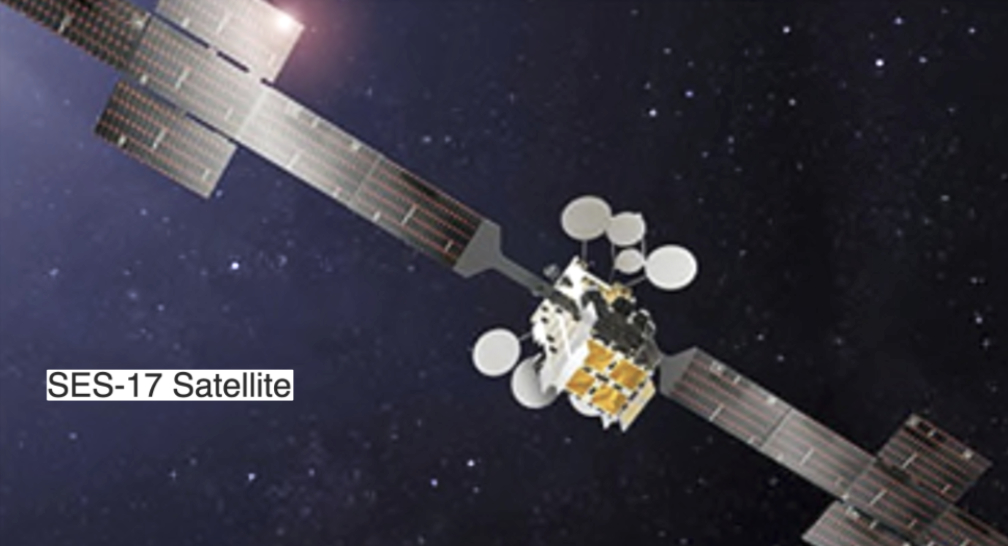
The launch of SES-17 has been delayed. Arianespace stated that investigations are ongoing in order to identify a new launch date from the Kourou spaceport.

The Ariane 5 launch vehicle and spacecraft SES-17 and fellow passenger SYRACUSE 4A are in stable and safe conditions on the launch pad, according to Arianespace. SYRACUSE-4A is a military satellite for the French defence ministry. Arianespace said that the flight, when it is rescheduled, will break previous records in terms of highest height, largest cumulative mass and heaviest payload ever carried on Ariane 5 missions.

The launch was due to take place at the Guiana Space Centre on the night of 22nd October (local time). Both satellites were built by Thales Alenia Space.

Eutelsat, in the company’s latest blog written prior to the announced departure of Rodolphe Belmer, stated that Ultra-high Definition (UHD) provides many advantages for content-makers and broadcasters and is important to the satellite industry.

One extremely important benefit in the need for UHD is in viewer retention, stated the blog. “While SDTV used to be the primary home entertainment, that quickly changed when HDTV hit the market. By 2016, only 37 per cent of US households were still watching in SD, which caused advertisers to reconsider their broadcasting choices.”

“Today,” said Eutelsat, “we’re beginning to see the same trend. According to Statista, HD TVs have been steadily losing global market share to UHD TVs since 2017. While high-resolution TV sets (4K or higher) held a 45.5 per cent market share in 2018, they accounted for over half of all TV sales worldwide in 2019. Indeed, in a recent study by Gfk, UHD TVs accounted for 75% per cent of the overall TV market in Germany.”

Broadcasters who do not want to lose viewers and protect their retention rate should seriously consider adopting UHD sooner, rather than later. This will help them avoid becoming irrelevant in much the same way as the switch from SD to HD, adds Eutelsat.

“According to a recent webinar with IABM & Christiano Benzi, UHD sets are well deployed in the market – but are not yet popular among broadcasters. Despite almost 50 per cent of TV sets in Europe and over 50 per cent in the US being UHD compatible, most channels are still broadcast in SD and HD formats. There is a clear reluctance on behalf of most broadcasters who see the investment to be too costly. However, this is sure to change – as more sets become enabled, consumer demand for quality rises. As observed with HD vs SD viewing, viewers naturally gravitate towards better quality and soon avoid other channels that cannot match their standards,” writes Eutelsat.

Indeed, Eutelsat is firmly of the view that UHD viewing as the standard is simply a matter of time.

“As most broadcasters are avoiding UHD, becoming an early adopter is an excellent opportunity for broadcasters seeking a key differentiator for their channels. This will make them more appealing to viewers and advertisers alike,” suggested Eutelsat, and continued, “As far back as 2012, advertisers have begun a mass exodus from lower-quality broadcasting. Advertisers in North America are already advertising on HD channels more than SD. The same is expected to happen with UHD. Eutelsat research has shown that early adoption of HD in developing markets has directly led to an increase in revenue for broadcasters who invest in them. The early migration in developing markets towards HD increased viewership, making broadcasters who invest in HD more attractive to advertisers.

“It’s no secret that quality attracts viewers and advertisers alike. In fact, better quality has been associated with an 18% higher retention rate, with higher quality channel advertising also outperforming the same adverts on lower-quality channels. This likely indicates that advertisers will eventually migrate to UHD for greater returns than stay on HD channels. Similar to how advertisers abandoned SD for HD. UHD is an opportunity for broadcasters to get ahead of the curve and become early adopters,” added the Eutelsat blog.

An Omnibus hearing on October 20th at the Intelsat bankruptcy court, under judge Keith Phillips, which itself had to postpone adjudicating on many of the matters scheduled to be heard, was told by the judge that Intelsat’s planned confirmation of its exit plan would likely have to be delayed.

Bankruptcy Judge Keith Phillips in Richmond, Virginia, said during a virtual hearing on Wednesday that he has “serious concerns about whether this can be accomplished in four days,” implying that the extensive evidence and testimony flowing around the case might take considerably longer that four days in front of the court.

The immediate suggestion from lawyers for Intelsat and other interested parties said they would discuss the judge’s suggested postponement of the hearing from the current November 8th start date to December 2nd. Intelsat needs approval of the plan, which is a key stage to the satellite operator wrapping up its bankruptcy, which has been ongoing since May 2020. Intelsat is looking to reduce its debt-burden of more than $15 billion to nearer $7 billion.

Filed Under: Featured, News

EXOLAUNCH Expands Their Operations Into North America + Names U.S. CEO

October 23, 2021 by editorial

EXOLAUNCH has expanded their business operations and sales in North America by opening offices in Denver, Colorado, and Washington, DC.

To lead its US operations (Exolaunch, Inc. doing business as Exolaunch USA), capture new market opportunities, and continue business growth in the region, Exolaunch USA has hired aerospace executive Chris Hearsey as its CEO. Having doubled sales globally, compared to last year, in 2022 Exolaunch is expecting to further increase sales and keep its high launch rate by sending +100 smallsats into space for the industry’s leading players.

In addition to further developing the business and establishing the US headquarters office in Denver, Hearsey will lead policy, industry outreach and government affairs in Washington, DC. He will also complement and strengthen the work produced by Exolaunch’s Berlin headquarters in Germany. Through the Denver office, Exolaunch expects to better provide tailored and reliable launch solutions to all of the firm’s customers in North America. The company, which has successfully launched satellites for multiple North American customers that include Loft Orbital, Spire Global and Kepler Communications, among others, provides its own separation systems and is developing a line of orbital transfer vehicles for precise satellite injection into custom orbits and the removal of space debris.

Chris Hearsey, CEO at Exolaunch USA (left),
Kier Fortier, Director of Launch at Exolaunch USA (right)

Hearsey has worked in the space industry at various levels in commercial, civil, and non-profit roles with a strong background in building and advising start-up organizations. Prior to joining Exolaunch, Hearsey served as director of DC operations and government affairs for Bigelow Aerospace. He was also the founder and CEO of OSA Consulting, managing a portfolio of start-up space companies in the US and in Europe. Hearsey will be supported by Kier Fortier, director of launch for Exolaunch USA, who has been leading the development of sales and partnerships to increase the visibility of Exolaunch in North America.

“Exolaunch is a fast-growing commercial space company with a distinguished NewSpace heritage, and I am excited to lead its efforts in North America. Exolaunch’s expansion into US markets will make access to space easier, regular, and more affordable for our customers,” said Chris Hearsey. “We have put together an experienced and talented team to lead Exolaunch USA’s business development from our headquarters in Denver, Colorado. This is a major step for Exolaunch, and we are in a great position to bring our one-stop-shop solutions to broader markets.”
Fortier said, “It is an excellent time to be in the launch services industry as commercial and government organizations alike are expanding into more interesting and sophisticated mission architectures. Our new office in the aerospace hub of Colorado will allow us to fully expand into the US and North American markets and focus on providing tailored launch solutions for our customers and their missions.”
Jeanne Medvedeva, VP of launch services at Exolaunch, said, “I welcome Chris to the Exolaunch team. His decade of experience in the commercial space industry will strengthen Exolaunch’s presence in the USA and its position in the North American markets as a reliable and innovative provider of rideshare launch services. With his broad skills and competence, he will help foster great relationships with our customers as well as with new and our existing launch providers.”

Exolaunch GmbH was founded by scientists and engineers from the Department of Space Technology at the Technical University of Berlin in 2010. It started as one of the global pioneers of the NewSpace era. After delivering its first rideshare cluster to orbit in 2013, Exolaunch was recognized and honored by TU Berlin as a ‘Startup of Excellence’. Since then, the company has expanded to become a global leader in providing both launch services and small satellite deployment technologies having launched satellites for over 30 customers to date. In 2021, Exolaunch completed one of the largest and most diverse rideshare missions with SpaceX Transporter-1 and its largest mission of one ton of smallsats onboard Transporter-2. Exolaunch deployment technologies are fully qualified for SpaceX’s Falcon 9 launches, with total flight heritage of 170 satellites deployed into orbit, and 59 small satellites launched via Falcon 9 in 2021. The company has partnerships with the most trusted and reliable launch vehicle providers, being recognized as an authorized integrator for smallsat clusters. Exolaunch also has a strong history of quality and reliability in its products and services, and relentlessly pursues innovation, seeking solutions to some of the most challenging problems of rendering space accessible for the benefit of humanity.

Filed Under: News

D-Orbit’s Nebula Cloud Platform Offering Is Successfully Demo’d In Space

October 21, 2021 by editorial

D-Orbit has successfully completed the orbital testing of Nebula, a cloud platform designed to provide distributed, high-performance, data analytics computing and storage capabilities in space.

Nebula is a hardware-software environment that enables end-users to uplink and run software and AI/ML apps in a way similar to conventional, terrestrial cloud environments. This first iteration of the system has been built in collaboration with Swedish-based AI company Unibap on top of their radiation-tolerant iX5-100 SpaceCloud® platform, which features a combination of central processing unit (CPU), graphical process unit (GPU), and vision processing unit (VPU) chips, solid-state storage, and an optimized Linux-based operating system running SpaceCloud framework API.

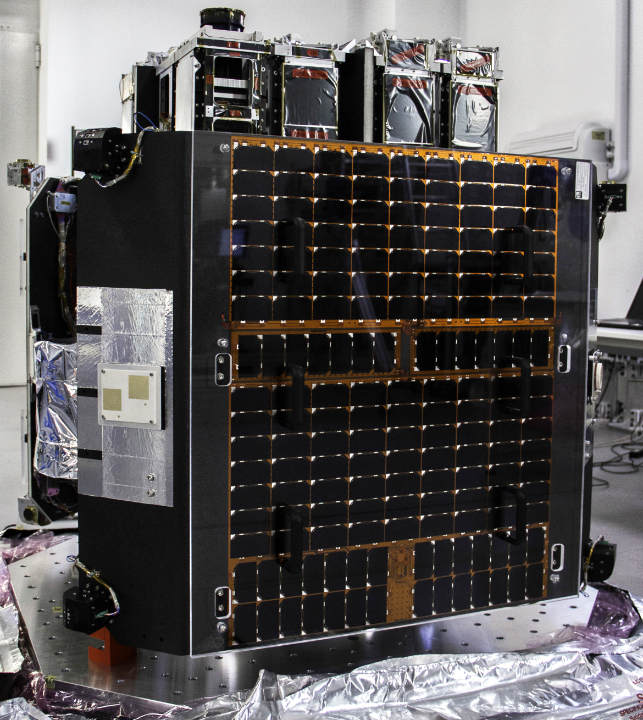
The system was integrated into an ION Satellite Carrier using D-Orbit’s propriety plug-and-play interfaces. ION is a space tug designed, manufactured and operated by D-Orbit to transport satellites into orbit and release them individually into distinct and precise orbital slots. ION can also accommodate multiple third-party payloads such as innovative technologies developed by startups, experiments from research entities and instruments from traditional space companies requiring a test in orbit.

Photo of D-Orbit’s ION Satellite Carrier, courtesy of the company.

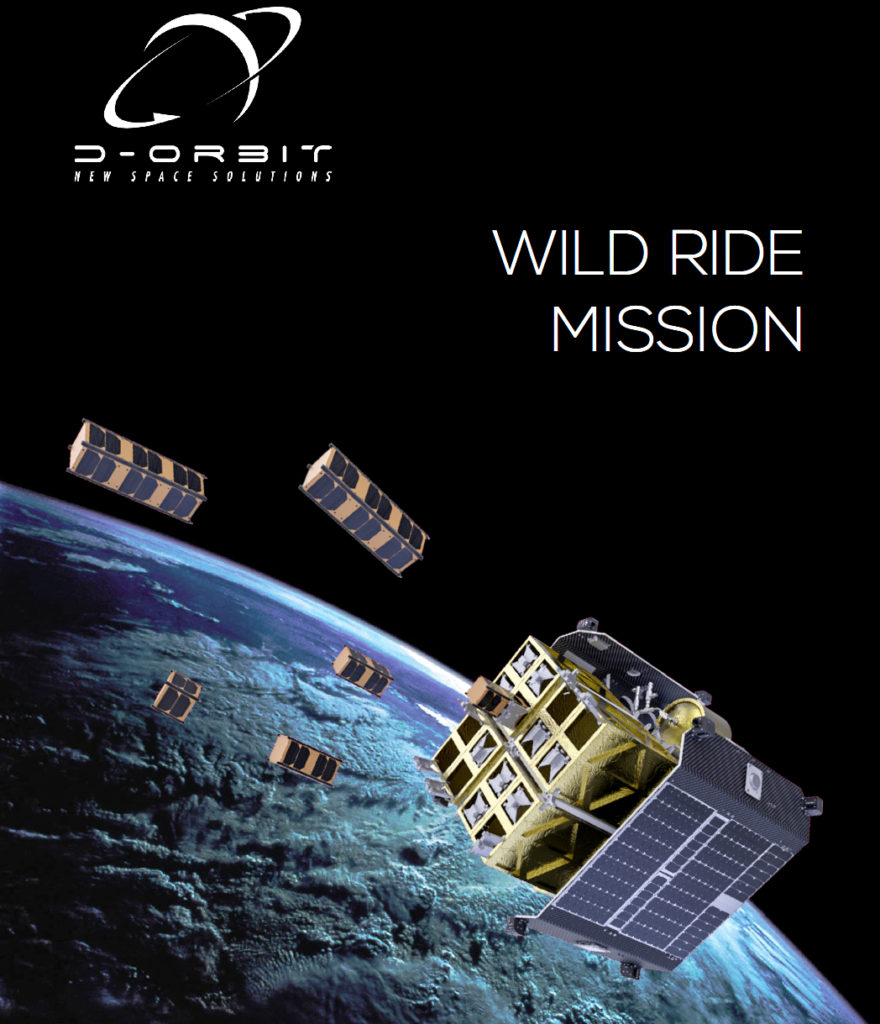
The testing on Nebula was performed in space as part of the WILD RIDE mission, which is still ongoing. A major bottleneck for satellite applications is the limited bandwidth of the downlink channel. A typical imaging application requires several hours to produce usable information. The real-time ML processing of imaging data in orbit, on the other hand, produces immediate results, while reducing at the same time the volume of information that needs to be downlinked by several orders of magnitude, enabling a much faster presentation of the final result to the user.

The test campaign successfully executed 23 separate SpaceCloud compatible applications from a variety of partners, including WorldFloods, an ML payload developed by the Frontier Development Lab (FDL), a partnership led by UK-based Trillium Technologies with the University of Oxford and ESA’s Phi-lab. For this test, the applications used a combination of preloaded data from a variety of satellites, such as Copernicus Sentinel-2, and raw data collected by ION Satellite Carrier’s multi-instrument sensor D-Sense.

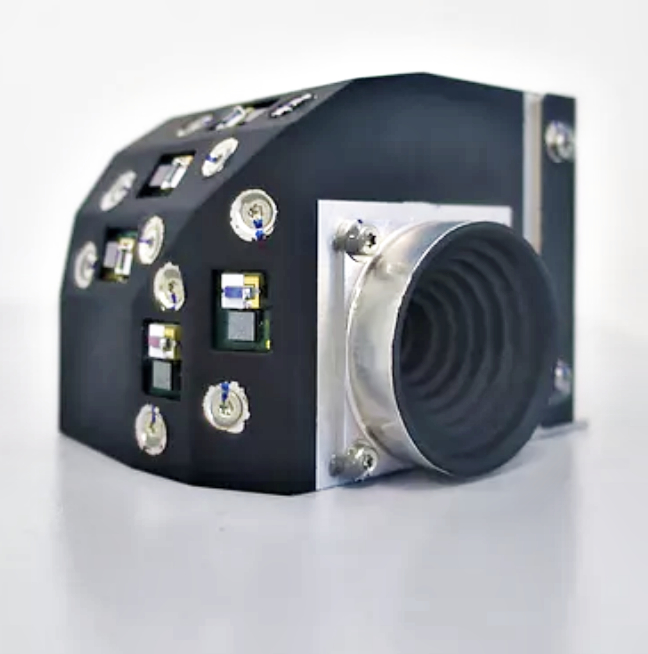
D-Orbit’s D-Sense.

All mission objectives have been accomplished, validating the approach of an advanced in-orbit computing platform capable of performing advanced computations on raw data directly in space, turning them into actionable information optimized for downlink.

The next iteration of Nebula, which is scheduled to fly onboard ION’s next mission in January of 2022, will feature an advanced electro-optical instrument and will enable third parties to upload and execute applications.

“This is an important step toward D-Orbit’s vision of a comprehensive space infrastructure that will provide all kind of services to vehicles in Earth’s orbit,” said Simon Reid, COO of the UK branch of D-Orbit. “While this batch of tests used mainly pre-loaded images, our follow-on mission, which will be ready for commercial use, will provide real-time access to instrument data. Everyone with programming knowledge can easily write apps to process all kind of data directly in space.We completed this project in less than a year, demonstrating the incredible versatility of the ION platform and the opportunity it provides to develop space technology in a new, agile way. While significant, this orbital test only scratches the surface of what is possible with a platform that is scalable by adding nodes, integrating sensor types, and organizing data transfer via inter-satellite links.” 
According to Dr. Fredrik Bruhn, Chief Evangelist in digital transformation and board director at Unibap, “We are currently seeing a fast global change in the space service market and the Nebula – SpaceCloud solution orbital success demonstrates a leap in the way business models around data can be implemented going forward. We are thrilled that extremely low-latency information products can be created in orbit. Going further, it is now possible to create flexible data management and user-on-demand on-orbit application services. It is great to see how our combined efforts and partnership with ESA has come together in the Nebula service and given important feedback to Unibap’s next generational SpaceCloud products and solutions.” 

Filed Under: News

  • « Go to Previous Page
  • Page 1
  • Interim pages omitted …
  • Page 9
  • Page 10
  • Page 11
  • Page 12
  • Page 13
  • Interim pages omitted …
  • Page 65
  • Go to Next Page »

Primary Sidebar

WEEKLY NEWSLETTER

Archives

  • April 2026
  • March 2026
  • February 2026
  • January 2026
  • December 2025
  • November 2025
  • October 2025
  • September 2025
  • August 2025
  • July 2025
  • June 2025
  • May 2025
  • April 2025
  • March 2025
  • February 2025
  • January 2025
  • December 2024
  • November 2024
  • October 2024
  • September 2024
  • August 2024
  • July 2024
  • June 2024
  • May 2024
  • April 2024
  • March 2024
  • February 2024
  • January 2024
  • December 2023
  • November 2023
  • October 2023
  • September 2023
  • August 2023
  • July 2023
  • June 2023
  • May 2023
  • April 2023
  • March 2023
  • February 2023
  • January 2023
  • December 2022
  • November 2022
  • October 2022
  • September 2022
  • August 2022
  • July 2022
  • June 2022
  • May 2022
  • April 2022
  • March 2022
  • February 2022
  • January 2022
  • December 2021
  • November 2021
  • October 2021
  • September 2021
  • August 2021
  • July 2021
  • June 2021
  • May 2021
  • April 2021
  • March 2021
  • February 2021
  • January 2021
  • December 2020
  • November 2020
  • October 2020
  • September 2020
  • August 2020
  • July 2020
  • June 2020
  • May 2020
  • April 2020
  • March 2020
  • February 2020
  • January 2020
  • December 2019
  • November 2019
  • October 2019

© 2019–2026 SatNews

Insert/edit link

Enter the destination URL

Or link to existing content

    No search term specified. Showing recent items. Search or use up and down arrow keys to select an item.
      x
      Sign Up Now!

      Enjoy a free weekly newsletter with recent headlines from the global SmallSat industry.

      Invalid email address
      We promise not to spam you. You can unsubscribe at any time.
      Thanks for subscribing! You will now receive weekly SmallSat News updates.
      We love our advertisers.
      And you will too!

      Please disable Ad Blocker to continue... We promise to keep it unobtrusive.
      We promise not to spam you. You can unsubscribe at any time.
      Invalid email address
      Thanks for subscribing!